
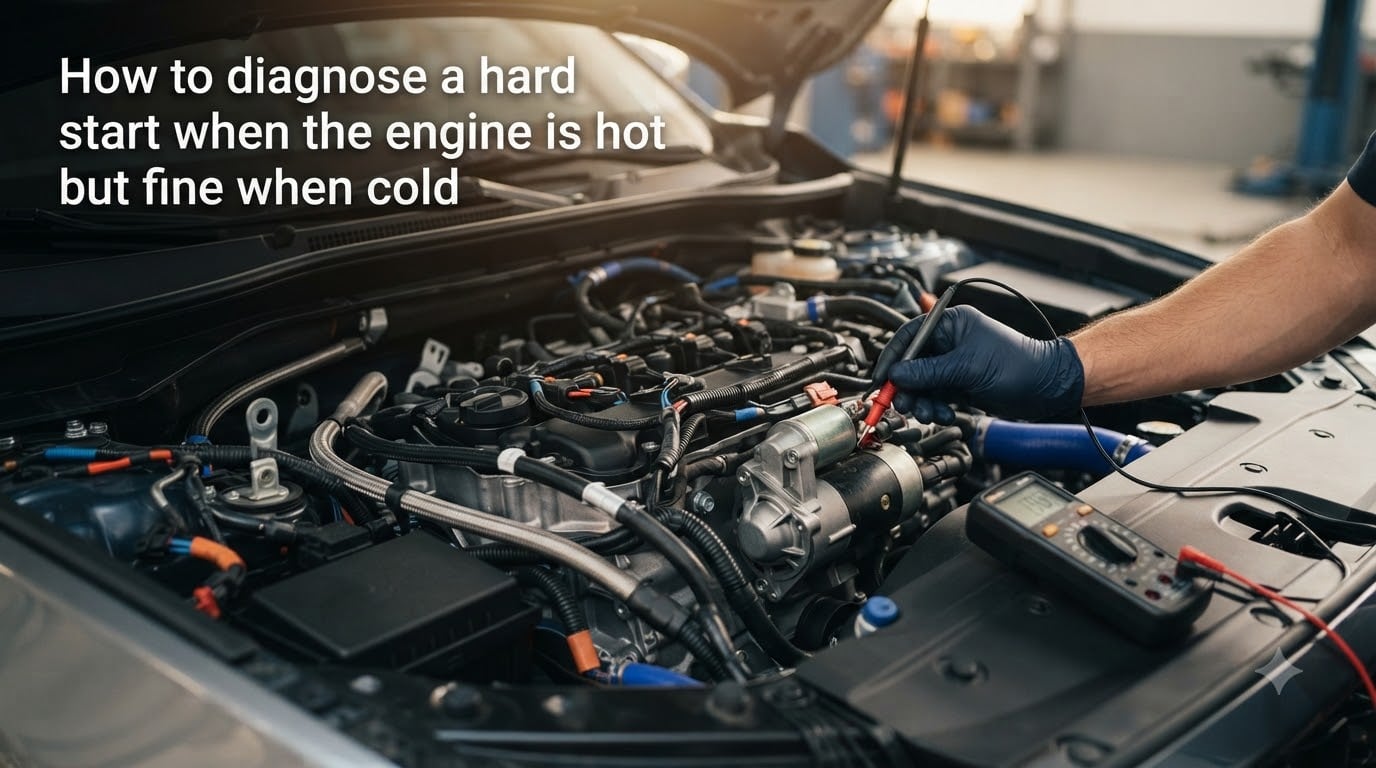
If your engine fires up smoothly in the morning but acts like it has stage fright after a long drive, you are dealing with a classic hot start problem. I have walked dozens of frustrated owners through this exact issue, and the good news is that the root cause usually narrows down to just a handful of suspects once you understand the symptoms.
This guide on how to diagnose a hard start when the engine is hot but fine when cold walks you through every common cause, the science behind why heat triggers them, and a practical diagnostic procedure you can run in your own driveway. No expensive scan tools required for most steps.
Table of Contents
What Causes a Hard Start When the Engine Is Hot?
A hard start when the engine is hot but fine when cold is almost always caused by heat changing the way mechanical, electrical, or fuel system components behave. The five most common culprits are heat soak in the starter motor, vapor lock or fuel percolation in the fuel system, leaking fuel injectors that drop rail pressure, heat-affected crankshaft or camshaft position sensors, and electrical resistance in battery cables or grounds.
Cold starts work fine because every component is at ambient temperature, electrical resistance is low, and fuel stays liquid in the lines. Once the engine runs, heat soaks into surrounding components, and the same components that worked perfectly an hour ago now behave differently. The trick is identifying which one is acting up.
Heat Soak: The Number One Suspect
Heat soak is the silent killer of hot start reliability. When you shut off a hot engine, the manifold, exhaust headers, and surrounding metal continue radiating heat into nearby components for 15 to 30 minutes. The starter motor sits right next to the engine block or exhaust, so it absorbs that heat with nowhere to dissipate it.
Inside the starter solenoid and motor are copper windings. As those windings heat up, their electrical resistance climbs. More resistance means less current flows to the motor at the same voltage. The result is a starter that cranks slowly, struggles to turn over, or refuses to engage when the engine is hot. Once the starter cools back down, it works normally again, which is exactly why the problem disappears after the car sits overnight.
I have personally seen starter heat soak take out otherwise healthy motors with fewer than 80,000 miles. A heat shield or wrap on the starter can help, but the long-term fix is usually a remanufactured starter with better internal tolerances.
Vapor Lock and Fuel Percolation
Vapor lock is the old-school name for a problem that still exists in modern cars. When fuel inside the lines, fuel rail, or injector body gets hot enough, it boils into vapor. Vapor does not flow through injectors the way liquid fuel does, so the engine cranks but cannot get the fuel it needs to fire.
Modern fuel-injected cars were supposed to eliminate vapor lock with high-pressure fuel rails running at 40 to 60 psi. In practice, percolation still happens, especially on cars with a weak fuel pump, an undersized return line, or an engine bay that traps heat. After a hard drive on a hot day, the fuel in the rail can reach 150 degrees F or higher, which is enough to flash into vapor pockets.
If your car cranks fine but refuses to start when hot, only to fire up after 10 or 15 minutes of cooling, fuel percolation is high on the suspect list. The fuel pump cools the fuel back to liquid form during the wait, which is why it eventually restarts.
Fuel Pressure Loss and Leaking Injectors
Even when fuel stays liquid, pressure loss will keep the engine from starting. A healthy fuel system holds pressure in the rail for at least 15 minutes after shutdown. If pressure bleeds off quickly, the pump has to work from zero on the next crank, which means a long crank time or no start at all.
Two main offenders cause fuel pressure loss on a hot engine. The first is a leaking fuel pressure regulator that vents fuel back to the tank through the vacuum line. The second is leaking fuel injectors that drip fuel into the cylinders after shutdown, flooding the combustion chambers and dropping rail pressure at the same time.
You can perform a fuel pressure hold test at home with an inexpensive gauge that threads onto the Schrader valve on the fuel rail. Run the engine, shut it off, and watch the gauge. A healthy system should hold pressure within 5 psi for 15 minutes. If it drops faster, you have a leak somewhere in the fuel delivery system.
Sensor Failures: Crankshaft and Camshaft Position Sensors
Modern engines depend on the crankshaft position sensor and camshaft position sensor to know when to fire the spark plugs and injectors. These sensors are usually located near the hottest parts of the engine, often on the bell housing or near the camshaft cover, which exposes them to extreme temperatures.
As sensors age, their internal components drift out of spec. Heat accelerates this drift, so a sensor that reads perfectly at 70 degrees F might deliver a weak or erratic signal at 200 degrees F. The ECU sees an inconsistent signal and either refuses to fire the injectors or fires them at the wrong time, leading to a long crank, a no-start, or a rough idle until things cool down.
A scan tool with live data can reveal sensor issues. Watch the crankshaft position sensor RPM reading during cranking. If the signal cuts in and out or reads zero when you know the engine is turning, that sensor is the problem. Many auto parts stores will read codes for free if you want a quick check before buying parts.
Electrical: Battery Cables, Grounds, and Relays
Electrical resistance is the hidden cause behind many hot start complaints. Battery cables, ground straps, and the main positive lead all carry hundreds of amps during cranking. Corroded or loose connections heat up under load, which increases their resistance, which reduces the voltage reaching the starter.
The fuel pump relay is another heat-sensitive component. Relays contain springs and contacts that change resistance with temperature. A marginal relay may click and deliver full voltage when cold, then fail to close properly when the under-hood temperature climbs past 150 degrees F. The result is a no-crank or a long crank with low fuel pressure.
Check battery terminals for corrosion, tug on the ground strap to make sure it is tight, and inspect the main positive cable for swelling or heat damage. A voltage drop test across each cable with the engine cranking will tell you if any single connection is robbing more than 0.2 volts.
How to Diagnose a Hard Start When the Engine Is Hot: Step-by-Step
Follow this diagnostic sequence in order. Each step builds on the previous one, and most owners find the problem before reaching step 8.
Confirm the symptom pattern. Drive the car until fully warm, park it for 15 minutes, then try to restart. If it cranks slowly or fails to start, then works again after cooling, you have a heat-triggered hot start issue.
Listen to the starter. A slow, dragging crank points to starter heat soak or weak battery cables. A fast crank with no fire points to fuel or sensor issues.
Check for stored trouble codes. Use an OBD-II scanner to read codes. P0335, P0340, P0385, and related codes all point to crankshaft or camshaft sensor faults.
Perform a fuel pressure hold test. Connect a gauge to the fuel rail Schrader valve, run the engine, shut it off, and watch the pressure for 15 minutes. A drop of more than 5 psi means a leak in the regulator or injectors.
Smell for fuel. After a failed hot start, pull a spark plug. If it smells like raw gasoline, the engine is flooded from leaking injectors.
Test the starter current draw. A clamp-on amp meter around the battery cable during cranking should show 150 to 200 amps for a healthy starter. Higher readings indicate a failing motor.
Inspect battery cables and grounds. Look for green corrosion, loose terminals, and damaged insulation. Clean and tighten every connection.
Check the fuel pump relay. Swap the relay with an identical one from another circuit (such as the horn or AC clutch relay) and see if the hot start behavior changes.
Watch live sensor data while hot. With a scan tool connected, watch the crankshaft and camshaft position sensor signals during a hot restart attempt. Any dropout or erratic reading confirms a failing sensor.
Spray the starter with water when hot. If the starter suddenly works after cooling with water, heat soak is confirmed. This is a diagnostic shortcut, not a repair.
Symptom-to-Cause Troubleshooting Guide
Use this quick mapping to narrow down your problem before grabbing any tools.
Slow crank when hot, normal when cold: Starter heat soak, weak battery cables, or failing starter motor.
Fast crank but no start when hot: Fuel pump relay, fuel pressure loss, crankshaft or camshaft sensor failure.
Starts after long crank when hot: Leaking fuel injectors or weak fuel pump losing prime.
Rough idle after hot restart but runs fine: Engine coolant temperature sensor sending wrong signal to the ECU.
Strong smell of gas after failed hot start: Flooded cylinders from leaking injectors.
Common Misconceptions About Hot Start Problems
Many owners assume the battery is to blame, but a battery that starts the car cold will usually start it hot. If voltage drops below 10 volts during cranking, the battery is suspect. Otherwise, focus on the starter and fuel system first.
Another common myth is that hot start issues mean the engine is worn out. In my experience, most hot start problems trace to a single sensor, relay, or seal that costs less than 200 dollars to replace. The engine itself is rarely the cause.
Finally, do not assume vapor lock is impossible on a modern car. Yes, fuel injection reduced the problem, but heat management in the engine bay is still imperfect, and modern components can still fail in ways that mimic vapor lock.
Preventive Maintenance Tips
Keep your battery terminals clean and your ground straps tight. Replace fuel filters on schedule. Use the recommended grade of fuel, and avoid running the tank below a quarter full on hot days since low fuel volume heats up faster. A coolant system service every two years keeps under-hood temperatures more stable, which protects heat-sensitive sensors and relays.
If your car sits in direct summer sun for hours, a windshield sun shade and an engine bay heat shield can drop peak under-hood temperatures by 20 to 30 degrees F, which is often enough to keep marginal components working.
Frequently Asked Questions
Why is my engine hard to start when it is hot?
Heat changes how the starter, fuel system, and sensors behave. The starter motor draws less current because copper windings increase in resistance, fuel can vaporize in the lines, and sensors can drift out of specification when temperatures climb. These changes combine to make a hot engine harder to start than a cold one.
Why does my car start fine when cold but not when warm?
Cold starts work because every component is at ambient temperature, electrical resistance is low, and fuel stays liquid. Once the engine runs, heat soaks into surrounding components and changes their behavior. As components cool back down, the problem disappears, which is why the car starts fine the next morning.
Can vapor lock happen in modern fuel-injected cars?
Yes. Modern fuel injection reduced vapor lock with high-pressure fuel rails, but fuel percolation still happens. Weak fuel pumps, undersized return lines, and trapped engine bay heat can cause fuel to flash into vapor in the fuel rail, especially on hot days after hard driving.
How do I test for heat soak issues?
Drive the car until fully warm, shut it off, wait 15 minutes, then try to restart. If the starter drags or fails to engage, then works again after the car sits for an hour, heat soak is the likely cause. You can also spray the hot starter with water to confirm cooling fixes the symptom.
Is a hot start problem expensive to fix?
Most hot start repairs cost between 100 and 500 dollars. A remanufactured starter runs 150 to 300 dollars installed. Fuel injectors cost more, typically 400 to 800 dollars for a set. Crankshaft position sensors are usually 50 to 150 dollars for the part plus labor.
Conclusion
Learning how to diagnose a hard start when the engine is hot but fine when cold comes down to recognizing the symptom pattern and narrowing down the cause with simple tests. Start with the starter heat soak since it is the most common, then move to fuel pressure, sensors, and electrical connections in that order. Most owners solve the problem with a single part replacement that costs under 300 dollars and takes less than a day. If you run through the full diagnostic procedure without finding the cause, take the car to a shop with a professional scan tool that can monitor live data while the engine is actually hot.