
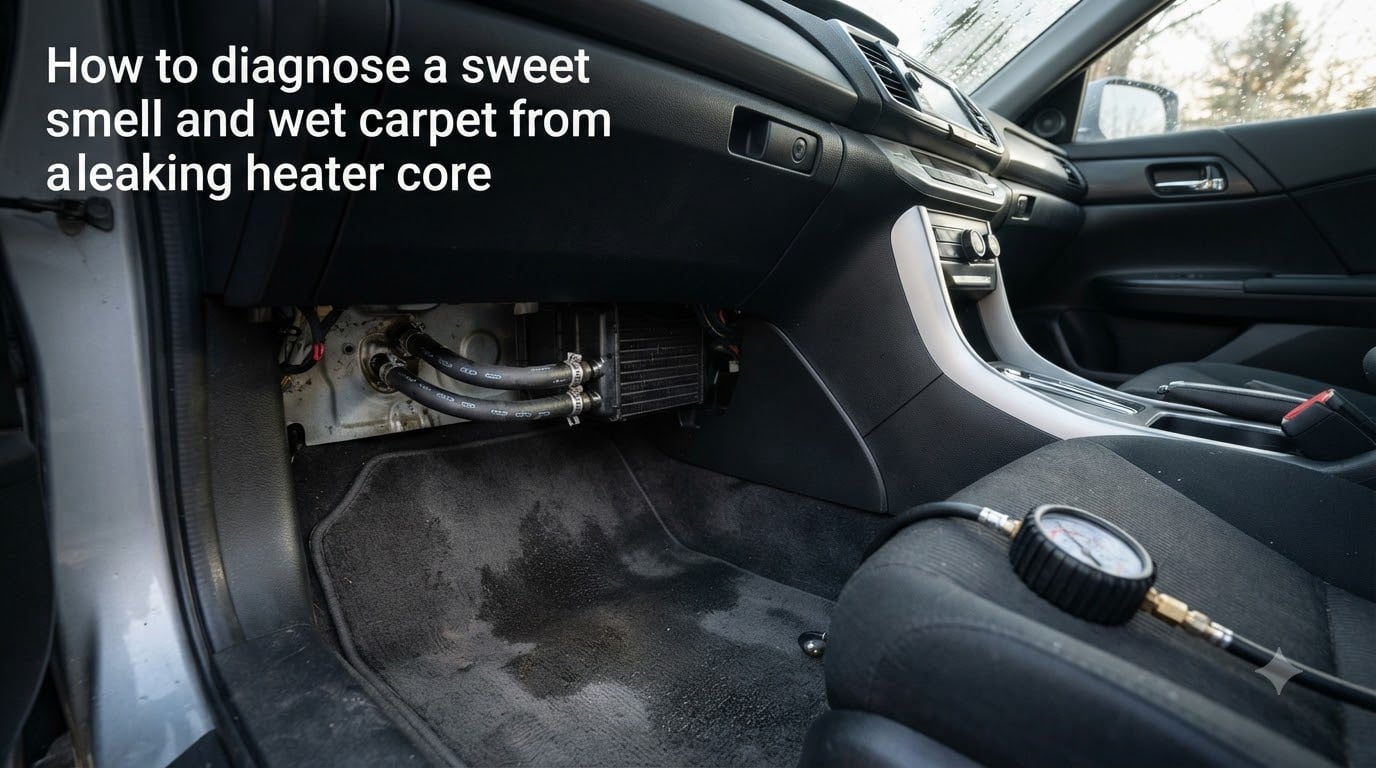
You slide into the driver’s seat, crank the heat, and notice something odd. A sweet, almost candy-like smell fills the cabin. A few days later, you spot a damp patch on the passenger side floor mat. If this sounds familiar, you are likely dealing with a heater core leak, one of the most commonly misdiagnosed car problems out there.
Most guides tell you what the symptoms are but skip the part you actually need: a step-by-step process to confirm the diagnosis yourself. That is exactly what I am going to walk you through. I have spent years wrenching on cars and reading through thousands of forum posts from real owners dealing with this exact issue, and the confusion is always the same. People cannot tell whether they have a coolant leak, AC condensation, or just a clogged drain tube.
By the end of this guide, you will know how to confirm a leaking heater core using simple tests, how to tell it apart from normal AC water, what your repair options cost, and whether it is safe to keep driving. A sweet smell and wet carpet are annoying, but ignoring them can lead to engine overheating, ruined electronics, and serious health risks from coolant vapor.
Table of Contents
What Is a Heater Core and Why Does It Leak?
A heater core is a small radiator-like heat exchanger tucked behind your dashboard. Hot coolant from the engine flows through its tubes, and a blower fan pushes air across the heated fins. That warmed air travels through your HVAC vents to heat the cabin and defrost your windows.
Because the heater core sits inside the cabin, behind the glove box area on most cars, a leak does not drip onto the ground. Instead, coolant seeps onto the passenger side floor and evaporates into the air you breathe. That is why a heater core leak shows up as interior symptoms rather than a puddle under the car.
Heater cores fail for a few predictable reasons. Corrosion from neglected or old coolant eats through the thin metal tubes over time. Age and constant thermal cycling weaken solder joints and seams. Pressure spikes in the cooling system stress the core, especially if the radiator cap is malfunctioning. Contaminated or gelatinized coolant can also restrict flow and accelerate internal damage. Most heater cores last 8 to 12 years, but cars that skip coolant changes fail much sooner.
The Sweet Smell: Your First Warning Sign
The very first symptom most owners notice is a sweet smell in the car, often described as maple syrup or burnt sugar. That scent comes from ethylene glycol, the main ingredient in most green and orange coolants. It has a distinctly sweet, almost pleasant odor that is completely different from gasoline, exhaust, or burning oil.
This smell gets stronger when you turn on the heater because the blower fan pushes coolant vapor through the vents and into the cabin. If the odor only appears when the heat is running and disappears when you shut it off, that is a strong indicator of a heater core leak rather than an engine bay coolant leak.
Here is a quick way to confirm it. Turn the heater on full blast with the fan on high and the temperature dialed to maximum. Wait two minutes. If the sweet smell hits you hard and the air feels slightly humid or greasy, coolant is getting into the air stream. Forum users on Reddit and CarTalk consistently confirm that the maple syrup smell is the textbook first sign, often appearing weeks before any visible wetness on the carpet.
Wet Passenger Floor: Identifying the Leak Location
The wet passenger side floor is the symptom that finally sends most owners searching for answers. Coolant dripping from the heater core lands on the insulation and carpet under the passenger side dash. It pools because the carpet backing and sound deadening material act like a sponge, holding moisture long after a small drip.
Feel the carpet right up under the dash on the passenger side, near the firewall. Press firmly with a dry paper towel. If the towel comes back damp with a slightly slick or greasy feel and a sweet smell, you almost certainly have coolant leaking from the heater core. The carpet may also show a faint pink, green, or orange tint depending on your coolant color.
Heater Core Leak vs AC Condensation: How to Tell Them Apart
This is where most owners get stuck, and no competitor guide explains it clearly. Your car’s AC system produces condensation naturally, and that water also drips onto the passenger side floor when the AC drain tube is clogged. The two problems look identical at first glance but require completely different fixes.
Here is the key difference. AC condensation is clear, odorless water that feels just like tap water. Heater core coolant is slick or greasy to the touch, has a sweet smell, and may have a colored tint. If you dip a paper towel into the wet spot and it dries without leaving any residue, it is likely AC water. If the towel feels slick, smells sweet, or leaves a faint colored stain, it is coolant from a heater core leak.
One more clue: AC condensation only appears when the AC or defroster has been running. A heater core leak can wet the carpet at any time, even overnight with the car parked and cold. If your carpet is wet in the morning before you have driven anywhere, rule out AC condensation.
Foggy Windows and Greasy Windshield Film
Foggy windows are the third classic symptom of a leaking heater core. When coolant vapor enters the air stream, it coats the inside of your windshield with a thin, greasy film. This film refracts light and creates a haze that your defroster struggles to clear because the defroster itself is the source of the vapor.
Run your finger across the inside of your windshield. If it leaves a clear streak and your fingertip feels slightly slick or oily, that is coolant residue. The film has a distinct greasy quality that is nothing like normal interior fogging from humidity. You will also notice that the haze returns quickly after you wipe the glass because the heater keeps pushing more vapor into the cabin.
This greasy film is why a leaking heater core is so frustrating. Even after you fix the leak, the residue lingers on interior surfaces and the smell can take weeks to fully dissipate from the carpet and ventilation system.
Engine Temperature and Coolant Loss Connection
A leaking heater core is part of your engine’s sealed cooling system. Every drop that seeps onto your carpet is coolant the engine no longer has. Over time, this causes the coolant level to drop without any visible leak under the car.
If you find yourself topping off the coolant reservoir every week but cannot find a leak anywhere in the engine bay, the heater core is a prime suspect. Check the reservoir when the engine is cold. A slow, steady drop in level with no puddles under the car is a classic sign of an internal leak like a bad heater core or a failing intake gasket.
As coolant loss continues, you may notice the engine temperature gauge creeping higher than normal or the heater blowing cooler air than it used to. Weak heat output happens because the heater core has less coolant flowing through it, while the engine runs hotter because the overall system is low on fluid. Both symptoms together strongly point to a heater core problem.
How to Diagnose a Sweet Smell and Wet Carpet from a Leaking Heater Core?
No competitor provides a proper diagnostic procedure, so here is the exact step-by-step method I use to confirm a heater core leak. Follow these steps in order, and you will know with confidence whether your heater core is the culprit before you spend a dollar on parts.
Step 1: Start the smell test. Turn the ignition on, set the heater to maximum temperature, and switch the blower fan to high. Wait two to three minutes. A strong sweet smell that intensifies with the heat on confirms coolant is entering the air stream. No sweet smell means you may be dealing with something else entirely.
Step 2: Inspect the passenger floor. Press a dry white paper towel firmly into the carpet under the passenger side dash, as far up toward the firewall as you can reach. Pull it out and examine the towel. Pink, green, or orange tint with a slick feel and sweet odor confirms coolant. Clear, odorless water points to AC condensation or a clogged AC drain.
Step 3: Perform the finger-test on the windshield. Drag one finger across the inside of the windshield. A greasy film that leaves a streak and feels slick is coolant residue from vapor pushed through the vents. Normal fog from humidity wipes clean and feels dry.
Step 4: Check the coolant reservoir level. With the engine completely cold, check the coolant level in the overflow reservoir. Note the level, drive normally for a week, and check again. If the level drops steadily and you see no puddles under the car, coolant is going somewhere internal, most likely the heater core.
Step 5: Inspect the firewall and heater hoses. Open the hood and locate the two heater hoses running through the firewall on the passenger side. Feel around the connections where the hoses enter the cabin. Dampness or dried coolant stains at the firewall could indicate a hose leak rather than the heater core itself.
Step 6: Pressure test the cooling system. This is the most reliable confirmation and the step most DIYers skip. Borrow or buy a cooling system pressure tester, pressurize the system to the cap rating (usually 15 to 18 psi), and watch the gauge for 10 minutes. If pressure drops and you see no external leaks, the heater core is the likely internal failure point. Pressure testing catches slow seeps that leave no visible puddles.
Step 7: Check the carpet overnight. Park the car on a dry night with the AC and heat off. Check the passenger carpet the next morning before starting the engine. If it is damp, the leak is active even with the system off, confirming a heater core drip rather than AC condensation.
If four or more of these seven tests point to coolant, you have confirmed a leaking heater core. The more tests that align, the more confident your diagnosis.
Heater Core Leak vs Clog: How to Tell the Difference
A clogged heater core shares some symptoms with a leaking one, but the two are very different problems. Knowing which you have determines your repair path. A leak means coolant is escaping where it should not. A clog means coolant cannot flow through the heater core at all.
A leaking heater core produces the classic trio: sweet smell, wet passenger carpet, and greasy windshield film. You may also see unexplained coolant loss. The key telltale is that the symptoms involve coolant showing up where it does not belong, inside the cabin.
A clogged heater core produces almost the opposite pattern. You get weak or no heat from the vents, the engine may run slightly hotter, but there is no sweet smell, no wet carpet, and no foggy windows. The coolant stays inside the system but cannot circulate through the heater core due to sediment buildup or gelatinized coolant blocking the narrow tubes.
The quick check: if your heat suddenly stopped working but you smell nothing sweet and your carpet is bone dry, suspect a clog. If you smell syrup and have a damp floor, you have a leak. Pressure testing will confirm either way.
Temporary Fixes vs Permanent Replacement: Cost Comparison
Once you have confirmed the heater core is leaking, you have three options. Each comes with different costs, risks, and longevity. No competitor breaks these down with actual cost ranges, so here is what you can expect in 2026.
Option 1: Stop-Leak Additives
Stop-leak products pour into the radiator or coolant reservoir and circulate through the system. They contain particles or fibers that seal small pinhole leaks from the inside. Cost is typically $10 to $25 for a bottle.
The reality, based on extensive forum feedback: stop-leak works on tiny seeps but frequently fails on anything larger. Worse, it can restrict flow through the narrow heater core tubes and cause a clog that ruins your heat entirely. Many mechanics refuse to work on cooling systems full of stop-leak residue because it contaminates everything. Use this only as a last-resort stopgap to buy a few weeks.
Option 2: Heater Core Bypass
The bypass method disconnects the two heater hoses from the heater core and joins them together with a connector or a U-shaped piece of tubing. Coolant flows through the bypass loop instead of the heater core, stopping the leak entirely. Cost is $5 to $20 for a brass or plastic connector and two hose clamps.
The trade-off is that you lose cabin heat entirely. Your defroster will not work, which makes this unsafe for winter driving in cold climates. The bypass is popular on forums as a way to keep an older car on the road through summer while saving up for the full repair. It takes about 30 minutes with basic hand tools and no dash removal required.
Option 3: Full Heater Core Replacement
The permanent fix is replacing the heater core with a new unit. The part itself typically costs $50 to $150 depending on the vehicle. The labor is where costs explode because the heater core sits behind the dashboard. Many cars require partial or complete dash removal, which can take 4 to 8 hours of labor at shop rates of $100 to $150 per hour.
Total cost at a shop runs $500 to $1,500 for most vehicles, with some luxury cars hitting $2,000 or more due to extensive dash disassembly. DIY is possible but challenging. If you have never removed a dashboard, budget a full weekend and take photos of every connector before you disconnect it.
Cost Summary
Stop-leak is the cheapest at $10 to $25 but risks damaging the system. Bypass costs under $20 and eliminates the leak immediately but sacrifices all cabin heat. Full replacement runs $500 to $1,500 and is the only option that fixes the problem properly while keeping your heat and defroster functional. If you live in a cold climate or plan to keep the car long-term, replacement is the only real solution.
Safety Warnings: Is a Heater Core Leak Dangerous?
Most guides gloss over safety, but this matters. Ethylene glycol coolant is toxic. The same sweet smell that makes it easy to diagnose also makes it dangerous in enclosed spaces. Breathing coolant vapor from a leaking heater core over extended periods can cause headaches, dizziness, nausea, and throat irritation. Long-term exposure to ethylene glycol vapor is linked to kidney damage.
If you have children or pets, the risk is higher. Coolant tastes sweet, which attracts animals, and even small amounts ingested from contaminated carpet can be fatal. Clean up any coolant spills immediately and thoroughly, and do not let pets ride in a car with a known heater core leak.
Beyond health risks, driving with a leaking heater core risks engine damage. Every mile you drive, you lose a little more coolant. Eventually the level drops low enough to trigger overheating, which can warp cylinder heads, blow head gaskets, and destroy the engine. A $1,000 heater core repair is far cheaper than a $4,000 engine rebuild.
Can you drive with a leaking heater core? Yes, short-term, if you check and top off the coolant daily and keep windows cracked for ventilation. But it is not a sustainable solution. Plan to bypass or replace the heater core as soon as possible.
Prevention: How to Extend Heater Core Life
The best fix is preventing the leak in the first place. Fresh coolant contains corrosion inhibitors that protect the thin metal tubes inside the heater core. Old, neglected coolant becomes acidic and starts eating through those tubes from the inside.
Follow your manufacturer’s coolant change interval, typically every 30,000 to 60,000 miles or every 2 to 5 years. Always use the correct coolant type for your vehicle. Mixing green and orange coolant creates a sludgy gel that clogs the heater core and accelerates failure. If you buy a used car with unknown coolant history, flush the system and refill with the correct type as preventative maintenance.
Frequently Asked Questions
What does a leaking heater core smell like?
A leaking heater core produces a sweet smell often compared to maple syrup or burnt sugar. This odor comes from ethylene glycol in the coolant and gets noticeably stronger when you turn the heater on.
Why is my passenger floor wet but it hasn’t rained?
A wet passenger floor without rain usually means either a leaking heater core or a clogged AC condensation drain tube. If the moisture smells sweet and feels slick, it is coolant from the heater core. If it is clear and odorless, it is likely AC condensation.
Can I drive with a leaking heater core?
You can drive short distances if you check and top off coolant daily and keep windows cracked for ventilation. However, prolonged driving risks engine overheating from coolant loss and health issues from breathing coolant vapor. Get it bypassed or replaced as soon as possible.
How much does it cost to fix a heater core leak?
Full heater core replacement at a shop typically costs $500 to $1,500 depending on the vehicle and labor difficulty. A temporary bypass costs under $20 in parts but eliminates cabin heat. Stop-leak additives run $10 to $25 but are unreliable long-term.
Can you fix a leaking heater core without replacing it?
You can temporarily stop a leak with stop-leak additives or bypass the heater core entirely by connecting the two hoses together. Neither is a permanent fix. Stop-leak often fails and can cause clogs, while bypass removes all cabin heat and defroster function.
Is a leaking heater core dangerous to your health?
Yes. Ethylene glycol coolant is toxic, and breathing the vapor over time can cause headaches, dizziness, and kidney damage. Coolant on carpet is also dangerous to pets and children because it tastes sweet. Clean up spills promptly and repair the leak as soon as possible.
Wrapping Up
Learning how to diagnose a sweet smell and wet carpet from a leaking heater core comes down to three core signs: the maple syrup odor when the heat is running, a slick and sweet-smelling damp patch on the passenger floor, and a greasy film on the inside of your windshield. If two or three of those line up with unexplained coolant loss, you have your answer.
The seven-step diagnostic procedure above will confirm it before you spend money on parts. Run the smell test, the paper towel test, the windshield finger test, check your coolant level over a week, inspect the firewall hoses, pressure test the system, and check for overnight wetness. The more tests that point to coolant, the more confident your diagnosis.
Once confirmed, decide between a temporary bypass to get you through the summer or a full replacement to fix it properly. Do not ignore it. A heater core leak will not heal itself, and every mile you drive costs you coolant, risks your engine, and exposes you to toxic vapor. Address it now before a $800 repair becomes a $4,000 engine problem.