
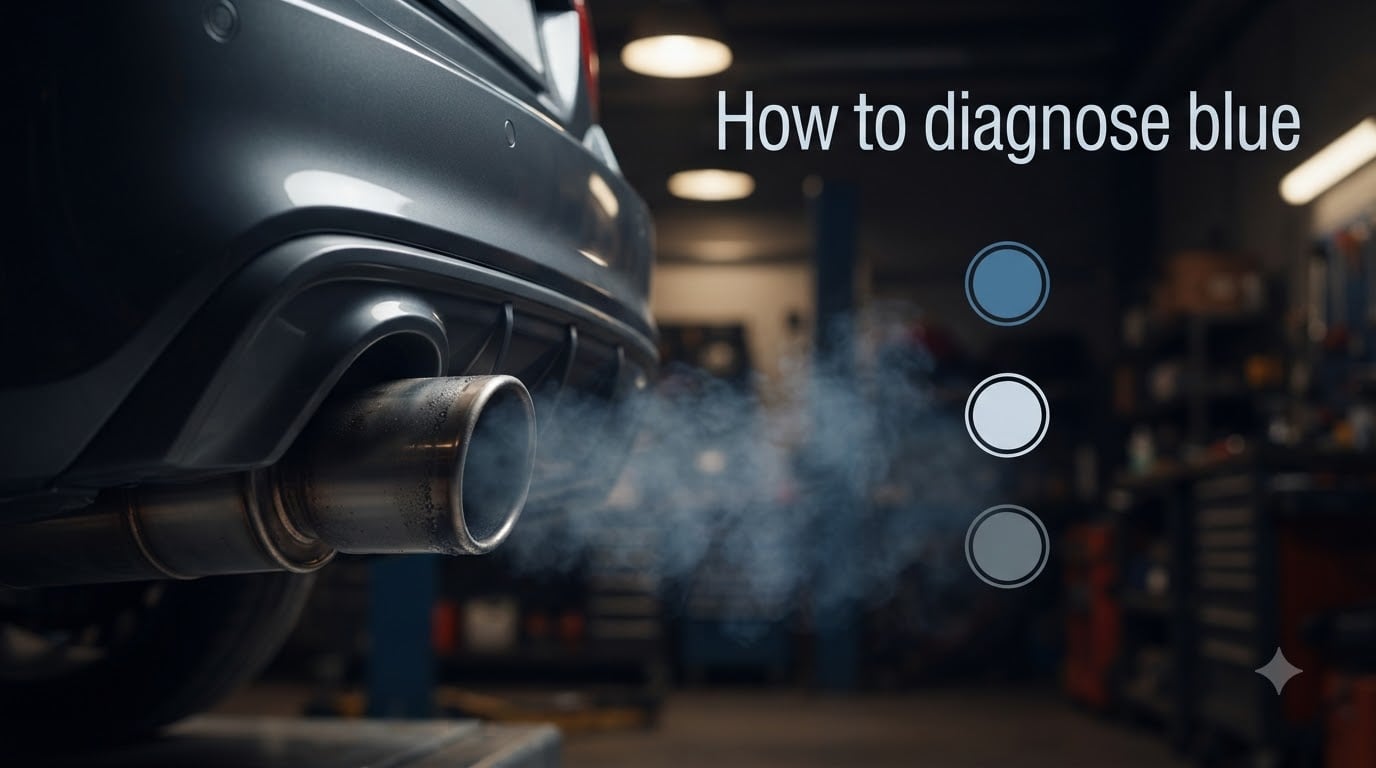
When I first noticed blue smoke puffing from my tailpipe during a hard acceleration, I had no idea whether to keep driving or call a tow truck. That moment sent me down a rabbit hole of mechanic forums, repair guides, and conversations with shop owners. After spending weeks researching exhaust smoke colors and talking to technicians who diagnose these problems every day, I want to share what I learned so you can skip the panic and get straight to the answer.
Your exhaust pipe is actually a diagnostic tool. The color of the smoke tells you exactly what’s happening inside your combustion chamber. Blue means oil is burning. White can mean either harmless condensation or a serious coolant leak. Black usually points to a fuel mixture problem. Learning to read these signals can save you thousands in repairs by catching small issues before they destroy an engine.
In this guide, our team walks you through how to diagnose blue or black exhaust smoke, what each color means, the timing clues that point to specific parts, and exactly when you should stop driving immediately. We’ve pulled insights from real mechanic forum discussions and distilled the diagnostic process into clear steps you can use today.
Table of Contents
Exhaust Smoke Color to Problem
Before we dig into each color, here is a fast-reference table our team built from mechanic advice threads. Use this when you need a quick answer, then scroll to the matching section for full details.
| Smoke Color | Probable Cause | Danger Level | Action Needed |
|---|---|---|---|
| Blue or bluish-grey | Engine burning oil | Elevated | Diagnose within days, watch oil level |
| Thick white (constant) | Coolant entering combustion chamber | High | Stop driving, check coolant level |
| Wispy white (cold startup only) | Normal condensation | None | No action needed, goes away in minutes |
| Black | Rich fuel mixture | Medium | Check air filter, schedule service soon |
| Grey | Mild oil burning or transmission fluid | Medium | Monitor and diagnose within a week |
How to Diagnose Blue Exhaust Smoke
Blue exhaust smoke means your engine is burning oil inside the combustion chamber. The blue tint comes from the oil mixing with fuel and igniting, similar to how oil burns in a deep fryer. This is the most common reason vehicle owners search for help, and it deserves prompt attention.
What Causes Blue Smoke
Three main culprits allow oil to leak into the combustion chamber:
Worn piston rings. These rings seal the gap between the piston and cylinder wall. When they wear out or get stuck with carbon buildup, oil slips past them and burns.
Failed valve seals. Valve stem seals sit at the top of the engine and keep oil out of the combustion area. When they harden or crack, oil drips in.
Turbocharger seal failure. On turbocharged engines, worn seals in the turbo let oil get pushed into the intake or exhaust.
Timing-Based Diagnosis: Acceleration vs Deceleration
Here’s the diagnostic trick most articles miss: when you see the smoke tells you which part is failing. Mechanics on Reddit’s r/MechanicAdvice confirm this pattern based on thousands of repairs.
If blue smoke appears during acceleration, suspect piston rings. The rising cylinder pressure during a wide-open throttle forces oil past worn rings. If blue smoke appears during deceleration or right after you let off the gas, suspect valve seals. The lower manifold pressure during deceleration pulls oil down past the valve guides.
How Serious Is Blue Smoke
Blue smoke is serious but not always catastrophic. Your engine is losing oil, which means it can run dry and seize if you ignore it long enough. One user on a Porsche forum described losing a quart every 500 miles before finally addressing valve seals. Left alone, that engine will destroy its catalytic converter and potentially warp the exhaust valves.
The good news: you don’t always need a full rebuild. Replacing valve seals is a moderate repair. Piston rings are more involved but still fixable on most engines.
How to Diagnose White Exhaust Smoke?
White smoke is tricky because it can be perfectly normal or a sign of catastrophic failure. The key is observing when it appears, how thick it is, and whether it has a smell.
Normal Condensation vs Problem Smoke
On cold mornings, you will see a wispy white plume that disappears within a minute or two as the engine warms up. That is water vapor from condensation inside the exhaust system. This is harmless and expected, especially in humid climates.
Problem white smoke looks different. It is thick, dense, and persistent. It continues even after the engine reaches operating temperature. If the smoke has a sweet smell, that is ethylene glycol from your coolant burning off.
Common Causes of White Smoke
Blown head gasket. The most serious cause. Coolant leaks from the cooling system into the combustion chamber, where it turns to steam.
Cracked cylinder head or engine block. Less common but produces the same symptom. Usually follows overheating.
Failed intake manifold gasket. Allows coolant to enter the intake ports on some engines.
When White Smoke Means Stop Driving Now
Pull over and shut off the engine if you see thick white smoke combined with any of these warning signs: the temperature gauge climbing into the red zone, the coolant level dropping visibly, a sweet smell inside the cabin, or the engine running rough. Continuing to drive can warp the cylinder head and turn a gasket repair into an engine replacement.
How to Diagnose Black Exhaust Smoke?
Black smoke means your engine is running rich, which is shorthand for burning too much fuel and not enough air. You’ll see this most often during hard acceleration or under heavy load, like towing or climbing hills.
What Causes Black Smoke
Clogged air filter. Restricted airflow forces the engine to compensate with extra fuel.
Faulty fuel injectors. Stuck-open injectors dump more fuel than the engine needs.
Failing oxygen sensor or mass airflow sensor. These sensors tell the engine control unit how much fuel to deliver. When they lie, the computer over-fuels.
High fuel pressure. A stuck-open pressure regulator floods the rail.
Diesel vs Gasoline Black Smoke
If you drive a diesel, some black smoke during heavy acceleration is normal because diesels run with excess fuel by design. Persistent black smoke from a diesel under light load, however, still points to an air filter or turbo problem. Gasoline engines should never produce noticeable black smoke under any condition.
Severity of Black Smoke
Black smoke is the least urgent of the three colors. Your catalytic converter is working overtime cleaning up unburned fuel, which shortens its life, but you have time to schedule a repair. The biggest risk is fouled spark plugs and reduced fuel economy.
Other Smoke Colors and What They Mean
Grey smoke usually means a small amount of oil burning, often from minor valve seal wear that hasn’t progressed to full blue smoke. It’s a warning to start watching your oil level.
Bluish-white smoke combined with a burnt-rubber or chemical smell can indicate an electrical issue, like insulation burning on a wire near the exhaust. That’s a fire risk and deserves immediate inspection.
Sweet-smelling white smoke at idle is almost always coolant. If it only appears briefly after a cold start, it could be residual coolant from a previous repair that hasn’t fully burned off yet.
Can You Drive With Colored Exhaust Smoke?
This is the question every forum thread eventually asks, and the honest answer depends on the color and timing.
Safe to Drive and Monitor
Light blue smoke during hard acceleration only, with your oil level stable between changes, gives you weeks or months before serious damage. Same with intermittent black smoke that clears up. Schedule a diagnostic but don’t panic.
Drive Carefully, Repair Soon
Constant blue smoke at idle, steady black smoke under normal acceleration, or white smoke that lingers after warmup all deserve attention within a few days. Keep the oil topped off and avoid hard acceleration in the meantime.
Stop Driving Immediately
If you see thick white smoke with a sweet smell, the temperature gauge climbing, the oil pressure light on, or any smoke combined with knocking or rattling from the engine, pull over and arrange a tow. These symptoms point to active internal damage that gets worse the longer the engine runs.
Steps to Diagnose Your Exhaust Smoke at Home
Before paying a shop $120 for diagnostics, you can narrow down the problem yourself with these steps. Our team uses this same process when helping friends figure out their exhaust issues.
Step 1: Identify the Color in Daylight
Pull the car into direct sunlight and have someone rev the engine while you watch the tailpipe. Garage lighting makes it nearly impossible to tell blue from grey. Take a short video and look at it frame by frame if you need a second opinion.
Step 2: Note When the Smoke Appears
Cold startup only, idle, hard acceleration, deceleration, and steady-state highway driving all point to different problems. Write down exactly when you see smoke.
Step 3: Check Your Oil Level
Pull the dipstick, wipe it clean, reinsert it fully, and read it again. If you need to add a quart to keep it at the full mark, your engine is burning oil. That confirms blue smoke as the likely culprit.
Step 4: Check Your Coolant Level
Look at the coolant reservoir when the engine is cool. Low coolant combined with white smoke is a strong head gasket signal.
Step 5: Look for Other Symptoms
Is the engine running rough? Is fuel economy suddenly worse? Is the check engine light on? Each of these narrows the diagnosis further.
Step 6: Get an OBD-II Scan
Most auto parts stores will scan your codes for free. Codes related to oxygen sensors, mass airflow, or misfires often accompany black or white smoke issues.
FAQs
What does it mean if your exhaust smoke is blue?
Blue exhaust smoke means your engine is burning oil inside the combustion chamber. The most common causes are worn piston rings, failed valve seals, or worn turbocharger seals. Oil is leaking past these components and burning along with the fuel, which produces the distinctive blue color.
Why is my car blowing blue smoke from the exhaust when accelerating?
Blue smoke during acceleration usually points to worn piston rings. When you press the gas, cylinder pressure rises and forces oil past damaged rings. If the smoke appears only during deceleration or after you let off the gas, the cause is more likely failed valve seals, since lower manifold pressure pulls oil down past the valve guides.
Can I drive my car with blue smoke from the exhaust?
You can drive short distances with light blue smoke if your oil level stays steady, but you should diagnose and repair it soon. Your engine is consuming oil, and ignoring it can lead to catalytic converter damage, fouled spark plugs, and eventually engine seizure. If the smoke is heavy or your oil level drops quickly, schedule service within days.
Does blue smoke always mean an engine rebuild?
No, blue smoke does not always mean a full rebuild. Valve seal replacement is a moderate repair that often resolves the issue. Piston ring replacement is more involved but still fixable on most engines. A complete rebuild is only necessary in severe cases where cylinder walls are scored or multiple internal components have failed.
What causes white smoke from exhaust on startup then goes away?
Wispy white smoke on a cold startup is usually water vapor from condensation inside the exhaust system and catalytic converter. It is normal and disappears within a minute or two as the engine warms up. Thick, persistent white smoke that continues after warmup, especially with a sweet smell, signals a head gasket leak or coolant intrusion and needs immediate attention.
Final Thoughts on Diagnosing Exhaust Smoke
Learning how to diagnose blue or black exhaust smoke gives you a real advantage the next time your tailpipe starts puffing. Remember the core principles: blue means oil, thick white means coolant, and black means too much fuel. Watch when the smoke appears, since timing points directly to the failing component. And trust your nose. Sweet smells point to coolant, while burnt-rubber smells point to electrical issues.
If you’re unsure after your home diagnosis, get a professional opinion before the problem grows. Catching a worn valve seal now costs a fraction of replacing an engine later.