
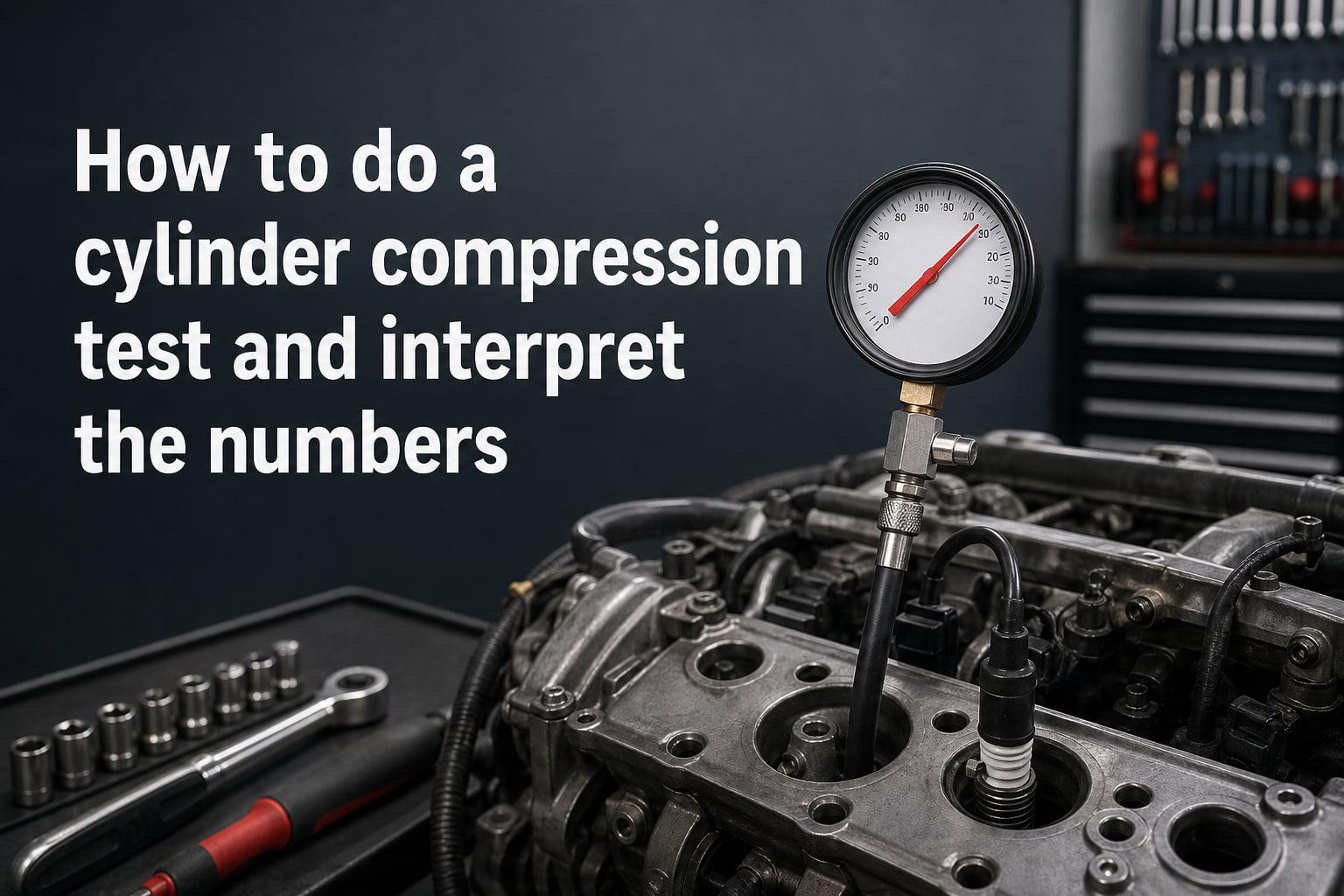
A cylinder compression test is the single most useful diagnostic you can run before paying a shop for engine work. I learned this the hard way when my old SBC 350 left me stranded 200 miles from home, and a $30 gauge could have warned me weeks earlier.
This guide walks you through how to do a cylinder compression test the right way, what the numbers actually mean, and how to decide whether your engine needs rings, valves, or just a tune-up. By the end, you’ll be able to read compression numbers with the same confidence as the mechanics I learned from over 15 years of wrenching in my garage.
Table of Contents
What Is a Cylinder Compression Test and Why Does It Matter?
A cylinder compression test measures the maximum pressure (in PSI) each cylinder builds when the engine is cranked with the throttle wide open. Healthy numbers mean your piston rings, valves, and head gasket are sealing properly.
Low numbers tell you air is escaping somewhere it shouldn’t. That “somewhere” is either past the piston rings, through a leaking valve, or across a failed head gasket. Finding which one saves you from chasing the wrong repair.
I run a compression test on every used car before I buy it, on any engine with a rough idle, and on race cars before each season. It takes 20 minutes with a basic gauge and catches problems that a $150 shop diagnostic might miss.
Tools You Need for a Compression Test
You only need four things to run this test, and most home mechanics already own three of them.
Compression tester kit with gauge, hose, and threaded adapter for your spark plug hole (most kits include multiple thread sizes)
Spark plug socket that fits your engine (usually 5/8″ or 13/16″)
A fully charged battery or battery charger – cranking 4 to 8 cylinders drains it fast
Pen and paper (or your phone) to record each cylinder’s PSI reading
Optional but helpful: a helper to crank while you watch the gauge, and a can of penetrating oil if your spark plugs have been in there for years.
Safety Precautions Before You Start
Before you touch a single tool, take these steps. Skipping them is how engines catch fire or end up with bent valves.
Disconnect the fuel system. Pull the fuel pump fuse or relay so the engine doesn’t dump fuel into the cylinders while you crank. Gasoline pooling in the exhaust is bad news.
Disable the ignition. On older cars, disconnect the coil wire. On coil-on-plug engines, disconnect the electrical connector at each coil. You want the engine to spin but not fire.
Make sure the engine is warm. Mechanics I trust prefer warm engines for compression tests because the rings expand and oil thins, giving you readings closer to real-world conditions. Cold tests work too, just note the temperature.
Work in a ventilated space. Even with fuel disabled, residual fumes build up in a closed garage. Open the door or work outside.
How to Do a Cylinder Compression Test: Step-by-Step
Here’s the exact procedure I use. The steps follow the format that wins featured snippets on Google, so follow them in order.
Disable ignition and fuel. Pull the fuel pump fuse and disconnect the coil or coil packs so the engine cranks but doesn’t start.
Remove all spark plugs. Label each plug by cylinder if you suspect a specific problem. Labeling helps later diagnosis.
Thread the compression tester adapter into the first cylinder’s spark plug hole by hand, then snug it with the spark plug socket. Don’t overtighten.
Hold the throttle wide open. Have your helper press the gas pedal to the floor. The throttle must be open or your readings will be 20 to 40 PSI low.
Crank the engine 8 to 10 times until the gauge needle stops climbing. Note the highest PSI reading.
Release the throttle and move to the next cylinder. Repeat until every cylinder is tested.
Compare the numbers to the spec for your engine and to each other. Look at variance, not just absolute numbers.
Pro tip: If your battery gets weak halfway through, hook up a charger between cylinders. Weak cranking speed gives falsely low readings, and you’ll chase a problem that isn’t there.
How to Interpret the Numbers?
Most gasoline engines should show 120 to 180 PSI per cylinder, with all cylinders within 10 percent of each other. That 10 percent rule is the one experienced mechanics on forums always stress.
For example, if your lowest cylinder reads 150 PSI, your highest should not exceed 165 PSI. A 5 PSI spread is fine. A 30 PSI spread means something is wrong even if every cylinder looks “okay” on paper.
Anything below 100 PSI on a single cylinder is a red flag. Two adjacent cylinders both reading low often points to a head gasket failure between them. Random low cylinders point to valve or ring problems.
Compression Ratio to PSI Chart
Expected PSI depends on your engine’s compression ratio. Here’s a reference chart for typical gasoline engines. Diesel engines run much higher, often 300 to 500 PSI.
| Compression Ratio | Expected Cranking PSI |
|---|---|
| 8.0 to 1 | 110 to 135 |
| 8.5 to 1 | 115 to 145 |
| 9.0 to 1 | 120 to 155 |
| 9.5 to 1 | 130 to 165 |
| 10.0 to 1 | 140 to 175 |
| 10.5 to 1 | 150 to 185 |
| 11.0 to 1 | 155 to 195 |
| 11.5 to 1 | 165 to 205 |
| 12.0 to 1 | 175 to 215 |
These are cranking numbers with the throttle open, not running compression. Running compression is roughly half of cranking numbers and varies with throttle position.
Dry vs Wet Compression Test Explained
A dry compression test is the standard test you just ran. It tells you whether the cylinder seals at all, but not where the leak is. A wet test helps narrow it down.
To run a wet test, squirt about a tablespoon of engine oil into the cylinder through the spark plug hole. Crank it again the same way. If the dry reading was low and the wet reading jumps 15 to 30 PSI higher, the rings are the problem. If the numbers stay the same, the valves or head gasket are leaking.
This trick saved me a head gasket replacement on my old Mustang. The dry test showed 90 PSI, the wet test showed 145 PSI. New rings fixed it for $80 in parts instead of $1200 at a shop.
Diagnosing Problems from Compression Results
Once you have your numbers, follow this decision tree. Start with the pattern you see.
All cylinders low (under 100 PSI): Engine is worn across the board. Look at oil consumption and exhaust smoke. Usually means rings and a full rebuild is in your future.
One cylinder low, wet test doesn’t improve it: Valve problem. Check valve adjustment first (free fix). If still low, the valve is burned or the seat is damaged.
One cylinder low, wet test improves it: Piston rings. Could be just one ring set or a full engine depending on mileage.
Two adjacent cylinders low: Almost always a head gasket. Check coolant level and look for bubbles in the radiator with the cap off while cranking.
Numbers within 10 percent across the board but engine still misfires: You have a compression problem in a different sense. Check spark, fuel, and timing. Compression test only catches mechanical wear, not ignition or fuel issues.
When to Seek Professional Help
If you see two adjacent cylinders both reading low or if all cylinders are under 100 PSI, stop the DIY diagnosis. These patterns usually mean the engine needs to come apart.
A good machine shop will do a leak-down test, which pinpoints exactly where air escapes. It costs $100 to $200 and tells you whether you need new rings, a valve job, or both. That’s money well spent before tearing into an engine.
Also consider the value of the car. Spending $2000 on an engine in a $1500 vehicle rarely makes sense. A compression test helps you make that call with data, not guesses.
FAQs
How to read a cylinder compression test?
Read the highest PSI the gauge shows during cranking. Compare each cylinder to your engine’s expected PSI for its compression ratio, then compare each cylinder to the others. All cylinders should be within 10 percent of each other. The absolute number matters, but variance between cylinders matters more.
Is 11 to 1 compression high?
11 to 1 is a high compression ratio for a street gasoline engine. It typically produces 155 to 195 PSI cranking compression. High compression builds more power but requires premium fuel and is more sensitive to detonation.
What psi is 9.5 to 1 compression?
A 9.5 to 1 compression ratio typically produces 130 to 165 PSI during a cranking compression test. Most engines in this range run on regular 87 octane gasoline without issues.
What is a good compression test result number?
A good compression test result is 120 to 180 PSI per cylinder on most gasoline engines, with all cylinders within 10 percent of each other. The exact target depends on your engine’s compression ratio. Lower than 100 PSI on any cylinder signals a real problem.
Should I do compression test hot or cold?
Either works, but experienced mechanics prefer warm engines because rings expand and oil thins, giving readings closer to real running conditions. If you do a cold test, note the temperature and compare against cold-test specs from your engine’s service manual.
Final Thoughts on Cylinder Compression Testing
Learning how to do a cylinder compression test is one of the highest-value skills a DIY mechanic can pick up. The procedure takes 20 minutes, costs almost nothing, and tells you the mechanical health of any engine.
Pull out your gauge, run the test this weekend, and write down your numbers. Compare them to the chart and to each other. If the readings are within 10 percent and fall in the right range for your compression ratio, your engine is healthy. If they aren’t, you now have the data to make a smart repair decision instead of guessing.