
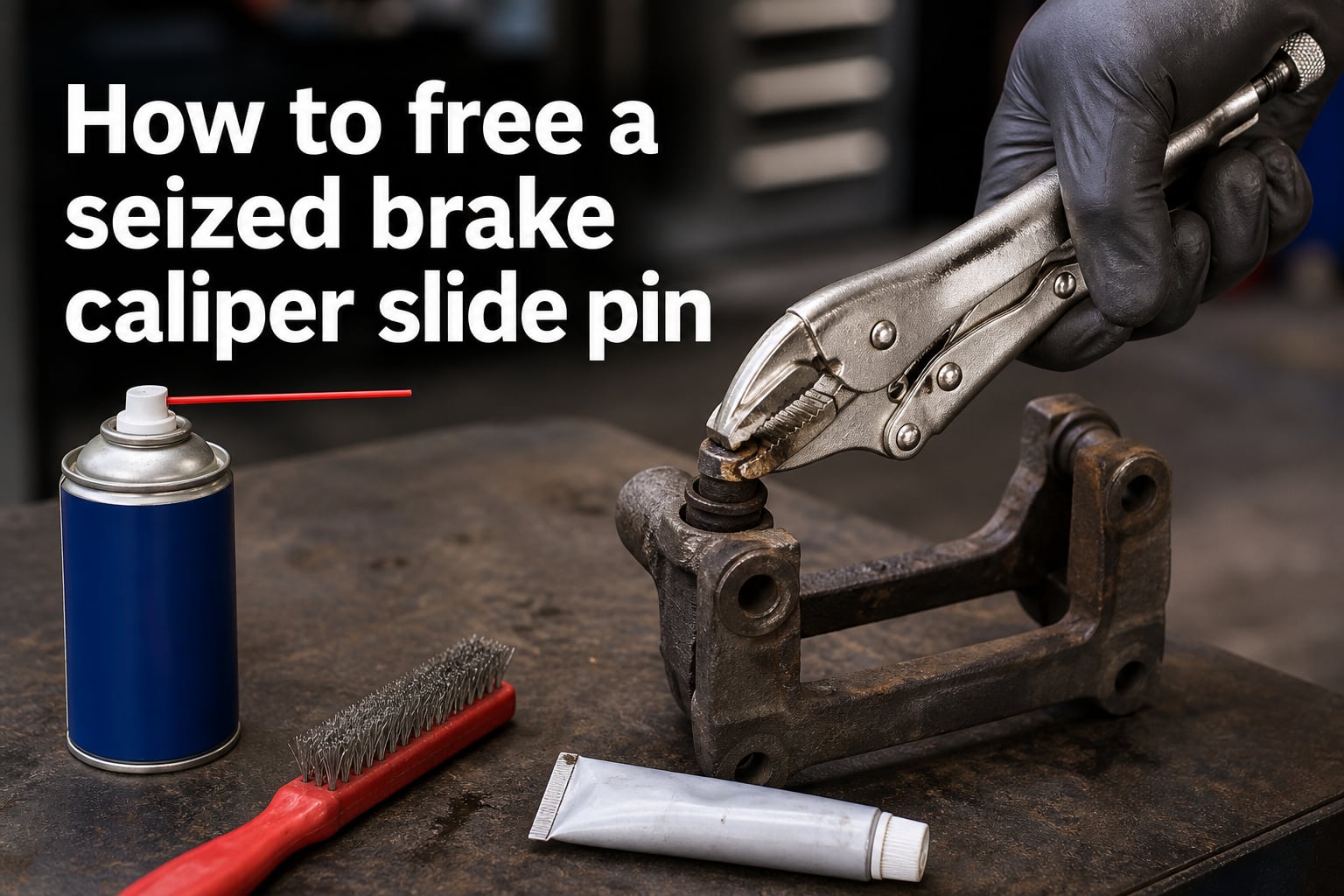
Learning how to free a seized brake caliper slide pin can save you hundreds of dollars and a trip to the shop. I have wrestled with stuck pins on my own vehicles for over a decade, and I will walk you through the exact process I use when a slide pin refuses to budge.
A seized brake caliper slide pin is one of the guide pins that allows the caliper to float and center itself over the rotor. When it seizes, the caliper cannot slide, which causes uneven brake pad wear, pulling to one side, and a rotor that overheats on one corner. The good news is most stuck pins can be freed at home with basic tools and a little patience.
In this guide, I will show you what causes pins to seize, the tools you need, the step-by-step removal process, the heat method for stubborn pins, and how to properly lubricate everything before reassembly.
Table of Contents
What Causes a Brake Caliper Slide Pin to Seize?
Brake caliper slide pins seize when rust, corrosion, or degraded lubricant locks them inside their bores. Moisture and road salt creep past torn rubber boots, and over time the metal-on-metal contact welds the pin in place.
Three things cause most seized pins I see in my garage:
Failed rubber boots that let water, salt, and brake dust enter the bore
Dried-out original grease that hardens into a glue-like residue
Swollen rubber bushings that physically jam the pin inside its housing
That last one is a problem few articles mention, but it comes up constantly on mechanic forums. A swollen rubber bushing mimics corrosion and will make a perfectly clean pin feel stuck. Inspect the boot carefully before assuming rust is your enemy.
Age and climate accelerate the process. Vehicles over five years old in regions that use road salt are the most common candidates. Honda, Toyota, and Subaru models in particular develop seized rear caliper slide pins because the rear brakes do less work and sit longer between services.
Tools You Need to Free a Seized Caliper Slide Pin
You do not need a full shop to free a seized pin. Here is the kit I lay out before I start.
Floor jack and jack stands
Lug wrench and socket set
Penetrating oil (PB Blaster or Liquid Wrench work best)
Vice grips or locking pliers
Brake cleaner spray
Wire brush or nylon bore brush
Silicone-based brake grease
Optional: propane torch, brass hammer, dental pick
Skip the cheap penetrating oils for this job. I learned the hard way that WD-40 alone rarely frees a seriously seized pin. Spend the extra few dollars on a real rust penetrant and your chances of success on the first try jump dramatically.
How to Free a Seized Brake Caliper Slide Pin: Step-by-Step
Follow these steps in order. Skipping ahead usually turns a 20-minute job into an afternoon of frustration.
Step 1: Lift the Vehicle and Remove the Wheel
Loosen the lug nuts while the wheel is on the ground. Then jack up the vehicle, support it on jack stands, and remove the wheel. Never work under a car held only by a hydraulic jack.
Step 2: Remove the Caliper and Bracket Bolts
Unbolt the caliper bracket bolts (not the guide pin bolts yet). Lift the caliper off the rotor and hang it from the suspension with a wire hanger so you do not stress the rubber brake hose.
Step 3: Inspect and Remove the Rubber Boot
Pull back or pry off the rubber boot covering each slide pin. Look for tears, swelling, or hardened grease packed inside. A damaged boot must be replaced before reassembly.
Step 4: Soak With Penetrating Oil
Spray penetrating oil directly into the bore where the pin enters the caliper bracket. Let it soak for at least 10 minutes. For really stubborn pins, I soak overnight and reapply in the morning.
Step 5: Rotate, Don’t Pull
Grip the pin with vice grips and gently rotate it back and forth. Do not try to yank it straight out. The rotation breaks the rust bond and lets the penetrant work deeper into the gap.
I have freed pins in under five minutes using only the rotate method. The secret is patience and steady pressure rather than force.
Step 6: Use Heat If the Pin Still Won’t Budge
If rotation does not free the pin, move to the heat method described in the next section. Once the pin moves, slide it out completely.
Step 7: Clean the Bore
Spray brake cleaner into the bore and scrub with a wire brush or nylon bore brush. Wipe out all rust flakes and old grease. Any debris left behind will cause the new pin to seize again.
Heat Method for Stubborn Seized Pins
Heat expands the caliper bracket faster than the corroded pin, breaking the rust bond inside the bore. It is the single most effective trick I know for pins that refuse to rotate after soaking.
Use a propane torch and heat the caliper bracket around the stuck pin bore. Aim for a dull red or dark cherry color. Do not heat the pin itself and do not bring the steel to a bright orange, because at that temperature you risk tempering the metal and weakening the bracket permanently.
Safety matters here. Keep a fire extinguisher within reach, wear gloves, and never heat near the rubber brake hose or the wheel cylinder. After heating, immediately try to rotate the pin with vice grips while everything is still expanded.
If heat still does not free the pin, the last resort is to drill a small hole in the back of the bracket backing plate to relieve pressure. Some DIYers on mechanic forums have used this technique successfully, but I treat it as a final option before replacing the bracket entirely.
Best Lubricant for Caliper Slide Pins After Freeing
Silicone-based brake grease is the best lubricant for caliper slide pins. It withstands the high temperatures near the rotor, resists washout from water, and will not attack the rubber boots the way petroleum grease does.
You can put anti-seize on caliper slide pins, but use it sparingly. A common professional approach is a 9:1 mix of silicone brake grease to anti-seize compound. The grease provides long-lasting lubrication while the anti-seize adds a layer of corrosion protection.
Apply a thin, even coat of grease to the entire pin surface and inside the cleaned bore. Slide the pin in and out a few times to distribute the lubricant, then reinstall. Avoid these common mistakes:
Never use regular chassis grease, which melts and runs onto the rotor
Never reuse the old grease, which is contaminated with metal particles
Never grease the rubber boot itself, only the metal pin underneath
Prevention and Maintenance Tips
Once you have freed a seized pin, keep it from happening again with a few simple habits. Inspect the rubber boots every time you do a brake job. A torn boot is the number one reason pins seize.
Re-lubricate the slide pins annually, especially before winter. Wash the brakes with a gentle hose after driving on salted roads. Replace swollen or cracked boots immediately.
I keep a small tube of silicone brake grease in my garage shelf so I never have an excuse to skip this step. Five minutes of prevention beats an afternoon of wrestling a stuck pin.
When to Replace Instead of Repair
Sometimes freeing a pin is not the right move. Replace the slide pin or the entire caliper bracket if you see deep pitting, scoring, or a bent bracket. A pin with visible galling will seize again no matter how well you lubricate it.
Replacement pin and boot kits are inexpensive and usually include new bushings and grease. If your pins have seized once, fresh hardware is cheap insurance against a repeat failure.
FAQs
How to unseize a caliper slide pin?
Spray penetrating oil into the bore, let it soak for 10 minutes, then grip the pin with vice grips and rotate it back and forth rather than pulling. For stubborn pins, heat the caliper bracket with a propane torch until dull red, then rotate while still warm. Clean the bore and lubricate with silicone brake grease before reinstalling.
What is the best lubricant for caliper slide pins?
Silicone-based brake grease is the best lubricant for caliper slide pins. It resists heat, water, and will not damage rubber boots. A 9:1 mix of silicone grease to anti-seize compound is a popular professional option for added corrosion protection.
What causes a caliper slide pin to seize?
The most common causes are rust and corrosion from moisture entering through torn rubber boots, dried-out original grease, and swollen rubber bushings that physically jam the pin. Vehicles over five years old in regions that use road salt are the most frequent candidates.
Can you put anti-seize on caliper slide pins?
Yes, you can put anti-seize on caliper slide pins, but use it sparingly and mixed with silicone brake grease. A 9:1 grease to anti-seize ratio gives you the long-lasting lubrication of grease plus the corrosion protection of anti-seize without the risk of dry-out.
Is it safe to drive with a seized caliper slide pin?
Driving with a seized caliper slide pin is not recommended. The affected brake will drag continuously, which overheats the rotor, wears the pad unevenly, reduces fuel economy, and can cause the vehicle to pull to one side. Address the issue as soon as you notice symptoms.
Final Thoughts
Knowing how to free a seized brake caliper slide pin puts real money and time back in your pocket. The job comes down to three reliable techniques: penetrating oil plus rotation for lightly stuck pins, controlled heat for stubborn ones, and proper silicone grease on reassembly.
Take the extra five minutes to inspect the rubber boots and re-lubricate the pins annually. Your future self, kneeling next to a wheel with vice grips in hand, will thank you.