
I first noticed it on a sticky August morning — that wet, sock-like smell blasting out of the register the second the AC kicked on. If you are trying to figure out how to get rid of a musty smell coming from your AC vents, I have been in your shoes, and the good news is that the fix is usually straightforward once you know where to look.
That musty odor is not just unpleasant. It is a warning sign that mold, mildew, or bacteria are growing somewhere inside your cooling system, and every cycle of air is pushing spores into the rooms you live in. This guide explains what causes the smell, walks you through the exact steps to fix it, and shows you how to keep it from coming back next season.
Table of Contents
Why Does My AC Smell Musty?
A musty smell from your air conditioner almost always means microbial growth somewhere in the system. When warm, humid air passes over the cold evaporator coil, water condenses out of it, just like a cold glass of iced tea sweating on a summer day. That moisture collects on the coil, in the drain pan, and inside the metal ductwork, and any dust or organic material present becomes food for mold and mildew.
Industry technicians sometimes call this “dirty sock syndrome,” because the smell closely resembles a gym bag full of damp laundry. The issue is not the sheet metal or the refrigerant, but the biology of microorganisms feeding on the dust trapped in dark, wet parts of the unit. If the smell is stronger when the AC first starts and fades after a few minutes, the growth is likely on the evaporator coil or in the drain pan. If it stays constant while the blower runs, the problem often lives inside the ductwork itself.
The 4 Conditions Mold Needs to Grow in Your AC
Mold is a stubborn organism, but it can only thrive when four conditions line up. Understanding these helps you target your fix instead of guessing.
Moisture: condensation from the evaporator coil, a clogged drain line, or a leaking drain pan all feed mold.
Organic food source: dust, pollen, pet dander, and dead skin cells collect on coils and inside ducts.
Darkness: the inside of your air handler, ductwork, and drain pan never see sunlight.
Warmth: temperatures between 60 and 80 degrees Fahrenheit are ideal, which is exactly the range of most indoor air during cooling season.
Remove any one of these conditions and mold cannot grow. The easiest ones for a homeowner to control are moisture and food (dust), which is why regular filter changes and drain-line cleaning are so effective.
Is a Musty AC Smell Dangerous?
Breathing mold spores day after day is not something to ignore. Common reactions include stuffy nose, sore throat, coughing, headaches, and skin irritation. People with asthma, allergies, or a weakened immune system often notice symptoms much sooner and more severely than others in the household.
Prolonged exposure to certain species, including black mold (Stachybotrys chartarum), has been linked to more serious respiratory and inflammatory responses. The EPA and most HVAC professionals recommend treating any persistent musty smell as a real problem, not a minor inconvenience. If anyone in your home has chronic sinus issues, asthma flare-ups, or unexplained fatigue that improves when they leave the house, the AC system is a strong suspect.
Babies, elderly relatives, and anyone recovering from illness are especially vulnerable. For them, the issue stops being “just a smell” and becomes a health matter worth addressing quickly.
How to Get Rid of a Musty Smell Coming from Your AC Vents: Step-by-Step?
Work through these steps in order. Most homeowners resolve the problem within the first three, but the last few exist for stubborn cases where the smell keeps coming back.
Step 1: Replace the air filter. A clogged filter is the most common reason an AC starts smelling bad. Pull out the old filter, note the size printed on the frame, and install a fresh pleated filter rated MERV 8 to 11. Set a reminder to change it every 30 to 90 days. If you have pets or allergies, lean toward the shorter end of that range.
Step 2: Check the registers and return vents. Walk through every room and make sure supply registers and return grilles are open and unobstructed. Furniture, rugs, and curtains pushed against a register can create stagnant pockets where moisture and dust build up. Vacuum the grilles with a brush attachment while the system is off.
Step 3: Inspect and clear the condensate drain line. The condensate drain is the white PVC pipe near your indoor air handler. Locate the drain pan under the evaporator coil and look for standing water. With the system off, slowly pour a cup of white distilled vinegar into the access tee or cleanout port to kill algae and flush the line. Wait 30 minutes before running the AC again.
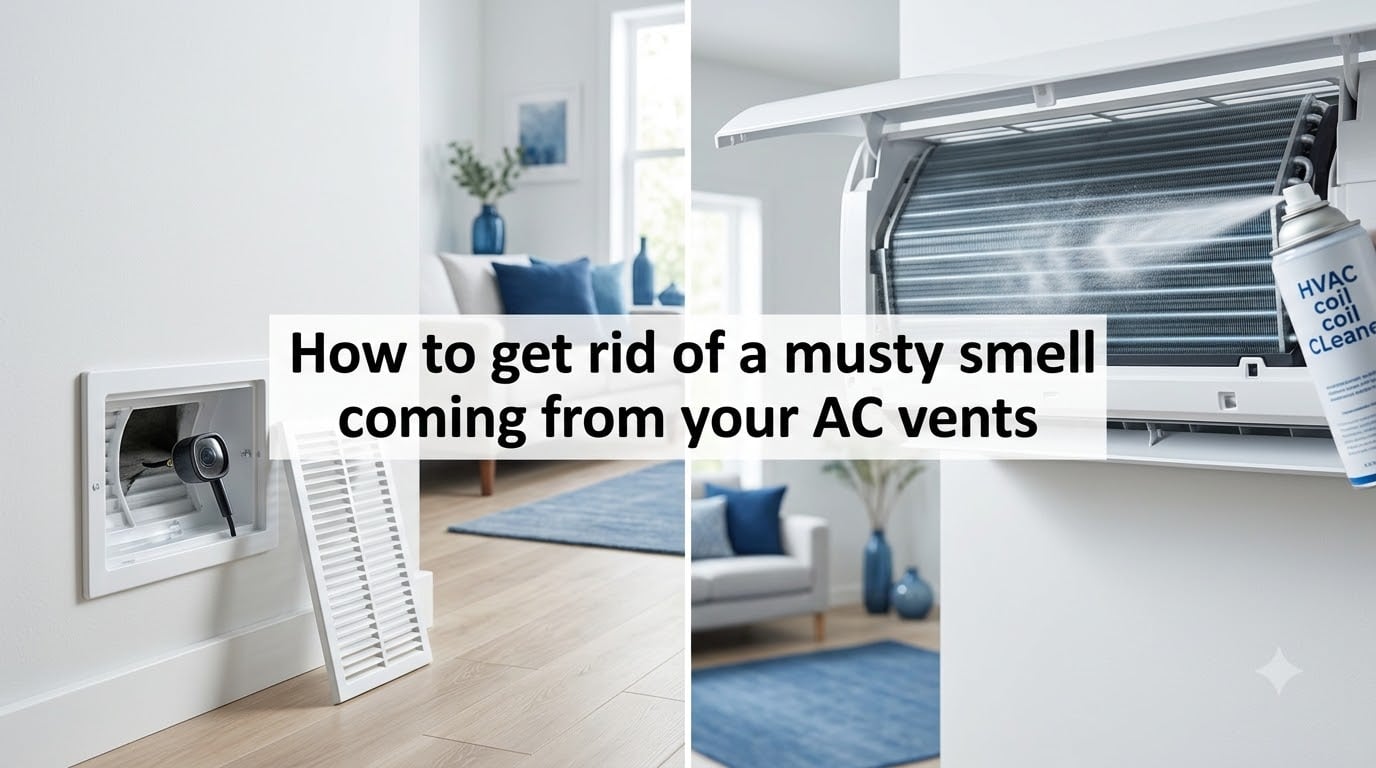
Step 4: Clean the evaporator coil. If the smell persists, the evaporator coil itself is likely coated with biological growth. You can spray a no-rinse HVAC coil cleaner (available at any home improvement store) directly onto the coil following the product instructions. For heavy buildup, a professional coil cleaning is faster and more thorough.
Step 5: Have the ductwork inspected. If you still smell mustiness after the first four steps, the issue may be inside the sheet metal ducts. Look for visible mold growth, especially near the air handler, in basement runs, or in attic sections that have ever gotten wet. A NADCA-certified duct cleaning is the industry standard for a full system cleaning.
Step 6: Seal any leaking or disconnected ducts. Leaky supply ducts pull air from attics, crawl spaces, and wall cavities, dragging in dust, insulation fibers, and moisture that feed mold growth. Mastic sealant or metal-backed tape (not regular duct tape) should be used to seal any gaps you can reach. Anything in a hard-to-access location is best handled by a pro.
DIY Cleaning Methods That Actually Work
Not every home remedy lives up to the hype, but a few options are backed by both HVAC techs and homeowners on forums. White distilled vinegar is the safest all-purpose option for the drain line and light drain pan buildup. Hydrogen peroxide in a 3 percent solution can be sprayed on accessible coils to kill surface mold, just wipe it clean after 10 minutes.
For evaporator coils, use a commercially formulated foaming coil cleaner rather than household bleach. Bleach produces harsh fumes indoors, can corrode aluminum fins, and is not approved for use on HVAC components by most manufacturers. Baking soda left in open dishes near registers only masks the smell temporarily and does not address the source.
One trick shared by homeowners who deal with this every summer is running the AC on fan-only mode for 15 minutes after a 30-minute cool cycle. Moving the air keeps moisture from pooling on internal parts between cooling runs.
When to Call an HVAC Professional
DIY covers a lot, but some situations require a licensed technician. If the smell comes back within a week of cleaning, if you can see visible mold inside the ducts, if the drain pan is cracked or rusted, or if your home has had any kind of water damage, it is time to bring in a pro.
For a standard mold treatment and coil cleaning, most homeowners spend between 200 and 500 dollars. A full NADCA-certified duct cleaning for a typical single-family home runs 450 to 1,000 dollars depending on system size and accessibility. Major duct replacement or remediation after water damage can climb higher, often 2,000 to 6,000 dollars, but that is rare and only needed after flooding or long-term leaks.
Look for technicians with NADCA certification for duct cleaning and EPA-recommended mold remediation practices. Get at least two written estimates before approving any work.
How to Prevent Musty Smells from Coming Back
Prevention is cheaper than remediation, and a small routine goes a long way. Change your filter on schedule, keep indoor humidity below 50 percent with a dehumidifier if needed, and schedule a professional AC tune-up every spring before the cooling season starts. Ask the technician to inspect the evaporator coil, flush the drain line, and confirm the drain pan is clean and intact.
Consider installing a UV germicidal lamp inside the air handler if you live in a humid climate or have had mold issues before. These lights continuously kill bacteria and mold spores passing through the unit and are particularly effective against the dirty sock syndrome bacteria. They cost a few hundred dollars to install and last several years.
Finally, run the AC for a few minutes every couple of weeks during the off-season, including the heat setting in winter. Stagnant, damp air inside dark ductwork is the perfect invitation for mold, and short cycles keep things dry.
Frequently Asked Questions
How do I get the musty smell out of my AC ducts?
Start by replacing the air filter, then vacuum the supply and return registers. Flush the condensate drain line with white distilled vinegar and clean the evaporator coil with a no-rinse coil cleaner. If the smell returns, schedule a NADCA-certified duct cleaning to address growth inside the ductwork itself.
What neutralizes a musty smell in an AC?
White distilled vinegar poured into the condensate drain line neutralizes light mold and algae. For coils, a commercial HVAC coil cleaner foam kills bacteria and mildew. Baking soda only masks odors and does not solve the underlying growth, so focus on the source rather than the symptom.
Will a musty AC smell go away on its own?
No. A musty smell from your AC means active mold or mildew, and it will only get worse over time as spores multiply. The smell may fade briefly when the system first kicks on, but the underlying growth continues every time the AC runs until the source is cleaned.
Is a musty smell from the AC dangerous?
Yes, especially for people with asthma, allergies, or weakened immune systems. Mold spores circulating through the ductwork can cause respiratory irritation, headaches, and sinus problems. Anyone with chronic symptoms that improve when they leave home should treat the AC system as a priority, not a minor nuisance.
Knowing how to get rid of a musty smell coming from your AC vents comes down to three things: replacing the filter, clearing the drain line, and cleaning the evaporator coil. Most households can do all three in an afternoon with supplies from a hardware store, and the difference shows up the moment the AC kicks on.
If the smell has been building for months, or if someone in your home has had mysterious allergy or asthma symptoms, do not wait. A quick call to a NADCA-certified HVAC technician can confirm whether the issue is a simple clean-up or something deeper, and the cost is far less than long-term mold exposure or a full duct replacement later.