
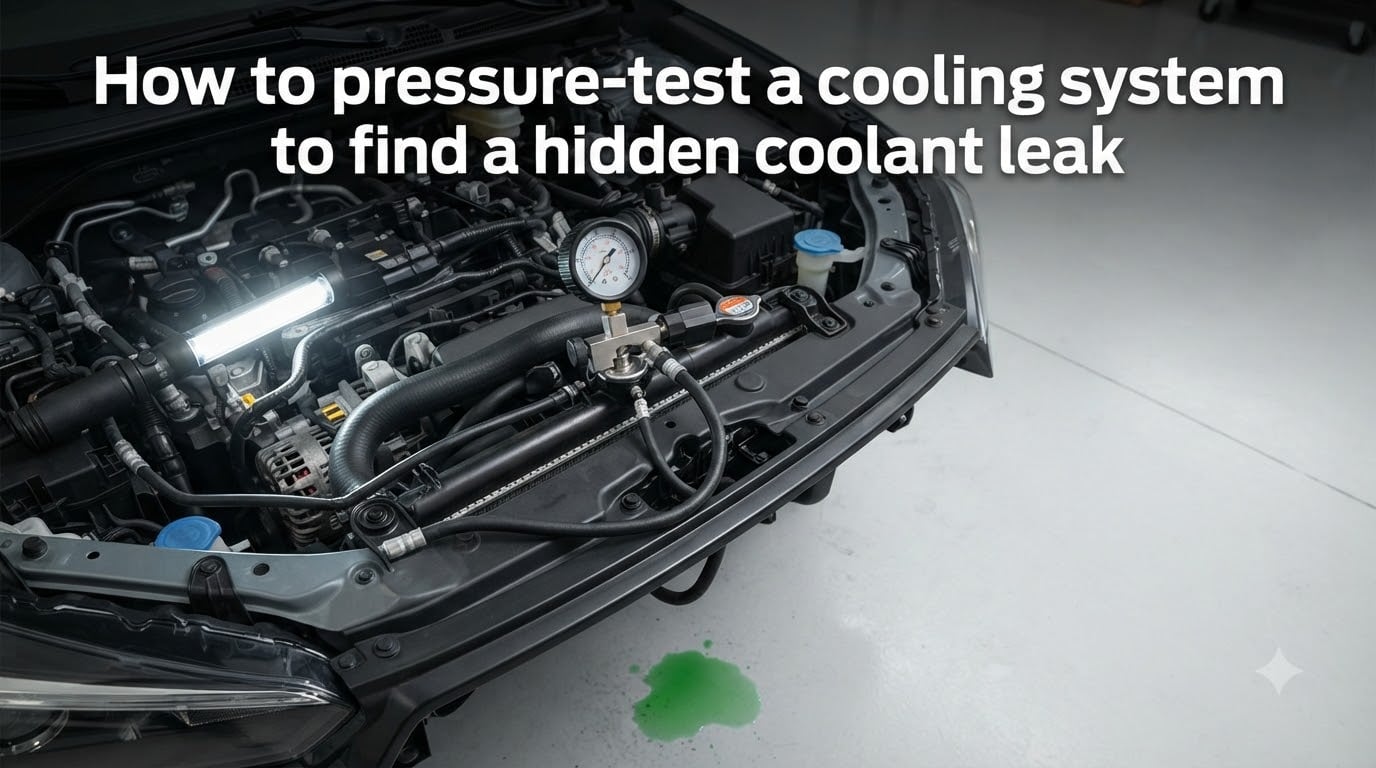
If your coolant level keeps dropping but you cannot find a puddle under the car, you are not imagining things. Hidden coolant leaks are sneaky, and they cause more engine damage than almost any other routine issue. I have dealt with this exact problem on three different vehicles over the past decade, and a cooling system pressure test is the fastest way to pin down the source.
This guide walks you through how to pressure-test a cooling system to find a hidden coolant leak, including the tools you need, the right PSI for your vehicle, and what to do when the gauge holds steady but coolant still disappears. I have also included the overnight pressure hold test, which catches slow leaks that a standard 30-minute test misses.
Table of Contents
What Is a Cooling System Pressure Test?
A cooling system pressure test is a diagnostic procedure that uses a hand-held pump to pressurize your radiator and coolant lines to their normal operating level. When the system cannot hold pressure, the gauge needle drops and you know there is a leak somewhere.
The tester attaches to the radiator neck or the coolant reservoir and pushes air into the sealed system. Most modern vehicles run between 13 and 16 psi of cooling system pressure, which is set by the radiator cap. Pressurizing the system simulates the conditions the engine creates when it is hot and working hard.
Pressure testing reveals hidden coolant leaks because it forces coolant through tiny cracks, loose hose clamps, and degraded seals that do not drip when the engine is cold. It is the single most effective way to find a leak you cannot see.
Signs You Have a Hidden Coolant Leak
The most common sign is a low coolant reservoir even though you do not see drips under the car. You may also notice a sweet smell from the engine bay, white exhaust smoke, or a temperature gauge that climbs slowly during normal driving.
Other indicators include a chronically overheating engine, a milky residue on the oil cap, or air bubbles trapped inside the coolant reservoir. Any of these symptoms mean a coolant leak detection pressure test is worth your time.
If you only lose coolant every few weeks with no visible puddle, a slow leak is the likely culprit. This is the exact scenario where a standard visual inspection fails and a pressure tester becomes essential.
Tools and Pressure Specs You Need
To run a proper radiator pressure test, you need a cooling system pressure tester kit. The kit typically includes a hand pump, a gauge, and a set of adapters that fit most radiator necks and reservoir caps. Universal kits from brands like Astro, Stant, or Lisle cover roughly 90% of vehicles on the road.
The right PSI for your test depends on your radiator cap rating. Most passenger cars and trucks use a 13 to 16 psi cap. Check the underside of your radiator cap or your owner manual for the stamped number. Never exceed the cap rating or you risk damaging hoses, the radiator, or the heater core.
You will also want a flashlight for inspection, paper towels or a clean rag, and safety glasses. Some mechanics add UV dye to the system before testing, which lets a black light pinpoint the leak source once pressure drops. A block test kit is a separate tool you may need if the pressure test passes but coolant keeps disappearing.
How to Pressure-Test a Cooling System to Find a Hidden Coolant Leak?
This procedure works on most gasoline-powered cars and light trucks built after 1995. Always work on a cool engine and disconnect the battery if you need to move wiring out of the way.
Start with a cool engine. Never pressure test a hot cooling system. Scalding coolant can spray out and cause severe burns. Let the car sit for at least two hours after driving.
Remove the radiator cap. Twist it off once the system is fully cool. Set the cap aside on a clean surface and inspect the rubber seal for cracks.
Fill the system to the top. Top off the radiator and the coolant reservoir to the maximum line. Pressure testing needs a full system to register small pressure drops accurately.
Attach the pressure tester. Connect the correct adapter to the radiator filler neck and lock the pump in place. Make sure the connection is snug and the gauge reads zero before you start pumping.
Pump to the radiator cap PSI. Slowly pressurize the system to the rating stamped on your radiator cap, usually between 13 and 16 psi. Stop pumping once you reach that number.
Hold pressure for 20 to 30 minutes. Watch the gauge during this window. A healthy system holds steady. Any drop of more than 1 psi in 30 minutes confirms a leak.
Inspect the system visually. With pressure still applied, look under the car, around hose connections, at the water pump, and along the heater core lines under the dash. Look for coolant seepage, dampness, or drips.
Identify the leak source. Once you spot the spot, mark it with a piece of tape or take a photo. Common culprits include hose ends, the water pump weep hole, and the radiator plastic tanks.
Many people ask whether they need the engine running during the test. You do not. A cold, static pressure test is the standard method and produces the most reliable readings.
Common Leak Locations to Check After the Test
When the gauge drops, start your visual inspection at the highest pressure point in the system and work downward. The radiator cap itself fails more often than most people realize, especially on vehicles over 10 years old.
Next, check every hose connection. Upper and lower radiator hoses, heater hoses, and bypass hoses all expand and contract with heat. Over time the clamps loosen and the hose necks harden. A pressure tester will push coolant through these joints within minutes.
The water pump is another frequent offender. Look for coolant around the pump shaft or the small weep hole at the bottom front of the pump. The heater core, hidden behind the dashboard, often leaks onto the passenger side floor and is easy to miss without pressurizing the system.
Finally, scan the radiator itself. Plastic end tanks crack, aluminum cores corrode, and seam seals fail. A pressure test reveals all of these because the leak becomes visible at the source instead of on the ground.
The Overnight Pressure Hold Test for Slow Leaks
Some leaks are so slow that a 30-minute test will not reveal them. This is one of the biggest frustrations I hear about from readers and forum users. You pressurize the system, watch the gauge, and it holds perfectly, yet the coolant level still drops the next week.
The overnight pressure hold test solves this. After you finish the standard test and confirm the gauge holds for 30 minutes, leave the system pressurized and walk away. Come back 8 to 12 hours later and check the gauge. Even a leak as small as a few ounces per day will show up as a measurable pressure drop overnight.
This method also helps you catch leaks that only happen when the system is hot. Internal cracks in the cylinder head or head gasket can seal themselves when the engine cools. Holding pressure overnight gives the system time to seep through these tiny gaps and reveal themselves as a pressure loss the next morning.
Pressure Test vs Block Test: When to Use Each
A pressure test looks for external leaks, the ones that push coolant out of the system into the air. A block test looks for internal leaks, which happen when coolant enters the combustion chamber or the oil pan.
If your pressure test holds steady but coolant keeps disappearing, that points to an internal leak. The most common cause is a failed head gasket, which lets coolant seep into a cylinder. A block test kit uses a chemical fluid that changes color when exposed to combustion gases drawn from the radiator neck.
Use a pressure test when you see drips, smell coolant, or notice low reservoir levels with no smoking exhaust. Use a block test when the pressure test passes but coolant loss continues, when you see white sweet-smelling exhaust, or when the oil looks milky on the dipstick.
When to Call a Mechanic Instead
A DIY pressure test makes sense for external leaks you can see and reach. Hoses, clamps, the radiator cap, and the water pump are all accessible to a careful home mechanic. However, some jobs require a professional.
If the leak source is inside the dashboard (heater core), inside the engine (head gasket), or in a sealed component you cannot easily access, take the car to a shop. A heater core replacement often requires removing the entire dashboard, and head gasket work is a multi-day job even for experienced technicians.
You should also stop and call a mechanic if your pressure test reveals multiple leak points at once, or if the system will not hold any pressure at all. A complete loss of pressure usually means a major component has failed.
FAQs
Will a pressure test show a coolant leak?
Yes, a pressure test will show most external coolant leaks. The tester pressurizes the system to its normal operating PSI, and any drop in the gauge reading confirms a leak somewhere in the cooling system. Internal leaks that pass into the combustion chamber will not show on a standard pressure test and require a block test instead.
Can you pressure test a cooling system with no coolant in it?
You can pressurize a dry system with air, but the readings will not be reliable. The tester needs coolant or water inside the system to transfer pressure and to make leaks visible at the source. Always top off the system with the correct coolant mix before running a pressure test.
How long should you hold pressure on a cooling system?
A standard pressure test runs 20 to 30 minutes. If the gauge holds steady during that window, the system passes. For very slow leaks, an overnight pressure hold test of 8 to 12 hours catches small seepage that a short test misses.
What PSI should my cooling system hold?
Most modern cars and trucks run 13 to 16 psi of cooling system pressure. The exact number is stamped on your radiator cap. Never pump the tester above the cap rating, as over-pressurizing can damage hoses, the radiator, and the heater core.
Final Thoughts on Pressure-Testing Your Cooling System
A pressure test is the most reliable DIY method to find a hidden coolant leak, and it costs far less than a shop diagnostic. The whole procedure takes under an hour with a basic tester kit, and the overnight hold test adds another layer of confidence for slow leaks.
Start with a cool engine, pressurize to your radiator cap PSI, watch the gauge for 30 minutes, and inspect every joint and component carefully. If the gauge holds but coolant still disappears, move on to a block test for internal leaks or bring the car to a trusted mechanic. Catching a small leak now is the difference between a $20 hose clamp and a $2,000 head gasket repair.