
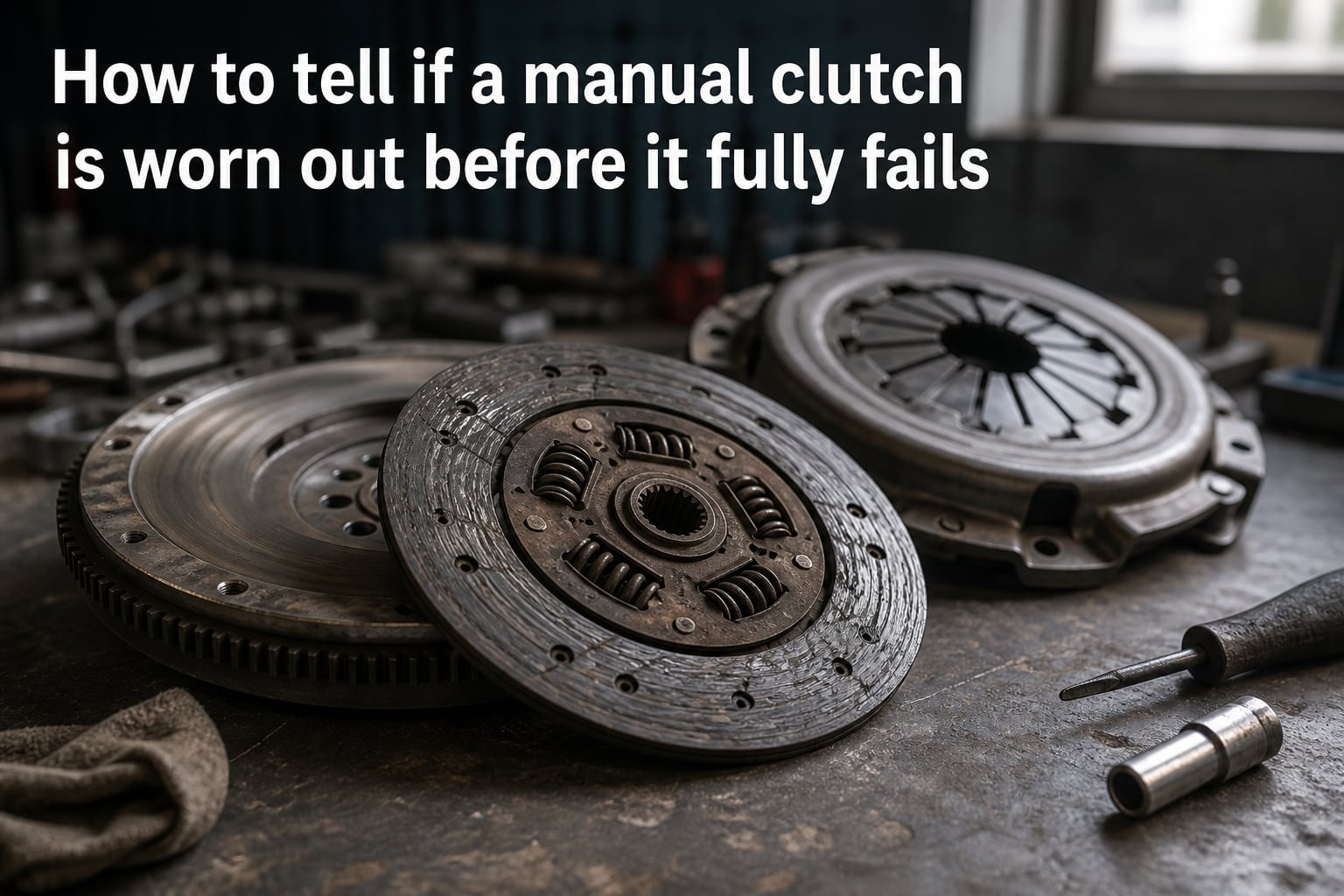
I learned the hard way that clutches rarely die without warning. Three months before my old Civic’s clutch gave up completely, it left a trail of breadcrumbs: an odd burning smell in traffic, a pedal that started grabbing higher and higher, and that unmistakable feeling of revs climbing while the car barely moved. If I’d known what to look for back then, I would have saved myself a tow truck and a $900 surprise.
This guide covers the seven most reliable signs of a worn manual clutch, plus the at-home tests I now run on every used car before I buy. Whether you drive a sports car, a truck, or a daily commuter, learning how to tell if a manual clutch is worn out before it fully fails is one of the most valuable skills a stick-shift driver can develop.
Table of Contents
What Is a Manual Clutch and Why Does It Wear Out?
A manual clutch is the friction disc that connects your engine’s spinning flywheel to the transmission. When you press the pedal, the pressure plate releases the disc. When you let it up, the disc grabs the flywheel and sends power to the wheels.
The clutch disc is coated in friction material, similar to brake pad material. Every time you slip the clutch at a hill start or ride it in traffic, that material wears away. Once it gets thin enough, the disc can’t grip the flywheel solidly. That’s when symptoms start showing up.
The wear is gradual and measured in thousands of miles. Most clutches last between 60,000 and 100,000 miles, but heavy use can cut that in half. Light use can stretch it past 150,000. The key is that warning signs almost always appear weeks or months before total failure.
Clutch Slipping: The Most Common Sign of Wear
Clutch slipping means the disc spins against the flywheel instead of locking onto it. You press the gas, the engine revs climb, but the car accelerates slowly or not at all. It’s the single most reliable symptom of a worn clutch, and it usually shows up first under load.
Here’s what slipping actually feels like in practice:
Engine RPMs shoot up 1,000 to 2,000 rpm when you accelerate in 3rd, 4th, or 5th gear
The car hesitates or feels like it’s losing power on hills
Passing on the highway feels weak even with the pedal floored
Revs climb faster than the speedometer when you push the gas
Slipping is most noticeable in higher gears because the engine torque loads the clutch more. In first gear, the gearing multiplies torque so much that even a worn disc might still grip. In fifth gear, the same worn disc can’t hold the load, and it slips visibly.
If you only notice slipping briefly during hard acceleration, the clutch is in early wear. If it slips every time you merge or climb a hill, replacement is overdue.
Spongy or Soft Clutch Pedal
A healthy clutch pedal feels firm and returns to the top quickly. If the pedal feels mushy, sinks slowly under your foot, or seems to grab at different heights from one day to the next, something is off.
There are two main causes of a spongy pedal, and they’re worth distinguishing:
Air in the hydraulic system: Most modern cars use hydraulic fluid (brake fluid, actually) to transfer pedal pressure to the clutch fork. If air gets into the lines, the pedal feels soft and inconsistent. Bleeding the system often fixes it.
Worn master or slave cylinder: These are the components that push and pull the clutch. When seals fail internally, fluid bypasses and the pedal loses pressure. This is a relatively cheap repair compared to a full clutch job.
Clutch wear: A worn friction disc can also change the pedal feel because the pressure plate has less material to clamp. The pedal may engage higher than it used to, meaning you lift your foot farther before the car starts moving.
If your pedal goes from grabbing at the bottom of its travel to grabbing near the top, that’s a classic sign the disc is wearing thin. Watch for the biting point creeping upward over weeks or months.
Burning Smell from the Clutch
A burning smell coming from your car while driving usually means the clutch is slipping and generating heat. The friction material gets hot enough to scorch, producing a smell similar to burning paper or hot brakes.
The smell is most common after:
Hill starts where you held the clutch partially engaged
Stop-and-go traffic with lots of slipping
Heavy loads or towing
“Riding” the clutch pedal with your foot resting on it
Brief burning smells during aggressive driving are normal. Repeated or persistent burning smells mean the disc is overheating regularly. Continued driving in this state can glaze the flywheel surface, which then requires resurfacing or replacement on top of the clutch job.
If you smell burning, lift off the gas, let the clutch fully engage, and ease off the heat. Then plan a clutch inspection soon.
Difficulty Shifting Gears
A worn clutch often makes shifting harder before it makes the car slip. You might notice the gear lever feels sticky, refuses to go into first or reverse, or grinds when you try to shift quickly.
Here’s the mechanical reason: when the clutch is fully releasing, the input shaft inside the transmission stops spinning. That’s what lets the synchros inside the gearbox slide smoothly into the next gear. If the clutch isn’t fully releasing because the disc is worn, warped, or contaminated with oil, the input shaft keeps spinning and the gears grind.
Common shifting symptoms of a worn clutch:
First gear and reverse are the hardest to engage (no synchros in some boxes)
Grinding when shifting quickly without pausing
Gear lever feels vague or won’t select cleanly
Need to double-clutch to get smooth shifts
Some of these symptoms overlap with transmission problems. A mechanic can tell the difference by checking whether the clutch fully disengages with the pedal pressed. We’ll cover the at-home test for that next.
Noises from a Worn Clutch
Clutch noise usually means one of three things: a worn release bearing, a problem with the pressure plate, or chatter from a contaminated or warped disc.
Release bearing noise: A high-pitched squeal or grinding when you press the pedal (but stops when you let it up) usually points to the release bearing. This bearing spins constantly when the clutch is disengaged, and it wears out before the disc itself on many cars.
Pressure plate noise: A rattling or metallic sound when idling in neutral with the clutch engaged often means the pressure plate fingers or diaphragm spring is failing. This is more serious because a broken spring can leave you stranded.
Clutch chatter: A shuddering vibration when you first let the clutch out from a stop usually means oil contamination, a worn pilot bearing, or a warped disc. It feels like the car is shaking back and forth as you try to pull away smoothly.
Any of these noises deserves attention. Unlike slipping, which can sometimes be driven on temporarily, mechanical noises tend to get worse quickly. A release bearing failure can leave you unable to shift at all.
At-Home Diagnostic Tests You Can Run Today
You don’t need a lift or special tools to check your clutch. These three tests take about ten minutes combined and will tell you roughly how much life is left.
The 5th Gear Test (Best Slip Detection)
This is the test mechanics recommend most often because 5th gear loads the clutch heavily with minimal gearing advantage.
Find a flat, empty road or parking lot
Accelerate to about 30 mph in 5th gear
Floor the accelerator and watch the tachometer
If RPMs climb faster than the car accelerates, the clutch is slipping
Repeat in 4th gear at 25 mph to confirm
A healthy clutch will lock in immediately. A worn clutch will let the revs rise 500 to 2,000 rpm above where the car is actually moving.
Pedal Height and Biting Point Check
The biting point is where the clutch disc first grabs the flywheel as you lift your foot. On a new clutch, it’s usually near the bottom of the pedal travel. As the disc wears, that point creeps upward.
To check: with the engine running and the car in neutral, slowly release the pedal and note where the engine note changes slightly (the disc starts dragging). If that point is now near the top half of the travel instead of the bottom, the disc has thinned considerably.
Reverse Gear Snatch Test
With the engine off and the parking brake set, try shifting into first gear, then reverse. A worn clutch that isn’t fully disengaging makes both gears feel “blocked” or resistant. You’ll need to press the pedal firmly to the floor and may need to wiggle the shifter.
If you can shift smoothly into all gears with the pedal fully pressed, the clutch is still disengaging properly. If gears resist, the clutch may not be releasing fully.
How Long Does a Manual Clutch Last?
Most clutches last between 60,000 and 100,000 miles under normal driving. Heavy city traffic, towing, and aggressive launches cut that significantly. Highway-only driving with light loads can stretch it past 120,000 miles.
Several factors affect lifespan:
Stop-and-go traffic: Constant slipping wears the disc faster
Towing or heavy loads: More torque loading on the disc
Hill driving: Frequent hill starts with partial engagement
Resting foot on the pedal: Even light pressure wears the release bearing
Launching aggressively: High-RPM drops eat friction material quickly
A driver who learned on the car and avoids riding the clutch can easily see 100,000+ miles. Someone who rides the clutch in every traffic jam might need one at 50,000 miles. Driving habits matter more than the brand of clutch.
Driving Habits That Accelerate Clutch Wear
The single biggest clutch killer is riding the pedal. Keeping your foot on the clutch pedal while driving, even with light pressure, partially disengages the clutch and wears the release bearing continuously. Train yourself to rest your foot on the floor instead.
The second biggest is hill starts where you hold the clutch at the biting point with the engine revved up. Use the handbrake technique instead: hold the brake, release the clutch to the biting point, then gradually release the handbrake while adding gas.
Other habits that shorten clutch life:
Resting the car in neutral at red lights with the clutch pressed (just put it in neutral and take your foot off the pedal)
Downshifting too early and forcing the synchros
Launching from a stop at high RPM
Holding the car on a hill with the clutch instead of the brake
Fix these habits and your next clutch will easily outlast the previous one.
When It’s Safe to Drive vs When to Stop Immediately?
You can usually keep driving short distances with a slipping clutch, as long as you avoid heavy loads and high torque demands. That means avoiding highway merging, hill climbing, towing, and passengers. Drive gently, shift early, and avoid letting the RPMs climb.
Stop driving immediately and call a tow truck if:
You smell persistent burning from the clutch area
The pedal goes to the floor and stays there
You hear loud grinding or squealing that gets louder
The car won’t move in any gear with the clutch released
You see fluid leaking under the car near the transmission
If the clutch fails completely while driving, shift to neutral and use the engine braking to slow down. Steer to a safe spot, signal, and pull over. Don’t shut off the engine until you’re stopped because you’ll lose power steering and brakes.
Clutch Repair vs Replacement Cost Expectations
A full clutch replacement typically runs between $800 and $1,500 at an independent shop, depending on the vehicle. Dealerships often charge $1,500 to $2,500. The disc, pressure plate, and release bearing are usually replaced together because the labor to access them is the same.
Cheaper repairs that fix similar symptoms:
Bleeding the hydraulic system: around $100 to $200
Slave cylinder replacement: $200 to $400
Master cylinder replacement: $250 to $450
Clutch cable adjustment (older cars): under $50
If your symptoms are pedal feel issues (spongy, sinking, inconsistent) without slipping, hydraulic repairs often solve the problem at a fraction of the cost. If the disc is actually worn, no adjustment or fluid change will help.
A good mechanic will inspect the hydraulic system first, road test the car, and confirm whether the problem is hydraulic or clutch wear before quoting a full replacement.
Frequently Asked Questions
How to tell if clutch is worn out manually?
You can tell if your clutch is worn out by performing three tests at home. The 5th gear test: at 30 mph in 5th gear, floor the gas and watch for RPMs climbing faster than speed. The biting point test: the point where the clutch grabs should be near the bottom of pedal travel; if it has moved higher, the disc is worn. The reverse gear test: with the engine off, try shifting into first and reverse; if the gears resist, the clutch is not fully releasing. Combining these tests gives you a reliable picture without removing the transmission.
What is the average lifespan of a manual transmission clutch?
The average manual clutch lasts between 60,000 and 100,000 miles under normal driving. Heavy city traffic, towing, and aggressive launches can cut that to 40,000 miles. Highway-only driving with light loads can extend it past 120,000 miles. Driving habits matter more than clutch brand. Avoiding riding the clutch pedal, using the handbrake for hill starts, and resting your foot on the floor between shifts can double the lifespan of a replacement clutch.
What are the first signs of clutch failure?
The first signs of clutch failure are usually slipping under load, a burning smell, and the biting point moving higher on the pedal travel. Slipping appears as RPMs climbing faster than vehicle speed, especially in 4th or 5th gear. Burning smells appear during hill starts or stop-and-go traffic. Pedal feel changes from grabbing low to grabbing high. Difficulty shifting into first or reverse, especially when cold, often appears next. Catching these signs early gives you time to plan a replacement before getting stranded.
How to know if a clutch is bad without removing it?
You can identify a bad clutch without removing it using the 5th gear slip test, the biting point height check, the reverse gear resistance test, and a pedal feel inspection. Watch for slipping under acceleration in higher gears, listen for release bearing noise when the pedal is pressed, and note any grinding when shifting. Hydraulic issues like a spongy or sinking pedal often mimic clutch wear but are cheaper to fix. A mechanic can confirm by checking whether the clutch fully disengages with the pedal pressed, which distinguishes clutch wear from hydraulic failure.
Final Thoughts
Learning how to tell if a manual clutch is worn out before it fully fails gives you control over one of the most expensive repairs a stick-shift car can throw at you. The warning signs are predictable: slipping in higher gears, a burning smell, the biting point creeping up the pedal, and difficulty selecting first or reverse. Run the 5th gear test and the biting point check this week, and you’ll know exactly where your clutch stands.
If you’re seeing two or more of these symptoms, schedule an inspection soon. A planned clutch replacement is far cheaper and less stressful than getting stranded. And once the new clutch is in, fix the habits that wore the old one out so the next one lasts.