
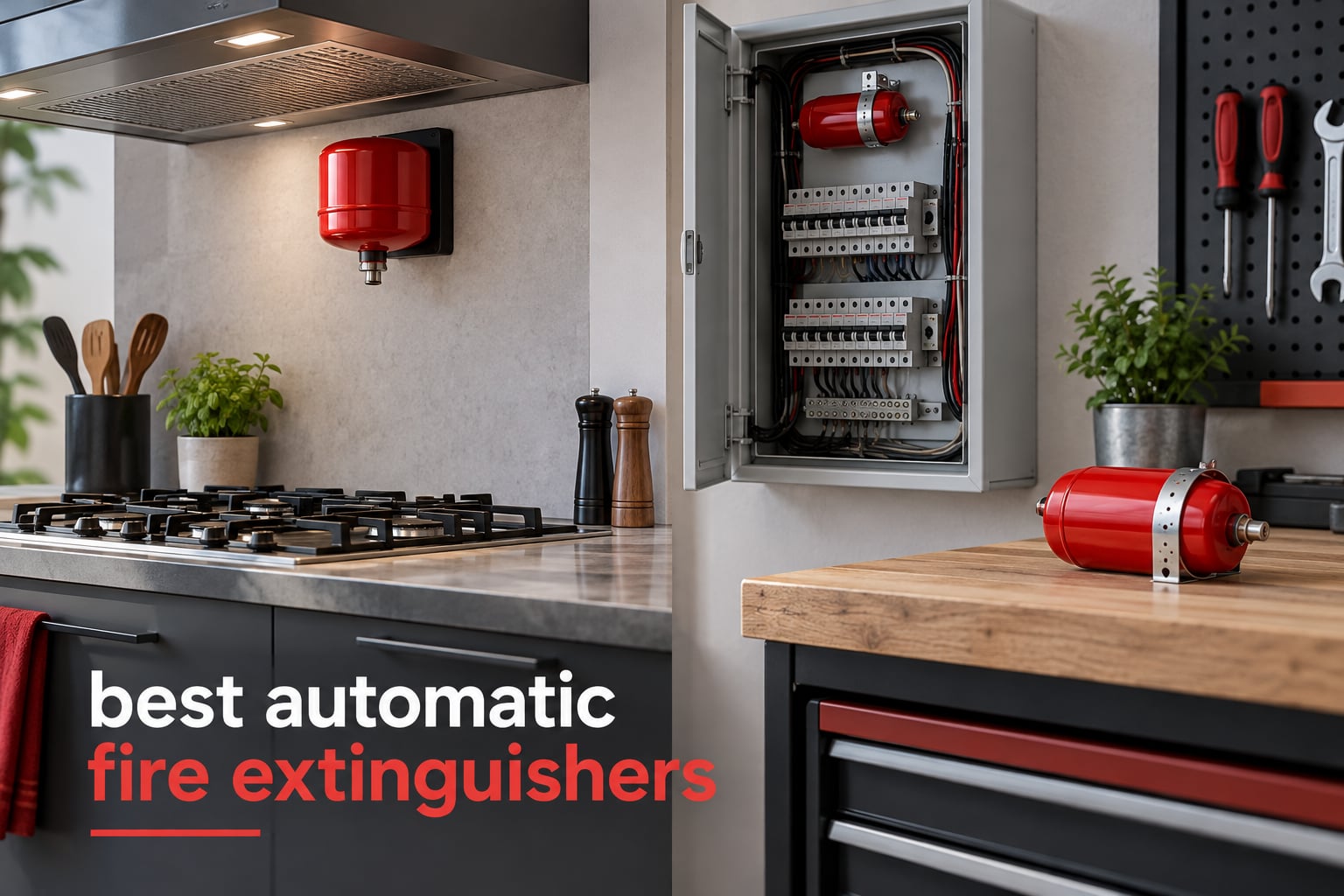
Most household fires start when nobody is standing next to them. A pan of oil left on a hot burner at 9pm, a lithium battery pack charging in a closet, a distribution cabinet behind a dryer. In each of those cases the gap between ignition and disaster is measured in minutes, and in the middle of those minutes you need to be asleep, at work, or physically unable to reach a stored extinguisher. That is the entire reason automatic fire extinguishers exist, and it is why we spent weeks reviewing eight of them side by side for this 2026 guide to the best automatic fire extinguishers you can buy.
So, the direct answer first, because it is the question everybody asks. Automatic fire extinguishers work, but only in one specific job: knocking down a small incipient fire inside a defined, usually enclosed space before it grows. They contain a small charge of agent and a heat sensor, and when the temperature at that sensor crosses a fixed trigger point the unit discharges on its own. No pin to pull, no hose to aim, nobody needed.
What they cannot do is replace the ABC dry-chemical extinguisher that belongs in your hallway, and they cannot replace an escape plan. Fire safety communities say it plainly and often: these are a second layer, not the first. Our buying guide below is built around that honesty, because the fastest way to distrust a safety product is to oversell it.
We spent those weeks reading specifications, comparing trigger mechanisms, and reading owner reviews across four subreddits where these devices are actually discussed by people who install them. We sorted the field by the only criteria that matter for a safety device: what it protects, whether the listing states its capacity honestly, how it mounts, and whether reviewers can confirm it discharged. If you want the short version, our top pick is the StoveTop FireStop Rangehood suppressor, and the best value is a 0.67 oz adhesive aerosol device for electrical cabinets. Here is the full breakdown.
Table of Contents
Top 3 Picks for Automatic Fire Extinguisher Safety in 2026
These three cover the widest range of real household hazards. The stovetop unit wins on evidence and review depth, the 60 g aerosol device wins on coverage per device, and the tiny adhesive unit wins on ease of installation.

StoveTop FireStop Rangehood
- Magnetic install under the range hood
- Approved for residential grease fires
- Non-toxic dry powder agent
- 6-year service life with no upkeep

Onaweno 60g Aerosol Unit
- Covers 21.2 cu ft of enclosed volume
- Triggers at 338F within 1 second
- About 30 seconds of discharge time
- Works from -40F to 185F
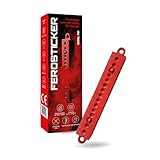
FEROSTICKER 0.67 oz Unit
- Tool-free adhesive mounting
- Activates between 320F and 356F
- Covers spaces up to 3.5 cu ft
- Up to 6 years maintenance-free
Quick Overview: The Best Automatic Fire Extinguishers (September 2026)
Every product below is a genuine automatic device that activates on heat or flame with no human trigger. The column that matters most is enclosed volume, because an automatic unit sized for a 3.5 cu ft cabinet will do nothing useful in an open kitchen, and vice versa.
| Product | Specs | Action |
|---|---|---|
| StoveTop FireStop Rangehood Fire Suppressor |
|
Check Latest Price |
| FEROSTICKER Small Automatic Fire Extinguisher |
|
Check Latest Price |
| Onaweno 60g Aerosol Fire Extinguisher |
|
Check Latest Price |
 Onaweno 40g Aerosol Fire Extinguisher Onaweno 40g Aerosol Fire Extinguisher |
|
Check Latest Price |
 Onaweno DIN Rail 1-Pole Fire Extinguisher Onaweno DIN Rail 1-Pole Fire Extinguisher |
|
Check Latest Price |
 Dual-Line Guide Rail Aerosol Extinguisher Dual-Line Guide Rail Aerosol Extinguisher |
|
Check Latest Price |
 StoveTop FireStop Microhood Suppressor StoveTop FireStop Microhood Suppressor |
|
Check Latest Price |
 StoveTop FireStop LowPro Suppressor StoveTop FireStop LowPro Suppressor |
|
Check Latest Price |
1. StoveTop FireStop Rangehood Fire Suppressor – Best Overall for Kitchen Grease Fires
StoveTop FireStop Rangehood® Fire Suppressor – Automatic StoveTop Fire Suppressor for Residential Kitchen Safety – Easy to Install, Direct Flame-Activated, Non-Toxic Fire Suppression System (1 Pair)
2 inch canisters
Magnetic mount
Non-toxic dry powder
6-year effective life
Pros
- Magnetic install needs no drilling or tools
- Tested and approved for residential grease fires
- Non-toxic agent leaves minimal residue
- Six years of service with no refilling
- Most reviewed automatic unit in our set
Cons
- Only protects the cooking zone under a hood
- Range hood compatibility must be checked before buying
This is the device most people mean when they search for an automatic fire extinguisher for a kitchen. It is a pair of 2 inch dry powder canisters that stick to the underside of a range hood with magnets, and the activation mechanism is deliberately simple: sustained direct flame contact with the canister body melts a fusible link, and the pair discharges a non-toxic dry powder over the burners below.
We picked it first because it is the only product in this roundup with real review depth. It carries 341 reviews at a 4.6 average, and 79 percent of those ratings are five stars. That is not a guarantee of performance, but it is a much better evidence base than anything else in the automatic category.
A r/HomeImprovement homeowner described stovetop firestop devices as cheap insurance and argued they are more likely to stop a kitchen fire than an extinguisher stored under the sink. That sentiment matches how this product is bought and used: you install it once, behind a hood, and think about it never again for six years.
What it protects and what it ignores
The protected zone is the cooking surface, and specifically grease and flame events on a four-burner residential range. It is tested and approved for grease fires, which matters because a kitchen fire that involves cooking oil is the one hazard where the wrong agent makes things dramatically worse.
It does nothing for a fire in a wall, in a wall outlet behind the range, or in a neighbouring room. The powder is dry and non-toxic, but it will settle on every surface under the hood, and you will want a damp wipe-down afterwards.
Who should skip it
Skip this if you cook on a slide-in range with no hood above it, or if your hood is a thin flat panel that will not hold a magnet. It is also the wrong tool for a garage, a basement, or a server closet, and it is not a substitute for a Class K or ABC cylinder you can grab and aim.
One more practical check: measure the clearance under your hood before ordering. The canisters hang below the hood surface, and a microwave mounted low enough will not leave room for them.
2. FEROSTICKER Small Automatic Fire Extinguisher – Best Value for Electrical Cabinets
FEROSTICKER Small Automatic Fire Extinguisher
0.67 oz adhesive aerosol
320F to 356F trigger
3.5 cu ft coverage
6-year life
Pros
- Tool-free adhesive mount in seconds
- Fits inside tight enclosed compartments
- No wiring batteries or pressure vessel
- Six years of maintenance-free protection
- Well reviewed for battery and 3D printer use
Cons
- Very small size leaves some buyers skeptical about real suppression
- Instructions are thin on mounting examples
This is the smallest device we reviewed and the one owners most consistently recommend in the places automatic suppression actually comes up. It weighs 0.67 ounces, measures 4.76 by 0.67 by 0.39 inches, and it sticks to a flat surface with adhesive. There is no pressure vessel, no wiring, no battery, and nothing to service.
The trigger sits high. It activates between 320F and 356F, which makes sense: this is a device for a small enclosed volume where the air temperature genuinely climbs fast, not a device for a warm attic in July. That trigger figure is one of the highest in this roundup, and it is the main reason it belongs in a cabinet rather than a living space.
Owner reviews confirm the use case. Buyers mention 3D printers, lithium battery banks, and electrical cabinets, which matches what we read on r/3Dprinting, where hobbyists run these inside printer and electronics enclosures to handle a melted-plastic or shorted-power-supply fire while nobody is in the room.
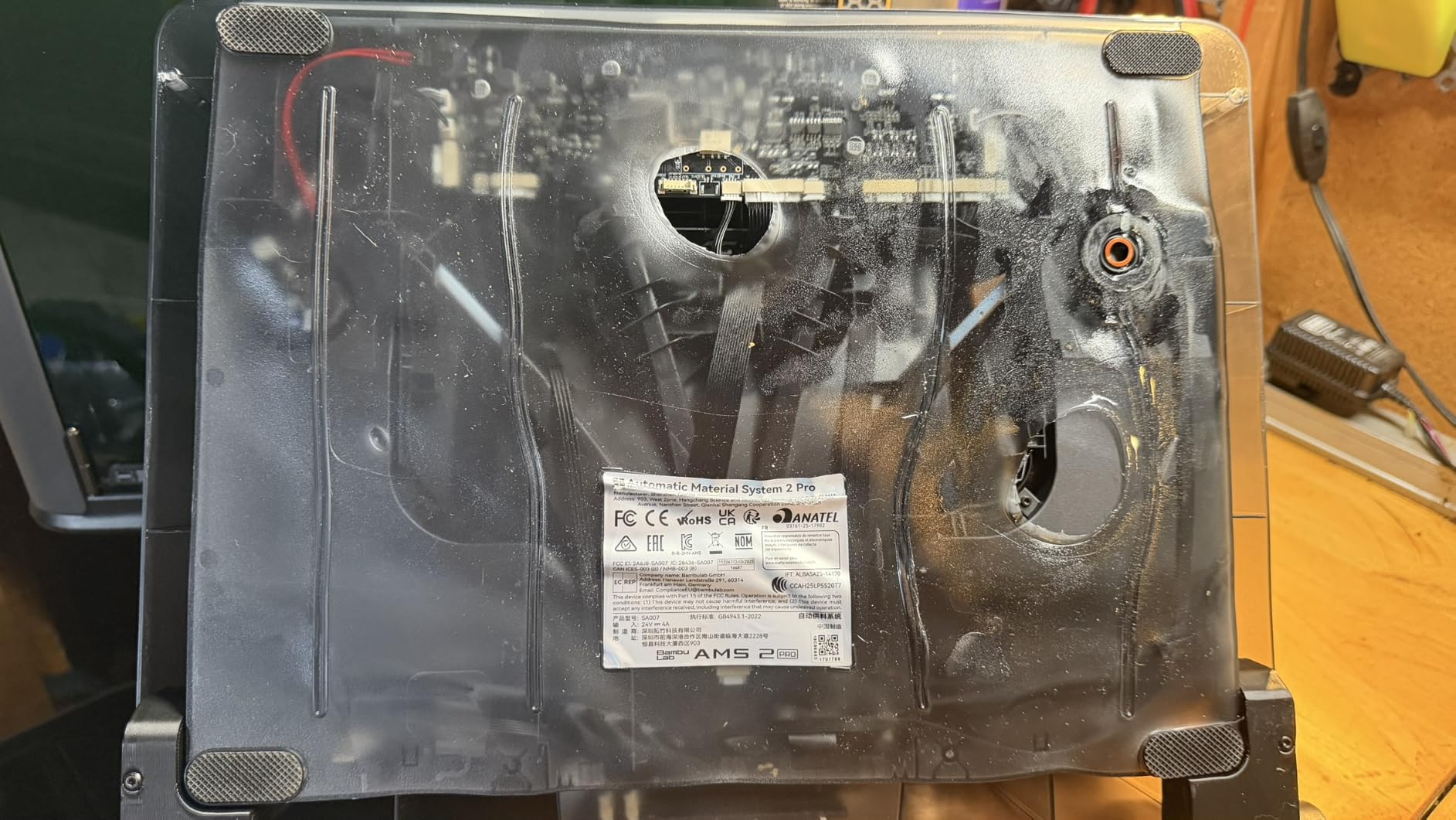
At 113 reviews and a 4.4 average, this has one of the larger review bases in the set, and the rating distribution is unusually healthy with 67 percent five stars. Installation really is a peel-and-stick operation, and several owners describe it as taking seconds.
What to check before you buy
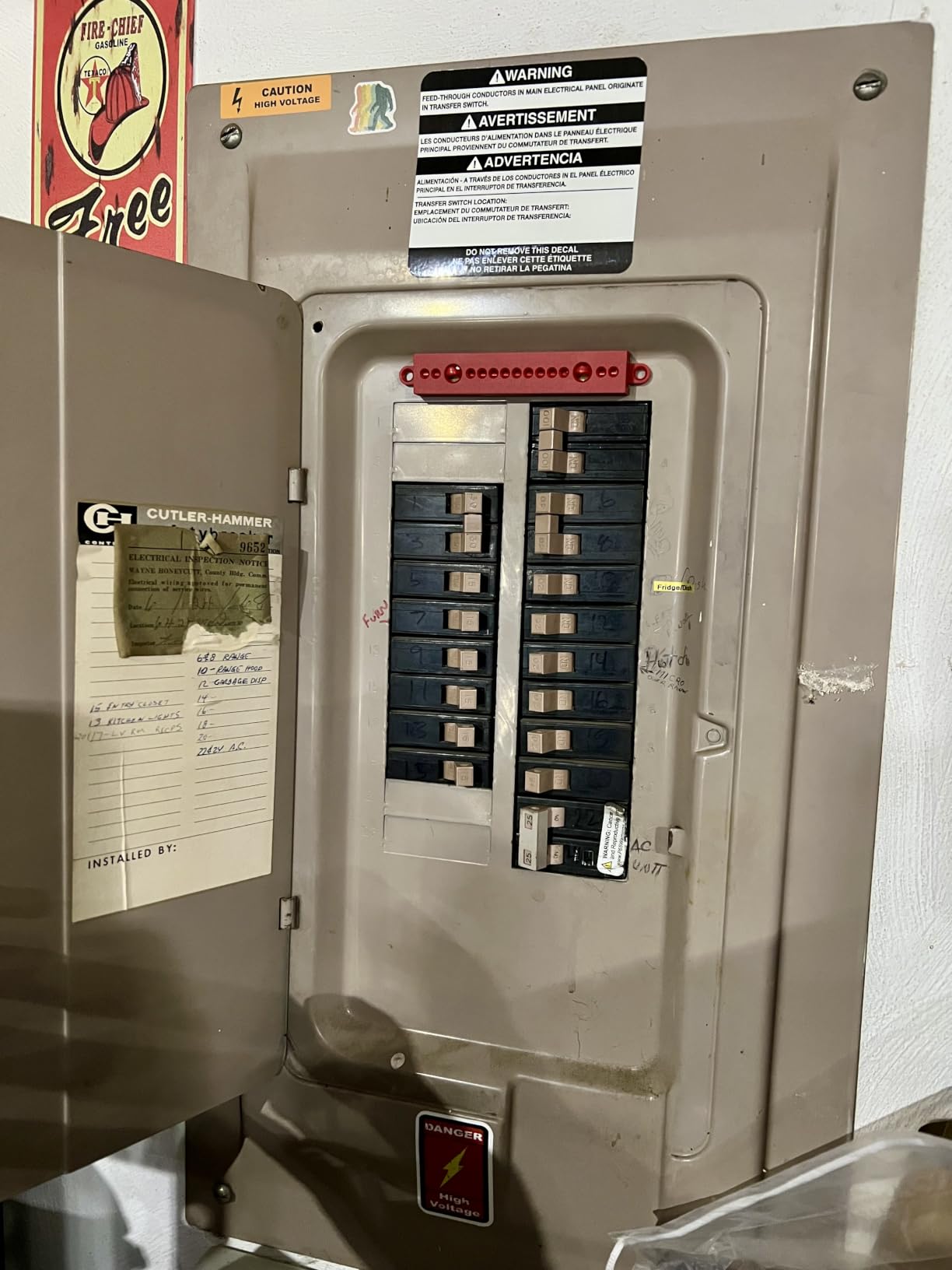
Coverage is 3.5 cu ft, roughly the inside of a small electrical enclosure. That is genuinely useful for a fuse box or a battery cabinet, and genuinely pointless in anything the size of a pantry or a closet with a full-size shelf in it. Measure your cavity first.
Owners also flag that the instructions are thin on mounting examples. Plan the placement yourself: put it near the top of the cavity, away from the discharge point itself, and never seal it behind a panel that would block the aerosol.
Who should skip it
Skip it if you need open-area protection, if your enclosure is larger than about 3.5 cu ft, or if you want a documented UL listing with a stated fire class. A recurring minority of reviewers question whether a device this small can meaningfully knock down a flame, and that skepticism is not unreasonable.
It is also the wrong answer for a kitchen. There is no reason to protect a grease fire with a unit that triggers at 356F when a purpose-built flame-activated canister exists.
3. Onaweno 60g Aerosol Fire Extinguisher – Best for Larger Battery and Solar Enclosures
Small space automatic fire extinguishing device, household fire extinguisher, power distribution equipment fire extinguishing device, energy storage equipment fire preventer, battery fire protection
60 g pressureless aerosol
338F hot-start trigger
21.2 cu ft coverage
30 second discharge
Pros
- Largest enclosed coverage of the aerosol devices here
- One buyer confirmed it discharged on a live fire
- Adhesive or screw mounting with no power
- Operates from -40F to 185F
- Used above LFP solar battery banks and in RV vents
Cons
- Only effective in closed or semi-closed compartments
- Discharge port must stay unobstructed
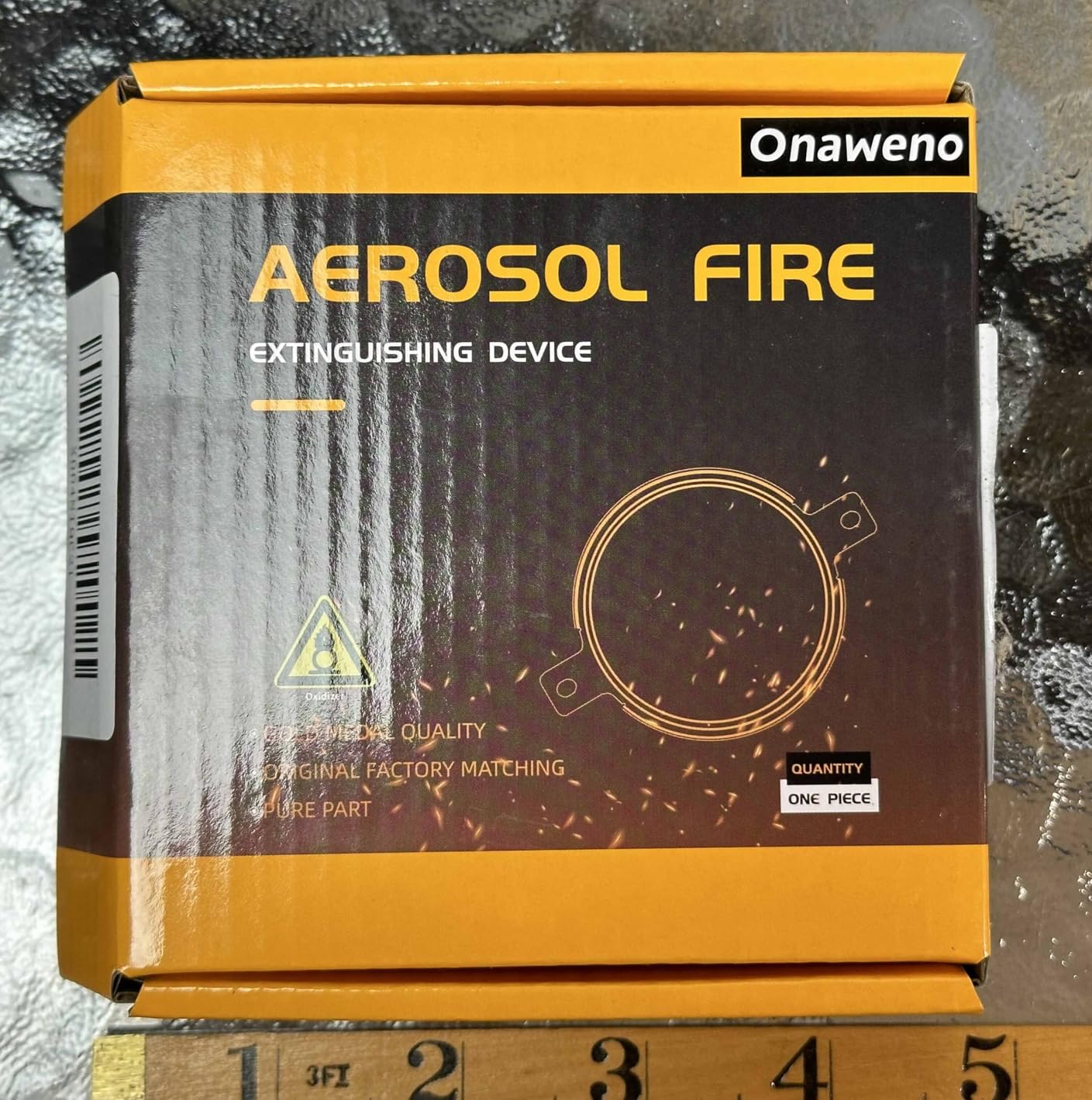
This is the 60 g member of the Onaweno pressureless aerosol range, and at 21.2 cu ft of rated coverage it covers the largest enclosed volume of any device we reviewed. It is the one to pick if you have a residential battery storage cabinet, a comms room, or an outdoor enclosure that is too big for a hand-sized unit.
Mechanically it is a hot-start aerosol device. It triggers within 1 second once ambient temperature reaches 338F, then releases carbon dioxide plus a solid particulate oxidizer to isolate the oxygen source and shut down the combustion chain reaction. Rated extinguishing time is about 30 seconds.
That 30-second figure is the number we would put in front of anyone who thinks these devices replace an extinguisher. Small aerosol units discharge for roughly 15 to 30 seconds, and once the agent is spent the fire will relight if the fuel source is still there. r/preppers makes the same point about hand-carry units and advises aiming at the front of the flame rather than the middle.
Why the 60 g size exists
The 60 g unit exists because enclosure volume is the hard constraint. The 40 g device covers 14.2 cu ft and the smallest unit in this roundup covers 3.5 cu ft, so the right pick is simply the smallest one that still covers the whole cavity with margin. Under-sizing means the aerosol never reaches the far corner.
The most valuable owner report in the reviews is from a buyer who tested a sibling unit on a live fire and confirmed it popped and discharged powder as designed. He also made the right caveat: these are built for confined spaces such as electrical boxes, not open rooms.
Who should skip it
Skip it for kitchen grease fires, for any open space, and for anyone who needs a UL listed product with a printed fire class rating. This listing does not print one, and that is the single biggest gap between this device and a certified cylinder.
It is also single use. When it fires, it is finished, and disposal follows the same route as any pressurized aerosol device. Keep one spare on hand for any enclosure you actually care about.
4. Onaweno 40g Aerosol Fire Extinguisher – Best for Vehicles and Outdoor Battery Boxes
automatic fire extinguisher,Thermal induction fire extinguisher, small fire extinguishers, battery fire extinguishers, distribution cabinet fire extinguishers, industrial equipment fire extinguishers
40 g flat panel aerosol
338F trigger
14.2 cu ft coverage
-40F to 185F range
Pros
- Flat panel fits inside confined distribution cabinets
- No pressurization wiring or power supply
- Wide temperature range suits vehicles and outdoor boxes
- Mounts with included tape or screws
Cons
- Suppression volume limited to about 14.2 cu ft
- Rated for closed or semi-closed compartments only
The 40 g device is the middle size in the Onaweno range and the one with the highest average rating in this entire roundup at 4.8. The review base is small, 14 ratings with none below three stars, so treat that number as encouraging rather than conclusive.
What sets it apart for vehicle and outdoor use is the operating range. It is rated from -40F to 185F, which covers everything from a parked car in winter to an unventilated battery box in summer heat. Combined with a 4.73 by 4 by 0.56 inch flat panel profile, it fits into the tight, awkward voids that are all you get inside a distribution cabinet or an engine bay.
Trigger behaviour matches the 60 g unit: hot-start at 338F within 1 second, roughly 30 seconds of extinguishing time, 40 g of agent. If your enclosure measures 14.2 cu ft or less, this is the correctly sized device.
Where it earns its place
Vehicle and boat applications are the obvious fit, and for cars generally we have a guide to the best fire extinguishers for cars worth reading alongside this one. The mounting method matters more here than anywhere else: either the included double-sided tape or your own screws, and both need a clean, flat, rigid surface.
The discharge port must face into the enclosure and stay clear. Reviewers specifically note that obstruction reduces effectiveness, and in a vehicle bay that means checking after every service visit, not just at install.
Who should skip it
Skip it if your space is larger than 14.2 cu ft, and skip it if you need a certified listing or a stated fire class. Also skip it for anything involving cooking oil. There is no grease approval on this device, and the wrong agent on a grease fire is a genuinely dangerous mistake.
Finally, do not expect it to handle a developed fire. Rated coverage assumes an incipient fire inside a closed space, which is a real and valuable thing to cover, but it is not a room-scale answer.
5. Onaweno DIN Rail Automatic Fire Extinguisher – Best for Electrical Panels
Onaweno DIN Rail Automatic Fire Extinguisher for Electrical Panels 1-pole
1-pole breaker footprint
35mm DIN rail mount
338F trigger
3.53 cu ft coverage
Pros
- Snaps onto standard 35mm DIN rail like a breaker
- Thermistor wire can be trimmed and oriented
- No power or wiring needed inside the panel
- Compact enough for tight closed cabinets
Cons
- Needs a 35mm DIN rail and a closed cabinet to function
- Smallest suppression volume in this set at 3.53 cu ft
If your risk is a consumer unit, a fuse box, or a small comms cabinet with a DIN rail inside, this is the most elegant answer in the roundup. It occupies a one-pole breaker footprint and clips onto standard 35mm DIN rail exactly where a breaker would go, so it needs no free panel space at all.
Detection uses a thermistor trigger wire rather than a fixed-position sensor, and that wire can be cut to length and oriented up or down. That is a real advantage in a panel where the heat source may be above or below the mounting position. Trigger is at 338F and it fires within roughly 1 to 6 seconds.
Working with fuel and electrical systems carries its own risks, and our guide on preventing and fighting a fire when working with fuel and electrical systems is worth reading before you open any panel. This device is a layer, not permission to work unsafely.
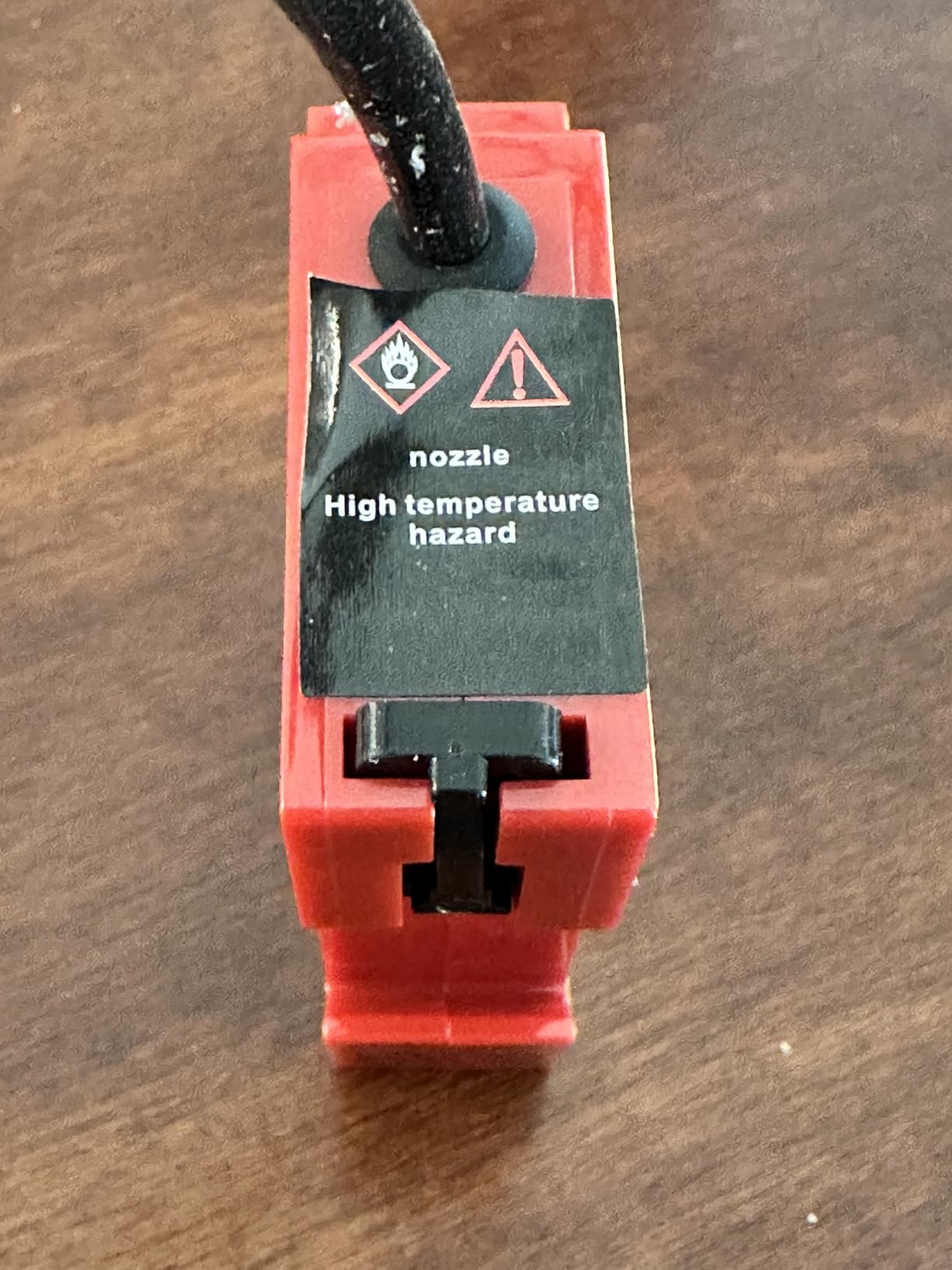
The agent is an inert gas mixture including carbon dioxide, which cuts off oxygen and breaks the combustion chain reaction, while aerosol particles form a covering layer that absorbs heat. Operating range is -40F to 185F. Coverage is 3.53 cu ft, the smallest in this set.
Why the 3.5 cu ft figure matters here
A small consumer panel is well inside 3.53 cu ft, which makes this device correctly sized for the job. The same number makes it useless the moment you move it to a large cabinet, an outdoor battery enclosure, or a space with a server rack in it.
Buyer feedback on this one is more mixed than the larger aerosol units, with 24 percent of ratings landing at three stars, and that cohort is almost entirely about the coverage ceiling rather than the mechanism. If your panel is on the larger side, step up to the 40 g or 60 g unit instead.
Who should skip it
Skip it if your enclosure has no DIN rail, if it is not closed or semi-closed, or if you need coverage beyond a small panel. It is a specialist device for one specific installation and it does not generalise.
Also skip it for any application where you need a documented certification. The listing does not state a fire class rating, and forum readers consistently say that UL listing and a stated fire class matter more to them than any marketing adjective.
6. Dual-Line Guide Rail Aerosol Extinguisher – Best for Multi-Point Coverage
Automatic Fire Extinguishing Device Dual-Line Household Flame Retardant Tool Non-Pollution Snap-On Guide Rail Extinguishers For Distribution Box/Cabinet
Adhesive snap-on rail mount
Heat aerosol agent
No corrosive residue
Multi-point deployment
Pros
- Aerosol leaves no moisture or corrosive residue
- Multi-point deployment around a space
- Adhesive snap-on install with no wiring
- Pack sizes from 1 to 10 for larger jobs
Cons
- Generic branding means thin documentation
- Listed performance figures are vague
This device takes a different approach to the same problem. Instead of a single device covering a defined cavity, it snaps onto a guide rail so you can distribute several devices around a larger space, and the listing comes in pack sizes from one up to ten.
The agent is a heat aerosol that leaves no moisture and no corrosive residue. That is the detail that makes it interesting, because dry chemical residue is the single most common complaint about extinguishers indoors, and it is exactly the concern that shows up again and again on r/Tools.
With 20 reviews at a 4.6 and 71 percent five stars, the feedback is positive and consistent. Buyers like the clean action and how easily the units stick into cabinets. What keeps the rating from going higher is the listing itself, which is thin on documentation and vaguer on capacity than the dimensionally specified competitors.
Where multi-point deployment earns its keep
Enclosures with awkward geometry are the sweet spot: an engine bay, a server space, a cabinet with an internal partition, a workshop corner where a single device would sit in the wrong half. Mount two or three on a rail and each one covers its own local volume.
One year warranty is stated on the listing, and no fire class rating is. Where a certification record matters to you, that is a reason to choose a dimensionally specified device instead.
Who should skip it
Skip it if you need a precise, printed coverage figure or a UL listing, because you will not find either here. Skip it for kitchen grease fires and skip it for open areas.
It is also the least documented product in this roundup, and that is a real drawback for a safety device. We would install it where consequences of a miss are lower, and use a specified device where the enclosure holds something you cannot easily replace.
7. StoveTop FireStop Microhood Suppressor – Best for Over-the-Range Microwaves
StoveTop FireStop Microhood Suppressor – Automatic Flame-Activated Safety for Over-the-Range Microwaves – Dual Canisters Suppress Residential Grease Fires on Four-Burner Stoves (1 Pair)
Dual canister pair
Flame-activated
Grease-fire approved
6-year effective life
Pros
- Dual canisters cover a wider cooking surface
- Straightforward DIY mount under the microwave
- Non-toxic agent with no servicing until it fires
Cons
- Requires drywall anchors and drilling
- A bulky 5 lb pair that needs clearance
If your kitchen has an over-the-range microwave rather than a wall hood, this is the version of the stovetop concept built for that geometry. It is a dual canister pair that mounts to the underside of the microwave housing or a cabinet hood, using drywall anchors and screws.
Activation is the same direct-flame fusible link used by the Rangehood unit, and the agent is a non-toxic dry powder tested and approved for grease fires. The stated effective life is six years with no maintenance required until it activates.
Be clear-eyed about the evidence here: three reviews at a 4.7 is a very small sample. A 71 percent five-star share sounds impressive, but it is three data points, not a track record. We include it because the geometry it solves is common, not because the numbers are strong.
What to verify before drilling
Measure the clearance beneath your microwave carefully. This is a 5 lb pair measuring 4.3 by 7.7 by 15.4 inches, which is a substantial object to hang under a microwave, and clearance is the most common reason a buyer returns a stovetop unit.
Unlike the magnetic Rangehood model, this one needs anchors and a drill. In a rental, that is the deciding factor, and the magnetic unit is simply the easier product to live with.
Who should skip it
Skip it if you have a wall hood, because the magnetic Rangehood unit is the better fit there. Skip it if you cannot drill, and skip it if clearance under the microwave is tight.
It is also a single-use device that covers a cooking zone only. It does not protect a wall outlet, a wall cavity, or a room, and it is not a substitute for a manually operated extinguisher kept in an accessible exit path.
8. StoveTop FireStop LowPro Fire Suppressor – Best for Low-Clearance Hoods
StoveTop FireStop Lowpro Fire Suppressor – Automatic Fire Safety for Over-the-Range Microwaves – Flame-Activated, Easy to Install, 6-Year Effective Life, No Maintenance Required – 1 Pair
Low-profile pair
Stainless steel body
Heavy-duty magnetic mount
6-year life
Pros
- Magnetic mount needs no drilling adhesives or tools
- Low profile suits flat hoods with limited clearance
- Six-year life with no routine servicing
Cons
- One buyer returned the pair as bulkier than expected
- Stainless body adds visual bulk compared with compact aerosol units
The LowPro solves a narrower problem than the Rangehood unit: a flat vent hood or a low-clearance over-the-range microwave where vertical space is tight. Its housing is low profile, the material is powder-coated black stainless steel, and the mount is a built-in heavy-duty magnet.
Mechanically it is a familiar one. Sustained direct flame activates it, it discharges a dry powder, and the stated effective life is six years with no inspections or replacements required. The magnetic mount is genuinely the easiest installation in the whole roundup, and it is the best option for a rental where drilling is not an option.
There is only one review on this listing, rated 4. That is not enough to draw any conclusion from, and we will not pretend otherwise. Treat this pick as a geometry solution with limited owner evidence rather than a proven performer.
When the low profile actually earns its place
It makes sense in one scenario: a flat hood or microwave where the Rangehood canister will not fit or will foul a door. In that specific case, the magnet plus the shallow housing is the whole reason to buy it.
The buyer who rated it 4 did like the function and build, but returned the pair because it looked bulkier and more industrial than the low-profile marketing suggested. That is a reasonable expectation gap, and it is the one thing we would warn you about.
Who should skip it
Skip it if appearance matters to you and you have plenty of clearance, because the stainless housing reads as industrial. Skip it if you want a strong review base, because a single review gives you nothing to go on.
It is also the lowest rated product in this roundup at 4.0, and it shares every limitation of the other stovetop units: cooking zone only, single use, no protection outside the hood.
What Automatic Fire Extinguishers Cannot Do
Automatic fire extinguishers are a supplement, never a replacement. That is the single most important sentence in this guide, and it is the one most product pages skip.
First, they do not replace a rated manual extinguisher. Keep an ABC dry chemical unit on each level of the home, in an exit path, where a person can actually reach it. An automatic device protects a specific enclosure while you are elsewhere; a manual unit protects the room you are standing in.
Second, they trigger on heat, not flame, in most designs. A 338F or 356F trigger means a fire has to develop enough to raise the air temperature at the sensor before anything happens. Early-stage fires in open air can burn for a long time without reaching those numbers.
Third, they are single use and generally not rechargeable. Once the agent is discharged the device is finished, and there is no refill route for a household unit. A unit that fired in your kitchen panel needs replacing, not recharging.
Fourth, they are not engineered suppression systems. A commercial kitchen system is designed, calculated, and installed to professional standards. An automatic device is a fraction of that, and calling the two equivalent is misleading.
Fifth, discharge time is short. Most household units in this category spray for 15 to 30 seconds, and the agent dissipates. If the fuel source is still there, the fire can reignite after the device is empty.
Finally, they offer no warning. A manual extinguisher gives you ten seconds of adrenaline and a decision. An automatic device gives you a wall of powder and no alert, which matters in a home with sleeping children or older adults who need time to wake and evacuate.
How to Choose a Trigger Temperature
Choose a higher trigger temperature for warm, unventilated spaces, and a lower one where you need early activation. The aerosol devices in this roundup all trigger between 320F and 356F, which is why they are built for enclosed cavities rather than open rooms, and the stovetop canisters use direct flame contact instead of a fixed temperature.
A 135F to 155F rating is the common figure in the wider automatic category and suits general-purpose devices placed in rooms, hallways, or a home lab. A 200F rating suits hotter spaces where a lower threshold would false-trigger, such as a vehicle cabin in summer or a space above a boiler.
The practical rule we use: if the ambient temperature in the enclosure can reach 120F on a hot day, do not fit a low-trigger device inside it. False activation wastes the unit, and a wasted unit in a distribution cabinet is a cabinet with no protection and no visible sign of it.
Also check whether the trigger is a fixed sensor or a trim-to-fit thermistor wire. The DIN rail unit in this roundup lets you cut and orient its wire, which is genuinely useful when the heat source is not directly opposite the mount.
Which Fire Class Your Hazard Actually Needs
Match the agent to the fuel. Class A is ordinary combustibles like wood and paper, Class B is flammable liquids, Class C is energised electrical equipment, and Class K is cooking oil and grease.
For a kitchen grease fire, the correct agent is a wet chemical such as potassium acetate, or a dry powder specifically tested and approved for grease. Never use water on a cooking oil fire, and be careful with general dry chemical in an automatic unit designed for a cooking zone, because it can make a fryer suppression system less effective.
For a distribution cabinet or battery enclosure, an aerosol or inert gas device is the right shape of answer, because it displaces oxygen or interrupts the chain reaction without leaving a conductive powder on live components.
That powder residue issue is why r/Tools readers avoid dry chemical extinguishers indoors wherever possible, and why the residue-free aerosol devices in this roundup earn their place in equipment rooms rather than living spaces.
Where to Mount an Automatic Fire Extinguisher
Mount the device inside the hazard, not near it. The whole premise is that the unit floods a small volume quickly, so it needs to sit within the space it protects with its discharge point unobstructed.
For stovetop units, mounting height means the underside of the range hood or over-the-range microwave, positioned so the discharge covers the burners. Check the hood is magnetic or that the supplied anchors suit your material before ordering.
For aerosol and DIN rail devices, mount near the top of the cavity where hot gases collect, and keep the discharge port clear. Never place one behind a removable panel or inside a compartment that gets opened routinely, because an unobserved discharge is worse than no device.
For engine bays and outdoor boxes, choose a surface that stays clean and dry, use the mechanical fix rather than adhesive when vibration is a factor, and re-check the mount after any service visit.
Whatever you mount, keep a rated manual extinguisher on the same floor, in an exit path, where an adult can reach it without passing the fire. Our guide to the best fire extinguisher for a home garage covers that side of the equation in more detail.
Expiry, Testing, and Replacement
Most automatic devices in this category are maintenance-free until they fire, with a stated effective life of about six years. That is the appeal: nothing to service, nothing to recharge, no annual appointment.
Two things still deserve attention. First, know the trigger temperature on the label and mark the install date on the unit itself, because nobody remembers. Second, treat the expiry as a real deadline, since an expired device gives no warning that it has stopped protecting anything.
When a unit discharges, it is finished. Do not attempt to refill a pressureless aerosol device, and take spent units to a household hazardous waste facility or a fire equipment service that accepts them rather than putting them in general waste.
If you want a device you can inspect and recharge, that is a different product category entirely: a stored-pressure manual extinguisher serviced on a schedule. For most of us, a non-rechargeable automatic unit plus a serviced ABC cylinder is the practical combination.
Frequently Asked Questions
Do automatic fire extinguishers work?
Yes, for one specific job. An automatic fire extinguisher detects a temperature rise at a built-in sensor, crosses its rated trigger point between roughly 320F and 356F in the devices we reviewed, and discharges its own agent within seconds. It reliably knocks down an incipient fire inside a small enclosed space when nobody is present. It does not protect open rooms, does not last long enough to fight a developed fire, and never replaces a rated manual extinguisher or an escape plan.
What are the disadvantages of using a fire ball extinguisher?
The main drawbacks are limited coverage, no warning and single use. A small ball-style device typically protects only a few cubic feet, so it works in a cabinet or enclosure and not in a room. It discharges for roughly 15 to 30 seconds and cannot be refilled. It gives nobody an alert, and on a high-trigger model the fire must already be developing before it activates. Mounting height and clear discharge space also matter more than most buyers expect.
What is StoveTop FireStop used for?
StoveTop FireStop is a brand of automatic stovetop suppression canisters that protect cooking zones. They mount magnetically or with screws under a range hood or over-the-range microwave, and a fusible link activates them on direct sustained flame contact. They release a non-toxic dry powder over the burners, are tested and approved for residential grease fires, and carry a stated six-year effective life with no maintenance until they fire.
What type of fire extinguisher is most effective for kitchen fires?
For a grease or cooking-oil fire, the correct agent is a wet chemical such as potassium acetate rated Class K, or a dry powder specifically tested and approved for grease fires. Never use water on cooking oil, because it can cause the burning oil to splatter and spread. A multi-purpose ABC dry chemical unit is the right general household baseline, and a stovetop automatic suppressor is a valuable added layer for the cooking zone itself.
What type of fire extinguisher is best for a residential home?
A multi-purpose ABC dry chemical extinguisher is the right baseline for a home, because it covers ordinary combustibles, flammable liquids and energised electrical equipment with one unit. Add automatic devices in specific high-risk locations rather than replacing the manual unit: a flame-activated stovetop suppressor in the kitchen, and an aerosol or DIN rail device in any distribution cabinet, battery storage enclosure or vehicle bay.
Can an automatic fire extinguisher replace a regular fire extinguisher?
No. Community safety forums are consistent on this point, and the physics is clear: an automatic device protects one defined enclosed volume, while a manual unit protects the room you are standing in. The right approach is both, plus a home escape plan and a working smoke alarm on every level. Think of the automatic unit as the layer that works while you are asleep, at work, or unable to reach a stored extinguisher.
The Best Automatic Fire Extinguishers in 2026
After weeks of comparing trigger mechanisms, coverage figures, mounting methods and several thousand owner reviews, the StoveTop FireStop Rangehood Fire Suppressor is the best automatic fire extinguisher overall. It has the strongest evidence behind it at 341 reviews and a 4.6 rating, it is purpose-built and grease-fire approved, and the magnetic mount takes minutes.
For electrical cabinets and battery boxes, the FEROSTICKER 0.67 oz unit is the best value pick at 113 reviews, and the Onaweno 60 g device covers the largest enclosed volume if your cabinet is bigger than a small panel.
Whichever you choose, keep a rated ABC extinguisher on every floor, make sure everyone in the house knows the escape route, and treat automatic units as the layer that works while nobody is in the room. That combination, updated for 2026, is the setup we would put in our own homes.
Safety note: this guide is informational and is not a substitute for professional fire-protection advice. For commercial kitchens, plant rooms, or any high-risk installation, consult a qualified fire protection contractor and follow NFPA 10 guidance on placement and maintenance.