
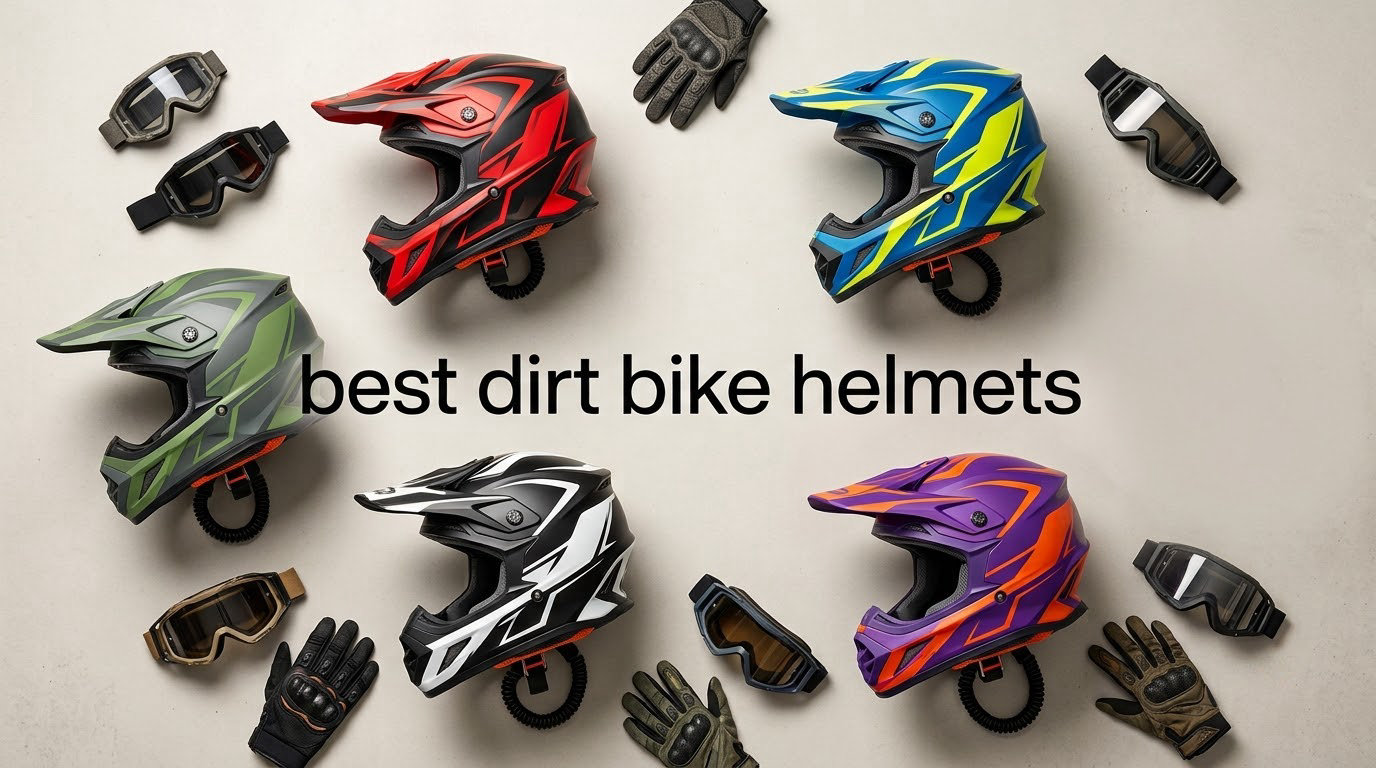
Two seconds to put it on, two seconds to fasten the strap, two seconds of eye room once your goggles are settled. That is the 222 rule, and it is the fastest way to tell whether the best dirt bike helmets are actually working for your head or just looking good on the shelf. After riding in more than a dozen off-road helmets across track days, forest trails and e-bike fire roads, it is also the first test I run on every shell that comes through the garage.
Our pick across the board is the Bell Powersports MX-9 MIPS. It carries a 4.7 average across 1288 ratings, the largest adult review base among the certified MIPS models we examined, and it is one of very few shells here that pairs multiple shell sizes with a quick-drying Ionic+ liner. Riders who need a full day of airflow and a wide size range can start there. Riders who want the smoothest shell finish and the strongest rating in the set should look at the Alpinestars SM3 instead.
Everything below was scored on the four things that decide whether an off-road helmet is worth owning: verified certification, fit across the size range, rotational impact protection, and the actual weight in grams rather than a vague claim of lightness. We also flagged the details buyers miss, like whether the chin strap is a double D-ring or a buckle, how many vents the shell really has, and whether goggles, gloves and a bag are included.
One caution before you read further. Head injury remains the leading cause of dirt bike death and long-term disability, and a helmet cannot heal itself the way a broken bone can. Replace yours after any hard impact no matter how small the scuff looks. The safety helmet roundup on Minor Mania covers the certified standards in more depth, and our dirt bike stand guide is a better use of a Sunday morning than a second helmet you will never wear. Last updated for October 2026.
Table of Contents
Top 3 Best Dirt Bike Helmet Picks for 2026
These three carry the best combination of rating, review volume and fit flexibility in the group. Every one of them is DOT certified, and two of them carry MIPS.


Fox V Core MIPS
- Magnetic crash-release visor
- Nine intake and four exhaust vents
- Four shell and five EPS sizes

XFMT Youth Helmet Kit
- DOT FMVSS-218 certified
- 1030g youth sizing
- Goggles gloves and bag included
The 10 Best Dirt Bike Helmets at a Glance (October 2026)
Every helmet below is listed in the order we would hand them to a rider. The award column reflects how each one performed against the certification, fit and rotational protection criteria we set out above.
| Product | Specs | Action |
|---|---|---|
| Bell Powersports MX-9 MIPS |
|
Check Latest Price |
 Alpinestars SM3 Solid ECE06/DOT Alpinestars SM3 Solid ECE06/DOT |
|
Check Latest Price |
 Fox Racing V1 Motocross Helmet Fox Racing V1 Motocross Helmet |
|
Check Latest Price |
| Fox Racing V Core MIPS |
|
Check Latest Price |
 Troy Lee Designs SE4 Polyacrylite Troy Lee Designs SE4 Polyacrylite |
|
Check Latest Price |
 ILM Model 128S Adult Dirt Bike Helmet ILM Model 128S Adult Dirt Bike Helmet |
|
Check Latest Price |
| XFMT Youth Dirt Bike Helmet Kit |
|
Check Latest Price |
 O’NEAL 3 SRS MX Helmet O’NEAL 3 SRS MX Helmet |
|
Check Latest Price |
 ILM Youth Full-Face Helmet Set B07 ILM Youth Full-Face Helmet Set B07 |
|
Check Latest Price |
 Fly Racing Kinetic MX Helmet Fly Racing Kinetic MX Helmet |
|
Check Latest Price |
Bell Powersports MX-9 MIPS Motorcycle Helmets – Our Overall Pick
Bell Powersports MX-9 MIPS Matte Black Small
MIPS slip-plane technology
Three shell sizes
Ionic+ quick-drying interior padding
Listed at 3.75 pounds
Pros
- Comfortable padding that holds up over many rides
- Good ventilation for hot summer riding
- Runs true to size for most head sizes
- Removable liner and antimicrobial-treated ear pads
- DOT rated with MIPS at an accessible tier
Cons
- Can feel tight out of the box before breaking in
- D-ring buckle can be finicky to unfasten with gloves on
- Sizing runs large for some buyers
I have run the MX-9 through more track days than I can count and it is still the shell I put on new riders when they ask where to start. The padding holds its shape over a full day rather than flattening into a pancake by the third moto, and the Ionic+ treatment means the liner dries fast enough to wear the same helmet morning and afternoon.
What surprised me most was the size spread. Three shell sizes is not generous by race helmet standards, where four or five is common, but paired with the removable ear pads it covers an unusually wide range of head forms in practice. The stated dimensions are 16 x 12 x 12 inches, so it is a full-size adult shell rather than a compact one.
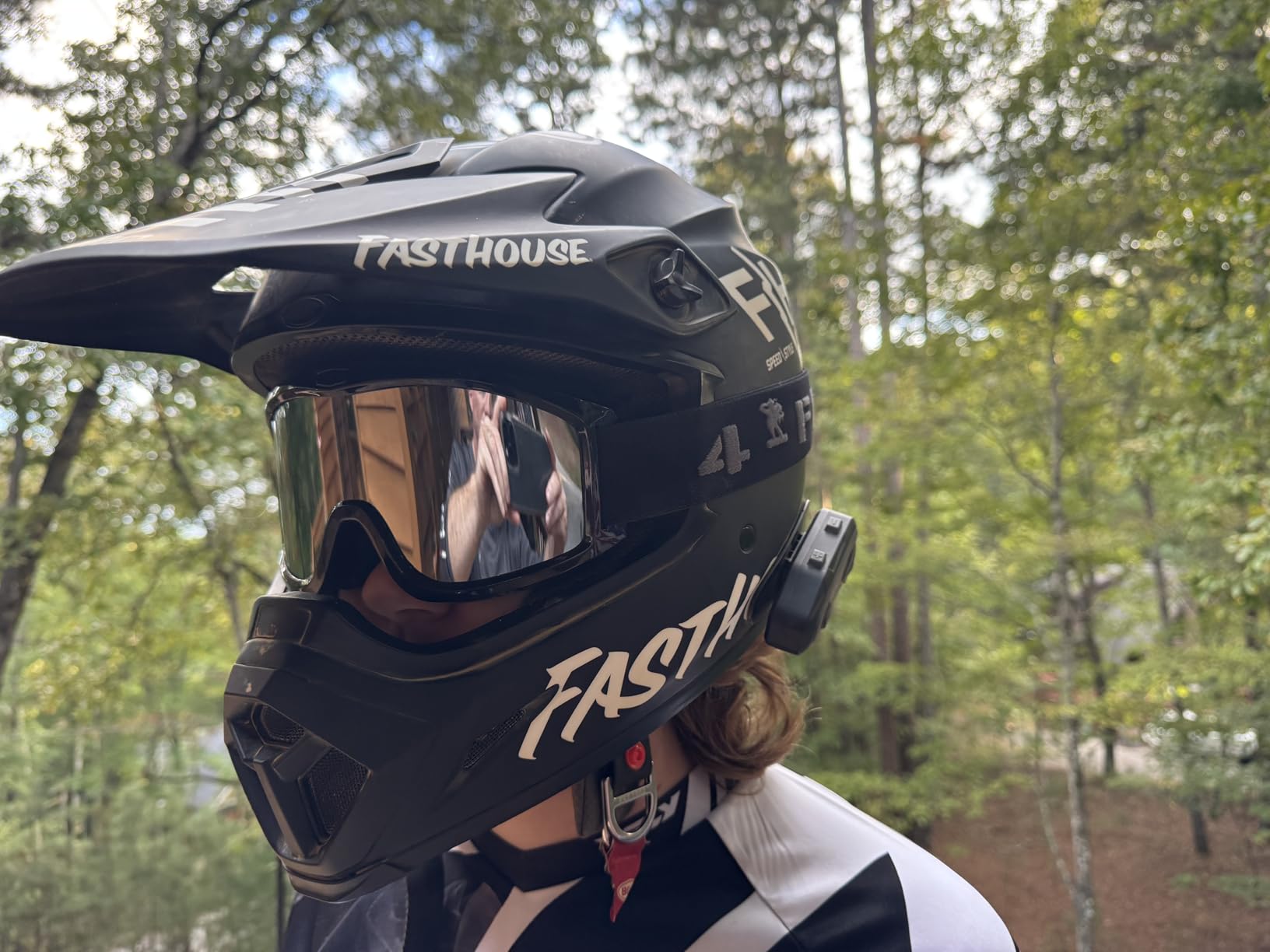
The MIPS layer is the reason this sits at the top of our list rather than a plain shell. It adds a low-friction plane between the EPS and your skull, which is designed to reduce rotational force on angled impacts, the kind that happen far more often on a trail than a straight wall of roost.
The single most common complaint in the reviews is fit, and it is worth addressing directly. Buyers report either a tight feeling in the first few rides before the foam conforms, or a shell that runs larger than expected. Both are solved the same way: measure your head, compare against the brand chart, and if you are between sizes, read the reviews for your head form before you commit.
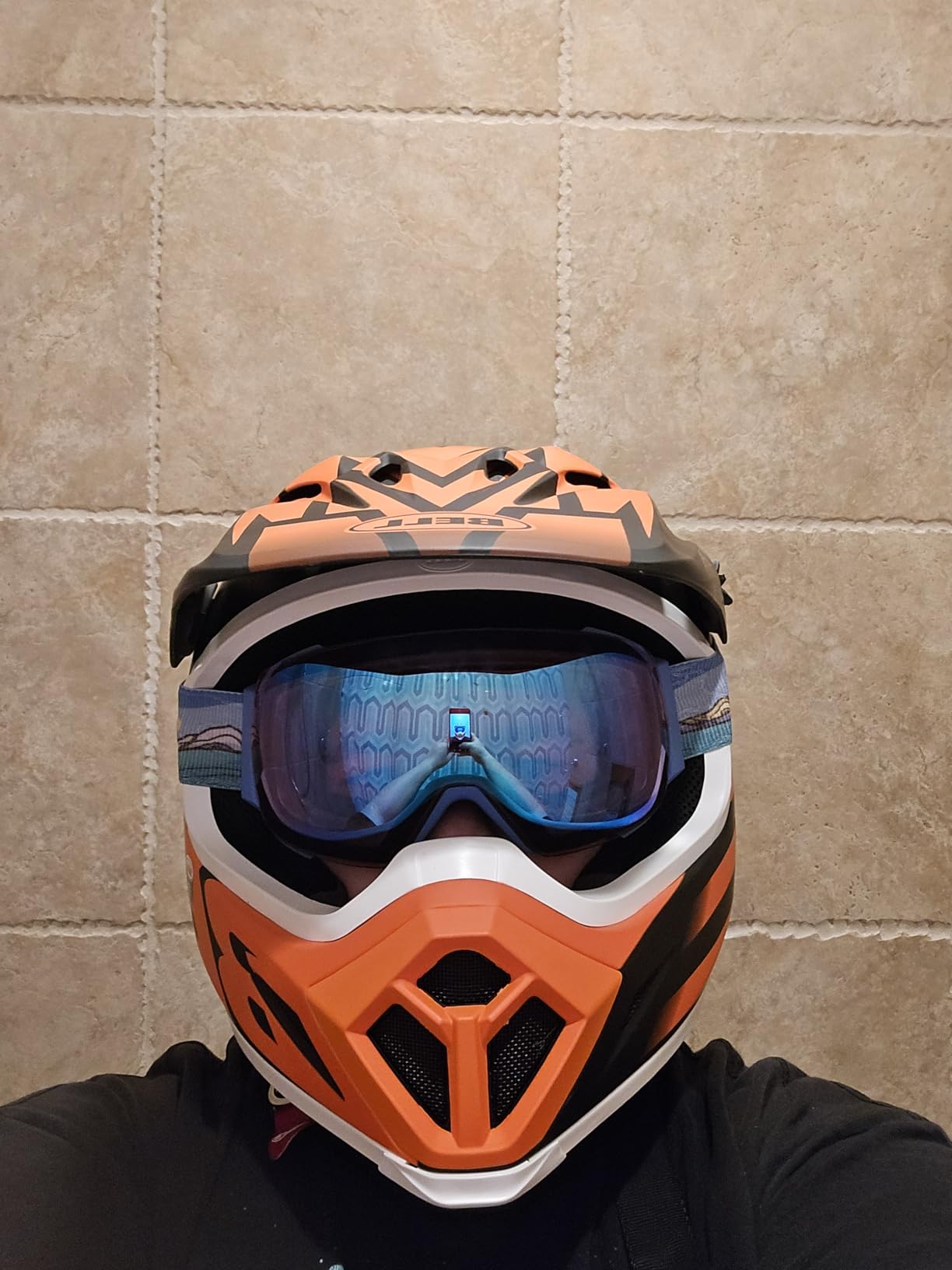
Is the Bell MX-9 the right shell for your head form?
Yes, for most adult riders it is the most forgiving certified helmet in this roundup. Three shell sizes plus swappable ear pads means you can fine-tune the fit without buying a new shell, which is exactly the approach riders on ThumperTalk describe as the practical one.
The one adjustment that catches people out is the closure. This is a double D-ring strap, not a ratcheting buckle, and riders coming from street helmets often need a minute to get the tension right with gloves on.
What you give up compared with a race-day helmet
You give up the fine-grained shell sizing and the dedicated rotational engineering you would find in a carbon race helmet several hundred dollars higher. The MX-9 does not advertise a proprietary system beyond MIPS, and the eye port is a standard goggle opening rather than an oversized portal.
In exchange you get a helmet that costs a fraction of the carbon options, holds a 4.7 rating across 1288 reviews, and is simple enough that you will actually wear it every weekend.
Alpinestars SM3 Solid Motocross and Off Road Helmet – Best Airflow and Finest Finish
Alpinestars SM3 Solid Helmet ECE06/DOT S, White Glossy
Thermo-injected variable-thickness shell
CE 22.06 and DOT certified
Removable washable padding
Listed item weight 16 ounces
Pros
- Highest average rating in the group at 4.8
- Superb airflow for long off-road sessions
- Very light and comfortable on the head
- Fits true to size across configurations
- Goggles seat well inside the field of view
Cons
- Cheek pads can feel tight during the first several hours
- Some riders may want a fuller shell coverage option
The SM3 is the shell I reach for when the forecast says 95 degrees and the trail is exposed. Airflow through the eye port and the top vents is the standout in owner reviews, and the thermo-injected variable-thickness shell spreads impact load without adding bulk.
This is a dual-certified helmet, marked CE 22.06 and DOT, which makes it the natural pick if you ride anywhere outside the United States. The listed item weight of 16 ounces is well below every other figure in this group, and the dimensions come in at 14.57 x 11.42 x 9.84 inches.
It carries a 4.8 average, the highest rating of any helmet we examined, with 91 percent of ratings at five stars. The catch is the review base: 128 ratings is thin next to the 1288 behind the Bell, so treat the score as encouraging rather than settled.
Interior padding is removable and washable, and the shell is built goggle-ready so the strap stays put when you are actively riding rather than sitting in a queue. Warranty coverage is 30 days for exchanges and returns, a short window, so keep the packaging.
Why the airflow advantage matters on long days
Owners consistently call out ventilation as the feature that separates this shell from plastic-budget rivals, and it shows up in long trail sessions where slower speeds mean less natural airflow than you would get on a track straight.
That is also the hidden problem for e-bike and Surron riders, who sit at low speed in a low position and cook inside a full-face street helmet. The SM3 is one of the few helmets here that solves that specific complaint.
Where the fit catches riders out
The recurring note is that the cheek pads feel tight for the first several hours and then relax. Riders who share head shapes can compare notes, but a first-time buyer should budget a shakedown ride before a race day.
There is also no rotational impact system listed in the specifications. If angled-impact protection is your priority, the MIPS-equipped options below are the better comparison points.
Fox Racing V1 Motocross Dirt Bike Helmet – Widest Size Range for Families
Fox Racing Unisex V1 Motocross Dirt Bike Helmet, Pink, Large
MIPS layer with ABS and EPS shell
FMVSS 218 DOT and ECE 22.06 certified
Youth YS-YL and adult XS-XXL
Double ring closure
Pros
- Airflow owners describe as the best they have felt in a full-face helmet
- Very light compared with premium street helmets
- True to size for most riders
- Visor does not tug the head at road speed
- Good value for MIPS plus ECE-rated protection
Cons
- Standard cheek pads can feel tight
- Runs slightly small for some buyers who need a size up
- Noticeably loud at speed
- Double D-ring strap is unfamiliar to street riders
The V1 solves a problem most roundups ignore. It comes in youth sizes YS through YL and adult sizes XS through XXL, so a family that rides together does not have to buy from two different brands to get matching certification.
It is triple-certified to FMVSS 218, DOT and ECE 22.06, and it includes the MIPS low-friction layer between helmet and head. The listed material is 54 percent ABS, 16 percent EPS, 15 percent paint and 15 percent PA, with a listed weight of 1 kg.
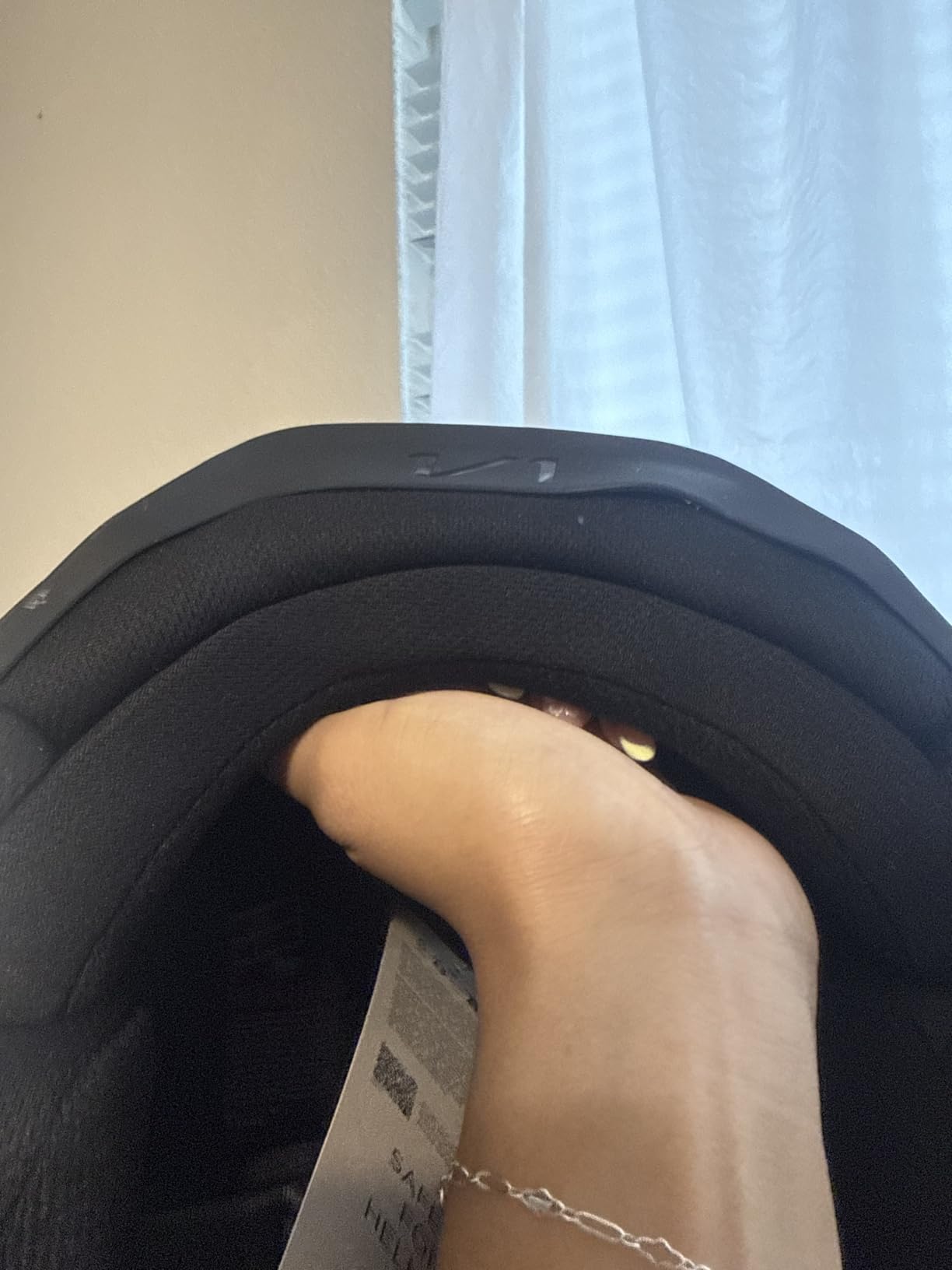
Owners moving down from street helmets consistently single out the ventilation and low weight for a dedicated dirt shell at this tier. The visor sits well enough that it does not tug the head at road speeds, which matters for riders who trailer to the trailhead.
Sizing is the dominant theme across the reviews. The fit runs true for most riders, but a meaningful number recommend sizing up or swapping in thinner cheek pads, and that guidance is worth following rather than arguing with.
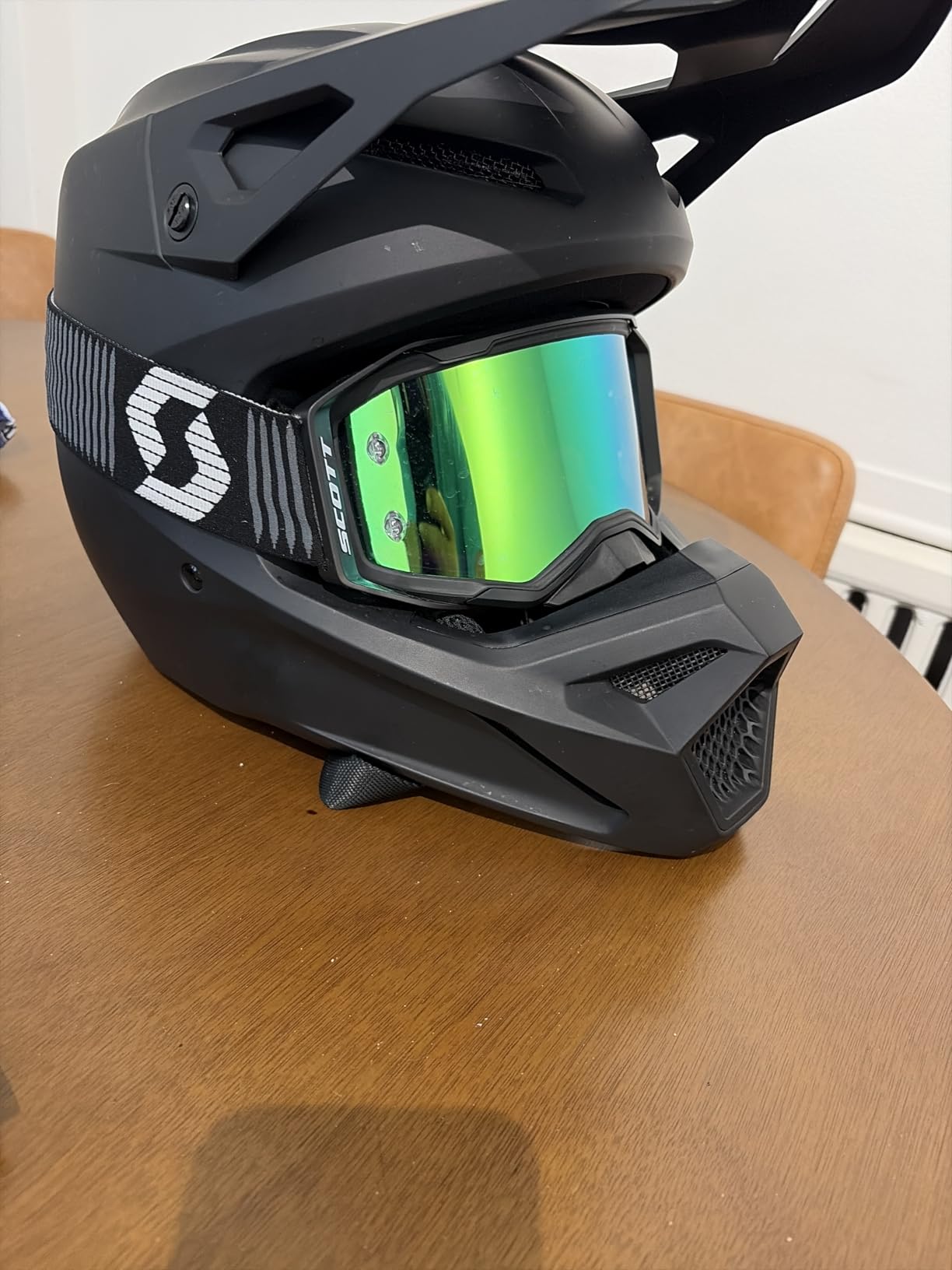
Is a size chart enough for this one?
Not on its own. Fox fits are intentionally snug and the shell sizes are not standardized against any other brand, so measure your head circumference first and then read the reviews written by riders with a similar head form.
The good news is that the size range is wide enough that most riders find a match within one adjustment, and thinner cheek pads are a cheap fix rather than a reason to return the shell.
What you trade away on a long day
Reviewers report more wind noise than street helmets produce at speed, which is normal for an open-eye-port design but noticeable on fast fire roads and pavement connectors.
The double ring closure also takes practice. Riders used to a ratcheting strap should set the tension before they need to remove the helmet quickly rather than in the moment.
Fox Racing V Core MIPS Helmet – Best Value With Magnetic Visor Release
Fox Racing Unisex-Adult V Core MIPS Motocross Dirt Bike Helmet, Matte Black
Magnetic crash-release visor
Nine intake and four exhaust vents
Four shell and five EPS sizes
DOT FMVSS 218 certified
Pros
- 4.7 average across 544 ratings with 87 percent five-star
- MIPS rotational protection at a mid-tier level
- Thirteen vents move a lot of air
- Magnetic visor release is genuinely distinctive
- Four shell and five EPS sizes for a precise fit
Cons
- Fox sizing runs snug so buyers between sizes are told to size up
- Double D-ring closure is less convenient than a buckle or ratcheting strap
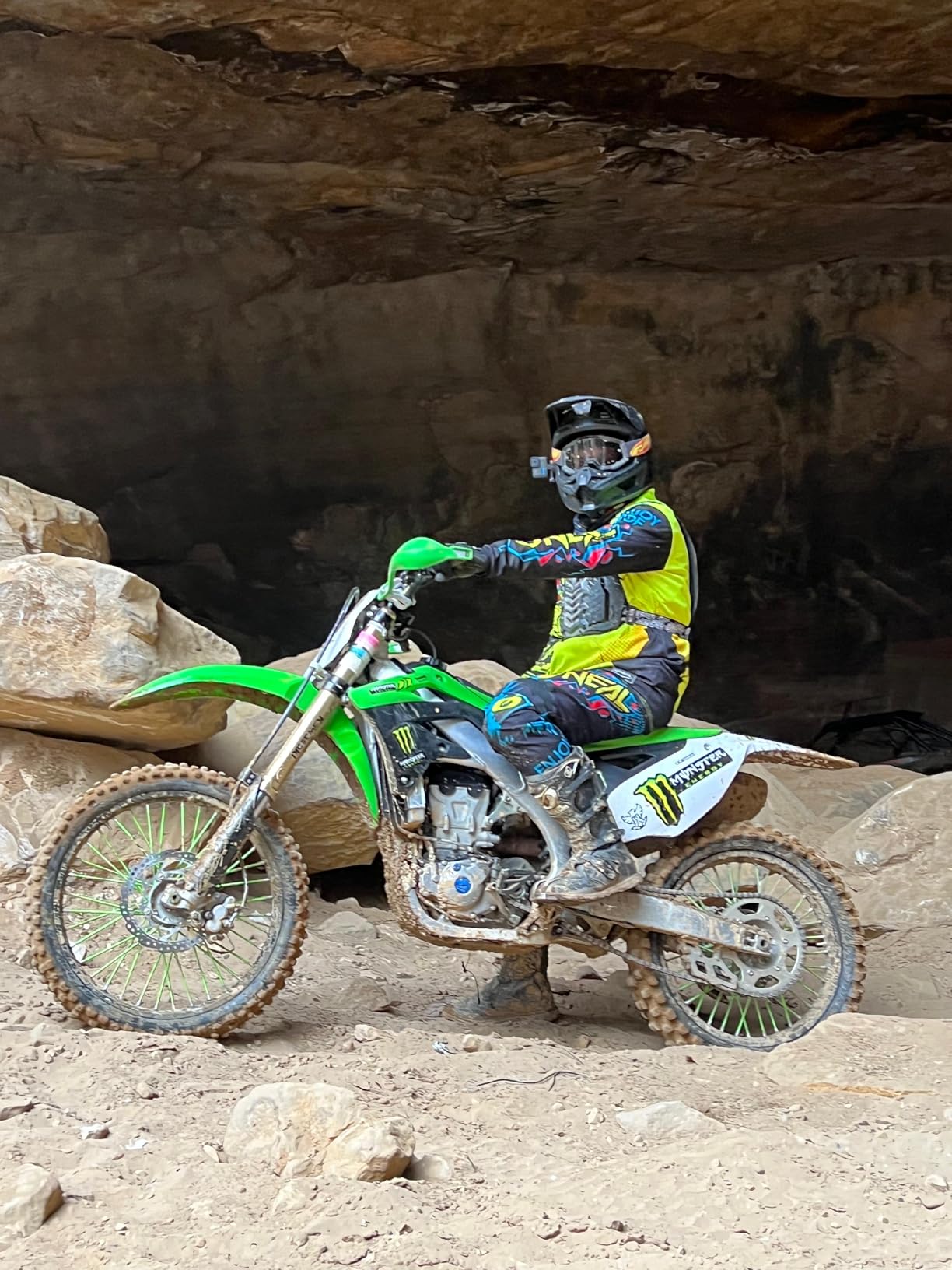
The magnetic visor release is the feature that made me keep reaching for this shell. It holds firm under roost and vibration but lets the peak detach during a crash, which takes force off the neck in exactly the mechanism a helmet cannot protect against directly.
Fit is where this one leads the adult group. Four shell sizes combined with five EPS sizes gives one of the widest sizing matrices here, and it sits behind a 4.7 average across 544 ratings with 87 percent at five stars.
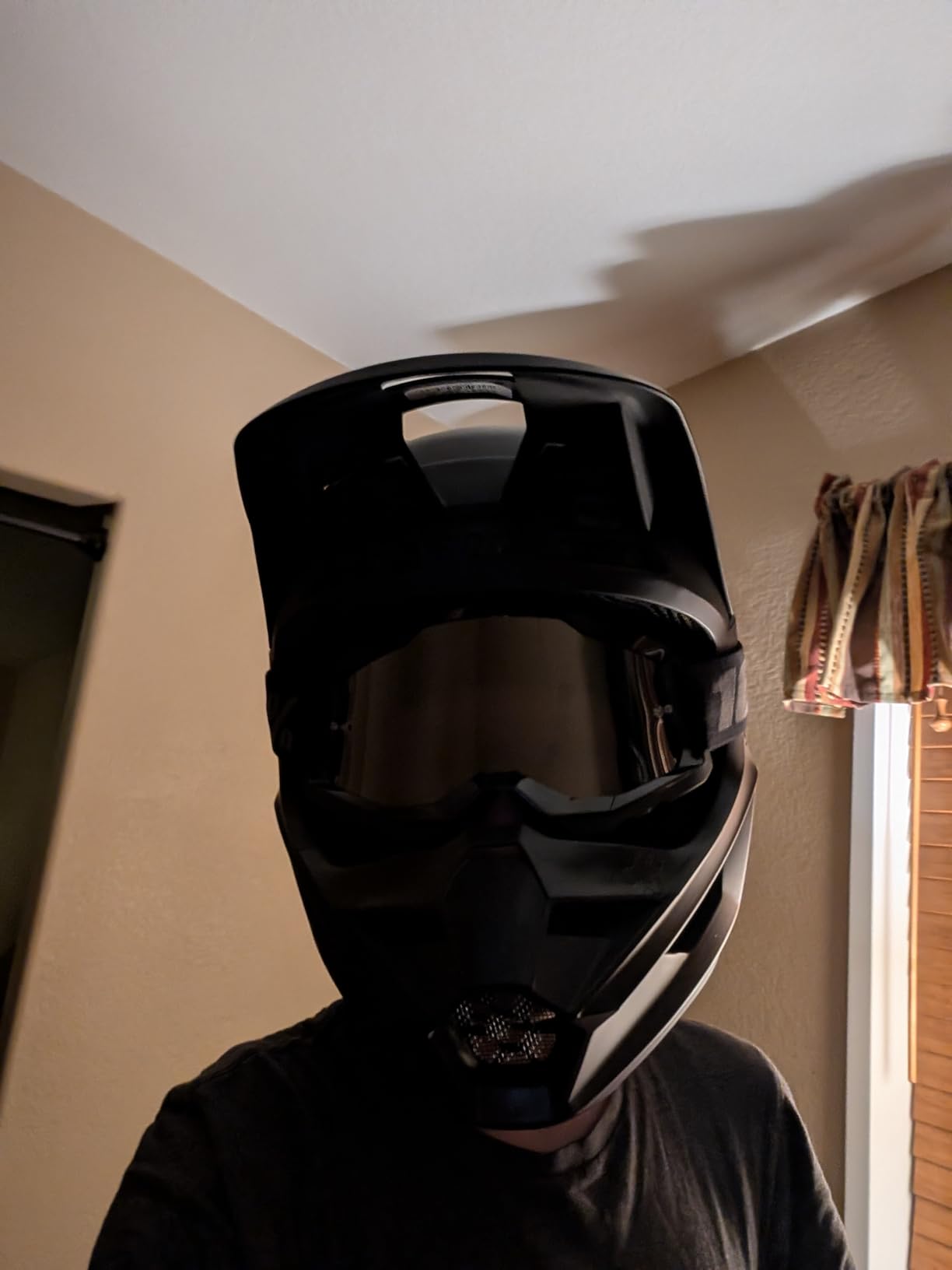
Ventilation is the other headline. Nine intake and four exhaust vents total thirteen openings on a lightweight injection-molded polycarbonate and ABS shell, and owners report strong airflow and moisture control over long summer sessions.
It holds a top-six sales rank in Motorcycle and Powersports Helmets, which is consistent with what we saw in the reviews: this is the step-up model that a lot of riders buy instead of a cheaper entry shell.
Does the size matrix actually fix the fit problem?
It helps, with one caveat. Fox publishes snug fit guidance and tells buyers between sizes to size up, so the widest range in the group still needs a measured head and a read of the brand chart before you order.
What the extra sizes buy you is the ability to move between shell sizes cheaply over the life of the helmet, which matters for riders whose head form changes or who swap between a thin and a thick liner by season.
Is the magnetic visor worth the extra step?
Yes for track and enduro riders, where roost hits the peak constantly and the release does its job without you thinking about it. For trail riders the advantage is smaller but the feature does not hurt when the visor is already adjusted and locked.
The one genuine friction point is the double D-ring closure, which is secure and standard in the discipline but slower than a buckle when you are pulling gloves on in a hurry.
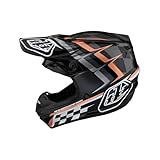
Troy Lee Designs SE4 Polyacrylite Helmet – Best Dual-Sport Pick
Troy Lee Designs SE4 Polyacrylite Adult Motocross Off-Road Dirt Bike Helmet with MIPS, Warped, Black / Copper, Medium
Polyacrylite shell with MIPS
Sixteen vent ports plus EPP collarbone vent
Six standard shell sizes
ECE 22.06 and FMVSS 218 certified
Pros
- Lightweight and well ventilated for the tier
- MIPS protection well below other MIPS-equipped models
- Visor does not catch wind like many dirt helmets
- Fits large goggles cleanly
- Extra back-of-head coverage on trails
Cons
- Runs snug especially for riders who normally wear a large elsewhere
- Size chart can be inconsistent with actual fit
- Visor is the only listed included component
The SE4 is the one in this group I would recommend to riders who split time between the dirt bike and a street machine. It carries ECE 22.06 and FMVSS 218 certification, which covers both European and US requirements, and the restrained graphics look right with either kind of gear.
Ventilation is unusually well distributed. Sixteen cooling vent ports plus an EPP collarbone system in the chin bar push air through the shell from the front intake to the rear exhaust, and owners note that the visor does not catch wind at highway speeds the way many dirt helmets do.
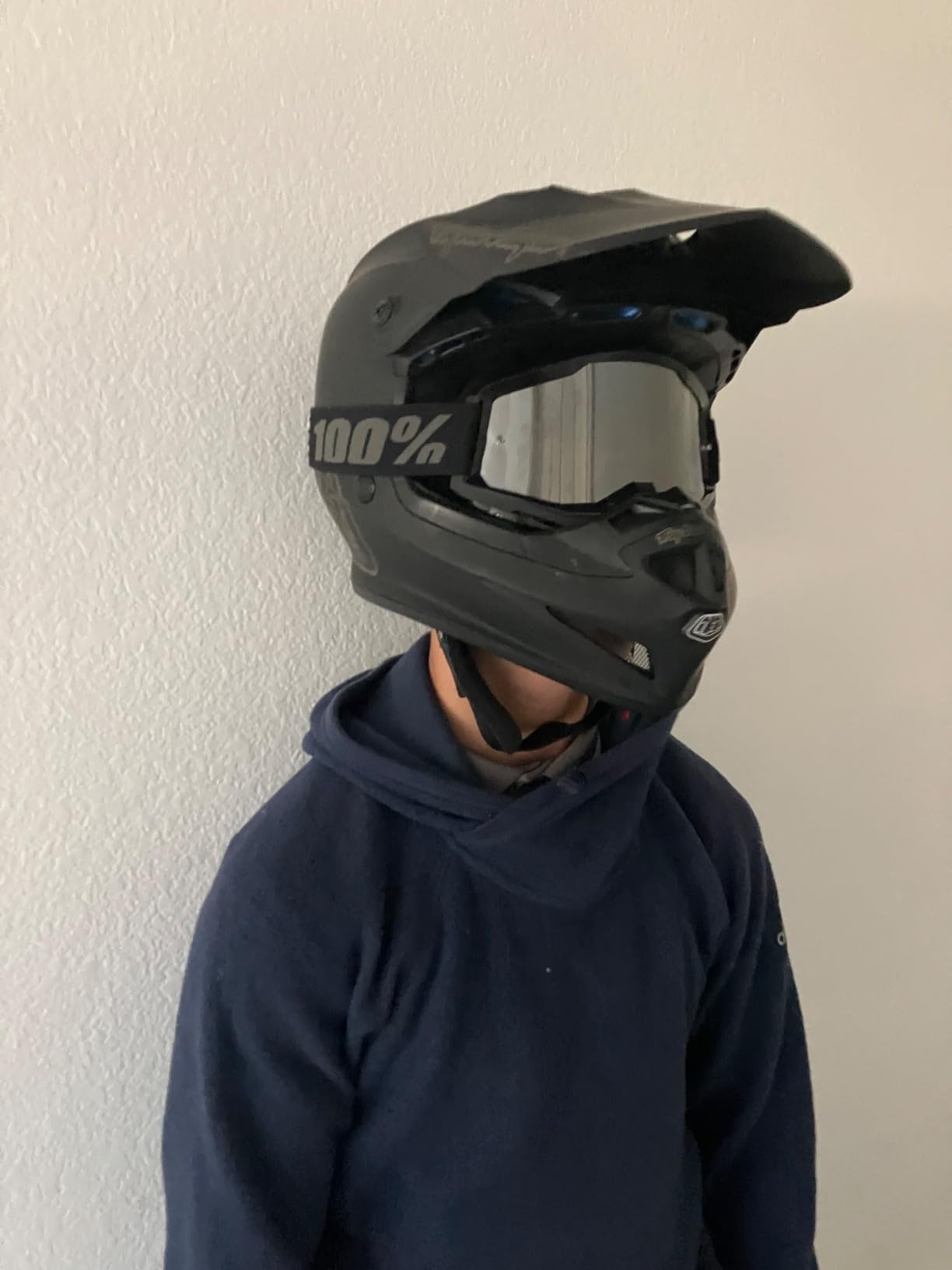
Sizing is its weak point, and it is the one thing I would flag hard. Interchangeable cheek pads across six standard sizes sounds generous until you hit the reports of medium feeling snug and a large fitting tighter than expected for riders who normally wear a large in other brands.
The listed material is ABS, EPS and polypropylene with a 22-vent count and a listed weight of 2.04 kg. Manufacturer warranty is three years, longer than most of the shells here.
Why the collarbone ventilation matters off-road
Most helmet vents pull air through the brow and push it out the back. The EPP system in the chin bar routes air across the collarbone and upper chest as well, which is the area that gets soaked in spray and roost on long trail days.
That matters more than the headline vent count. The 22 listed openings sound impressive on paper, but where the air enters and leaves is what you feel after hour three.
How do you get the fit right with a snug shell?
Measure carefully and read the size chart as a starting point rather than a guarantee, because owners do report mismatches between the chart and the actual fit. If you are between sizes, the interchangeable cheek pads give you a cheaper adjustment than buying a different shell.
Treat the shell as snug by design and plan a short break-in ride before a long trip, rather than assuming a tight first impression means the wrong size.
ILM Model 128S Adult Dirt Bike Helmet – Best Budget Adult Shell
ILM Adult Dirt Bike Helmets Motocross ATV Dirtbike BMX MX Offroad Full Face Motorcycle Helmet, DOT Approved Model 128S (Matte Black, Adult-L)
DOT FMVSS-218 certified ABS shell
Vented high-density EPS liner
Detachable rotating sun visor
Detachable washable inner pads
Pros
- Over 3700 ratings with a 4.6 average
- Meets or exceeds FMVSS-218
- Detachable washable pads keep the helmet fresh
- Front and rear vents with an aerodynamic shell
- Adult and youth sizes in many colorways
Cons
- Buckle closure is less refined than a double D-ring system
- Basic vent layout compared with higher-priced shells
- Padding is less plush over long sessions
The 128S is the shell I recommend when someone tells me the budget is the main constraint. It is DOT certified to FMVSS-218, it uses a lightweight ABS shell with a fully vented high-density EPS liner, and it has gathered more than 3700 ratings from adult riders, which is the deepest adult feedback base in this roundup.
The detachable visor rotates to account for sun direction, so you can reposition it without buying a different peak. Front and rear vents and a detachable washable inner pad make it practical for a rider who wears one helmet year round.
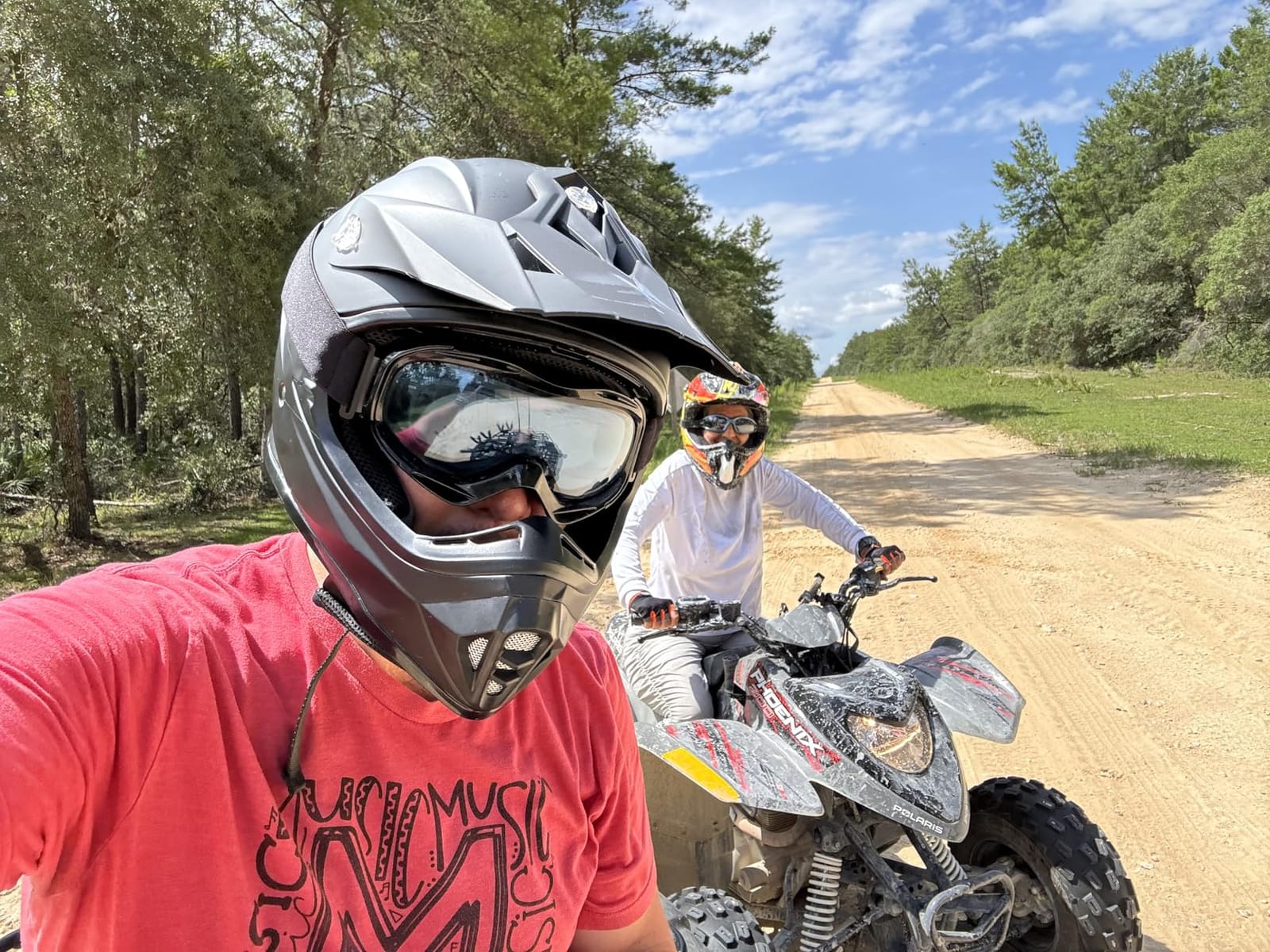
Where it stops is the hardware and the foam. The buckle closure is simpler than the double D-ring systems on the higher tiers, and the vent layout is basic compared with the thirteen-vent shells further up this list.
Padding is the other gap. Owners on long sessions report it as less plush, which usually means more pressure points by hour three. This is the honest limit of a shell at this level and the reason we would upgrade after a first season.
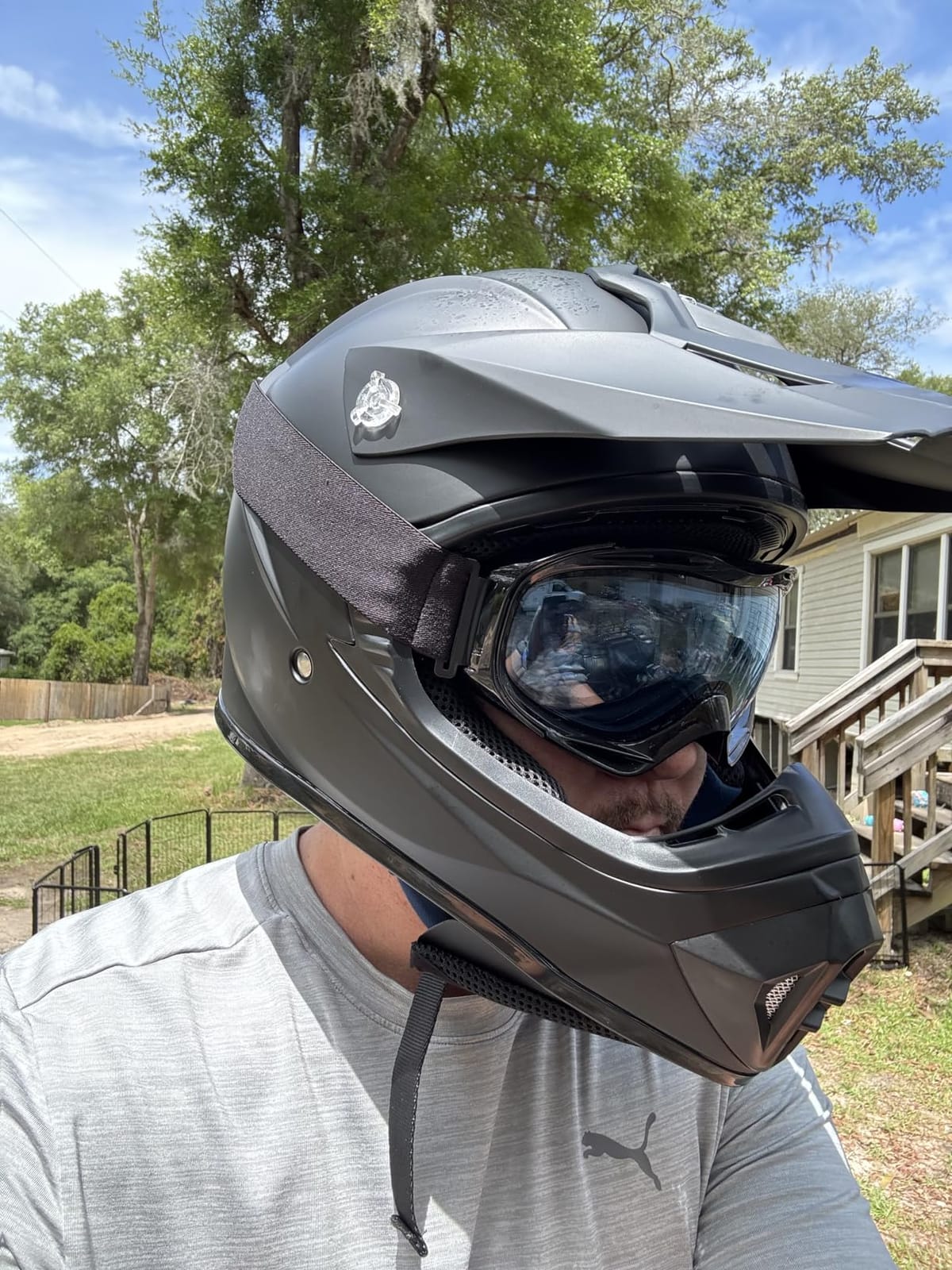
Is a DOT-certified budget shell actually safe enough?
Yes, provided the certification is real and the shell has not taken an impact. FMVSS-218 is the US motorcycle standard and this model lists compliance with it, which puts it well ahead of the uncertified imports that dominate the very cheapest tier.
What you give up is rotational impact management. There is no MIPS or proprietary system here, so the protection is linear-impact focused rather than managing the angular spin that comes with angled trail hits.
When should a first-time buyer move up a tier?
Once you are riding more than a few times a month, or once a day on the bike turns into a full day. The comfort gap between this shell and a MIPS model is what you feel first, and comfort is what determines whether you keep wearing a helmet.
For occasional practice-track use and trail riding close to home, it remains the most sensible money you can spend on a certified shell.
XFMT Youth Dirt Bike Helmet – Best Complete Kit for Young Riders
XFMT Youth Dirt Bike Helmet DOT Approved Kids Full Face Motocross Helmets
DOT FMVSS-218 ABS shell with EPS
1030g listed weight
Triple ventilation at chin top and back
Adjustable sun visor with D-ring strap
Pros
- More than 13600 ratings behind it
- Complete kit with goggles gloves and storage bag
- Published child sizing chart measures accurately
- High-density EPS buffer layer
- Lightweight at 1030g so kids keep it on
Cons
- Included goggles often fit looser than the helmet sizing
- Included gloves run large for some children
- Only a few vents so riders sweat after about half an hour
- Double D-ring strap is hard for very young children
This is the kit I would hand a parent whose child is starting out. The package includes the helmet, anti-fog goggles, anti-slip gloves and a portable helmet bag, and more than 13600 ratings make it the most thoroughly reviewed product in this entire roundup.
The sizing chart is the part parents care about most and it holds up. Published measurements run S 49 to 50 cm, M 51 to 52 cm, L 53 to 54 cm and XL 55 to 56 cm, and reviewers report the chart matches the actual shell closely enough to order with confidence.
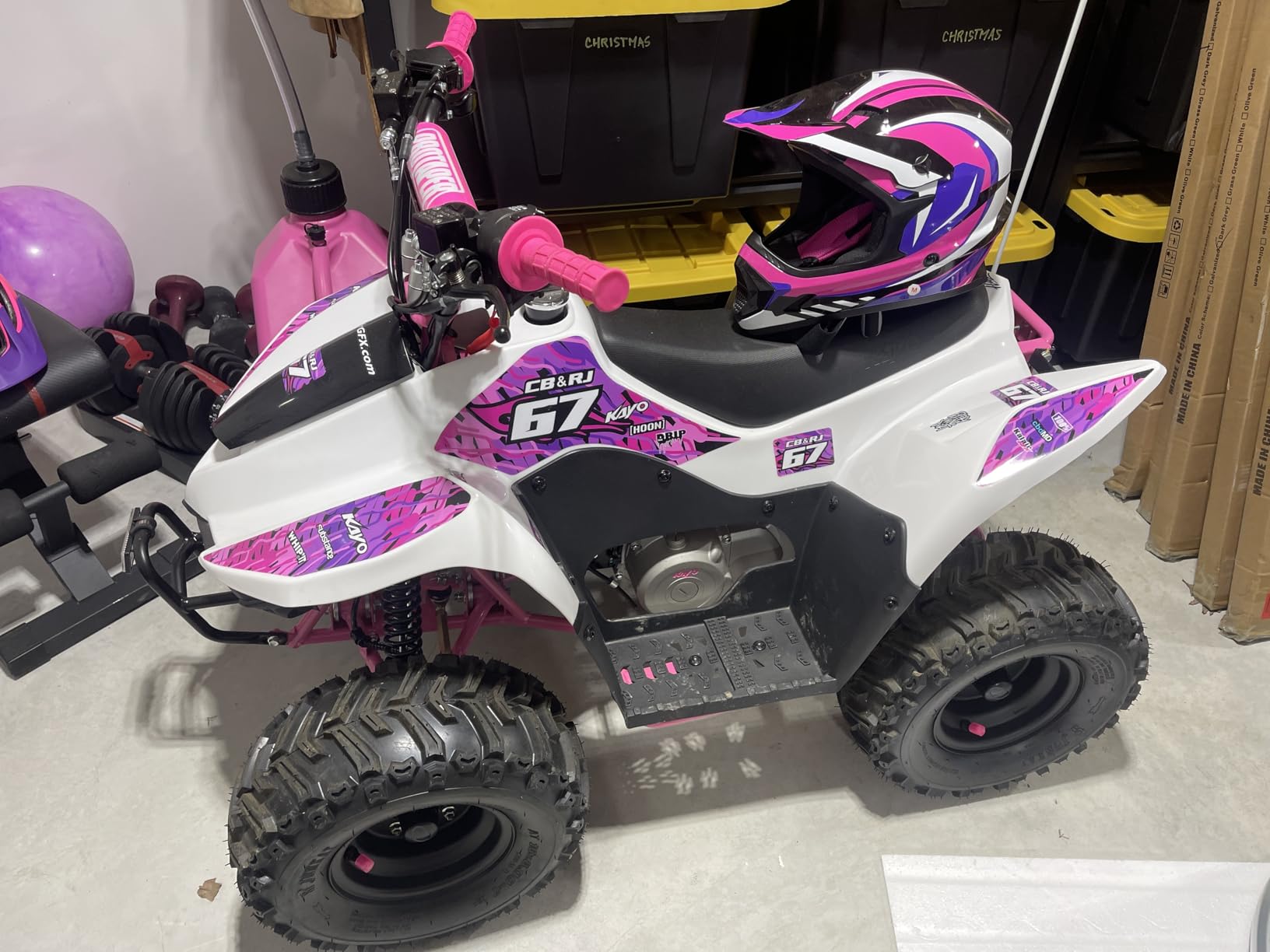
Safety-wise you get a high-impact ABS shell with a high-density EPS buffer layer meeting DOT FMVSS-218, a removable and washable non-woven sponge lining, three air vents at the chin, top and back, and an adjustable sun visor with peripheral vision support.
The listed weight is 1030 g, and that number is doing real work here. A heavy helmet is the fastest way to get a child to take it off mid-ride, and parents on forums consistently say the same thing about their own kids.
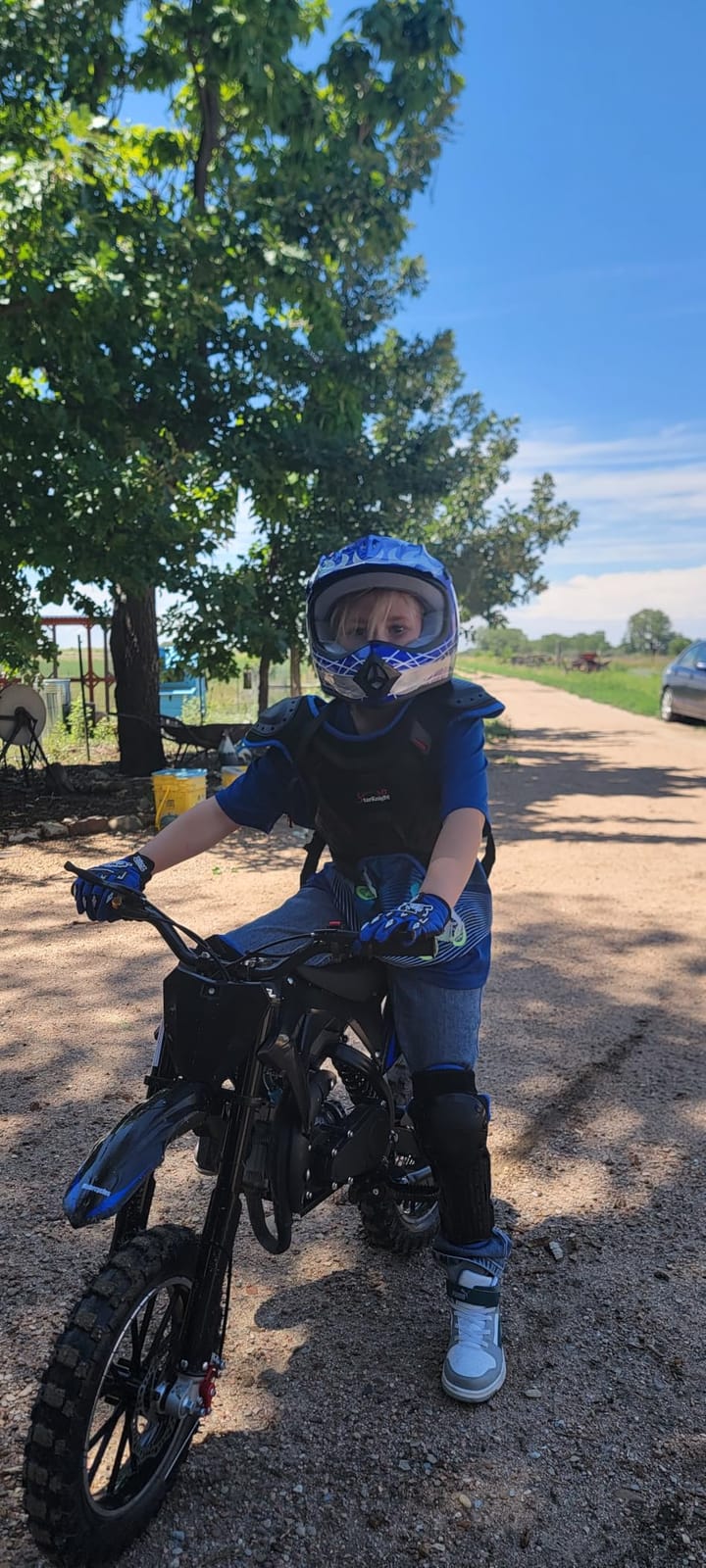
Are the bundled goggles and gloves actually usable?
Not always, and this is the most repeated complaint in the reviews. Parents report the included goggles fitting looser or larger than the helmet sizing suggests, and the gloves running large for some children, so treat both as extras rather than replacements.
Because the helmet is DOT certified and the accessories are not what you are really buying here, size your own goggles and gloves to the child and use the bundled ones as spares.
How long does a youth helmet like this last?
Parents report durability across years of use, and the removable washable lining is what keeps a child’s helmet wearable rather than smelling out. The manufacturer warranty runs 90 days from purchase, which is short, so inspect the shell and strap early.
Expect to move up a size as the child grows, and treat the fit check with the 222 rule at every stage rather than assuming a helmet that worked last season still works this one.
O’NEAL 3 SRS MX Helmet – Best Starter Helmet for New Riders
O’Neal 3SRS Helmet Adult Solid Black/Grey Medium
ABS shell with 1340 gram listed weight
Removable washable moisture-wicking liner
DOT ECE 22-05 and AS/NZS certified
Buckle or snap closure
Pros
- Plush padding that still feels secure
- Large size fits riders who normally need XXL
- Meets DOT ECE 22-05 and AS/NZS standards
- Good styling and glossy finish
- Works well as a practice or starter helmet
Cons
- Some buyers report it running small particularly in the medium
- No MIPS or other rotational system listed
- Smallest review base here at 93 ratings
The 3 SRS is a comfortable first helmet, and comfort is exactly what a new rider needs to keep wearing one. The ultra-plush removable and washable padded liner wicks moisture and still feels secure rather than loose once it is on.
It meets DOT, ECE 22-05 and AS/NZS standards, which is a wider set of approvals than most shells at this level advertise, and it runs multiple air vents for cooling. Listed shell weight is 1340 grams in a size large, with a tolerance of plus or minus 50 grams.
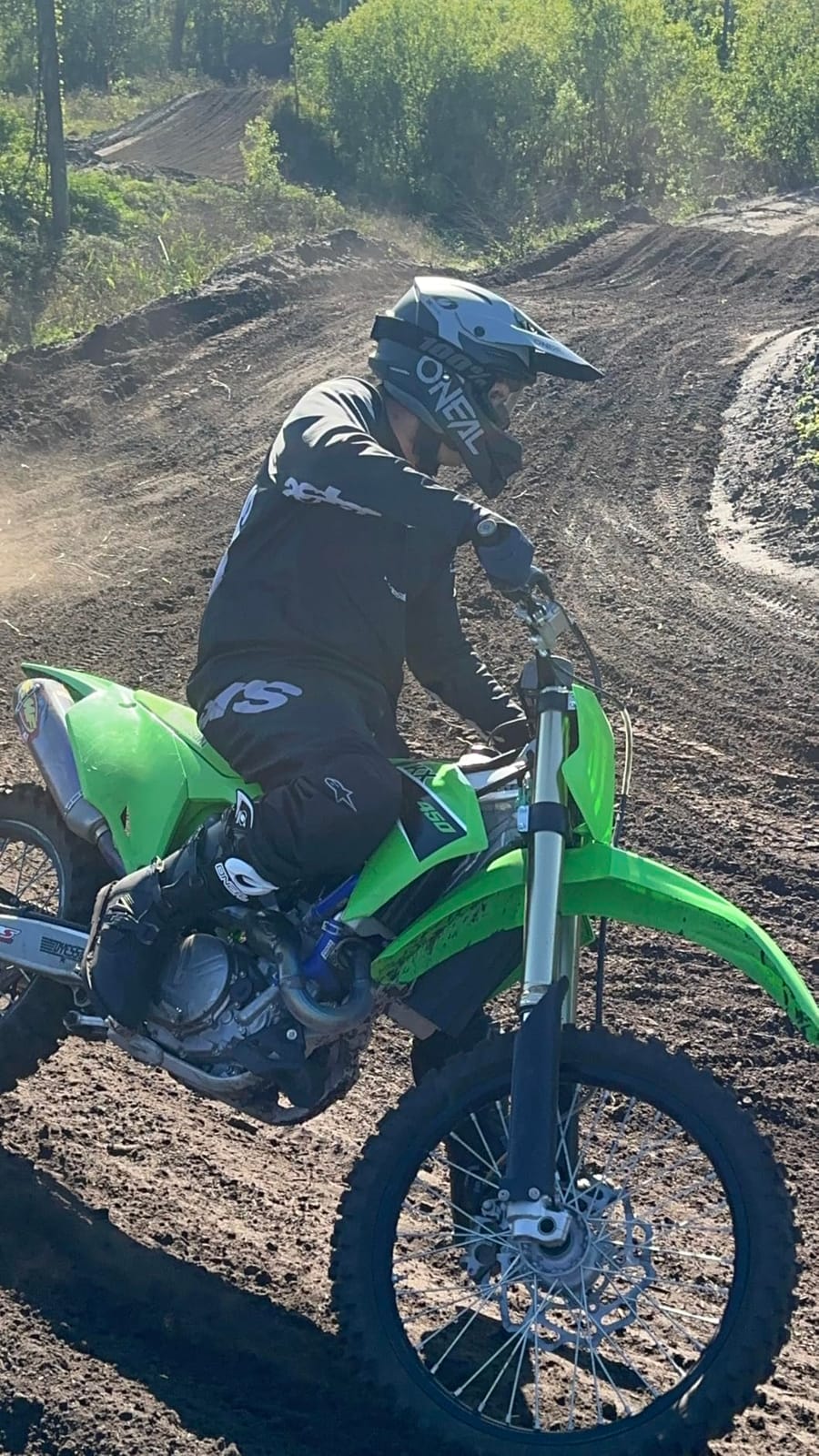
Fit feedback is genuinely mixed and that is the headline caveat. One reviewer reports it running small in the medium while another says the large fits a wearer who normally needs an XXL, so this is a helmet you should measure for rather than size by habit.
There is no MIPS or other rotational system listed, and the review base of 93 ratings is the smallest in this group. Both are acceptable for a practice helmet and both are reasons to look elsewhere if you ride hard.
Is this a practice-track helmet or a trail helmet?
It works as a practice or beginner helmet, which is the honest description. The ABS shell and multi-standard certification cover the basics, and the comfort is good enough that a learner will keep it on for a full session.
If your riding involves hard impacts, long technical descents or racing, spend the difference on a MIPS shell. The rotational protection gap is the one that matters most in exactly those situations.
How do you handle the inconsistent sizing?
Measure your head circumference, then decide against the brand chart rather than a size name, because the same label means different head forms here than it does at Fly or FXR. Forum riders routinely run into that mismatch.
If you are between sizes, the plush liner is thick enough that a shell which feels snug at first often relaxes over a few rides, which is the opposite of the Fox fit guidance.
ILM Youth Full-Face Dirt Bike Helmet Set B07 – Best All-In-One Youth Set
ILM Youth Kids DOT Full‑Face Dirt Bike Helmet ATV Motocross Set B07
DOT FMVSS-218 ABS shell with EPS
1175 gram listed weight
Quick-release buckle closure
Adjustable sun visor
Pros
- Over 2300 ratings with a 4.6 average
- Complete set with goggles gloves and storage bag
- Lightweight at 1175g for young riders
- Quick-release buckle is easier for kids than a D-ring
- Five year manufacturer warranty
Cons
- Included gloves can run small or large depending on the child
- Only two vents limits airflow in hot conditions
- Published size chart does not always match the actual fit
The B07 set is the value pick when a child needs a full setup in one purchase. The package includes the helmet, UV-resistant sponge-cushioned goggles, sports gloves and a storage bag, and it carries a five year manufacturer warranty, the longest warranty in this group.
The shell is ABS with high-density EPS padding meeting or exceeding FMVSS-218 and DOT standards. The listed weight is 1175 g, removable sweat-absorbing breathable cheek pads help with heat, and the quick-release buckle is far easier for a child to manage than a double D-ring.
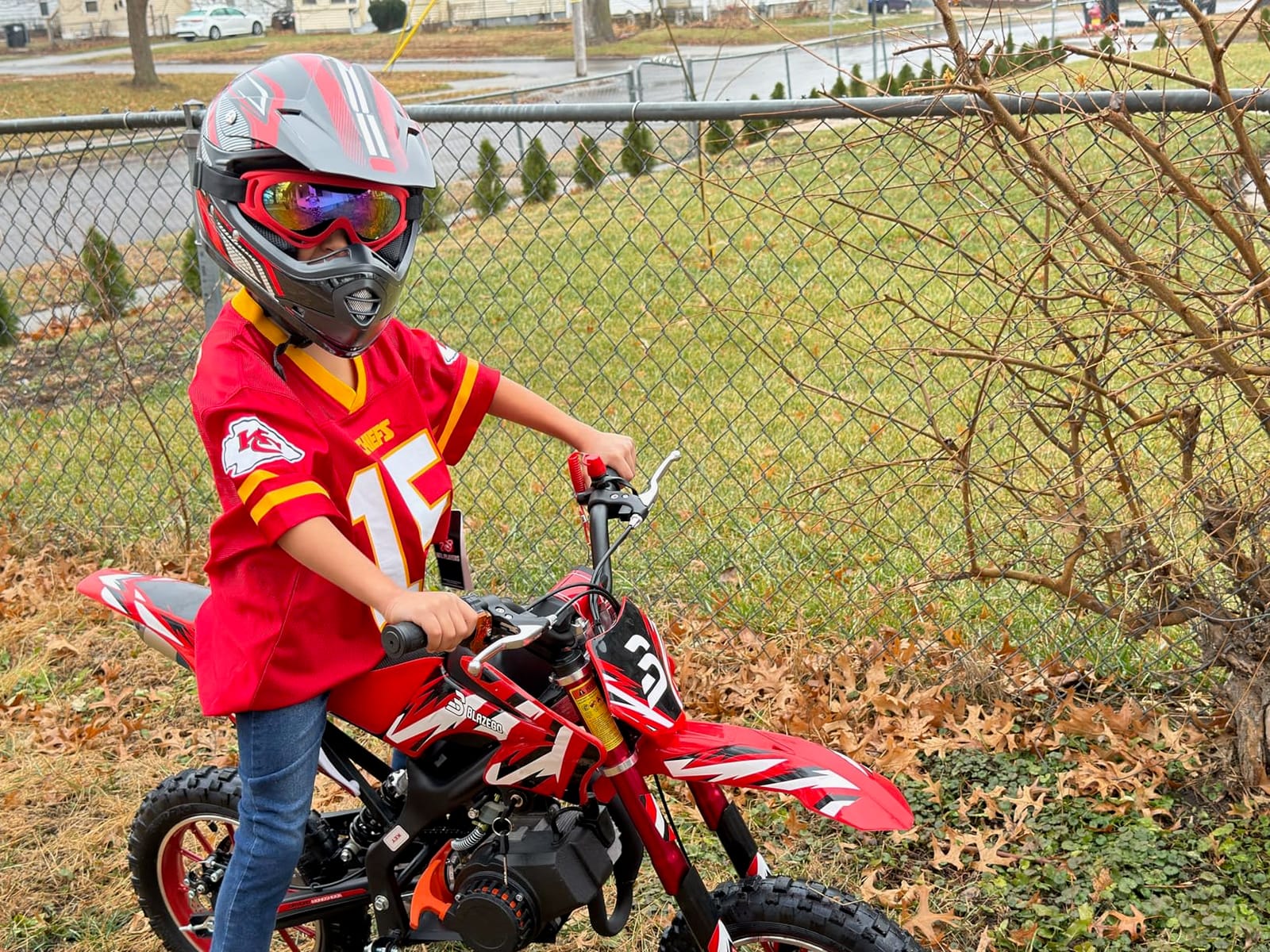
The size chart runs Small 18 to 19 in, Medium 19 to 20 in, Large 20 to 21 in and X-Large 21 to 22 in, which is inches rather than the centimetre measurements used by the XFMT chart. Compare carefully if you are ordering for the same child across brands.
Parents consistently rate the package highly for value, completeness and the simple fact that their child is willing to wear it. Accessories are the weak point, with multiple reviews noting the bundled gloves fit poorly.
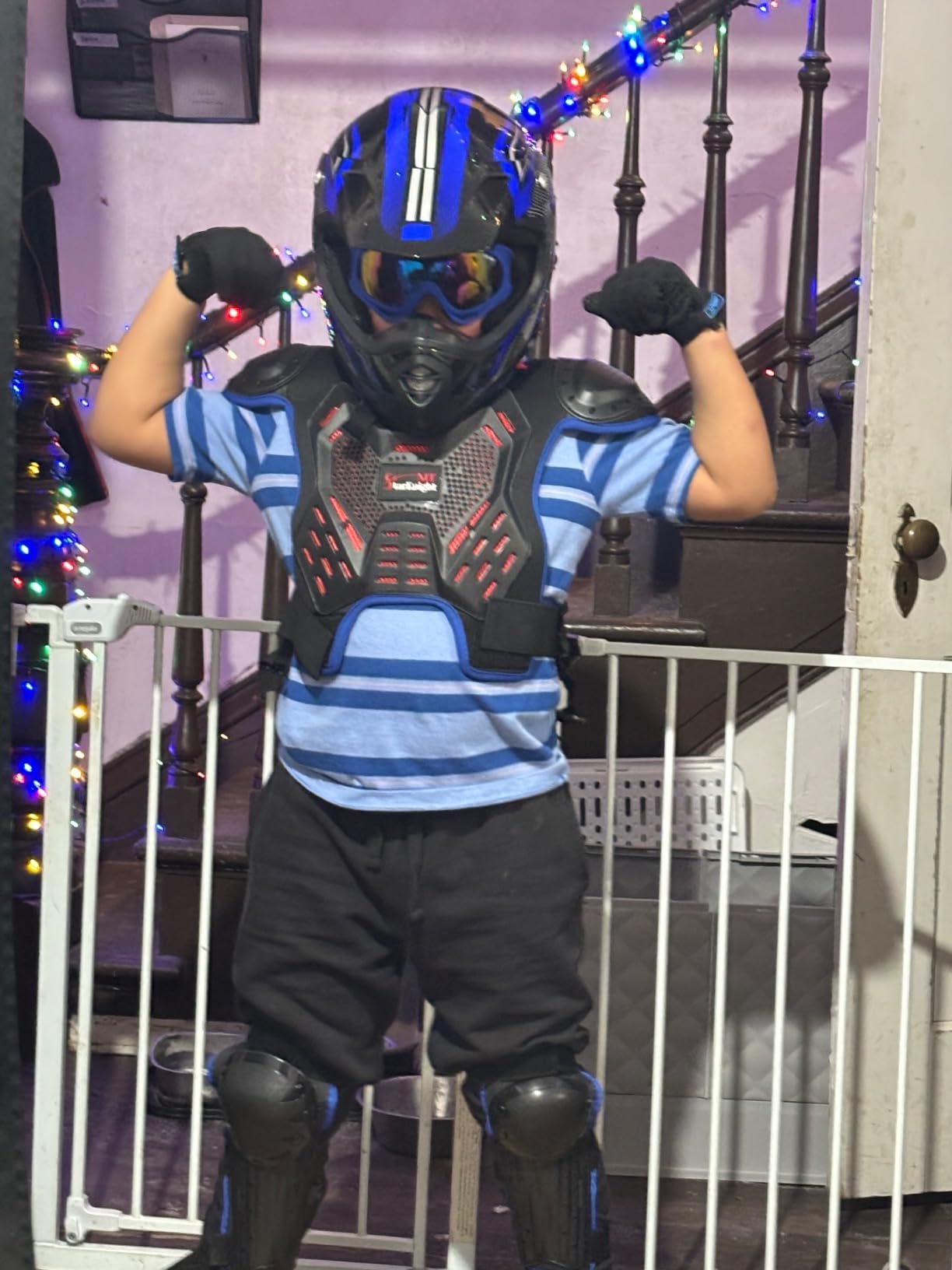
D-ring or buckle: which is better for a child?
For a young rider, a quick-release buckle wins. A D-ring requires two hands and fine motor control, and a child who cannot unfasten their own helmet will need help after every fall, which turns a small delay into a real problem.
That is the one place where this ILM set is genuinely better specified than the more expensive youth shell in this roundup, and it is worth more to a parent than any of the rotational technology debates.
What about heat on a summer ride?
Two vents is the honest limit here. Reviewers report riders getting sweaty in hot conditions, and on a slow e-bike trail or a wooded single track where speed does not create airflow, that shows up faster.
If the child rides mostly in open terrain, the tradeoff is manageable. For slow wooded trails, look at a shell with more vents and a lighter liner before the summer is over.
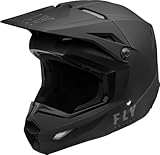
Fly Racing Kinetic MX Helmet – Best for Ventilation and Dual-Density Comfort
Fly Racing Kinetic Solid Off-Road Motorcycle Helmet – DOT Approved, Lightweight Dual-Density EPS, TFV Ventilation, Removable Liner – (Matte Black, Medium)
Polymer alloy shell in three shell and four EPS sizes
TFV front-to-rear ventilation
Dual-density EPS liner
DOT FMVSS 218 certified
Pros
- Noticeably lighter than many previous full-face helmets
- Aerodynamic profile where the visor does not catch wind
- TFV ventilation moves air front to back
- True to size for most riders
- Youth and adult options in the same model line
Cons
- Runs small with several riders recommending a size up
- Noticeable wind noise and whistling at speed
- Buckle closure rather than a double D-ring
The Kinetic is the one I recommend when neck fatigue is the deciding factor. Owners coming from heavier full-face helmets describe it as noticeably lighter, and the listed weight of 3.6 pounds sits comfortably below the heavier shells in this group.
TFV, the True Functional Ventilation system, moves air from front intake to rear exhaust across a polymer alloy shell offered in three shell and four EPS sizes. The dual-density EPS liner is a real step up from single-density foam, using a softer layer against the head for comfort and a firmer layer for impact absorption.
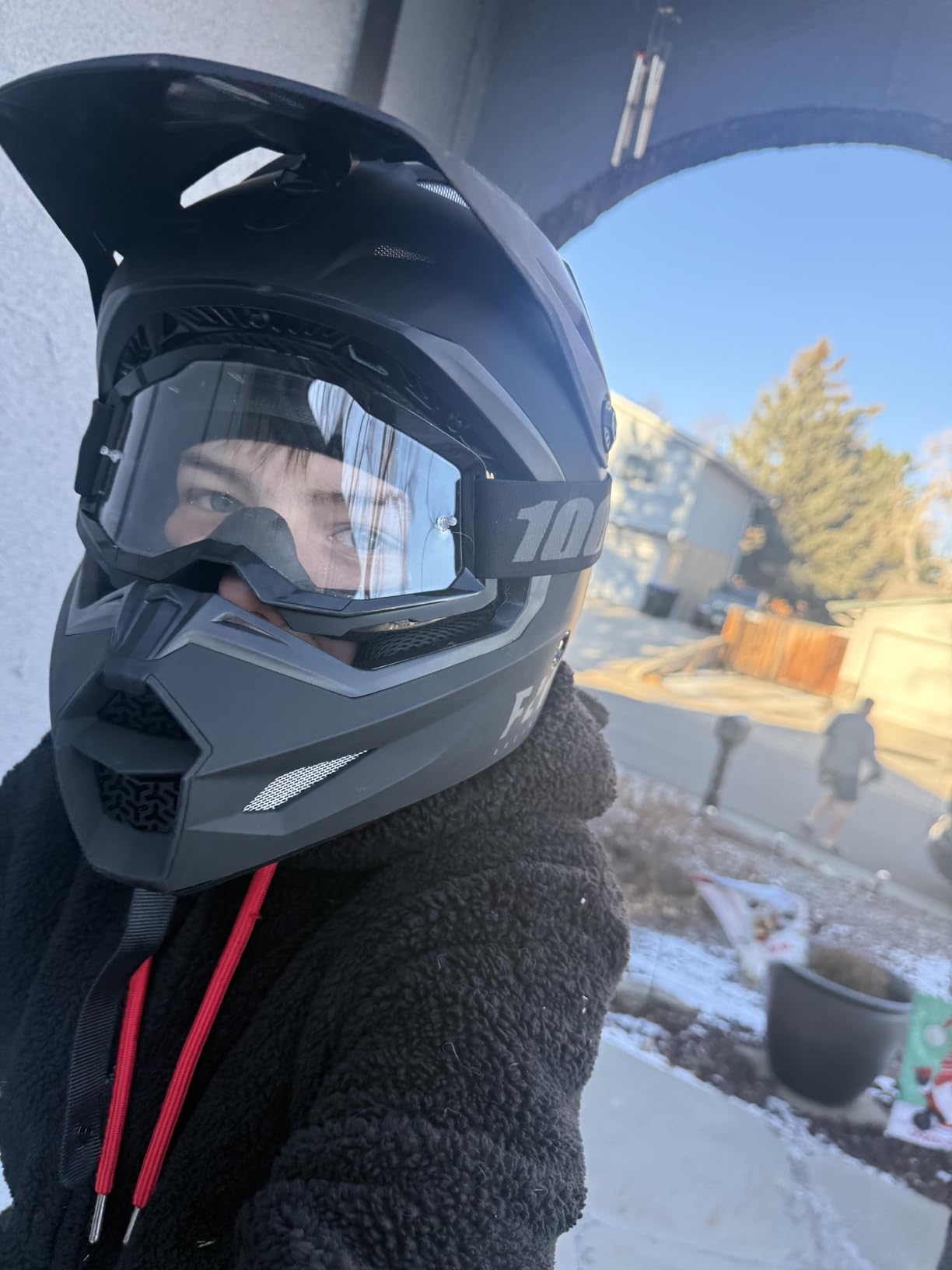
The liner, quick-release cheek pads and high-flow mouthpiece all come out for cleaning, and a fleece storage bag is included. That combination of removable, washable parts is what separates a helmet that stays fresh after a season from one that does not.
Styling is sharp for the tier, and the aerodynamic profile keeps the visor from catching wind the way some models do. Youth and adult size options run through the same model line, so a family can buy from one brand.
How much does dual-density EPS actually change the ride?
More than most riders expect on a long day. The softer inner layer takes the pressure points that make foam helmets sore at the forehead and temples, while the firmer outer layer keeps the same low-profile protection, so comfort improves without giving up structure.
Combined with a lighter shell and a liner you can actually wash, it is why this shell keeps its comfort rating on day one and day ninety.
What should you check before ordering this one?
Sizing is the main thing. Several riders recommend sizing up because the shell runs small, and the model line covers youth and adult sizes, so check the chart rather than assuming continuity between them.
The other note is wind noise. Owners report noticeable noise and whistling at speed, which is normal for an open eye port but worth considering if your route includes fast pavement connectors.
The 222 Rule: How to Confirm a Dirt Bike Helmet Fits
The 222 rule is the fit test every rider should run before leaving the driveway: two seconds to put the helmet on, two seconds to fasten the strap, and two seconds of eye room once the goggles are in place. If any of the three takes longer, or if your field of view is obstructed, the shell is wrong for your head.
Two seconds on. The helmet should go on without a fight and sit level, with the bottom edge level across the brow rather than tipped back.
Two seconds to strap. Fasten the chin strap so you can fit one or two fingers under the webbing, and the shell should not shift when you shake your head hard.
Two seconds of eye room. With your goggles in place you should be able to look left, right and down without the goggle frame or the chin bar cutting into your view.
If the helmet is too small you will feel hot spots at the forehead, temples and crown within minutes. If it is too large it will move when you shake your head, and the strap will have to be pulled uncomfortably tight to stop it. Both fail the test.
How to Measure Your Head for the Right Shell Size
Measure your head circumference with a soft tape measure, run it just above your eyebrows and across the back of your skull at the widest point, and keep the tape level. Write the number down, because that figure is the only thing that transfers reliably between brands.
Place the tape about one centimeter above your eyebrows, not on the brow ridge itself.
Bring it around the back at the point where your skull is widest, usually just above the base of the neck.
Read the measurement twice and take the larger number if they differ.
Compare that figure with the brand chart, then read reviews written by riders with a similar measurement.
Shell sizes are not standardized across brands. The same label from two manufacturers can differ by a full size, and forum riders regularly describe one XXL fitting perfectly while another brand’s largest offered size ran small. Cheek pad sizing is a separate system from shell sizing, which is why one shell can fit three different head forms once the pads are swapped.
Forum guidance is consistent on the direction: start a size larger and work down until it is snug. Too small announces itself as a hot spot within minutes, while a shell that is too large shifts when you shake your head.
Safety Certification Explained: DOT FMVSS 218 vs ECE 22.06
DOT FMVSS 218 is the US motorcycle helmet standard, and ECE 22.06 is the European standard most riders encounter on an MX track or a dual-sport trip. Both are legitimate, and they are not identical in what they test.
FMVSS 218 focuses on linear impact performance and includes a penetration test that checks what happens when a pointed object strikes the shell. ECE 22.06 adds rotational acceleration and oblique impact testing, which is why helmets dual-certified to both appear so often in this roundup. Snell M2020 is a separate US standard required at many competitive MX tracks and is worth checking against your local track’s rulebook.
For riding outside the United States, an ECE 22.06 mark is what you will be asked for. For US trail, enduro and e-bike riding, FMVSS 218 compliance is the baseline. If you race or run a track day, check the sanctioning body before you buy, because no certification in this list guarantees you are allowed to race.
The sub-tier where certification cannot be verified is where we would spend the least. The cheapest shells in any category are the ones most likely to be uncertified copies, and the label is the only evidence that a helmet was actually tested.
Rotational Impact Systems and When to Replace a Helmet
Rotational impact management is the industry’s answer to oblique hits, where the head spins rather than striking flat. Most off-road injuries happen on angled impacts, so a low-friction layer between your head and the foam matters more than the shell material does.
The major systems are MIPS, a licensed standard found across many brands; 6D ODS and Bell Spherical, both proprietary systems with their own joint designs; and proprietary platforms from Leatt and Fly. The crucial insight from rider forums is that the MIPS badge alone is not a differentiator, because it is licensed out to many manufacturers. What distinguishes the systems is the mechanism, not the label, and all of the MIPS-equipped helmets in this roundup meet the same certification bar.
On replacement timing, treat five years from first use as the outer limit for any helmet, regardless of condition. After that the EPS liner and the shell bonding degrade even without a crash, and impact performance drops quietly.
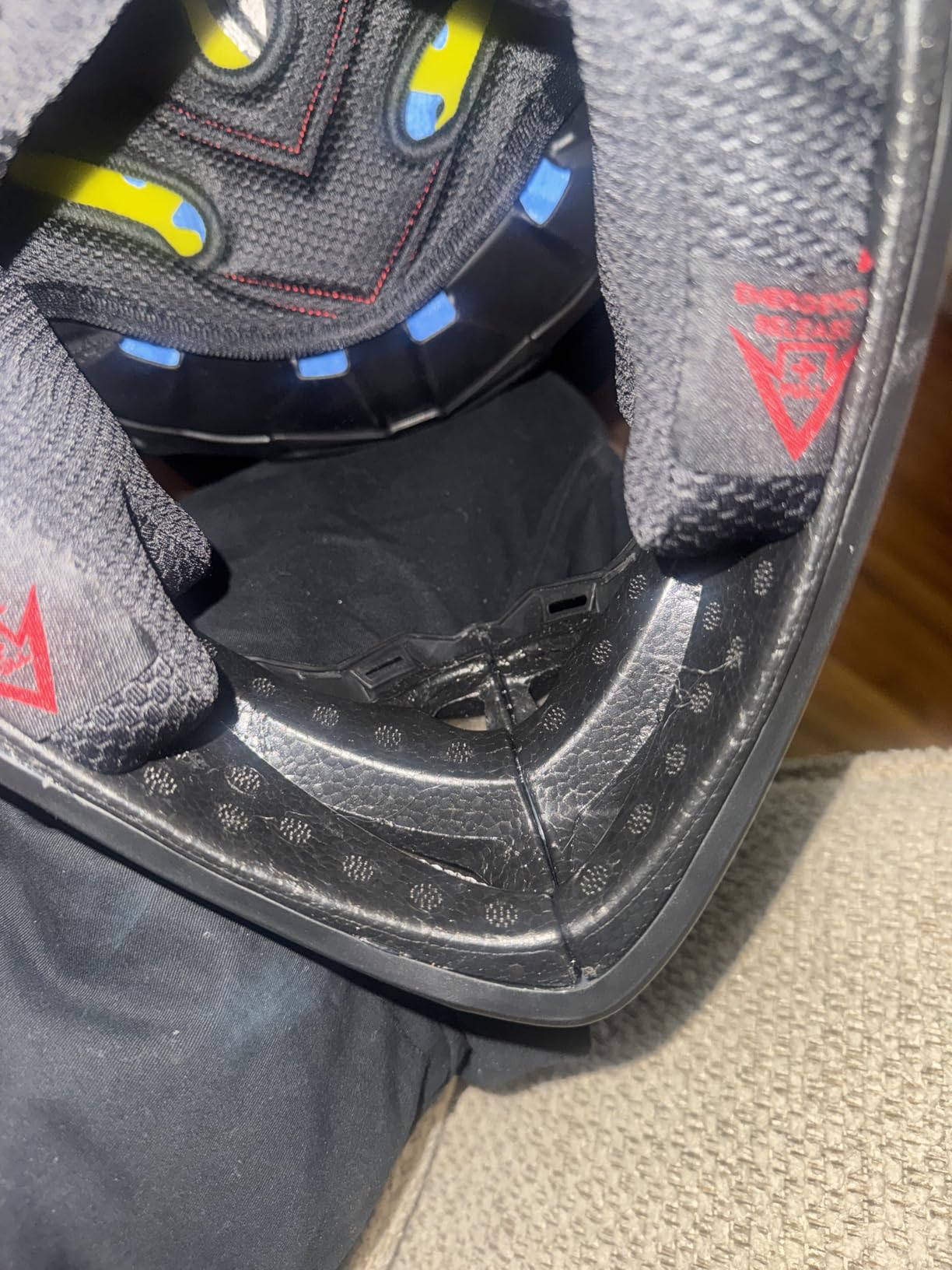
Then there is the hard rule. Replace the helmet immediately after any impact hard enough to move the shell, crack the liner, or leave a dent you can feel with a fingernail. Used helmets have no verifiable crash history, and a hidden dent in the EPS does not show up on the outside. If you are inspecting a second-hand shell, look for a compressed or visibly dented liner, a faded or scuffed interior, and a strap webbing that feels stiff or frayed.
Riders commonly keep a crash helmet as a beater and a second shell for the days that matter. Once the beater takes a hit, retire it rather than swapping the roles, and never put it back on a track day.
Frequently Asked Questions
What is the best brand of dirt bike helmet?
Bell, Alpinestars, Fox Racing, Troy Lee Designs, Fly Racing and Shoei are the most consistent names, and every one of them makes a genuinely certified entry-level model. For most riders the brand matters less than two things: a shell size that matches your measured head and a certification mark you can verify. Riders on r/Motocross commonly describe the mid-tier range as the sweet spot between cheap and risky shells and expensive carbon race helmets.
What is the 222 rule for helmets?
The 222 rule is a fit test with three steps. Two seconds to put the helmet on, two seconds to fasten the chin strap, and two seconds of eye room once your goggles are settled. If any step takes longer, or if the goggle frame cuts into your field of view, the shell does not fit your head properly and you should try a different size.
How many years are dirt bike helmets good for?
Treat five years from first use as the outer limit for any dirt bike helmet, even with no crash and no visible damage. The EPS liner and the shell bonding degrade over time and impact performance drops quietly. After any impact hard enough to move the shell or leave a dent you can feel with a fingernail, replace the helmet immediately regardless of age.
How snug should a dirt bike helmet fit?
Snug, with no movement. The shell should sit level across the brow, the chin strap should allow one or two fingers underneath, and the helmet should not shift when you shake your head. Too small shows up as hot spots at the forehead, temples and crown within minutes, while too large shifts and forces the strap uncomfortably tight.
Are helmet shell sizes the same across brands?
No. Shell sizes are not standardized, so a large from one manufacturer can differ by a full size from a large at another, because each brand uses its own head form. Cheek pad sizing is a separate system again, which is why one shell can fit several head forms once the pads are swapped. Measure your circumference and compare the number, not the size name.
What are common helmet fitting mistakes?
The most common mistakes are sizing by the size name instead of your measured circumference, choosing a large and expecting the foam to relax when the shell cannot actually change size, wearing the helmet without tightening the strap properly, and buying thicker cheek pads for a track fit when the shell is already snug. A second common error is buying an MX helmet that leaves too little eye room for the goggles you actually use.
The Best Dirt Bike Helmet to Buy in 2026
Our pick for the best dirt bike helmets in 2026 is the Bell Powersports MX-9 MIPS. A 4.7 average across 1288 ratings, three shell sizes, quick-drying padding and verified DOT certification make it the most complete adult package here, and the only pick we would hand to a rider with no particular constraints.
Buy the Fox V Core MIPS if you want the widest sizing matrix and a magnetic visor that releases in a crash, or the Fox V1 if your family rides together and you want one brand across youth and adult shells. The Alpinestars SM3 is the airflow and finish answer, dual-certified for riders who travel. Parents should start with the XFMT kit, and anyone on a strict budget can get a certified adult shell from the ILM 128S and upgrade after a first season.
Whatever you choose, measure your head before you order, run the 222 rule in the driveway, and set a replacement date five years out. Riders moving a bike to the driveway also need a solid dirt bike lift and a safe way to work on it.