
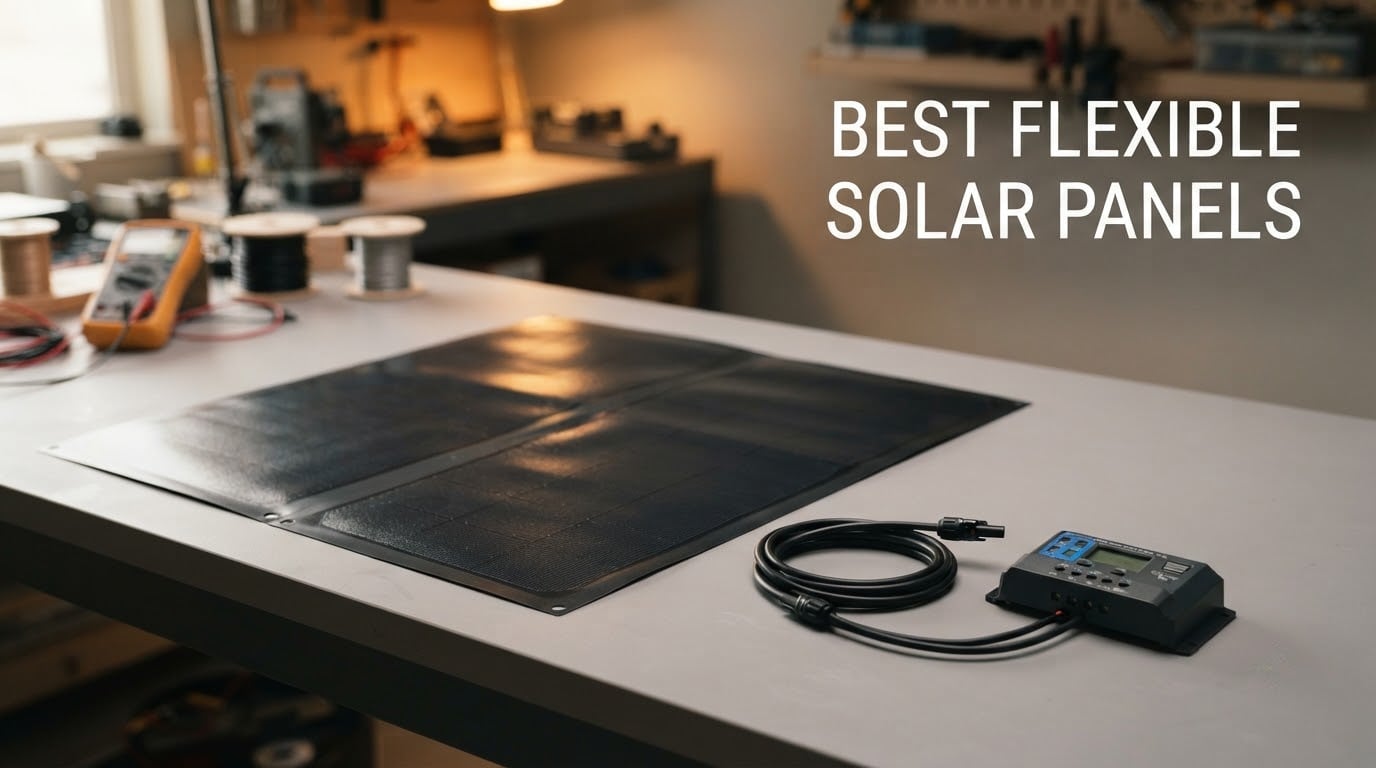
A flexible solar panel is a lightweight, frameless module built on a thin substrate instead of glass, so it can bend slightly to follow a curved or weight-limited surface. That makes it the practical choice for an RV roof, a van roof, a boat deck or a balcony where a rigid glass panel would drill holes you cannot undo. We compared ten of them on weight, cell technology, bend rating, sealing and the honest gap between nameplate watts and what actually comes out of them.
Our short version: the best flexible solar panels for most people are the ones with ETFE surfaces, 4 busbars or more per cell, real bypass diodes, and a profile thin enough to walk on. Everything else on the spec sheet is marketing. If you are still working out the wider picture, our guide to the best solar panels for van conversions covers rigid panels too, which matters because on a big flat roof with weight to spare, glass is usually the smarter purchase.
We reviewed the ten panels below against the same criteria for 2026: verified nameplate output, real measured output reported by owners, weight per watt, bend angle, ingress rating, warranty length and mounting options. Nothing here is sponsored, and we name the weak points in every section.
Table of Contents
Top 3 Flexible Solar Panel Picks for 2026
The 10 Best Flexible Solar Panels Side by Side (October 2026)
Every panel below appears in the table with its headline specs, then gets its own full section further down. Ratings and review counts are copied from the live listings, not estimated.
| Product | Specs | Action |
|---|---|---|
| ALLPOWERS SF100 100W Flexible Solar Panel |
|
Check Latest Price |
 Renogy 100W 240 Degree Ultra Flex Renogy 100W 240 Degree Ultra Flex |
|
Check Latest Price |
 Topsolar 2-Pack 180W Semi-Flexible Topsolar 2-Pack 180W Semi-Flexible |
|
Check Latest Price |
 Renogy ShadowFlux 200W N-Type Renogy ShadowFlux 200W N-Type |
|
Check Latest Price |
 Topunive 100W 9BB Monocrystalline Topunive 100W 9BB Monocrystalline |
|
Check Latest Price |
 ECO-WORTHY 260W 18BB Two-Pack ECO-WORTHY 260W 18BB Two-Pack |
|
Check Latest Price |
 XINPUGUANG 100W Kit with 10A Controller XINPUGUANG 100W Kit with 10A Controller |
|
Check Latest Price |
 Callsun 100W All-Black ETFE Callsun 100W All-Black ETFE |
|
Check Latest Price |
 Callsun 100W 240 Degree Ultra-Thin Callsun 100W 240 Degree Ultra-Thin |
|
Check Latest Price |
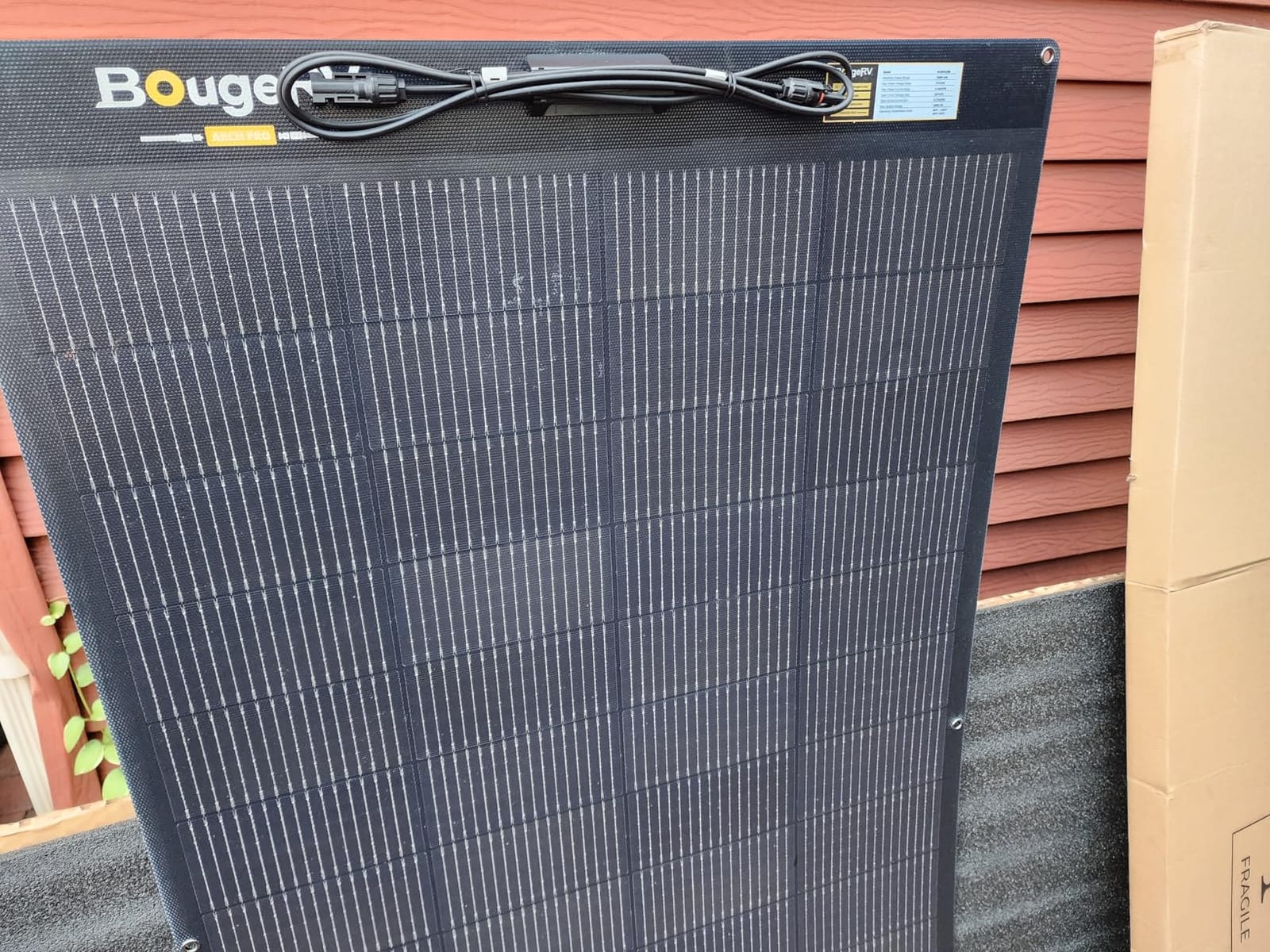
 BougeRV Arch Pro 200W N-Type Fiberglass BougeRV Arch Pro 200W N-Type Fiberglass |
|
Check Latest Price |
1. ALLPOWERS SF100 100W – The Most-Watched Flexible Panel on the Market
ALLPOWERS SF100 100W Flexible Solar Panel, IP68 Waterproofing ETFE
100W output
3mm thick
2.4kg
IP68 sealed
6 pre-drilled 8mm holes
Pros
- Molds to curved RV roofs and boat decks
- ETFE surface with IP68 sealing across -20C to 85C
- 3mm thin and light at 2.4kg
- Works with a range of ALLPOWERS power stations
Cons
- Needs a flat well-bonded surface for peak output
- Cell efficiency trails newer N-type panels in low light
This is the panel we keep coming back to, because the specification sheet and the owner reports roughly agree for once. It lands at 100W with a 25.5V working voltage, 4.17A working current and a 30.6V open circuit voltage, which is a normal 12V panel fingerprint that an MPPT controller will handle without complaint.
The physical build is where it earns its place on a vehicle. At 3mm thick and 2.4kg it adds almost nothing to a roof load, and the 1008 x 580mm footprint fits between roof vents on most vans and trailers without a custom frame.
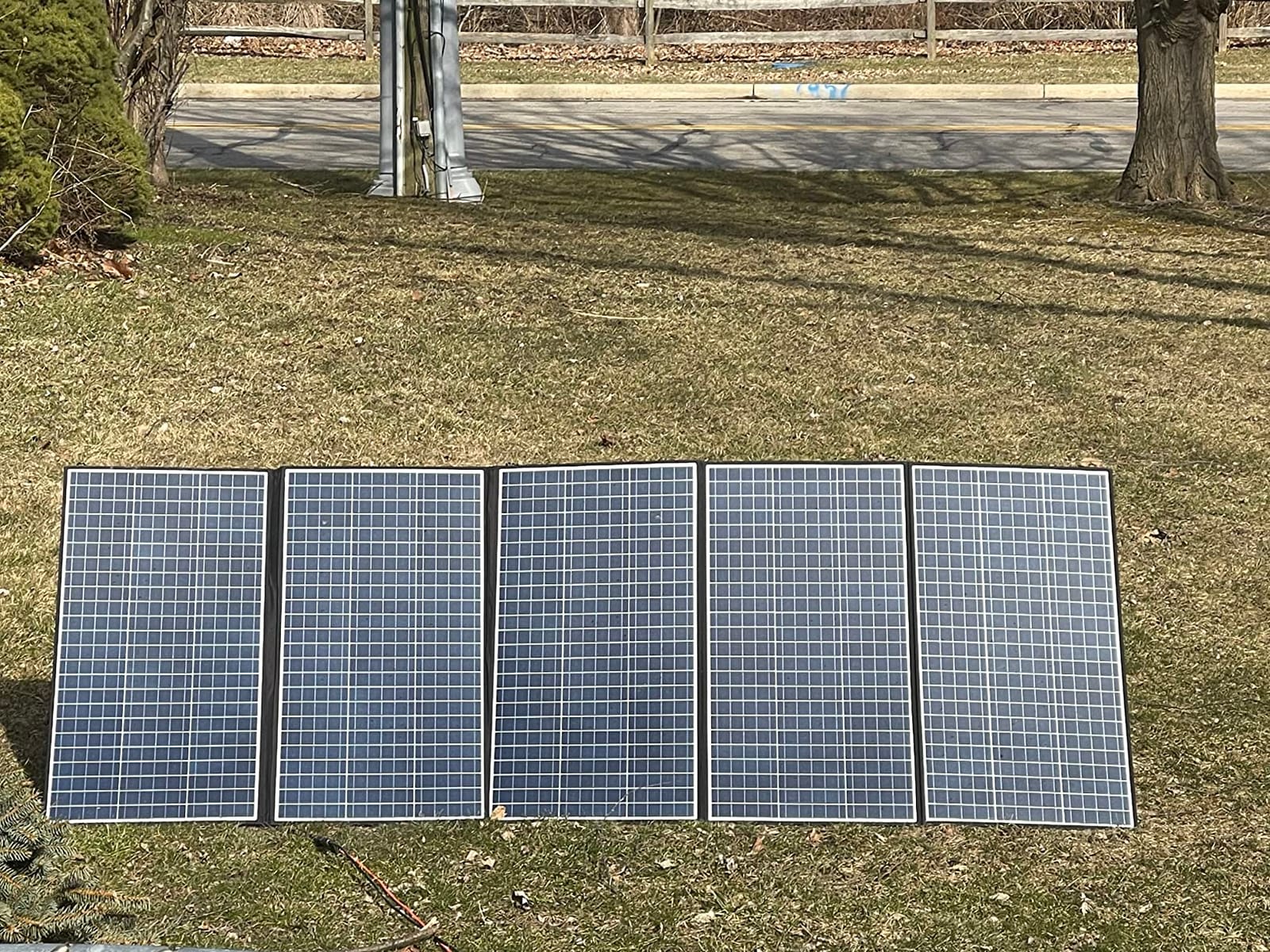
It is rated IP68 across a -20C to 85C operating range and carries a 50kg pressure rating when laid flat, so walking on it is fine as long as your weight is spread out. Six pre-drilled 8mm holes mean you can bolt it to a bracket, zip tie it or run VHB along the long edges.
Real output lands a little under the label, which is normal for this class. Owners consistently report good low-light behaviour and easy conformance to a curved roof, and the review base is by far the largest here at 2020 ratings, so failure patterns are well documented rather than a mystery.
Who the ALLPOWERS SF100 suits
It suits anyone who wants a dependable single panel without a frame, a controller bundle or a complicated install. The 120V maximum system voltage and built-in bypass diodes mean you can string a couple together in series if your controller allows it.
It also suits first-time builders who will damage a panel rather than respect it. The thin laminate does not enjoy point loads, so spread your weight across it.
Where it falls short
It is a mono-perc class panel in a 25% efficiency wrapper, and in low light it gives ground to the newer N-type designs. If your roof is shaded by a rack or a tree for part of the day, the bypass diode count matters more than the headline efficiency.
The 3-year manufacturer warranty is the shortest stated in this group. That is the single biggest reason we treat it as a value pick rather than a long-term purchase.
2. Renogy 100W 240 Degree – The Best-Bent Panel for Curved Roofs
Renogy Flexible Solar Panel 100 Watt, 240° Ultra Flex Bendable
100W output
240 degree bendability
4 pounds
0.08 inch thick
64 mono cells
MC4
Pros
- Extremely flexible and survives repeated repositioning
- About 0.1 inch thick and 70 percent lighter than conventional panels
- Good low-light output across multi-year van and trailer use
- MC4 connectors and 64 monocrystalline cells
Cons
- Output runs roughly 10 percent below comparable hard panels
- Occasional delamination or low-output examples reported on arrival
- Short leads mean extra extension cables are usually needed
Two hundred and forty degrees of bendability is the headline, and in practice it means this panel follows a teardrop or Airstream curve without kinking. At 48 by 21.5 inches and 0.08 inch thick, it also disappears visually from ground level, which matters if you care about looking stock.
The electrical spec is conventional 12V: 100W, 4.84A, MC4 connectors and 64 monocrystalline cells. Mechanical ratings are 2400 Pa wind and 5400 Pa snow load, which is a sensible figure for a panel that will sit on a moving vehicle.
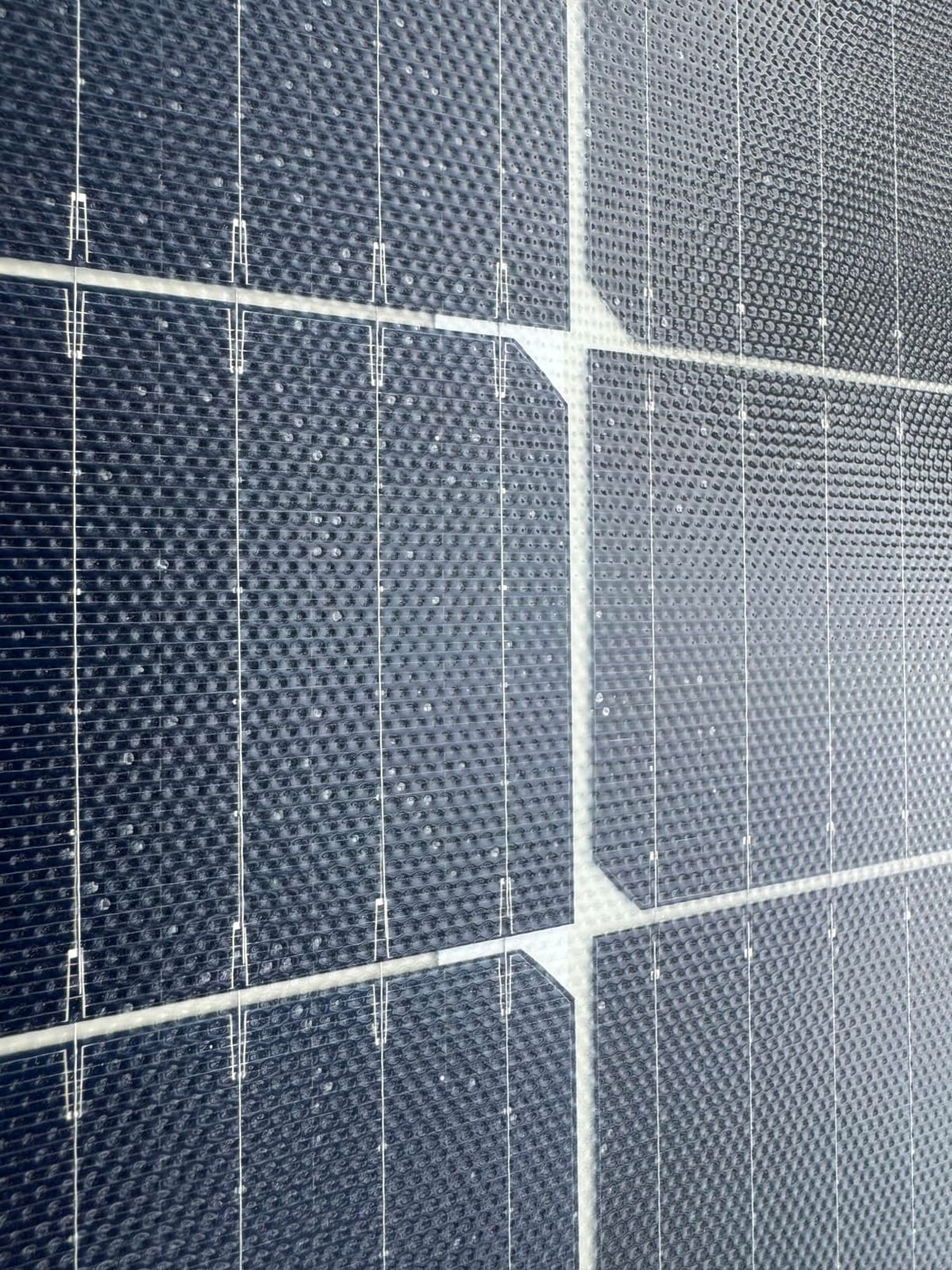
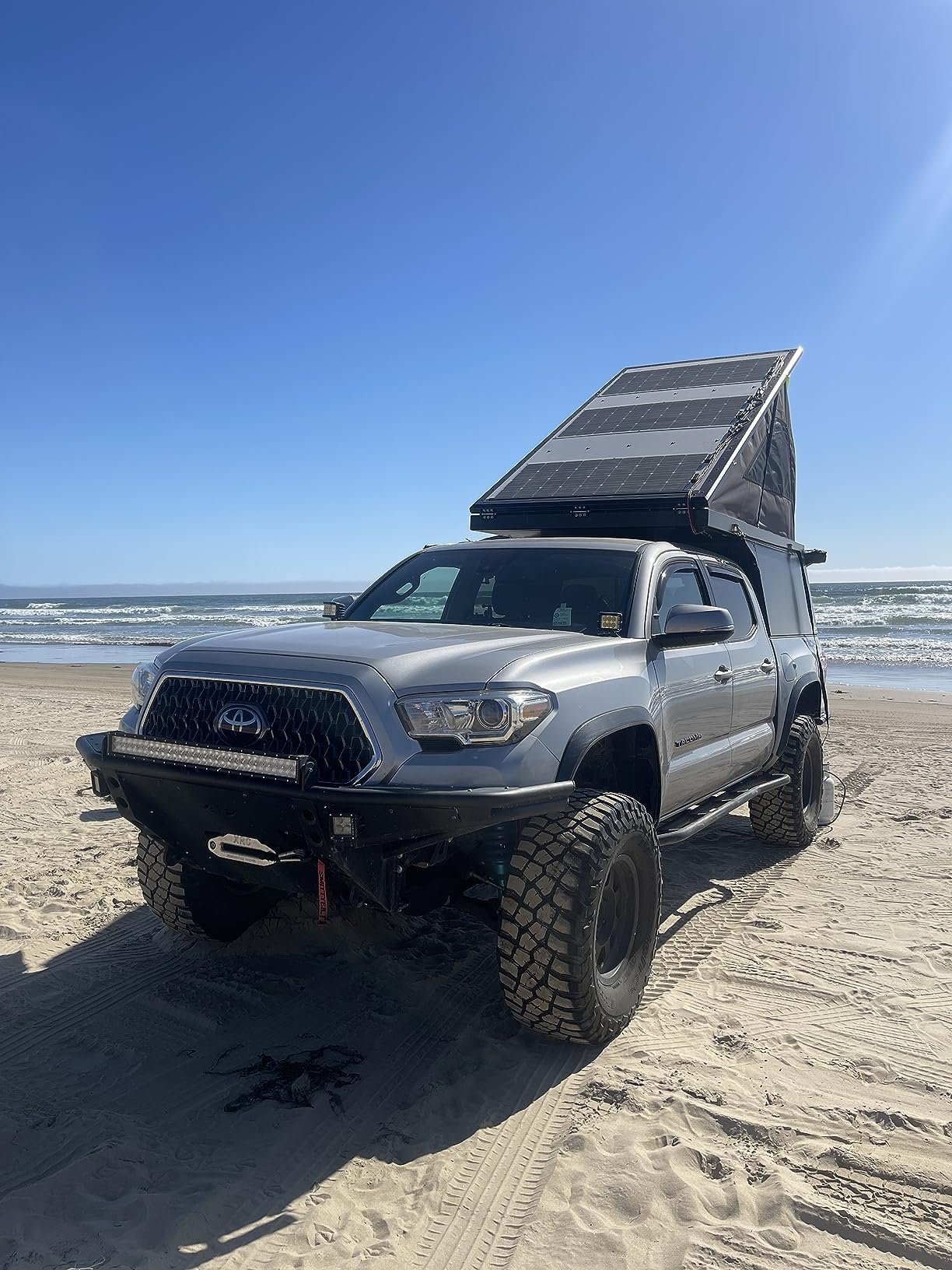
Long-term owners report multi-year durability and real-world readings ranging roughly from 90W up to 175W depending on conditions and array size. One owner has used a Renogy 100W flexible panel as a cab windshield sunshade on an extension lead for years and it keeps working.
That is a category of use most panels on this list are never tested for. It also highlights how differently these panels behave once they are not permanently bonded to a roof.
Who the Renogy 100W suits
It suits curved roofs where a rigid panel simply cannot sit flat. It also suits anyone who moves the panel around, because it folds into a car without a case and re-angles through a day of driving.
Buyers who want a support line behind the warranty will find it easier here than with most flexible panels on Amazon.
Where it falls short
Owners consistently note output running about 10 percent below comparable rigid panels, which is physics rather than a defect. If you are chasing watts per pound on a flat aluminium roof, a framed panel wins.
A minority of orders arrive with delamination or a weak cell, so inspect the panel in daylight before you bond it. Renogy customer service has replaced defective examples, so the failure mode is recoverable.
3. Topsolar 2-Pack 180W – Two Panels in One Order
Topsolar 2PCS 180W Semi-Flexible Solar Panel
Two 180W panels
360W combined
55 by 30 inch pack
12V DC output
Bendable build
Pros
- Two 180W panels arrive in one pack
- Bends to moderate curves on RVs and boats
- Thin and light and easy to transport and install
- Weatherproof scratch-resistant surface
Cons
- Lowest average rating of the ten at 4.0 stars with a 14 percent one-star share
- Sparse published specifications for a 360W bundle
- Bendable rather than fully flexible so it suits moderate curves only
This listing solves a real problem: one panel is rarely the right answer, and ordering two can mean waiting weeks for a matched pair. You get two 180W panels in a single 55 by 30 inch pack for 360W total on a 12V system.
Cell type is monocrystalline with the low-light behaviour that implies, and the surface is described as scratch-resistant and weatherproof. The bend is real but limited, so think moderate roof curvature rather than a full boat hull.
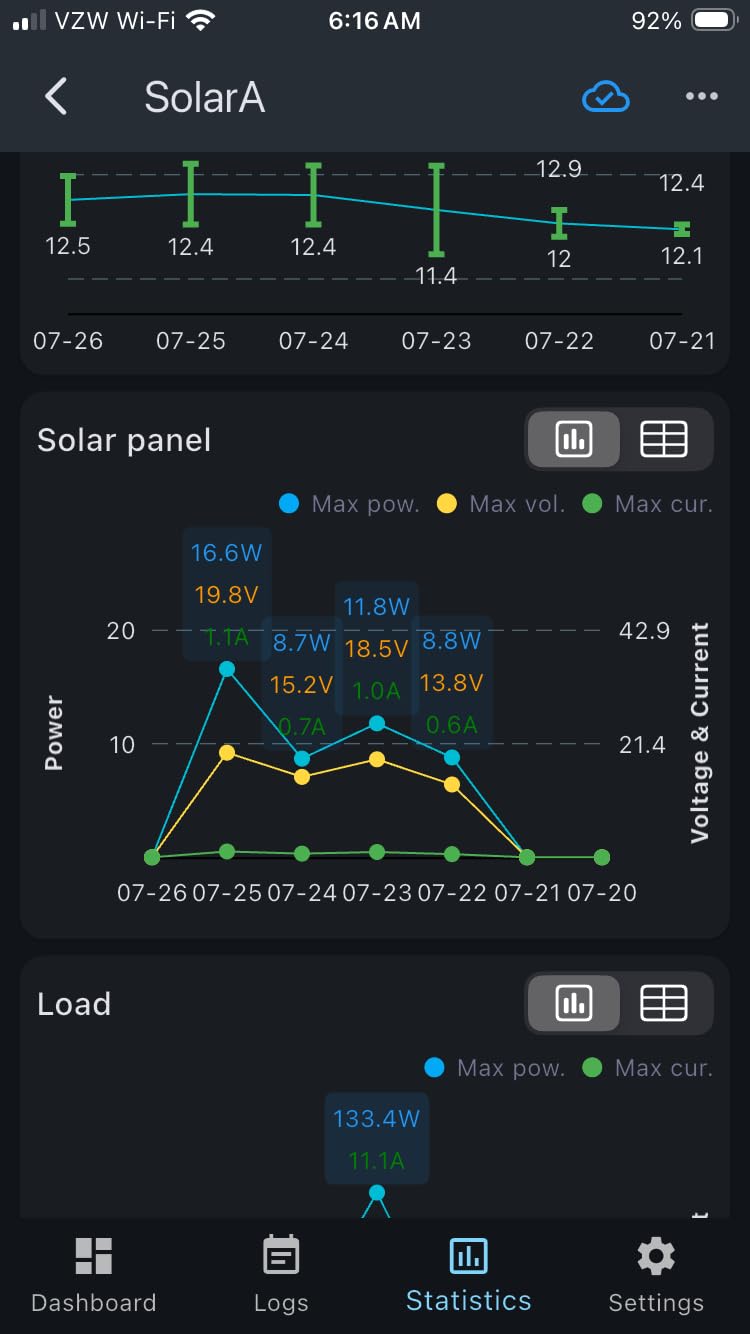
What gives us pause is the rating distribution. A 4.0 average with 62 percent five-star and 14 percent one-star is a wider spread than anything else in this list, and reviewers point to output and durability falling short of the stated figures.
Specification density is also thin. There is no published weight, no bend angle figure and no stated IP rating, which makes it hard to compare honestly against the other nine.

Who the Topsolar 2-Pack suits
It suits a builder who wants matched panels today and does not want to chase a second shipment later. Two identical panels also simplify series and parallel wiring, which matters more than it sounds when you are routing cables through a vent.
Where it falls short
The 14 percent one-star share is a durability signal, not a quirk. If you want a panel you will not think about for a decade, this is not the one.
It is also the least documented listing here. You are buying capacity more than you are buying a specific construction, and it shows in the missing weight, bend and sealing data.
4. Renogy ShadowFlux 200W N-Type – The Anti-Shading Workhorse
Renogy 200 Watt ShadowFlux Flexible Solar Panel, N-Type 25% High-Efficiency
200W output
25 percent N-type cells
7.7 pounds
0.1 inch thick
270 degree bend
IP68
Pros
- ShadowFlux cell-level bypass diodes steady output under partial shade
- 18BB A-grade N-type cells at up to 25 percent efficiency
- Light at 7.7 pounds with a 0.1 inch profile for minimal wind drag
- Stays flat and intact through heat and multi-year rooftop exposure
Cons
- Output typically lands around 80 percent of the stated wattage
- Factory lead lengths can be uneven
- Costs more per watt than budget flexible panels
Shading is the number one killer of rooftop solar, and this panel attacks it head on. ShadowFlux adds up to 30 cell-level bypass diodes, so a roof vent or a satellite dish across one corner no longer drags the whole string down.
Underneath that sits 18BB A-grade N-type silicon rated at up to 25 percent conversion, with a 200W nameplate, 44.1V maximum voltage and 5.57A. It is 7.7 pounds and 0.1 inch thick, and it bends to 270 degrees.
It also stands out for durability evidence. Long-term RV and marine owners describe it as staying flat, intact and consistent after extended rooftop exposure, and the review base is larger than the other 200W-class panels here.
Who the ShadowFlux suits
It suits anyone whose roof is not a clean rectangle. Tree cover, a roof rack, a pop-top or a nearby building is the normal case rather than the exception on a van, and this panel degrades more gracefully than the alternatives.
The 270 degree bend also makes it a good fit for teardrop trailers, boats and balconies where a stiffer laminate would bridge and lift.
Where it falls short
Owners report real output around 80 percent of the label, so budget your battery bank accordingly. The 44.1V maximum voltage also means you need an MPPT controller, not a cheap PWM unit, or you will lose a meaningful slice of the day.
Uneven factory lead lengths are a small production quality issue, and the cost per watt sits above the budget end of this list.
5. Topunive 100W 9BB Monocrystalline – The Published-Spec Starter
Topunive 100W 12V Flexible Solar Panel 9BB Monocrystalline Cell 12 Volt Semi-Flexible for Marine RV Trailer Boat Cabin Van Car Uneven Surfaces 12V Battery Charge
100W output
9BB A-grade mono cells
4.4 pounds
0.11 inch thick
IP67 junction box
Pros
- Compact 100W panel in a small footprint at 0.11 inch thick
- 9BB cells reduce microcrack risk
- ETFE surface gives better light transmission and wipes clean
- Metal pre-drilled holes and MC4 connectors simplify installation
Cons
- Larger minimum bend radius of about 45cm limits tight curves
- IP67 junction box is one step below IP68 competitors
- Output per watt trails premium N-type flexible panels
This is the entry point we recommend for a first build, mostly because the construction details are published. You get 9BB A-grade monocrystalline cells at up to 23 percent efficiency, a 920 by 590 by 3mm panel at 4.4 pounds, and an ETFE front surface over a TPT back sheet that helps move heat away from the cells.
The junction box is IP67 with two built-in bypass diodes, and the panel is 36.22 by 23.22 inches, which is one of the smaller 100W footprints here. MC4 connectors and metal pre-drilled holes make the wiring and mounting straightforward.
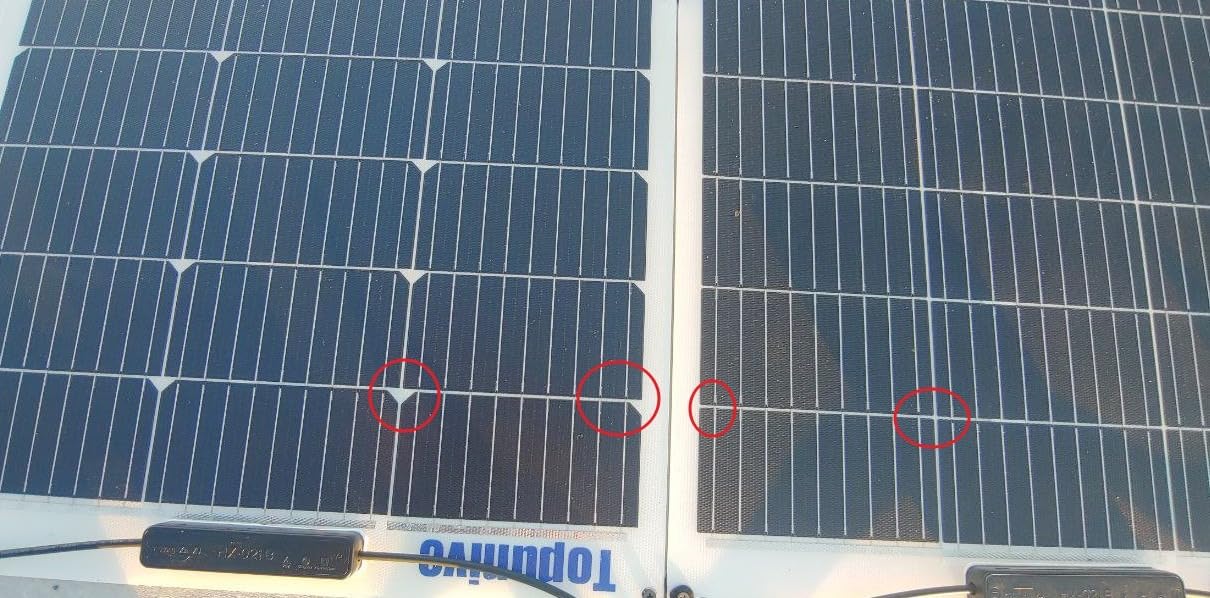
Owners like the thin ETFE build and easy mounting, and a recurring group notes output below the stated wattage. At 4.1 stars from 441 reviews it is a solid average with a 60 percent five-star share.
The honest trade is the 45cm minimum bend radius, roughly 17.7 inches. That is fine on a slightly domed trailer roof and useless on a tight compound curve.
Who the Topunive 100W suits
It suits first-time builders and anyone adding a modest amount of power to a shed, cabin or a small trailer. The compact footprint means you can fit two on a roof that would only take one larger panel.
It also suits people who want to learn the mounting process on a cheap panel before committing to a bigger one.
Where it falls short
An IP67 junction box is a step below the IP68 sealing on the premium panels, and a seal is the one thing you cannot retro-fit. For a boat or a wet climate, look elsewhere.
The output gap against N-type panels shows up on days with thin cloud, exactly when a small battery bank needs help most.
6. ECO-WORTHY 260W 18BB Two-Pack – Most Capacity for the Effort
ECO-WORTHY 2pcs 130 Watt (260W) 18BB Flexible Solar Panels,25% High-Efficiency Waterproof Monocrystalline Lightweight Solar Panel for RV,Boats,Curved Surfaces,Roofs,Cabin
Two 130W panels
260W combined
6.28 pounds each
270 degree bend
IP68 junction box
Pros
- Two 130W panels give strong array output for the money
- Very light per watt and flexible enough for curved RV and boat surfaces
- IP68 sealed junction box with pre-installed cables
- Accepts adhesive or silicone or tape or cable ties or Velcro
Cons
- Several buyers measured output at roughly half the advertised wattage
- 2.9ft cables are short for larger arrays
- Flexible cells still need care during mounting
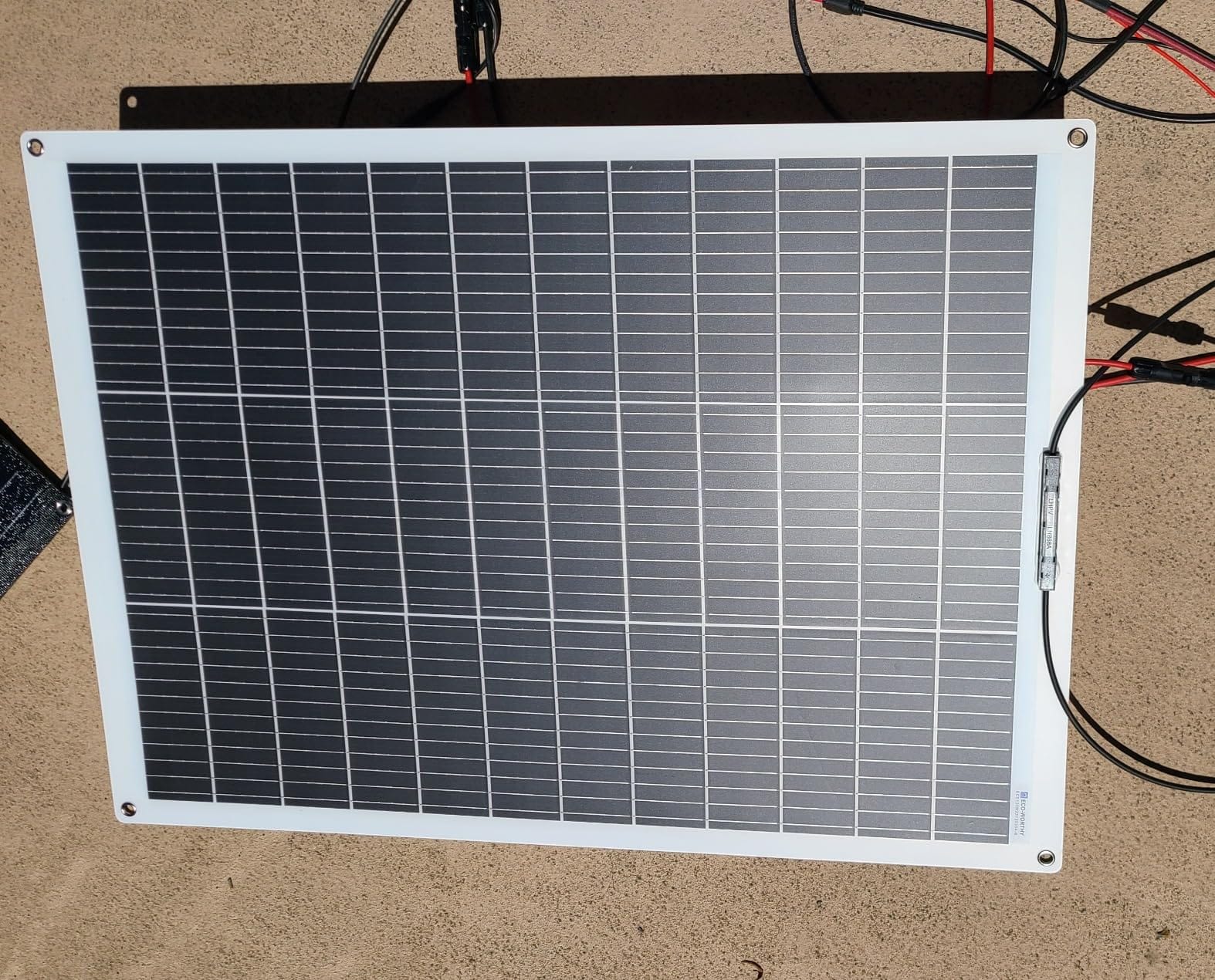
Two 130W panels for 260W total is a lot of capacity per pound, and at 6.28 pounds and 0.1 inch per panel it is genuinely light. Each one bends up to 270 degrees, so the pair can follow a curved RV roof or a boat deck rather than bridging over it.
The construction is 18BB monocrystalline at up to 25 percent efficiency, and each panel has an IP68 sealed junction box with built-in diodes plus 2.9ft pre-installed cables. Six pre-drilled metal-reinforced holes take adhesive, silicone, tape, cable ties or Velcro.
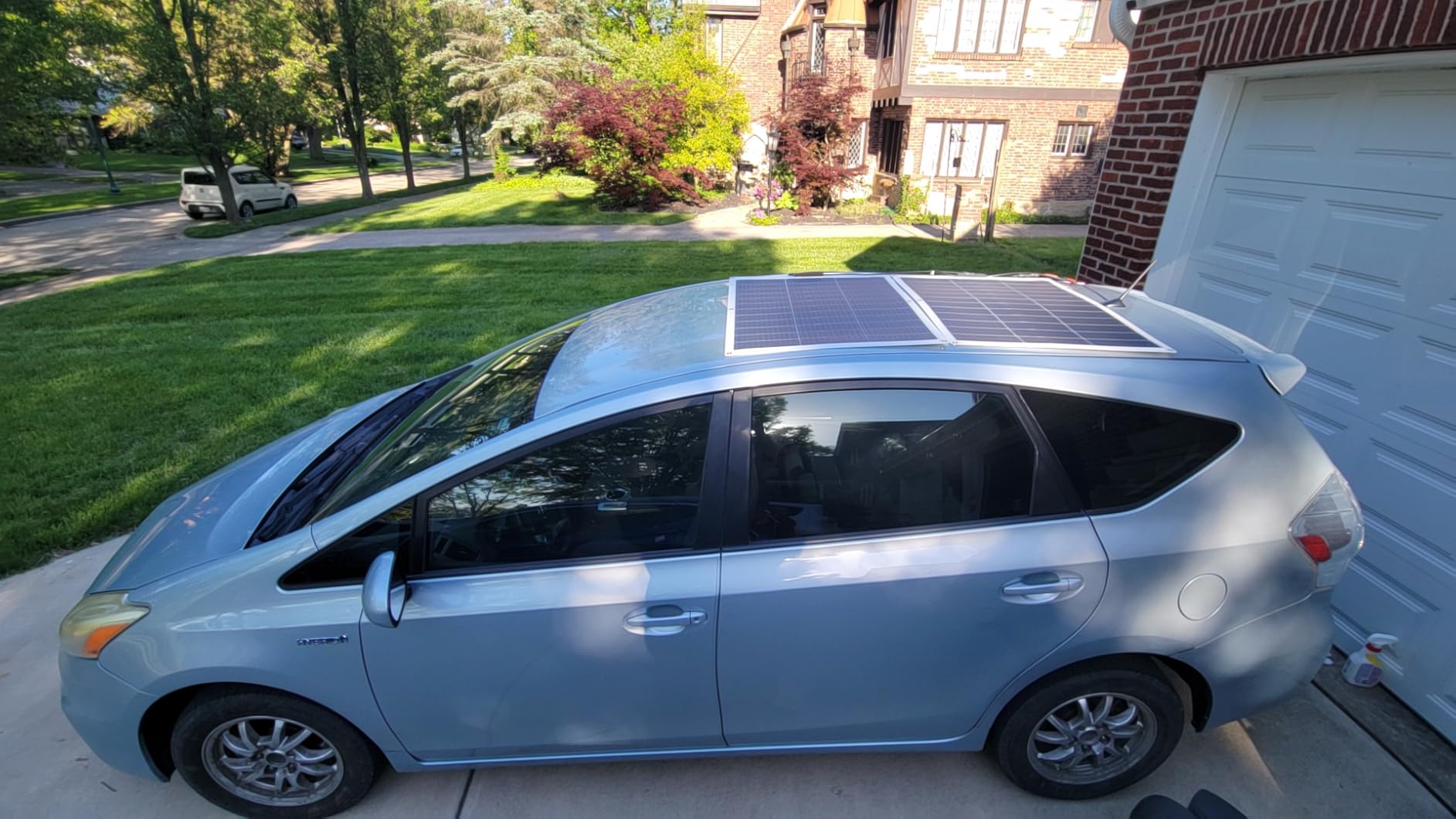
Manufacturer claims up to 520Wh per panel across four hours of full sun. Owners with proper MPPT controllers frequently report 100-120W per panel, which is realistic, but a distinct group measures 50-75W and questions the 130W label.
That spread is worth understanding before you buy. Half-rate results usually mean the panel is hot, poorly bonded to a surface, or wired into a controller that is clipping. Check the mounting and the controller before you blame the panel.
Who the ECO-WORTHY pair suits
It suits builders who want meaningful capacity in one order without adding 25 pounds to a roof. The two-panel format also means one spare panel if something goes wrong, which is a luxury in this category.
The mounting flexibility matters too. Whether you use adhesive, Velcro or mechanical fixings, the same panel handles it.
Where it falls short
The output variance is the honest drawback, and the 2.9ft cables are too short for a clean two-panel series run without extensions. The manufacturer did replace at least one underperforming unit after troubleshooting, so support exists.
At 218 reviews the long-term evidence is thinner than for the leaders in this group. Buy it for capacity, not for peace of mind over a decade.
7. XINPUGUANG 100W Panel and Controller Kit
XINPUGUANG 100W Flexible Solar Panel Kit 12V Off Grid System for RV Boat
100W output
10A charge controller included
4.0 pounds
0.098 inch thick
IP67
Pros
- Complete kit pairing the panel with a 10A charge controller
- Very light at 4.0 pounds and only 0.098 inch thick
- Bends up to 260 degrees for RV roofs and boats and cabins
- Controller includes short-circuit and reverse and overload protection
Cons
- Bundled controller limits how far you can expand the array
- Lower sales rank in the category than better-known brands
- Fewer published details than premium competitors
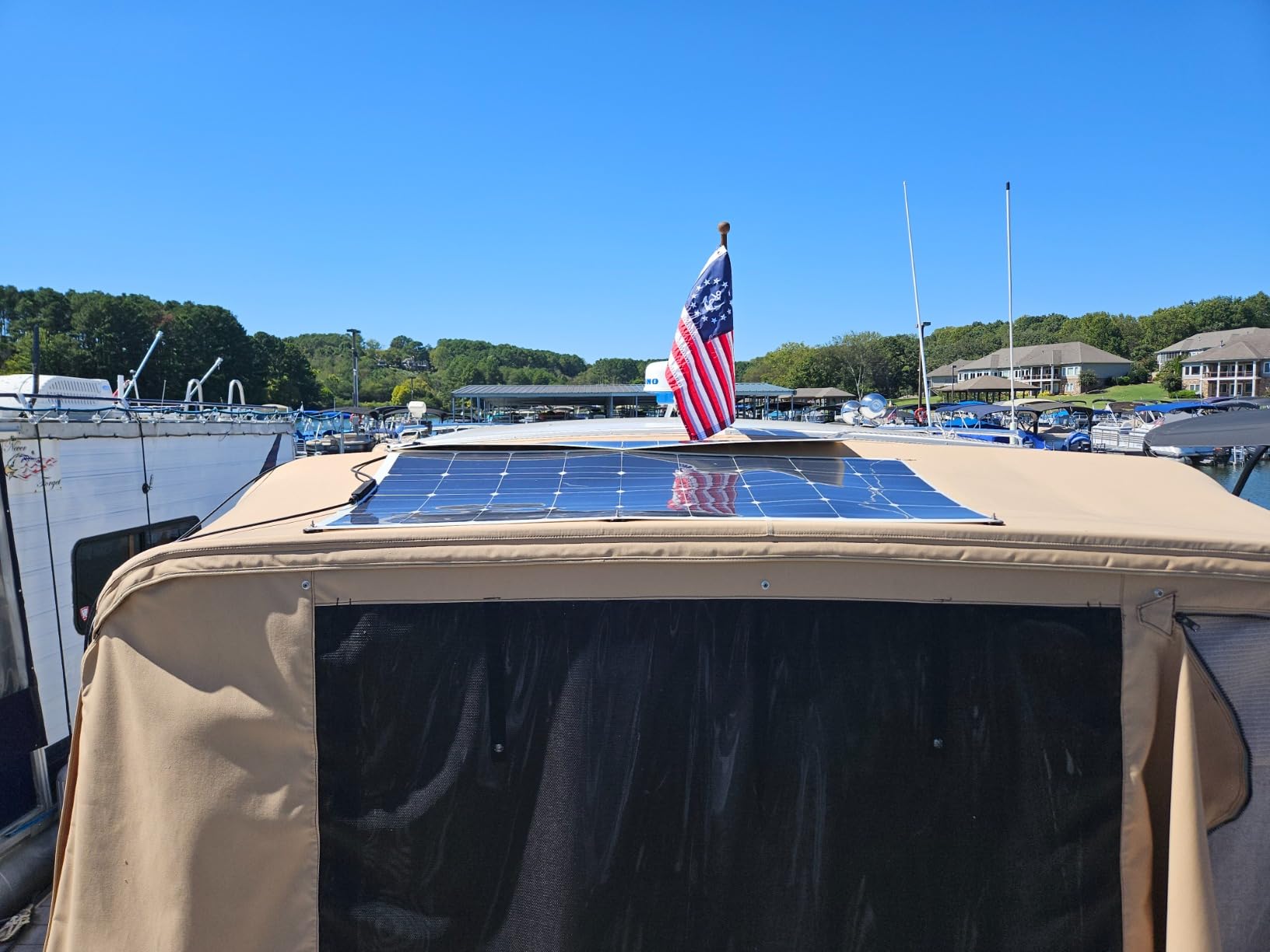
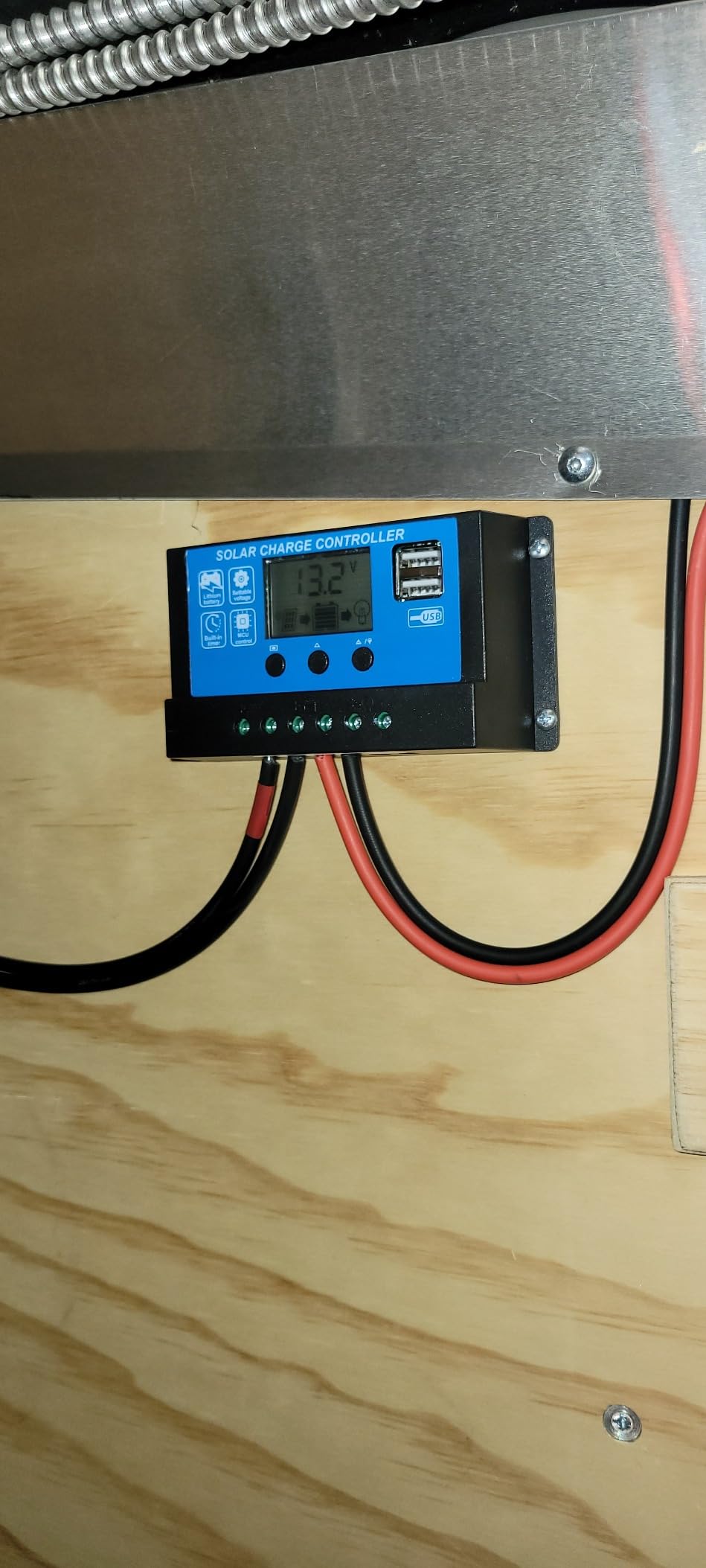
Most flexible panel listings sell you a panel and leave the rest to you. This one includes a 10A charge controller with short-circuit, open-circuit, reverse and overload protection, and it works with lead-acid, gel and lithium phosphate batteries.
The panel is 100W using 210mm monocrystalline cells at 23 to 24 percent conversion, 36 cells, 44.88 by 18.11 inches at 0.098 inch thick and 4.0 pounds. It bends up to 260 degrees, and mechanical ratings are 5400 Pa snow and 2400 Pa wind load with an IP67 rating.
Mechanical ratings are 5400 Pa snow and 2400 Pa wind load, with an IP67 waterproof rating and a 60C upper temperature figure. That is a credible load rating for a moving vehicle.
Owners like the completeness of the package and the light, bendable build. A 12 percent one-star share points to complaints about output and component durability, which is normal for an entry-level bundle.
Who the XINPUGUANG kit suits
It suits someone building a small 12V system for the first time who does not want to size a controller separately. Match the panel to a modest battery bank and the whole thing works as a package.
It also suits lightweight use cases such as a cabin, a tent or a small trailer where 100W is genuinely enough.
Where it falls short
The 10A controller is the ceiling on this system. A 100W panel can put close to 8A on a bright day, so the controller is matched, but adding a second panel later means replacing it.
Published detail is thinner than the premium panels here, and the category sales rank is much lower, so long-term owner evidence is limited.
8. Callsun 100W All-Black ETFE – The Stealth Panel That Overdelivers
Callsun 100W Flexible Solar Panel, 23% High Efficiency ETFE
100W output
23 percent 11BB cells
240 degree bend
5.7 pounds
marine-grade ETFE
Pros
- Owners regularly measure 105-109W in full sun
- All-black near-invisible profile suited to van life and stealth camping
- Marine-grade ETFE resists salt mist and hail and UV yellowing
- Standard solar connectors for most portable power stations
Cons
- Cell surface is fragile and can crack under pressure on a small area
- Less flexible than the marketing suggests
- Connector pin release is described as awkward
This one is interesting because its owners report output above the nameplate. Measurements of 105 to 109W in full sun show up repeatedly in reviews, which is unusual for a 100W flexible panel and puts it ahead of several larger models in practice.
It uses 11BB monocrystalline cells at 23 percent efficiency, bends 240 degrees and sits at 0.1 inch thick. The surface is described as marine-grade ETFE with multi-layer bonding to resist salt mist, hail and UV yellowing.
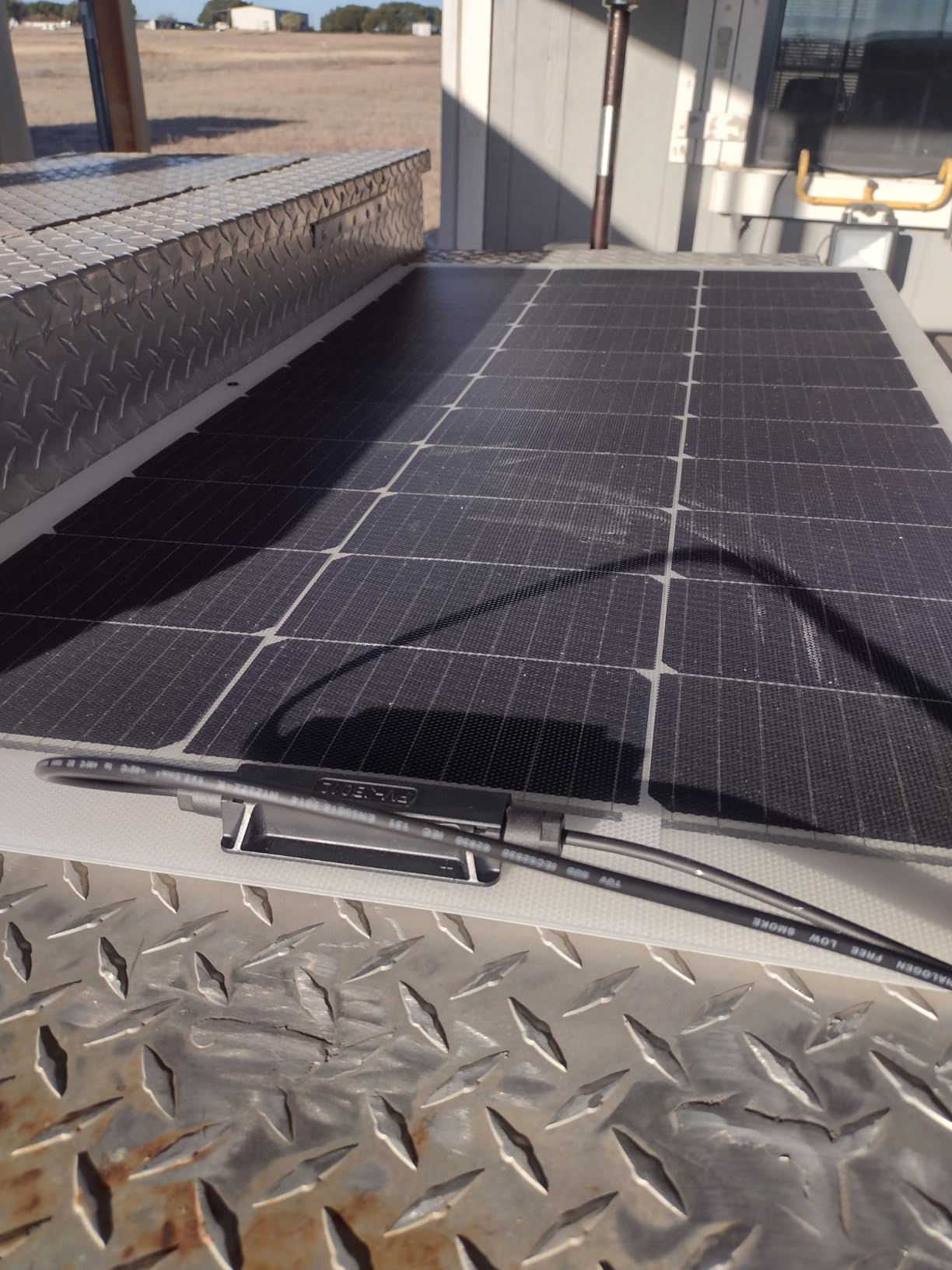
The all-black finish is the reason to buy it. On a dark van roof the panel nearly disappears, which matters if you camp away from places where an obvious solar array attracts attention.
It ships with 23.6 inch connector cables, a welcome guide and a 5-year warranty, and it uses standard solar connectors that work with EcoFlow, Jackery, Bluetti, Anker and Rockpals power stations.
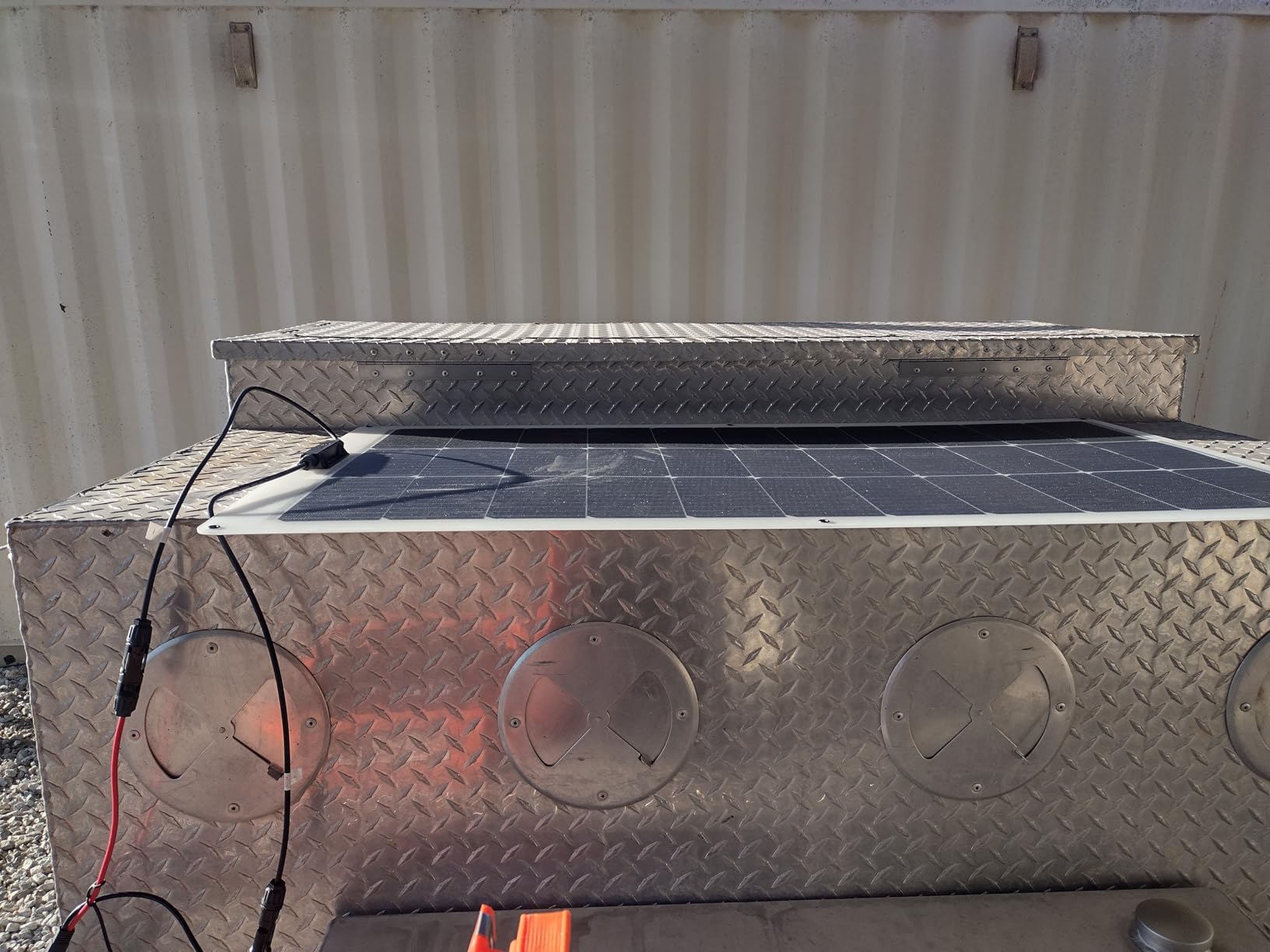
Who the Callsun black 100W suits
It suits van life and stealth camping builds where appearance matters as much as output. The marine-grade ETFE also makes it a reasonable choice for a boat deck or an exposed balcony.
If you charge a power station rather than a fixed battery bank, the standard connectors mean no adapter hunting.
Where it falls short
The cell surface is delicate. Owners warn that pressure on a small area can crack it, so do not kneel on a panel that is only partially supported, and do not use it as a step.
The laminate is stiffer than the 240 degree claim suggests, and the connector pin release is awkward. At 82 reviews the long-term picture is still short.
9. Callsun 100W 240 Degree Ultra-Thin – Best for Temporary Mounting
Callsun 100W Flexible Solar Panel, 240° Bendable Ultra-Thin
100W output
240 degree bend
23 percent 11BB cells
0.1 inch thick
5.7 pounds
Pros
- Two-panel sets regularly exceed rated output at 180-185W in full sun
- Light and flexible enough for awning and bimini and rooftop mounting
- Easy to install with adhesive or tape
- Marine-grade ETFE surface resists salt mist and hail
Cons
- No anti-shading technology so output drops sharply when partially shaded
- Fiberglass laminate bends best in one direction only
- One reviewer measured roughly half the claimed 100W in a six-panel array
The same 23 percent 11BB cell construction as the black panel shows up here in a lighter laminate, and owners running two of them together report 180 to 185W in full sun. That is well above what two 100W panels are rated to deliver once you account for line losses and angle.
It is 5.7 pounds, 0.1 inch thick, with 240 degrees of flexibility and a marine-grade ETFE surface. Standard solar connectors again mean it drops into most portable power stations without an adapter.
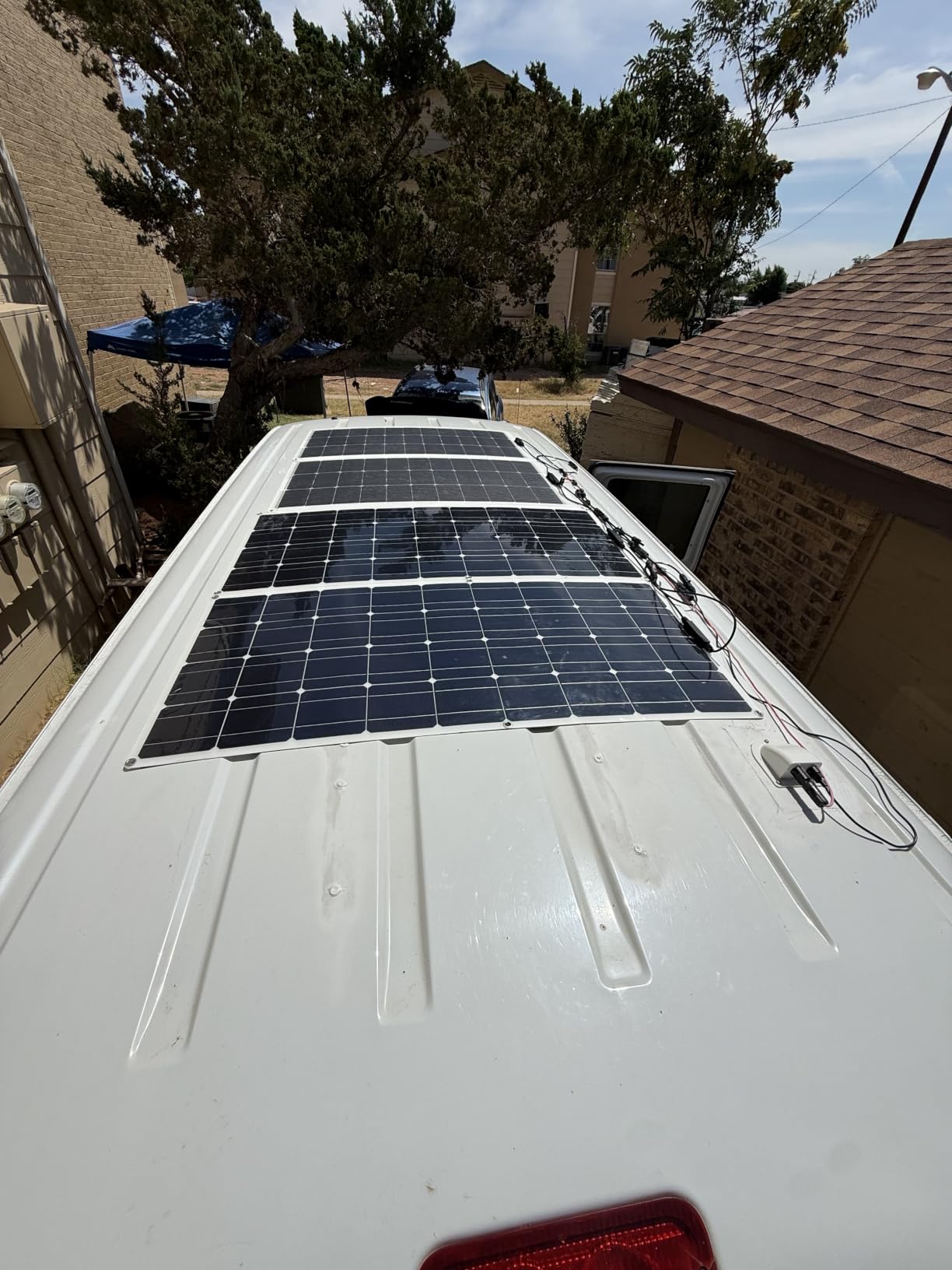
Where this panel is genuinely useful is temporary and awkward mounting. Awnings, boat biminis and pop-top roofs are places a rigid panel cannot go, and owners report easy adhesive or tape mounting in exactly those spots.
At 4.4 stars from 80 reviews, 77 percent are five-star. That is a strong satisfaction rate on a modest review base.
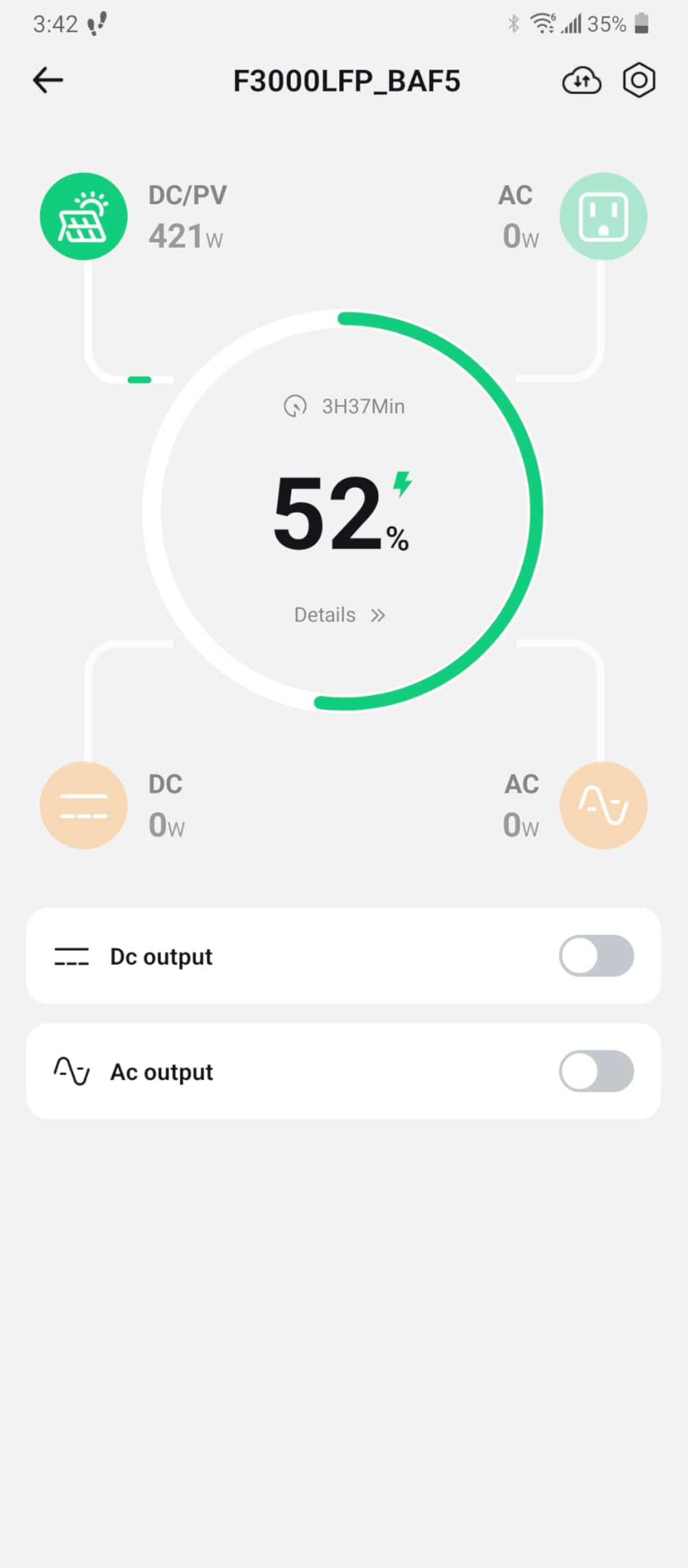
Who this Callsun 100W suits
It suits anyone who wants a panel they can peel off and re-deploy. Flexible awning and bimini mounting is the use case owners mention most, and the low weight makes that realistic.
It is a good first flexible panel if your roof is not permanently available for bonding.
Where it falls short
There are no anti-shading diodes here, so output falls sharply when part of the panel is shaded. On a roof with a rack or a vent across it, that is a real limitation.
The fiberglass laminate bends best in one direction, so a compound curve conforms imperfectly. One reviewer also measured roughly half the claimed 100W across a six-panel array, which is worth remembering before scaling up.
10. BougeRV Arch Pro 200W N-Type Fiberglass – Most Watts in One Panel
BougeRV Arch Pro 200W Anti-Shading N-Type Fiberglass Flexible Solar Panel
200W output
N-type 16BB cells at 25 percent
7.94 pounds
2.5mm thick
270 degree bend
IP68
Pros
- Bypass diode technology maintains output where other panels nearly shut down
- Very light at 7.94 pounds and 2.5mm thin for a 200W panel
- VHB-taped installs held firm at highway speeds
- Produces usable wattage even in filtered or partial sunshine
Cons
- Among the most expensive flexible panels per watt
- Typical output runs 60-65 percent of rated wattage on a flat surface
- 36V open-circuit voltage may not suit some power stations
This is the panel to look at if one 200W unit will finish the job and you would rather not wire two. N-type 16BB cells reach up to 25 percent conversion, and the anti-shading bypass diodes are what justify the build quality on a roof that sees partial shadow.
It weighs 7.94 pounds at 2.5mm thick, bends 270 degrees, and carries IP68 weather sealing on the panel, the junction box and the wire terminations. The ETFE surface is described as anti-scratch and self-cleaning.
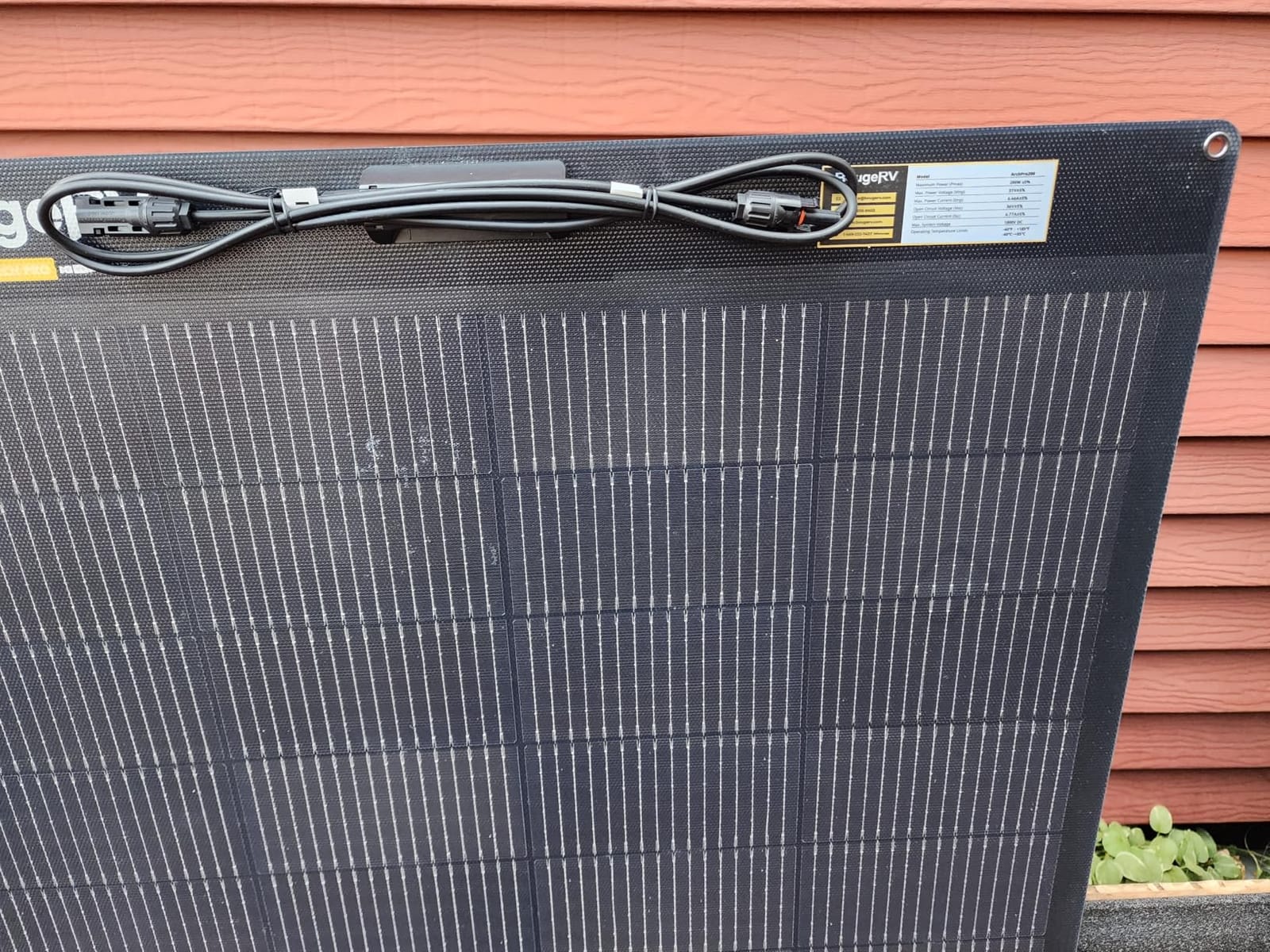
Two details are worth planning around. The open-circuit voltage is 36V, which some portable power stations will not accept, so check the input range before you commit. Pre-attached cables measure 2.95ft, and hanging holes plus adhesive backing give you mounting options.
Long-term evidence is the standout. Reviewers describe BougeRV Arch flexible panels staying bonded and undamaged on a van for two years with industrial tape and no intervention. Owners also report VHB-taped installs holding firm on a trailer and a rooftop tent at highway speeds.
Who the Arch Pro 200W suits
It suits RV and van owners who want maximum watts in one panel and can live with a 36V open-circuit voltage. A single 200W unit replaces two 100W panels and halves the wiring.
The fiberglass laminate and ETFE surface are a good combination for a boat deck or a teardrop trailer where a rigid panel would not sit flat.
Where it falls short
It sits among the most expensive flexible panels per watt, and the 73-review base is the thinnest here. Those are real reasons to hesitate on a long-term purchase.
Owners report typical output of 60 to 65 percent of rated wattage on a flat surface, which is the lowest real-world figure among the premium picks here. Size your battery bank for that number, not the label.
Are Flexible Solar Panels Worth It?
Yes, on a curved, weight-limited or no-drill surface, and no, on a big flat roof with weight to spare. That is the honest answer, and it is the reason this category produces so much forum argument.
Flexible panels earn their place in three situations. The first is a curved roof, where a rigid panel either bridges and gaps or has to be cut down, which halves the output. The second is a weight limit, as on a truck camper pop-top or a small van, where a 200W flexible panel adds under 8 pounds. The third is a no-penetration rule, because bonding or Velcro mounting leaves the roof membrane alone.
Against that, rigid glass panels last longer, carry longer performance warranties and run cooler. If you have a flat aluminium or fiberglass roof with 30 pounds of headroom, a framed panel is the better buy and most experienced builders will tell you so. We have covered those in our van conversion solar panel guide.
How to Choose a Flexible Solar Panel – Seven Factors That Matter
Cell technology. Monocrystalline silicon with 9 or more busbars is the modern baseline. N-type cells are the current step up at up to 25 percent efficiency, and CIGS thin-film bends further and tolerates shade better but gives up some initial efficiency.
Substrate, ETFE or PET. ETFE is the one to look for. PET panels are the single most repeated quality complaint among owners because they bubble and delaminate.
Real-world output, not nameplate. Nameplate watts are measured at 25C with perfect irradiance. Ask what percentage of rated output owners actually record.
Weight per watt. Divide the listed weight by the watts. Anything under 0.04 pounds per watt is genuinely light; anything above 0.06 deserves a second look.
Bend angle versus foldability. 240 to 270 degrees covers a curved roof. A panel that folds in half is a different product class and usually a different buyer.
Ingress rating. IP68 on both the panel and the junction box is the standard for marine and exposed roof use. IP67 on the box alone is a compromise.
Warranty length. Flexible panels typically carry 3 to 5 year product warranties against 25 to 30 year performance warranties on glass. A 3-year warranty is a real signal about expected service life.
ETFE vs PET – How to Spot a Cheap Panel Before You Buy
ETFE is a fluoropolymer that resists UV, yellowing and heat cycling. PET is a cheaper polyester that does not, which is why ETFE panels keep their clarity and PET panels bubble. The inspection routine takes under a minute.
Look at the gloss. ETFE has a deeper, glassier sheen. PET looks flatter and slightly milky, especially under a clear sky.
Check the edge finish. ETFE laminations show a clean, tight edge. PET panels often show a visible fabric-like or woven layer at the cut edge.
Compare the numbers. ETFE adds real thickness and weight for a 0.1 inch panel. A much lighter, thinner panel claiming the same output is usually PET.
Read the substrate claim. If the listing never names the material, assume it is the cheaper one. The three ETFE panels in this roundup all name it explicitly.
Bubbling and delamination are not cosmetic. If a PET panel delaminates, moisture gets behind the cells and output falls permanently, and most manufacturers treat that as physical damage rather than a warranty claim.
Real-World Output vs Nameplate Watts
Expect a flexible panel to deliver roughly 60 to 80 percent of its nameplate rating on a good day, and far less on a partial one. Owners on vanlife forums routinely report 40 to 60W from a panel rated 100W, and that is usually a hot, flat, fully sunlit panel with a decent controller.
Three things account for almost all of the gap. Temperature is the biggest: a panel sitting on a dark roof in full sun runs well above 25C and every silicon cell gives back output as it heats. Angle is the second, and a panel laid perfectly flat all morning never sees the sun straight on. The third is system losses in the controller and wiring.
That is why a panel that measures 80 percent and another that measures 60 percent can be equally good products, and why the ShadowFlux and Arch Pro designs matter: they protect the number when the roof is partly blocked.
Mounting – The One-Inch Air Gap Rule and Three Methods
Bonding a flexible panel straight onto an insulating RV rubber roof traps heat with nowhere to dissipate, and that trapped heat is the fastest way to shorten cell life. Experienced owners insist on a minimum one-inch gap behind any panel, and that advice is the single most repeated in the forums.
Velcro standoffs. Run wide Velcro strips along the long edges, corner to corner, which lifts the panel roughly a quarter inch and still lets air move while you drive. It is removable in seconds.
VHB plus corrugated plastic. Cut strips of corrugated plastic, set them on the roof, bond the panel with VHB on top. The spacers define the air gap and the adhesive keeps everything quiet at speed.
Rivet and washer standoffs. Drill the roof, fit nylon standoffs and rivet the panel down through its pre-drilled holes. This is the most rigid option and the one to use if you also want a tilt angle for winter sun.
Whichever method you choose, never drill or bond into an unverified roof membrane without checking the warranty, and if you ever need to remove an adhered panel, heat the adhesive gently rather than prying at it. A heat gun and long plastic card get most of it off without tearing the membrane.
How Many Watts Do You Need?
Work backwards from your daily load rather than the panel. A typical weekend of lights, a fridge, a phone charger and a 12V fan runs 300 to 500Wh a day, and you need roughly three times that in panel watts for a real charge in a few hours of good sun.
So a weekend camper usually lands between 100W and 200W, a full-time boondocker running a CPAP and a laptop sits around 300W to 400W, and a live-aboard cruiser with a fridge and electronics needs 400W and up. Divide that by 200 sun-hours-equivalent to get your controller size, and add 30 percent if your roof is shaded or dirty.
One note on the 33 percent rule that confuses a lot of people: it is a solar term of art, and people borrow it to describe the idea that any partial shade on a rigid series string can knock a large share of output out of the whole array. On a flexible panel with plenty of bypass diodes, the effect is much smaller, which is precisely the point of the ShadowFlux and Arch Pro designs.
If you are also planning what goes on the outside of that van, our roundup of the best storm panels covers the door and window hardware that pairs with a roof-mounted array.
Frequently Asked Questions
Are flexible solar panels worth it?
Yes, when the surface is curved, the roof has a weight limit, or you refuse to drill. Rigid glass panels last longer, run cooler and carry longer performance warranties, so on a big flat roof with weight to spare, glass is the better buy.
What are the disadvantages of flexible solar panels?
Heat trapped under a panel bonded flat to a roof, shorter product warranties than glass, bubbling and delamination on PET substrate panels, no ability to tilt toward low winter sun, and real-world output of roughly 60 to 80 percent of nameplate.
What is the best flexible solar panel for a boat?
Look for a marine-grade ETFE surface and IP68 sealing on the panel and the junction box, plus real bypass diodes. The Callsun panels and the BougeRV Arch Pro 200W all publish salt-mist and hail resistance in their ETFE construction.
What is the lifespan of a flexible solar panel?
A well-made ETFE panel with an air gap behind it and a five-year or longer warranty should last as long as its warranty period. Product warranties here run from three to five years, against 25 to 30 year performance warranties on rigid glass.
What is the most efficient flexible solar panel available?
The N-type models lead on paper at up to 25 percent conversion efficiency, including the Renogy ShadowFlux 200W and the BougeRV Arch Pro 200W. Real-world results depend far more on shade tolerance, temperature and mounting air gap than on the efficiency figure.
The Verdict
The ALLPOWERS SF100 100W is the best flexible solar panel for most people in 2026, because it pairs a genuinely thin 3mm build with IP68 sealing and the largest owner base of anything we reviewed. The Renogy 100W takes curved roofs, and the ECO-WORTHY two-pack delivers the most capacity for the effort.
Pick the Renogy ShadowFlux 200W or the BougeRV Arch Pro if your roof is shaded, and skip flexible panels entirely if your roof is flat, heavy and easy to drill. Whatever you choose, mount it on an air gap and size your battery bank for 60 to 80 percent of the label.