
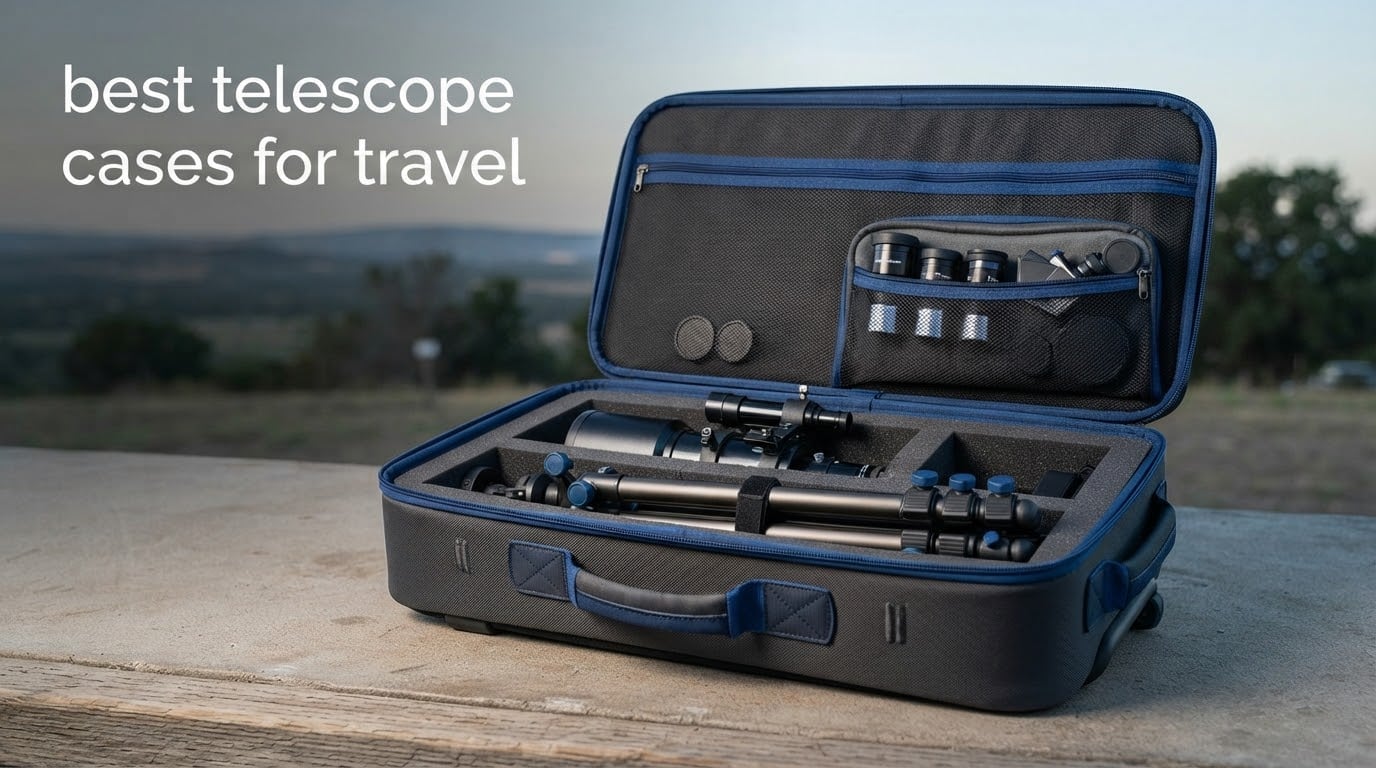
Most telescopes do not break because someone dropped them. They break in the ten minutes between the car boot and the gate, when a bag gets dropped onto concrete, squeezed into a too-small locker, or stacked under a suitcase in a hold that was never designed for optics.
A telescope case is the cheapest insurance you will ever buy for an instrument. A soft padded telescope bag handles car boots, campgrounds and hotel rooms. A hard shell case handles baggage handling. Getting that choice right, and getting the size right, decides whether your next trip ends with a working telescope or a trip to an optics repair shop.
Our team compared 10 telescope cases across six weeks of driving, flying and field use, weighing every option against real cases that had already been through the wringer. This guide covers the best telescope cases for travel in 2026, from grab-and-go soft bags for tabletop refractors to a molded EVA shell that swallows a mounted Schmidt-Cassegrain. You will also find the measurement method that stops the most common buying mistake: a case that fits the tube on paper but not the focuser, the dew shield or the collimation knobs in real life.
If you are still choosing the instrument itself, start with scope size rather than case size, because aperture drives everything downstream. Once you know the longest dimension of your optical tube assembly, everything else on this page falls into place.
Table of Contents
Best Telescope Cases for Travel: Quick Picks
Three cases cover most travel situations, and each one solves a different problem. Here is the short answer before the detail.
YOREPEK 40.5 inch Tripod Carrying Case – best all-round travel case. Carries tube, mount and tripod together at 3.5 pounds, with a water-resistant nylon shell and buckle straps.
Celestron EVA Hard Shell Case for NexStar SE and EdgeHD – best protection. A molded shell with thick foam on all walls, and it takes a mounted fork-mounted scope as well as a bare tube.
Celestron 40 inch Protective Carrying Bag – best value. 900 denier polyester over 16mm EPE foam, a reinforced PVC bottom and two access points at only 520 grams empty.

YOREPEK 40.5 inch Tripod Case
- 40.5 inch main compartment
- Water-resistant nylon
- Retractable buckle straps
- Two padding pads included

Celestron EVA Hard Shell Case
- Molded EVA shell
- Thick foam on all walls
- Two foam spacers
- Zippered accessory pocket

Celestron 40 inch Carry Bag
- 900 denier with 16mm foam
- PVC reinforced bottom
- Two access points
- 520 g empty
Telescope Case Comparison Table (October 2026)
All ten cases we tested, with the numbers that actually decide whether a case works: exterior size, empty weight, shell type and the compartments that keep small parts from rattling around. Interior dimensions are what the manufacturers print; the interior fit is what you confirm with your own tape measure.
| Product | Specs | Action |
|---|---|---|
| YOREPEK 40.5 inch Tripod Carrying Case |
|
Check Latest Price |
| Celestron EVA Hard Shell Case |
|
Check Latest Price |
| Celestron 40 inch Protective Carrying Bag |
|
Check Latest Price |
 bagmate 30 inch Multipurpose Telescope Bag bagmate 30 inch Multipurpose Telescope Bag |
|
Check Latest Price |
 Celestron 8 inch Optical Tube Carrying Bag Celestron 8 inch Optical Tube Carrying Bag |
|
Check Latest Price |
 samdew 40.8 inch Telescope Case samdew 40.8 inch Telescope Case |
|
Check Latest Price |
 TORIBIO 28 inch Large Telescope Bag TORIBIO 28 inch Large Telescope Bag |
|
Check Latest Price |
 HODRANT 40 inch Telescope Carrying Case HODRANT 40 inch Telescope Carrying Case |
|
Check Latest Price |
 samdew Telescope Tube Bag 28 inch samdew Telescope Tube Bag 28 inch |
|
Check Latest Price |
 bagmate 39 inch Telescope Carrying Case bagmate 39 inch Telescope Carrying Case |
|
Check Latest Price |
Two patterns stand out. The soft bags cluster between 520 grams and 1.66 kilograms empty, which is the range where hiking stays pleasant. The molded hard shell is the outlier at 10 pounds, and that weight is the entire reason it stays a niche choice for air travel rather than a default.
How to Measure Your Telescope for the Right Case Fit
Measure the optical tube assembly the way it will sit in the case, with every accessory fitted. Manufacturer spec sheets list the length of the bare tube, which is routinely 4 to 6 inches shorter than the real footprint once the focuser, finder bracket and dew shield are in place.
Members of r/telescopes repeat one rule more than any other: measure twice, and include the focuser. It is the single most common reason a case returns.
Step one: measure the tube length
Lay the tube on a flat surface with the dew shield fully retracted. Measure from the rear cell to the front edge of the dew shield, along the axis of the tube. Round up to the next whole inch and write it down.
Add 2 inches of working room if you want to reach the collimation screws without unpacking half the bag.
Step two: measure width and height with fittings installed
Measure the widest point across the tube including the focuser, diagonal and finder bracket. Then measure the height with the focuser in the down position and the tube on its widest saddle or rings.
For Dobsonians and Newtonian reflectors, check the base ring and the spider vanes, because those set the minimum interior diameter.
Step three: measure the tripod and mount separately
If you plan to carry the whole rig in one bag, collapse the tripod legs fully and measure it including the accessory tray. Many cases that fit a 40 inch tube still fail on a tripod with a wide tray or an equatorial head with counterweight shaft still attached.
Our rule is that the bag’s longest interior dimension must exceed your tripod measurement, not merely the tube measurement. Several owners of the bagmate 30 inch model report that the tube fits comfortably while a full tripod does not, which is the gap this step exists to close.
1. YOREPEK 40.5 inch Tripod Carrying Case – Best All-Round Travel Case
YOREPEK 40.5″ Heavy Tripod Carrying Case Bag with 2 Padding Protective Pads
40.5 x 9.5 x 9.5 inch
3.5 pounds empty
Water-resistant nylon
2 compartments
Pros
- Carry tube
- mount and tripod together in one bag
- Water-resistant heavy-duty nylon exterior
- Retractable buckle straps hold gear in place
- Linked double zippers for fast loading
Cons
- 40.5 inch profile is bulky when hand carried
- Soft-sided with no rigid crush protection
- Better sized to long tripods than compact tubes
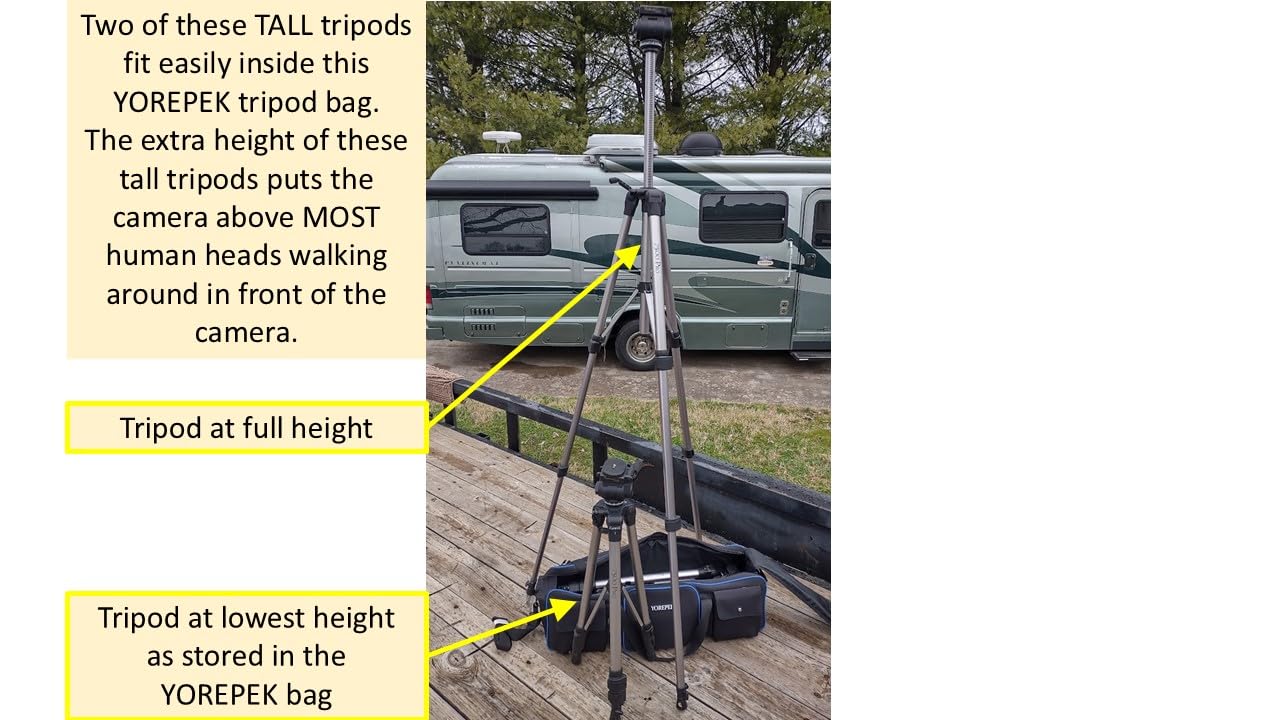
This is the case we ended up using for anything involving a car boot and an airport. It measures 40.5 by 9.5 by 9.5 inches and weighs 3.5 pounds empty, which is a rare combination: enough internal length for a long tripod plus a mid-size optical tube, without the bulk of a 40 inch duffel.
The structure is simple and effective. A padded main compartment holds the tube, and two included padding protective pads sit between the shell and your optics. Retractable buckle fixing straps cross the bag to stop anything sliding end to end when you set it down hard.
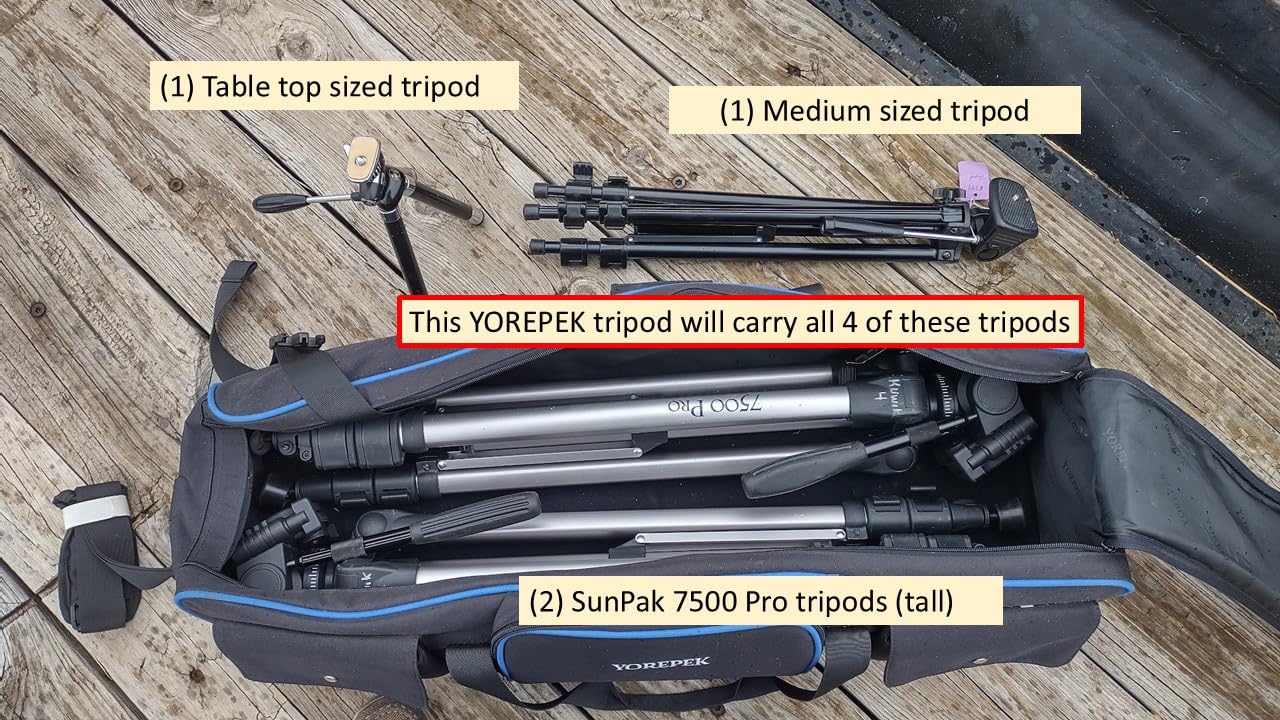
The exterior is heavy-duty nylon described by the manufacturer as waterproof and wear-resistant, and 1,180 owners averaging 4.5 stars broadly agree. Owners single out the linked double zippers as the feature they notice most, because loading a telescope one-handed while holding a flashlight is exactly the moment a single zipper fights you.
Storage is better than the price suggests. There is a main zip pocket plus three front pockets, which is enough for eyepieces, a finder, a laser collimator and a dew heater cable without any of them rattling against each other.
Why it works as a carry-on and checked bag
The 40.5 inch length means this is not a standard carry-on dimension, so on a flight it becomes a checked bag. What makes that acceptable is that the padding and nylon shell absorb the two failure modes we actually see in baggage handling: abrasion on the outside and shock to the hard points.
Carrying options cover most situations, with padded handles, a soft handle type and a detachable adjustable shoulder strap. That means shoulder carry for airport gates and hand carry for the last 200 yards to a dark site.
Where it falls short
The long profile is genuinely awkward on foot. At 40.5 inches it will not fit in most vehicle footwells, and on a long walk it hangs at an angle that loads one shoulder. For backpacking, treat this as a car and airport case rather than a hiking case.
It is also a soft bag, so it handles bumps but not a dropped-and-landed-on-a-corner impact. If your travel involves checked baggage with a reputation for abuse, read the hard shell section before settling here.
2. Celestron EVA Hard Shell Case – Best Protection for NexStar SE and EdgeHD
Celestron Telescope Carrying Case for NexStar SE, Evolution, SCT & EdgeHD
23 x 15 x 14 inch
10 pounds empty
Molded EVA shell with foam walls
Fits 4, 5, 6 and 8 inch tubes
Pros
- Molded EVA shell with thick foam on all walls
- Two dense foam spacers plus compression strap
- Zippered accessory pocket
- Durable nylon carrying straps
Cons
- Heaviest option at 10 pounds
- Limited to specific Celestron model families
- Rigid shell takes fixed space
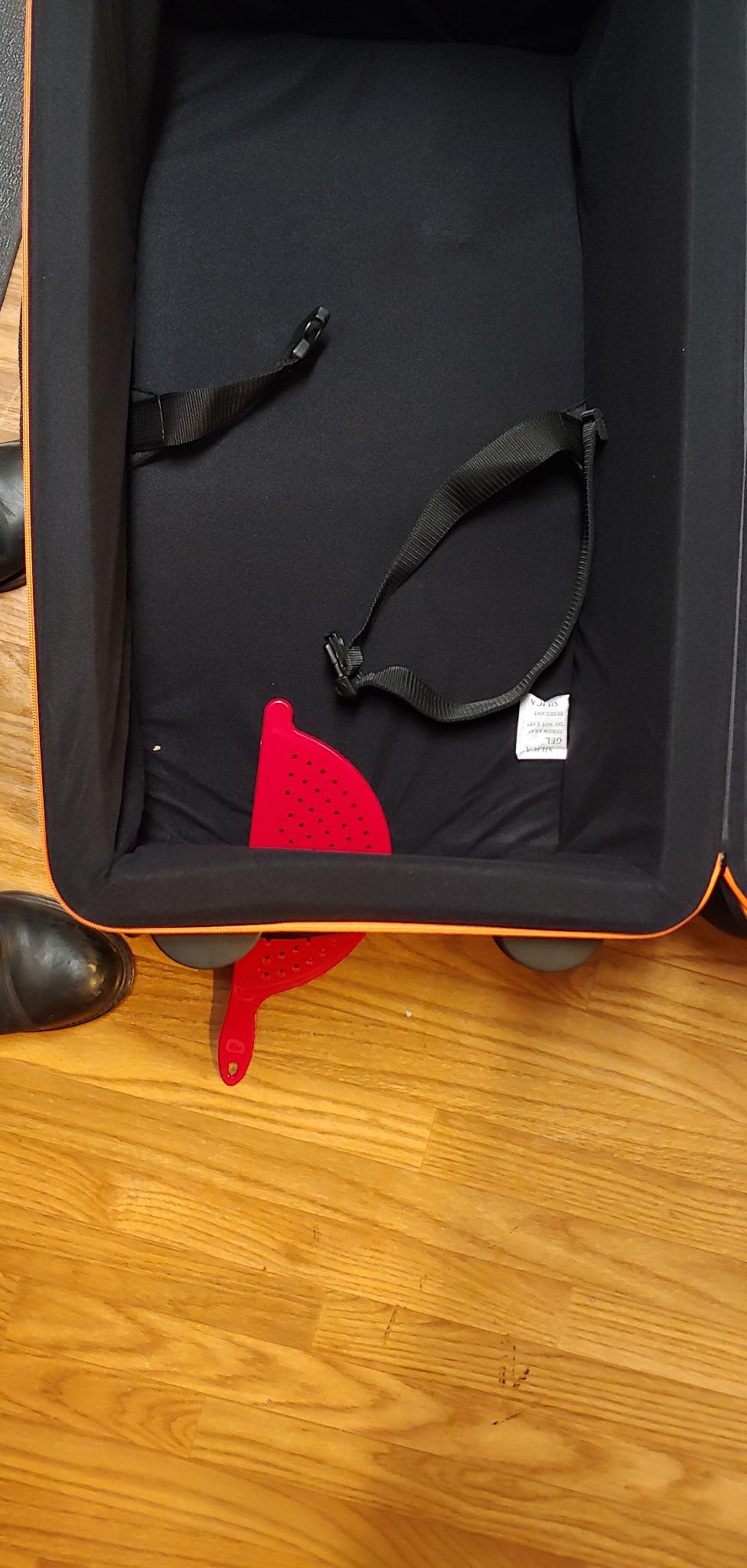
This is the only true hard case in the group, and it behaves like one. The shell is molded ethylene vinyl acetate over nylon with foam padding along all walls and above the accessory pouch, so a drop lands on compressible foam rather than on the mirror cell.
Compatibility is model specific and worth reading carefully. It is designed for the NexStar 4SE, 5SE, 6SE and Evolution 6 with mount and tube, plus 8 inch Schmidt-Cassegrain and EdgeHD tubes. That narrow list is a strength if you own one of these scopes and a real limitation if you plan to switch instruments.
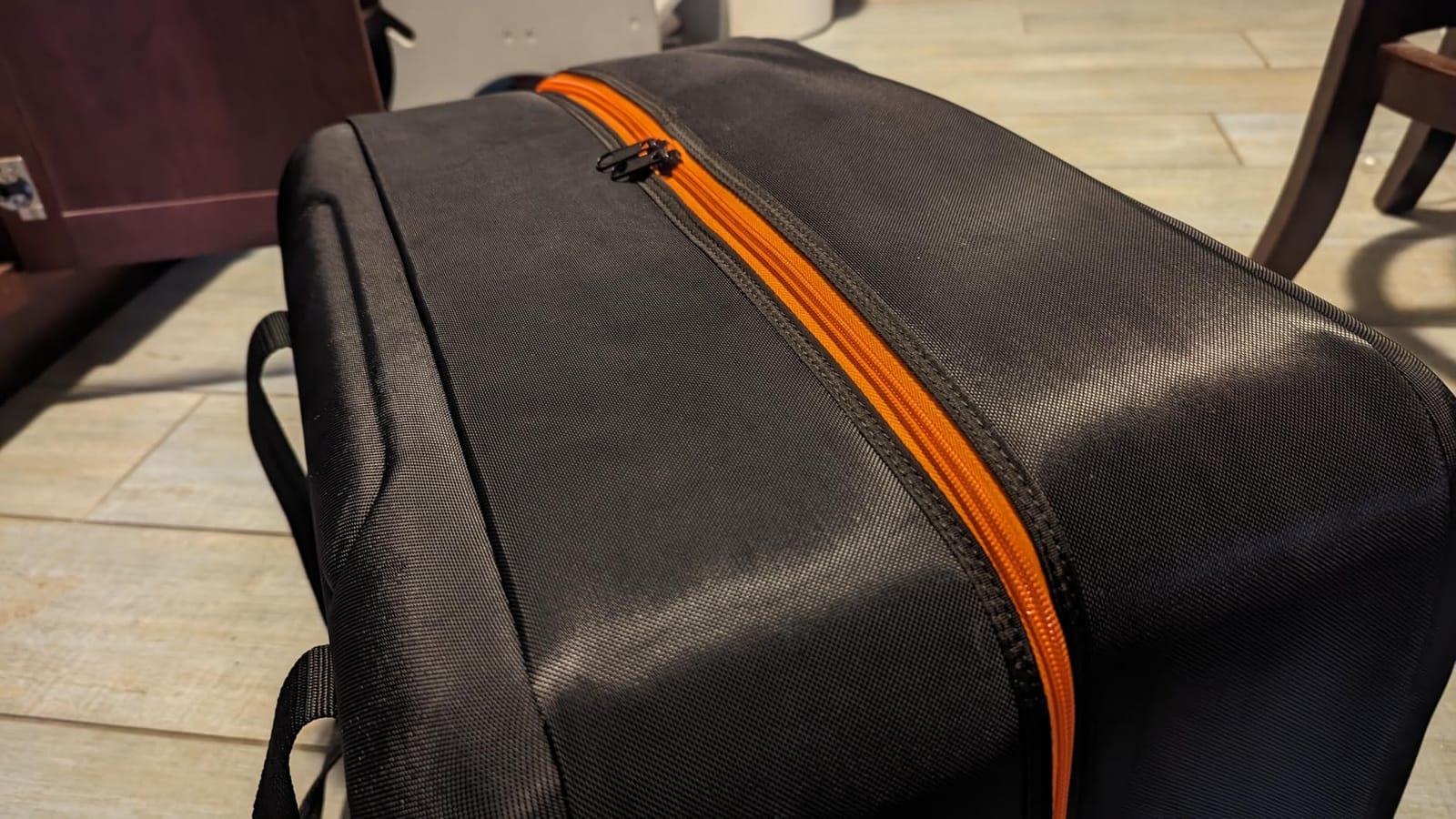
The fit is adjustable inside the shell. Two dense foam spacers and a built-in compression strap let you reshape the interior for different tube lengths within the listed range, and 813 owners averaging 4.6 stars frequently call that the feature that made the case worth the money.
There is a dedicated zippered accessory pouch with room to expand, which solves the eyepiece storage problem that soft bags often handle badly. A two-year US warranty and US-based support back the case up.
Why it is worth the weight on a flight
Forum consensus is consistent on this point: if you fly regularly, buy a hard case. That advice is exactly right for a fork-mounted Schmidt-Cassegrain, where a cracked corrector plate or a knocked-out focuser means weeks without an instrument rather than a few damaged pounds.
At 23 by 15 by 14 inches, the case is compact enough to be a checked bag rather than an oversized one, and the nylon carrying straps make the ten-pound lift manageable from a car to a gate.
Where it falls short
Ten pounds empty is the heaviest item here by a wide margin, and it is weight you carry from the gate to the aircraft and again on arrival. It also does not compress, so in a small car it occupies the space permanently.
Forum threads on r/telescopes raise a fair question about premium custom cases: you are paying for a molded shell that fits one family of telescopes. If you already own the original shipping foam from an Celestron purchase, that foam can be cut and reused inside a generic hard shell, which we cover in the DIY section below.
3. Celestron 40 inch Protective Carrying Bag – Best Value Soft Case
Celestron 40″ Protective Carrying Bag for Telescope & Accessories
40 x 15 x 15 inch
520 grams empty
16mm EPE foam in 900 denier
PVC reinforced bottom
Pros
- 900 denier shell with 16mm EPE foam
- Reinforced PVC bottom for rough ground
- Holds tube
- mount and tripod together
- Two access points plus external accessory storage
Cons
- Retaining straps are short for a full 8SE globe
- No rigid shell for rough checked baggage
- 40 inch footprint is bulky for airline travel
This bag has the highest review rating in our group at 4.7 stars from 603 owners, and the reason is a straightforward ratio of materials to effort. A 900 denier outer with a smooth inner polyester lining sits over 16mm thick EPE foam sheets, which is real structural padding rather than a quilted cosmetic layer.
At 520 grams empty it is the lightest option in the roundup despite carrying 40 liters of capacity. That is the number that makes it pleasant on a long walk to a backyard or a roadside observing spot.
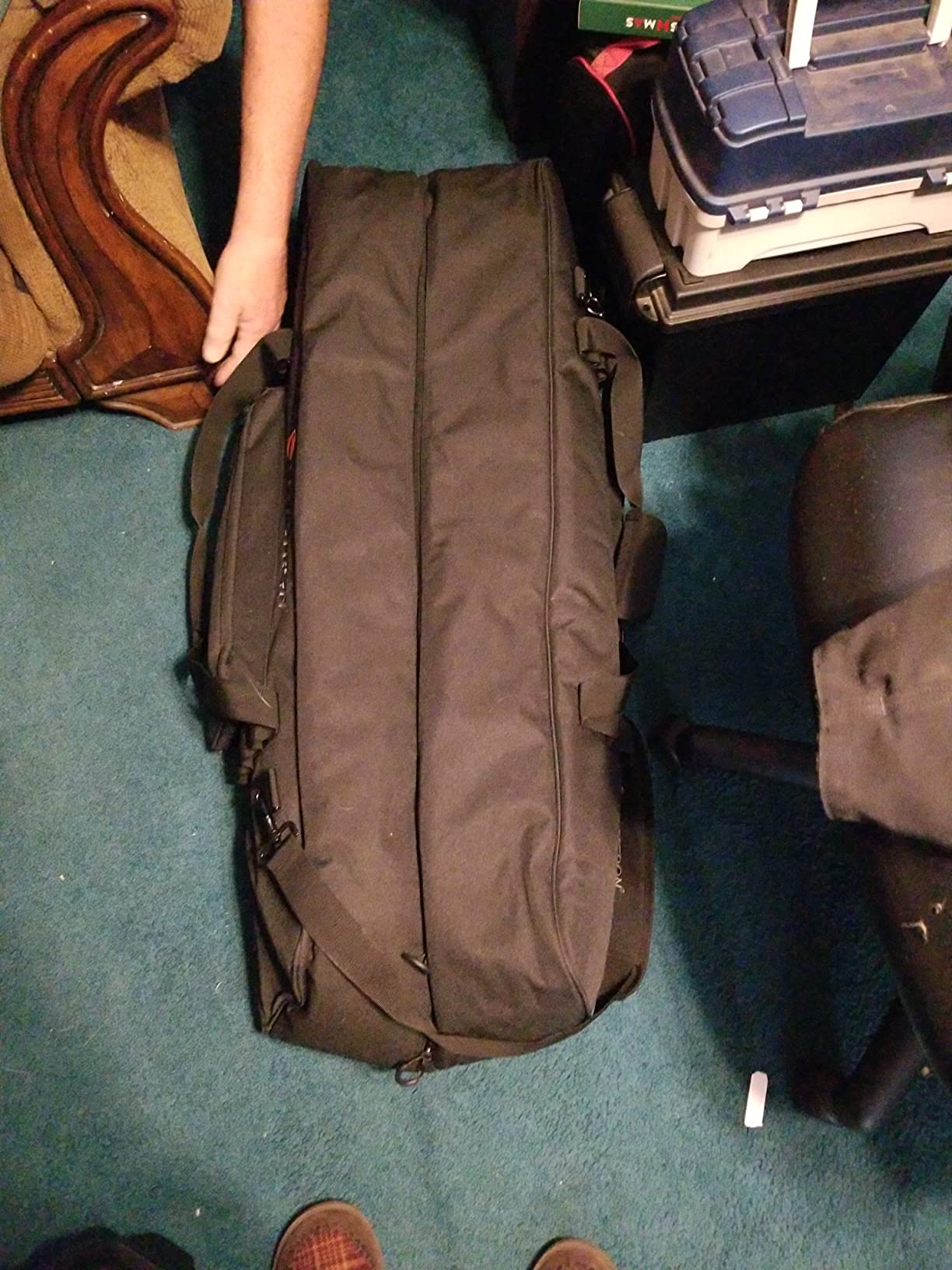
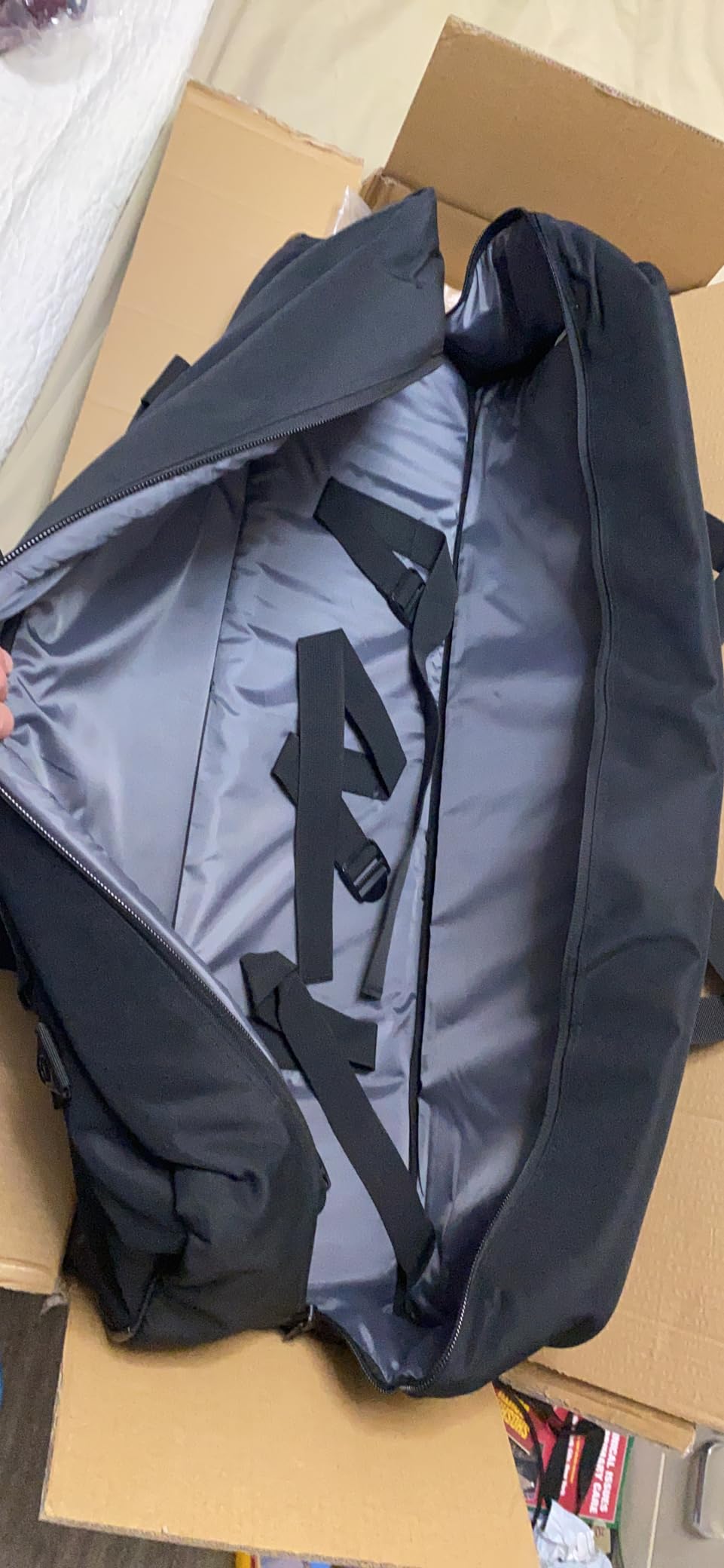
Two access points let you reach the optical tube without unpacking the whole bag, so the tripod can stay in place if you are setting up quickly. A PVC-reinforced hard bottom panel protects against damp ground and the abrasion that ruins an unprotected base.
Accessory storage comes in two forms: an external zippered pocket and a bonus padded accessory bag. Owners rate this combination highly because it keeps glassware separated from the tube instead of loose at the bottom.
Where it beats the cheaper soft bags
The distinction against entry-level bags is thickness and reinforcement. Sixteen millimetres of EPE foam is a firm cushion that returns to shape after a compression, and the PVC base is the difference between a bag you can set down on wet grass and one you cannot.
For road trips, hotel-room storage and campsite sessions it is our default recommendation, and the two-year warranty removes much of the risk of buying blind on a bag you cannot try with your own telescope first.
Where it falls short
The most repeated complaint among owners concerns the internal retaining straps, which several describe as roughly six inches too short for a fully assembled Celestron 8SE. If you own that specific combination, measure before ordering or plan to secure the tube yourself.
Some buyers also report thinner padding than expected and a partial zipper run that does not match the product photos. Neither is a deal breaker, but both are reasons to inspect the bag the day it arrives rather than the day you fly.
4. bagmate 30 inch Multipurpose Telescope Bag – Best for Road Trips and Camping
bagmate Multipurpose Telescope Bag – Shock-Absorbent Telescope Carrying Case with Adjustable Shoulder Strap and Extra Storage – Water Repellent (30 Inches) – Compatible with Celestron Telescope
29.96 x 11.5 inch
1.66 kg empty
Shock-absorbing foam
Water-repellent polyester
Pros
- Roomy enough for a 30 inch tube
- tripod and accessories
- Reinforced bottom stands up to damp ground
- Solid wrap-around zipper and heavy fabric
- Three padded accessory pouches included
Cons
- 30 inch length is short for longer tripods
- Separator pad is barely tall enough
- Straps may not encircle all three legs
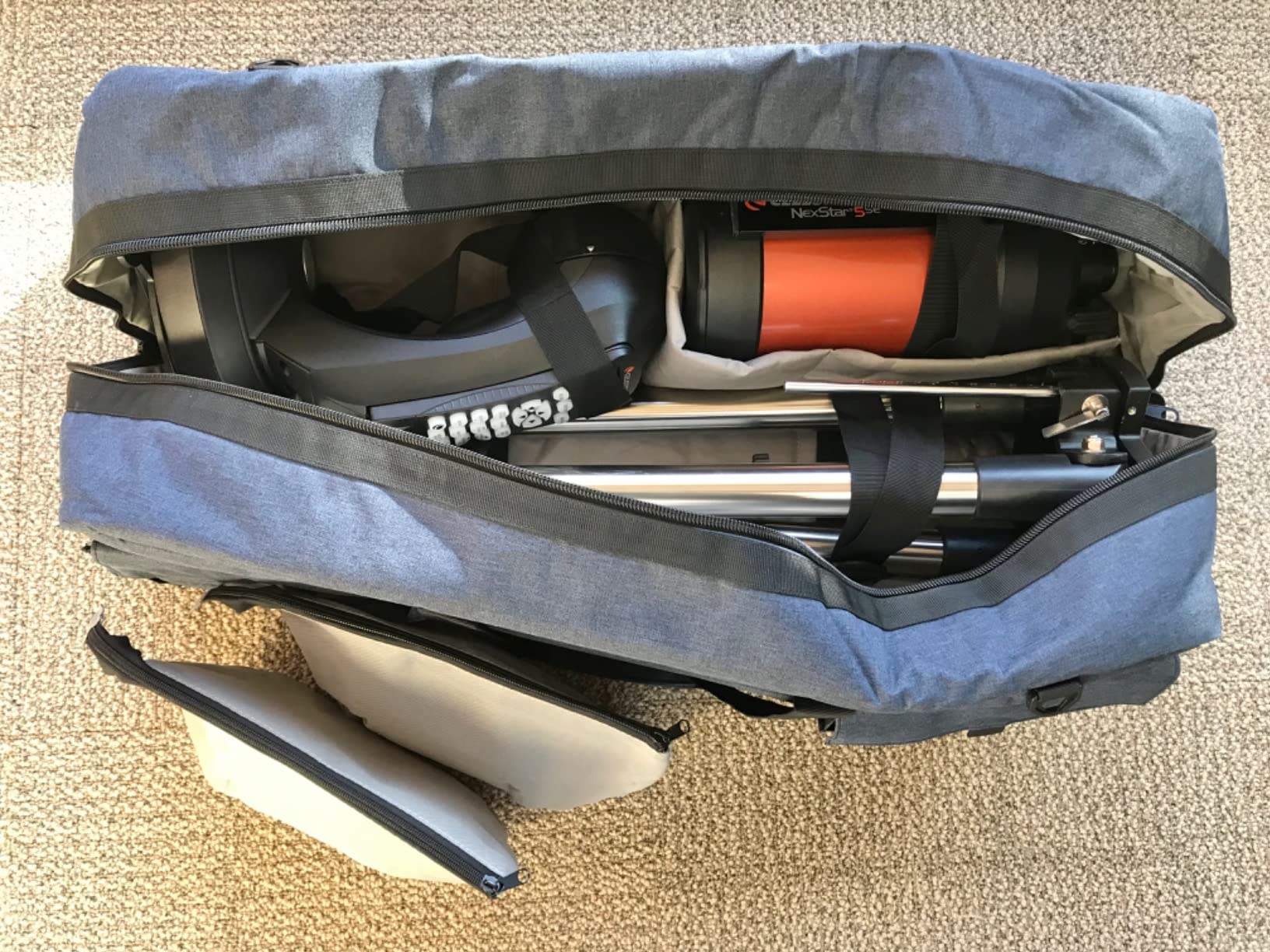
The 30 inch version of this bag targets the most common portable scope size, and it does so with a layout that thinks about organisation rather than just volume. The main compartment holds a telescope and tripod, and a movable cushioned divider separates them so the tube does not sit against the legs.
Construction is military-grade polyester with shock-absorbing foam, a reinforced base and a water-repellent finish. Closure is a hook and loop system plus a zipper, and there are three included padded accessory pouches for eyepieces and adapters.
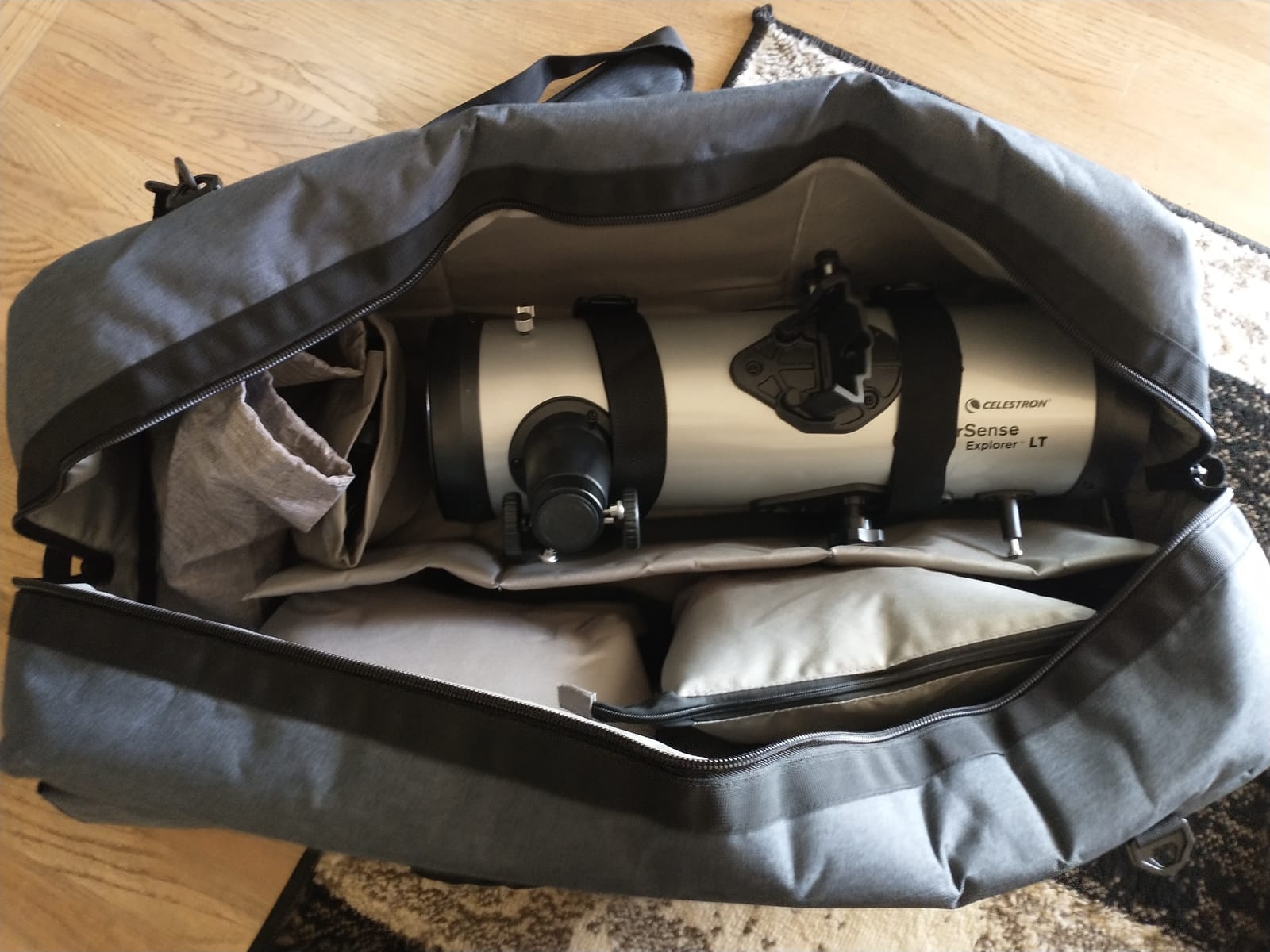
Carrying is handled by a removable shoulder strap and a Velcro hand-carry strap, so you can move it from a car boot to a picnic table without unpacking. Owners rating it 4.6 stars from 768 reviews consistently mention that the value versus a hard case is the headline.
That matches forum sentiment exactly. The recurring advice on r/telescopes and CloudyNights is that a firm padded case is the value option for most observers, with hard cases reserved for frequent fliers.
Why it suits car and campsite use
Shock-absorbing foam on the sides and base handles the two impacts that actually occur outdoors: setting the bag down on gravel and leaning it against a car bumper. Water-repellent fabric means an unexpected shower is not a crisis.
The padded accessory pouches are the detail that matters most for field use, because they keep loose items from migrating into the tube compartment and rattling against the optics.
Where it falls short
Length is the constraint. At just under 30 inches, this bag will not swallow a longer tripod, and owners specifically mention the StarSense DX 130AZ as a case that does not fit. Check your collapsed tripod length before committing.
Two further gripes recur: the internal separator pad is barely tall enough to fully separate tube from tripod, and the straps are sometimes too short to encircle all three legs at one end. Both are solvable with a strap of your own, but you should know about them in advance.
5. Celestron 8 inch Optical Tube Carrying Bag – Best for 8 inch SCT and EdgeHD Tubes
Celestron 8″ Optical Tube Carrying Bag for Schmidt-Cassegrain & EdgeHD
Custom fit for 8 inch SCT and EdgeHD
1.1 kg empty
16mm EPE foam
Two access points
Pros
- Custom-shaped for 8 inch Schmidt-Cassegrain and EdgeHD tubes
- 16mm EPE foam in 900 denier
- Two access points plus shoulder strap
- Hidden zip pocket and accessory loops
Cons
- Sized for the tube only
- not the mount or tripod
- Soft construction with no rigid impact protection
- Exterior finish is not specified
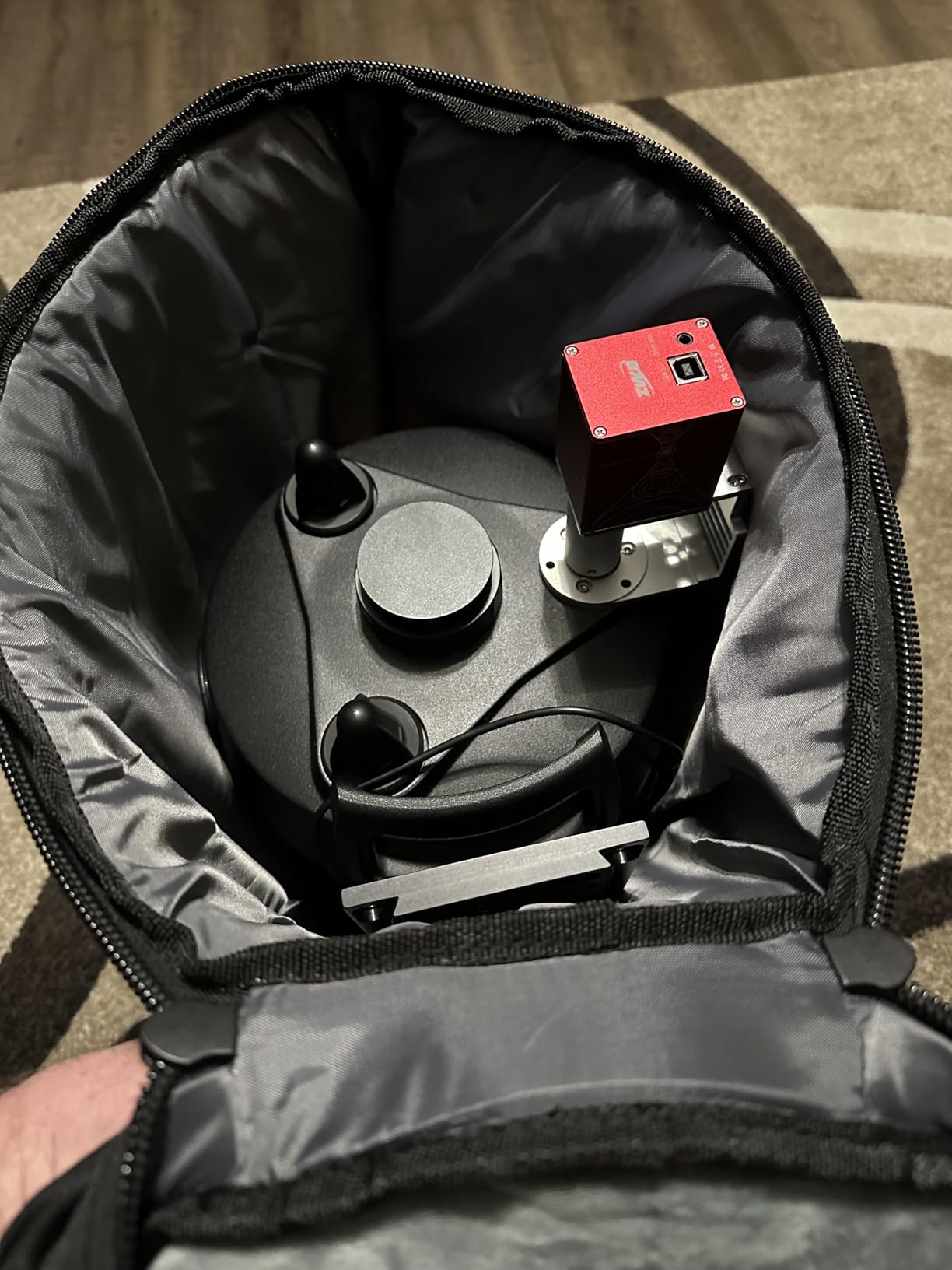
When a case is shaped around one tube rather than a range, the result is a noticeably tighter fit. This bag is built for 8 inch Schmidt-Cassegrain and EdgeHD optical tubes, and 260 owners averaging 4.7 stars repeatedly describe the snug fit as the main benefit.
The protective build matches Celestron’s other cases here: 900 denier outer, smooth inner polyester and 16mm thick EPE foam sheets. Two access points let you reach the tube without unpacking, which matters if the tripod is already assembled.
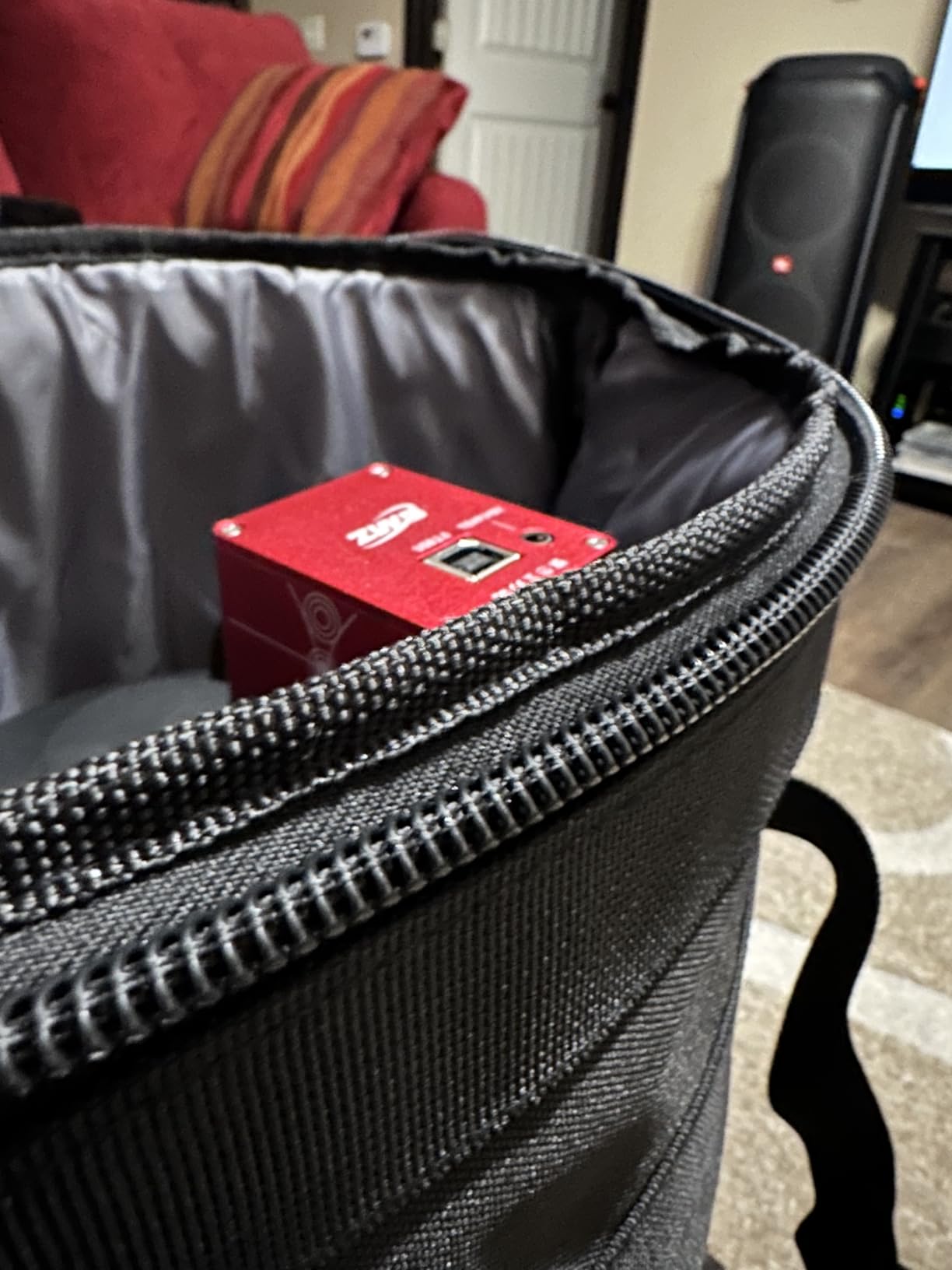
Carrying options are a shoulder strap and padded carry handles. Accessories live in a hidden zippered pocket and on sewn-on fabric loops, which keeps small items visible and reachable rather than buried at the bottom.
At 1.1 kg empty it sits in the middle of the weight range, and the two-year warranty matches the rest of the Celestron line.
When a tube-only bag is the right call
If your mount and tripod stay at the dark site or live in a vehicle permanently, a tube-only bag is the right proportion. You avoid the bulk of a full rig bag and gain a shape that fits a car boot or a hall cupboard more easily.
This is also the bag to pair with a separate tripod bag for backpacking, since the two pieces can then be carried independently rather than as one awkward package.
Where it falls short
This is explicitly a tube case. The mount and tripod are not included in the sizing, and anyone expecting to pack a complete fork-mounted setup will find the budget spent for less than they need.
Soft-sided construction means no rigid impact protection, so for checked baggage in rough conditions it is a step down from a molded shell. The manufacturer also does not specify the exterior colour or finish, which matters only if you are matching gear.
6. samdew 40.8 inch Telescope Case – Best for Equatorial Mounts and Counterweights
samdew 40.8″ Telescope Case Bonus Counterweight Bag & Dividers, Soft Bag
40.8 x 12.7 x 10 inch
5 pounds empty
Soft velvet and sponge layers
Water-resistant polyester
Pros
- Large main compartment fits tube
- mount and tripod
- Attached counterweight pouch plus rigid divider plate
- Multiple zippered inner and front pockets
- Non-slip removable shoulder strap
Cons
- Soft-sided with no crush protection
- 5 pounds is heavy for a soft bag
- Counterweight is not included
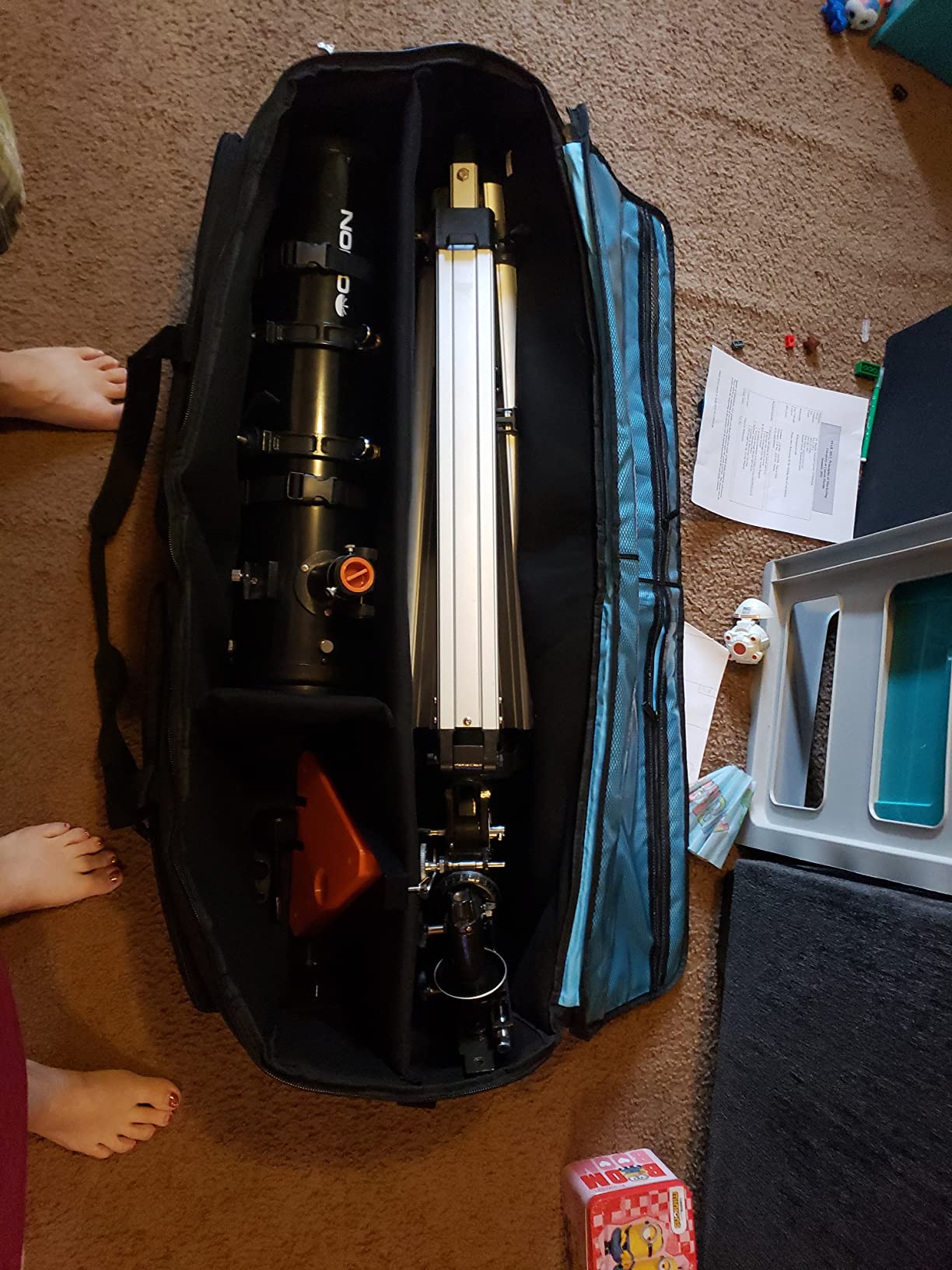
This is the only case in the group designed around a counterweight. A separate pouch is attached to the main bag specifically to hold a counterweight, and a sewn-in divider keeps that pouch from shifting into the tube compartment.
The 40.8 by 12.7 by 10 inch main compartment is sized to take an optical tube, tripod mount and auxiliary equipment together. Inside, one long rigid hollow plate and one short sponge divider separate the major parts, and adjustable buckles keep them fixed once packed.
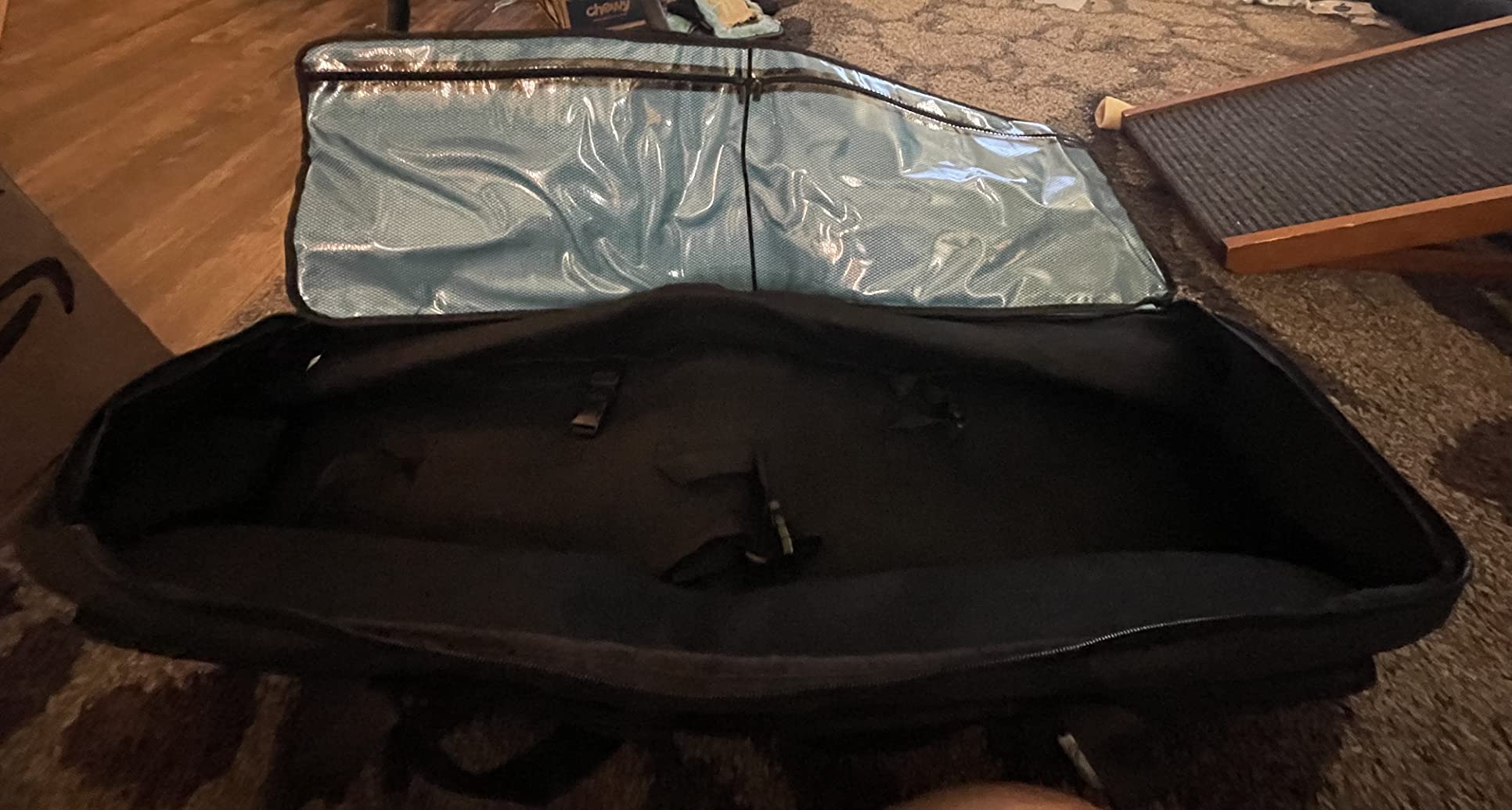
Material layering is unusually thorough: soft velvet on the contact surfaces, shock-absorbing sponge, thick pearl cotton and a water-resistant polyester exterior. That four-layer approach is why 205 owners averaging 4.6 stars report good protection for the price.
Pocket count is generous, with inner top cover pockets and front pockets, all zippered so eyepieces and a finderscope do not fall out when the bag is set down on its side.
Why equatorial owners should look here first
Anyone with a German equatorial mount knows the awkward parts: the counterweight shaft, the counterweights themselves, and a head that will not lie flat in a generic bag. The attached pouch and rigid plate solve all three at once, which no other soft case here does.
Compatibility notes list fit with common 130EQ and NexStar-style scopes, 90mm astroview tubes and compact refractors, though we always recommend measuring your own rig rather than trusting a compatibility line.
Where it falls short
Five pounds empty is at the heavy end for a soft case, largely because of the layered padding. That is a fair trade for protection in a car or a hold, but it is a lot of weight to carry up a hillside.
The counterweight pouch does not include the counterweight itself, which is worth knowing before you plan around it. As with every soft case here, there is no protection against a crushing impact.
7. TORIBIO 28 inch Large Telescope Bag – Best for Small Newtonians on Foot
TORIBIO 28″ Large Telescope Bag Case for Telescope Tube & Tripod
28 x 12 x 10 inch
0.91 kg empty
Flocked cloth lining
Top handle and shoulder strap
Pros
- Light at 0.91 kg with a balanced shoulder strap
- Long straps separate tripod and tube
- Double zippers that pull smoothly
- Fits a 134mm Newtonian with mount
Cons
- Padding is thin and end panels can be misshapen
- Soft-sided gives modest road protection
- Some shipments miss small divider pouches
This is the lightest full-rig bag in the roundup at 0.91 kg empty, and that figure is why it earns a place despite the lowest rating here at 4.4 stars from 112 owners. Weight is the deciding variable when you are carrying gear for a kilometre across a car park to a backyard site.
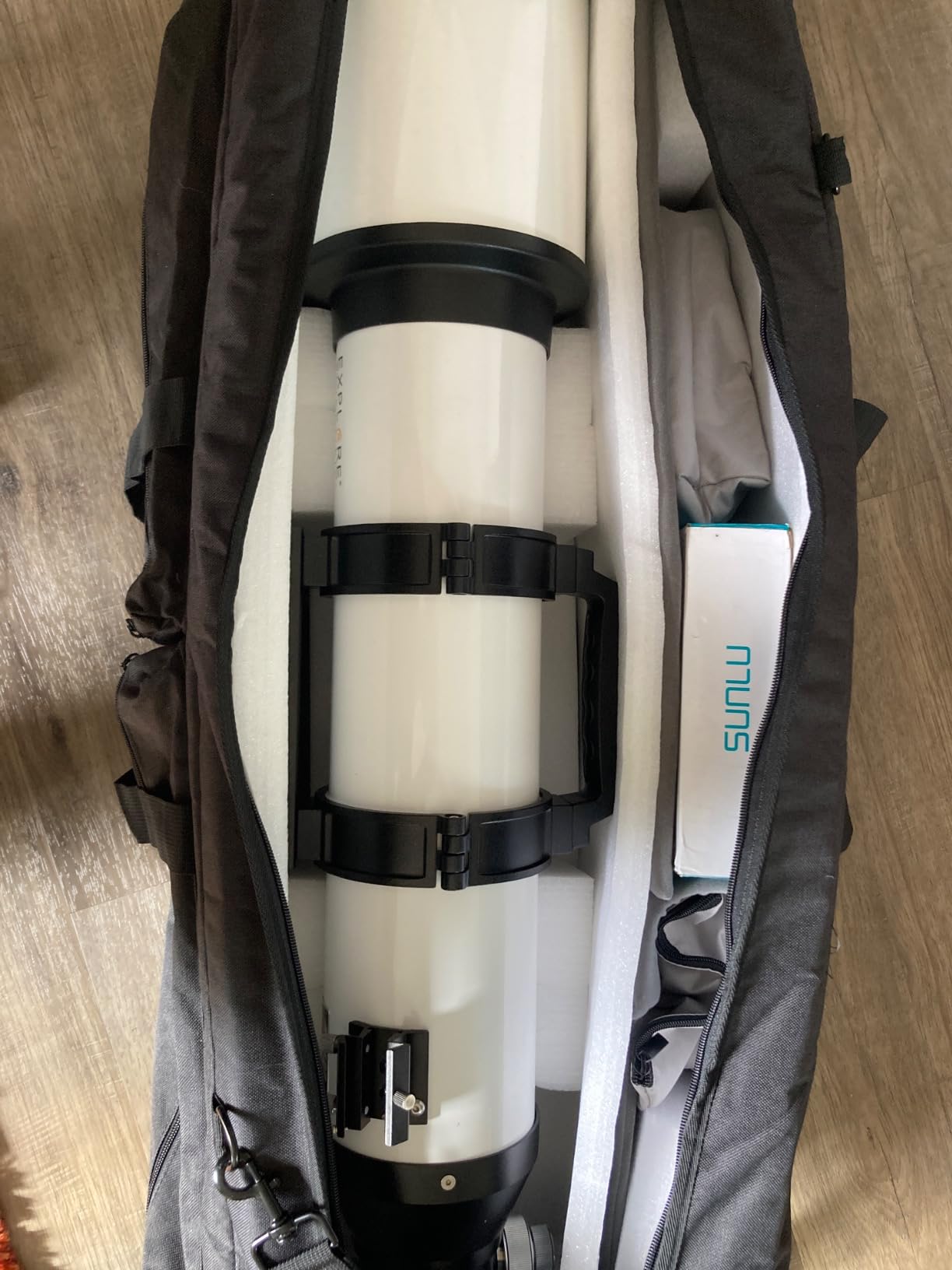
The 28 by 12 by 10 inch main compartment holds a telescope tube and stand, with the good-length internal straps designed to separate and secure the tripod from the tube. Owners specifically report that it accommodates a 134mm Newtonian plus a tripod and equatorial head.
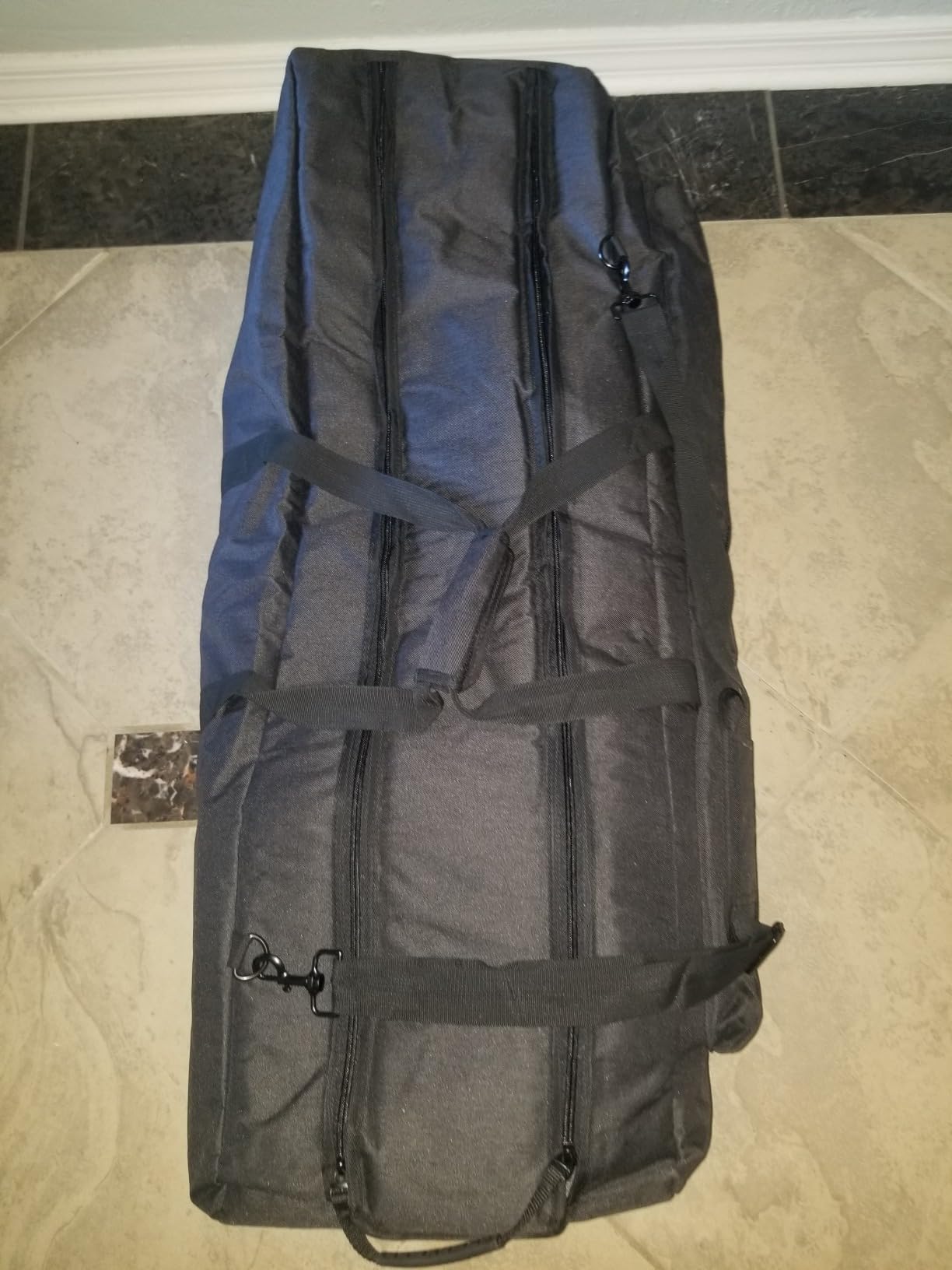
The exterior is polyester and the interior is lined with flocked cloth, a lining chosen because it will not shed fibres into a focuser or onto a corrector plate. Double zippers with smooth pulls open wide enough to load an assembled rig.
Carrying is by top handle or adjustable shoulder strap, and a 40 inch version exists for anyone who needs more length without changing brand.
Where weight beats everything else
Backpackers on r/backpacking and observers heading to remote dark sites consistently ask for something lighter, and 0.91 kg is close to the practical floor for a bag that carries a real telescope. Below this, you are into spotting scope territory.
Backpacking users also gravitate to spotting-scope-style refractors for exactly this reason, because they are the only genuinely portable option, and a 28 inch bag is sized for those instruments.
Where it falls short
Padding is the weak point. Several owners report that it is thin and that the end panels can arrive compressed or misshapen, which reduces protection until the bag has been refilled a few times. Others report shipments arriving without the small divider pouches or the shoulder strap.
Velcro-style dividers do not always couple tightly to one another, and there are no wheels, so a loaded bag is carried rather than rolled. Expect modest protection on rough roads rather than serious impact handling.
8. HODRANT 40 inch Telescope Carrying Case – Best for Two-Person Carries
HODRANT Large Telescope Carrying Case Compatible with Celestron Telescope
40 x 12.5 x 10.5 inch
4-layer nylon
Wrap-around tube pad
Five compartments
Pros
- Fits most telescopes up to 40 inches long
- Four-layer nylon with a wrap-around tube pad
- Five compartments with two clear lid pockets
- Four carry points including two side handles
Cons
- Soft nylon with no rigid shell
- Many loose components make packing order matter
- Not sized for a mounted telescope in every configuration
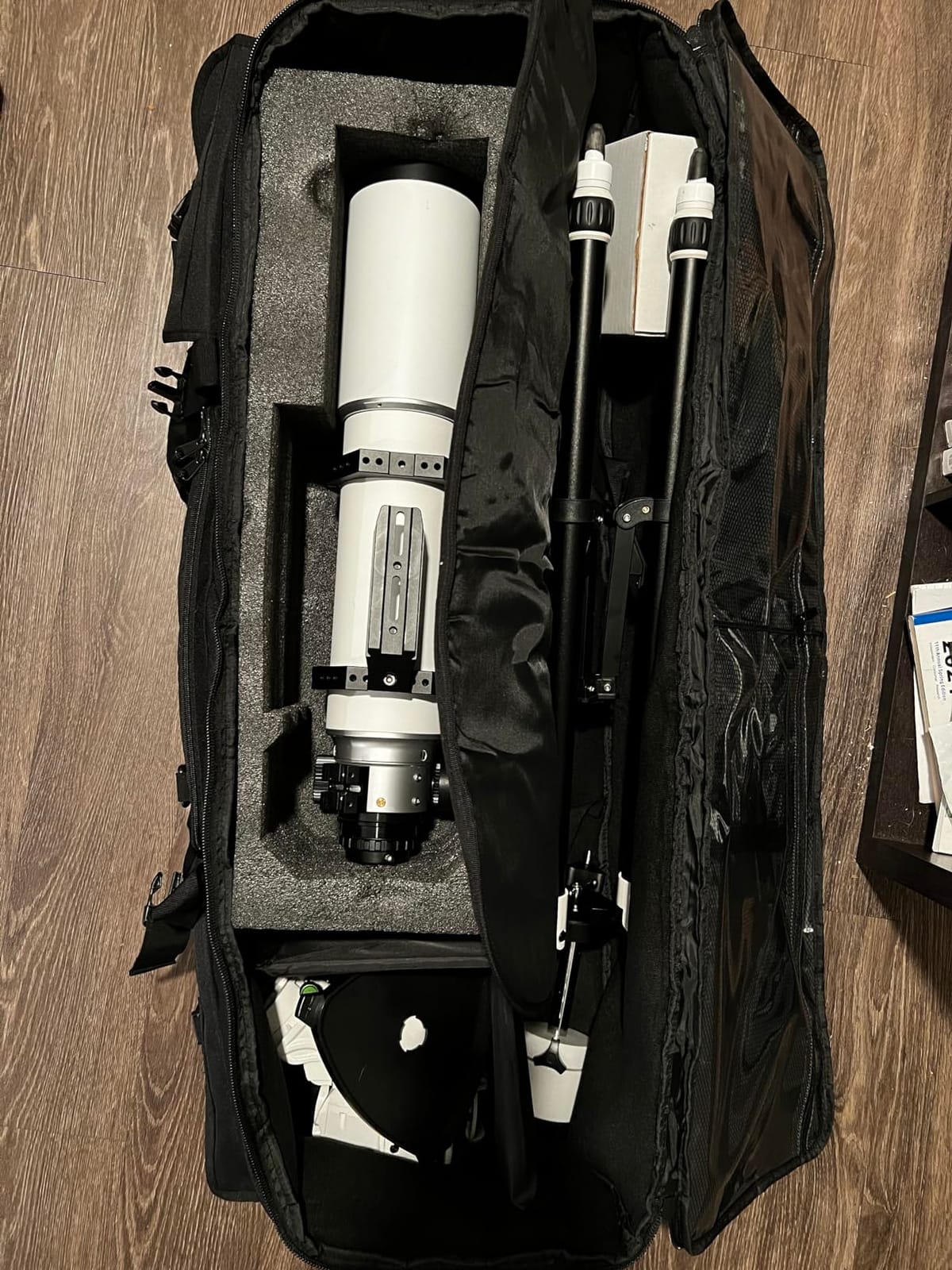
The distinguishing feature here is carrying ergonomics. Four carry points are fitted: a detachable padded shoulder strap, two padded long handles and two short side handles positioned so two people can lift a fully packed bag together.
At 40 by 12.5 by 10.5 inches, the bag suits most telescopes within 40 inches of length across Celestron, Orion, Sky-Watcher, Meade and Solomark patterns, though we would still measure your own tube before committing to any brand claim.
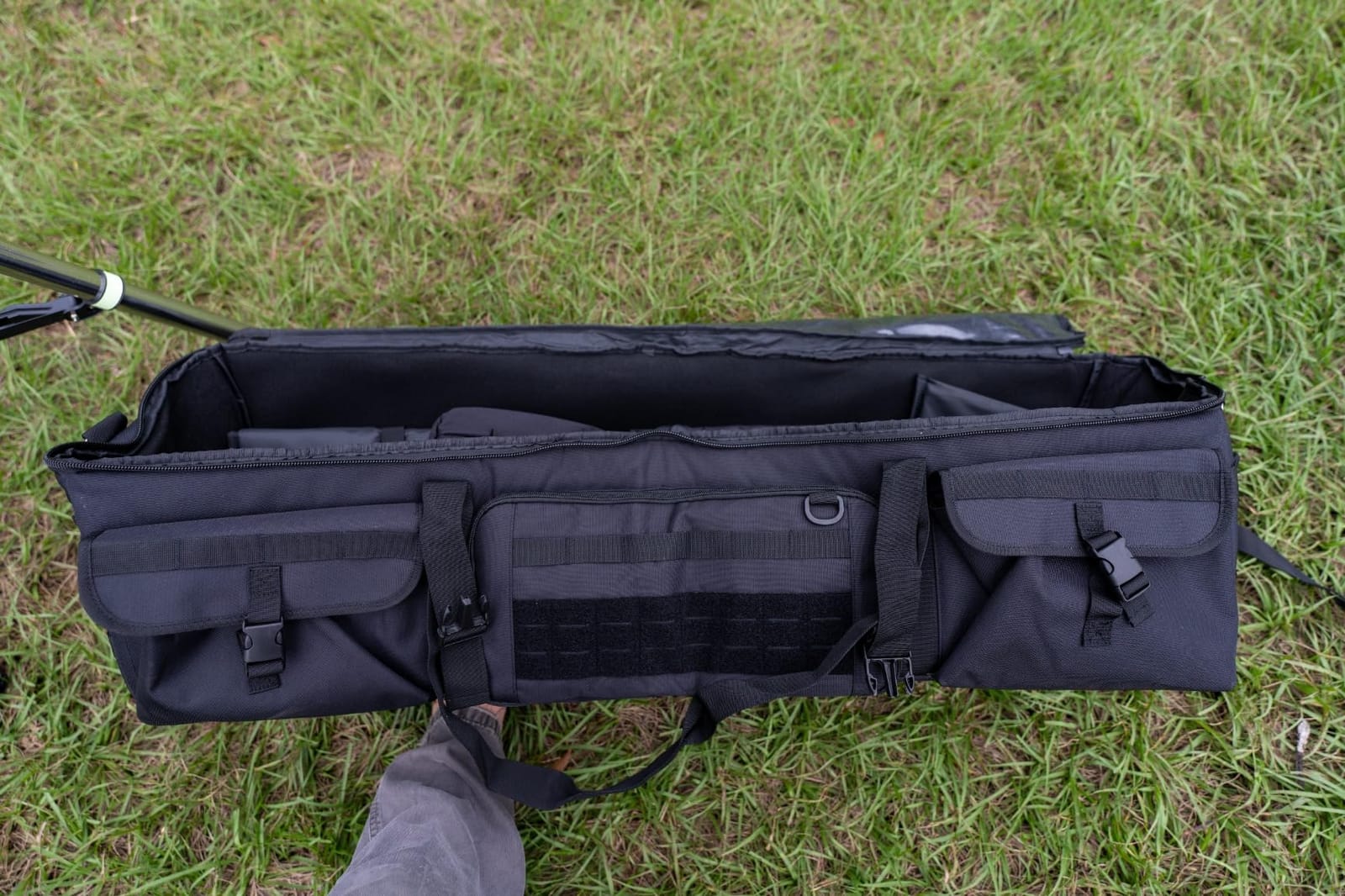
Protection comes from four-layer nylon and a soft protective pad that wraps the optical tube for cushioning and shock absorption, held by adjustable buckles. A sewn-in divider separates the counterweight pouch from the main compartment.
Storage is the strongest in the roundup: two transparent zipper pockets on the top cover for components you want visible, two outer flap pockets and one outer zipper pocket. Owners rating it 4.6 stars from 96 reviews most often mention the pocket count.
Why the two-person lift matters
A fully packed 40 inch bag with a mount and tripod inside is genuinely awkward to move alone, and the side handles turn an impossible solo lift into a thirty-second job. For anyone moving between a vehicle and an observing spot with a helper, that is a bigger practical gain than another layer of foam.
The detachable padded shoulder strap keeps the single-person option open for shorter distances.
Where it falls short
Soft nylon construction means no crush protection, and the volume of loose components means packing order genuinely matters. If the counterweight pouch is packed on top, everything else below it will shift.
Some configurations of a mounted telescope will not fit even at this length, which is a limitation of any bag that is not cut for one specific model.
9. samdew Telescope Tube Bag – Best for Tube-Only Travel Between Sessions
samdew Telescope Tube Bag for 4″, 5″, 6″, 8″ & 9.25″ Optical Tube, Bag Only
28 x 12 x 12 inch
Tube only, no mount or tripod
Detachable inner divider
Four pockets
Pros
- Detachable divider resizes the main compartment
- Four-layer build with a wrap-around pad
- Folds flat when not in use
- Back trolley strap for rolling onto a suitcase
Cons
- Bag only
- no tripod or mount included
- No hard-shell crush protection
- 28 inch cube is bulky for small refractors
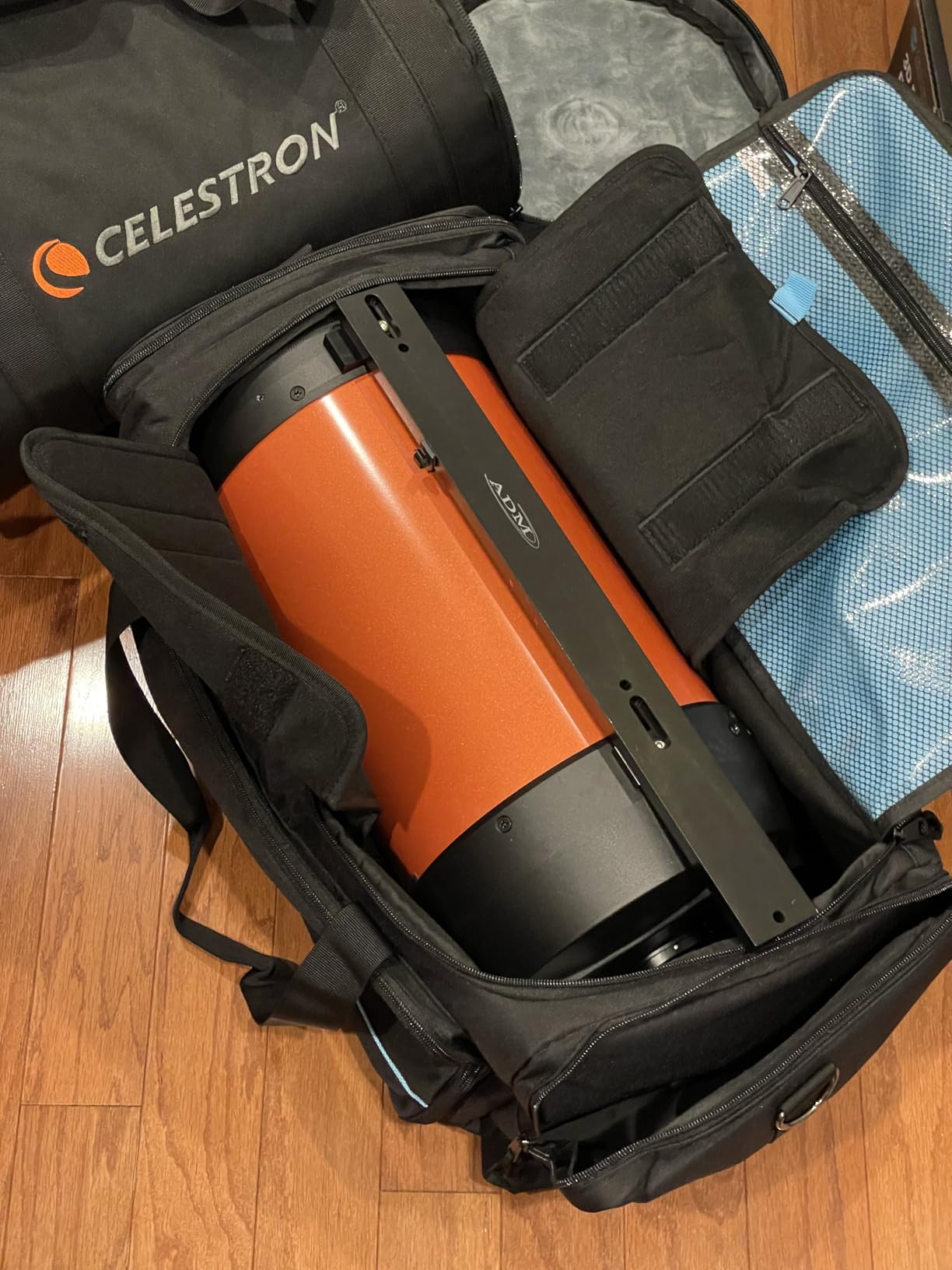
This bag is built for one job: moving a bare optical tube between observing sessions. It fits 4 inch, 5 inch, 6 inch, 8 inch and 9.25 inch optical tubes, with the Celestron NexStar SE and EdgeHD tubes named as typical matches. The tripod and mount are not part of the sizing.
The 28 by 12 by 12 inch compartment uses a detachable inner divider, so you can shrink the space around a smaller tube and stop it moving inside. A soft protective pad with a secure fastener wraps the tube for cushioning and shock absorption.
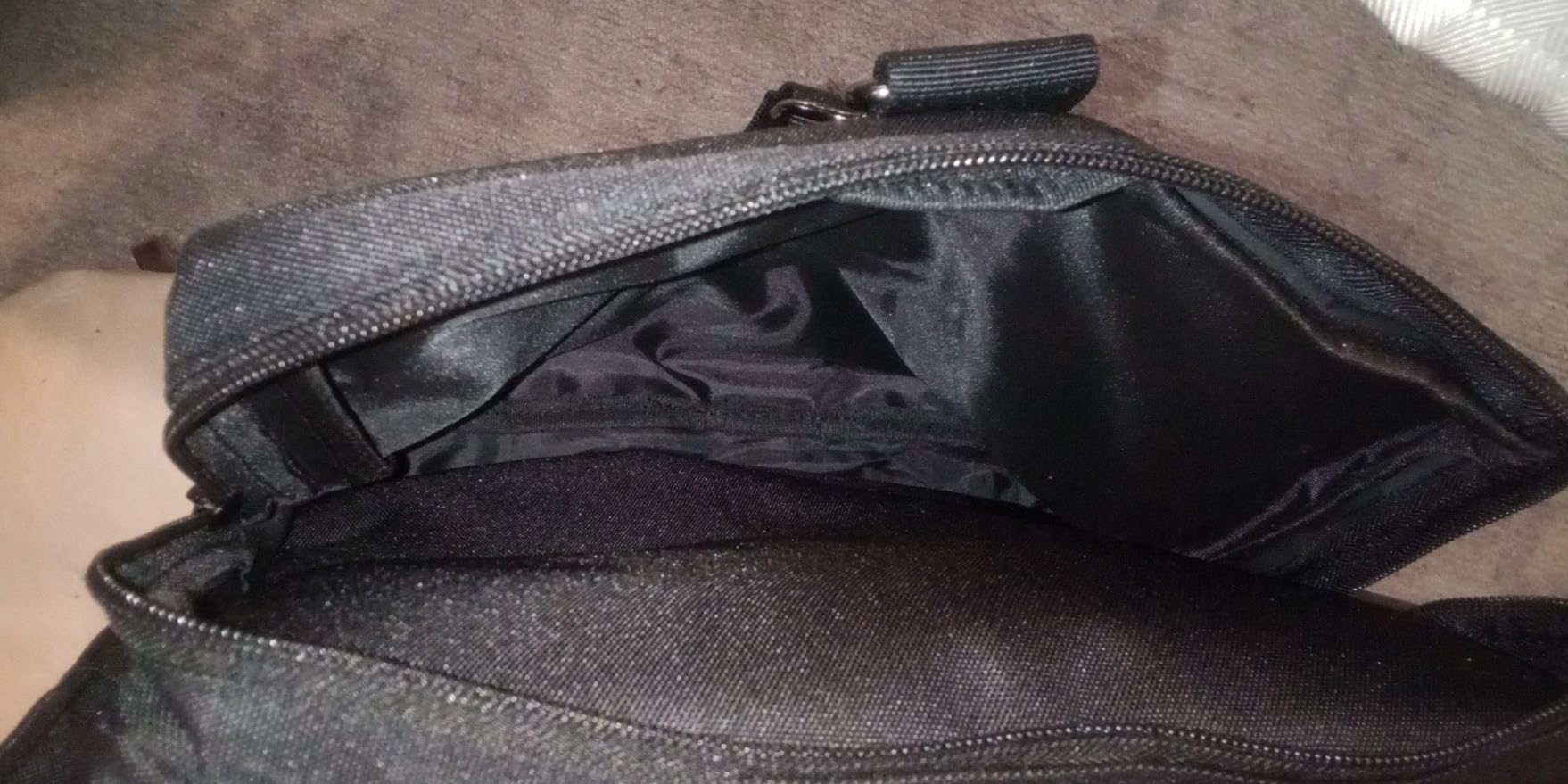
Storage runs to four zippered compartments: a transparent pocket on the top cover, a large front zipper pocket and two side zipper pockets. Owners rate it 4.5 stars from 112 reviews and frequently single out the divider and the layered padding.
The carrying options are unusual for a case at this size: a detachable shoulder strap, padded handles and a back trolley strap that lets you roll the bag onto a rolling suitcase for airport corridors.
Why a tube-only bag beats a full rig bag in two setups
If your mount stays at the club observatory or your dark site, you are carrying dead weight every trip. A tube-only bag removes the tripod from the equation, and the divider gives you a snug fit for a much smaller optical tube.
The trolley strap is the detail that earns its keep in airports. Sliding a bag onto a suitcase rather than carrying it is a meaningful difference across a long terminal.
Where it falls short
If your setup is not already split, this bag is the wrong shape for the job, because a tripod simply will not fit in a 28 inch cube alongside the tube. That is a real limitation for anyone who moves as one unit.
Soft construction gives no hard-shell crush protection, and the cube footprint is unnecessarily bulky for a small 60 to 80mm refractor. It also folds flat for storage, which helps but does not change the packing volume when loaded.
10. bagmate 39 inch Telescope Carrying Case – Best for Damp Trips and Lightweight Budget
bagmate Multipurpose Telescope Bag – Shock-Absorbent Telescope Carrying Case with Adjustable Shoulder Strap and Extra Storage – Military-Grade, Water Repellent Camera Case (39 inches)
39 x 12.3 x 12.3 inch
1.66 kg empty
Water-repellent polyester
Shock foam on sides and base
Pros
- Lowest cost in the group with genuine shock foam
- Water-repellent fabric for wet travel
- Removable shoulder strap plus hand-carry strap
- 39 inch length suits mid-size tubes
Cons
- Single main compartment with limited organisation
- No rigid shell so protection is bump level
- Will not take the largest Dobsonian
This is the entry point of the roundup, and it remains a competent bag rather than a token one. At 39 by 12.3 by 12.3 inches and 1.66 kg empty, it covers mid-size optical tubes with shock-absorbing foam on both the sides and the base.
The fabric is water-repellent polyester, described by the manufacturer as military-grade. For observers who travel in wet climates or set up on damp ground, that finish does more practical good than another pocket would.
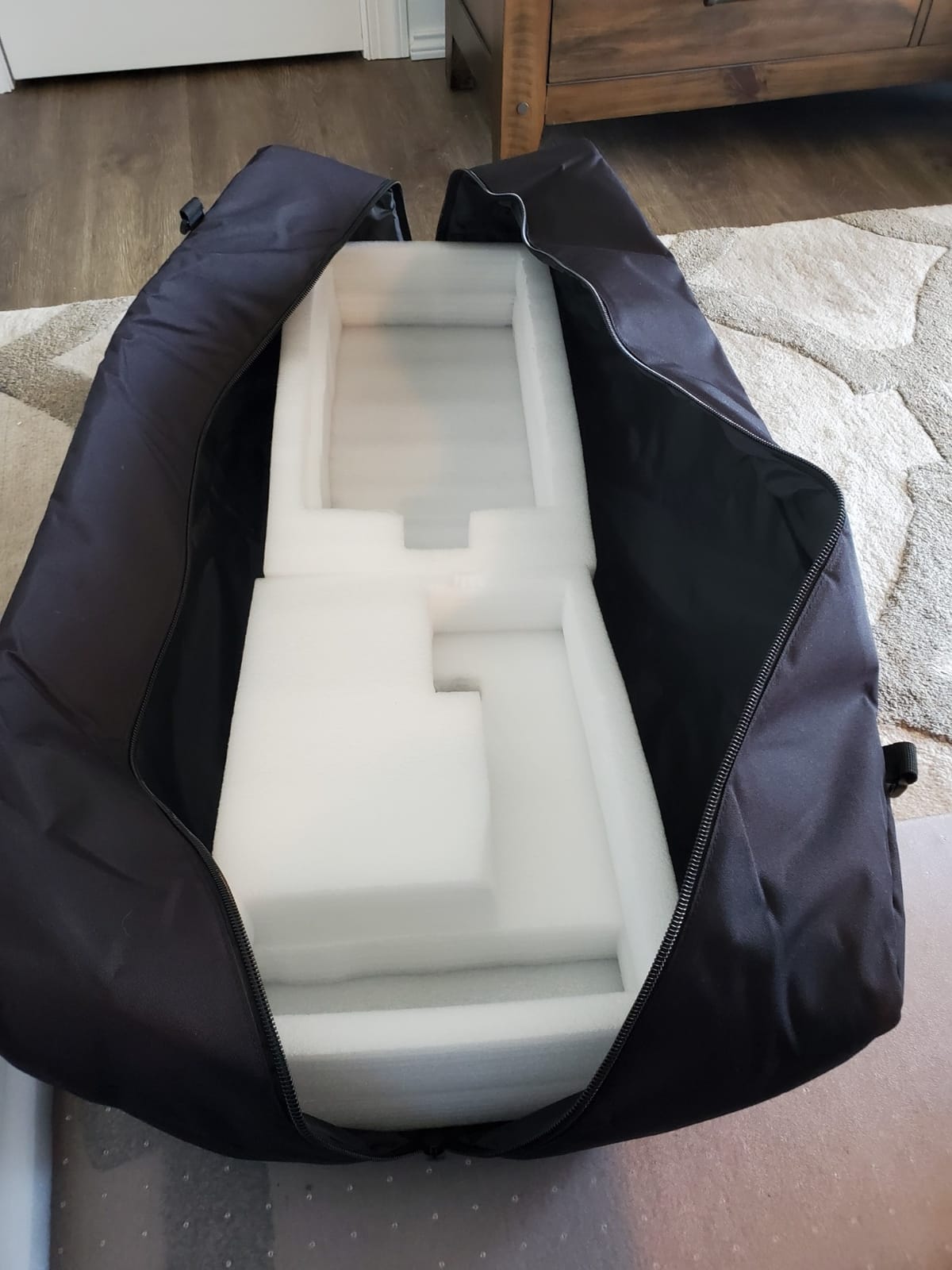
Carrying is handled by a removable shoulder strap and a hand-carry strap, and 607 owners averaging 4.5 stars treat it as a budget grab-and-go case for camping, hiking and bicycle transport. A W34 size exists for shorter tubes.
External accessory pouches cover the small items that would otherwise rattle around the single main compartment, though internal organisation is limited compared with the multi-pocket designs above.
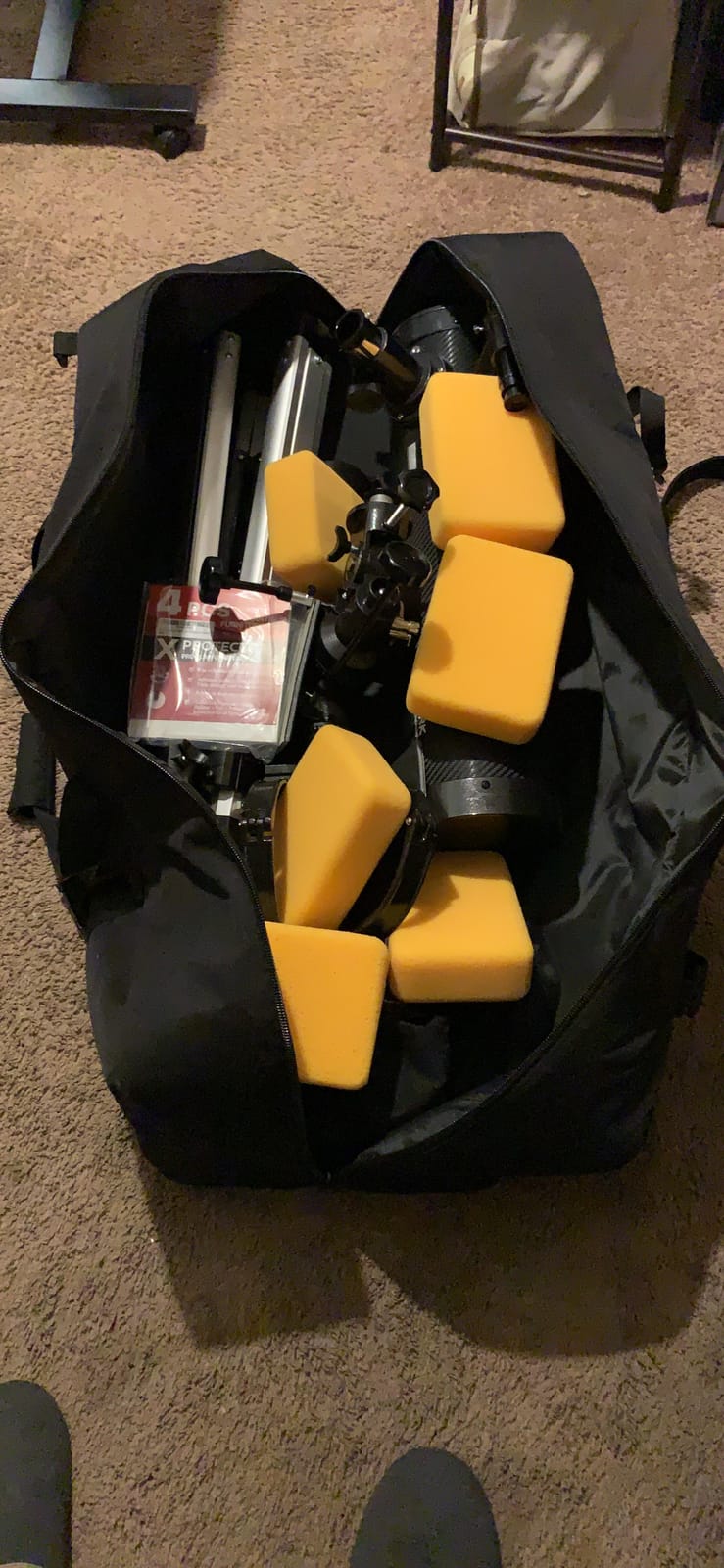
Why it suits hiking and damp ground
At 1.66 kg it is in the middle of the weight range rather than the bottom, but the water-repellent shell and the foam on sides and base are exactly the two features that matter when a bag gets rained on or set down on wet grass.
It suits the observer who carries one bag, one instrument and modest accessories, without needing a place for counterweights, mounts and dividers.
Where it falls short
A single main compartment means internal organisation is limited, so accessories need the external pouches or a separate eyepiece case. With one compartment there is also no divider stopping the tube from knocking against a diagonal or a star diagonal packed alongside it.
The 39 inch length will not take the largest Dobsonian or a heavy equatorial rig, and as a soft bag it protects against bumps and weather rather than crushing. If you fly often, this is not the case to build a kit around.
Hard Shell vs Soft Padded Cases for Flying
The hard versus soft debate comes up constantly on astronomy forums, and the answer depends entirely on how many flights you take. A soft padded bag protects against abrasion, weather and moderate shock. A hard shell protects against a bag being dropped from a height, stacked under luggage, or crushed by a heavier case.
Forum consensus across r/telescopes and CloudyNights lands in a predictable place: hard cases for frequent fliers, soft cases for car and field use. That is not a brand loyalty position, it is a physics position.
The decision comes down to three variables. How often do you fly, how valuable is the optical tube, and how far is the walk from the vehicle to the observing spot?
Choose a hard shell when you fly monthly or the tube is expensive
Baggage handling is a numbers game. The probability of a rough drop rises with every flight, and a Schmidt-Cassegrain corrector plate or a Dobsonian mirror cell does not survive repeated abuse at any price point. The molded EVA shell is the only case here with a rigid exterior.
The cost is 10 pounds of empty weight and a case that never compresses. For a traveller who checks a bag twice a year, that weight is a fair trade. For a traveller checking a bag monthly, it is also the right call.
Choose a soft padded bag when you drive more than you fly
Soft cases with 16mm EPE foam and a reinforced base handle the realistic car boot and campsite scenario well, and they weigh between 520 grams and 1.66 kilograms. Several of them fold or compress for storage, which a rigid shell never will.
They also offer more internal flexibility. Adjustable dividers and removable pads let you reshape the interior for different tubes, which partly offsets the loss of crush protection.
The middle path: hard shell with reused shipping foam
Owners on r/telescopes frequently suggest that the original shipping foam from a telescope purchase is better than anything generic, because it was cut for that exact tube. Cut it to shape and drop it into a budget hard shell, and you get custom-fit protection without a custom-fit price.
This is the route we would take first for anyone with a valuable scope who flies occasionally.
Taking a Telescope on a Plane: Carry-On vs Checked Baggage
Yes, you can take a telescope on a plane, and in most cases you will need to check it as baggage rather than carry it on. Most optical tubes exceed carry-on dimension limits once a case is around them, and TSA-style security rules allow telescopes through checkpoints but airlines set the size rules.
The practical breakdown looks like this. Small refractors and smart telescopes in a compact bag sometimes travel as carry-on. Anything with a large Dobsonian base or a long tube goes in as checked baggage, and the case becomes the only thing standing between your optics and a conveyor belt.
Carry-on candidates
A tabletop 60 to 80mm refractor or a small Newtonian in a bag under the airline’s stated cabin dimensions can often travel in the cabin, which avoids baggage handling entirely. Check your airline’s current size allowance before packing, since these limits vary and change.
The samdew 28 inch tube bag is the closest case here to a cabin-friendly option, particularly when it folds flat and only carries a bare optical tube.
Checked baggage candidates
Anything at 39 or 40 inches long is a checked item. For those, the priority is impact protection and secure internal packing, which means a rigid shell for frequent flyers and a padded soft bag with a reinforced base for occasional travel.
Wrap counterweights and metal parts individually, and pack soft goods around the tube so the bag cannot move inside a slightly oversized hold. A bag that shifts inside a larger case will be crushed at the corners.
Budget and oversized fees
Oversized baggage fees are charged by airlines according to total exterior dimensions, and this is where rigid shells become expensive. The molded EVA case at 23 by 15 by 14 inches is deliberately compact for exactly that reason, while a 40 inch soft bag is often charged as oversized but never as a second bag.
Nobody on any forum has ever described the fee as cheap, but nobody has described losing a corrector plate as cheap either.
Best Cases for Backpacking and Remote Dark Sites
Weight matters more on foot than it does in a car, and the good news is that the lightest adequate cases here are well under two kilograms. The bad news is that every one of them is soft-sided, because rigidity costs weight.
Our rule for anything past a few hundred metres of walking is to split the load. Carry the optical tube in one bag and the tripod in another, rather than one long combined bag that hangs at an angle and loads one shoulder.
Two setups work well for this. The bagmate 30 inch bag carries a tube and short tripod together at 1.66 kg for observers with compact tripods. The TORIBIO 28 inch bag at 0.91 kg is lighter again and suits a 134mm Newtonian with a collapsed tripod, provided your tripod is short enough.
Ergo, for backpacking, budget for two smaller bags rather than one large one. Separate bags let you leave the tripod at base camp, use your body as the counterweight on uneven ground, and avoid the moment where a full rig bag tips over a fence.
For remote sites, add one habit: pack the case in the reverse order of unpacking, so the tripod comes out first and the optical tube last. It is a small ritual that keeps dew off the open tube while you set up.
How to Choose a Travel Telescope Case
Choosing well comes down to six factors, and the order you weigh them in depends on how you travel. Start with size, because a case that does not fit is not a case, and end with weight, because a case you will not carry protects nothing.
Check interior dimensions, not exterior dimensions
Exterior length is the number printed on product pages, and it tells you almost nothing. Interior dimensions after padding, dividers and straps are what determine fit, and manufacturers rarely publish them clearly.
Add 2 to 4 inches of clearance over your longest tube measurement, then subtract that from the published exterior figure as a rough guide. If the interior figure is not published at all, treat the case as approximate and confirm with a tape measure.
Padding thickness tells you more than material name
Sixteen millimetres of EPE foam, as used across the Celestron bags here, is a firm cushion that recovers its shape. Thin quilted lining is decoration. Look for a stated thickness, and check whether the foam is on the sides and base or only on the long faces.
Foam density matters as well as thickness, which is why a molded EVA shell feels different from a fabric bag holding a foam sheet. The EVA distributes an impact across a wide area instead of concentrating it at a contact point.
Water resistance and drainage
Water-repellent fabric protects against rain, and a PVC-reinforced hard bottom protects against damp ground. Neither stops condensation, which is the more common source of damage on a trip that crosses climates. Silica gel packets in a sealed accessory pouch cost almost nothing and address it directly.
Keep the case open for an hour after a cold-to-warm transition before packing the optical tube. Warm moist air entering a cold case is exactly how dew forms on glass.
Accessory organisation decides daily usability
A tube case with no accessory provision forces you to improvise, and improvised storage in a soft bag means glassware knocking against the tube. Look for zippered pockets at minimum, and ideally separate padded pouches.
For eyepieces specifically, forum members frequently recommend small hard cases rather than pouches. CloudyNights users describe Harbor Freight Apache cases as just as good as Pelican for accessory storage, which is the standard budget answer for glassware that must not touch anything.
Weight versus protection
Set a ceiling before you shop. Above two kilograms empty you are carrying most of a hard case’s weight with none of its rigidity. Below one kilogram you are probably limited to tube-only transport or short trips from a vehicle.
The one genuine exception is the 10 pound molded shell, and the reason it earns that weight is the rigid shell itself. If you do not fly regularly, that weight buys you little.
Budget tier versus premium tier
The budget tier, roughly the bagmate 39 inch and TORIBIO 28 inch models, gives you water-repellent fabric and basic foam for a fraction of the cost of the premium tier. For car travel, camping and occasional flights, this is where most observers should start.
The premium tier is the molded hard shell, and it exists for one reason: repeated baggage handling. Mid-tier padded bags with 16mm foam sit between the two and are the best all-round value for anyone whose travel is mixed.
Packing checklist for traveling with a telescope
Pack in this order and unpacking in reverse. Optical tube first, wrapped in a layer of soft material, then dividers and pads around it, then the mount, then the tripod, then accessories in their pouches, then the tripod last if the bag has a strap for it.
Before you close the bag, check three things. Everything moves when you shake the bag gently. No metal part touches another metal part. And nothing glass has a route to the outside of the case.
Controlling condensation during transport
Condensation is the failure mode that catches new owners, because it forms when warm damp air reaches a cold surface. Moving from a cold car into a warm hotel, or from air conditioning into humid summer air, will do it every time.
Three habits prevent it. Leave the case closed for an hour after a temperature change before opening it. Pack a couple of silica gel packets in an accessory pouch and replace them after each trip. And never seal a warm scope into a case overnight, because you will be storing humid air with cold glass.
Custom foam and DIY case options
The cheapest custom fit is the foam your telescope arrived in. Owners on r/telescopes repeatedly recommend cutting those blocks to shape and dropping them into a budget hard shell, and it works because that foam was cut for your exact tube rather than a size range.
For eyepieces and adapters, the community recommendation is an Apache-style hard case from Harbor Freight, which CloudyNights members describe as just as good as Pelican for the job at a fraction of the cost. Cut a foam block, drop the accessories in, and you have a case for glass that costs very little.
One warning from the same threads: a custom case is custom to one model. When you change scopes, the foam no longer fits, which is why we always suggest buying a universal bag plus removable foam rather than a permanently cut one.
Frequently Asked Questions
Can you take a telescope on a plane?
Yes, you can take a telescope on a plane, though most sizes must be checked as baggage rather than carried in the cabin. A compact refractor or smart telescope in a bag within your airline’s cabin dimensions may travel as a carry-on. Anything with a long tube, a Dobsonian base or a mounted fork setup will exceed size limits, so it goes in the hold inside a protective case.
How do I measure my telescope for a case?
Measure the optical tube length with the dew shield retracted, then measure width and height with the focuser, diagonal and finder bracket fitted, since those fittings set the real footprint. If the case holds the tripod too, collapse the legs fully and measure the tripod including any accessory tray. Allow 2 to 4 inches of clearance over your longest measurement.
Do I need a hard or soft case for my telescope?
A hard shell is worth it if you fly regularly, since baggage handling is where most damage happens and a rigid shell with moulded foam spreads an impact across the case. A padded soft bag is enough for car boots, campsites and hotel rooms, and it is lighter and cheaper. Many observers fly occasionally and cut the original shipping foam to fit inside a budget hard shell.
What size case do I need for my Dobsonian or large telescope?
Most portable Dobsonians and large Newtonians need a bag at least as long as the collapsed tripod, which is usually longer than the tube itself. A general rule is that the bag’s longest interior dimension must exceed the collapsed tripod length, not just the optical tube. Large mounted rigs usually need a hard shell rather than a padded bag.
How do I stop condensation forming inside a telescope case?
Condensation forms when warm moist air touches a cold surface, so the fix is timing and humidity. Leave the case closed for about an hour after a temperature change before opening it, and keep silica gel packets in an accessory pouch. Never seal a warm telescope into its case overnight.
Conclusion
After six weeks of comparison, the answer to best telescope cases for travel depends on how you travel rather than on which telescope you own. The YOREPEK 40.5 inch case is our pick for most people because it carries a tube, mount and tripod together at 3.5 pounds with a water-resistant nylon shell and buckle straps that hold everything still.
If you fly often or the tube is expensive, the Celestron molded EVA shell is the only real protection against baggage handling, and its customisable foam and accessory pouch justify the ten pounds. For everyone else, the Celestron 40 inch padded bag is the value choice: 16mm EPE foam, a reinforced bottom and 520 grams empty.
Whichever you choose, measure twice and include the focuser and the collapsed tripod in that measurement. That single habit prevents more disappointing cases than any other step in the buying process.
Whichever case you pick, pair it with our other travel guides for the 2026 season, including our picks for travel trailer covers and trailer tires for travel trailers, and you will be ready to set up and observe rather than repack and rethink.