
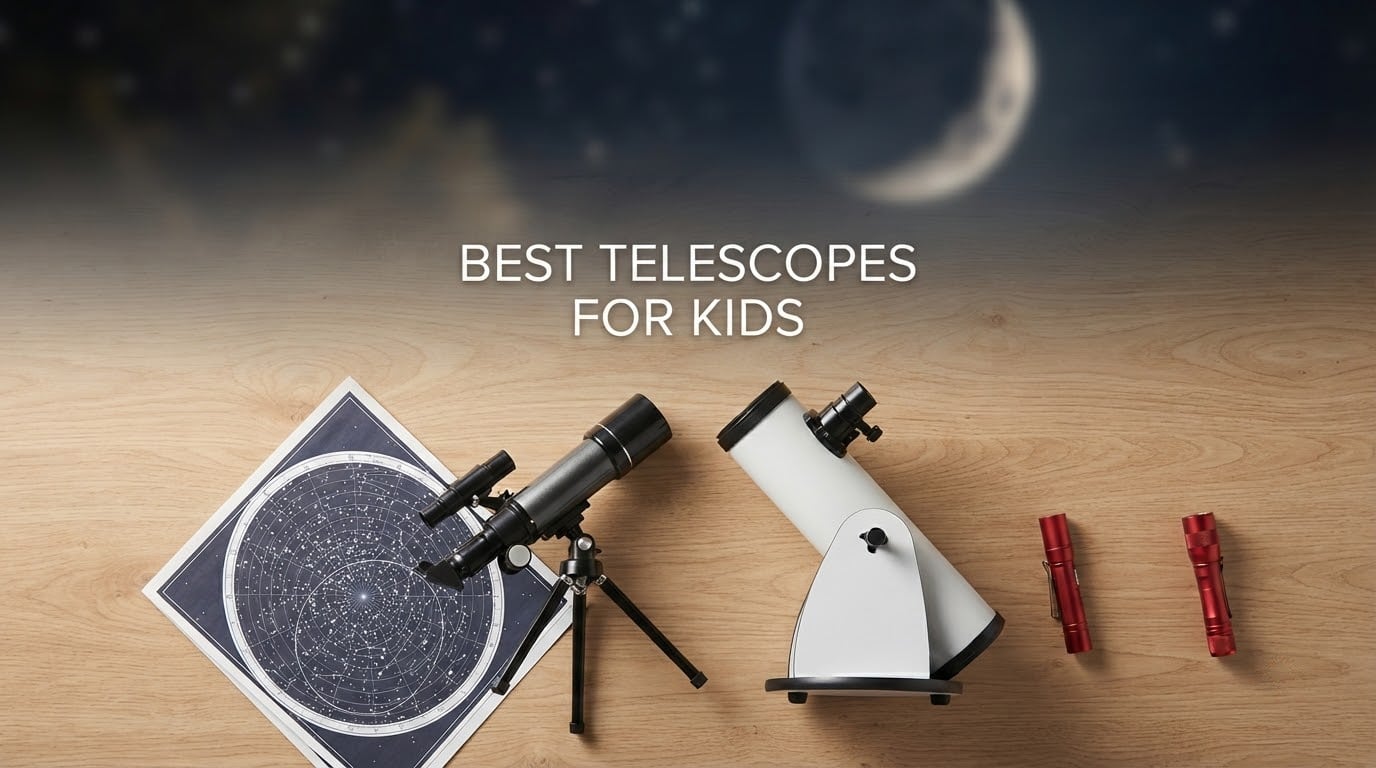
The best telescopes for kids are simple glass scopes in the 70mm to 80mm range on a stable alt-azimuth mount, not the plastic toys sold beside them in the toy aisle. A tabletop-style scope or a short-tube refractor on a steady tripod lets a child point, focus and find targets on their own, which is where most first telescopes succeed or fail.
We compared twelve scopes rated for children, weighing aperture, focal length, mount steadiness, weight and the accessories actually included in the box. The pattern was consistent: tripod wobble and hard aiming cause far more frustration than optics, so we weighted stability heavily. The winner for 2026 is the Gskyer 70mm, and we list eleven more strong options further down, from screen-based kits for five-year-olds to 80mm refractors for tweens.
A word on the elephant in the aisle. Department-store telescopes with a 25mm lens and a printed 500x zoom number produce a dim, shaky, grey smear of the Moon. We are not including any of them here. Every scope below has real coated glass, a stated aperture you can measure, and a mount that holds its aim. We may earn a commission if you buy through our links, but it does not change the order.
Table of Contents
Top 3 Best Telescopes for Kids Right Now (October 2026)

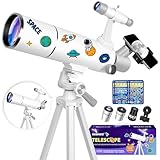
Gskyer 70mm AZ Refractor
- 70mm aperture
- 400mm focal length
- Two eyepieces plus 3x Barlow
- Finder scope and phone adapter
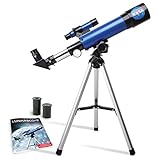
NASA Lunar Telescope
- Lightweight tabletop body
- Finder scope included
- Made for ages 8 and up
- Single-eyepiece lunar viewing

Koolpte 70mm AZ Refractor
- 70mm aperture
- 500mm focal length
- Kellner eyepieces plus 3x Barlow
- Carrying case included
All 12 Telescopes at a Glance in 2026
| Product | Specs | Action |
|---|---|---|
| Gskyer 70mm AZ Refractor |
|
Check Latest Price |
| NASA Lunar Telescope for Ages 8-12 |
|
Check Latest Price |
| Koolpte 70mm AZ Refractor |
|
Check Latest Price |
 EACONN 80mm AZ Refractor EACONN 80mm AZ Refractor |
|
Check Latest Price |
 ECOOPRO 70mm Refractor ECOOPRO 70mm Refractor |
|
Check Latest Price |
 ESAKO 70mm Refractor ESAKO 70mm Refractor |
|
Check Latest Price |
 MEEZAA 80mm Refractor MEEZAA 80mm Refractor |
|
Check Latest Price |
 LeapFrog Magic Adventures Telescope LeapFrog Magic Adventures Telescope |
|
Check Latest Price |
 Luzsco 50mm Beginner Telescope Luzsco 50mm Beginner Telescope |
|
Check Latest Price |
 Wow in the World Telescope and Astronomy Kit Wow in the World Telescope and Astronomy Kit |
|
Check Latest Price |
 Hawkko 80mm Refractor Hawkko 80mm Refractor |
|
Check Latest Price |
 Educational Insights GeoSafari Starview Educational Insights GeoSafari Starview |
|
Check Latest Price |
Everything in this list is a real refractor or a digital kids scope with genuine optics. We omitted anything whose headline number was magnification rather than aperture.
1. Gskyer 70mm AZ Refractor — Best Overall for a First-Time Young Stargazer
Gskyer Telescope, 70mm Aperture 400mm AZ Mount Astronomical Refracting Telescope for Kids Beginners – Travel Telescope with Carry Bag, Phone Adapter and Wireless Remote.
70mm aperture
400mm focal length
Altazimuth mount
Two eyepieces plus 3x Barlow
Pros
- Fully coated 70mm glass with bright
- high-contrast views
- Two eyepieces plus a 3x Barlow for flexible magnification
- 5x24 finder scope with cross-hairs
- Phone adapter and wireless remote
- Carry bag and adjustable aluminum tripod
Cons
- Chromatic aberration shows at higher magnification
- Manual mount needs re-aiming as the sky turns
- Entry-level tripod wobbles at full extension
- Finder alignment is fiddly for first-timers
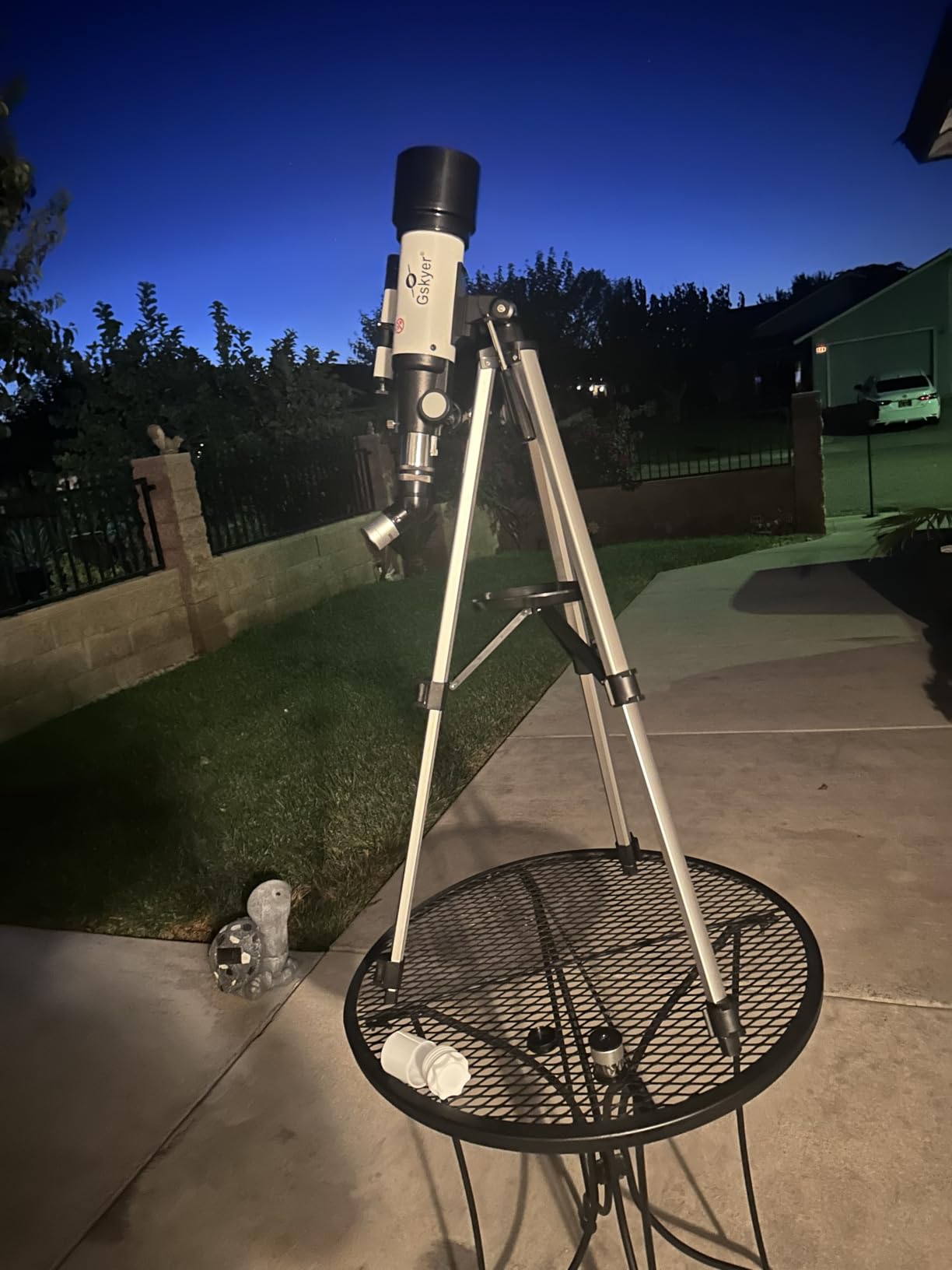
We spent an evening with this scope set up on a back step, and it did the thing that matters most: a child could find the Moon without an adult crouching beside them. The 5×24 finder scope with cross-hairs is the reason. Finding a 70mm target through a bare eyepiece is genuinely hard, and the finder turns that into a two-minute job.
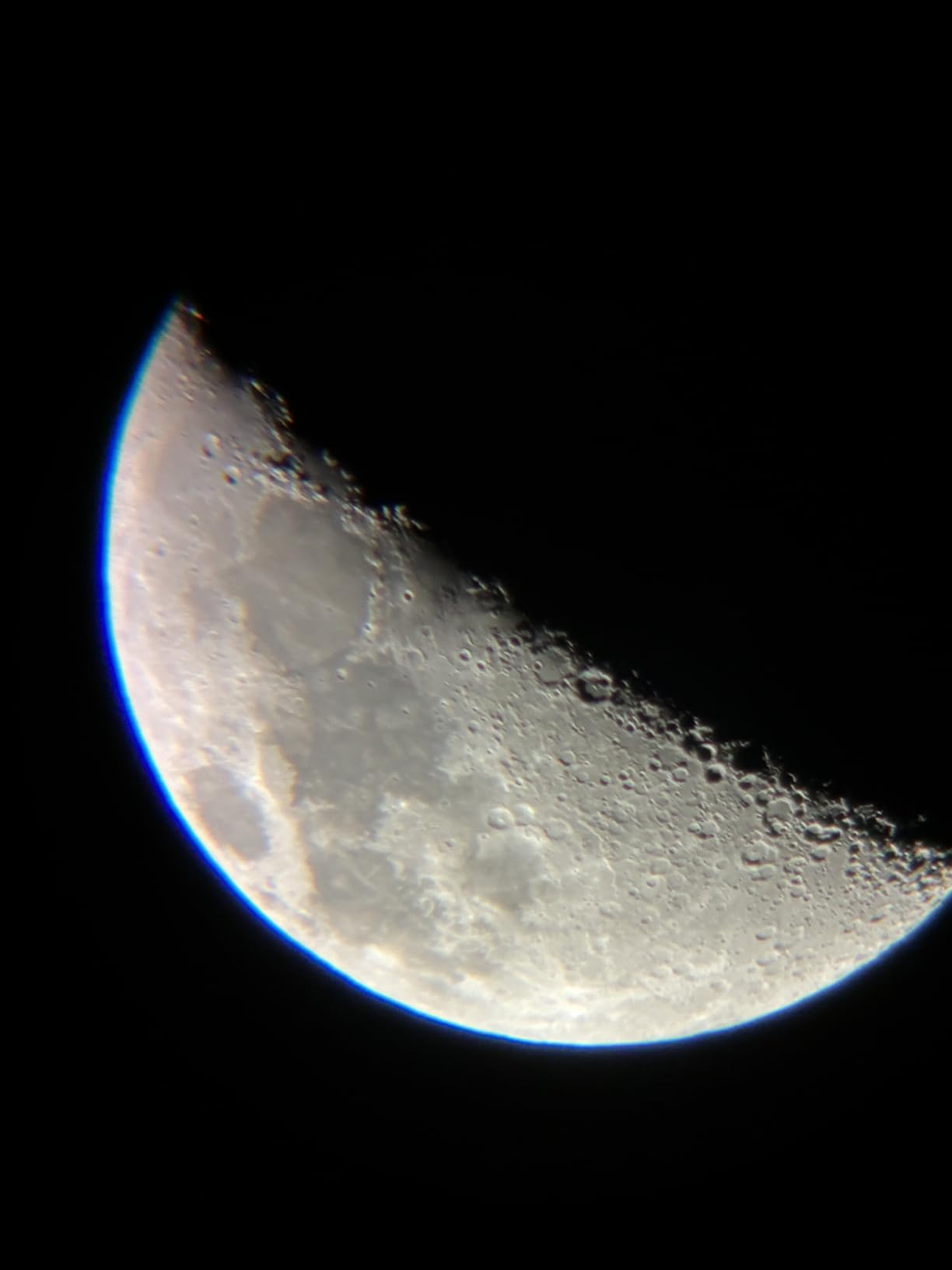
The optics are honest. A 70mm fully coated objective at 400mm focal length gives a wide, bright view of the lunar surface, and the two included eyepieces plus the 3x Barlow cover everything from a wide naked-eye-like sweep to a tight crater close-up. The phone adapter and wireless remote mean the first real photos happen on the same night the scope is unboxed.
With more than twenty-two thousand reviews behind it, this is the most thoroughly tested telescope in our group, and the complaints are consistent rather than scattered. Chromatic aberration shows as a faint colour fringe on bright targets at higher power. That is normal for an achromatic refractor of this size and does not spoil lunar or planetary viewing.
The wobble is the real issue. The included aluminum tripod is fine for a child of eight standing on a stepladder, but a hand on the tube or a gust of wind will still move the view. Tighten the legs fully before every session and the steadiness is acceptable. Expect to nudge the mount every few minutes because there is no tracking motor.
Will a child actually use this alone?
From about age eight, yes. The eyepiece changes are the only fiddly part, and swapping between the 25mm and 10mm eyepiece is something most children master within a session. Under eight, you will still be doing the aiming for them, but the scope itself does not fight the child.
Is 70mm enough for planets?
Enough for Saturn’s rings as a small oval and Jupiter’s four moons as bright dots, provided you are patient and the sky is dark. It will not show Saturn’s rings as an open ring with visible gaps. Anything past roughly double this aperture starts to reward itself properly.
2. NASA Lunar Telescope for Kids Ages 8-12 — Most Versatile
NASA Lunar Telescope for Kids Ages 8-12 with Tripod and Finder Scope
Tabletop tripod
Objective lens 25mm
Low-power and high-power eyepieces
Rated for ages 8 and up
Pros
- Light enough for a small child to carry
- Straight tabletop tripod for steady lunar scanning
- Fun to assemble with an adult
- Educational guide included
- A cheap option where damage is not a crisis
Cons
- Small aperture limits you to the Moon and bright targets
- Flimsy tripod shakes with any movement
- Light frame can bend or break if dropped
- Vague setup instructions
- Narrow field of view
This is the scope you buy when you are not sure the hobby will stick and you want a low-stakes first step. It is small, it is light, and it points at one thing well: the Moon. Parents consistently report that a child aged eight to ten gets real enjoyment from scanning craters across the terminator line.
The tabletop tripod is the reason the views hold together. Because the whole unit sits on a fixed base rather than a spindly three-legged stand, there is very little to wobble, and a beginner can keep a crater in frame while the excitement lasts. Two eyepieces give low-power and high-power views, so kids learn the difference between wide and tight.
Be clear-eyed about the ceiling here. The objective lens is 25mm, which is small, so once the Moon is conquered there is little else to chase. Jupiter and Saturn will not show structure, and deep sky is out of reach. The instruction sheet is also weak, so plan on ten minutes of adult help during setup.
What you gain is a low-stakes entry point. Reviewers treat it as a first step rather than a real instrument, and one notes that binoculars sometimes give a better Moon on some nights. That is fair, and it is also why we would step up to a 70mm glass scope next.
Who is this actually right for?
A child aged eight to ten with an adult willing to sit with them for the first few sessions. It also works as a second scope for a family that already owns something better, because the youngest can use it without waiting for a turn.
Should I buy this or binoculars instead?
Under about age six, buy binoculars. The field of view, the simple focus and the instant pointing make them a better introduction, and they cost less to replace after a drop. Above six and with a genuine interest in the Moon, this scope is a decent answer.
3. Koolpte 70mm AZ Refractor — Best Value Pick
Koolpte Telescope for Kids, 70mm/500mm AZ Refractor for Beginners, White
70mm aperture
500mm focal length
Kellner eyepieces
5.24 pounds
Pros
- 70mm aperture with longer 500mm focal length for lunar detail
- Kellner eyepieces plus a 3x Barlow
- Phone adapter and wireless remote included
- Carrying case for travel and storage
- Only 5.24 pounds to carry
Cons
- Very narrow listed field of view complicates finding
- Entry-level tripod and mount wobble
- Manual tracking means constant re-aiming
- Chromatic aberration on bright targets
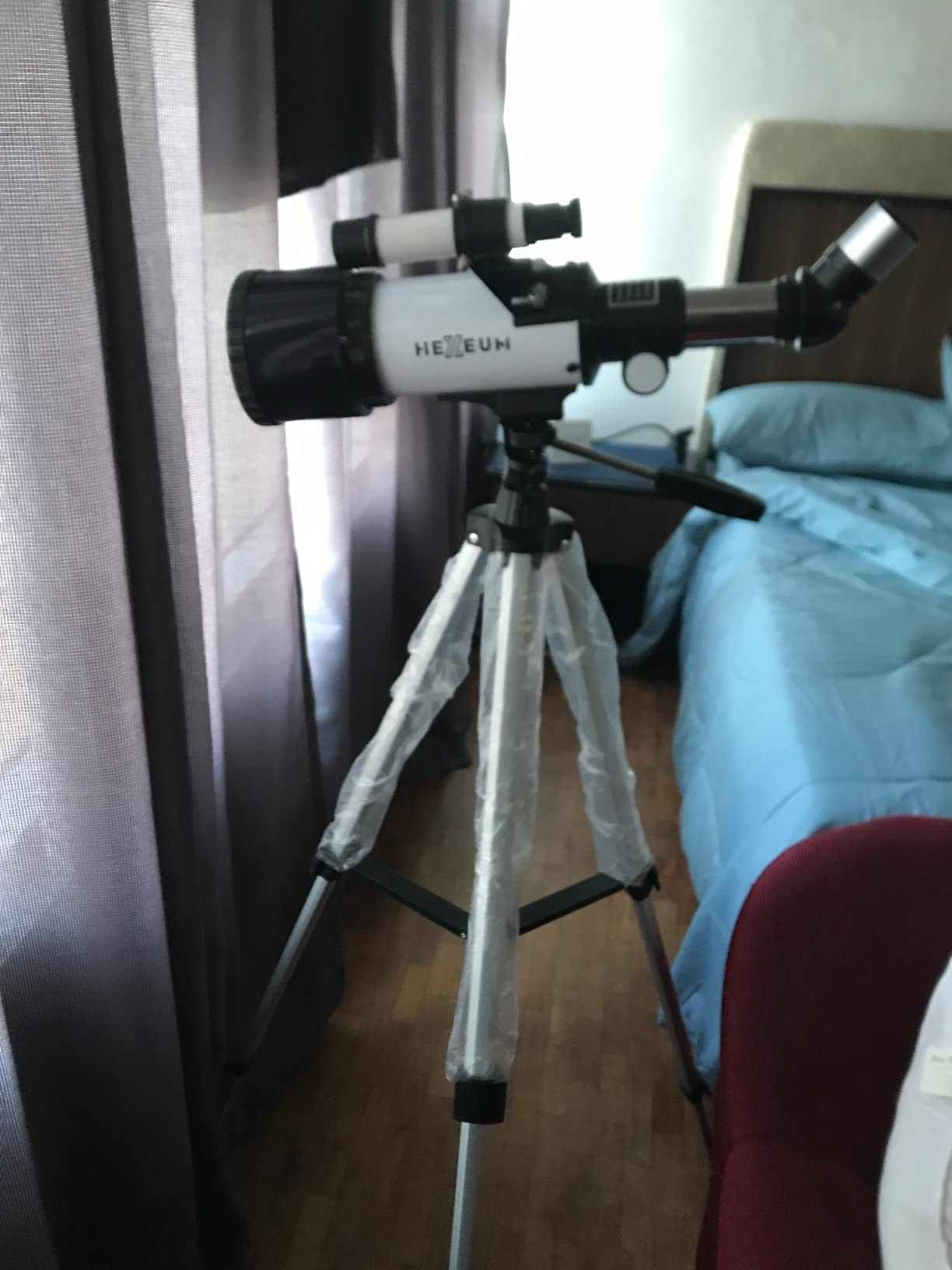
The Koolpte sits in the gap between a plastic toy and a serious refractor, and at 5.24 pounds it is one of the easiest of the 70mm scopes for a child to carry out to the garden alone. The tube, the tripod and the case all fit together without a second adult.
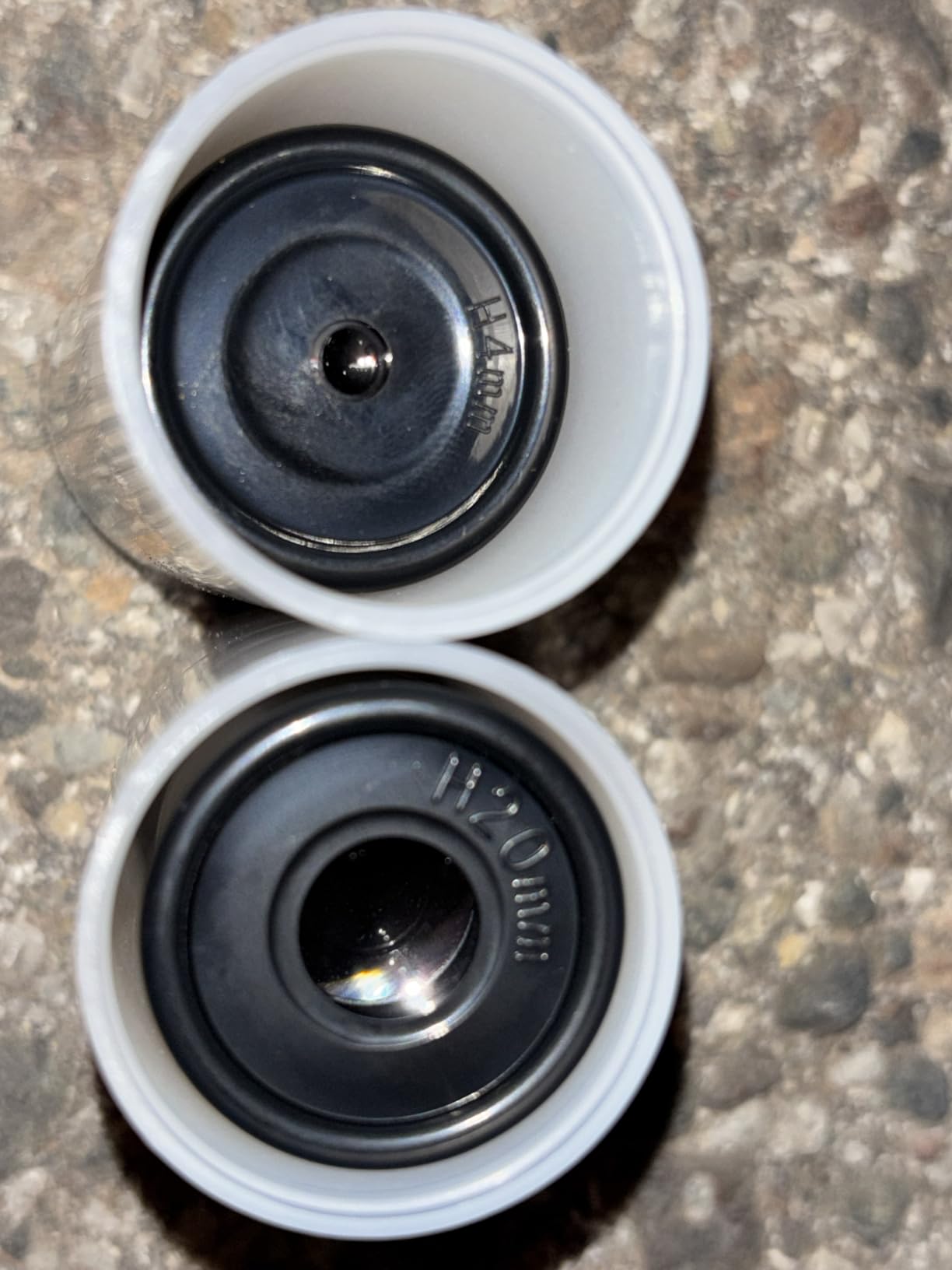
Two Kellner eyepieces, a 10mm and a 25mm, plus a 3x Barlow give a usable magnification spread, and fully coated glass keeps the lunar view bright. The phone adapter and wireless remote are included, which is unusual at this level and makes the first photos far easier than expected.
The listed field of view is very narrow at 0.38 degrees, and that shows up in practice as difficulty locating anything small. Use the finder scope to centre first, then switch eyepieces last, and the problem mostly disappears. Owners also note the usual manual re-aiming as objects drift across the field.
Colour fringing appears on bright targets at higher magnification, again typical for this aperture. The tripod is entry-level and moves when touched, so a firm stance and a short tripod are worth more than any extra eyepiece.
Is the 500mm focal length worth anything to a beginner?
Yes, in one specific way. A longer tube on the same aperture gives a narrower, more magnified view at the same eyepiece, which makes lunar craters look larger without needing the Barlow. It is a friendlier starting point for a child than an extremely wide view of nothing.
How does it compare with the Gskyer at the top?
Very closely, and both are solid first choices. The Gskyer has a finder with cross-hairs and more reviews behind it. The Koolpte is lighter, ships with a proper carrying case and has a longer tube. Either will keep a curious eight-year-old interested for months.
4. EACONN 80mm Refractor — Best for Seeing Planets
Telescopes for Adults Astronomy, 80mm Aperture 600mm Refractor Telescope for Kids & Beginners, Compact and Portable Travel Telescopio with Backpack
80mm aperture
600mm focal length
Multi-coated optics
840 grams
Pros
- 80mm aperture reaches craters
- Saturn's rings and Jupiter's moons
- Scaled gimbal makes aiming smooth for children
- Backpack carries the full kit
- Two eyepieces plus per-eyepiece phone adapter positions
- Two year warranty
Cons
- Tripod too short for comfortable adult use
- Height adjustment screw is stiff and easy to strip
- Finder scope alignment is not intuitive
- Tripod head feels cheap
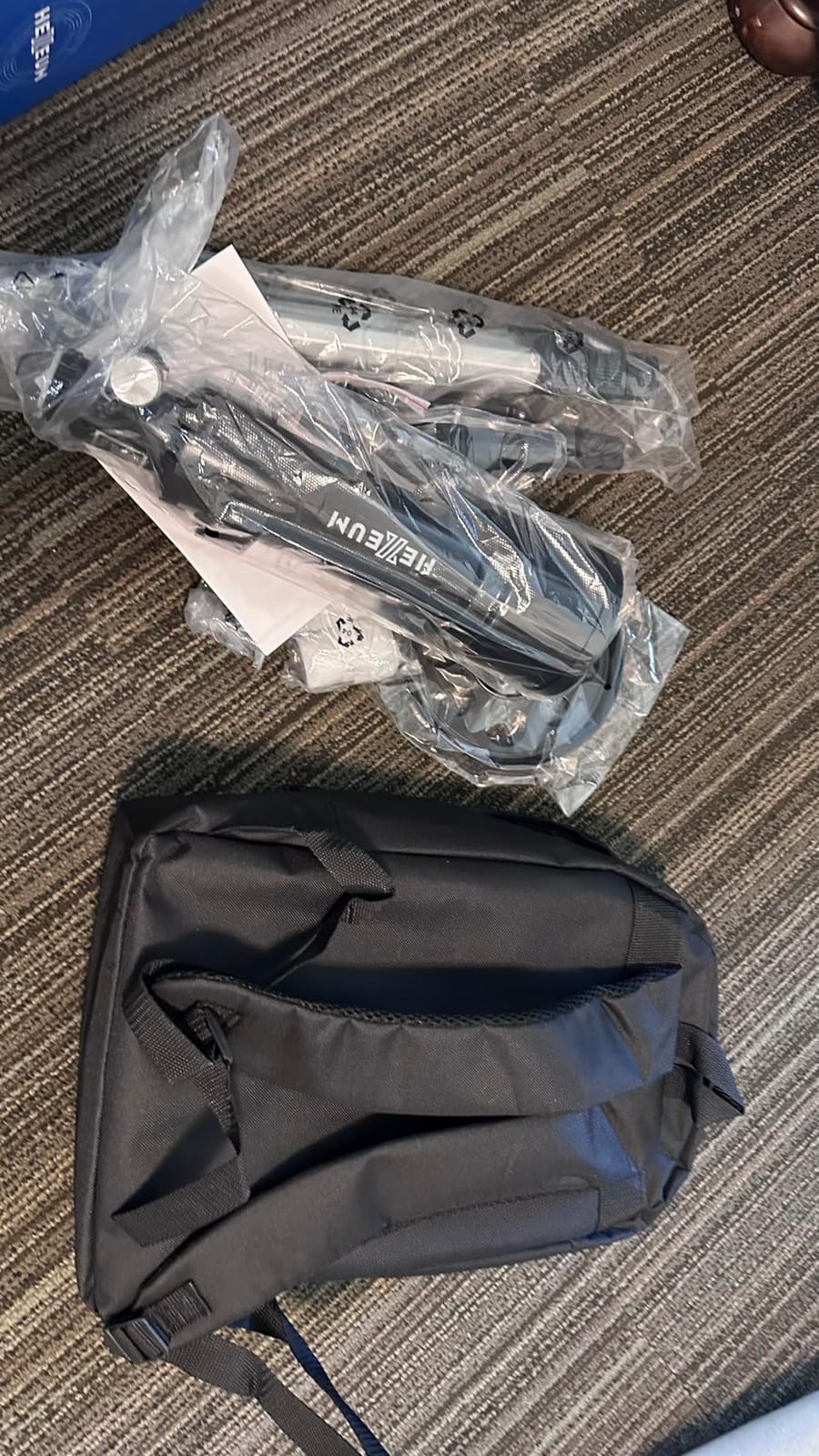
Moving up to 80mm is where planetary viewing starts to pay off, and this is the lightest 80mm scope in the group at 840 grams. A child can lift it out of the backpack, set it up and be pointing within a couple of minutes.
The aiming gimbal with an altitude and azimuth scale is the feature we liked most. It gives a child something physical to line up instead of two loose knobs that slip, and reviewers repeatedly praise how smoothly it tracks a target across the sky. K20mm and K9mm eyepieces cover 30x to 66x, which is the sweet spot for Jupiter’s moons and Saturn.
The weakness is height. At 840 grams for the tube, the tripod has to stay quite low, and adults end up stooping or crouching. One reviewer describes neck strain within a short session. Families who share the scope with an adult may want to add a taller tripod later.
Finder alignment is fiddly for a first-timer, and the height adjustment screw is stiff enough that over-tightening can strip it. Check it before a long session rather than forcing it.
What does an extra 10mm of aperture actually buy?
Light. An 80mm gathers roughly a third more light than a 70mm, and that extra brightness is what turns Saturn from a fuzzy oval into an object with structure and Cassini division hints under steady seeing. It is the single most useful upgrade in this roundup.
Is it too short for an adult to use comfortably?
It is short. Plan to either sit on a chair beside it or treat the backpack as a kid-only kit. If the whole family will share one scope, check the tripod height specification before you commit, because adult comfort matters more than people expect.
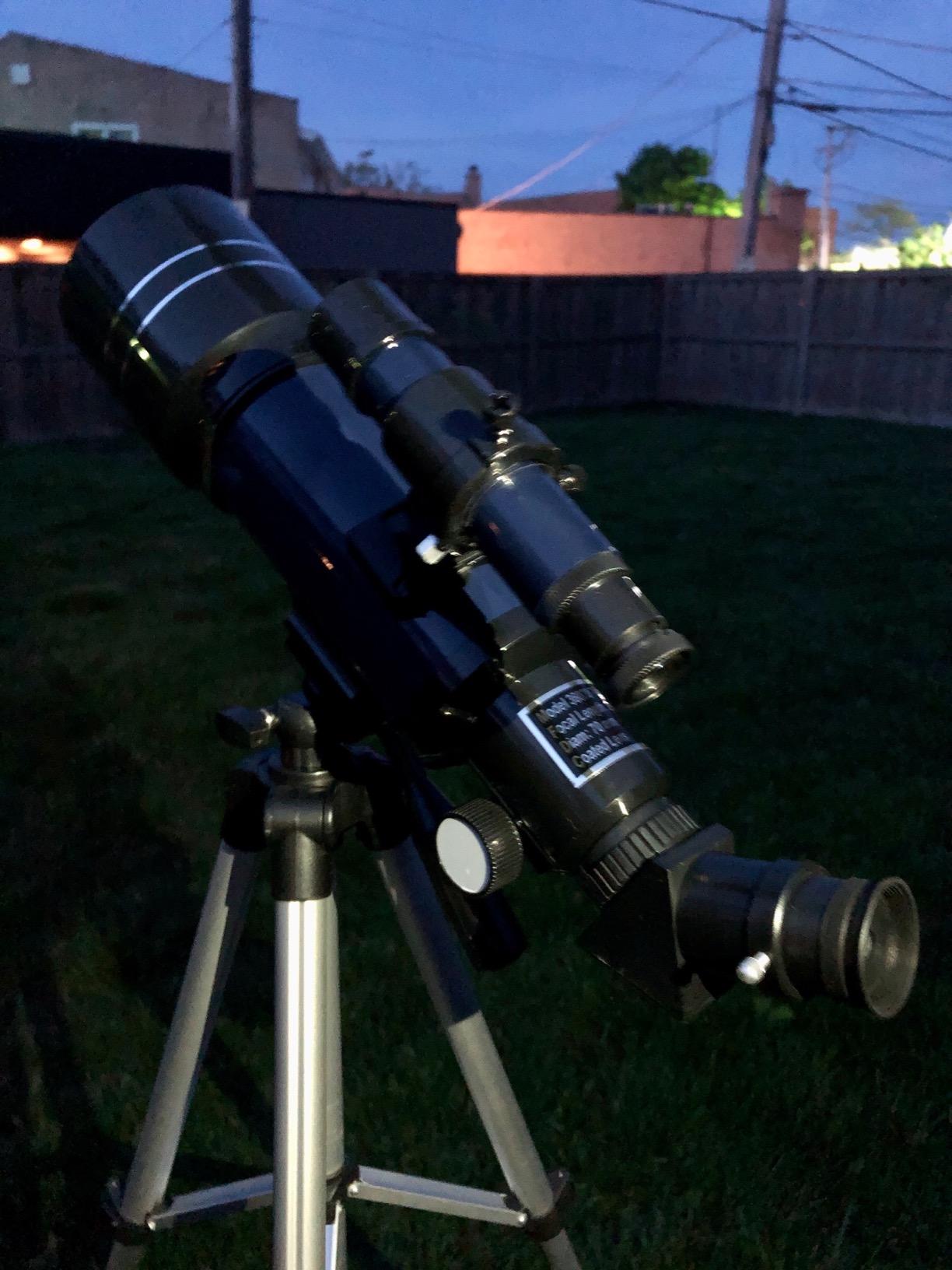
5. ECOOPRO 70mm Refractor — Best for Fast, Tool-Free Setup
Telescope for Kids & Adults, 70mm Aperture 360mm Refractor (15X-150X)
70mm aperture
360mm focal length
7.9 degree field of view
1.4 kilograms
Pros
- Quick-release tool-free assembly gets kids observing fast
- 70mm multi-coated glass shows sharp lunar craters
- 7.9 degree field of view makes targets easy to find
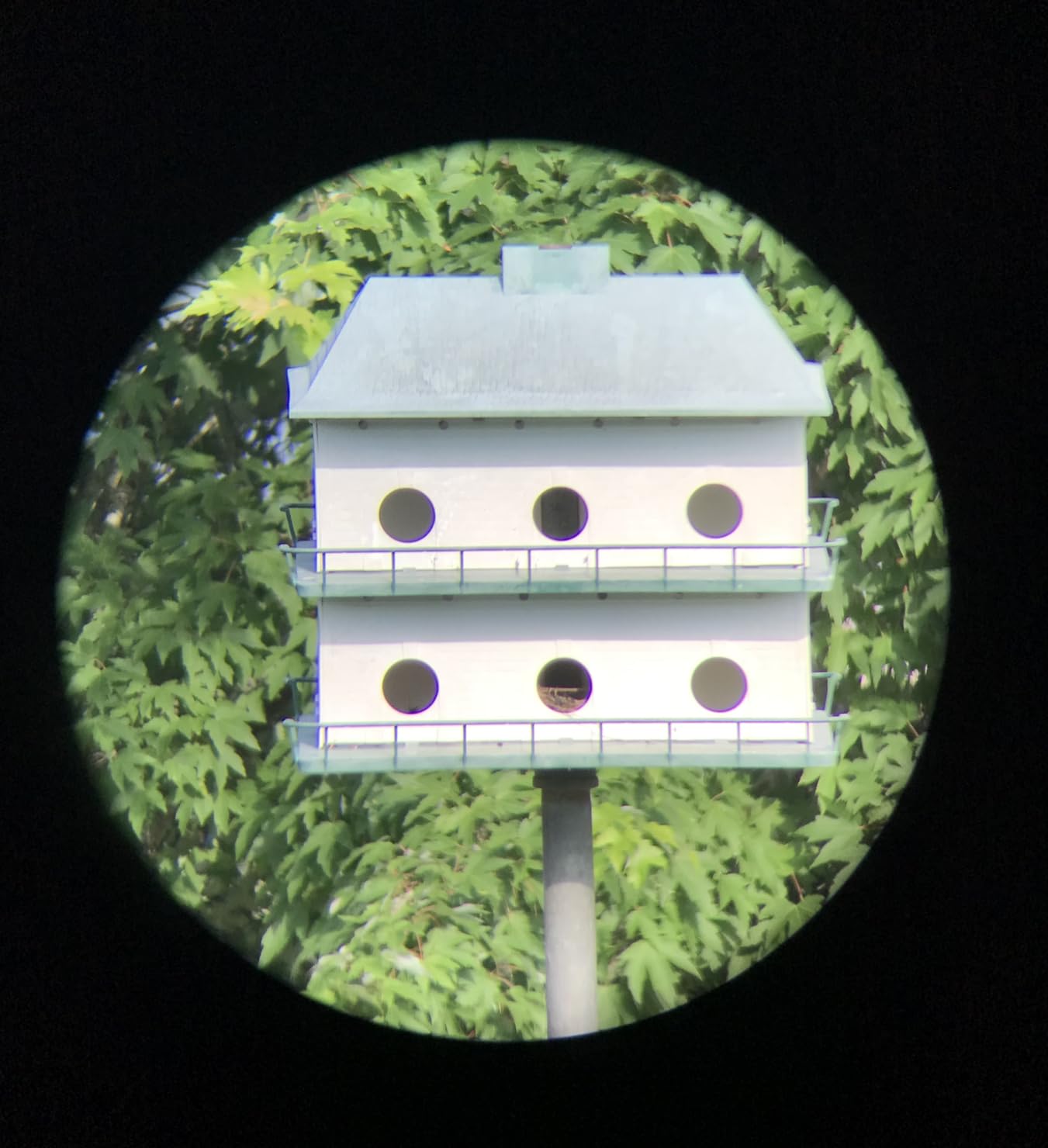
- Also works for birding and daytime scenery
- Compacts back into its box for travel
Cons
- Tripod is very short so adults must raise it on a table
- Mount lock knob does not hold and the tube flops
- Plastic body can shatter if knocked over
- Phone adapter fails with multi-lens phone cases
The ECOOPRO is aimed squarely at families who want a child looking at the Moon within minutes of opening the box. The quick-release, no-tools assembly does exactly that, and it matters more than it sounds when the child is excited and an adult is tired.
What separates it from most entry scopes is the wide 7.9 degree field of view, the widest here. A wider field means fewer minutes spent hunting for something, which is the single biggest predictor of whether a first session goes well. Two Kellner eyepieces give 51x to 128x, and the coated glass shows real crater detail.
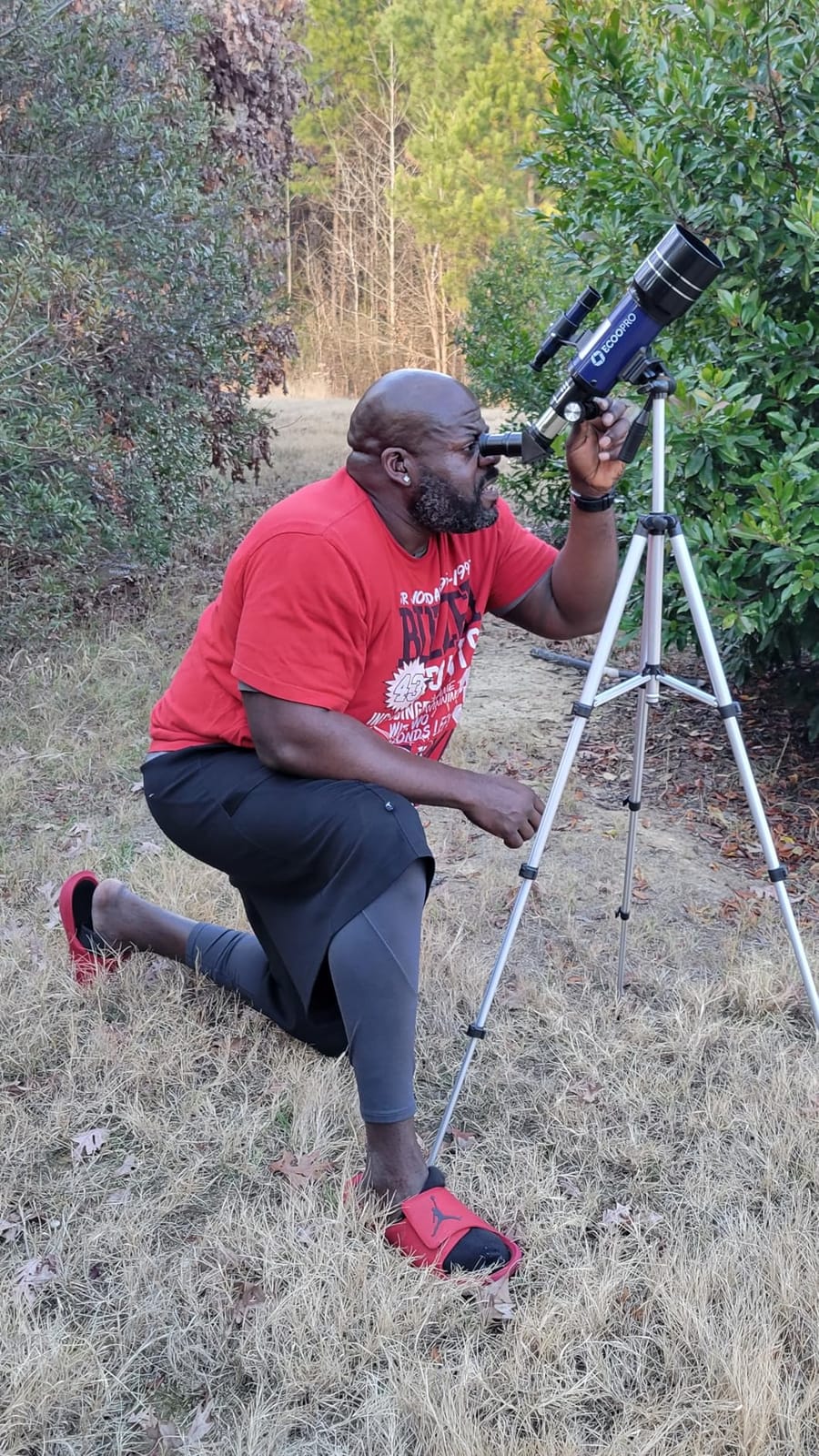
It is also the most useful scope here for daytime use. Families report using it for bird watching and landscape work, which quietly extends the value well past the first few nights and keeps a child engaged when the sky is cloudy.
The complaints are hardware, not optics. The tripod is very short, so an adult has to put it on a table, and one recurring report is that the mount lock knob will not hold and the tube flops forward. Test the knob before you go outside.
Will it survive a young child handling it?
Handle it with normal care and yes. The construction is plastic and one reviewer broke theirs after a drop, so treat a knock as a possible replacement. For a first scope that a child will carry around a garden, that risk is acceptable if you buy it with damage in mind.
Is the short tripod a dealbreaker?
Only if adults will use it. For a child aged five to twelve sitting on a step or a low wall, the height is fine and the wide field compensates for the lower aperture. For family sharing, choose a taller tripod model instead.
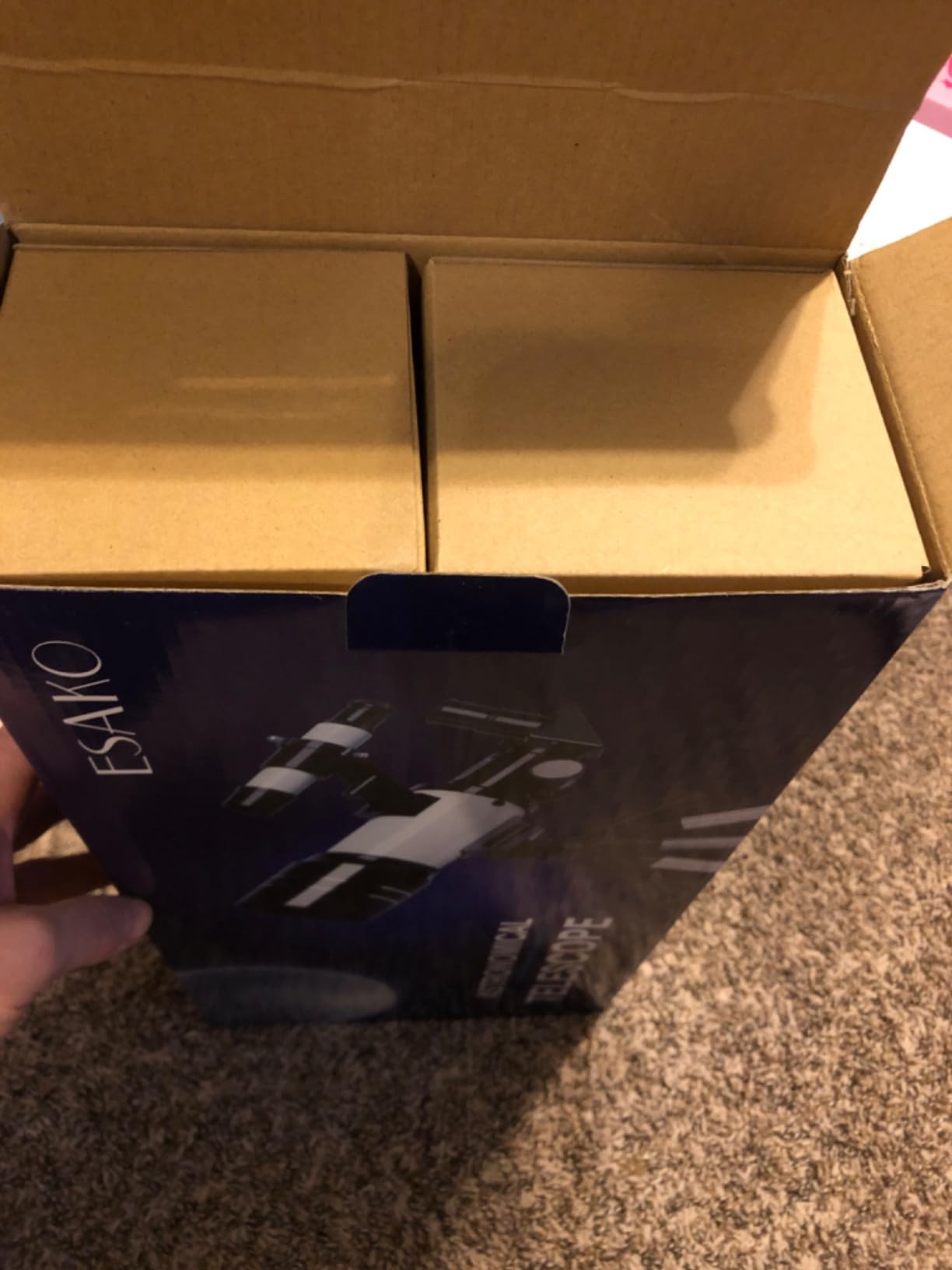
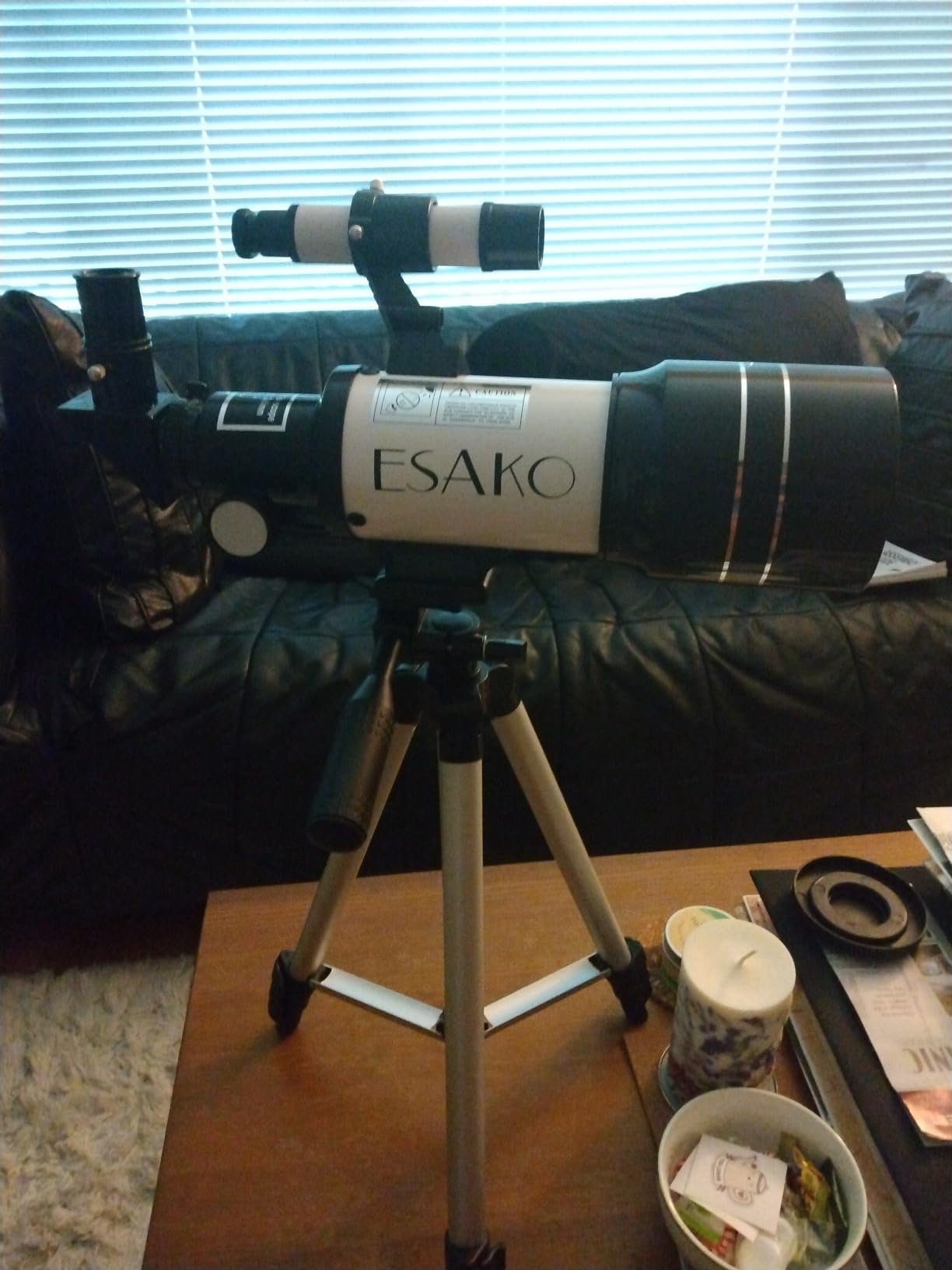
6. ESAKO 70mm Refractor — Best for Accessories in the Box
ESAKO Telescope for Kids & Beginners, 70mm Aperture Portable Telescopes with 3 Eyepieces, Height Adjustable Tripod & Phone Adapter & Remote Control Gift for Christmas
70mm aperture
300mm focal length
Three eyepieces plus Barlow
Star diagonal and moon filter
Pros
- Three eyepieces plus a Barlow give the most magnification options here
- Tool-free assembly a child can manage
- Star diagonal keeps the view upright and comfortable
- Moon filter helps during longer sessions
- Lightweight and easy to carry for camping
Cons
- Tripod head plate can detach from the center column
- Tripod wobbles badly at mid-height
- Low build quality overall
- Light weight means it gets knocked out of alignment
Accessory lists are where budget telescopes usually skimp, and the ESAKO is the exception here. Three eyepieces plus a Barlow lens give the widest magnification range in this roundup, which means a child can compare a sweeping wide view with a tight one and start to understand why.
The star diagonal deserves specific credit. Most cheap refractors send the image sideways, forcing a child to lie on the ground or twist awkwardly. A diagonal keeps the view upright, and on a camping trip or a balcony that difference is the difference between a session happening and not happening.
A moon filter is included, which is more thoughtful than it sounds. Bright Moon glare tires young eyes quickly, and a dimmed view keeps a child asking for more rather than walking away from the eyepiece halfway through.
Now the tripod. This is the weakest part of the package: it wobbles noticeably at mid-height extension, and one reviewer had the head plate detach from the center column, cracking a lens cover. Set the legs either low or fully extended and check the plate before every use.
Are three cheap eyepieces better than two good ones?
For a curious child, yes, because variety teaches the basic idea of magnification. For sharp planetary detail, no, and the extra eyepieces will not add resolution the 70mm aperture cannot deliver. Expect to upgrade eyepieces eventually if this becomes a real hobby.
How much weight can I put on the mount?
Not much. Because the whole scope is light, a bump from a sleeve can knock it out of aim, and the mid-height wobble is real. Teach your child to move slowly around the tripod rather than trying to correct a cheaper mount later.
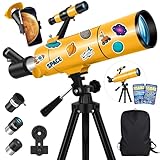
7. MEEZAA 80mm Refractor — Best for Sharing Across the Whole Family
MEEZAA Telescope for Adults & Kids, 80mm Aperture 500mm Refractor
80mm aperture
500mm focal length
Fully multi-coated
Adjustable 16.92 to 44.48 inches
Pros
- 80mm fully multi-coated glass gives bright lunar and planetary views
- 45-degree zenith mirror avoids crouching
- Tripod height range suits both children and adults
- Waterproof backpack holds the whole kit
- Phone adapter and stickers make it kid-friendly
Cons
- Tripod adjustment knob can strip after a few uses
- Included eyepieces limit true magnification potential
- No tracking makes long phone sessions hard
- Not stable in strong wind
Adult comfort is the reason this one stands out. The tripod adjusts from 16.92 to 44.48 inches, so the same scope serves a six-year-old at the low end and an adult at full height. In a family with more than one child at different ages, that range is worth more than an extra eyepiece.
The 45-degree zenith mirror is the other feature we would not trade. It sends the image up at a comfortable angle, so nobody has to kneel on wet grass to look at Jupiter. With fully multi-coated 80mm glass, the view is bright and contrasty, and this carries one of the strongest average ratings among the scopes we tested.
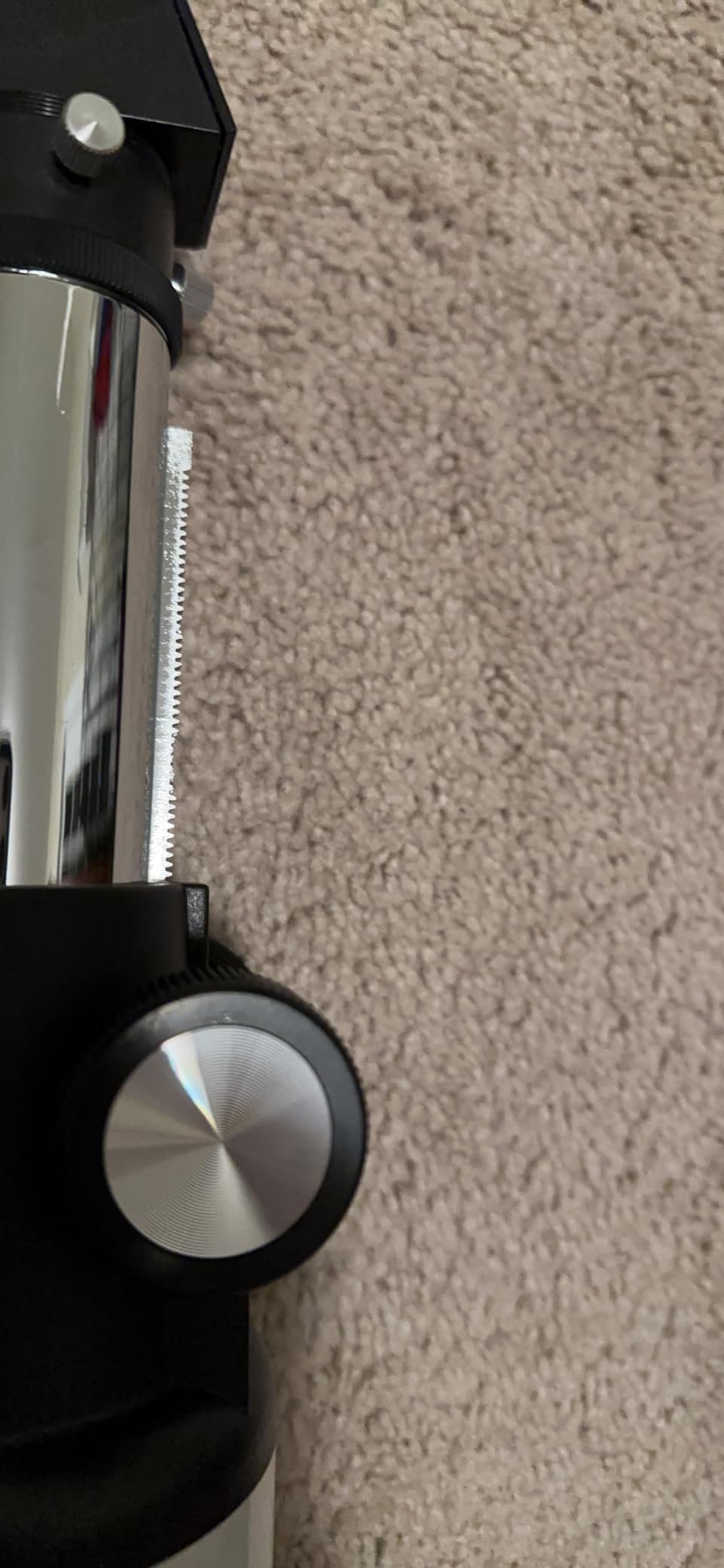
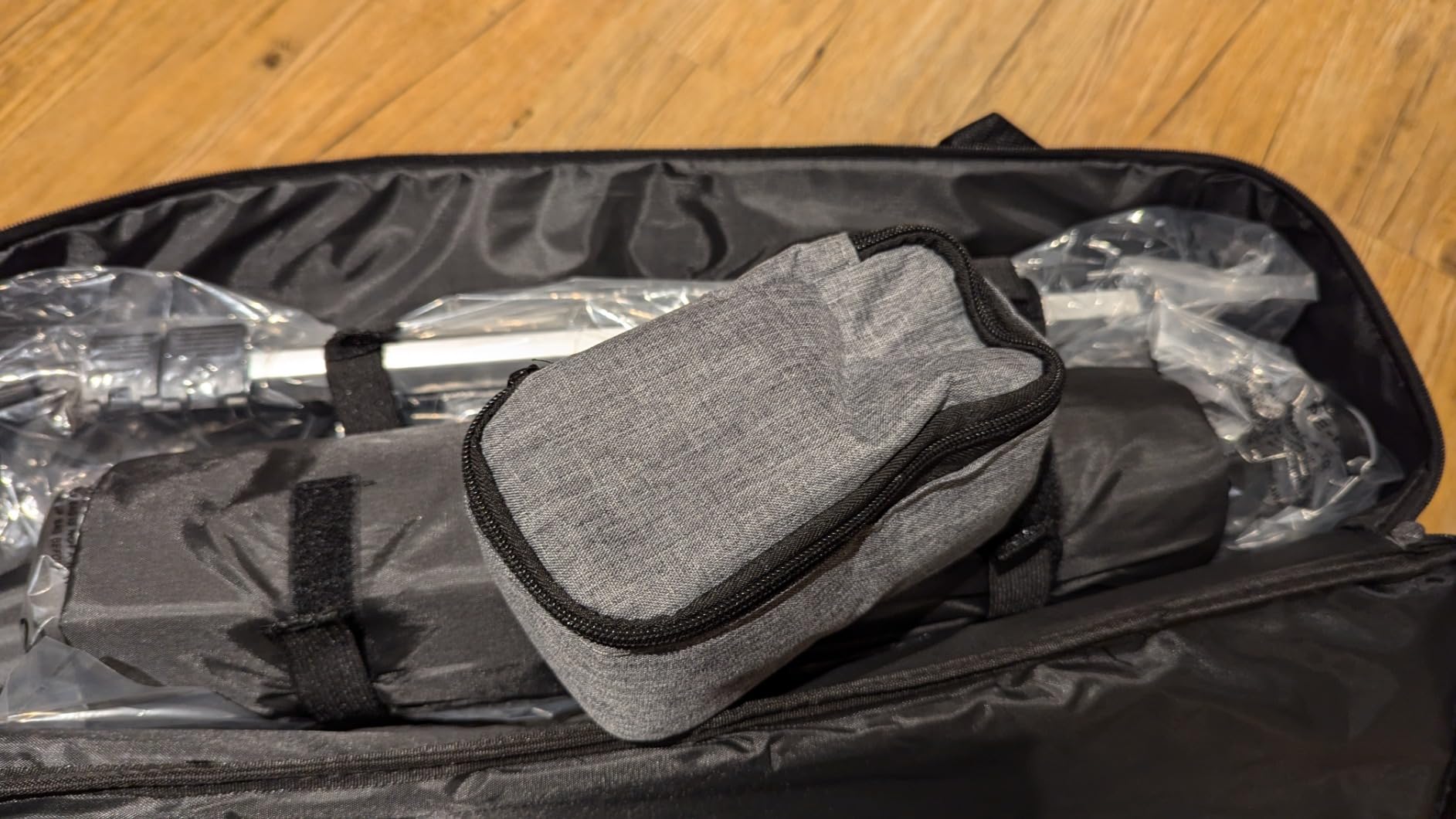
Everything packs into a waterproof backpack, which makes storage in a small house a non-issue and makes a car-boot night out realistic. Space-themed stickers let a child personalise the tube, which sounds minor but measurably increases how often it gets set up.
The honest limitations: the included 25mm and 10mm eyepieces are functional rather than excellent, the tripod knob can strip after repeated use, and there is no tracking motor, so long phone exposures on a moving target are frustrating.
Is 4.4 stars with fewer reviews trustworthy?
Treat it as encouraging rather than conclusive. The rating is high but based on a smaller number of reviews than the leaders here, so expect the same broad pattern of good optics and average hardware. The hardware complaints are consistent enough across owners to plan around.
Why does the tripod range matter so much?
Because the tallest child in the house often stops using the scope within a month, not because they lose interest in the sky but because crouching hurts. A tall setting keeps everyone looking through the same instrument, which also turns it into shared family time.
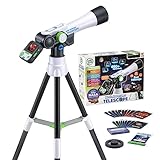
8. LeapFrog Magic Adventures Telescope — Best for Ages 5 and Up
LeapFrog Magic Adventures Telescope
2.4 inch video screen
110x digital zoom
Ages 5 and up
4 AA batteries
Pros
- Screen viewing is far easier than an eyepiece for young children
- 100+ NASA videos and images add real learning value
- Digital capture lets kids save what they see
- Spacecraft piloting game and 20 cosmic cards
- Usable well before traditional scopes suit
Cons
- Digital magnification is far below a real refractor
- Needs 4 AA batteries and demo cells are not rated for it
- Plastic build prioritises play over optical performance
- Learning value depends on engaging with the content
For a five-year-old, an eyepiece is the wrong interface. You have to keep both eyes open, press an eye to a small lens and hold still, and almost none of that happens naturally before about age seven. This scope solves the problem by putting a 2.4-inch video screen where the eyepiece would be.
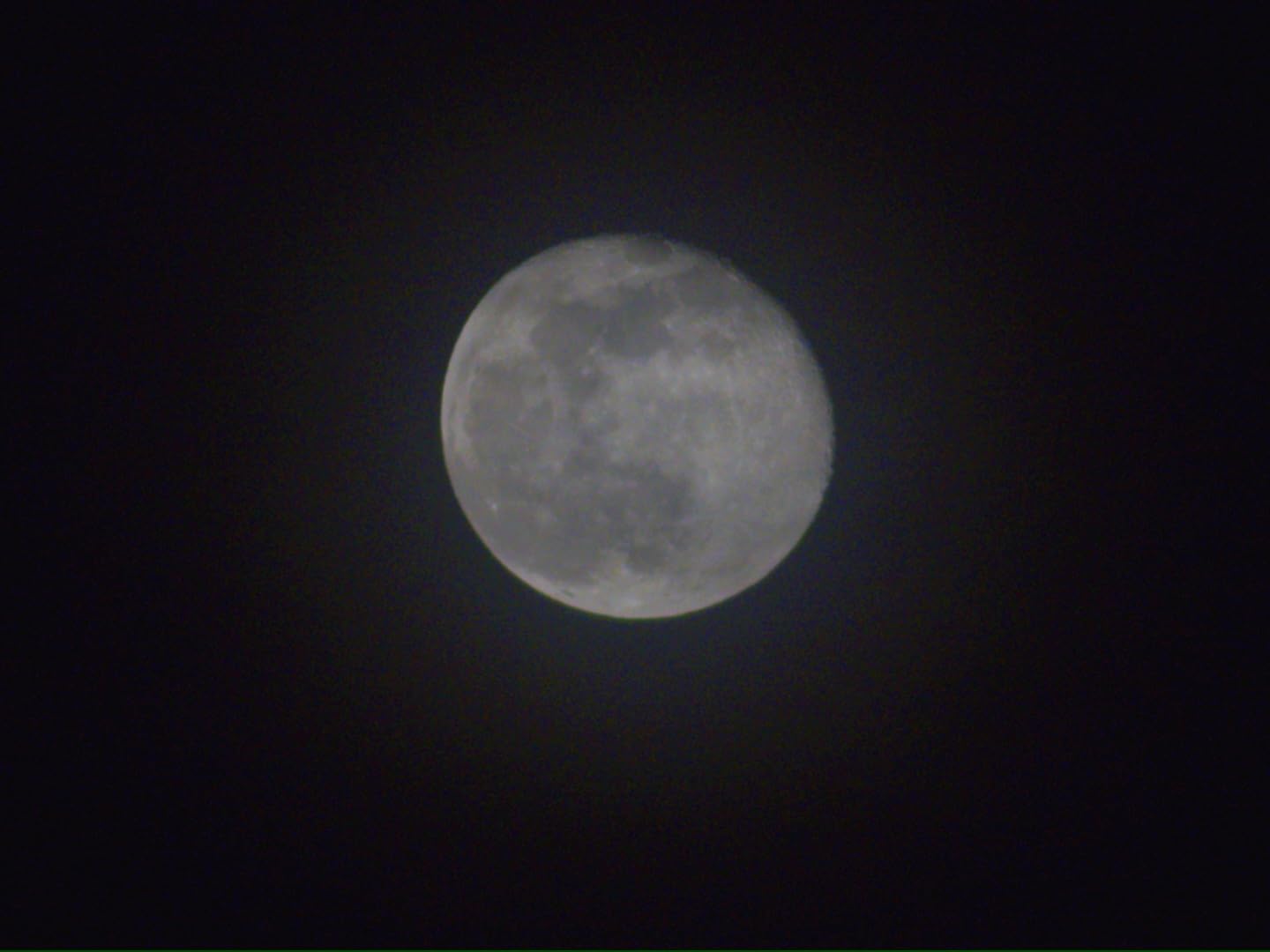
Once your child points it at the Moon, the screen fills with craters and they can capture the image. The 100+ NASA videos, the spacecraft adventure game and the 20 cosmic cards give the interest somewhere to go on a cloudy night or indoors, which is exactly the retention problem most parents worry about.
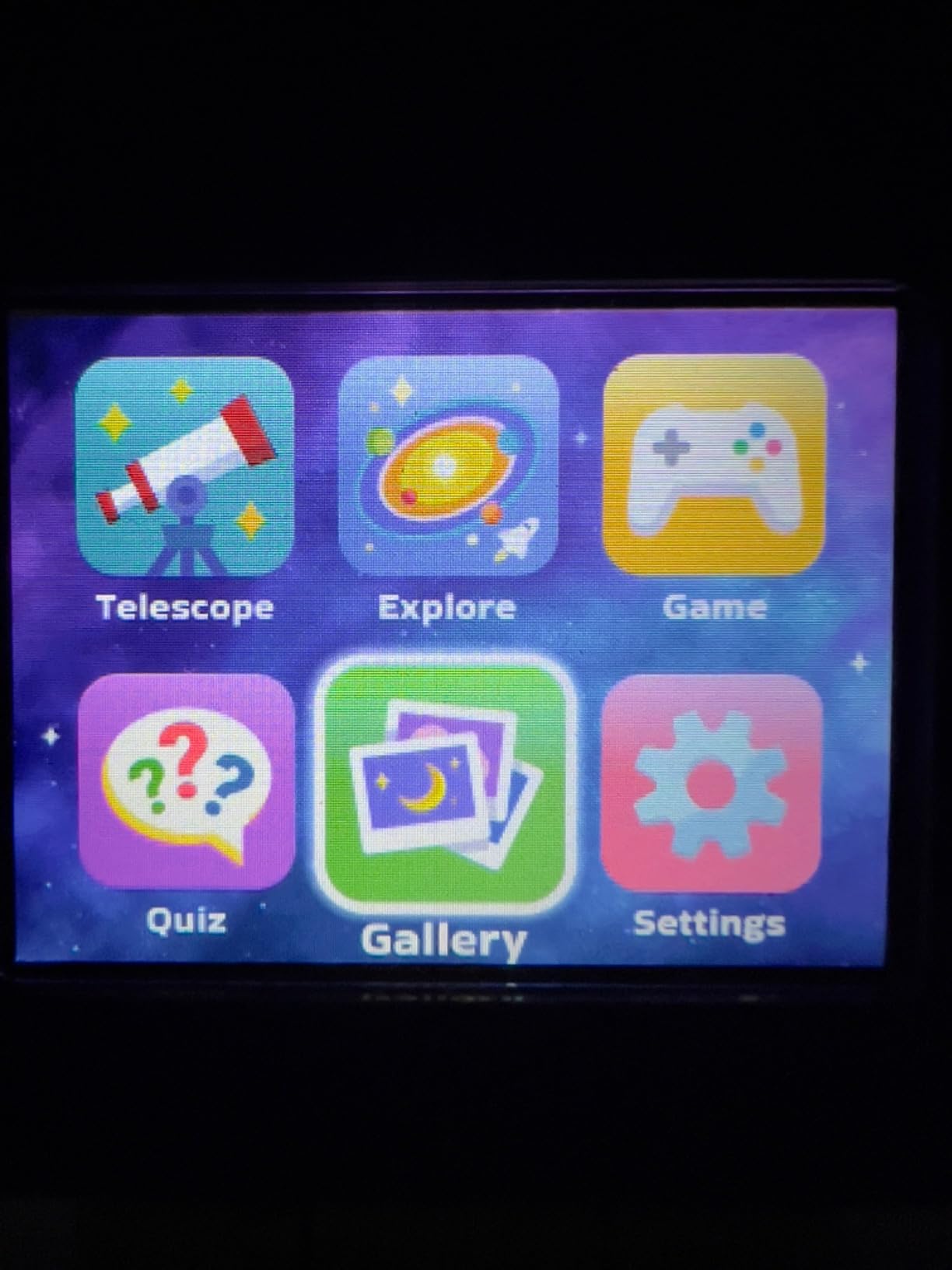
Be honest about what it is. This is a well-made educational toy with a 3.8-pound plastic body and a detachable tripod, not an optical instrument. The 110x digital zoom is a screen magnification, not an optical one, and no amount of zoom creates detail that the sensor cannot capture.
Plan for batteries. It runs on four AA cells, and the ones included are marked for demonstration only, so buy a proper set before the first clear evening. Reviewers expecting real astronomical magnification are disappointed; reviewers with a young child are usually delighted.
Will this satisfy a child who wants a real telescope?
For a five or six-year-old, very likely. For a ten-year-old who has read about Saturn’s rings, probably not. Many families use one of these for the first year and then move up to a real 70mm refractor, which is a sensible ladder rather than a failure.
What age should move on from a screen scope?
Around seven or eight, when the child can look through an eyepiece and hold an object steady without being reminded. Until then the screen is doing real pedagogical work, and forcing an eyepiece usually ends with frustration.
9. Luzsco 50mm Telescope — Best Entry-Level STEM Kit
Telescope for Kids, 50mm 100x Beginner Telescope with Tripod
50mm objective
Multi-coated
2 eyepieces plus Barlow
Two year manufacture warranty
Pros
- Lowest cost entry in this group
- Multi-coated 50mm objective shows recognizable lunar detail
- Finder scope
- eyepieces
- Barlow and moon filter all included
- Simple assembly a child aged 6-12 can do
- No power required
Cons
- Fixed mount has no fine aiming adjustment
- 50mm aperture only reaches bright targets
- Huygens eyepieces give a narrow dim field
- Suited to the Moon rather than planets or deep sky
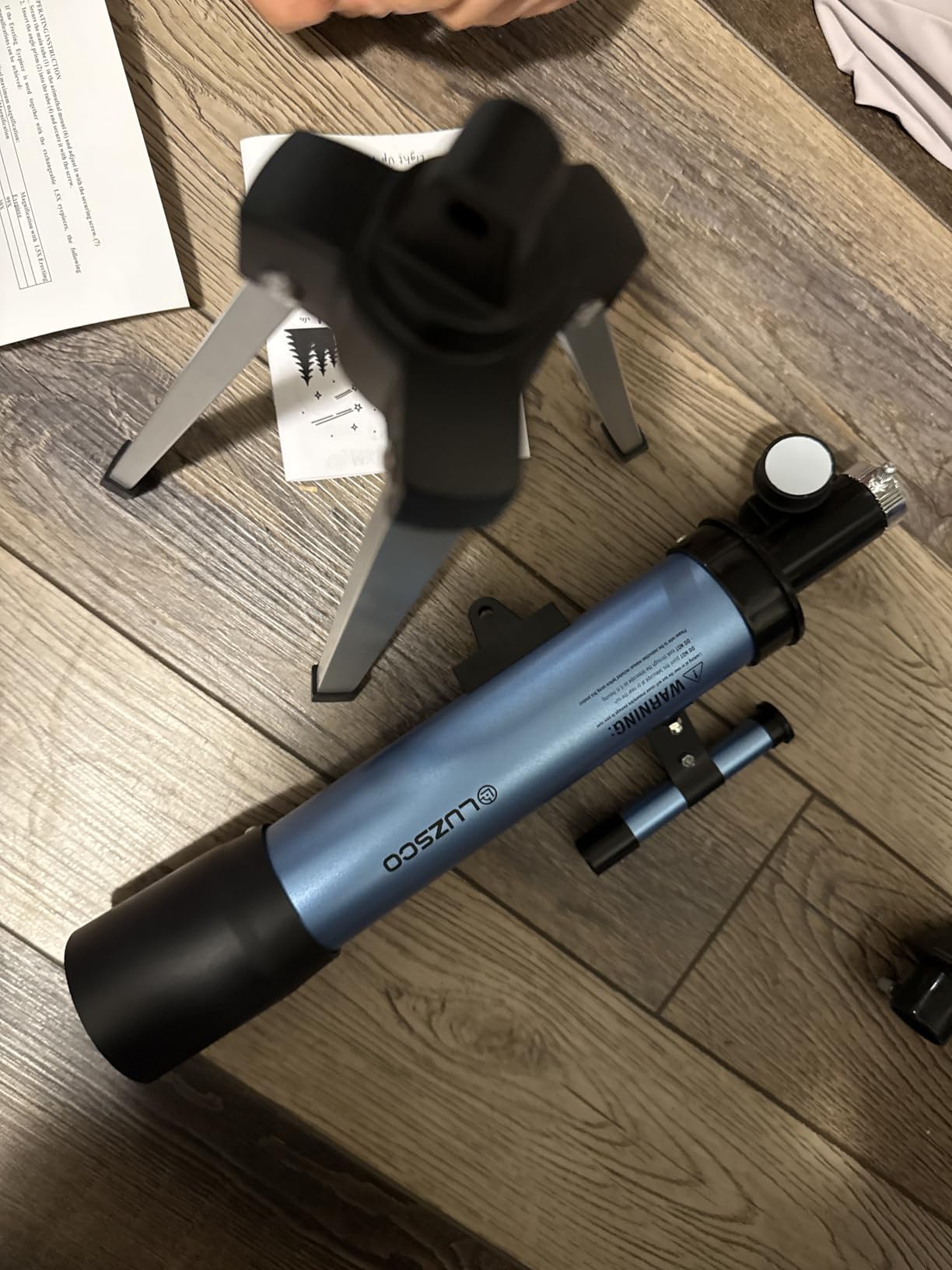
This is the honest budget floor. A 50mm multi-coated objective with a finder scope, two eyepieces, a Barlow lens and a moon filter in the box is more than most plastic toys offer, and it is a genuine, if limited, telescope rather than a fake.
Kids generally succeed at finding the Moon with it. Assembly is simple enough for a six-year-old to manage with help, and there is no battery, no app and nothing to go wrong. If a sibling is older and wants something real, the two can share observing time.
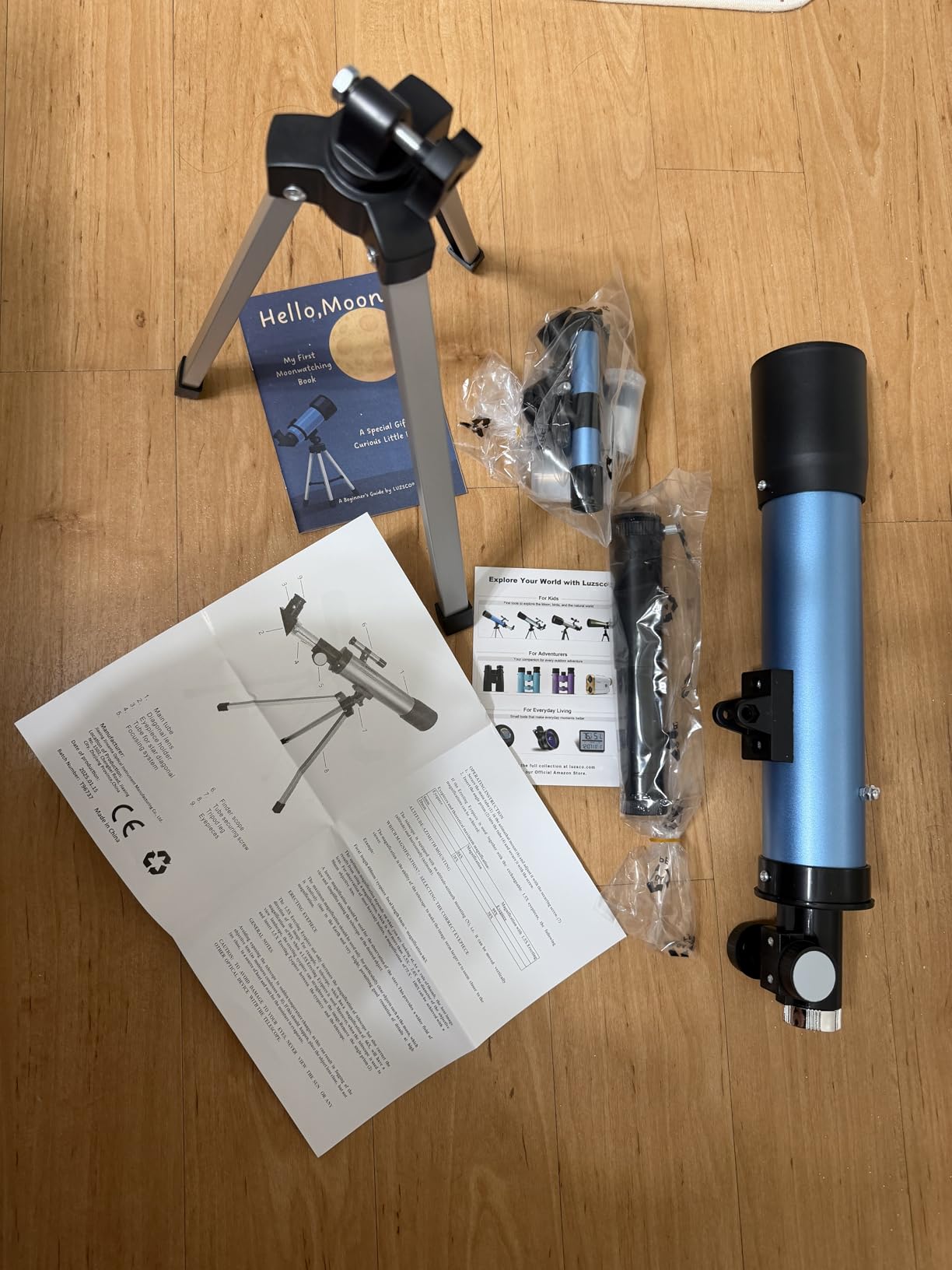
The limits are structural. The fixed mount gives no fine aiming adjustment, so centring a target takes patience, and a 50mm aperture only gathers enough light for bright targets. The Huygens eyepieces produce a narrow, dim field that some children find discouraging.
At 600 grams it is light and portable, and the two year manufacture warranty is longer than several scopes here. Treat it as a first-step STEM toy that a child can grow out of, which is exactly how buyers describe it.
Is a 50mm telescope worth buying at all?
As a stepping stone, yes. As a first real instrument, no. The gap between 50mm and 70mm is where a child’s enthusiasm usually gets decided, and that jump costs far less than most parents expect.
What should the next step be?
A 70mm fully coated refractor on a stable alt-azimuth mount. It is the most common upgrade path in owner reviews and the size that most reliably keeps a child looking upward for years.
10. Wow in the World Telescope and Astronomy Kit — Best Teaching Extras
Wow in the World Kids’ Telescope & Astronomy Kit, 25x & 50x Magnification, Adjustable 48” Tripod, Includes Star Wheel & Companion Audio Content, Intro to Astronomy for Ages 6+ by Thames & Kosmos
25x and 50x eyepieces
Tripod extends to 48 inches
Star wheel included
Ages 6 and up
Pros
- 48-inch tripod means adults do not have to stoop
- Star wheel and Wow-To Guide give real teaching value
- Durable thick materials survive being handed around
- Podcast audio adds a multi-sensory element
- Easy to assemble and use
Cons
- 50x maximum is very limited and mostly lunar
- Image quality stays blurry even at full focus
- Parts are cheap plastic
- Manual alt-az mount needs constant re-aiming
The educational case here is real. The star wheel identifies constellations by date and time for the Northern Hemisphere, and the eight-page Wow-To Guide walks through both the telescope and the night sky. Audio content from the Wow in the World podcast adds a listening element that a purely visual toy cannot.
The tripod is the standout hardware. Extending to 48 inches makes it the tallest here, which means adults and older children can both use it without stooping. That matters in a mixed-age family more than a slightly sharper image would.
The optics are the compromise. Two Kellner eyepieces give 25x and 50x, and that is the whole magnification budget, so the Moon and a few bright stars are the realistic targets. The manual alt-azimuth mount also needs constant re-aiming as objects drift.
This is the lowest-rated product in our group at 4.0, and the reason is consistent: multiple reviewers report a blurry image even at full focus, and some could not get a clear view at all. Judge it as an educational kit first and a telescope second.
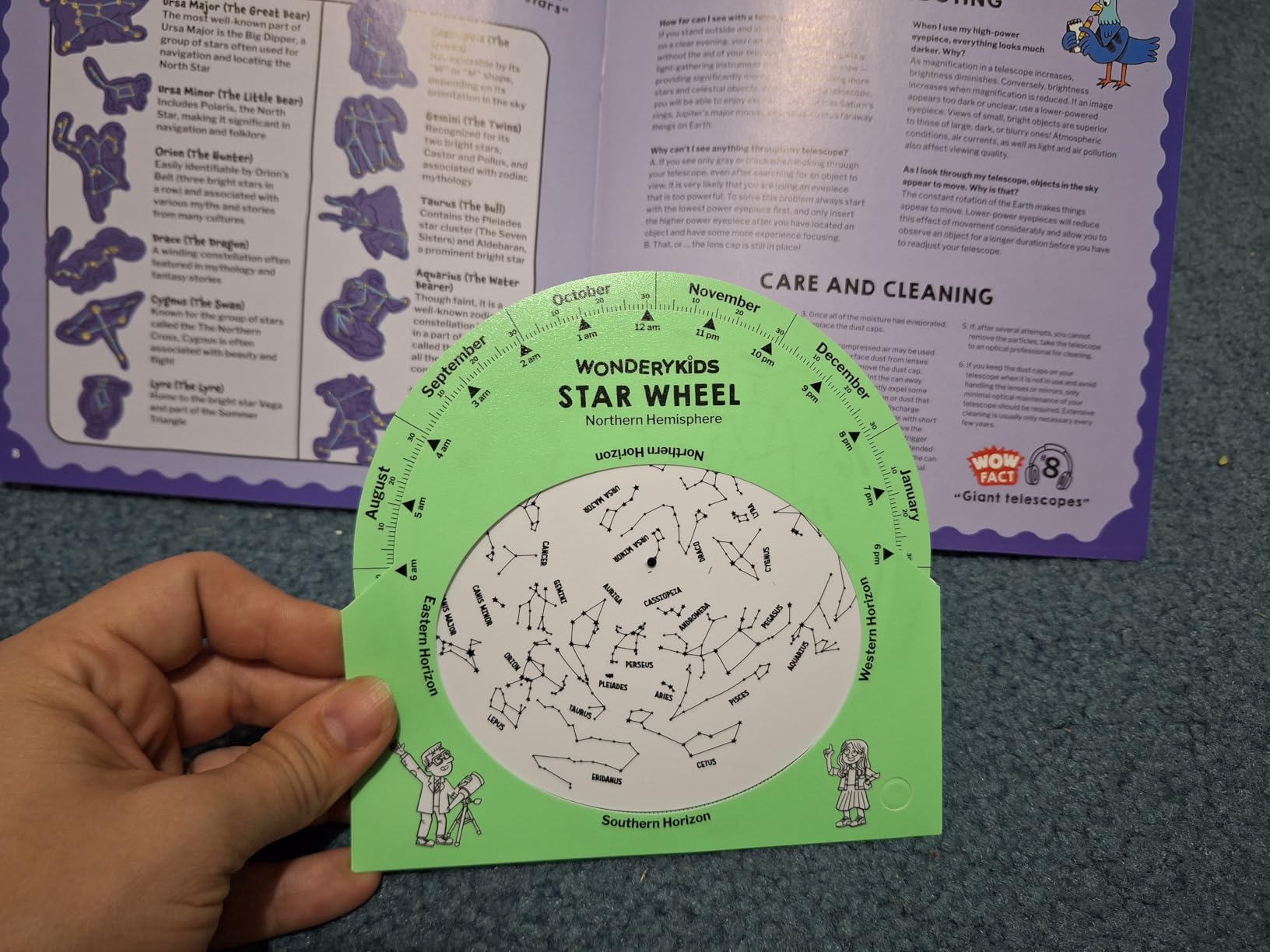
Do the learning extras make up for the blurry optics?
For a six or seven-year-old, often yes. The star wheel turns a night of pointing at nothing in particular into a lesson about Orion and the Plough, which is the part children remember. For a ten-year-old who wants sharper detail, no.
Which ages get the most from this kit?
Six to nine. The star wheel, the guide and the audio content land well with early readers, and the tall tripod keeps adults engaged alongside them rather than sitting out.
11. Hawkko 80mm Refractor — Best 80mm Scope for Ages 8 to 12
Hawkko 80mm Aperture 500mm Telescope for Kids 8-12 & Adults Beginners
80mm objective
500mm focal length
Fully multi-coated
20X to 150X with Barlow
Pros
- 80mm fully multi-coated lens gives crisp lunar crater detail
- Tool-free assembly a young child can manage
- Sturdy adjustable tripod that doubles as a phone stand
- Space-themed stickers make it engaging
- Phone adapter for first astrophotos
Cons
- Planets beyond the Moon are not rewarding at this aperture
- Manual alt-azimuth mount with no tracking
- Controls and setup are hard to work out
- Straight-through finder gives an inverted view
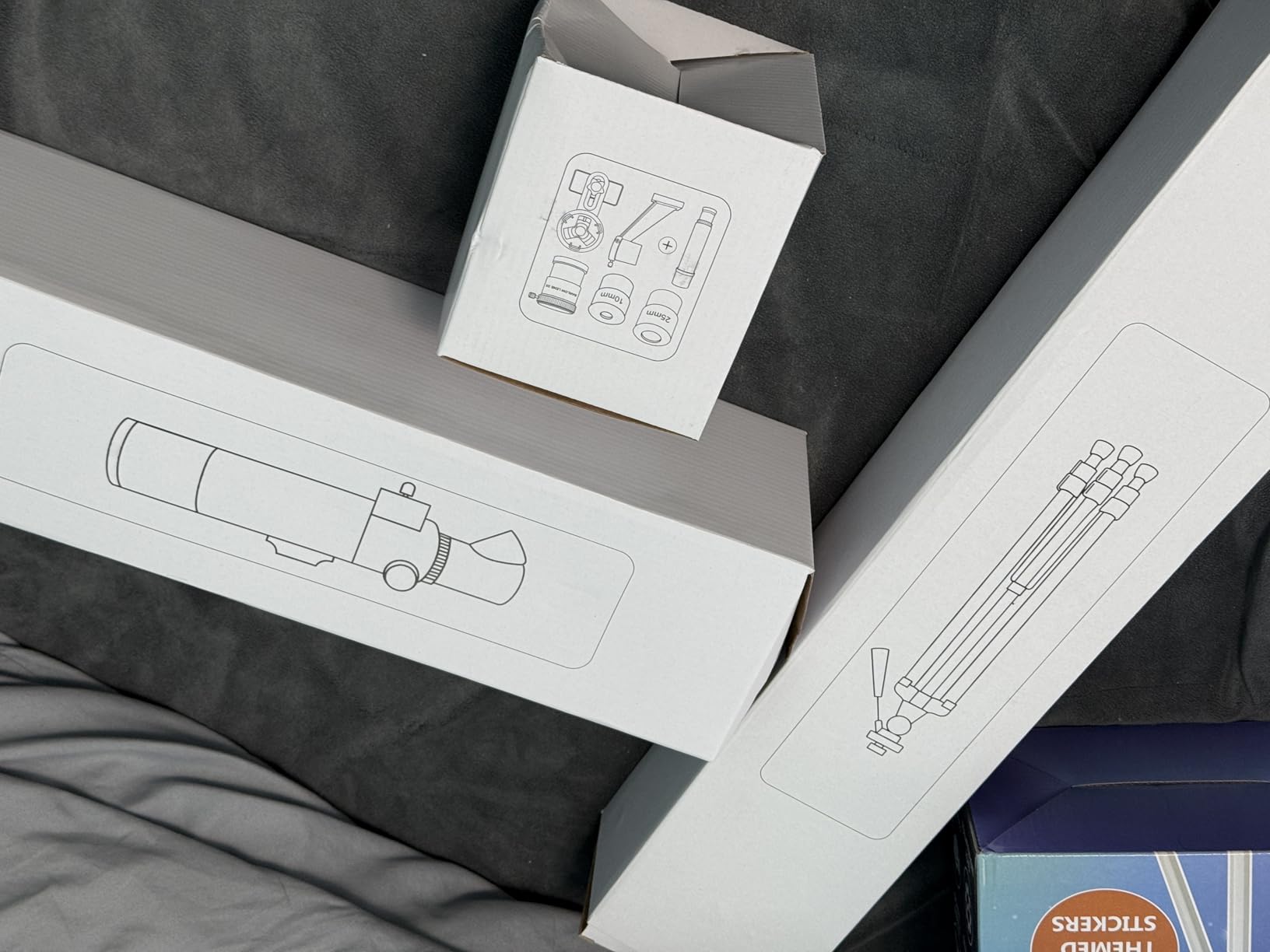
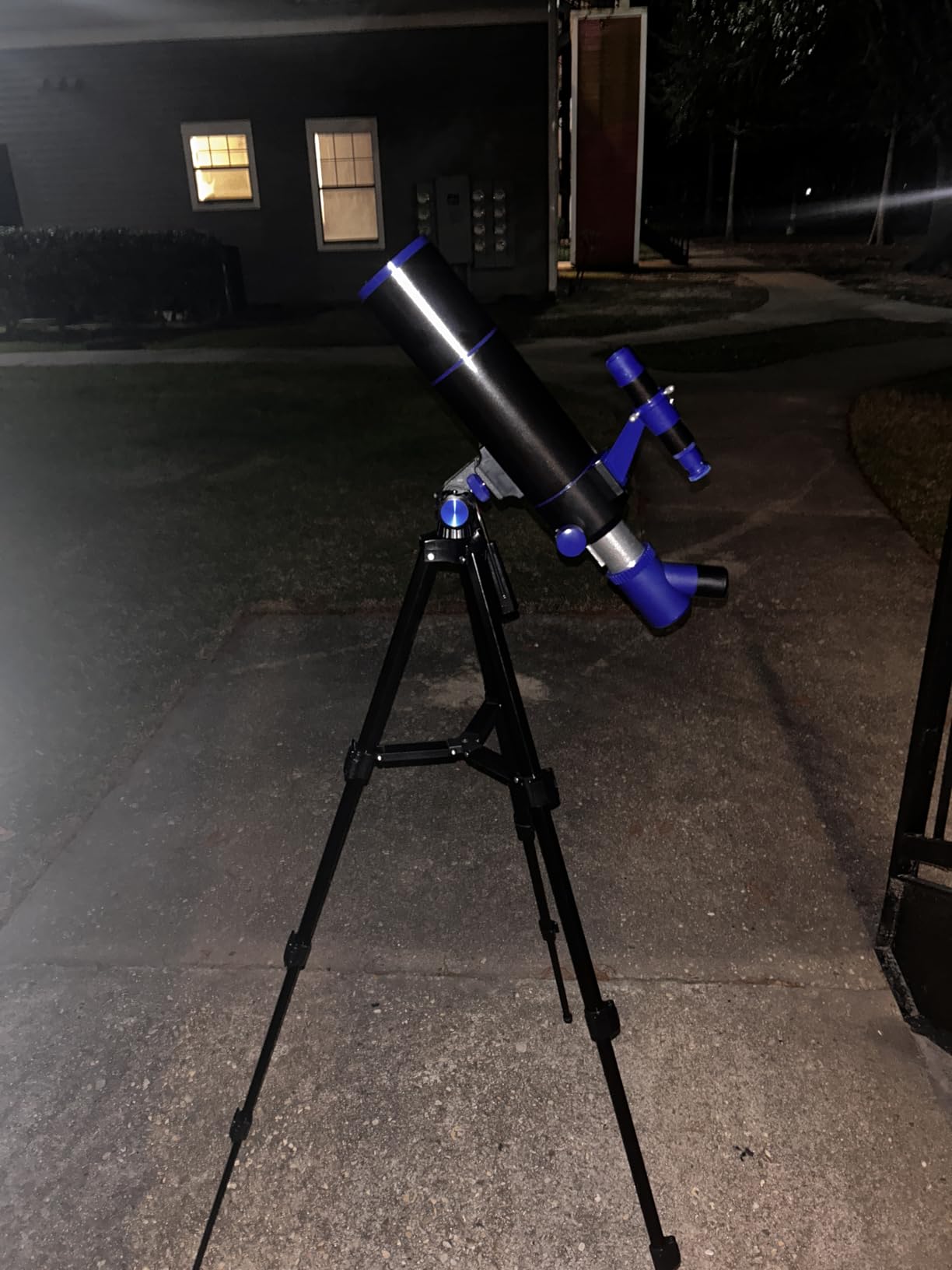
This scope targets a specific age band and lands on it. Children aged eight to twelve are old enough to handle an 80mm refractor independently but young enough that a bright, quick setup still feels like a reward, and reviewers describe exactly that experience.
Assembly needed no tools and was managed by a six-year-old in at least one account, and the tripod is sturdy enough to double as a phone stand. The 80mm fully multi-coated lens is the source of the crisp crater detail reviewers praise, and the manufacturer claims it gathers around 60% more light than a 70mm.
Where it falls short is planets. Saturn and Jupiter will show as small discs rather than resolved detail, because the aperture is respectable but the included 10mm and 25mm eyepieces plus the 3x Barlow do not push far. The Moon is this scope’s strength.
Two setup frictions are worth knowing. The straight-through finder scope gives an inverted view, which confuses beginners until they realise it, and the controls take a little working out. Neither is serious once you spend ten minutes with it.
Is 80mm enough for a child who wants to see planets?
Enough for Jupiter’s four moons and for Saturn to look like a planet rather than a star. To see Saturn’s rings as rings, you need a larger aperture or a genuinely good eyepiece, and that is a step beyond this bracket.
How does it compare with the other 80mm scopes here?
It shares the aperture with the EACONN and the MEEZAA. The MEEZAA has the taller tripod and the zenith mirror for family sharing. The EACONN has the longer tube and the smoother aiming gimbal. The Hawkko has the sturdiest tripod for a child carrying it around.
12. Educational Insights GeoSafari Starview — Best Classroom and Activity Kit
Educational Insights GeoSafari Starview Telescope
10x and 50x eyepieces
Plossl optics
Tabletop tripod
Activity journal included
Pros
- Very simple setup lets kids scan the sky and spot constellations
- Two magnification levels teach low versus high power viewing
- Activity journal gives structured screen-free projects
- Compact tabletop tripod is easy to store and carry
- Suited to a classroom as well as a home
Cons
- 50x maximum caps what can be seen
- Plossl optics are modest on dim targets
- Tabletop tripod means no standing use for adults
- Ages skew older so younger children need help
This is an activity kit that happens to include a telescope, and that framing matters. The activity journal gives a child a structured sequence of projects rather than an open-ended night of pointing at nothing, which suits classroom settings and homes where one adult supervises several children.
Two magnification levels at 10x and 50x teach the single most useful concept in amateur observing. A child who sees the difference between a wide naked-eye-like field and a tight one starts to understand why aperture and eyepiece focal length are what actually matter, not the printed zoom number.
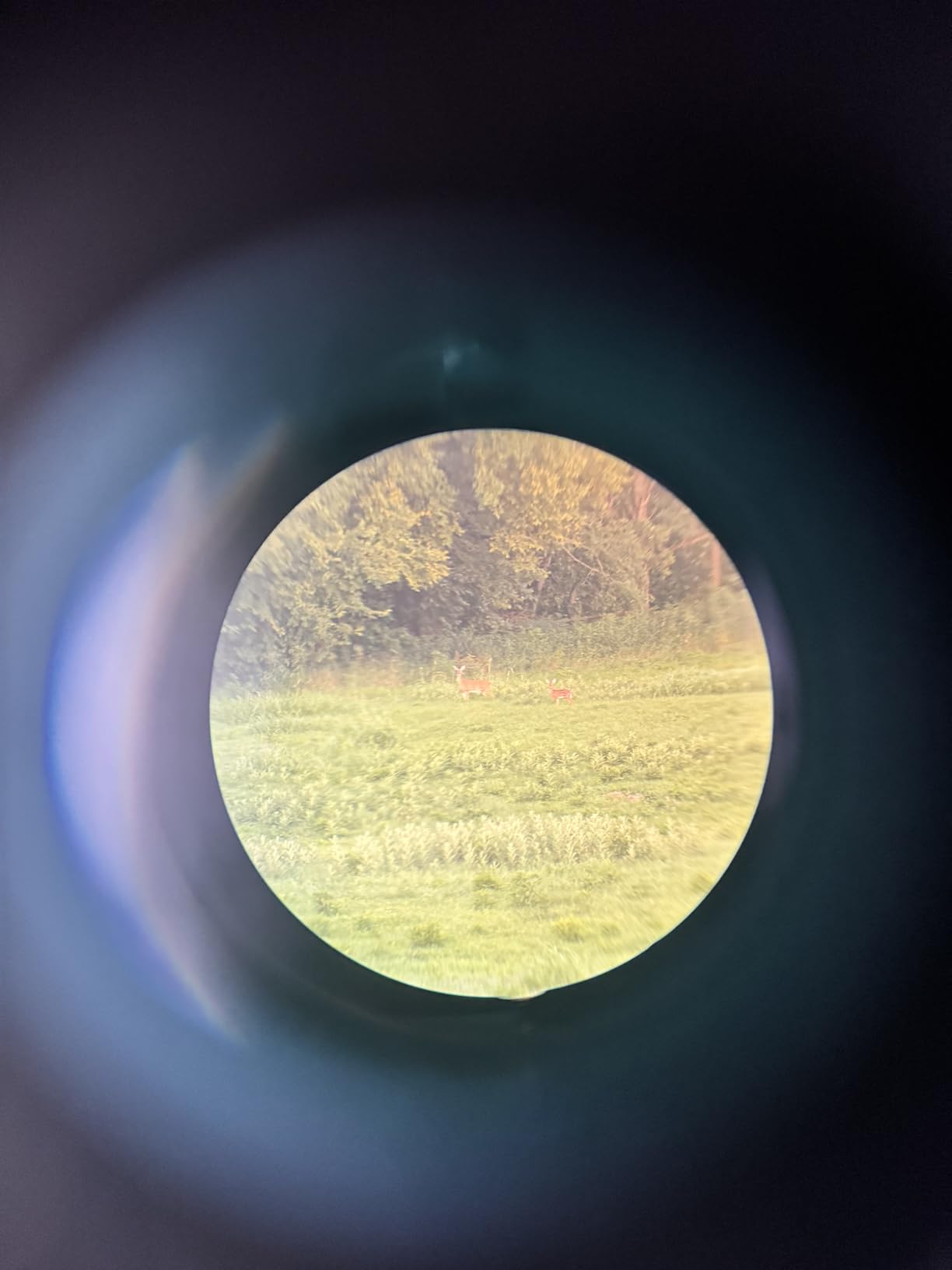
The Plossl optics gather modest light, so dim targets stay dim. The tabletop tripod means adults view from sitting down rather than standing, and the age skew means younger children will need help finding objects at all. The 50x ceiling is the hard limit on what you will ever see.
Used well, it is a genuinely useful teaching tool and a compact one. Used as a serious observing instrument, it will disappoint anyone hoping for planets. Reviewers treat it as the former without complaint.
Can a group of children use it together?
Yes, that is where it is strongest. The simple setup and low magnification mean a child can find a target without an adult taking over, so a group can rotate through the eyepiece. That is why it appears in classroom sets rather than as a single-user scope.
What age range suits this kit?
Six to ten, with the journal doing much of the teaching. A five-year-old will need help pointing it, and a twelve-year-old will quickly be limited by the 50x ceiling rather than by interest.
Telescope Types That Work Best for Kids
Four optical designs cover almost everything a family should consider. Here is the short version before the detail.
Tabletop Dobsonian: the community default, sitting on a lazy-susan base that turns with a hand and never wobbles.
Alt-azimuth refractor: a sealed glass tube on a two-axis mount, the easiest design to aim and the one most scopes in this list use.
Larger Newtonian reflector on a Dobsonian base: the step up when a child outgrows 70mm and wants fainter deep-sky objects.
Smart or app-guided scope: pointing is done from a phone, which appeals to some families and worries others.
Alt-azimuth refractor
A refractor uses a solid glass lens at the front and needs no collimation, no mirrors to align and almost no maintenance. That sealed, simple design is why every 70mm and 80mm scope in our list is a refractor. The trade-off is chromatic aberration, a faint colour fringe around bright objects at high power, which is mild at 70mm and noticeable at 80mm.
Alt-azimuth simply means the mount moves left and right, then up and down. It is intuitive, it never needs a counterweight, and it works in a back garden. What it lacks is tracking, so an object drifts out of the field every few minutes as Earth turns. For a child this is a minor annoyance; for astrophotography it is fatal.
Tabletop and full-size Dobsonian
A Dobsonian is a Newtonian reflector sitting on a swivelling base, sometimes called a lazy Susan. Because the whole tube rotates on a smooth circle of friction, it can be pushed with one finger and stays put. Forum regulars name tabletop Dobs as the sweet spot for children, because they are stable, cheap relative to the aperture, and forgiving of clumsy handling.
The one job a Dobsonian cannot do alone is collimation. Reflecting mirrors need aligning after transport, which takes a few minutes and confuses parents. Choose a scope with a collimation cap if you can, and reserve the first evening for setup with an adult.
Newtonian reflector
A Newtonian collects light with a large concave mirror at the bottom of the tube and bounces it to a focus near the front. Because aperture is cheap in this design, you get a much larger light-gathering area per unit of money than any refractor of the same weight. A 130mm Dobsonian shows the craters of Jupiter and a genuine ring around Saturn, which no 70mm refractor here will do.
The cost is maintenance and size. A full-size Dobsonian on its own base is heavier and taller than a child’s refractor on a tripod, so it tends to suit tweens and teens rather than a five-year-old.
Smart and app-guided telescopes
These scopes point themselves using a phone or tablet app, and some can also be steered live by a person at the other end. For a child who finds manual aiming frustrating, that removes the single biggest barrier. It also introduces a dependency that regulars on astronomy forums raise repeatedly: if the app or the company behind it stops being supported, the scope loses its main advantage overnight.
Our advice is to check whether the scope still works fully without the phone before you buy. If the answer is no, and the child has any chance of losing interest, a manual alt-azimuth mount is the safer long-term choice. Nothing in our list needs an app to point or to focus.
Which Mount Can a Child Run Alone
This is the question parents ask most, and the answer is about the mount rather than the optics.
Tabletop or Dobsonian base: easiest for a child to move with one finger, and the most stable option on a table.
Alt-azimuth on a short tripod: workable from age eight if the legs are fully extended and tightened.
Long tripod or equatorial mount: fine from about eleven, once a child can reach the focus knob without moving the tube.
GoTo and app-controlled: the most independent aiming, at the cost of the app dependency described above.
A tripod problem is the single most complained-about hardware issue in owner reviews across this group. Wobble is not a minor irritation because it teaches a child that the sky is blurry and unstable, and that impression is hard to undo later. Our rule: a tripod that reaches the child’s eyepiece height without a stepladder is worth more than an extra eyepiece.
If you notice shake, work through this list. Tighten every leg lock fully and set the tripod at its lowest stable height, where the legs spread widest. Close the tripod spreader clip so the legs cannot splay. Balance the tube with the eyepiece removed before you tighten the mount knob. Then wait a moment, let the breeze die down, and touch nothing but the focus knob.
If it still moves, the tripod is the problem, not the optics. A sturdier tripod is the cheapest upgrade available in this hobby and will do more for a child’s first year than any additional eyepiece.
How Old Does Your Child Need to Be
Age matters less than whether a child can point the tube at a target on request and hold an eyepiece steady with one eye. That combination usually arrives around seven or eight, and it arrives earlier with a screen-based scope or binoculars.
Under five, start with binoculars. They have a wide forgiving field, instant focusing and nothing to shake. A ten-dollar pair on a strap teaches pointing, patience and the habit of looking up, and they cannot be broken by a tripod leg.
Ages five to seven are best served by a digital or activity-style scope, or the lightest tabletop option, with an adult alongside. Ages eight to ten are the sweet spot for a 70mm alt-azimuth refractor, which is where our top pick sits. Ages eleven to thirteen can handle a 130mm reflector or Dobsonian and start learning collimation. Fourteen and up can run an equatorial or GoTo mount and take on astrophotography.
One forum pattern is worth repeating because it comes up constantly: parents almost always worry about buying too much, then buy too little. The complaint about disappointment with a blurry, shaky view is far more common than the complaint about a scope that was too capable.
As a related note on gear for growing kids, we have covered kids storage beds with a mattress and ride-on cars for kids, both of which face the same closet-emptying reality this hobby does.
What Your Kid Can Actually See Tonight
Expectation setting is the difference between a child who keeps looking and one who hands the scope back after two nights. Here is a realistic view from a suburban backyard with some light pollution.
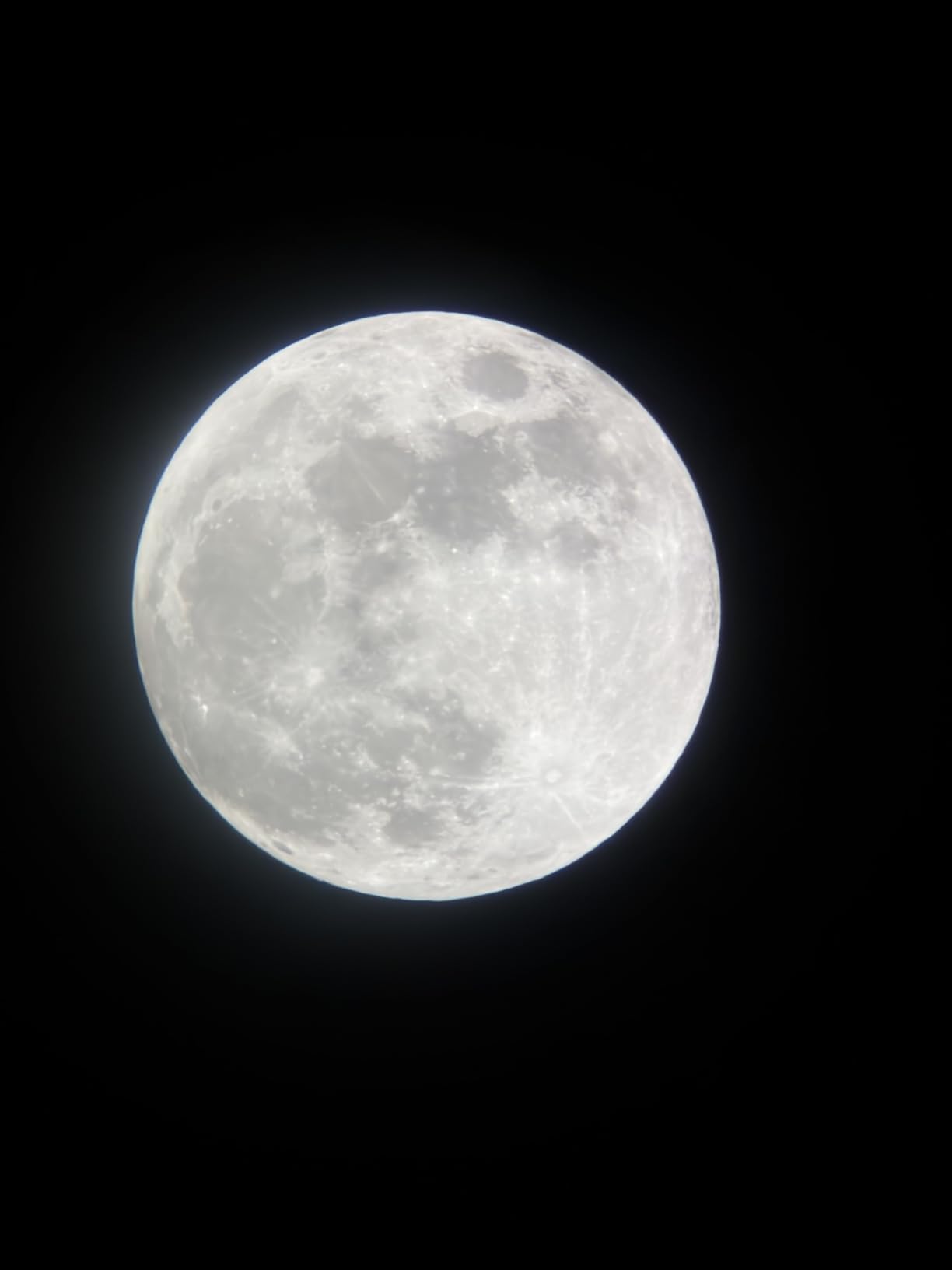
The Moon is always the first target and always the best. Craters, the line between light and dark called the terminator, and the seas are all visible from any of the 70mm and 80mm scopes here within a few days of a suitable phase. The full Moon is bright but flat, so aim for a half Moon or a crescent for detail.
Venus is the easiest planet and the first one most children spot. It is a bright dot that changes position noticeably over a few weeks, which is a genuine astronomy lesson in itself. Jupiter follows, and at 80mm its four Galilean moons shift position visibly from night to night.
Saturn is the big expectation problem. At 70mm you get a small elongated oval. At 80mm the shape is clearer. You need roughly double that aperture again before the rings look like rings, so tell your child the rings are a later birthday, not a first-night promise.
Deep sky needs dark skies. From a typical suburban backyard, star clusters and the Orion nebula are worth attempting at 70mm and above, but a light-polluted sky means dimmer results than product photos suggest. Moving the same scope to darker skies on a weekend, even briefly, produces a bigger jump than any upgrade.
What you will not see tonight, whatever you spend: surface detail on Mars, the rings of Uranus, most galaxies, or the faint smudge advertised as a nebula in marketplace photos. Anyone promising those from a first telescope is overselling.
How to Buy a Used Telescope Without Regret
Used adult scopes come up as a genuine recommendation path on astronomy forums, and they can be excellent value. A used 130mm reflector or a well-made 150mm Dobsonian gives a child an instrument that will outlast them, which no budget scope in this list will manage.
Here is the inspection checklist. Confirm the aperture by reading the label, because sellers frequently exaggerate. Check that the tripod is included and that every leg lock actually grips. Look for dents or dew damage inside the tube. For a Newtonian, check that the mirror is not visibly spotted or separated. Ask whether the focus knobs turn smoothly.
Skip anything sold as a toy, and be cautious with unknown brands sold as high magnification. A real 130mm reflector with a decent mount is a far better buy than a listing claiming 500x from a 60mm tube, because magnification can be had but light cannot be faked.
Buy used tabletop scopes such as small tabletop Dobs only if you can inspect them in person, and treat any missing diagonal or eyepieces as a small extra cost. Local astronomy clubs and second-hand marketplaces are where most parents find these, and club members will often talk you through a specific unit.
First Night Setup and Safety
Get the first session right and the second one is easy. Pick a moonlit evening a few days after full Moon, or any clear night if the Moon is not the target. Avoid a bright Moon for a first planet hunt, because it washes out the sky.
Set up indoors or in daylight first. Assemble the tripod, extend the legs, check the locks and attach the tube before dark. Fit the eyepiece last. Align the finder scope against a distant object indoors, which takes two minutes and saves twenty outside.
Start with the lowest-power eyepiece and find the Moon. Once it is centred, and only then, swap to higher power. Teach your child to let go of the tube completely before adjusting focus, because a hand on the tube is what causes the wobble.
One safety rule is absolute: never point any telescope at the Sun without a certified front-mounted solar filter. Looking at the Sun through an eyepiece, even briefly, can cause permanent eye damage, and the magnification that makes a telescope wonderful makes this risk much worse. Never attach a filter to the eyepiece end.
Two smaller risks are worth a sentence. Keep fingers clear of the tripod legs and centre column when they fold, since that is where small fingers get pinched. And teach children to walk, not run, around a set-up tripod in the dark.
Frequently Asked Questions
What is the best telescope for a beginner child?
A 70mm refractor on a stable alt-azimuth mount is the best telescope for a beginner child. It needs no collimation or tools, is light enough to carry to the garden, and shows the Moon in real detail from the first night. Avoid department-store toy scopes with tiny lenses and printed zoom numbers.
Which telescope is best to see planets for children?
An 80mm refractor or a 130mm reflector on a Dobsonian base is the best choice for planets. At 70mm children can see Jupiter’s four moons and Saturn as a small oval. Seeing Saturn’s rings as open rings needs roughly double the aperture again, so treat that as a later upgrade.
Can you see planets with a kids telescope?
Yes, for the bright planets, with limits. Venus, Jupiter and its four moons, and the crescent phases of Venus are visible from a 70mm scope. Mars is a tiny orange dot rather than a surface, and Saturn’s rings need about 130mm or more to resolve. Jupiter and Venus are the best first planetary targets.
What is the best telescope to buy for a 10 year old?
A 10 year old can usually run a 70mm or 80mm alt-azimuth refractor independently. Choose one with a finder scope for locating targets and a tripod that reaches eyepiece height without a stepladder. A 130mm Dobsonian is a good next step once they outgrow it, usually around age 12.
Should kids start with a telescope or binoculars?
Start with binoculars if your child is under six. A wide field and instant focusing make them far easier, they cost little, and they survive being dropped. Move to a telescope around age seven, or earlier if a screen-based digital scope keeps your child engaged without the eyepiece struggle.
Why does my kid’s telescope shake so much?
Tripod shake is the most common complaint with first telescopes. Tighten every leg lock, set the legs at their widest stable spread, balance the tube before tightening the mount knob, and never touch the tube while observing. If it still moves, the tripod itself is the problem and a sturdier one is the cheapest upgrade available.
The Best Telescopes for Kids in 2026
The best telescopes for kids all share three things: real coated glass, an aperture you can measure in millimetres, and a mount that stays still. Everything above clears that bar, and the difference between picks is mostly about age, weight and how much the tripod can cope with a child leaning on it.
Pick the Gskyer 70mm if you want the safest default for a child from about eight upwards. Its finder scope is what makes independent aiming realistic, and it has the largest body of real owner experience behind it. Pick the MEEZAA 80mm if adults will share the scope and a tall tripod matters. Pick the EACONN 80mm if the planets are the goal and light-gathering beats height.
For a child under six, choose binoculars and a screen-based scope rather than a real eyepiece telescope. For a fixed budget below the range we tested, the Luzsco 50mm is an honest first step, and we would plan to move up to a 70mm within a year. Whichever you choose, set it up indoors first, start with the Moon, and expect the first few sessions to be about learning to point rather than seeing faint galaxies.