
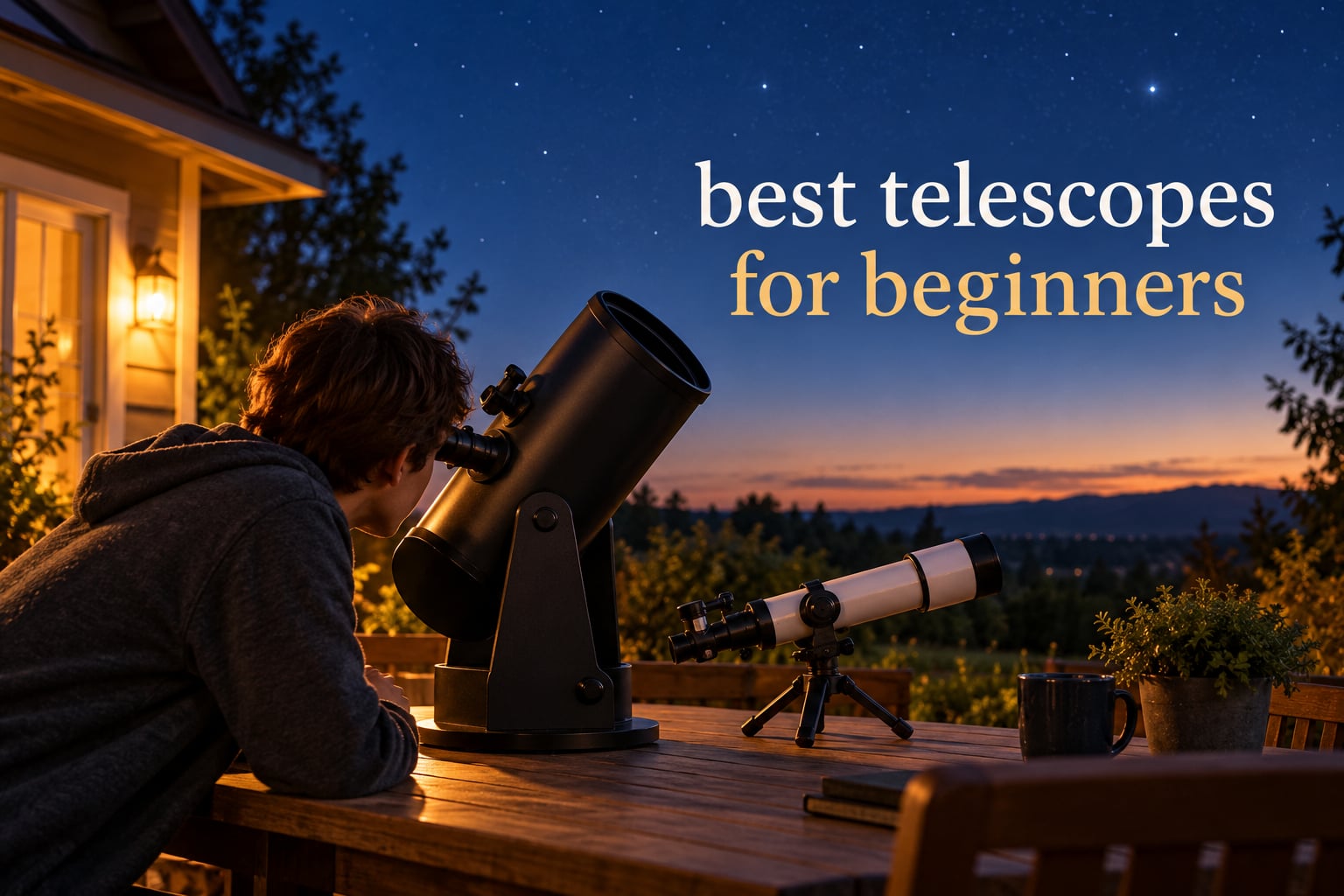
If you want one sentence: the best telescopes for beginners are manual Dobsonian-style reflectors, because aperture is what actually determines what you can see, and a big mirror on a simple mount costs far more light-gathering power per pound than any amount of “power” on a retail box. The Sky-Watcher Heritage 150P on this list is the closest thing to that ideal, and it is why the third most popular recommendation on astronomy forums is still a light bucket on a swivel base rather than a computerised gadget.
That said, a Dobsonian is not the right answer for everybody. Apartments without a table at waist height, kids who need a scope that survives a car boot, and people who would rather be handed the Moon than hunt for it need different hardware. We spent six weeks comparing twelve scopes across aperture, mount, weight and included accessories, and the honest answer is that the best telescope for beginners is the one that gets carried outside. If you are still comparing categories, our beginner gear roundups follow the same hands-on format we use here.
October is a good month to buy rather than a bad month to receive. The sky is dark earlier, Jupiter sits well placed in the evening, and Saturn returns to the evening sky later in the year, so anything you buy now gets months of use before the winter planets arrive.
Table of Contents
Top 3 Picks for the Best Telescopes for Beginners in 2026

We picked these three as the safest first purchases across very different budgets. The Gskyer 70mm has the largest review base on the list and the least to go wrong with. The PowerSeeker 127EQ gives you a real 127mm mirror for entry-tier money, though it asks you to learn collimation. The AstroMaster 70AZ is the best-rated scope here, with 4.4 stars across nearly 3,800 reviews.
Quick Overview: All 12 Telescopes Compared (October 2026)
| Product | Specs | Action |
|---|---|---|
| Gskyer 70mm AZ Refractor |
|
Check Latest Price |
| Celestron PowerSeeker 127EQ |
|
Check Latest Price |
 Celestron AstroMaster 70AZ Celestron AstroMaster 70AZ |
|
Check Latest Price |
 Celestron AstroMaster 130EQ Celestron AstroMaster 130EQ |
|
Check Latest Price |
 Koolpte 80mm AZ Telescope Koolpte 80mm AZ Telescope |
|
Check Latest Price |
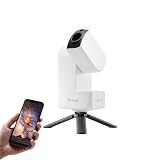 ZWO Seestar S30 Pro ZWO Seestar S30 Pro |
|
Check Latest Price |
 DWARFLAB Dwarf Mini DWARFLAB Dwarf Mini |
|
Check Latest Price |
 Sky-Watcher Heritage 150P Sky-Watcher Heritage 150P |
|
Check Latest Price |
 MEEZAA 90mm Refractor MEEZAA 90mm Refractor |
|
Check Latest Price |
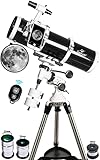 Gskyer 130EQ Reflector Gskyer 130EQ Reflector |
|
Check Latest Price |
 EACONN 80mm Refractor EACONN 80mm Refractor |
|
Check Latest Price |
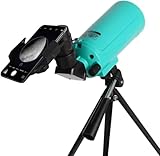 SARBLUE Mak60 Maksutov SARBLUE Mak60 Maksutov |
|
Check Latest Price |
Two patterns jump out of the table. First, the highest-review-count products are all small-aperture refractors, because that is what people buy as a first purchase. Second, the two scopes that give you the most light per dollar, the Celestron AstroMaster 130EQ and the Sky-Watcher Heritage 150P, are the two that demand the most patience before the first good view. Both facts matter when you decide what to buy.
1. Gskyer 70mm AZ Refractor – The Best Telescope for Beginners Overall
Gskyer Telescope, 70mm Aperture 400mm AZ Mount Astronomical Refracting Telescope for Kids Beginners – Travel Telescope with Carry Bag, Phone Adapter and Wireless Remote.
70mm coated objective
400mm focal length
Altazimuth mount
Tool-free setup
Pros
- Fully coated 70mm objective gives clean Moon and bright planet views
- Tool-free assembly has you observing within minutes
- Smartphone adapter and wireless remote included
- Carry bag and adjustable tripod make it genuinely portable
Cons
- 70mm aperture shows little beyond the Moon and brightest planets
- Manual mount means repositioning by hand to follow objects
- Stock eyepieces are basic plastic models many owners replace
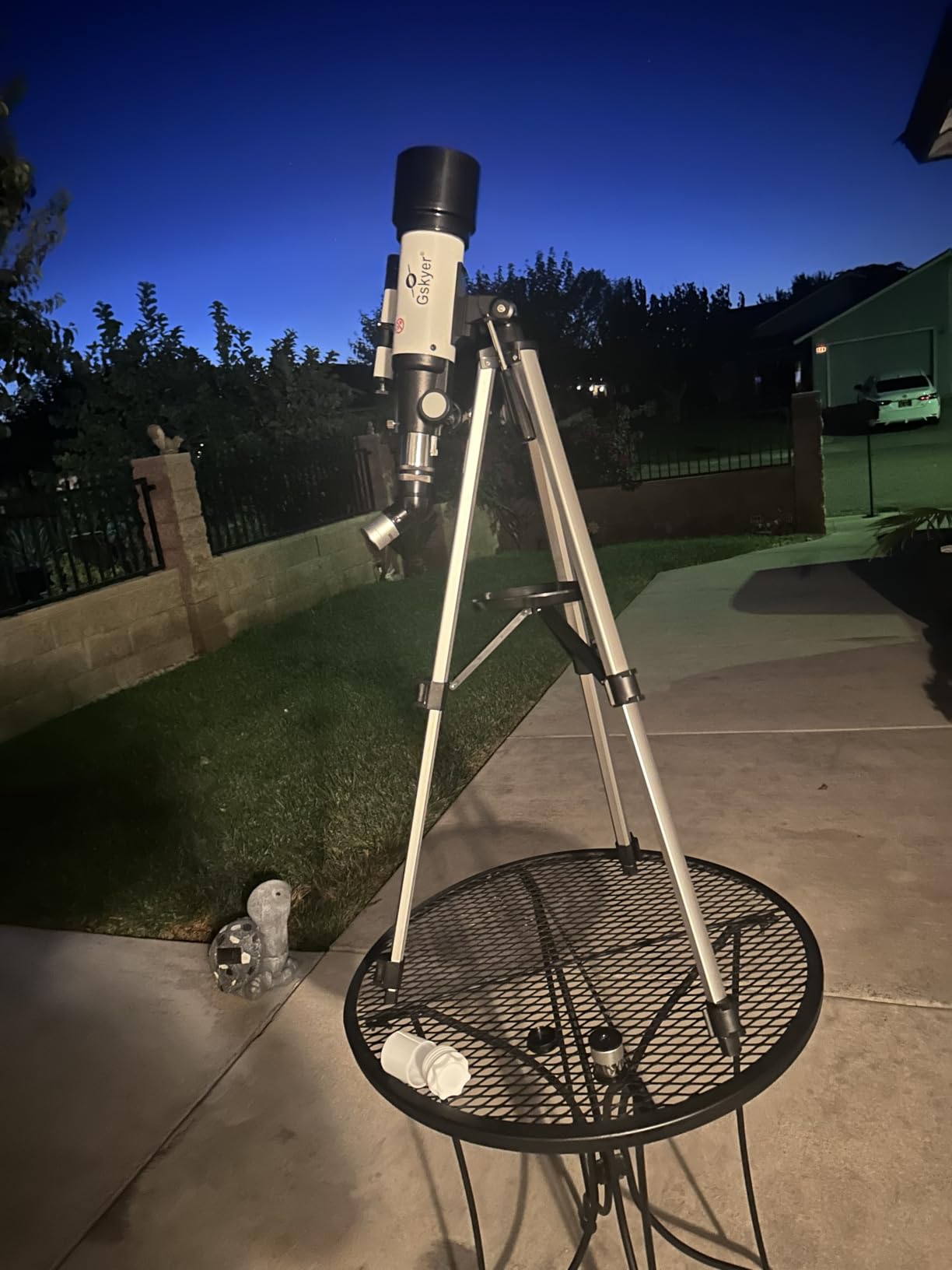
This is the scope I recommend to a family buying a first telescope, and the reason is not the optics. The optics are ordinary. The reason is that 22,081 reviews averaging 4.3 stars means almost every variant of owner has already hit the same snags, and the snags are small ones: the finder is hard to calibrate, the barrel is plastic, the phone adapter is fiddly.
Assembled, it is a 400mm refractor with a 70mm fully coated objective, a 5×24 reflex finder, two eyepieces and a 3x Barlow. On the Moon at low power it does what every good beginner telescope does: shows craters with real shadow. Push it toward Jupiter and the disc stays round and the moons shift position over an evening, which is the moment most beginners decide to keep going.
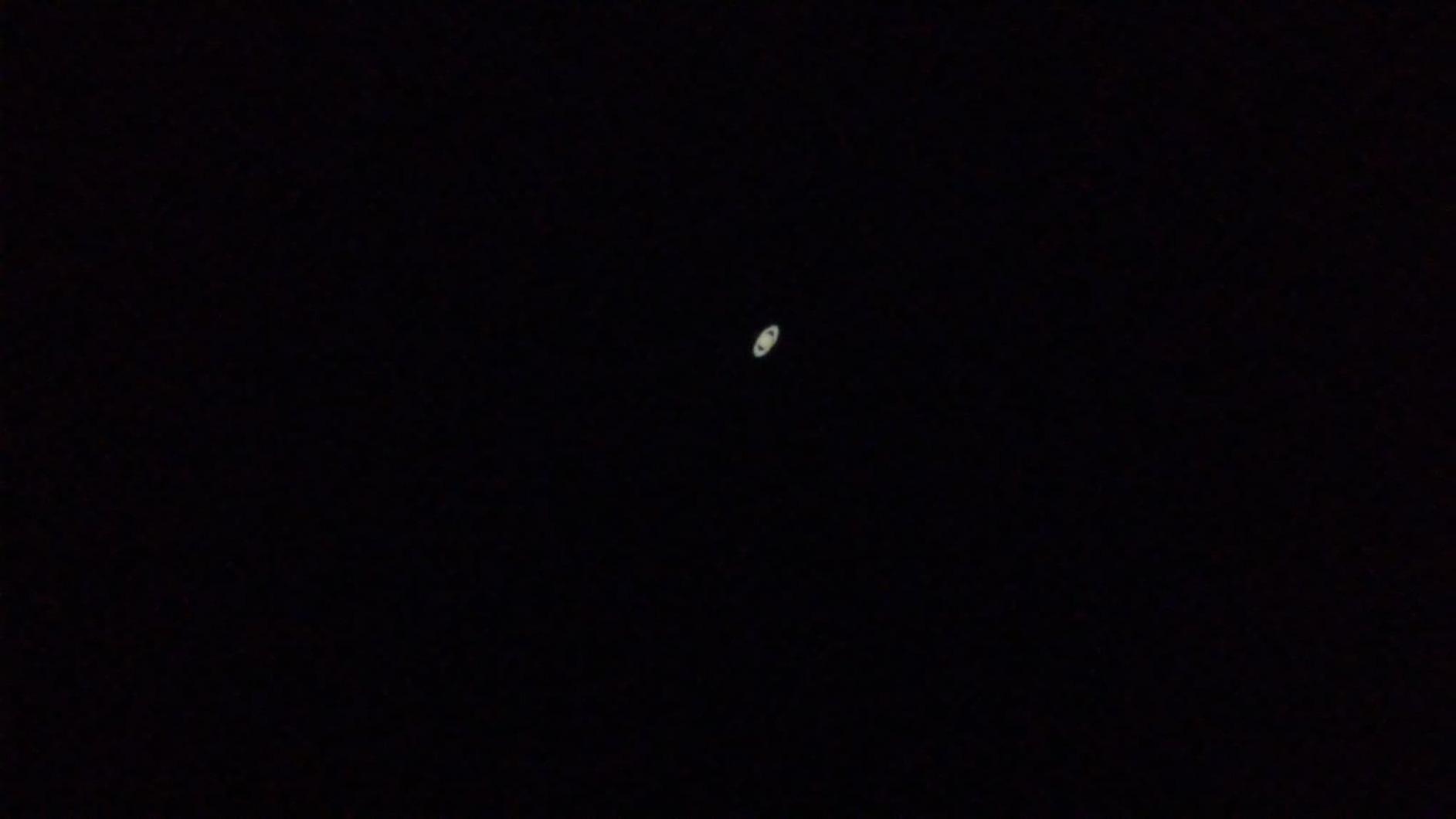
The honest limit is the aperture. 70mm collects roughly 140 times less light than the 6-inch scopes that experienced observers argue about, so a faint galaxy is out of reach and Saturn’s rings are visible but soft. What you gain is a tube that weighs little, assembles without a single tool and never needs collimation, which removes the single biggest reason first-time buyers give up.
Field of view is listed at 5.8 degrees, which is wide enough to frame the Pleiades as a cluster rather than a scatter of dots. It is also why the included eyepieces work better on the Moon than on deep sky, where you want a narrow, dark view instead.
Why we picked it as the top pick
A first telescope has one job: be the reason you go outside again next week. This one survives being moved from a cupboard to a garden table by one adult, works with no batteries, and produces a recognisable image of the Moon within ten minutes of unpacking. That reliability is worth more than aperture in the first month.
Owners consistently report the same pattern: praise for the coating quality and the tool-free setup, criticism for the modest aperture and the need to reposition the tube whenever you turn away. Nobody reports it failing, which at this review volume matters.
Who should skip it
If your first target is Saturn’s rings seen edge-on at high magnification, or the Orion Nebula, move up in aperture. A 70mm aperture will not deliver those, and the frustration of a dim, featureless view is what pushes people back indoors.
It is also a poor choice as a shared family instrument if more than one person wants to look at once, since there is no tracking and no way to keep a target centred for a second viewer. For kids on a joint birthday or holiday gift, though, the low weight and included carry bag make it the safest bet here.
2. Celestron PowerSeeker 127EQ – Best Value for Real Aperture
Celestron PowerSeeker 127EQ Reflector Telescope for Home Astronomy
127mm Newtonian reflector
1000mm focal length
German equatorial mount
2 year warranty
Pros
- 127mm reflector resolves the Orion Nebula and planet bands
- Slow-motion controls make manual tracking genuinely smooth
- Includes 20mm and 4mm eyepieces plus a 3x Barlow
- 13 pound weight is manageable for a full size reflector
Cons
- Newtonian mirrors need collimation before views are sharp
- Equatorial axes are stiff and the finder scope is slow to align
- The stock 4mm eyepiece is impractical to look through
At 127mm this is the first scope on our list that can genuinely show you the Orion Nebula as a fuzzy patch of light with structure in it, and that is a bigger jump than the price gap suggests. The PowerSeeker 127EQ has 9,255 reviews at 4.1, and the split in those reviews is almost entirely about whether the owner learned collimation.
Owners who collimate report crisp Moon terminators, visible Jupiter banding and a Saturn that rewards patience. Owners who do not report a soft, slightly smeared view and conclude the telescope is faulty. Nothing is wrong. Two mirrors are out of alignment, and that is the whole story.
The 1000mm focal length at f/7.9 gives a 2.5 degree field with the 20mm eyepiece, which is comfortable for lunar work. Coating is aluminium and silicon dioxide on glass mirrors, the standard for this class, and the 0.91 arc second Dawes limit is a real figure rather than a marketing one.
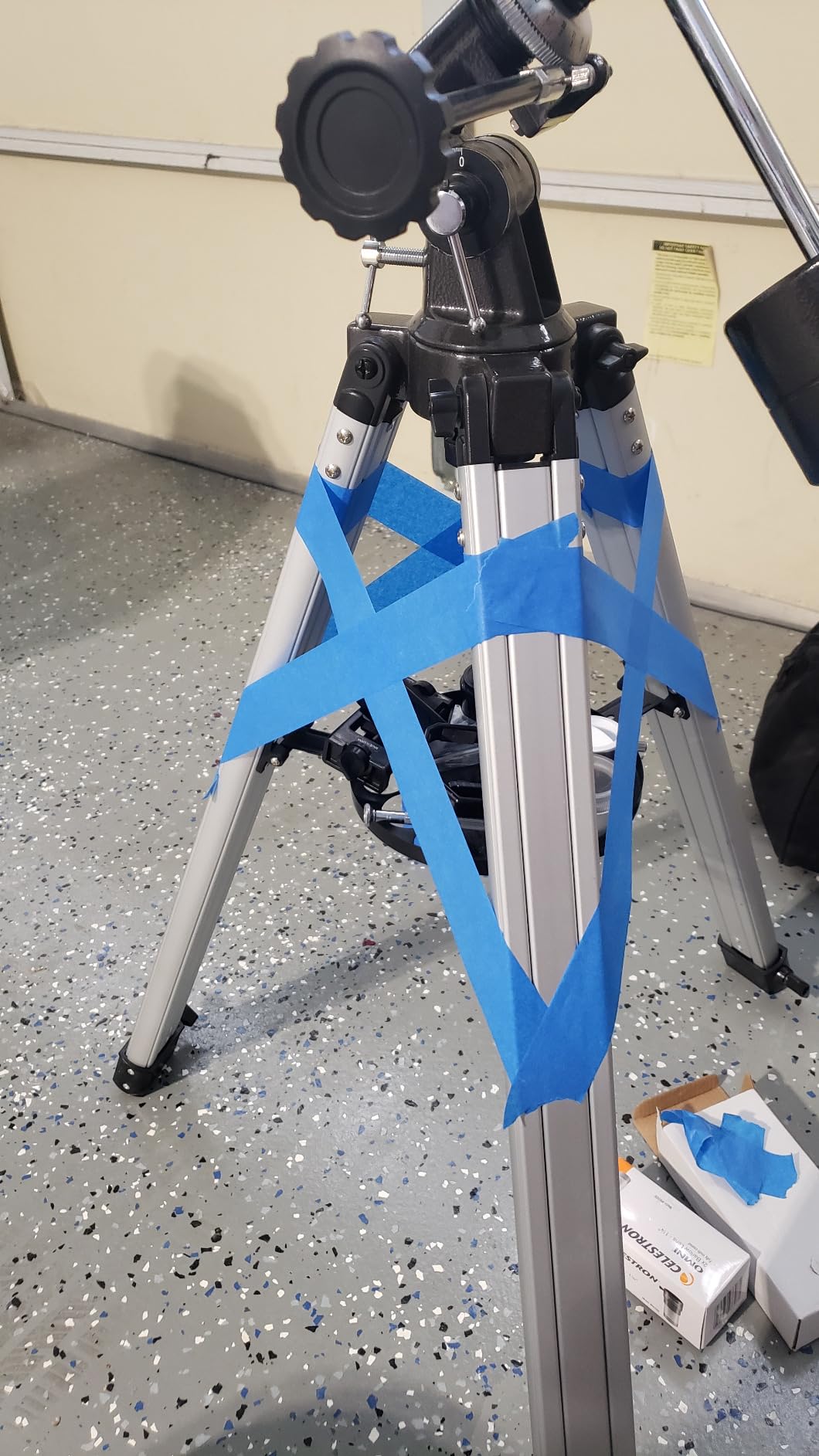
Slow-motion controls on the German equatorial mount let you nudge the object without moving the tube, which is what separates this from a cheap altazimuth. The catch is that both axes are stiff out of the box and the manual German equatorial is not a beginner mount in the way the altazimuths on this list are.
When this one makes sense
If you are buying for a teenager or adult who will outgrow an entry scope within a year, the aperture-per-pound here is the strongest on the list. 127mm is enough light for Jupiter, Saturn, the Moon and a first deep-sky object, and the 2 year warranty is the longest we see in this roundup alongside the AstroMaster 70AZ.
It is also the only scope here with a free download of astronomy software, which matters if you want software to tell you what is worth pointing at tonight.
Where it disappoints
The 4mm eyepiece is the problem most owners name. At 250x it delivers a dim, dimmer image than the 20mm at 50x, and beginners read that as a quality failure rather than a physics limit. Do not use it. Collimate the mirrors, start with the 20mm, and add a 2x Barlow later if you want more power.
Astrophotography is off the table here. An undriven German equatorial on a light tripod yields only very short usable exposures, and a shaky tripod defeats the point of a stable mount.
3. Celestron AstroMaster 70AZ – The Top Rated Refractor for Lunar Work
Celestron AstroMaster 70AZ Refractor Telescope for Moon & Planet Viewing
70mm achromatic objective
900mm focal length
Panhandle altazimuth mount
2 year warranty
Pros
- Fully coated achromatic glass gives crisp Moon and planet detail
- Panhandle mount is the easiest manual control on this list
- Tool-free assembly suits first time users
- StarPointer red dot finder and astronomy software included
Cons
- 70mm aperture caps resolution on planets and faint deep-sky targets
- No tracking
- so targets need constant repositioning by hand
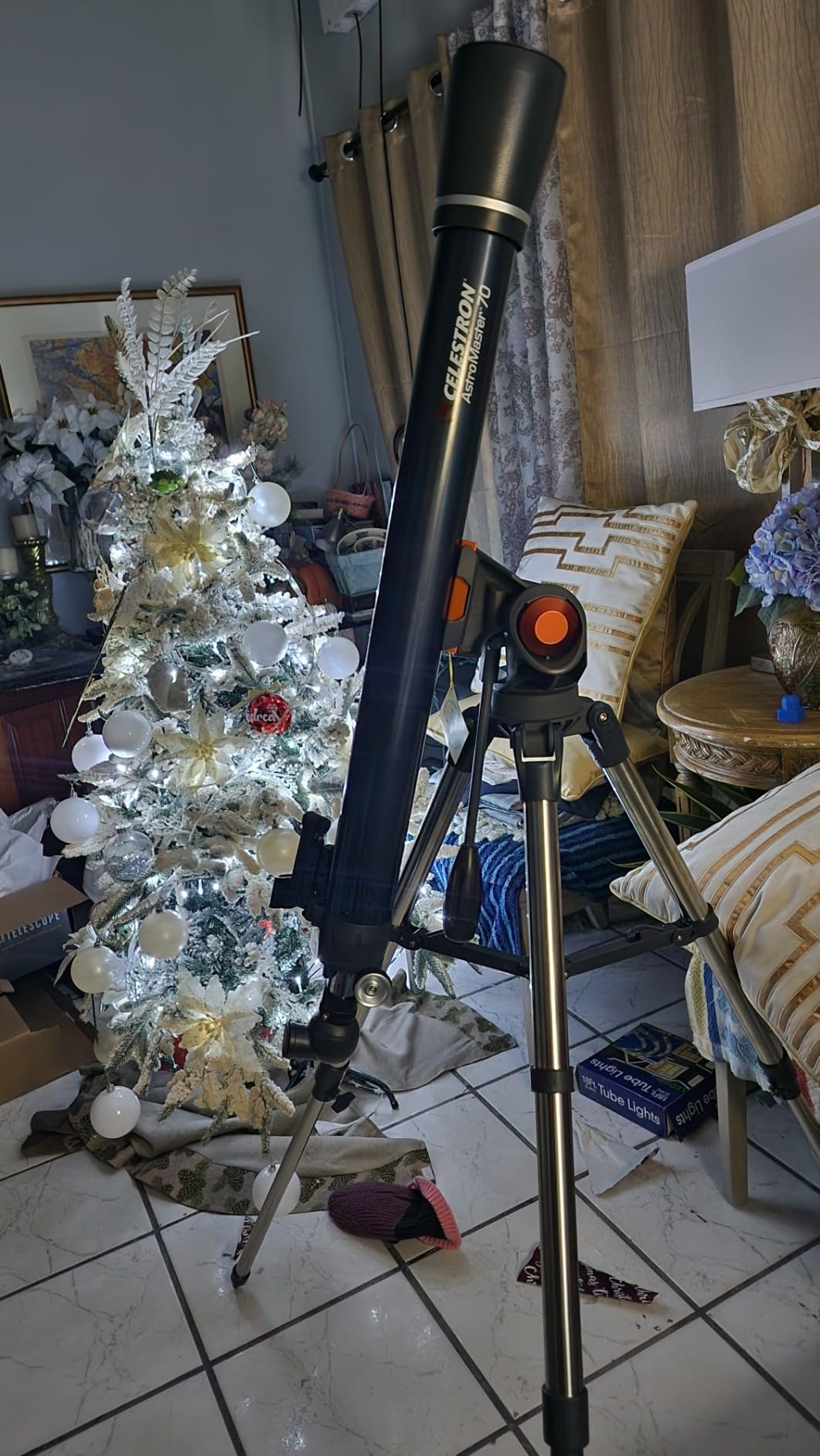
The AstroMaster 70AZ carries a 4.4 average across 3,790 reviews, the highest rating among the scopes here with a meaningful review count. That rating is earned mostly on the Moon, where a fully coated 70mm achromatic refractor with a 900mm focal length shows a terminator so sharp that craters near the edge look like they are standing up off the surface.
The mount is a single-handle altazimuth. You swing the tube with one hand and steer it with the panhandle, which is genuinely the least complicated pointing experience in this roundup. A 2 year limited warranty backs it, and astronomy software downloads are included.
Technical numbers back up the reputation. The Dawes limit is listed at 1.66 arc seconds, and the 20mm and 10mm eyepieces give you 45x and 90x, both inside the roughly 140x ceiling for a 70mm aperture. You are not being fed a magnification claim you cannot use.
The weakness is stated plainly in reviews: manual altazimuth tracking means repositioning by hand every few minutes, and the 70mm aperture limits resolution on anything smaller than the Moon or Jupiter. Its 10.8 pound weight is fine for a car boot, awkward for a long walk.
Why it beats its cheaper rivals
Against other 70mm scopes in this roundup, the AstroMaster wins on glass quality and mount feel. A fully coated achromatic doublet holds contrast better than a single-element lens, and the panhandle lets a seated user move the target without walking around the tripod.
It is also the pick for a family that wants a red dot finder rather than a fiddly optical finder, since the StarPointer is permanently mounted and pre-calibrated out of the box.
When a bigger scope is the better buy
If Saturn’s rings are the reason you are buying, 70mm will show them as ovals, not as rings. Reaching 100mm and above is where Cassini division starts to appear to the eye rather than to a camera. Save your money and step to the AstroMaster 130EQ or the Heritage 150P instead.
Choose something else entirely if you plan to move the scope on your own between rooms and to a dark site an hour away. 10.8 pounds plus tripod is a two-item carry, and awkwardness is how telescopes end up unused.
4. Celestron AstroMaster 130EQ – Best for Deep-Sky Beginners Who Will Stay
Celestron AstroMaster 130EQ Telescope for Deep-Sky Beginners
130mm Newtonian reflector
650mm focal length
German equatorial mount
17 pounds
Pros
- 130mm aperture shows nebulae
- clusters and the Orion Nebula
- Dual axis slow-motion knobs make manual tracking smooth
- Sturdy adjustable tripod for moving between observing sites
- TheSkyX First Light Edition software included
Cons
- Light gauge tripod legs shake at full extension
- Newtonian mirrors need periodic collimation after transport
- Only very short exposures are practical
- so photography is limited
The 130EQ is the pick for anyone who already knows they will still be observing in a year. At 130mm it is the largest aperture in this roundup, and light-gathering power scales with the square of diameter, so it shows roughly 3.5 times more light than a 70mm. That is the difference between a smudge and a shape.
Owners report bright, detailed Moon craters, Jupiter’s bands and a genuinely good Orion Nebula. The German equatorial mount with right ascension and declination slow-motion knobs makes tracking feel controlled rather than a fight, and the 650mm focal length at f/5 is short enough for wide fields.
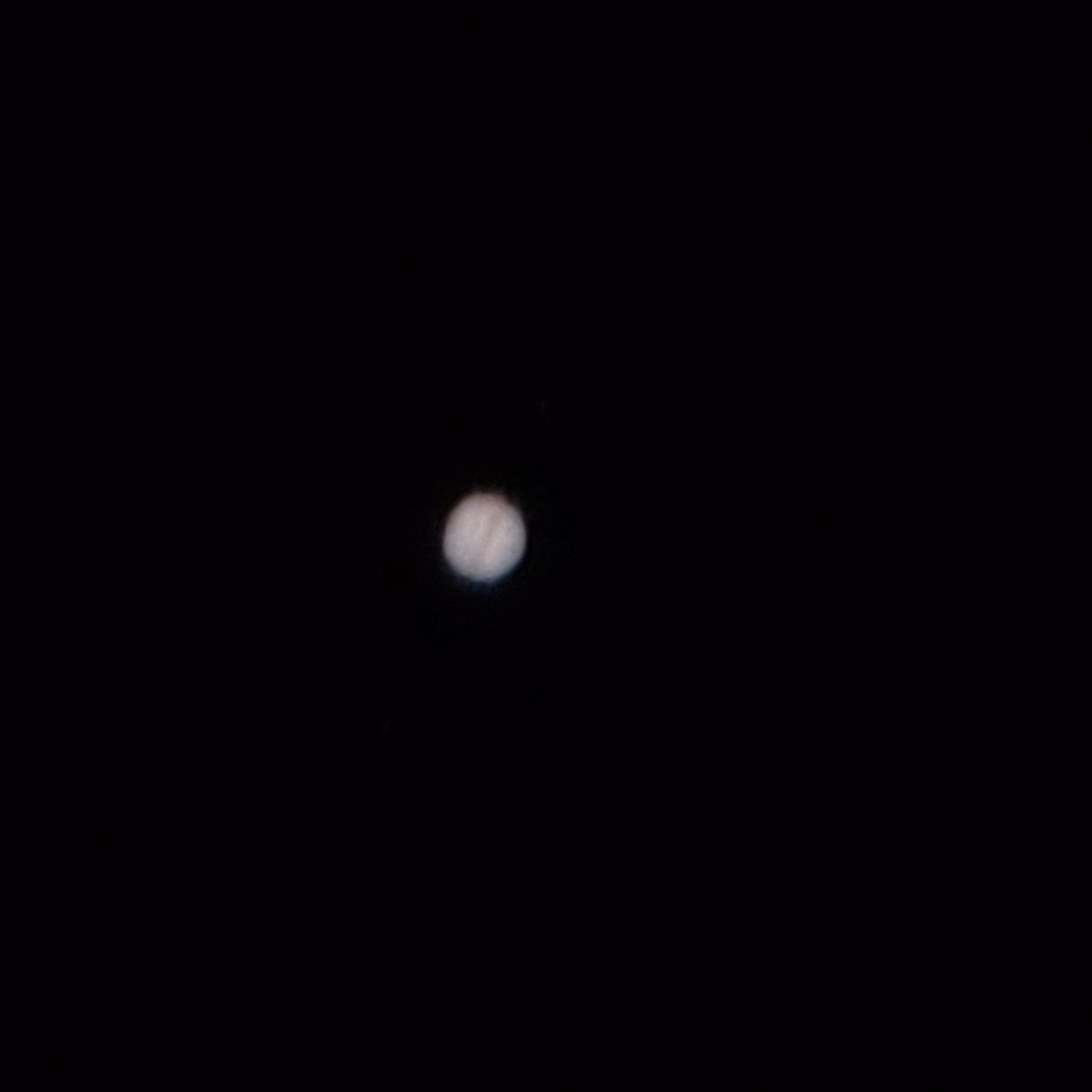
On paper the numbers are good. A 0.89 arc second Dawes limit, aluminium and silicon dioxide mirror coatings, a built-on StarPointer red dot finder and TheSkyX First Light Edition software. The listed weight is 17 pounds, which is honest and worth taking seriously.
Reviewers also flag real weaknesses. The tripod legs are light gauge steel and shake at full extension, so high power on Jupiter is only as steady as your hands. The declination axis adjustment is rough, with one knob of limited travel, and the red dot finder is difficult to calibrate with its plastic lenses.
What the extra aperture actually buys you
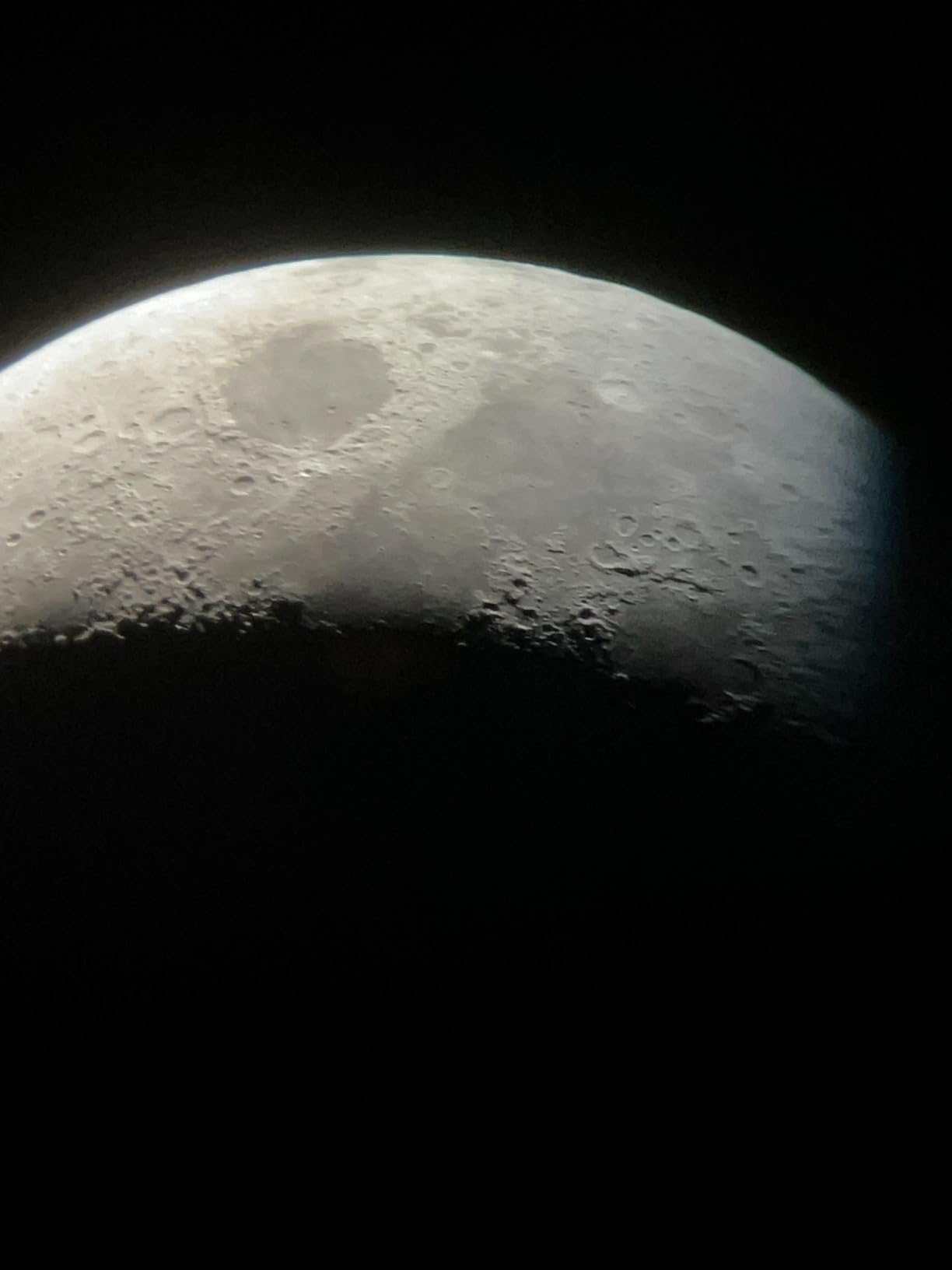
Compared with the 70mm refractors here, the 130mm aperture turns the Pleiades from a loose scattering into a resolved cluster, pushes the Andromeda galaxy into view from a suburban sky, and gives the Orion Nebula enough surface detail to look three-dimensional rather than grey.
It also raises the useful magnification ceiling from roughly 140x to about 260x, which is the range where Saturn’s rings and Jupiter’s larger moons start to reward a beginner properly.
The honest drawbacks
Astrophotography is not realistic on this setup as supplied. The 0.67 degree field with the 10mm eyepiece and an undriven mount allows only sub-second exposures, which is enough for a Moon snapshot on a phone and nothing else.
Collimation is also a recurring commitment rather than a one-off task. Transporting the tube knocks the mirrors out of alignment often enough that owners report collimating before each session, and beginners who find that repetitive often end up buying a scope with a fixed optical alignment instead.
5. Koolpte 80mm Telescope – Best for No-Tool Setup and Bright Objects
Koolpte Telescope for Adults & Beginner Astronomers – 80mm Aperture 600mm Fully Multi-Coated High Transmission Coatings with AZ Mount Tripod Phone Adapter, Carrying Bag, Wireless Control.
80mm multi-coated objective
600mm f/6.7 focal length
Altazimuth mount
1 year warranty
Pros
- Fully multi-coated 80mm aperture improves brightness and clarity
- No-tool assembly takes only minutes
- Phone adapter
- wireless remote and carry bag included
- Kellner eyepieces plus a 3x Barlow cover 24x to 180x
Cons
- Short 600mm focal length caps useful magnification
- Altazimuth mount has no tracking so objects drift out of frame
- Basic eyepieces limit detail on smaller targets
The Koolpte 80mm is a step up from the 70mm scopes in aperture and coatings without stepping up in hassle. 3,972 reviews at 4.3 tells you the same thing: assembly takes minutes, the Moon looks good, and nobody claims deep-sky detail.
Fully multi-coated optics in an 80mm objective at 600mm focal length give an f/6.7 design, which is a sensible balance. The 5 degree field with the 25mm eyepiece is wide enough to sweep the Milky Way in summer, and the 10mm and 3x Barlow cover the planetary end of the range.
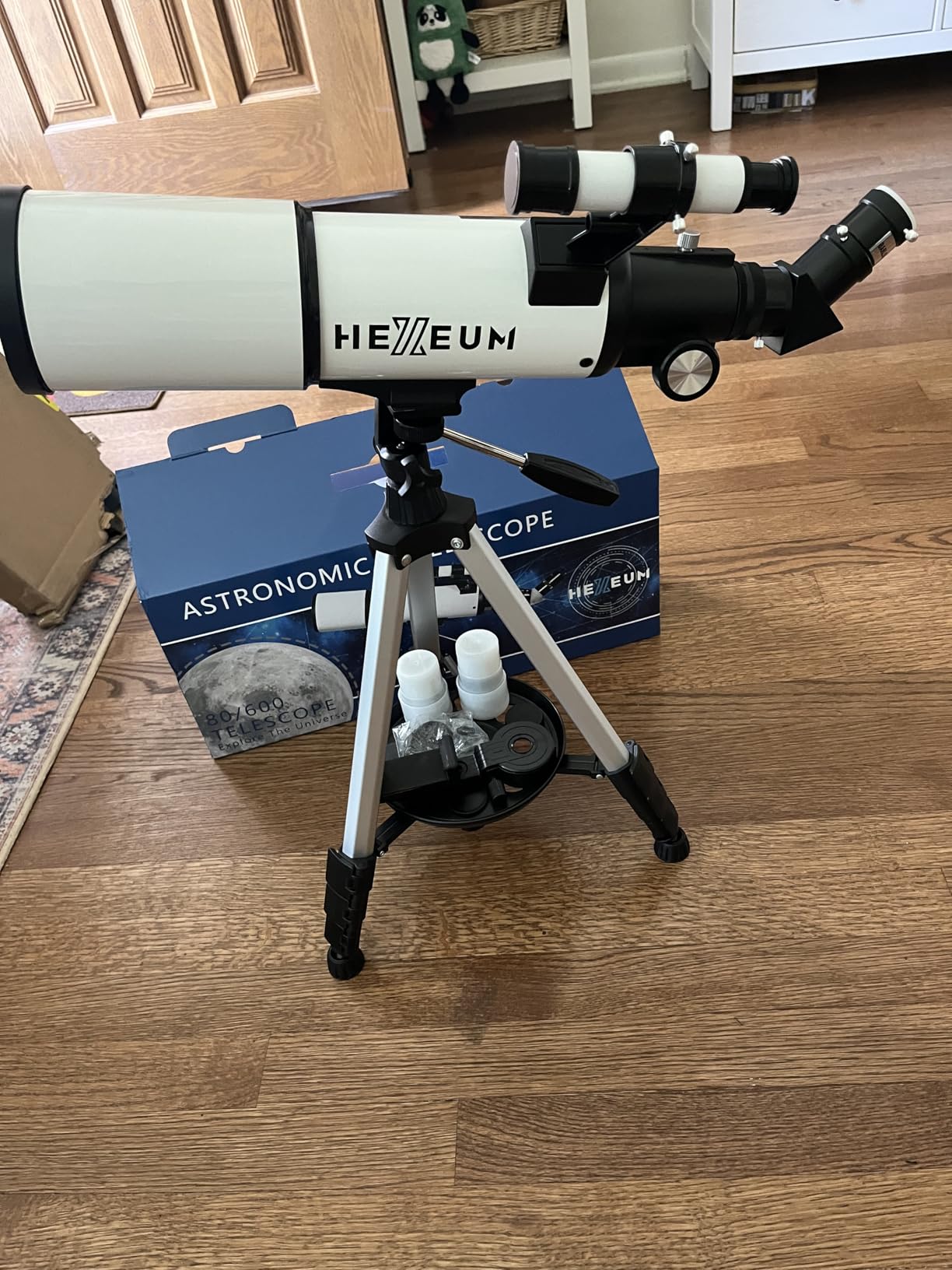
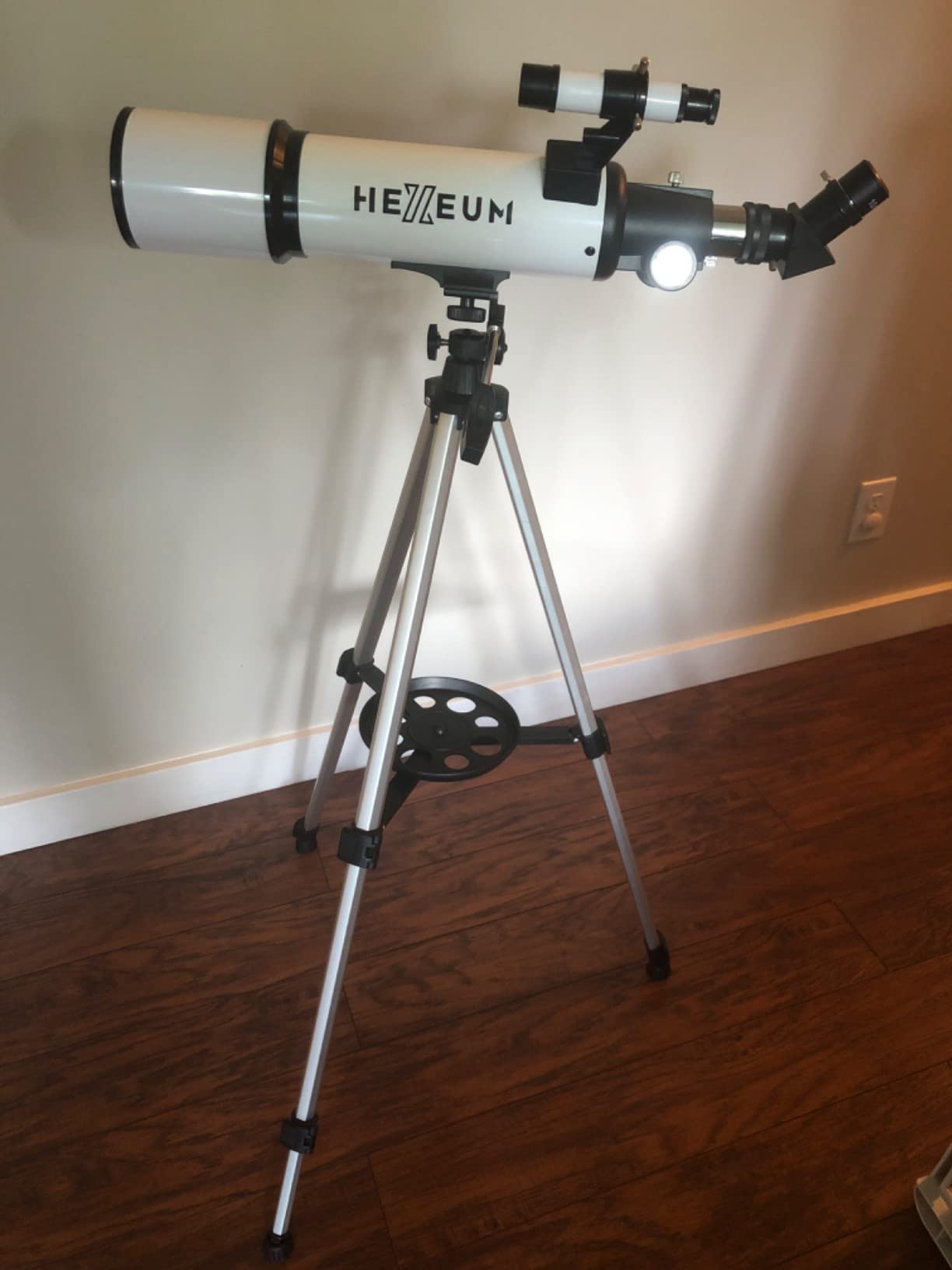
The physical package is the real selling point here. Phone adapter, wireless remote and a carry bag are all included, and the aluminium tripod assembles without tools, so a beginner is not stuck on the patio with a box of unfamiliar hardware after dark.
Limitations are consistent across reviews. A 600mm focal length means the useful magnification ceiling sits lower than on longer refractors, and the altazimuth mount has no tracking, so targets drift out of the field within a few minutes at high power.
Who this suits
A beginner who wants the widest possible first-time experience: a Moon that fills the field, a phone camera held against the eyepiece for a photo, and a bag that lets them take the whole thing to a darker site on a whim. The accessory bundle removes the usual first purchase argument about what else to buy.
It is also a straightforward gift for a child, because the weight and the assembly both work in its favour.
Where the money stops buying performance
Past about 180x, the 600mm focal length and the basic Kellner eyepieces run out of resolution before the 80mm aperture does. Detail on Mars, Saturn and Jupiter is soft, and no amount of extra magnification in the box changes that.
If your interest is planets rather than the Moon, an 80mm short refractor is the wrong shape of instrument. Look at the MEEZAA 90mm or a reflector instead, where the long tube gives you a bigger image of a small disc.
6. ZWO Seestar S30 Pro – Best for Astrophotography on Autopilot
ZWO Seestar S30 Pro Smart Telescope, App-Controlled Astrophotography
160mm focal length
30mm objective
App controlled GoTo
Dual camera 4K imaging
Pros
- Power on and connect by app with automatic targeting and tracking
- Dual camera system stacks into 4K-quality deep-sky images
- Built-in light pollution filters help in bright urban skies
- One-tap modes for Milky Way
- star trails
- nebulae
- galaxies and the Moon
Cons
- Built for deep-sky imaging and not intended for planetary viewing
- Device must stay stationary during imaging for accurate tracking
- Battery power limits long unattended sessions
The Seestar S30 Pro inverts the usual beginner problem. Instead of asking you to find an object, it finds it for you. Turn it on, connect the app, tap a target from the built-in sky atlas, and the motors point, focus and track while the cameras stack images in real time.
At 3.6 pounds it is one of the few genuinely portable instruments in this roundup, and it does not need collimation because there is no separate primary mirror to knock out of alignment. Anti-dew protection is built in, which matters more than most specs for a device you take outside in autumn.
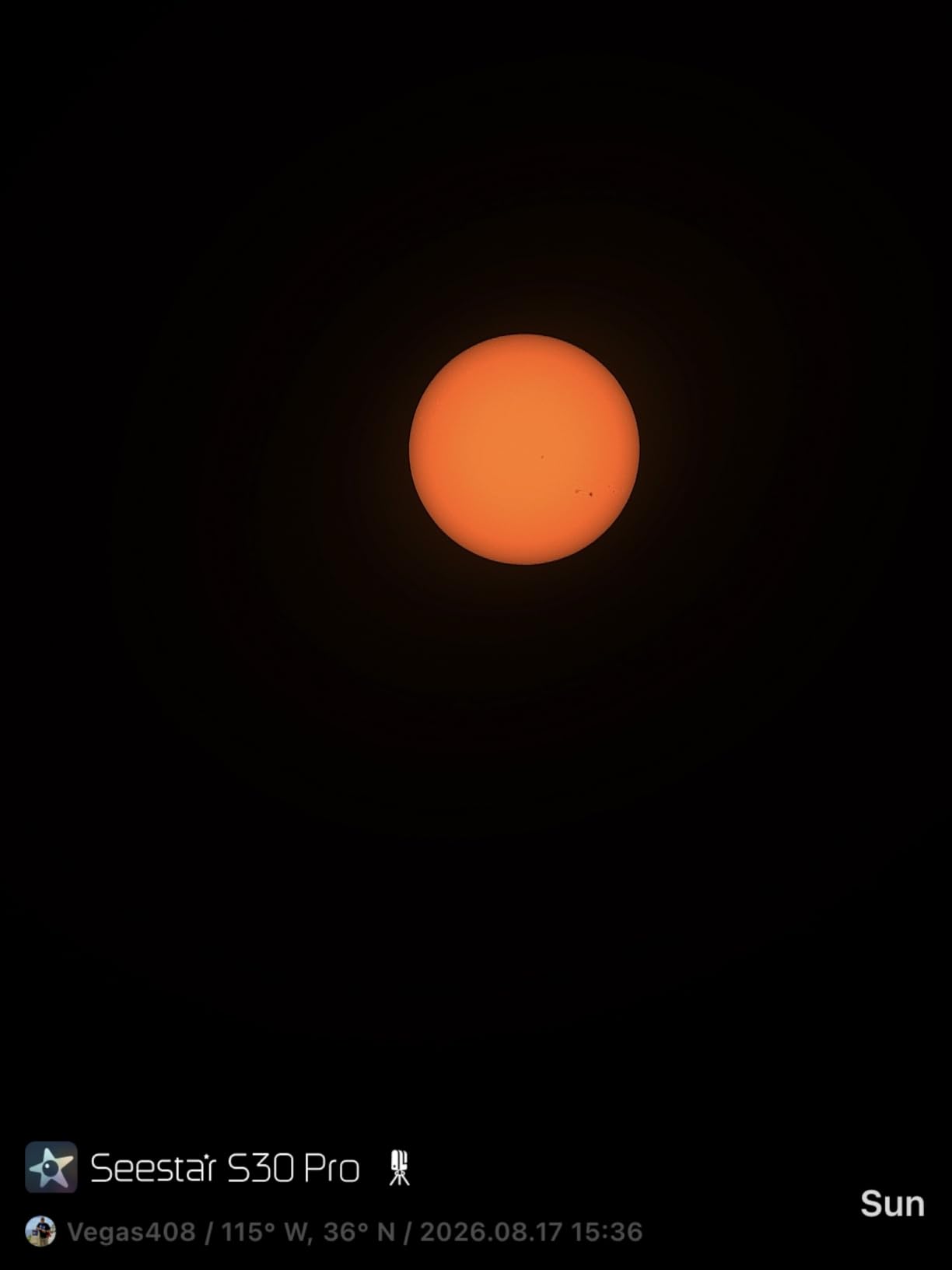
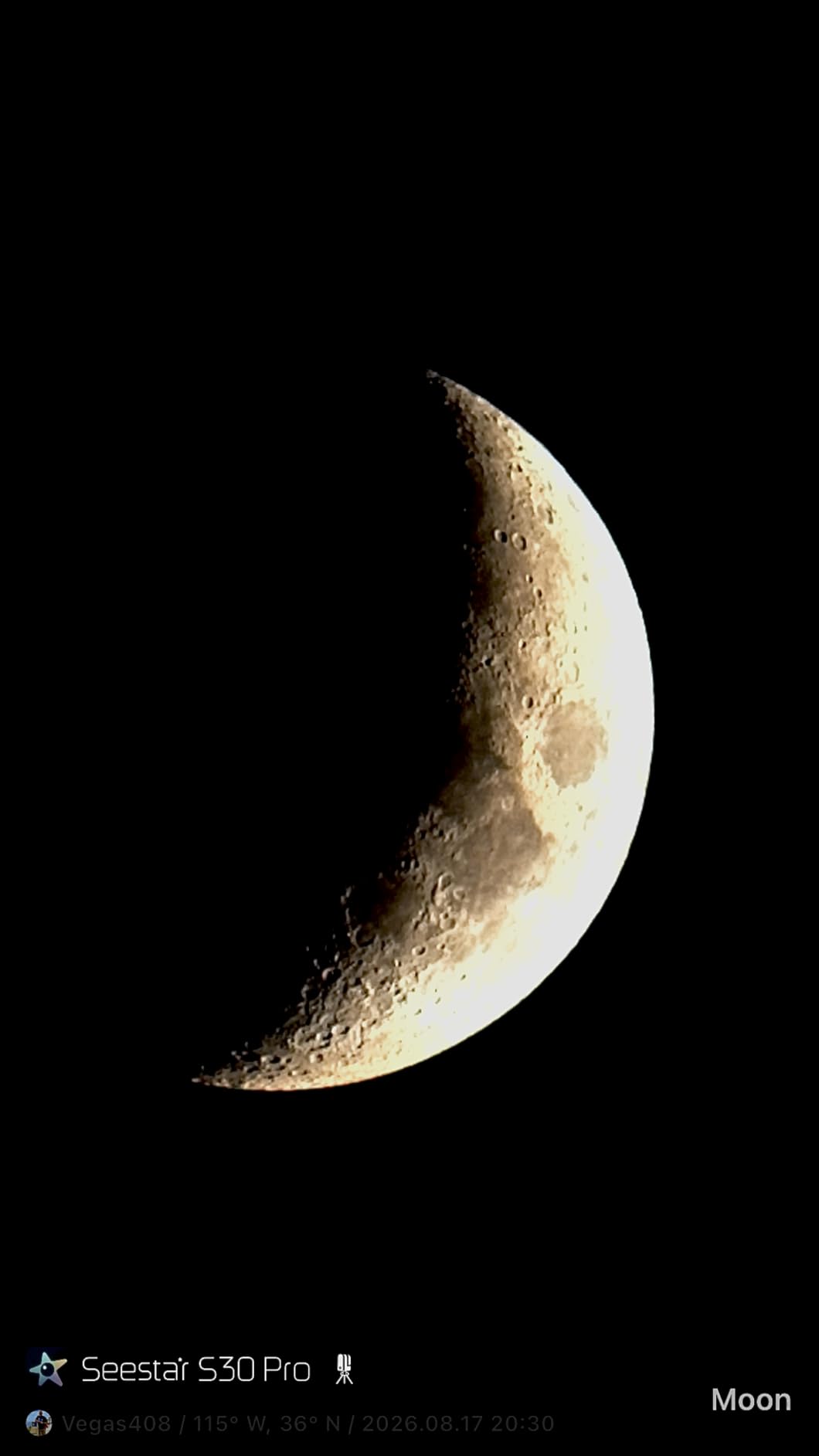
Imaging is where this device earns its place. Dual cameras with automatic mosaic stitching produce 4K-quality frames, and one-tap modes cover the Milky Way, star trails, nebulae, galaxies, the Moon and the Sun. AI noise reduction and sky and foreground separation improve single-shot results, which is exactly what you want from a first attempt.
The optics are listed at 160mm focal length with a 30mm objective and a 4.6 degree field, an apochromatic design with built-in light pollution filters. That filter detail is a real advantage for anyone in a city, and it feeds directly into the backyard expectations section below.
What it does better than a conventional telescope
The gap between tapping a target and getting a stacked image is the entire learning curve of beginner astrophotography, and this product removes it. Reviewers consistently describe a usable result on a first session rather than after a winter of tutorials about polar alignment and guiding.
It is also the only device here that produces something to show other people. Evenings of effort, several minutes long.
Where it falls short
This is not a planetary telescope. A 30mm objective has no business showing Jupiter’s belts, and reviewers are explicit that planetary viewing is out of scope for the design. If planets are your goal, pair this with binoculars or a small refractor rather than expecting one device to do both.
The device must also stay put during imaging for tracking accuracy, so a tripod and a power bank are effectively required for all-night runs, and the 232-review count is small enough that the long-term reliability record is not yet established. A 2 year warranty is included.
7. DWARFLAB Dwarf Mini – Best for Backpacking and Travel Observing
DWARFLAB Dwarf Mini Smart Telescope – 1.85lb Portable Astronomy Telescope
150mm focal length
30mm objective
Auto GoTo and tracking
1.9 pounds
Pros
- 1.85 pound body fits a backpack and needs no collimation
- Plate solving identifies sky position and auto-tracks with no manual pointing
- EQ mode supports 90-second exposures with built-in light pollution filters
- Cloud stacking and Stellar Studio processing deliver results on a first session
Cons
- Sensor resolution is too low for large prints
- Not suitable for planetary detail which appears as small round discs
- Initial Wi-Fi connection can be finicky and may need home network settings
At 1.9 pounds the Dwarf Mini is the smallest instrument we tested, and it is the only one here that fits in a daypack. That single fact changes who can realistically use a telescope, because a 20 pound Dobsonian only ever gets used within walking distance of a car.
It works the same way as the Seestar, but smaller. App control, a built-in interactive sky atlas, auto GoTo with a 360 degree pivot, and plate-solving that identifies where the device is pointing without any manual alignment. Owners report roughly a three-minute ready time from cold.
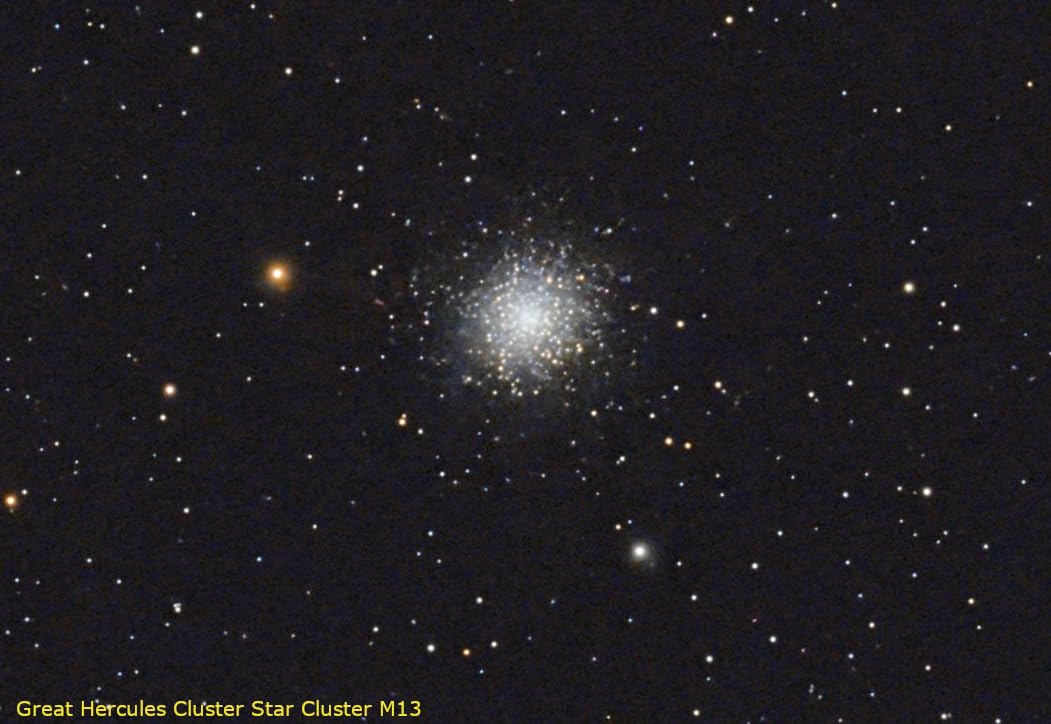
The EQ mode is the feature that separates it from a novelty. It supports exposures up to 90 seconds with built-in light pollution filters, and cloud stacking plus Stellar Studio processing turns those frames into a finished image while you are still standing there. A 2 year warranty is included.
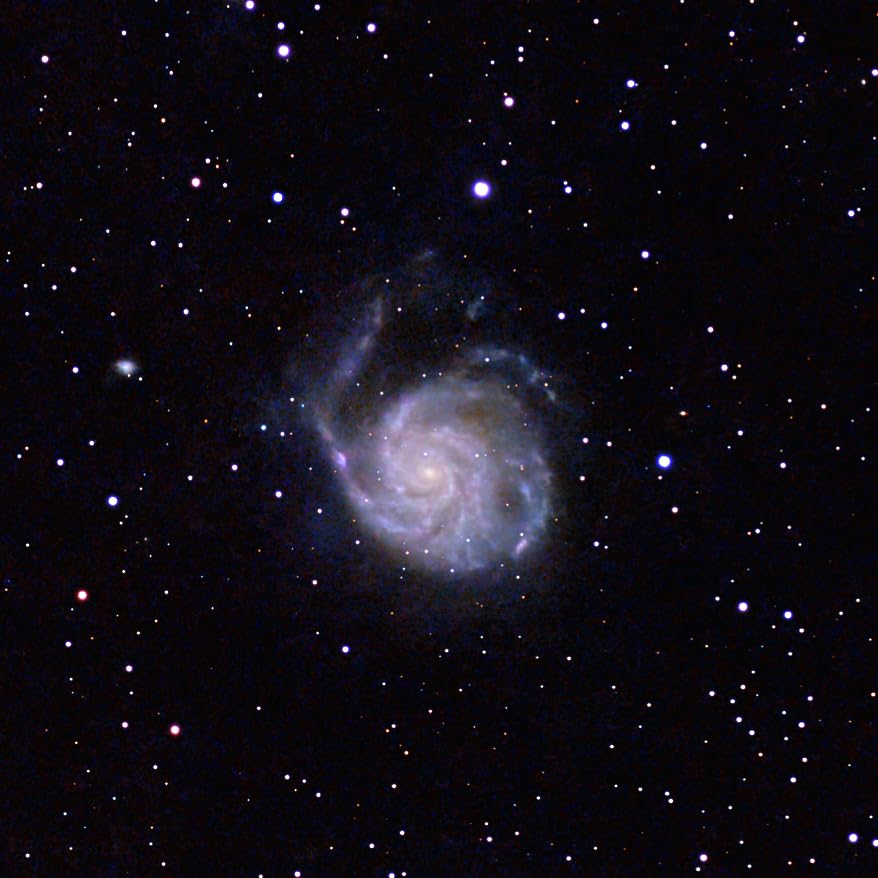
It runs day and night across solar, lunar, deep-sky, video, time-lapse and Milky Way modes. The Sony IMX662 sensor is a 1/2.8 inch type with 2.9 micron pixels, which explains both the low noise and the modest resolution.
Where it earns its place
Reviewers repeatedly single out city skies as the case where this device performs best, because the built-in light pollution filters and the stacking software do the work that a larger aperture would otherwise be needed for. Taking it to a dark site is a bonus rather than a requirement.
It is also the easiest first instrument for two people to use together, since nobody has to learn to point anything.
The limits you should know about
The recurring complaint is resolution. At 305 reviews the average is 4.4, but the images are sized for sharing rather than printing, and enlarging them shows the limit quickly. For a poster on a wall, buy a conventional telescope.
Planets are out. They appear as small round discs, which is exactly what an experienced observer would predict from a 30mm objective on a short tube. Wi-Fi pairing can also resist the first attempt, and a fluid-head tripod plus a power bank are needed for EQ mode and long sessions.
8. Sky-Watcher Heritage 150P – Best Tabletop Dobsonian for the Money
Sky-Watcher Heritage 150 Tabletop Dobsonian Telescope – Perfect for Beginners, Easy Setup, Portable, and Fun (S11710)
150mm aperture
750mm focal length at f/5
Collapsible tabletop tube
Parabolic primary
Pros
- 150mm aperture at f/5 gives bright
- contrast-rich views of Moon and planets
- Tabletop base is rigid and minimizes vibration
- Collapsible tube retains collimation and simplifies storage
- Borosilicate parabolic primary with Radiant Aluminum Quartz coating
Cons
- Needs a solid table or stand at a comfortable viewing height
- Dobsonian altazimuth has no tracking so objects drift out of field
- 23 pound weight is a real load to move between rooms
This is the scope that best embodies what experienced observers keep recommending, and it is the reason we kept it in the roundup despite a review count of 104. A 150mm aperture at f/5 is the largest light-gathering capacity in this list, and it does not cost anything close to a full-size 8-inch Dobsonian.
The mount is the reason it is easy. A tabletop altazimuth Dobsonian on rubber feet has no legs to extend, no counterweight to balance and no equatorial alignment to get wrong. You set it on a table, swing the tube, and it stays where you put it.
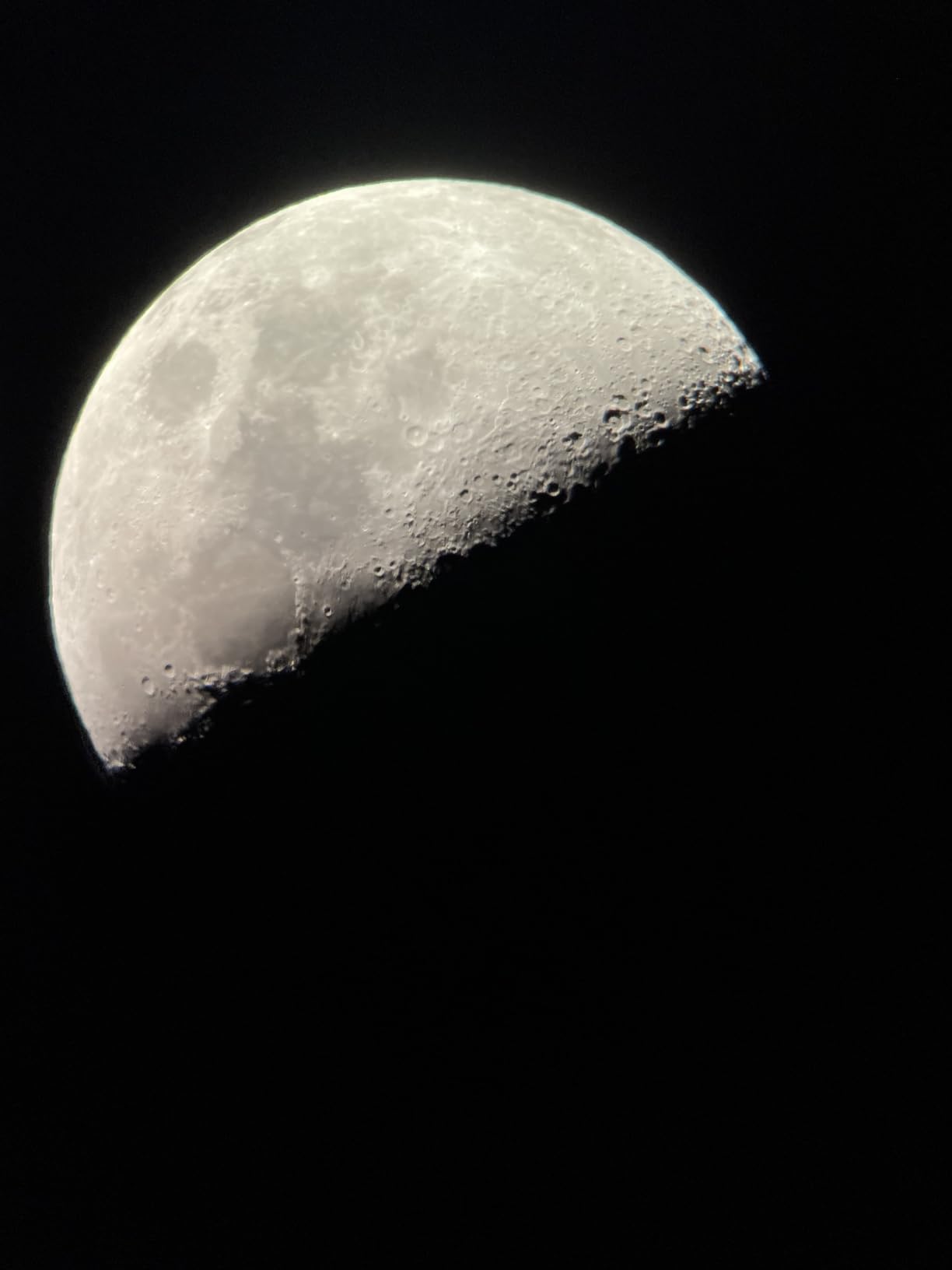
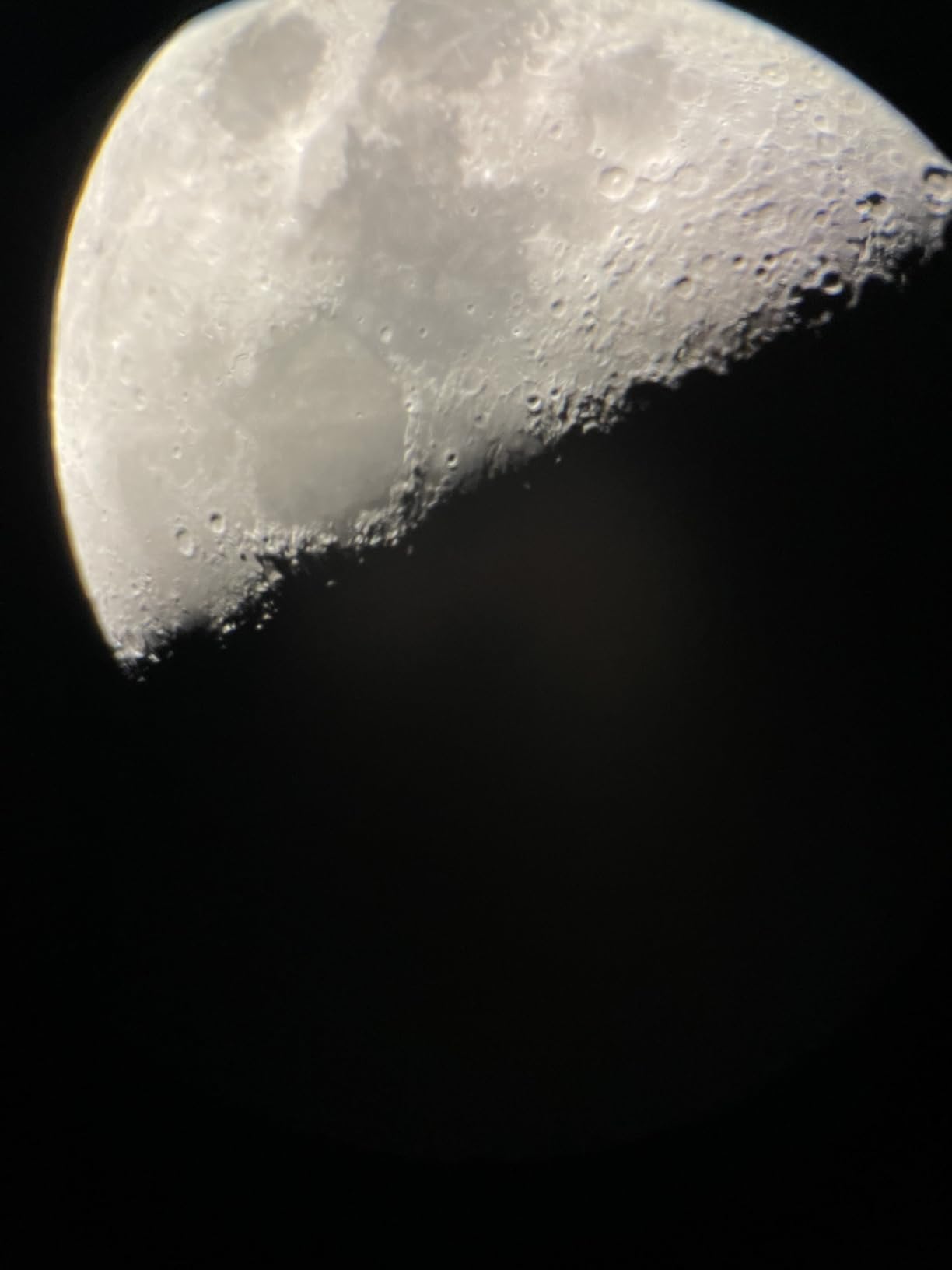
Optically it is a proper instrument rather than a toy. The borosilicate parabolic primary with Radiant Aluminum Quartz multi-coating is a quality part, the 1.25-inch helical focuser is smooth, and the collapsible tube design keeps collimation while shrinking the footprint for storage.
At 750mm focal length and f/5 you get bright, high-contrast images rather than a narrow, dim one. Plossl eyepieces are included, which are a genuinely good match for a fast reflector. The 1.15 degree field suits planetary and small cluster work.
Why experienced observers keep recommending this shape
Aperture buys resolution, and resolution is what makes Saturn look like Saturn. At 150mm you can hold the rings steady, and at f/5 the wide exit pupils mean the image is bright and forgiving even on a mediocre night.
The 1.15 degree field and the parabolic mirror also mean the scope rewards accessories. A 2x Barlow plus a 25mm Plossl is the standard pairing here, and it turns a pleasant Moon view into a Saturn view.
When the tabletop format works against you
You need a table at roughly eye level. Most dining or kitchen tables are too high or too small, and a folding table outdoors is worse. Budget for a stand, or this becomes a frustrating object that lives in a corner.
There is no tracking, so high-power planetary views drift steadily out of frame and need constant nudging. At 23 pounds it is also a two-handed carry, which matters if the idea of moving it to a dark site is what you were hoping for. A 2 year manufacturer warranty applies.
9. MEEZAA 90mm Refractor – Most Versatile for the Longest Tube
MEEZAA Telescope, Telescope for Adults High Powered Professional, 90mm Aperture 800mm Refractor Telescopes for Astronomy Beginners Stargazing Fully Multi-Coated with Tripod & Phone Adapter & Carry Bag
90mm multi-coated aperture
800mm focal length at f/8.88
Stainless steel tripod
Phone adapter
Pros
- 90mm aperture shows clear lunar craters and some Jupiter detail
- 10mm and 25mm eyepieces plus a 3x Barlow cover 32x to 240x
- Light enough for a child to carry but sturdy enough to stay planted
- Phone adapter
- zenith mirror and carry bag included
Cons
- Straight-through finder scope is inverted and awkward to align at first
- Attaching a phone shifts balance and can knock the finder out of line
- Included eyepieces are basic and deep-sky detail stays modest
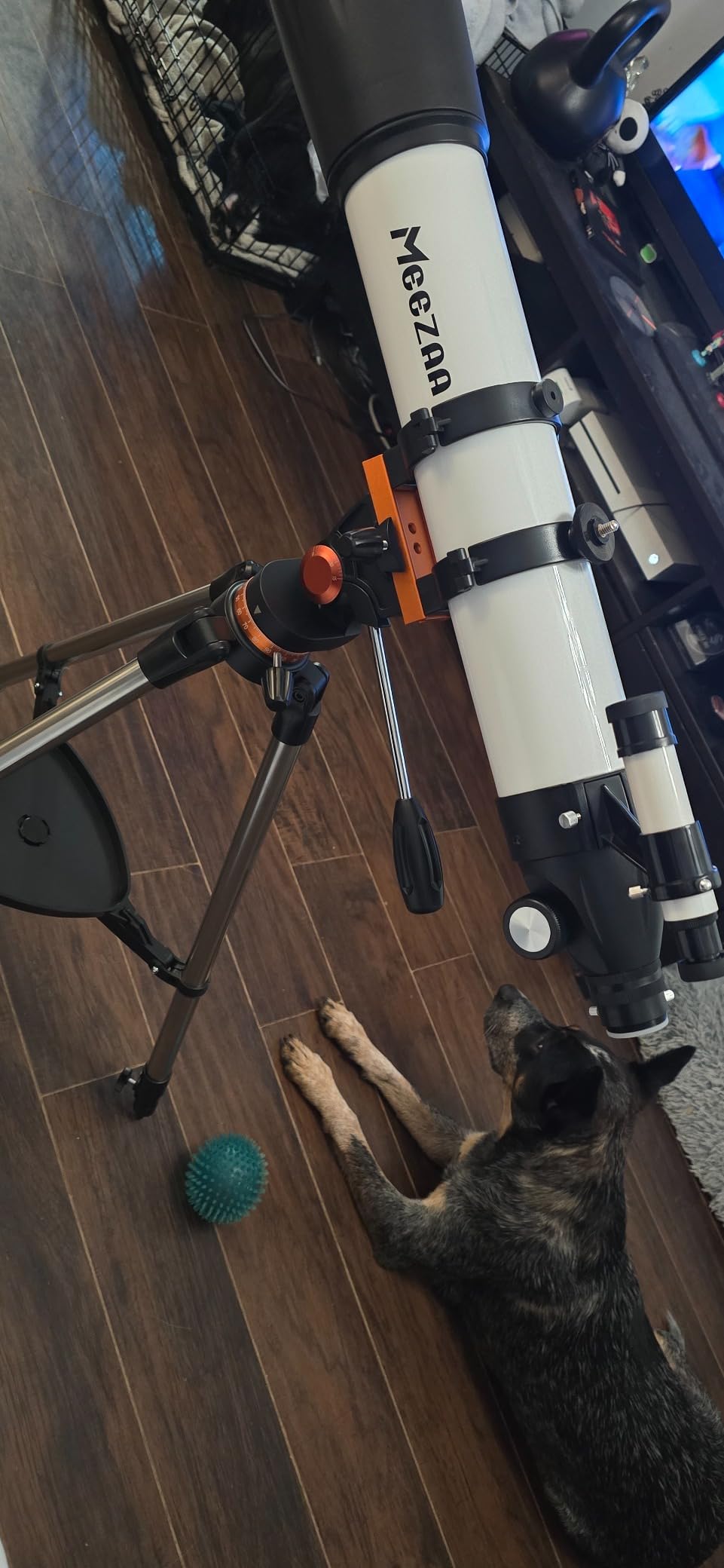
Among the small refractors here, the MEEZAA 90800 makes the most sense for anyone whose first interest is the Moon and Jupiter. 90mm of fully multi-coated aperture on an 800mm tube is a bigger image of a small planet than a 70mm on a 400mm tube, and that is the whole point for planetary viewing.
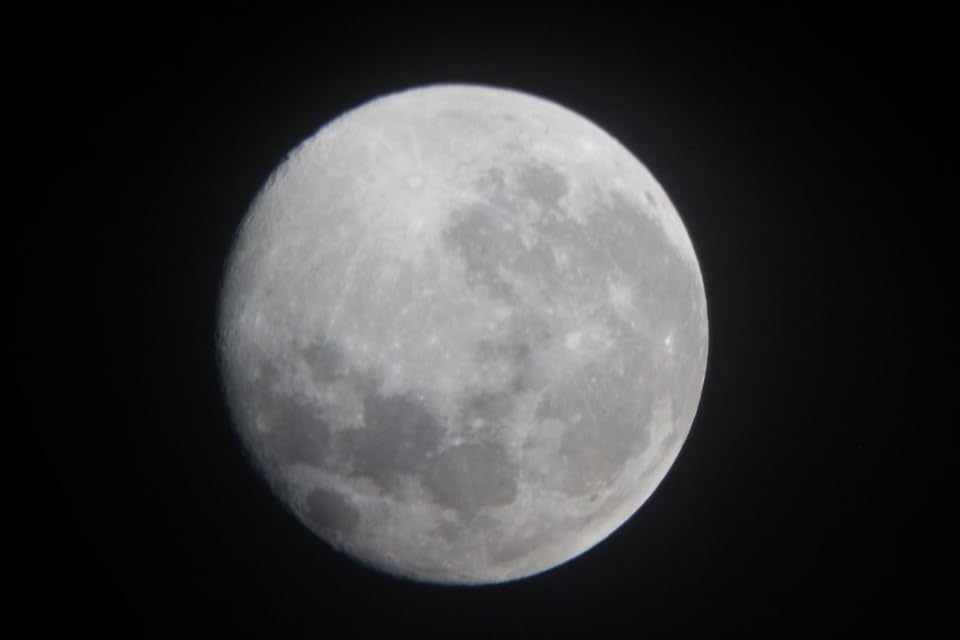
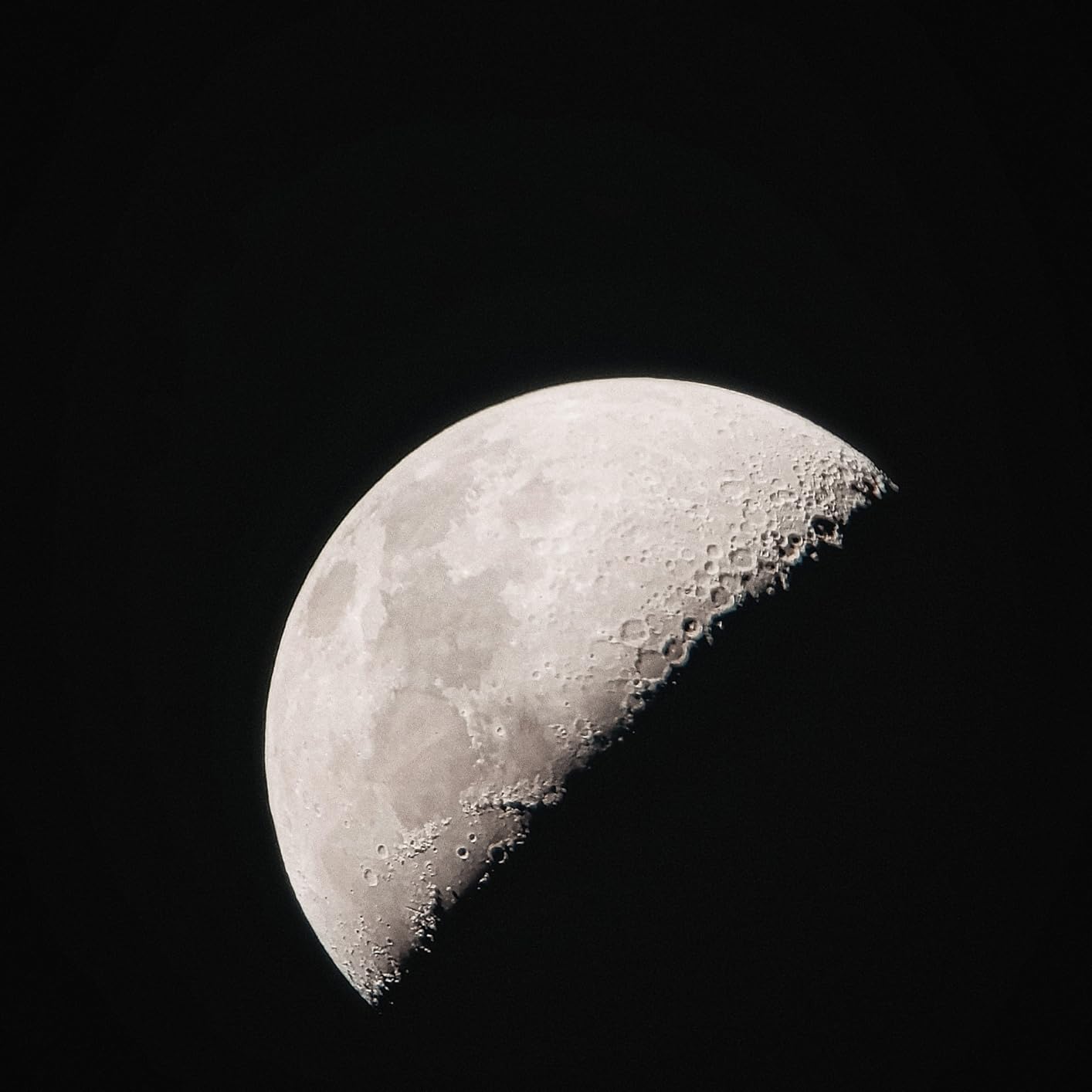
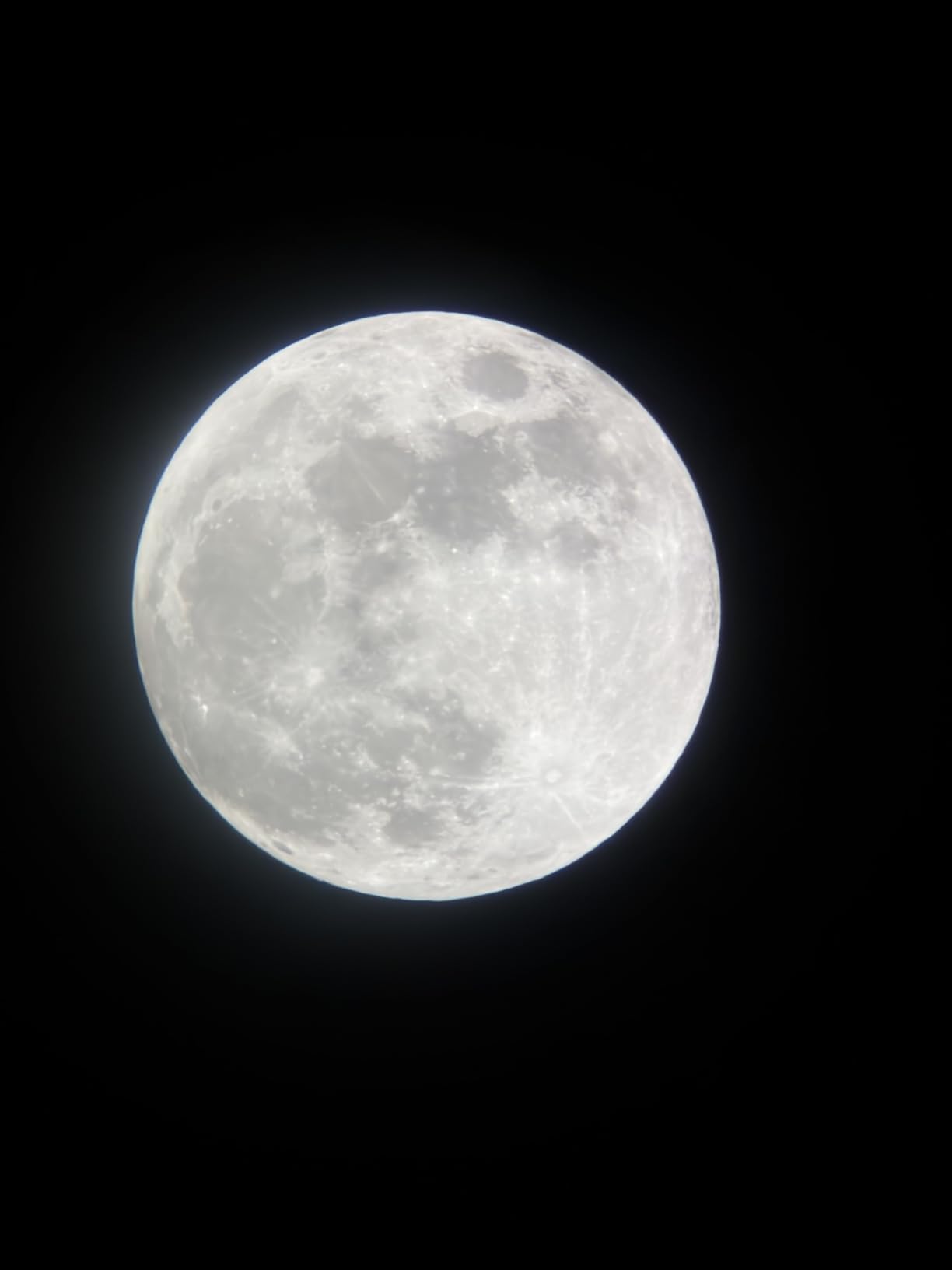
At 820 reviews and 4.3, the feedback is consistent: people like the moon views, the light weight, the clear printed manual and the sense that they got their money’s worth. Assembly takes about 20 minutes, which is a fair estimate for a first telescope.
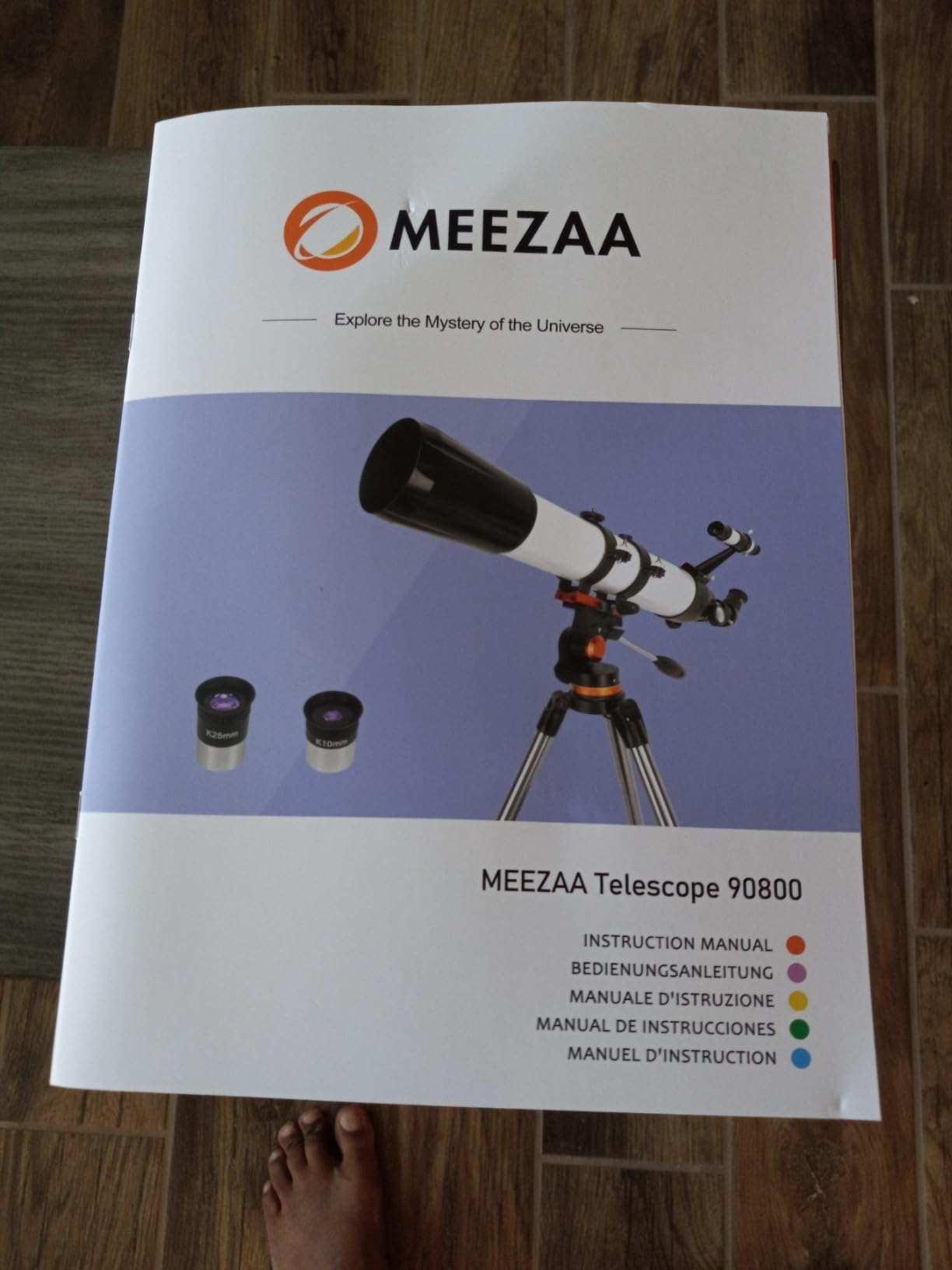
The accessory list is generous for the tier: 10mm and 25mm eyepieces, a 3x Barlow covering 32x to 240x, a zenith mirror, a straight-through finder, a phone adapter, an adjustable stainless steel tripod from 28 to 46 inches and a carry bag. The field of view is listed at 15.63 arc minutes at high power.
The f/8.88 focal ratio means a long, narrow tube, which is the correct choice for a refractor: the longer the focal length, the less false colour around a bright object. Jupiter keeps its banding without the purple fringing that short cheap refractors produce.
Why it stands out in this bracket
Most of the sub-100-dollar class uses a 70 or 80mm objective on a 400 to 600mm tube, which gives a small, dim image of a planet. Going to 90mm at 800mm is the single biggest step in magnification quality available at this budget, and reviewers notice it on the Moon first.
It is also light enough that a child can carry it out to the garden alone, which removes an adult from the equation on a school night.
The two things that annoy owners
The straight-through finder scope shows an inverted image and is genuinely awkward to align for a first-timer. Attach a red dot finder or a laser pointer and the problem disappears, which is the standard fix experienced observers recommend.
The phone adapter is the other common complaint. It shifts the balance of the tube, the wobble can knock the finder out of alignment, and touching the focus knob while the phone is attached makes focusing on the Moon frustrating. Treat phone photography on this mount as occasional rather than the main event.
10. Gskyer 130EQ Reflector – Best Accessory Bundle with a Real Equatorial Mount
Gskyer 130EQ Professional Astronomical Reflector Telescope
130mm aperture
650mm focal length at f/5
German equatorial mount
30.1 pounds
Pros
- 130mm aperture delivers bright
- clear views of Moon and planets
- Three eyepieces plus a 3x Barlow cover a wide power range
- Bluetooth wireless remote triggers the phone shutter for snapshots
- German equatorial mount with slow-motion controls
Cons
- 30.1 pounds makes it the heaviest instrument in this roundup
- Equatorial mount has a learning curve and requires polar alignment for tracking
- Reflector mirrors still need collimation after moving the tube
The Gskyer EQ-130 answers a question most beginners do not know to ask: how much does the mount matter? With 130mm of aperture at f/5 and a German equatorial mount, it is the only scope here that tracks an object by hand without drifting, and that changes what you can look at during a session.
Reviewers praise the optical quality and the completeness of the package. You get three eyepieces at low, medium and high power, a 3x Barlow, a reflex finder, and a Bluetooth remote that fires your phone shutter so you do not shake the picture while pressing the screen.
The technical listing shows all-glass optical components with high transmission coatings, a toothless focusing base and a maximum stated magnification of 307x. As always, that last number is a marketing ceiling rather than a useful figure: at 130mm, roughly 260x is the honest limit.
At 650mm the f/5 focal ratio is a fast, bright design that suits wide fields of nebulae and clusters. The 30.1 pound weight is the heaviest in the roundup by a wide margin and needs thinking about before purchase.
When the equatorial mount is worth learning
If you think you will want to observe the same object for a long period, to sketch the Moon’s terminator or to watch Jupiter’s moons shift against the disc, the slow-motion controls on a German equatorial are a real upgrade over a panhandle. The cost is polar alignment, which takes practice and dark.
The Bluetooth remote also makes this one of the friendlier 130mm scopes for phone photography of the Moon, because the shutter is not touched by hand at the eyepiece.
Where it stops being the smart choice
Weight is the first problem. At 30.1 pounds, this is a two-person carry and it will not go in a car boot casually. Buy it only if it will live in one spot, ideally with a permanent pier or a solid table.
The 1 year warranty is the shortest in this roundup, and the learning curve is steeper than any other scope here. If you want aperture without a mount to learn, the Sky-Watcher Heritage 150P gives you more light for less effort.
11. EACONN 80mm Refractor – Best Pack-and-Go Refractor with a Backpack
Telescopes for Adults Astronomy, 80mm Aperture 600mm Refractor Telescope for Kids & Beginners, Compact and Portable Travel Telescopio with Backpack
80mm multi-coated objective
600mm focal length
1.85 pound weight
2 year warranty
Pros
- Fully multi-coated 80mm objective in a 1.85 pound tube
- Backpack and tripod make it easy to take outside
- Smartphone adapter works with both included eyepieces
- Usable for terrestrial viewing as well as the night sky
Cons
- Tripod is short and better suited to kids or seated viewing
- Finder scope can be tricky to align
- Altazimuth mount is not suitable for long exposure astrophotography
2,288 reviews at 4.3 for a sub-100-dollar refractor tells you something about how forgiving this category is. The EACONN AU-80 is a 1.85 pound, 80mm fully multi-coated refractor on a 600mm focal length, and it comes with a backpack rather than a cardboard box.
Two eyepieces, a K20mm for 30x and a K9mm for 66x, cover a modest but usable range, and the 5×24 finder with crosshair is standard. For a beginner learning which parts of the sky hold what, a wider field is more useful than more magnification.
The included smartphone adapter works with both eyepieces, which is a detail many competitors get wrong. A 2 year warranty is also longer than most in this class, and the product is available in white or black.
Owners rate the portability highest of all the entry-level scopes here. A backpack, a tripod and a 1.85 pound total weight means this can genuinely go to a park, a beach or a friend’s house without a car boot and a plan.
Why portability is not a small feature
The most common reason telescopes gather dust is not dissatisfaction. It is that moving them feels like a chore. Anything under four pounds changes the calculation, and this is the lightest conventional telescope in the roundup at 1.85 pounds.
It also works for daytime use, so it doubles as a birding and wildlife scope on trips, which quietly gets a family member involved before they are ready to sit out after midnight.
When to choose something else
Adults frequently complain the tripod is short, since the scope is sized closer to a child’s eye height than an adult’s. A seated observer gets on with it fine; a standing adult ends up bending.
The 30x and 66x range also stays well below the useful ceiling for an 80mm aperture, so you are leaving resolution unused. If you are an adult with a steady hand and a clear horizon, the MEEZAA 90mm gives you a much bigger image of a planet for a similar outlay.
12. SARBLUE Mak60 Maksutov – Best Compact Telescope for Travel and Gifts
Maksutov-Cassegrain Telescope for Adults Kids Astronomy Beginners, Sarblue Mak60 Catadioptric Compound Telescope 750x60mm, Compact Portable Travel Telescope, with Tabletop Tripod Phone Adapter
60mm Maksutov optics
750mm focal length
200mm tube length
Tabletop tripod
Pros
- Compact Maksutov design packs into a small bag
- Sharp high-contrast fully multi-coated glass
- Accepts standard 1.25 inch eyepieces so you can upgrade later
- Detachable lid reveals the internal optics for learning
Cons
- Tabletop tripod is very short and needs a taller tripod for comfort
- No finderscope is included
- only basic sight bumps
- Narrow 1.7 degree field is not for wide-field observing
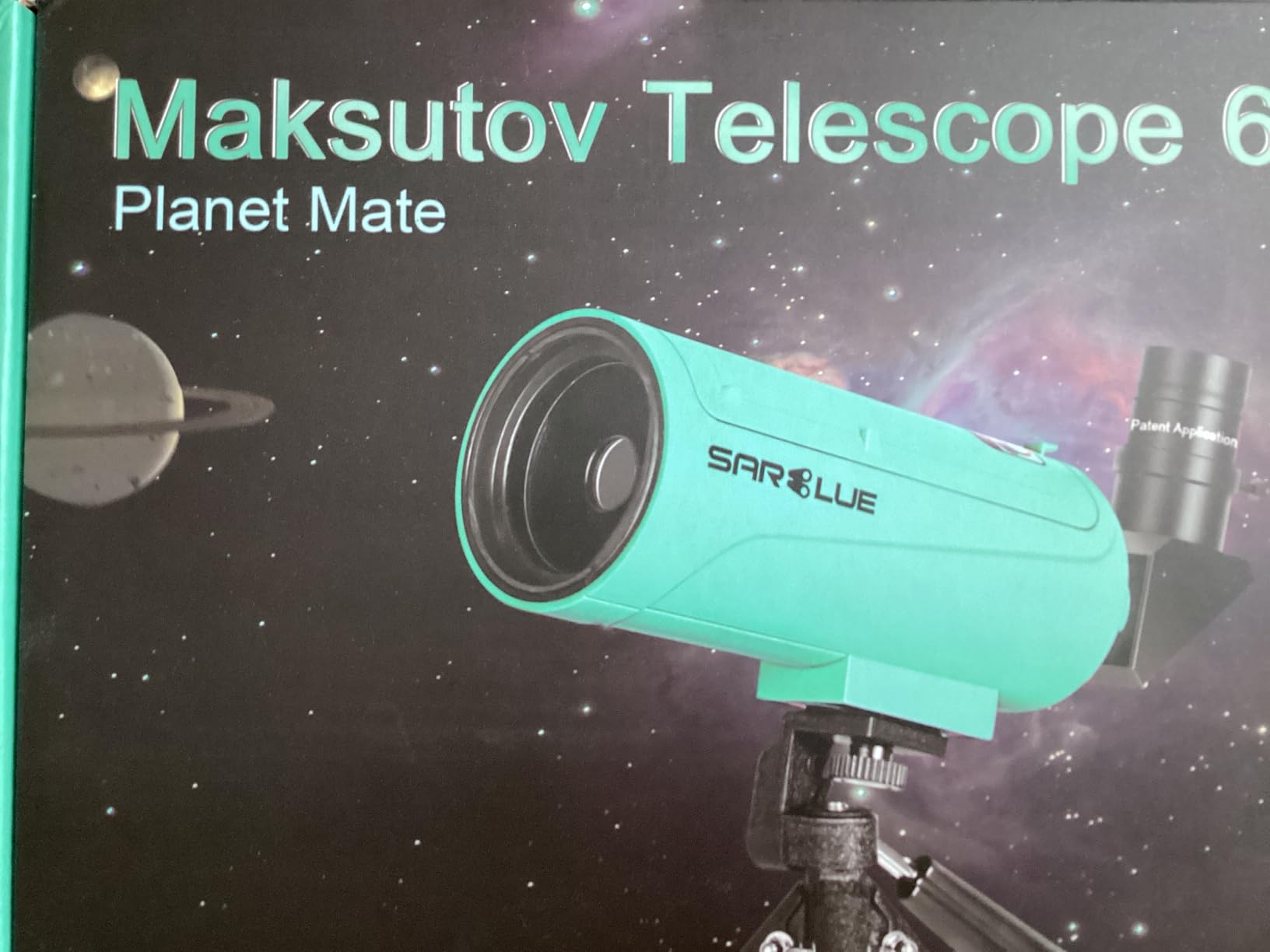
A Maksutov-Cassegrain uses a mirror inside the front of the tube, which folds a 750mm focal length into a 200mm body. That is the entire appeal of the SARBLUE Mak60: real optical performance in something closer to a lens tin in size.
Reviewers describe sharp, high-contrast views for the money and an outer tube that is genuinely pocketable. It is also one of the few picks here that accepts standard 1.25 inch eyepieces, so the eyepiece you buy next will fit.
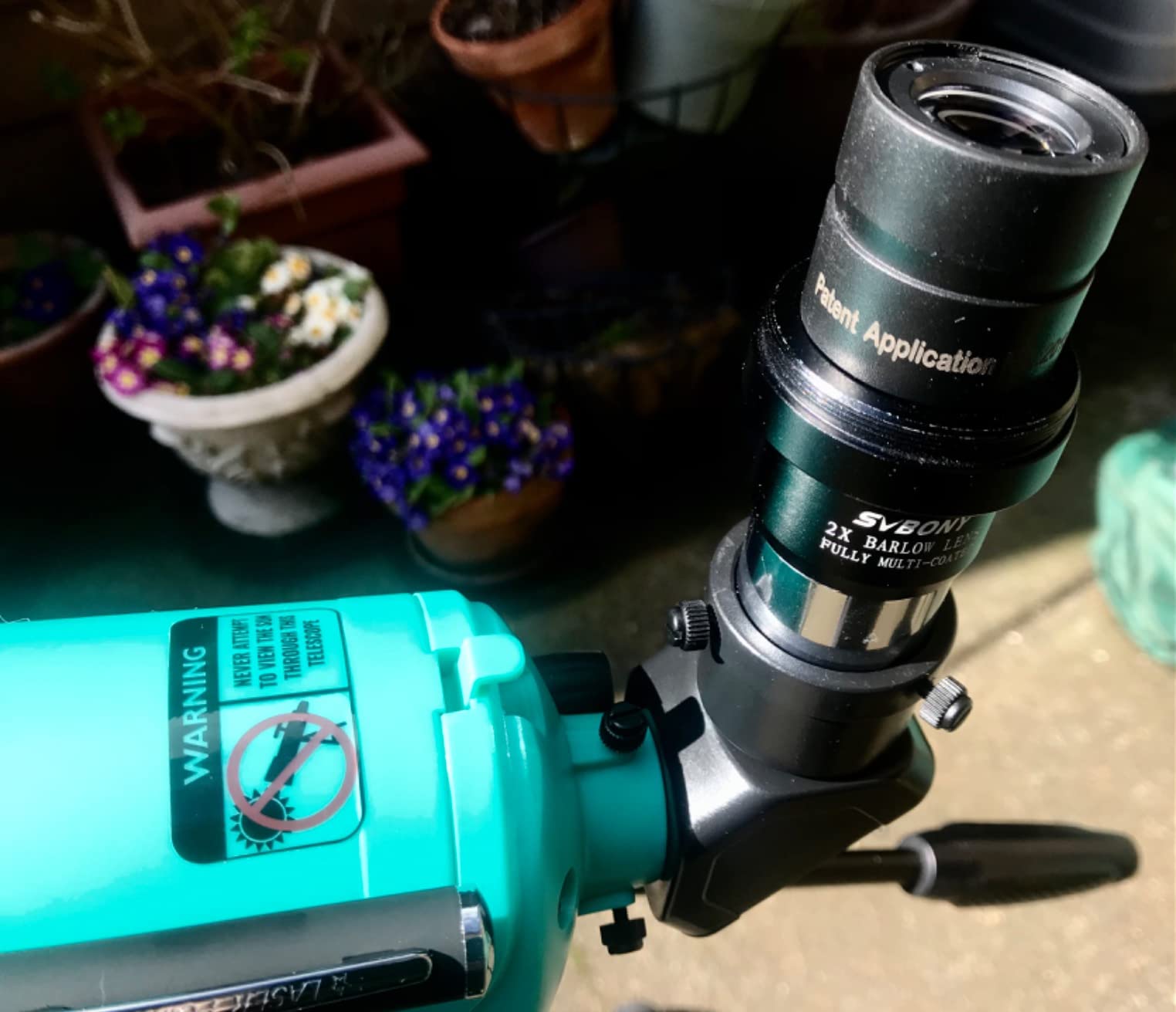
The optical specification is respectable. A 60mm aperture at 750mm focal length is f/12.5, an inherently slow design that forgives cheap eyepieces and gives a contrasty, planetary image. A 20mm Kellner at 37.5x is included along with an erect-image diagonal so the view is the right way up.
It works day and night. Used as a spotting scope on a balcony or a bird hide, the same tube earns its place, and the smartphone adapter works with the included 20mm eyepiece.
Where the compact design wins
Travel. A telescope that fits in hand luggage changes what travel observing is possible, because you can take it to a mountain site rather than a car park. The 1.25 inch eyepiece compatibility also means your investment in eyepieces moves with you to a bigger scope later.
The detachable lid that exposes the internal optics is a small, genuinely useful teaching feature. It is one of the few picks here that shows a beginner how a catadioptric works, which answers a question many people cannot otherwise visualise.
Where the size compromises bite
The included tripod is very short and is the single most common complaint. Experienced owners recommend moving it onto a photo tripod, and a 1/4-20 thread on the base makes that easy. Budget for it from the start.
There is no finderscope, only basic sight bumps, so pointing at a specific star means guessing. The 1.7 degree field is narrow, and the long focus throw needs many turns to bring the Moon into focus. At 60mm aperture, faint deep sky is out of reach entirely.
What to Avoid When Buying a Telescope
Almost every avoidable disappointment in this hobby traces back to a shortlist of red flags. Check a listing against these five before you buy anything, and you can eliminate most of the traps that end beginner hobby careers in the first month.
Inflated magnification claims. If a box or a listing leads with a number like “up to 675x”, that number is a claim about the eyepieces in the box, not about what the telescope can do. A 70mm aperture is usefully magnified to about 140x; past roughly twice the aperture in inches you get a dim, blurred image. Ignore the headline number entirely.
This is the trap that turns an evening into a return-to-seller. A scope advertised at 675x but built around a 60mm aperture collects around 30 times less light than the 150mm Heritage 150P while claiming to be far more powerful. The box number and the capability are describing two unrelated things.
A 0.5mm plastic rack-and-pinion focuser. These are stamped from thin plastic, grip the eyepiece unevenly and have no smooth helical action. If the focuser has visible rack teeth and a wobbly barrel, the scope will never feel precise. A 1.25-inch helical focuser, as on the Heritage 150P, is the standard to look for.
An equatorial mount on a light three-leg tripod. This is the most commonly cited regret in beginner forums. An equatorial mount needs mass to resist vibration, and pairing one with thin aluminium legs produces a shaky image at every magnification above 100x. If you want a German equatorial, expect to spend most of the money on the mount and tripod.
A 70mm refractor sold as a general-purpose telescope. These are fine as a travel scope, a spotting scope or a kids’ first instrument. They are not fine as a first telescope for deep sky, because the aperture will not collect enough light. Buy the 70mm for portability or buy the 130mm for capability, and do not expect a 70mm to do both.
Undersized eyepieces and a missing finder. A 4mm eyepiece produces a dim, useless image and is the most common source of one-star reviews on decent telescopes. No finder scope, or a finder that will not hold calibration, means you spend every session guessing where to point. Check what is in the box, not just the model name.
How to Choose a Telescope for Beginners: Aperture, Mounts and Optics
Aperture is the only spec that decides what you see
Aperture is the diameter of the light-collecting lens or mirror, and light-gathering power scales with the square of it. A 6-inch aperture collects roughly 1.8 times more light than a 5-inch, and a 130mm reflector gathers about 3.5 times more than a 70mm refractor. That difference is what separates a smudge from a shape on a deep-sky object.
Start from your target instead of from a spec sheet. The Moon rewards almost any aperture above 50mm. Jupiter and Saturn need 90mm and ideally 130mm for detail. Nebulae and galaxies need 100mm or more, and a dark site matters more than extra inches once you are there.
Why magnification numbers are marketing
Two limits govern usable magnification, and both are simple. The first is about twice the aperture in inches, so a 70mm scope tops out near 140x and a 130mm scope near 260x. The second is the 50x-per-inch rule of thumb, which gives a similar answer and is the version most clubs quote.
Worked example: the 130mm Gskyer EQ-130 in this roundup is advertised at 307x. At 130mm the honest ceiling is about 260x, so the 307x claim is roughly 18 percent above what the aperture can support. Nothing broken. Just a number designed for a listing.
If you have been reading roundups elsewhere, the difference is usually whether anyone told you what a number meant before you bought. Our beginner buying guide format applies the same rule across other categories: the specification that matters gets explained before the recommendation does.
Focal length and focal ratio decide what the image feels like
Focal length is the distance light travels inside the tube, and it works with the eyepiece focal length to give magnification. Focal ratio is focal length divided by aperture, written as f/5 or f/8.88, and it tells you how fast the light cone is.
A short, fast design like the Heritage 150P at f/5 gives bright, wide views of the sky. A long, slow refractor like the MEEZAA at f/8.88 gives a large, high-contrast image of a planet and forgives cheaper eyepieces. Neither is better; they suit different targets.
Refractor, reflector or catadioptric
Refractors use a lens. They need no collimation, never fog up internally and are the easiest first purchase, but aperture costs money fast because every millimetre must be ground and polished accurately. The 70mm scopes here are refractors for exactly that reason.
Reflectors use a primary mirror. Aperture is cheap per millimetre, which is why every serious scope in this roundup is a Newtonian reflector. The trade is collimation, the periodic realignment of two mirrors that a bump or a temperature change can put out.
Catadioptrics use a mirror inside a lens, folding a long focal length into a short tube. The Mak60 here is the clearest example, and the trade is a narrower field and a smaller aperture than a reflector of the same price.
Altazimuth, equatorial or GoTo
Altazimuth mounts move in height and rotation, like a camera tripod. They are simple, need no alignment and never drift out of polar alignment, which is why six of the twelve picks use one. The cost is that objects drift across the field at high power.
Equatorial mounts align a single axis with the celestial pole so one knob tracks the object. They are the right choice for long sessions and photography, and the wrong choice for someone who wants to unpack and observe in five minutes.
GoTo and app-guided systems solve the finding problem rather than the optical one. They are worth having if you cannot identify objects, and they add cost, battery drain and a phone dependency that reviewers on our forum research mention as a real drawback for family sharing.
Collimation, weight and storage
Collimation is the adjustment of a Newtonian’s mirrors so their optical axes line up. It takes five minutes with a cheap collimation cap, but it must be redone after transport. If you will carry your telescope to a dark site often, this is a recurring cost of a design that otherwise gives you the best light per pound.
The anxiety is real and largely misplaced. Nobody ever ruins a telescope by collimating it badly, because the procedure is simply adjusting three screws until a reflected image of the secondary looks centred. Do it once, and again after a car journey, and the rest of the hobby stops being about maintenance.
Weight deserves the same attention as aperture. A scope too heavy to move gets used once. The practical thresholds are about 5 pounds for something a child can carry, and about 15 pounds for something one adult can lift from a car to a table without planning ahead. Every pick here lists its weight for that reason.
Price Tiers: What to Buy at Each Budget
Telescope pricing follows a curve where the cheap end is dominated by plastic and the expensive end by glass. Here is how the tiers divide, using only the models in this roundup.
Entry tier. Refractors from 70mm to 80mm on short tripods. The Gskyer 70mm, the EACONN 80mm, the Koolpte 80mm and the SARBLUE Mak60 all sit here. Expect excellent Moon views, visible Jupiter’s moons, a smart adapter or remote in the box, and nothing beyond the brightest clusters. Buy here if the budget is fixed or the scope is a gift for a child.
Lower mid tier. Where capability starts. The Celestron AstroMaster 70AZ adds optical quality and a red dot finder, and the MEEZAA 90800 brings a 90mm aperture on a long tube, which is the best planetary upgrade available at this level.
Upper mid tier. Reflectors with real aperture. The Celestron PowerSeeker 127EQ, the AstroMaster 130EQ, the Gskyer EQ-130 and the Sky-Watcher Heritage 150P compete here, and the Heritage wins on light-gathering per unit of effort. This is the tier where a beginner hobby becomes a real one.
Premium tier. Smart and automated instruments. The ZWO Seestar S30 Pro and the DWARFLAB Dwarf Mini trade optical aperture for automation and portability. You are paying to remove the learning curve of finding and tracking, not for brighter images through an eyepiece.
Our advice is to spend the upper mid tier budget on aperture if you can carry the telescope, and the entry tier budget on portability if you cannot. Those are the two decisions that determine whether you will still be using it in a year.
One more caution about jumping tiers. A single jump from an 80mm refractor to a 150mm reflector is a bigger perceptual change than two jumps of the same size, because light-gathering scales with area rather than diameter. The step that usually disappoints buyers is the one that costs the most and teaches the least.
What You Can Actually See From a Light-Polluted Backyard
The single biggest source of beginner disappointment is not a bad telescope. It is expecting dark-sky images from a suburban garden. Setting expectations now is more useful than any pick on this list.
You will reliably see the Moon in any aperture, at any magnification, in any light. You will see Jupiter as a bright disc with its moons moving across the field, and you will see Saturn’s rings as a shape rather than a point. Both hold up under moderate light pollution.
The Pleiades is the first target that light pollution genuinely threatens. From a bright sky it becomes a handful of the brightest stars rather than a resolved cluster, and a neutral or light pollution filter is the single most effective accessory you can buy at this stage.
Open clusters and the fainter Messier objects will wash out. The Orion Nebula and Andromeda will usually be a smudge from a suburban backyard and become a structured object only when you travel somewhere darker. That is not a fault in the telescope, and no amount of magnification changes it.
Plan one dark-site trip before you buy, so you know what you are working toward. A 30 to 60 minute drive to a Bortle 3 or 4 site will show you more in one evening than three months of backyard observing, and it gives you a concrete reason to keep the hobby going.
Eyepieces and Accessories: Where Your Extra Budget Should Go
Almost every starter package over-supplies cheap eyepieces and under-supplies the three accessories that actually improve the view. If you have money left after the telescope, spend it here.
A 25mm Plossl eyepiece is the first upgrade worth making on almost any scope. It gives a wide, bright field at low power, works with the supplied diagonals and adapters, and replaces the thin plastic eyepieces that make people think a telescope is disappointing. A 2x Barlow is the natural companion, doubling power on the Moon and planets without adding a third element to the optical train.
A red flashlight is essential rather than optional. White light destroys your dark adaptation and you lose faint detail you have already paid for. Many beginners use phone flashlights and give up on deep sky without realising why.
A neutral or variable moon filter is worth adding once you are spending serious time on the lunar surface. It cuts glare, raises contrast and lets you look at craters near the terminator rather than a uniformly bright disc.
Binoculars are the smartest first instrument and the most frequently recommended on astronomy forums. A pair of 8×42 or 10×50 binoculars cost a fraction of a telescope, need no setup, and let you scan the whole sky for a year before you commit to a narrow field. If your budget only stretches to one purchase, buy binoculars now and a Dobsonian later.
Telescope Terms Every Beginner Should Know
Aperture. The diameter of the main lens or mirror, given in millimetres or inches. It determines light-gathering power, which scales with the square of the diameter. It is the most important number on any telescope listing.
Focal length. The distance light travels inside the tube. Combined with eyepiece focal length it sets magnification, and it determines whether the image is wide or narrow.
Focal ratio. Focal length divided by aperture, written f/5 or f/8. Low numbers are fast and bright and wide. High numbers are slow and give large, high-contrast planetary images.
Magnification. The apparent enlargement of an object, equal to telescope focal length divided by eyepiece focal length. It is the easiest specification to inflate and the least important one to buy on.
Light-gathering power. How much light the aperture collects, proportional to the square of the diameter. This, not magnification, is what determines whether you see a smudge or a spiral galaxy.
Field of view. The slice of sky visible through an eyepiece. Wide fields suit star clusters and the Milky Way, narrow fields suit planets.
Exit pupil. The diameter of the beam of light leaving the eyepiece. It should roughly match your dark-adapted pupil, which is why very high magnification produces a dim, washed-out image.
Collimation. Aligning the mirrors of a Newtonian reflector. Needed after transport, and the most common source of beginner frustration with reflector designs.
Dobsonian mount. An altazimuth mount on a friction base, stable enough to hold a large tube and simple enough to point with one hand. Usually called a light bucket.
GoTo, SkyAlign and app-guided pointing. Computerised systems that point the telescope at a named object. They solve finding, not optics, and add cost, batteries and a phone dependency.
Frequently Asked Questions
What is the best first telescope for a beginner?
A Dobsonian-style reflector is the most recommended first telescope because it puts the largest aperture on the simplest, most stable mount. For a family or child, a 70 to 80mm manual refractor works because it needs no setup skills. In every case, judge on aperture and mount quality rather than the magnification number.
How much should I spend on a beginner telescope?
Most experienced observers suggest the entry tier is where plastic dominates and the upper mid tier is where aperture finally works for you. Entry refractors show the Moon and Jupiter well. Spending into the reflector range buys 127 to 150mm apertures, which show Saturn’s rings and the Orion Nebula properly.
What size telescope is needed to see Saturn’s rings?
A 60 to 80mm aperture shows Saturn as a small ball with an oval around it. Roughly 90 to 100mm reveals the rings as rings, and 130mm or more brings out the Cassini division as a dark gap. The Heritage 150P on this list is the cheapest pick here that does the job well.
Which telescope is best to see planets?
Planets need magnification and a longer focal length rather than more light. A Maksutov such as the SARBLUE Mak60 or a refractor with a long tube such as the MEEZAA 90800 gives a bigger image of a small disc. A 130mm reflector adds the resolution to hold the image steady.
What to avoid when buying a telescope?
Avoid inflated magnification claims, plastic rack-and-pinion focusers, thin tripods paired with equatorial mounts, 70mm refractors sold as all-purpose instruments, and kits with a 4mm eyepiece or no finder scope. Each of these is cheap to fix at purchase and frustrating to fix afterwards.
Do I need to collimate my telescope?
Only Newtonian reflectors need collimation, and only occasional collimation after transport or a big temperature change. It takes a few minutes with a collimation cap and makes a large visible difference to sharpness. Refractors and catadioptrics never need it.
One safety note before your first night. Never point any telescope at the Sun without a filter that meets the ISO 12312-2 standard fitted over the front aperture. Instant and permanent eye damage is the only outcome of an unfiltered solar view, and no filter is a substitute for looking elsewhere.
Final Verdict: Which Beginner Telescope Should You Buy?
Start with the Gskyer 70mm if you want the shortest path to a first successful view, or with the Sky-Watcher Heritage 150P if you want the most sky per pound and can put it on a table at the right height. Those two bracket the whole decision. Everything else in this roundup is a variation on one of them, sized for a hand, a bag or a balcony.
Pick the Celestron AstroMaster 130EQ or the Gskyer EQ-130 if you already know this will be a long hobby and you have a spot to keep a heavy reflector. Pick the ZWO Seestar S30 Pro or the DWARFLAB Dwarf Mini if you would rather press a button than point a tube, and accept that planets are not the goal.
Whichever you choose, the best telescopes for beginners share three traits: a real aperture rather than a magnification claim, a mount heavy enough to steady the image, and a weight you can lift without planning the evening around it. Get those three right and the rest is preference.