
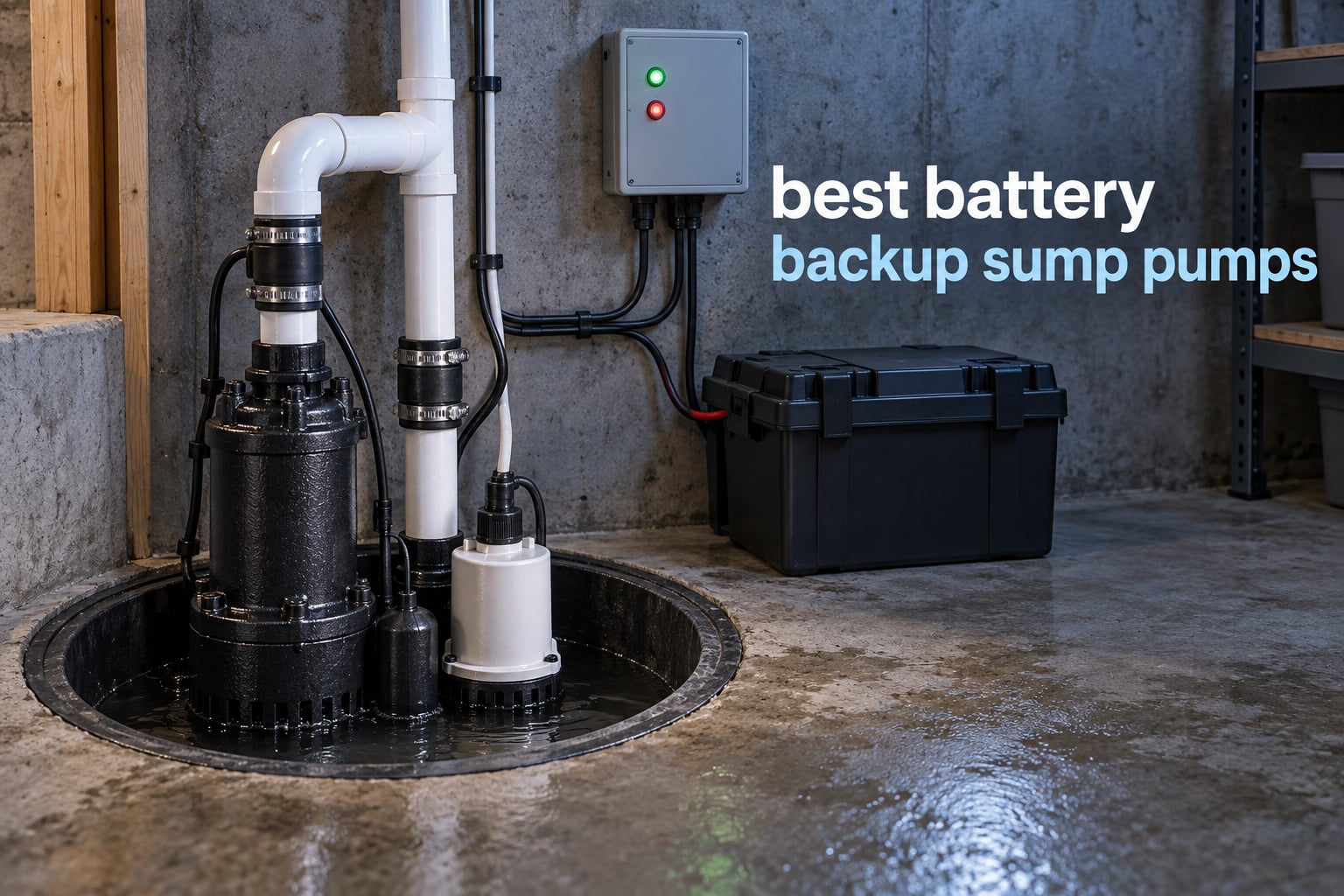
The worst part of a basement flood is not the water. It is the water that arrived while your sump pump had no electricity, because the storm that dumps a foot of rain in an afternoon is often the same storm that takes the neighborhood grid down. A battery backup sump pump is the second pump that keeps working when the first one goes silent.
We spent several weeks comparing the eight systems below, focusing on the numbers that decide whether water actually leaves your pit: gallons per hour at a realistic 10-foot lift, whether the unit fits your basin, how much flow survives at depth, and what the control panel tells you when something is wrong. We also weighed the parts nobody puts in the box, because a battery is never included with any of these systems.
That last point deserves emphasis before we get into the list. Every battery backup sump pump on this page includes the pump, the controller, the float switch and often the battery box, and then stops there. You still have to buy a deep-cycle AGM battery, and on several models you also need a separate smart maintainer to keep that battery healthy between outages. The table and the reviews below flag that for every single product.
Here is how these systems actually work. A float switch detects rising water and closes the circuit, and under normal conditions the primary AC pump runs while the controller sits on a float charger watching the standby battery.
The instant line power disappears, the controller drops its relay, the backup pump starts on 12 volts, and the alarm sounds so you know you are running on borrowed time. When the water falls, the float opens and the pump stops.
There is one important catch: an inverter-style backup only covers an outage, not a primary pump that has seized or jammed, because the AC pump is still doing all of the heavy pumping.
Table of Contents
Top 3 Best Battery Backup Sump Pumps in 2026
These three cover the most common household situations: a full combo system for a normal residential pit, a compact backup-only unit for a tight basin, and a preassembled system with phone-ready alerts for people who travel.
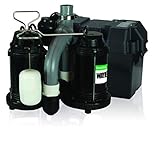
Wayne WSS30VN Combo System
- 5100 GPH 0.5 HP primary
- 12V DC backup
- 10000 gallons per charge
- Preassembled 15 minute install
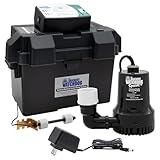
Basement Watchdog BWSP
- Compact 12 pound backup only
- 1730 GPH at 10 ft lift
- Small and narrow pit friendly
- WiFi ready

Basement Watchdog CITS-50
- 4400 GPH primary
- 2890 GPH backup
- 25 ft max lift
- Parallel battery support
Battery Backup Sump Pumps at a Glance (September 2026)
Every unit below needs a deep-cycle battery purchased separately. GPH figures are given at a 10-foot lift where the manufacturer publishes them, because that is the number that reflects reality in a deep pit.
| Product | Specs | Action |
|---|---|---|
| Wayne WSS30VN Combo System |
|
Check Latest Price |
| Basement Watchdog BWSP Backup |
|
Check Latest Price |
| Basement Watchdog CITS-50 Combo |
|
Check Latest Price |
 Basement Watchdog CITE-33 Combo Basement Watchdog CITE-33 Combo |
|
Check Latest Price |
 Zoeller Aquanot 508 Backup Zoeller Aquanot 508 Backup |
|
Check Latest Price |
 Zoeller AquaNot Spin 508 ProPak Zoeller AquaNot Spin 508 ProPak |
|
Check Latest Price |
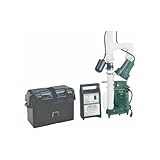 Zoeller Basement Sentry 507 Zoeller Basement Sentry 507 |
|
Check Latest Price |
 Westinghouse WH50BBU Combo Westinghouse WH50BBU Combo |
|
Check Latest Price |
1. Wayne WSS30VN Preassembled Combo System – Best Overall
Wayne Preassembled Primary & Battery Backup Sump Pump Combo System
5100 GPH primary
0.5 HP
12V DC backup
10000 gallons per charge
16 inch pit minimum
Pros
- Preassembled drop-in install in about 15 minutes
- Exceptionally quiet 0.5 HP primary
- DC backup moved 10000 gallons on a single charge
- Loud failure alarm audible on upper floors
- 5 year warranty
Cons
- Backup runs a fixed preset time instead of stopping with the water
- Backup float must be raised onto the discharge pipe
- Wide side-by-side layout barely clears an 18 inch round pit
This is the system we keep coming back to. The WSS30VN arrives as a single preassembled unit with the primary pump, the DC backup, the vertical float switch, the controller and the battery box already mounted, so the job turns into setting the basin, dropping the unit in and connecting discharge pipe. Wayne rates it at 15 minutes or less with no weep hole drilling, and the 8-foot SJTW cord is long enough to reach a receptacle without an extension.
Quiet is the word owners use most. At 5100 GPH from a 1/2 HP primary, this is not a weak pump, yet multiple reviewers describe it as inaudible outside the room directly above the pit. That matters more than raw flow in a finished basement where a loud pump becomes a permanent irritant.
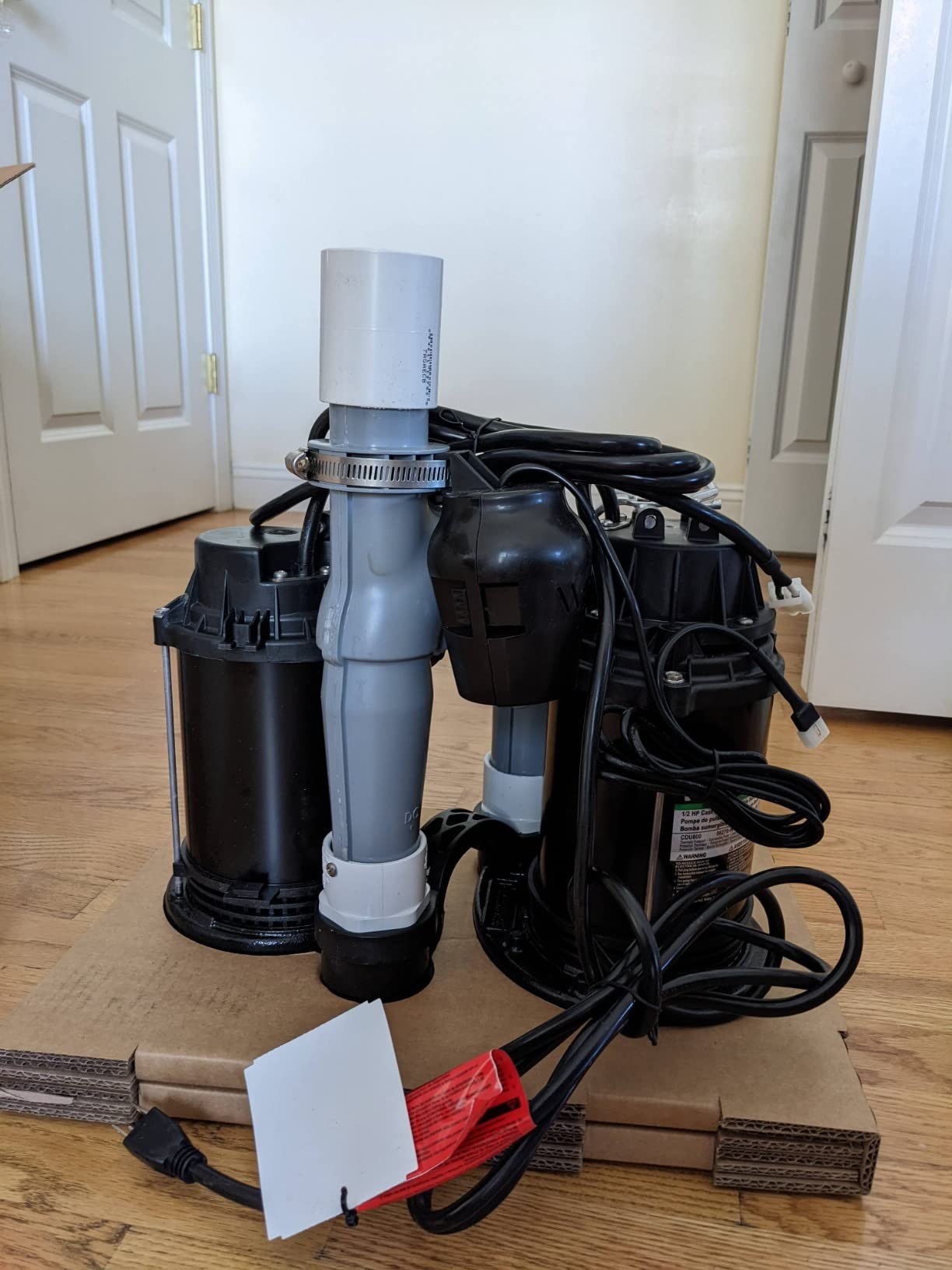
The backup side is the reason to buy it. Wayne claims up to 10000 gallons of evacuation on a single battery charge, and owners running 100Ah AGM batteries report all-day performance with the pit emptying in roughly 30 seconds per cycle. The controller alarms loudly on failure, which several owners say they can hear from an upstairs bedroom, and the pump is rated and tested to 1000000 cycles.
Three things to know before you buy. The backup pump runs for a preset time rather than shutting off the moment the water drops, so the backup float has to be set high, and that same float needs to be raised up onto the discharge pipe or the pump can pull in air.
And the side-by-side layout is wide, so measure your basin: it fits 16-inch and larger, and it is snug inside an 18-inch round pit.
What makes this the quickest preassembled install
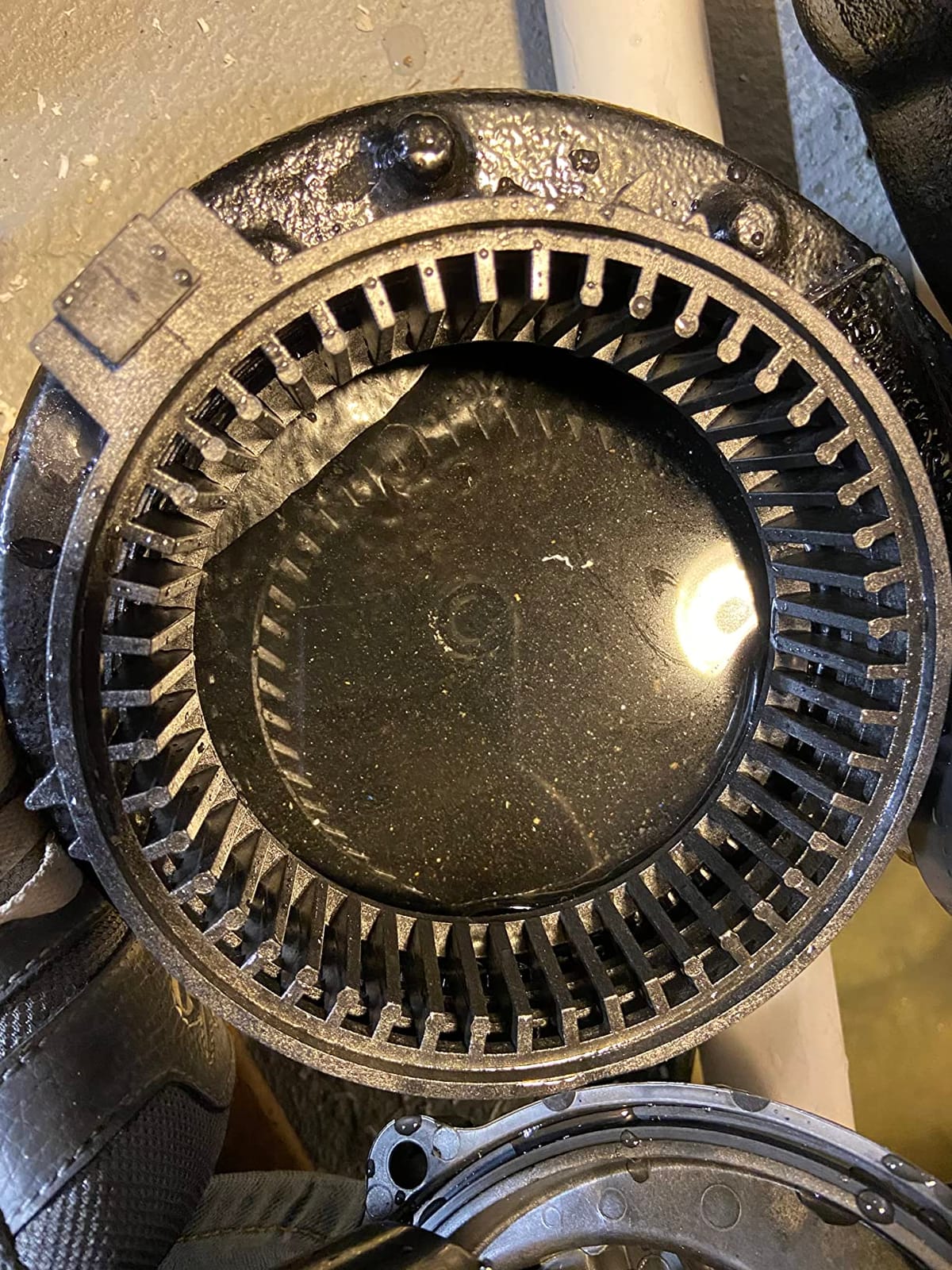
Preassembly is the whole story. Nothing has to be plumbed separately, and there is no weep hole to drill through a basin floor, which is a step that some owners of other systems struggle with. Multiple reviewers describe completing the drop-in portion in a single afternoon with basic tools.
The other quiet advantage is longevity. Several owners report three-plus years of trouble-free service, and the factory check valve nuts occasionally need a light tightening to stop minor weeping, which is a five-minute fix rather than a defect.
Where buyers run into trouble
The fixed-run-time behavior trips people up. If you set the backup float too low, the pump keeps drawing power after the pit is empty and you burn battery for nothing. Read the float positioning instructions twice, and plan on a quality smart maintainer if you use a flooded-cell battery, since the built-in charger is not designed for that chemistry.
A few buyers also report slow or missing email responses from customer support. The unit itself performs, but if your install goes sideways, a local plumber will be faster than a ticket.
2. Basement Watchdog BWSP Special CONNECT – Budget Pick for Tight Basins
The Basement Watchdog Special CONNECT Battery Backup Sump Pump System w/Copper-Wound Motor, 2,890 GPH (BWSP); WiFi-Capable w/Add-on Module
2500 GPH at 0 ft
1730 GPH at 10 ft
Backup only
12 pound body
Small pit friendly
Pros
- Compact 12 pound design fits small and narrow pits
- Copper-wound motor built for long service life
- Control panel describes required maintenance in plain language
- Battery fluid level sensor adds real monitoring
- Dual float switch improves reliability
Cons
- Backup only design means you need a separate primary pump
- Modest flow of 1730 GPH at a 10 ft lift
- WiFi alerting requires an additional add-on module
If your pit is small, this is the unit worth looking at first. At 12 pounds and 9 by 5 by 7.63 inches, the BWSP slips into basins that will not accept a full combo assembly, and Glentronics built the whole footprint around that constraint. The copper-wound motor in a thermoplastic housing is the combination we see most often in small residential pits.
Flow is honest rather than impressive: 2500 GPH at zero lift and 1730 GPH at a 10-foot lift, with a 10-foot maximum rated lift. In a shallow pit with a short discharge run, that is more than enough to keep up with inflow. In a deep pit, you should expect it to maintain rather than aggressively clear.
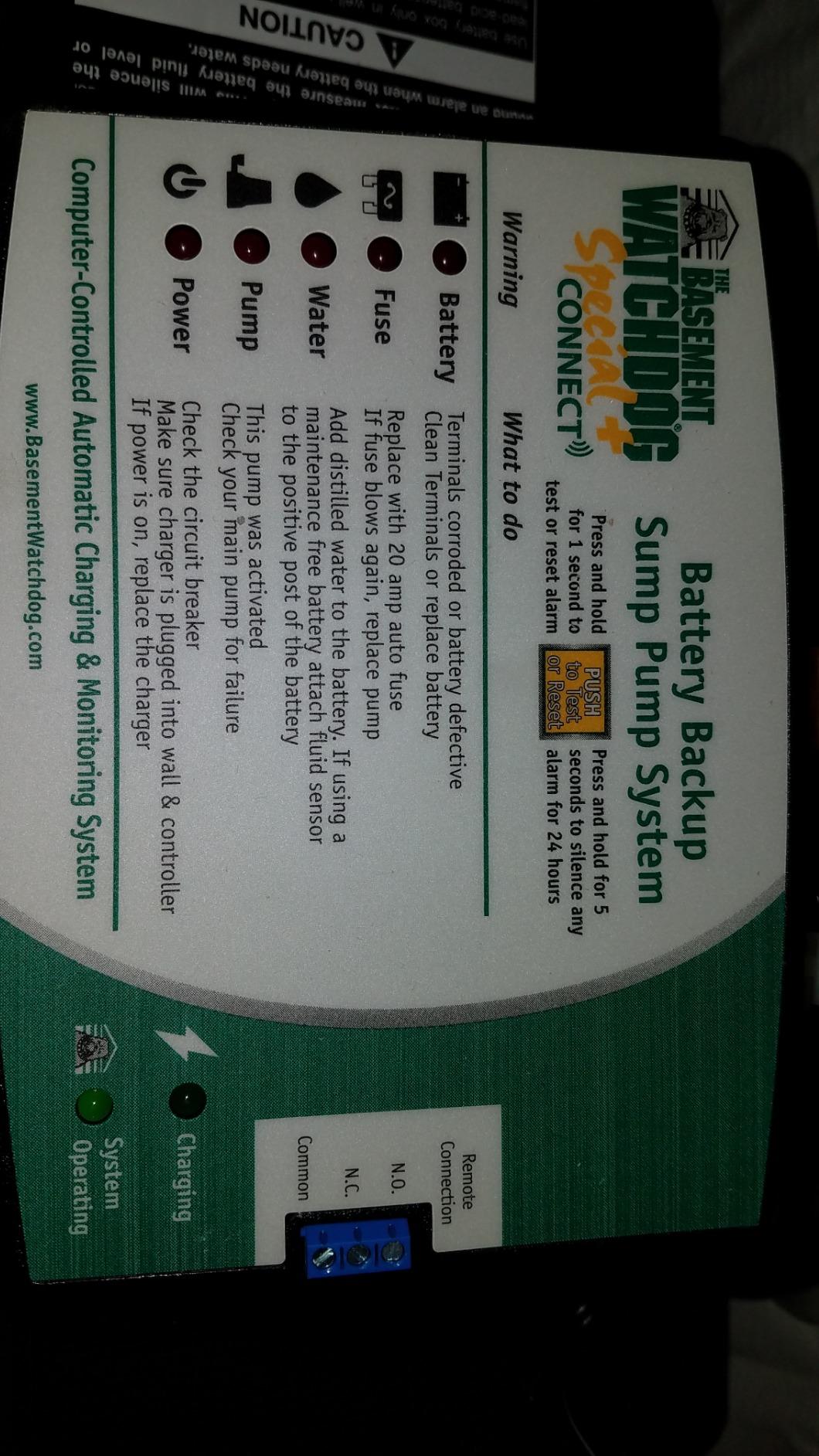
Where this system earns its value is the control panel and the monitoring. The panel lights up and describes the maintenance action needed instead of flashing cryptic codes, which is exactly what a panicked homeowner at 2 a.m. needs. A sensor watches battery fluid levels, and the dual float switch gives you a second activation path if debris catches the first one.
The CONNECT naming means WiFi-capable, but the module is a separate purchase. The system is ready for text, email and push alerts through the free app once you add it, and it accepts AGM or wet-cell batteries, so you can run two in parallel for roughly double the runtime on a long outage.
Why this fits pits that reject combo systems
Basin diameter is the deciding factor. A combo system needs 16 inches or more, most standalone backups fit 12 to 14 inches, and the Basement Watchdog units are the ones homeowners in 10-inch and 12-inch pits report actually fitting. The BWSP also weighs 12 pounds, so it is far easier to lower into a cramped basin than the 44-pound Wayne combo.
It is also a straightforward way to add protection to a pit that already has a healthy AC pump. You keep your primary, add this and a battery, and you have covered the outage scenario without rebuilding the basin.
What you give up compared with a combo system
You are adding a second pump to a pit that still needs a primary, and the total cost includes that battery you have to buy separately. Flow at depth is the other limit: 1730 GPH at 10 feet is roughly half what a 1/2 HP combo primary delivers, so in heavy inflow this pump assists rather than carries the whole load.
The add-on WiFi module also pushes the true system cost higher than the pump price suggests, which is the single most common complaint across this whole category on homeowner forums.
3. Basement Watchdog CITS-50 Big Combo CONNECT – Best for WiFi Alerts
The Basement Watchdog Combo Preassembled Primary & Battery Backup Sump Pump System w/Monitoring Controller (CITS-50); Copper-Wound PSC Motor; WiFi-Capable w/Add-on Module
4400 GPH primary
2890 GPH backup
25 ft max lift
WiFi ready
Two batteries in parallel
Pros
- Preassembled and preplumbed for a quick install
- Strong 4400 GPH primary with 25 ft rated lift
- Monitoring controller gives continuous status and clear guidance
- Two batteries in parallel for extended runtime
- Optional CONNECT module for real-time phone alerts
Cons
- Backup pump uses a plastic housing some buyers consider less durable
- Backup flow falls to 2150 GPH at a 10 ft lift
- Battery and WiFi module are both separate purchases
The CITS-50 carries more capacity than the CITE-33 while staying 11.75 inches wide, narrower than the fully stacked Zoeller ProPak. The 1/2 HP copper-wound PSC primary moves 4400 GPH at zero lift and 3540 GPH at 10 feet, and the DC backup handles 2890 GPH at zero lift and 2150 GPH at 10 feet.
Both pumps are preassembled and preplumbed, so installation is mostly a matter of setting the unit and running discharge pipe. At 27 pounds and 8.75 by 11.75 by 18 inches, it is a full-size residential assembly rather than a compact unit, so pit diameter still matters.
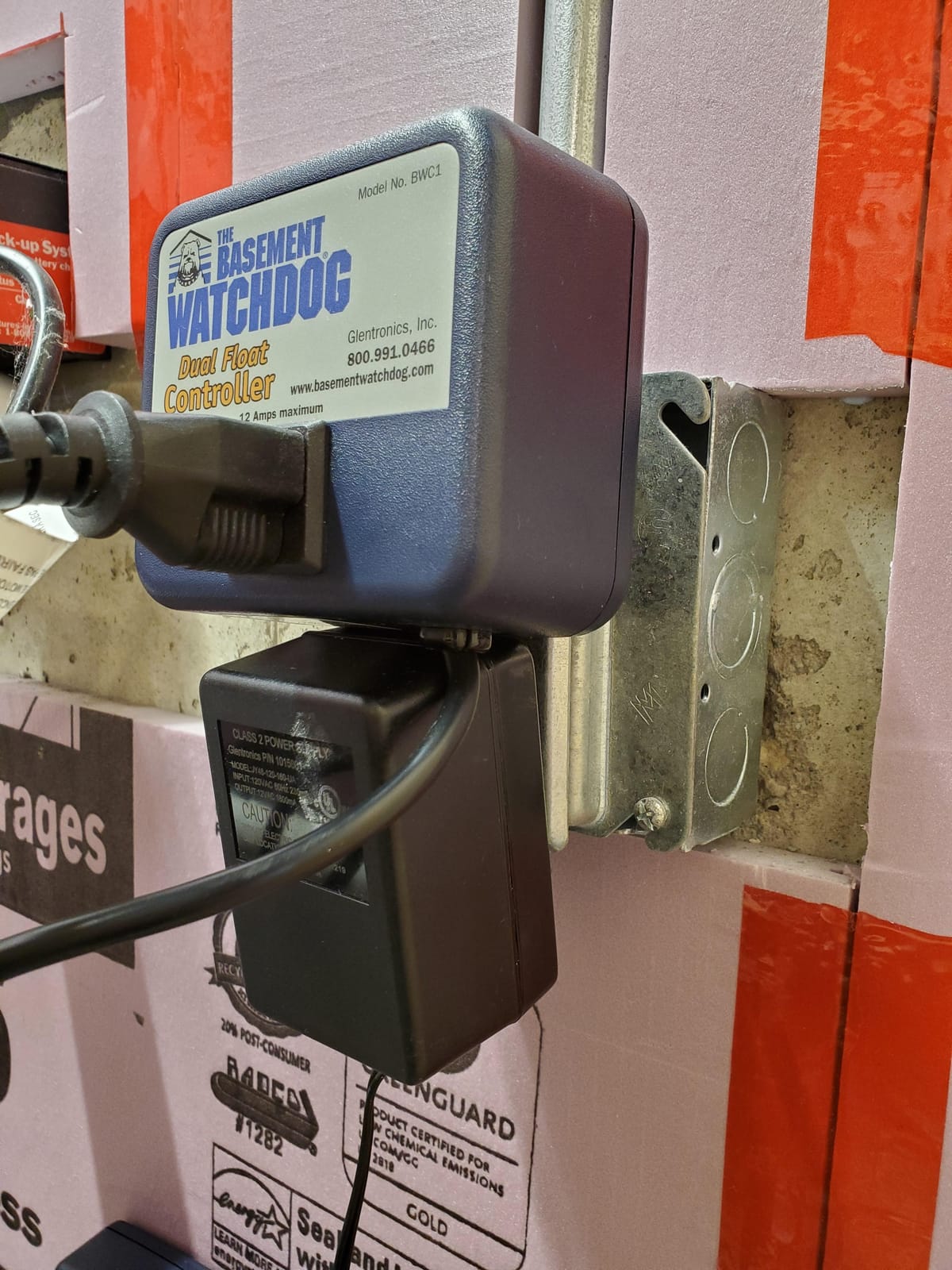
The controller is the reason to choose this model. It monitors pump, power and battery conditions around the clock, sounds an alarm, lights a warning and tells you what to do about it. Add the BW-WiFi2 CONNECT module and the same information reaches your phone as text, email and push alerts, which is the feature people who travel or own rental properties ask for by name.
Battery flexibility is the other reason to like this model. The system accepts AGM and wet-cell batteries, and two batteries can be run in parallel for roughly double the runtime, so a multi-day outage stops being the thing that worries you.
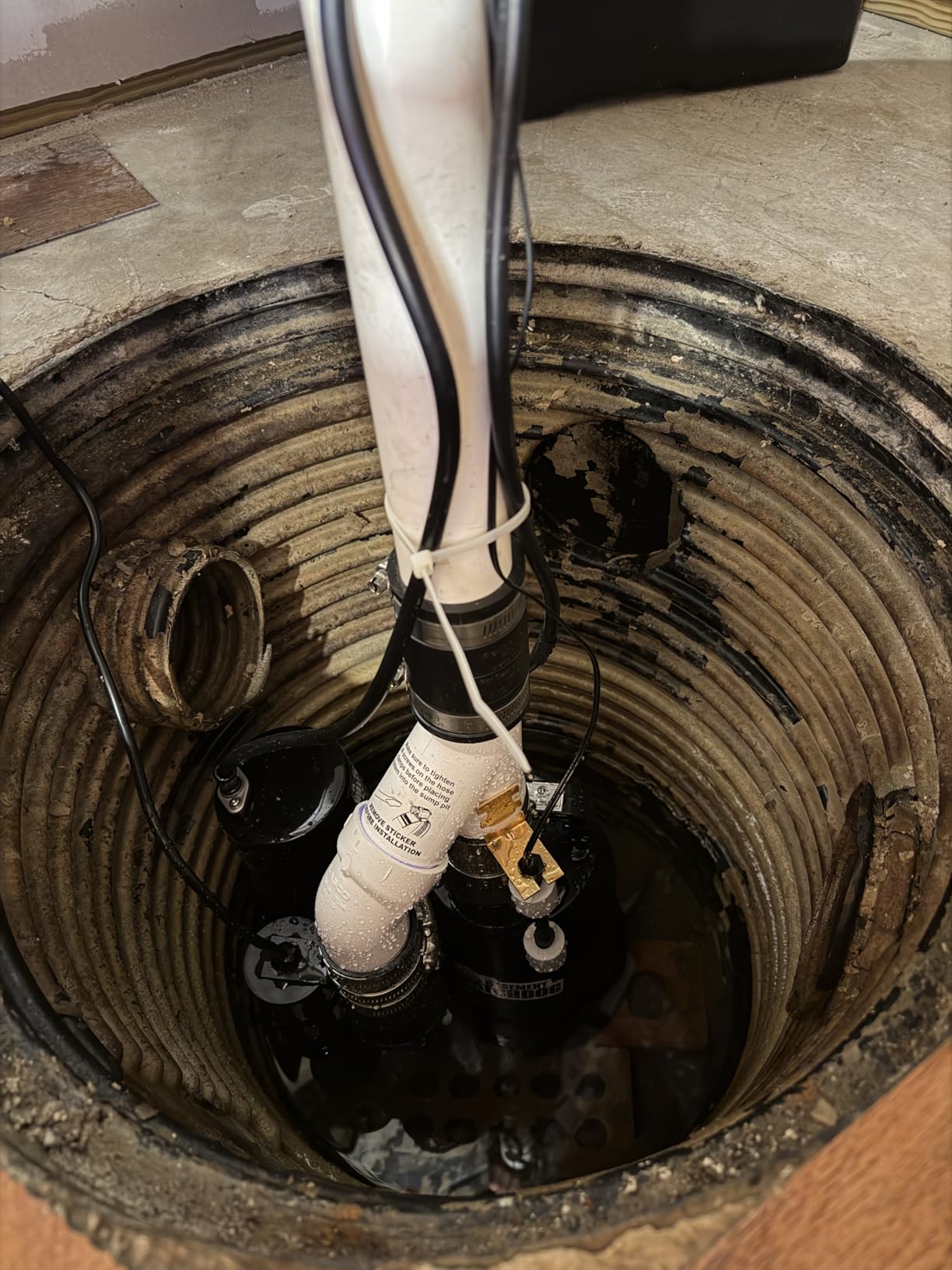
What the monitoring controller does for you
It converts a silent failure into a notification. A pump that seized, a float that jammed and a battery that dropped below its threshold all produce an alarm and a described corrective action rather than a mystery. For anyone who is not standing at the pit during a storm, that difference is the whole point of the product.
The 25-foot maximum lift rating also makes this a flexible combo for a deep basin or a high discharge height, where the 10-foot-rated models start losing real flow.
What reviewers are less happy about
The 4.3 average sits below the Wayne and BWSP systems, with a reported 10 percent one-star share and recurring quality control and support experiences. The backup pump housing is plastic, which some buyers consider less durable than the cast iron primary above it.
Fit is also worth checking before you order. A handful of owners with smaller pits report installation and fit questions, and you are buying the battery and the WiFi module separately, so budget for both.
4. Basement Watchdog CITE-33 Combo – Best for Small Pits
The Basement Watchdog Combo Preassembled Primary & Battery Backup Sump Pump System w/Monitoring Controller (CITE-33); Copper-Wound PSC Motor
3720 GPH primary
1500 GPH backup at 10 ft
Fits 12 inch pits
Dual float switches
Pros
- Dual float switches on both primary and backup
- Compact design fits pits as small as 12 inches
- Preassembled and preplumbed so installation is quick
- Copper-wound PSC motor is efficient and long-lived
- Monitoring controller with battery fluid sensor and alarm
Cons
- Backup capacity falls to 1500 GPH at a 10 ft lift
- 10 ft maximum lift is the lowest of the combo systems here
- No built-in WiFi on this model
The CITE-33 is the only combo on this list that Glentronics rates down to a 12 inch pit, and at 27 pounds it is lighter than the 44 pound Wayne assembly. If you have measured your basin and found it small, this is the combo to buy.
The redundancy is the standout feature. Both the primary and the backup have their own dual float switch, giving four independent activation paths. In practice that is protection against a single debris-clogged or stuck float, which is the most-cited mechanical failure homeowners describe on plumbing forums.

The primary is a 1/3 HP copper-wound PSC motor rated at 3720 GPH at zero lift and 3100 GPH at 10 feet. The DC backup delivers 2500 GPH at zero lift and 1500 GPH at 10 feet, so in a deep pit the backup is a maintenance-level pump rather than a flood-fighting pump.
The monitoring controller runs 24/7 with lights, an audible alarm and a battery fluid sensor. Its charger is a 0.4-amp unit, which means your battery choice matters: it is designed for a maintenance-free AGM standby battery like the BW-27AGM rather than a large flooded deep-cycle bank.
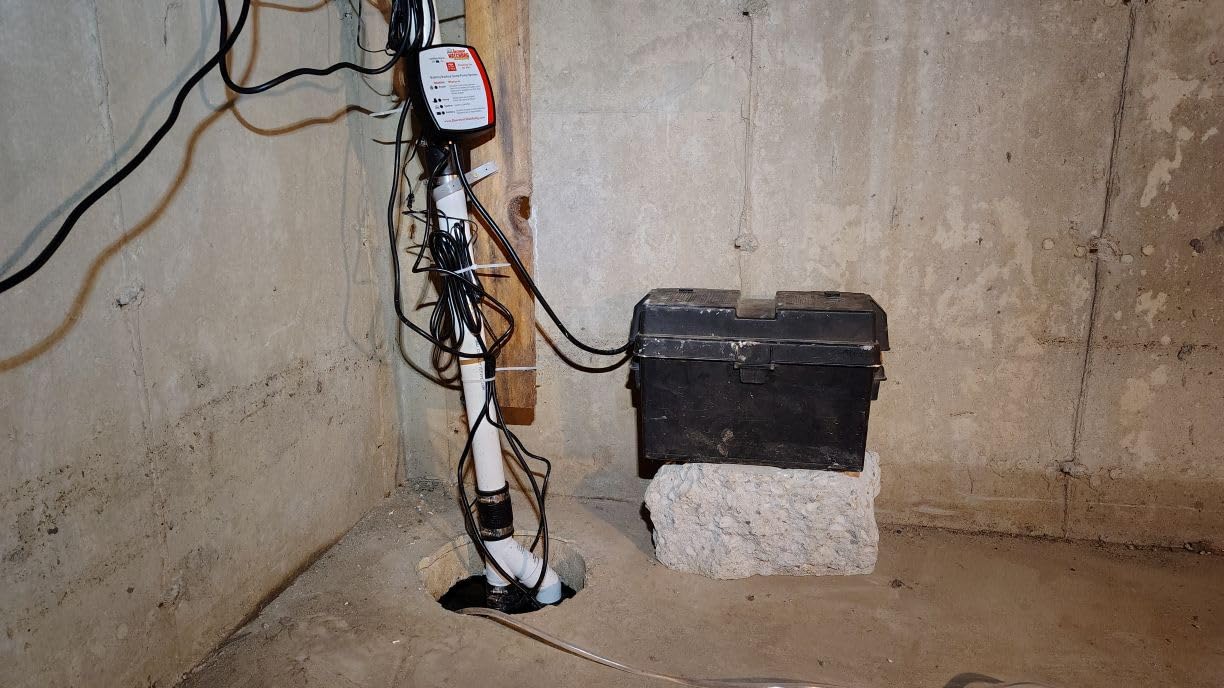
When a 1/3 HP primary is enough
Flow demand is driven by how fast water arrives, not by pit depth. In a normal single-family basement with modest inflow, a 1/3 HP primary at 3100 GPH at 10 feet keeps up comfortably, and the small footprint buys you the headroom in the basin that you would otherwise lose to a wider assembly.
If you are on a high water table or your pit collects runoff from a large paved area, move up to a 1/2 HP combo instead. Capacity matters more than footprint in that situation.
What the smaller motor costs you
The 10-foot maximum lift rating is the lowest of the preassembled combos here, which puts it in a class of its own, and if your discharge line is already high you will be running the pump near its limit from day one. Backup flow of 1500 GPH at 10 feet is also modest.
There is no built-in WiFi, so remote monitoring requires a separate module. And the 0.4-amp charger limits you to smaller AGM batteries, which reduces runtime on a long outage compared with the higher-current systems.
5. Zoeller Aquanot 508 Battery Back-Up System – Best for Existing Pumps
Zoeller 508-0005 Aquanot 508 Battery Back-Up System
40 GPM DC backup
Integrated check valve
Quick disconnect
10.5 pound body
Hand built in USA
Pros
- Noncorrosive construction with aluminum seal pocket and cooling plate
- Integrated check valve and quick disconnect discharge simplify servicing
- Hand built and 100 percent tested in the USA
- Compact 10.5 pound unit fits tight pits
- Warranty extends to 36 months with a matching Zoeller battery
Cons
- Pump and battery assembly only with no primary pump included
- 40 GPM flow is modest against combo systems
- Some owners replace the supplied check valve for a quieter unit
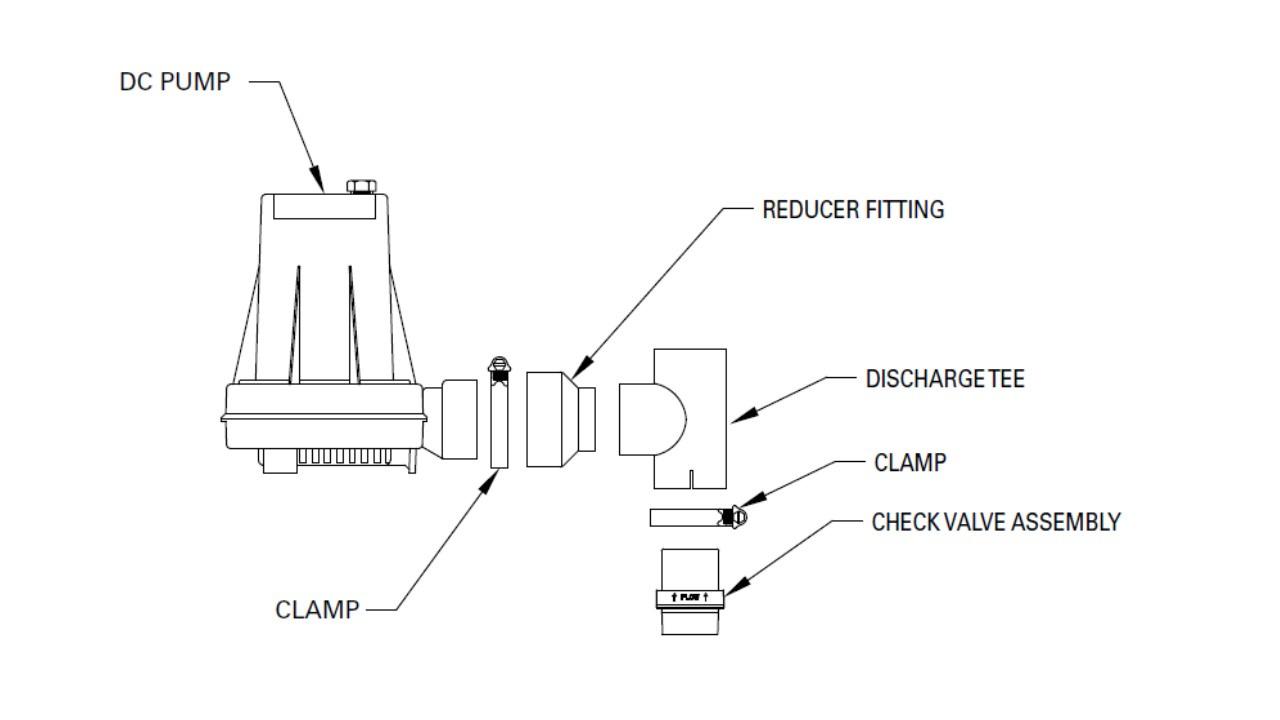
Zoeller built its reputation on the primary pump, and this is the unit plumbers reach for when a house already has a healthy AC pump and only needs outage coverage. The 508-0005 is a 12-volt DC backup assembly with a control panel and float switch, nothing more, which means you are adding one assembly to a pit that already works.
At 10.5 pounds and 10.25 by 7.75 by 10.25 inches, it drops into a pit that would never accept a combo system. The construction is the part we like most: noncorrosive materials, an aluminum seal pocket and cooling plate around the motor, and a double-sealed design meant to survive years of wet, corrosive pit conditions.
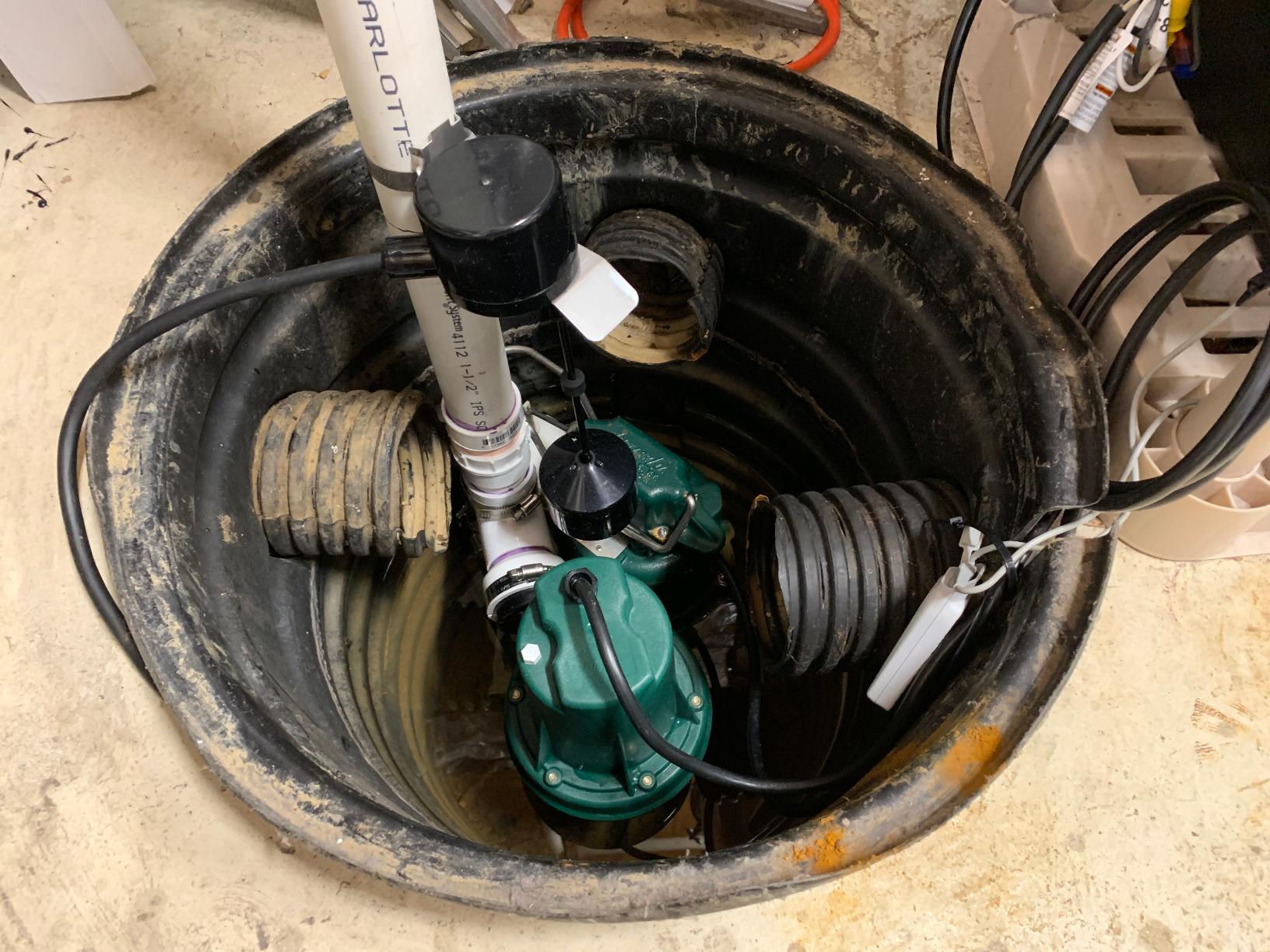
Serviceability is the quiet win. The integrated check valve removes one potential leak point and one part to replace, and the quick disconnect discharge lets you pull the pump for service without cutting pipe. Owners who have had to replace the supplied check valve with a quieter aftermarket unit still rate the system highly for everything else.
The warranty terms are unusually specific. The base coverage is 12 months from installation or 18 months from manufacture, and it extends to 36 months when you pair it with a Zoeller Aquanot battery and run it as backup to a primary dewatering system. That is a common arrangement, and here it is written into the spec sheet.
Why build quality decides this one
Zoeller hand builds and tests every unit in the USA, and plumbers repeatedly name the brand as a durable choice. For a pump you will rarely see working, build quality is the whole value proposition. A pump that fails silently in a storm is worth nothing at any capacity figure.
The integrated check valve and quick disconnect also reduce the number of joints in a pit that may sit wet for years, which is where most leak complaints originate.
What this unit will not do for you
It does not replace a primary pump. If your existing pump is old, undersized or already unreliable, adding the 508 is treating a symptom. Flow of 40 GPM is roughly 2400 GPH, enough to maintain a modest pit but not to clear a heavy inflow on its own.
You also buy the battery separately, and the controller electronics are a known long-term weak point in this category, with some owners of older units reporting control-panel malfunctions after a few seasons. Test the system every few months so a failure surfaces while you can still act on it.
6. Zoeller AquaNot Spin 508 ProPak – Best for Diagnostic Alerts
Zoeller 508-0006 AquaNot Spin 508 ProPak
Pre-plumbed combo system
43 GPM DC backup
5.5 hours continuous
3 year warranty
Pros
- Arrives fully pre-plumbed with PVC piping plus check valve and float switches
- Controller self-tests and names the specific fault
- Very quiet operation
- Up to 5.5 hours continuous or 48+ hours at 10 percent duty
- Double-sealed corrosion resistant DC pump
Cons
- Bulky stacked layout plus a separate deep-cycle battery
- Not every residential pit has room for a stacked assembly
- Cluster of one-star reports around cracked check valves and missing hardware
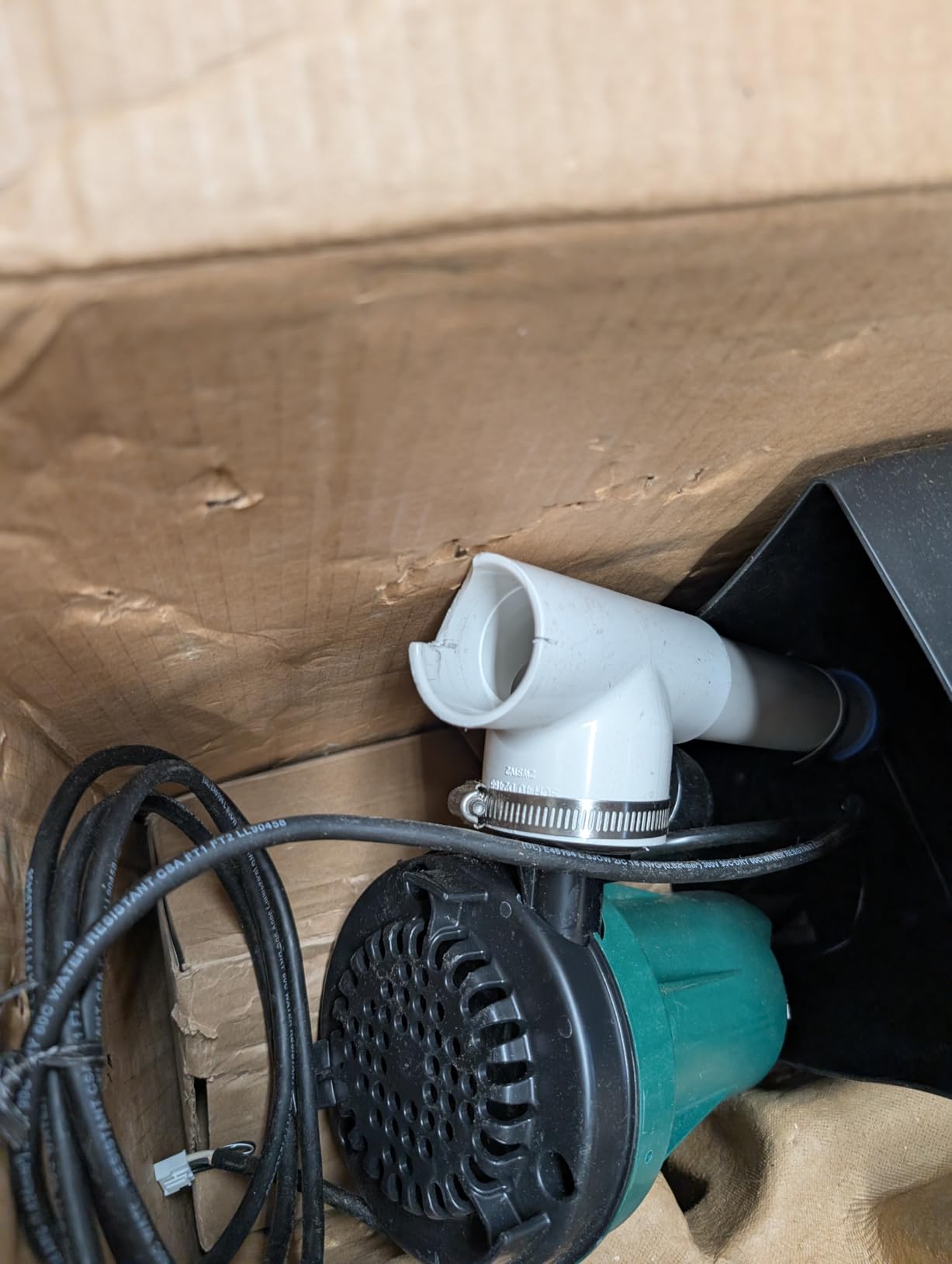
The ProPak53 arrives fully plumbed, and that is unusual in this category. The package includes a 3/10 HP Model M53 primary, the AquaNot Spin 508 controller, a 12-volt DC backup pump, a check valve, float switches and 1-1/2 inch Schedule 40 PVC discharge piping already plumbed. Nothing gets assembled on site except the basin connection.
Runtime is the headline number. The DC backup delivers up to 5.5 hours of continuous pumping, or more than 48 hours at a 10 percent duty cycle, on a fully charged battery, and homeowners report running a backup through a weekend-long outage successfully when the battery is properly sized.
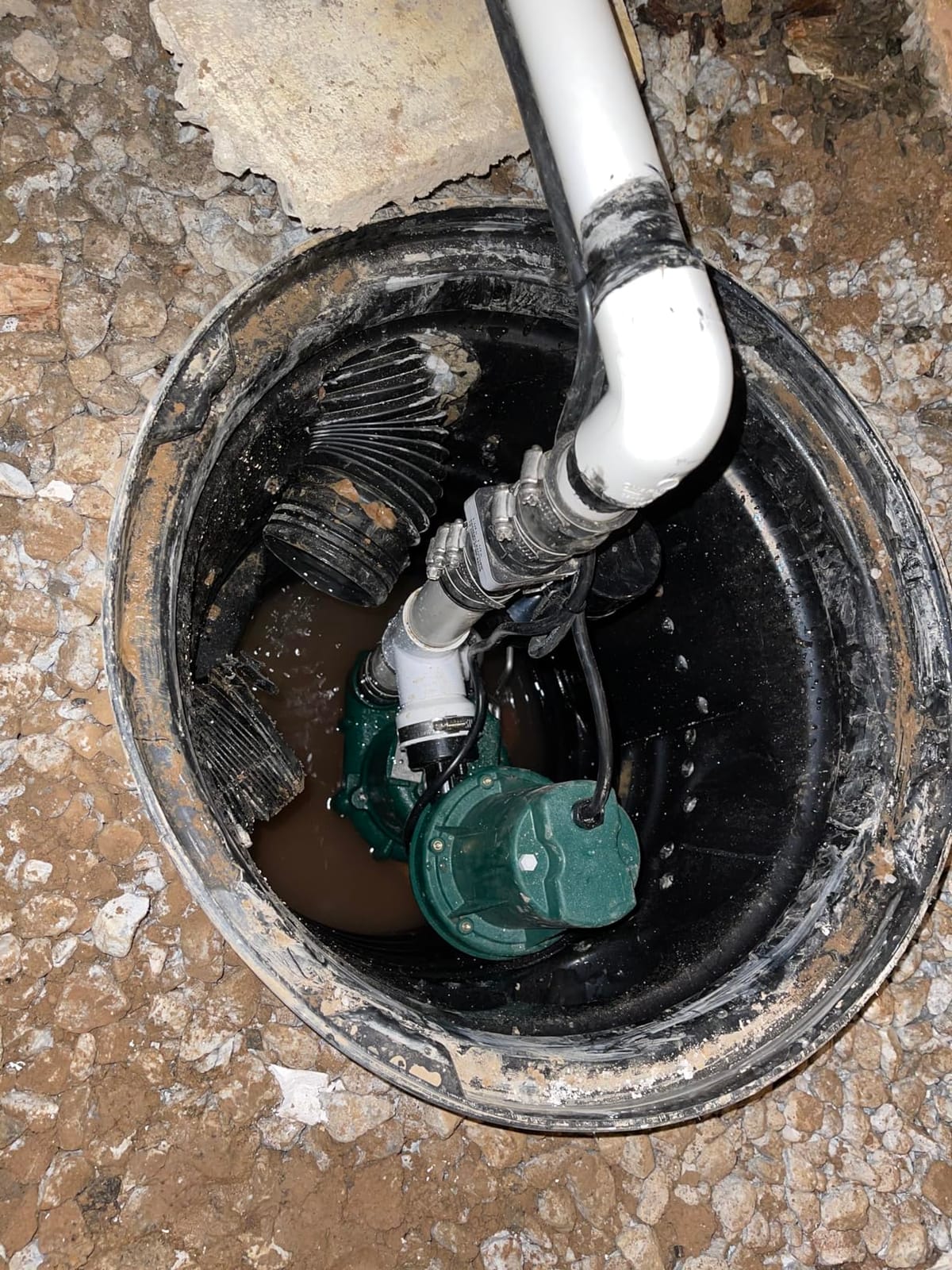
The controller is the reason to pick this model specifically. It continually self-tests and tells you which of four conditions is wrong: power outage, high water, float switch obstruction, or pump fault. On a system where the pump is under a sealed cover in a wet pit, having the diagnosis arrive at your control panel instead of requiring you to go look is genuinely valuable.
Construction is also strong in the Zoeller range here: a double-sealed 12V DC pump with corrosion-resistant materials and a glass-filled thermoplastic vortex impeller, pre-plumbed with PVC, 100 percent factory tested, and backed by a 3-year limited warranty.
What the self-testing controller catches
It distinguishes a jammed float switch from a failed pump from a dead battery, and it warns about high water before the pit overflows. For a system installed in a finished basement where nobody inspects the pit weekly, that removes the guesswork from the failure mode that matters.
Quiet operation is also worth calling out. Several owners describe this as noticeably quieter than budget pumps, and continuous runtime of 5.5 hours means fewer starts per hour on a marginal battery.
What buyers criticize
Footprint. At 15.25 by 15 by 15.25 inches, the stacked preassembled layout is bulky, and a standard residential pit may not take it. Measure the basin opening and the vertical clearance before committing.
Quality control also draws a larger share of one-star reviews than the other systems here, with reports of cracked check valves leaking at the base seal and packages arriving with small hardware such as the float retainer pin missing. Inspect the package on arrival, and note that the DC backup does not connect to WiFi despite some listings suggesting otherwise.
7. Zoeller Basement Sentry 507-0005 – Longest-Lasting Backup
Zoeller 507-0005 Basement Sentry Battery Backup Pump
Backup only assembly
Self-contained 10 amp recharger
Solid-state controller with alarm
UL and cUL listed
Pros
- Fully solid-state controller with alarms and indicator lights
- Self-contained 10 amp recharger with burn-out and overcharge protection
- Noncorrosive polyethylene battery case with lock strap
- Owners report units still running after a decade
- Easy first-time install with basic guidance
Cons
- Sump pump and battery both sold separately
- Instructions advise drilling a weep hole that can spray water
- Modest backup flow at higher lift heights
- International buyers report poor compatibility and no returns
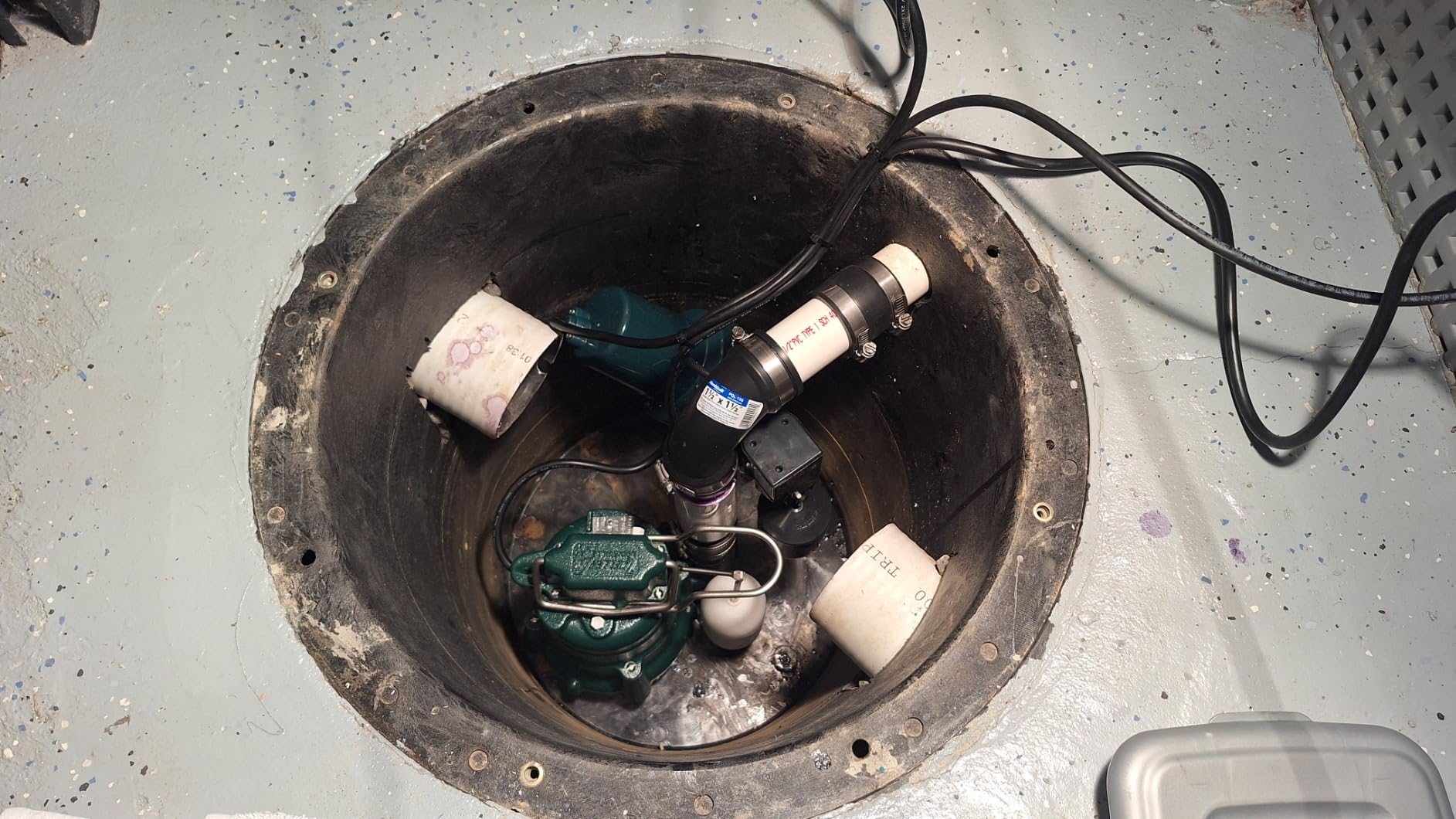
The 507-0005 is the least complicated way to add outage protection, and the oldest design on this list. It is a backup assembly with a self-contained 10-amp recharger, a solid-state controller, a low-voltage float switch and a polyethylene battery case with a lock strap. It is UL and cUL listed and mounts on the pit floor or free-standing.
What stands out is service life. Owners report units still in service after ten years or more, which is not a track record a newer design can match. The 10-amp charger is fast enough to recover a battery between outages, and the burn-out and overcharge protection is built in rather than added.
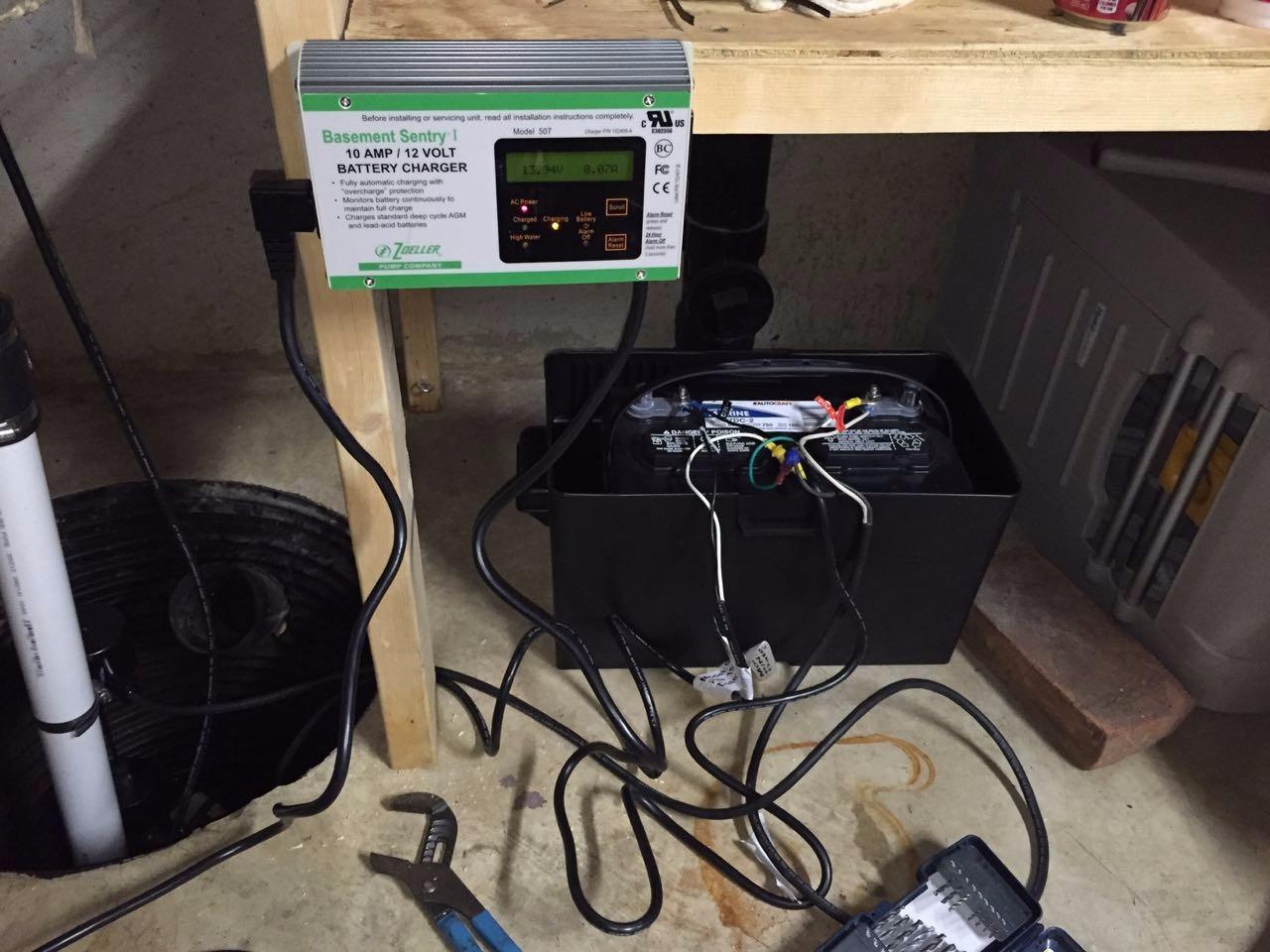
The controller gives you an audible alarm plus light indicators, and the yellow light specifically tells you the buzzer has been silenced so you do not mistake a muted alarm for a healthy system. Newer charger versions add an LCD display and the hardware needed for text alerts.
Flow is the trade-off. This unit maintains rather than clears, performing adequately at around 8 feet of lift. In a deep pit or heavy inflow, you are relying on the primary pump right up until it stops.
When a simple controller is the right call
There is no app to set up, no account to create and no firmware to become obsolete. A solid-state controller with lights and an alarm tells you what you need to know in the moment, and it will still work in ten years. For a rental property or a cabin, that simplicity has real value.
The 10-amp self-contained recharger also means you do not have to source a separate smart maintainer, which is where a lot of the hidden cost in this category disappears.
What to fix before you switch it on
Skip the weep hole step unless you understand it. The instructions recommend drilling one, and owners report it can spray water forcefully inside the pit, which is a genuine hazard in a confined space. Check your local code requirement first.
Also consider replacing the supplied check valve, which several buyers rate as below standard, and note that flow is modest at higher lift heights. If you are outside the US, compatibility and returns are a real problem with this listing, so check the voltage and the seller policy before ordering.
8. Westinghouse WH50BBU – Best for High Lift
Westinghouse – 1/2 HP Sump Pump with Integrated Vertical Float Switch and 12 Volt Battery Back Up Capability, Up to 5,200 Gallons Per Hour – Heavy Duty Battery Backup Sump Pump System
5200 GPH primary
30 ft max lift
Stainless steel housings
Top suction design
Compact body
Pros
- Highest primary flow on the list at up to 5200 GPH
- Stainless steel housings on both pumps for corrosion resistance
- 30 ft maximum lift rating
- Top suction design reduces airlock and debris buildup
- PSC motor with thermal overload protection and oil cooling
Cons
- Smallest review base here at 50 reviews
- Battery not included
- Less long-term field history than Basement Watchdog or Zoeller units
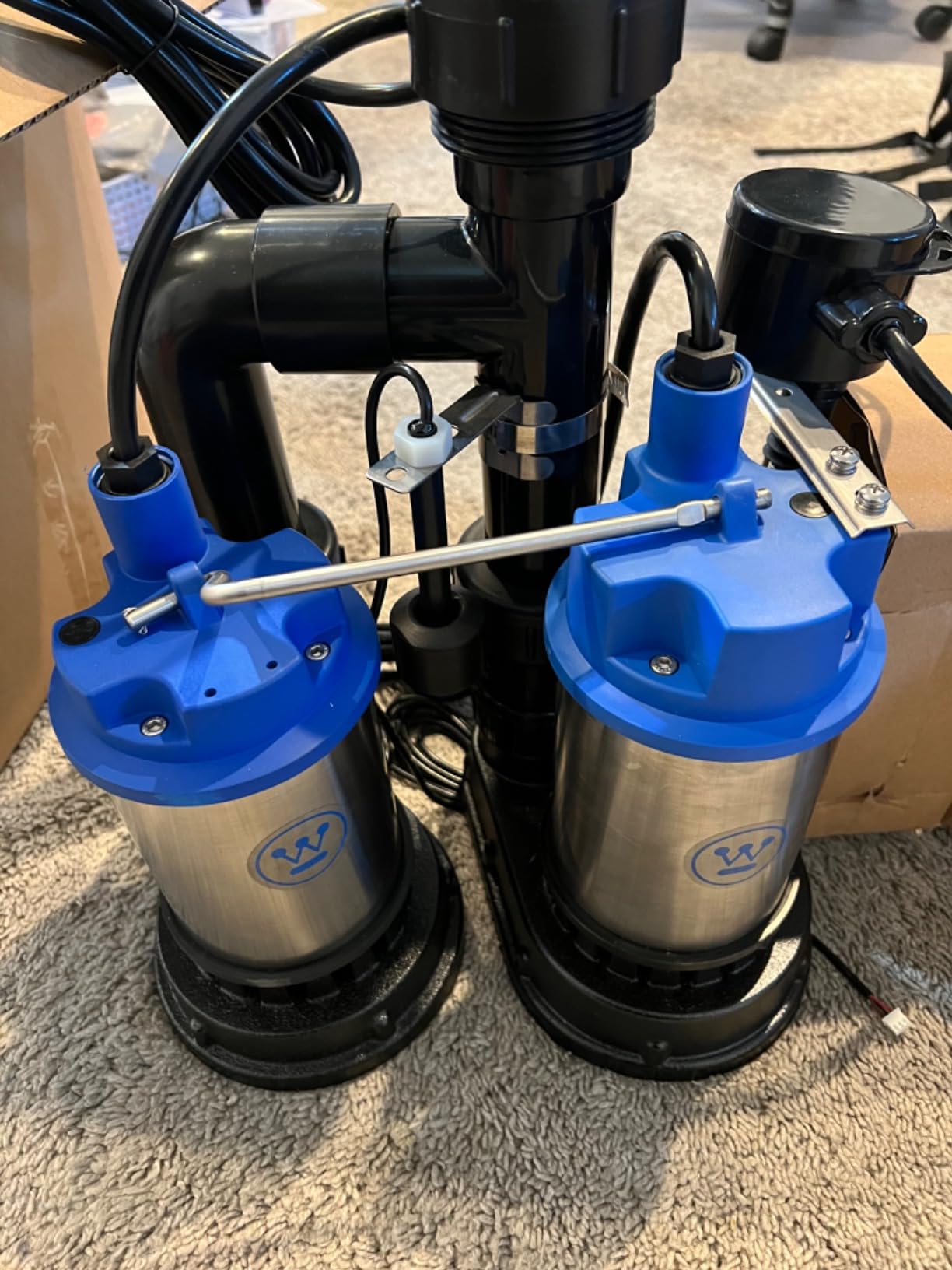
The Westinghouse WH50BBU posts the highest published primary flow figure on this list and the highest lift rating here, at up to 5200 GPH from a 1/2 HP primary and a 30-foot maximum lift. If you have a deep basin or a high discharge line, those are the two numbers that decide whether a pump keeps up.
Construction is unusually serious for a combo: stainless steel housings on both the primary and the backup, a PSC motor with thermal overload protection, lubricated ball bearings and a sealed shaft, and a motor encased in dielectric oil for cooling. The top suction intake is designed to reduce airlock and cut down on debris buildup, both of which cause the short cycling that wears pumps out.
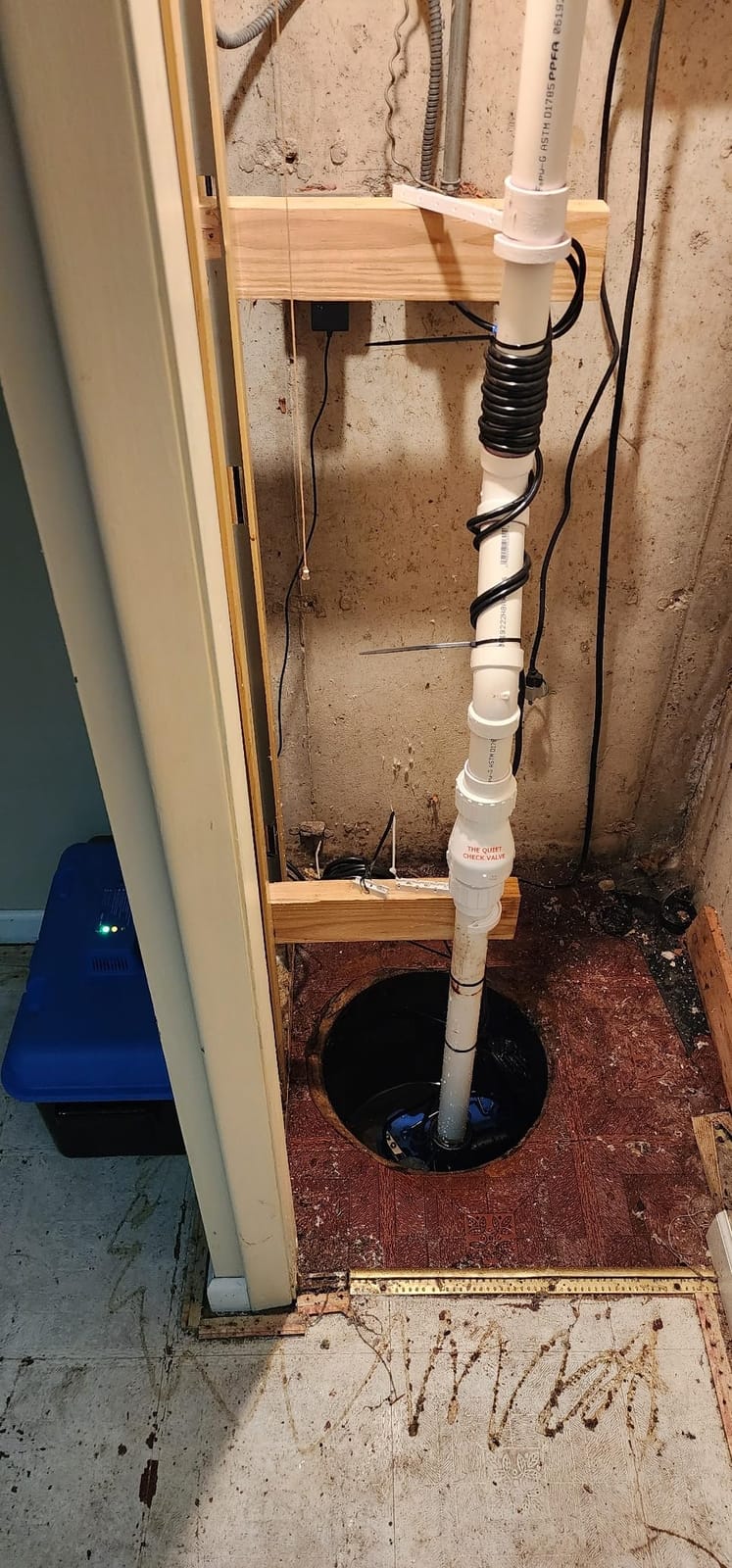
Despite the output, the body is compact at 14.4 by 9.3 by 15 inches, and the manufacturer positions it explicitly for tight residential pits and light commercial work. The primary carries an integrated vertical float switch, and the backup engages automatically the moment power is lost, with an alarm system, controller, charger and battery box included. The battery is not.
Rated 4.6 stars across 50 reviews with 83 percent five-star ratings, the scores are strong. What is thinner is the history. This is a newer listing with a much smaller sample than the Basement Watchdog and Zoeller units, and its category ranking sits well below the established brands.
What the 30-foot rating changes
Lift rating is where most buyers under-specify. Every gallon per hour figure on a pump is measured at a specific head height, and flow falls as head rises. A system rated for 10 feet that has to push 20 feet will deliver a fraction of its published capacity, and a backup that cannot keep up when the primary fails is an expensive alarm bell.
The stainless steel housings and oil-cooled motor are also relevant in a corrosive pit, where thermoplastic housings eventually stiffen and crack, and where the top suction design reduces the sediment that shortens impeller life.
What the small review base means for you
Fifty reviews cannot tell you how the unit performs in year five. The design features are credible and the ratings are good, but you are taking on less documented field history than with the Basement Watchdog or Zoeller systems, both of which have owners reporting multi-year and multi-decade service.
Balance that against what you gain: the highest capacity and lift on the list, metal housings on both pumps, and a footprint that fits tighter than its numbers suggest. If your pit is deep or your inflow is heavy, this is the capacity you want. Pair it with an AGM battery and a smart maintainer, and test the system every few months.
How to Choose a Battery Backup Sump Pump in 2026
Combo, standalone backup, or inverter
A combo system replaces your primary pump and adds a backup in one preassembled unit. It is the simplest path for a new install and the most expensive, but it puts the primary and the backup in one tested unit. A standalone backup keeps your existing primary and adds DC coverage, which is cheaper and less invasive but leaves you with two unrelated systems to maintain.
An inverter-style system takes a different route: it stores household power and runs your existing AC pump during an outage. It covers power loss well, but it does nothing for a primary pump that has mechanically failed, and it will not help during a flooded electrical panel. If your worry is specifically outages in a storm-prone area, a DC backup is the more complete answer.
Measure your pit before you order anything
This is the step that prevents returns and install frustration, and it is the one most owners skip. Measure the basin diameter at its narrowest point and the vertical clearance from the basin floor to the lid. Combo systems generally need 16 inches or more, most standalone backups fit 12 to 14 inches, and some compact units squeeze into 10-inch and 12-inch pits.
Measure the discharge height too, meaning from the water line in the pit to the point where the discharge pipe leaves the house. A pump rated for 10 feet of lift running at 18 feet will not deliver the flow on the box.
Read GPH at a 10-foot lift, not at zero lift
Zero-lift numbers are marketing. Compare pumps on gallons per hour at a 10-foot lift, which is the specification that reflects a real installation. The gap between the two can be dramatic: the CITE-33 moves 2500 GPH at zero lift and 1500 GPH at 10 feet, a 40 percent drop, while the CITS-50 primary holds 4400 down to 3540 GPH.
For heavy inflow or a high water table, look for a combo with a 1/2 HP primary. For a small pit with modest drainage, a 1/3 HP system is plenty.
Battery chemistry and amp-hour sizing
AGM batteries are sealed, maintenance-free and tolerant of standing in a humid pit without venting, which makes them the default choice for a sump backup. Flooded lead-acid costs less per amp-hour and can be run in parallel for more runtime, but it needs a smart maintainer rather than the small charger built into most of these controllers.
Size to at least 75 Ah, and prefer 100 to 120 Ah if you want a long outage covered. Expect to replace the battery every three to five years regardless of chemistry, and write the date on the case. Controllers with low current draw, such as the 0.4-amp unit on the CITE-33, suit smaller batteries, while higher-current chargers accept bigger banks and parallel battery setups.
If you are running two batteries, an isolator or a proper charging scheme matters, and our guide to battery isolators for dual battery setups covers the failure modes that come from wiring two banks in parallel the wrong way.
Alerts, controllers and float switches
A control panel that names the problem beats one that blinks. The Zoeller ProPak and the Basement Watchdog monitoring controllers identify power loss, high water, switch obstruction and pump faults separately, and some add phone alerts through an optional module. If you travel or own a rental, that remote reporting is worth the extra module cost.
On float switches, a tethered or vertical float gives you redundancy that a single mechanical switch cannot. The CITE-33 puts dual float switches on both pumps. Whatever you choose, clear debris from the pit twice a year, because a jammed float is the most common failure reported on homeowner forums. For the rest of your outage prep, our picks for backup light bulbs and backup cameras cover the rest of a power cut.
Materials and expected service life
Cast iron and stainless steel housings generally last longer than thermoplastic in a wet, corrosive pit. The Westinghouse uses stainless steel on both pumps, the CITS-50 pairs a cast iron primary with a plastic backup, and the compact models are all thermoplastic. This is a reasonable place to economize if your pit is dry and clean, and a poor place to economize if you have a high water table.
Finally, budget for installation. A preassembled combo is often a one-afternoon job for a competent DIYer, but a stacked unit in a finished basement may need a plumber. Get the pump, an AGM battery, a maintainer, any WiFi module and labor in your head as one number before you buy, because that total is what the sticker on the box leaves out.
Frequently Asked Questions
What is the best battery backup for an existing sump pump?
For a healthy existing primary pump, a standalone DC backup is the cheapest path: the Basement Watchdog BWSP fits small pits and the Zoeller Aquanot 508 is the serviceable, US-built option. Both need a separate deep-cycle battery. If your primary is old or undersized, move up to a preassembled combo such as the Wayne WSS30VN so capacity and redundancy come from one unit.
Are battery backup sump pumps worth it?
The risk they cover is narrow and expensive: power loss during a heavy storm, when inflow is highest and your AC pump goes silent. Most households buy one after a flood or a near miss. A backup also covers a primary pump that dies, which a generator does not. The catch is that no system includes a battery, so the real cost is the pump plus an AGM battery plus optional alerts and labor.
How big of a battery backup do I need for a sump pump?
At least 75 Ah for a typical single-family pit. Go to 100 or 120 Ah if you want a multi-day outage covered, or run two batteries in parallel on a system that supports it, such as the Basement Watchdog CITS-50. Check your controller’s charge current first, because a low-output charger like the 0.4-amp unit on the CITE-33 will not properly maintain a large bank. Replace the battery every three to five years.
Which brand of sump pump is the most reliable?
It depends on the job rather than the badge. Zoeller has the longest documented service life, with owners reporting Basement Sentry units still running after a decade, and its 508 units are hand built and tested in the USA. Basement Watchdog offers the widest range of pit sizes, from 12-inch combos to compact backups, with copper-wound motors throughout. Wayne leads on preassembled capacity for a standard residential pit.
What type of float switch is most reliable for a sump pump?
A dual float switch is the most reliable design because it gives two independent activation paths when debris catches or a float jams. The Basement Watchdog CITE-33 puts dual float switches on both the primary and the backup, giving four paths total. Whatever you install, clean the pit twice a year, and note that a pump running nonstop usually points to a stuck float or a missing check valve rather than a bad motor.
The Bottom Line on Battery Backup Sump Pumps
The Wayne WSS30VN is the best battery backup sump pump for most homes in 2026. It pairs published backup capacity of up to 10000 gallons per charge with a 15-minute preassembled install, a genuinely quiet 1/2 HP primary and a long warranty, and it is the system we would put in a standard residential basin.
For a small basin, take the Basement Watchdog BWSP, a 12-pound backup that fits where a combo never will. If you want phone alerts and long runtime, the CITS-50 does both and accepts two batteries in parallel. For an existing primary pump, the Zoeller Aquanot 508 is the serviceable, US-built choice.
Whatever you pick, measure your pit diameter and discharge height first, buy an AGM battery of at least 75 Ah, and test the system every four to six months. A backup you have never seen run is only a rumor.