
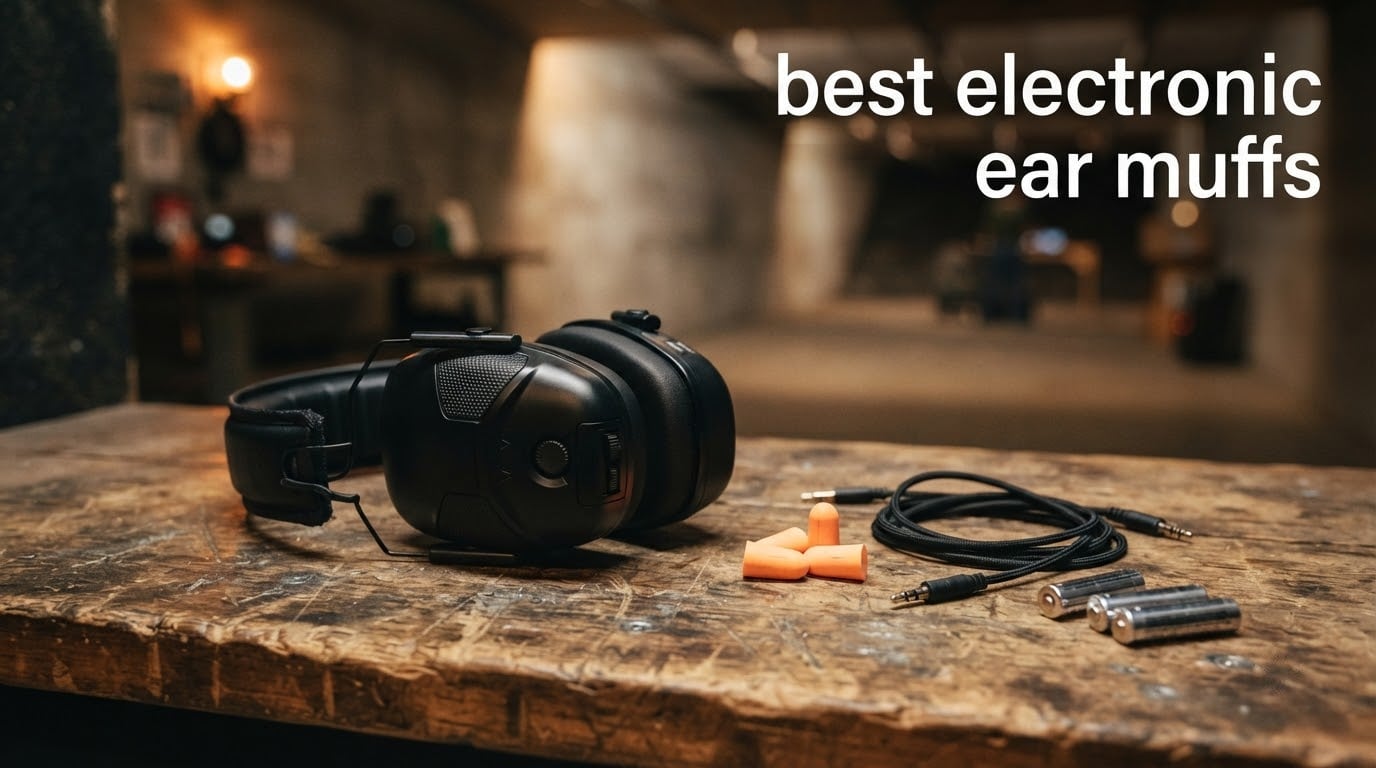
Before anything else, one clarification: this roundup covers electronic earmuffs, the battery-powered hearing defenders built for shooting, hunting and loud work environments. It is not about fleece-lined winter ear muffs, even though those flood the same search results. If you want muffs that let you hear the range officer while a shot is being fired, you are in the right place.
Electronic ear muffs solve a problem passive muffs cannot. Passive protection blocks everything equally, so a shooter wearing foam plugs misses every command, every conversation, and often the sound of a mechanical issue developing downrange. Electronic earmuffs use microphones and a compression circuit to do the opposite: they amplify quiet ambient sound, then shut that channel down in a fraction of a second when an impulsive noise like a gunshot crosses a set threshold. You keep the range officer. You lose the muzzle blast.
Our team put ten of the most-reviewed electronic and electronic-adjacent muffs through a common lens: rated protection, amplification quality, comfort across a long session, build quality, connectivity, and battery logistics. We also pulled owner experience from the places shooters actually talk, because the pattern we found there was consistent and useful. On thefiringline.com, one poster put it plainly: Pro Ears “seem to be the best electronics because of the non-clipping.” That single word, non-clipping, is the mark of a genuinely good electronic muff, and it is one of the criteria we weighted most heavily.
Table of Contents
Top 3 Picks for the Best Electronic Ear Muffs (September 2026)

Walker’s Razor Slim
- Ultra low-profile cups
- Two hi-gain omni microphones
- Recessed volume knob
- Audio input jack
Howard Leight Impact Sport
- 22 dB NRR
- Amplifies to a capped 82 dB
- Folding design
- 3.5 mm AUX input

Peltor Sport Tactical 100
- 22 dB NRR
- User-adjustable suppression time
- Recessed wind-resistant mics
- Low profile cups
Best Electronic Ear Muffs at a Glance In 2026
| Product | Specs | Action |
|---|---|---|
| Walker’s Razor Slim |
|
Check Latest Price |
| Howard Leight Impact Sport |
|
Check Latest Price |
| Peltor Sport Tactical 100 |
|
Check Latest Price |
 Walker’s Razor Quad Muff Walker’s Razor Quad Muff |
|
Check Latest Price |
 Peltor Sport Tactical 500 Peltor Sport Tactical 500 |
|
Check Latest Price |
 ZOHAN EM054 ZOHAN EM054 |
|
Check Latest Price |
 PROHEAR 066 Electronic Muff PROHEAR 066 Electronic Muff |
|
Check Latest Price |
 PROHEAR 037 Bluetooth PROHEAR 037 Bluetooth |
|
Check Latest Price |
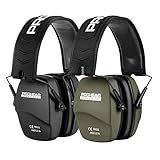 PROHEAR 016 Two Pack PROHEAR 016 Two Pack |
|
Check Latest Price |
 Walker’s XCEL Digital Walker’s XCEL Digital |
|
Check Latest Price |
Here is the short version, in the same format the search engine’s own answer panel uses. Every line gives the award, the protection figure, and the one feature that earns the slot.
Best overall — Walker’s Razor Slim. Protection with two hi-gain microphones, and an ultra low-profile cup design for a clean rifle cheek weld.
Best value — Howard Leight Impact Sport. 22 dB NRR, amplification capped at a safe 82 dB, and a folding design that disappears into a range bag.
Best for indoor ranges — Peltor Sport Tactical 100. 22 dB NRR with user-adjustable suppression time, the single most useful control on a concrete-floored bay.
Best for hunting — Walker’s Razor Quad. 23 dB NRR with four omnidirectional microphones and 0.02 second compression for 360 degree awareness.
Best for Bluetooth audio — Peltor Sport Tactical 500. 25 dB NRR with independent ambient and audio volume controls plus Clear Voice Tracking.
Budget pick — ZOHAN EM054. Up to 4X ambient amplification with instant suppression of loud impulse noise and full ANSI and CE certification.
Best for shop and yard work — PROHEAR 066. 23 dB NRR, suppression under 0.01 s, IPX4 sweat resistance, and up to 300 hours on two AAA cells.
Best for long Bluetooth workdays — PROHEAR 037. 30 dB SNR, Bluetooth 6.0 with an 80 ft range, and a rechargeable 1100 mAh battery with 120 hours of playtime.
Best passive backup — PROHEAR 016 two pack. 26 dB NRR and 31 dB SNR with no electronics, at 7.36 ounces per pair.
Most listening modes — Walker’s XCEL Digital. 26 dB NRR with four selectable modes, voice clarity processing, and integrated Bluetooth.
1. Walker’s Razor Slim Electronic Muff — Best Overall for Shooting
Walker’s Razor Slim Electronic Muff, Black
Two hi-gain omni mics
Slim low-profile cups
Recessed volume knob
Audio input jack
Pros
- Extremely light and comfortable for long sessions
- Clear amplification lets you hear conversation through loud gunfire
- Slim cups clear a rifle gunstock cleanly
- Recessed knob works with gloves
- Still functions as a passive muff with electronics off
Cons
- Noticeable latency in the passthrough path
- Directionality of amplified sound is unintuitive at first
- Digital artifacts make the wired jack poor for real music
There is a reason this muff keeps surfacing at the top of forum threads, and it is not hype. At 4.8 stars across roughly 85k reviews, the Razor Slim has the deepest owner base in this entire roundup, which means the failure modes are well documented and the strengths are well proven. Long-time shooters describe it as the muff they put on when they do not want to think about their hearing protection.
The two hi-gain microphones carry enhanced low-end frequency response, so footsteps, birds, and the specific crack of a firing pin come through with more weight than you would expect from something this small. That low-end emphasis is what makes it work for hunting as well as for the bench, and it is why the muff appears in the range of choices recommended to people who just want to hear other people talk.
Comfort is the quiet superpower here. The padded metal wire frame headband spreads weight rather than concentrating it, and reviewers repeatedly single out being able to wear the set for hours without the clamping sensation that heavier cups bring. For a shooter putting in a full morning at an indoor range, that difference matters more than any spec line.
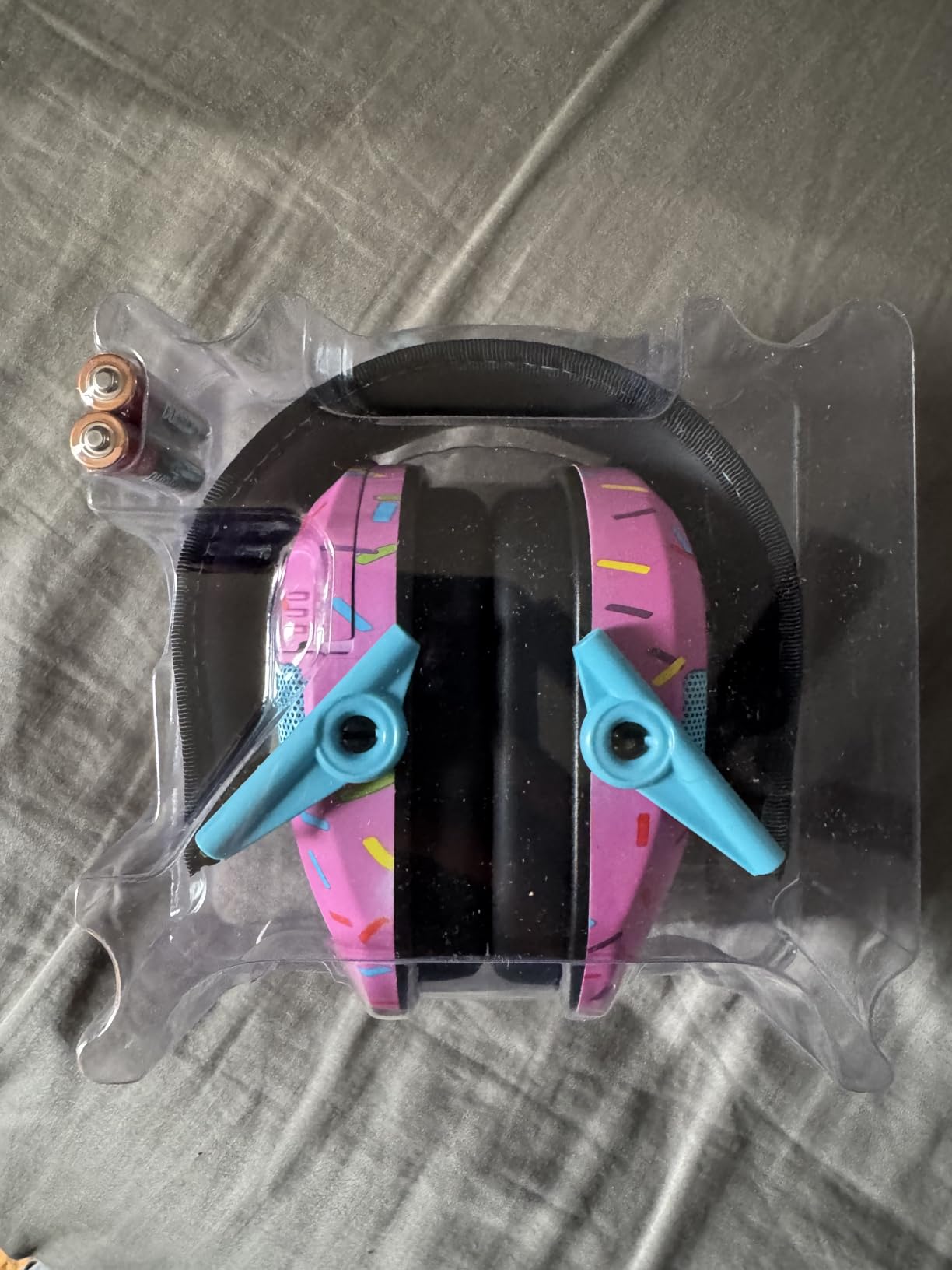
The build is deliberately unshowy: a sound-dampening composite housing under a rubberized coating, with an exterior-opening battery door so you do not need to strip the whole muff to swap cells. The volume knob is slightly recessed rather than standing proud, which is a small design decision with a real purpose, since a protruding knob catches on a rifle gunstock or a door frame. It also stays usable when you are wearing gloves.
The honest weakness is the audio path. There is noticeable latency in passthrough, and the amplification does not give you a natural sense of direction, so locating a sound source takes practice rather than instinct. The wired audio jack works, but reviewers report audible digital artifacts that make it a poor choice for actually listening to music. Treat the jack as a phone call tool, not a headphone.
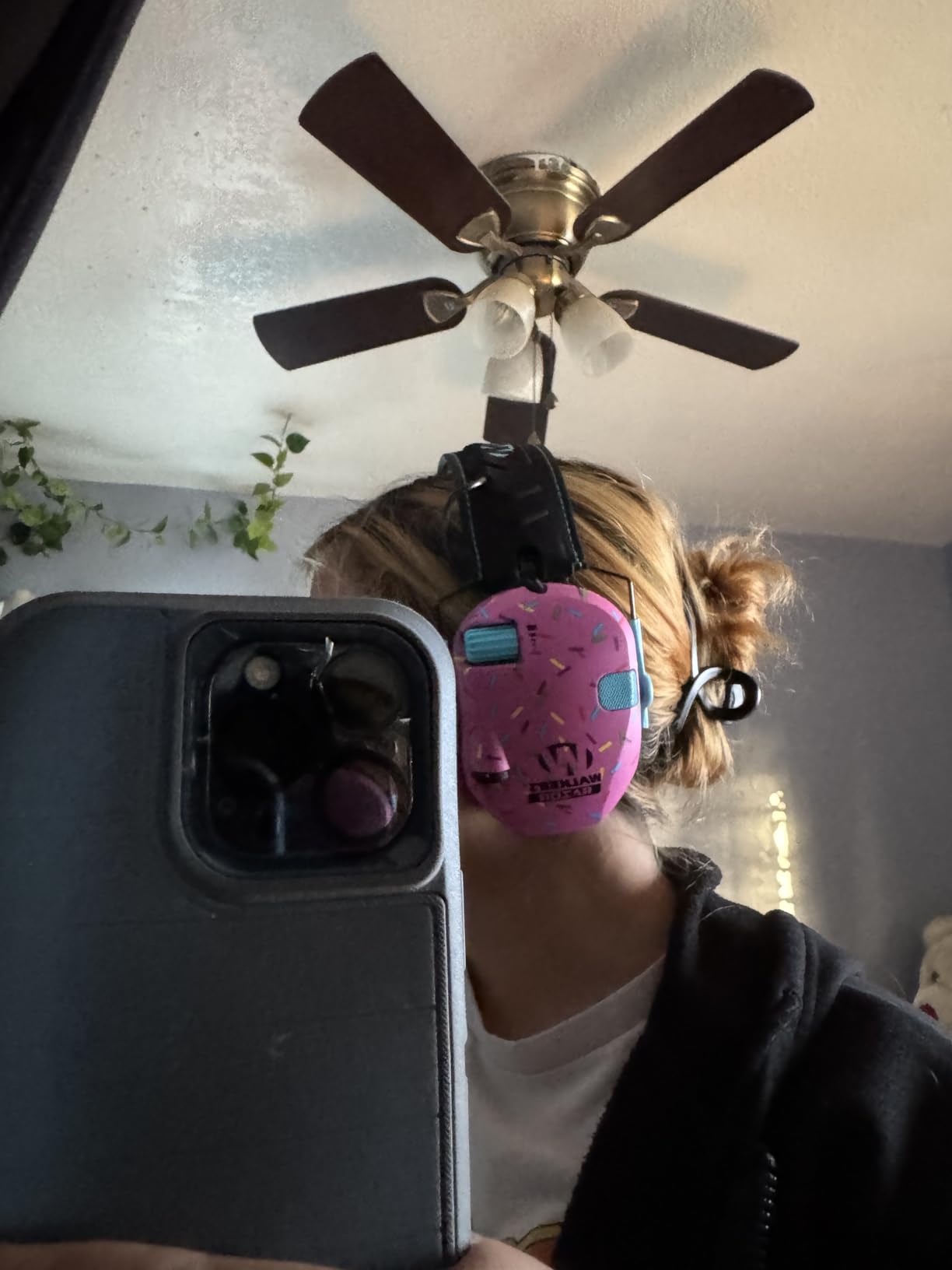
Why the slim profile matters more than the spec sheet
Cheek weld is the practical test that separates a muff you can actually shoot with from one you tolerate. A tall cup pushes the comb of a rifle gunstock upward, and a rifle shooter will feel that as a shifting, inconsistent weld that shows up on paper as a first-round group wandering off center. The Razor Slim’s extra slim ear cups were designed specifically for this, and it is the single most common reason owners in shooting forums name it as their recommendation.
It also folds and packs small, which matters if your hearing protection lives in a vehicle rather than a locker. Owners frequently describe the same pattern: keeping more than one pair in rotation, because the thing that fits a hot indoor range is not always the thing you want on a cold deer stand at dawn.
Where the Razor Slim falls short
If your priority is hearing conversation at an indoor bay rather than outdoors, understand that the amplification on this model is the reason people keep it, but it is not a speech-optimized circuit. Range officers speaking at normal volume come through fine. Range officers speaking over a bank of firing lanes is a different test, and models with dedicated background filtering handle it better.
Bluetooth is also absent. There is an audio input jack, which covers a phone, but there is no wireless pairing, no built-in microphone, and no separate control for media versus ambient sound. If you want a muff that doubles as a pair of headphones for the drive to the range, one of the Bluetooth-equipped models further down this list fits that job better.
2. Howard Leight Impact Sport — Best Value for Range and Field
Howard Leight by Honeywell R-01526, Impact Sport Earmuffs, Olive Drab Green.
22 dB NRR
Directional mics to 82 dB
Folding design
3.5 mm AUX and cord
Pros
- Directional mics make range commands and conversation easy to hear
- Low profile cups clear a rifle stock
- Folds compactly for storage
- Very long battery life with 4 hour auto shut-off
- AUX input works with phones and scanners
Cons
- Heavier and bulkier than slim profile electronic muffs
- Amplification capped at 82 dB so very loud spaces are heavily attenuated
The Impact Sport is the muff most people mean when they say the reference electronic muff. At 4.7 stars from more than 55k reviews, it has the second-deepest owner base here, and the reviews describe a consistent, unexciting reliability that people stop thinking about. That is exactly what you want from a safety device.
The circuit amplifies ambient sound to a fixed ceiling of 82 dB, then shuts amplification off entirely when the ambient level reaches that same 82 dB. The practical result is that quiet range talk comes through at a comfortable level, and a gunshot simply removes the amplification channel rather than trying to process a 170 dB event. Nothing about the transition is clever. It just works, every time, which is the point.
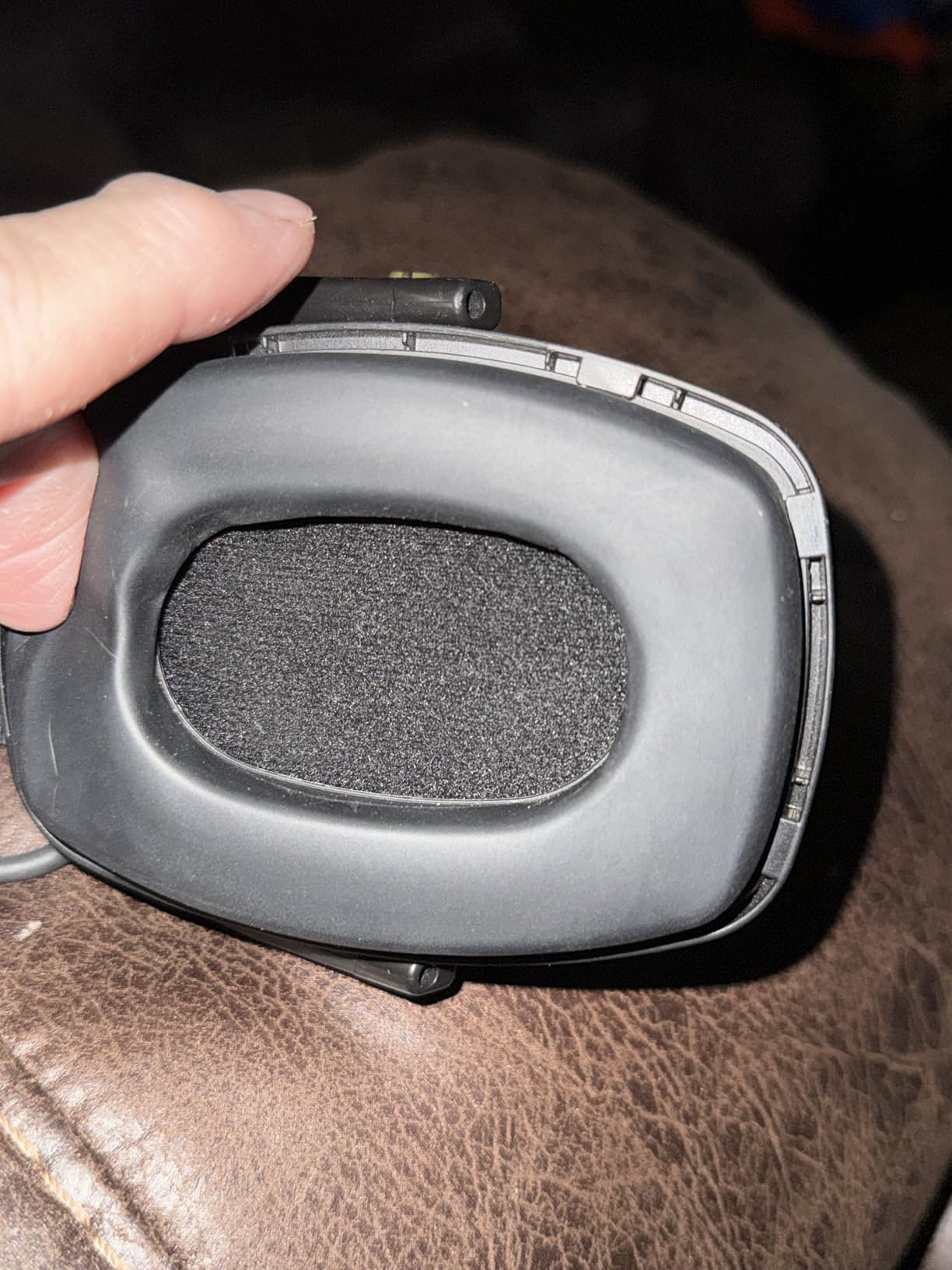
For a rifle shooter, the low profile earcups are the detail that keeps this model in contention years after it was introduced. They clear a gunstock without the wedge feel of a full-size cup, and the compact folding design means the whole set collapses to roughly the footprint of a hard case in a day pack.
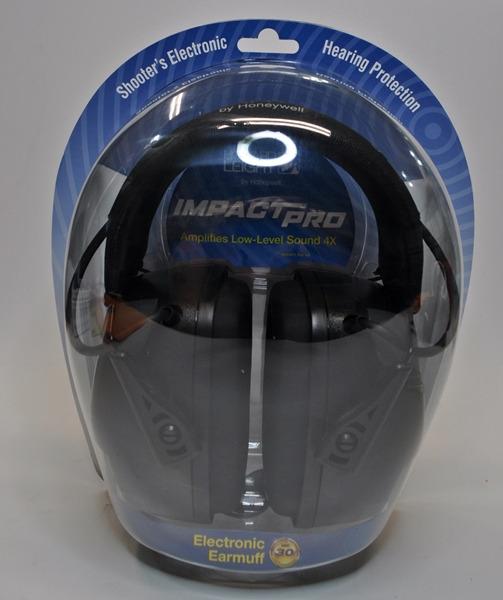
Power comes from two AAA batteries, which are included, and the listed runtime is around 350 hours. The auto shut-off after four hours is a genuinely useful safety feature rather than a gimmick: it means a set left on a range bench overnight does not drain to nothing, and more importantly it means the circuit is not sitting live and gated all night. The integrated power and volume knob is a single control, which is simpler than it sounds when you are working a rifle with one hand.
Two things work against it. The first is physical: reviewers consistently note it is heavier and bulkier than the genuinely slim models, so if all-day featherweight comfort is your top criterion, look elsewhere in this list. The second is acoustic: an 82 dB ceiling means that in a very loud environment, the protection is doing all the work and you lose the ambient awareness the electronics were supposed to provide.
When the 82 dB ceiling is an advantage
A hard ceiling is a feature in exactly one situation, and that situation is loud. On an outdoor range with a dozen people firing, or in a bay where reflections push ambient levels well past a comfortable level, an unlimited amplifier would try to push every gunshot and every hammer strike through your ears at once. Capping the output at 82 dB means the loudest thing you can hear is a safe, fixed level, and the circuit is free to spend all of its attention suppressing the transient.
That is why this model shows up so often in answers to the question every indoor shooter eventually asks: whether a muff can handle a busy range without doubling up with foam plugs. For most recreational and club-level volume, the answer is yes, and this is one of the models that produces it.
When it is the wrong pick
If you shoot a magnum, an un suppressed rifle, or any discipline where muzzle blast is extreme, the protection ceiling here is modest relative to a passive muff and you should plan on foam plugs underneath. The NRR on this unit is 22 dB, which sits in the middle of this group rather than at the top of it.
Bluetooth is absent as well, though the included 3.5 mm connection cord covers a phone or a scanner. For pure shooting use that is arguably the right call, since a wireless radio in a shooting environment is one more thing competing with the circuit that is protecting your hearing.
3. Peltor Sport Tactical 100 — Best for Indoor Ranges
Peltor Sport Tactical 100 Electronic Hearing Protector, Ear Protection, NRR 22 dB, Ideal for the Range, Shooting and Hunting, TAC100-OTH
22 dB NRR
Adjustable suppression time
Recessed mics
2 AAA not included
Pros
- User adjustable suppression time controls indoor range echo
- Actively filters background noise so commands stay intelligible
- Recessed microphones resist wind noise and physical damage
- Low profile cups suit rifles and shotguns
Cons
- Two hour auto shutoff requires switching back on mid session
- Battery compartment design is bulkier than slim muffs
- 22 dB NRR sits at the low end of this group
The Tactical 100 exists because of a specific problem: the indoor range. On a bay with a concrete floor and hard walls, a shot does not fade. It bounces, and the reflections arrive after the direct sound, so a muff that simply gates for a fixed fraction of a second leaves you hearing the tail of every shot as a series of echoes that make speech hard to pick out.
This model lets you set that suppression time yourself. Owners who shoot in enclosed bays consistently single this out as the feature that made the muff work for them, and it is the kind of control that only matters indoors, which is why it does not show up in reviews from people who shoot outdoors. The tradeoff is that it is one more control to think about, and people who never move to an indoor bay rarely bother with it.
Active background noise filtering handles the other half of the indoor problem. HVAC, extractor fans, and the general hum of a commercial range are constant and sit right in the frequency range where speech lives. This muff filters that band so a command at conversational volume cuts through without you having to ask someone to repeat themselves.

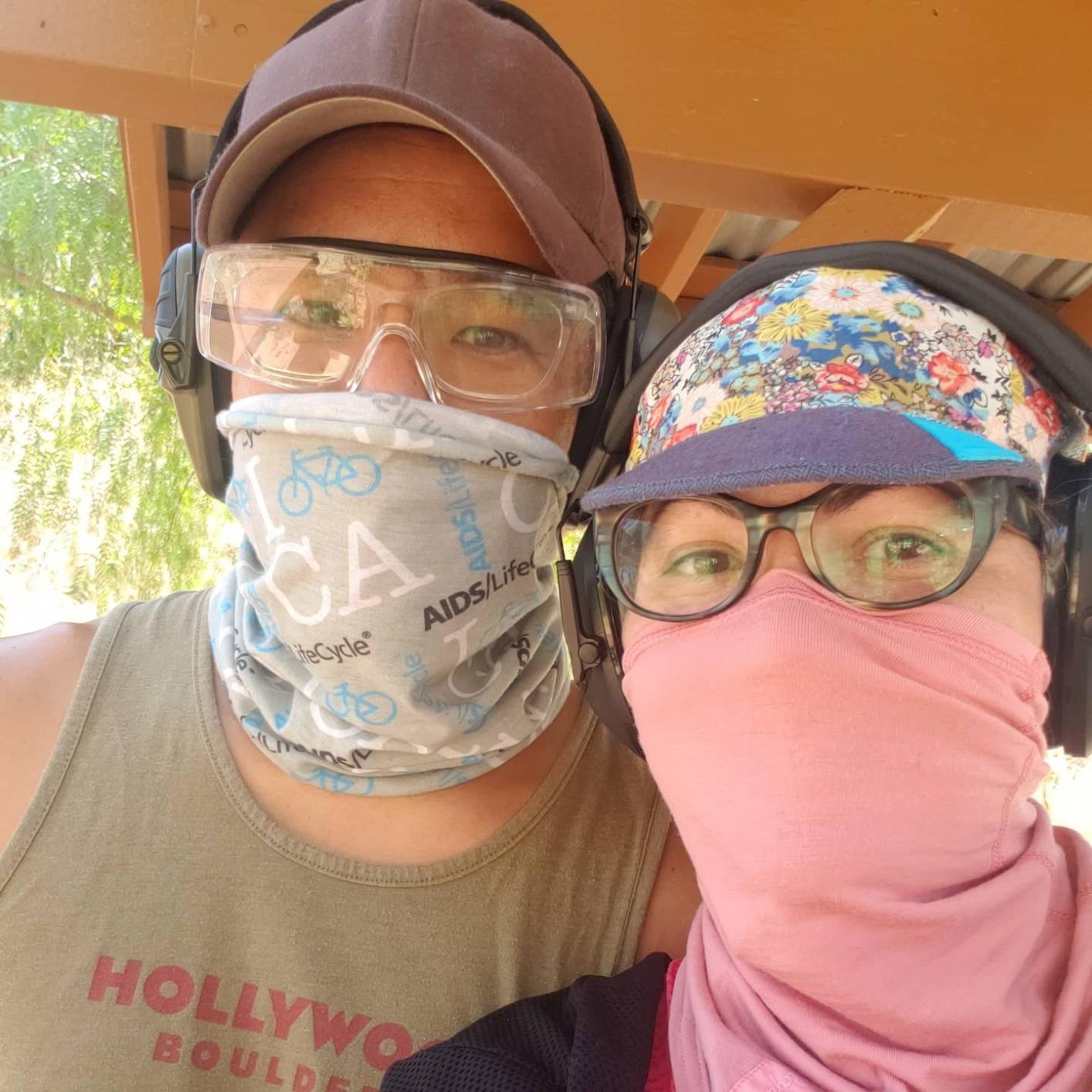
The microphones are recessed rather than surface-mounted, which does two jobs. Physically, it protects the most delicate part of the electronics from the knocks and drops that come with a range bag. Acoustically, recessed ports reject wind noise, which matters the moment you step outside to a field line, and they resist the direct impact of a rifle gunstock knocking against the headband during a hurried reload.
Power is two AAA cells, and the batteries are not included, so plan on bringing your own. The listed feature set includes a two hour auto shut-off and a low battery indicator, which is reasonable for a full session but is the most common complaint in reviews. Anyone running a four hour clinic will be reaching up to switch the muff back on mid-string, and there is no way to defeat the timer.
Why echo control is the sleeper feature
Nobody buys a muff for echo control. Everybody who shoots indoors ends up grateful for it. The reason the reflections matter so much is that each echo is a second impulse noise, and the circuit has to gate each one. With suppression time set too short, you hear those reflected shots almost as loud as the first one, and the cumulative effect is not just annoyance, it is extra exposure to a blast you already should have attenuated once.
Adjustable suppression time solves that by letting the muff be quiet through the tail of the report rather than reopening the channel to let the echo in. If you shoot indoors often, this is the control to buy on, and it is worth more to you than Bluetooth, a folding hinge, or a Bluetooth microphone ever will be.
Where it will frustrate you
The two hour auto shut-off is the first thing to plan around. Bring spare batteries, or accept the halfway-session reset. Batteries not being included is a smaller version of the same friction, because the first time you reach for them at the lane and find nothing, you will be annoyed at yourself rather than the muff.
Second, the 22 dB NRR is at the low end of what this group offers. On an indoor range with light 9mm or .223 fire, that is generally fine. On a .308 or any magnum at close range, most owners in review threads add foam plugs underneath, and at 13.6 ounces the muff is also not the lightest option here. Buy foam plugs regardless; see the dual protection section below.
4. Walker’s Razor Quad Muff — Best for Hunting
WALKER’S Razor Electronic Quad Muff w/ Bluetooth | 4 Mics 360-Degree Sound Capture 23dB NRR Hearing Protection Range Shooting Earmuffs w/ 2 AAA Batteries, Black
Four omni microphones
23 dB NRR
Bluetooth with separate volume
0.02 s compression
Pros
- Four microphones give better ambient pickup than two mic designs
- Fast 0.02 second compression tames reports without cutting out conversation
- Folds very small and stays comfortable for hours
- Independent Bluetooth and ambient knobs
- Bluetooth pairs automatically and holds connection indoors
Cons
- Bluetooth speakers have weak bass and mediocre playback
- Bluetooth stays powered on when the main knob clicks off
- Starter ear pads are stiff and gel pads cost extra
- 23 dB is thin for loud indoor ranges
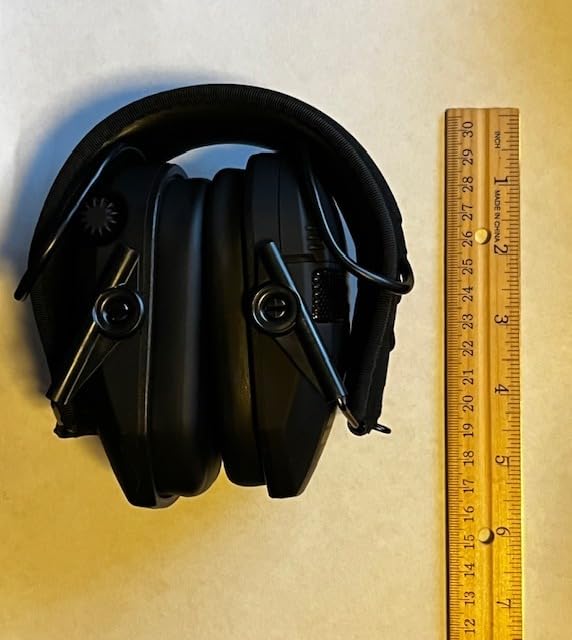
The jump from two microphones to four is the whole argument for this muff. Two-mic designs sit at your ears, and because your head shadows sound arriving from the sides, a bird or a deer moving off your direct front is noticeably quieter. Four omnidirectional microphones spread around the cups give roughly 360 degree capture, and hunters describe the practical effect as knowing roughly where a sound came from before you consciously process it.
That awareness is only useful if the circuit does not kill it. Sound-activated compression responds in 0.02 seconds, which is fast enough that the gunshot is tamed without chopping the tail of a bird call or the last syllable of a conversation. Several reviews describe exactly this balance, which is the same quality forum posters call non-clipping.
Comfort over a long sit in a stand or blind is a genuine strength, with a slim folding profile that makes it easy to wear for hours. The rubberized coating handles weather, and the whole unit collapses small enough to live permanently in a pack rather than coming out only for shooting.
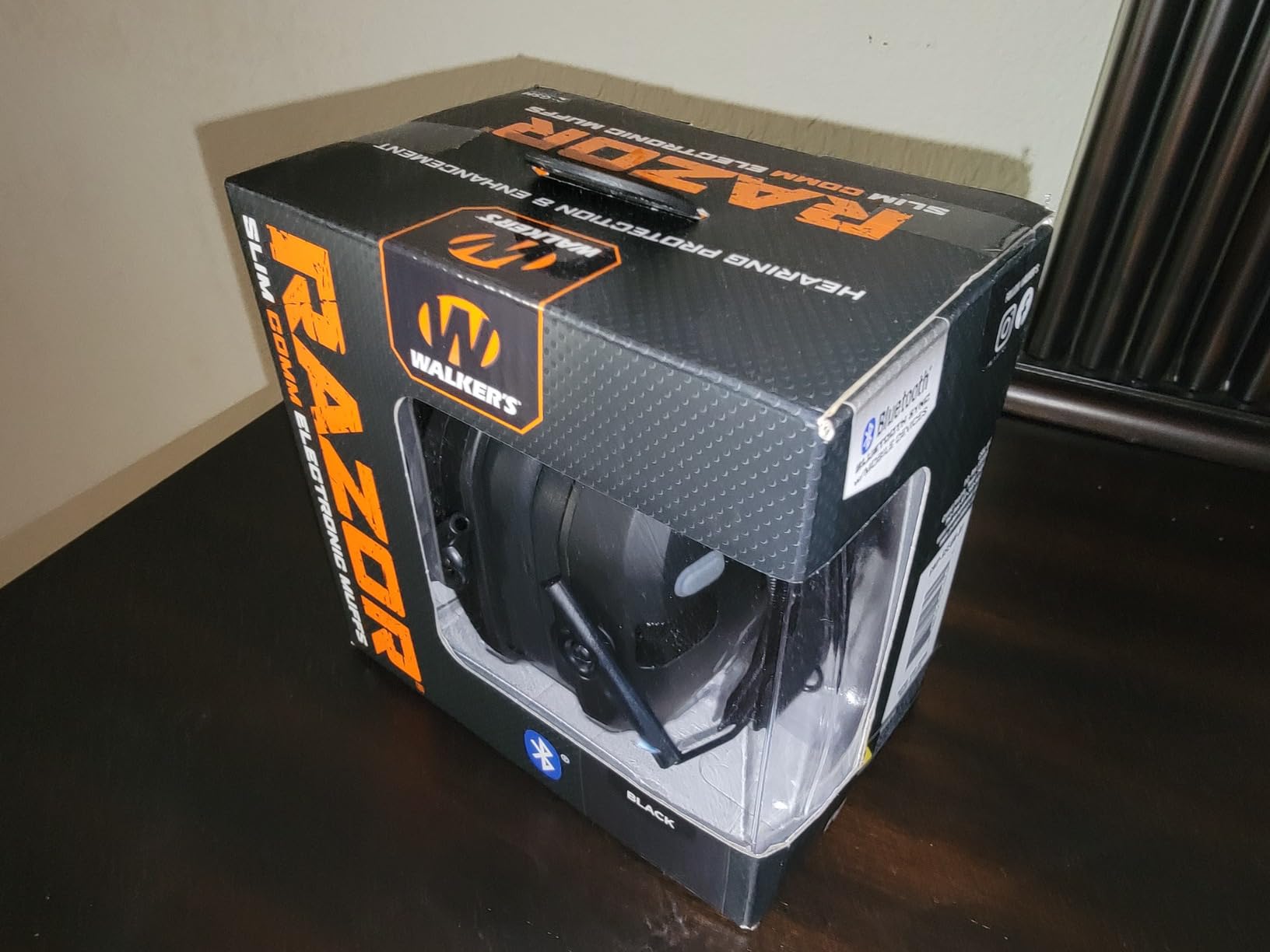
Bluetooth here is built for calls rather than music. There are separate volume knobs for the Bluetooth channel and the ambient channel, which is the correct design because it lets you keep range awareness audible while taking a call. Pairing is automatic, and reviewers report a stable indoor connection out to roughly 30 feet, which covers most indoor lanes and pit areas.
The audio quality is the weak link, and owners are consistent about it: the internal speakers have weak bass and mediocre playback, so music is a nice-to-have rather than a feature. The second complaint is a genuine bug in the power logic. Bluetooth does not shut down when the main volume knob clicks off, so the radio stays live until you hold a button, which surprises people the first time and irritates them afterward.
Whether four microphones change your hunt
They do, and the effect is mostly about confidence rather than hearing more. With two microphones, a sound off your flank is quieter and slightly muddier, so you habitually turn your head to check. With four, the first-arriving channel is the loudest, which means the turn is a reflex rather than a decision. For a bow hunter working a noisy wooded edge, that is a real functional difference across a full morning.
It also helps in a place passive muffs cannot go at all. A passive muff in a stand is functionally deaf, so every sound you might use to locate game is gone. Any electronic muff fixes that; this one fixes it with the best spatial resolution in the set.
Where owners add foam plugs
At 23 dB the protection is real but not generous, and review threads repeatedly describe owners adding earplugs for indoor ranges with 9mm or .223. This is exactly the case the r/guns community keeps asking about, wanting a muff that handles an outdoor or indoor lane without doubling up. The honest answer is that at this rating level, you are not buying that outcome.
The included ear pads are also the stiffest in this roundup, and several owners upgrade to gel pads for longer sessions. Test the seal with the pads that ship before you commit, because a poor seal wastes whatever rating the electronics provide.
5. Peltor Sport Tactical 500 — Best for Bluetooth Audio
Peltor Sport Tactical 500 Bluetooth Hearing Protection Ear Muffs, 25 dB NRR
25 dB NRR
Dynamic suppression time
Clear Voice Tracking
AA or rechargeable pack
Pros
- Dynamic suppression adapts to noise energy to control indoor echo
- Clear Voice Tracking and recessed mics cut wind noise
- Independent volume for ambient versus Bluetooth audio
- Vented headband and conformable cushions for long sessions
- Folds flat with a storage bag included
Cons
- The highest cost item in this roundup by a wide margin
- Rechargeable battery pack is sold separately
- Extra hardware and rubber bumpers add bulk
At 25 dB this is one of the two highest printed protection figures among the electronic muffs in this roundup, and it is also the most complete unit in the set. If you want one muff that does everything well, this is the one to weigh against a cheaper model, because the extras here are not decoration. They are the parts of the design that make long sessions survivable.
Dynamic suppression time is the evolved version of the adjustable control on the Tactical 100. Rather than a fixed or user-set window, it measures the energy in the incoming noise and adjusts the suppression window to match, so it handles a report on an open outdoor line and a report inside a concrete bay without you changing anything. Clear Voice Tracking works alongside the recessed microphones to favor speech over wind, which is the pairing that makes a range officer intelligible in a breezy outdoor bay.
Bluetooth gets the treatment most competitors skip: independent volume controls for ambient sound and for the audio input, so you can bring a podcast up without losing the sound of a bolt release behind you. The difference between one knob for both and separate knobs for each is the difference between usable audio and a constant adjustment dance.
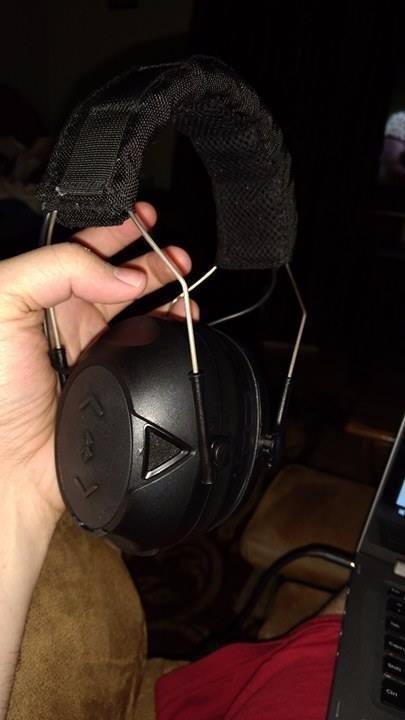
Power is either two AA cells or the 3M Alpha 1100 lithium-ion rechargeable pack, which is sold separately. The AA option is a genuine advantage over AAA when you shoot long indoor sessions, and the rechargeable route is the better answer for anyone who shoots weekly. Auto shut-off, a low battery indicator, and voice guidance round out the electronics, and voice guidance matters more than it sounds like it should, because it tells you the state of the unit without taking it off your head.
Fit is where the engineering shows. The adjustable vented headband spreads pressure across the top of the head rather than the sides, and the conformable ear cushions with gunstock cutouts are the only cushions in this roundup with rubber bumpers on the cutout edges, which reduce both the clatter of a gunstock knocking the muff and the scratches that come with it.
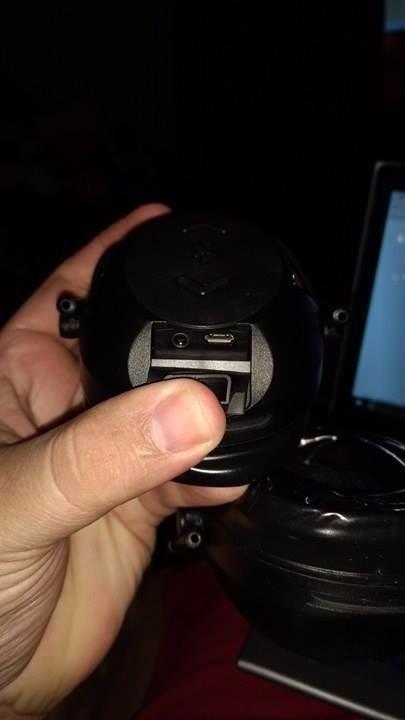
What 25 dB of rated protection actually buys
Rated protection matters most when the source is loud, and the sources that concern people most are unsuppressed rimfire and magnum fire. Three extra decibels of NRR is a real margin, particularly after the OSHA-style derating that accounts for how a rating is achieved in the lab versus how it fits on an actual head in the rain. It is the difference between a muff you can wear alone and one you plan to double up with.
It is not a dramatic difference, and you should not expect one. The reason to favor this model is that the rating and the ergonomics arrive together: the vented headband and conformable cushions are what let you take advantage of that rating across a full day rather than for the first hour.
Where the extra spend goes
Be honest with yourself about whether you need it. The cost gap between this unit and a slim mid-range muff is large, and the premium buys headband comfort, cushion quality, dynamic suppression, and a rechargeable battery ecosystem. It does not buy dramatically better hearing protection for a casual once-a-month shooter.
Note also that the rechargeable pack is an additional purchase, and that the rubber bumpers and added hardware make this one of the bulkier cups here. If you need a genuinely low profile for a cheek weld on a precision rifle, the slimmer models earlier in this list serve you better despite the lower rating.
6. ZOHAN EM054 — Budget Pick with Full Certification
ZOHAN EM054 Electronic Shooting Ear Protection with Sound Amplification, Slim Active Noise Reduction Earmuffs for Gun Range
Two omni mics at 4X
Instant impulse suppression
Vertical volume buttons
2 AAA batteries
Pros
- Microphone triggered suppression is essentially instant on gunshots
- Amplifies quiet ambient sound so you can converse without removing the muff
- Strong noise reduction for the money
- Comfortable adjustable fit with a good seal
- Includes an audio jack and cord
Cons
- Not active noise cancelling
- amplification is affected by ambient conditions
- Rubber paint finish and artificial leather headband feel utilitarian
Long-time shooters describe this muff as performing on a par with units costing considerably more, and at 4.6 stars from more than 2,400 reviews that is not a throwaway claim. Two omnidirectional microphones provide up to 4X amplification of low-level sound, and the chip suppresses loud impulse noise fast enough that shooters report no audible delay on a gunshot.
What makes it a genuinely safe recommendation rather than a cheap one is the certification. It carries ANSI S3.19-1974 along with CE EN352-1, EN352-4, and EN352-6, which is a broader certification set than most of the competing units in this roundup list. Hearing protection is not a place to economize, and this one has the paperwork to justify the money.
Controls are vertical buttons with large flexible touch targets rather than a knob, which is a meaningful departure from the rest of this list. It works well with cold or gloved hands, and reviewers like not having to find a raised ridge by feel. It is also a quieter design, which some people prefer.
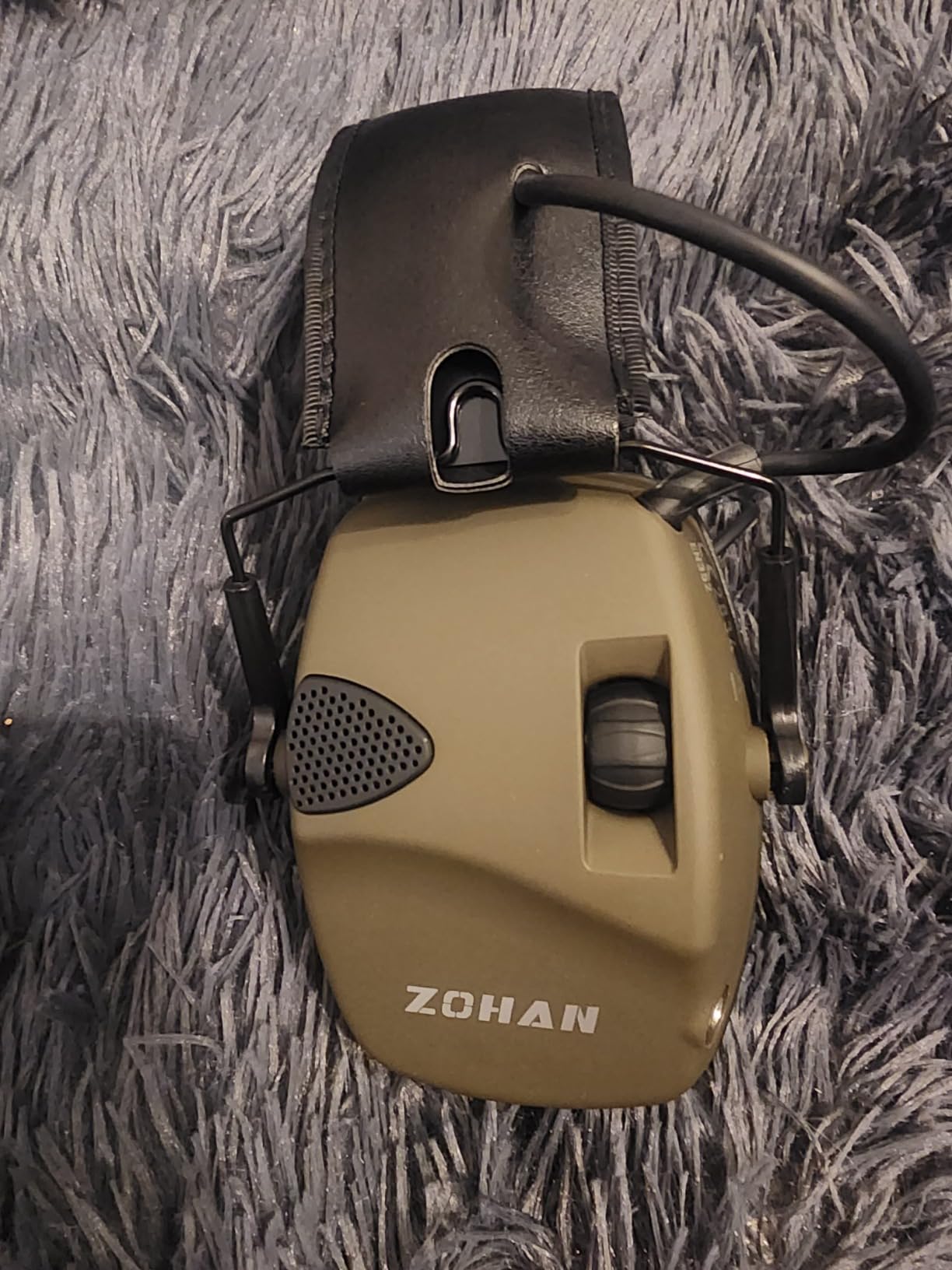
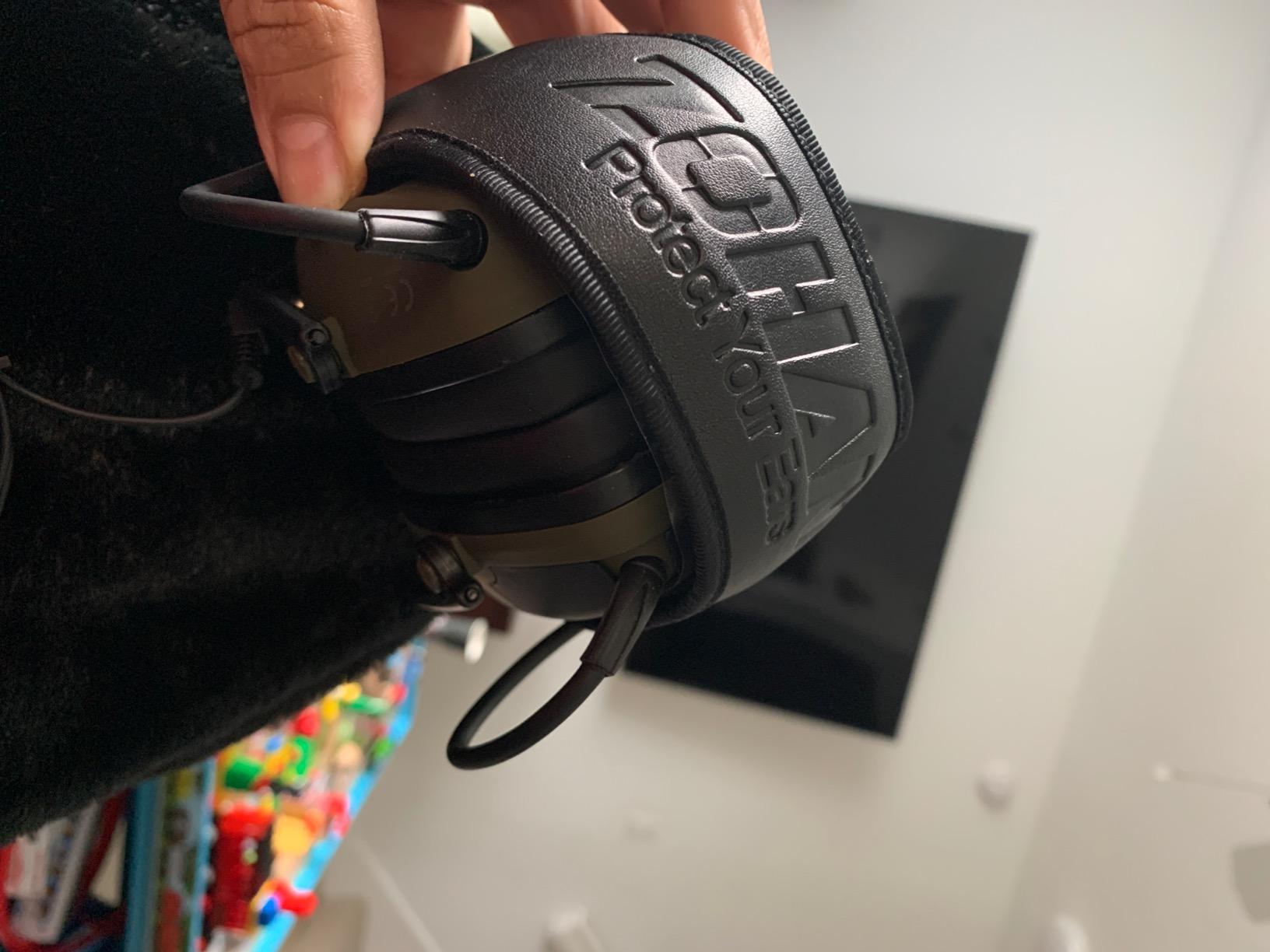
Construction is honest: a rubber paint finish, a hand-stitched artificial leather headband, water, sweat, and stain resistance, and a foldable lightweight frame. None of that sounds premium, and it does not present as premium, but the specs that affect your hearing are intact. It runs on two AAA batteries and includes an audio jack and cord for a phone or radio.
The single most common confusion in reviews is conceptual rather than mechanical. Some buyers expect active noise cancelling, meaning the muff cancels sustained noise the way a pair of travel headphones does. It does not. It amplifies low-level sound and gates loud transients, which is the correct behavior for a shooting application and the wrong expectation if you bought it to sit on a lawn mower.
Best fit for occasional shooters and tight budgets
The argument for this muff is straightforward. If you shoot a few times a year, mostly rimfire, mostly outdoors, the difference between this and a premium model will not show up in your experience. Protection gets gated, conversation comes through, and the certification means you are not gambling with your hearing to save money.
It is also the easiest recommendation in this list to justify to a partner or a range buddy, because the price conversation is short. For a first pair of electronic muffs, for a gift, or for a shooter working a very limited budget, this is the one to buy.
Where the savings show
Amplification quality is the first place. Two microphones with 4X amplification is a narrower listening experience than four microphones with independent Bluetooth and ambient channels, and owners do report that amplified sound is more affected by ambient conditions than on higher-end units. If you rely on your hearing protection to locate game, this is not the pick.
Materials are the second place. The artificial leather headband and rubber paint finish will not outlast a molded ABS shell with a padded wire frame, and there is no folding storage bag in the box. Treat it as the muff you keep at the range, not the one that lives in your bag.
7. PROHEAR 066 — Best for Shop, Yard and Saw Noise
PROHEAR Electronic Ear Protection for Shooting with 4X Sound Amplification, Gun Range Hearing Protection Muffs, NRR 23dB Noise Reduction Headphones for Hunting, Green
23 dB NRR
Suppression under 0.01 s
Up to 4X amplification
Up to 300 hours on AAA
Pros
- Very fast suppression silences shop saws and compressor noise
- Large single volume knob with a sensitive range
- Up to 300 hours of battery life on two AAA cells
- Lightweight with a padded telescopic headband
- Includes earplugs
- patches
- pouch and a 3.5 mm cable
Cons
- Battery polarity markings in the holder are hard to see
- Volume adjustment range is narrower than some users want
- Fits tight out of the box for some head sizes
- Mic interference is audible at the highest setting
This is the muff for people who shoot a little and work a lot. At 23 dB NRR with ANSI S3.19 compliance, an IPX4 rating for water, sweat, and dust, and suppression of harmful noise in under 0.01 seconds, it handles the sustained mechanical noise of a workshop far better than a shooting muff does. Reviewers specifically name shop saws and air compressors as the sources it shuts down cleanly.
The battery figure is the headline number. Up to 300 hours on two AAA cells is the longest runtime listed anywhere in this roundup, and for someone who wears it for mowing, snowblowing, and carpentry it means you charge your phone more often than you replace batteries. That removes an entire category of friction from the ownership experience.
The single tactile knob is large, easy to find by feel, and usable with gloves. Several reviews compare the knob favorably to the recessed knobs on Walker’s slim models, which is a small thing until you are wearing winter gloves and trying to lower the volume before you start a mow.
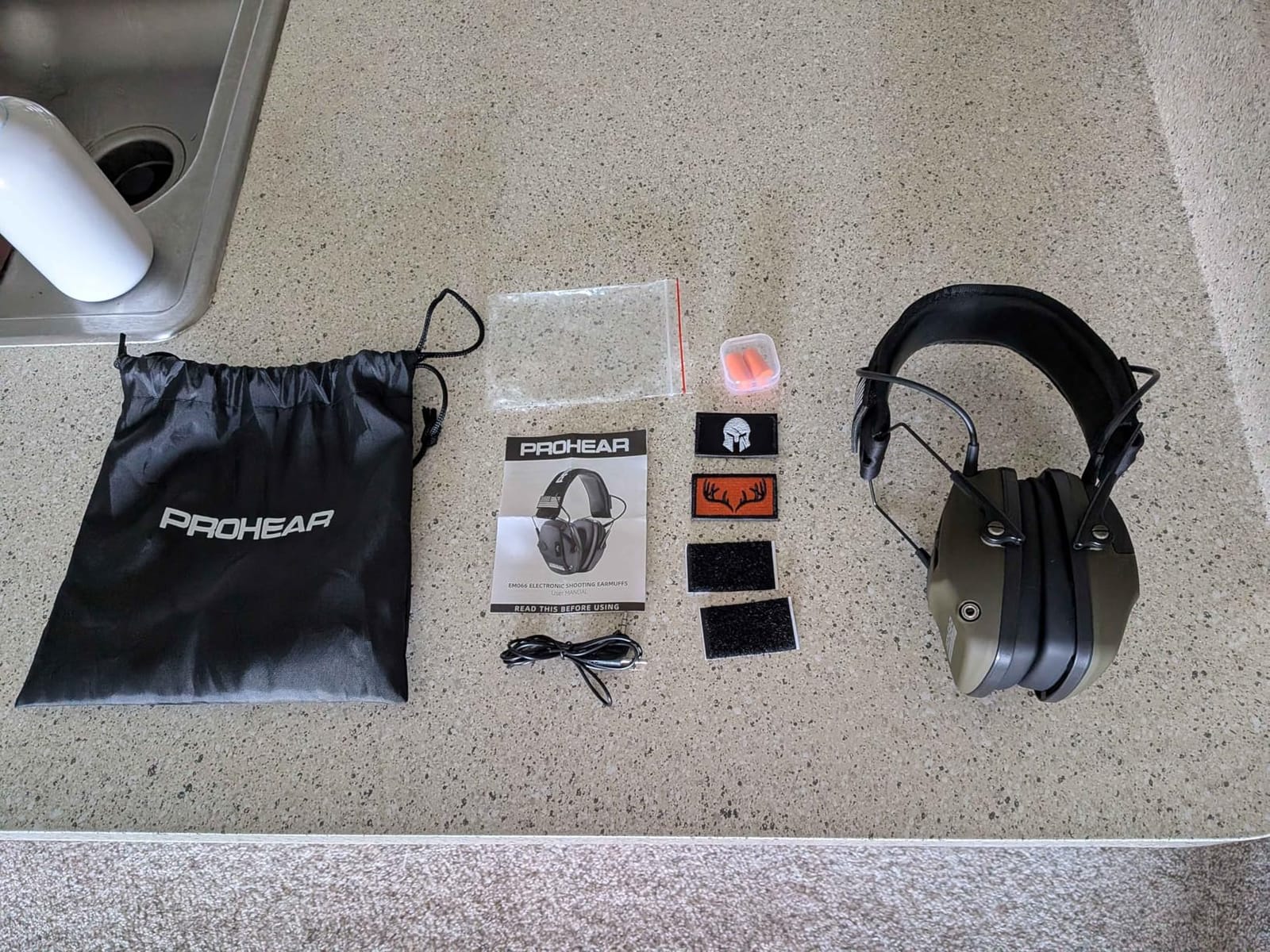
Weight is listed at 9.6 ounces with a telescopic padded headband and wide ultra-soft ear cups, and the slim low-profile cups include cutaways that keep the muff from fouling a gunstock. Owners also report that users with mild hearing loss or tinnitus find the amplification genuinely useful, which is a use case the shooting framing of this category tends to overlook.
The bundle is unusually generous: carrying pouch, user manual, a 3.5 mm cable, hook-and-loop patches, and a pair of earplugs. The earplugs matter, because the electronics gate loud transients and the passive shell does the attenuation, and doubling up is still the right call in a very loud space.
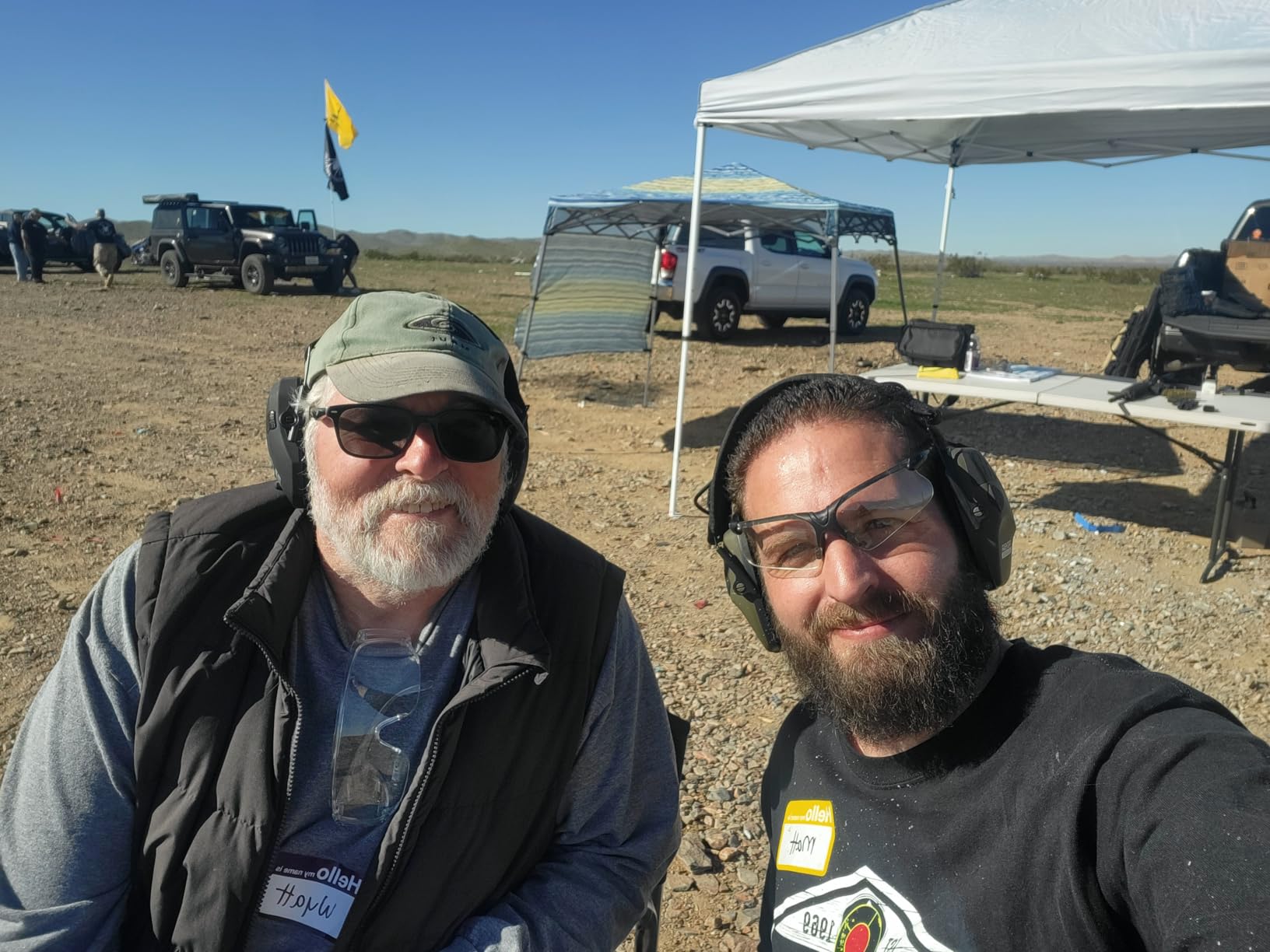
Why electronics beat a plain muff on a lawn mower
A passive muff on a mower is a wall. You hear the engine at a comfortable level and nothing else, which is fine if the mower is the only thing in the yard and a problem if you are trying to hear a neighbor, a dog, a child, or a bird. An electronic muff lets you keep the motor at a safe level and still hear everything around it.
The 4X amplification on low-level sound is what makes that work. Conversation and ambient cues come up to a normal level, the saw or mower crosses the threshold and gets gated, and you do not have to remove the muff to hear anything, which is also the safety win. Taking protection off around a running mower is a habit nobody should have.
Friction points worth knowing before you order
The battery holder has polarity markings that are hard to see, and this produces the single most common setup error. Check the orientation twice with fresh cells, because a backwards battery can leave you with a silent muff and no obvious cause. Once you know the correct orientation it never matters again.
Two smaller things: the volume range is narrower than some users want at the top end, and mic interference becomes audible at the very highest amplification setting, which is an indicator that you have gone past what the circuit can deliver cleanly. It also fits tight out of the box for some head sizes, so extend the telescopic headband fully before judging the fit.
8. PROHEAR 037 — Best Bluetooth Muff for Long Workdays
PROHEAR 037 Bluetooth 6.0 Hearing Protection Headphones with Rechargeable 1100mAh Battery, 30dB SNR Safety Noise Reduction Ear Muffs 120H Playtime for Mowing, Workshops, Snowblowing – Black
30 dB SNR
Bluetooth 6.0 to 80 ft
Rechargeable 1100 mAh
120 hours of playtime
Pros
- 30 dB SNR with a rechargeable battery
- Stable Bluetooth connection with a usable 80 ft range
- Rechargeable 1100 mAh battery with long playtime
- Raised control buttons work with work gloves
- Includes a carry bag and 3.5 mm cable
Cons
- Lowest average rating in the roundup
- Sound isolation and comfort are utilitarian rather than shooting focused
- Control functionality complaints relative to the feature list
This is the only unit here with an 80 ft wireless range, and that number decides which use case it serves. Sixty-three hundred reviews at 4.3 stars is one of the larger owner bases in the group, and the pattern in them is consistent: people buy this for mowing, workshops, and snowblowing rather than for the bench, and they expect a rechargeable battery that survives a season rather than a set of cells.
Bluetooth 6.0 handles music, calls, and track control from the muff itself, and the included 3.5 mm cable covers the wired case. A rechargeable 1100 mAh lithium battery with up to 120 hours of playtime removes the battery logistics entirely, which is the objection one r/guns poster raised about electronic protection in general: being old school and not wanting to charge hearing protection before a session. With this model, that objection simply does not apply.
Raised control buttons are designed for work gloves, and the padded headband with soft breathable pads is built for hours rather than an afternoon. The whole package, muff, cable, manual, and a black leather bag, is what you carry to a job site.
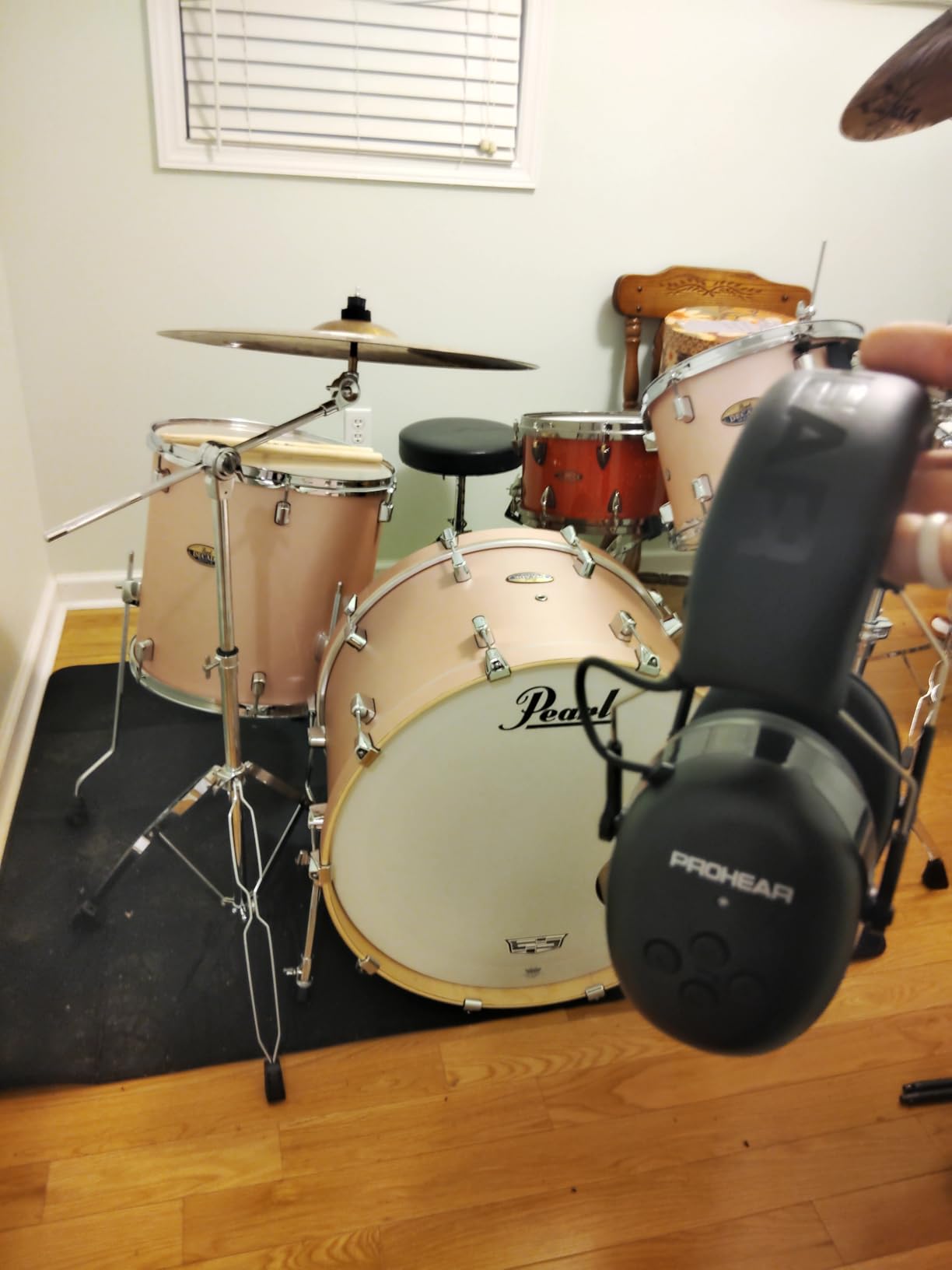
Be clear-eyed about what the 30 dB SNR figure means. SNR is a European-derived single number rating and NRR is the American figure, so they are not directly interchangeable, and this unit’s rating is not comparable to a 30 dB NRR claim. What it does tell you is that this is a well-sealed passive shell underneath the electronics, which is why it does well against sustained mechanical noise.
The 4.3 average is the lowest in this roundup, and the review spread shows why. About 6% of reviews are one-star, which is higher than the shooting-focused muffs here. The complaints cluster on sound isolation and comfort, which is the same theme: this is a safety muff built for a work environment, and it is not trying to be a shooting muff with a premium fit.

Pick this for the yard and the shop, not the lane
An 80 ft Bluetooth range is a specification aimed at moving around a property or a shop, not at sitting on a bench. Pair it to a phone, walk to the far corner of a yard, and the audio holds. That is a use case no shooting muff in this roundup serves, and it is why this unit earns a place on a list that is otherwise dominated by range gear.
It also handles a genuinely different sound profile. Mowers, snowblowers, and power tools produce sustained broadband noise rather than an impulsive spike, and this is where a well-sealed passive shell with a modest amplifier beats a low-NRR shooting muff. Snowblowing in particular produces hours of exposure at exactly the level where protection matters.
Where the rating spread comes from
Reviewers who expected a shooting muff report disappointment with the sound isolation, and that is a category error on their part rather than a defect. The complaints about control functionality are more legitimate: with track skip, calls, and volume all sharing a small set of raised buttons, it takes a week to learn the mapping, and some buyers never bother.
If the sound quality matters more to you than the wireless range and the rechargeable battery, the Walker’s Razor Quad earlier in this list is a more refined electronic muff with better ambient pickup, at the cost of the long battery and the 80 ft reach.
9. PROHEAR 016 Two Pack — Best Passive Backup Pair
PROHEAR 016 Shooting Ear Protection Earmuffs 2 Pack, NRR 26dB for Gun Range, Hunting -Black and Green
26 dB NRR and 31 dB SNR
Passive only
7.36 oz per pair
Two pack with bag
Pros
- Very light at 7.36 ounces per pair with soft cushions for hours of wear
- 26 dB NRR and 31 dB SNR quiet indoor range fire while leaving speech audible
- Low profile cups do not foul a shotgun butt
- Folds flat and includes a carrying bag
- Two pack covers a shooter and a companion
Cons
- Passive only with no amplification or Bluetooth
- No active hearing protection for users who need to hear conversation
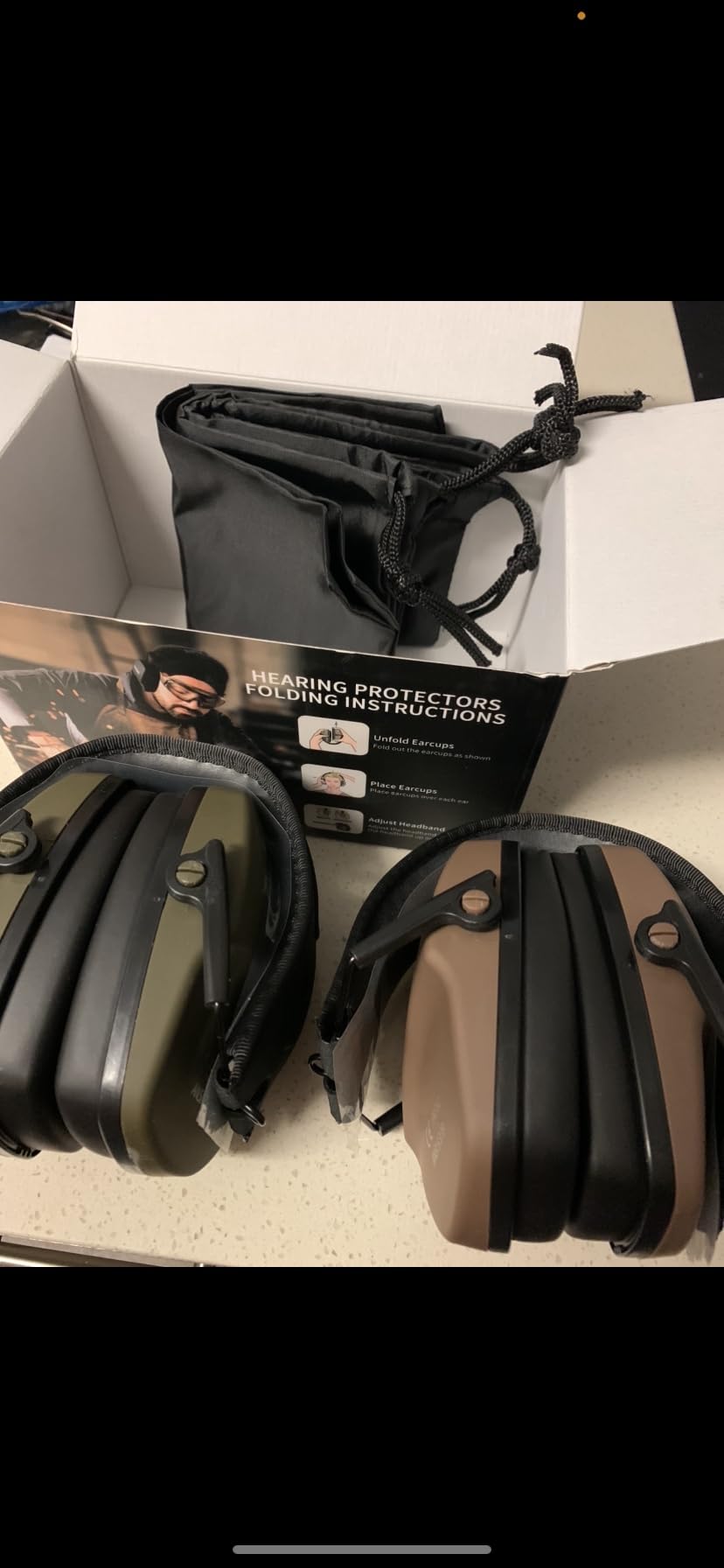
We include this one deliberately, because leaving it out would misrepresent the category. At 26 dB NRR and 31 dB SNR, this passive pair outperforms most of the electronic muffs in this roundup on rated protection alone, at 7.36 ounces per pair it is lighter than every other unit here with a published weight. For some shooters and some situations, that is the correct answer.
The sound-dampening composite housing with foam and specially designed ear pads does the work that electronics do elsewhere, just without the ability to let anything through. On a loading dock, in a woodworking shop, or on a range where you do not need to hear anyone, a passive muff is simpler, lighter, cannot fail from a dead battery, and costs far less.
The 4.7 rating from nearly 3,000 reviews reflects that straightforward equation working in its favor. Owners describe quiet indoor range fire with speech still audible at low volume, comfort across long sessions, and a folding design that packs into a range bag without ceremony.
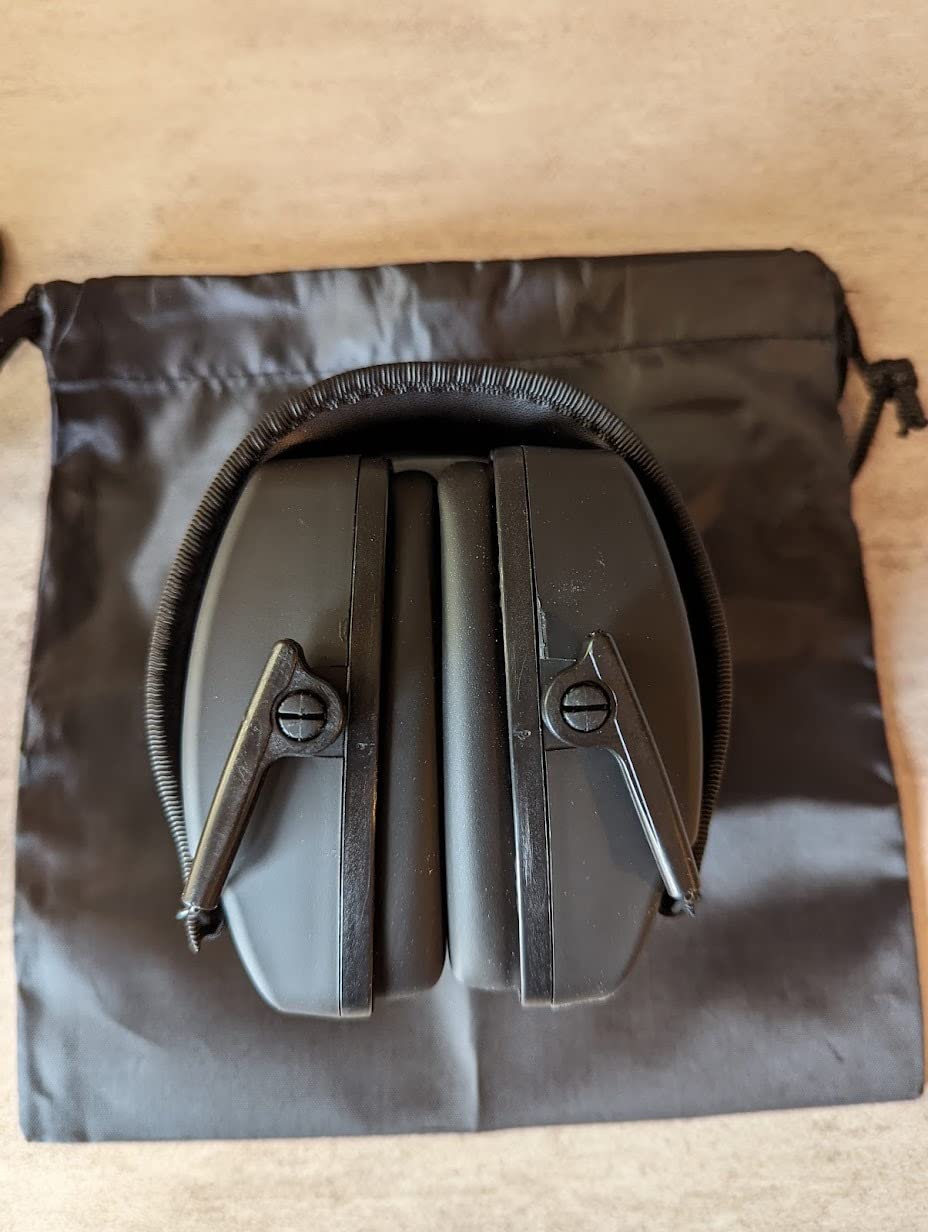
Certification here is solid: ANSI S3.19-1974 and CE EN 352-1. The low profile cut-out earcups are designed around rifle and shotgun compatibility, which is the same cheek weld logic that drives the electronic models in this list, and the adjustable headband with a heavily padded band keeps the seal consistent over a long day.
The two-pack format is the practical argument. One pair for the car, one for the bag, or one for you and one for whoever shoots with you. Owners comment on this repeatedly, because the failure mode of a single pair is that it lives in a vehicle or lives in a locker, never both.
When passive protection is the smarter choice
There are three clear cases. First, sustained loud noise, where passive attenuation is all you need and an electronic circuit is just a battery to manage. Second, anyone wearing a muff in a helmet or under a hood, where the added bulk and the electronics add nothing. Third, a range where hearing conversation is not part of the activity, which covers a great deal of recreational shooting.
Passive also degrades gracefully. Electronics fail, batteries die, circuits clip, and firmware quirks appear with age. A passive muff has no electronics to fail, which is why many experienced shooters keep one in the bag as a backup even when they own several electronic pairs. On the trapshooters.com threads, owners routinely describe running multiple models at once for exactly this reason.
Why this is not our top pick
The reason is the reinsertion problem. The recurring complaint across shooting forums is not that foam plugs block sound, it is that removing and reinserting them is a hassle, so people sit saying huh thirty times rather than deal with it. A passive muff does nothing to solve that. It solves the hazard, not the friction, and the entire reason electronic earmuffs exist is to remove the friction without giving up the protection.
So buy this pair, keep it in the vehicle, and use it for work and for the days when a battery is not worth thinking about. But if you are choosing one muff for a range where a safety officer talks to you, choose an electronic model instead.
10. Walker’s XCEL Digital — Most Listening Modes
Walker’s XCEL Digital Electronic Hearing Protection Earmuffs with Bluetooth & Voice Clarity – Grey
26 dB NRR
Four listening modes
Bluetooth with voice clarity
16 oz weight
Pros
- Four selectable listening modes give more control than most competitors
- Voice clarity processing makes speech easier to pick out in loud settings
- Auto shut-off
- low battery warning and voice prompts simplify operation
- Bluetooth is integrated for calls and notifications
Cons
- Heaviest muff in the roundup at 16 ounces with a bulkier profile
- Lowest rated electronic muff here
- Extra cup holes and rubber bumpers add bulk without improving gunstock clearance
Mode selection is this muff’s argument. Four distinct listening modes let you preset the muff for a given environment rather than adjusting a single knob on every trip, and buyers who care about control describe it as giving them more than anything else in the class. At 26 dB this is the strongest printed protection figure among the electronic muffs in this roundup, but the extra hardware that earns it also makes it one of the bulkiest designs in the set. That is the trade every buyer of this model is making.
Voice clarity processing is the other feature with real value behind it. In a loud environment, the problem is rarely that speech is too quiet, it is that speech is buried under everything else at similar level. A dedicated processing stage that favors voice frequencies measurably improves intelligibility for a range officer, and it is the feature most likely to matter to you on a busy outdoor line.
Bluetooth is integrated for calls and notifications, and paired with the voice clarity processing the result is a muff that works as a communications headset without any external hardware. Auto shut-off, a low battery warning, and voice prompts cover the operational details that separate a considered design from a basic one.
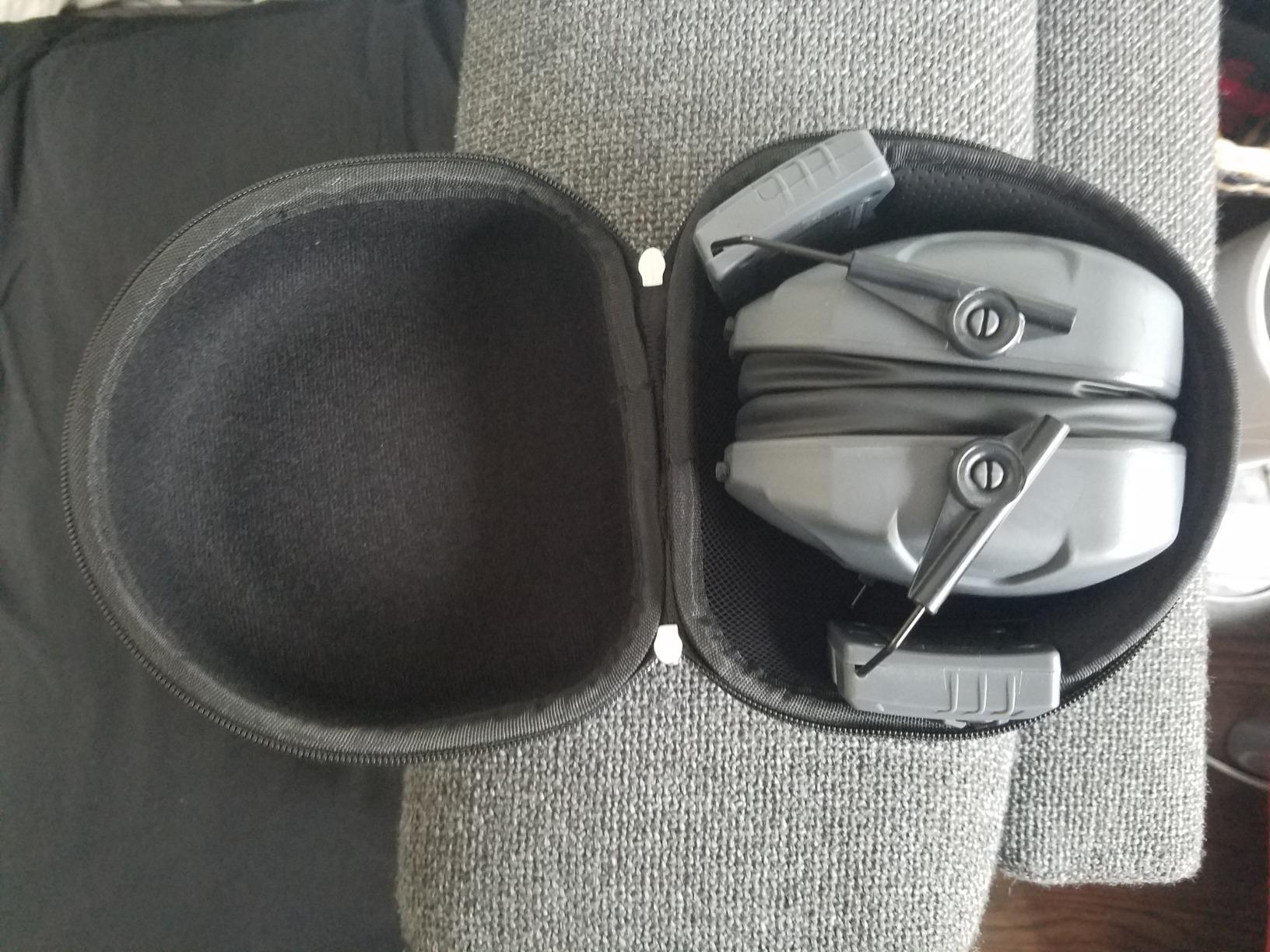
The physical execution is the issue. At 16 ounces, this is the heaviest muff in the roundup, and the ergonomic headband with rubber bumpers and revised cup holes adds bulk that reviewers say does not translate into better gunstock clearance. If you shoot a rifle and care about cheek weld, the slimmer models earlier in this list will serve you better despite the lower rating.
The 4.4 rating is the second lowest of the electronic units here, with about 6% of reviews at one star, which is a wider spread of complaints than the other Walker’s models attract. The pattern suggests the feature set is doing the work for some buyers while the fit and weight disappoint others, and separating those two groups before you buy saves you a return.
Who benefits most from four modes
Anyone whose environment changes during the day. A shooter who moves from an indoor bay to an outdoor line, or a guide who alternates between a windy hillside and a vehicle, is making the same adjustment over and over with a single-knob muff. Presetting removes that friction, and the modes can be matched to the environment rather than discovered each session.
For users with mild hearing loss, the mode selection plus voice processing is a meaningful combination. It is also the closest thing in this roundup to a hearing-assist device, which is not the design intent but is a documented side effect owners mention.
Where the bulk and rating fight back
Weight is the practical limit. Sixteen ounces on the top of your head for a full day is a real fatigue, and this is where all-day comfort becomes a genuine concern rather than a minor one. If you wear hearing protection for more than a few hours at a stretch, look at the models listed between 7 and 12 ounces instead.
The rating spread also suggests a build or fit consistency issue that the numbers do not explain. If you can try one before committing, that is worth the effort. Otherwise, the lighter models with comparable protection and simpler operation are the safer buy.
How We Picked These Ten
Every unit in this roundup was assessed against the same six criteria, and we list them so you can disagree with our weighting rather than guess at it.
Rated protection. The published NRR or SNR, read alongside what each figure actually means in real use rather than on the label.
Amplification quality. Whether conversation stays intelligible at a busy range, and whether the circuit compresses a report without clipping it.
Comfort over a long session. Headband pressure, cup weight, cushion softness, and whether the profile clears a rifle stock.
Build and seal. Housing material, microphone protection, weather resistance, and certification.
Connectivity. AUX input, Bluetooth range, and whether ambient and media volume are separately controllable.
Battery logistics. Battery type, whether cells are included, runtime, auto shut-off behavior, and what happens when the battery dies.
We weighted the non-clipping criterion heavily because the owner consensus is unambiguous on it. If the circuit slams shut so fast that it distorts everything around a shot, the muff has taken away the awareness you bought it for, and you will end up taking it off.
How Much Protection Do You Actually Need?
NRR is the American Noise Reduction Rating, tested to a lab method and printed on the box. SNR is the European Single Number Rating, calculated differently, so the two numbers are not interchangeable even when they look similar. Whenever you compare a 30 dB SNR unit to a 26 dB NRR unit, you are comparing two different measurement systems.
The bigger issue is that a lab NRR is rarely what you get on your head. The accepted field method, derived from the OSHA approach, derates the printed rating to account for real fit, real head shapes, and the way a rating is achieved in a laboratory versus a hot range with a user who does not fit the muff perfectly. As a working rule, subtract roughly a third of the printed NRR to get a realistic figure, then subtract more if you have large glasses, facial hair, or a helmet.
Now match that against your source. As a rough calibration, muzzle blast figures run roughly in the 140 to 190 dB range for common handgun and rifle calibers, with unsuppressed magnums and rimfire at the higher end and suppressed firearms considerably lower. A normal unsuppressed indoor range with 9mm or .223 fire is the easy case. Unsuppressed .308, .300 Win Mag, and magnums outdoors are the hard case. Suppressed pistol and heavily suppressed rifles are much easier and often need less than you would expect.
A worked example. Take the Peltor Sport Tactical 500 with its printed 25 dB NRR. A third of that comes off for field derating, leaving roughly 16 dB of realistic attenuation. Against a mid-range blast figure that gives meaningful headroom, and against a magnum it is not enough on its own. The conclusion is not that the 25 dB unit is bad, it is that any muff in this roundup should be doubled up with foam plugs if your discipline involves unsuppressed large-bore ammunition.
If you want the simple rule: if you are indoors with rimfire, a single electronic muff is generally sufficient. If you are outdoors with a centerfire rifle, double up. If you are on a magnum or anything unsuppressed and loud, double up regardless of the label.
Sound-Activated Compression vs Hard Clipping
Every electronic muff works on the same principle. Outward-facing microphones pick up ambient sound and amplify it. When an impulsive noise like a gunshot crosses a set threshold, the circuit compresses that channel or shuts it off, and the blast is damped while quiet sound keeps arriving. The threshold is the volume limit, and everything interesting about the audio comes down to how the circuit handles the moment it engages.
Hard clipping is the bad version. If the circuit simply cuts the signal instantly, the waveform is flattened at the top, and what reaches your ear is a harsh, distorted crack rather than a natural report. Owners hear it as a digital snap, and it is the reason people who try one cheap muff conclude that electronic protection sounds terrible.
Compression is the good version. The circuit reduces gain smoothly rather than switching off, so the transient is turned down without a hard edge. The best units go further and vary the suppression window to the energy of the noise, which is why a model with dynamic suppression sounds markedly more natural on a single shot in a bay than a fixed-window unit on the same shot.
This is why the figure we would look at first is not the NRR but the response time. The PROHEAR 066 gates in under 0.01 seconds, the Walker’s Razor Quad responds in 0.02 seconds, and the rest of this roundup does not publish a figure. Faster is better, and compression instead of clipping is better still. It is the single most useful thing to know when comparing two otherwise equal muffs.
Forum owners agree. On thefiringline.com, non-clipping is named as the reason a premium electronic muff beats a cheaper one, and that is a criterion you can evaluate yourself in about ten seconds at a range by firing a round and listening to whether the sound around the shot survives intact.
Ear Muffs vs Ear Plugs vs Dual Protection
Three options, and the honest answer is that most shooters need more than one of them.
Ear plugs are the lightest and the most discreet, and the most consistently underestimated. A good foam plug fits deep in the ear canal and is uncomfortable for exactly as long as it takes to seat it properly, which is the entire reason people skip them. The recurring forum complaint is not that plugs block sound. It is the reinsertion hassle. One r/guns poster described the problem exactly, asking for a muff good enough for outdoor range time that does not force a doubling up with foamies, because removing and reinserting plugs is a friction he would rather design around.
Ear muffs solve that friction. You put them on once and you hear the whole session. They are heavier, they interfere with a rifle gunstock if the cups are tall, and they interfere with glasses and with the arms of glasses, which owners mention often enough that it belongs here. Any muff with a proper seal, worn correctly, will outperform a badly fitted plug.
Dual protection means wearing both, and the guidance is that it adds roughly 5 dB beyond the muff rating alone, which is meaningful rather than dramatic. The rules that matter: use the highest rated plugs you can find, use corded plugs behind the muff so you can pull them out to hear, and make sure the plug is fully seated before the muff goes over the top. A plug that is half inserted wastes the whole arrangement.
Our recommendation is blunt. Buy an electronic muff you are happy wearing, and buy a box of plugs. Wear both when the noise is loud, and wear the muff alone when you want to hear the range officer. That combination covers everything the r/guns poster was asking for without making you choose between protection and conversation.
Bluetooth for Music vs Bluetooth for Comms
Most roundups treat Bluetooth as a single feature. It is two different features, and they conflict.
Bluetooth for comms means calls, radio traffic, and notifications. This is where Bluetooth genuinely earns its place, because a muff that lets you take a call without taking off your hearing protection is a real operational improvement. The Peltor Sport Tactical 500 is the best version of this, with independent volume for ambient and media, so you can keep a conversation going without losing the sound of the range.
Bluetooth for music is a different story. Every Bluetooth-equipped muff in this roundup receives complaints about audio quality, most of them about weak bass and mediocre playback, and the Walker’s Razor Slim, which has a jack but no radio, draws the same note about digital artifacts in the passthrough path. Expect functional audio, not good audio.
The trap is assuming a Bluetooth muff is a better muff. It is not. The Peltor Sport Tactical 100 has no radio at all and is a better range instrument than either Walker’s Bluetooth model. Judge connectivity by one question: do you need to take calls in a noisy environment? If yes, Bluetooth matters. If you just want music on the drive, bring earbuds and save the weight.
One practical warning. Wireless audio is a distraction risk on a firing line, and several owners mention switching to the ambient-only mode at a busy range for exactly that reason. If you pair a device at the range, set the media volume to zero before you step up.
Passive vs Electronic, and Non-Shooting Use
This is the section that separates this roundup from the ones that mix everything together, and it also addresses the search traffic that lands on winter ear muffs. Fleece-lined winter ear muffs are a completely different product, made for cold rather than for noise, and they are worth nothing as hearing protection.
The passive case is real and we covered it above: lighter, cheaper, simpler, no battery, no electronics to fail, and in some situations a higher rated figure. The electronic case is equally real: you hear the range officer, you hear your spotter, you hear the mechanical noise of a malfunction, and you do not take the protection off to do any of it.
Beyond shooting, the non-shooting case is large and often better served. Lawn mowing, snowblowing, chainsaw work, angle grinding, and workshop time all produce sustained noise levels where an electronic muff lets you monitor your surroundings while the loud source is gated. The PROHEAR 066 and the PROHEAR 037 were both developed for that environment rather than for a bench, and both handle it well.
The choice there is different from the shooting choice. For yard and shop work, prioritize a rechargeable battery and a good seal over Bluetooth, because the muff will be on for hours and the deciding factor is forgetting to charge it. For the range, prioritize profile, suppression behavior, and stock clearance. The tools in the box overlap, but the weighting does not.
One more caution specific to the winter cluster. Heated or insulated earmuffs sold for cold weather are not rated hearing protection unless they carry an ANSI or CE mark for noise, and many do not. Check for the rating, not the season.
Batteries, Fit and Long-Term Care
Battery type drives more ownership complaints than any other specification, and the three patterns in this roundup each have a real cost.
Two AAA cells is the most common. It is cheap and universally available, and it is what the Peltor Tactical 100, the PROHEAR 066, the ZOHAN EM054, and the Walker’s models use. The Howard Leight Impact Sport is rated around 350 hours and the PROHEAR 066 up to 300 hours, both from AAA. The annoyance is logistics, not endurance: you need a supply of cells, and the Tactical 100 does not include them.
Two AA cells is what the Peltor Sport Tactical 500 uses, and AA is the better cell for long indoor sessions because of capacity. The catch is the optional rechargeable pack, which is a separate purchase and needs its own charger.
Rechargeable lithium is the PROHEAR 037, with a 1100 mAh cell and up to 120 hours of playtime. It is the right answer for anyone who wears the muff weekly and does not want to think about cells. It is the wrong answer for someone who wants a sealed, grab-and-go unit, because a dead rechargeable is a dead unit until it is near a charger.
The failure mode nobody warns you about is the silent death. Several units here have an auto shut-off with no always-on indicator, so a muff that was switched off at the end of the last session presents as a dead battery at the start of the next one. Check the power position before you start blaming the batteries.
On fit, the recurring theme is that the headband adjustment range matters more than the padding. A telescopic padded band that extends fully accommodates head sizes that an adjustable wire frame does not. If you wear glasses, test the seal with them on, because temple arms break the seal and reduce both comfort and the rating you actually get.
On long-term care, ear cushions are the consumable part. Foam and gel pads compress, harden, and stop sealing, and no amount of electronics compensates for a leak. Keep a spare set. It is the cheapest maintenance in this entire category.
For readers who like to trace how a component actually behaves under load, we also track classic car electronic ignition kits, where the failure modes are older and the tolerances are tighter.
Frequently Asked Questions
Are electronic ear muffs worth it?
For most shooters, yes. They let you hear the range officer, your spotter, and conversation without removing your protection, which is the exact friction that makes people skip hearing protection altogether. The protection rating is comparable to a good passive muff, but the electronics also gate loud transients that a passive muff cannot handle as gracefully. If you shoot where someone talks to you, the answer is yes.
What ear muffs do navy seals use?
Naval special operations use helmet-mountable electronic hearing protection with communications integration rather than a stand-alone muff, so the unit is paired with a comms system on a ballistic helmet. The practical characteristic to look for is a low-profile shell that fits a helmet ear cutout and accepts an earbud or downlead connection. If you are not mounting to a helmet, the features that matter are rated protection and a sealed fit.
What are the best ear muffs on the market?
It depends entirely on the use case. Our overall pick is the Walker’s Razor Slim for shooting, the Peltor Sport Tactical 500 for the highest rated protection with Bluetooth, the PROHEAR 037 for yard and workshop use, and the PROHEAR 016 two pack as the best passive option. The best muff for you is the one that fits your environment, your head, and your budget rather than the highest number on the box.
What are the best electronic ear defenders?
The best electronic ear defenders in our testing are the Walker’s Razor Slim for overall shooting use, the Howard Leight Impact Sport for value, and the Peltor Sport Tactical 100 for indoor ranges where echo is the problem. All three amplify quiet sound while gating loud transients, and all three use AAA cells that you can swap without tools. The Walker’s Razor Slim wins on profile and weight.
What NRR rating do I need for shooting?
For indoor rimfire such as 9mm or .223, a 22 to 26 dB NRR electronic muff is generally sufficient on its own. For unsuppressed centerfire such as .308 or .300 Win Mag outdoors, treat any rating as secondary and double up with foam plugs. For magnums at close range, dual protection is not optional. Remember to derate the printed figure for real-world fit before relying on it.
Do electronic ear muffs protect hearing as well as passive ones?
On paper, a well-fitted passive muff can carry a higher rating than many electronic models. In practice the comparison is closer than the label suggests, because electronic circuits gate impulsive noise extremely fast, within hundredths of a second on the units we recommend. The deciding factor is real-world fit, not the printed figure, and that is true for both types.
The Best Electronic Ear Muffs Verdict
The best electronic ear muffs in 2026 come down to a small set of winners, and the right one depends on where you shoot. The Walker’s Razor Slim is our top pick and the one we recommend to most people: an ultra low-profile cup design, the slimmest setup for a clean rifle cheek weld, and the deepest owner base in the category backing it up. If you are on a budget, the ZOHAN EM054 does the same job with full ANSI and CE certification for far less.
For indoor ranges, the Peltor Sport Tactical 100 is the pick, because adjustable suppression time is the only control in this roundup that actually solves the echo problem. For Bluetooth, the Peltor Sport Tactical 500 carries 25 dB of rated protection and the only truly independent ambient and media volume controls. For yard and workshop work, the PROHEAR 037 with its rechargeable battery and 80 foot wireless range is the right tool, and the PROHEAR 066 handles shop noise with the longest AAA runtime here.
Whatever you choose, buy foam plugs alongside it, keep a spare pair of ear cushions, and check that the seal is good with whatever you normally wear on your head. Tell us the environment you plan to use them in, whether you need Bluetooth, and your budget, and we will narrow it to one.