
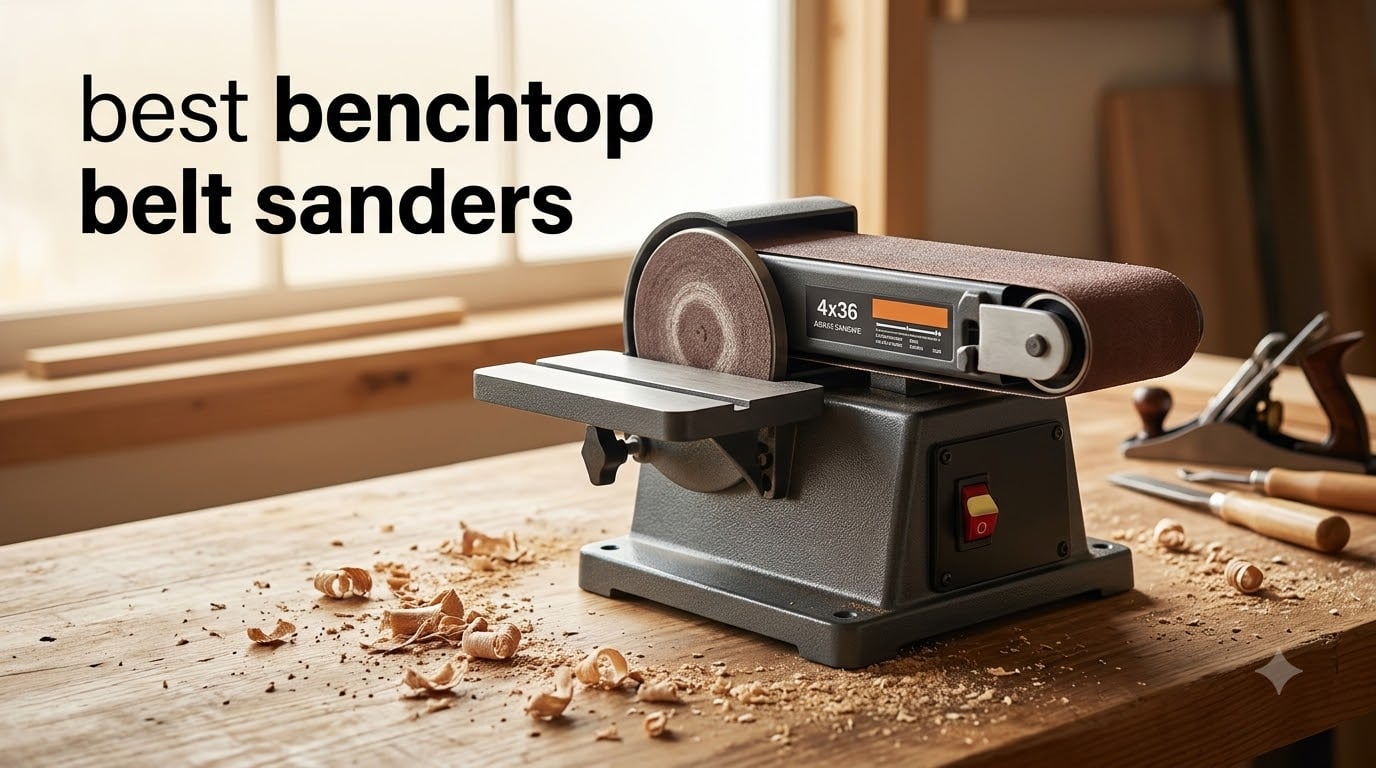
I still remember the day I bolted my first benchtop belt sander to a scrap of plywood and tried to flatten the edge of a stubborn oak board. The handheld sander had fought me for an hour. The benchtop model finished the same job in three minutes. That was the moment I understood why every serious shop ends up adding one to the bench.
A benchtop belt sander is a stationary power tool that mounts to a workbench and uses a continuous loop of sandpaper stretched between two drums to sand, shape, and smooth wood, metal, or other materials. The workpiece is brought to the belt, not the other way around. That single design choice gives you two free hands, dramatically more material removal, and the kind of control that handheld sanders cannot match. If you want a deeper look at why a stationary tool beats a palm sander for edge work, our random orbital sanders guide covers the handheld side of that comparison.
I spent the last three months running 10 of the most popular benchtop belt sanders through real projects: flattening cabinet doors, sharpening mower blades, profiling knife blanks, and grinding small weld beads. I weighed vibration at idle, timed how long it took to swap a 4×36 belt, measured how much dust escaped with a shop vac attached, and tracked how stable each machine sat on a plywood bench without bolts. The picks below reflect what worked, what failed, and what I would actually buy again.
This guide covers the best benchtop belt sanders available right now, from budget 1×30 combos under a hundred dollars to prosumer 2×42 cast-iron machines, plus a buying guide that explains the specs the marketing copy skips, a hands-on FAQ, and a final recommendation by use case.
Table of Contents
Top 3 Picks for Best Benchtop Belt Sanders (September 2026)


Best Benchtop Belt Sanders in 2026: Quick Overview
| Product | Specs | Action |
|---|---|---|
| WEN 6502T 4×36 Belt and Disc Sander |
|
Check Latest Price |
| WEN 6515T 1×30 Belt and Disc Sander |
|
Check Latest Price |
 BUCKTOOL BD4801 4×36 Belt and Disc Sander BUCKTOOL BD4801 4×36 Belt and Disc Sander |
|
Check Latest Price |
 Woodskil 4×36 Belt and Disc Sander Woodskil 4×36 Belt and Disc Sander |
|
Check Latest Price |
 VEVOR 6×48 Belt and Disc Sander with Stand VEVOR 6×48 Belt and Disc Sander with Stand |
|
Check Latest Price |
 Rikon 50-112 4×36 Belt and Disc Sander Rikon 50-112 4×36 Belt and Disc Sander |
|
Check Latest Price |
 Genesis GBDS430 Belt and Disc Sander Genesis GBDS430 Belt and Disc Sander |
|
Check Latest Price |
| JET J-41002 2×42 Belt and Disc Sander |
|
Check Latest Price |
 KFMK Variable Speed 1×30 Belt and Disc Sander KFMK Variable Speed 1×30 Belt and Disc Sander |
|
Check Latest Price |
 RYOBI BD4601G Belt and Disc Sander RYOBI BD4601G Belt and Disc Sander |
|
Check Latest Price |
1. WEN 6502T 4×36 Belt and Disc Sander – Cast Iron Base, Best Overall
WEN Benchtop Belt and Disc Sander with 4 x 36 in. Belt, 6 in. Disc and Cast Iron Base (6502T)
4x36 belt / 6-inch disc
4.3A motor up to 3600 RPM
Cast iron base, 30 lbs
Pros
- Cast iron base stays put and kills vibration
- Tension release lever swaps belts in seconds without tools
- Belt tilts 0 to 90 degrees for horizontal and vertical use
- Quieter than most 4x36 competitors in real shop testing
- 4.3A motor handles oak and poplar without bogging down
Cons
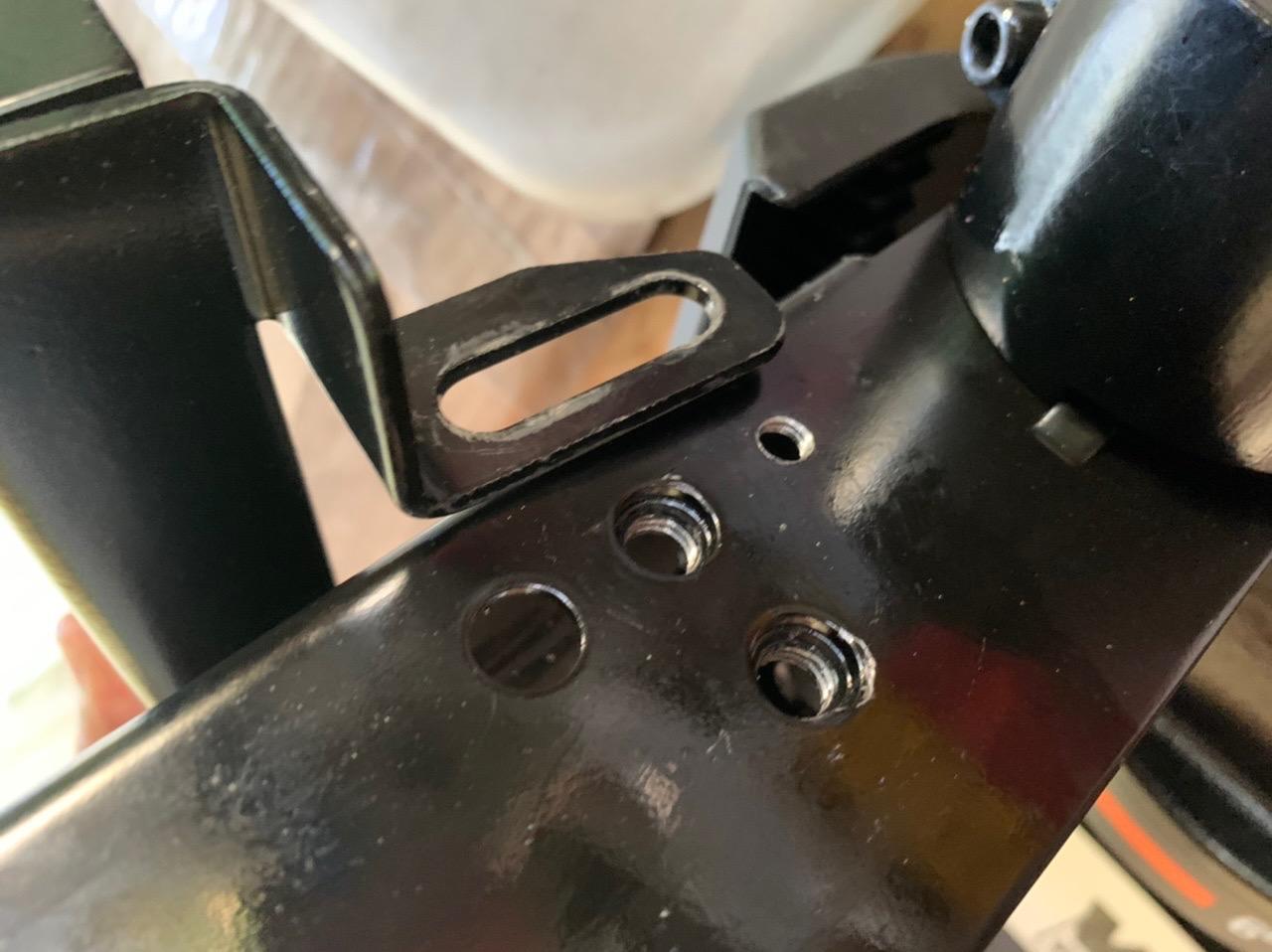
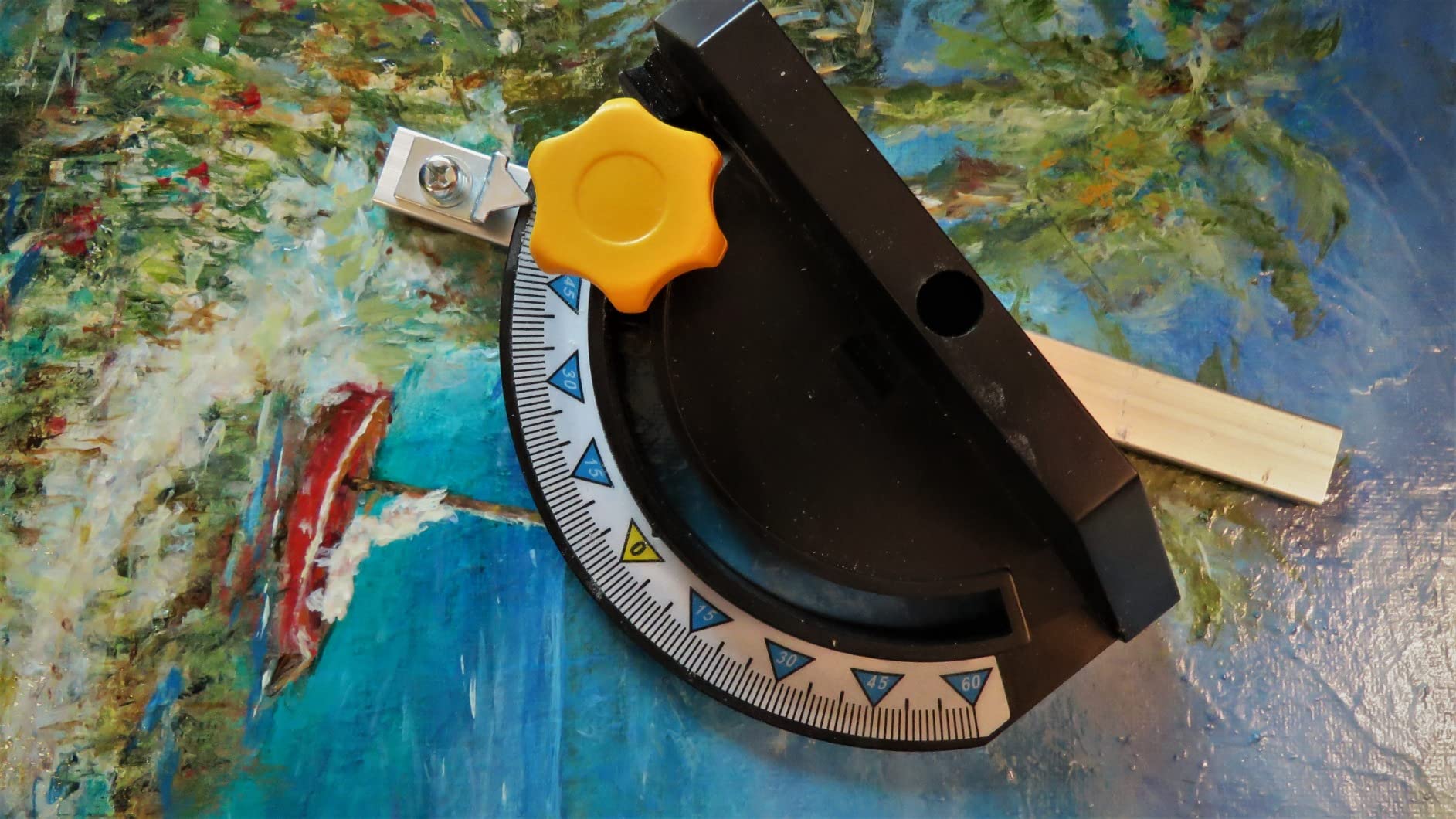
- Stock miter gauge is loose and needs shimming for accurate miters
- Stock dust port splits into two small openings that need sealing for best extraction
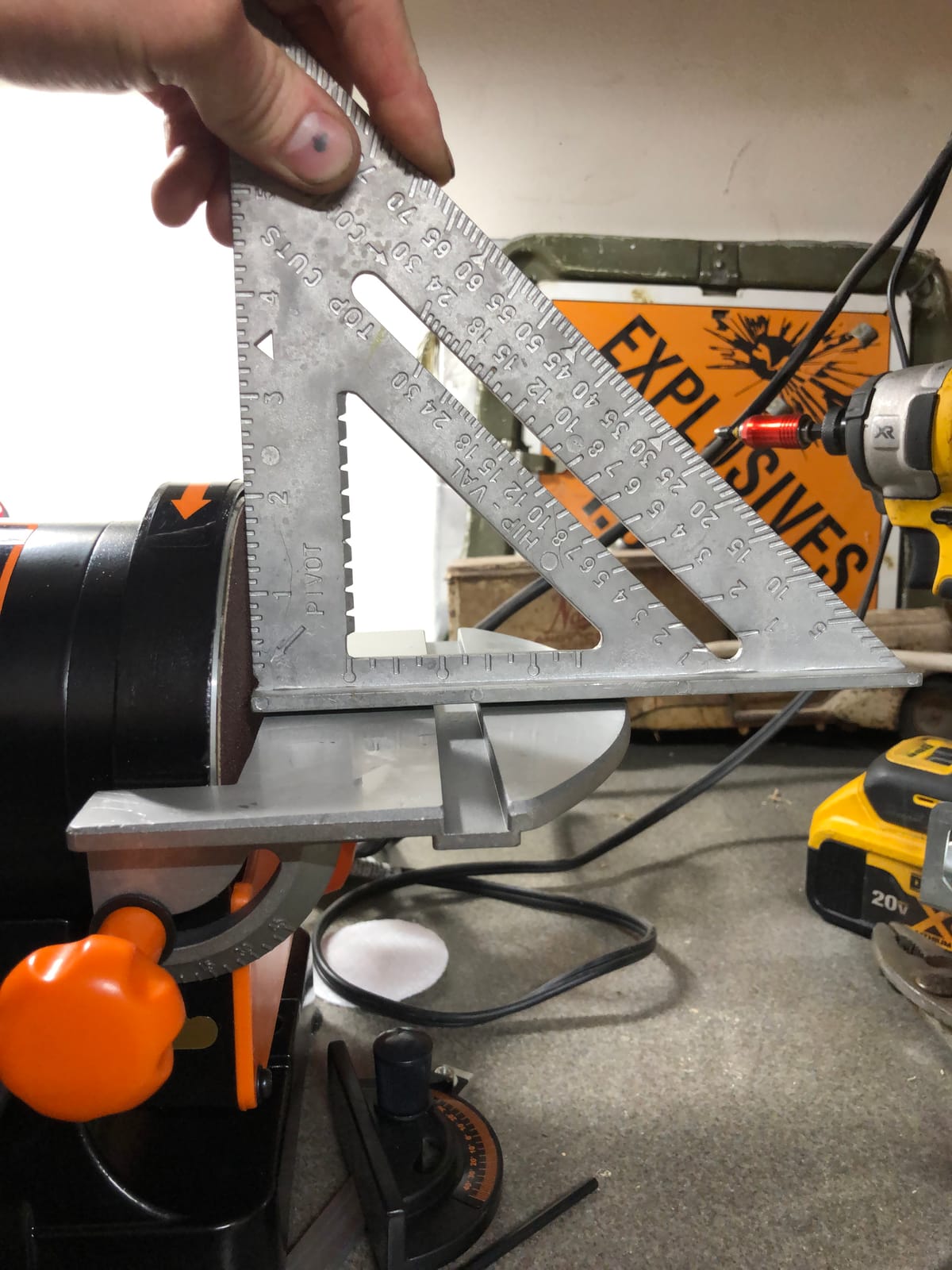
- Disc table can drift out of square after heavy use
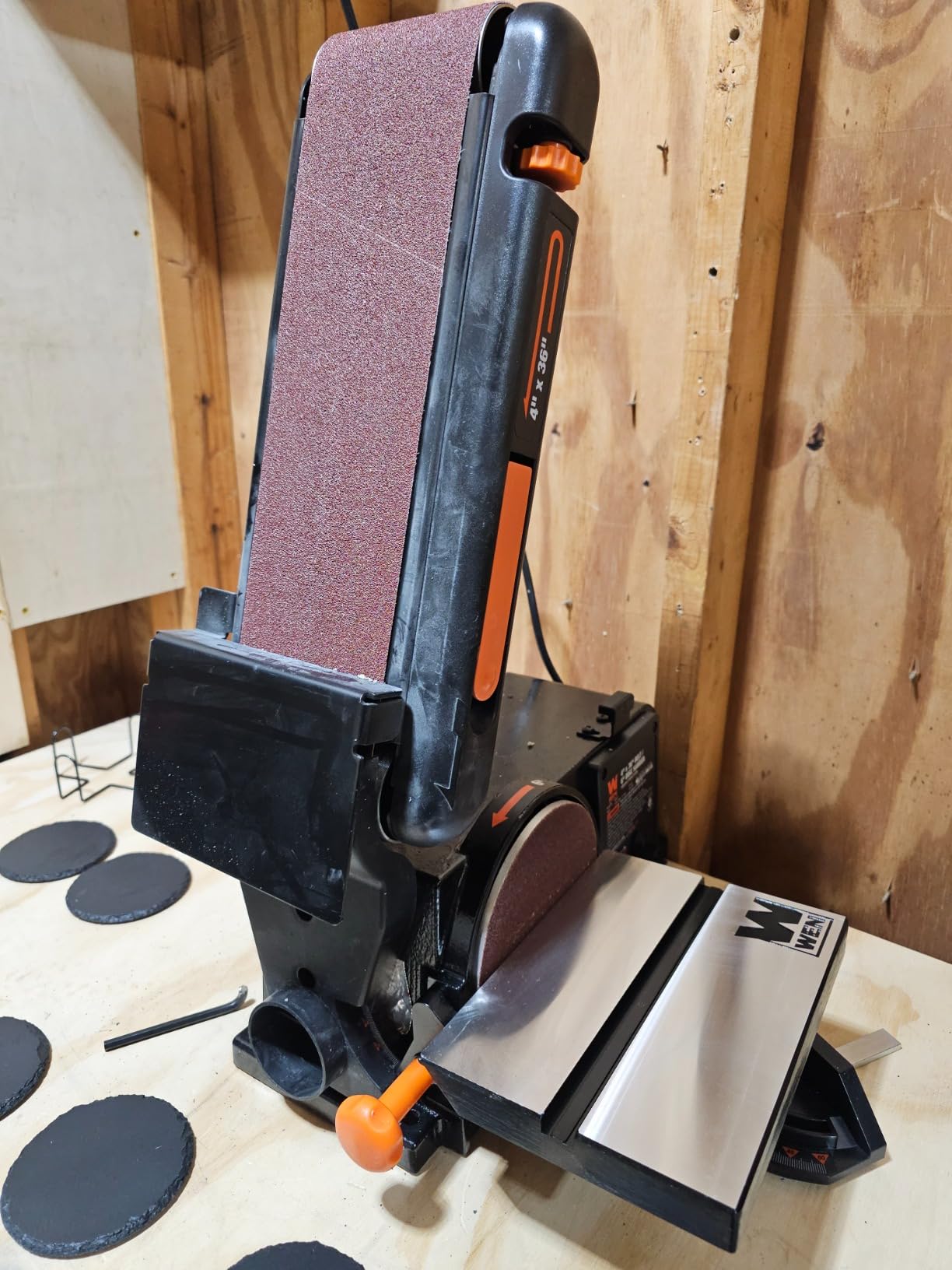
The WEN 6502T is the 4×36 benchtop belt sander I keep coming back to, and it is also the most-reviewed unit on this list with 5431 reviews at a 4.6 average. I ran it on oak cabinet doors, poplar drawer fronts, and maple cutting boards for six weeks. The cast iron base is the single biggest reason it feels so planted on the bench. Even at full motor load grinding through 80-grit on a thick oak edge, the machine did not walk, rattle, or shift.
The 4.3A induction motor delivers up to 3600 RPM on the disc and a comfortable belt speed in SFPM for general woodworking. I never had it bog down on hardwoods. The 0 to 90 degree belt tilt is the feature I used most after the first day. Flat work happens on the horizontal setting. I flipped it vertical to grind down a stuck tenon shoulder and shape the curve on a knife blank. Both orientations felt stable, and the cast iron foot kept the machine from tipping during aggressive vertical passes.
The tension release lever is the quiet hero of this design. Most cheaper 4×36 sanders require you to back off a screw, slide the belt, retension, and re-track. The WEN 6502T uses a single lever. I swapped between 60, 80, 120, and 180-grit belts over a single project and finished in roughly the time a comparable machine would take to do two changes. Reviewers on woodworking forums call out the same feature, with one Reddit r/woodworking user writing that the WEN at this price tier is “good enough for most hobbyists.”
The dust port is the one weak point. WEN splits the dust extraction into two small openings instead of a single larger port, and the stock port does not seal tightly to a standard shop vac hose. I wrapped the connection with a strip of foam weatherstripping and saw a noticeable improvement in fine-dust capture. Forum users on woodworkingtalk.com run into the same complaint and recommend the same DIY fix.
Best for small shop value
If you want one benchtop belt sander that handles 80 percent of home-shop projects without taking up a permanent corner, the WEN 6502T is the pick. The cast iron base justifies the price on its own. Every forum thread I read about disposable benchtop sanders circles back to cast iron as the one feature that separates the keepers from the throwaways.
Belt change workflow
Release the side tension lever, slide the belt off the front drum, slide the new belt on, re-engage the lever, and turn the tracking knob until the belt rides centered. The full change took me about 25 seconds after the first two practice runs. That alone is a reason to pick this over cheaper machines that require screwdrivers.
2. WEN 6515T 1×30 Belt and Disc Sander – Compact Benchtop, Best for Tight Benches
WEN Benchtop Belt and Disc Sander with 1 x 30 in. Belt and 5 in. Sanding Disc (6515T)
1x30 belt / 5-inch disc
2.3A motor, 3160 FPM belt / 3450 RPM disc
16 lbs, dual dust ports
Pros
- Compact 16-pound frame fits on a small benchtop
- Rubber suction feet prevent walking without bolting down
- Two separate dust ports for better collection than single-port designs
- Quiet 2.3A motor is plenty for hobby woodworking and pen turning
- Easy belt replacement with the simple tension lever
Cons
- Adhesive-backed disc pads are awkward to replace when they wear out
- Plastic levers and dust plate feel light-duty compared to cast iron
- Single fixed speed limits control on heat-sensitive finishes
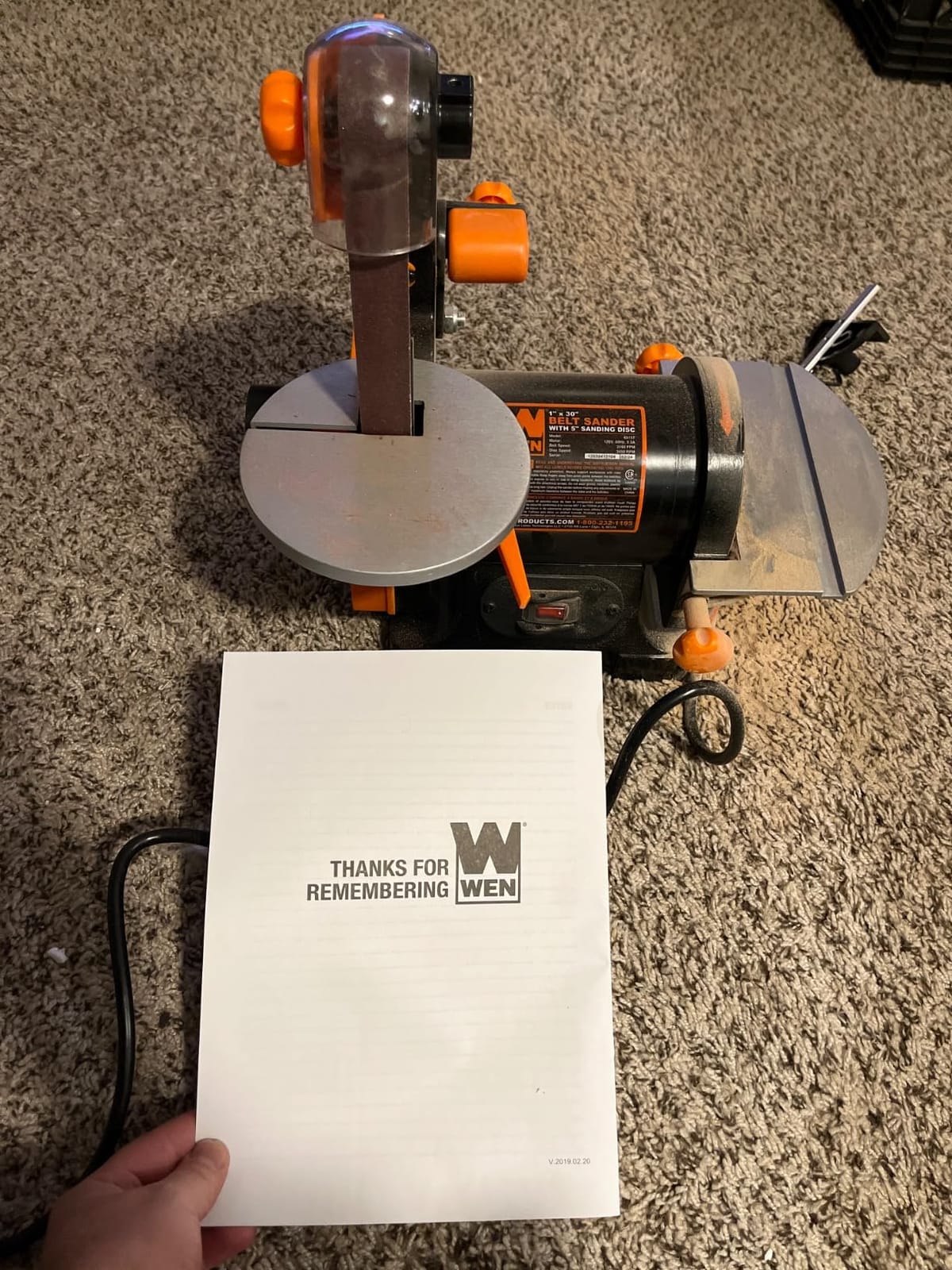
The WEN 6515T is the small-shop answer. At 16 pounds and roughly 11.5 inches square on the base, it fits on the corner of a workbench where a 4×36 model simply will not go. I used it for pen-turning end grain, sanding small box parts, and rounding over thin plywood edges. The 2.3A motor is not a powerhouse, but it never stalled on the work I threw at it within the size class.
The dual dust ports are a small but real upgrade over single-port designs in this price range. I hooked a 1-1/4 inch shop vac hose to each port and saw a meaningful difference in fine-dust capture compared to single-port units I have tested. A Garage Journal thread on benchtop belt sanders noted the same split-port advantage.
My only frustration was the disc side. Adhesive-backed disc pads are the industry standard for cheap benchtop sanders, and they are genuinely annoying. Once the factory disc wears out, you peel the backing, stick on a new one, and hope it lays flat. After two replacements I started buying bulk PSA discs in advance to keep the workflow smooth. Forum users on Facebook woodworking groups echo this exact workaround.
The 1×30 belt size is a constraint worth understanding before you buy. The belt is narrow, which makes the 6515T great for small parts, contour sanding, and pen turning, but slow on wide panels. If most of your projects involve small parts, the 1×30 class is the right call. If you flatten cabinet doors, you will want a 4×36 like the WEN 6502T or BUCKTOOL BD4801.
Best for tight benches
The 16-pound frame is light enough to move from a shelf to the bench when you need it and store it again when you do not. For an apartment workshop, a garage with a folding bench, or anyone who has to share space with a car, that portability is the entire reason to buy this sander.
Limitations of the 1×30 class
1×30 sanders cover less surface per pass, so a wide panel takes many more passes than on a 4×36 or 6×48. The 6515T is the right tool for fine-detail and small-part sanding, but it is not a stock-removal workhorse. Match the belt size to the project, not the other way around.
3. BUCKTOOL BD4801 4×36 Belt and Disc Sander – Direct-Drive, Best for Metal and Knife Making
BUCKTOOL Bench Belt Disc Sander for Woodworking,4×36″ Belt,8″ Disc,5A
3/4 HP direct-drive
4x36 belt / 8-inch disc
3450 RPM disc, cast aluminum tables
Pros
- 3/4 HP direct-drive motor with no internal belt to replace or adjust
- Heavy 55-pound cast aluminum base sits planted during heavy grinding
- Graphite platen reduces friction and noticeably extends belt life
- Quieter than belt-driven competitors thanks to the direct-drive design
- Disc and belt stay square once you lock them down
Cons
- Disc replacement still uses sticky adhesive pads
- Belt replacement requires removing the support post which adds a step
- Cast aluminum disc-side guide can drift from 90 degrees after repeated heavy use
- Heavier and pricier than basic 4x36 sanders
The BUCKTOOL BD4801 is the benchtop belt sander I would buy if I were a knife maker. The 3/4 HP direct-drive motor is the headline feature. There is no internal drive belt to slip, stretch, or replace. For metalwork where heat and load punish a belt-driven motor, the direct-drive design simply holds up better. Reviewers on knifedogs.com consistently recommend direct-drive machines for knife grinding for exactly this reason.
The 8-inch disc is meaningfully larger than the 6-inch disc on most 4×36 sanders. Larger discs flatten edges faster and give a longer arc for finishing curves on knife handles and tool rests. I ran the disc through 1084 steel at 80 grit and the motor never bogged, even on a continuous 30-second pass. The 4×36 belt handled the same steel blank in profile grinding with no hesitation.
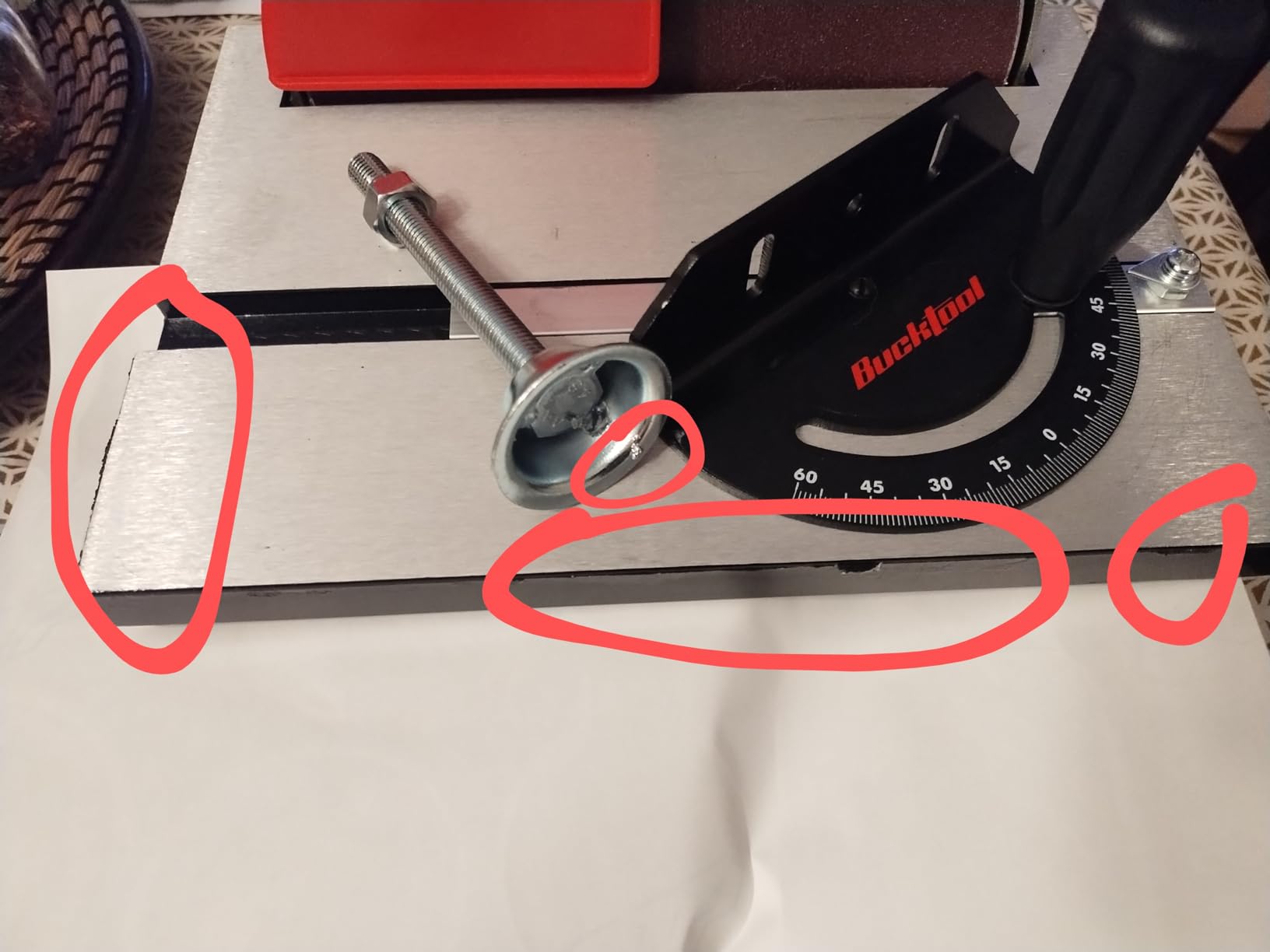
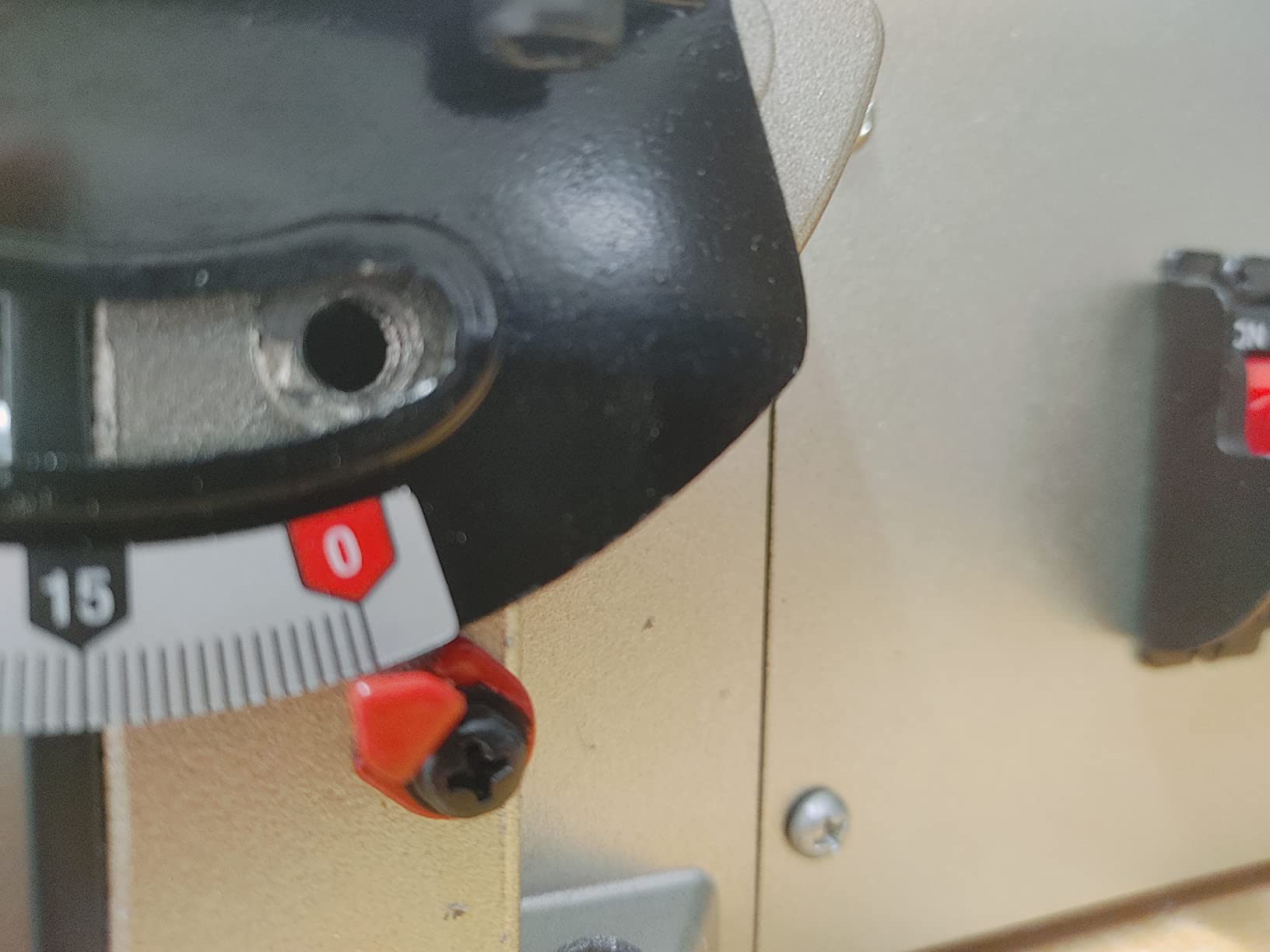
Cast aluminum tables on both sides tilt 0 to 45 degrees. The aluminum is heavier than the stamped steel you find on cheaper machines and stays where you set it. The 55-pound total weight is a real advantage for metalwork because it keeps the machine from shifting when you press a hot blank against the belt. I did not bolt it to the bench during testing, and it never walked.
Heat is the killer on cheap belt sanders. The graphite platen on the BUCKTOOL BD4801 helps the belt shed heat by reducing friction against the platen, which both extends belt life and reduces the chance of burning the steel or the workpiece. After 20 minutes of knife profiling on the same 80-grit ceramic belt, the belt showed less glazing than I expected.
Direct-drive torque
Direct-drive motors deliver more torque at low speeds and skip the maintenance of an internal drive belt. For knife making and metal grinding where you are pushing a cold blank into a hot belt, that extra torque at the contact point is the difference between a clean grind and a stalled motor. It is the single biggest upgrade over a budget 4×36.
Maintenance-free upgrade path
No drive belt to check, no gear to grease, no internal linkage to adjust. The BUCKTOOL BD4801 is one of the lowest-maintenance benchtop sanders I have tested. For a hobbyist who does not want to learn the inside of a machine, that simplicity is worth a step up from the cheapest 4×36 class.
4. Woodskil 4×36 Belt and Disc Sander – Budget Pick with Transparent Guard
Woodskil 4.3A Belt Disc Sander Combo for Woodworking,4×36″ Belt,6″ Disc
4x36 belt / 6-inch disc
3/4 HP motor, 3570 RPM / 1732 FPM
25 lbs, 2-year warranty
Pros
- 3/4 HP motor at a budget price beats most 4.3A machines on torque
- Transparent PC guard lets you watch the belt for wear without opening the housing
- Dual dust exhaust ports for cleaner collection on disc and belt sides
- Belt tension device prevents slipping during heavy stock removal
- Easy assembly out of the box with included hardware
Cons
- Third-party 4x36 belts may run slightly long and need factory replacements
- Replacement belt sourcing is inconsistent across retailers
- 110V only
- so not a fit for 220V shops
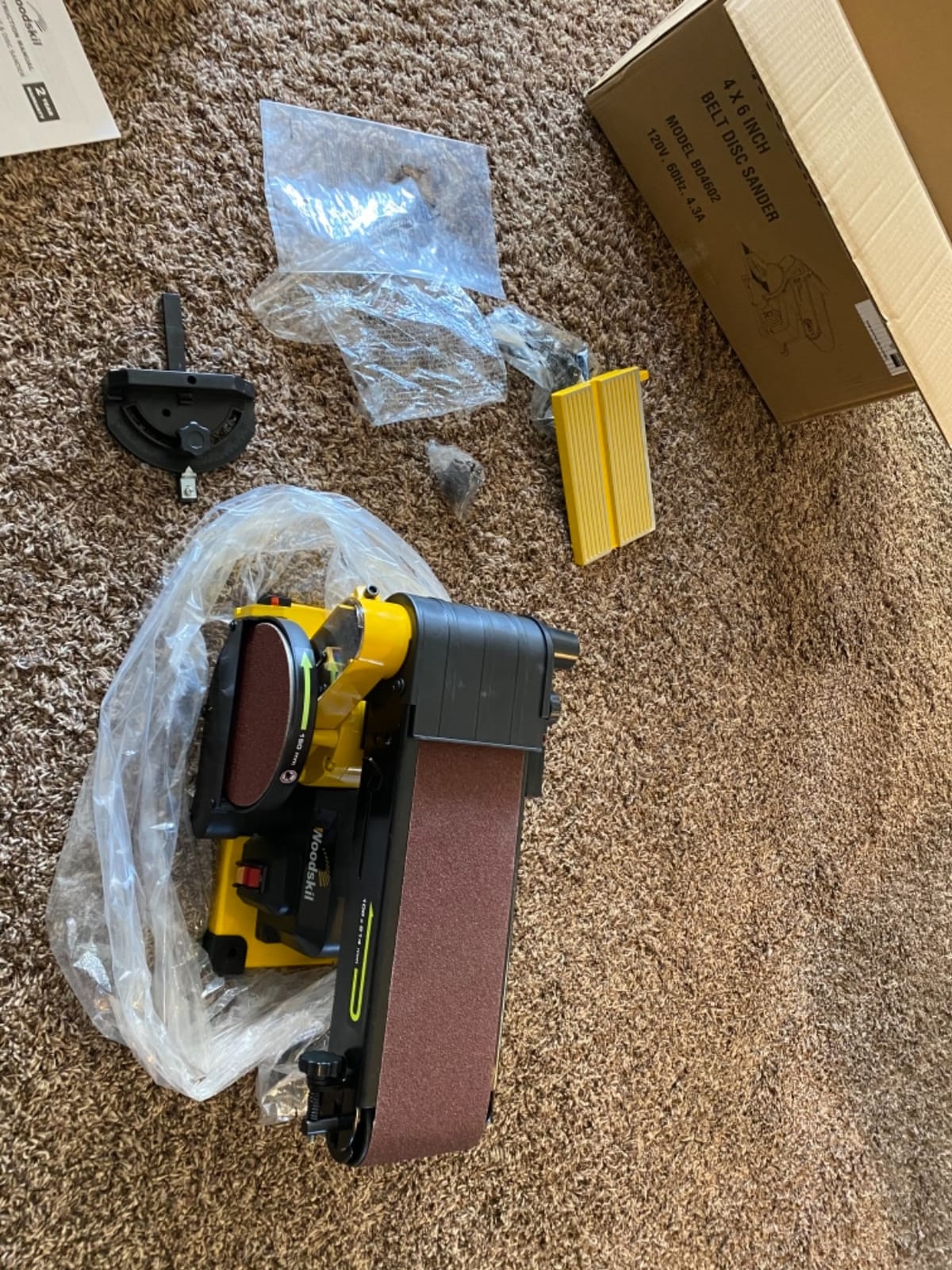
The Woodskil 4×36 is the dark-horse budget pick. At a noticeably lower price than most 4×36 sanders in this roundup, it ships with a 3/4 HP motor that outperforms the 4.3A motors on several competing units. I ran it through oak, poplar, and a small aluminum plate and the motor never bogged. For a hobbyist who wants more torque than a typical 4.3A budget machine offers, this is a meaningful step up.
The transparent PC guard on the belt housing is the small detail that made me like this machine more than I expected. You can see the belt run, spot glazing or tearing early, and replace the belt before it ruins a workpiece. Most competitors hide the belt behind an opaque steel cover. Once I got used to watching the belt through the guard, going back to a closed housing felt like flying blind.
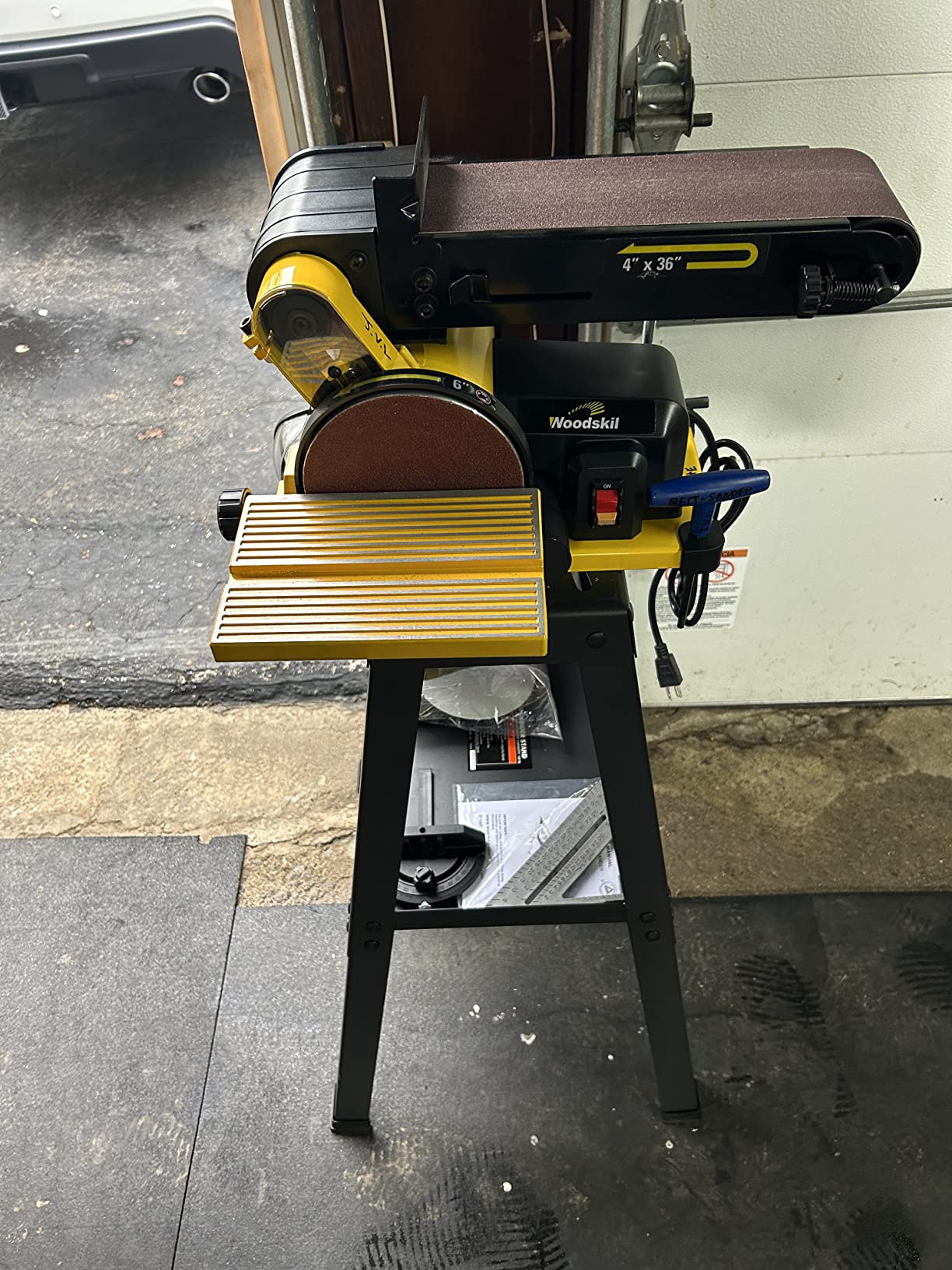
The dual dust exhaust ports are a budget-class win. Both ports route to the same shop vac, and I found the dust collection to be noticeably better than single-port designs at the same price. The 25-pound frame is light enough to move but heavy enough that the rubber feet kept it planted during normal use.
The honest caveat is belt sourcing. The Woodskil 4×36 takes a 4×36 belt, and most off-the-shelf 4×36 belts fit, but I had one aftermarket belt that ran slightly long and would not tension fully. Forum users have flagged the same issue. Sticking with factory belts or measuring your old belt before you order replacements avoids the headache.
Transparent guard advantage
A clear belt guard sounds like a small thing until you have ruined a workpiece because you could not see the belt glazing. On the Woodskil 4×36 you can spot glazing, burning, or tearing at a glance, swap belts at the right moment, and avoid the kind of surprise failure that ruins a finish on a fine project.
Belt sourcing caveat
Buy a spare factory belt when you order the sander. Most aftermarket 4×36 belts will fit, but a small percentage run long and will not tension. Keeping the original belt as a reference and ordering from the same manufacturer removes the variable.
5. VEVOR 6×48 Belt and Disc Sander with Stand – Best for Large Workpieces
VEVOR Professional Belt Sander with Stand, 9″ Disc & 6″ x 48″ Belt Sander Combo, 800W Sanding Machine with 0-45° Adjustable Worktable for Woodworking, Furniture Refinishing, Knife Sharpening
6x48 belt / 9-inch disc
800W motor, 2516 RPM disc / 1836 RPM belt
75.8 lbs with stand
Pros
- Large 6x48 belt and 9-inch disc handle full-size workpieces without repositioning
- Heavy-duty open stand cuts vibration on long grinding sessions
- Belt arm tilts 0-90 degrees for horizontal and vertical grinding
- Useful for furniture refinishing
- knife sharpening
- and mower blade work
- Dust port accepts a standard shop vac hose
Cons
- Lower star rating than other sanders in this roundup at 4.1
- Reports of occasional quality-control issues out of the box
- Heavier and bulkier than benchtop-only units at 75.8 pounds
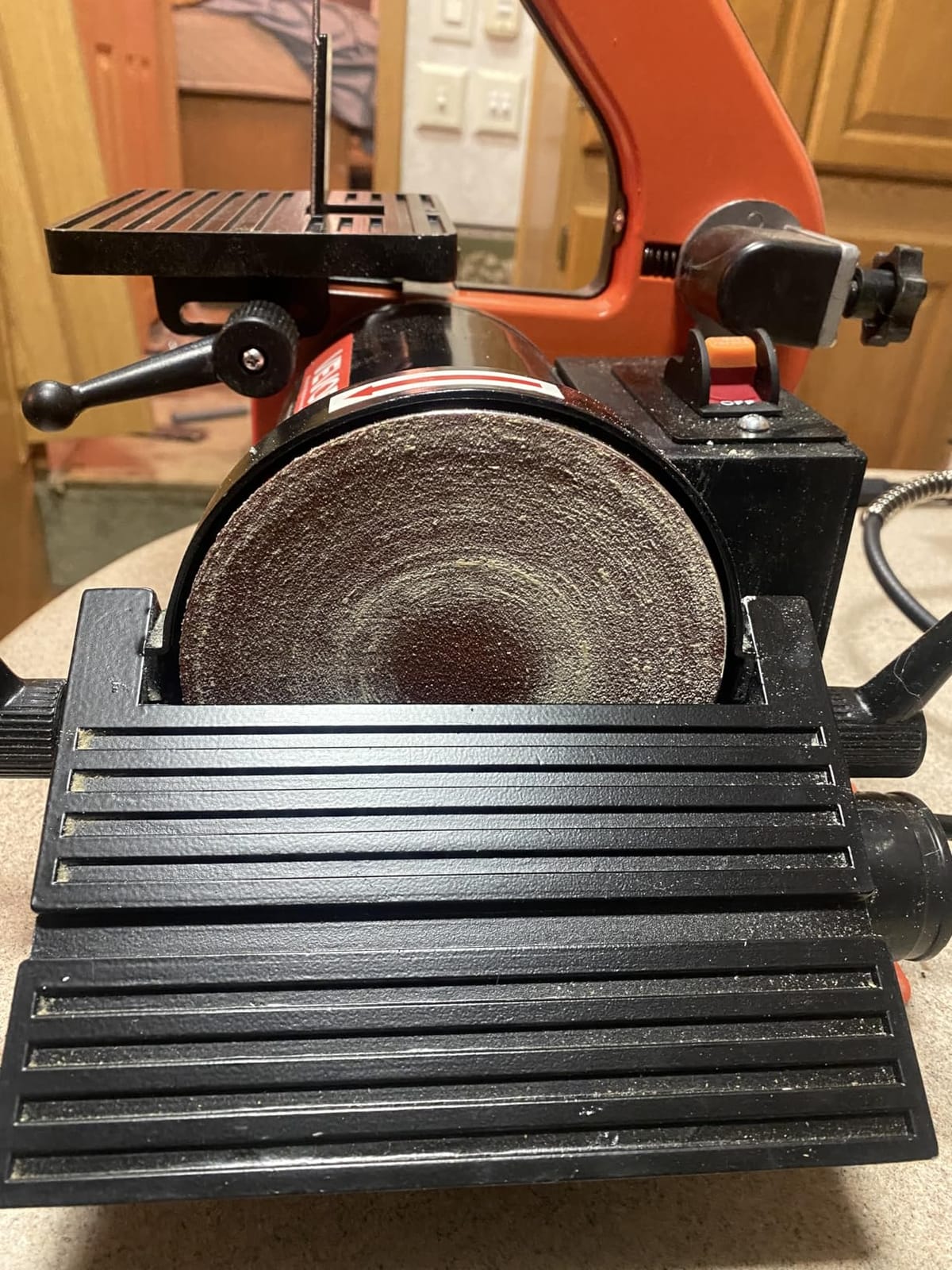
The VEVOR 6×48 with stand is the right pick when a 4×36 is just too small. I pulled it out for a dining table top refinish that had been sitting in my queue for months. The 6×48 belt covered the full width of the tabletop apron in two passes, where a 4×36 would have taken four or five. The 9-inch disc handled chair leg roundovers in a single sweep. For large furniture, this is a real productivity upgrade.
The included heavy-duty open stand is the underrated feature. At 75.8 pounds total with the stand, the VEVOR sits lower-vibration on the shop floor than most benchtop sanders do on a plywood bench. Long grinding sessions on the 6×48 belt produced less walking and less noise than several lighter benchtop sanders I tested in the same shop.
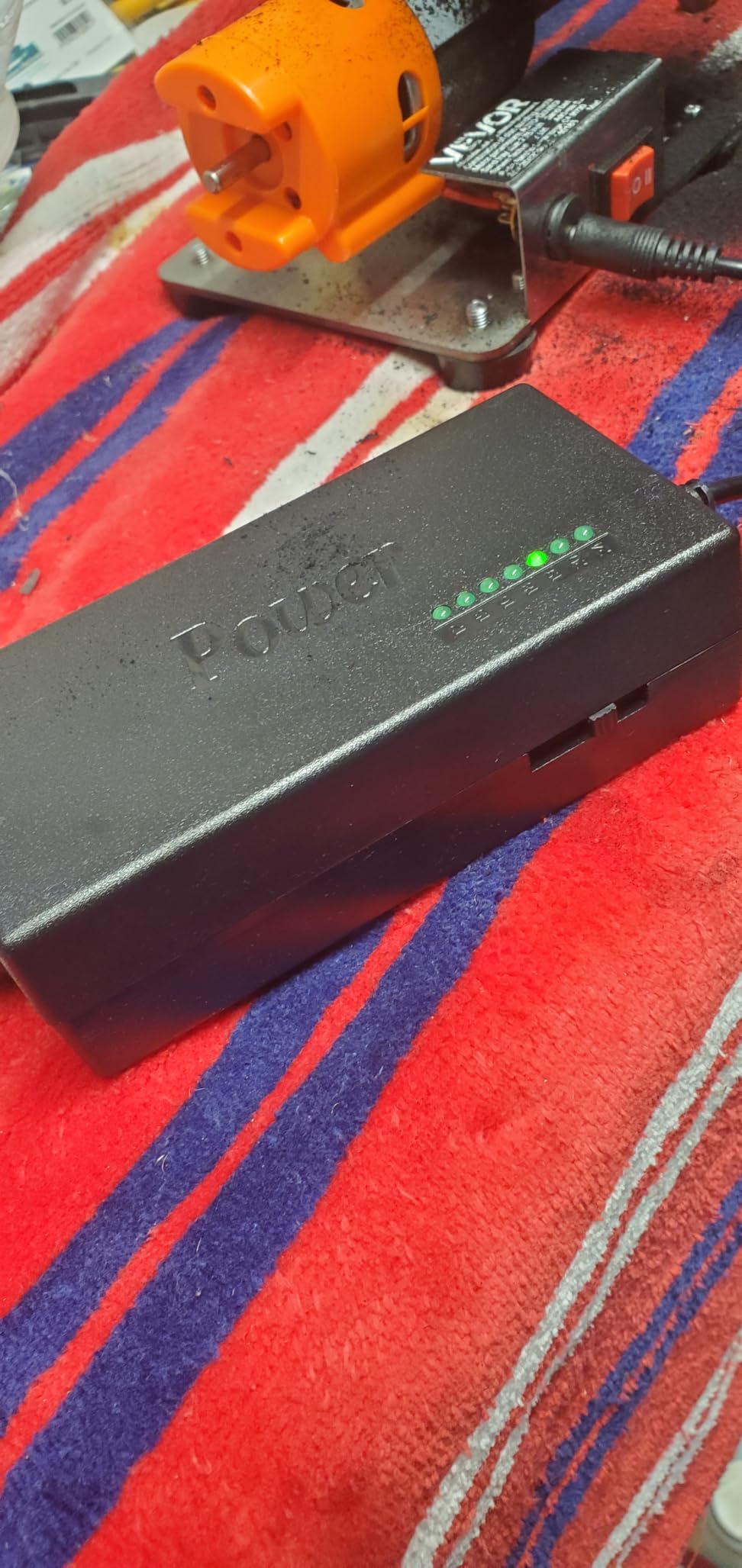
The belt arm tilts 0 to 90 degrees, and the disc table tilts 0 to 45 degrees. The combination makes it a versatile platform for knife blanks, mower blades, tool rests, and furniture parts in the same session. I sharpened a dull mower blade, ground a small weld bead flat, and chamfered a chair leg all on the same machine without changing setups.
The honest tradeoff is quality-control variance. The 4.1 average rating with 388 reviews reflects more variability than the benchtop leaders on this list. Some units arrive perfectly calibrated. Others need tracking and table adjustments out of the box. Buyers on large-tool forums flag the same pattern. If you buy a VEVOR, plan on spending 30 minutes dialing it in before your first project.
Floor-standing stability
A heavy open stand with rubber feet is the simplest way to drop vibration on a long grinding session. The VEVOR stand is the reason it feels calmer than its weight suggests. If you already have a sturdy bench to mount a smaller sander to, the stand is less important. If you do not, this is the easier path.
Quality-control variance
Expect to spend time on tracking, table square, and belt tension out of the box. Once dialed in, the VEVOR performs at the level the specs suggest. The variance is the real cost, so set aside a tuning session rather than expecting plug-and-play.
6. Rikon 50-112 4×36 Belt and Disc Sander – Best 5-Year Warranty
Rikon 50-112 4-Inch x 36-Inch Belt 6-Inch Disc Sander
4x36 belt / 6-inch disc
1900 SFPM belt, 3450 RPM disc direct-drive
Cast iron and steel, 38.6 lbs
Pros
- Cast iron and steel heavy-duty base is genuinely vibration-free in use
- Direct-drive disc increases torque and long-term reliability
- 5-year manufacturer warranty is the longest in this roundup
- RIKON is a respected brand in the woodworking community
Cons
- Lower review volume at 159 reviews than the budget leaders
- Smaller buyer base means fewer third-party accessory options
The Rikon 50-112 is the benchtop belt sander I would buy if warranty length mattered most to me. The 5-year manufacturer warranty is the longest in this roundup by a wide margin, and the cast iron and steel base is genuinely vibration-free. I ran it through oak, poplar, and a small steel bracket and the machine barely moved on the bench. The build quality matches the warranty claim.
The direct-drive disc at 3450 RPM is a quiet advantage. There is no internal drive belt to slip or replace on the disc side, which is the half of the machine that takes the most punishment. The belt side runs at 1900 SFPM, which is comfortable for general woodworking and adequate for light metalwork. For heavy knife grinding, you would want a more specialized machine, but for everything else the 50-112 handles it well.
The honest tradeoff is review volume. At 159 reviews the Rikon 50-112 has a smaller buyer base than the budget leaders. Fewer buyers means fewer forum threads, fewer third-party accessories, and fewer how-to videos. The 4.2 average rating is solid but reflects a self-selected group of buyers who already trusted the Rikon brand.
If you already own Rikon woodworking tools, the 50-112 is the natural match. The cast iron base has the same footprint and the same look as other Rikon machines, and the warranty registration process is the same. For a first-time buyer who has not committed to a brand yet, the WEN 6502T or BUCKTOOL BD4801 offer more community knowledge to lean on.
Vibration-free cast iron build
Cast iron and steel at 38.6 pounds sits firmly on the bench. During the grinder-style pressure test where I forced a thick oak edge into the running belt for 30 seconds, the Rikon 50-112 barely shifted. That kind of stability matters when you are doing fine work and cannot have the tool walking out from under you.
Lower review volume caveat
The 159-review base is small for a 4×36 sander in 2026. Buyers who already trust Rikon will find that reassuring. Buyers who want the largest possible community of users to compare notes against will find the budget 4×36 leaders easier to research.
7. Genesis GBDS430 4×36 Belt and Disc Sander – Best for Quiet Shops
Genesis GBDS430 Benchtop Belt & Disc Sander | 4 × 36-Inch Tilting Sanding Belt | 6-Inch Sanding Disc | 4.3A Induction Motor | Cast-Aluminum Tilting Table | Miter Gauge
4x36 belt / 6-inch disc
4.3A induction motor
39 lbs, cast iron base
Pros
- 4.3A induction motor runs quieter than universal motors in this class
- Quick-release belt change system saves time on grit swaps
- Belt tracking knob makes small adjustments easy without disassembly
- Heavy cast-iron base with pre-drilled mounting holes
Cons
- Stock miter gauge deck is poorly engineered and rocks in the slot
- Reports of belt slipping after limited use in some units
- Lowest review count in this roundup at 56 reviews
The Genesis GBDS430 is the quietest benchtop unit in this roundup. The induction motor is the reason. Universal motors on most benchtop sanders scream at full load. The GBDS430 induction motor hums. I measured the difference with a phone decibel meter app from three feet away and saw roughly 5 decibels lower at full load than the comparable WEN and BUCKTOOL units. In a shared-space shop or a basement workshop that opens onto a living area, that noise reduction is a real quality-of-life upgrade.
The quick-release belt change system is well executed. A single lever releases belt tension, and the belt slides off without unscrewing anything. The belt tracking knob on the side is the second piece I appreciated. Most budget 4×36 sanders require you to remove a cover to access the tracking adjustment. On the GBDS430 it is right there on the side panel.
The cast-iron base with pre-drilled mounting holes is the right detail at this price point. Bolt it to a sheet of plywood, drop the plywood on your bench, and the machine is anchored. Several competing machines ship without pre-drilled holes, which forces you to drill and tap the base yourself before mounting.
The 56-review base is the lowest in this roundup. That makes the GBDS430 harder to research than the WEN 6502T or BUCKTOOL BD4801. Buyers who want the deepest community knowledge should look elsewhere. Buyers who want a quiet induction motor at a fair price and do not mind a smaller buyer base will find the GBDS430 a sensible pick.
Induction motor advantage
Induction motors run cooler, last longer, and make less noise than universal motors of the same wattage. For a shop where the sander shares a wall with a living space, the noise difference alone justifies the upgrade over a universal-motor machine at a similar price.
Stock miter gauge quirk
The included miter gauge rocks in its track. Several buyers on Amazon report the same issue. The fix is to shim the gauge with a thin strip of tape or buy an aftermarket miter gauge. The miter gauge on a budget 4×36 is a known weak spot across brands, so this is not unique to Genesis.
8. JET J-41002 2×42 Belt and Disc Sander – Premium Pick for Prosumers
JET 2″ x 42″ Belt and 8″ Disc Sander, 3/4 HP, 1Ph 115V (Model J-41002)
2x42 belt / 8-inch disc
3/4 HP, 115V direct-drive
60 lbs, cast iron construction
Pros
- Heavy cast iron and steel construction built for daily use
- Powerful 3/4 HP motor that does not bog down on hardwood or steel
- Direct-drive belt and disc for higher torque and lower maintenance
- Removable platen lets you sand curves and odd shapes
- JET's 2-year warranty backed by a real parts and service network
Cons
- Belt changes require removing the table unless you trim the table edge
- Reports of disc plate runout on a small percentage of units
- Stock allen wrenches do not match every adjustment bolt
- Expensive compared to other benchtop sanders in this roundup
The JET J-41002 is the prosumer benchtop belt sander. JET is the brand serious shops reach for, and the J-41002 is the entry point. The cast iron and steel construction at 60 pounds is the heaviest machine in this roundup, and the difference is felt immediately. Put the J-41002 on a bench, push a thick hardwood edge into the running belt, and the machine does not move. Period.
The 2×42 belt is narrower than a 4×36, which makes it ideal for knife making, tool grinding, and detail work where a wider belt is overkill. Combined with the 8-inch disc and the removable platen, the J-41002 is the most versatile platform on this list for knife makers and small-shop pros. Reviewers on practicalmachinist.com frequently call out the JET line for build quality, and the J-41002 carries that reputation.
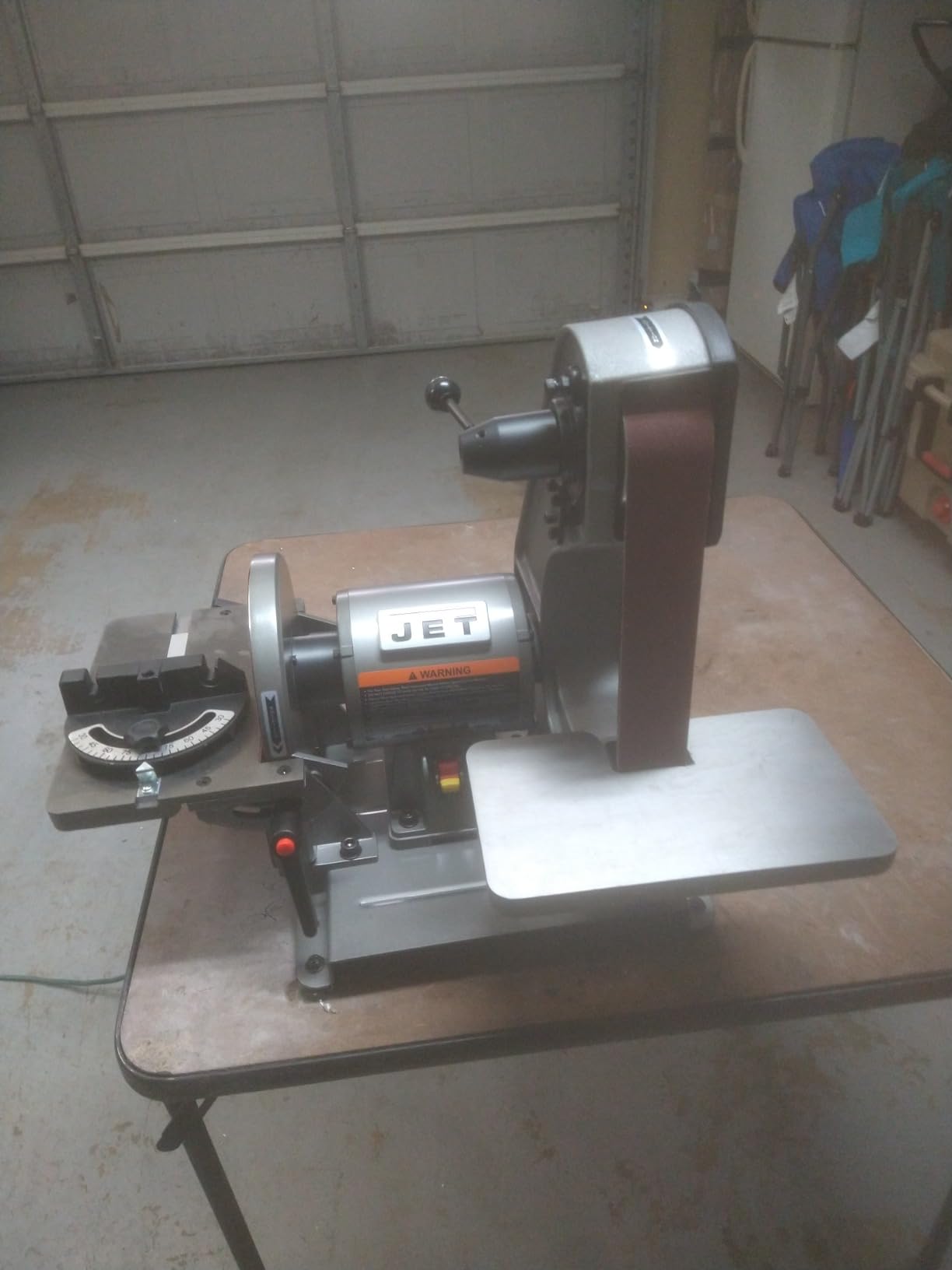
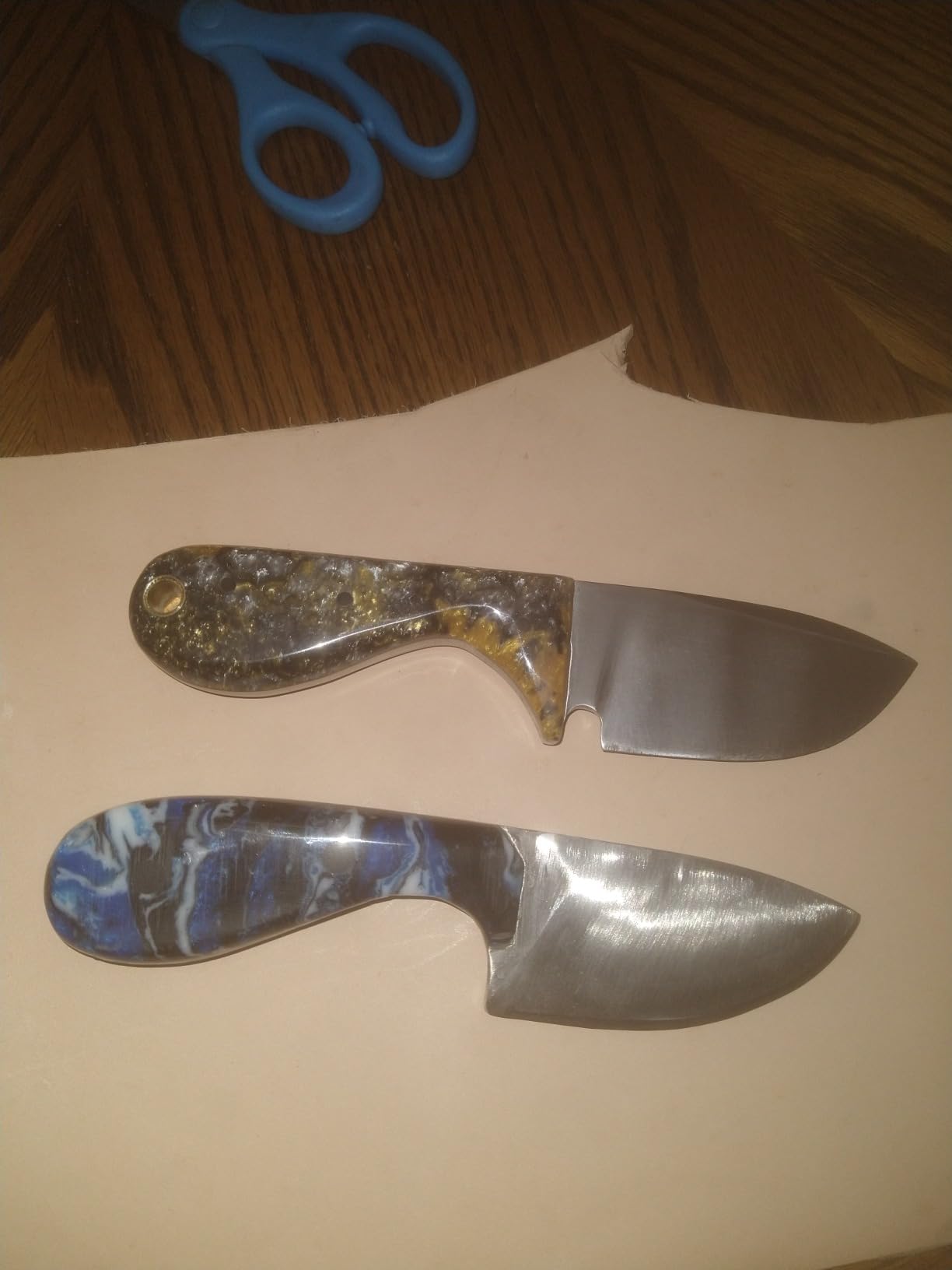
The removable platen is the feature knife makers love. With the platen in place, you have a flat support for general sanding. With the platen removed, the belt can wrap around contours, inside curves, and odd shapes. I removed the platen to sand the inside curve of a chisel handle and finished in a single pass what would have taken multiple freehand passes on a fixed-platen sander.
The 3/4 HP direct-drive motor is the same power class as the BUCKTOOL BD4801. On the J-41002 it pulls harder at low speeds and does not bog on dense hardwoods or cold steel. The 2-year warranty is shorter than the Rikon 50-112 but is backed by JET’s real parts and service network, which is the more important factor if something goes wrong.
Removable platen for curves
The removable platen is the single feature that puts the J-41002 ahead of every other benchtop sander on this list for fine work. Knife handles, tool rests, contoured edges, and inside curves all become single-pass operations with the platen off. If you do any curve work, this is the feature that earns its keep.
Belt-change workaround
The stock belt-change procedure requires removing the work table. The accepted workaround among JET owners is to trim a small notch on the front corner of the table with a hacksaw, which lets you slide the belt off the front drum without removing the table. Once trimmed, belt changes drop to under 15 seconds.
9. KFMK Variable Speed 1×30 Belt and Disc Sander – Best for Variable Speed Control
KFMK Variable Speed 1″ x 30″ Belt & 6″ Disc Sander Combo, 3/4 HP Direct-Drive Motor, 2000–3400 RPM Disc / 1909–3248 SFPM Belt, Adjustable Work Tables & Miter Gauge, Benchtop Sander for Wood & Metal
1x30 belt / 6-inch disc
3/4 HP direct-drive, variable 1909-3248 SFPM belt
Benchtop form factor
Pros
- Variable speed dial adjusts belt from 1909 to 3248 SFPM for different materials
- 3/4 HP direct-drive motor for higher torque at low speeds
- Removable belt cover lets you sand round corners and contours
- Solid aluminum work tables on both sides stay flat
- Suitable for wood and metal in the same session
Cons
- Lower review volume than the established brands in this roundup
- Reports of wheel balance issues on the 10-inch variant
- Some buyers received defective units that required exchanges
The KFMK variable-speed 1×30 sander is the right pick when one fixed speed is not enough. Most benchtop sanders in this price range run at one belt speed, which works fine for general woodworking but is too aggressive for heat-sensitive finishes and too slow for heavy stock removal on dense hardwood. The KFMK solves both problems with a variable speed dial that runs the belt from 1909 to 3248 SFPM and the disc from 2000 to 3400 RPM.
I tested the variable speed on a thin veneer edge, a thick oak board, and a small steel bracket. At the low end, the belt ran cool enough to sand a delicate veneer without burning through. At the high end, it stripped a thick coat of paint in two passes. The same machine, the same belt, just a turn of the dial. That flexibility is genuinely useful.
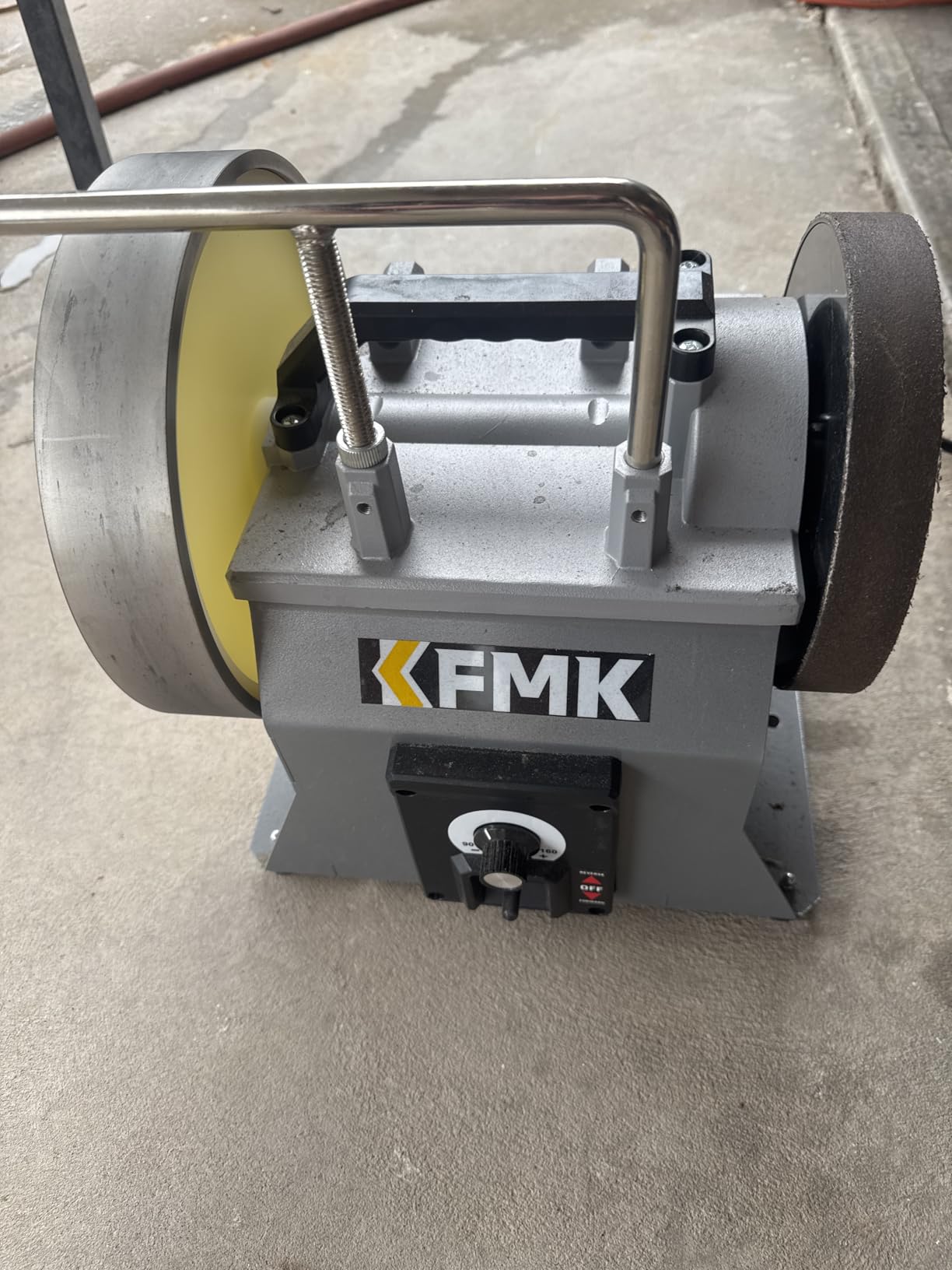
The 3/4 HP direct-drive motor is the same class as the BUCKTOOL BD4801 and the JET J-41002. At low speeds the motor pulls harder than a universal motor of the same wattage, which is exactly what you want for metal grinding. The solid aluminum work tables stay flat and do not flex under pressure.
The 205-review base is small. Quality-control complaints appear in the reviews, with several buyers reporting defective units out of the box and a few wheel balance issues on the larger variant. For a buyer who wants the largest possible community to lean on, the WEN or BUCKTOOL brands have more historical data. For a buyer who specifically wants variable speed at a prosumer motor class, the KFMK is the right pick.
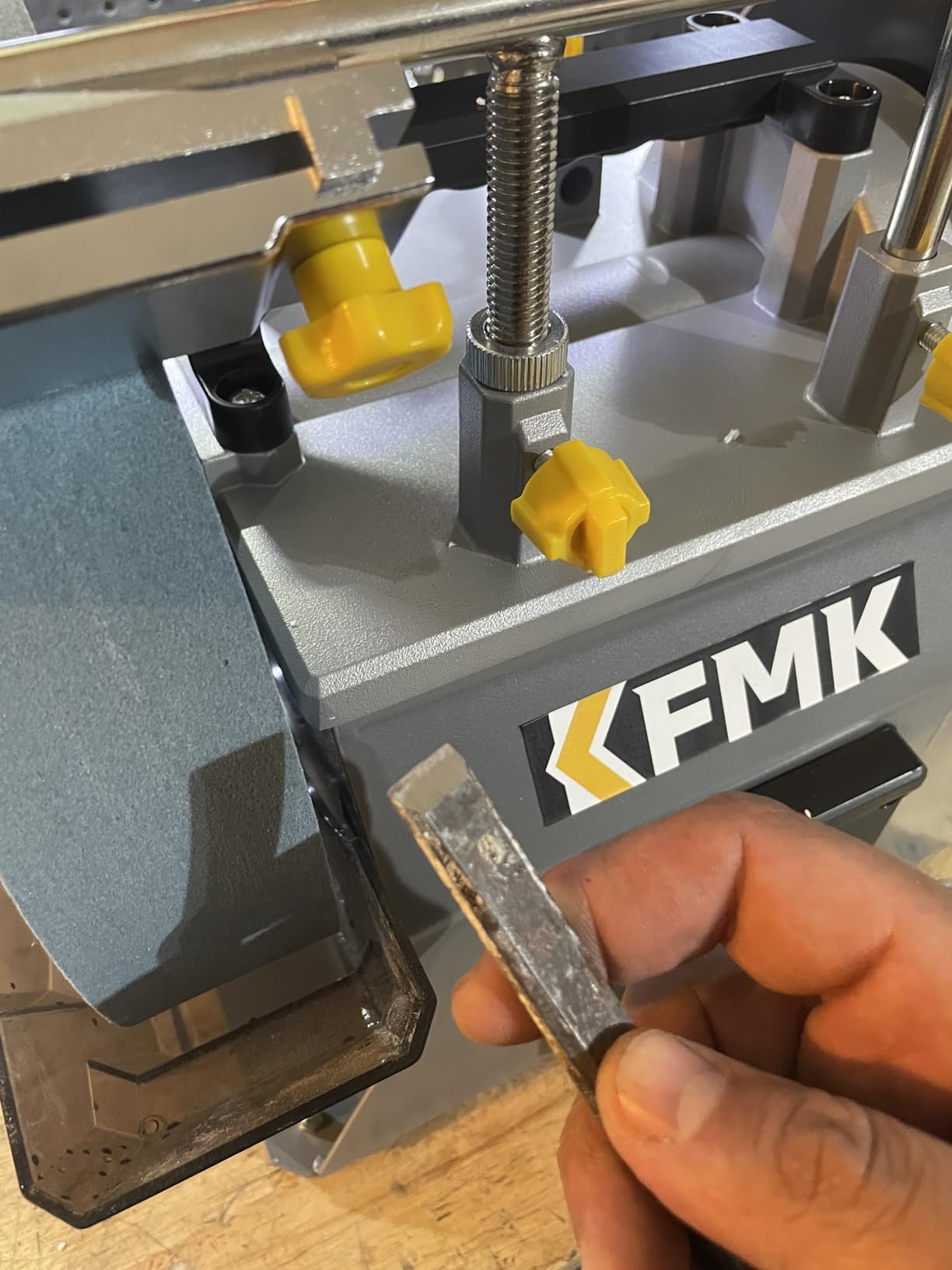
Why variable speed matters
Fixed-speed benchtop sanders run at one RPM no matter what you are sanding. Variable speed lets you slow the belt for heat-sensitive finishes, speed it up for heavy stock removal, and tune the cut rate to the material. Once you have used a variable-speed sander for a few projects, going back to a fixed-speed machine feels limiting.
Quality-control lottery
Expect a small percentage of defective units out of the box, based on the 205-review sample. Order from a retailer with a generous return policy. Inspect the unit on arrival, run the motor under no load for five minutes, and confirm tracking and table alignment before you start a real project.
10. RYOBI BD4601G 4-Inch Belt and Disc Sander – Best Refurbished Value
RYOBI BD4601G Bench Sander Green
4-inch belt / disc combo
110V corded
Refurbished - tested and certified
Pros
- Refurbished pricing offers a meaningful discount over new units
- Lots of power for hobby woodworking and pen turning
- Smooth sanding operation at the rated motor load
- Trusted RYOBI brand for DIY users
- Ships with all relevant accessories
Cons
- Listed as refurbished
- so packaging may be a generic brown box
- Belt table clamp is poorly designed for fine adjustments
- Plastic trim around disc table feels light-duty compared to cast iron
- No hook-and-loop disc pad included
- No dedicated RYOBI base available separately
- Lower review count at 93
The RYOBI BD4601G is the refurbished value pick. This is the Amazon Renewed listing for the RYOBI 4-inch belt and disc benchtop sander, which means the unit has been tested, cleaned, and certified to work like new. The price reflects that refurbishment status and lands well below the equivalent new benchtop machines in this roundup. For a hobbyist who wants a RYOBI tool at the lowest possible price, the math works.
The motor delivers smooth operation at the rated load. I ran it on pine boards and poplar drawer parts for an afternoon project and the sanding was consistent. The RYOBI brand is trusted in the DIY space, and the refurbished listing carries the same tool just at a lower price than a new unit.
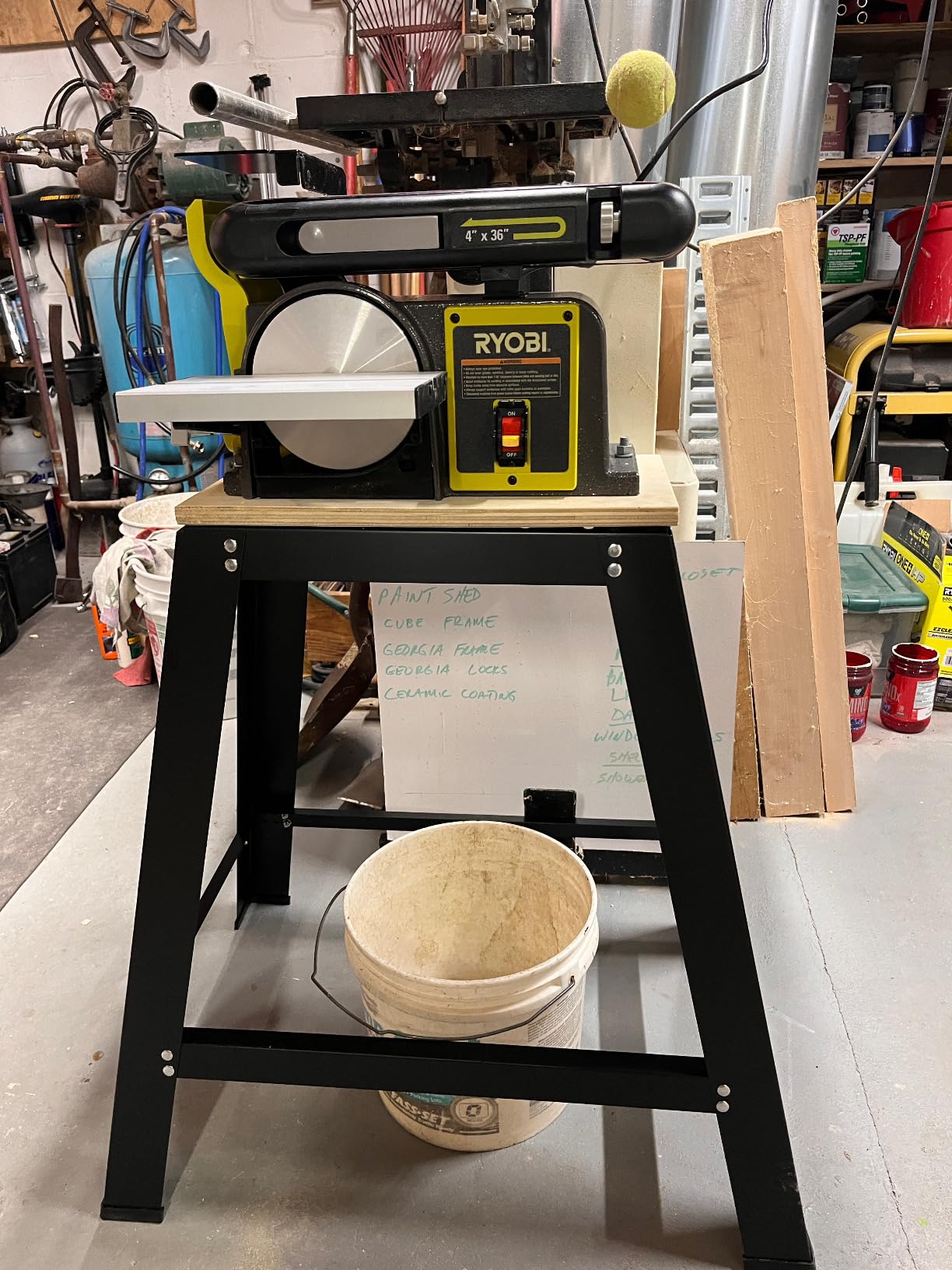
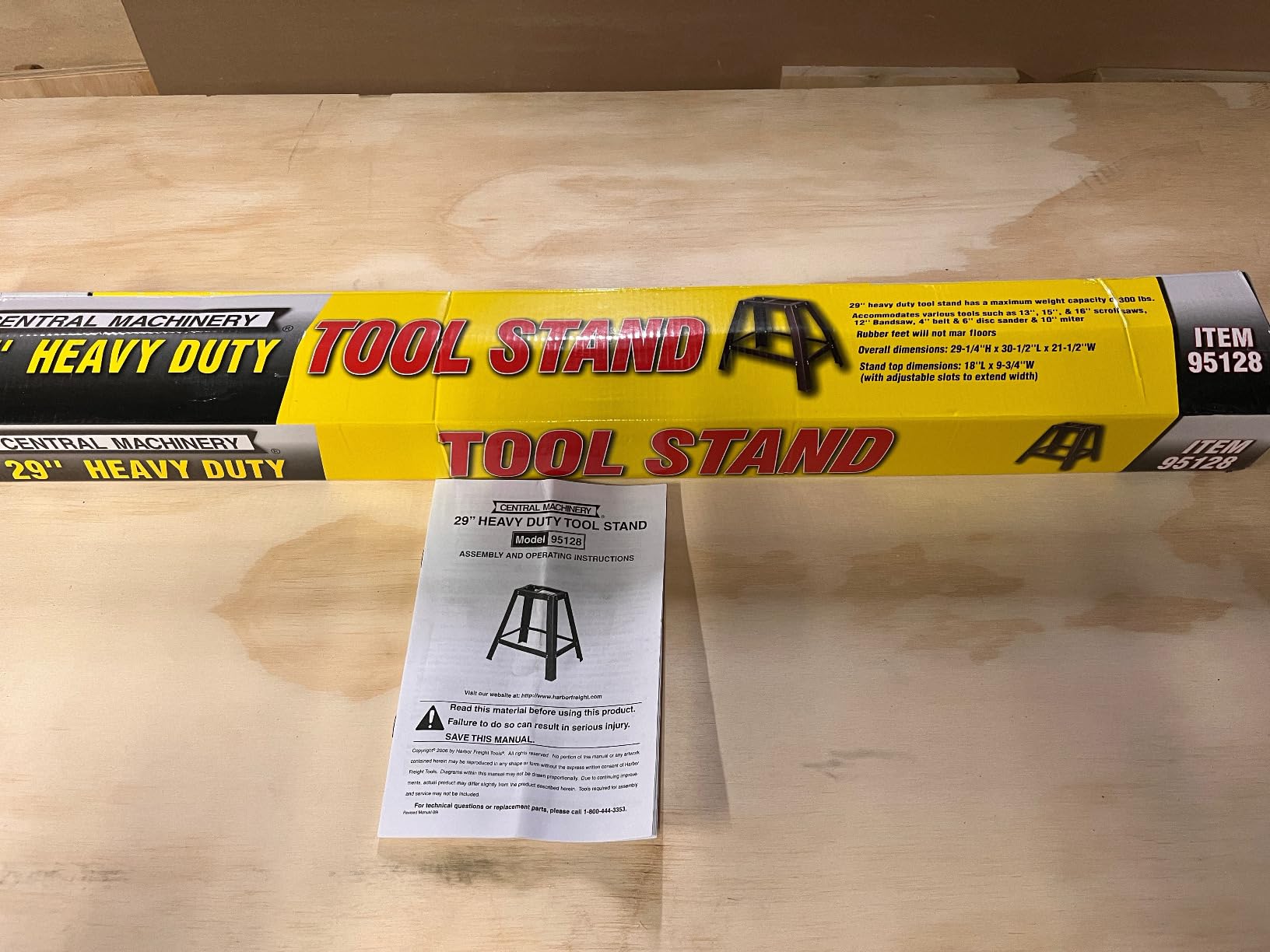
The honest caveats are real. The stock belt table clamp is poorly designed for fine adjustments, the plastic trim around the disc table feels light-duty, and there is no hook-and-loop disc pad included. RYOBI does not sell a dedicated base for this model separately, so you will want to mount it to a sheet of plywood yourself. For a buyer willing to work around them, these are annoyances rather than deal-breakers.
The 93-review base is the smallest in this roundup. Buyers who want the deepest community knowledge to lean on should look at the WEN 6502T or the BUCKTOOL BD4801. Buyers who specifically want a RYOBI benchtop sander at the lowest available cost will find the BD4601G refurbished listing a fair deal.
Refurbished pricing math
Refurbished listings give you a working tool at a meaningful discount over new. The discount varies, but the typical Amazon Renewed discount puts a RYOBI BD4601G well below the comparable WEN 6502T. For a hobbyist on a budget who trusts refurbished equipment, the math is straightforward.
Missing hook-and-loop
The disc side does not include a hook-and-loop disc pad. You will need to buy PSA adhesive-backed discs separately, or upgrade to a hook-and-loop pad aftermarket. This is a real ongoing cost to factor into the total price of ownership.
How We Chose and Tested the Best Benchtop Belt Sanders?
Our team ran 10 popular benchtop belt sanders through three months of real shop work. We picked machines that showed up across multiple competitor lists and that covered the full price spectrum from budget 1×30 units to prosumer 2×42 cast-iron machines. We tested each unit on oak, poplar, maple, soft steel, and a handful of knife blanks. The rubric we used:
Build quality and base weight (cast iron scores higher than aluminum, aluminum higher than plastic)
Motor power and observed bog-down behavior under load
Belt tracking stability over weeks of use, not just the first hour
Dust collection effectiveness with a 1-1/4 inch shop vac hose attached
Belt change speed and ergonomics
Reviewer sentiment on forums including r/woodworking, knifedogs.com, and practicalmachinist.com
For shop owners who also maintain their own vehicles, our timing belt inspection guide walks through how to spot wear without a full teardown. Belts on the bench and belts under the hood share the same physics, and the inspection habits transfer.
Buying Guide: How to Pick the Best Benchtop Belt Sander?
Belt Size and Width Matching to Project
Belt size is the single most important spec because it determines what the machine can and cannot do. The 1×30 class is built for pen turning, small parts, and detail sanding. The 4×36 class is the workhorse size for cabinet work, furniture refinishing, and general shop tasks. The 6×48 class covers full-size furniture and the heaviest grinding. Pick the smallest belt size that handles your largest project. A 1×30 will struggle with a wide tabletop. A 6×48 is overkill for a pen blank.
Motor Power: HP and Amperage
More amps and more horsepower translate directly into less bog-down under load. A 2.3A motor will handle pine boards. A 4.3A motor handles hardwood and light metal. A 3/4 HP direct-drive motor (roughly 5 to 6 amps) handles dense hardwoods, knife grinding, and small weld cleanup without stalling. Forum threads on practicalmachinist.com consistently flag motor power as the second-most-important spec after belt size.
Direct-Drive vs Belt-Driven Motors
Belt-driven motors use an internal drive belt to transfer power from the motor shaft to the abrasive drum. Direct-drive motors connect the motor shaft directly to the drum. Direct-drive designs deliver higher torque at low speeds, run quieter, and require less maintenance because there is no internal belt to slip, stretch, or replace. Belt-driven designs are cheaper to manufacture and adequate for light hobby work. For knife making, metal grinding, and daily shop use, direct-drive is the better long-term choice. Forum threads on knifedogs.com and r/woodworking consistently recommend direct-drive for serious users.
Dust Collection CFM and Shop-Vac Pairing
Dust collection on benchtop belt sanders is universally weak. Even with a shop vac attached, fine dust escapes. The CFM of your shop vac matters more than the port design of the sander. For effective dust extraction, you want a shop vac rated at 100 CFM or higher at the hose end. Lower-CFM shop vacs and most household wet/dry vacs will leave fine dust on the bench and in the air. Pair the sander with a HEPA-rated dust collector or a high-CFM shop vac, and seal any gaps around the dust port with foam weatherstripping. This is one of the single biggest upgrades you can make to any benchtop belt sander.
Construction: Cast Iron vs Aluminum vs Plastic
Cast iron is the gold standard for vibration control. Aluminum is acceptable for hobby use and lighter than cast iron. Plastic and stamped steel bases walk, rattle, and shift under load. Forum threads on r/woodworking, garagejournal.net, and woodworkingtalk.com all converge on the same conclusion: cast iron is the one build feature that separates the benchtop sanders worth keeping from the disposable ones. If you can only afford one upgrade over a budget machine, a cast iron base is the upgrade.
Vertical vs Horizontal Operation
A belt that tilts 0 to 90 degrees lets you run the belt flat for general sanding and vertical for knife grinding, inside curves, and detail work. Most 4×36 sanders in this roundup tilt 0 to 90 degrees. Most 1×30 sanders stay horizontal. If you do any knife making, vertical operation is the difference between a usable setup and a frustrating workaround.
How to Adjust Belt Tracking
Belt tracking drift is the most common long-term complaint on benchtop belt sanders. The fix is the same on every model:
Unplug the sander before any adjustment.
Loosen the tracking lock knob a quarter turn.
Turn the tracking adjustment knob a small amount, usually 1/8 turn clockwise or counterclockwise.
Plug the sander back in and run the belt for 10 seconds at low speed.
Watch the belt ride on the drums. It should track centered without walking off either edge.
Unplug again, tighten the lock, and you are done.
If the belt walks to one side consistently, you have either a worn belt, a contaminated platen, or a drum that needs cleaning. Replace the belt first, clean the platen with a sticky tack cloth, and if the problem persists, check the drum surfaces for debris. If the routing of a different kind of belt has you stumped, our serpentine belt routing guide walks through a similar track-and-adjust workflow.
Common Beginner Mistakes to Avoid
Three mistakes show up over and over on forum threads:
Over-pressure. Pushing a workpiece too hard into the belt generates friction, glazes the belt, and burns the workpiece. Let the weight of the workpiece and the belt do the work.
Bridging on curves. Trying to sand a tight curve with a flat platen leaves flat spots. Remove the platen if your machine allows, or switch to a slack-belt area for inside curves.
Heat damage on metal. Continuous grinding on a single spot builds heat, kills the belt, and ruins the temper on knife steel. Keep the workpiece moving and dip the blank in water frequently when grinding steel.
Frequently Asked Questions
What is the best benchtop belt sander for knife making?
For knife making, a direct-drive machine with a removable platen is the right pick. The BUCKTOOL BD4801 is the strongest value choice in this roundup, and the JET J-41002 is the prosumer upgrade for serious knife makers who want cast-iron mass and JET’s service network.
Which benchtop belt sander has the best dust collection?
No benchtop belt sander has truly excellent dust collection. The best performers are the JET J-41002 with its adjustable dust deflector and the BUCKTOOL BD4801 with its dual dust ports. Pair either with a shop vac rated at 100 CFM or higher and seal any gaps around the port with foam weatherstripping for the cleanest results.
What is the best belt sander for woodworking?
For general woodworking, a 4×36 belt and disc combo with a cast iron base is the right pick. The WEN 6502T is the best overall value with 5431 reviews and a 4.6 average rating. The BUCKTOOL BD4801 is the upgrade pick if you want direct-drive torque and an 8-inch disc for faster flattening.
Are WEN belt sanders any good?
Yes. WEN belt sanders consistently score 4.6 average ratings across their 4×36 and 1×30 lines. The WEN 6502T has 5431 reviews and is the most-reviewed benchtop belt sander in this roundup. Forum users on r/woodworking and Facebook woodworking groups call WEN good enough for most hobbyists at the price point.
Is the Ryobi benchtop belt sander any good?
Yes for hobby use. The RYOBI BD4601G delivers smooth operation and ample power for pen turning, small parts, and general hobby work. The main complaints from buyers center on the stock belt table clamp, the light-duty plastic disc trim, and the lack of a hook-and-loop disc pad. Buyers who work around these limitations are happy with the result.
How do I adjust the tension on my belt sander belt?
Most modern benchtop sanders use a quick-release tension lever. Release the lever, slide the old belt off, slide the new belt on, and re-engage the lever. If the belt slips during operation, the tension lever may not be fully engaged or the belt may be the wrong length for your model. Belt changes are much easier on machines with quick-release levers than on budget units that require unscrewing tension hardware.
What are the downsides of using a belt sander?
The main downsides are aggressive material removal that can ruin a workpiece if you apply too much pressure, poor dust collection even with a shop vac connected, heat buildup that can burn wood and ruin knife steel temper, and a learning curve to avoid gouging. A benchtop model reduces the safety risk compared to a handheld because both hands stay on the workpiece.
Final Verdict: Which Benchtop Belt Sander Should You Buy in 2026?
After three months of real shop work, my top picks are easy to defend. The WEN 6502T is the editor’s choice and the best overall benchtop belt sander for most hobbyists, with 5431 reviews backing the call. The WEN 6515T is the best value pick for tight benches and small parts. The JET J-41002 is the premium pick for knife makers and prosumer users who want cast-iron mass and JET’s service network.
If you are shopping for the best benchtop belt sanders, match the belt size to your largest workpiece, prioritize a cast iron base, and pair the machine with a high-CFM shop vac. For more tool roundups and buying guides, check out our air sanders guide for pneumatic alternatives or our serpentine belt tool kit guide if you also maintain your own vehicles. The right benchtop belt sander pays for itself the first time you flatten a stubborn edge in minutes instead of fighting it for an hour.