
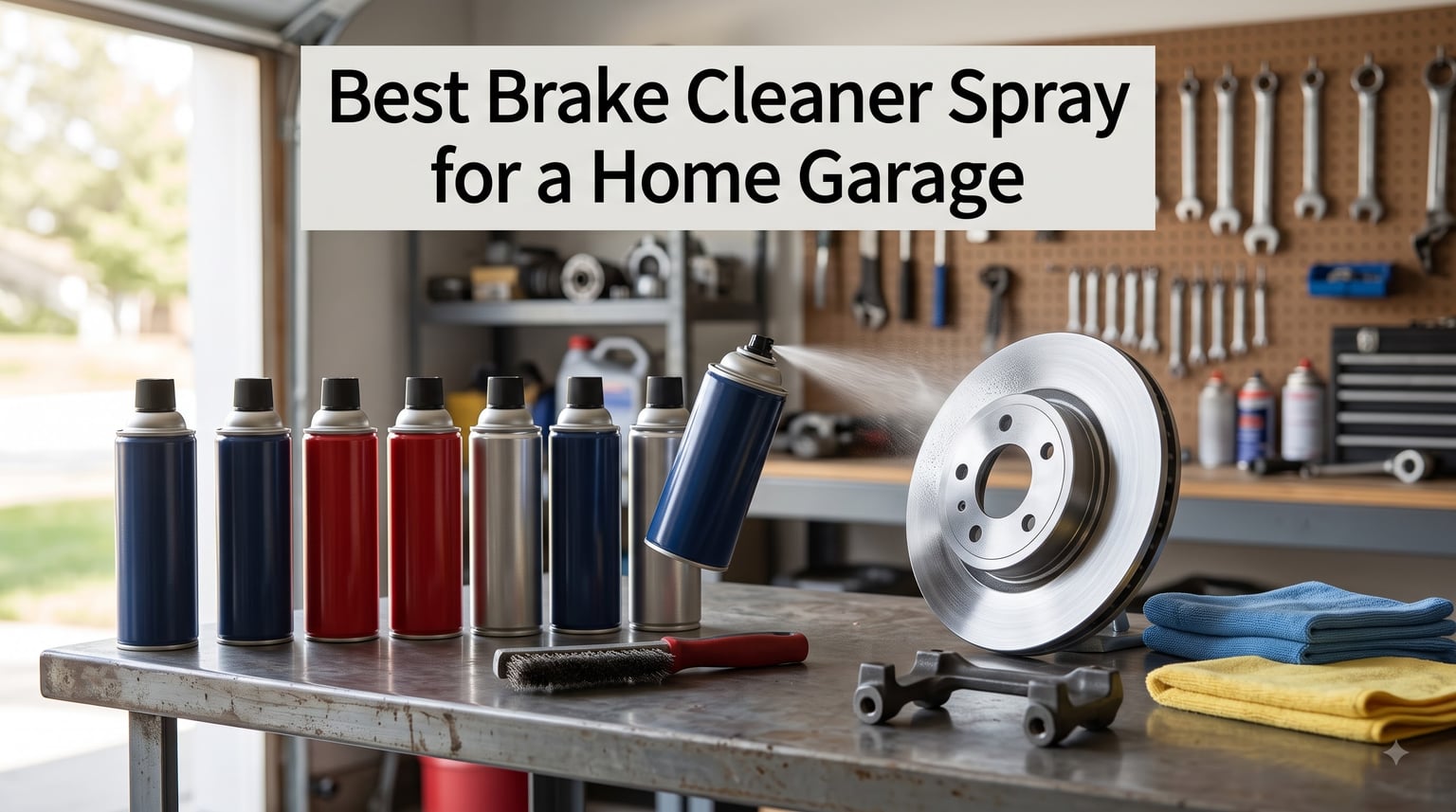
Nothing ruins an otherwise clean brake job like a fresh set of pads squealing on contaminated rotors. One shot of oil from a fingertip, a greasy thumbprint on a friction surface, or residue from the wrong cleaner is all it takes to spoil pad bed-in and quiet braking. That is exactly why the best brake cleaner spray earns permanent shelf space in a home garage: it dissolves brake fluid, grease, and brake dust, then evaporates and leaves the surface bone dry for reassembly.
Our team has worked through more cans of brake parts cleaner than we can count over years of pad swaps, caliper service, and wheel detailing in a two-car garage. For this guide we compared eight of the most popular options on Amazon, judging them on what actually matters at home: drying speed, residue, odor, VOC rules in strict states, spray pressure, and how many real brake jobs you get per can. Threads on Garage Journal and Reddit’s r/MechanicAdvice keep pointing to the same handful of names, and that lined up with our own results.
The short answer: CRC Brakleen Pro Series in the 20 oz can is the best overall choice for most home garages, the standard 14 oz CRC Brakleen non-chlorinated can is the best single-can pickup, and Valvoline Heavy Duty hits hardest for baked-on dust in a small can. If your garage sits in California or another VOC-restricted state, stick to a 50-state or low-VOC formula. Below we break down all eight picks, how to choose between them, where never to spray this stuff, and how to get rid of empty cans.
Table of Contents
Top 3 Picks for a Home Garage 2026
The CRC Pro Series can is our top overall pick because it pairs a 50-state VOC formula with the strongest, most consistent spray of the group. The smaller red CRC can is the value play for one-off jobs, and Valvoline Heavy Duty earns top-rated honors for raw cleaning power in a 15 oz can.

CRC Brakleen Pro Series 20 oz
- 50-state VOC compliant
- Non-flammable
- Quick drying
- Works most brake parts
Those three cover about 90 percent of home garage situations, from a quick rotor wipe-down before new pads to a full caliper overhaul. Mechanics on r/MechanicAdvice call CRC Brakleen the industry standard, and with roughly 24k+ reviews on the Pro Series can alone, that is not just marketing talk. Keep reading if you want a bulk case, a chlorinated heavy-hitter, or something for the wheels themselves.
Best Brake Cleaner Sprays for a Home Garage in October
Here is the full lineup side by side, ranked in the order we review them below.
| Product | Specs | Action |
|---|---|---|
 CRC Brakleen Non-Chlorinated 14 oz CRC Brakleen Non-Chlorinated 14 oz |
|
Check Latest Price |
| CRC Brakleen Pro Series 20 oz |
|
Check Latest Price |
 Valvoline Heavy Duty 15 oz Valvoline Heavy Duty 15 oz |
|
Check Latest Price |
 Berryman Chlorinated 19 oz Berryman Chlorinated 19 oz |
|
Check Latest Price |
 Gunk Brake Cleaner 14 oz Case of 12 Gunk Brake Cleaner 14 oz Case of 12 |
|
Check Latest Price |
 B’laster Non-Chlorinated 14 oz 6-Pack B’laster Non-Chlorinated 14 oz 6-Pack |
|
Check Latest Price |
 Johnsen’s Brake and Parts Cleaner 12-Pack Johnsen’s Brake and Parts Cleaner 12-Pack |
|
Check Latest Price |
 P&S Brake Buster Wheel Cleaner 1 Gallon P&S Brake Buster Wheel Cleaner 1 Gallon |
|
Check Latest Price |
1. CRC Brakleen Non-Chlorinated 14 oz — Best Value Single Can
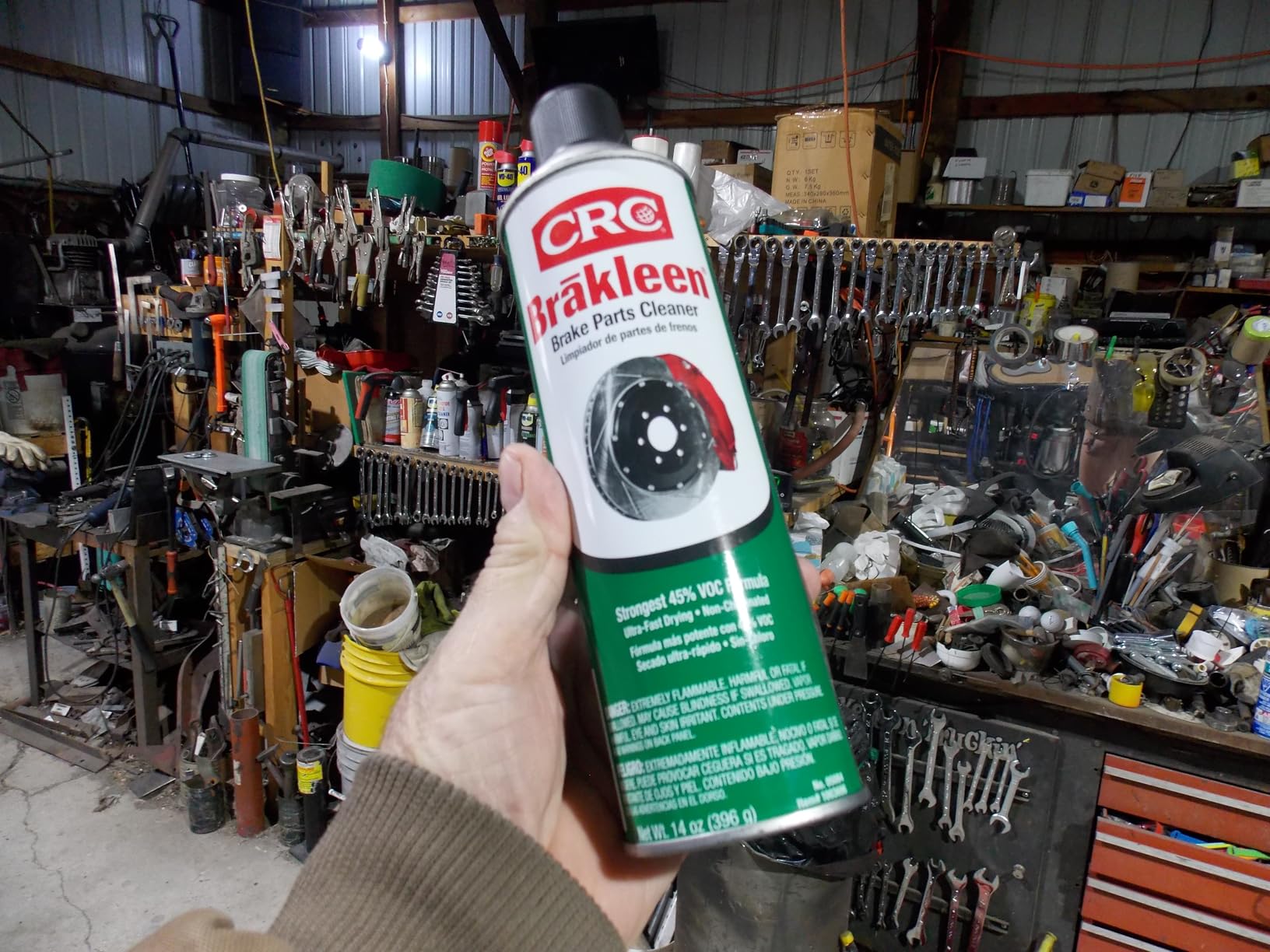
CRC Brakleen Brake Parts Cleaner Spray – Non-Chlorinated, Low VOC – 14 oz
14 oz aerosol
Non-chlorinated
Low VOC formula
Dries fast with no residue
Pros
- Less harsh on hands than most
- Cuts grease oil and brake dust quickly
- Lower odor than typical brake cleaner
- Non-chlorinated for frequent use
- Dries with no lasting residue
Cons
- Strong fumes need ventilation
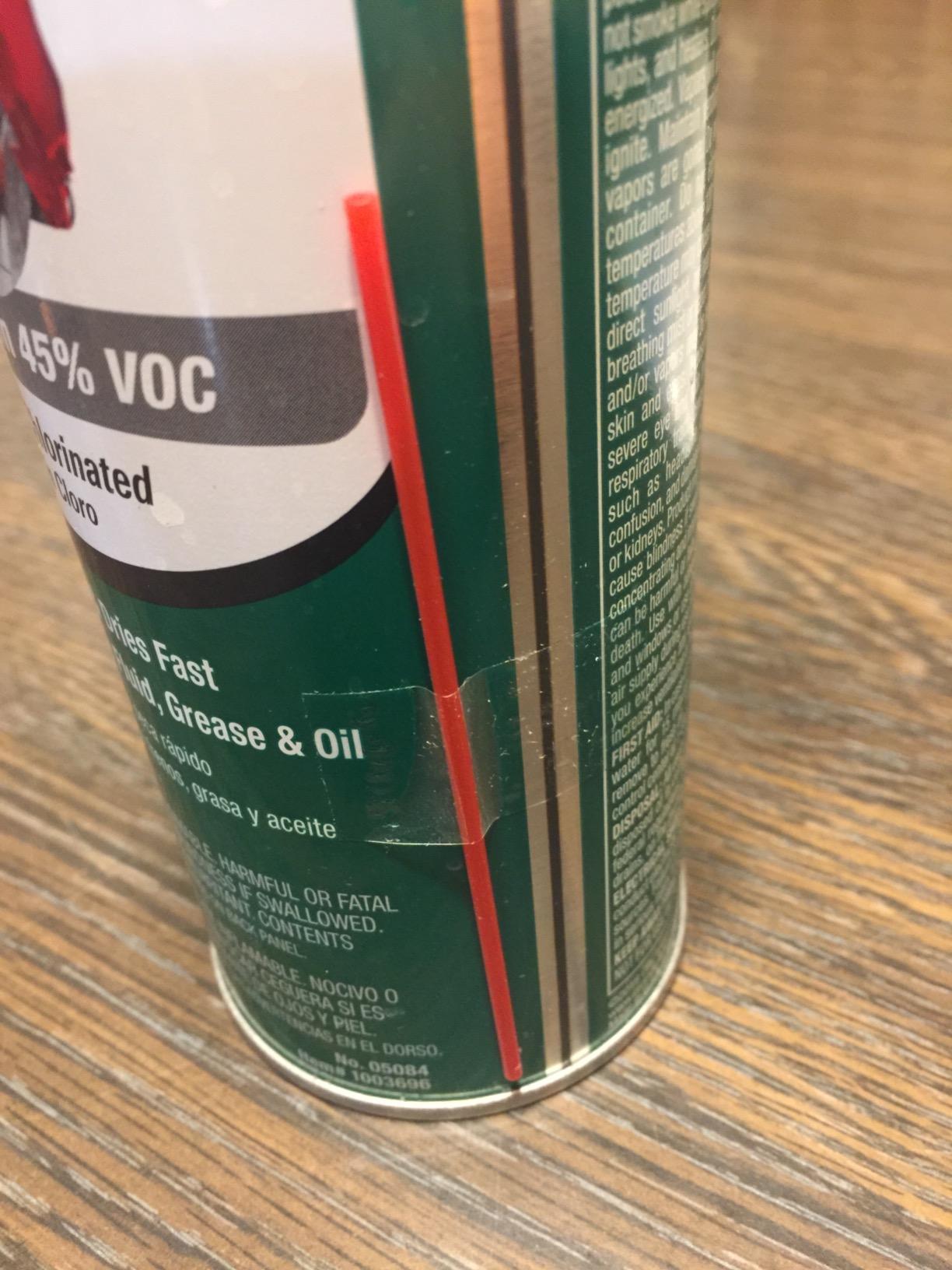
- Included straw will not fit the nozzle
- Small can runs out quickly
This is the red can that has lived on my workbench longer than any other aerosol, and it is the one I reach for first on a routine pad slap. It is the number one seller in the brake cleaner category on Amazon, sitting at a 4.8 rating across roughly 3,000 reviews, and it earned that the boring way: it works the same every single time. I have run it on rotors, caliper brackets, pad backing plates, and greasy hub faces, and it flashes off clean in well under a minute.
My favorite part is how gentle it feels for a solvent this effective. Reviewers consistently note it is less harsh on bare hands than rival cleaners, and I agree, although gloves are still the right call. The odor is noticeably lower than classic chlorinated cleaners too, which matters when you are working with the garage door half open in January.
Technically, this is the non-chlorinated, low-VOC variant of Brakleen, built on a fast-evaporating solvent blend rather than tetrachloroethylene. That means it has a low flash point and is flammable, so it stays away from pilot lights and angle grinder sparks. In exchange you get a formula that is legal in VOC-restricted states and does not leave the waxy film that causes squeal after a pad change.
The complaints are real but small. The fumes still demand real ventilation, the straw in some lots is sized wrong for the nozzle, and the 14 oz can always seems to run dry one corner before you expect. Our fix is simple: keep a second can in the cabinet, because nothing is worse than a half-cleaned caliper and an empty can.
In our use, one can comfortably handles one full four-corner pad job with some to spare for cleanup. It also never lost pressure halfway through, which is the number one complaint about cheap generics in forum threads.
How many brake jobs will one 14 oz can handle?
Plan on one full four-corner pad swap, or two to three two-corner jobs, per can. Heavily greasy calipers or a leaking wheel cylinder will drink more, so budget a can per axle for messy work.
Is the low-VOC formula legal in my state?
Yes, this low-VOC version is the one to buy if you live in California or another state that follows CARB rules. Just check the label when it arrives, because CRC sells several Brakleen variants and only some are compliant everywhere.
2. CRC Brakleen Pro Series 20 oz — Best Brake Cleaner Spray Overall
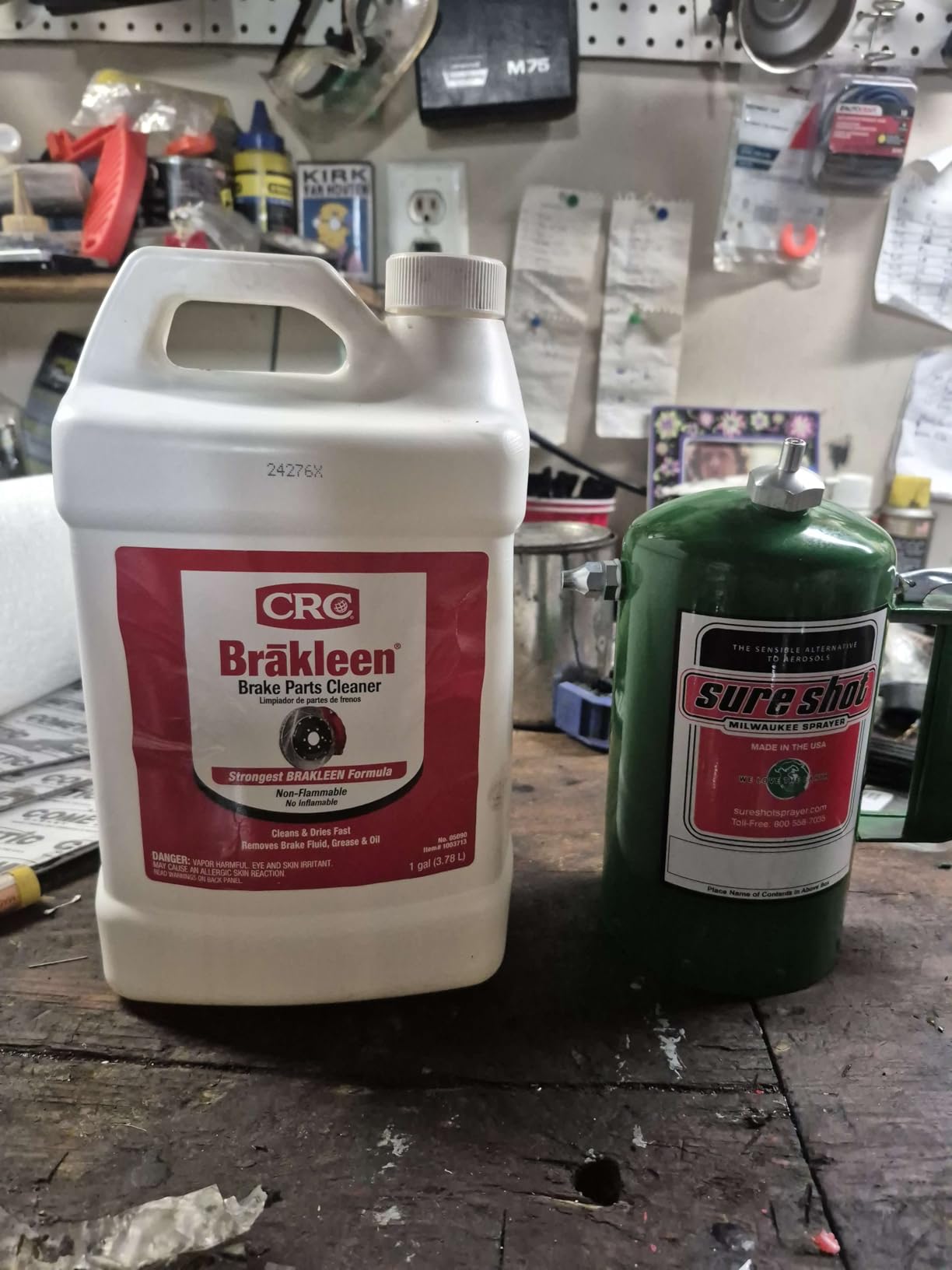
CRC Brakleen 1003663 Brake Cleaner Spray BPC Pro Series Non-Chlorinated 50 State Formula, 20 oz, [1 Pack]
20 oz can
Non-chlorinated 50-state formula
Pro Series
Works pads rotors calipers drums
Pros
- Powerful cleaning action
- Non-flammable formula
- Quick drying with no residue
- 50-state VOC compliant
- Works on nearly every brake component
Cons
- Very strong fumes
- Can damage certain plastics
- Some formulations test chlorinated
This is the best brake cleaner spray for a home garage if you only want to buy one can and be done with it, and it is what I now keep as my primary. The Pro Series can gives you 20 ounces instead of 14, a noticeably stronger burst, and a 50-state VOC formula, all in the product mechanics have treated as the default for decades. With roughly 24k+ reviews and a 4.7 average, it is the most proven aerosol in this entire category.
On the car, it cleans everything the label promises: springs, wedges, brake cylinders, drums, linings, shoes, calipers, clutch discs, and disc brake pads. I used it most recently on a rusty caliper bracket and a set of glazed rotors, and both were dry and streak-free in about 45 seconds. Because the formula is non-flammable, it is also the safer can to have around when you are working near a garage heater or using a drop light.
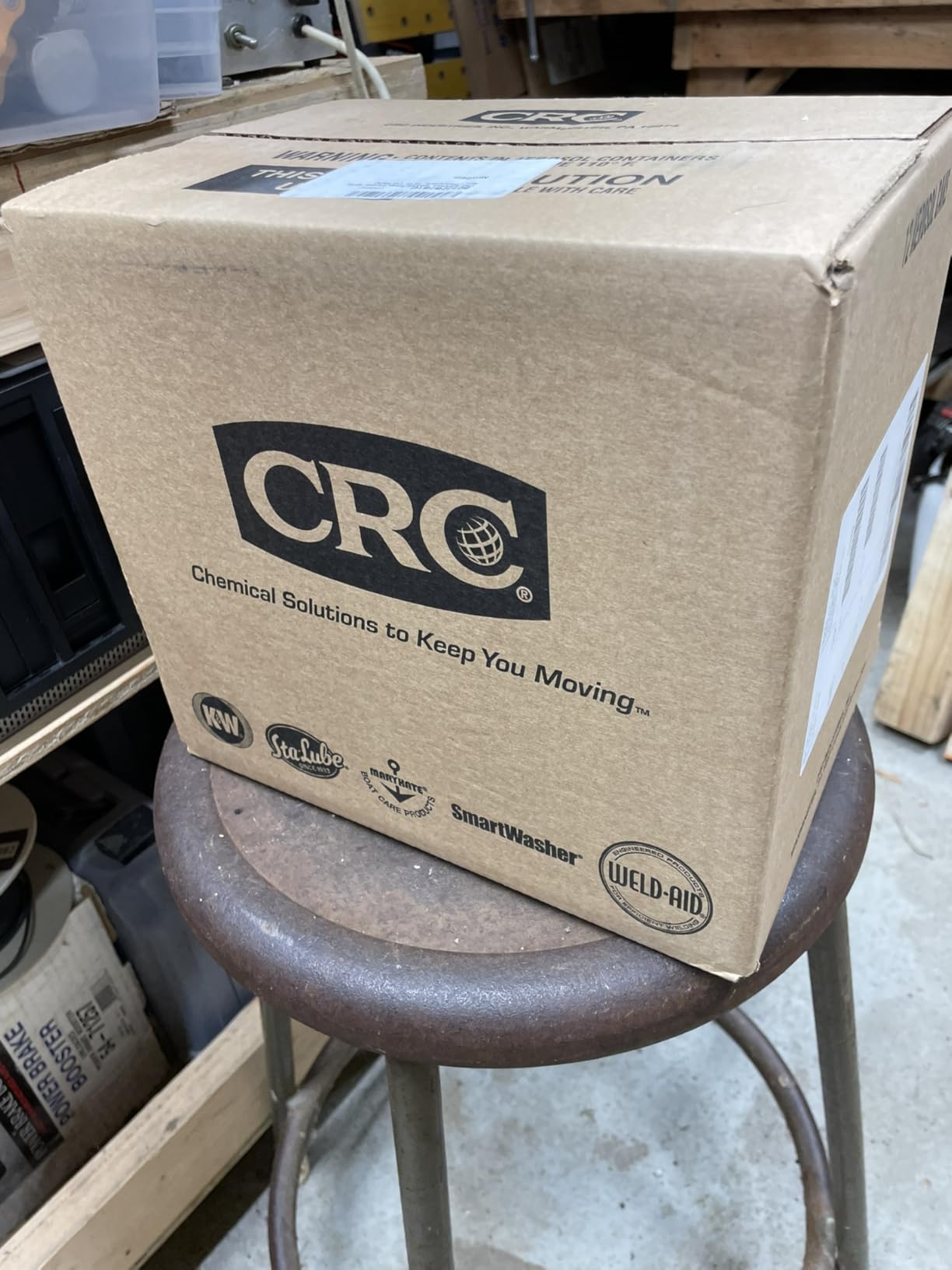
The Pro Series is non-chlorinated and relies on a CO2 propellant system with a metering valve, which is why the spray stays consistent from full down to the last ounce. That directly answers the biggest forum complaint about cheap cans dying halfway through. Its solvents evaporate completely, so nothing is left on the rotor to contaminate the new pads.
The downsides are mostly about respect, not performance. The fumes are the strongest of any can here, so a fan and an open door are non-negotiable. It will damage certain plastics, so keep it off sensors, wire insulation, and painted trim.
A few reviewers also report batches that behave like chlorinated formula despite the label, so treat every spray as aggressive regardless of what the can says. I also appreciate the 20 oz size on big jobs, since a single can got me through a full four-corner brake job plus a clutch inspection without running low.
Does the 50-state formula actually matter outside California?
It matters because it removes the guesswork, and because some retailers will not ship non-compliant cleaners to certain states at all. A 50-state formula means the same can works whether you live in Los Angeles or a state with no restrictions, which is why it is our default recommendation.
Will it damage plastic trim or sensors?
It can, so mask or remove anything plastic, rubber, or electrical before you spray. Brake cleaner is formulated for bare metal friction surfaces, not ABS sensor connectors, wire loom, or painted calipers, and the Pro Series is strong enough to prove that point quickly.
3. Valvoline Heavy Duty Brake Parts Cleaner 15 oz — Top Rated Small Can
Valvoline Heavy Duty Brake Parts Cleaner, 15 oz
15 oz can
Extra strength formula
No chlorinated solvents
50-state VOC
Straw included
Pros
- Breaks down baked-on brake dust
- Strong uniform spray pressure
- Includes extension straw
- Removes carbon gum and varnish
Cons
- Costs more than store brands
- Fumes are intense
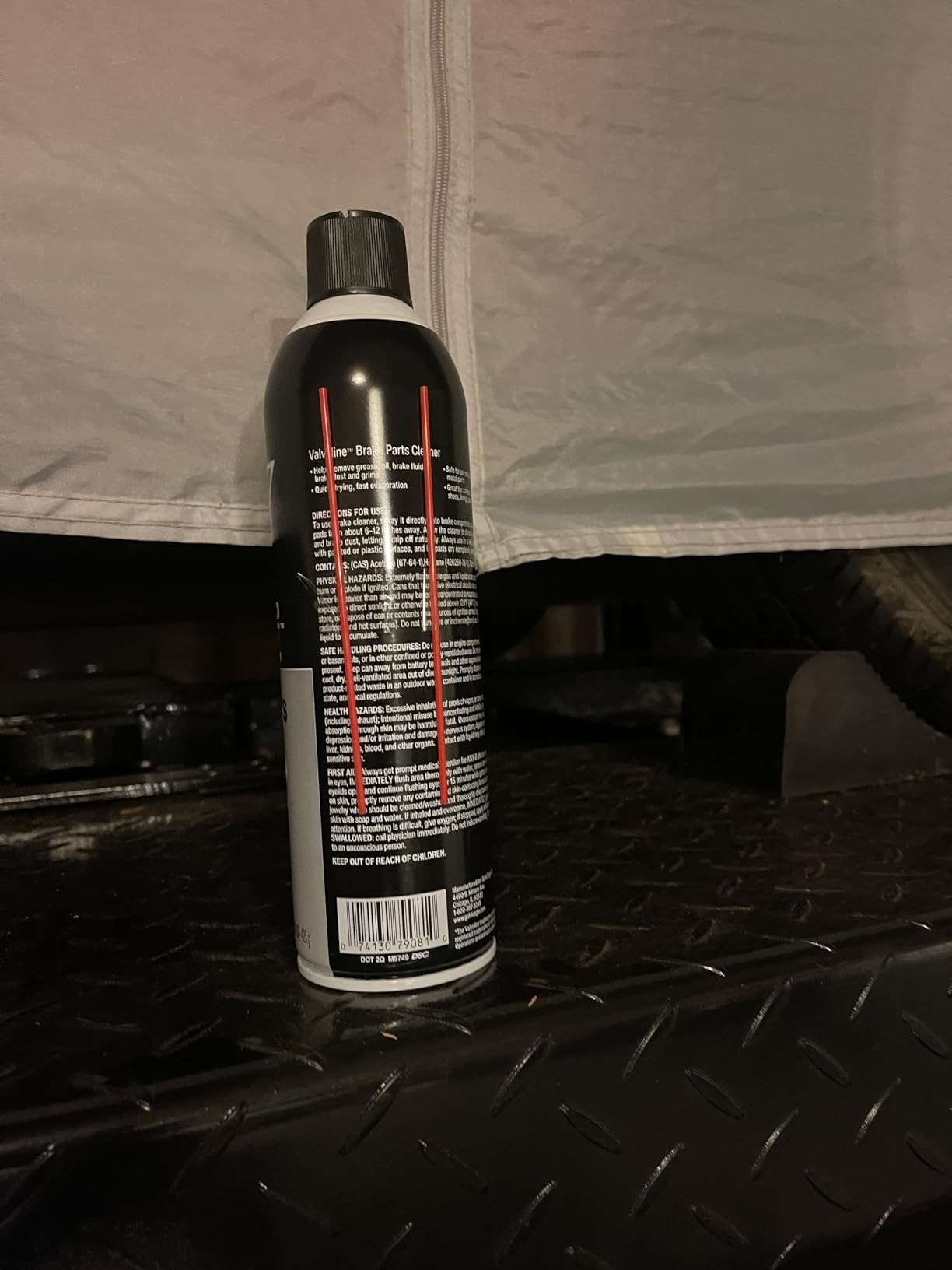
Valvoline Heavy Duty is the highest-rated can in this lineup at 4.8, with about 90 percent of its reviewers giving it five stars, and it backs that up the moment you pull the trigger. The extra strength formula is aimed at the nasty stuff: brake dust that has baked onto a wheel hub, carbon on a caliper piston, gum and varnish left by old brake fluid. It is my pick when a cleaning job looks more like an excavation.
Spray pressure is where it separates itself from the bargain cans. The pattern stays tight and uniform instead of sputtering, and the included straw lets you pin-point the back of a caliper or a bleed screw without soaking everything around it. For a 15 oz can, it covers a lot of ground before it empties.
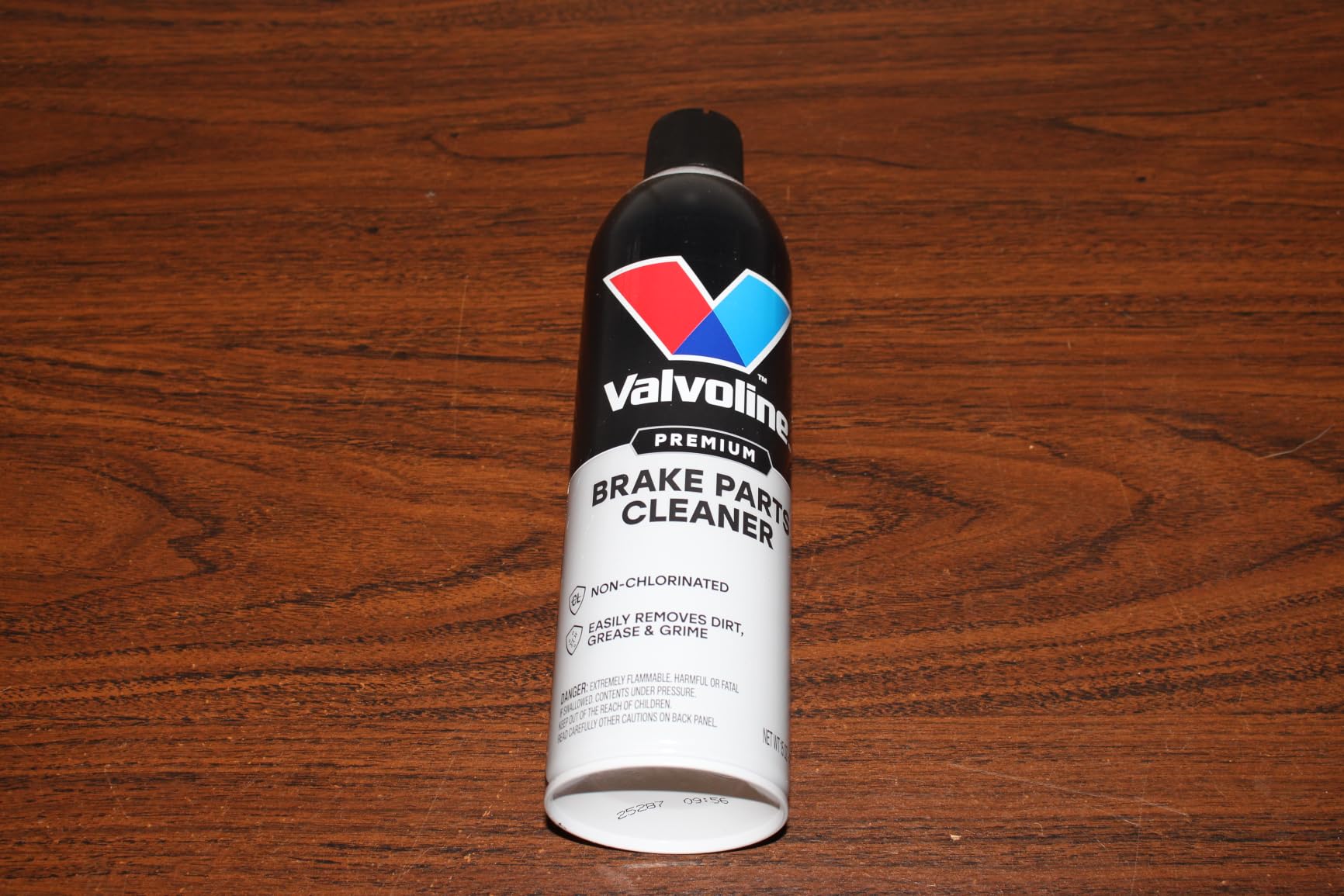
The formula is VOC compliant in all 50 states and contains no chlorinated solvents, which puts it in the same legal and safety family as our top two picks. Like other non-chlorinated cleaners, it relies on a flammable solvent blend with a low flash point, so treat it like the fire hazard it is around any ignition source. It dries fast and clean, with none of the film that causes squeaky brakes a week after a job.
Two honest caveats from our use and from reviews. It costs more per can than the store-brand cleaners at a parts chain, which stings when you are buying several. And the fumes are intense even by brake cleaner standards, so this is not the can for a closed garage.
The review count is still small at 44, so this is the least battle-tested pick on the list. The feedback pattern is about as strong as it gets, though, and it is Prime eligible if you need a can in a hurry.
Is a 15 oz premium can worth it over a cheap store brand?
Yes, if you fight stubborn deposits or care about consistent pressure, because the stronger formula and better valve mean you use less product per job. If you only wipe dust off rotors twice a year, a basic can will do the same work for less.
How is the spray pattern with the straw attached?
Tight and precise, which is exactly what you want inside a wheel well. The straw lets you hit the caliper slide pins and bracket corners directly, while the wide pattern without it is uniform enough to flood a rotor face evenly.
4. Berryman Chlorinated Brake Parts Cleaner 19 oz — Heavy-Duty Pick
Berryman Chlorinated Brake Parts Cleaner – 19 oz (Pack of 1)
19 oz can
Chlorinated formula
Fast drying residue free
Disc and drum brakes
Pros
- Chlorinated solvents cut heavy grease
- Removes brake fluid oil and grime fast
- Dries clean with no residue
- Trusted brand since 1918
Cons
- Can strip caliper paint
- Melts nitrile gloves
- Harmful fumes if inhaled
Berryman’s chlorinated cleaner is the sledgehammer of this group, and there are jobs where nothing else cuts it. It uses chlorinated solvents in the tetrachloroethylene family instead of a flammable heptane blend, so it dissolves hardened grease, old brake fluid, and oil on contact without a lot of scrubbing. It is my choice for degreasing bare steel parts on the bench, like a caliper bracket that came off a winter beater.
Because chlorinated solvents are non-flammable, this is also the can that behaves best around heat sources, a point that matters more than people admit in a garage with a water heater in the corner. It dries fast and completely residue-free on disc and drum components alike. Berryman has been mixing chemicals since 1918, which earns some benefit of the doubt.
What you give up is comfort and compatibility. Chlorinated formula will strip paint off a decorated caliper, and it melts nitrile gloves in seconds, so you need heavier chemical-resistant gloves. The fumes are genuinely harmful if inhaled, which is why chlorinated cleaners are being phased out in many areas and are restricted in some states.
The listing is also new, first available in October 2025, so the review pool is small at a 4.5 rating from just over a dozen buyers. Treat it as a specialty tool for bare-metal degreasing, not your everyday can.
When is chlorinated actually the better choice?
Choose chlorinated when you are cleaning bare, unpainted metal and the grime is baked on, because it dissolves grease faster and is non-flammable. Skip it whenever painted calipers, rubber, plastics, or poor ventilation are involved.
What precautions does a chlorinated formula need?
Use it outdoors or with serious cross-ventilation, wear chemical-resistant gloves instead of nitrile, and keep it away from painted and plastic surfaces entirely. Empty cans go to household hazardous waste rather than the regular trash in most areas.
5. Gunk Brake Parts Cleaner 14 oz (Case of 12) — Bulk Pick
GUNK Brake Parts Cleaner – Non-Chlorinated Brake Cleaner Spray Can – Fast-Drying Formula for Pads, Rotors & Calipers – Helps Remove Brake Dust, Oil, Grease & Fluid – 14 oz (Case of 12)
14 oz cans
Case of 12
Non-chlorinated
Fast drying no residue
Pros
- Non-chlorinated formula
- Dissolves brake dust oil and grease
- Convenient can with straw
- Works pads rotors calipers drums
- Case of 12 for value
Cons
- Melts nitrile gloves
- Chlorination of some batches questioned
- Shipping count complaints reported
Gunk is the classic parts-counter brand, and buying it by the case of 12 is how a home garage stays stocked without thinking about it. Each 14 oz can is non-chlorinated and fast-drying, with a straw for directed spray, and the formula handles pads, rotors, calipers, and drums without drama. After several months with a case in the shop, I stopped rationing cleaner and just used it the way it is meant to be used.
Performance sits right where you would hope for a 4.7-rated product with an 84 percent five-star rate. Brake dust, oil, grease, and fluid all break down quickly, and the finish dries without residue, so I had no squeal callbacks after pad jobs done with it. It behaves like a solid mid-grade non-chlorinated cleaner: not the hardest-hitting can here, but consistently good.
The honest part of bulk buying is the rough edges. It melts nitrile gloves like most strong solvents, and a few buyers question whether every batch is truly non-chlorinated, which is a fair reason to use it in a ventilated space no matter what. One reviewer also reported receiving a single can instead of a full case, so check the shipment when it lands.
Still, for anyone doing brake work on multiple vehicles or sharing a garage with family projects, the case is the economical route. The cans store fine in a cool cabinet and you never budget a job around a half-empty aerosol again.
Is buying a full case worth it for a home garage?
Yes, once you do more than three or four brake jobs a year, or if you also use cleaner for degreasing parts and tools. Below that, a couple of single cans will sit half-used longer than you expect.
How should you store a case of aerosol cans?
Keep the case in a cool, dry cabinet away from the furnace, water heater, and direct sunlight, because pressurized cans fail in heat. A metal cabinet near the garage door, far from any ignition source, is the practical setup most of us end up with.
6. B’laster Non-Chlorinated Brake Cleaner 14 oz (6-Pack) — Budget Pick
B’Laster Non-Chlorinated Brake Cleaner, 14 Ounces, Pack of 6
14 oz cans
6-pack
Non-chlorinated
Residue free finish
Pros
- Non-chlorinated formula
- Residue free finish
- 6-pack value
- Helps quiet squeaking disc brakes
Cons
- Small 14 oz cans
- Fewer reviews to judge consistency
B’laster’s 20-BC is the budget-friendly six-pack that quietly solves the squeaky-brake problem most home mechanics actually have. It is non-chlorinated, residue-free, and made in the United States, and reviewers specifically call out how well it works on disc brakes and how it cuts squeaking after a cleaning. For light-duty pad maintenance and rotor wipe-downs, it does the job without any fuss.
In our use it behaved like a solid mid-tier cleaner: the spray is steady, the solvent flashes off quickly, and there is no film left behind on the friction surface. The value is the pack format, which gets you 84 total ounces of cleaner at a friendlier cost per ounce than buying singles at a parts store. It is the can I hand to a neighbor who is doing their first brake job.
The trade-offs are straightforward. Each can is a small 14 ounce size, so a heavy four-corner job eats more than one can. And with a 4.4 rating from just 17 reviews, there is less long-term feedback to lean on than with CRC, though 76 percent of buyers give it five stars.
If your brake work is mostly maintenance cleaning rather than heavy degreasing, this pack and a wire brush will cover you for a long time. It is also a low-risk way to test whether bulk buying suits you before committing to a full case.
Does it stop brake squeal?
It does when the squeal comes from contamination, which is the most common cause, because removing dust and residue from the rotor and pad surface restores even contact. Squeal from worn shims or missing grease on the slide pins needs mechanical fixes, not cleaner.
How does a 6-pack compare to a 12-can case?
The six-pack is the better entry point if you are new to brake work or short on storage, giving you spare cans without a long commitment. Move up to a case of 12 only when you know your usage rate and have a cool place to store it.
7. Johnsen’s Brake & Parts Cleaner 14 oz (12-Pack) — Best for ABS and Sensitive Components
Johnsen’s 2417 Brake & Parts Cleaner, OTC-Compliant, 14oz, 12-Pack
14 oz cans
12-pack
OTC-compliant
Fast drying
Safe for ABS disc drum
Pros
- OTC-compliant formula
- Fast drying with no residue
- Safe for ABS disc and drum brakes
- Good value for money
- Bulk 12-pack stocking
Cons
- Ships in bags rather than boxes
- Bulk case needs shelf space
Johnsen’s 2417 is the bulk buy I recommend to anyone nervous about spraying solvent anywhere near modern brake electronics. It is explicitly listed as safe for ABS, disc, and drum brakes, it is OTC-compliant, and it dries fast with no residue, which is the whole checklist for a home garage with newer vehicles. Forum regulars also praise Johnsen’s non-flammable formula as a real advantage in tight spaces.
Cleaning power is honest mid-grade: it removes oil, grease, brake fluid, and general contaminants without the nuclear punch of a chlorinated can. Over a few jobs it cleaned calipers, rotors, and a sloppy rear drum with no drama and no residue complaints. The 4.7 rating across 323 reviews, with 83 percent five stars, is the strongest signal in the budget-bulk group.
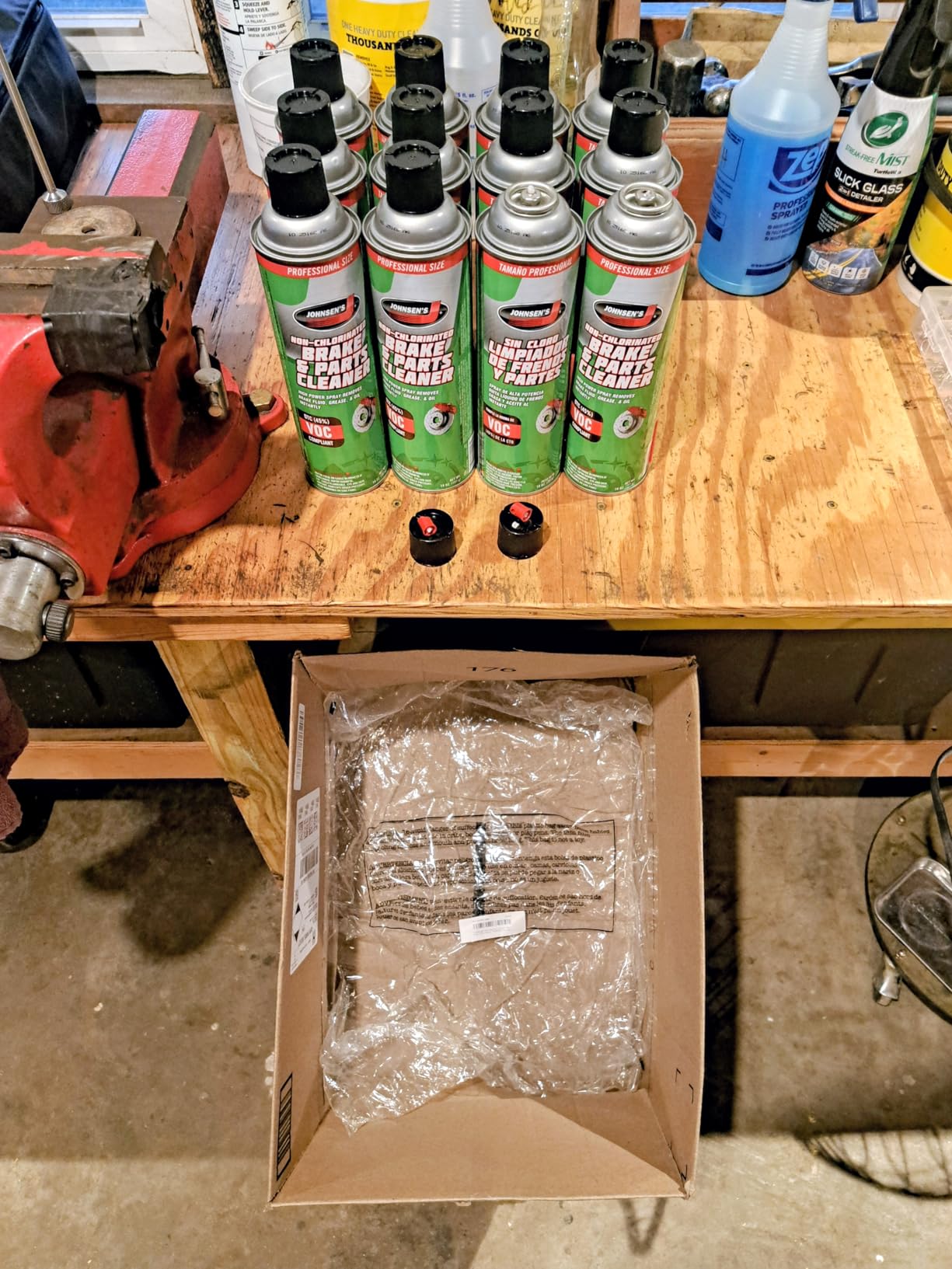
The 12-pack format is what makes it practical, because you are never one empty can away from stopping a job halfway. Buyers mainly gripe about packaging, since these tend to ship in bags rather than boxes, so expect a dented can or two in transit rather than any performance problem.
Is it really safe around ABS sensors?
It is formulated and labeled as safe for ABS components, which is more than most cleaners can claim, but we still avoid spraying sensors directly. Blast the surrounding bracket and hub, wipe the sensor body with a damp cloth, and you keep the electronics happy either way.
What does OTC-compliant actually mean?
It means the formula meets the OTC model rules that several states adopted to limit VOC content in consumer products. In practice, it means this cleaner is legal to buy and ship in states where stricter rules knock out older high-VOC formulas.
8. P&S Brake Buster Wheel and Tire Cleaner 1 Gallon — Best for Wheels and Brake Dust
P & S PROFESSIONAL DETAIL PRODUCTS – Brake Buster Wheel and Tire Cleaner – Non-Acid Formula Safe For All Wheel Types, Removes Brake Dust, Oil, Dirt, Light Corrosion – 1 Gallon
1 gallon
Non-acid formula
Foaming action
Safe on all wheel types
Dilutable concentrate
Pros
- Non-acid and safe on every wheel finish
- Powerful brake dust removal
- Foaming action clings to wheels
- Can be diluted for foam sprayers
- Restores and protects wheels
Cons
- Heavily soiled wheels need brushing
- Not a solvent parts cleaner
Brake Buster is here because half of every brake job happens on the wheel, and no aerosol solvent is the right tool for painted and coated rims. This is a non-acid, professional-grade wheel and tire cleaner from the Renny Doyle Double Black Collection, safe on chrome, aluminum, painted, powder-coated, and steel wheels. With roughly 6.2k+ reviews at 4.6, it is one of the most proven detailing products you can put in a garage.
My routine is now two-step: aerosol brake cleaner on the rotor, caliper, and pads, then Brake Buster on the wheel barrels and tires. The foaming action clings to vertical surfaces and lifts brake dust, oil, dirt, and light corrosion instead of letting it run down the wheel. It is concentrated, so a single gallon goes a long way when you dilute it for a spray bottle or foam sprayer.
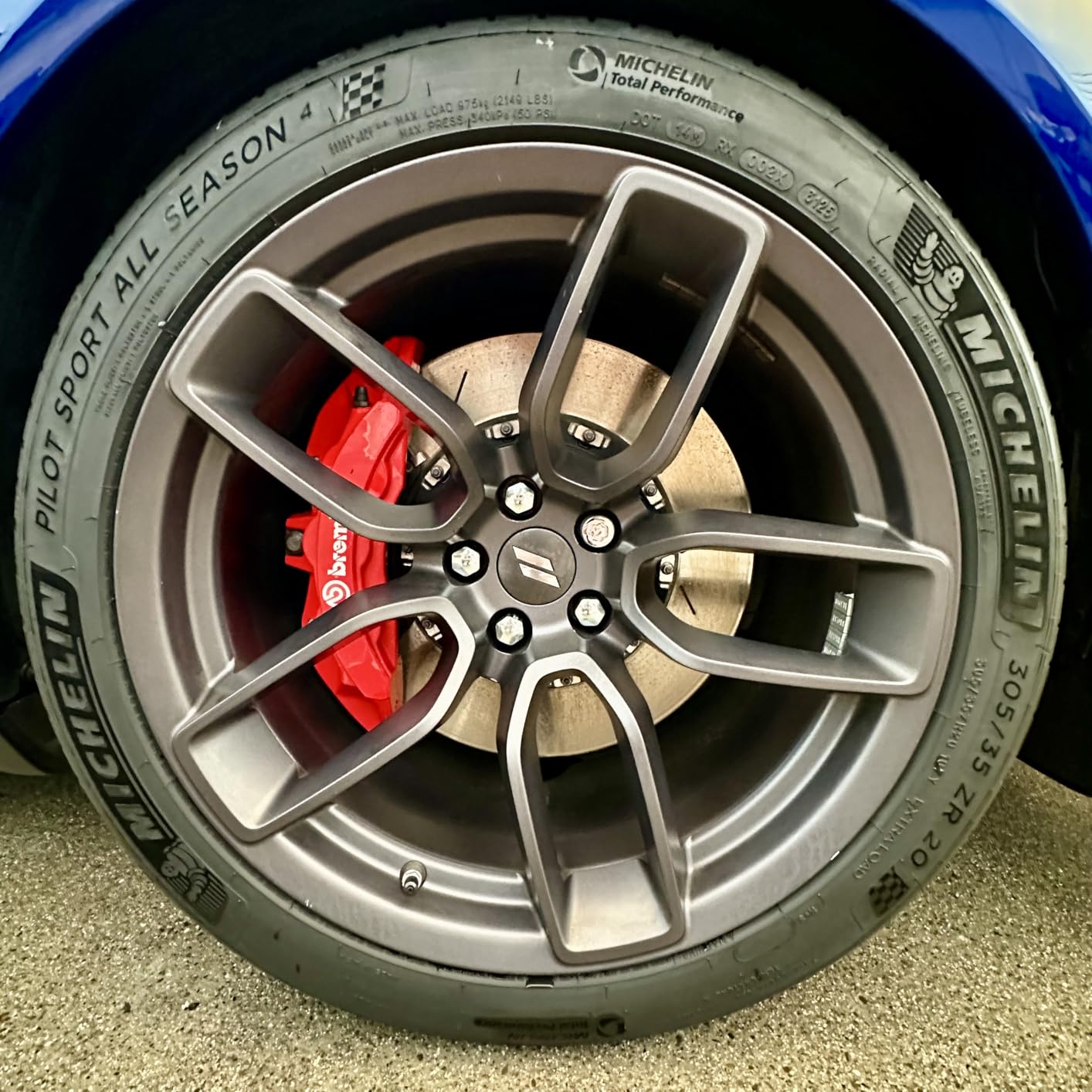
The formula is acid-free and eco-friendly, which matters if you wash in a driveway and care about what runs toward the storm drain. It also leaves wheels looking restored rather than stripped, something acid-based cleaners cannot claim. On genuinely crusty wheels, some brushing is still required, and reviewers agree that heavy soil wants agitation.
Just be clear about what it is not: this is not a solvent parts cleaner and should never replace aerosol brake cleaner on rotors or pads. Used together, the two cover the whole brake job from friction surface to barrel.
Diluted correctly, the gallon works out to a fraction of the cost per wash of ready-to-use wheel sprays. That is the reason it shows up in professional detail shops and in our own cabinet.
Why include a wheel cleaner in a brake cleaner guide?
Because every brake job ends with a filthy wheel, and brake dust removal on painted rims calls for a dedicated non-acid cleaner rather than a harsh solvent. Pairing the two is how you finish the job properly instead of leaving gray dust on fresh work.
What dilution should you use for a foam sprayer?
Start with the manufacturer’s recommended dilution for foam application and adjust from there, since wheels that are maintained monthly clean up easily at a lighter mix. Heavily neglected wheels take full strength plus a brush, so treat dilution as a usage decision rather than a fixed rule.
How to Choose a Brake Cleaner Spray for Your Garage?
Buy a non-chlorinated, 50-state VOC-compliant aerosol in the 14 to 20 oz range unless you only degrease bare unpainted metal, in which case a chlorinated can cleans harder for less scrubbing. Everything else, from odor to packaging, is a secondary decision. Here is how we sort through it.
Chlorinated or non-chlorinated: which is right for you?
For a home garage, non-chlorinated is the right call almost every time. It dries faster, ships legally almost everywhere, and is safer around paint, plastics, and the rubber parts that surround every brake corner.
Chlorinated cleaners use solvents in the tetrachloroethylene family, so they degrease bare steel harder and are non-flammable. The cost is harmful fumes, stripped paint, melted nitrile gloves, state restrictions, and a slow phase-out across the industry.
This matches the consensus we found in Garage Journal and r/MechanicAdvice threads: shops keep a chlorinated can for steel-only bench work, while everyone else runs non-chlorinated. Non-chlorinated blends do contain flammable solvents like heptane, acetone, and toluene, so they demand respect around sparks and heaters.
How fast should it dry, and does residue really matter?
Anything that flashes off in 30 to 60 seconds at room temperature is the right speed, and residue is the enemy of a quiet brake job. Solvent that lingers or leaves a film prevents proper pad bed-in, which is exactly how you get squealing brakes a week after new pads. Every pick above dries clean, but in cool or humid weather we still wipe rotors with a lint-free towel before installing pads.
Will it ship to your state?
If you live in California or a state that follows its VOC rules, only buy a cleaner explicitly labeled 50-state, low-VOC, or OTC-compliant. Retailers block shipment of non-compliant formulas to restricted states, and the wrong can simply will not arrive. Both CRC picks, the Valvoline, and the Johnsen’s in this guide are compliant choices, which is a large part of why they rank where they do.
Singles versus cases: the real cost per application
A single 14 oz can covers about one four-corner pad job, so if you do more than three brake jobs a year, a six-pack or case wins clearly on cost per job. Cases also mean you never stop mid-job for an empty can, which is worth more than the savings.
The catch is storage, because aerosol cans need a cool cabinet away from the water heater and any ignition source. This is the piece of the puzzle that almost no review covers, and it changes which product is actually cheapest for you.
Where should you never spray brake cleaner?
Never spray it on rubber, painted, plastic, or hot surfaces, and never near an ignition source. The specific no-go list we work from:
Rubber brake hoses, caliper seals, and dust boots, which can swell and fail
Painted calipers and wheels, since solvents strip paint and clear coat
Plastic trim, sensor connectors, and wire insulation
Tire sidewalls, which can be degraded by strong solvents
Hot rotors or engine parts, where rapid cooling and flash fire are real risks
Any floor drain, storm drain, or open ground
Safety and disposal basics
Work with the garage door open and a fan running, wear chemical-resistant gloves rather than thin nitrile, and keep a fire extinguisher within reach. Used rags go outdoors to dry fully before disposal because solvent-soaked cloth can self-ignite. Let empty cans fully evacuate before recycling, never puncture or burn them, and take partially full cans to a household hazardous waste collection site.
Frequently Asked Questions
What is the best brake cleaner spray?
CRC Brakleen Pro Series is the best brake cleaner spray for most home garages, thanks to a 50-state VOC formula, strong consistent spray, and roughly 24,000 reviews at a 4.7 rating. The standard CRC Brakleen non-chlorinated 14 oz can is the best value single can, and Valvoline Heavy Duty is the strongest small-can option for baked-on brake dust.
Which is better, chlorinated or non-chlorinated brake cleaner?
Non-chlorinated is better for home garage use because it dries faster, ships legally in all 50 states when labeled 50-state compliant, and is safer around paint and plastics. Chlorinated cleaner degreases bare metal harder and is non-flammable, but it has harmful fumes, strips paint, melts nitrile gloves, and faces state restrictions and phase-out.
Where should you not spray brake cleaner?
Never spray brake cleaner on rubber seals, hoses, or dust boots, painted calipers and wheels, plastic trim, sensor connectors, wire insulation, or tire sidewalls. Also avoid hot rotors or engine parts, any ignition source, and never spray into floor drains or storm drains.
Does brake cleaner spray work?
Yes, brake cleaner works by dissolving brake fluid, grease, oil, and brake dust, then evaporating so the surface is left clean and dry for reassembly. It is the standard way to prep rotors and pads before installation and to remove the contamination that causes squealing and poor pad bed-in.
How long does brake cleaner take to dry?
Most quality brake cleaners dry in 30 to 60 seconds at room temperature, with the surface fully evaporated and residue-free shortly after. Cool, humid, or poorly ventilated garages slow evaporation, so wipe rotors with a lint-free towel before installing new pads.
Conclusion
For a home garage in 2026, CRC Brakleen Pro Series in the 20 oz can is the best brake cleaner spray overall, with a 50-state formula, non-flammable solvents, and a 4.7 rating from roughly 24k+ mechanics and DIYers. Keep the 14 oz CRC Brakleen non-chlorinated can around as your everyday value pick, reach for Valvoline Heavy Duty when brake dust is baked on, and add P&S Brake Buster for the wheels that frame the whole job. Whatever you buy, ventilate the garage, keep solvent off rubber and paint, and finish every job with dry, residue-free rotors before the new pads go on.