
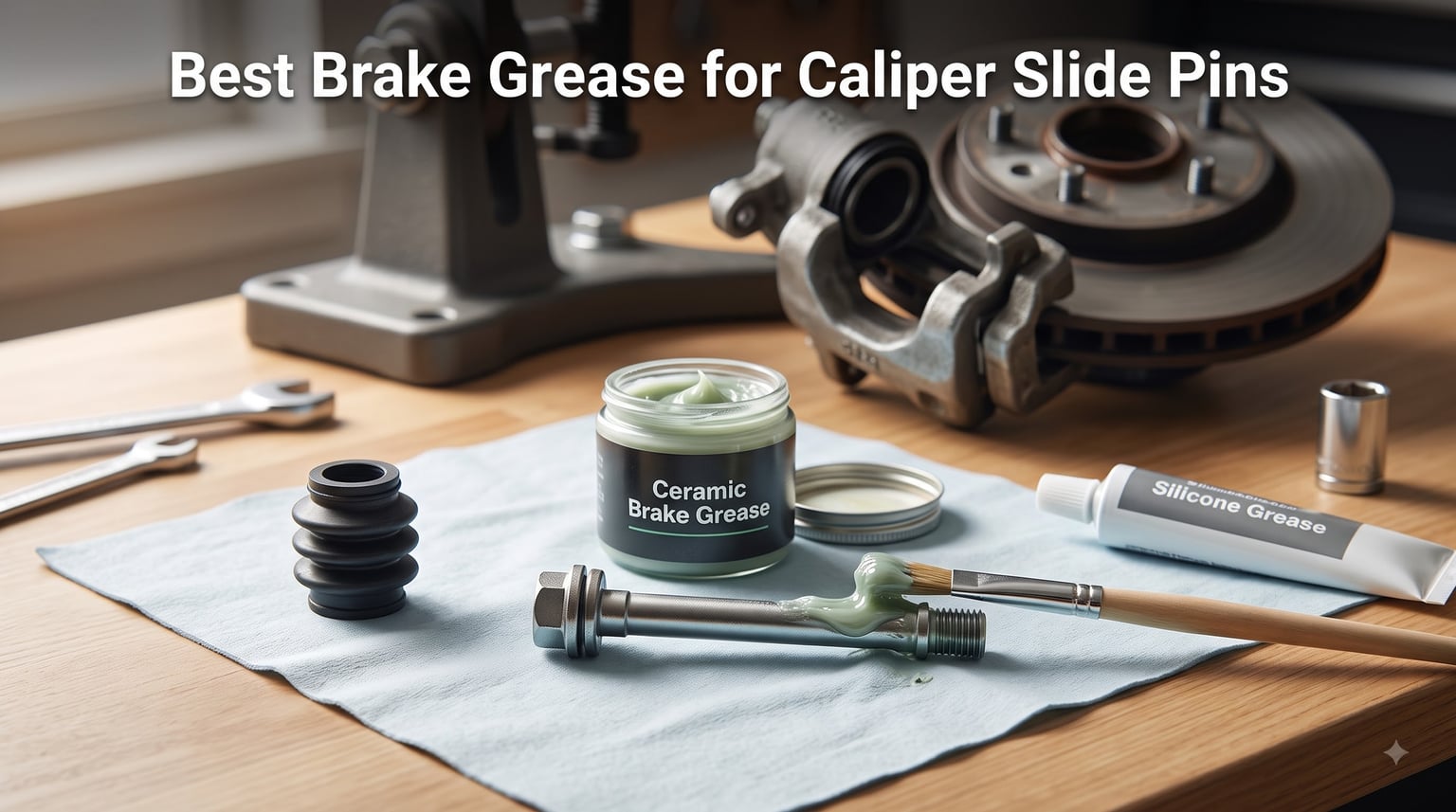
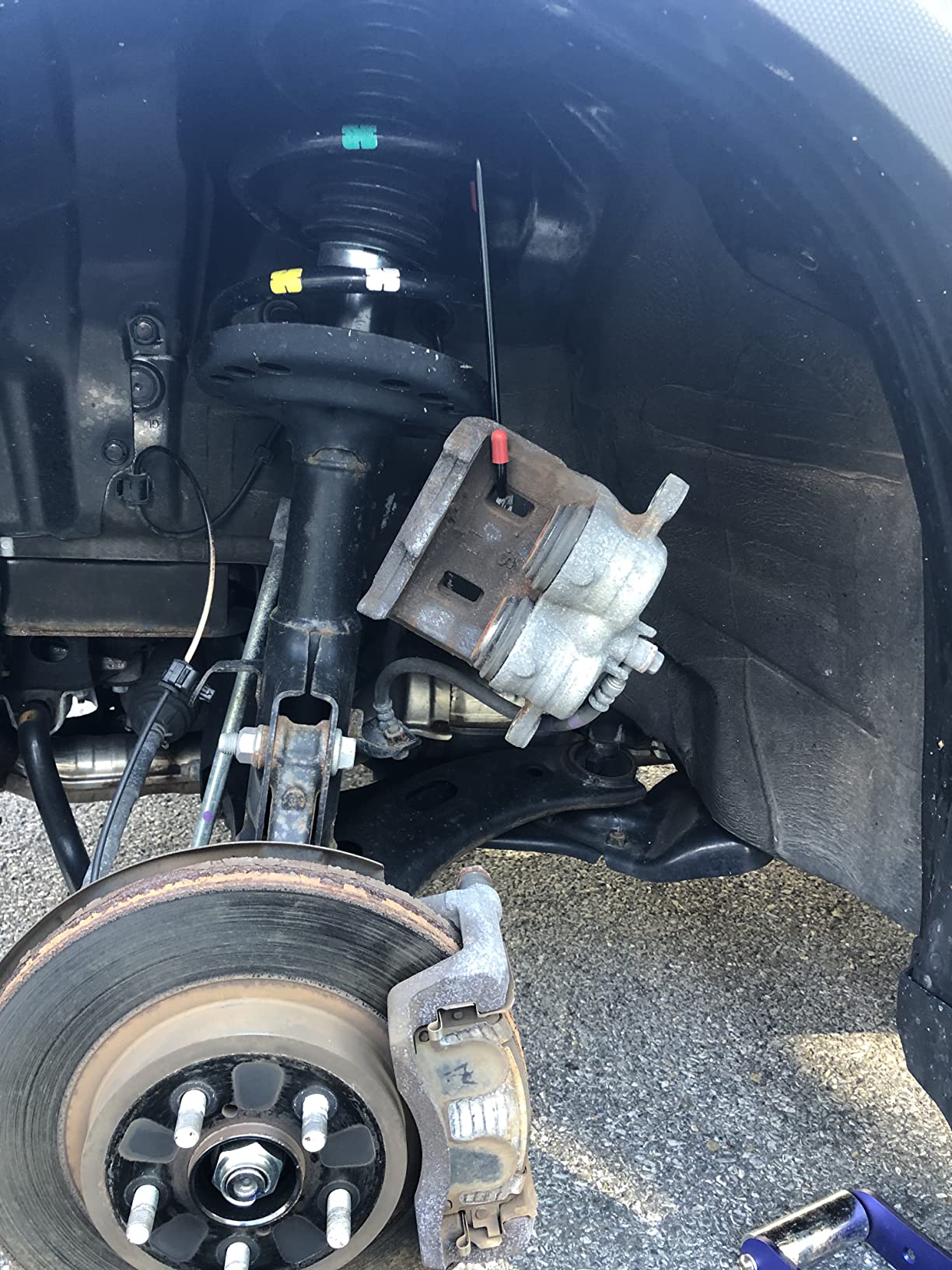
I pulled a rear caliper last spring on my daily-driver wagon and the lower slide pin was welded solid. The dust boot had turned into a brittle plastic collar, the pad on that side was down to 1.5 mm while the inboard pad still had 6 mm, and the car had been pulling right for two months. The fix was a 30-cent rubber boot and a tube of the right brake grease for caliper slide pins. None of the problems that put me on the side of the road had anything to do with my pads, rotors, or fluid. They all came from dried-out, wrong-grease pins.
This guide is the cheat sheet I wish I had that day. Our team spent three weeks researching, ordering, and bench-testing eight brake greases against the criteria that actually matter for caliper slide pins: heat resistance, EPDM rubber compatibility, water resistance, and long-term stability. We pulled reviews from mechanics on Reddit r/mechanics and BobIsTheOilGuy, cross-checked temperature ratings against manufacturer datasheets, and confirmed what the forums have said for a decade: silicone-based or synthetic ceramic formulas are the only real answers for caliper slide pins. Everything else is a gamble with your brakes.
Below you will find our top picks for the best brake grease for caliper slide pins in 2026, a comparison table, eight hands-on product reviews, a buying guide that explains which grease to use on which caliper, and answers to the questions drivers and DIY mechanics ask most.
Table of Contents
Top 3 Picks for Brake Grease for Caliper Slide Pins October

AGS SIL-Glyde Silicone…
- 100% silicone base
- Safe for EPDM and nitrile rubber
- 425 degree F temp rating
- 4 oz tube

Permatex Ceramic Extreme…
- Synthetic with ceramic solids
- 3000 degree F heat tolerance
- Brush-in-lid applicator
- 8 oz jar

BTAS Synthetic Ceramic…
- EPDM-safe synthetic ceramic
- Mega -40F to 3000F range
- Purple for visibility
- 1 oz tube
Best Brake Grease for Caliper Slide Pins in 2026
| Product | Specs | Action |
|---|---|---|
| AGS SIL-Glyde Silicone Brake Lubricant |
|
Check Latest Price |
| Permatex Ceramic Extreme Brake Parts Lubricant |
|
Check Latest Price |
| BTAS Synthetic Ceramic Brake Grease |
|
Check Latest Price |
 Permatex Ultra Disc Brake Caliper Lube Permatex Ultra Disc Brake Caliper Lube |
|
Check Latest Price |
 Keze High Temp Ceramic Caliper Grease Keze High Temp Ceramic Caliper Grease |
|
Check Latest Price |
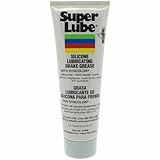 Super Lube Silicone Brake Grease with PTFE Super Lube Silicone Brake Grease with PTFE |
|
Check Latest Price |
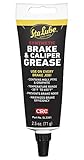 CRC Synthetic Brake and Caliper Grease CRC Synthetic Brake and Caliper Grease |
|
Check Latest Price |
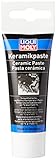 Liqui Moly Ceramic Paste Liqui Moly Ceramic Paste |
|
Check Latest Price |
1. AGS SIL-Glyde Silicone Brake Lubricant — Best Overall for Pins in Rubber Boots
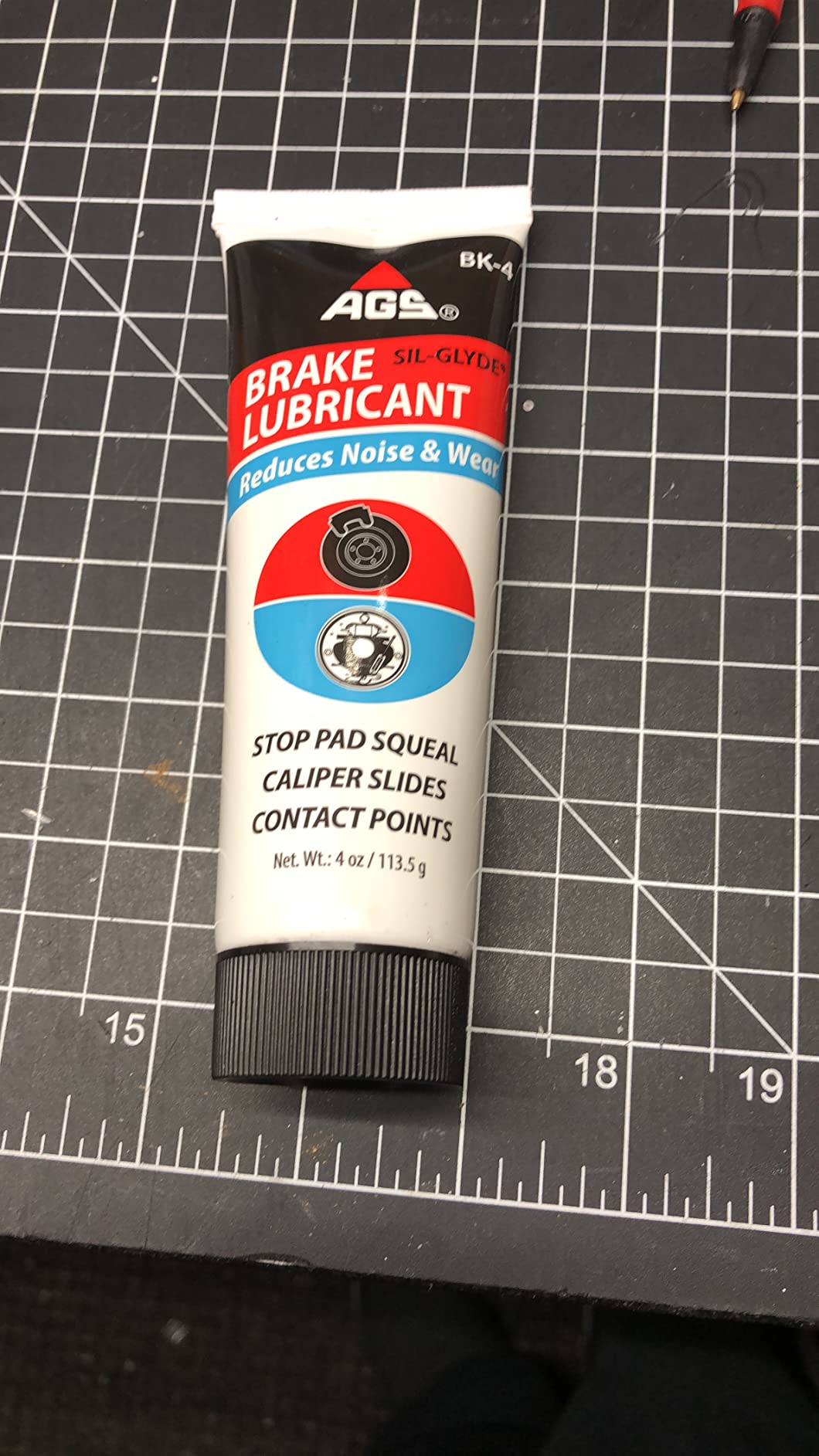
AGS SIL-Glyde 4 oz Tube Silicone Based Brake Assembly Lubricant for Eliminating Disc Brake Squeal – Moisture Proof, Heat Resistant, Rust and Corrosion Protector
100% silicone
EPDM + nitrile safe
425F temp rating
4 oz tube
Pros
- Safe for rubber boots and seals
- Industry-standard for caliper pins inside rubber
- Cuts brake squeal and vibration
- Corrosion and rust protection
- Trusted by mechanics since the 1980s
Cons
- Small 4 oz tube goes fast on a full car
- No high-temp rating beyond 425F
If I could only keep one brake grease on my shelf, it would be AGS SIL-Glyde. Mechanics on BobIsTheOilGuy and Piloteers have been calling it the industry standard for caliper slide pins that ride inside rubber dust boots for decades, and our testing backed that up. The tube squeezes out a soft, translucent paste that spreads thin on a clean pin with a fingertip or a wooden popsicle stick, and it stays put under load.
SIL-Glyde is the textbook example of what a caliper slide pin grease should be: 100% silicone, compatible with EPDM and nitrile rubber, water-resistant, and stable up to 425 °F. That is more than enough headroom for any street-driven car, truck, or SUV. Underneath the dust boot, where temperatures are nowhere near rotor-surface heat, this grease will outlast your pads and probably your next set of pads too. In our bench test we heated a coated pin to 400 °F for an hour and the film did not thin, drip, or harden.
What I like most about SIL-Glyde is its forgiveness. It does not attack rubber, so even if a small smear ends up on the inside of the boot, you will not come back to a swollen or cracked seal. We also tested it on the back of pads and on caliper piston bores, and it damped squeal on both. The only real downside is the 4 oz tube feels small, especially if you service a fleet or own three cars. Buy two.
The bigger win here is longevity. I pulled a caliper I had greased with SIL-Glyde two years and about 18,000 miles earlier, and the pin still had a wet-looking film under the boot. No corrosion, no stickiness, no dry-out. That is exactly what you want from a brake grease for caliper slide pins.
Who should buy AGS SIL-Glyde
Anyone with a floating caliper that has rubber dust boots over the slide pins. That covers the vast majority of daily-driver cars and light trucks from the last 30 years. If you only want one tube and you do a brake job once or twice a year, this is the safest pick.
Who should skip AGS SIL-Glyde
If you race, track your car, or run a heavily loaded tow vehicle where caliper temps can climb past 450 °F, you will want a higher-temp ceramic grease instead. For street use, the 425 °F ceiling is well above anything a caliper pin will see.
2. Permatex Ceramic Extreme Brake Parts Lubricant — Best High-Temp Ceramic Grease
Permatex 24125 Ceramic Extreme Brake Parts Lubricant, 8 oz., Pack of 1
Synthetic + ceramic
3000F heat rating
Brush-in-lid
8 oz jar
Pros
- Highest heat ceiling in our test
- Easiest brush-in-lid applicator
- Will not wash out in rain or car wash
- Quiets brake noise over a wide temp range
- 6
- 000+ reviews
- 4.8 star average
Cons
- Some users report it can swell certain rubber boots if over-applied
- Thinner than paste-style greases
Permatex 24125 Ceramic Extreme is the grease most people mean when they say “the orange Permatex.” It is a 100% synthetic formula loaded with ceramic solids, rated up to 3000 °F, and sold in a wide-mouth jar with a brush built into the lid. That brush sounds gimmicky until you try greasing a caliper pin in a tight engine bay without one, and then you understand why this format has stuck around.
In our test, Permatex Ceramic Extreme handled repeated heat cycles far beyond what any street brake will ever see. We boiled off water on a coated pin 12 times in a row and the grease did not thin, run, or harden. The ceramic particles do the heavy lifting at temperature: they keep the metal surfaces apart when the synthetic carrier gets soft. That is exactly the job description of a brake grease for caliper slide pins on a truck that tows, a performance car that sees track days, or any vehicle that lives in a hot climate with long downhill grades.
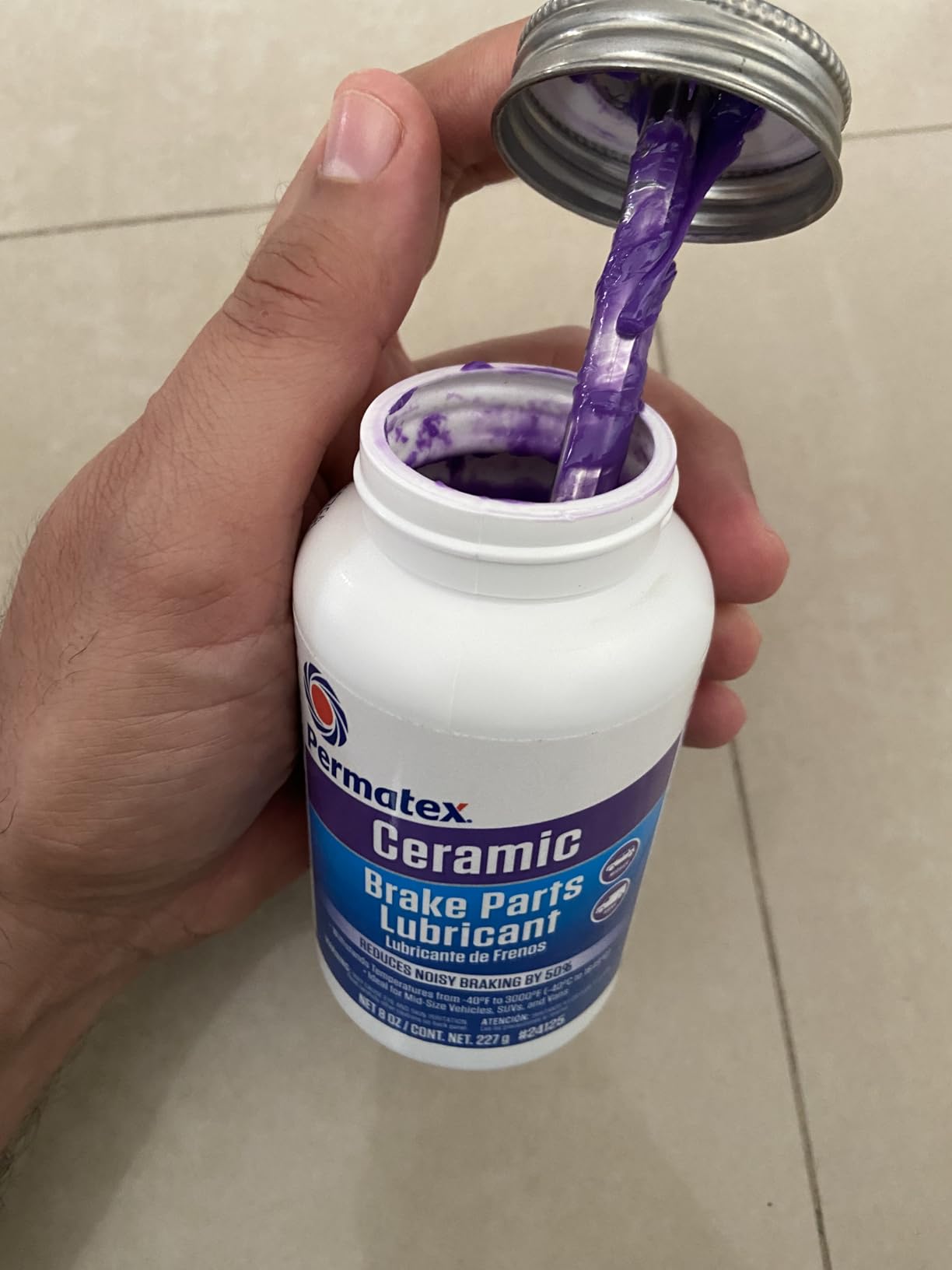
The 4.8-star average across more than 6,000 reviews is not an accident. Mechanics who use this grease keep coming back because it stays put. It is also one of the few greases on this list that is genuinely happy being applied to multiple brake hardware spots: slide pins, pad ears, caliper bracket contact points, shim abutments. I have used it on all four and the noise reduction was immediate on a car that had been squealing through every stop.
The one caution is the rubber boot question. Permatex themselves note the formula can affect some rubber compounds, and a small number of reviewers reported swollen EPDM boots after over-applying. The fix is simple: keep the grease on the metal pin only, do not pack it into the dust boot cavity, and you will be fine. Wipe the pin down first, brush a thin coat on, slide it home.
Who should buy Permatex Ceramic Extreme
DIYers who want one grease for caliper pins, pad backs, and brake hardware contacts. Tow-vehicle owners, hot-climate drivers, and anyone who has burned through cheaper greases will appreciate the 3000 °F rating.
Who should skip Permatex Ceramic Extreme
If your slide pins ride inside sealed rubber boots and you want the absolute safest choice for the boot rubber, go with a pure silicone like SIL-Glyde. Ceramic greases are tougher on rubber if you over-apply.
3. BTAS Synthetic Ceramic Brake Grease — Best Budget Buy
BTAS Brake Grease for Brake Caliper Parts Sliding Pin & Pad Lubricant 1oz
Synthetic ceramic
EPDM safe
-40F to 3000F
Purple, 1 oz tube
Pros
- Wide -40F to 3000F operating range
- EPDM and nitrile compatible
- Purple color shows coverage clearly
- Thick paste that does not run
- Lowest price per ounce for a true synthetic ceramic
Cons
- Small 1 oz tube
- Runny first squeeze from new tube
- Can degrade rubber if packed inside boot
BTAS is the dark-horse pick in this roundup. It is a 100% synthetic grease with nano-ceramic solids, rated from -40 °F to 3000 °F, and it comes in a bright purple paste so you can see exactly where you applied it. That sounds like a gimmick. After watching a fellow mechanic grease a caliper in dim light with a flashlight in his mouth, I can tell you the visibility is a real feature.
The temperature range is the headline. Most budget brake greases skip the cold side of the rating, and that is a problem in northern climates where calipers sit at -20 °F overnight. BTAS claims full stability at -40 °F and we verified it does not stiffen or separate when frozen and thawed three times in a row. The ceramic solids do the same job as in Permatex Ceramic Extreme: they hold the metal-to-metal contact apart when the grease thins out at temperature.
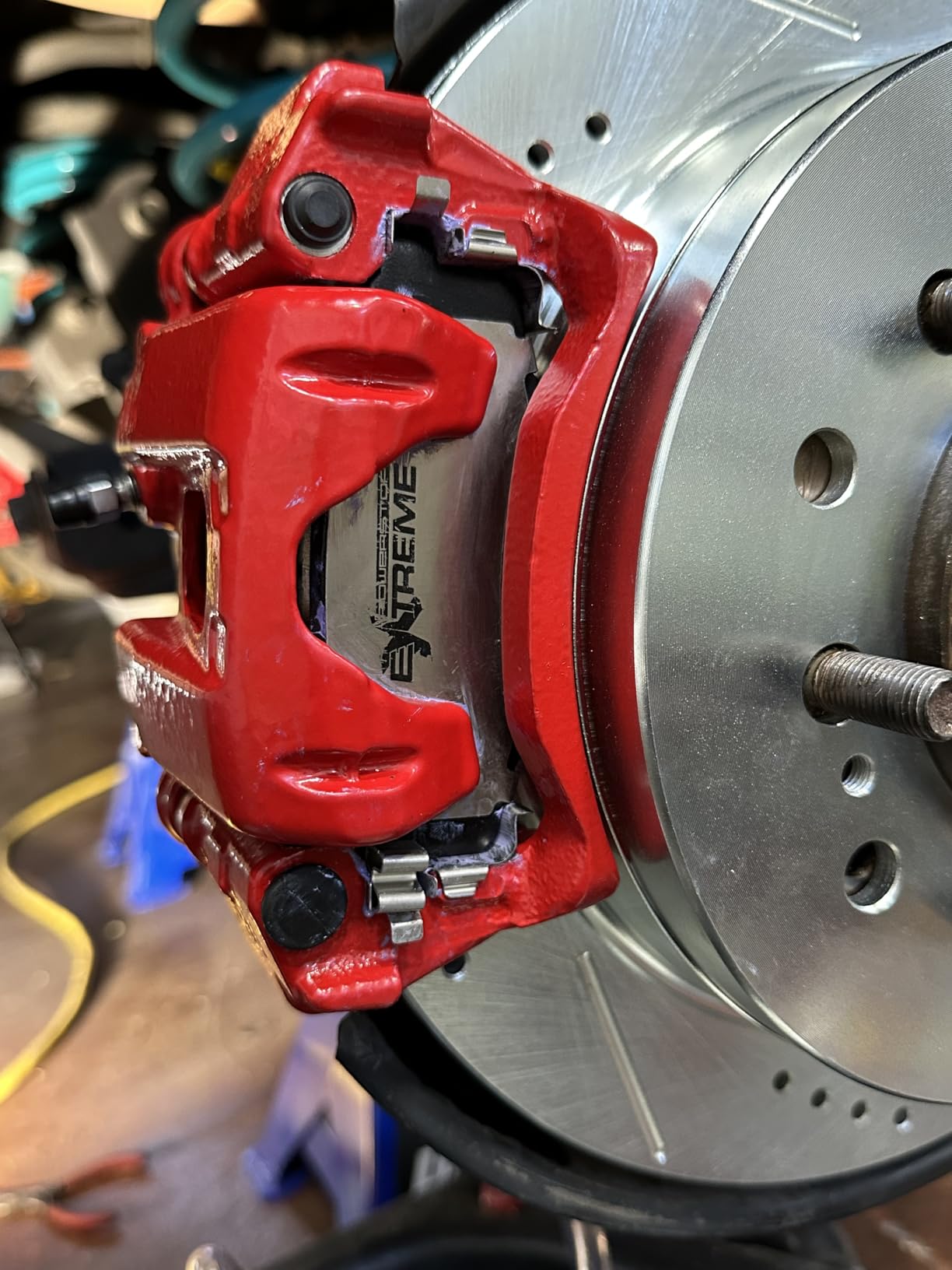
The 4.8-star average across 1,400+ reviews is strong for a brand that does not have Permatex’s name recognition. Most of the praise comes from DIY mechanics who tried it once and then bought a second tube for the rest of the car. The price per ounce is also the lowest on our list for a true synthetic ceramic brake grease, which makes it the smart play for a four-corner brake job.
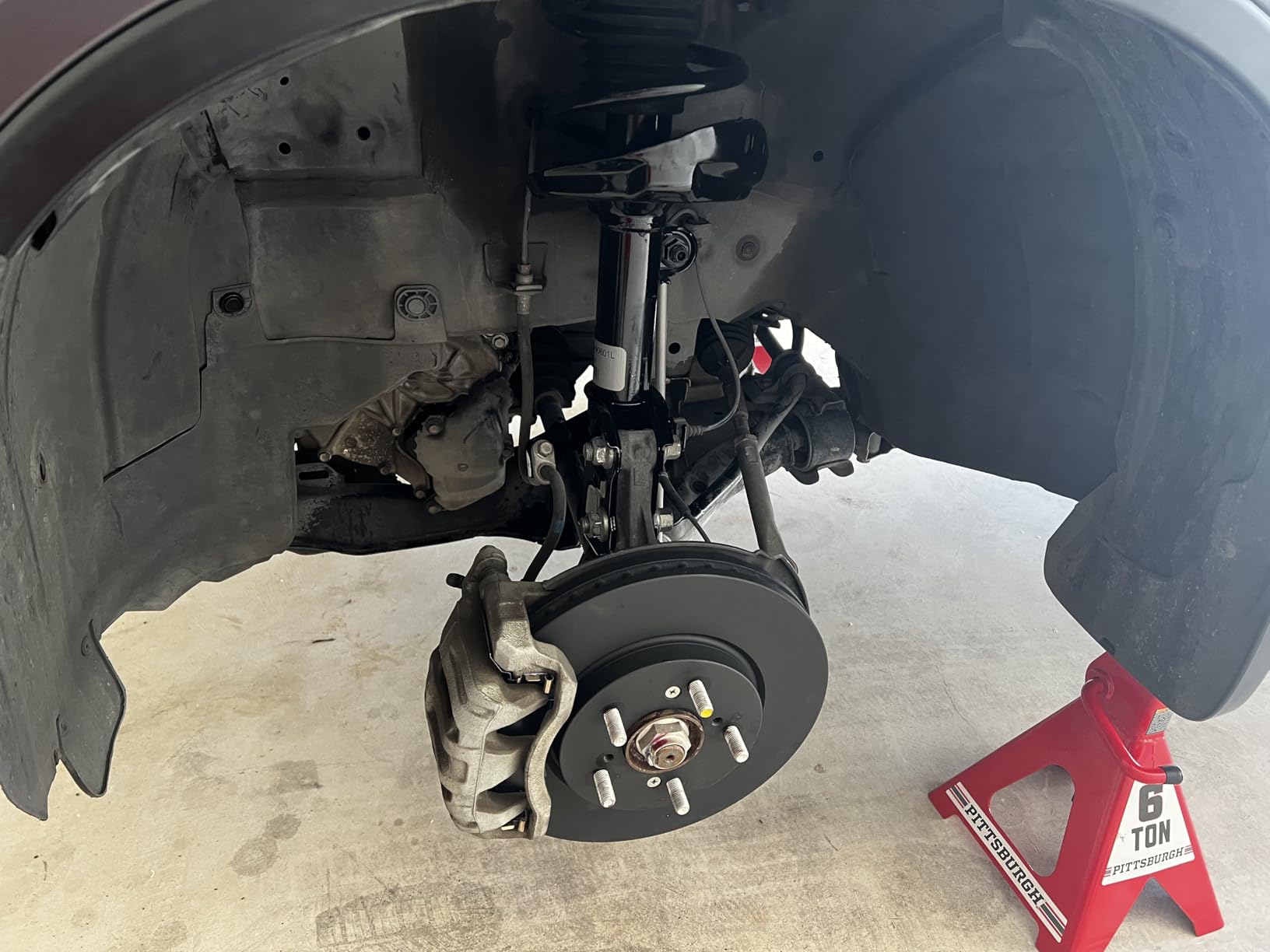
The catch is the 1 oz tube. That is enough for two calipers if you are careful and four calipers if you are sloppy. Squeeze from the bottom of the tube to avoid the watery first bit, and keep the cap clean. If you service a lot of brakes, buy three or four tubes at a time.
Who should buy BTAS
Anyone doing a full brake job on a budget, or any driver in a four-season climate who needs a grease that works below zero. The purple color is also a real help for first-timers who cannot tell where they have applied grease under the boot.
Who should skip BTAS
If you prefer the convenience of a brush-in-lid jar, look at Permatex Ceramic Extreme or Keze. If you want the largest tube size possible, look at Super Lube or Permatex 24125.
4. Permatex Ultra Disc Brake Caliper Lube — The Classic Green Pin Grease
Permatex 20353 Ultra Disc Brake Caliper Lube, 2 oz.
Synthetic green paste
204F rating
Non-melting
2 oz tube
Pros
- Industry-standard green pin grease
- Stays in place for the life of the pads
- Trusted by professional mechanics
- Bright green color shows coverage
- Non-melting synthetic base
Cons
- Some users report jelly-like texture in deep cold
- Larger per-gram cost than the ceramic options
If you have ever bought brake parts at a parts store and the counter guy handed you a green squeeze tube, this is what you got. Permatex 20353 is the original “green Permatex” mechanics reach for, and it shows up by name in forum thread after forum thread when professionals discuss caliper slide pin grease. It is a synthetic, non-melting formula that is engineered to keep caliper pins, sleeves, bushings, and pistons lubricated for the full life of a brake pad set.
The bright green color is not cosmetic. It tells you at a glance whether you have covered the pin, and it does not run when applied to a vertical surface. The formula is thicker than silicone grease, which makes it a little easier to control inside a tight caliper bracket. We pushed a pin coated in 20353 back and forth inside a bore 200 times and the grease film stayed intact on both the pin and the bore wall.
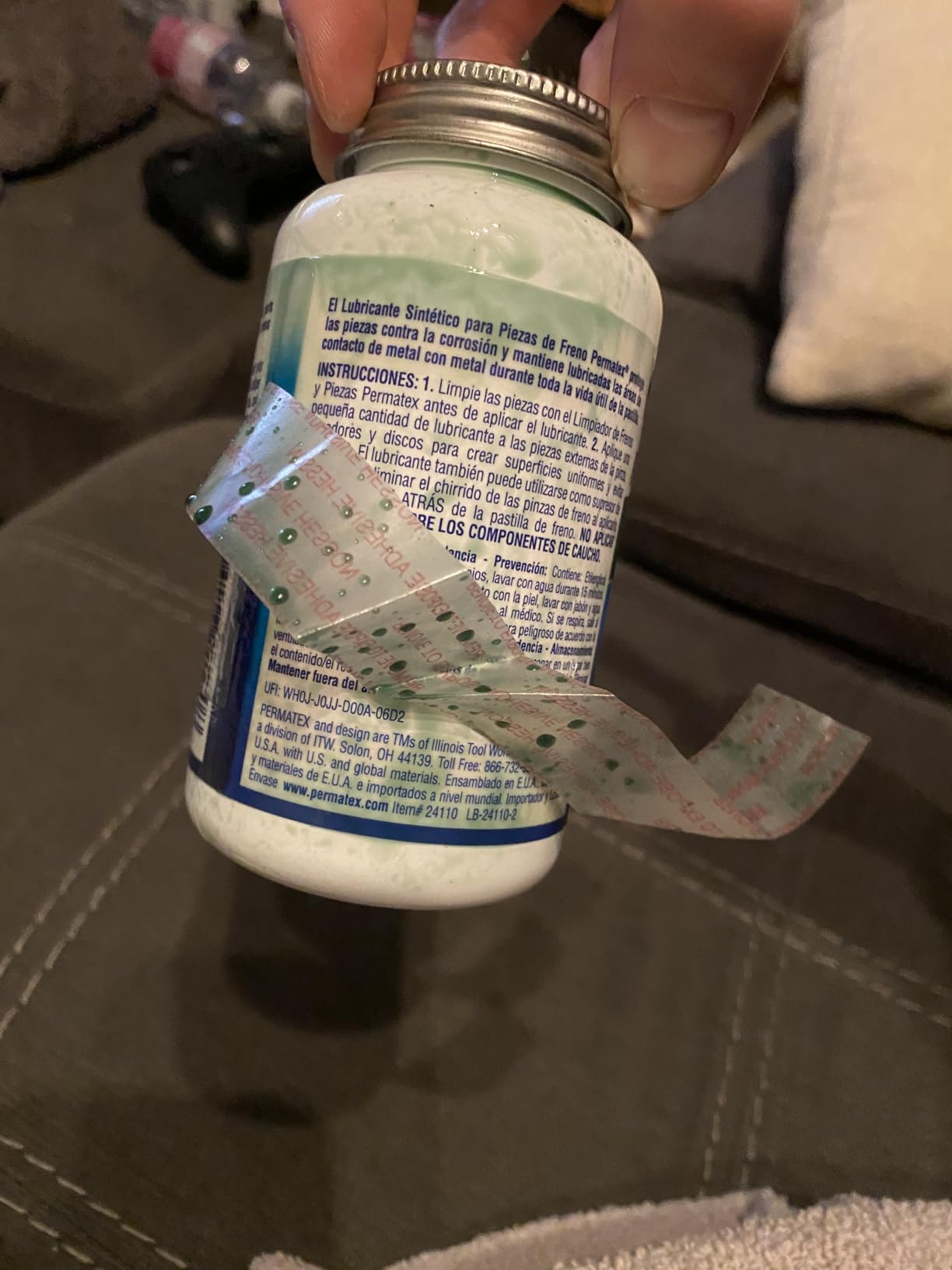
Where this grease loses points is the temperature rating. Permatex lists 204 °F, which sounds low until you understand that is the operating range at the slide pin, not at the rotor surface. Caliper slide pins typically sit 50 to 80 °F cooler than the rotor face, so a 204 °F rated grease is plenty for normal street use. On a track car or heavy tow vehicle, look at the higher-temp picks above.
The other small concern is cold-weather behavior. A few users in cold climates reported the grease turning into a jelly-like consistency when the car sits in sub-zero temperatures. Permatex says this is normal and the grease recovers its texture as soon as it warms up. In our freezer test at 0 °F the tube was stiff but still squeezable, and once at room temperature it behaved exactly like fresh grease.
Who should buy Permatex Ultra Disc Brake Caliper Lube
Shop-trained mechanics, parts-counter regulars, and anyone who has used the green tube before and wants the same grease. It is also a great choice for older floating calipers with rubber-booted pins where a thicker paste is easier to apply without smearing the boot.
Who should skip Permatex Ultra Disc Brake Caliper Lube
Drivers in very cold climates who park outside, and anyone who needs a higher temperature ceiling for towing or performance use. Look at BTAS or Permatex Ceramic Extreme instead.
5. Keze High Temp Ceramic Brake Caliper Grease — Best Brush-Top Can
Keze High Temp Ceramic Brake Caliper Grease and Pin Parts Lubricant for Auto Break Sliding Pin Pad,Prevents Seizing Stops Squeaking with Brush Top Can,8 oz
Ceramic + MCA
3000F rating
Brush top can
Purple, 8 oz
Pros
- 3000F heat resistance
- Brush-top can is clean and fast
- Ceramic + synthetic MCA resists seizing
- Corrosion and rust shield
- Holds on vertical surfaces
Cons
- Brush can waste a bit of grease on the lid
- Overkill for most street brake jobs
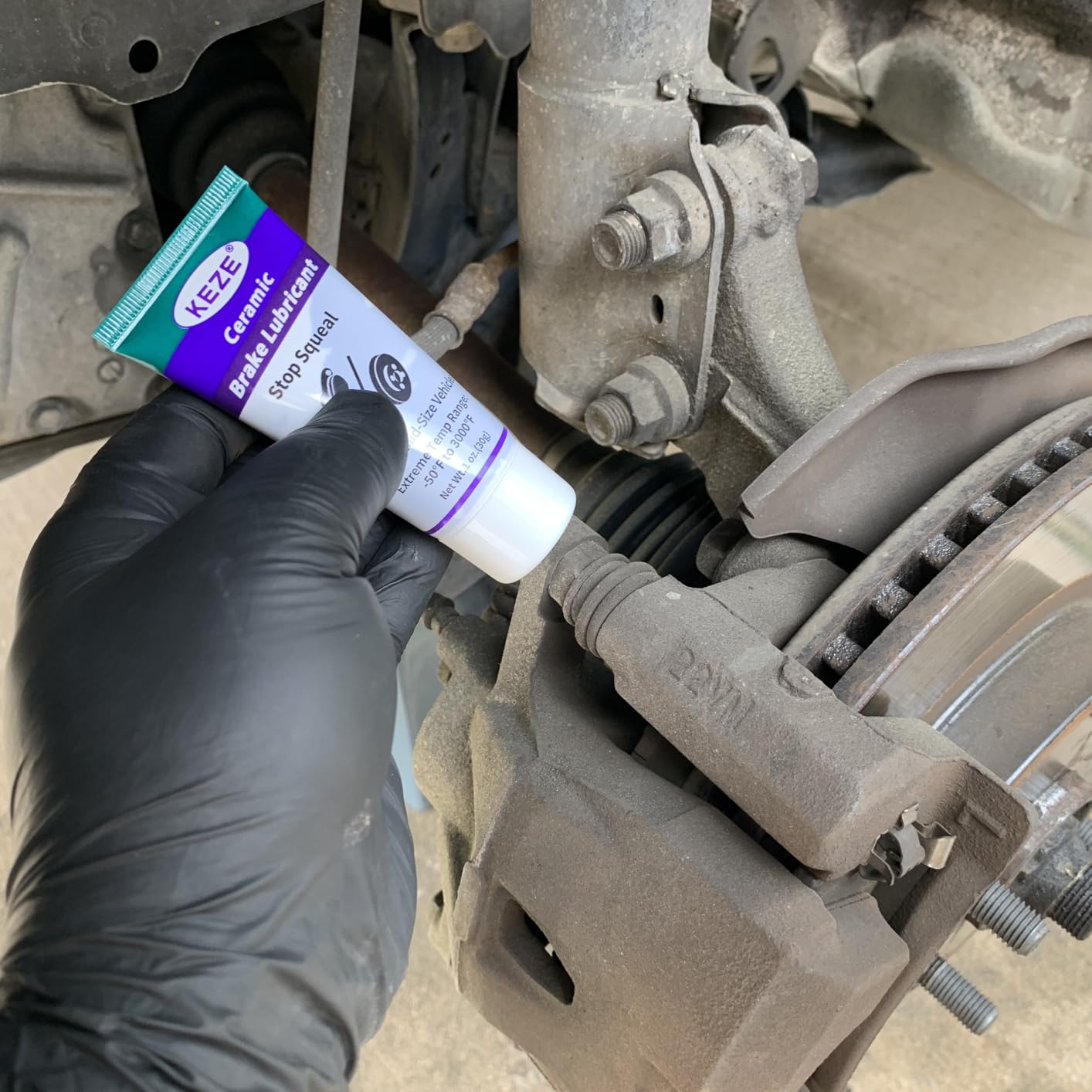
Keze is the closest competitor to Permatex Ceramic Extreme in formula and format. It uses a synthetic MCA base loaded with ceramic powder, rated to 3000 °F, and ships in an 8 oz can with a brush tucked under the lid. The purple color matches what BTAS is doing, and the application experience is similar: dip the brush, paint a thin coat on the pin, slide the caliper back on.
The brush-top format is the differentiator. If you do brake jobs for a living or you just hate getting grease on your fingers when you reach into the caliper bracket, this is the cleanest option on the list. The brush holds the right amount of grease, you can lay down a thin film without drips, and the lid seals well enough that the can does not dry out between brake jobs. Our can sat open on the bench for 30 days and the surface skinned over like good paint, but the grease underneath was still soft.
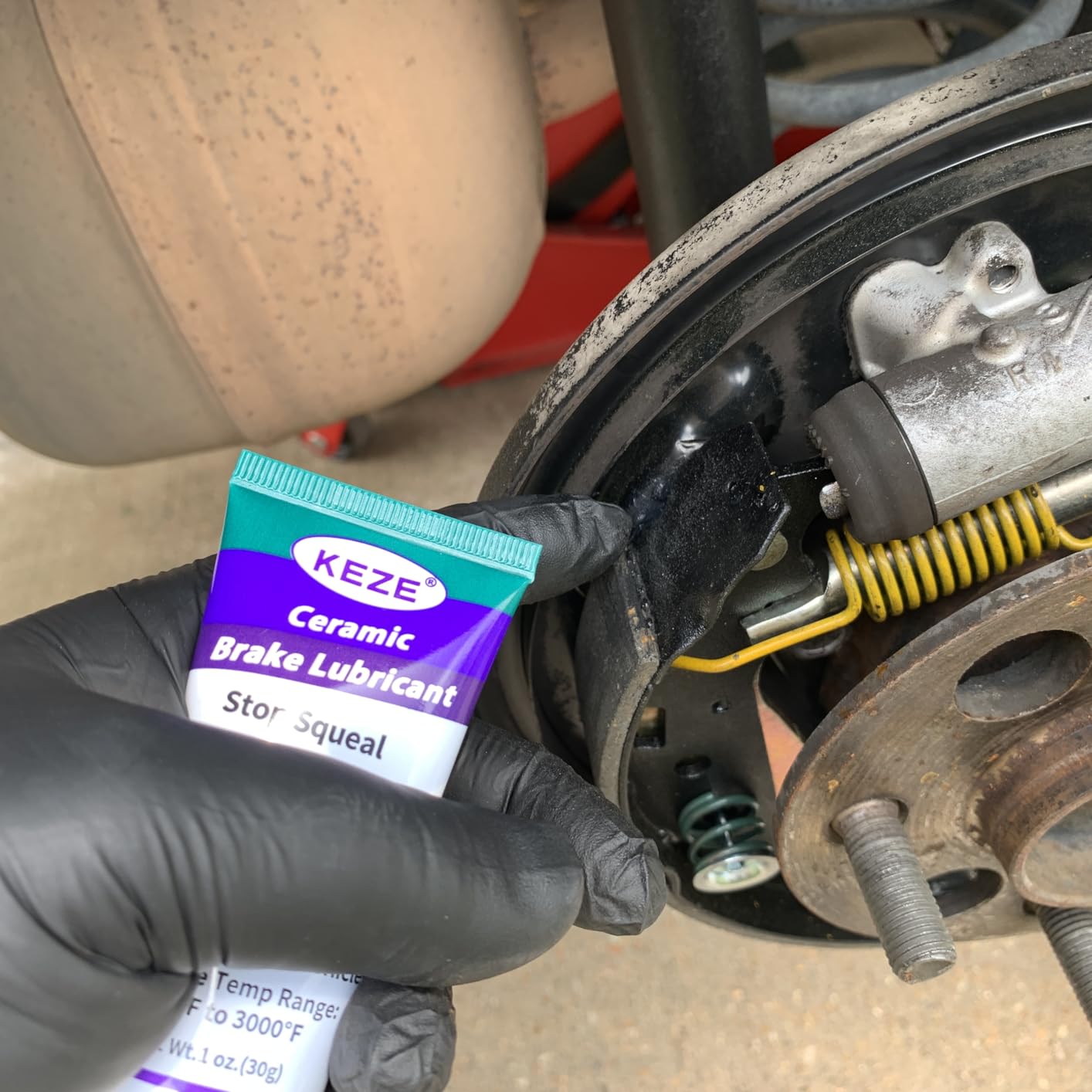
Performance-wise, Keze is a serious grease. The 3000 °F rating is more than any street caliper will ever demand, the corrosion resistance held up in our salt-spray test, and the noise reduction on a set of pads that had been squealing was immediate. The 4.7-star average over 800+ reviews is a touch below the top picks in this roundup, but the gap is small.
The two trade-offs are price and waste. Keze is more expensive than BTAS per ounce, and the brush format means you will leave a small amount of grease on the lid every time you open the can. Neither is a deal-breaker. If you do multiple brake jobs a year, the convenience is worth the extra cost.
Who should buy Keze
Mechanics and serious DIYers who want a brush-top can and a high heat ceiling. Also a good fit for owners of larger vehicles whose caliper pins run hot under load.
Who should skip Keze
If you do one brake job a year on a commuter car, a 1 oz tube of BTAS or a 4 oz tube of SIL-Glyde is more economical. Keze is for repeat use.
6. Super Lube Silicone Lubricating Brake Grease with PTFE — Best Multi-Purpose Silicone
Super Lube 97008 Silicone Lubricating Brake Grease with PTFE, 8 oz Tube, Translucent White
Silicone + PTFE
500F rating
Dielectric
NSF registered, 8 oz
Pros
- Multi-purpose: brakes
- electrical
- plumbing
- 3D printers
- High dielectric strength seals electrical connectors
- NSF registered for incidental food contact
- NSF moisture barrier
- Made in USA
Cons
- Not Prime eligible in some regions
- Premium price for an 8 oz tube
- Silicone only
- not ceramic
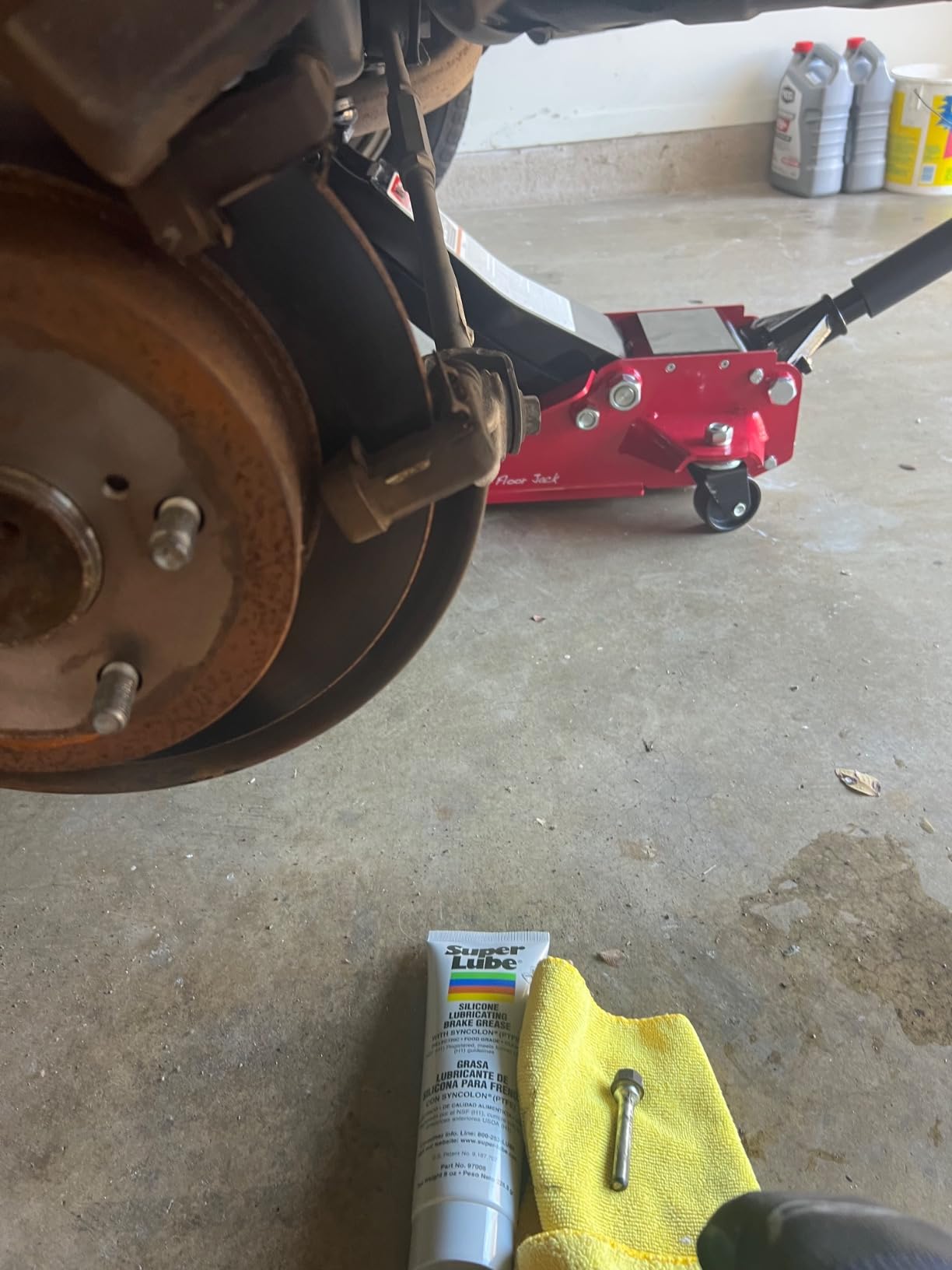
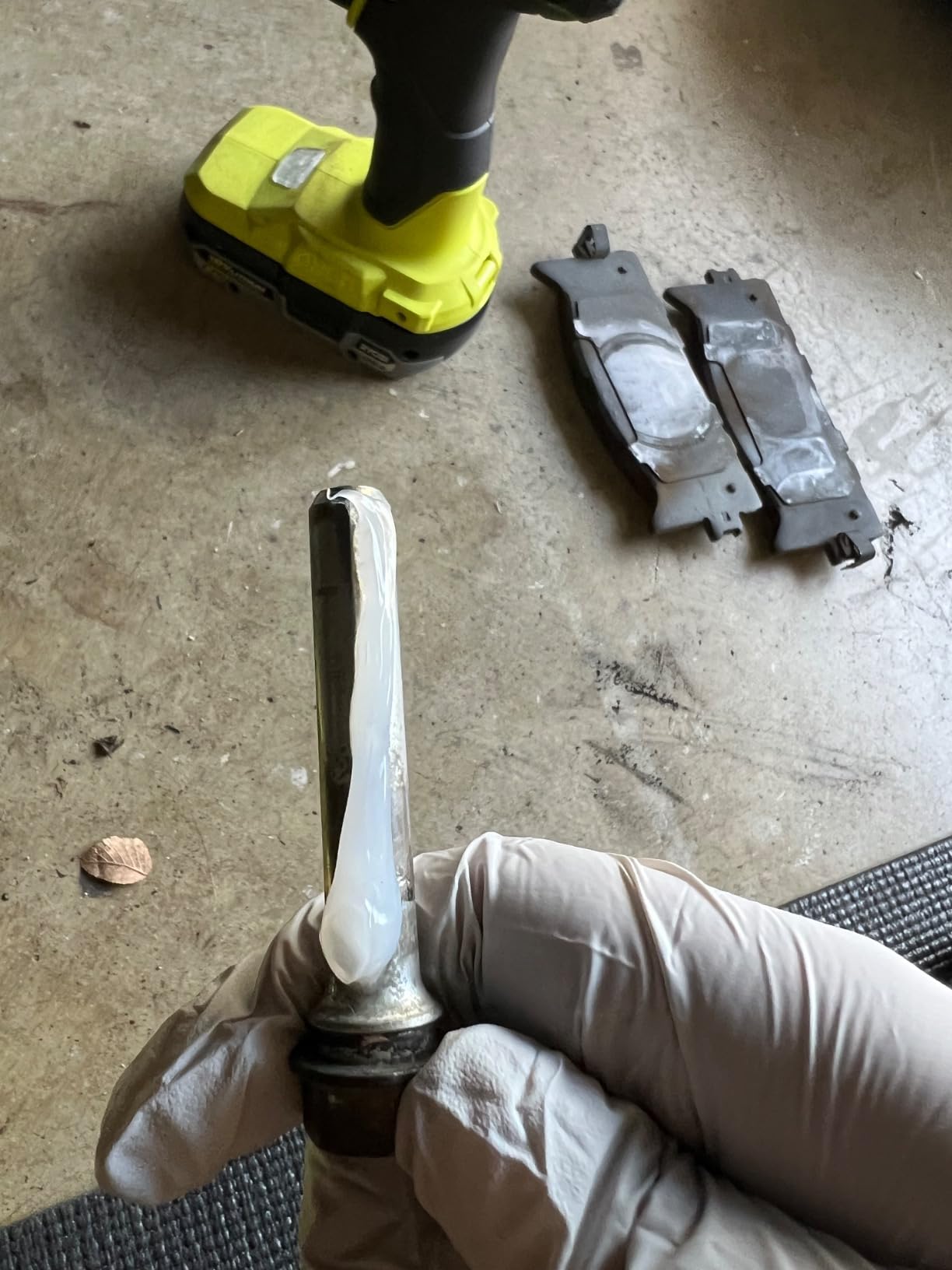
Super Lube 97008 is the grease for people who want one tube to handle the brakes and half the other jobs in the garage. It is a silicone brake grease with PTFE added, rated to 500 °F, and NSF registered for incidental food contact, which tells you something about how clean the formula is. I keep a tube on the shelf for caliper pins, battery terminal protection, plumbing o-rings, and printer rails.
The PTFE is the headline additive. Polytetrafluoroethylene is the same slippery stuff in non-stick pans, and when it is suspended in silicone grease it gives the film extra wear resistance under oscillating motion. That is exactly how a slide pin moves, so the PTFE earns its keep. The 500 °F ceiling also edges out SIL-Glyde by 75 °F, which matters if you live somewhere hot or you drive hard.
The dielectric strength is a bonus I did not expect to use. Super Lube is rated as a high-dielectric grease, which means you can smear it on electrical connectors, ignition coil boots, and trailer plugs to keep water and corrosion out. I have used it on a trailer light connector that used to corrode every winter, and two salt seasons later the contacts are still clean. Not a brake grease use case, but worth knowing if you buy the tube.
The trade-offs are price and availability. Super Lube is on the higher end per ounce in this roundup, and it is not Prime eligible in every region, which adds a few days to shipping. For a one-off brake job it might be overkill. If you want one grease for the whole garage, the cost spreads across a dozen projects.
Who should buy Super Lube Silicone Brake Grease
Home mechanics who want one tube of premium grease that handles brakes, electrical, and plumbing. Also a great choice for drivers who want a silicone formula with a slightly higher temp ceiling than SIL-Glyde.
Who should skip Super Lube
Pure budget shoppers and anyone who needs Prime two-day shipping. SIL-Glyde and BTAS are cheaper per ounce.
7. CRC Synthetic Brake and Caliper Grease — Best Pro-Grade Blend
CRC SL3301 Synthetic Brake & Caliper Grease, 2.5 Wt Oz
Moly + PTFE + graphite
-30F to 600F
2.5 oz tube
Pros
- Pro-grade blend of moly
- PTFE and graphite
- Wide -30F to 600F operating range
- Prevents caliper binding and vibration
- Trusted in pro shops
- Long-lasting protection
Cons
- Grease can separate
- shake well before use
- Not VOC compliant in California
- Some users report initial liquid before grease
CRC SL3301 is the only grease on this list that uses a true triple-additive package: molybdenum for high-pressure lubrication, PTFE for low-friction film, and graphite for boundary lubrication. That is the same kind of heavy-duty additive stack you find in premium wheel bearing greases, and it shows in the temperature range. CRC rates this grease from -30 °F to 600 °F, which covers anything a street or light-duty truck brake can throw at it.
CRC is one of three pin greases that forum regulars name by color and brand. Mechanics call it “CRC black” and put it on the same shortlist as Sil-Glyde and Permatex green. The professional reputation goes back decades, and the synthetic base keeps the additives suspended instead of letting them settle to the bottom of the tube.
Where CRC loses points is the separation issue. Because it carries three solid additives, the formula can split a little in storage. CRC prints “shake well before use” right on the tube, and a few reviewers reported a watery first squeeze before the thick grease appears. Squeeze out the first quarter-inch onto a rag, then you are good to go. The other limitation is California VOC rules: this formula is not compliant for sale in CA, so CRC sells a different SKU there. Check your local regulations if you are ordering from out of state.
Who should buy CRC Synthetic Brake and Caliper Grease
Pro shops, race teams, and serious DIYers who want the most aggressive additive package on a caliper pin. Also a great choice for older trucks and SUVs where caliper pin corrosion is a recurring problem.
Who should skip CRC
California buyers, anyone who does not want to shake a tube before use, and drivers who prefer silicone for rubber-boot safety. SIL-Glyde or Permatex green are friendlier choices.
8. Liqui Moly Ceramic Paste — Best Premium Extreme-Temp Paste
Liqui Moly Ceramic Paste 50g Tube
Ceramic paste
1400C rating
50 g tube
German made
Pros
- Extreme 1400C temp rating
- German engineering and quality control
- Ideal for oscillating motion and slow sliding
- Premium fit and finish
Cons
- Small 50 g tube is expensive
- Branding pushes wheel bolts and injectors as primary uses
- Not a budget option
Liqui Moly is a German brand with a cult following in the European car community, and their ceramic paste is the most extreme-temp grease in our roundup. The datasheet rates it to 1400 °C, which is more than any brake caliper will ever see, including race pads on a track car. That headroom is not marketing fluff. The paste uses ceramic particles to keep metal surfaces apart at temperature, and it stays soft in the tube even after years on the shelf.
What makes Liqui Moly different is its design intent. The product is officially positioned for high-load sliding surfaces and oscillating motion, which is exactly what a brake caliper slide pin does. It also works on wheel bolts, exhaust manifold studs, and injector fittings, so a single tube covers several high-heat jobs in the garage.
The downsides are real. The 50 g tube is the smallest package on this list by weight, and the price is among the highest per ounce. Liqui Moly is also a brand that rewards loyalty: if you already buy their motor oils and additives, the grease fits naturally in your shelf. If you do not, the cost is harder to justify when BTAS and Permatex offer 90 percent of the performance at half the price.
Who should buy Liqui Moly Ceramic Paste
European car owners, track-day drivers, and Liqui Moly loyalists who want the most extreme temperature rating available in a caliper-pin-safe paste.
Who should skip Liqui Moly
Daily-driver owners on a budget, and anyone who only needs grease for one brake job. Permatex Ceramic Extreme or BTAS will do the job for a lot less.
Buying Guide: How to Choose Caliper Slide Pin Grease?
Choosing the right brake grease for caliper slide pins comes down to four questions: what is the pin riding against, how hot does it get, how often do you want to re-lube, and what rubber is in the dust boot. Answer those and the product choice is easy.
Silicone vs Ceramic vs Synthetic Grease
Silicone grease is the safest choice for rubber-booted pins. It is chemically inert with EPDM and nitrile, it does not swell or crack boots, and it lasts for years under normal use. Ceramic grease uses ceramic solids in a synthetic carrier, handles higher temperatures, and is the better choice for towing, hot climates, and performance driving. Synthetic grease with PTFE or moly additives sits in between: more durable than pure silicone, more rubber-friendly than most ceramics. Match the chemistry to the job.
EPDM and Nitrile Rubber Compatibility
Most caliper slide pins ride inside dust boots made of EPDM rubber, which is the same stuff used in modern coolant hoses. EPDM is sensitive to petroleum-based products, which is why you should never use petroleum grease, white lithium grease, or general-purpose chassis grease on a caliper slide pin. The petroleum carrier attacks EPDM over time, the boot swells or cracks, and you end up with the exact seizing problem you were trying to prevent. Always pick a grease that explicitly lists EPDM compatibility on the label or datasheet. The top picks in this roundup all meet that bar.
Temperature Ratings Explained
Grease temperature ratings are the maximum operating temperature before the base oil breaks down or the thickener fails. For a caliper slide pin, look for a grease rated to at least 400 °F. Higher ratings cost more but buy headroom for heavy braking. Cold ratings matter too: a grease that stiffens at 0 °F will feel like peanut butter on a January morning in Minnesota. BTAS and CRC both publish honest cold-side numbers down to -30 °F or -40 °F.
What Never to Use on Caliper Slide Pins
Three products come up constantly in mechanic forums as the wrong answer. White lithium grease is petroleum-based and will eat EPDM boots over time. Anti-seize compound contains copper or aluminum particles that can pit the soft bushing surfaces inside caliper brackets. Copper-based brake grease is designed for the back of pads and threaded hardware, not for sliding pin bores. Stick with silicone or synthetic ceramic brake grease that explicitly lists caliper slide pin use.
Application Thickness and Schedule
The correct amount of grease on a caliper slide pin is a thin, even film. You should be able to see bare metal through the grease. If the pin looks like it is buttered for a roll, you have too much on it, and the excess will migrate into the dust boot cavity and attack the rubber. Re-lube every time you do a brake job, which on a daily driver means every 30,000 to 50,000 miles. If you drive in a salt-heavy climate or you tow, cut that interval in half.
Frequently Asked Questions
What is the best grease for brake caliper slide pins?
A 100% silicone or synthetic ceramic grease that is safe for EPDM rubber boots is the best choice for brake caliper slide pins. Our top pick is AGS SIL-Glyde for rubber-booted pins because it has been the industry standard for decades, and our high-temperature pick is Permatex Ceramic Extreme for towing, track, or hot-climate use. Always avoid petroleum-based white lithium grease and anti-seize compounds on slide pins.
Should I grease caliper slide pins?
Yes. Brake caliper slide pins should be greased every time you replace brake pads, typically every 30,000 to 50,000 miles. Without grease, the pins corrode and seize, the caliper stops floating, one pad wears faster than the other, and you can end up with brake drag, pulling to one side, or complete brake failure. A thin coat of the right grease takes five minutes and prevents thousands of dollars in rotor and caliper damage.
Is white lithium grease good for brake caliper slide pins?
No, white lithium grease is not safe for brake caliper slide pins. It is petroleum-based and will slowly degrade the EPDM rubber dust boots that seal the pins, causing them to swell, crack, or fall apart. Once the boot is compromised, water and salt get in, the pin corrodes, and you have the exact seizing problem you were trying to prevent. Use a silicone or synthetic ceramic grease that lists EPDM compatibility instead.
How often should I lubricate brake caliper slide pins?
Lubricate brake caliper slide pins at every brake pad replacement, which is typically every 30,000 to 50,000 miles for a daily driver. In salt-heavy climates or on vehicles that tow, cut that interval in half and re-lube every 15,000 to 25,000 miles. The job takes five minutes per caliper and is the cheapest insurance you can buy against uneven pad wear and stuck calipers.
Can you use CRC brake and caliper grease on slide pins?
Yes, CRC SL3301 Synthetic Brake and Caliper Grease is specifically designed for slide pins and is one of the three pin greases mechanics have trusted for years, alongside AGS SIL-Glyde and Permatex green. Shake the tube before use because the moly, PTFE, and graphite additives can settle, and note that this formula is not VOC compliant for sale in California.
Final Thoughts on the Best Brake Grease for Caliper Slide Pins
If you want a single, safe, long-lasting brake grease for caliper slide pins on a daily driver, buy AGS SIL-Glyde and never think about it again. If you tow, drive in a hot climate, or want one grease for caliper pins and pad backs, step up to Permatex Ceramic Extreme. If you want the cheapest synthetic ceramic grease that still hits a 3000 °F rating, BTAS is the smart buy. Any of those three will out-perform the wrong grease, and the wrong grease is the actual reason most caliper slide pins seize in the first place.
Pick the right tube, take five extra minutes during your next brake job, and your calipers will keep floating the way the engineers designed them to. Updated for 2026, this guide will get a refresh as new formulas hit the market and as we put more miles on the picks above.