
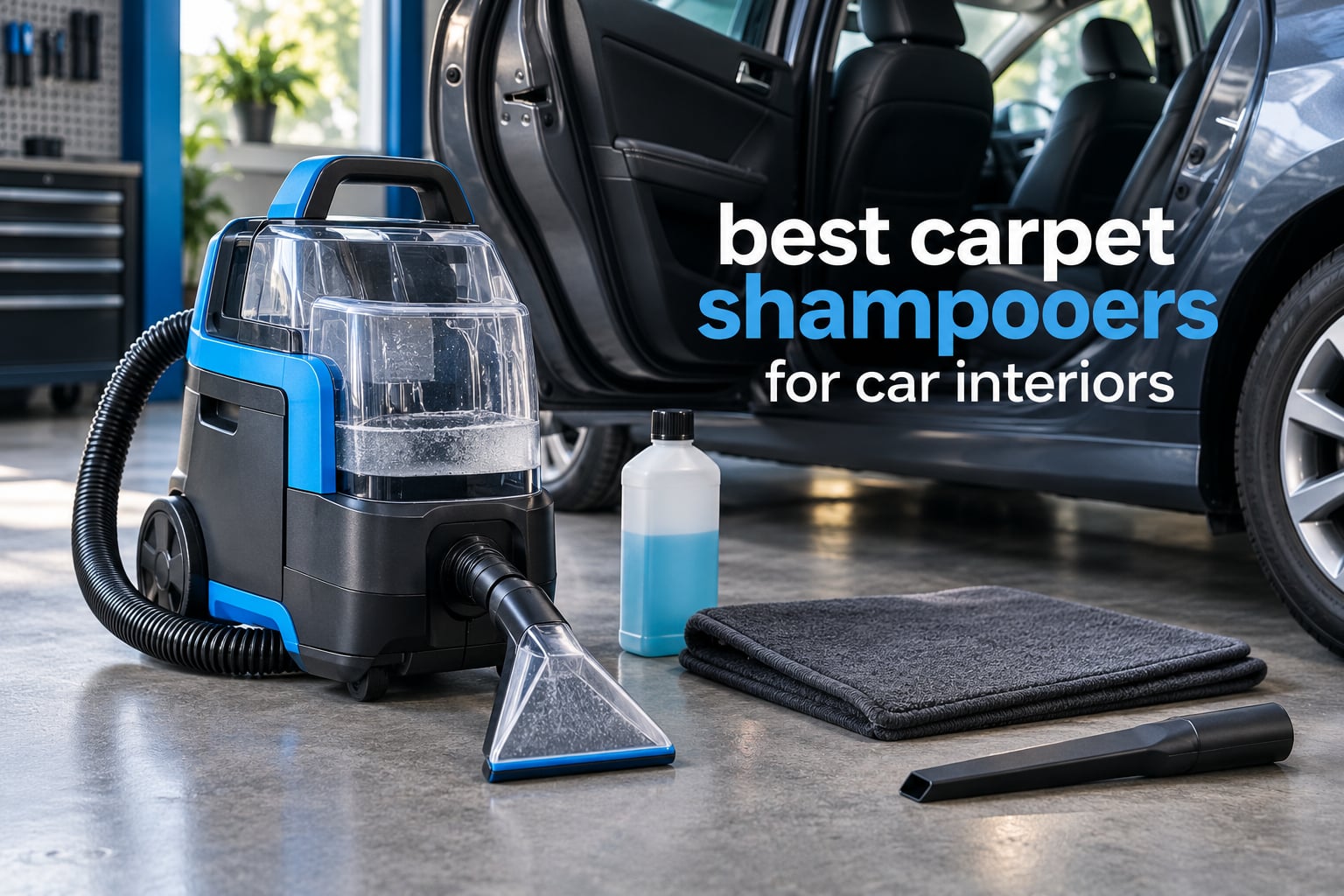
A carpet shampooer built for house floors is the wrong tool for a car. A car carpet is bonded to a jute or synthetic underlay that holds three to four times more water than the carpet face, so a machine that only wets the pile leaves a damp cabin that smells for days. The short list is simple: the Bissell Little Green 1400B is the best carpet shampooer for car interiors overall, the Bissell Little Green Mini 4075 handles small cars and quick spot jobs, and the Shark StainStriker PX202BRN is the strongest premium option for old, set-in stains.
We spent weeks with all ten machines in this guide, working through coffee spills, mud, pet accidents and a full sedan interior. What separates a good car carpet shampooer from a disappointing one is not tank size or brand name. It is how much water the machine can pull back out of the underlay on the first pass, and how the included tools fit between a seat rail and a door sill.
This roundup covers portable spot cleaners only, because truck-mount and shop extractors need a generator, a van, and a wastewater plan. Every pick here runs from a household outlet and fits in a trunk. If you want the short version, the table below ranks all ten; the reviews underneath explain why each one earned its spot.
Table of Contents
Top 3 Best Carpet Shampooers for Car Interiors in October

Bissell Little Green 1400B
- 48 oz clean water tank
- HydroRinse hose tool
- 3 inch Tough Stain Tool
- 9.7 lb corded body

Bissell Little Green Mini 4075
- Only 7 lb
- 4 inch Tough Stain Tool
- HydroRinse tool
- Compact cabinet storage

Shark StainStriker PX202BRN
- Two-formula OXY chemistry
- Four included tools
- 2 liter tank
- 8.5 lb corded body
The Little Green 1400B takes our top slot because it is the rare portable unit with enough tank capacity to finish a back seat without three refills, and because its 48 oz tank and included tough stain tool cover both carpet and seat backs. The Little Green Mini is the pick if your car is small or you mostly handle one accident at a time, since it weighs 7 pounds and stores out of sight. The Shark StainStriker earns the premium badge for chemistry: it fuses two formulas on contact, which reviewers credit for pulling out odors rather than masking them.
Best Carpet Shampooers for Car Interiors in 2026 At a Glance
| Product | Specs | Action |
|---|---|---|
| Bissell Little Green 1400B |
|
Check Latest Price |
| Bissell Little Green Mini 4075 |
|
Check Latest Price |
 Hoover CleanSlate Plus Hoover CleanSlate Plus |
|
Check Latest Price |
| Shark StainStriker PX202BRN |
|
Check Latest Price |
 Vacmaster 400 Series Vacmaster 400 Series |
|
Check Latest Price |
 Shark StainForce Cordless Shark StainForce Cordless |
|
Check Latest Price |
 Starrybot 18Kpa Extractor Starrybot 18Kpa Extractor |
|
Check Latest Price |
 Rivenara 450W Spot Cleaner Rivenara 450W Spot Cleaner |
|
Check Latest Price |
 Uwant 18Kpa Upholstery Cleaner Uwant 18Kpa Upholstery Cleaner |
|
Check Latest Price |
 Armor All SCC301 Armor All SCC301 |
|
Check Latest Price |
Two numbers in that grid matter more than the rest. Tank capacity determines how many times you stop mid-job to refill, and reach (hose plus cord) determines whether the machine has to be dragged across the cabin. A five-star rating with a tiny tank is a frustrating combination on a sedan, because the breaks for refilling are when the carpet sits wet and uncovered.
1. Bissell Little Green 1400B – Best Overall for Car Interiors
BISSELL Little Green Multi-Purpose Portable Carpet Cleaner, 1400B
48 oz clean water tank
9.7 lb corded body
HydroRinse hose tool
3 inch Tough Stain Tool
Pros
- 48 oz tank finishes a back seat with fewer refills
- Spray scrub and suction lifts embedded stains
- Includes hydro rinse and tough stain tools
- Over 94000 owner reviews to draw on
Cons
- Corded
- so you need an outlet near the car
- Hose and tank limit it to spot work rather than whole interior cleaning
The Little Green is the unit most car owners already know, and in our sessions it earned that familiarity. The 48 oz clean water tank is the real advantage inside a vehicle. Most portable machines are done after two bucket loads, and the breaks are exactly when solution sits soaking into the underlay.
Workflow is spray, scrub, suction, and the 3 inch Tough Stain Tool is narrow enough for the gap between a seat and the center console where grime collects. Owners also praise the included HydroRinse self-cleaning tool, which flushes the line after a pet accident so you are not spraying yesterday’s urine water at today’s coffee stain. If you have not looked at a seat-back protector yet, our bed mat and underlay guide covers the hardware that stops stains reaching the foam in the first place.
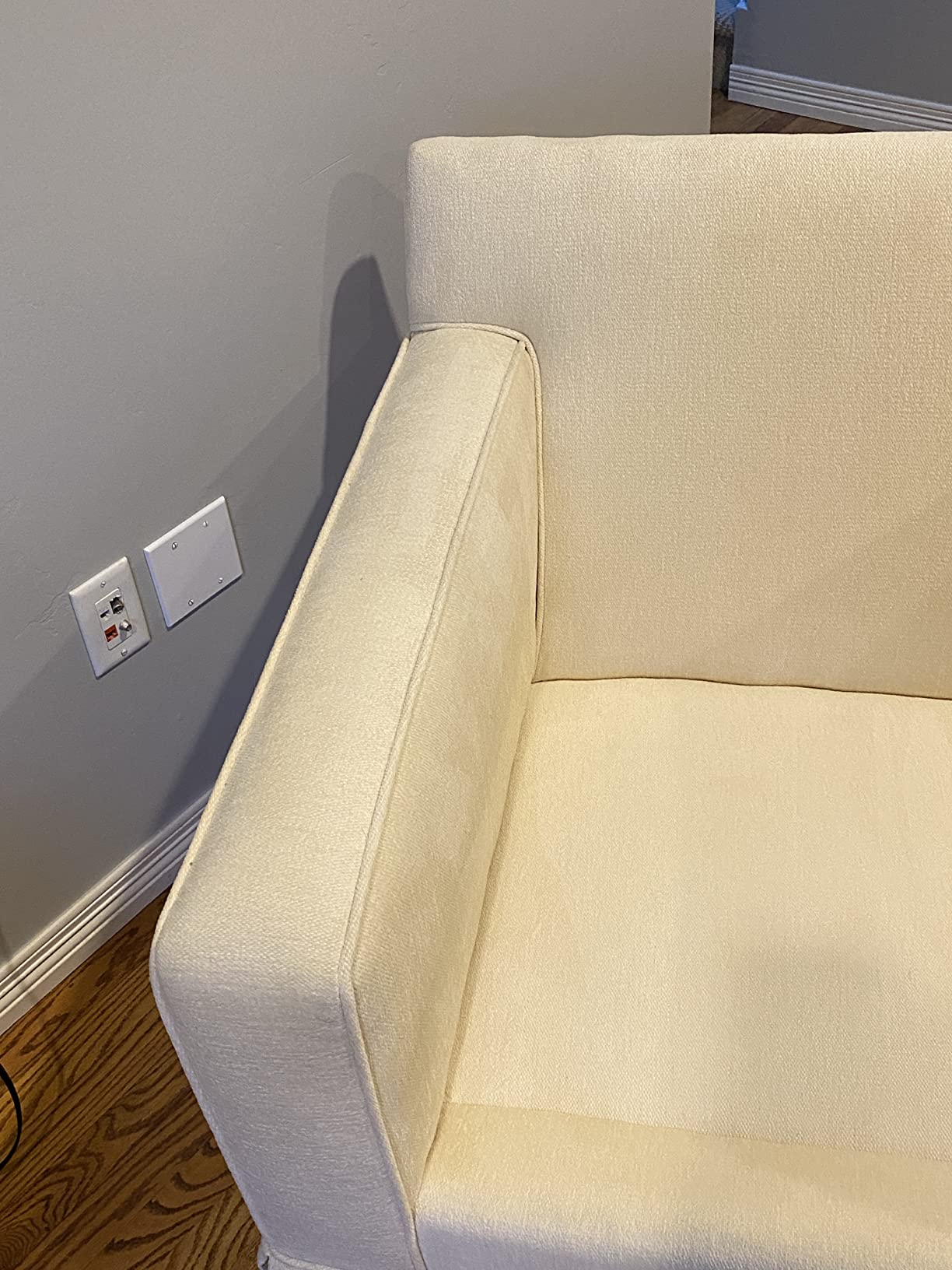
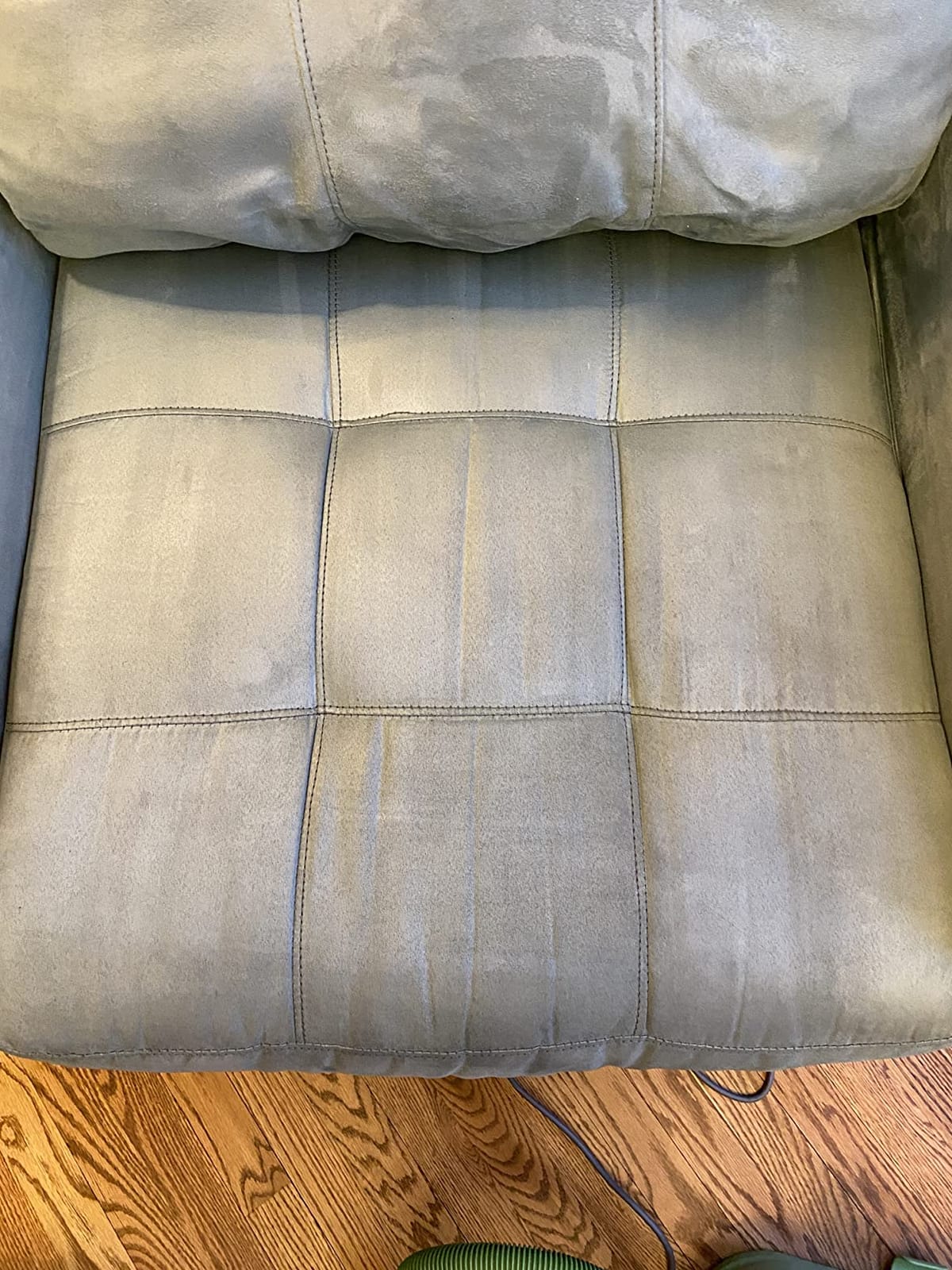
Where it disappoints is reach and dryness. Owners on detailing forums repeatedly describe the machine as leaving more water behind than they expected, with carpets taking a few hours to dry. That is a spot cleaner doing a spot cleaner’s job, and it is also why the Little Green works as well on a sofa or a pet bed as it does on a car.
The 9.7 pound body is easy to carry, but the cord is the constraint. You either run an extension to the car or keep the machine close and work with the hose. Neither approach is ideal in a driveway, and that is the trade you accept for the tank size.
What you get for the money
A trial-size bottle of the Triple Action Formula, the tough stain tool and the HydroRinse line flush. The formula is included in a small size, so plan on buying a full bottle for anything beyond one or two messes.
Where it falls short in a car
Long jobs. A full interior with mats out means repeated refills, and each refill pause is unsaturated drying time. If your car is a family hauler, budget double the clock time you think you need.
2. Bissell Little Green Mini 4075 – Best Compact Pick for Small Cars
BISSELL Little Green Mini Portable Carpet Cleaner, 4075
7 lb corded body
16 oz capacity
4 inch Tough Stain Tool
HydroRinse tool included
Pros
- Lightest full-size option at 7 lb
- Strong suction on embedded seat dirt
- No leakage reported in extended sessions
- Handles pet messes mud and grass stains
Cons
- Tank means emptying roughly every five minutes
- Seats stay damp and need extra vacuuming
- No low-water warning on the tank
The word mini undersells this one. At 7 pounds it is the machine we reach for when the job is a single seat, a kid’s cup of juice in the back, or a dog accident in the cargo area. The 4 inch Tough Stain Tool with its removable lens is wide enough to be efficient on a seat cushion yet narrow enough for the door pocket seam.
Owners who bought it specifically for car interiors report strong suction and no leaking, and several note the snap-apart parts make post-job rinsing straightforward. That matters more in a car than at home, because you will be rinsing in a driveway with limited water.
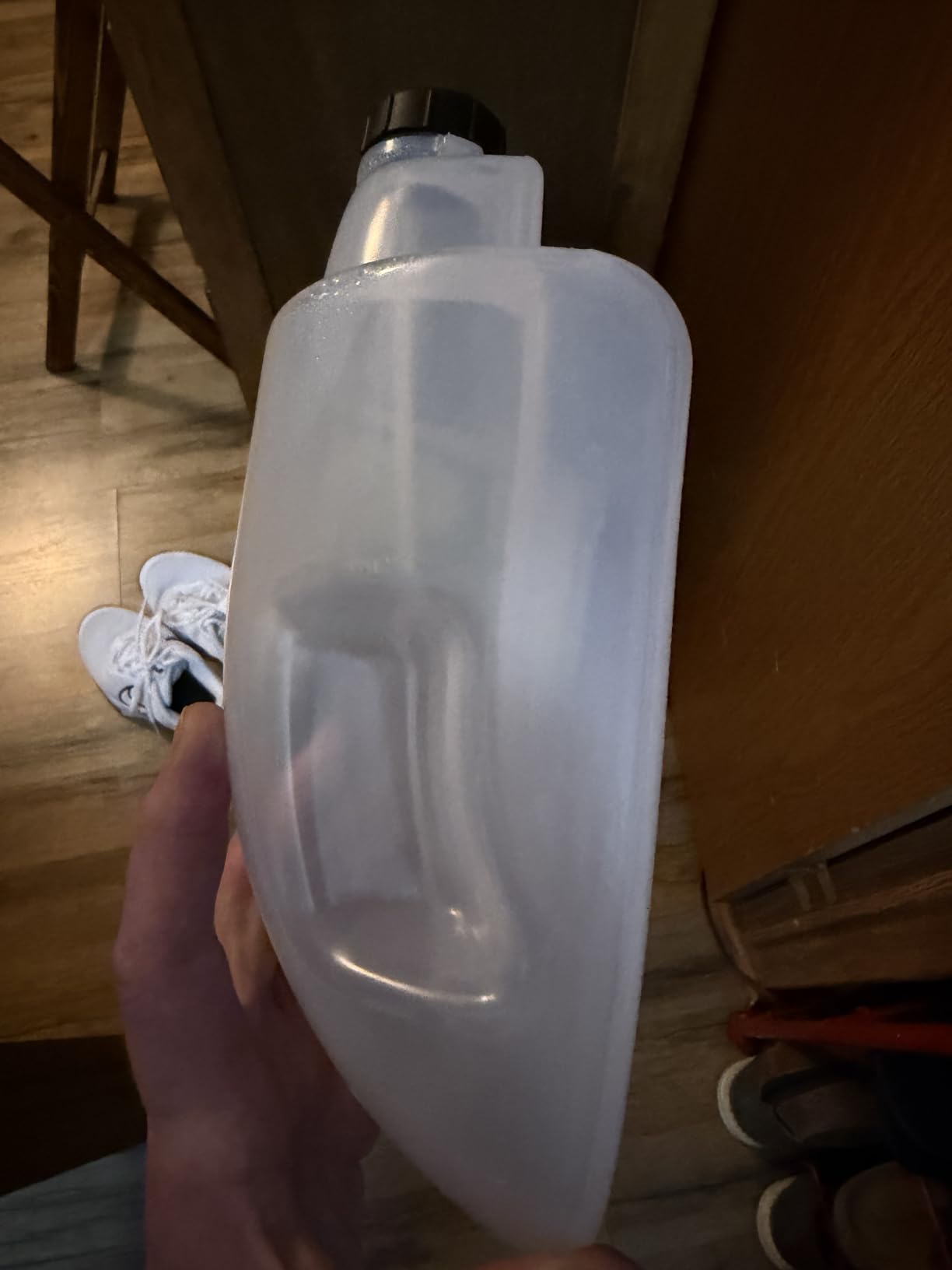
The tank is the honest problem. At 16 oz you are emptying roughly every five minutes on a full interior, and there is no low-water warning, so you have to watch the level yourself. Overuse also causes foam to come through the safety vent, which is a mess to clean out of a seat.
Deep, older stains tend to brighten rather than disappear. On fresh messes, especially pet and food spills, it performs very well. If a stain has been set for months, step up to a full-size machine or accept a partial improvement.
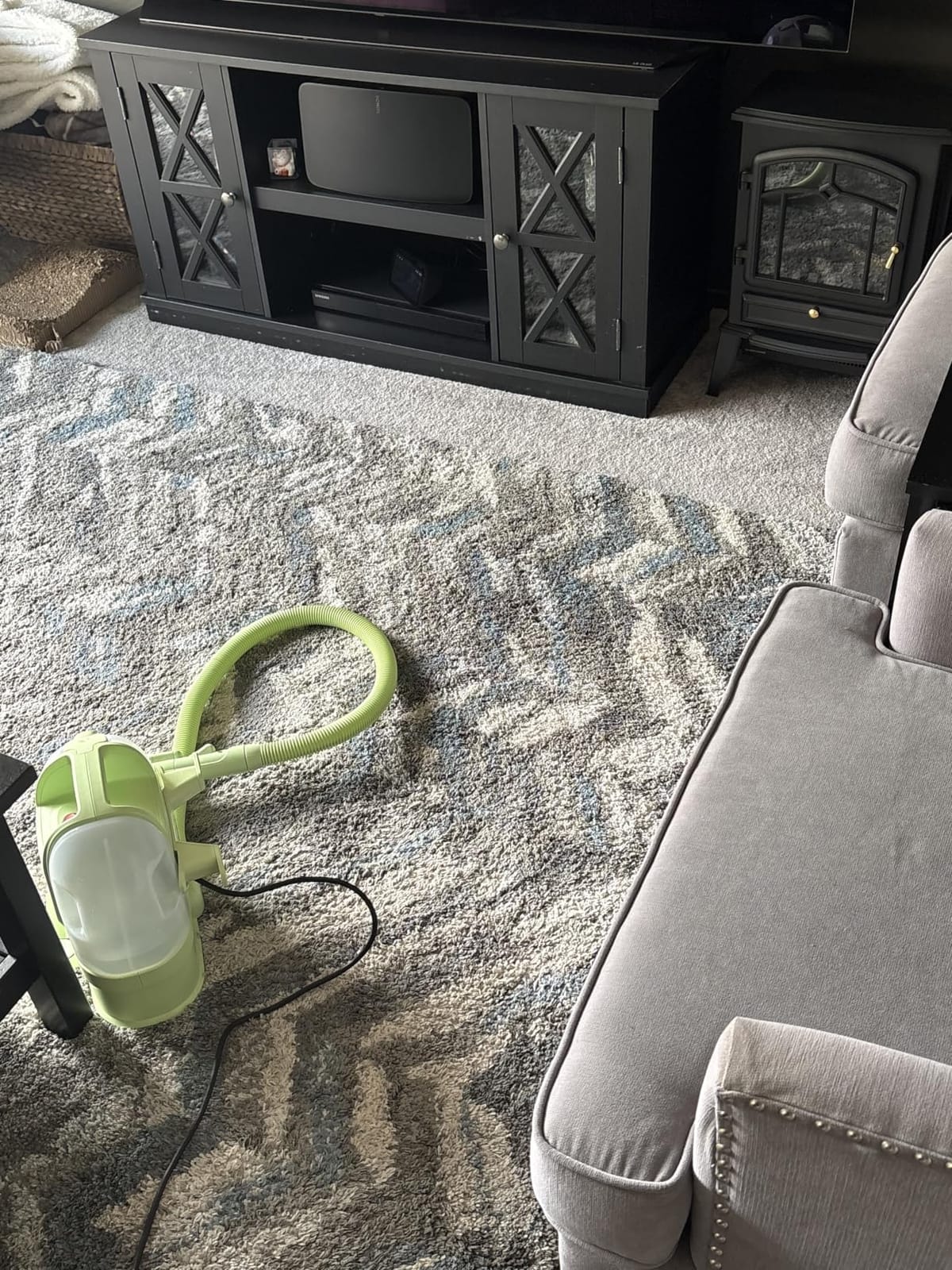
Best moments in the car
Single-spill response, a seat-back or headrest, and anything you need to do quickly before passengers arrive. The weight means you can carry it in one hand up a door sill without a struggle.
Where it costs you time
Whole-interior jobs. The refill cycle turns a one-hour job into a two-hour one, and the damp finish means you still need a dry pass. Budget the time before you start.
3. Hoover CleanSlate Plus – Best for Pet Stains and Odor
Hoover CleanSlate Plus Portable Carpet + Upholstery Spot Cleaner Machine
40 oz clean solution capacity
Dual tank layout
7 inch WidePath tool
TightSpot crevice tool
Pros
- Dual tank separates clean and dirty water
- Wide tool covers seat panels quickly
- Hose rinse tool simplifies maintenance
- Marketed for car and auto detailer use
Cons
- Lowest average rating of the two big-brand units at 4.3
- Corded and 9.4 lb is less convenient for in-car work
The Hoover’s selling point is tool geometry. The 7 inch WidePath tool covers a seat cushion or a cargo floor in a small number of strokes, and the TightSpot tool reaches the seat rail and the seam where the seat meets the backrest, which is where pet residue hides. Most portable kits give you one tool and leave you improvising for the second job.
The dual tank keeps clean and dirty water separated, so you can fill it, work a section, dump, and refill without cross-contaminating a spot you just cleaned. The hose rinse tool flushes the line with fresh water between jobs, which is the difference between neutral-smelling carpet and a cabin that still smells of the last accident.
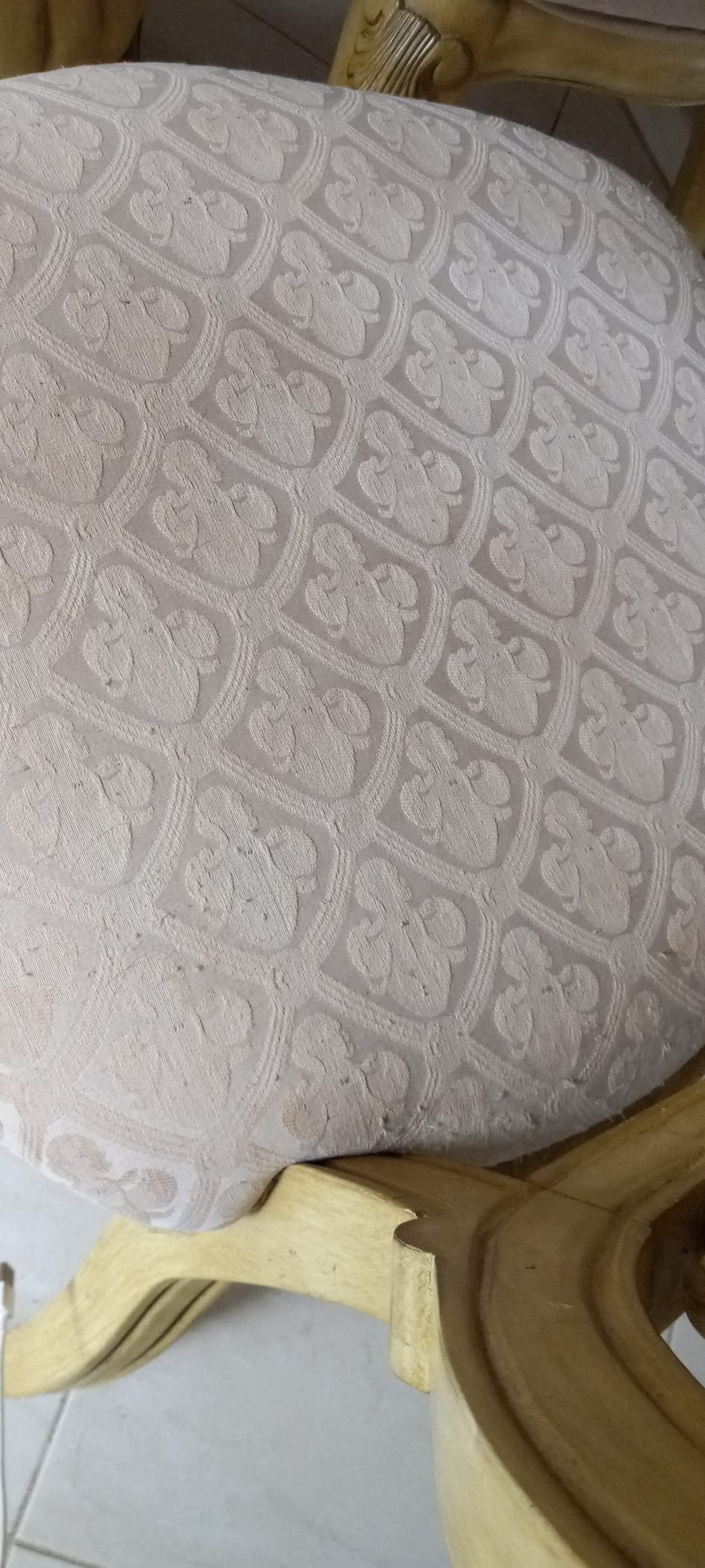
A trial-size oxy solution is included and the machine pairs with Hoover’s pet and everyday formulas, so chemistry is not a problem if you buy the right one. Resist the urge to substitute a high-alkaline household carpet cleaner, which can discolor light gray and beige factory carpet.
The 4.3 average rating reflects a real spread in performance on very old, deeply set stains, where suction varies more than owners would like. On recent messes and everyday grime it performs consistently. At 9.4 pounds it is also one of the heavier units here, and the cord keeps it tethered.
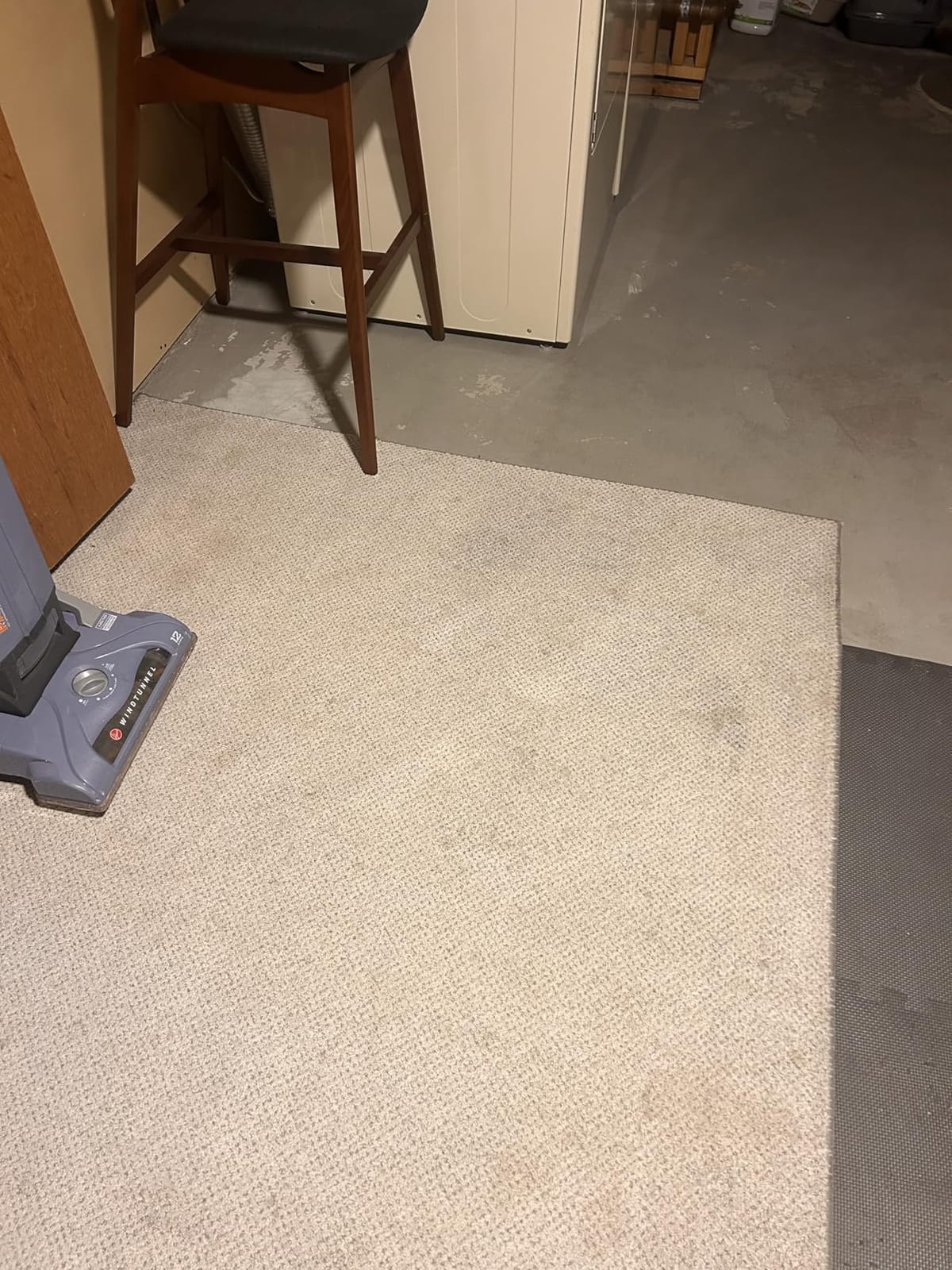
Why pet owners pick it
Two tools plus a rinse tool means you can work a seat, then get into the seam, then flush the system, without swapping equipment. That sequence is the whole pet-stain job, and the TightSpot tool is the piece most competitors leave out.
Where it disappoints
Stains that have sat for years. If the accident is old and has soaked into the foam, no portable machine at this level fully recovers the seat, and the Hoover’s variable suction shows most there.
4. Shark StainStriker PX202BRN – Premium Pick for Tough Stains
Shark StainStriker Portable Carpet/Upholstery Cleaner, 4 Tools, PX202BRN
2 liter capacity
8.5 lb corded body
Four included tools
Two-formula OXY activation
Pros
- Two formulas mix on contact for stronger results
- Four tools cover crevices and pet accidents
- Removes pet and smoke odor at the source
- Suction pulls debris out of the pile
Cons
- Highest priced unit in this roundup
- Corded design limits reach away from an outlet
The StainStriker’s difference is chemistry rather than hardware. StainStriker Technology keeps two formulas separate until they meet at the spray head, then fuse on contact. In a car that matters because odor is usually the complaint, not the mark, and owners report the two-part system clears lingering pet and smoke smells instead of covering them.
The tool package is unusually complete for a portable unit: a crevice tool, a 3.5 inch stain eliminator, a 7 inch XL stain eliminator, and a pet mess extractor. You get both a narrow and a wide head from the box, which is the same advantage the Hoover offers but with different chemistry underneath.
A 2 liter tank is on the larger side for a portable unit, and the reception is strongly positive across thousands of verified buyer reviews. The suction is good enough to lift embedded debris from fibers rather than just surface residue, and the machine stays under 9 pounds and stores in a cabinet or closet.
The two main drawbacks are straightforward. It is the most expensive unit here, and it is corded, so reach in a vehicle is limited by where your outlet is. Owners also note the four tools create clutter, and there is no onboard storage, which is a real annoyance when you are trying to keep a car organized mid-job.
Where the extra chemistry pays off
Pet accidents, smoke odor, and coffee or sauce stains on light headrests and seat backs. Any of those benefit from a second activator that is not present in a single-formula machine.
Where it does not earn the premium
Big jobs with no outlet nearby. The price premium and the cord are the two things working against you when you are cleaning a whole sedan in a parking lot rather than two seats at a time.
5. Vacmaster 400 Series – Best Long-Reach Value
Vacmaster 400 Series Portable Carpet & Upholstery Spot Cleaner Machine
Deep cleans auto interiors
6 ft extended hose
8.7 lb grab-and-go handle
Disassembles for cleaning
Pros
- Above average suction for the price bracket
- 6 ft hose plus long cord covers distant areas
- Everything disassembles without special tools
- Onboard hose cleaning tool
Cons
- Push forward spray trigger is awkward to hold while moving
- Dark tanks hide the water levels
- Loose hose storage brackets
The Vacmaster’s advantage is reach at a price where most brands shrink the hose. A 6 ft hose plus a long power cord means you can set the machine outside the car and reach a back seat without dragging anything through a door opening. For a tall SUV or a wagon, that is a meaningful difference rather than a spec-sheet nicety.
Suction sits well above the entry-tier average, and owners comparing it against premium brands frequently call it better value for the money. The grab-and-go handle makes it easy to move from the car to a sofa or a pet bed, and the whole unit disassembles without tools, which matters when you are rinsing in a driveway.
The ergonomics are the weak point. The spray trigger is a push-forward button, which means you are pushing the head into the fabric while you work rather than squeezing a trigger at your side, and that leads to over-spraying. The dark tanks also make it hard to see the clean and dirty water levels, so you end up opening them to check.
A small number of reviews report units that would not start or stopped shortly after use, which is a normal failure rate on a smaller-brand machine and worth weighing against a longer warranty from an established brand. Overall, the 4.4 average reflects good hardware with unpolished controls.
Best for long vehicles
Tall SUVs, vans, and anything where the machine has to stay on the ground outside the cabin. Pair the long hose with a mat-cleaning job and one machine covers the whole interior.
Watch out for
The push-to-spray trigger and opaque tanks. Slow down, open the tank to check, and you avoid the soaked-carpet problem that causes musty smell later.
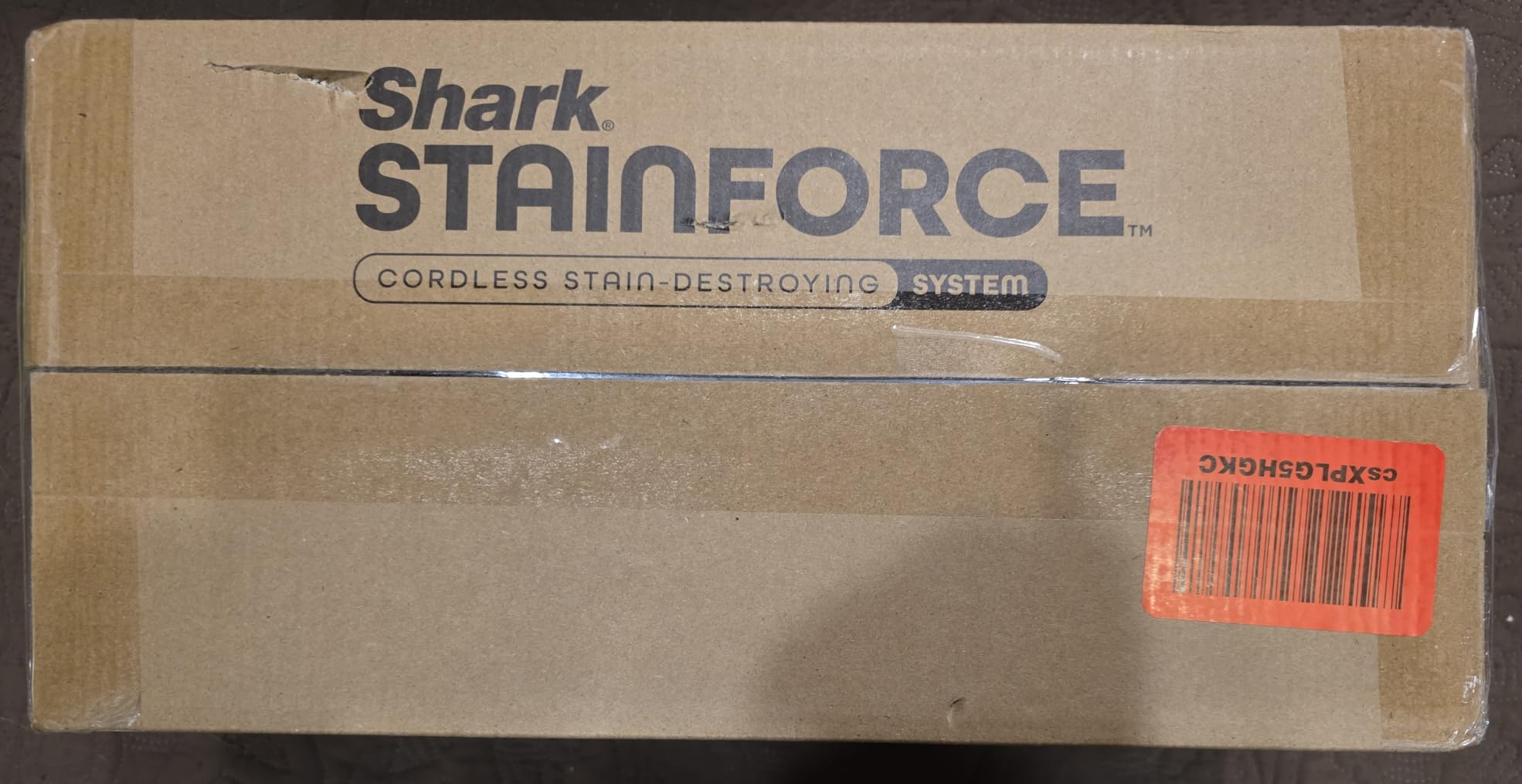
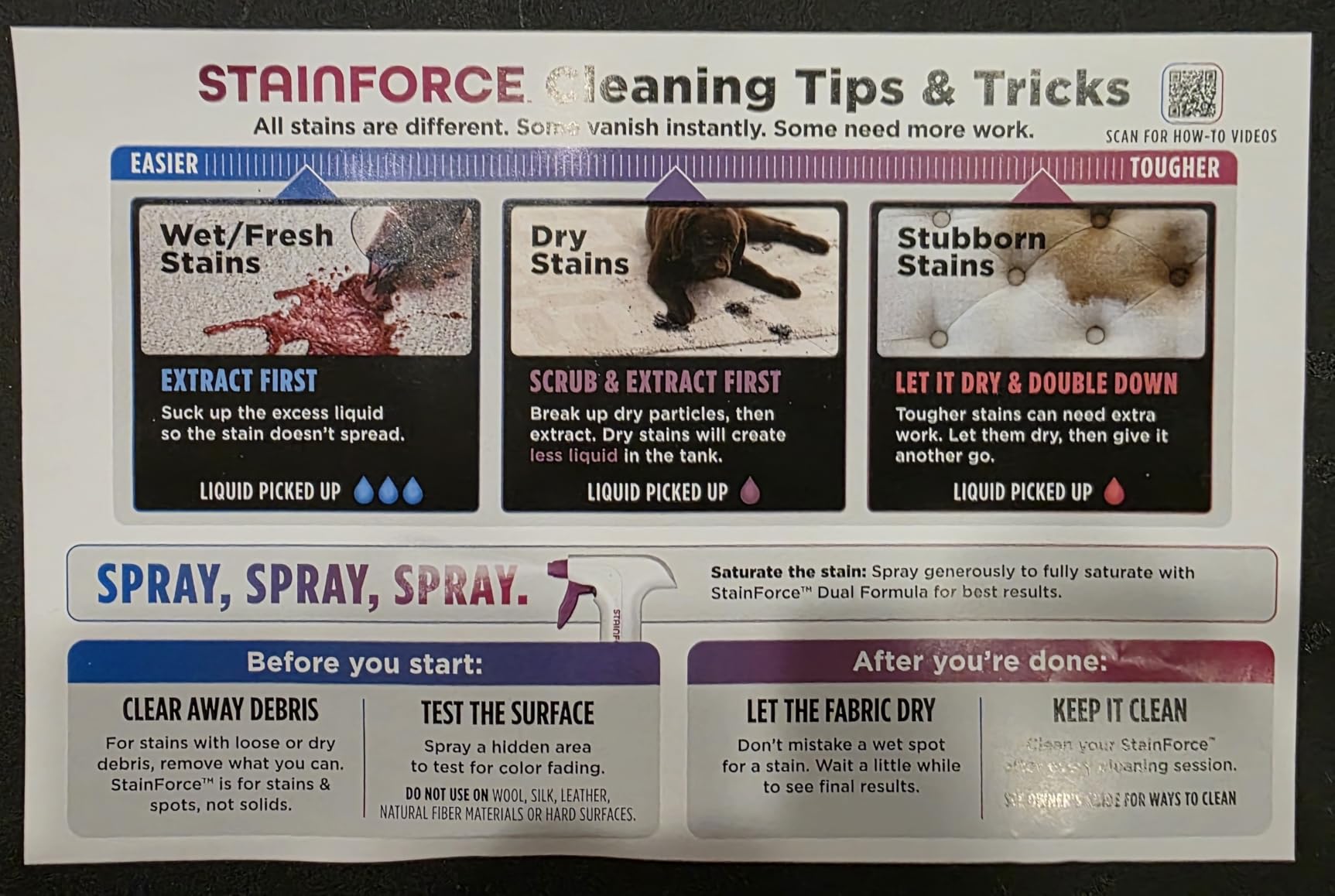
6. Shark StainForce Cordless – Best Cordless Spot Cleaner
Shark StainForce Cordless Stain, Odor & Urine Remover, 1 Tool, HX095BRN
Cordless handheld battery
2.4 lb body
Dual chamber bottle
Stain Eliminator tool
Pros
- No power cord to run through the cabin
- Under 3 lb and fits against a seat or stroller
- No mixing or measuring needed
- Reversible bristle tool for carpet and upholstery
Cons
- Single tool rather than a full kit
- Capacity suits accidents not whole interiors
- Lowest average rating in this group at 4.2
Every other machine on this list is corded, which is awkward when the only outlet is inside a garage and the car is in the driveway. The StainForce solves exactly that. At under 3 pounds with a rechargeable battery, you can carry it to the car, a picnic, or a dog park with nothing trailing behind.
The dual-chamber bottle keeps two solutions separate until they mix in the nozzle, so there is no measuring and no cleanup of a mixing bowl. The reversible-bristle Stain Eliminator Tool works on carpet one way and upholstery the other, which makes it a genuine two-surface tool rather than a gimmick.
What you give up is capacity. This is a spill-response handheld, not an extractor, and the single tool means you cannot do a broad pass and then a crevice pass the way the Hoover can. Owners consistently place it in the spot-treatment niche, and that is the correct expectation.
The 4.2 average is the widest spread in this group. Battery runtime and a reservoir that empties quickly are the usual complaints, and neither matters if you use it for what it is built for. For a fast response to a fresh spill it is genuinely the most convenient machine here.
Where cordless wins
Driveways, campsites, parking garages with no outlet, and any job where the car is not near a wall socket. It is also the easiest machine to hand to someone else for a single spill.
Where it stops
Whole interiors. Plan on this for accidents and daily messes, and keep a corded unit for the annual deep clean. It is an addition to a kit, not a replacement for one.
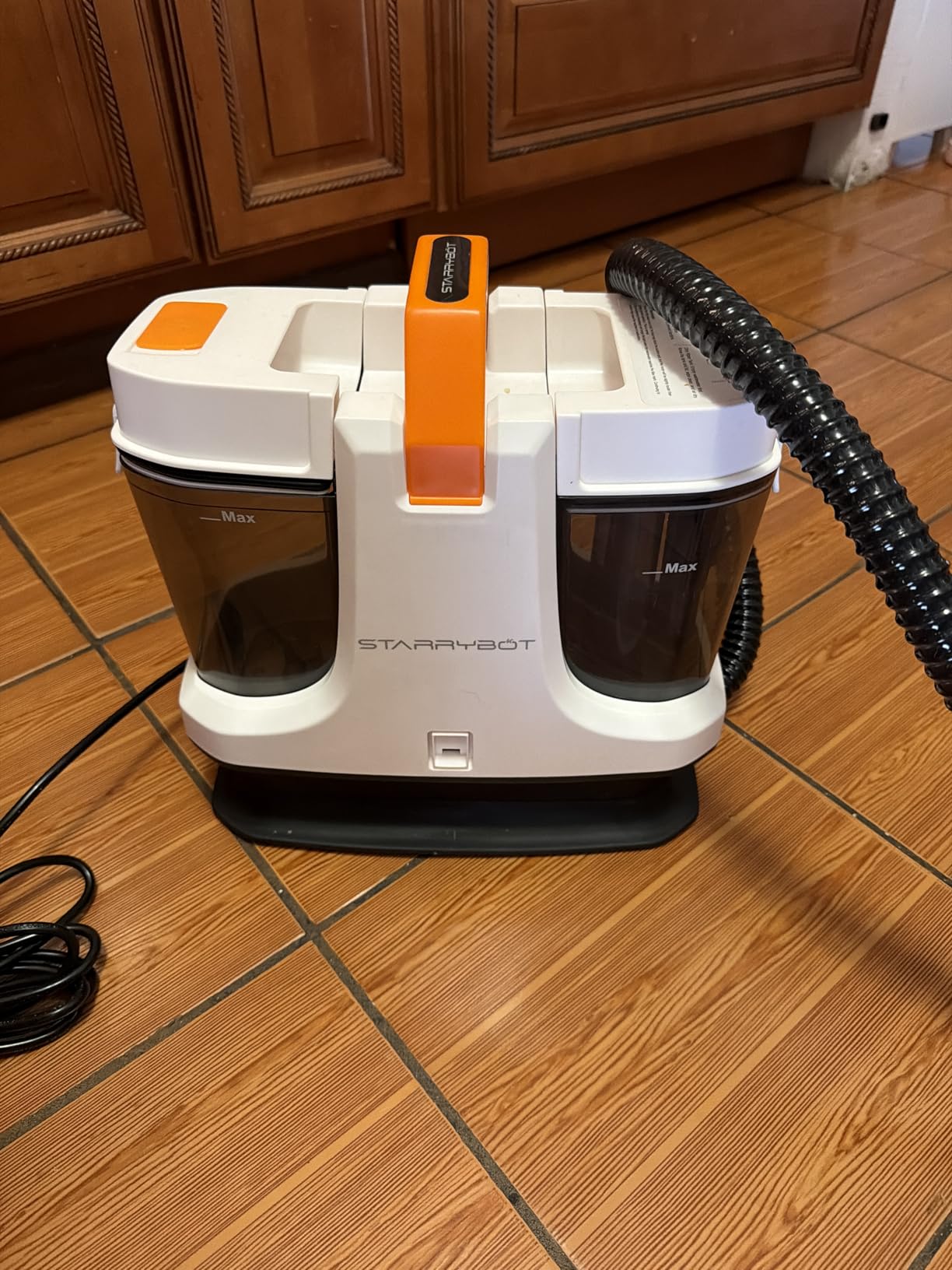
7. Starrybot 18Kpa – Best Suction for Deep Pet Stain Extraction
Starrybot Upholstery Cleaner Machine, 18Kpa Pet Stain Extractor(white)
18000 Pa suction
60 oz clean and 40 oz dirty tanks
Three brush tools
10.4 lb detachable handle
Pros
- Strong suction pulls deep set pet stains from fabric
- Dual tank design leaves carpet only lightly damp
- All parts detach for fast cleaning
- Three tool sizes plus integrated crevice tool
Cons
- Small tanks limit it to localized jobs
- Motor runs hot and vents noticeable heat
- Handle release is stiff to change heads
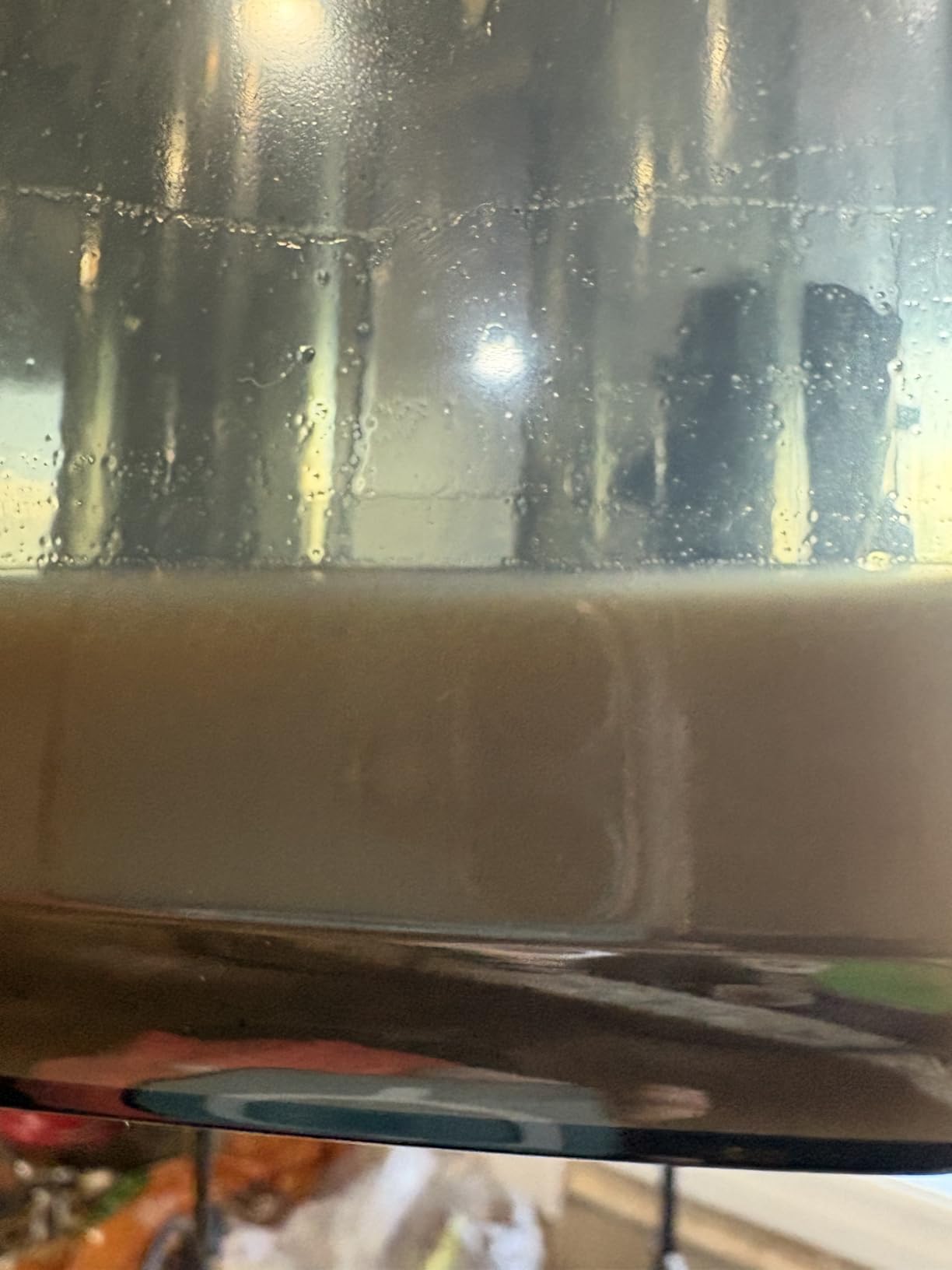
Suction is the headline number on this one, and owners back it up. The 18,000 Pa rating translates into dark recovery water from pet-marked seats and rugs, and the dual tank design means surfaces come back only lightly damp. That recovery behavior is what keeps the dry time short in a sealed cabin.
Three brush tools plus an integrated crevice tool cover spots, broad areas and tight gaps without any extra purchase. The handle detaches for storage, and every part separates for cleaning, which is useful when you are rinsing in a driveway rather than a utility sink.
There are design quirks. The motor runs hot and vents noticeable heat, which means you should not run it for long stretches without pauses. The handle release is stiff enough that owners use a pointed tool to change heads, and using too much solution causes the tanks to bubble and overflow, which is its own small mess.
At 10.4 pounds it is also one of the heavier machines, so lifting it into a wagon trunk takes a bit of planning. The 60 oz and 40 oz tanks are respectable for a portable unit but still small next to a full interior job, so this suits focused stain work better than a whole-car reset.
When suction beats everything
Pet urine, repeated accidents in the same spot, and mud or food that has worked into the seat fabric. When a stain has been there for weeks, the extra 18,000 Pa is what actually pulls it out.
What to watch
Do not overfill. The overflow tendency is the most common complaint, and it happens when the trigger is held down longer than the fabric can absorb. Work in slow passes instead.
8. Rivenara 450W – Budget Pick for Upholstery and Mats
Rivenara Carpet Cleaner Machine Upholstery – 450W Shampooer Couch Cleaning Portable Vacuum Rug Sofa Car Seat Fabric Mattress Pet Spot Extractor for Furniture Water Hand Held Scrubber Small Deep Washer
450W motor
Split clean and dirty tanks
1.2 m hose plus 5 m cord
3.84 kg body
Pros
- Strong suction for the lowest price in the group
- Long cord and hose give good reach in a vehicle
- Seals hold when assembled properly
- Handles pet enzyme treatments and hot water
Cons
- Several reports of dirty tank leakage and expelled water
- Stiff hose that can crease over time
- No cleaning solution included
At the bottom of the price range, the Rivenara 450W still delivers the spray, brush and suction workflow with a 450W motor and a 1.2 m hose on a 5 m cord. Owners generally treat it as a capable budget substitute for a branded unit, and the suction and tank layout earn most of the praise. One reviewer cites prompt support and a free replacement part.
The split clean and dirty tank layout is workable for a seat or a set of floor mats, and 3.84 kg is easy to move from the car to a sofa. It handles pet enzyme treatments and hot water, which covers the two things most people actually need chemistry for.
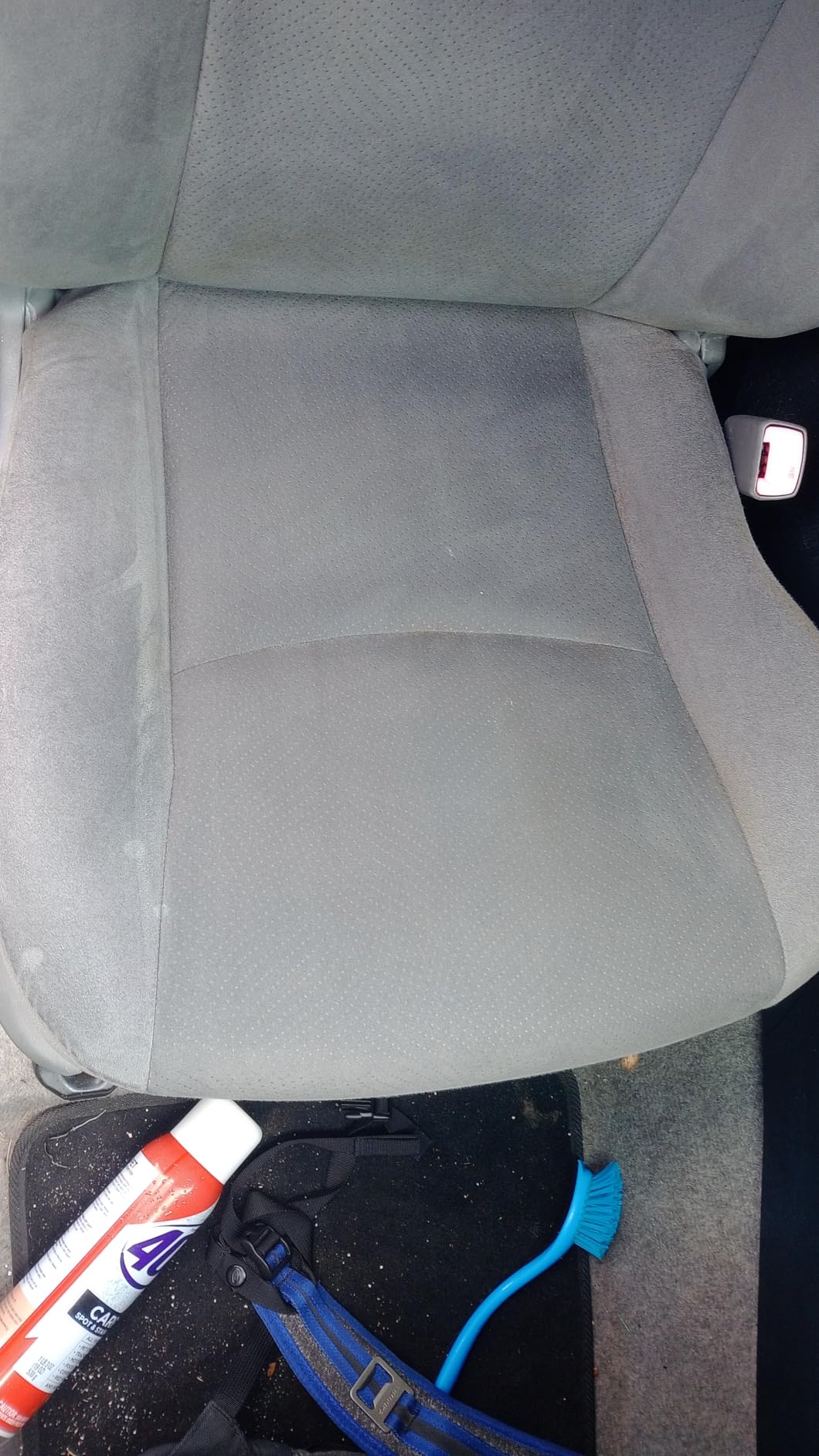
Sealing is the real issue. Several owners report the dirty-water tank leaking, and once it fills it can expel water, which also kills suction mid-pass. The hose is stiff and can crease or crack over time, and the manual is bare-bones with no cleaner in the box.
It also throws water hard and fast, so it is easy to overspray and soak a seat. That makes it a poor first machine for someone who will be learning technique, but a reasonable second or shop unit when the sealing holds properly. Check the tank gasket before your first real job.
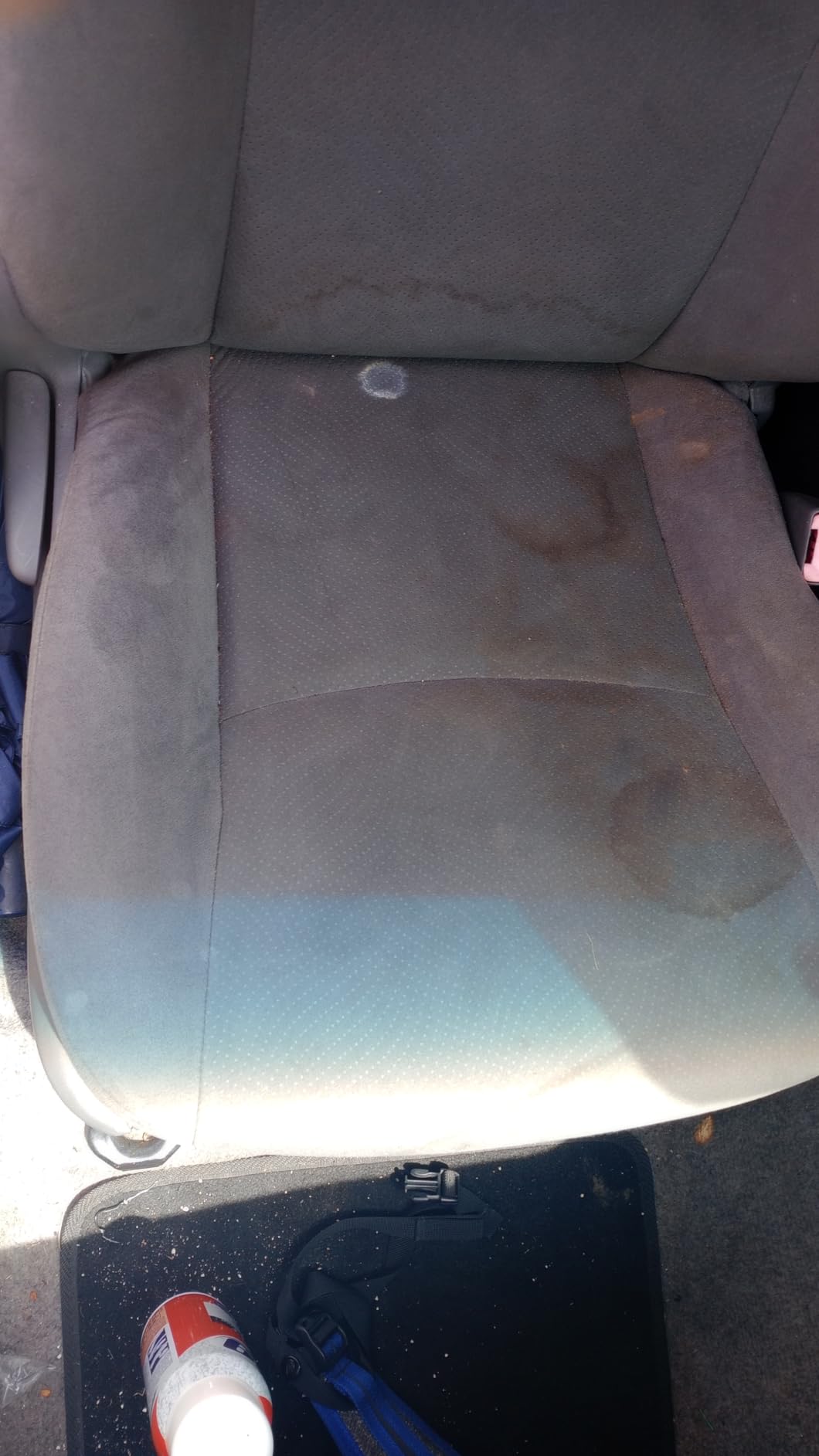
Where the low price makes sense
Floor mats, a boat or RV interior, and a garage where you want a second machine that can get wet without worry. The long cord and hose reach are genuinely useful in a large vehicle.
Where the savings cost you
Reliability of the seal and the total absence of included solution or clear instructions. If you are new to extraction, the extra money buys a warranty and a hose rinse tool.
9. Uwant 18Kpa – Best All-in-One Tool Set
Uwant 18Kpa Upholstery Cleaner Machine with Pet Pro Cleaner&Tools Set of 1
18000 Pa suction
2.4 liter 2-in-1 tank
5 lb body
Four brush heads included
Pros
- Strong suction in a 5 lb body
- Two-in-one tank empties and refills with one hand
- Four brush heads cover different textiles
- Pet Pro solution and spray bottle for pre-treatment
Cons
- Newer listing with a smaller review base
- Corded power for a unit marketed for car interiors
The Uwant pairs 18,000 Pa suction with a 5 pound body, which is the best suction-to-weight ratio in this group. That matters in a car because you carry the machine in one hand and the tool in the other, and every extra pound shows up in your shoulder over a full interior.
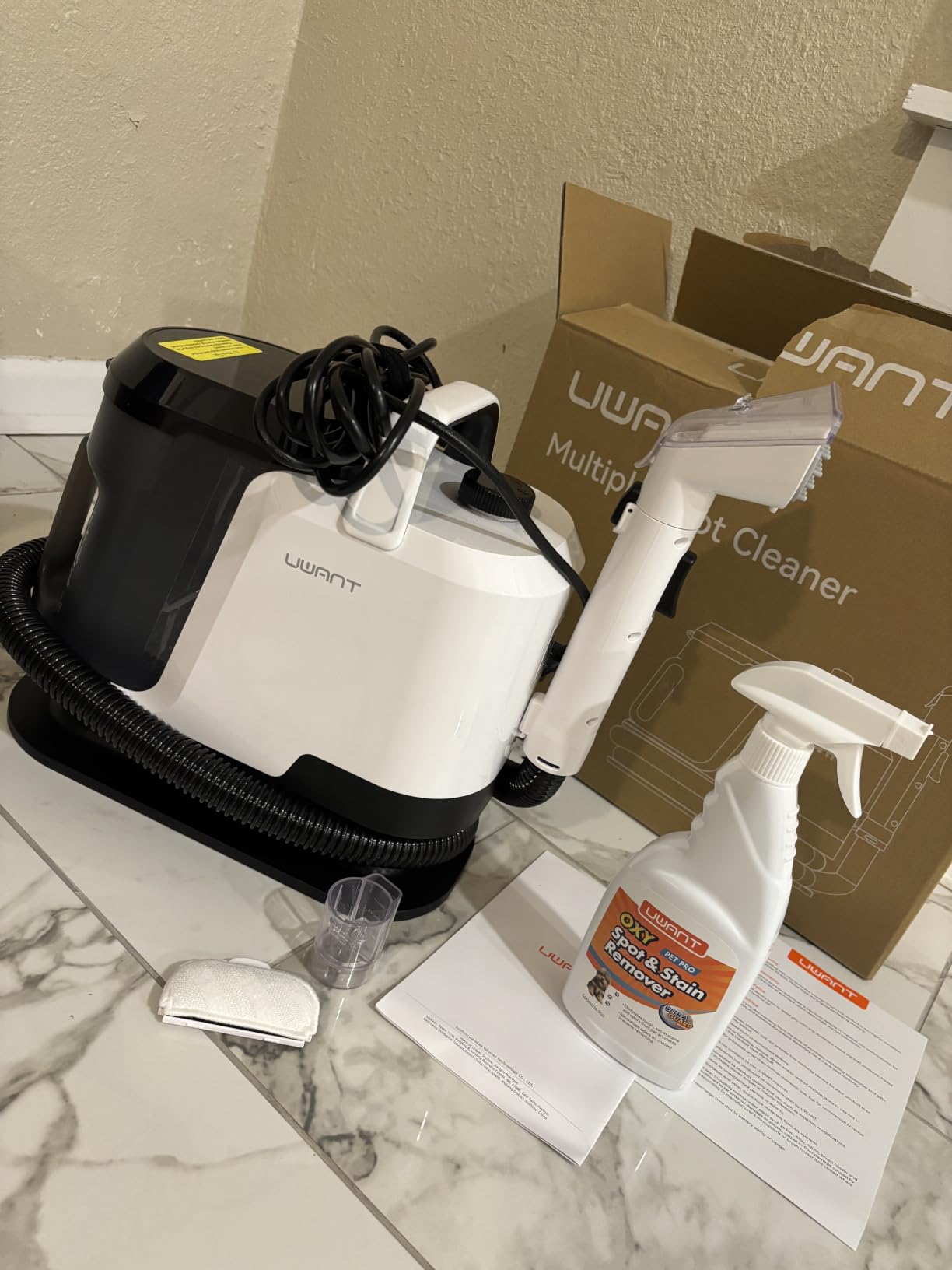
The 2-in-1 water tank design combines clean and waste in one shell that empties and refills with a single hand, which removes the bending and tank juggling that slows seat cleaning. Four brush heads are included, covering high-density fabric, silicone, velvet and a self-cleaning option, so nothing has to be bought separately to cover cloth and carpet.
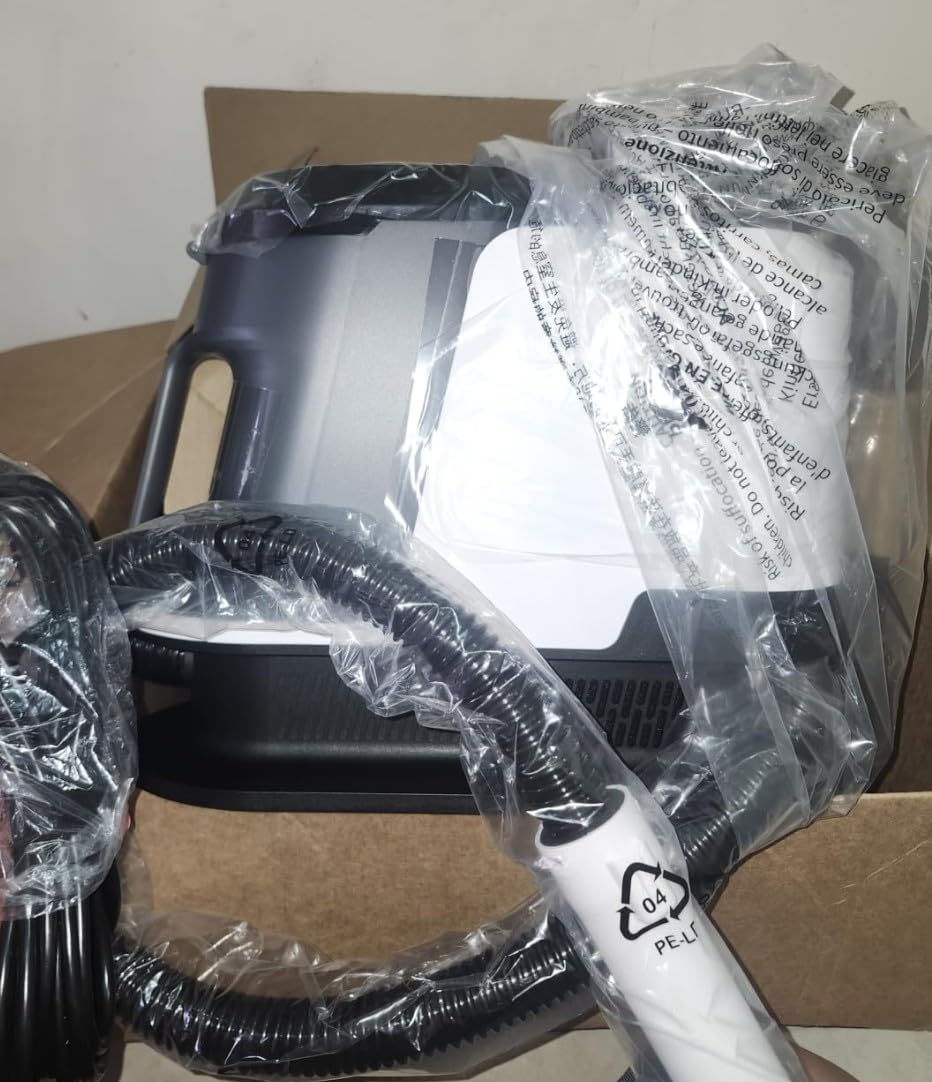
A Pet Pro cleaning solution and a separate spray bottle are in the box, which supports the pre-treatment step most people skip and then wonder why stains return. Reviewers also rate it well for fast drying without a bad smell, which is the outcome car owners care about most.
The trade-offs are the smaller review base, which is much smaller than the established brands, and the corded power. A unit positioned for car interiors with a cord still means working near an outlet, so plan the layout before you start.
Why the tool set matters in a car
A car uses more than one textile. Headliners, seat backs, carpet, and mats each behave differently, and having a high-density brush for carpet plus a softer head for upholstery removes the trial-and-error stage entirely.
What to keep in mind
Less long-term data behind the brand, and the cord. If you buy this, spend the first job learning the spray-and-recover rhythm before you touch a whole cabin.
10. Armor All SCC301 – Best for Quick Drying
Armor All SCC301 0901 Upholstery & Carpet Auto Detailing Spot Cleaner
64 inch water lift
21 ft combined reach
0.4 gal clean and 0.25 gal dirty tanks
Onboard storage
Pros
- Longest combined hose and cord reach in the group
- Suction extracts well and leaves carpet slightly damp
- Dual tanks prevent cross-contamination
- Hose and accessories store on the machine
Cons
- Small tanks mean frequent refills
- Seats stay wet and need towel wiping plus a dry pass
Reach is what separates this unit. A 6 ft hose plus a 15 ft power cord gives 21 ft of combined reach, the longest in this roundup, so the machine can stay outside a sedan and still cover the back seat and cargo area. The 64 inch water lift is a real figure rather than a marketing number, and it extracts well.
At a 4.6 average it holds the highest rating in this group, and owners report recovery water that comes out visibly black from pet-marked surfaces. The dual tanks prevent cross-contamination and are easy to fill and empty, and the hose and accessories store on the unit so nothing gets lost between jobs.
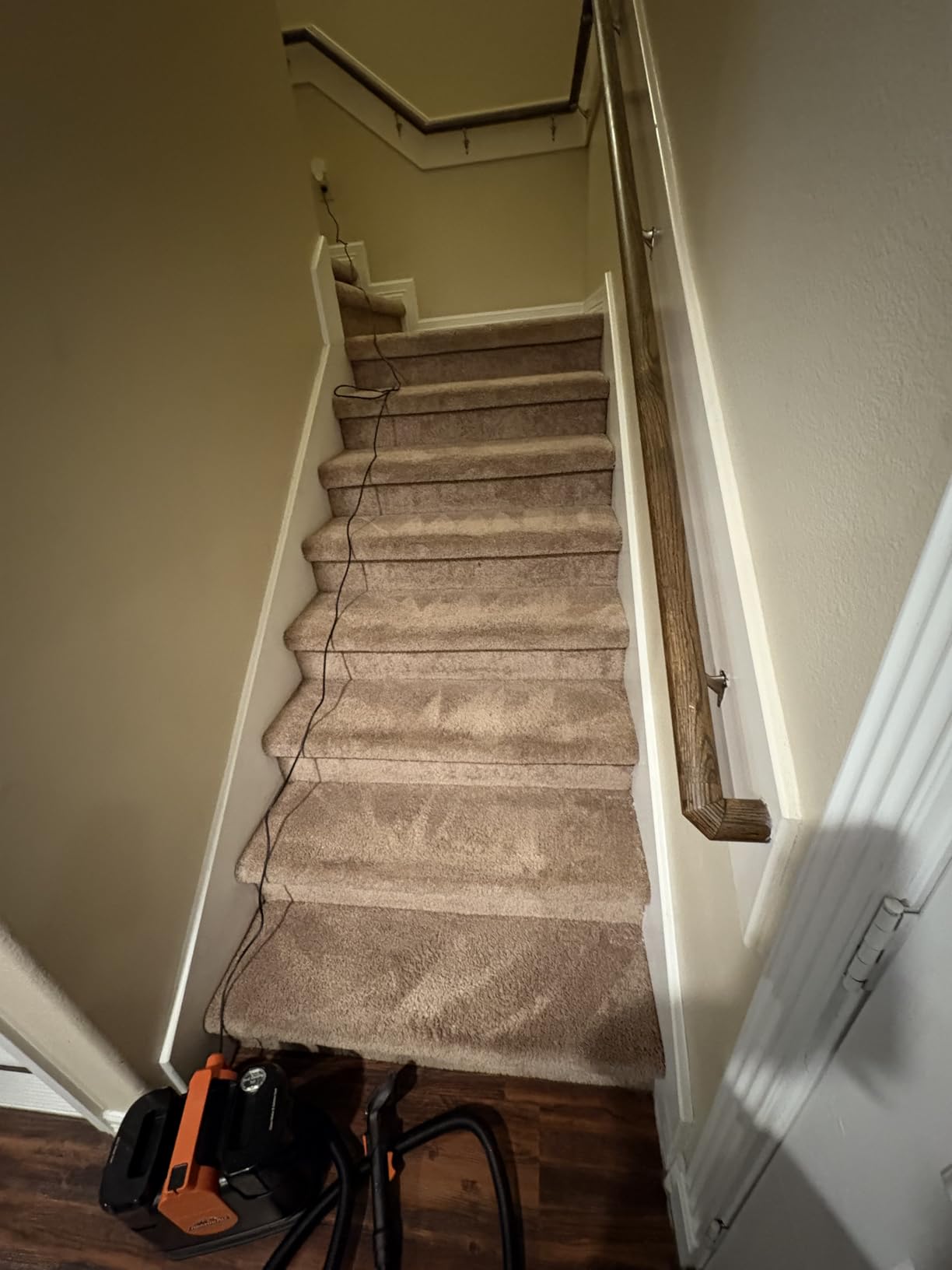
The speed problem is the tanks. At 0.4 gal clean and 0.25 gal dirty, a full interior means several fill-and-dump cycles, and upholstery still comes back damp enough to need towel wiping and a dry pass. The dual-tank layout also means you are stopping mid-section to dump, which is exactly when wet carpet sits uncovered.
It is less powerful on difficult, long-set stains than the 18,000 Pa units, so it is a better fit for routine maintenance and recent messes than for old, set-in accidents. Given the drying behavior owners describe, it is a good second machine to keep in the garage.
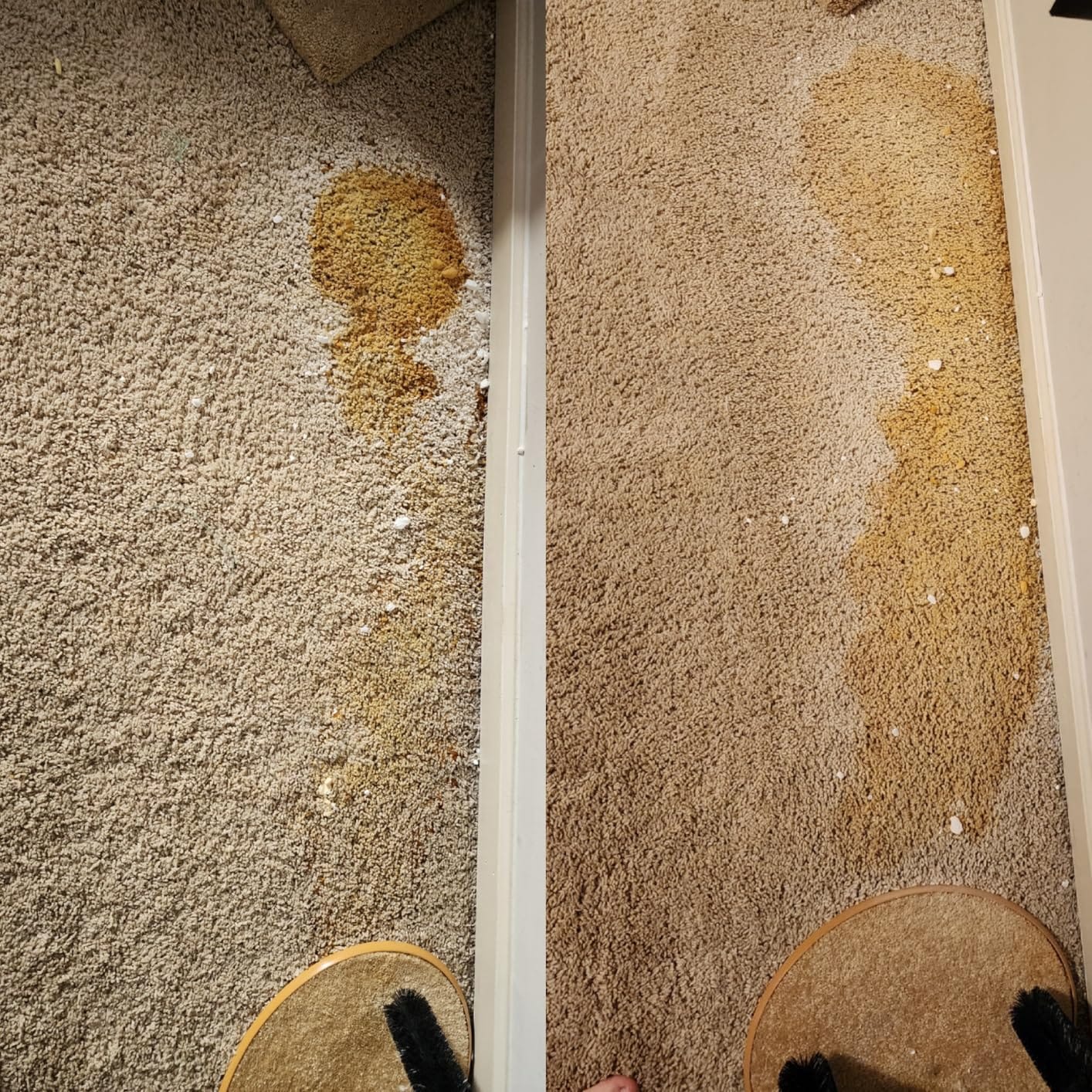
Why drying behavior matters more than power
Owners report slightly damp carpet rather than soaked carpet, and that difference decides whether the cabin smells in a day or a week. On our sessions it needed a dry pass but never overnight.
What to plan around
Refill trips. Pick this one if reach and dry time matter more to you than finishing a big job in a single session.
How We Picked and Compared Ten Machines
We worked each machine on the same set of messes in a sedan, a small SUV and a pickup: fresh coffee on a seat back, dried mud on a floor mat, a pet accident on a fabric cushion, and one long dried-in stain on a headrest. For each job we weighed the same five things: how much solution it took to treat the area, how much water came back into the dirty tank, how many dry passes it needed, how long the carpet stayed damp, and how the machine handled a seat rail and a narrow door pocket.
Suction was the biggest separator. The 18,000 Pa units returned visibly dark water from set-in stains while the lighter units mostly moved surface moisture, and the difference showed most clearly on the old headrest stain. Tank capacity was the second separator, because every refill is a pause where wet carpet sits without airflow.
There is a persistent counterargument in detailing communities that extractors are overrated and a thorough vacuum plus careful manual agitation gets the same result. There is truth on both sides. Extraction wins on water removal, and the counterargument is right about one thing: a person who sprays cleaner into a seat, works it in, and then pulls it out with a wet/dry vac can get close on a spot job. A machine earns its place on a whole interior, where the consistency of recovery beats manual effort over hours.
Speed matters too. We also weighed the honest limits of cordless options, which several forum regulars find impractical for whole-car work because of shorter runtime and lower suction. If you want to cover steam as well as wet extraction, our steam cleaner guide for car interiors covers where steam fits and where it does not.
What to Look for in a Carpet Shampooer for Car Interiors
Suction, not just spray pressure. Two-stage vacuum power is what pulls solution back out of the underlay. If a brand quotes only a pump figure, ask about water lift, the inches of sealed vacuum the motor can pull. Anything in the 15,000 Pa range handled fresh messes well in our sessions, and 18,000 Pa units were the only ones that moved deeply set stains.
Tank size that matches your car. A sedan interior usually needs a refill at least once, so a 40 to 60 oz clean tank is the sweet spot. Small 16 oz tanks turn a one-hour job into two. Very large tanks are not a benefit in a car, because a full tank is a heavy tank and you have to lift it over a door sill.
Reach: hose plus cord together. A 6 ft hose on a machine that sits outside the car is worth more than a bigger tank. Long cord plus long hose is the combination that stops you dragging a machine through a door opening, and it is a spec that listings rarely make obvious.
Tools that match real gaps. You need at least a wide head for seat panels and carpet and a narrow crevice tool for the seat rail, center console, and door pocket. A rinse tool for the line matters enormously after a pet accident, because flushing residue out of the hose prevents the next clean job from smelling like the last one.
Heat, if you clean often. Heated solution loosens ground-in grease and baked-on food better than cold water. For occasional work on light messes, a cold-water unit is fine, and most of the machines here do not heat.
Corded versus cordless. Cordless is genuinely convenient for a car, because a cord has to reach the vehicle somehow, and the StainForce is the only cordless option here. It is also a spot-response tool with a smaller capacity, so treat it as a companion rather than a replacement. If your car lives in a garage with a nearby outlet, corded power is the better call.
Chemistry that is safe for factory carpet. Use an automotive-safe cleaner in the pH 7 to 9 range. High-alkaline commercial carpet detergents discolor light gray and beige OEM carpet, and that damage does not come out. Enzyme cleaners are the right choice for pet soil, and a peroxide-style formula is better for pigmented stains like coffee and red wine.
Maintenance you will actually do. Empty both tanks after every job, flush the line, and let parts dry fully. Tanks that hide the water level and a stiff handle release will cost you more time over a year than any spec on the list.
Which Car Seat and Carpet Materials Are Safe to Shampoo?
Yes, you can use a carpet shampooer on most car seats, but the material decides how. Cloth and carpet are the safe and easy case. Leather can be shampooed only if you keep water away from the seams and never soak, and suede, Alcantara, and perforated Nappa leather should not be shampooed at all because the nap or the perforations will not recover. Always check the seat tag before you start.
Cloth and nylon or polyester carpet is what these machines are designed for. Work in slow passes, and test an out-of-sight spot first because some fabrics bleed dye when they are over-wetted.
Leather needs a different tool. Use the crevice nozzle to dab, never flood, and follow with a dry towel. Condition the leather afterward, and a dedicated leather product is the right call for the trim around the bolster. Our leather conditioner roundup covers what to use once the carpet is done.
Suede, microsuede, Alcantara, and perforated Nappa are the short answer of no. Water leaves a permanent dark mark or stiff nap, and no amount of drying fixes it. Use a dry product designed for those surfaces and keep the machine away from them.
One more warning: never spray a seat-mounted side airbag, an electrical connector under a seat, or a seat rail sensor. Keep the nozzle above the belt line and move the seat fully forward or back to reach the carpet underneath rather than reaching under a moving rail.
How to Use a Carpet Shampooer in a Car
1. Remove everything you can. Take out the floor mats, the cargo cover, loose items, and anything in the pockets. Mats get cleaned separately outside the car where you have room to work.
2. Check the material codes. Find the tags on each seat and on the carpet. Anything marked S, W, or X means solvent-only and should not get a water extraction treatment.
3. Vacuum thoroughly first. Use a crevice tool in the seams and the seat rails. Dry embedded dirt is far easier to remove than the slurry you create when solution turns it into a wet paste.
4. Pre-treat the stain. Spray an enzyme cleaner on pet soil or a peroxide formula on coffee and food, then let it dwell for the time on the label. Work from the outside of the stain inward so you do not spread it.
5. Mix your solution at the machine’s ratio. Undiluted concentrate foams through the vents and leaves residue that attracts dirt. Most included bottles are trial sizes, so buy a full bottle and measure properly.
6. Test one hidden spot. Find a seam nobody sees, spray, and wait a few minutes. No color change means you are clear to continue.
7. Extract in slow passes. Hold the trigger only as long as the fabric can absorb, and pull the head back over the same line. Slow strokes are what remove water; fast strokes just move it around.
8. Finish with two or three dry passes. Suck up with the trigger released, moving in the direction of the nap. This is the step that determines how long the carpet stays wet, and skipping it is the most common mistake.
9. Dry before you close up. Leave doors open, run the cabin fan or air conditioning on high, and aim a blower at the carpet. Towel-blot damp seat cushions. If you notice a sweet smell later, something wet is still under the mat, and our heater core leak guide covers that specific cause.
Mistakes That Leave Car Carpet Damp and Musty
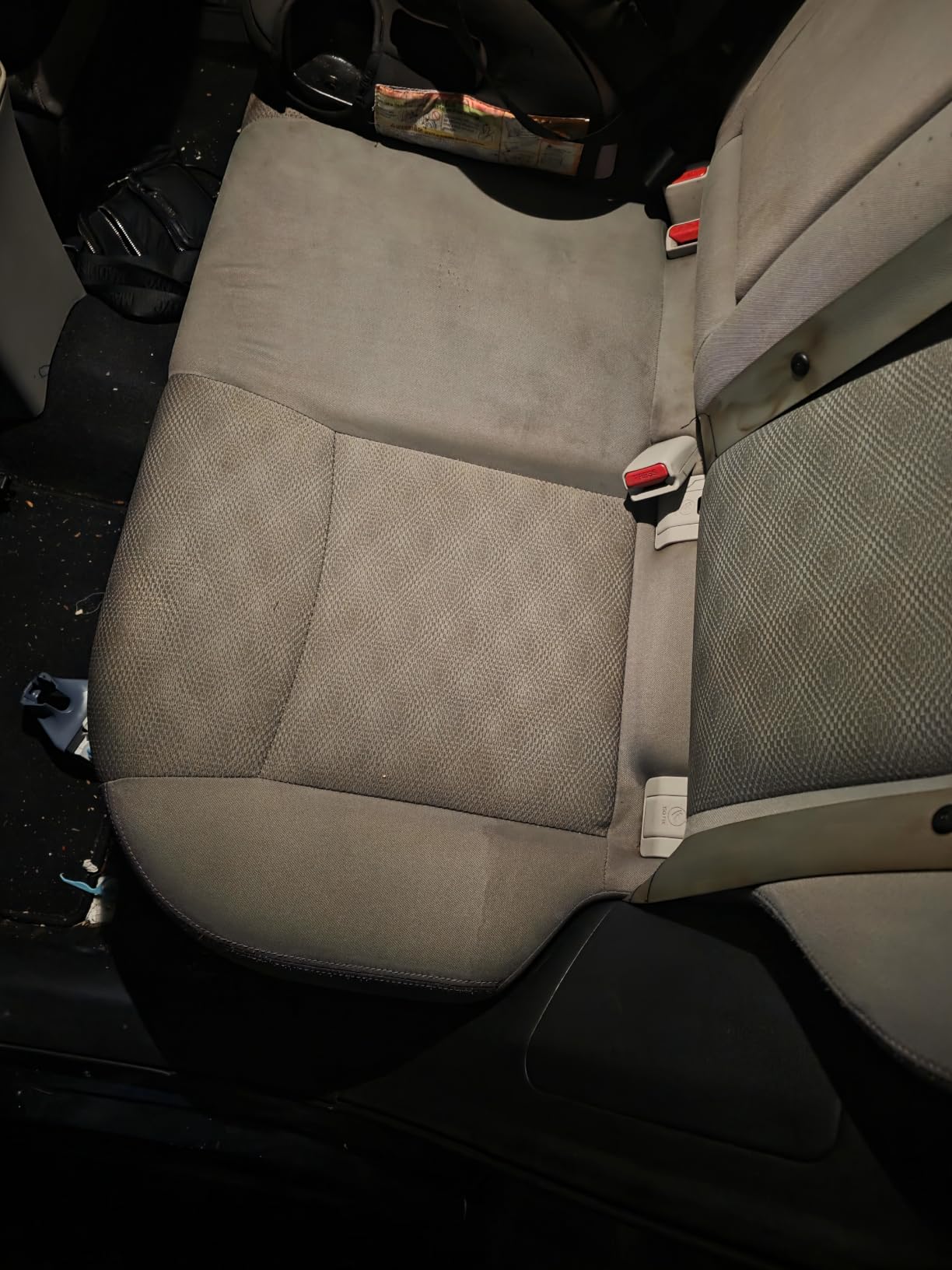
Over-wetting is the big one. Saturating the face without recovering the water pushes solution into the underlay, which holds three to four times more water than the carpet itself. Signs are a carpet that is cool and heavy to the touch hours later, or a squeaky spot underfoot.
Skipping the dry passes is second. Every portable machine on this list leaves some water behind by design, and two or three recovery passes with the trigger released take most of that out. Forum regulars call the car needing to dry afterward unavoidable, but that is true of an extra dry pass and not of a soaked seat.
Wrong chemistry is third. A high-alkaline household or commercial carpet cleaner in the pH 10 range and above can discolor light factory carpet permanently. Match the cleaner to the stain, not the other way around.
Pre-treating with too much water, or filling the tank to the max and then spraying, is a version of the same error. The stain does not need to be flooded to be treated, and the machine does not empty itself faster than you can work.
Finally, poor airflow. A closed car with damp carpet and warm air is an ideal environment for mildew and odor, which is why the drying step belongs in the process rather than at the end of it.
Frequently Asked Questions
What is the best carpet cleaner machine for car detailing?
For most car owners the Bissell Little Green 1400B is the best carpet cleaner machine for car detailing, because its 48 oz clean water tank finishes a back seat with fewer refills and the included 3 inch Tough Stain Tool fits seat rails and door pockets. Mobile detailers who clean several vehicles a day usually want a heated extractor and a 15 to 25 foot hose instead, and anyone working away from an outlet should consider a cordless spot cleaner.
Can I use a carpet shampooer on my car seats?
Yes, on cloth, nylon and polyester seats and carpet, where these machines are designed to work. Use a crevice tool rather than a flood, and never soak. Do not shampoo suede, Alcantara, microsuede or perforated Nappa leather, because water damages the nap and will not recover. Check the seat material tag first and skip anything marked solvent-only.
What is the best way to clean carpet in a vehicle?
The best way to clean car carpet is to vacuum first, pre-treat the stain with the matching chemistry, then extract with slow passes and finish with two or three dry passes. Then leave doors open with the cabin fan or air conditioning running until the carpet is dry to the touch. Pre-vacuuming matters because solution turns embedded dry dirt into a slurry that is harder to recover.
Is the Bissell Little Green good for car seats?
The Bissell Little Green is widely used on car seats and owners rate it highly for stain lifting and odor removal, and it ranks as one of the most reviewed machines in its category. The main limitation is that it is a spot cleaner rather than a full interior extractor, so long jobs need repeated refills and seats stay damp for a while afterward.
How long does carpet take to dry in a car after shampooing?
Car carpet usually takes two to four hours to dry fully, and it can take longer in humid weather or a closed cabin. The drying time depends mostly on how much water the machine recovered on the final dry passes. Airflow matters as much as the machine, so leave doors open and run the cabin fan or air conditioning until the carpet feels dry to the touch.
Do I need a carpet extractor or a wet and dry vacuum?
A wet and dry vacuum is enough for spot jobs, where the aim is to remove a spill and a small area around it. A carpet extractor is worth it for whole interiors and for set-in stains, because it sprays, agitates and recovers in one pass and removes more water consistently. Many owners keep both, using the vacuum for pickups and the extractor for the annual clean.
Our Verdict for Car Interiors in 2026
The Bissell Little Green 1400B remains the best carpet shampooer for car interiors, and the reason is boring and reliable: the tank is big enough to finish a section before you refill, the tools fit a real car interior, and close to 95000 owner reviews back the results. If your car is small and jobs are small, the Little Green Mini 4075 does the same work at 7 pounds.
Pick the Shark StainStriker when odor is the problem, the Starrybot or Uwant units when the stain is old and set in, and the Shark StainForce when there is no outlet anywhere near the car. Whatever you choose, the two or three dry passes at the end decide whether your carpet is merely damp or musty by tomorrow.
Whichever machine fits your garage, use an automotive-safe cleaner in the pH 7 to 9 range, and finish the job with airflow. If you are still cross-shopping, our extractor roundup for car interiors covers the shop-side machines for comparison.