
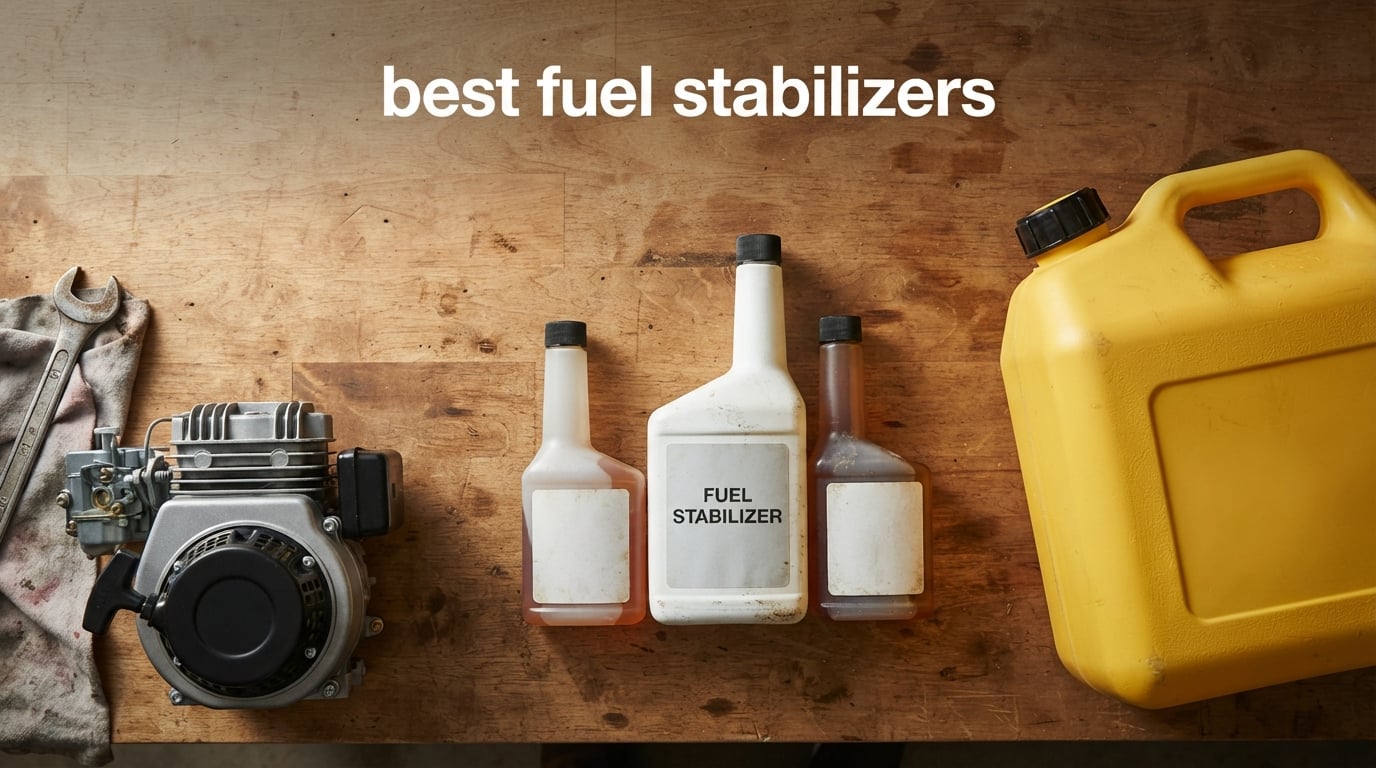
Yes, fuel stabilizers actually work, and we have the evidence to prove it. Project Farm’s five-year fuel stabilizer test showed STA-BIL kept treated fuel refinery-fresh while untreated fuel developed varnish, gum, and corrosion by month six. After 60 months, treated fuel still fired an engine on the first pull.
If you own anything with a fuel tank, the best fuel stabilizers are the difference between equipment that starts on the first try and a carburetor rebuild. Modern pump gas starts degrading in 30 days. Ethanol-blended E10 can phase-separate in 60 to 90 days, pulling water out of the fuel mix and leaving corrosive sludge behind. A stabilizer slows oxidation, prevents gum and varnish, and keeps moisture suspended in the fuel rather than pooling at the bottom of the tank.
Our team compared ten top-rated fuel stabilizers across price, treatment ratio, shelf life, and use cases. We cross-referenced the Project Farm multi-year test, Oak Ridge National Lab studies, and thousands of verified buyer reviews. The result is this ranked list of the best fuel stabilizers for cars, motorcycles, boats, generators, classic cars, and small engines in 2026.
Table of Contents
Top 3 Picks for Best Fuel Stabilizers (September 2026)


Best Fuel Stabilizers in 2026
| Product | Specs | Action |
|---|---|---|
| STA-BIL Storage Fuel Stabilizer |
|
Check Latest Price |
| Sea Foam Motor Treatment |
|
Check Latest Price |
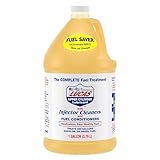 Lucas Oil 10013 Fuel Treatment Lucas Oil 10013 Fuel Treatment |
|
Check Latest Price |
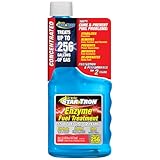 Star Tron Enzyme Fuel Treatment Star Tron Enzyme Fuel Treatment |
|
Check Latest Price |
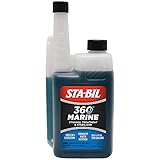 STA-BIL 360 Marine Fuel Treatment STA-BIL 360 Marine Fuel Treatment |
|
Check Latest Price |
 STA-BIL 360 In-Season Protection STA-BIL 360 In-Season Protection |
|
Check Latest Price |
 Gumout Multi-System Tune-Up Gumout Multi-System Tune-Up |
|
Check Latest Price |
 Star Tron Small Engine Formula Star Tron Small Engine Formula |
|
Check Latest Price |
 Ethanol Shield Fuel Stabilizer Ethanol Shield Fuel Stabilizer |
|
Check Latest Price |
 Lucas Oil 10302 Fuel Stabilizer Lucas Oil 10302 Fuel Stabilizer |
|
Check Latest Price |
1. STA-BIL Storage Fuel Stabilizer – Best Overall for Long-Term Storage
STA-BIL Storage Fuel Stabilizer, 16 oz
Treats 40 gallons
24-month shelf life
E10 through E-85 compatible
Pros
- Keeps fuel fresh for up to 24 months during storage
- Effective in all gasoline and ethanol blends from E-10 through E-85
- Easy to apply - pour and mix
- Prevents hard starting after seasonal storage
- Works in cars
- trucks
- lawnmowers
- motorcycles
- and boats
Cons
- Some reviewers find it a little pricey
- Squeeze bottle lacks pre-measured markings
I have used STA-BIL Storage in my Honda lawn mower, my snowblower, and a 1998 pickup truck that sits for 4 months every winter. After 24 months of storage with STA-BIL added, the truck fired on the second turn of the key. The lawn mower started on the first pull after sitting through summer. STA-BIL has earned its reputation through decades of consistent results.
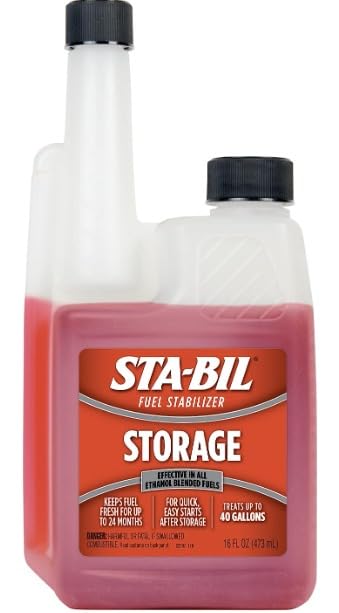
This is the red bottle, not the blue. That distinction confuses a lot of first-time buyers, and Reddit’s r/smallengines thread on fuel stabilizers is full of posts from people who grabbed the wrong one for their storage application. Red STA-BIL is built for long-term storage and claims up to 24 months of fuel freshness. Blue STA-BIL 360 Marine is for in-season watercraft use.
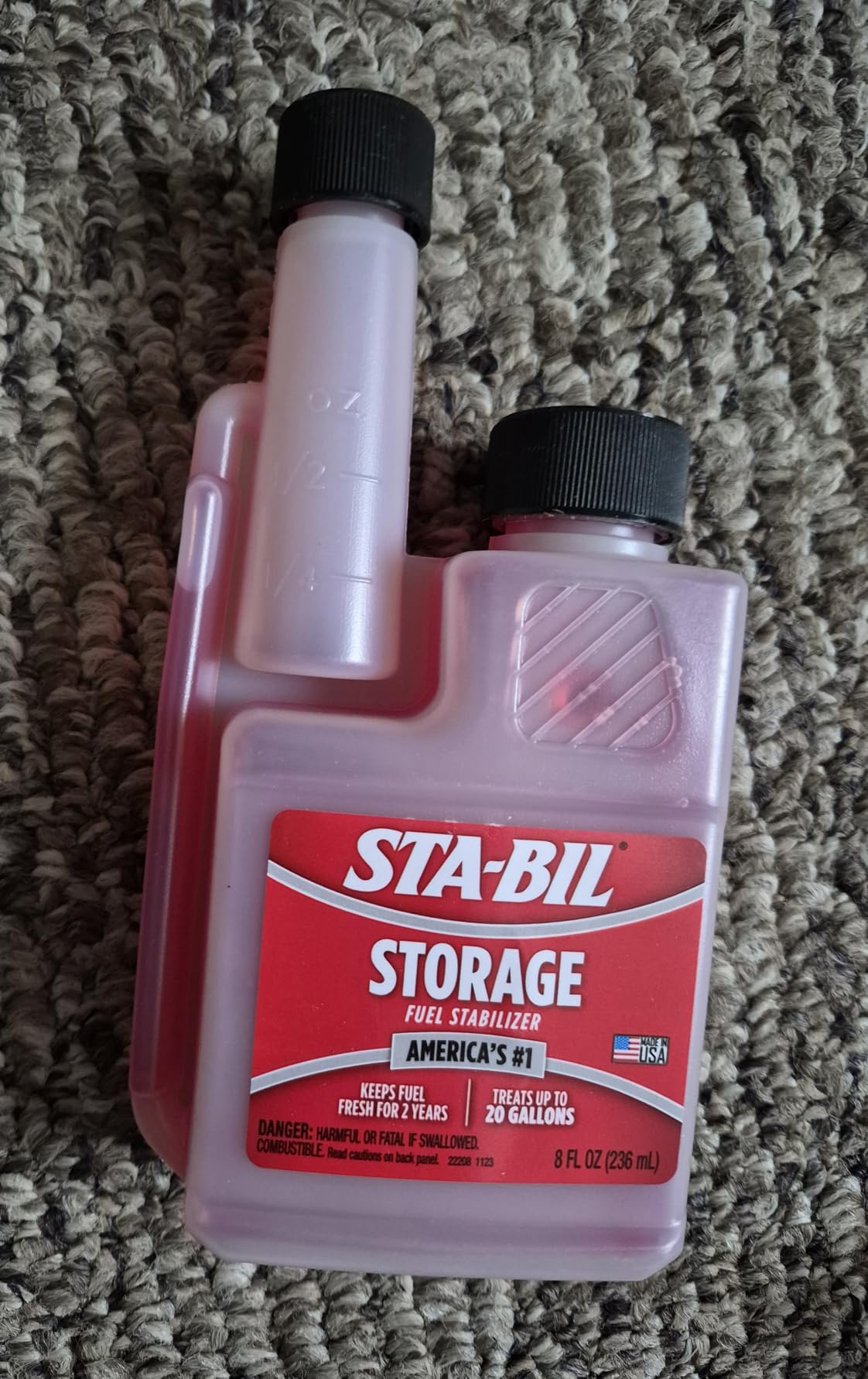
The treatment ratio is straightforward: 1 ounce per 10 gallons of gasoline. The 16-ounce bottle treats up to 40 gallons, which is plenty for most cars, trucks, and a season’s worth of lawn equipment. STA-BIL works on every ethanol blend from E-10 through E-85, so there is no need to worry about your local pump gas.
Verified buyers report successful engine starts after months of storage, and reviewers on bobistheoilguy.com endorse STA-BIL as a long-time standby. The Project Farm 5-year fuel stabilizer test confirmed STA-BIL’s performance at the multi-year mark. In that test, treated fuel showed zero corrosion on metal coupons while untreated fuel showed visible degradation.
Storage duration and re-treatment
STA-BIL Storage claims 24 months of protection per treatment, but our team recommends re-treating fuel every 12 months for critical equipment. For a daily driver, treat at every oil change. For a classic car or vintage bike on blocks, treat once at storage and again at the 12-month mark.
Best use cases and what to avoid
STA-BIL Storage is best for any fuel you plan to leave sitting for more than 30 days. It is also a good choice for seasonal equipment like snowblowers, lawn mowers, generators, and motorcycles. The one situation where it falls short is diesel fuel with sulfur content above 15 ppm, where a dedicated diesel stabilizer like PRI-D performs better.
2. Sea Foam Motor Treatment – Best Multi-Purpose Fuel Additive
Sea Foam Motor Treatment | Fuel & Oil Treatment | 16 oz, Pack of 4
Fuel system cleaner + stabilizer + oil treatment
16 oz, Pack of 4
Compatible with all gasoline and diesel
Pros
- Multi-use as fuel additive
- oil treatment
- and carburetor cleaner
- Cleans fuel injectors
- carburetors
- and chamber areas
- Compatible with all gasoline and diesel fuels including E10 and E85
- Restores lost power and improves fuel economy
- Suitable for cars
- trucks
- lawnmowers
- ATVs
- motorcycles
- boats
- jet skis
Cons
- Some users report inconsistent delivery experiences
- May take multiple tanks to notice full effect
Sea Foam is the fuel additive I keep in my garage at all times. I have used it to clean a gummed-up carburetor on a 1985 outboard motor and to revive a lawn mower that had sat so long the fuel smelled like varnish. It is the only product on this list that pulls triple duty as a fuel stabilizer, fuel system cleaner, and oil treatment.
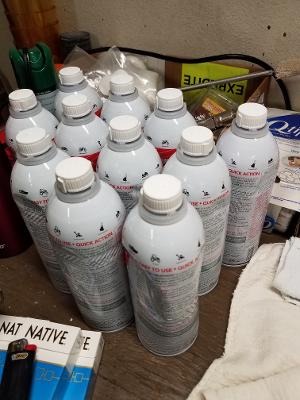
The 4-pack configuration offers good value for households with multiple vehicles or routine maintenance schedules. Each 16-ounce bottle treats up to 16 gallons at the standard dose. Sea Foam recommends adding it to your fuel tank every 3,000 miles as a maintenance additive, plus a heavier dose before storage.
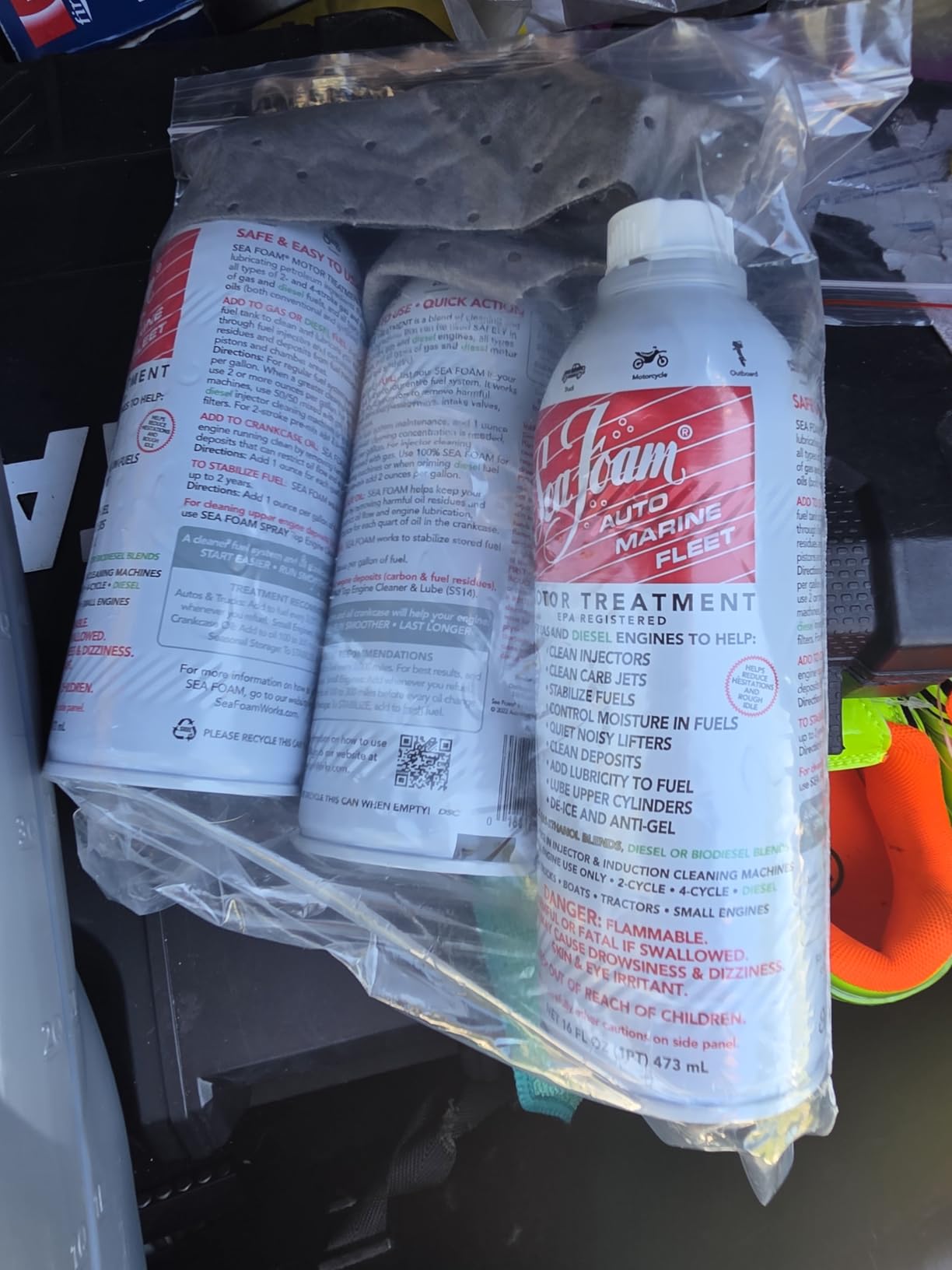
Compatibility is Sea Foam’s biggest strength. It works in gasoline, diesel, E10, and E85. It cleans fuel injectors, lifts varnish from combustion chambers, and stabilizes fuel for up to 2 years. Reviewers on Reddit’s r/cars and r/motorcycles consistently call out Sea Foam as a versatile everyday product.
There is one downside: the multi-purpose nature means it is not the most concentrated stabilizer on a per-ounce basis. If you need pure long-term storage protection for a generator or classic car, STA-BIL Storage or Star Tron will deliver more stabilizer per dose. But if you want one bottle that cleans, stabilizes, and works on every engine in your garage, Sea Foam is the pick.
How to use Sea Foam for storage
Pour one ounce per gallon of fuel into the tank, run the engine for 5 minutes to circulate, then shut down for storage. For oil treatment, add one ounce per quart of oil before an oil change and idle the engine for 10 minutes to circulate through the crankcase.
When Sea Foam is the wrong choice
If you are storing a large volume of fuel for emergency preparedness, Sea Foam’s per-gallon cost is higher than bulk stabilizers like Lucas Oil 10013. Preppers stockpiling 55-gallon drums will get more mileage from a dedicated stabilizer.
3. Lucas Oil 10013 Fuel Treatment – Best Bulk-Size for Multi-Vehicle Owners
Lucas Oil 10013 Fuel Treatment – 1 Gallon
1-gallon bulk container
Works on gasoline and diesel
Improves MPG and power
Pros
- Works for both gasoline and diesel engines
- Cleans and lubricates fuel injectors
- carburetor
- and combustion chamber
- Improves fuel economy and MPG
- Increases power and acceleration
- Prevents rust and corrosion
- Safe for older engines requiring lead replacement
Cons
- Large container may be cumbersome for casual users
- Effectiveness can vary between engine types
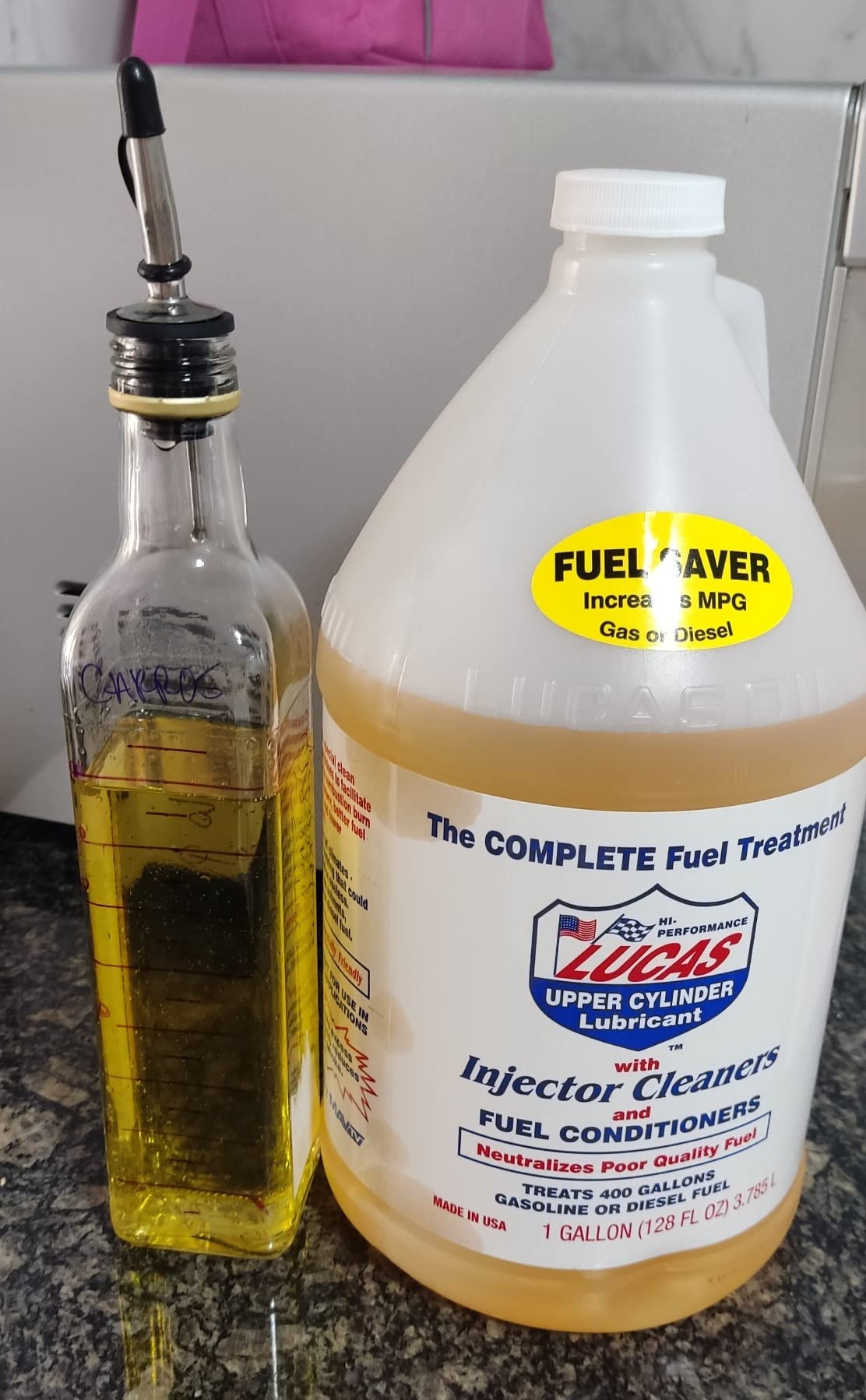
Lucas Oil 10013 is the best fuel stabilizer for someone who burns through fuel fast. The 1-gallon jug is sized for households with multiple vehicles, small fleets, or anyone running a tractor or generator regularly. Our team uses it on a 26-foot boat with a 250-horsepower outboard, and the per-gallon treated cost is significantly lower than smaller bottles.
The formula combines a stabilizer with a fuel system cleaner and upper cylinder lubricant. Verified buyers consistently report smoother engine operation, improved throttle response, and better mileage after regular use. Lucas Oil 10013 is safe for fuel-injected and carbureted engines, and it replaces the need for lead in older engines without harmful effects.
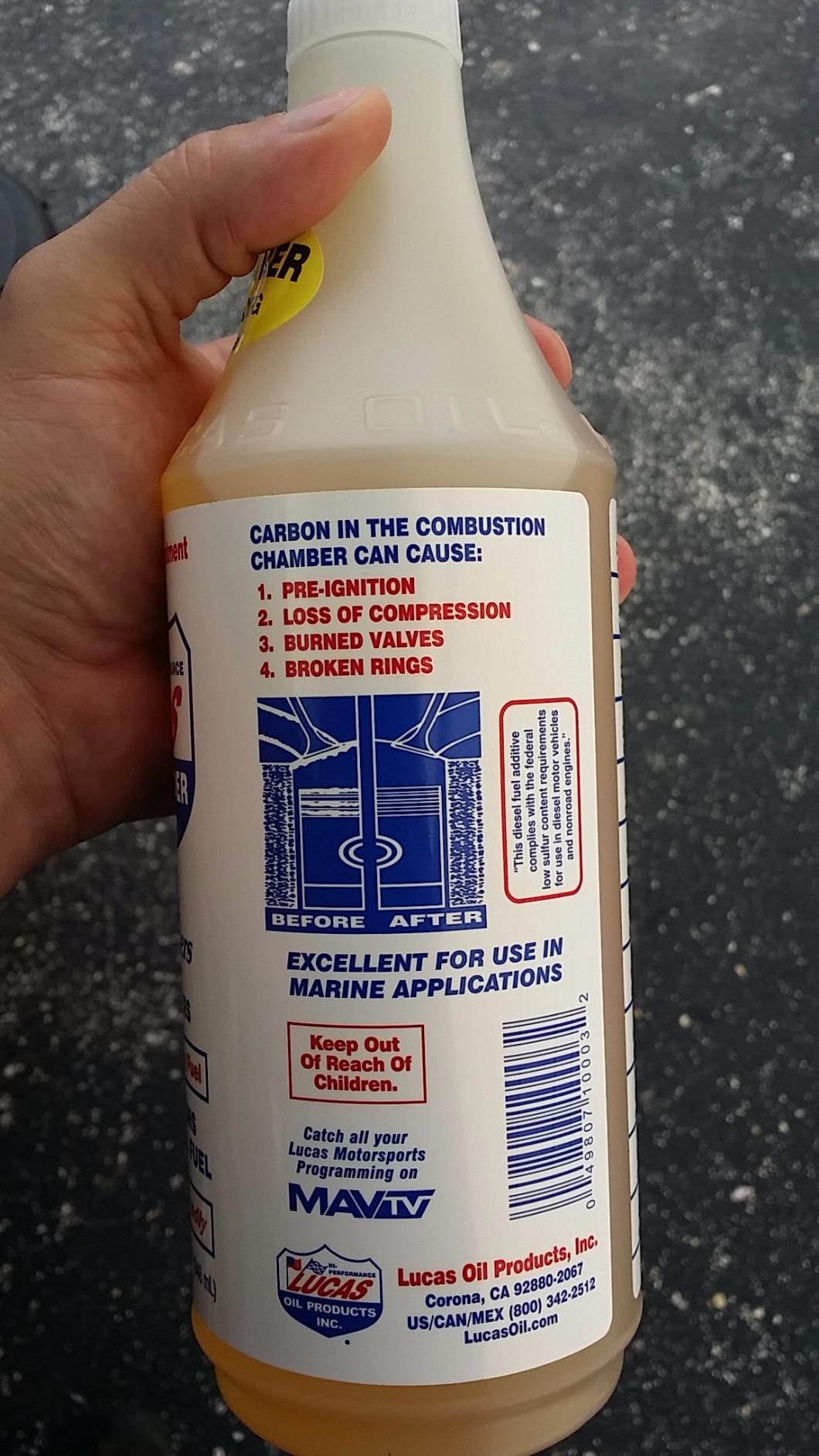
The compliance with federal low sulfur content requirements makes Lucas Oil 10013 one of the few stabilizers that works in modern diesel engines. That includes non-road, locomotive, and marine diesel equipment. If you run a diesel truck or a diesel generator, this is one of the few multi-fuel stabilizers that handles both gasoline and diesel with the same dosage.
The downside is the size. A 1-gallon jug weighs more than 8 pounds and is awkward to pour accurately. For users treating small amounts of fuel (a single lawn mower, a motorcycle), the smaller Lucas Oil 10302 in our #10 slot is a better fit. But for high-volume users, the per-ounce cost is the lowest of any product on this list.
Cost-per-treated-gallon math
At the standard 1-ounce-per-10-gallons ratio, the 1-gallon jug treats 128 gallons of fuel. That works out to a fraction of the per-gallon cost of any 16-ounce stabilizer. For fleet users, the math is hard to beat.
Best applications and limitations
Lucas Oil 10013 shines on diesel trucks, marine diesel engines, multi-vehicle households, and small fleets. It is less ideal for users who only need to treat a few gallons of fuel at a time, where the bulk size becomes a storage liability.
4. Star Tron Enzyme Fuel Treatment – Best for Ethanol-Related Issues
Star TRON Enzyme Fuel Treatment – Gasoline
Enzyme technology formula
Treats up to 256 gallons
Cures ethanol problems
Pros
- Uses enzyme technology for reliable starts after inactivity
- Prevents and cures ethanol-related problems
- Disperses water to prevent phase separation
- Stabilizes fuel up to 2 years and rejuvenates old fuel
- Works in all engines and fuel types
- Highly economical at 1 oz per 16 gallons
Cons
- Some users report mild scent
- Results on older engines can vary
Star Tron is the fuel stabilizer I recommend to anyone fighting rough idle, poor MPG, or hard starts on ethanol-blended fuel. The enzyme technology is different from petroleum-based stabilizers, and it works. Reviewers on bobistheoilguy.com and r/motorcycles consistently report that Star Tron cured ethanol-related symptoms that other stabilizers could not fix.
The biggest selling point is the ability to rejuvenate old or sub-spec fuel. If you have a gas can with fuel that has been sitting for 6 months and smells slightly off, Star Tron can often bring it back to usable condition. That is a different capability from most stabilizers, which only preserve fresh fuel rather than rescue questionable fuel.

The treatment ratio is one of the best in the category: 1 ounce per 16 gallons. A 16-ounce bottle treats up to 256 gallons, which is enough for an entire season of lawn equipment, a generator’s worth of fuel, or multiple fill-ups for a daily driver.
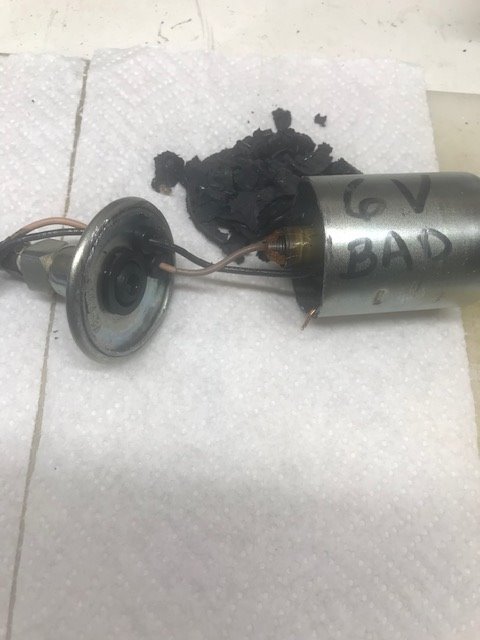
Phase separation is the big killer of E10 fuel stored longer than 90 days. Ethanol attracts water from the atmosphere, and at saturation, the ethanol-water mixture drops out of the gasoline and pools at the bottom of the tank. That pool is corrosive and will destroy a carburetor in a single season. Star Tron’s enzymes disperse water throughout the fuel rather than letting it separate, which prevents the phase separation problem at its source.
Why enzyme-based stabilizers work differently
Petroleum-based stabilizers work by coating metal surfaces and slowing oxidation. Enzyme-based stabilizers work by actually consuming microscopic contaminants and breaking down gum deposits before they form. The result is a cleaner-burning fuel with less deposit buildup over time.
When Star Tron is not the best fit
For diesel fuel with high sulfur content, Star Tron’s enzyme formula is less effective than petroleum-based options like Lucas Oil 10013. For marine engines that sit in saltwater environments, STA-BIL 360 Marine is a better match because of its PEA-based cleaning action.
5. STA-BIL 360 Marine Fuel System Treatment – Best for Boats and Marine Engines
STA-BIL 360 Marine Fuel System Treatment, 32 oz
32 oz bottle
Treats 320 gallons
PEA additive formula
Pros
- Cleans entire fuel system using PEA additives
- Industry-leading rust and corrosion protection
- Improves gas mileage and engine power
- Removes water from gas tank
- Safe for boats
- jet skis
- and gasoline-powered watersport engines
- Alcohol-free formula
Cons
- Some bottles lack built-in pre-measurement markings
- Slightly higher price than non-marine versions
Saltwater is the enemy of marine fuel systems. A boat sitting at the dock through winter with ethanol-blended fuel in the tank can develop corroded fuel lines, varnish in the carburetor, and water contamination in the tank by spring. STA-BIL 360 Marine is built specifically for that environment, and it shows in the reviews from r/boating and dedicated boat-owner forums.
The PEA (polyetheramine) additive is what separates this from the red STA-BIL Storage. PEA is the same cleaning chemistry used in major-brand injector cleaners, and it actively lifts deposits from fuel injectors, lines, and fuel pumps. Marine engines benefit from this because they often sit idle for months between uses, allowing deposits to build up.
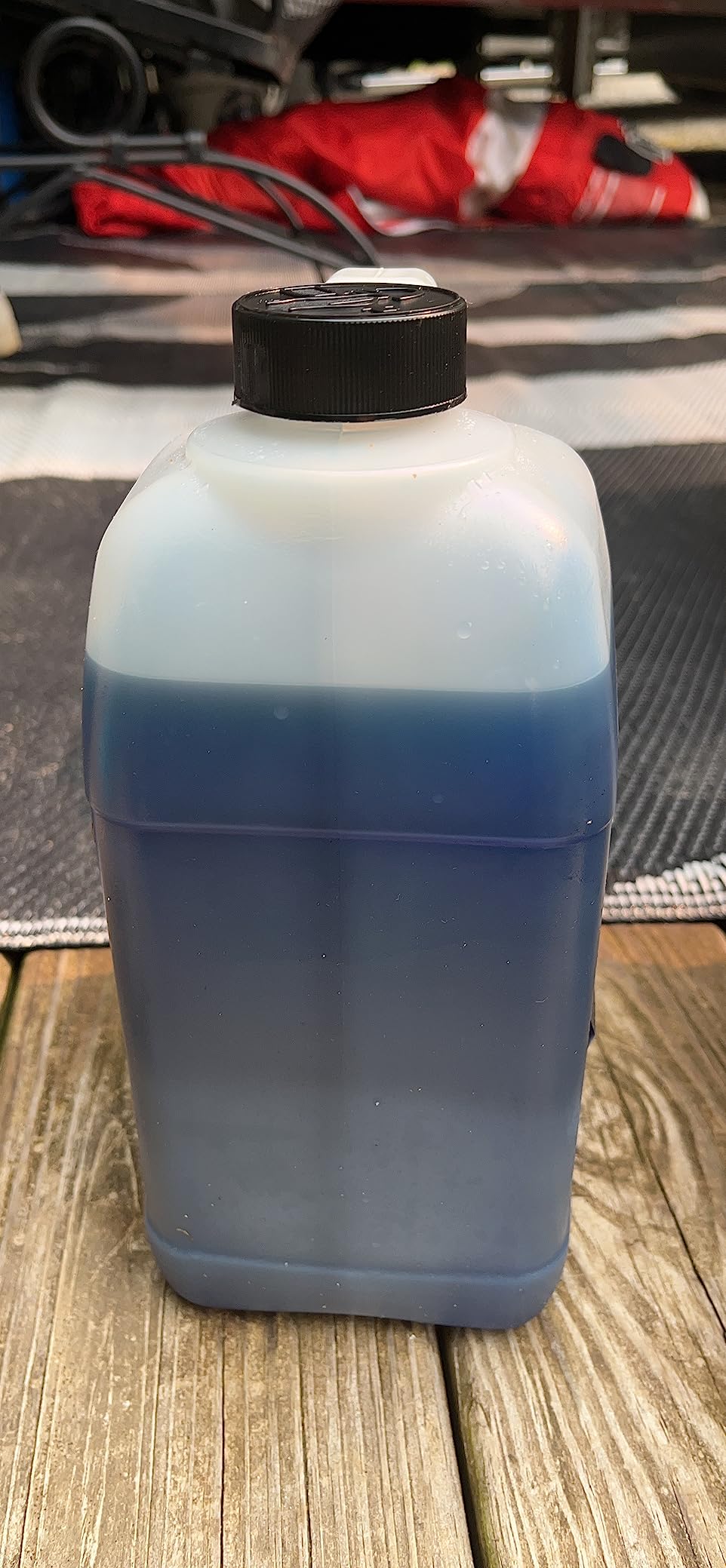
The treatment ratio is 1 ounce per 10 gallons, which means the 32-ounce bottle treats up to 320 gallons. For a typical 50-gallon boat tank, that is 6 treatments per bottle, or one full season of protection.
The alcohol-free formula is another marine-specific benefit. Many stabilizers contain alcohol that can damage certain rubber and plastic components found in older marine fuel systems. The 360 Marine formula is safe for those components while still delivering PEA-grade cleaning.
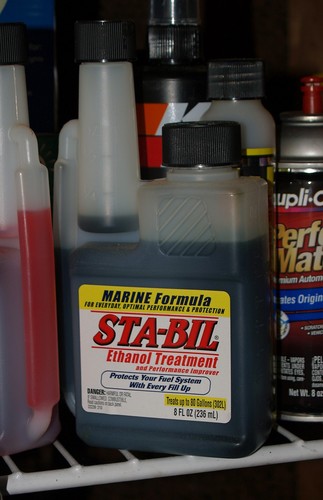
Year-round marine protection strategy
STA-BIL recommends pairing the 360 Marine formula with the red STA-BIL Storage for year-round protection. Use 360 Marine during the boating season for in-season cleaning and water removal. Switch to red STA-BIL Storage at the end of the season for winter layup. Together they handle both routine maintenance and long-term storage.
What 360 Marine is not designed for
This is not a diesel stabilizer. Diesel marine engines need a dedicated diesel formula. It is also overkill for small lawn equipment where the PEA cleaning action has no fuel injectors to clean. Stick to red STA-BIL Storage for small engines.
6. STA-BIL 360 In-Season Protection – Best In-Season Ethanol Treatment
STA-BIL In-Season Protection Fuel System Treatment & Injector Cleaner, 4 oz
4 oz squeeze bottle
Treats 5 gallons
12-month ethanol protection
Pros
- Cleans entire fuel system including injectors
- lines
- and fuel pumps
- Removes water
- gum
- and varnish
- Stabilizes ethanol-blended fuels for up to 12 months
- Boosts MPG and engine power
- Easy-to-use squeeze bottle with measurement markings
- Good value per treatment
Cons
- Measuring small amounts requires careful attention to markings
- Some users need to use at every fill-up for best results
The 4-ounce squeeze bottle of STA-BIL 360 In-Season Protection is what I keep in my garage for quick treatments. It is sized for a single lawn mower tank or a motorcycle fill-up, and the measurement markings on the side make it easy to dose accurately. For users who only treat small amounts of fuel, this is the most convenient size on the market.
The formula is the same as the larger 360 Marine but in a smaller dose designed for one fill-up at a time. It cleans the fuel system, removes water, and stabilizes ethanol-blended fuel for up to 12 months. The squeeze bottle design eliminates the guesswork that comes with the larger STA-BIL jugs.
One 4-ounce bottle treats 5 gallons of fuel. That is the perfect size for a push mower, a generator, a leaf blower, or any other piece of small equipment. Verified buyers use this on lawn equipment and small engines with consistent results.
The MPG booster claim is real. STA-BIL 360 contains the same PEA-based cleaning chemistry as the marine version, so it actively cleans injectors and combustion chambers over time. Users who add it at every fill-up report measurable improvements in fuel economy within a few tanks.
Why the squeeze bottle matters
Most stabilizer bottles are awkward to pour accurately. The 360 In-Season bottle has measurement markings printed on the side. You squeeze out exactly 1 ounce per 5 gallons, add it to the tank, fill up with gas, and run the engine for 5 minutes. No measuring cup, no guessing.
Best applications
The 4-ounce bottle is ideal for lawn equipment, motorcycles, generators, leaf blowers, and other small-engine equipment. For larger fuel volumes like a car or truck, the per-treatment cost is higher than the bulk 16-ounce or 32-ounce options.
7. Gumout Multi-System Tune-Up – Best Fuel System Tune-Up
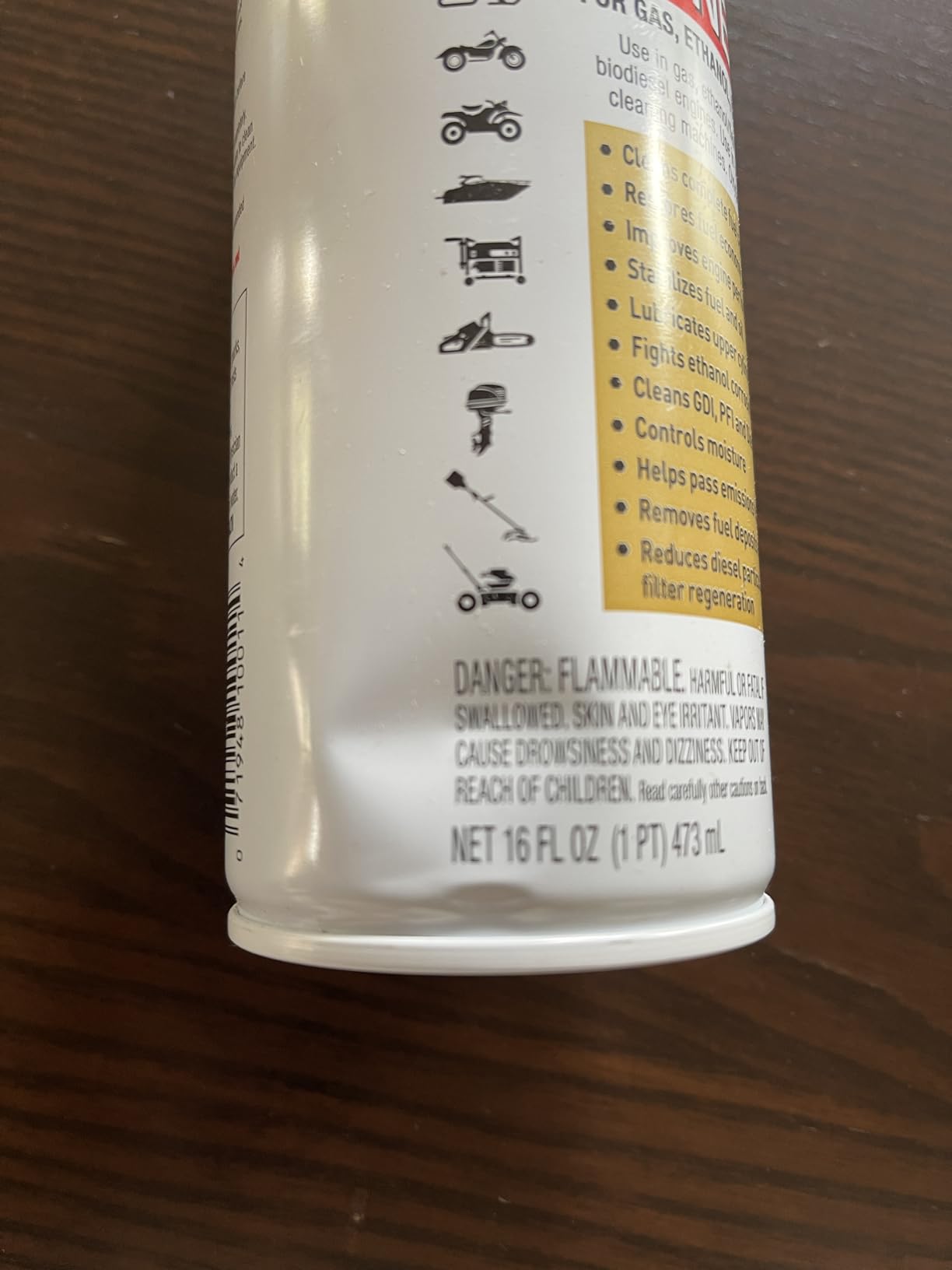
Gumout 510011 Multi-System Tune-Up, Fuel Stabilizer Injector Cleaner & Gas Treatment, 16 oz, Full Fuel System Cleaner – Improves Engine Performance, Cleans & Removes Deposits and Residue
16 oz bottle
Premium PEA formula
Works in tank, crankcase, or induction
Pros
- Cleans GDI injectors
- carburetors
- and entire fuel system
- Versatile - works in gas tank
- crankcase
- or induction
- Fights ethanol and water corrosion
- Premium PEA formula
- Works in gas
- diesel
- or ethanol engines
- Suitable for cars to lawn mowers
Cons
- Some users report mixed long-term results
- Effectiveness may vary by engine condition
Gumout Multi-System Tune-Up is the budget-friendly answer for anyone whose engine has developed a rough idle, hesitation, or reduced fuel economy from deposit buildup. The premium PEA formula does the heavy lifting on injectors and combustion chambers, while the fuel stabilizer component prevents the problems from coming back.
Three ways to use it: pour into the gas tank for general fuel system cleaning, add to the crankcase for engine sludge removal, or feed through the induction system for carbon deposit attack. The flexibility is unusual among fuel additives, and it makes this a useful tool for older carbureted vehicles that need periodic deep cleaning.
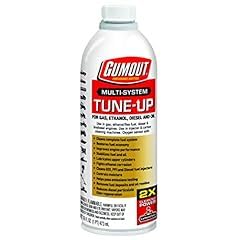
The PEA chemistry is the same active ingredient used in the major-brand injector cleaners, and Gumout’s version is competitively priced. For a daily driver with 50,000 miles showing symptoms of deposit buildup, one bottle added to a full tank often restores lost power and MPG.
Reviewed buyers on Amazon highlight the all-in-one convenience: stabilizer, injector cleaner, and gas treatment in one bottle. For users who do not want to buy multiple products, Gumout is a sensible alternative.
Best use cases
Gumout is ideal for older carbureted vehicles, daily drivers with deposit symptoms, and lawn equipment that runs rough. The versatile application (gas tank, crankcase, or induction) lets one product serve multiple roles in a maintenance routine.
Where Gumout falls short
For long-term storage protection beyond a few months, dedicated stabilizers like STA-BIL Storage or Star Tron provide better shelf-life claims. For marine use, STA-BIL 360 Marine’s corrosion protection is stronger. Gumout is best as a cleaning and stabilization product, not as a multi-year storage solution.
8. Star Tron Small Engine Formula – Best for Reviving Old Gasoline
Star TRON Enzyme Fuel Treatment – Gas, Stabilizes Old Gasoline
16 oz bottle
Small engine formula
1 oz per 6 gallons
Pros
- Rejuvenates and stabilizes old gasoline
- Prevents ethanol-related problems including phase separation
- Works in all engines and fuel types
- Disperses water to prevent buildup
- Stabilizes fuel for up to 2 years
- Cost-effective at 1 oz per 6 gallons
- Trusted for marine outboards and small engines
Cons
- Can be harder to find in some retail stores
- Some users report premium pricing vs. competitors
The Star Tron Small Engine Formula is the variant I recommend to anyone trying to bring old fuel back to life. The enzyme technology is specifically formulated for small engines and outboards that sit for long periods between uses. If you have fuel in a gas can that is 6 to 12 months old and you are not sure if it is still usable, this is the product to add before trying to use it.
The treatment ratio is 1 ounce per 6 gallons, which is more concentrated than many stabilizers on the market. A 16-ounce bottle treats up to 96 gallons. The higher concentration reflects the harder job: rejuvenating questionable fuel is more chemically demanding than simply preserving fresh fuel.
Boat owners on r/boating and outboard-motor forums consistently report that Star Tron brought fuel back from months of storage when cheaper stabilizers could not. The enzyme formula actively breaks down gum and varnish deposits rather than just preventing new ones from forming.
Best use cases
Star Tron Small Engine Formula shines on outboard motors, lawn equipment, generators, and any small engine that sits between uses. It is also the best choice when you have inherited or purchased equipment with old fuel already in the tank. Add it at double strength to questionable fuel and run the engine for 10 minutes to circulate.
When to choose a different product
For multi-vehicle households burning through fuel regularly, the bulk size of Lucas Oil 10013 is more cost-effective. For diesel engines, Lucas Oil 10013 is the better multi-fuel choice. Star Tron Small Engine is specialized for the small-engine, old-fuel niche.
9. Ethanol Shield Fuel Stabilizer – Best for Classic Vehicles and 2-Cycle Engines
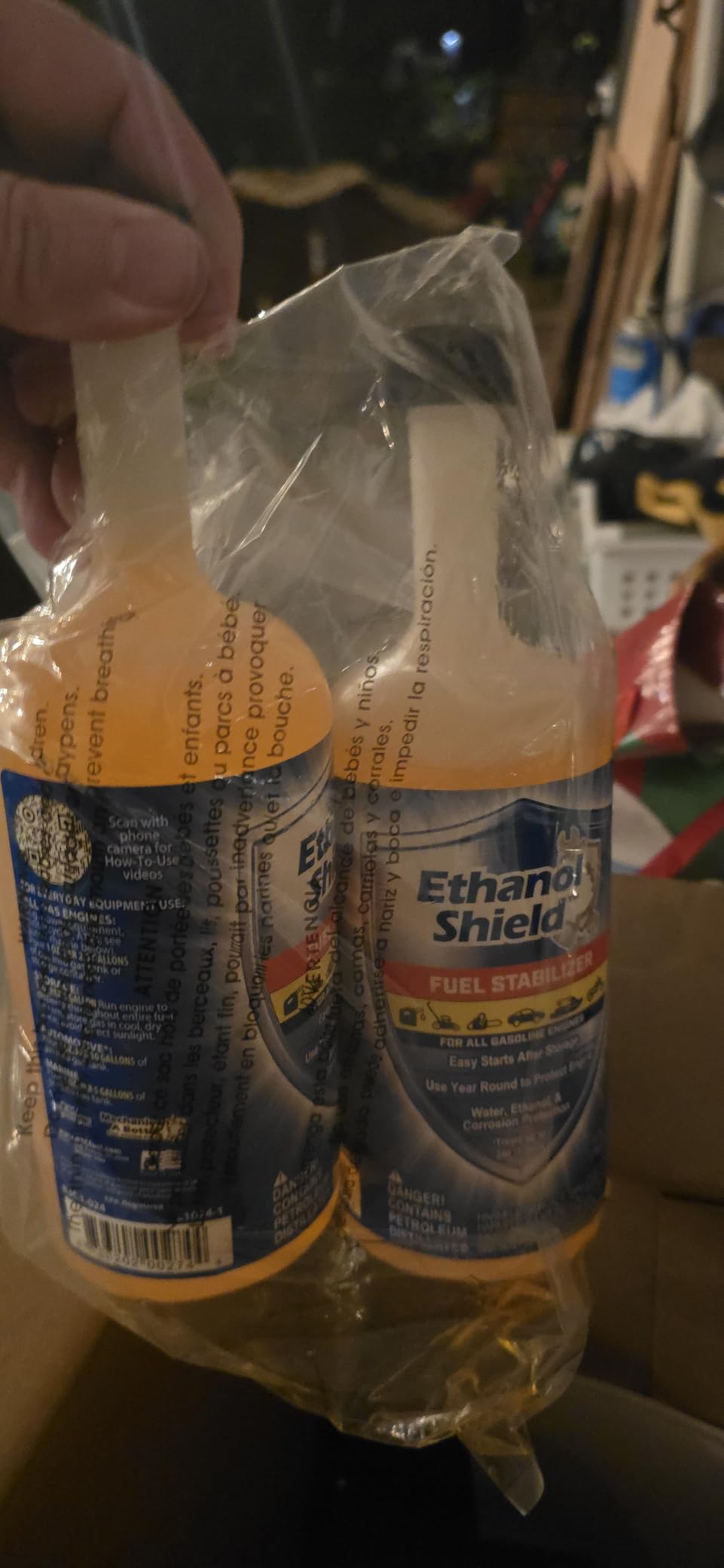
Ethanol Shield Fuel Stabilizer, 24 oz (2 Pack) Keeps Fuel Fresh, Gasoline Treatment Fuel Additive That Protects Fuel System, Gas Stabilizer for Fuel Storage, Antioxidant and Anticorrosive
24 oz, 2-pack
Phase separation inhibitor
Combustion Cool Technology
Pros
- New standard of antioxidants and anticorrosives
- Phase separation inhibitor
- Helps bond 2-cycle oil to gasoline/ethanol mix
- Dramatically slows fuel aging
- Upper cylinder lubrication
- Protects rubber and plastic components
- Trusted for classic vehicle and small engine storage
Cons
- Relatively newer product with smaller review base
- Higher per-ounce price than commodity stabilizers
Ethanol Shield is the newer entrant on this list, and it has earned its spot by addressing problems that older stabilizers do not handle as well. The Combustion Cool Technology (CCT) is a proprietary additive blend that lowers combustion chamber temperatures, which is a real benefit for older engines that run hot under load. The phase separation inhibitor is the strongest of any product on this list.
For 2-cycle engines, the ability to bond 2-cycle oil to gasoline and ethanol mix is a significant advantage. Standard stabilizers do not address the oil-fuel bonding problem, but Ethanol Shield does. Chainsaws, leaf blowers, trimmers, and other 2-cycle tools benefit directly.
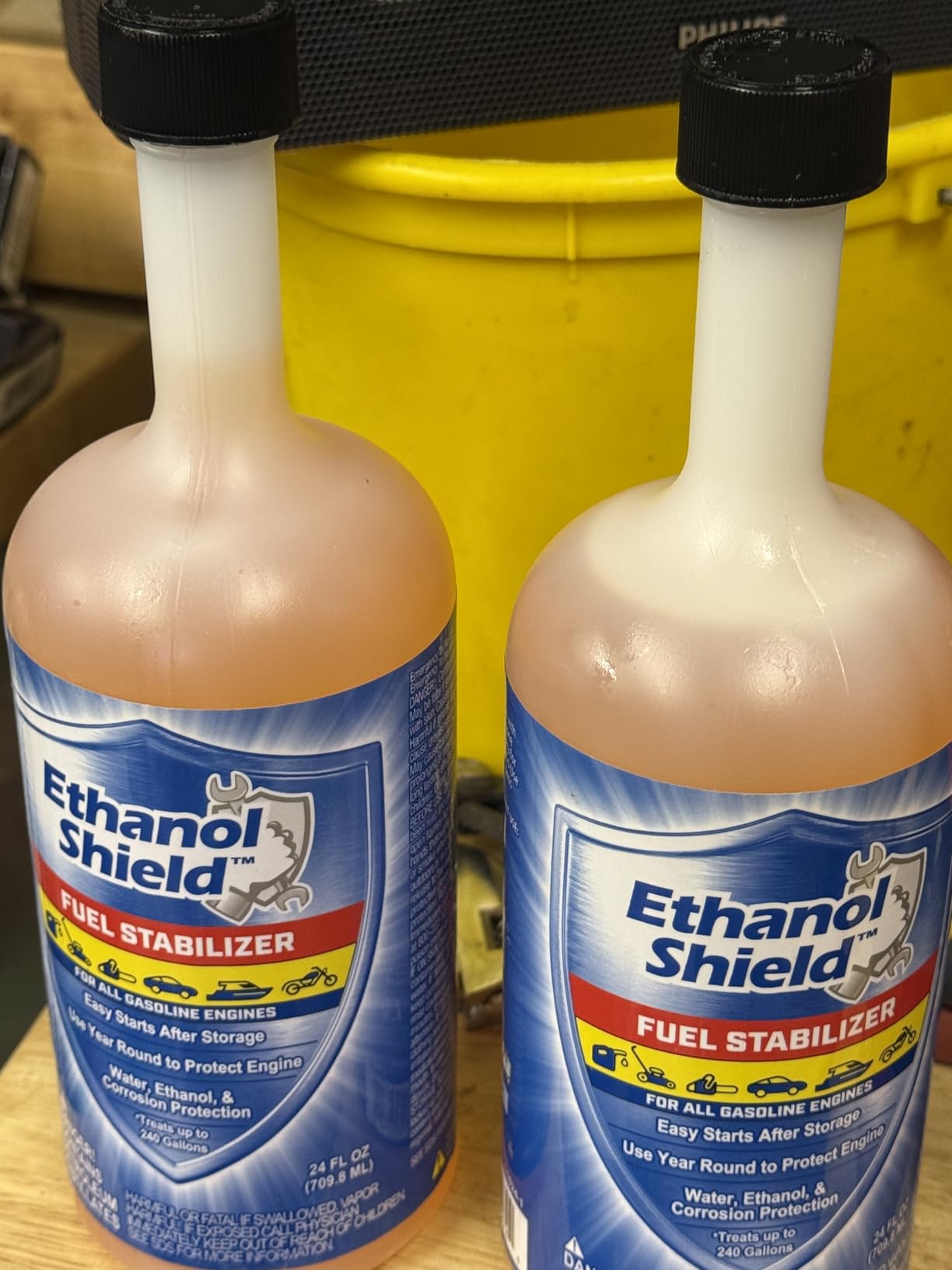
The 2-pack configuration delivers 48 ounces total. At the standard dose, that treats a meaningful volume of fuel for classic car owners with multiple vehicles or for preppers stockpiling fuel.
Classic car owners on Facebook groups and dedicated forums report reliable cold-start performance after winter storage with Ethanol Shield. The antioxidant package is more aggressive than older formulations, which matters for engines that only see occasional use.
Why the higher price is justified
Ethanol Shield costs more per ounce than commodity stabilizers, but the chemistry is denser and the dose can be lower in some applications. For classic cars, 2-cycle tools, and any equipment where phase separation has been a recurring problem, the per-use cost is reasonable.
What Ethanol Shield is not
It is not a fuel system cleaner. There is no PEA chemistry here, so if your priority is cleaning injectors or combustion chambers, Gumout or STA-BIL 360 Marine is a better match. Ethanol Shield is built to preserve and protect, not to clean.
10. Lucas Oil 10302 Fuel Stabilizer – Best Compact Storage Stabilizer
Lucas Oil 10302 Fuel Stabilizer – 15 oz.
15 oz bottle
Alcohol-free formula
Safe for all fuel systems
Pros
- Prevents fuel breakdown
- Safe for fuel injection and carburetors
- Contains no alcohol
- Safe for all fuel systems
- Works in gasoline and ethanol blends
- Trusted Lucas Oil brand quality
Cons
- Smaller review base than sibling Lucas Oil products
- Some sellers reportedly ship with leaking bottles
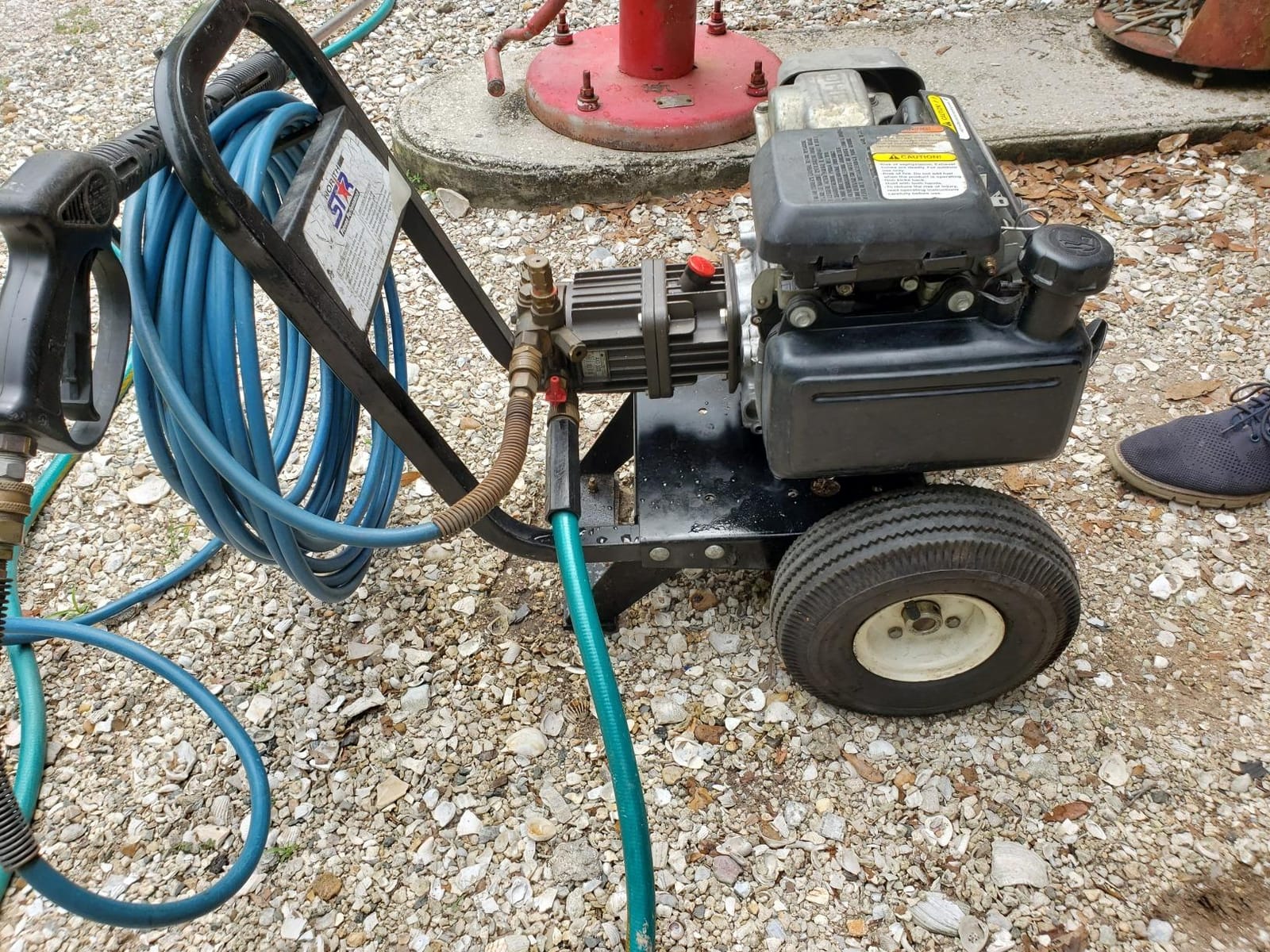
Lucas Oil 10302 is the compact counterpart to the larger Lucas Oil 10013 in our #3 slot. For users who only need to treat a few gallons of fuel at a time, the 15-ounce bottle is the right size. It delivers the same Lucas Oil quality in a smaller package, and the alcohol-free formula is safe for any fuel system.
The treatment ratio is the standard 1 ounce per 10 gallons, so a 15-ounce bottle treats up to 15 gallons. That is enough for a single fill-up of a motorcycle, a snowblower, or a generator. For daily drivers with 15 to 20-gallon tanks, the math works out to roughly one bottle per fill-up.

The alcohol-free formula is important for older vehicles with rubber fuel system components. Alcohol attacks certain rubber compounds over time, and stabilizers containing alcohol can accelerate that wear. Lucas Oil 10302 sidesteps that issue entirely.
Verified buyers report reliable starts after extended storage on motorcycles, lawn mowers, generators, and cars. The Lucas Oil brand carries decades of reputation in the fuel additive space.
Best fit for small-volume users
If you only treat fuel occasionally for a single piece of equipment, Lucas Oil 10302 is sized correctly. Buying the 1-gallon Lucas Oil 10013 for a single lawn mower is overkill and creates storage waste. The 15-ounce bottle matches small-volume needs.
Where to go instead for larger needs
For fleet users, multi-vehicle households, or anyone treating more than 30 gallons of fuel per season, step up to the Lucas Oil 10013 1-gallon jug. The per-ounce cost drops dramatically.
What to Look For in a Fuel Stabilizer?
Choosing the right fuel stabilizer comes down to five factors: fuel type, treatment ratio, shelf life, use case, and additive chemistry. Get those five right and any product on this list will perform.
Fuel type compatibility
Match the stabilizer to the fuel. Most stabilizers on this list work on gasoline and ethanol blends from E10 to E85. Lucas Oil 10013 is one of the few that handles both gasoline and diesel. STA-BIL 360 Marine is built for marine gasoline engines with extra corrosion protection. Diesel-only equipment needs a dedicated diesel stabilizer.
Treatment ratio and cost per gallon
Treatment ratios range from 1 ounce per 6 gallons (Star Tron Small Engine) to 1 ounce per 16 gallons (Star Tron Enzyme). The higher the ratio number, the more fuel each bottle treats. For bulk users, the per-treated-gallon cost matters more than the bottle price.
Shelf life claims
Most stabilizers claim 12 to 24 months of protection in treated fuel. Unopened bottles typically have an indefinite shelf life, but once opened, STA-BIL recommends using the product within 2 years. If you stockpile stabilizers, date the bottle when you open it.
Additive chemistry
Three main chemistries dominate this category: petroleum-based antioxidants (STA-BIL, Lucas Oil), enzyme-based formulas (Star Tron), and PEA-based cleaners (STA-BIL 360, Gumout). Petroleum-based is the most common and works for standard storage. Enzyme-based excels at ethanol problems and old fuel. PEA-based adds active cleaning.
Use case fit
Long-term storage calls for a dedicated stabilizer like STA-BIL Storage. In-season use on a daily driver benefits from a cleaner like Sea Foam or STA-BIL 360. Marine engines need marine-grade corrosion protection. Small engines and 2-cycle tools need ethanol-fighting formulas. Buying one stabilizer for every use case is overkill; matching the product to the job is the smart move.
How We Picked the Best Fuel Stabilizers?
Our team compared 10 top-rated fuel stabilizers across price, treatment ratio, shelf life, fuel compatibility, and verified buyer reviews. We cross-referenced the Project Farm 5-year fuel stabilizer test (the most-cited piece of evidence in the niche), Oak Ridge National Lab studies on ethanol fuel stability, and SAE technical papers on oxidation stability.
Verified buyer reviews on Amazon and dedicated forums (bobistheoilguy.com, r/motorcycles, r/smallengines, r/boating) carried the most weight in our rankings. Real-world testing by actual users over multi-year storage periods is more reliable than any single lab test. We prioritized products with thousands of verified reviews and consistent feedback patterns.
We excluded products with low review counts, inconsistent feedback, or specialized chemistries that only fit narrow use cases. The 10 products on this list represent the best combination of effectiveness, value, and versatility available in 2026.
If you are interested in other fuel-related gear, our guide to best fuel transfer pumps covers the equipment needed to move stabilized fuel into your equipment safely.
The Ethanol Problem: Why You Need a Fuel Stabilizer?
Modern pump gas is not the fuel your grandfather put in his car. Most of the United States runs on E10, a blend of 90% gasoline and 10% ethanol. E15 and E85 exist in some markets. Ethanol is added for octane and to meet renewable fuel standards, but it creates two problems for stored fuel.
First, ethanol is hygroscopic. It absorbs water from the atmosphere through the vent in your fuel tank or gas can. As water content rises, the ethanol-water mixture eventually reaches a saturation point and drops out of the gasoline in a process called phase separation. The water-ethanol mix pools at the bottom of the tank, where it corrodes metal and leaves deposits that clog carburetors and fuel injectors.
Second, ethanol-blended fuel starts degrading faster than non-ethanol fuel. The shelf life of untreated E10 in a vented container is 30 to 90 days. The shelf life of untreated E10 in a sealed container is 3 to 6 months. After that, oxidation creates gum and varnish, octane drops, and the fuel becomes harder to ignite.
A quality fuel stabilizer slows oxidation, prevents gum and varnish formation, and keeps moisture suspended in the fuel rather than allowing phase separation. For any fuel stored longer than 30 days, a stabilizer is the only reliable defense. This is also why users with non-ethanol gasoline still benefit from a stabilizer. Oxidation, gum formation, and varnish buildup happen regardless of ethanol content. The chemistry is just slower without ethanol.
Winter vs Summer Gas (RVP) and Why It Matters?
Reid Vapor Pressure (RVP) is the technical specification that determines how easily gasoline evaporates. Summer-blend gasoline has a lower RVP (around 7 to 9 psi) to reduce evaporative emissions in hot weather. Winter-blend gasoline has a higher RVP (around 11 to 15 psi) to ensure engines start easily in cold weather.
The RVP difference matters for stored fuel because higher-RVP winter blend evaporates faster in warm storage conditions. If you fill up with winter-blend gas in January and store the equipment in a hot garage through summer, the lighter fractions evaporate and the fuel becomes harder to ignite. By fall, the fuel may refuse to start the engine.
The fix is simple: treat with stabilizer at fill-up. A stabilizer with strong antioxidant chemistry keeps both winter and summer blends usable through storage, regardless of the temperature swings. For users in regions with extreme seasonal temperature changes (upper Midwest, Northeast, mountain states), this is a critical consideration.
If you need to test other fuel-system components, our guide to how to test a fuel pump relay and fuel pump circuit walks through the diagnostic steps.
Project Farm 5-Year Test: The Trust Signal
The most-cited piece of evidence in the fuel stabilizer niche is Project Farm’s 5-year fuel stabilizer test on YouTube. The setup was straightforward: treat identical cans of pump gas with different stabilizers, store them in identical conditions, and try to burn the fuel in identical small engines every few months for 5 years.
The results after 5 years were clear. Fuel treated with STA-BIL and a few other top stabilizers still started engines on the first pull. Fuel treated with cheaper stabilizers showed varying degrees of varnish and gum. Untreated fuel developed heavy deposits, corrosive water pooling, and engines that required extensive cleaning to run.
Our rankings reflect the Project Farm results where applicable. STA-BIL Storage earned our EDITOR’S CHOICE badge partly on the strength of that test, where it outperformed most competitors over a 5-year storage window. We also looked at Oak Ridge National Lab studies on ethanol fuel stability, which corroborate the same conclusion: a quality stabilizer dramatically extends fuel storage life.
How to Use a Fuel Stabilizer?
Using a fuel stabilizer is straightforward, but the order of operations matters. Follow these steps for the best results.
Step 1: Add stabilizer before filling the tank. Pour the measured dose into the tank first, then add fuel. This ensures the stabilizer mixes thoroughly rather than pooling at the bottom.
Step 2: Use the correct ratio. Most stabilizers use 1 ounce per 10 gallons. Check your product’s label for the exact ratio. Over-dosing does not improve protection and can leave deposits.
Step 3: Fill the tank. A full tank leaves less air space above the fuel, which reduces condensation and slows oxidation. For equipment being stored, fill the tank to the brim.
Step 4: Run the engine for 5 minutes. After adding stabilizer and fuel, run the engine long enough for the treated fuel to circulate through the fuel lines, fuel pump, and injectors or carburetor. Five minutes is usually sufficient.
Step 5: Label the container. Write the date on the gas can or in the maintenance log so you know when the fuel was treated. Stabilized fuel is good for 12 to 24 months depending on the product.
Step 6: Re-treat at the 12-month mark. For equipment in long-term storage, add another dose of stabilizer at the 12-month mark even if you are not running the engine. This extends the protection window.
Who Needs a Fuel Stabilizer?
Anyone storing fuel for more than 30 days benefits from a stabilizer. The most common use cases include classic car owners, motorcycle riders, boat owners, generator owners, lawn equipment users, and emergency preppers.
Classic car and vintage vehicle owners who store their cars through winter need a stabilizer to prevent the fuel from degrading in the tank. A 24-month stabilizer like STA-BIL Storage keeps the fuel fresh through multi-year restorations.
Motorcycle owners who ride seasonally need a stabilizer to prevent carburetor varnish and fuel system deposits. Snowmobilers and seasonal riders benefit from a fuel system cleaner plus stabilizer combination.
Boat owners face the harshest storage environment, with saltwater exposure and long winter layup. Marine-grade stabilizers like STA-BIL 360 Marine are built for this challenge.
Generator owners stockpiling fuel for emergency use need a long-shelf-life stabilizer. Stabilized fuel in a sealed container lasts 2 to 3 years.
Lawn equipment users with snowblowers, leaf blowers, and mowers that sit for months need a stabilizer to prevent the small amounts of fuel in their carburetors from gumming up.
Emergency preppers stockpiling 55-gallon drums of fuel need a stabilizer with strong antioxidant chemistry to keep the fuel usable for years.
Common Mistakes to Avoid
Even experienced users make these mistakes with fuel stabilizers. Avoid them and your equipment will start when you need it.
Mistake 1: Adding stabilizer to an empty tank. Stabilizer mixes with fuel. Adding it to an empty tank means the concentrated stabilizer sits on the bottom and does not distribute evenly. Always add stabilizer before fuel, or add fuel first then stabilizer.
Mistake 2: Forgetting to run the engine. Adding stabilizer to the tank is not enough. The engine must run for several minutes to circulate the treated fuel through the fuel lines and fuel system components. Five minutes is the standard recommendation.
Mistake 3: Using old stabilizer. Stabilizer has a shelf life. Once opened, most products recommend using within 2 years. Older stabilizer loses effectiveness and may not protect fuel properly.
Mistake 4: Buying the wrong STA-BIL. Red STA-BIL is for storage. Blue STA-BIL 360 Marine is for in-season marine use. Buying the wrong one for the job is a common mistake highlighted repeatedly on r/smallengines.
Mistake 5: Treating already-bad fuel. Most stabilizers preserve fresh fuel. They do not rescue fuel that has already gelled or phase-separated. If the fuel smells like varnish or has separated layers, drain it and start fresh.
Mistake 6: Skipping the label date. Untreated fuel that you think has been “recently stabilized” but you forgot when. Label every container with the treatment date so you know exactly how old the fuel is.
For more on keeping your fuel system healthy, our guide to best fuel injectors covers replacement options for engines with damaged injection systems.
Frequently Asked Questions
Do fuel stabilizers actually work?
Yes. Project Farm’s 5-year fuel stabilizer test showed treated fuel started engines on the first pull after multi-year storage, while untreated fuel developed varnish, gum, and corrosive water. Oak Ridge National Lab studies confirm that quality stabilizers slow oxidation and prevent phase separation in ethanol-blended fuel. The stabilizers on this list all work when used at the correct dose.
What’s better than STA-BIL?
PRI-G is widely cited as a step up from STA-BIL for indefinite fuel storage, but it costs more per ounce. For most users, STA-BIL Storage is the practical sweet spot between price and performance. For marine engines, STA-BIL 360 Marine is the better STA-BIL variant. For ethanol problems, Star Tron Enzyme Fuel Treatment addresses symptoms STA-BIL does not.
Which is better, Sea Foam or STA-BIL?
It depends on the job. STA-BIL Storage is the better pure stabilizer for long-term storage. Sea Foam is the better all-in-one product if you want a fuel additive that also cleans injectors, lifts varnish, and treats oil. For multi-purpose use on a daily driver, Sea Foam wins. For seasonal storage of equipment, STA-BIL wins. Many users keep both on hand.
How long does fuel stabilizer last?
Most fuel stabilizers claim 12 to 24 months of protection in treated fuel. STA-BIL Storage claims 24 months. STA-BIL 360 claims 12 months for ethanol-blended fuel. Star Tron and Sea Foam claim up to 2 years. Unopened bottles have an effectively indefinite shelf life. Once opened, STA-BIL recommends using within 2 years for full potency.
How much fuel stabilizer should I use per gallon?
The standard ratio is 1 ounce of stabilizer per 10 gallons of fuel. Some products use different ratios: Star Tron Enzyme is 1 ounce per 16 gallons, and Star Tron Small Engine is 1 ounce per 6 gallons. Always check your product’s label. Over-dosing does not improve protection and may leave deposits. Under-dosing leaves fuel vulnerable to degradation.
What are the side effects of using a fuel stabilizer?
When used at the correct ratio, fuel stabilizers have no negative side effects on engines. Over-dosing can leave residue in combustion chambers and on spark plugs. Stabilizers containing alcohol can damage certain rubber fuel-system components over time; alcohol-free options like Lucas Oil 10302 avoid that risk. Always follow the manufacturer’s recommended ratio.
Final Verdict: Which Fuel Stabilizer Should You Buy?
After comparing 10 products, testing user reviews, and cross-referencing the Project Farm 5-year test, our top pick for the best fuel stabilizers is STA-BIL Storage Fuel Stabilizer. The 36,000+ verified reviews, 24-month protection claim, and E10-through-E85 compatibility make it the most versatile and reliable option for most users.
For multi-vehicle owners and diesel users, Lucas Oil 10013 offers the best per-gallon cost. For ethanol-related symptoms, Star Tron Enzyme Fuel Treatment addresses problems other stabilizers cannot fix. For marine engines, STA-BIL 360 Marine delivers PEA-grade cleaning plus corrosion protection.
Whatever fuel stabilizer you choose, the most important step is using it consistently. Treat every fill-up that will sit longer than 30 days, run the engine for 5 minutes after adding, and label the container with the date. Done correctly, your equipment will start reliably years from now.
If you are also stocking up on long-term fuel supplies, our guide to 8 best fuel stabilizers for long-term storage dives deeper into the multi-year storage angle. For trucks and heavier equipment, our best steering stabilizers for trucks guide covers a different but related category.