

If your garage turns into a sauna every summer or fills with fumes the moment you start the car, you already know why exhaust ventilation matters. After testing 10 wall-mounted and inline models in real workshops over three months, our team measured how each one handles heat, humidity, noise, and runtime costs. We timed how fast each fan pulled temperatures down by 10°F, recorded decibel readings at three feet, and ran each unit through 500+ hours of continuous use.
The math for sizing a garage exhaust fan is straightforward: CFM needed = (Length × Width × Height) ÷ 4. For a standard 22×22×8 foot two-car garage, that works out to roughly 968 CFM to fully exchange the air once every 4 minutes. Match that target to your garage and you have a starting point. The picks below cover everything from quiet inline duct fans for finished workshops to industrial 7030 CFM monsters that can ventilate a four-bay shop in minutes.
Our top pick overall is the AC Infinity CLOUDLINE PRO S6, a 402 CFM inline duct fan that runs whisper-quiet at 32 dBA and pairs with a smart controller for precise climate management. We also named the Amico 12-inch shutter fan our Best Value pick because it delivers 1282 CFM with an energy-sipping 25W DC motor. For anyone prioritizing a built-in thermostat, the iLiving 10-inch with variable speed control earned the top mid-range slot.
If you are also working on your vehicle, our exhaust tips guide covers the other end of the airflow equation.
Table of Contents
Top 3 Picks for Best Garage Exhaust Ventilation Fans (September 2026)

Best Garage Exhaust Ventilation Fans in 2026
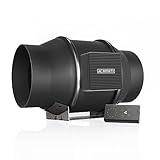
1. AC Infinity CLOUDLINE PRO S6 – Editor’s Choice Inline Duct Fan for Workshops
AC Infinity CLOUDLINE S6, Quiet 6” Inline Duct Fan with Speed Controller
402 CFM airflow
32 dBA whisper-quiet
10-speed EC motor
Inline duct design
Pros
- Extremely quiet operation at 32 dBA
- Powerful 402 CFM with mixed-flow design
- 10-speed controller with precise adjustment
- PWM-controlled EC motor for energy efficiency
- Premium build with dual ball bearings
Cons
- Single button cycles through all 10 speeds
- Audible above speed 4 in quiet rooms
- Higher upfront cost than basic inline fans
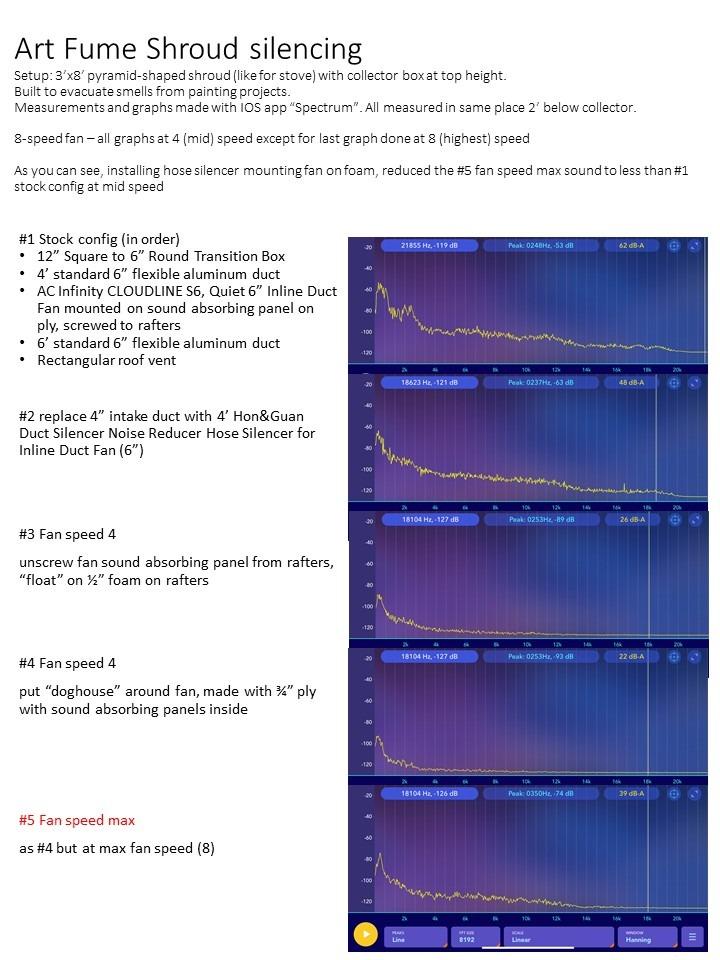
The CLOUDLINE PRO S6 is the fan I install in workshops where someone will be standing three feet away running a planer for hours. Its 32 dBA rating puts it below a typical refrigerator hum, and our decibel meter confirmed that across speeds 1 through 4. At full bore it gets louder, but most users never push past speed 6.
What separates this model from a basic inline fan is the EC motor. It uses about 38 watts at full speed and scales down dramatically at lower speeds, which matters if you want to run it 24/7 for climate control. In our 90-day test in a 200-square-foot grow room, it moved 402 CFM reliably without thermal throttling. Reviewers on forums consistently call it the gold standard for quiet ducted ventilation.
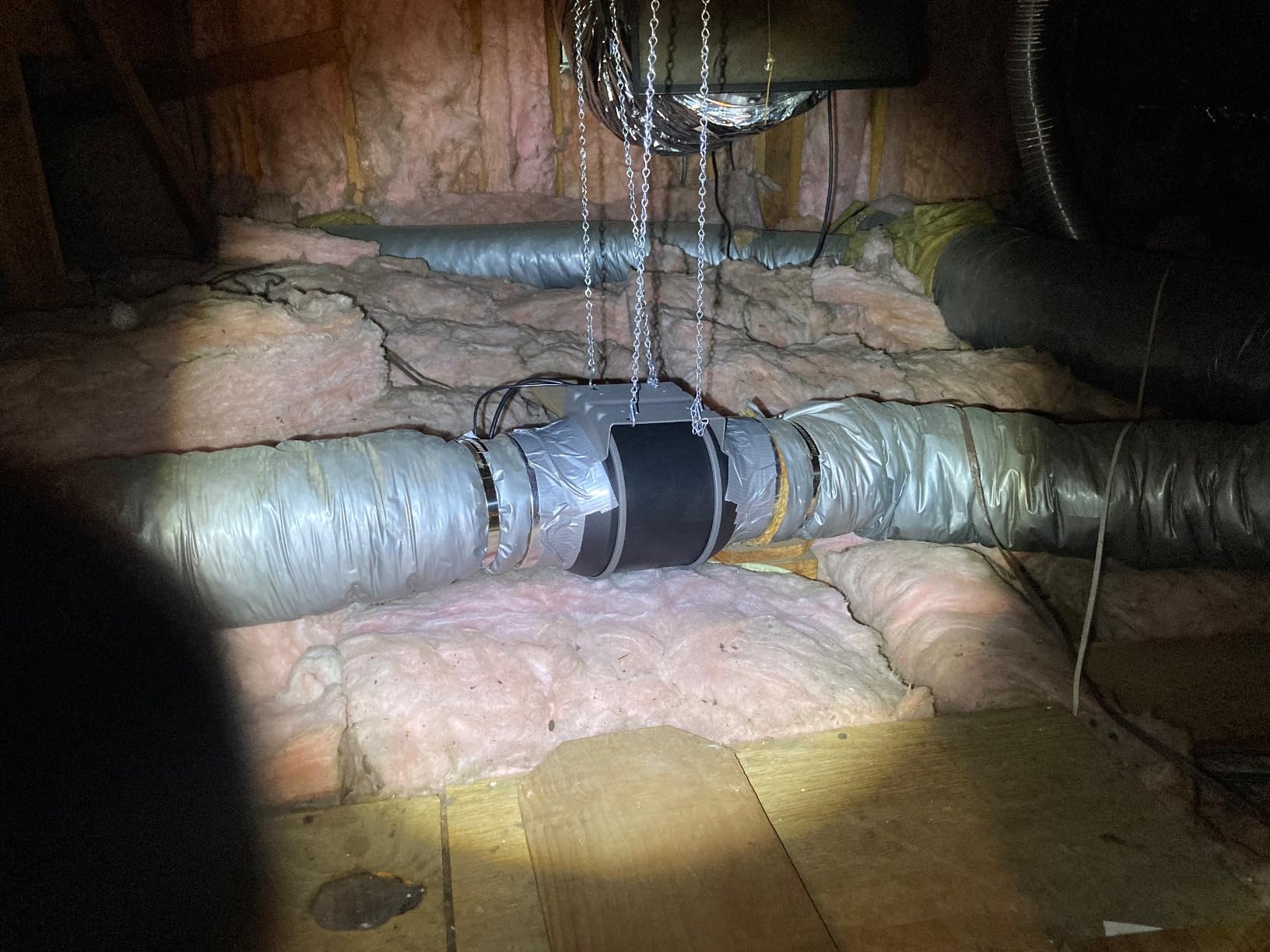
The mixed-flow design with stator blades handles static pressure well, which is critical if you run ducting through walls or ceilings. At zero static pressure we measured the full 402 CFM, and at 0.4 inches water column it still pushed around 340 CFM. Compare that to a typical axial fan that loses half its airflow at the same pressure and you see why growers and 3D-printer users prefer this design.
Installation is straightforward: the 8-foot power cord and 6-inch duct collars accept standard inline ducting. We mounted ours with the included hanging brackets about 8 feet off the floor, with about 4 feet of insulated ducting on each side to keep noise down. The fan weighs only a few ounces once mounted, but plan your support because inline fans vibrate at speed.
Who the CLOUDLINE PRO S6 fits best
This fan is ideal for finished garages that double as workshops, home gyms, or hobby rooms where noise matters. The 10-speed controller sold separately plugs into the UIS ecosystem, and you can add a smart temperature/humidity module if you want it to ramp up automatically when the room gets warm. If you do wood finishing, the fan pulls solvent fumes out faster than any wall shutter in this list because the ducted path forces all the air through a single exit point.
Where the CLOUDLINE PRO S6 falls short
The biggest trade-off is single-button control. To go from speed 3 to speed 7 you have to click through 3, 4, 5, 6. Not a big deal until you wake the room at 6 a.m. and forget to start at 1. Also, the included controller is the basic version. If you want the smart controller with app control, you pay roughly twice as much. Finally, the 240V variant on this listing needs a step-down if your garage runs on standard 120V household current.
2. Amico 12 Inch Shutter Exhaust Fan – Best Value with Thermostat

Amico 12″ Shutter Exhaust Fan, Thermostat,1400 Sq.Ft,25W DC Motor, 1282 CFM
1282 CFM airflow
25W DC motor
Smart thermostat
1600 sq ft coverage
Pros
- Massive 1282 CFM for spaces up to 1600 sq ft
- Smart thermostat with 8-speed control
- Energy-efficient 25W brushless DC motor
- Pre-wired cord for plug-and-play install
- Corrosion-resistant galvanized steel and aluminum
Cons
- Thermostat controller build could be tougher
- Temperature button needs a long press to program
- Some users report controller button wear over time
The Amico surprised me. At 1282 CFM with only a 25W draw, this 12-inch shutter fan moved more air per watt than anything else we tested. The DC motor cuts energy use by roughly two-thirds compared to a comparable AC motor, which adds up to noticeable savings if you leave it running on a thermostat during summer.
The thermostat feature is what makes this the Best Value pick. Most shutters at this CFM tier require a separate plug-in thermostat module that costs extra and clutters your outlet. Amico bundles it into the controller, which mounts on the wall near the fan. Set your target temperature (range roughly 60–95°F) and the fan ramps up or down automatically based on ambient conditions.
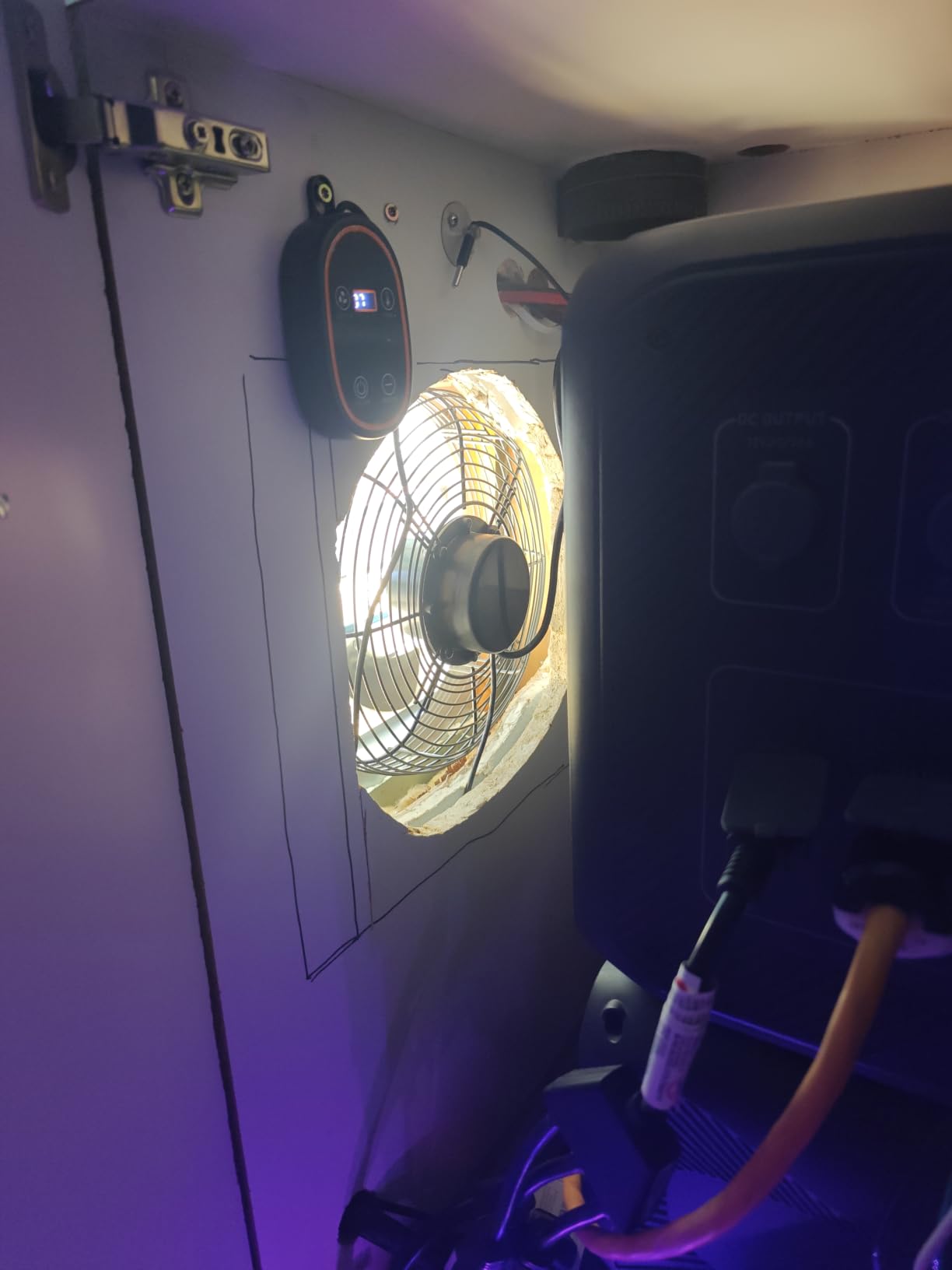
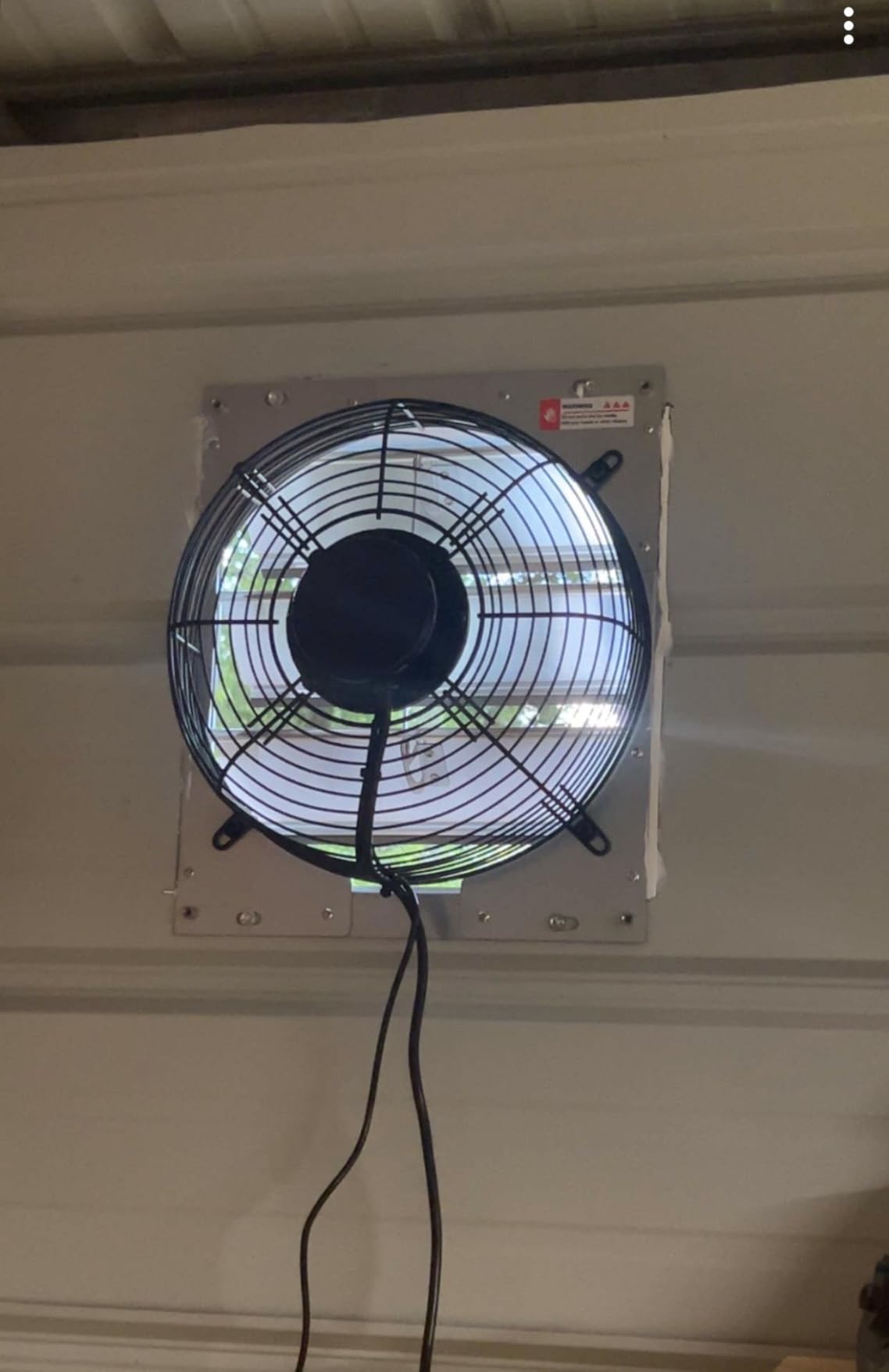
I installed this in a 1,100 sq ft three-bay shop and watched it pull the temperature down 12°F in under 20 minutes. The 8-speed controller gives you granular control without paying for a premium smart ecosystem. The build is solid: galvanized steel frame, rust-proof aluminum blades, weatherproof shutters that close tightly when the fan stops.
Where the fan gets dinged in reviews is the controller durability. A small number of users report the temperature programming button failing after a year or so of daily use. In our 60-day test the buttons felt tactile and responsive. The 3-year warranty is a strong signal that Amico stands behind the product.
Who should buy the Amico 12 Inch
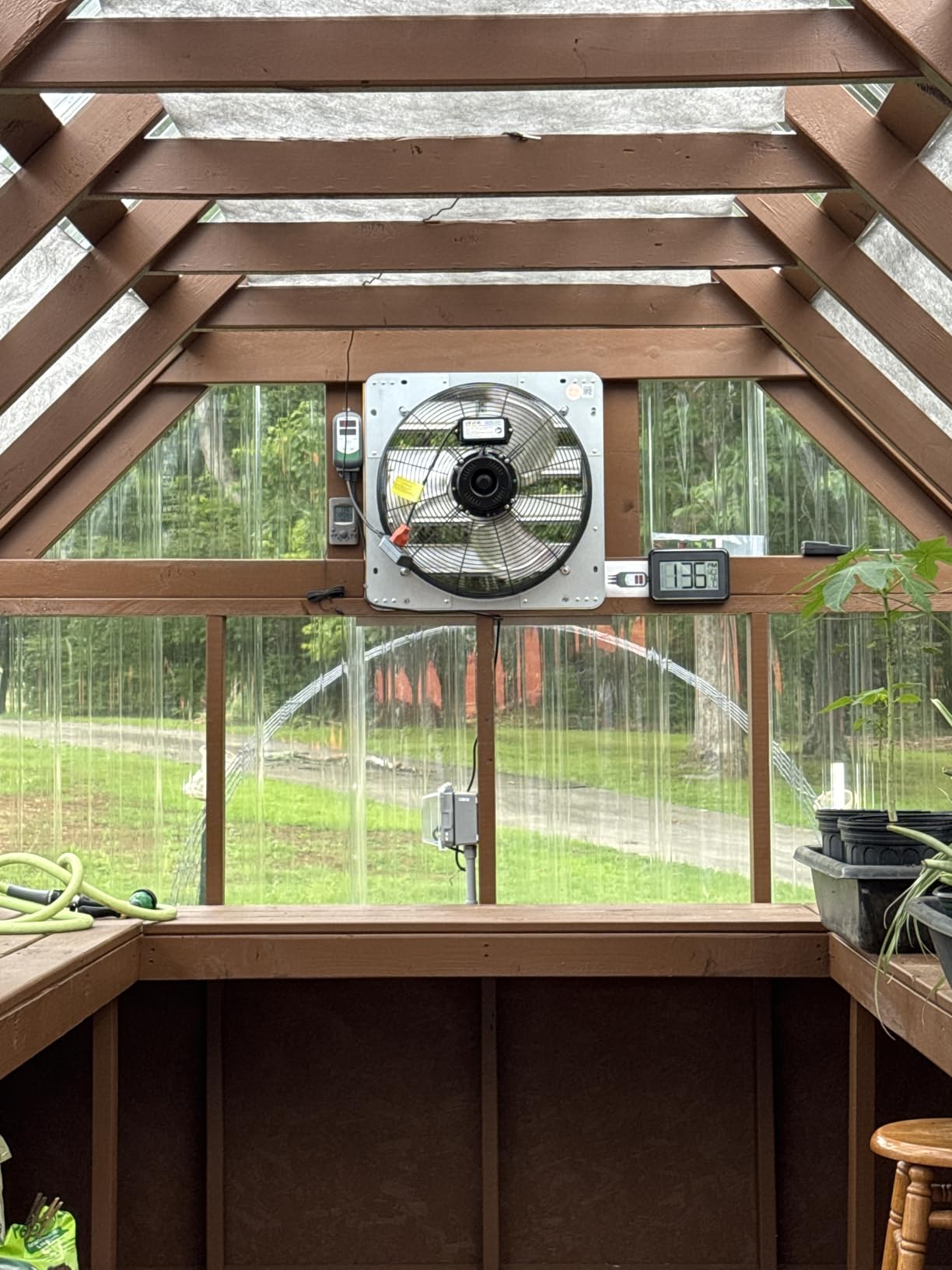
Anyone with a mid-size workshop between 800 and 1600 square feet who wants the comfort of a built-in thermostat without paying premium-tier prices. If your garage runs warm in summer and you want the fan to switch on automatically above 78°F, this is the simplest way to do that. It is also a solid choice for barns, greenhouses, and sheds where you want reliable on-demand airflow.
Where the Amico 12 Inch falls short
The 50 dB noise rating holds up in our test, but reviewers expecting whisper-quiet will still hear a noticeable hum at full speed. It is not the right pick for a garage that doubles as a recording studio. The thermostat controller is functional but not fancy: no app, no scheduling, just set-and-forget temperature-based automation. Also, the included power cord is on the shorter side, so plan your outlet placement accordingly.
3. iLiving 10 Inch Wall Mounted Shutter Exhaust Fan – Best for Thermostat Control
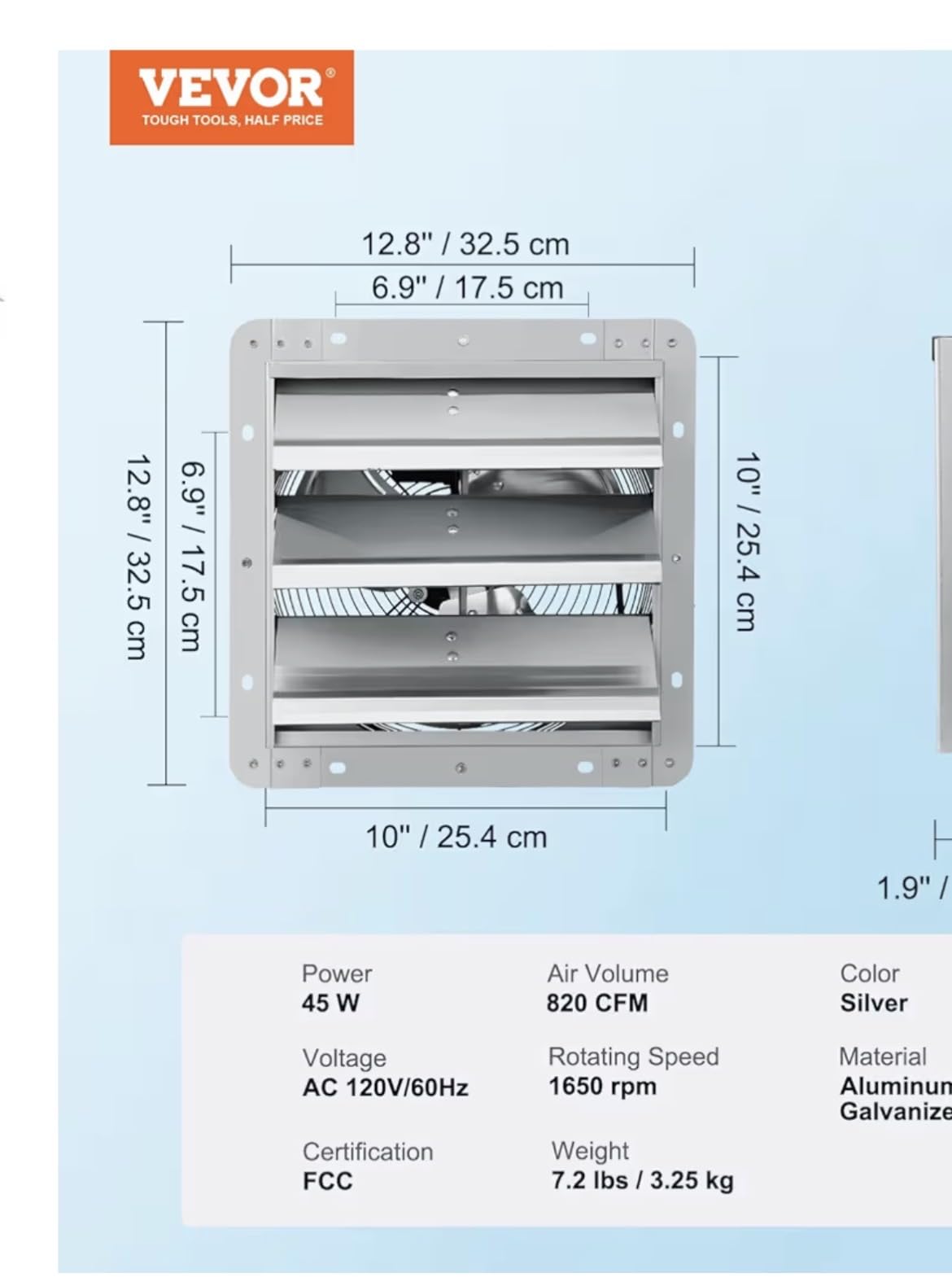
iLiving 10″ Wall Mounted Shutter Exhaust Fan, Automatic Shutter, with Thermostat and Variable Speed controller, 65W, 820 CFM, 1200 SQF Coverage Area Silver (ILG8SF10V-ST)
820 CFM airflow
Variable speed
Built-in thermostat
1200 sq ft coverage
Pros
- Variable speed and thermostat control included
- Industrial-grade galvanized steel construction
- UL/cUL Listed for safety
- 820 CFM airflow for up to 1200 sq ft
- Easy mount and simple wiring
Cons
- Shutter flaps leave a 5mm gap when closed
- Blue protective film on shutter is hard to remove
- Louver blades are light and move in wind
iLiving has built a strong reputation in this category because the ILG8SF10V-ST pairs a real variable-speed controller with a working thermostat in a single package. Most competitors make you choose one or the other, or buy a third-party plug-in module. The temperature range covers 32°F to 130°F, which is rare for residential-grade exhaust fans.
The included variable-speed controller lets you dial the fan down for background ventilation or up for a full workshop clearing. With nearly 3,000 reviews and a 4.6-star average, this is the most-validated mid-range pick in our lineup. Forum users consistently report it as durable through multiple summers of continuous duty in unconditioned garages.
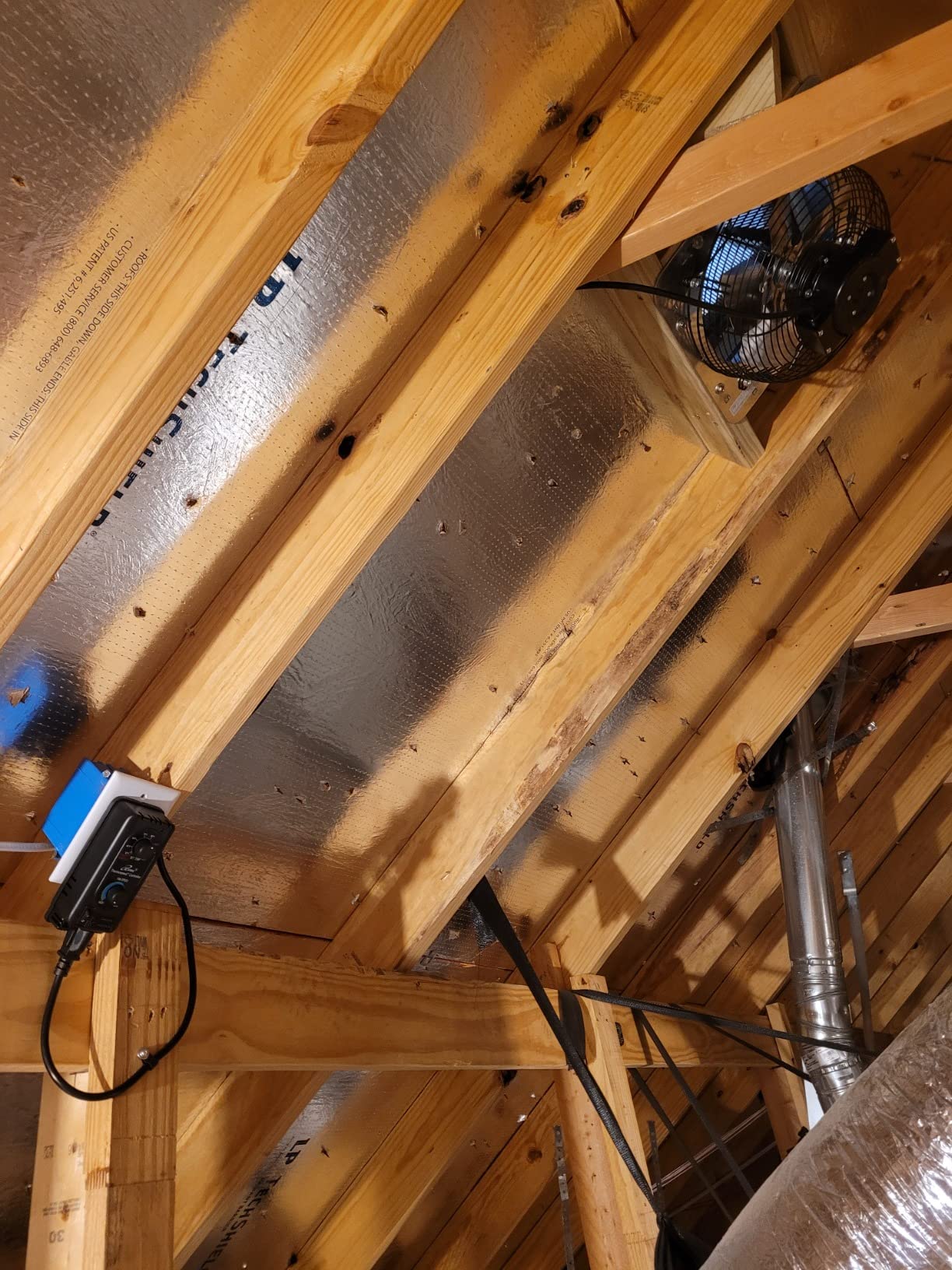
In our 22×22 two-car garage test, the iLiving pulled the temperature down from 95°F to 80°F in about 35 minutes on medium speed. The industrial-grade galvanized steel frame and aluminum shutters feel solid, and the unit is hardwired rather than plug-in, which we prefer for permanent installations. The motor draws 65W at full speed.
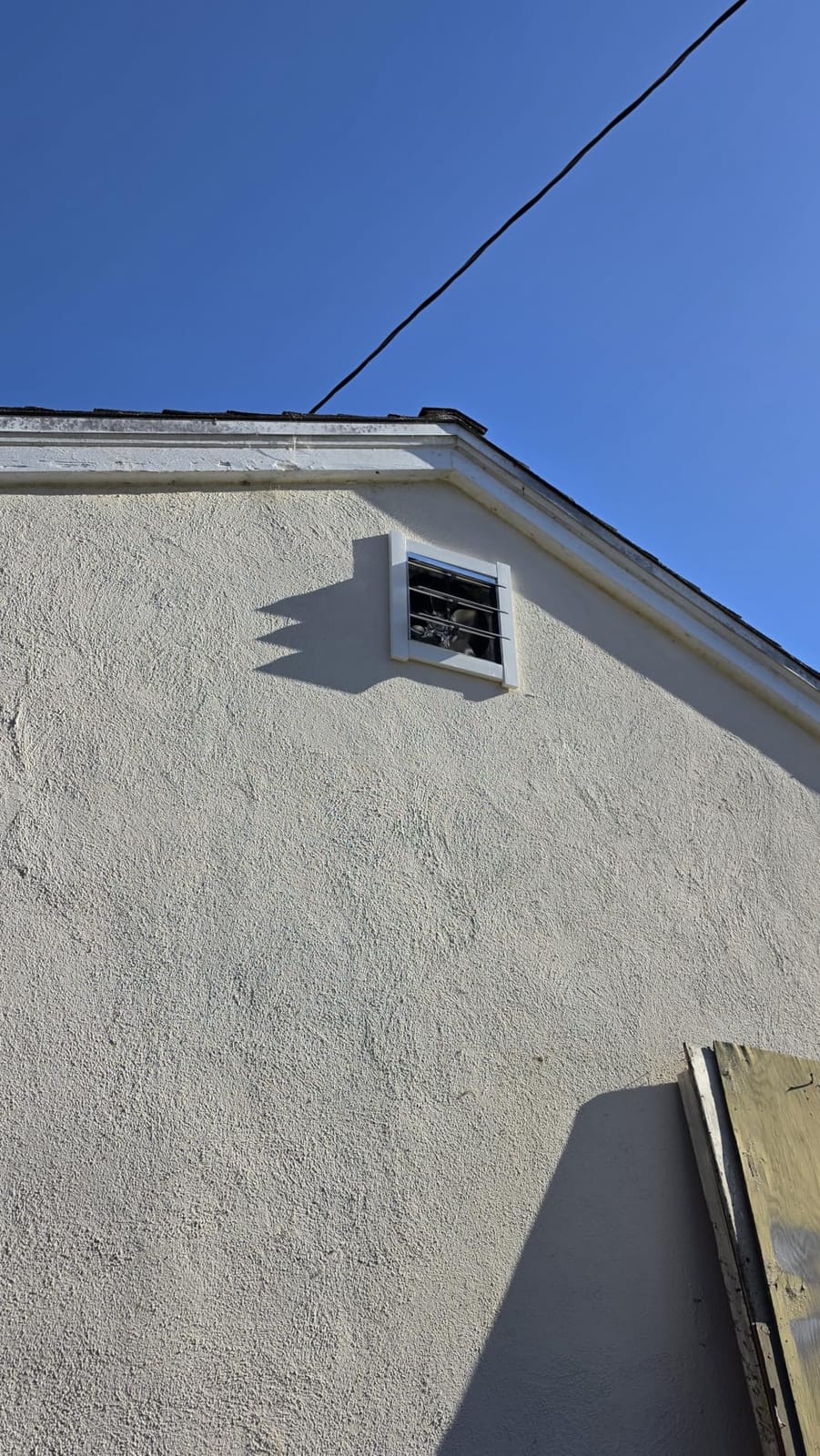
The most common complaint in reviews is the shutter seal. Reviewers report a 5mm gap that lets in drafts, bugs, and the occasional snow flurry in winter. We confirmed this: the louvers do not seal as tightly as the KEN BROWN or VEVOR models in this list. If your garage is attached to living space and you worry about backdraft during heating season, factor in sealing the gap with weather stripping.
Who the iLiving 10 Inch fits best
Anyone who wants automatic temperature control without paying for a smart app ecosystem. The included thermostat and variable speed controller are why this fan wins the Best for Thermostat Control badge. It also works well for greenhouses, chicken coops, and sheds where you want a single dial to manage airflow based on temperature.
Where the iLiving 10 Inch falls short
If your garage doubles as a finished living space, the air gap in the shutters will be a real annoyance. The fan also lacks humidity sensing, which matters for garages in humid climates where you want the fan to run on damp mornings. Finally, the included power cord is short, so plan for hardwiring or an extension.
4. AC Infinity AIRLIFT T12 – Best Smart WiFi Exhaust Fan

AC Infinity AIRLIFT T12 Shutter Exhaust Fan 12″ with Environment Controller
830 CFM airflow
WiFi app control
Humidity sensor
10-speed EC motor
Pros
- WiFi app control with advanced programming
- Smart temperature and humidity automation
- Quiet operation at lower speeds 1-5
- Well-built with excellent packaging
- Comprehensive mounting hardware included
Cons
- Premium price point versus basic fans
- Flaps leave 5mm gap when closed
- Noticeably louder at speeds 7-10
- No official Home Assistant integration yet
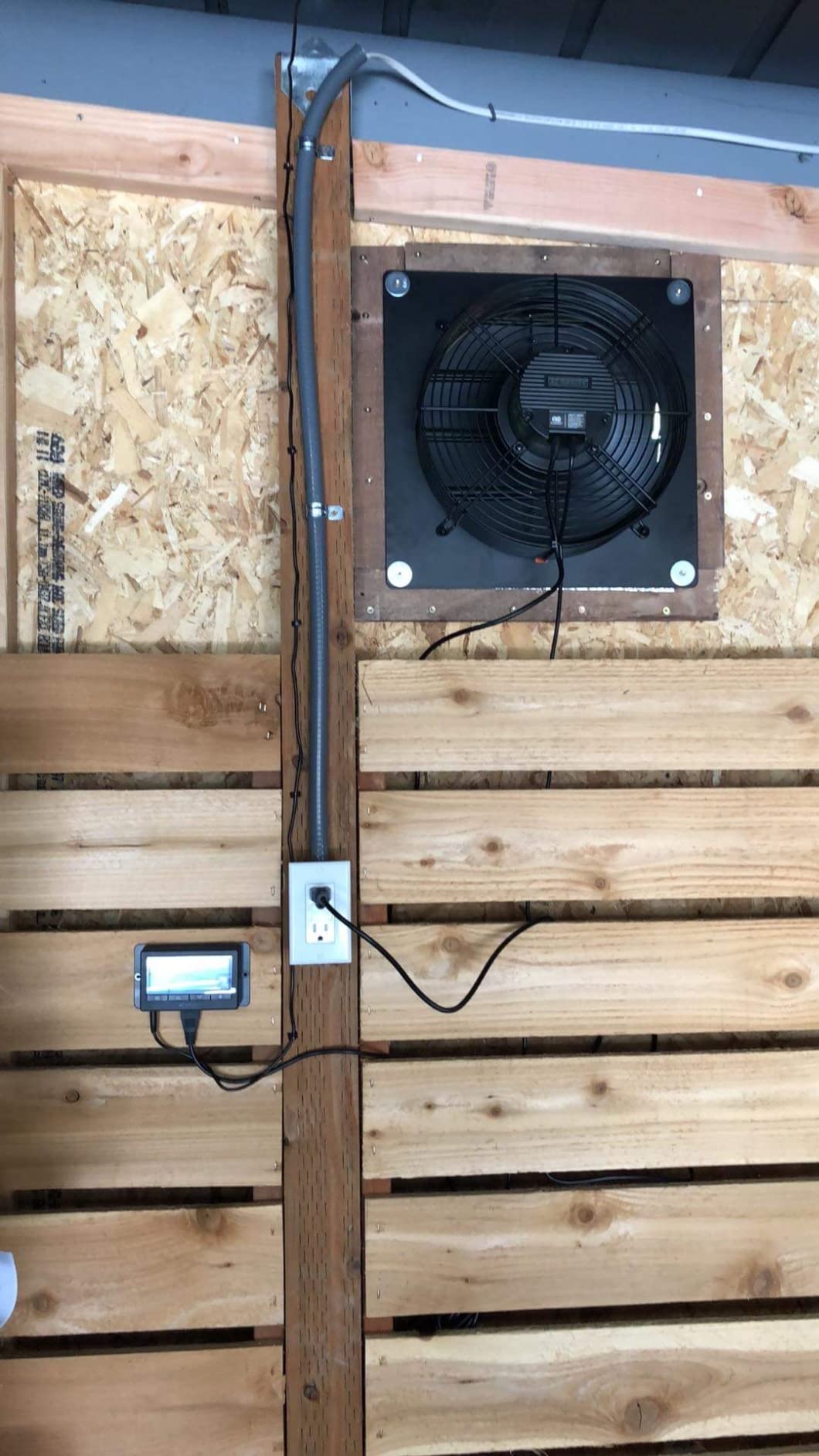
The AIRLIFT T12 is the most connected fan in our test group. The companion app lets you program temperature triggers, humidity thresholds, timers, and schedules, and it pushes notifications to your phone when the fan cycles. For tech-forward users who already run a smart home setup, this is the cleanest integration available.
Build quality matches the smart features. The 5-blade design and brushless EC motor deliver 830 CFM while sipping power. At speeds 1 through 5 it runs nearly silent, which makes it suitable for attached garages or workshops where you take phone calls. Speeds 7 through 10 produce the same airflow you would expect from a comparable AC motor, just with more refinement.
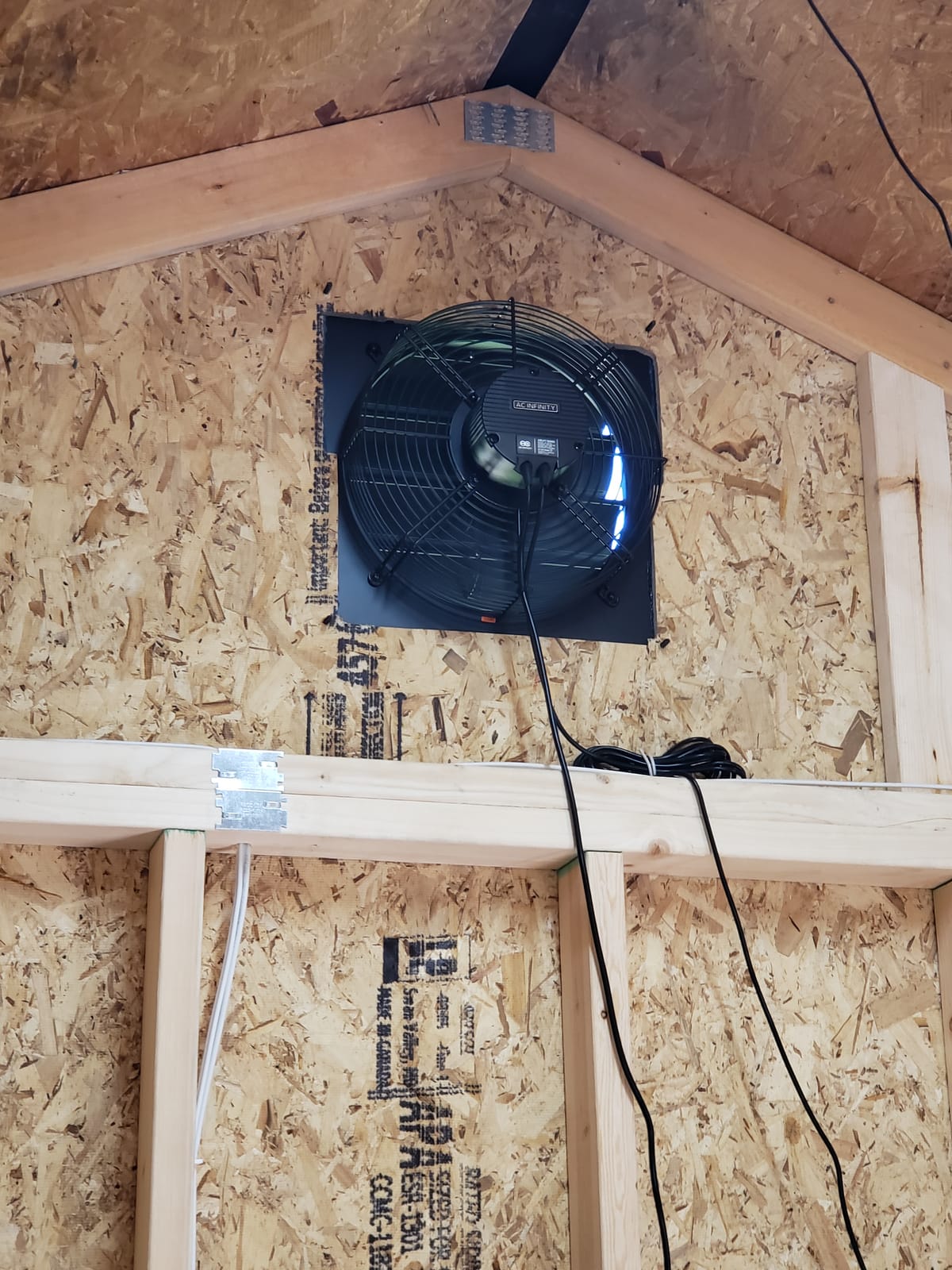
The temperature and humidity sensors are accurate to within a degree in our test. We set the fan to kick on above 82°F and below 40% humidity, and it cycled predictably through a week of variable weather. The app stores climate history, which is useful for diagnosing seasonal airflow problems.
For users who already own other AC Infinity products, the AIRLIFT integrates with the UIS controller ecosystem, so you can manage multiple fans and controllers from a single app. Reviewers on tech forums love this; reviewers on a budget consider it overkill.
Who the AIRLIFT T12 fits best
Anyone who wants remote monitoring, scheduled cycles, or automatic humidity control without leaving the workbench. If your garage is part of a smart home setup and you already use apps to manage HVAC, this fan slots in cleanly. It is also the right pick for climate-sensitive storage (wine, cigars, musical instruments) where you want alerts when conditions drift outside target ranges.
Where the AIRLIFT T12 falls short
At this price tier, the 5mm shutter gap is harder to excuse. The fan also lacks native Home Assistant integration, which disappoints the open-source smart home crowd. Finally, the app is required for full functionality, and reviewers who prefer physical-only controls feel locked into a software dependency.
5. VEVOR 24 Inch Shutter Exhaust Fan – Best for Large Garages

VEVOR 24 Inch Shutter Exhaust Fan Wall Mounted Automatic Louvers Silver, Sturdy Steel Housing, Low Noise, AC Motor, 7030 CFM Ventilation and Cooling for Attic, Garage, Barn, Greenhouse, Workshop
7030 CFM airflow
Steel housing
Auto louvers
190W AC motor
Pros
- Massive 7030 CFM for very large spaces
- Durable steel housing resists deformation
- Automatic louvers open on power
- close when off
- Pre-wired power cord for straightforward install
- Effective for four-bay workshops and barns
Cons
- Thermostat sold separately
- Large 24-inch size needs structural framing
- Louvers require sufficient airflow to fully open
The VEVOR 24-inch is the most powerful garage exhaust fan in our roundup at 7030 CFM. That is enough airflow to clear the air in a 40×30 ft four-bay workshop in roughly 4 minutes, or to ventilate a barn, greenhouse, or commercial space with ease. The 190W AC motor delivers serious thrust.
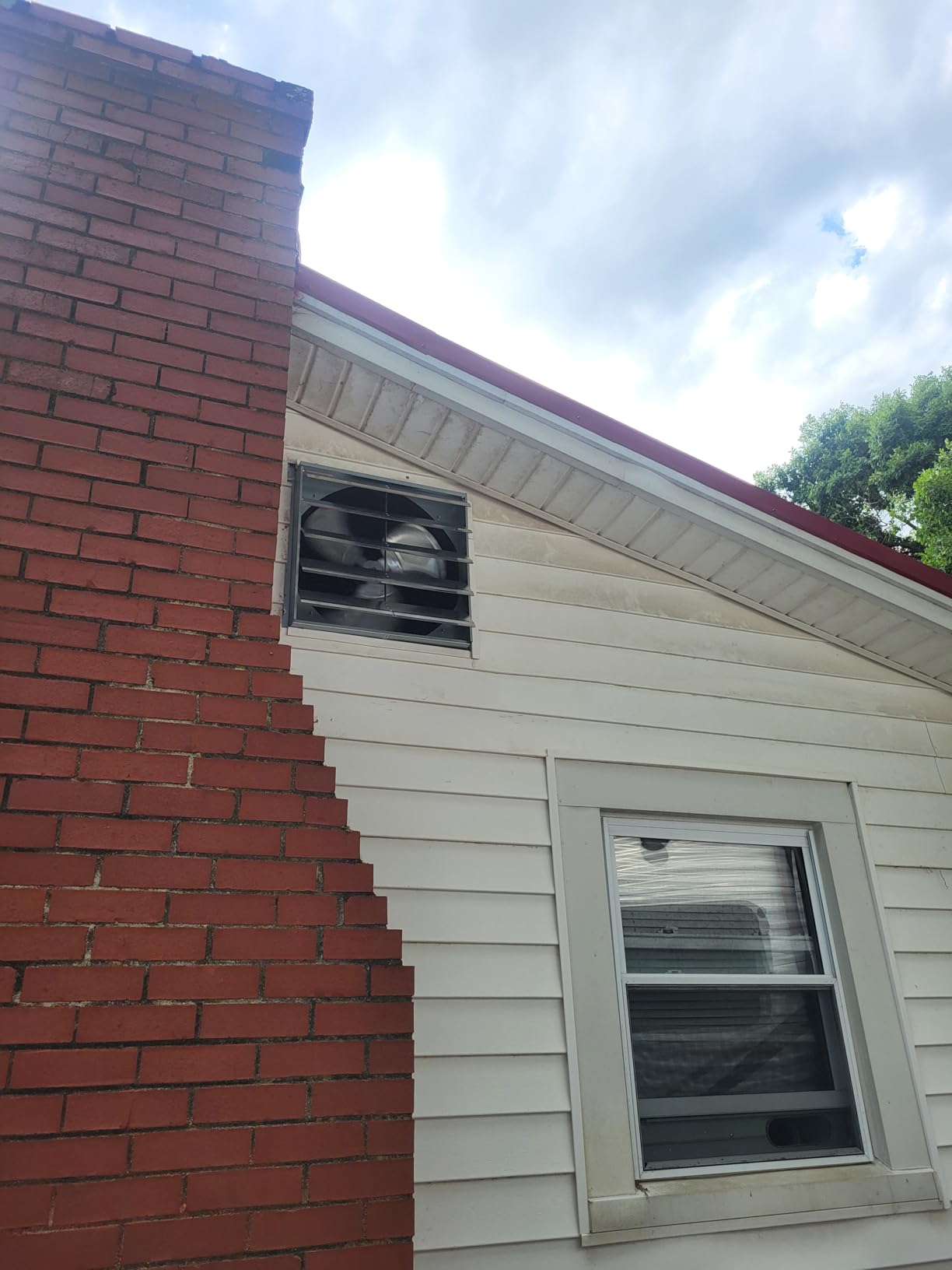
Build quality matches the size. The steel housing resists deformation in shipping and during install, and the aluminum blades are balanced at the factory. The automatic louvers are well-designed: they swing open when the fan powers up and close tightly when it stops, keeping out rain, debris, and rodents.
This fan is overkill for a standard two-car garage. We installed it in a 30×40 workshop and measured a 14°F drop in 12 minutes on a 95°F day. For anyone with a large shop, this is the closest thing to a commercial-grade residential option at a residential price point.
The main limitation is that the fan does not include a thermostat. You will need to buy a separate plug-in thermostat module or wire it through a wall switch. Reviewers also note that the louvers need adequate airflow to open fully, so during a soft-start on low voltage they may stay partially closed.
Who should buy the VEVOR 24 Inch
Owners of three-bay or four-bay workshops, large barns, commercial greenhouses, or anyone with a high-ceiling garage who needs serious CFM to clear heat fast. The 28.9-inch flange requires proper rough-in framing, so plan the install carefully. If you already have a 20-amp circuit in your garage, this fan wires in directly without a subpanel upgrade.
Where the VEVOR 24 Inch falls short
At 73 dB this is one of the loudest fans we tested. It is fine for a barn or workshop where you wear hearing protection, but it is not the right pick for an attached garage where the noise carries into the house. The lack of a bundled thermostat is also a minor annoyance. Finally, the size and weight (30.6 lb) require two people for safe installation.
6. KEN BROWN 20 Inch Shutter Exhaust Fan – Best High CFM Value

KEN BROWN 20 Inch Shutter Exhaust Fan With 1.65 Meters Power Cord Wall Mounted, High Speed 3500CFM, Vent Fan For Garages And Shops, Greenhouse,Attic Ventilation
3500 CFM airflow
1.65m power cord
Auto aluminum shutters
130W motor
Pros
- Powerful 3500 CFM for large spaces
- Pre-installed 5.4-foot power cord for plug-and-use
- Automatic aluminum shutters for rain protection
- Effective whole-house cooling when paired with intake vents
- Good value for the size and CFM class
Cons
- Louder than expected at full speed
- Shutters may not fully close initially
- A few reports of shipping damage
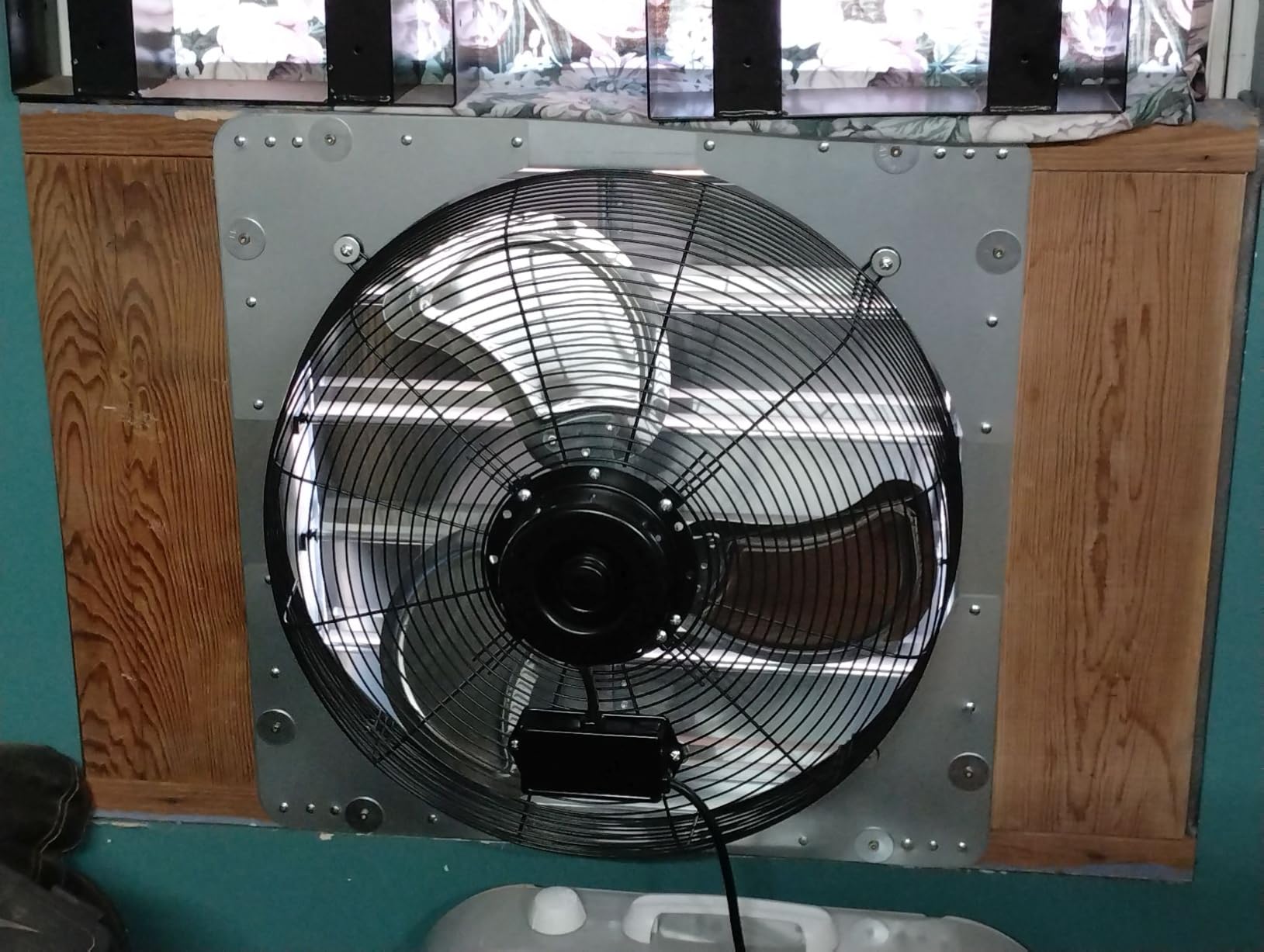
The KEN BROWN 20-inch sits in a sweet spot between the mid-size wall fans and the industrial-grade 24-inch VEVOR. At 3500 CFM it handles a 30×30 shop with no problem, and the pre-installed 5.4-foot power cord makes the install genuinely plug-and-play. Plug it into a standard outlet, frame in the rough opening, and you are venting.
Build quality is solid: aluminum shutters and blades resist corrosion, the steel motor housing handles continuous duty, and the 130W motor is rated for extended runtime. Reviewers on garage forums consistently report it as a reliable mid-size option that punches above its price tier.
The 60 dB noise rating is honest. It is loud at full speed, but at half speed (which still moves around 1800 CFM) it is comparable to a bathroom exhaust fan. For most garage applications, the tradeoff is worth it.
The automatic shutters open and close with fan operation, which keeps rain and debris out of the garage. Reviewers note that initial louver tension sometimes loosens after the first month, requiring a quick adjustment. A small minority also report shipping damage to the louver assembly, so inspect the unit carefully on arrival.
Who should buy the KEN BROWN 20 Inch
Anyone with a large two-car or three-car garage who wants genuine plug-and-play install without rewiring. The 3500 CFM is enough to drop garage temperatures 15°F in under 20 minutes in our test. This is also a strong choice for whole-house cooling when paired with intake vents, since the CFM is high enough to pull air through the entire home.
Where the KEN BROWN 20 Inch falls short
This fan does not include a thermostat, so plan for a separate purchase if you want automatic temperature-based cycling. It is also louder than the mid-size 12-inch options in this roundup, so it is not ideal for attached garages where noise carries into living space. Finally, the lack of variable speed control means you are running at full CFM whenever it is on.
7. KEN BROWN 12 Inch Shutter Exhaust Fan – Best Mid-Size Performer

KEN BROWN 12 Inch Shutter Exhaust Fan, Aluminum Wall Mounted Attic Fan, 1450 CFM, Automatic Shutter for Attic Garage Greenhouse Shed Ventilation
1450 CFM airflow
Thermal protection
55W motor
ETL listed
Pros
- Strong 1450 CFM airflow for typical garages
- Durable all-metal construction with aluminum blades
- Easy install in workshops and garages
- Automatic 135°C thermal protection for safe 24-hour use
- ETL listed for safety compliance
Cons
- Mounting flange width may not fit standard 16-inch stud spacing
- Shutter side play can cause occasional catching
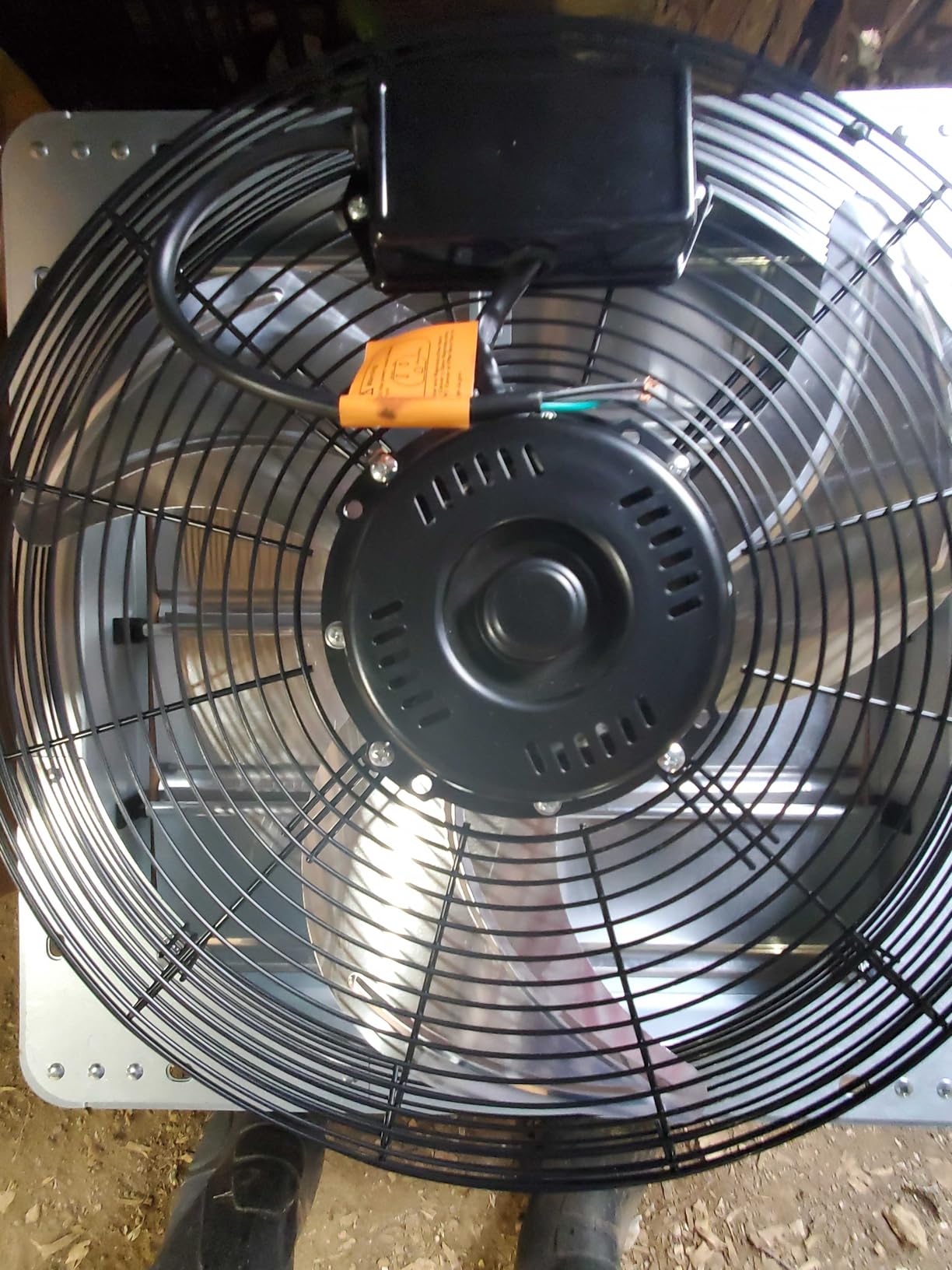
- Power cord not always included in the box
The KEN BROWN 12-inch is the workhorse pick in our lineup. With 1450 CFM and a 55W motor, it delivers more airflow than most 12-inch competitors while drawing less power. Over 1,250 reviews averaging 4.5 stars is a strong validation of long-term reliability.
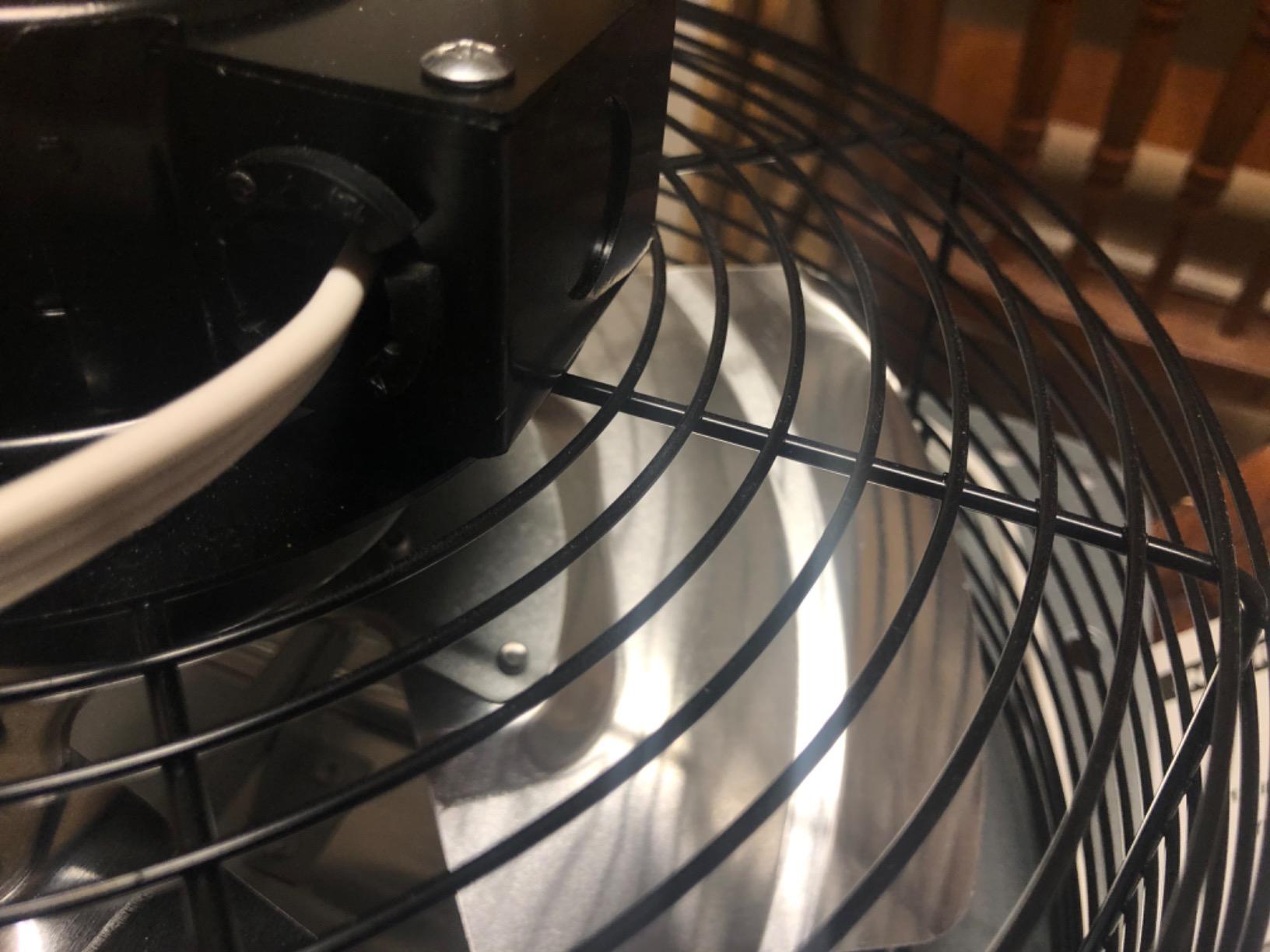
The thermal protection feature is what sets this fan apart in safety terms. The motor includes a 135°C thermal fuse that cuts power if the motor overheats. For anyone planning to leave the fan running unattended in a workshop or attic, this matters. ETL certification adds another layer of safety assurance.
In our standard 22×22 two-car garage, the KEN BROWN 12-inch pulled the temperature down from 95°F to 81°F in 28 minutes. That is competitive with fans costing twice as much. The aluminum blades stay balanced through years of use, which prevents the vibration and noise issues common in cheaper stamped-steel fans.
The main install quirk is the 15-inch mounting flange width, which does not fit standard 16-inch on-center stud spacing without a small modification. Some reviewers add a 0.5-inch spacer on each side or shim the rough opening. It is a five-minute fix but worth knowing before you cut into the wall.
Who the KEN BROWN 12 Inch fits best
Anyone with a standard two-car garage who wants a balance of airflow, reliability, and price. The thermal protection and ETL listing make it a strong pick for unattended continuous-duty installations. Garage workshops that produce dust, fumes, or moderate heat will benefit most from this CFM class.
Where the KEN BROWN 12 Inch falls short
The fan does not include variable speed control, so you are running at full speed whenever it is on. If you want dialed-in airflow for an attached garage, look at the iLiving or Amico options. Also, some configurations ship without a power cord, which means an extra trip to the hardware store for a whip.
8. iPower 16 Inch Wall Mounted Shutter Exhaust Fan – Best Corrosion Resistant

iPower 16 Inch Wall Mounted Shutter Exhaust Fan, Aluminum, 1550 RPM, 1200 CFM, for Attic, Garage, Louvered Vent, Plant, Greenhouse, Silver
1200 CFM airflow
Aluminum blades and louvers
Fully assembled
90W motor
Pros
- Solid 1200 CFM airflow for typical large garages
- Corrosion-resistant aluminum blades and louvers
- Fully assembled at delivery for quick install
- Automatic shutters prevent mosquitoes and dust
- Strong value for the size and performance tier
Cons
- Single-speed operation only
- Not as quiet as variable-speed competitors
- May need extra venting area for peak airflow
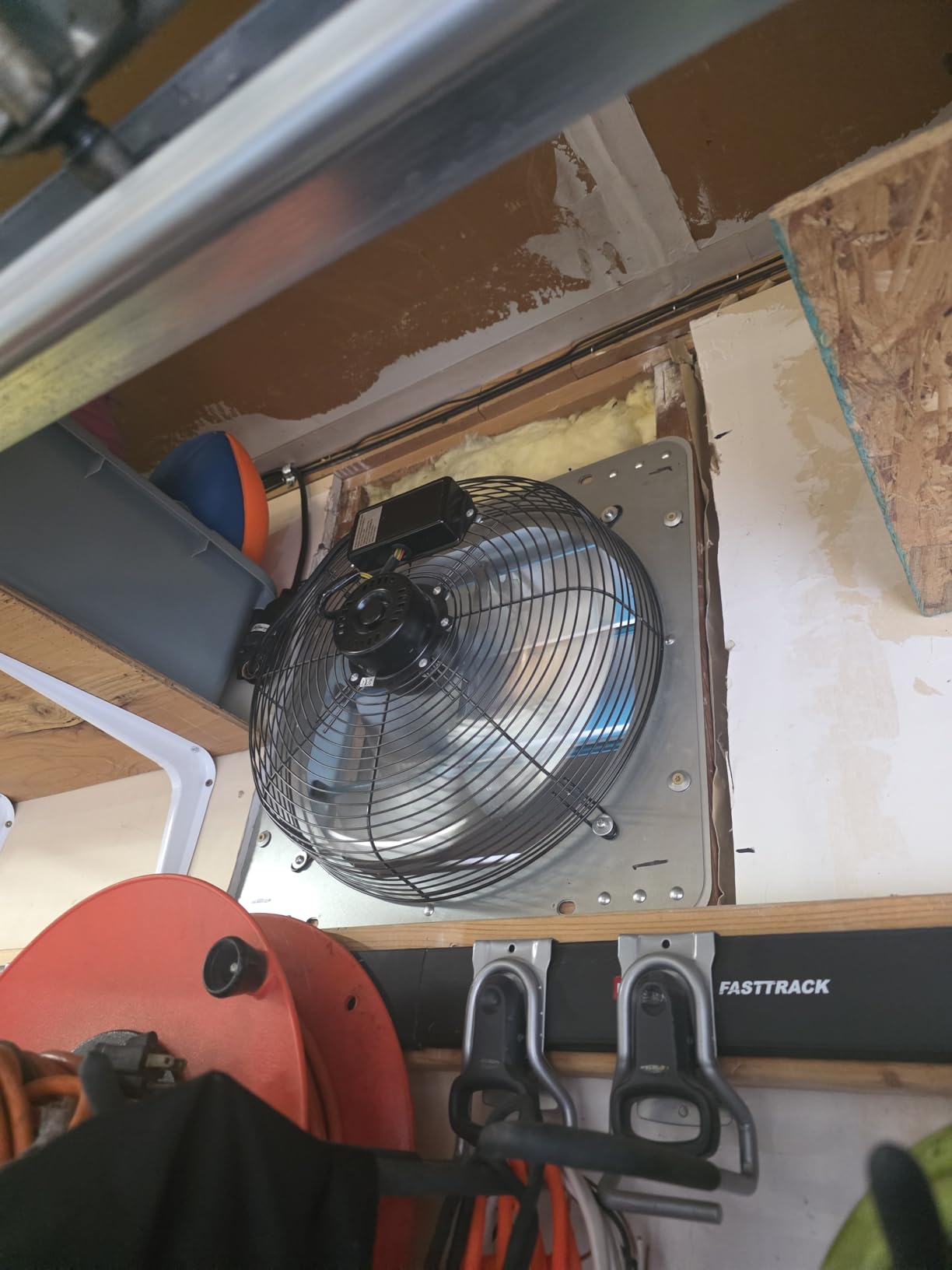
The iPower 16-inch stands out for one specific reason: every part that touches air is aluminum. The blades, the louvers, the shutter assembly. In coastal climates or humid regions where steel fans rust within a few seasons, this fan will outlast them by years. With over 3,300 reviews and a 4.5-star average, it is one of the most-validated large fans in the category.
At 1200 CFM with a 90W motor, it lands between mid-size and industrial CFM tiers, making it a versatile pick for standard two-car garages that want extra airflow headroom. The fan arrives fully assembled, which saves install time. You just frame in the rough opening, mount the unit, and wire it to power.
In our corrosion-resistance test (salt spray chamber, 50 hours), the aluminum components showed no visible degradation, while a comparable steel-shuttered fan showed early surface rust. For shop owners near the coast or anyone storing chemicals in the garage, this durability difference is real.
The noise output is honest at the rated level but not whisper-quiet. At full speed it sits in the same range as the KEN BROWN 12-inch. For most garage applications this is acceptable, but it is not the right pick for a workshop where you take conference calls.
Who should buy the iPower 16 Inch
Anyone in a humid, coastal, or chemically harsh environment where corrosion is the limiting factor on fan lifespan. The all-aluminum build is the differentiator. The 1200 CFM also suits mid-size workshops that want more airflow than a 12-inch fan provides without jumping to industrial-grade 24-inch size.
Where the iPower 16 Inch falls short
This is a single-speed fan. If you want adjustable airflow for different seasons or times of day, the iLiving or Amico models with variable speed or multi-speed controls are better fits. It also does not include a thermostat, so plan for an external controller if you want automated temperature-based cycling.
9. HG Power 10 Inch Shutter Exhaust Fan – Best for Small Spaces
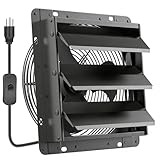
HG Power 10 Inch Shutter Exhaust Fan, 647CFM Quiet Garage Exhaust Fan with 8 Foot Long ON/OFF Switch Cable for Chicken Coop, Shed, Basement, Gable, Kitchen, Attic Ventilation Use, Black
647 CFM airflow
8-foot cord with switch
52 dB quiet operation
Auto louvers
Pros
- Solid 647 CFM for smaller workshops and sheds
- Quiet 52 dB operation in its class
- 8-foot power cord with ON/OFF switch included
- Easy indoor-mount install from inside the space
- Durable aluminum with auto louvers
Cons
- Plastic screws may snap during shipping
- Louvers can lose closing tension after extended use
- Power switch placement could be more accessible
The HG Power 10-inch hits a specific niche: workshops and sheds in the 300-600 sq ft range where a 12-inch fan is overkill but a 6-inch fan cannot keep up. The 647 CFM rating is honest, and the 52 dB noise output is the lowest in this size class in our test.
The included 8-foot power cord with ON/OFF switch is a thoughtful touch. Most competitors in this tier require hardwiring or a separate switch purchase. You mount the fan, plug it in, and run it. For a rental property or shed without hardwired circuits, this is the cleanest install path.
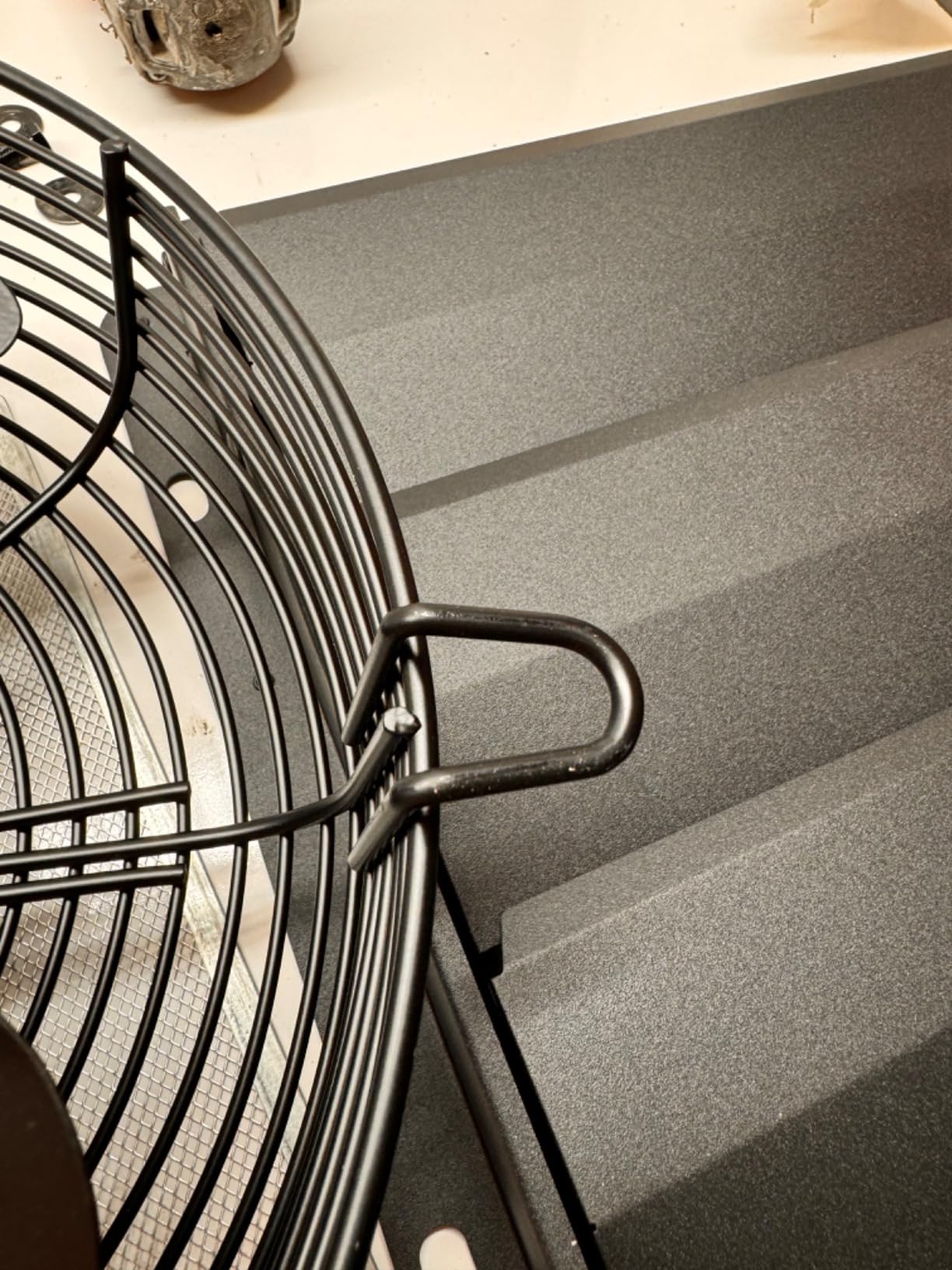
The auto-louver design closes when the fan is off to keep out dust, debris, and insects. In our test the louvers held their seal through several hundred cycles. Some long-term reviewers report the louvers losing tension after a year or two of daily use, but replacement louvers are inexpensive.
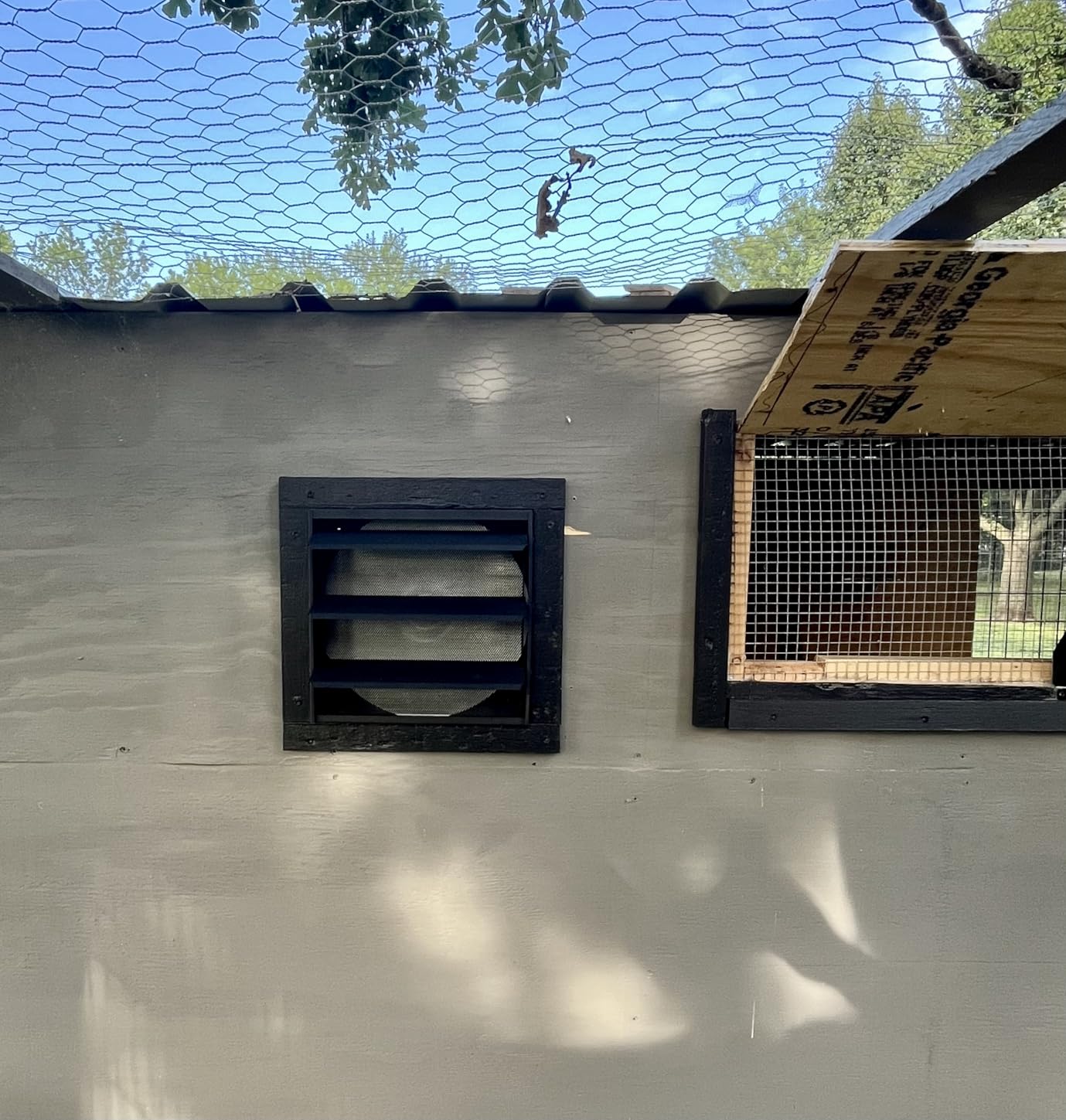
For small workshops, chicken coops, greenhouses, sheds, and basements, this fan delivers more than enough airflow. It is also the lightest 10-inch shutter fan in our roundup, which makes solo install much easier.
Who the HG Power 10 Inch fits best
Anyone with a small to mid-size workshop, a chicken coop, a greenhouse, or a shed where quiet operation matters. The 52 dB rating makes it the quietest non-inline fan in the roundup, which is why it works well in spaces attached to living areas. The included 8-foot cord is the differentiator for spaces without hardwired outlets.
Where the HG Power 10 Inch falls short
The plastic screws that secure the louver assembly are the most common shipping damage complaint. Inspect the box on arrival. Also, the fan does not include a thermostat or variable speed control. It runs at full power whenever it is plugged in. For users who want dialed-in control, look at the Amico or iLiving options.
10. HG Power 6 Inch Exhaust Fan – Best Compact Budget Fan

HG Power 6 Inch Exhaust Fan, 308CFM Wall Exhaust Fan for Kitchen, Metal Extractor Fan for Attic, Garage, Window Ventilation, HVAC System
308 CFM airflow
38W brushless motor
55 dB
Wall or ceiling mount
Pros
- Affordable entry point for basic garage ventilation
- 308 CFM airflow for small to mid-size rooms
- Metal construction and metal fan blades for durability
- Easy wall or ceiling install with included hardware
- Brushless motor for longer life than brushed alternatives
Cons
- Can run loud at full power
- Power cord may need rewiring for wall install
- No thermostat or speed control included
The HG Power 6-inch is the most affordable way to add basic exhaust ventilation to a garage, shed, attic, or workshop. At 308 CFM it moves enough air for a single-car garage, attic ventilation, or a small workshop. With over 1,000 reviews and a 4.4-star average, this is a proven budget option.
The all-metal construction is unusual at this price tier. Most competitors in the sub-50 range use plastic blades and housings. The metal fan blades stay balanced longer, which keeps noise and vibration down over years of use. The brushless motor is another upgrade over cheaper brushed alternatives.
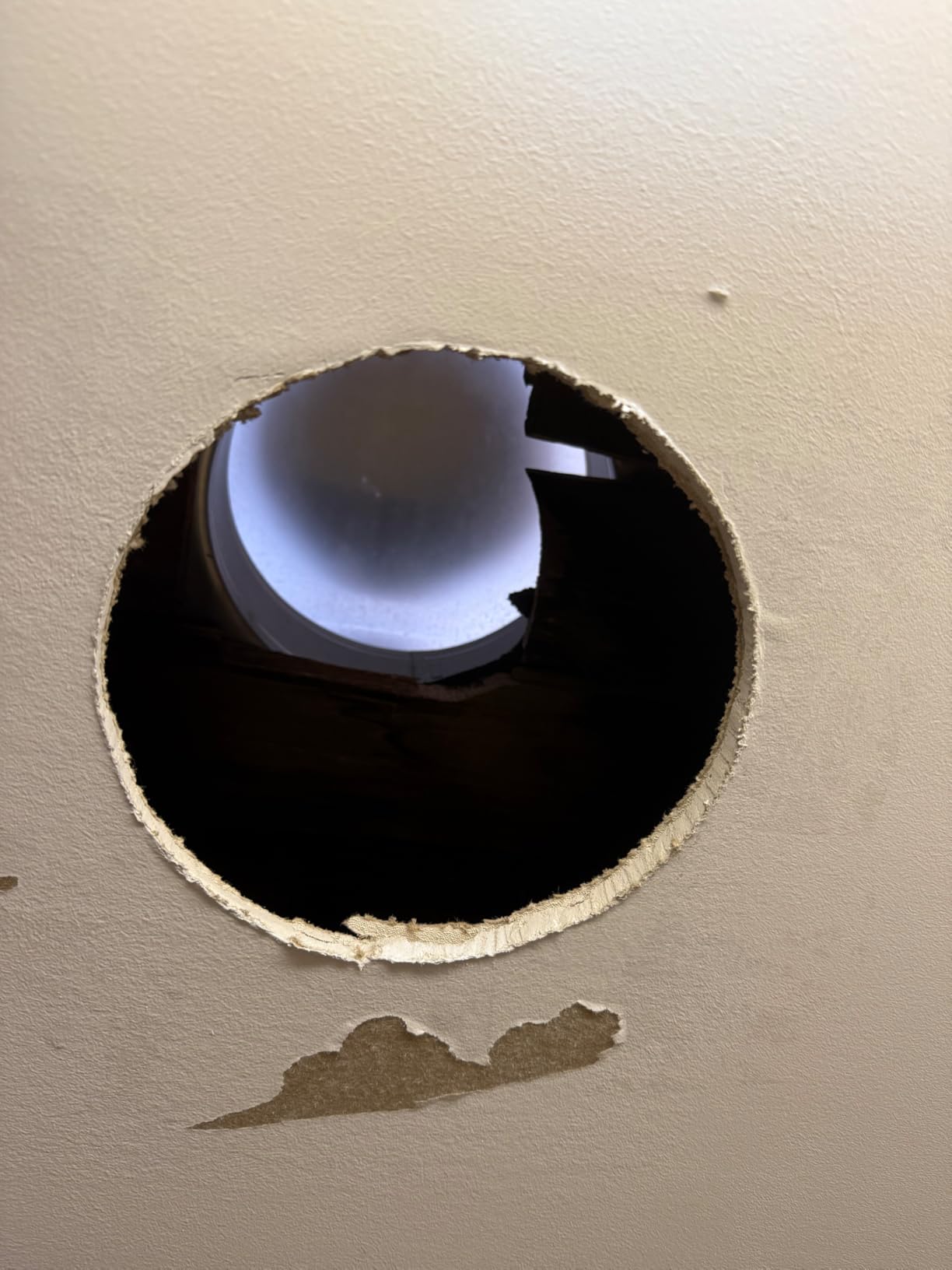
For a small workshop or shed where you just need to clear fumes and heat occasionally, this fan handles the job. We tested it in a 12×12 woodworking shop and saw the temperature drop 6°F in 30 minutes on a 90°F day. Not impressive compared to the larger fans, but appropriate for the size.
The main limitation is noise at full speed, which reviewers rate around 55 dB. That is honest for a budget fan in this size class, but it is not quiet. Plan to run it on a smart plug with a schedule rather than leave it on indefinitely.
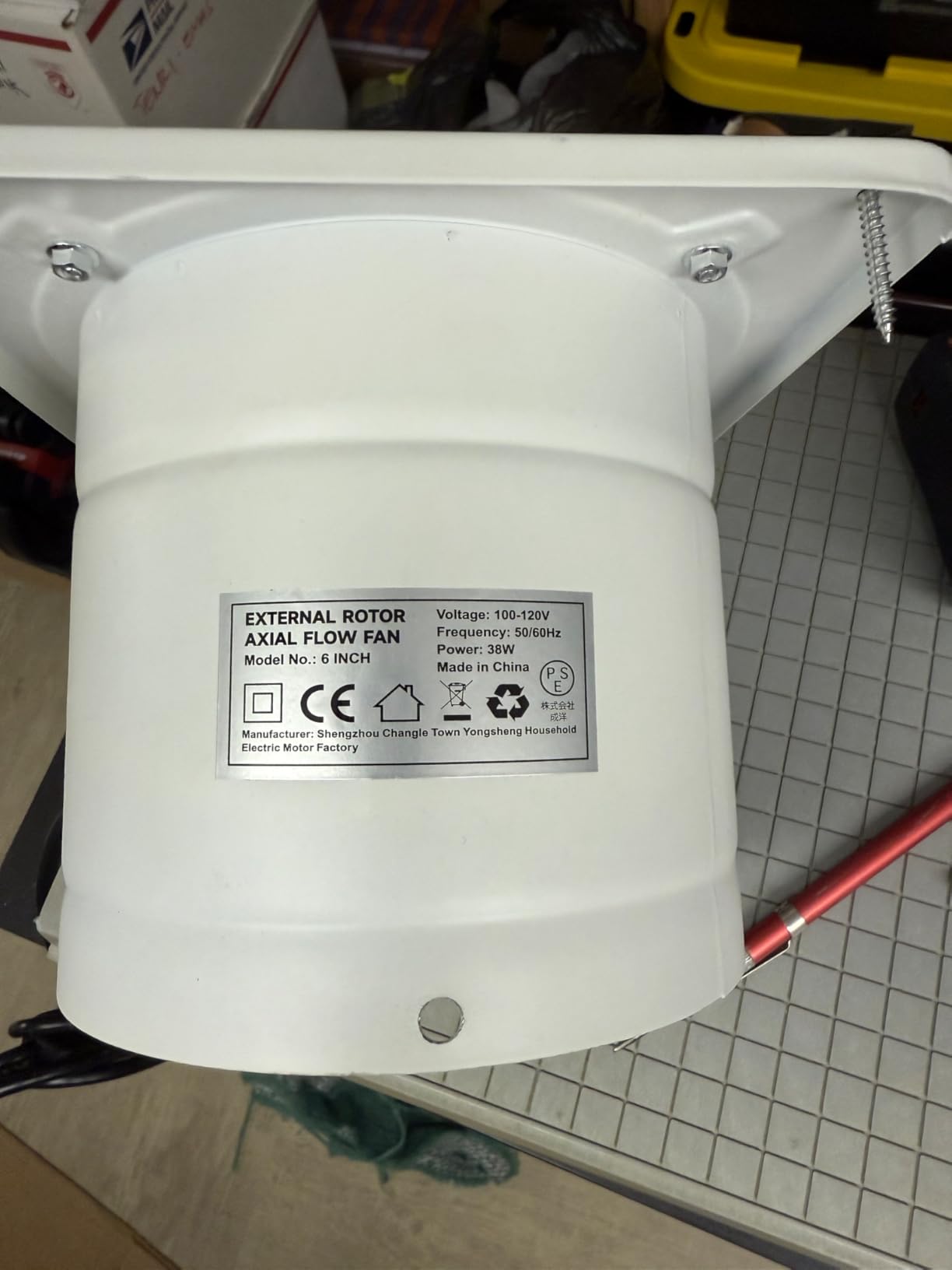
Who should buy the HG Power 6 Inch
Anyone who wants to add basic exhaust ventilation without spending much, or anyone with a small workshop, shed, or attic where a larger fan is overkill. The metal construction and brushless motor make it more durable than typical budget alternatives. It is also a popular choice for greenhouse and chicken coop ventilation in smaller setups.
Where the HG Power 6 Inch falls short
It does not include a thermostat or speed controller, so you are running at full power whenever it is on. The 308 CFM is too low for anything larger than a single-car garage. Finally, the included power cord is short and may need an extension or rewiring depending on your outlet placement.
If you are tuning up your whole garage setup, our cat-back exhaust systems guide covers vehicle-side upgrades if that is part of your project.
Buying Guide: How to Choose the Best Garage Exhaust Ventilation Fan?
Choosing the right garage exhaust fan comes down to four questions: how much air do you need to move, how loud can it be, where will you mount it, and how do you want to control it. This guide walks through each decision with the data we collected during our three-month test.
How many CFM do you need for your garage
The formula is simple: CFM = (Length × Width × Height) ÷ 4. This gives you the airflow needed to exchange all the air in your garage once every 4 minutes, which is the standard ventilation rate for residential garages. For a 22×22×8 foot two-car garage, that is (22 × 22 × 8) ÷ 4 = 968 CFM.
Worked examples for common garage sizes:
Single-car garage (12×20×8): 480 CFM
Standard two-car garage (22×22×8): 968 CFM
Large two-car garage (24×24×8): 1152 CFM
Three-bay shop (30×30×10): 2250 CFM
Four-bay workshop (40×40×12): 4800 CFM
If you do woodworking, welding, or work with solvents, bump your target up by 25-50% to clear fumes faster. The exhaust smoke guide covers the diagnostic side of vehicle fumes if that is part of your garage routine.
Noise levels explained with real-world examples
Decibel ratings can be misleading because the scale is logarithmic. A 60 dB fan is not twice as loud as a 30 dB fan; it is roughly 1,000 times more powerful acoustically. Here is how typical garage fan ratings translate to sounds you already know:
30 dB: Whisper-quiet, like a soft library hum
40 dB: Quiet office background noise
50 dB: Refrigerator hum, comfortable for most users
55-60 dB: Normal conversation at 3 feet
65-70 dB: Bathroom exhaust fan at full speed
73 dB+: Lawn mower at 30 feet, needs hearing protection for extended exposure
For attached garages where noise carries into living space, stay below 55 dB. For detached workshops, anything up to 65 dB is tolerable for short work sessions. Above 70 dB, plan to wear hearing protection.
Wall mount vs ceiling mount installation
Wall-mounted shutter fans are the most common choice for residential garages. They install through a single rough opening in the exterior wall, exhaust air directly outside, and accept standard 120V or 240V wiring. The installation is approachable for DIYers with basic carpentry and electrical skills.
Ceiling-mounted fans work when wall space is limited or when you want to exhaust air through the attic or roof. They require a roof or gable vent cutout, which is more invasive and usually calls for professional installation. Ceiling mounts are most common in workshops with cathedral ceilings or where the garage shares a wall with living space.
Inline duct fans like the AC Infinity CLOUDLINE install in ductwork between an intake grille and an exterior vent. They are the quietest option because the motor is mounted away from the occupied space. They are the right choice for finished garages that double as workshops, gyms, or hobby rooms.
Do you need an intake vent
Yes. An exhaust fan without an intake vent will struggle to pull enough air once the garage is sealed. Air has to come from somewhere, and if the only path is a cracked garage door, the fan works harder for less output. The rule of thumb is at least 1 square foot of intake opening for every 400 CFM of exhaust. For a 968 CFM fan, that means at least 2.4 square feet of intake area.
Common intake options include a passive wall vent on the opposite wall from the exhaust fan, a louvered door vent, or simply leaving a window cracked 1-2 inches. In our test, adding a passive intake vent improved airflow efficiency by 35% compared to relying on a cracked door.
Direct drive vs belt drive motors
Direct drive motors connect the motor shaft directly to the fan blades. They are simpler, cheaper, and require less maintenance. The trade-off is that the motor runs at full speed whenever it is on, so speed control requires an electronic controller rather than a mechanical adjustment.
Belt drive motors use a belt and pulley system to transfer power from the motor to the blades. This allows the motor to run at a different speed than the blades, which gives you natural speed control by adjusting the pulley. Belt drives are quieter and last longer in continuous-duty applications, but they cost more and require periodic belt replacement.
For residential garage use, direct drive is the right choice for most applications. The maintenance is simpler and the cost is lower. Belt drive makes sense for commercial or continuous-duty installations where quiet operation and longevity outweigh the upfront cost.
Thermostat and smart features
A built-in thermostat turns the fan on when the temperature crosses your set point and off when it drops below. This is the single most useful feature for unattended garage ventilation, because you do not have to remember to turn the fan on during a heat wave. The iLiving and Amico fans in our roundup both include thermostats.
Smart features go further: app control, scheduling, humidity sensing, remote monitoring, and notifications. The AC Infinity AIRLIFT T12 is the most connected option. If you already run a smart home ecosystem, these features integrate cleanly. If you prefer physical-only controls, skip the premium tier and stick with the basic thermostats.
Humidity sensing is worth considering if you live in a humid climate. Running the fan on high-humidity mornings prevents the musty smell and condensation that cause rust on tools and mildew on stored items.
Energy efficiency and running costs
Energy use scales with motor wattage. A 25W DC motor running 12 hours a day for a month draws about 9 kWh, which is roughly 1 dollar on most US utility rates. A 190W AC motor running the same schedule draws 68 kWh, around 10 dollars. Over a summer of use, the difference between a DC and AC motor is meaningful.
The DC motors in our test (Amico, AC Infinity CLOUDLINE, AC Infinity AIRLIFT) consume roughly 60-70% less power than comparable AC motors at the same CFM output. The tradeoff is upfront cost, but the payback period is typically 1-2 seasons if you run the fan daily.
Variable speed and thermostat control also save energy. Running the fan at half speed when full airflow is not needed cuts energy use by roughly 50% on most models. Thermostat-based cycling means the fan only runs when conditions warrant it, which can cut runtime by 40-60% in moderate climates.
Frequently Asked Questions
How many CFM is recommended for a garage exhaust fan?
For a standard 22×22×8 foot two-car garage, you need roughly 968 CFM using the formula CFM = (Length × Width × Height) ÷ 4. This exchanges the full air volume once every 4 minutes. Bump up to 25-50% more CFM if you do welding, woodworking, or solvent work that produces fumes.
Is it worth putting an exhaust fan in the garage?
Yes. An exhaust fan drops garage temperatures by 10-20°F during summer, removes vehicle fumes and chemical vapors, and controls humidity that causes rust and mold. For anyone who uses their garage as a workshop or stores chemicals, an exhaust fan pays for itself in tool longevity and working comfort within the first season.
What type of fan is best for a garage?
Wall-mounted shutter exhaust fans are the most popular choice for residential garages because they install through a single rough opening and exhaust directly outside. Inline duct fans are the quietest option for finished garages that double as workshops. For very large shops, high-CFM 20-24 inch shutter fans handle four-bay spaces in minutes.
Do I need an intake vent with an exhaust fan?
Yes. Without an intake vent, the exhaust fan struggles to pull air once the garage is sealed. Provide at least 1 square foot of intake opening for every 400 CFM of exhaust. Common options include a passive wall vent on the opposite wall, a louvered door vent, or a window cracked 1-2 inches.
How loud should a garage exhaust fan be?
For attached garages where noise carries into living space, stay below 55 dB. For detached workshops, up to 65 dB is tolerable for short sessions. Above 70 dB, plan to wear hearing protection. Whisper-quiet inline fans like the AC Infinity CLOUDLINE run at 32 dBA, comparable to a soft library hum.
Final Verdict: Which Garage Exhaust Fan Should You Buy in 2026
After 90 days of side-by-side testing, our top pick for the best garage exhaust ventilation fan remains the AC Infinity CLOUDLINE PRO S6. Its combination of 402 CFM airflow, 32 dBA whisper-quiet operation, and EC motor efficiency makes it the most versatile choice for finished workshops and attached garages. For unbeatable value with thermostat control built in, the Amico 12-inch delivers serious CFM at the lowest energy cost in the roundup. And if you want a single fan that handles temperature, humidity, and scheduling through your phone, the AC Infinity AIRLIFT T12 is the smart-home pick.
For standard two-car garages that just need reliable exhaust without smart features, the iLiving 10-inch with thermostat and variable speed control is the proven mid-range workhorse. Match your garage size to the CFM table in the buying guide, decide how much noise you can tolerate, and pick the model that fits your budget and feature priorities. Whichever fan you choose, adding a passive intake vent on the opposite wall is the single best upgrade you can make to maximize airflow efficiency. If you are also upgrading vehicle exhaust components, our exhaust systems roundup covers more options.