
If you service electric vehicles, one instrument decides whether a high-voltage battery is safe to hand back to a customer: an insulation resistance tester, also called a megohmmeter. There is no substitute for it, because the vehicle’s own battery management system can tell you an insulation fault exists but cannot tell you which circuit has it. An external tester is the only way to hunt the fault down circuit by circuit, and picking the right one matters more here than in almost any other field.
That is what this roundup covers. We compared ten megohmmeters against the realities of EV work: test voltage ceilings that protect 400V electronics, CAT ratings, lead zero compensation, calibration traceability, and how each behaves when you are crouched next to a battery enclosure in a dark service bay. Every spec quoted here comes from the manufacturer’s own listing, and every strength or weakness is drawn from what owners report after living with the meter.
One warning before we start. Insulation testing on an EV means working around a pack that can deliver lethal current. De-energize the vehicle, wear Class 0 insulated gloves, and work to a documented high-voltage safety procedure. Never probe a powered-on pack, even with a meter that promises live-circuit detection. We cover the full routine later in this guide.
If you are still building out a workshop, our guides to the best general insulation resistance testers and the best battery testers cover the wider toolkit, while this list stays focused on electric vehicles.
Table of Contents
Top 3 Picks for the Best Insulation Testers for EVs (October 2026)
These three cover the realistic range of EV insulation work, from a dealer service bay doing routine pre-delivery checks to a specialist shop chasing an intermittent insulation fault. The Klein leads our list on the strength of rating and owner feedback volume, the Fluke wins on diagnostics, and the AEMC is the one to buy when a single meter has to serve a whole maintenance crew.

Klein Tools ET600
- 4000 MOhm at 125V to 1000V
- True RMS multimeter built in
- Test and lock buttons

Fluke 1587 FC
- 50V to 1000V test voltages
- PI and DAR with Trend It graphs
- Fluke Connect wireless logging
AEMC 2126.53
- 250V
- 500V and 1000V selections
- EST LOCK timed tests to 15 minutes
- Auto discharge after test
Quick Overview: Every Tester We Evaluated in 2026
All ten meters below were assessed on the same criteria: test voltage range against EV system voltages, maximum measurable insulation resistance, safety category rating, diagnostics such as PI and DAR, data handling, build quality and the level of documentation backing the readings.
| Product | Specs | Action |
|---|---|---|
| Klein Tools ET600 |
|
Check Latest Price |
 Fluke 1507 Fluke 1507 |
|
Check Latest Price |
| Fluke 1587 FC |
|
Check Latest Price |
| AEMC 2126.53 |
|
Check Latest Price |
 UNI-T UT501A UNI-T UT501A |
|
Check Latest Price |
 Ayitam PM1508 Ayitam PM1508 |
|
Check Latest Price |
 Hioki IR4056 Hioki IR4056 |
|
Check Latest Price |
 UEi IRT807 UEi IRT807 |
|
Check Latest Price |
 Extech 380260 Extech 380260 |
|
Check Latest Price |
 AIOMEST VC60B AIOMEST VC60B |
|
Check Latest Price |
What Test Voltage Do EVs Actually Need?
500V is the right default for routine EV component testing, and 1000V is the ceiling you should use with care.
Insulation resistance testing works by applying a known DC voltage across a component’s insulation barrier and measuring the tiny leakage current that results. The test voltage has to be high enough to reveal a defect that would matter at working voltage, but high enough to damage the electronics you are trying to protect. On a 400V or 800V EV pack, the sensitive items are the battery management controller, the inverter, the on-board charger and every module with active semiconductor electronics inside.
Our rule of thumb for EV work: start at 500V, which maps to the common 500 ohms per volt standard used for traction circuits, and step down to 250V or 100V for electronics-adjacent harnesses, small DC/DC converters and low-voltage accessory circuits. Use 1000V only on components rated well above the test level, such as the traction motor windings, the HV harness itself, and the main power distribution unit after it has been isolated from the modules.
The trap that catches new EV technicians is buying a 5kV or 10kV tester because it sounds more capable. Those voltages belong to cable, transformer and utility work. On a modern EV they can punch through the insulation of a low-voltage control board or stress a sensor bus, and you end up replacing a module that was never faulty. Shop buyers regularly report being sold overspec machines they have no use for. More voltage is not better here; correct voltage is.
The one exception is pack teardown work, where individual cell modules may be tested at the module manufacturer’s stated voltage rather than the vehicle system voltage. Check the module service manual before applying anything.
1. Klein Tools ET600 – The All-Rounder for Everyday EV Workshop Use
Klein Tools ET600 Multimeter, Megohmmeter Insulation Tester, 4000 Ohms Resistance, 125V/250V/500V/1000V, Auto-Ranging TRMS Multimeter
Insulation to 4000 MOhm at 125V/250V/500V/1000V
True RMS auto-ranging multimeter
1.4 pounds
1 year warranty
Pros
- Insulation resistance to 4000 MOhm across four test voltages
- Combines a true RMS multimeter with an integrated megohmmeter
- Large backlit display with bar graph and Max/Min
- Includes CAT III and CAT IV rated test leads plus heavy-duty alligator clips
- Owners report readings consistent with higher-tier reference meters
Cons
- 4000-count display is less granular than lab-grade meters
- Bulky body is awkward in confined spaces
- No calibration certificate included
The ET600 is the meter we keep coming back to for EV work that happens every week rather than once a month. It covers 125V, 250V, 500V and 1000V, which spans everything from a 48V accessory circuit to a de-energized 800V pack, and it measures up to 4000 MOhm, comfortably above any passing threshold a manufacturer will quote you.
What sells it is the second function. This is a true RMS auto-ranging multimeter as well as a megohmmeter, so the de-energized verification step that has to happen before every insulation test uses the same box, the same leads and the same display. For a shop, that removes a step where a careless technician grabs the wrong instrument.
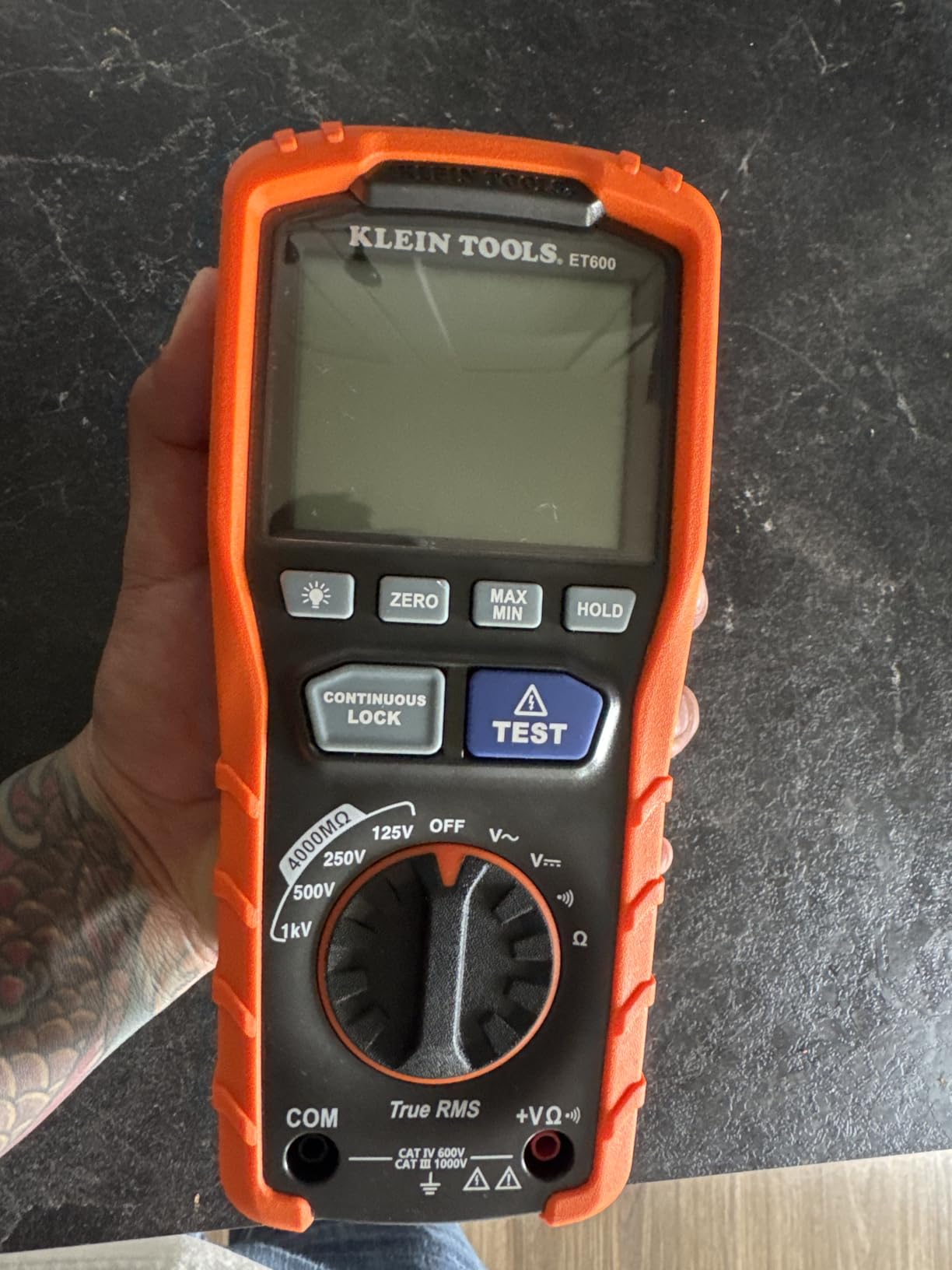
The test and lock buttons take some of the concentration out of a long test, and the voltage detection alarm with its high-voltage icon is a sensible backstop when you are working around a pack that somebody left energized. Owners describe the display as easy to train new technicians on, and the housing survives the kind of drops that come with working under a vehicle.
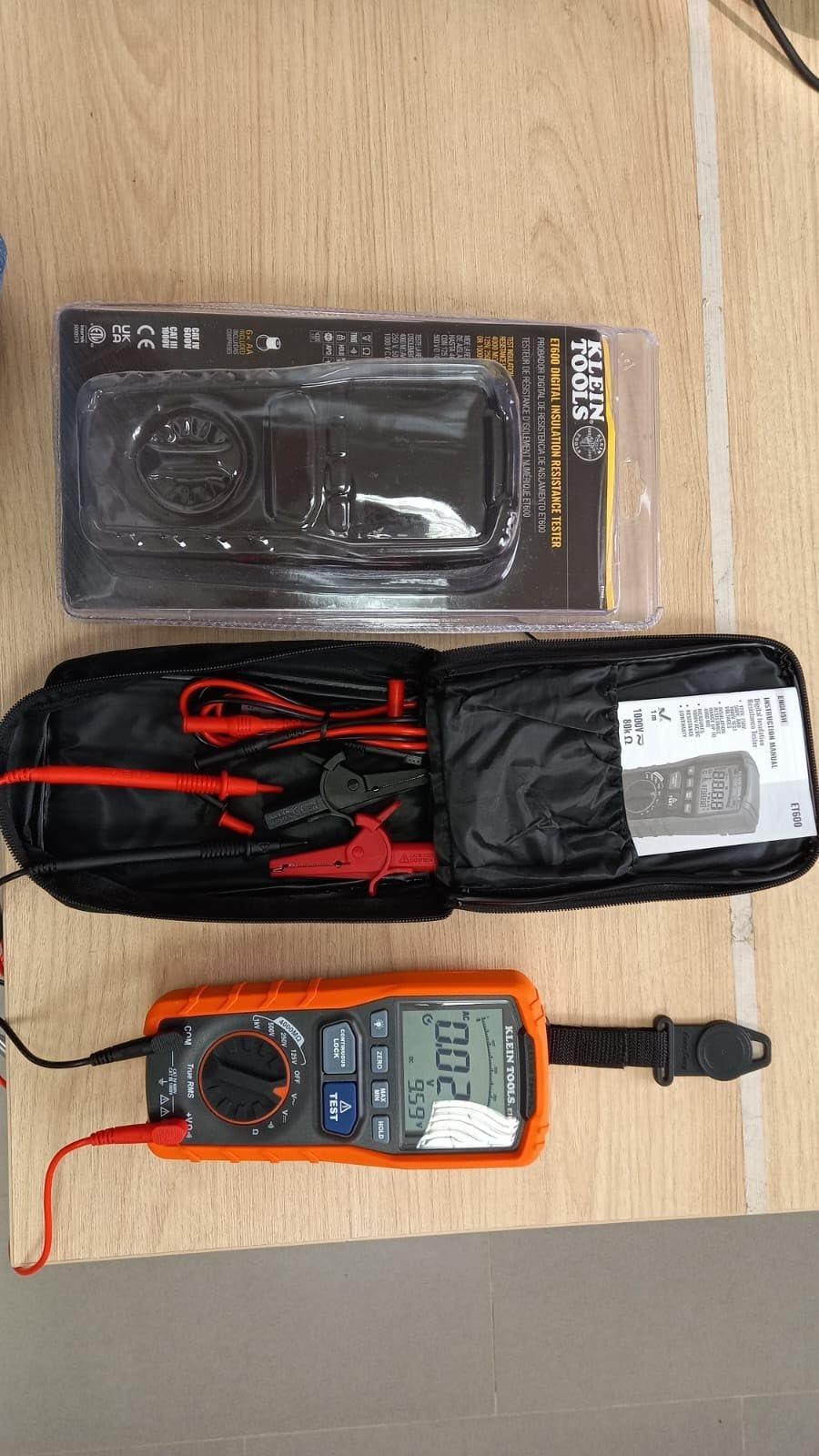
One detail worth knowing: there is no calibration certificate in the box. If your shop writes test results into insurance or accident-claim reports, budget for periodic third-party calibration. Over a 1-year warranty and a field-serviceable battery and fuse, that is the main cost of ownership to plan for.
Where it fits an EV workflow
This is the meter for battery pack isolation checks, motor and inverter insulation after a water intrusion event, harness verification after a repair, and periodic checks on charging equipment. Every one of those jobs is a de-energized measurement at 500V or 1000V, which is exactly the range it handles.
For a single-technician independent shop or a dealer service department running pre-delivery inspections, the combination of insulation and multimeter functions in one case is the deciding factor. You carry one meter instead of two, and the lead set that comes with it is rated for the categories you will be working in.
Where it falls short
The 4000-count display resolution is coarser than a laboratory meter, so a difference of a few ohms between two similar readings will not register. That rarely matters for a pass or fail decision against a 500 ohms per volt threshold, but it does matter for trending small changes over time.
At 1.4 pounds and measuring 10 by 2 by 4.5 inches, it is not a small meter, and working in the tight space under a rear seat or inside a battery enclosure usually means clipping the leads rather than holding it. Plan on buying your own insulated HV-rated probes rather than relying on the supplied set for energized-adjacent work.
2. Fluke 1507 – The Calibrated Choice for Dealer Service Departments
Fluke 1507 Digital Megohmmeter Resistance Tester for Advanced Industrial and Electrical Testing, Test Voltages: 50V, 100V, 250V, 500V, 1000V
Test voltages 50V to 1000V
NIST-traceable calibration certificate included
Remote test probe
500 grams
Pros
- Five selectable test voltages from 50V to 1000V
- Ships with a NIST-traceable calibration certificate and data
- Live circuit detection blocks testing above 30V
- Remote probe simplifies repetitive and confined-space work
- Large backlit display
Cons
- No PI or DAR diagnostics and no wireless logging
- No protective hard case in the box
- Alkaline battery consumption is noticeable under repeated insulation testing
The 1507 is a dedicated megohmmeter, not a hybrid, and that simplicity is the point for a dealer workshop with a written test procedure. It offers 50V, 100V, 250V, 500V and 1000V, so you can step the voltage down for electronics-side checks and up for the traction circuit without leaving the instrument.
The feature that separates it from every other meter in this list is the calibration certificate. It arrives NIST-traceable, complete with data, which means the readings you record for a pre-delivery inspection or an insurance claim can be traced back to a national standard. For a workshop that documents work for a customer or a claims handler, that paperwork is often worth more than a trend graph.
Live circuit detection stops the insulation test outright when more than 30V is present, and the remote probe makes it practical to test components that are awkward to reach without leaving a live lead clipped somewhere inconvenient. Owners consistently report the build quality and reading confidence matching what they expect from a Fluke.
Where it fits an EV workflow
This is the meter for a fixed procedure. If your shop runs a standardized insulation check on every HV component after a repair, or a pre-delivery checklist that has to be auditable, the traceability and the hard-block on energized circuits make the workflow simple to write and simple to defend.
It is also a strong second instrument to keep alongside a general-purpose meter, because a pure megohmmeter leaves the DMM job to whatever else is in the tool bag. Working EV technicians on r/Justrolledintotheshop repeatedly name the Fluke insulation line as a benchmark they trust, and this is the entry point into it.
Where it falls short
There is no PI or DAR calculation and no wireless logging, so it gives you a pass or fail number and nothing about degradation trends. If your work involves tracking a failing insulation system over weeks, you will want one of the diagnostic meters further down this list instead.
Owners point out the absence of a protective case at this class level, and the alkaline cells drain noticeably faster during insulation testing than a meter taking ordinary voltage measurements. Budget for a meter bag and a spare set of batteries, and check the 1-year warranty terms before committing to a fleet purchase.
3. Fluke 1587 FC – The Best Megger for Electric Car Diagnostics
Fluke – FLUKE-1587 FC FLUKE 1587 FC 2-in-1 Insulation Multimeter
Insulation tester and DMM in one
50V to 1000V test voltages
PI and DAR with Trend It
Wireless logging via app
3 year warranty
Pros
- Combines a full digital multimeter and insulation tester in one case
- Selectable voltages from 50V to 1000V
- PI and DAR diagnostics with Trend It graphs expose degradation early
- Fluke Connect wireless logging and temperature compensation keep results traceable
- True RMS holds up on non-linear loads
Cons
- Heavy at roughly 1.6 kg
- Top of the category on cost
- No integrated wire amp clamp
- Runs warm during extended insulation tests
The 1587 FC is the most capable insulation instrument in this roundup, and the one we would put in the hands of a technician who diagnoses rather than just checks. It runs 50V through 1000V, computes Polarization Index and Dielectric Absorption Ratio automatically, and graphs both with Trend It so you can see whether a reading is settling or drifting.
That distinction matters more in EV work than it does in general electrical work. A single number tells you whether insulation passed today. A PI or DAR value tells you whether the water that got into the harness three months ago is still migrating, and whether a marginal pack is going to fail on a customer’s motorway rather than in your bay.
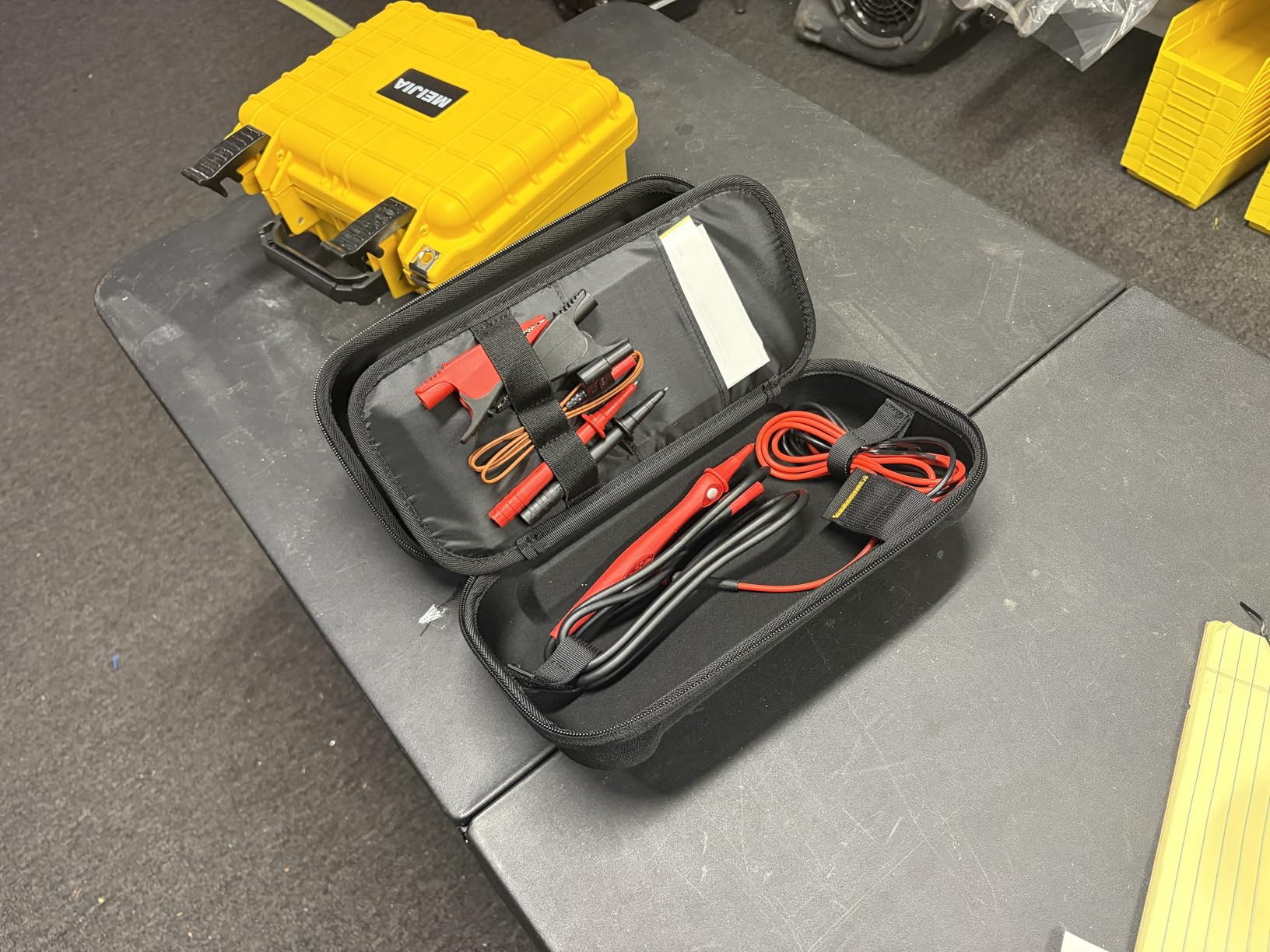
The Fluke Connect app logs results wirelessly with a memory store, and temperature compensation lets you set a baseline in the workshop and compare against it months later in the same conditions. Owners report using it on EV high-voltage work specifically, and the rotary switch housing is built to survive dust and heat.
True RMS multimeter functions cover voltage, resistance, continuity and current, so the de-energize-and-verify step happens on the same instrument, with a 3-year warranty behind it.
Where it fits an EV workflow
This is the right pick for an EV diagnostic specialist or a warranty and claims team resolving recurring insulation faults. The wireless log means a test on a customer’s vehicle can be pulled into a report on a laptop, complete with time stamps and the temperature at which the reading was taken.
Because it calculates PI and DAR, it handles the motor and generator work that comes with EV fleet maintenance as well as the static HV checks. For a shop balancing battery, motor and harness work, one instrument covers the diagnostic range from motor windings to harness insulation.
Where it falls short
At roughly 1.6 kg it is the heaviest meter here, and that weight is felt during a long diagnostic session. It is also the most expensive instrument on the list, and there is no integrated wire amp clamp, so current measurement still needs a separate accessory.
Owners note it runs slightly warm during extended insulation tests. That is not a fault, but it is worth keeping in mind if you are running a long series of readings back to back in a hot bay. If your needs stop at a pass or fail decision, this is more instrument than you need.
4. AEMC 2126.53 – The Best Value Meter for Maintenance Crews
AEMC 2126.53 Digital Megohmmeter, 1000V, Black
250V, 500V and 1000V test selections
EST LOCK for 15 minute timed tests
Auto discharge after test
Integrated AC/DC voltmeter
Pros
- Reads match far pricier Fluke and Megger units in side-by-side use
- 250V/500V/1000V covers typical EV HV checks
- EST LOCK gives reproducible 15 minute timed measurements
- Automatic discharge adds a safety layer
- Integrated AC/DC voltmeter to 600VAC and 1000VDC
Cons
- Supplied alligator clips have weak spring tension
- No PI or DAR diagnostics and no data logging
- Calibration certificate is not part of the listed kit contents
The AEMC 2126.53 is the value pick of this group, and industrial maintenance buyers treat it that way, reporting readings within a hair of instruments costing several times more. For a shop that needs four megohmmeters rather than one flagship, the economics change the decision entirely.
It offers 250V, 500V and 1000V selections, which covers the traction circuit, the HV harness and the power distribution unit cleanly. You give up 125V and 50V low-voltage steps, so very low-voltage accessory circuits need a different approach, but for HV insulation checks the range is right.
Two details stand out for EV work specifically. EST LOCK runs timed measurements up to 15 minutes, which produces repeatable, comparable results across a vehicle fleet rather than a single snapshot reading. Automatic discharge after each test removes stored charge from capacitive circuits before you handle the leads.
The integrated AC and DC voltmeter reads to 600VAC and 1000VDC, so you can verify de-energization on the same box. Owners describe the interface as easy to learn, including for people who are not electricians by training, and the body and test cables feel solid in daily use.
Where it fits an EV workflow
Fleet maintenance is the strongest case. When one technician inspects a hundred vehicles a year, reproducibility across repeat visits matters more than trend graphics, and EST LOCK delivers exactly that at a per-unit cost a fleet budget can absorb.
It is also a sensible bench instrument for an EV workshop that tests components away from the vehicle, such as an on-board charger or a DC/DC converter on the bench after removal, where 250V through 1000V covers the range of interest.
Where it falls short
The supplied alligator clips have weak spring tension, which matters when you are trying to hold a clip on a busbar inside a pack enclosure. Replace them with HV-rated clips before relying on them.
There are no PI or DAR functions and no data logging, so results have to be recorded manually, and calibration traceability is not part of the documented kit contents. If you intend to write these readings into an insurance or accident-claim file, factor a third-party calibration into the purchase.
5. UNI-T UT501A – The Most Portable Tester for Mobile Service
UNI-T 1000V Megohmmeter Insulation Tester, Ground Resistance Meter
100V/250V/500V test voltages
Insulation to 5.5 GOhm
Earth resistance function
CAT III 1000V and CAT IV 600V
500 grams
Pros
- Compact 500 gram body is easy to carry between call-outs
- Insulation measurement up to 5.5 GOhm
- Backlit LCD with alarm buzzer and alarm light
- Automatic measurement with low battery indication
- UL and CE marked with CAT III 1000V and CAT IV 600V ratings
Cons
- Top test voltage is 500V on this variant
- No PI or DAR diagnostics and no data logging
- Shorter track record shows a spread across the rating scale
The UT501A is built for a technician who works from a van rather than a fixed bay. At 500 grams and 5.91 by 3.94 by 2.8 inches, it disappears into a tool bag, and the backlit LCD, alarm buzzer and alarm light make results readable at the tailgate of a broken-down car.
It measures insulation from 0 to 5.5 GOhm at 100V, 250V and 500V. That ceiling is comfortably higher than any pass threshold you would apply to an EV circuit, so range is not the limitation.
The real limitation is the voltage. There is no 1000V step on this variant, which means it is the wrong tool for the definitive traction circuit or HV harness check where a manufacturer procedure calls for 1000V. It is well suited to harness and low-voltage-side insulation work, and to the earth resistance function that comes built in.
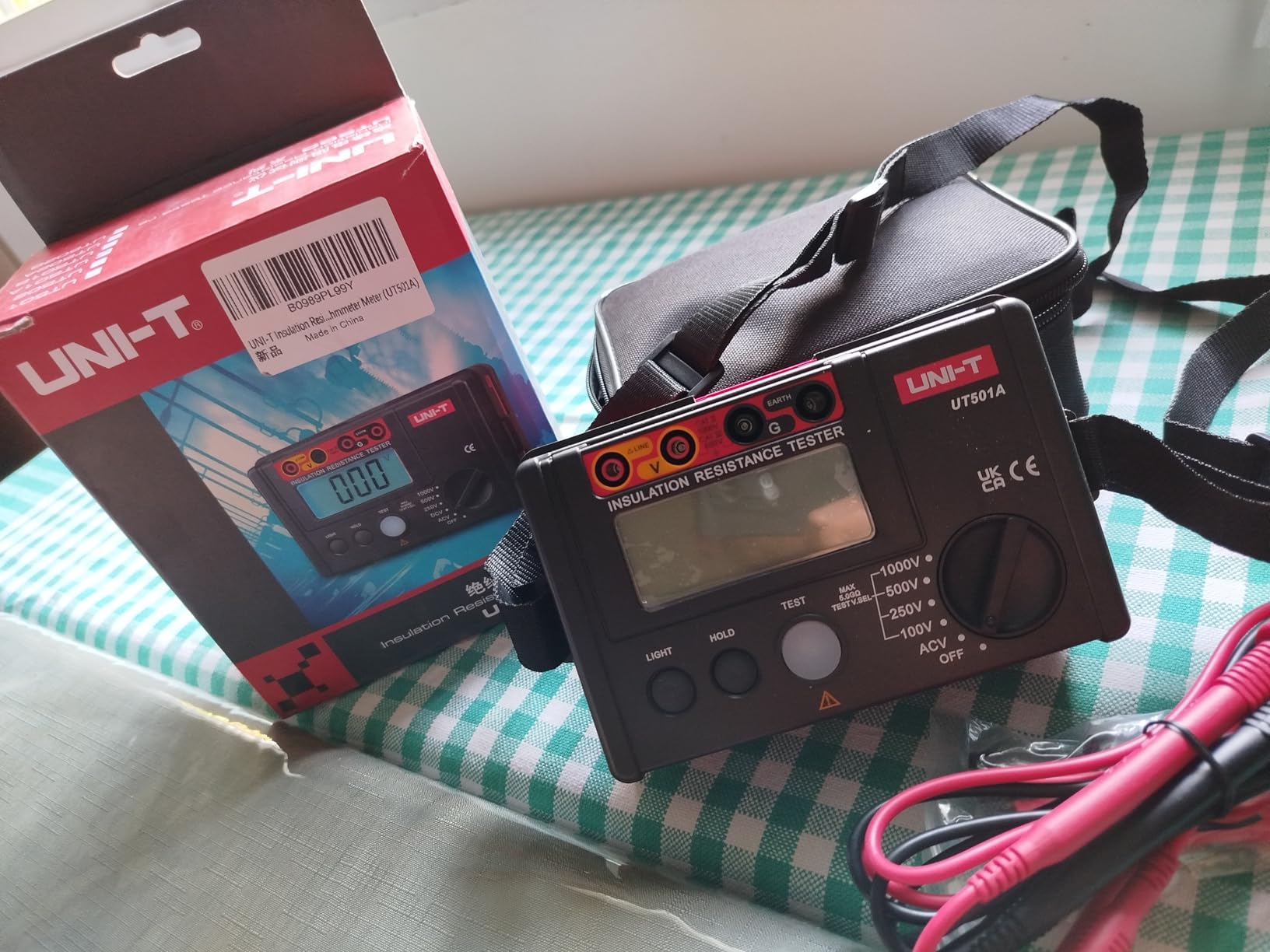
The CAT III 1000V and CAT IV 600V ratings and the UL and CE marks give you the documentation trail that a workshop safety policy can point at. Automatic measurement and a low battery indication remove a small but real source of error when a technician is working to a deadline.
Where it fits an EV workflow
Mobile breakdown and roadside work is where this meter earns its place. A technician diagnosing a vehicle that will not charge can verify insulation on the low-voltage side, the harness and the auxiliary circuits from the roadside, and confirm earth resistance for bonding checks on the same instrument.
It also works as a second or training instrument in a workshop, letting new hires learn insulation testing on a simple, forgiving meter before touching a meter they will use for customer-facing documentation.
Where it falls short
The 500V ceiling means it cannot complete a 1000V test at all, so for many EV procedures you will need a second meter anyway. Check your OEM test procedures before committing.
There are no PI or DAR functions and no data storage, and the rating spread across reviews reflects a shorter production history than the established brands. For a documented claim workflow, its lower review volume makes it a harder instrument to defend than a long-established model.
6. Ayitam PM1508 – Diagnostics and PI/DAR on an Entry Budget
Megohmmeter, Insulation Resistance Tester, 50V-1000V Up to 100GΩ
50V to 1000V across five voltages
Insulation to 100 GOhm
PI and DAR calculation
EN61010-1 and CAT III 600V
Pros
- Insulation range up to 100 GOhm across five test voltages
- PI and DAR bring real diagnostics to a low-cost unit
- Auto discharge and compare functions improve accuracy on capacitive circuits
- Owners report consistent accuracy when checked against known resistors
- Includes test leads
- alligator clip
- batteries and a manual
Cons
- CE marked rather than UL or CSA listed
- Documentation and brand recognition trail established meter makers
- Build quality is a step below Fluke and Hioki for heavy daily abuse
The PM1508 is unusual in this list because it delivers diagnostic features usually reserved for expensive instruments. Five test voltages from 50V to 1000V, a 100 GOhm range, and automatic PI and DAR calculation put it well above what a simple pass or fail meter offers.
For an EV technician who wants to see how insulation is trending on a marginal pack rather than simply whether it passed, that is the feature set that matters. The compare function lets you store a reference value and check new readings against it, and auto discharge handles capacitive loads safely.
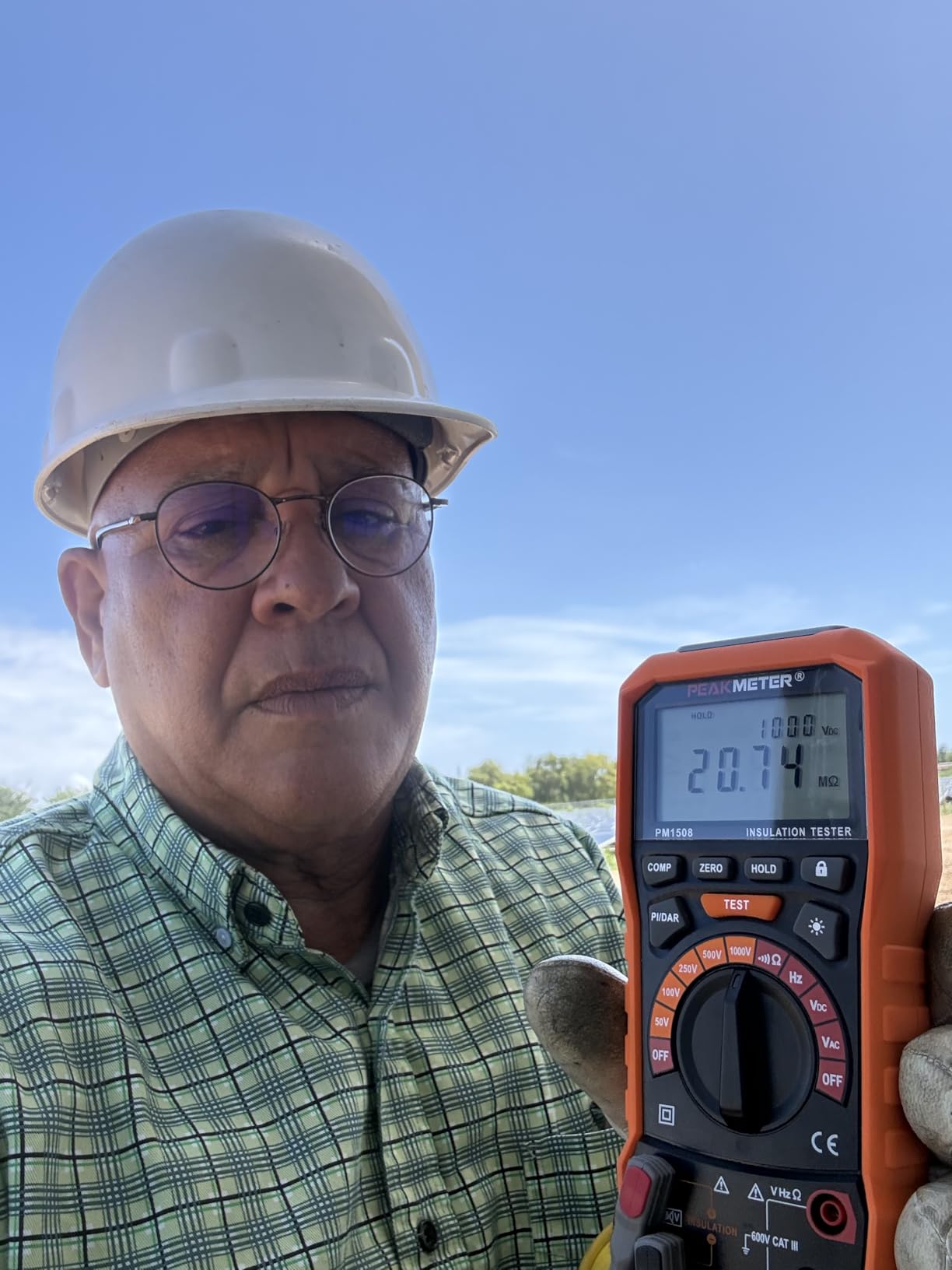
Owners who have verified the readings against known resistors report accuracy that holds across the ranges. It also carries frequency measurement, a low voltage test and multimeter functions, so it covers a fair amount of general electrical work from the same box.
We are including it with a caveat rather than endorsing it blindly. It is CE marked to EN61010-1 and rated CAT III 600V, which is below the CAT III 1000V and CAT IV 600V of several rivals, and its documentation and brand recognition are thin next to Fluke, Hioki or Megger.
Where it fits an EV workflow
This suits a hobbyist-level EV builder, a small independent workshop on a tight budget, or a technician developing a diagnostic habit. Being able to record PI and DAR without a flagship instrument removes the main reason people skip trend testing entirely.
For anyone producing written reports for a claim, treat it as a screening tool rather than an evidence instrument, and verify it against a known test resistor before trusting a borderline result.
Where it falls short
The safety mark is the main limitation. CE marking and a CAT III 600V rating are a weaker documentation position than UL or CSA listing at CAT III 1000V, and some workshop safety policies will not accept a meter that does not meet that bar on live-adjacent work.
At 818 grams it is heavier than the compact alternatives here, and owners consistently describe the housing as good but not in the same class as Fluke or Hioki once it is being dropped, thrown in a van and used every day for years.
7. Hioki IR4056 – The Isolation Tester Owners Point To for EV Work
HIOKI Insulation Tester IR4056
5 test voltages from 50V to 1000V
100 MOhm to 4000 MOhm range
PASS/FAIL in about 0.8 seconds
Drop proof from 1 metre
600 grams
Pros
- Japanese build quality in a housing that is drop proof from one metre
- Five test voltages from 50V to 1000V for EV and hybrid isolation work
- Fast stable readings with a comparator PASS/FAIL decision in under a second
- Built-in AC and DC voltmeter avoids carrying a second instrument
- Automatic discharge and a live circuit indicator improve safety
Cons
- Supplied instructions are in Japanese with no English manual in the box
- No remote test probe included
- Not a full-featured multimeter
The IR4056 is the instrument that shows up most often in owner accounts of EV and hybrid isolation work, and the enthusiasm is consistent. Several owners who had tried a range of meters single this one out as the easiest to operate and the best value for isolation diagnostics, which is exactly the use case here.
It covers five test voltages from 50V to 1000V, with an insulation range of 100 MOhm to 4000 MOhm. The comparator function delivers a PASS or FAIL decision in roughly 0.8 seconds, so a technician running a documented isolation procedure on a bench gets a verdict almost instantly and can move to the next component.
The built-in AC and DC voltmeter covers the de-energization check. Automatic discharge and a live circuit indicator handle the safety side, and the housing is rated drop proof from one metre at 600 grams, which suits work inside a battery enclosure where elbows and knees are in the way.
Where it fits an EV workflow
It is built for one-handed operation in a constrained space, and for battery pack isolation checks and HV wiring harness verification where a fast comparator result is more useful than a full diagnostic graph. A bright LED and backlit display keep the reading visible in a dark enclosure.
It is also a natural pick for a technician who primarily tests, rather than repairs, since it is a dedicated isolation and continuity instrument rather than a full meter. Many EV diagnostic professionals on diag.net treat Hioki as one of the reference-quality names in this category.
Where it falls short
The documentation is the biggest practical annoyance. The instructions supplied are in Japanese, with no English manual in the box, and owners work around this by downloading an English manual before the first job. Confirm the manual is available for the region you are buying in.
There is no remote test probe, so repetitive or confined measurements are slower, and there are no PI or DAR diagnostics, which limits it for trend work. Check what leads you will use; the supplied set is a single test lead, so HV-rated insulated probes are a sensible addition.
8. UEi IRT807 – The Feature-Rich Kit for Dark Service Bays
UEi IRT807 Insulation Resistance Tester 1000V AC/DC, Advanced Megohmmeter Measures Insulation Resistance Up to 2GΩ, Voltage Testing Up to 1000V
50V to 1000V test voltages
0.01 MOhm to 2 GOhm range
Automatic PI and DAR
CAT IV 600V and CAT III 1000V
Pros
- Automatic PI and DAR calculation at this price level
- Five test voltages with a 0.01 MOhm to 2 GOhm range
- Backlit display with a built-in work light for dark panels
- Protective rubber boot with kickstand and test lead holders
- Complete kit with silicone leads
- insulation probe
- thermocouple and case
Cons
- 2 GOhm ceiling is low beside some rivals
- Not all customers can access fast fulfilment
- No calibration certificate listed in the kit contents
The IRT807 is the mid-tier answer for a shop that wants diagnostics without a flagship meter. It offers the same five test voltages as the more expensive options, from 50V to 1000V, and calculates PI and DAR automatically, which is unusual in this bracket.
The feature that matters most in an EV bay is the built-in work light. A backlit LCD helps in a shaded service bay, but the light lets you illuminate a connector or a busbar inside an enclosure while your hands are occupied with probes. The rubber boot, kickstand and integrated test lead holders are practical touches that show someone designed it for a workshop rather than a bench.
Accuracy is specified at plus or minus 1.5 to 3 percent plus 5 digits between 0.01 MOhm and 500 MOhm, and the range runs from 0.01 MOhm to 2 GOhm. Hold, Zero, Lock and Compare options give you repeatable logging across a set of components, and it carries a CAT IV 600V and CAT III 1000V safety rating to IEC 61010-1.
Where it fits an EV workflow
It suits a working technician who wants to record a set of readings across a battery enclosure, a harness and a motor and compare them later. The compare function is useful when you are checking whether a repaired harness has genuinely improved or merely changed.
The complete kit, with silicone leads, an insulation probe, a K-type thermocouple and a soft case, means a single purchase covers a new technician’s first EV insulation job without a second order.
Where it falls short
The 2 GOhm ceiling is the practical limit. That is far above any pass threshold, but it is lower than the 100 GOhm offered by some rivals, and it means very high impedance circuits read as open circuit rather than giving you a figure.
Calibration documentation is not part of the listed kit contents, so if you intend to file these results for a claim you will need external verification. It is also not the easiest unit to obtain quickly when a job starts today, so plan the purchase ahead rather than at the vehicle.
9. Extech 380260 – The Practical Pick for Cable and Harness Runs
Extech 380260 Autoranging Digital Insulation Tester, 250/500/1000V
250V/500V/1000V DC test voltages
Insulation to 2000 MOhm
Dual backlit LCD
Automatic discharge
1 kg
Pros
- Dual backlit LCD shows test voltage and resistance at the same time
- 250V/500V/1000V selections cover HV cable insulation testing
- Automatic discharge prevents charge lingering on the leads
- Includes a carrying case
- spare test lead and batteries
- Lock power-on and data hold simplify repeat measurements
Cons
- Insulation resistance range tops out at 2000 MOhm
- Weak owner's manual and hard-to-remove back-case screws
- Battery changes require removing the back panel
- Several owners report insulation testing failing after a few months
The 380260 does one thing simply: a dual backlit LCD showing the test voltage and the resistance together. That removes the single most common setup error in the field, where a technician assumes a range and the meter was on a different one, and it makes the reading easy to log.
With 250V, 500V and 1000V DC selections and a range to 2000 MOhm, it covers HV cable and harness insulation testing, and automatic discharge after each test means the leads are not left holding charge while you move to the next circuit. The protective holster, lock power-on and data hold all serve repeated measurement work.
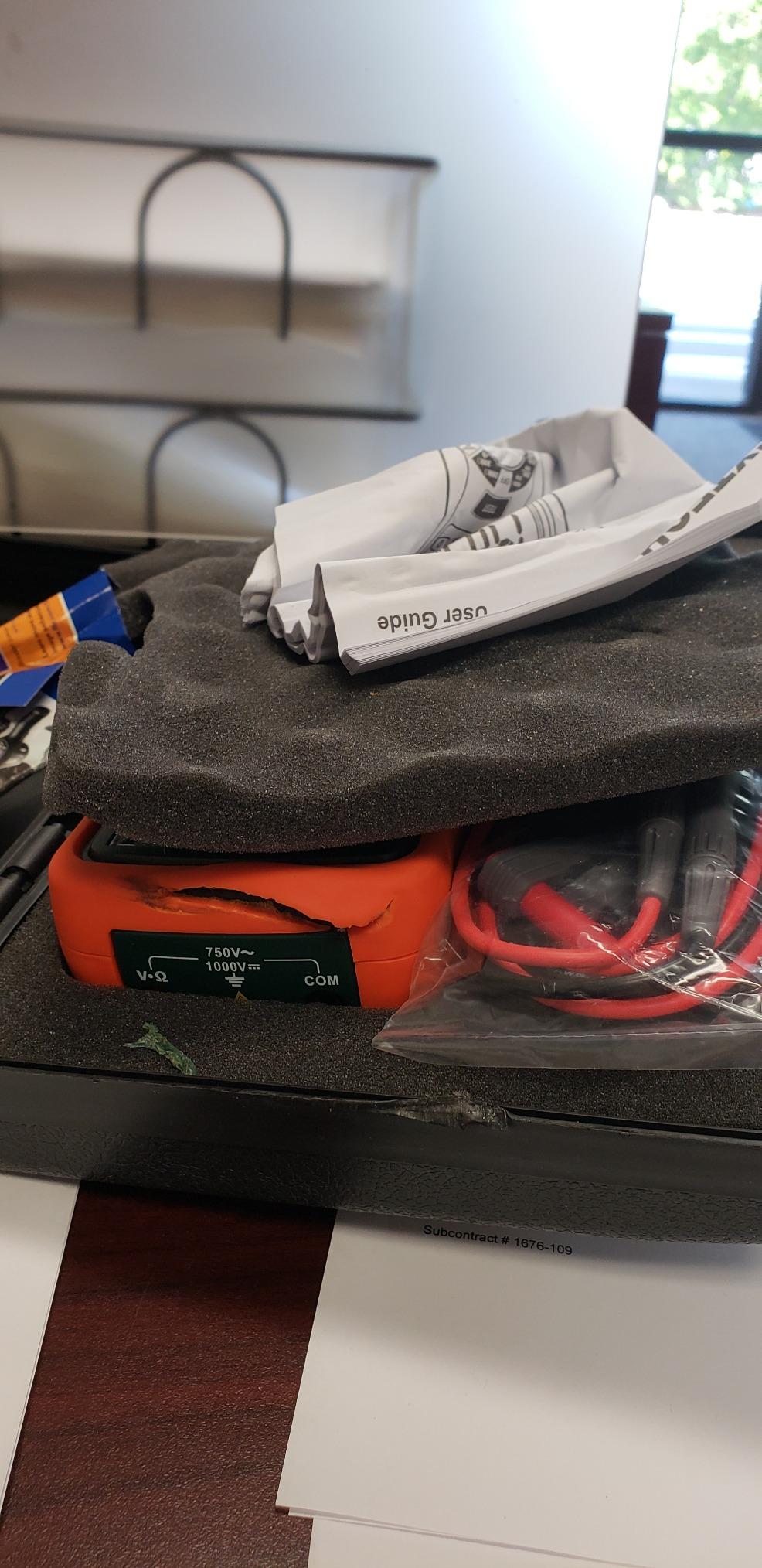
Owners who bought it for one-off cable insulation jobs report that it performs like more expensive units and has paid for itself quickly. It comes with heavy duty test leads, a carrying case and six AA batteries, and a 1-year parts and labour warranty.
We rank it lower for EV work than its spec sheet suggests, and the reason is consistency rather than capability. A 4.2 average from 57 ratings is the second-lowest here, and a meaningful share of one-star reviews describe insulation testing that stopped working after a few months or produced erroneous readings. For a vehicle that will be handed back to a customer on a safety-critical measurement, that reliability profile is hard to justify.
Where it fits an EV workflow
It makes sense for a workshop testing HV cable runs and harness segments away from the vehicle, such as a replacement charging cable, a repaired loom on the bench, or a run of copper you are about to install. The dual display and automatic discharge make repeated measurements straightforward.
It is also a reasonable low-risk addition to a larger tool inventory where the meter itself is not the last line of defence, provided you verify it against a known resistor at the start of each job.
Where it falls short
The 2000 MOhm ceiling is lower than several rivals, and the absence of PI, DAR and data storage means it produces a number and nothing else. You cannot trend insulation on this meter.
Owners mention a weak manual, screws at the back that are hard to remove, and batteries that require pulling off the back panel, which is friction you will feel on every job. The durability reports are the bigger concern: verify the reading before you record it.
10. AIOMEST VC60B – The Budget Starter Meter for a First Toolbag
Megohmmeter 1000V Megaohm Meter, AIOMEST Insulation Resistance Tester VC60B
250V/500V/1000V test selections
0.1 MOhm to 2 GOhm range
DC to 1000V and AC to 750V
580 grams
365 day warranty
Pros
- Lowest cost entry point into a dedicated insulation tester
- 250V/500V/1000V selection with a 0.1 MOhm to 2 GOhm range
- Also measures DC voltage to 1000V
- AC voltage to 750V
- resistance and continuity
- Compact body at 580 grams is easy to carry
- Includes leads
- alligator clips
- strap
- hard shell and a 365-day warranty
Cons
- Data hold is not available during insulation measurement
- 1999 count display is less precise than higher-end instruments
- Only CE level entry in the safety ratings for this band
- Most polarised rating spread in the group
The VC60B answers a narrow question well: can you get a dedicated 1000V megohmmeter and a volt-ohm meter for very little? It covers 250V, 500V and 1000V, measures 0.1 MOhm to 2 GOhm at plus or minus 4 percent plus 2 digits, and also handles DC voltage to 1000V, AC voltage to 750V, resistance and continuity with a buzzer below 50 ohms.
Physically it is a good field tool. At 176 by 116 by 63 mm and 580 grams it fits anywhere, it runs on six AA cells or an external 9V adapter, and the box includes leads, alligator clips, a detachable strap, a protective hard shell and a 365-day warranty.
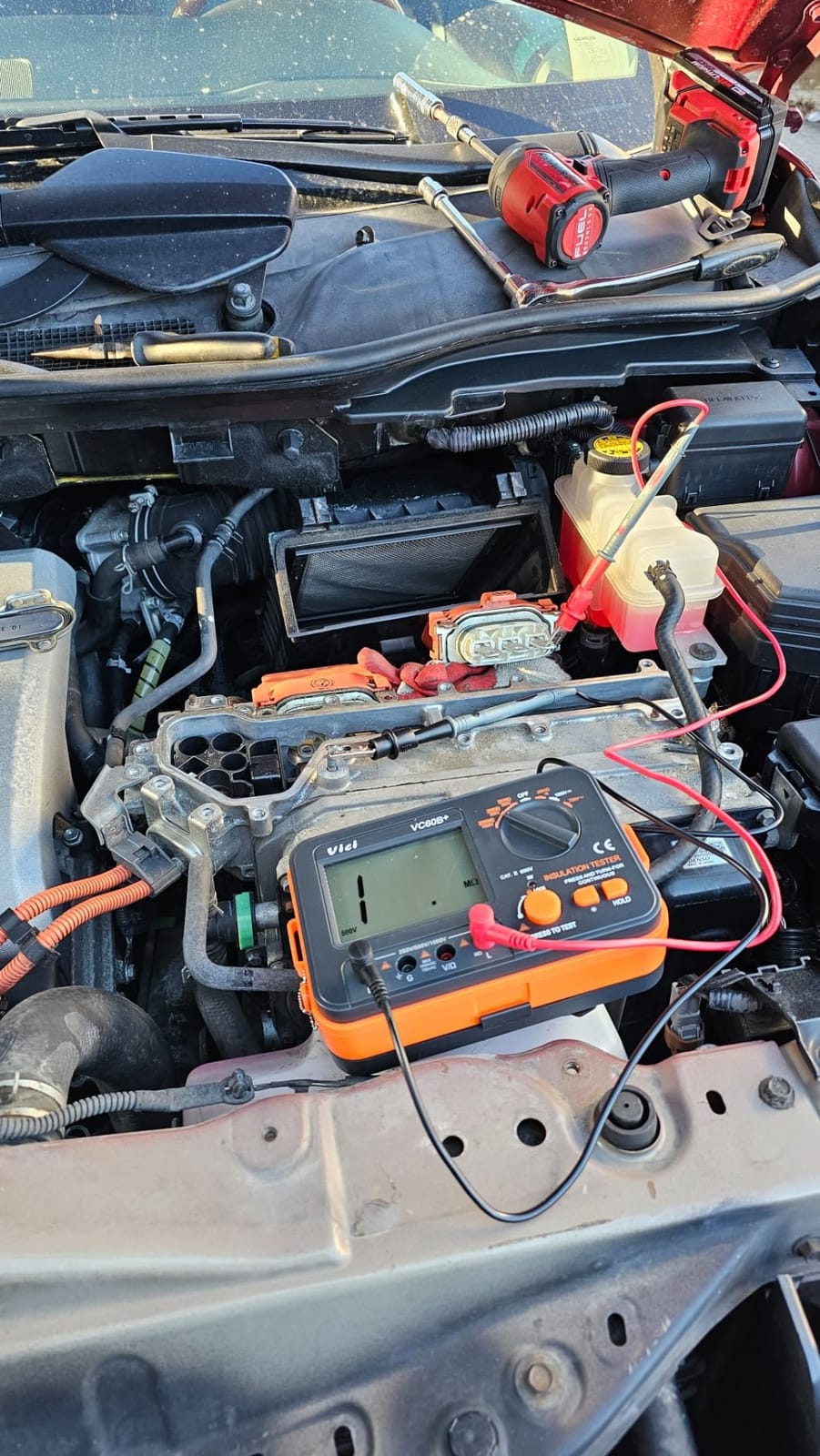
The limitation is precision and consistency. The 1999-count display is coarse, data hold is disabled while insulation resistance is being measured, and only about three samples per second are taken. It carries CE-level safety entry for this price band, with no UL or CSA listing.
The rating spread is the widest of the ten, with the highest share of one-star reviews in the group. That is normal for an inexpensive first instrument, but it means you should confirm accuracy against a known resistor and treat a borderline result as a prompt to test again, not as a verdict.
Where it fits an EV workflow
It suits a student technician, a hobbyist working on a converted EV, or a shop that needs a screening meter for routine low-voltage-side and harness insulation checks. The built-in voltage functions cover enough of the routine de-energization check to keep one box in the bag.
Used as a first pass before you commit to a proper insulation test, it flags the circuits worth investigating without the overhead of a full diagnostic instrument.
Where it falls short
A coarse display is the real limitation for EV work. When a reading sits near the 500 ohms per volt threshold, the difference between a pass and a fail can be a few counts on a 1999-count display, and that ambiguity matters on a safety measurement.
With no data hold during insulation testing, no PI or DAR, and the highest share of negative reviews in this roundup, treat this as a learning and screening tool rather than the meter you sign a customer report off with. Many shops use one as a companion to a primary instrument rather than a replacement.
How to Choose an Insulation Tester for EV Work
Seven criteria decide this purchase, and most buyers over-weight the first one.
1. Test voltage ceiling, not floor. Confirm the instrument reaches 1000V for the traction circuit, and check what low steps it offers, because you want 250V and 100V available for electronics-side circuits. A meter with only 500V maximum forces you to buy a second instrument eventually.
2. Lead zero compensation accuracy. This is the most under-discussed accuracy killer in the category and a recurring complaint in EV technician groups. Leads that are not properly nulled skew every reading, and some meters need several null attempts before they settle. Test this on a known resistor before you rely on the meter in the field, and if nulling is inconsistent, choose a different unit.
3. Safety category and documentation. Look for CAT III 1000V or CAT IV 600V markings and a named standard such as IEC 61010-1. On a high-voltage platform, the documentation is part of the safety case, and a workshop policy may require UL or CSA listing before the meter is allowed near a pack.
4. Calibration traceability. A NIST-traceable certificate with data, as included with the Fluke 1507, is what lets you file a defensible reading for a pre-delivery inspection or an insurance claim. If the meter has no certificate, price third-party calibration into the first year.
5. Diagnostics when the fault is intermittent. PI and DAR with trend graphing tell you whether insulation is degrading. They earn their cost when you are chasing a marginal pack rather than confirming a good one, and they are wasted money if you only ever need a pass or fail number.
6. Workflow fit, not feature count. A built-in voltmeter, automatic discharge, a live circuit indicator, a work light and a remote probe are small features that remove real friction over a full day of testing. Hold, lock and compare functions matter more than resolution for anyone logging a set of components.
7. EV-native or adapted general-purpose. Dedicated EV insulation testers are built around EV procedures and leads. Adapted general-purpose meters such as the Megger, Hioki and Fluke lines are more capable on motors, cables and other equipment, but they arrive without EV-specific leads or documentation. If EV work is occasional, an adapted general-purpose meter is the better investment. If it is daily, a dedicated instrument with a comparator function saves time.
One more practical point. Whichever meter you choose, buy your own HV-rated insulated test leads rather than relying on the supplied set. Probes are the cheapest part of the kit and the fastest consumable to replace when a lead is damaged.
Safety First: The HV Power-Down Routine Before Every Test
Insulation testing applies high voltage to something that can kill. The procedure matters more than the meter.
1. De-energize and isolate. Follow the manufacturer’s high-voltage safety power-down procedure: open the maintenance switch, disconnect the charge port, wait the specified discharge period, and then verify. Never assume a powered-off vehicle is de-energized because the key is out.
2. Verify with the meter’s own voltmeter. Confirm zero volts on the DC side and the AC side before connecting the insulation leads. Most meters here include a voltmeter specifically for this step, which is why we weight the hybrid models so heavily.
3. Wear the correct PPE. Class 0 insulated gloves rated for the system voltage, dielectric footwear, and eye protection. Remove jewellery and conductive items. Insulated tools for HV work are not optional extras.
4. Work one-handed where practical. Keeping one hand free means you can release the probe if something goes wrong. Do not work alone on a high-voltage vehicle.
5. Never megger a powered-on pack or an energized circuit. The test voltage itself is the hazard, and live circuit detection is a backstop rather than a plan. Treat any warning indication as a stop.
6. Discharge and wait before touching. Capacitive circuits hold charge after the test. Rely on automatic discharge, then verify with a voltage measurement before you handle the leads or the component.
High-voltage work requires de-energization, insulated gloves, and properly trained personnel. This guide is buying guidance, not a substitute for your employer’s high-voltage safety procedure or an EV certification course.
Do No Harm: What You Must Never Megger on an EV
The fastest way to turn a diagnostic tool into an expensive repair is to point it at a component that should never have been tested.
Battery packs that are still connected. A pack with active electronics attached, or one that is energized, must never be insulation tested. The test voltage can damage cell monitoring electronics and the battery management controller, and the resulting damage is often invisible until the vehicle will not charge.
Modules with active electronics. Motor controllers and inverters, the on-board charger, the DC/DC converter, the PTC heater controller and the high-voltage AC compressor are all semiconductor-rich devices. Insulation test the motor windings and the cabling, not the control electronics inside those modules.
Control units and ECUs. Body control modules, telematics units, the battery management controller itself and any sensor bus connected to them are not insulation test targets. Test the harness that feeds them, then test the module only if the manufacturer explicitly specifies it.
Connected low-voltage circuits. A 1000V test applied to a 12V or 48V control circuit can destroy it. Disconnect low-voltage connectors before testing anything that shares a harness, and confirm what voltage the circuit was designed for.
The onboard insulation monitoring module inside the vehicle can tell you that a fault exists and roughly how serious it is, but it cannot localize which circuit has it. That is exactly the gap an external megohmmeter fills, and it is why a de-energized, disconnected, component-by-component test is the correct workflow rather than a whole-vehicle test.
Frequently Asked Questions
Are insulation tester and Megger the same?
Yes. Megger is a registered trademark for one brand of insulation resistance tester, and technicians use the word generically for the whole instrument class. The tool is also called a megohmmeter, an insulation tester or an IR tester, and all four names describe the same thing: a meter that applies a known DC test voltage to a de-energized circuit and measures the leakage resistance in megaohms.
What voltage is recommended for an insulation resistance test?
500V is the right default for routine EV component testing, and 1000V is the ceiling you use with care. Step down to 250V or 100V for electronics-adjacent harnesses, low-voltage accessory circuits and small converters. Never use 5kV or 10kV test voltages on EV electronics, because they can damage battery management controllers, inverters and control boards.
What is a good reading on a Megger test?
A reading of 500 ohms per volt of system voltage is the commonly cited minimum for a traction circuit, so a 400V system wants roughly 200 kOhm and an 800V system roughly 400 kOhm. Readings between 100 and 500 ohms per volt indicate a general failure needing investigation, and anything below 100 ohms per volt is severe leakage that must be resolved before the vehicle is returned to service. Always confirm against the manufacturer limit for the specific vehicle.
What test voltage do EVs need?
For a 400V or 800V traction circuit, the routine isolation check is performed at 500V, with 1000V used for the HV harness, traction motor windings and the power distribution unit after those are isolated from the modules. 250V and 100V are used for electronics-side and low-voltage accessory circuits. Higher voltages are for cable, transformer and utility work, not for modern EV electronics.
What are the most common Megger testing mistakes on an EV?
The most common mistakes are meggering a pack that is still connected or energized, probing modules with active electronics such as inverters and the on-board charger, failing to de-energize and verify with a voltmeter before starting, using too high a test voltage for the circuit, forgetting to null the test leads so readings are skewed, and touching probes before stored charge has discharged. A built-in voltmeter and automatic discharge prevent most of these.
Can I use a multimeter insulation function on an EV?
You can use one for a rough check, but it is rarely enough for HV EV work. Most multimeter insulation functions top out around 500V, do not reach the 1000V needed for the traction circuit, lack PI and DAR diagnostics, and have no calibration certificate. The built-in function is also a convenience feature on a meter whose primary job is voltage and current, which is a different accuracy environment from a dedicated megohmmeter.
The Bottom Line for EV Insulation Testing in 2026
The Klein Tools ET600 is our best insulation tester for EVs, and it wins on the combination owners actually rate: the highest rating in this group with by far the largest body of owner feedback, a 125V to 1000V range that covers every routine EV insulation check, and a true RMS multimeter built into the same case.
Choose the Fluke 1587 FC instead if you diagnose rather than check, because PI, DAR and wireless logging are what turn a number into a trend. Choose the Fluke 1507 when your work has to be auditable, since it arrives with a NIST-traceable certificate. Choose the AEMC 2126.53 when one meter has to serve a whole crew. For any of them, buy HV-rated insulated leads of your own, run the power-down procedure every single time, and treat a 5kV tester as a cable-shop tool rather than an EV tool. If you are still assembling the rest of the bay, our picks for the best non-contact voltage testers and the best compression testers round out a workshop that has to verify a de-energized vehicle before it touches anything.