
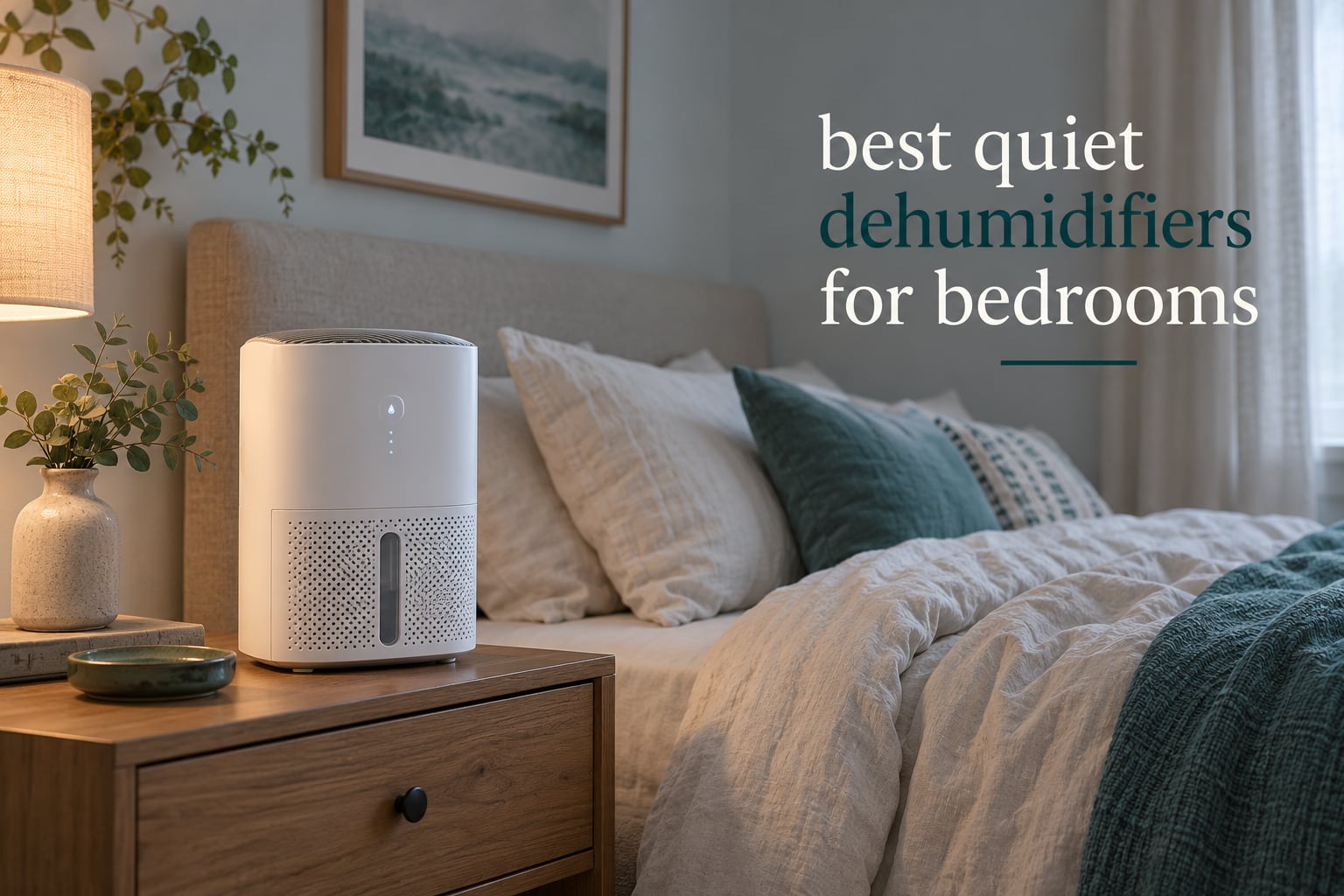
The quietest dehumidifiers for bedrooms are the ToLife 95 oz unit for most rooms, the avylo 42 oz Peltier unit for spaces under about 160 square feet, and the Spacekey QIG-D02 if your top priority is a silent night mode. All three run well below the noise floor most people notice while lying still.
That shortlist comes with a caveat you should read before anything else. Every compact unit in this roundup uses thermoelectric cooling, and thermoelectric machines trade speed for silence. They will quiet down a closet, a nursery, or a small bedroom with a musty pillow problem. They will not rescue a 500 square foot primary bedroom with condensation running down the window.
We spent weeks reading owner reviews, spec sheets, and failure reports on all ten units below, and we compared them against what people actually ask about in dehumidifier threads. We also cross-checked the noise figures against what lab testers report, because the gap between a published decibel number and the noise six feet from your pillow is where most disappointments happen.
A note on our sources: the dB figures we quote come from manufacturer listings unless we say otherwise, and manufacturers measure at different distances. One unit below is rated at 1 meter rather than at the standard 3 feet, so we flag it. We also read the negative reviews closely, because on this category the failure modes are unusually predictable.
Table of Contents
Top 3 Picks for Best Quiet Dehumidifiers for Bedrooms in 2026


BREEZOME 60 oz Dual-Semiconductor
- Dual condensers
- 700 ml/day rated
- 1.8 L tank
- 35 dB sleep mode

Two notes on the podium before we go further. First, the ToLife holds the top spot on the strength of owner volume rather than a class-leading noise number: with more than 5000 reviews it is the best-documented machine here. Second, the BREEZOME is the pick for anyone who wants faster water collection from a small machine, because its dual-condenser design genuinely does out-pull most units of the same size.
Best Quiet Dehumidifiers for Bedrooms in October
| Product | Specs | Action |
|---|---|---|
| ToLife 95 oz Sleep Mode Dehumidifier |
|
Check Latest Price |
| BREEZOME 60 oz Dual-Semiconductor Dehumidifier |
|
Check Latest Price |
 avylo 42 oz Peltier Dehumidifier avylo 42 oz Peltier Dehumidifier |
|
Check Latest Price |
 Windangel 44 oz Three-Mode Dehumidifier Windangel 44 oz Three-Mode Dehumidifier |
|
Check Latest Price |
 TABYIK 35 oz Quiet Dehumidifier TABYIK 35 oz Quiet Dehumidifier |
|
Check Latest Price |
| Spacekey QIG-D02 Dehumidifier |
|
Check Latest Price |
 CLEVAST EF8895 Compact Dehumidifier CLEVAST EF8895 Compact Dehumidifier |
|
Check Latest Price |
 Wellsle 50 Pint Compressor Dehumidifier Wellsle 50 Pint Compressor Dehumidifier |
|
Check Latest Price |
 Newo 44 oz Timer Dehumidifier Newo 44 oz Timer Dehumidifier |
|
Check Latest Price |
 Deyagoo 50 oz Compact Dehumidifier Deyagoo 50 oz Compact Dehumidifier |
|
Check Latest Price |
One row deserves calling out. The Wellsle is the only compressor-based machine in this group, and it is included because a bedroom serious enough to need one is a real category, not because it belongs in the same conversation as a closet unit.
1. ToLife 95 oz Sleep Mode Dehumidifier — Best Overall
ToLife Dehumidifier for Home Bedroom 1000 sq.ft with Auto Shut-Off, White
95 oz (2.8 L) tank
Sleep mode under 30 dB
93 watts
14 x 6 x 9 inch body
Pros
- Largest tank in the compact group
- Quiet in sleep mode and in normal mode
- Compact enough to move between rooms
- No assembly
- Works in closets and campers
Cons
- Slow water collection
- Square footage claim runs well ahead of real coverage
- Only two speed settings
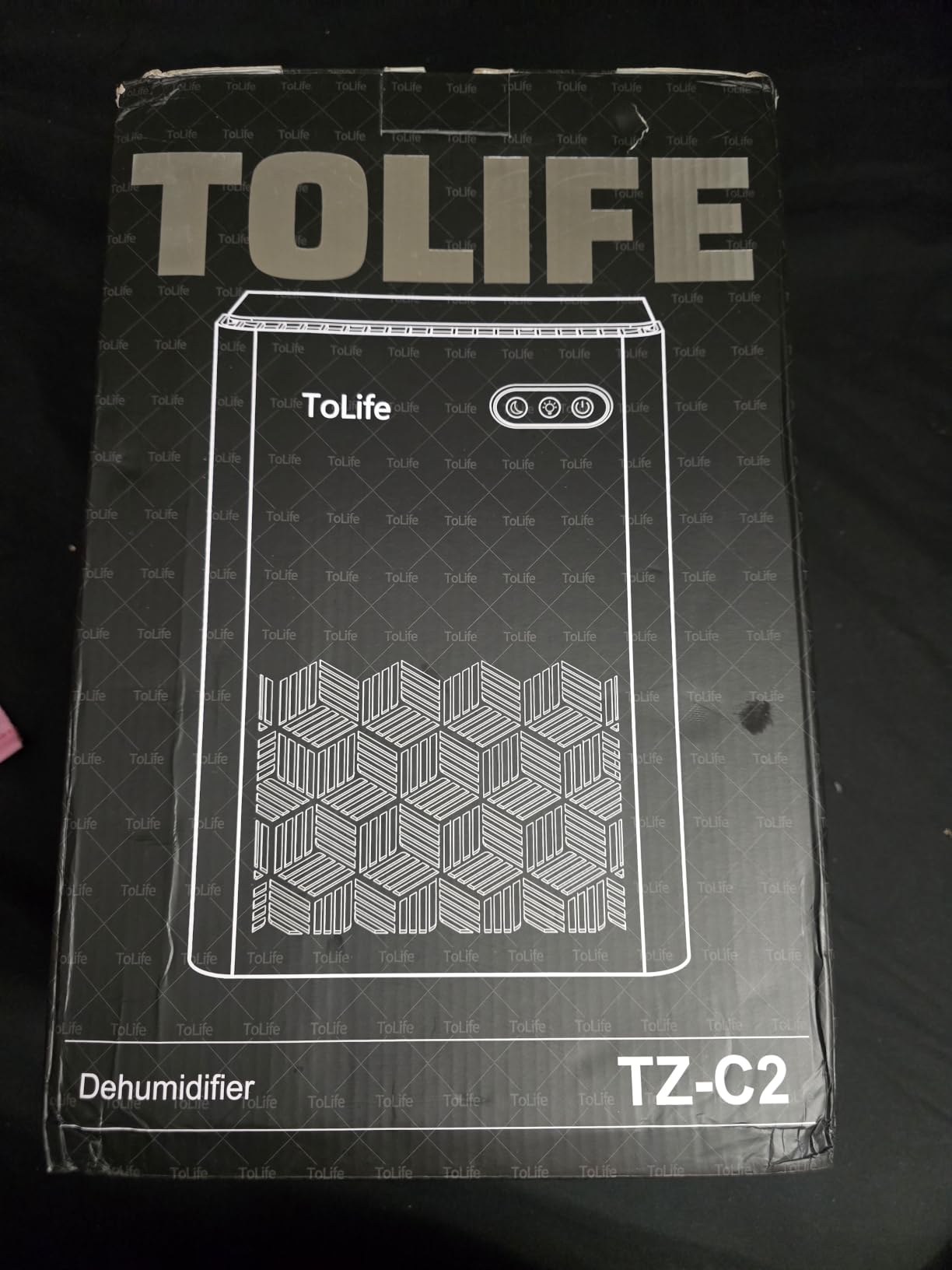
The ToLife TZ-C2 is the machine we would put in a normal-sized bedroom, and the reason is the tank. Ninety-five ounces is roughly three liters, which means several nights of running without a midnight trip to the bathroom to empty it. That single feature matters more in a bedroom than in a basement, because the alternative is noise and light at two in the morning.
Owners describe it as quiet even outside sleep mode, which is unusual for a unit this size. The semi-conductor cooling approach uses no compressor, so there is no rattle cycle to wake you. Our read of the reviews is that the motor itself is the weak point, not the acoustics.
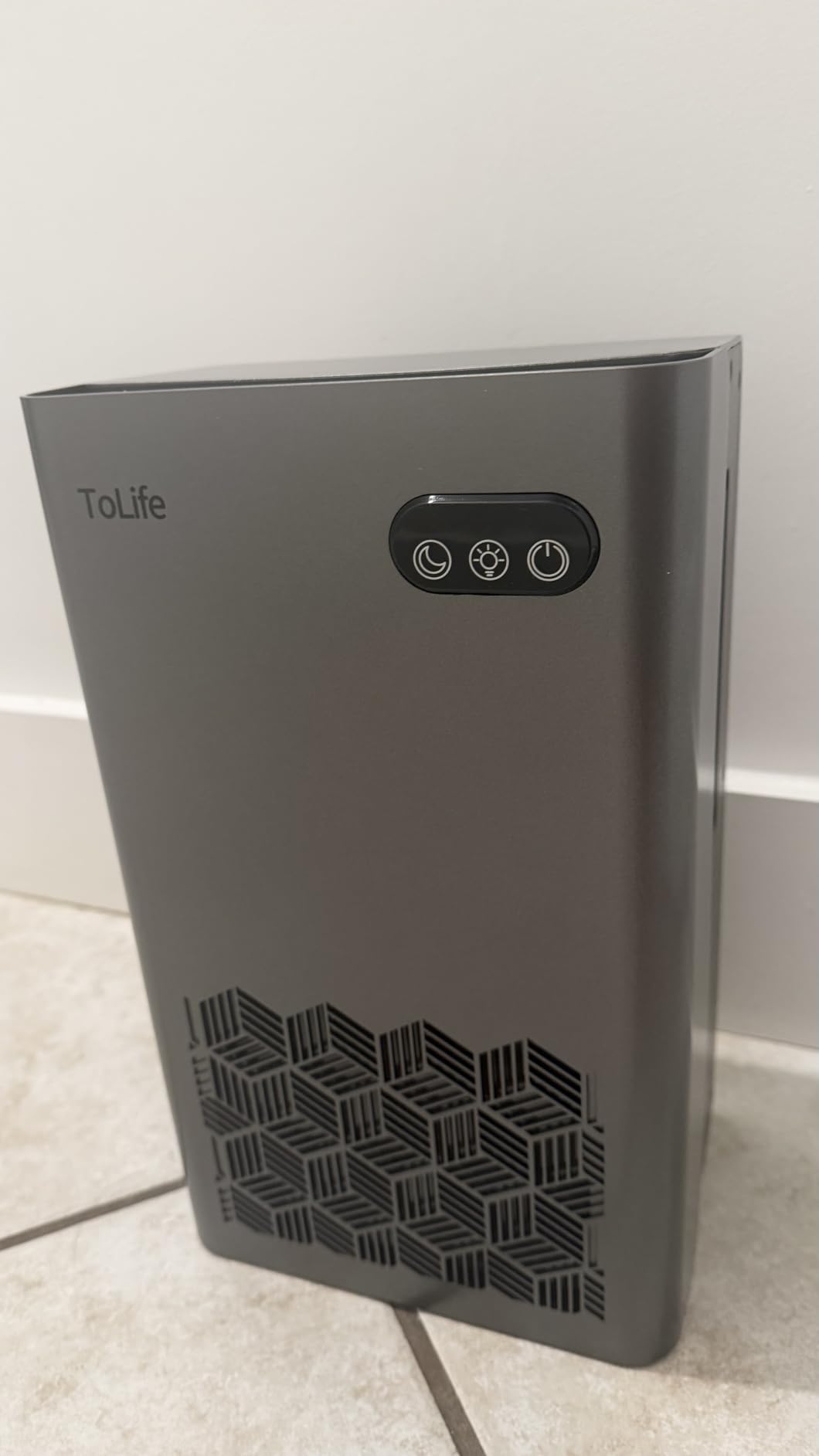
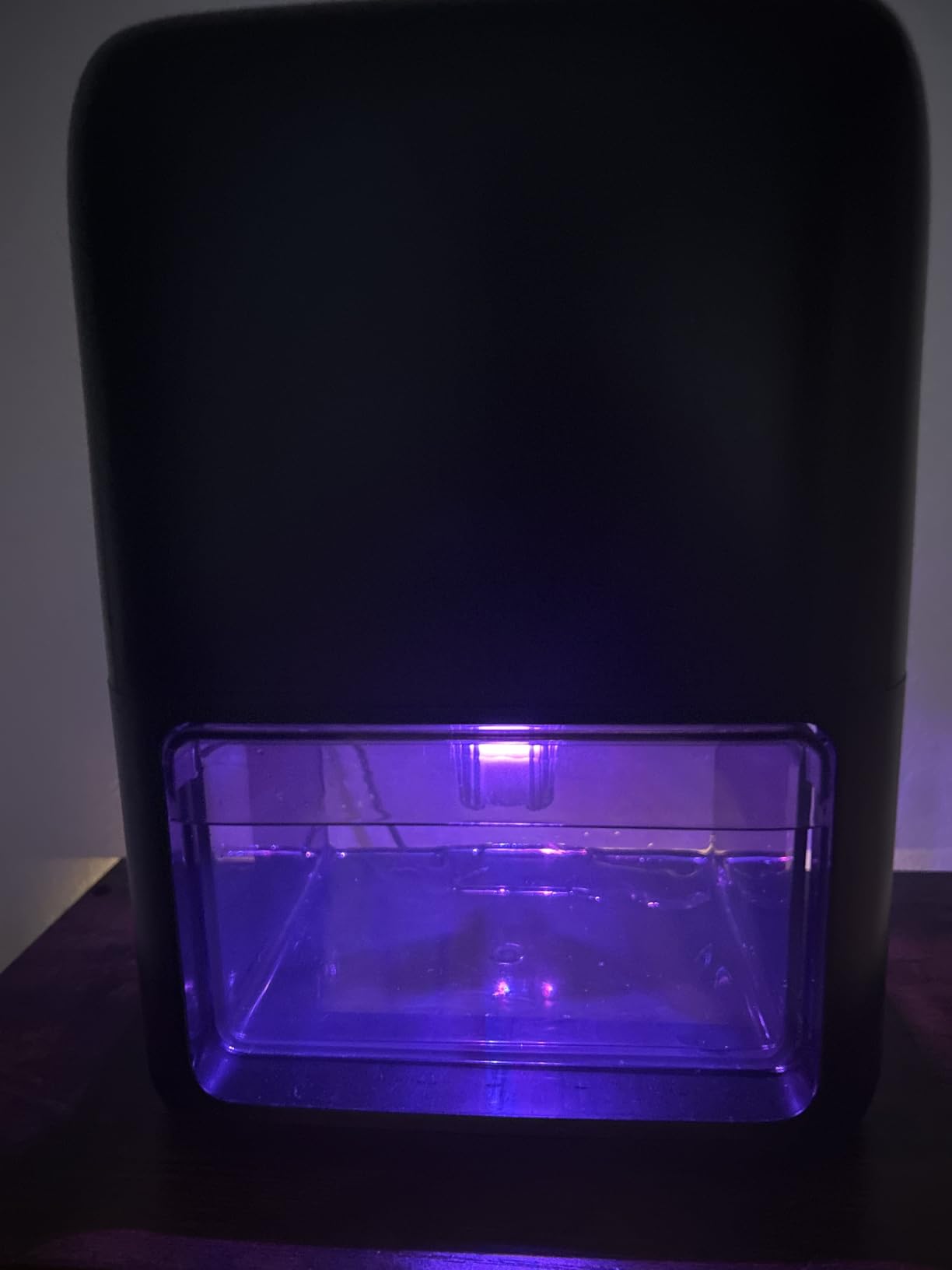
The control panel offers two speeds plus a powerful mode, and the 7-color ambient light can be locked on a single color or cycled. For a bedroom we would lock it or turn it off entirely, since a cycling light is the sort of thing that registers in your peripheral vision for hours without fully waking you.
The gap between the listing and reality is the honest drawback. Coverage is advertised up to 1000 square feet, and owners with larger rooms report that actual effectiveness falls well short of that. In a room of normal bedroom proportions the tank size and the noise floor are both strong; in an open-plan space, this is the wrong machine.
Who this suits
This suits a primary bedroom in the 200 to 350 square foot range where the goal is overnight humidity control without any compressor noise at all. It is also a strong pick for a nursery or a home office you share with a light sleeper, because the sleep mode is genuinely below 30 dB.
The tank is the deciding factor for anyone planning to run it unattended through a full night. A machine that needs emptying every morning is not really an overnight machine, and this one avoids that problem at its size.
Who this does not suit
Skip it if your bedroom is large, drafty, or on an exterior wall with active window condensation. Semi-conductor cooling does not have the throughput to pull a heavy room back down quickly, and owners who expected a 1000 square foot footprint noticed.
Also skip it if you want a humidity set point or app control. The controls are manual, which means you set an operating mode rather than a target relative humidity.
2. BREEZOME 60 oz Dual-Semiconductor Dehumidifier — Best Value
60 OZ Dehumidifiers for Home, Dual-Semiconductor Quiet Dehumidifier with Timer Sleep Mode Auto-Off 7 Colors Light Portable Small Dehumidifiers for Bathroom, Cloakroom, RV
Dual semiconductor condensers
700 ml/day rated
1.8 L tank
35 dB sleep mode
48 W
Pros
- Pulls more water than comparable compact units
- Quiet enough to sleep beside
- 1.8 L tank means roughly four-day intervals
- Auto shutoff for unattended use
- Built-in carry handle
Cons
- Several owners report failure after one to two years
- Weaker results in very small sealed spaces
- Only two speeds
The BREEZOME MCS008 solves the single biggest complaint about compact dehumidifiers, which is that they are slow, by running two condensers instead of one. Owners report that it visibly out-performs comparable single-condenser machines of the same size, and the 700 ml per day rating reflects that design choice.
For a bedroom dealing with steady moderate humidity rather than a crisis, that throughput matters more than an extra five decibels of silence. At 35 dB in sleep mode this unit sits roughly at refrigerator level, which is a workable bedside noise floor.
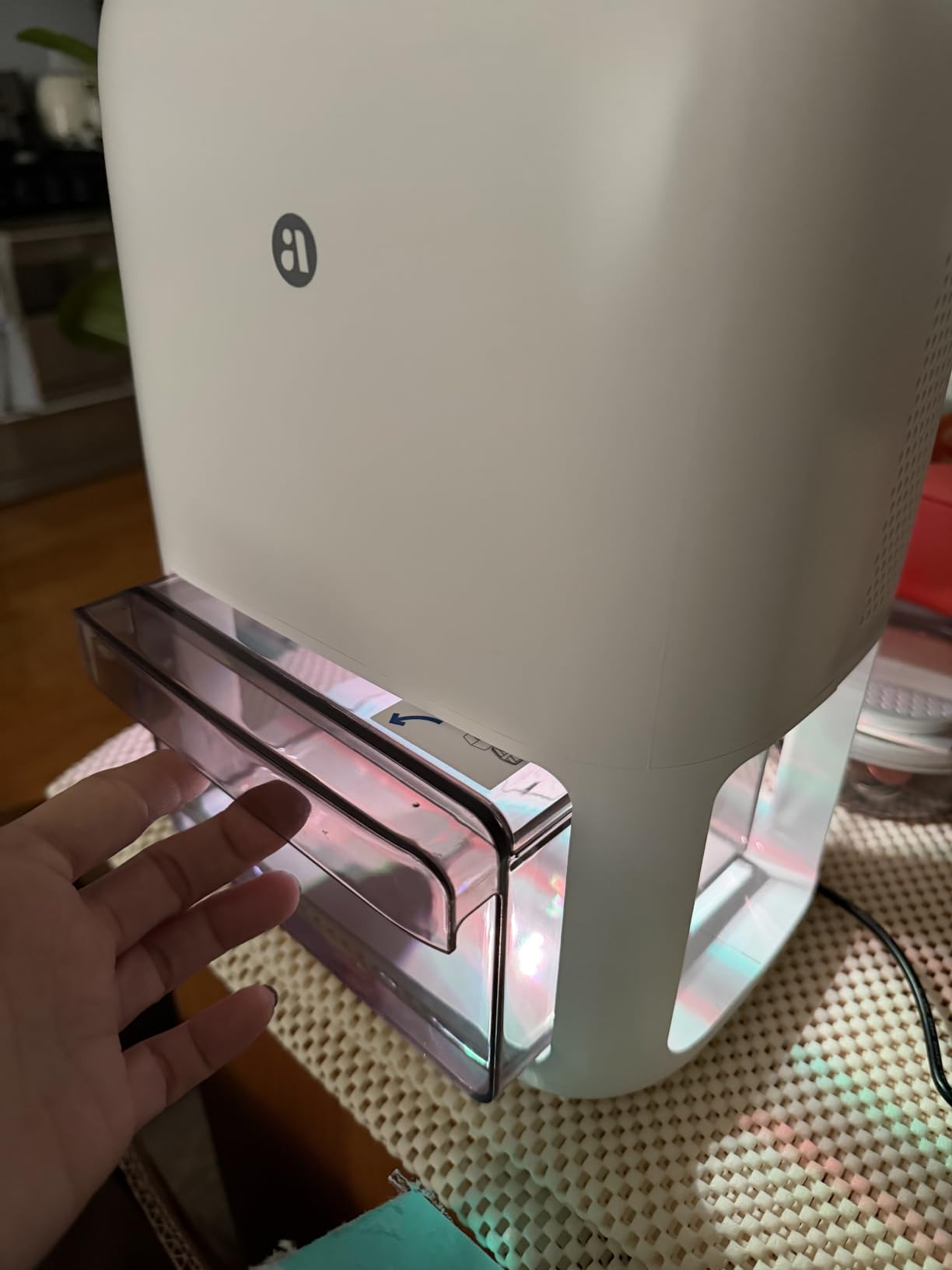
The timer is unusually flexible for the category, with 12, 24, 36, and 48 hour settings plus continuous run. That lets you schedule around a work week or a holiday without touching the machine. Auto shutoff stops the compressor when the tank fills and signals with a flashing red light.
The durability reports deserve attention. Multiple reviews describe units that stopped collecting water after somewhere between one and two years. That is long enough for a seasonal bedroom problem to be solved, but it is a real limit on buying this as permanent infrastructure.
Who this suits
This suits anyone who has already owned a small thermoelectric unit and found it too slow. The dual-condenser layout is the fastest extraction in this roundup at this size, and the four-day tank interval keeps maintenance to once a week.
It is also a good fit for a bathroom or a walk-in closet sharing a circuit with a bedroom, because the faster pull handles the burst of humidity that comes with showering.
Who this does not suit
Do not choose it if you need the unit to run for years without intervention, or if you want it to run in a room where humidity is genuinely extreme. Neither criticism is fatal, but both should shape the decision.
If compressor noise is your absolute threshold and even refrigerator-level sound bothers you, the Spacekey below is quieter. You will trade extraction speed for that.
3. Spacekey QIG-D02 Dehumidifier — Most Compact Night Mode
Dehumidifier, 95 OZ Water Tank Dehumidifiers for Home with Auto Shut Off, 1000 sq. ft. Dehumidifier for Bedroom Bathroom Basement Rv with 7 Color Light, Quiet Dehumidifiers with Sleep Mode, White
Night mode at 20 dB
Powerful mode 30-40 dB
95 oz reservoir
88 watts
Rated 40 oz/day
Pros
- Lowest published night-mode figure in this group
- Large 95 oz reservoir
- Compact footprint for its capacity
- Auto shutoff with red indicator
- Static color selection on the night light
Cons
- Real performance falls far short of the advertised coverage
- Some units developed loud chirping then failed
- Sealed casing with no user-accessible filter
- Normal mode is audible while sleeping
The Spacekey is the quietest machine in this roundup on paper, with a night mode rated at 20 dB. That is well below a whisper at 6 feet and lower than anything else we found with a tank this large. If noise is your only filter, this is the one.
The rating of 40 ounces per day is far more aggressive than any other thermoelectric unit here, and it is the number to treat with suspicion. Owners with large rooms report results well below the claim. Treat the tank size and the noise figure as reliable and the coverage figure as aspirational.
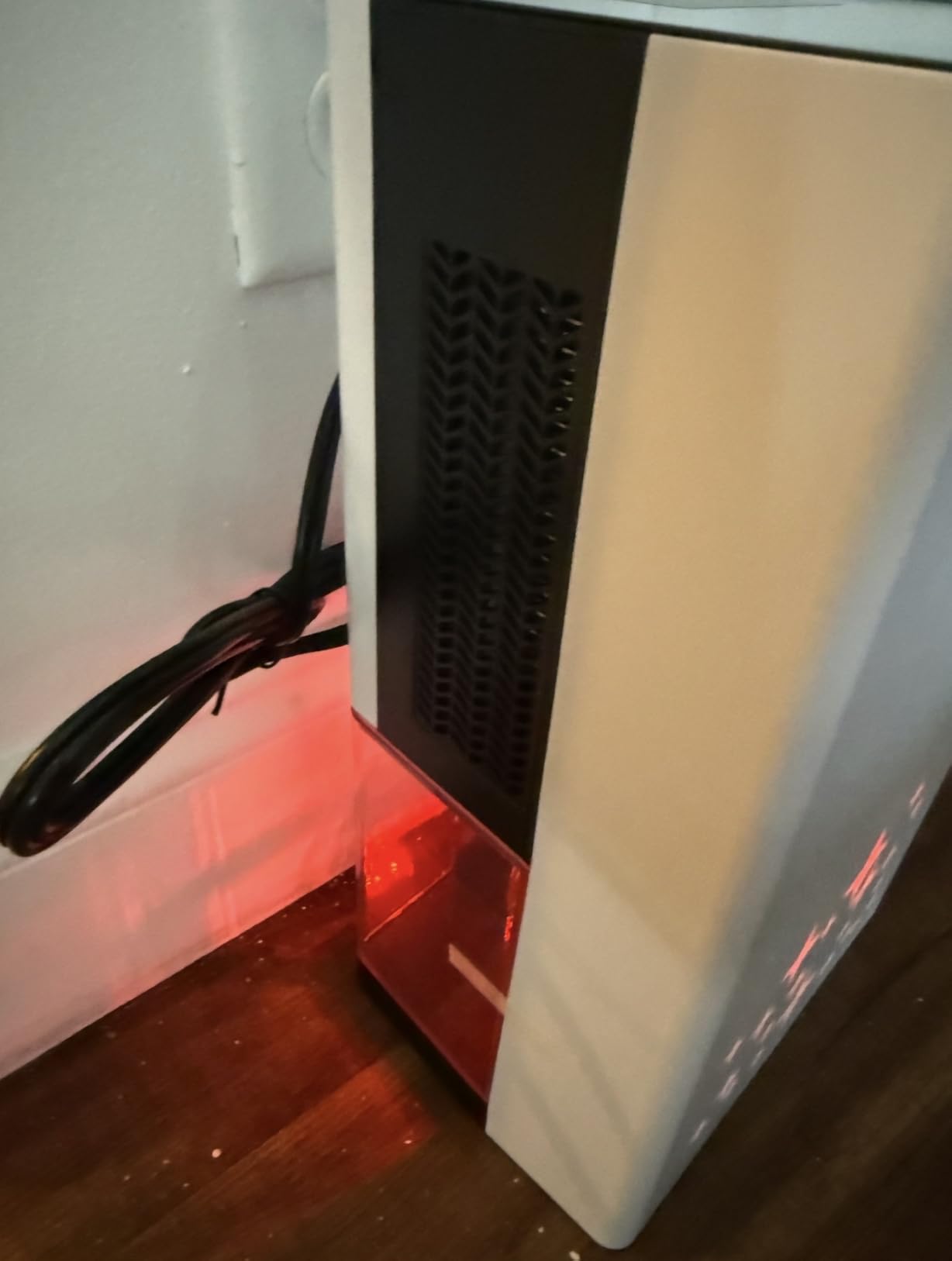
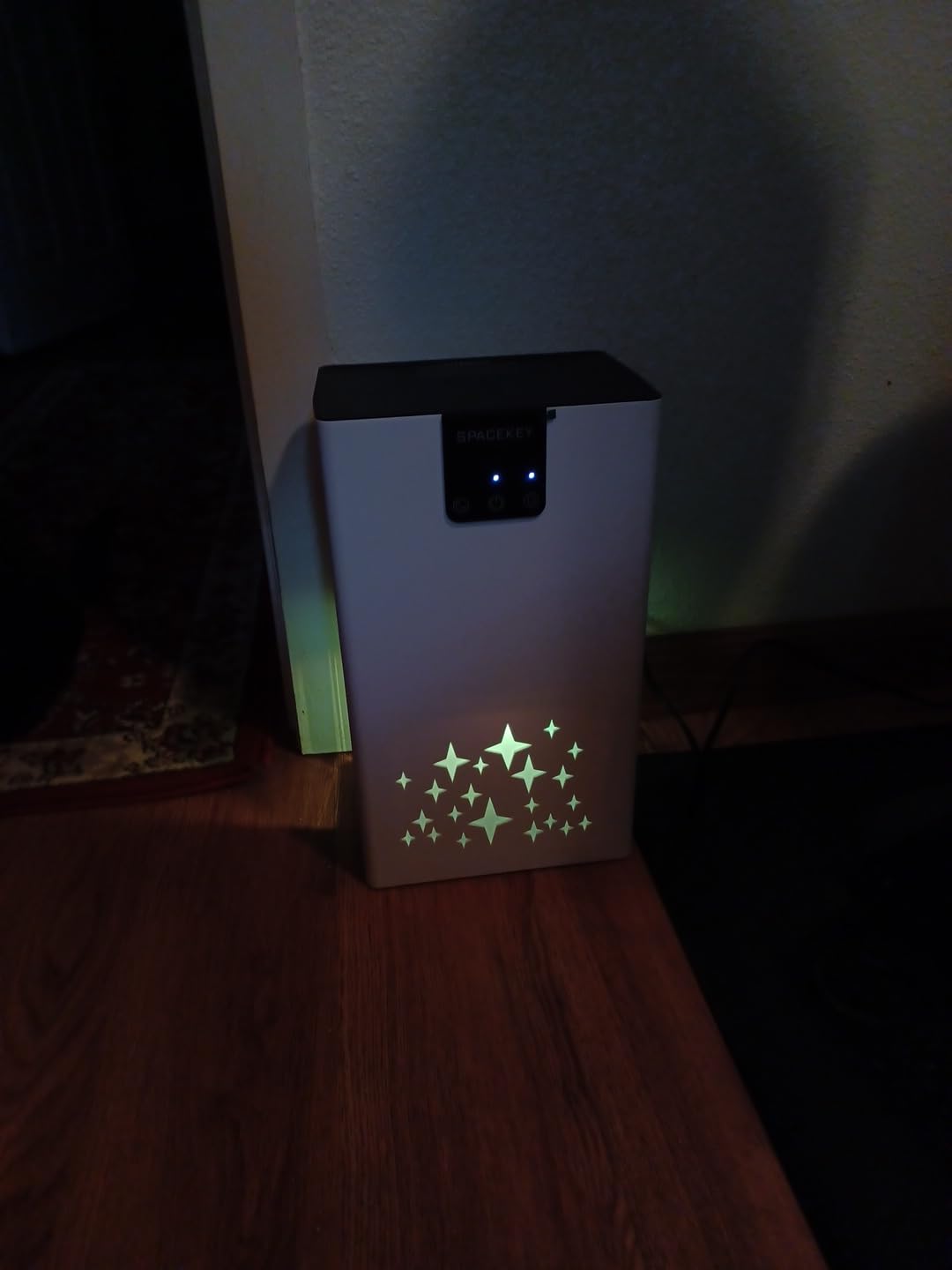
Physical design is where this unit earns its place in a bedroom. At 13.78 inches tall and 7.87 inches wide, it is narrow enough to sit in a corner or beside a dresser without dominating the space, and the starry front panel is a deliberate bedside-friendly touch rather than an appliance-warehouse look.
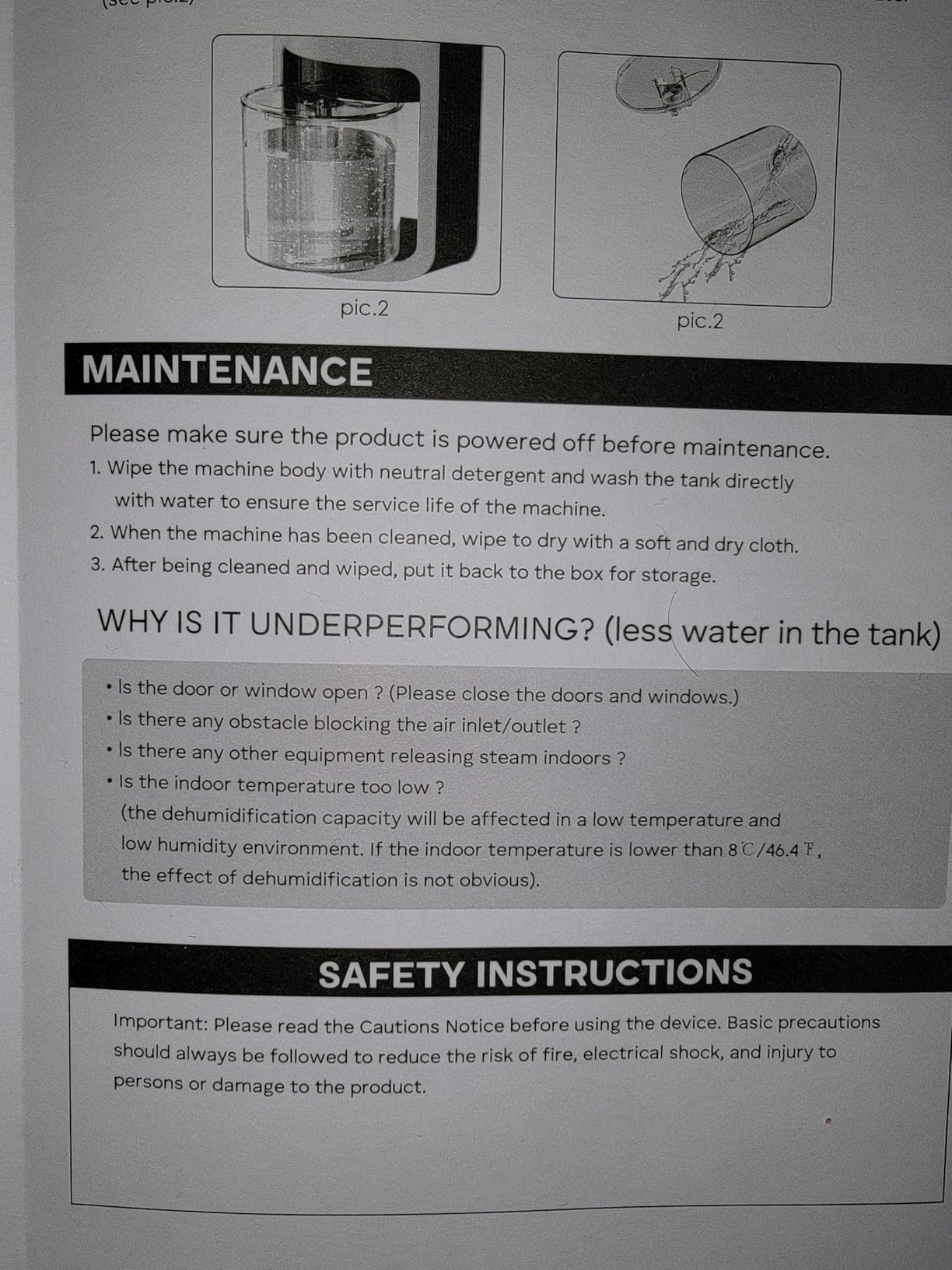
The serviceability issue is worth taking seriously. The casing is sealed, there is no user-accessible filter, and opening the unit voids the warranty. There is no washable filter to rinse on a schedule, which means airflow maintenance is not something you can do yourself.
Who this suits
This suits a light sleeper in a small-to-medium bedroom who wants the lowest possible floor noise and does not care about precise humidity control. The 20 dB night mode is the number that matters here, and few owners report being aware of it while running.
The 95 oz reservoir also makes it a candidate for rooms where you want a week of unattended running, provided you accept the sealed housing. Two-year replacement coverage is offered, which softens the durability concern.
Who this does not suit
Skip it if you need a humidistat or a target relative humidity, because the mode-based controls will not give you one. Anyone hoping for the advertised 1000 square foot coverage in a genuinely humid room will be disappointed by the throughput.
Also avoid it in a room where you plan to service the filter yourself. There is no user-accessible filter, and that is a design choice rather than an oversight.
4. avylo 42 oz Peltier Dehumidifier — Best for Nurseries and Campers
avylo Small Dehumidifier for Bedroom,162 Sq.Ft 42oz with Auto Shut Off
Peltier cooling, 16 oz/day rated
42 oz transparent tank
About 28 dB
40 watts
2.6 pounds
Pros
- Quiet enough for nurseries and campers
- Tank empties roughly every four to five days
- Light enough to move between rooms
- Light can be switched off entirely
- Helps with musty smells and mold
Cons
- A minority dispute the advertised extraction rate
- Some units needed a plug adapter outside the US
- Falls short of claims in very humid conditions
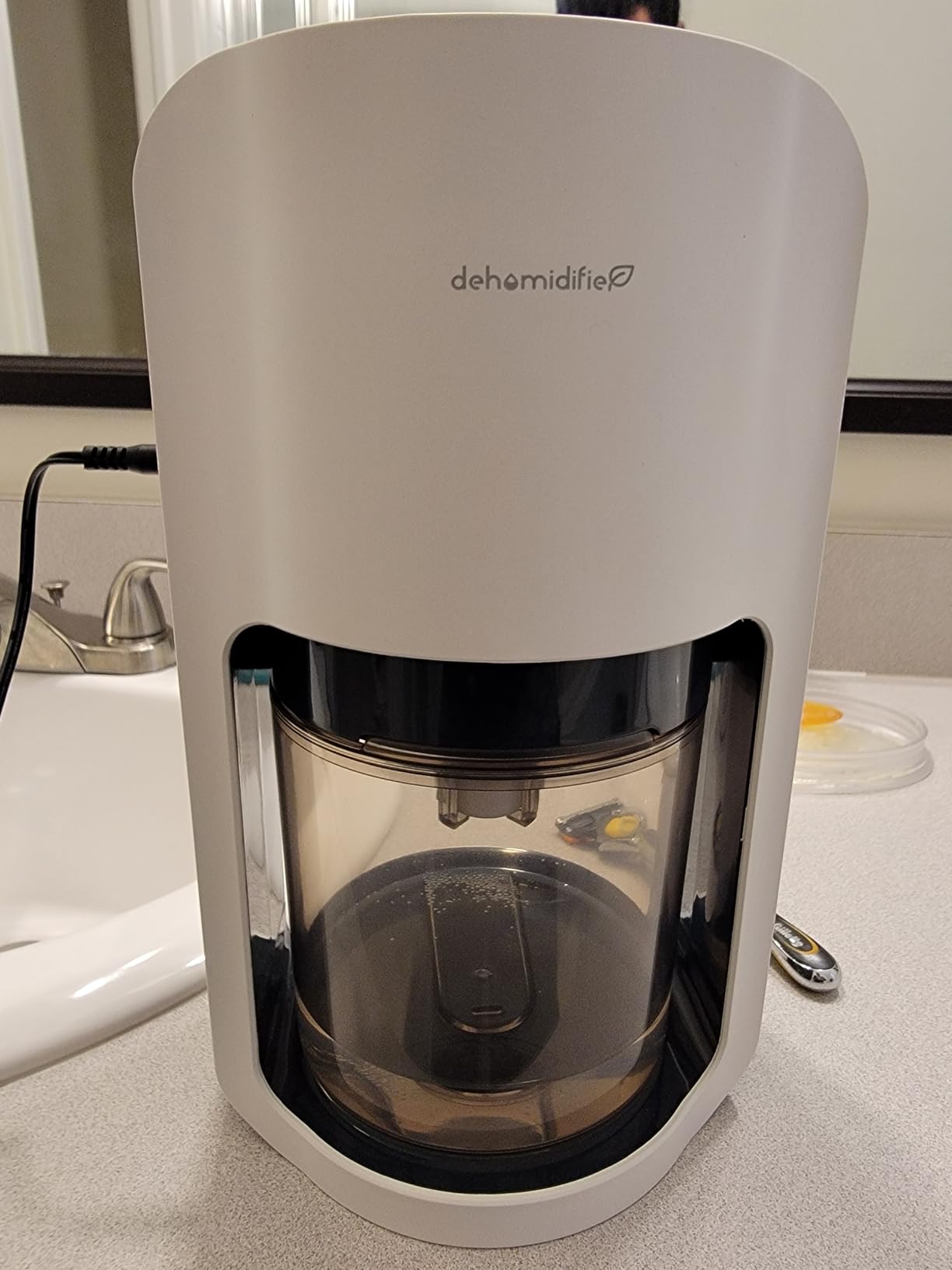
The avylo DH-CS06 is the one we would put in a nursery. At about 28 dB and 2.6 pounds, it is quiet enough to sit inside the room rather than in a hallway, and light enough that you can move it when you need to mop.
The 42 ounce tank means roughly four or five days between empties in a room of that size, which is the frequency most parents can realistically maintain. The transparent tank and the auto shutoff with a red full indicator take the guesswork out of checking it.
Owners frequently mention RV and camper use, and the small footprint supports that. The dimensions sit at roughly 5.6 by 6.4 by 11 inches, so it fits in the tight spaces that travel and small apartments create. A note for anyone outside the US: a few buyers needed a plug adapter.
The coverage figure is confused on the listing itself, which states 162 square feet in one place and 4500 in another. We would plan around the smaller number and treat the larger as a template error.
Who this suits
This suits a nursery, a small child’s room, a camper, or a home office under about 160 square feet. The combination of low noise, low weight, and a light you can switch off entirely is unusual in this category.
Owners also report it helping with musty bedding smells and mild mold issues in enclosed spaces. For prevention rather than remediation, that is exactly the use case it fits.
Who this does not suit
Do not buy it for a primary bedroom or an upstairs room with window condensation. A small group of buyers disputes the 16 ounce per day rating, and none of them are testing it in a large humid space.
If your main problem is damp in a closet rather than a room, this is more machine than you need. The Windangel below handles closets with a smaller footprint.
5. TABYIK 35 oz Quiet Dehumidifier — Longest Warranty in the Group
TABYIK 35 OZ Dehumidifier for Bedroom RV, Quiet with Auto Shut Off, Blue
Peltier, 16 oz/day rated
About 28 dB
35 oz transparent tank
41.67 watts
2-year warranty
Pros
- Two-year manufacturer warranty
- Quiet at about 28 dB
- Compact body with a built-in rear handle
- Transparent tank reads at a glance
- Plug in and go controls
Cons
- Some buyers find it louder than a quiet rating implies
- Single speed with no humidity set point
- Minority report units stopping after a few months
- Short power cord
The TABYIK is the only unit here with a stated two-year manufacturer warranty, and for a category where most competitors offer one year or nothing, that is a meaningful difference. Warranty length tracks build confidence closely on small appliances.
Acoustically it sits with the avylo and Newo at roughly 28 dB, which is a whisper at bedroom distance. The 35 ounce tank is smaller than the leaders here, so expect emptying every few days rather than every week.
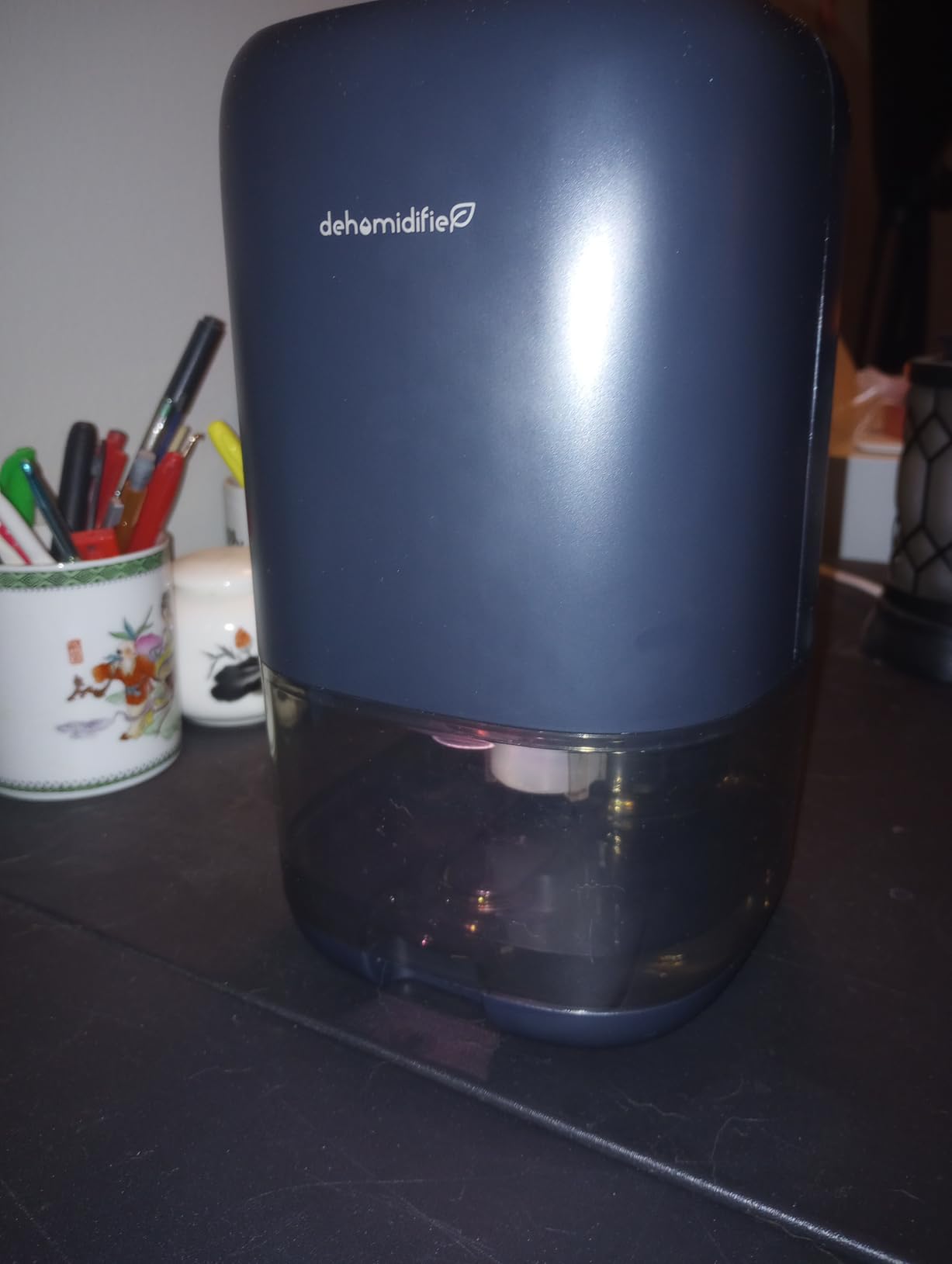
Controls are deliberately simple: one button, one speed, continuous operation. That simplicity is a feature for a closet or an RV, and a limitation if you want to hold a specific humidity level. There is no set point to dial in, so it runs until you switch it off or the tank fills.
Auto shutoff triggers around 700 to 800 ml with a flashing red light, and energy use is capped at roughly 1 kWh per day. A few owners mention the cord being too short for the placement they wanted, which is worth checking against your outlet before you order.
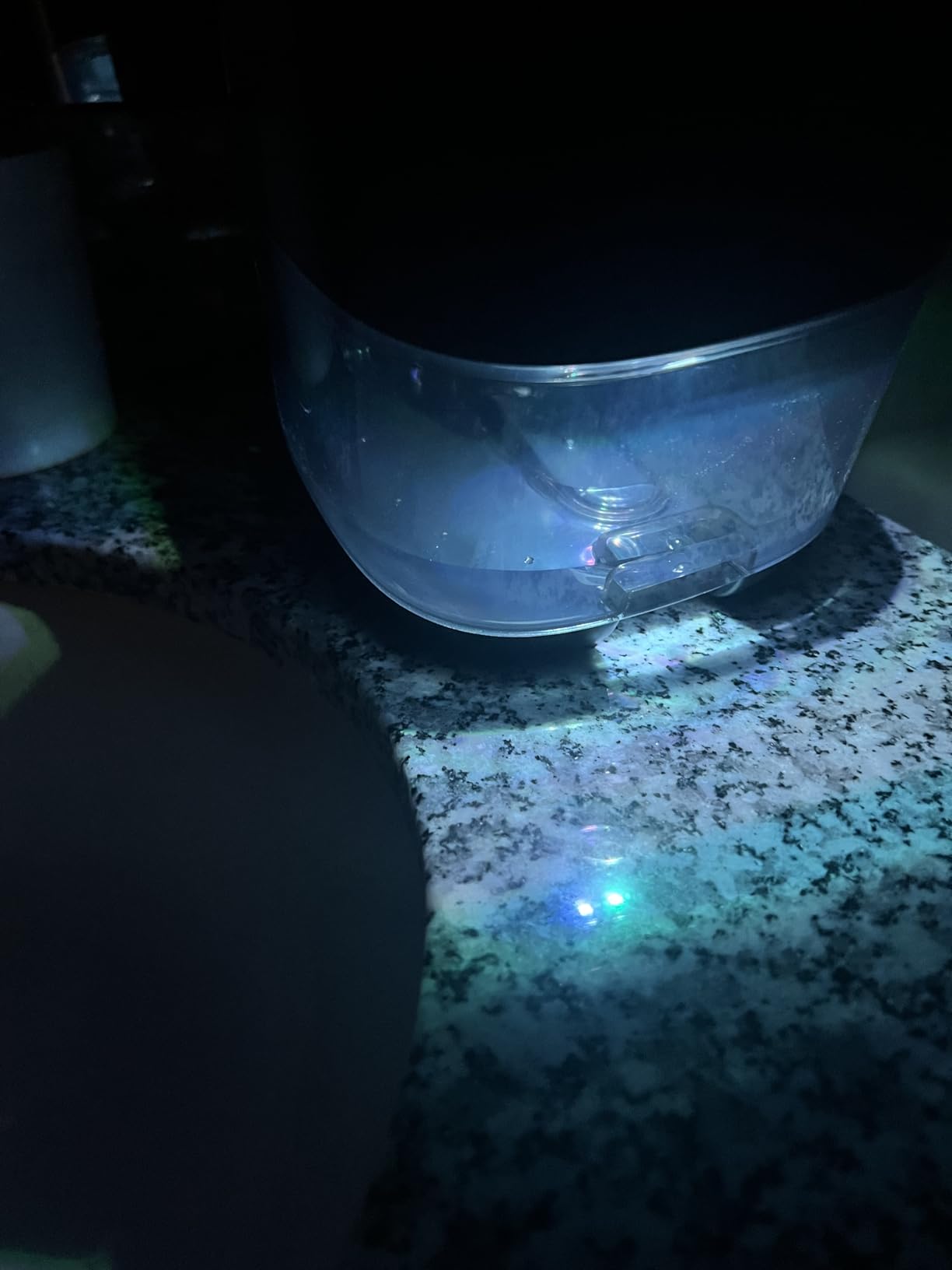
Who this suits
This suits anyone who wants the longest coverage window on defects at the smallest size in this roundup. It is also a good pick for a bedroom where a two-year warranty matters more than maximum tank capacity.
For closets, RVs, and dorm rooms the small footprint works well. Energy use under 1 kWh per day keeps the running cost unremarkable.
Who this does not suit
Skip it if you want any humidity control beyond on and off. One speed and no set point means it can overshoot your target and then you simply switch it off manually.
Some buyers report noise above what they expected from a quiet-rated unit, and a minority report units that stopped producing water after a few months. If longevity is your top concern, test it in a less critical room first.
6. Windangel 44 oz Three-Mode Dehumidifier — Most Mode Control in a Compact Body
Windangel 44oz(1.3L) Small Dehumidifier for Home Auto-Off Quiet Portable Dehumidifier with 3 Modes 10 Color Lights 4 Timer Settings for Bedroom Bathroom Closet (215 sq.ft)
44 oz (1.3 L) tank
Three modes including sleep
24/48/72 hour timer
10 colors, 3 brightness levels
24 W
Pros
- Sleep mode tuned for bedroom use
- Three modes give more control than most compact units
- Lightest unit here at 1.32 kg
- Ten colors with three brightness levels or off
- Auto shutoff and auto defrost
Cons
- 11.8 oz per day is modest for humid spaces
- Timer options start at 24 hours
- Performance mode is noticeable in a silent room
The Windangel DH-D has three genuine operating modes where most machines this size offer two, and that extra granularity is the reason to choose it. Sleep, normal, and performance give you a real low-noise option plus a faster option for drying out a closet after something gets damp.
At 1.32 kg it is the lightest machine in the roundup, which makes it the easiest to move between a bedroom and a closet when humidity shows up in both. The 24 watt draw is also among the lowest here.
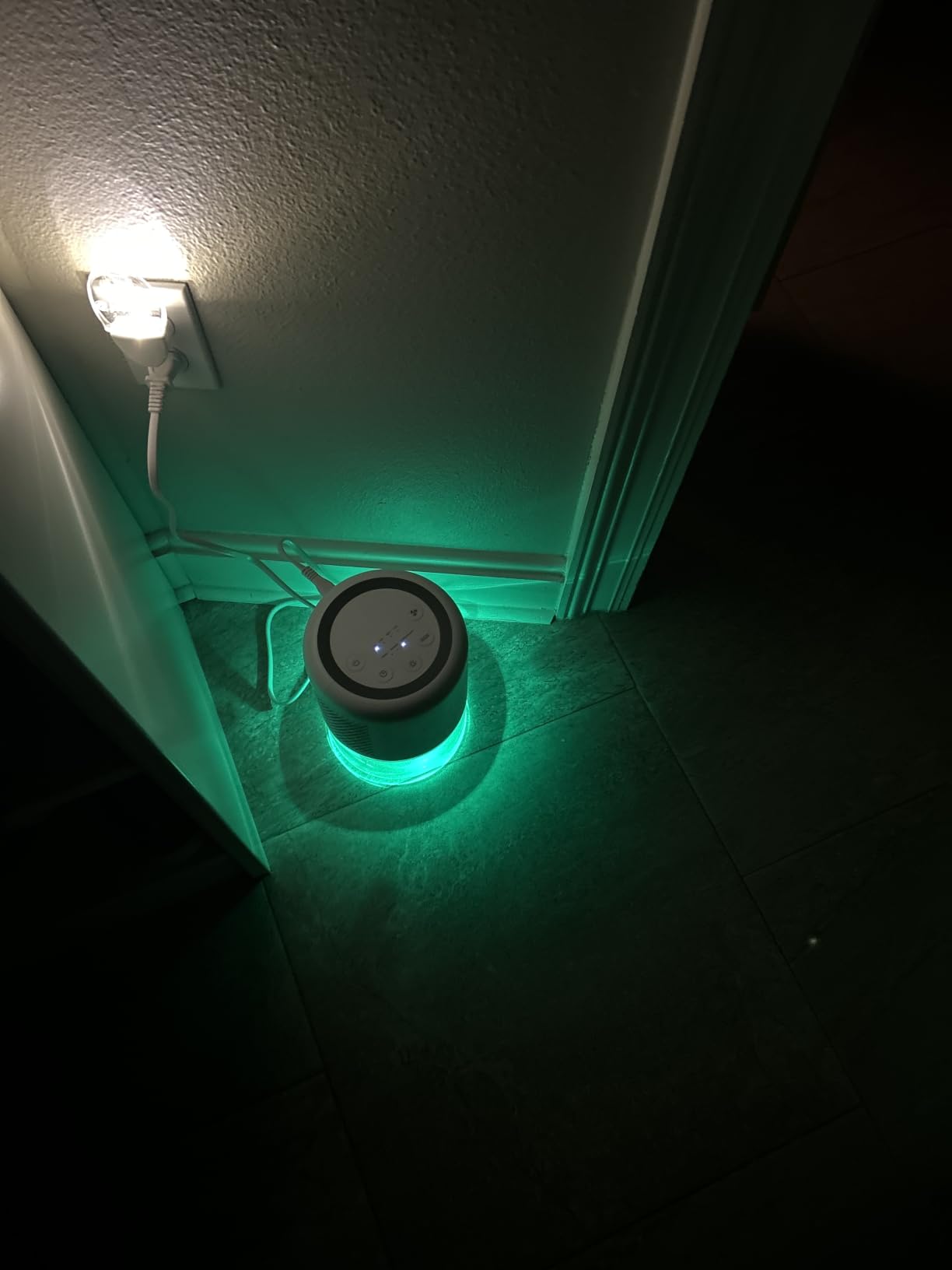
The light control deserves specific mention for bedrooms. Ten colors across three brightness levels, or off entirely, gives you a real off switch for the panel. That is the feature light sleepers ask for most often and it is absent from several units in this price bracket.
The timer runs continuous or auto shutoff at 24, 48, and 72 hours. There is no shorter cycle, so if you want a two-hour boost rather than a full day, you are back to switching it manually.
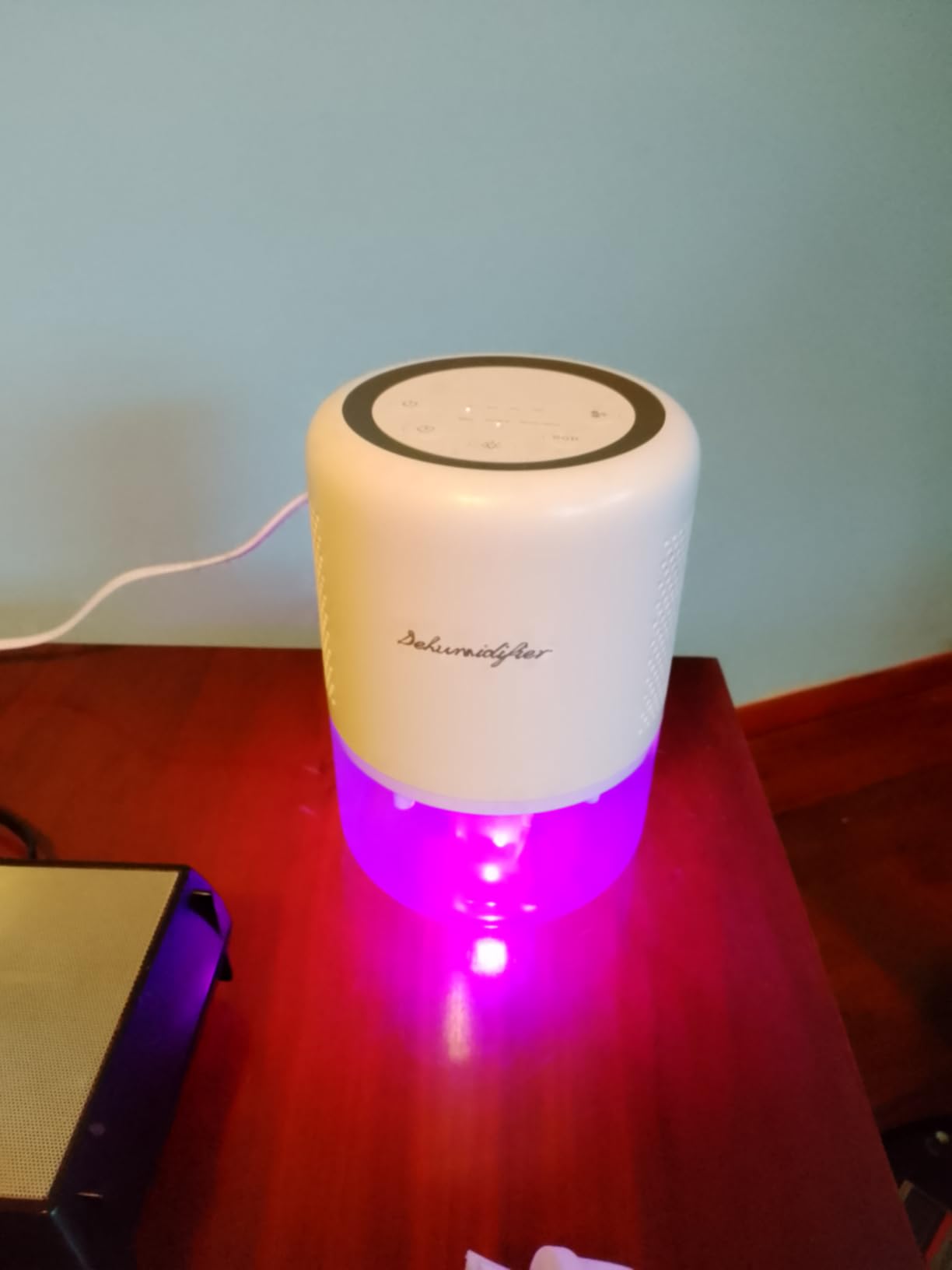
Who this suits
This suits a walk-in closet, a small bathroom, or a bedroom where you want genuine mode choice without stepping up to a compressor machine. Owners like the balance of features at this size and price point.
If a colored light is part of the appeal for a kid’s room or an RV, this has the deepest lighting customization in the roundup. It is also the easiest unit here to carry between rooms.
Who this does not suit
It is not the right tool for heavy humidity. At 11.8 ounces per day rated, this is one of the slower machines listed, and performance mode noise is noticeable in a completely silent room.
If you need the machine to run only for short bursts on a schedule, the timer does not offer that. And if quietness is absolute, the Spacekey or CLEVAST sleep modes are quieter.
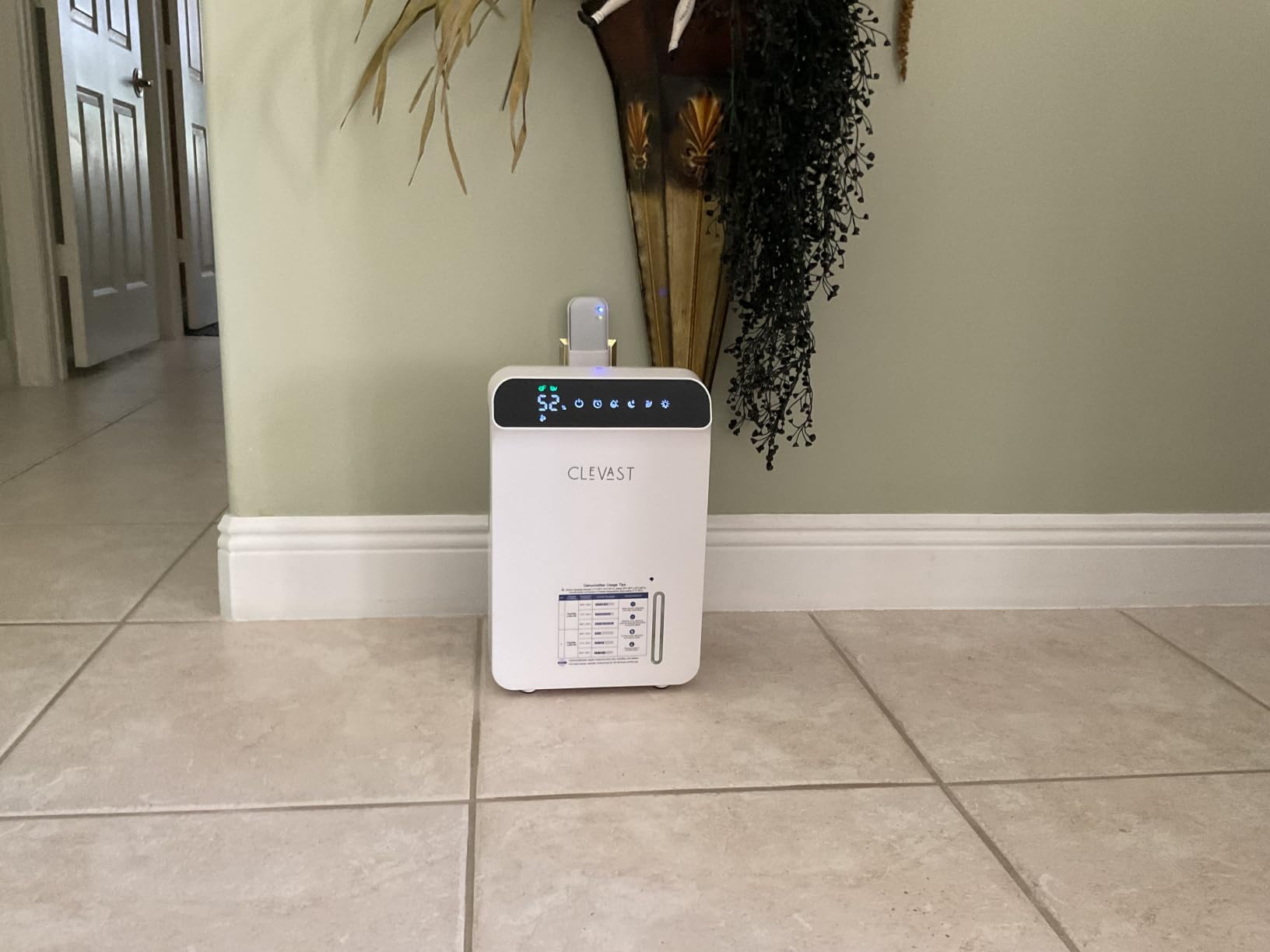
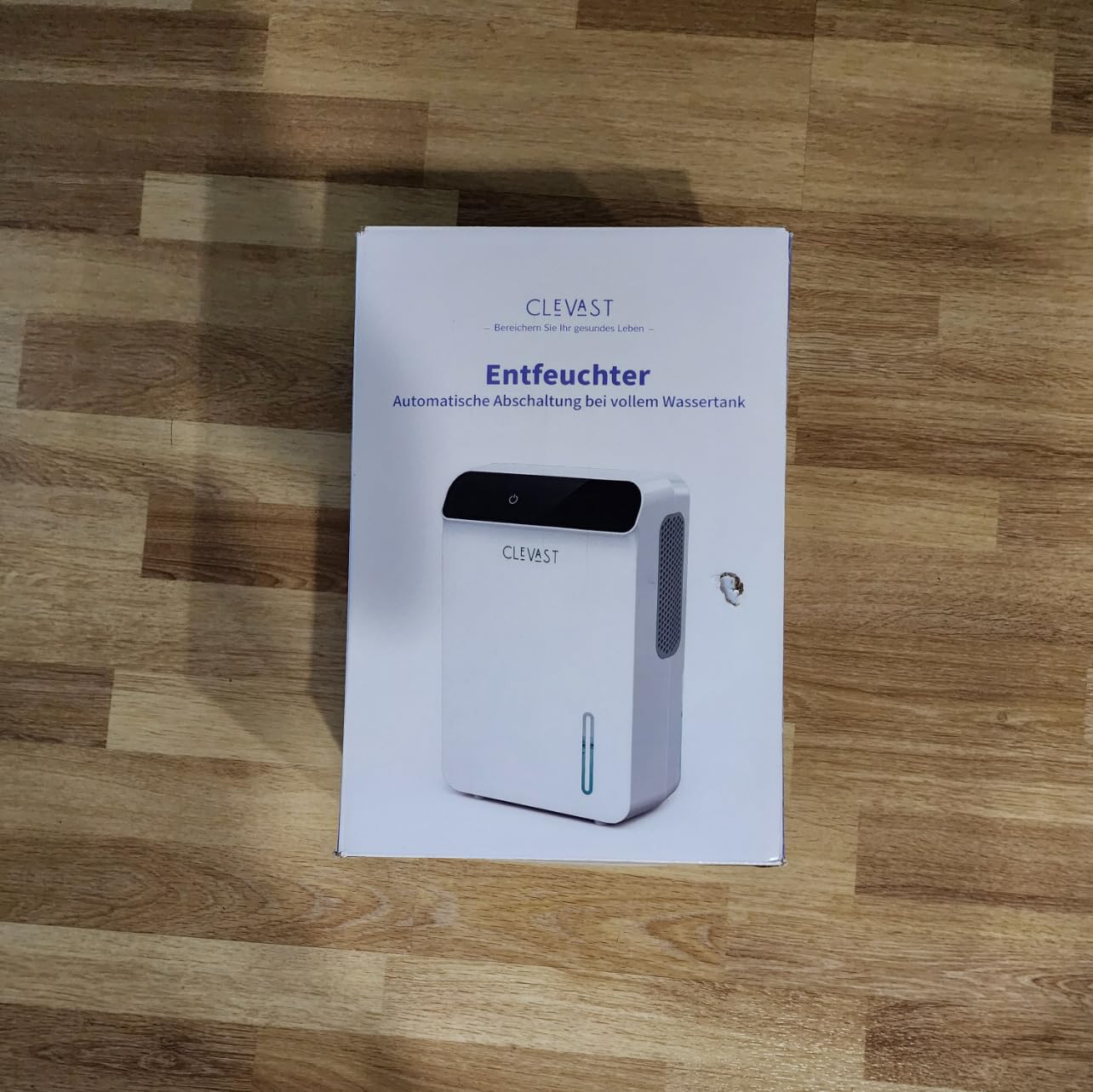
7. CLEVAST EF8895 Compact Dehumidifier — Lowest Energy Draw
CLEVAST Small Dehumidifier for Bathroom, Bedroom, Quiet Operation, Portable
24 dB sleep mode at 1 meter
Semiconductor, 10 oz/day rated
0.55 kWh per day at 27 W
30 oz tank
Pros
- Quietest published figure measured at a stated distance
- Lowest power draw in the roundout
- Effective in small windowless bathrooms
- Very compact with a carry handle
- One-button operation
Cons
- Small tank can mean daily emptying
- Fan louder than hoped on low setting
- One unit failed after about a month
- Drain hose needed for multi-day unattended use
The CLEVAST EF8895 is the most honest quiet figure in the roundup, because it states the measurement distance: 24 dB at 1 meter. Most other listings in this price bracket quote a number with no distance at all, which makes cross-comparison meaningless.
At 27 watts and roughly 0.55 kWh per day, it draws less than half what the ToLife uses. If you plan to run a dehumidifier continuously through humid months, that difference compounds and this is the cheapest machine here to leave on.
The operating range is specified at 68 to 86 degrees Fahrenheit. That is a real constraint if your bedroom gets very cold, and worth checking before you buy for a winter-season problem. It does mean the unit has documented limits rather than an open-ended promise.
The tank is the weak point at 30 ounces, and owners report needing to empty it daily in humid conditions. For unattended multi-day use you will want to attach a drain hose, which turns this into a semi-permanent installation rather than a portable appliance.
Who this suits
This suits a small windowless bathroom, a laundry nook, or a bedroom where you want the lowest possible running cost. The 24 dB figure at a stated distance is the most trustworthy noise number we found in this group.
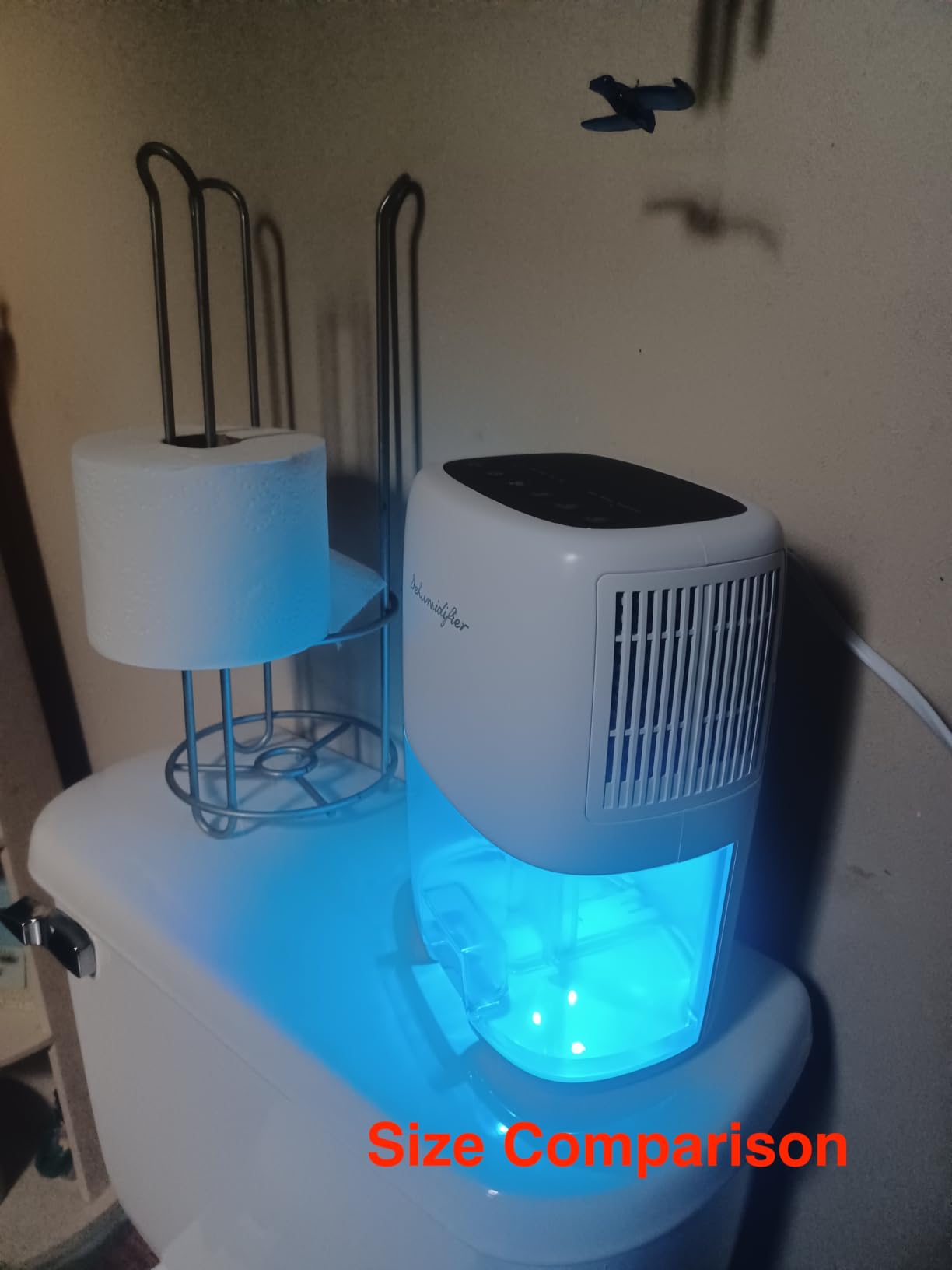
One-button operation makes it approachable, and the compact 4.58 by 6.6 by 9.27 inch body with a handle fits into tight spaces where larger units cannot go.
Who this does not suit
Do not buy it for overnight unattended use without planning a drain line, because the tank will fill. And skip it if your room drops below about 68 degrees, since it is specified for a narrower range than the others here.
The fan can still be louder than you want on low, and at least one owner reported early failure. If longevity is your priority, look at the two-year warranty on the TABYIK instead.
8. Newo 44 oz Timer Dehumidifier — Longest Timer Range
Small Dehumidifier for Home 44OZ Quiet with Auto Off & Defrost 5 Timers 3 modes 10 Color Lights 3 Brightness 260 Sq.ft Portable Dehumidifiers for Basement Bedroom Bathroom RV Closet
44 oz (1.3 L) tank
Sleep mode under 28 dB
24/48/72/96 hour timer plus continuous
30 watts
Pros
- Longest timer range here at up to 96 hours
- Three modes with sleep under 28 dB
- Tank size reduces emptying frequency
- Ten colors with three brightness levels
- FCC CE UKCA and RoHS certified
Cons
- Extraction capacity well below compressor units
- 260 sq ft coverage is optimistic
- Highest share of one-star reviews in this group
The Newo’s distinguishing feature is scheduling. Its five timer options run 24, 48, 72, and 96 hours plus continuous, which is the longest range in the roundup and the only one that covers a full four-day unattended cycle.
Sleep mode is rated under 28 dB, with the same three-mode structure as the Windangel. At 30 watts and a 44 ounce tank, the running cost sits near the bottom of the group.
The listing names a long list of intended rooms, from basements and dorm rooms to RVs and offices. Read that as marketing copy rather than guidance: the extraction capacity is well below a compressor unit, so a basement with real damp is outside what this can do.
What is genuinely useful is the certification list. FCC, CE, UKCA, and RoHS are all stated, which is more paperwork transparency than most listings in this bracket bother with.
Who this suits
This suits someone who wants to set a dehumidifier and forget it for several days, such as a rental left closed between tenants or a storage room on a long cycle. The 96 hour setting is the reason to pick it.
It also works well as a dorm or RV machine where the room is small and the priority is scheduling rather than raw extraction.
Who this does not suit
It is not a solution for heavy humidity in any real sense. The 260 square foot rating is optimistic in practice, and the capacity sits below the other 44 ounce machines here.
This also has the highest proportion of one-star reviews in the group. Read the critical reviews before ordering, and note that the timer does not replace the need to empty the tank when it fills.
9. Deyagoo 50 oz Compact Dehumidifier — Most Versatile for Small Rooms
50OZ Dehumidifier, Small-Space Dehumidifier for Bedroom RV Closet 200 Sq.Ft
About 14 oz/day rated
50 oz transparent tank
30 dB operation
28 watts
Auto shutoff
Pros
- Quiet at about 30 dB
- tank larger than most compact peers
- Transparent tank with a visible water level
- Low 28 W draw
- Compact body that fits tight spaces
Cons
- Lowest average rating in this group
- No dedicated quiet mode
- Effective coverage limited to roughly 200 to 300 sq ft
The Deyagoo DY501 is the budget entry in this roundup and the lowest-rated unit we included, which we are upfront about. At 4.1 stars from 324 reviews, it is well documented enough that the pattern in its reviews is clear rather than anecdotal.
What it gets right is the balance sheet. A 50 ounce transparent tank is larger than most machines at this size, the 28 watt draw is near the bottom, and 30 dB is a workable bedroom noise level.
The groove molded into the tank is a small, genuinely useful detail that makes the container easier to grip and lift when full. The auto shutoff triggers between 1300 and 1500 ml with a flashing red light, so it will not run over.
The limitation is control. There is a single operating mode, which means no dedicated quiet setting and no performance boost. You get one level of output, and if it is not enough you need a different machine rather than a different setting.
Who this suits
This suits a small bedroom, an RV, or a closet where you want a transparent tank you can read at a glance and a low power draw for long unattended runs. The tank size relative to its footprint is the best thing about it.
If your budget is the first constraint and the room is small, this does the job without any unpleasant noise.
Who this does not suit
Skip it if noise sensitivity is high, because there is no quiet mode to fall back on. One fixed output level means you cannot trade a little noise for more drying when conditions worsen.
It is also the weakest choice for durability signal, with the lowest average rating in this group. If the machine is going to run for years, spend up for a longer warranty.
10. Wellsle 50 Pint Compressor Dehumidifier — For Large Bedrooms and Suites
Wellsle 3500 Sq.Ft Dehumidifier, 50 Pint Dehumidifiers for Home and Basement with Drain Hose, Ultra-Quiet Bedroom Dehumidifier, Intelligent Humidity Control, 24 Hours Timer.
50 pints per day
41 dB or under with dimming panel
1.59 gallon tank
6.6 ft drain hose
350 watts
Pros
- Only compressor unit here and the only one that can handle a large room
- Intelligent humidity control with a target level
- Panel auto-dims for bedroom use at night
- Continuous drain hose for unattended running
- Washable filter
- wheels and child lock
Cons
- Heavy at 32.4 pounds and bulky
- 350 watts is far higher than compact units
- Still audible beside a bed at over 40 dB
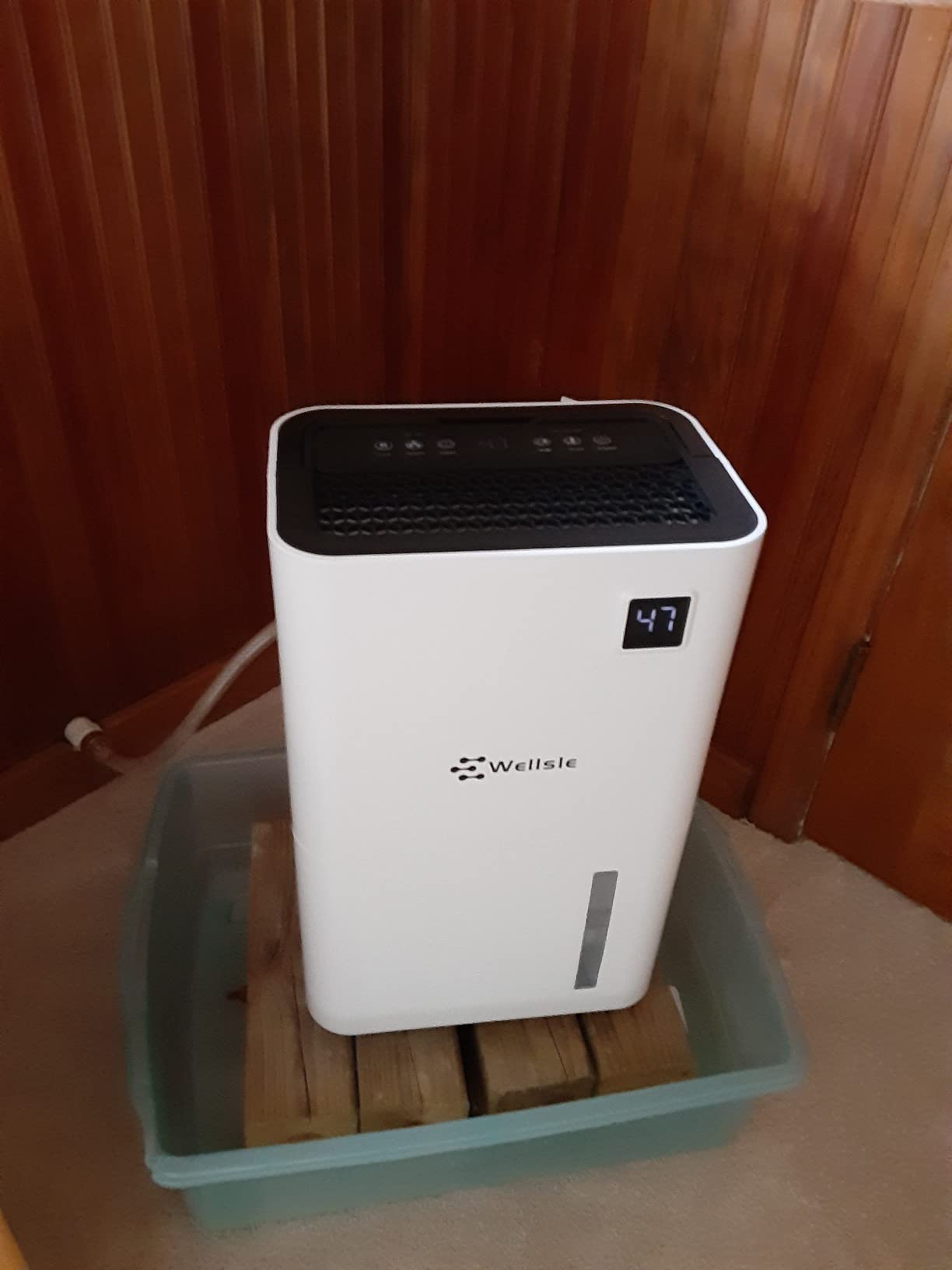
The Wellsle PD11D is included as a reality check. It is the only compressor-based machine in this roundup, and it exists in this conversation because a bedroom large enough to need 50 pints per day is a real and common problem.
Where every other machine here trades capacity for silence, this one does the opposite. At 50 pints per day and coverage up to 3500 square feet, it is the only unit here that can pull a genuinely humid large bedroom back down in a reasonable time.
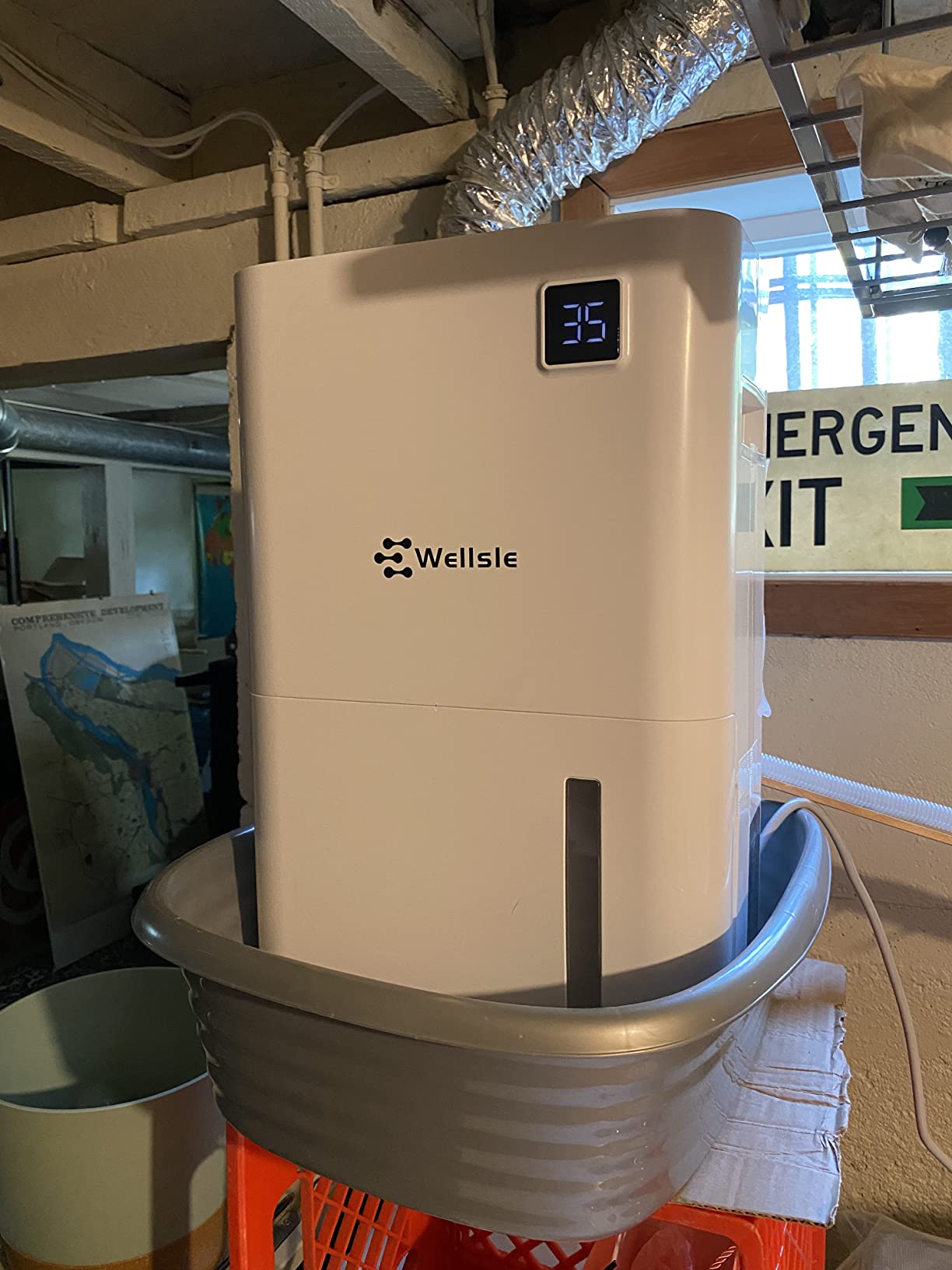
Two bedroom-specific features are worth calling out. The control panel auto-dims at night, which is exactly the complaint we hear most often about bright indicator panels, and the intelligent DEHU mode lets you set a target relative humidity instead of just choosing a mode.
The 1.59 gallon tank and the included 6.6 foot continuous drain hose mean it can run for weeks without attention, and a washable filter is the one unit in this roundup where you can clean the airflow path yourself.
Who this suits
This suits a large primary bedroom, a whole upstairs suite, or a room with serious window condensation and mold risk on exterior walls. At 41 dB or below with a dimming panel, it is workable in a bedroom if it sits across the room or behind a closed door.
If you want the air moving fast and want to leave it running indefinitely, the drain hose and washable filter make this the maintenance-light choice of the roundup.
Who this does not suit
Do not put it beside your bed. Over 40 dB is quieter than a typical compressor dehumidifier, but it is still the loudest machine here by a wide margin and it is a 32.4 pound box occupying real floor space.
At 350 watts the running cost is far higher than a thermoelectric unit. If your humidity problem is mild enough for a small machine, this is far more appliance than you need.
Running a Dehumidifier While You Sleep
Yes, it is fine to sleep in the same room as a running dehumidifier, provided you set it up correctly. Every machine in this roundup uses full-tank auto shutoff, so the compressor stops before overflow, and the compact units have no compressor at all to overheat.
Five things matter more than anything else on that list. Plug it directly into a wall outlet and never use an extension cord, because these machines draw continuous current for hours. Keep it on a level floor with clearance around the intake and outlet, since every one of these units needs unobstructed airflow. Set the panel lights off or to their lowest level before you turn in. Empty the tank or attach a drain line, because auto shutoff means the machine stops rather than that you never have to check it. And give it a dedicated circuit if you are running anything else heavy.
On energy, the numbers here are modest. The compact thermoelectric units run between roughly 0.55 and 1 kWh per day. The 50-pint compressor draws about 350 watts. For most people the electric bill is a smaller concern than the sleep disruption, which is why we organized this roundup around noise.
One safety note worth stating plainly: a dehumidifier lowers humidity, it does not remove mold already present. If you can see growth on a wall, treat that as a remediation problem rather than an appliance problem.
Where to Put It in a Bedroom
Placement changes how much noise reaches your pillow more than any setting does. The single most effective move is distance: put the machine in the far corner of the room rather than on the nightstand, because most of the perceived loudness at close range is high-frequency content that drops off fast.
Leave clearance around the unit as the manufacturer specifies, usually several inches on the intake and exhaust faces. Do not tuck it behind a curtain or under a bed, since restricted airflow raises the fan speed and the noise with it.
Running with the bedroom door closed is the better option. It confines the dehumidified air to the space you want to treat, and it puts a door between you and the sound. Running with the door open turns the machine into whole-apartment equipment and spreads the drying far too thin to matter.
Avoid placing it directly against an exterior wall you are trying to protect, since the cold surface will fight the machine. And keep it away from any HVAC return vent, where it will pull conditioned air straight back out of the room.
What We Would Skip and Why
Every roundup on this topic is a list of positives. Here is the other half. Overstated coverage claims are the biggest trap: several units here advertise 1000 square feet while their own technical sections list far smaller realistic figures, and the avylo listing contradicts itself outright between 162 and 4500 square feet.
Sealed housings with no user-accessible filter are the second thing we would avoid where possible. The Spacekey is the clearest example. Once the casing cannot be opened for cleaning, airflow maintenance is out of your hands permanently.
Third, single-mode machines with no quiet setting. The Deyagoo runs one fixed output level, so you cannot trade a little noise for more drying when humidity climbs. That removes the control you actually want at two in the morning.
Fourth, be wary of tank size claims that ignore emptying frequency. A 30 ounce tank in a humid room means daily attention, and daily attention at night defeats the purpose of an overnight machine entirely.
Finally, treat durability reports seriously. Reviews across several of these units describe machines that stopped collecting water after one to two years, and others describe motors that failed loudly. A two-year warranty is the only real signal in this group that separates a machine built to last from one built to sell.
How Big a Dehumidifier Does Your Bedroom Need?
Match the machine to the room, and match the type to the problem. Under 160 square feet, any of the compact thermoelectric units here will handle steady moderate humidity quietly. From 160 to 300 square feet, look at the larger tanks in this roundup, particularly the ToLife and Spacekey at 95 ounces. Above 300 square feet, or anywhere with active window condensation, you are into compressor territory and should read our basement dehumidifier guide before deciding.
Understand what you are buying when you see pints per day or ounces per day. It is a laboratory maximum measured at 86 or 90 degrees Fahrenheit and 80 percent relative humidity, which is a far worse situation than most bedrooms. Real output in a normal room is a fraction of the rating, so treat these numbers as a ceiling rather than a promise.
There are three technologies and the difference matters. Compressor units use a refrigerant loop, run cool, pull large amounts of water, and produce a compressor hum. They are the right answer for serious humidity and the wrong answer for a bedside position. Thermo-electric units cool a plate with a Peltier element, run almost silently, draw very little power, and are limited by how much moisture condenses on a cold surface. Desiccant units spin an absorbent wheel over a heated chamber. They are the fastest choice in cold, damp conditions and are almost never the choice for a bedroom.
The practical consequence is that every compact unit in this roundup is a fixed ceiling on humidity. If your problem is a musty pillow and a closet that feels damp, that ceiling is fine. If your problem is black spots on an exterior wall, no thermoelectric machine on the market will resolve it.
For the features that actually improve sleep, prioritize in this order. Panel lights that switch off or dim, since a bright indicator in a dark room is the most common bedroom complaint. A tank you can go several days without emptying, or a drain hose if you want true unattended running. Auto shutoff, which every unit here has. A dedicated quiet or sleep mode with a published decibel figure. A timer with long settings if you want scheduling. A humidistat set point if you want the machine to stop on a target rather than on a timer.
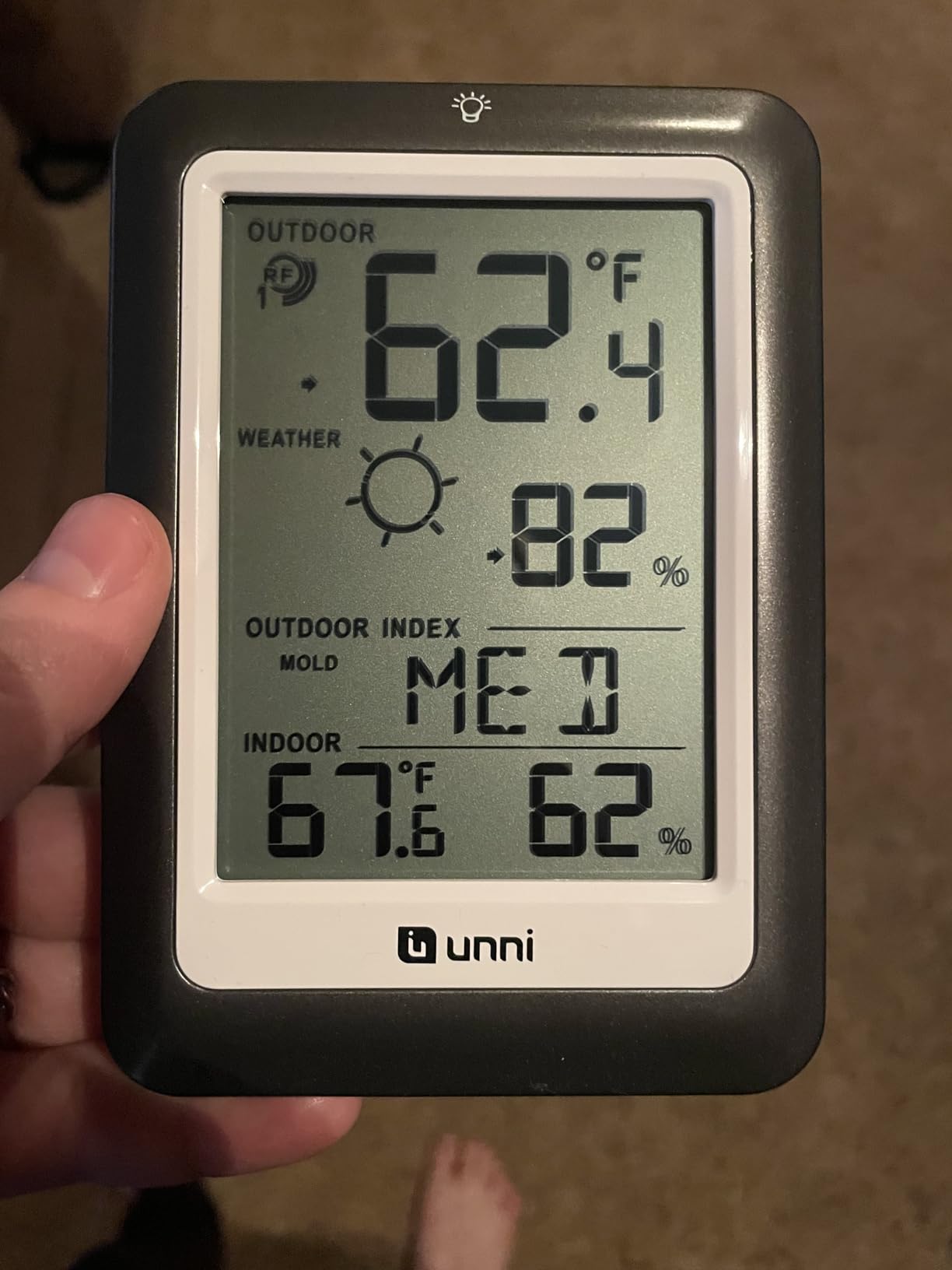
Verify your humidity with something separate. Many of these units have no hygrometer at all, and those that do are not always accurate. A cheap standalone hygrometer on the nightstand tells you whether the machine is actually doing anything, and it takes about ten dollars and no installation. Aim to hold your bedroom between 40 and 55 percent relative humidity; below 40 can irritate sinuses and above 60 supports mold and dust mites.
If the real issue is a structural moisture source rather than ambient humidity, an appliance will not fix it. Fixing exterior paint, sealing an air leak, or regrading soil against a foundation wall does more than any machine on this list. If you are dealing with a crawl space or an unfinished basement, our crawl space dehumidifier guide covers that setup specifically.
For context on noise ratings elsewhere in the appliance world, our guide to the quietest air compressors applies the same lab-versus-real-distance logic, and our garage dehumidifier picks cover the other end of the room-size spectrum.
Frequently Asked Questions
What is the most silent dehumidifier?
Among the units we reviewed, the Spacekey QIG-D02 has the lowest published night-mode figure at 20 dB, followed by the CLEVAST EF8895 at 24 dB measured at 1 meter. Both sit far below a running refrigerator. Note that manufacturers rarely state the measurement distance, so treat these as marketing-grade numbers rather than bedside guarantees.
How many decibels is the quietest dehumidifier?
Independent testers report that the quietest bedroom-capable dehumidifiers reach roughly 50 dB, about as loud as a refrigerator. The compact thermoelectric models in this roundup are quieter, rated between 20 and 35 dB, but they extract far less water. Anything under 30 dB is effectively silent at six feet; past 60 dB you will hear every compressor cycle start.
Which dehumidifier is best for a bedroom?
For a typical 200 to 350 square foot bedroom, the ToLife 95 oz unit is the best fit because its tank runs several nights without emptying and its sleep mode stays under 30 dB. For rooms under about 160 square feet, the avylo 42 oz Peltier model is quieter and lighter. For rooms above 300 square feet with window condensation, you need a compressor unit such as the Wellsle 50-pint model.
Is it okay to sleep with a dehumidifier in my bedroom?
Yes, provided you plug it directly into a wall outlet with no extension cord, keep airflow unobstructed, and empty the tank or attach a drain line before sleeping. Every unit in this roundup has full-tank auto shutoff, so the compressor stops rather than overflowing. Also set the panel lights off, since a bright indicator is a more common sleep disruptor than the sound.
Where not to put a dehumidifier in bedroom?
Avoid tucking it behind a curtain, under a bed, or against a wall that blocks the intake or outlet, since restricted airflow raises the fan speed and the noise. Keep it away from an HVAC return vent, or you will pull conditioned air straight back out of the room. Running with the bedroom door closed is better, because it keeps the treated air in the room and puts a door between you and the sound.
Are small room dehumidifiers worth it?
Yes, for closets, nurseries, RVs, and bedrooms under about 160 square feet with mild humidity. They run at 20 to 30 dB, draw 27 to 40 watts, and cost a fraction of a compressor unit to run. They are not worth it for heavy humidity or large rooms, because thermoelectric cooling has a hard ceiling on how much water it can pull from the air.
Do quiet dehumidifiers use more energy?
The opposite is true for compact units. The CLEVAST EF8895 draws 27 watts and about 0.55 kWh per day, while larger models in this roundup run near 1 kWh per day. The compressor-based Wellsle is the outlier at 350 watts, because a refrigerant compressor does the cooling work that a Peltier plate cannot. Quieter small machines are also the cheaper ones to run.
Our Final Word on Quiet Bedroom Dehumidifiers
The ToLife 95 oz unit is our pick for most bedrooms because the tank size and the sub-30 dB sleep mode solve the two problems that actually wake people up: a full tank alarm at midnight and an audible compressor cycle. For rooms under about 160 square feet, the avylo is quieter and lighter. If noise is your only criterion, the Spacekey’s 20 dB night mode is the quietest figure we found.
Be clear-eyed about the category, though. These are all thermoelectric machines, which means they are quiet because they are small, not because they are better at removing moisture. If your bedroom has genuine condensation or mold on an exterior wall, the fix is a compressor unit and a look at the moisture source, not a quieter compact machine. Everything else, from window fogging to musty bedding to a damp closet, the picks above handle well.