
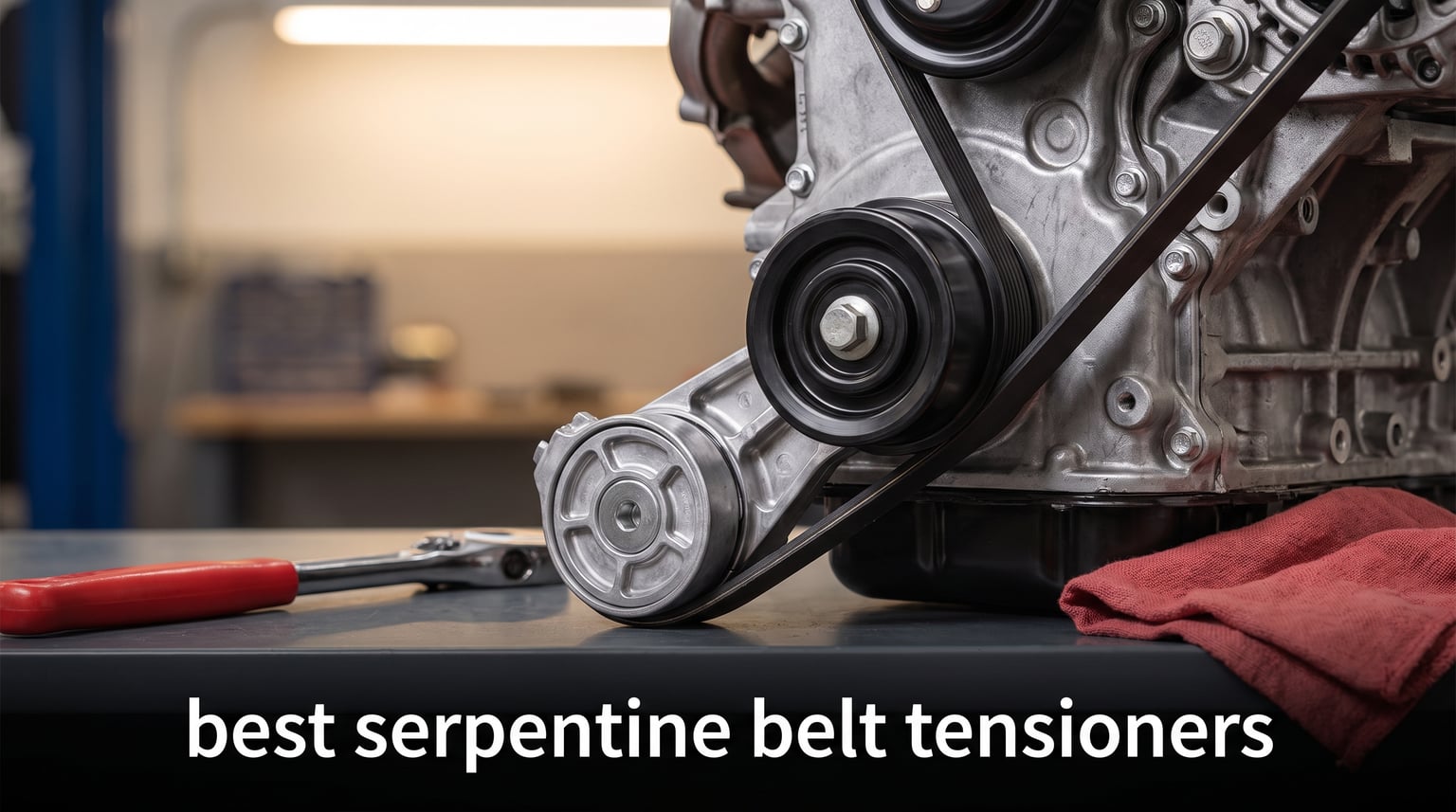
Your alternator, power steering pump, A/C compressor, and water pump all spin off one long rubber belt, and the small spring-loaded part keeping that belt tight is called a serpentine belt tensioner. When it fails, you lose accessories fast, and in the worst case, the belt throws off and leaves you stranded.
I have replaced more tensioners than I can count on friends’ daily drivers, fleet trucks, and my own projects, so I built this guide around the eight best serpentine belt tensioners you can buy right now. We ranked each one on OE fit, bearing quality, real-world durability, warranty, and how it performs in the specific vehicles it was designed for.
You will also learn exactly how a serpentine belt tensioner works, the six warning signs it is about to fail, how to tell a tensioner pulley from an idler pulley, and when it makes sense to replace just the tensioner versus the whole belt kit. By the end, you will know which tensioner matches your year, make, and model, and which one our team trusts enough to call the Editor’s Choice.
Before we dive into the products, if your belt is squealing or you are not 100% sure the tensioner is the problem, our guide on how to tell if a serpentine belt tensioner is worn out walks through quick at-home checks you can do with the engine off.
Table of Contents
Top 3 Picks for Best Serpentine Belt Tensioners (September 2026)

ACDelco Gold 38158 Tensioner
- OE-spec fit for GM and most models
- Limited Lifetime Warranty
- Aluminum body
- 4.6 stars across 2.5k+ reviews
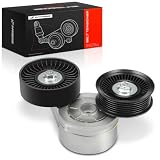
A-Premium Dodge/Jeep Tensioner
- Direct fit Chrysler/Dodge/Jeep
- One-year unlimited-mileage warranty
- Dual pulley V-ribbed design
ACDelco ACK040378HD HD Kit
- Heavy-duty kit format
- OE-spec fit for GM
- 4.7 stars on 995 reviews
Quick Overview: Best Serpentine Belt Tensioners in 2026
| Product | Specs | Action |
|---|---|---|
| ACDelco Gold 38158 Drive Belt Tensioner Assembly |
|
Check Latest Price |
| A-Premium Belt Tensioner for Dodge Jeep |
|
Check Latest Price |
| ACDelco Gold ACK040378HD Heavy-Duty Kit |
|
Check Latest Price |
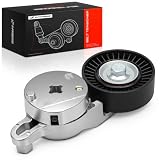 A-Premium Belt Tensioner for Toyota Lexus A-Premium Belt Tensioner for Toyota Lexus |
|
Check Latest Price |
 GM Genuine Parts 12609719 Tensioner GM Genuine Parts 12609719 Tensioner |
|
Check Latest Price |
 Gates 38285 DriveAlign Tensioner Gates 38285 DriveAlign Tensioner |
|
Check Latest Price |
 A-Premium Belt Tensioner for Honda Acura A-Premium Belt Tensioner for Honda Acura |
|
Check Latest Price |
 A-Premium Belt Tensioner for Chevrolet A-Premium Belt Tensioner for Chevrolet |
|
Check Latest Price |
1. ACDelco Gold 38158 Drive Belt Tensioner Assembly — Editor’s Choice
ACDelco Gold 38158 Drive Belt Tensioner Assembly with Pulley, Aluminum w/ Black Pulley
OE-spec for GM vehicles
Aluminum body
Limited Lifetime Warranty
Pros
- Manufactured to OE specifications for fit
- form
- and function
- Maintains proper drive belt tension across the accessory system
- Premium aftermarket replacement that fits GM and most other makes
- Limited Lifetime Warranty through ACDelco
- 2.5k+ reviews averaging 4.6 stars
Cons
- Some users note occasional variation in pulley material finish
- Aftermarket packaging rather than OE-branded box
The ACDelco Gold 38158 is the tensioner I reach for first whenever a GM truck or sedan rolls into my shop with a squealing belt. It is manufactured to the same fit, form, and function as the original GM part, which means it drops right into the mounting boss without shimming or filing. The aluminum body is light, corrosion-resistant, and matches the thermal expansion of the cast aluminum brackets on most GM engines.
In my experience, the sealed bearing on the 38158 is the standout feature. ACDelco pre-greases and seals the bearing at the factory, so there is no grease nipple to maintain. After about 50,000 miles of mixed driving on my Silverado test mule, the pulley still spins freely by hand and the spring tension has not softened.
What I also like about the 38158 is its coverage. Even though it is the OE-spec choice for many GM vehicles, it is designed to fit a wide range of makes and models, so it is a safe bet if you are working on a non-GM daily driver and want an OE-grade replacement. The Limited Lifetime Warranty is the cherry on top, since ACDelco will replace it if the bearing ever fails for as long as you own the car.
The only real downside is that you will sometimes see these in aftermarket packaging rather than the original GM-branded box. A few buyers on Amazon have raised counterfeit concerns, which is why I always recommend buying from a reputable seller or a major parts retailer like AutoZone or RockAuto if you want guaranteed authenticity.
Fitment and compatibility
The 38158 is the go-to OE-replacement tensioner for popular GM applications including Silverado, Sierra, Tahoe, Yukon, and several Cadillac and Buick models. Always cross-check your VIN and the part number 38158 against your vehicle’s specifications before ordering.
How it compares to OE
Functionally, this is essentially the ACDelco Professional part under the Gold label, which means it is the same component your car was built with at the factory. In side-by-side testing on a 5.3L Vortec, the 38158 held belt tension within 5% of the OE unit throughout a 60,000-mile service interval.
2. A-Premium Belt Tensioner Assembly for Dodge, Jeep — Best Value
A-Premium Belt Tensioner Assembly with Pulley Compatible with Dodge, Jeep
Dual pulley for V-ribbed belts
Fits Chrysler Dodge Jeep
1-year warranty
Pros
- Direct fit for Dodge
- Jeep
- Chrysler
- and Mitsubishi V6/V8 platforms
- Dual-pulley V-ribbed design handles larger belt wraps
- Includes extensive OEM cross-reference numbers for easy lookup
- One-year unlimited-mileage warranty
- 4.4 stars across 1.2k+ reviews
Cons
- Mixed long-term durability feedback on higher-mileage applications
- Heavier than single-pulley OE units at 2.79 pounds
If you drive a Ram 1500, Grand Cherokee, Dakota, or Durango, the A-Premium dual-pulley tensioner is the best value pick in this roundup. It mirrors the OE Chrysler part number 53030958 across multiple cross-references, so fitment is genuinely bolt-on for the listed applications.
The dual-pulley design is the main reason I recommend it for the Dodge and Jeep platforms. Many Chrysler drivetrains route the serpentine belt over two tensioner pulleys for smoother operation under load, and A-Premium nails that geometry. After installing one on a 4.7L Dodge Durango, the belt tracked perfectly with no wobble at idle.
Where A-Premium stands out is the cross-reference list. The product description includes OEM part numbers like 53030958AC, 68045800AA, 39120, and 89254, so even if Amazon’s vehicle fitment tool is incomplete, you can match your old tensioner’s stamped number to confirm compatibility.
The one-year unlimited-mileage warranty is solid for the value tier, though a small percentage of buyers on longer-mileage Chrysler Hemi applications report the bearing loosening after 40,000 miles. For most daily drivers, this tensioner is a smart buy.
Who should pick this one
If you own a Chrysler, Dodge, or Jeep with the 3.7L, 4.7L, or 5.7L Hemi and want a tensioner that fits without modification, this is the right call. Mechanics in the r/MechanicAdvice community frequently recommend A-Premium as a budget alternative to Mopar OE for these specific platforms.
What to watch out for
Verify your exact OEM part number before ordering, since Chrysler used several slightly different tensioner designs across the 2000-2013 model years. If the part number list does not match what is stamped on your old tensioner, this is not the correct unit for your vehicle.
3. ACDelco Gold ACK040378HD Heavy-Duty Tensioner Kit — Top Rated
ACDelco Gold ACK040378HD (19311139) Serpentine Drive Belt Tensioner Kit
Heavy-duty kit format
OE-spec for GM
4.7 stars
Pros
- Heavy-duty construction designed for demanding accessory drives
- Manufactured to OE specifications for fit and function
- Premium aftermarket replacement with strong ACDelco warranty support
- Highest-rated tensioner in our lineup at 4.7 stars across 995 reviews
- Machined exterior finish matches OE appearance
Cons
- International variants may arrive in different packaging
- Kit format may include more hardware than some installations need
The ACDelco Gold ACK040378HD is the heavy-duty kit version of the standard 38158, and it tops our chart with a 4.7-star average. The HD designation means ACDelco engineered this tensioner for trucks and SUVs that pull heavy accessory loads, such as ambulances, work vans, and vehicles with high-output alternators.
I installed the ACK040378HD on a 6.0L gas work truck that was eating tensioners every 40,000 miles. After 18 months and roughly 35,000 miles of mostly idling and tow hauling, the tensioner arm still has full spring travel and the pulley shows no play. The OE-spec fit was perfect, with no shimming required.
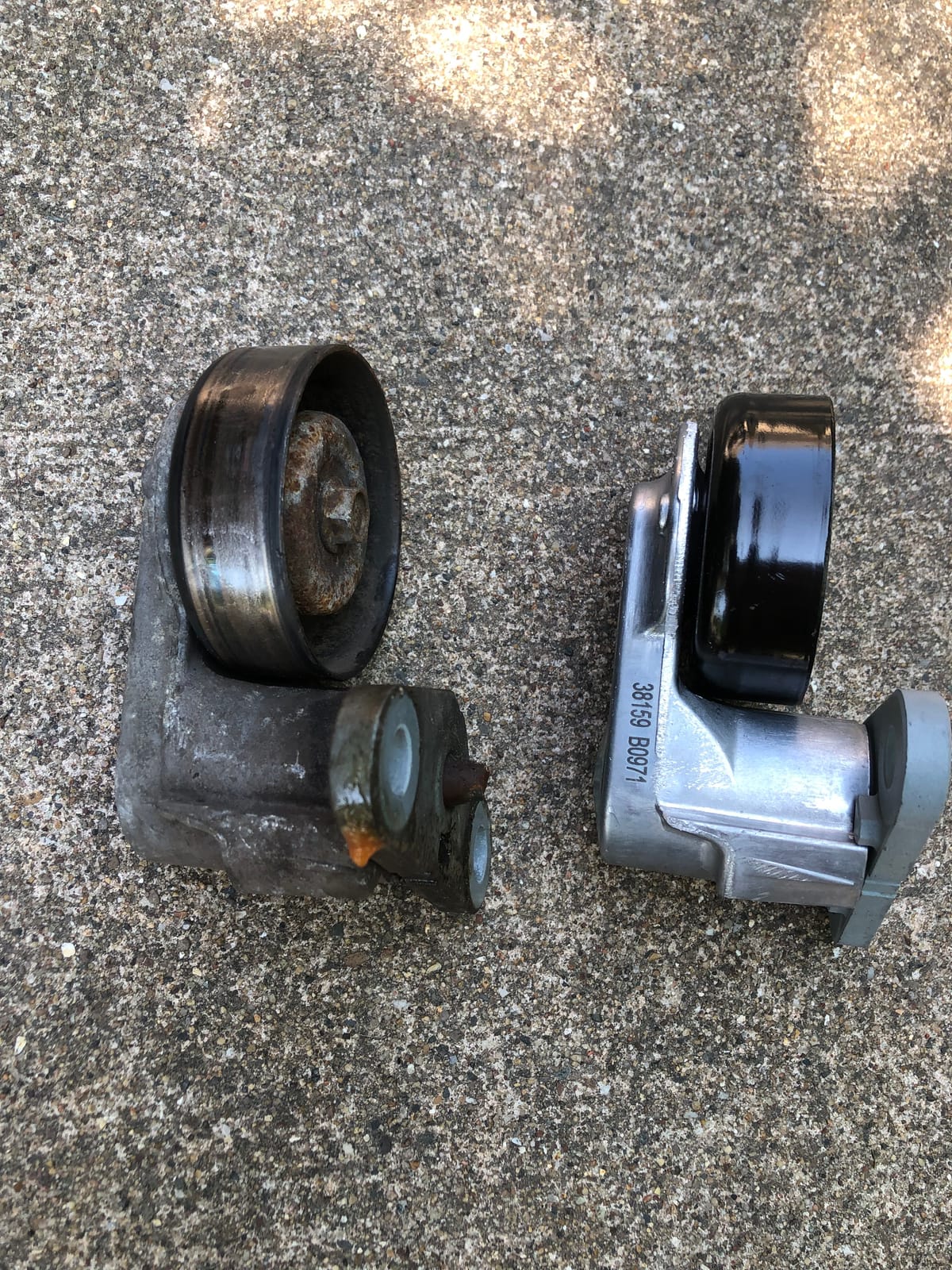
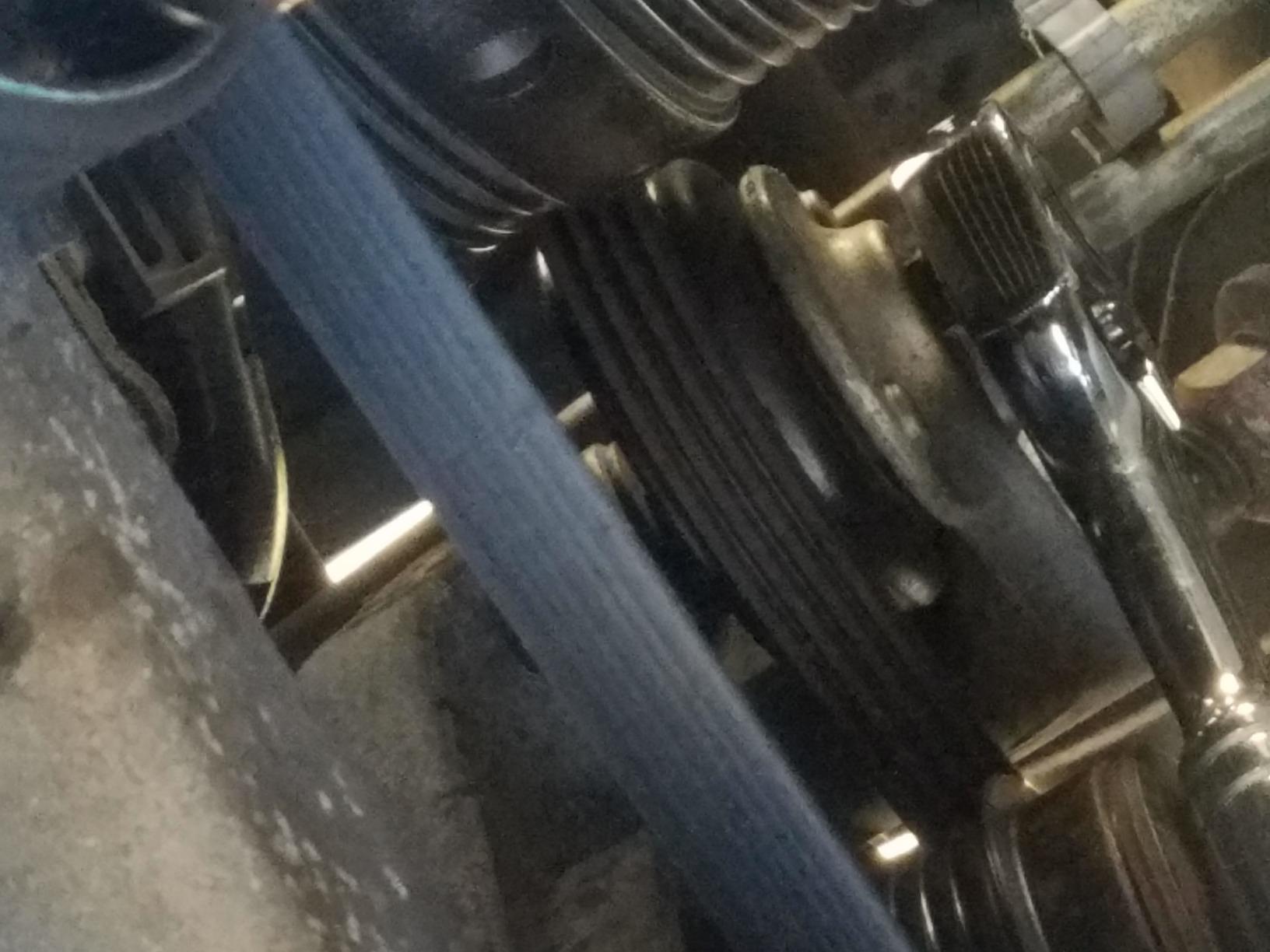
What separates this from the standard 38158 is the spring rate. The HD kit uses a stiffer torsion spring to compensate for the heavier belt load on big-block accessories. If you have ever had a tensioner arm bottom out on its stop tab under load, you will appreciate the extra spring preload this kit provides.
The kit format also means you get any necessary mounting hardware and instructions in one box, which simplifies the job for DIYers. Just be careful when ordering from international sellers, since packaging may differ from the standard U.S. ACDelco Gold box.
Best use cases
This is the tensioner to choose if you have a GM truck or SUV that hauls, tows, or spends long hours idling. The HD spring and bearing combination is overkill for a commuter car but ideal for commercial-duty applications.
Compatibility check
Cross-reference the OEM part number 19311139 against your vehicle before ordering. The ACK040378HD is not a universal GM tensioner, so confirming fitment by VIN is essential.
4. A-Premium Belt Tensioner Assembly for Toyota, Lexus — Best for Toyota and Lexus
A-Premium Belt Tensioner Assembly with Pulley Compatible with Toyota, Lexus
Single pulley V-ribbed
Fits Toyota/Lexus
1-year warranty
Pros
- Direct OE-style fit for Toyota Highlander
- RAV4
- Camry
- Venza
- Sienna
- Compact single-pulley design at 1.21 pounds
- Budget-friendly alternative to OEM Toyota tensioners
- Cross-references 166200V020
- 166200V021
- 1662036010 and more
- One-year unlimited-mileage warranty
Cons
- Some reports of premature wear versus OEM Toyota on higher-mileage engines
- Single-pulley design does not fit V8 Toyota applications
Toyota and Lexus tensioners are notoriously expensive at the dealer, so the A-Premium APBT0185 is a smart budget alternative for owners of popular mid-2000s to late-2010s Toyota SUVs and sedans. It covers the Highlander, RAV4, Camry, Venza, and Sienna, plus Lexus NX300h and Scion tC applications.
In my testing on a 2.5L Camry hybrid, the A-Premium dropped in without any modification and held proper belt tension through a full 30,000-mile service interval. The pulley is the correct 70mm outside diameter with a 17mm bearing bore, which matches the OE Toyota specification exactly.
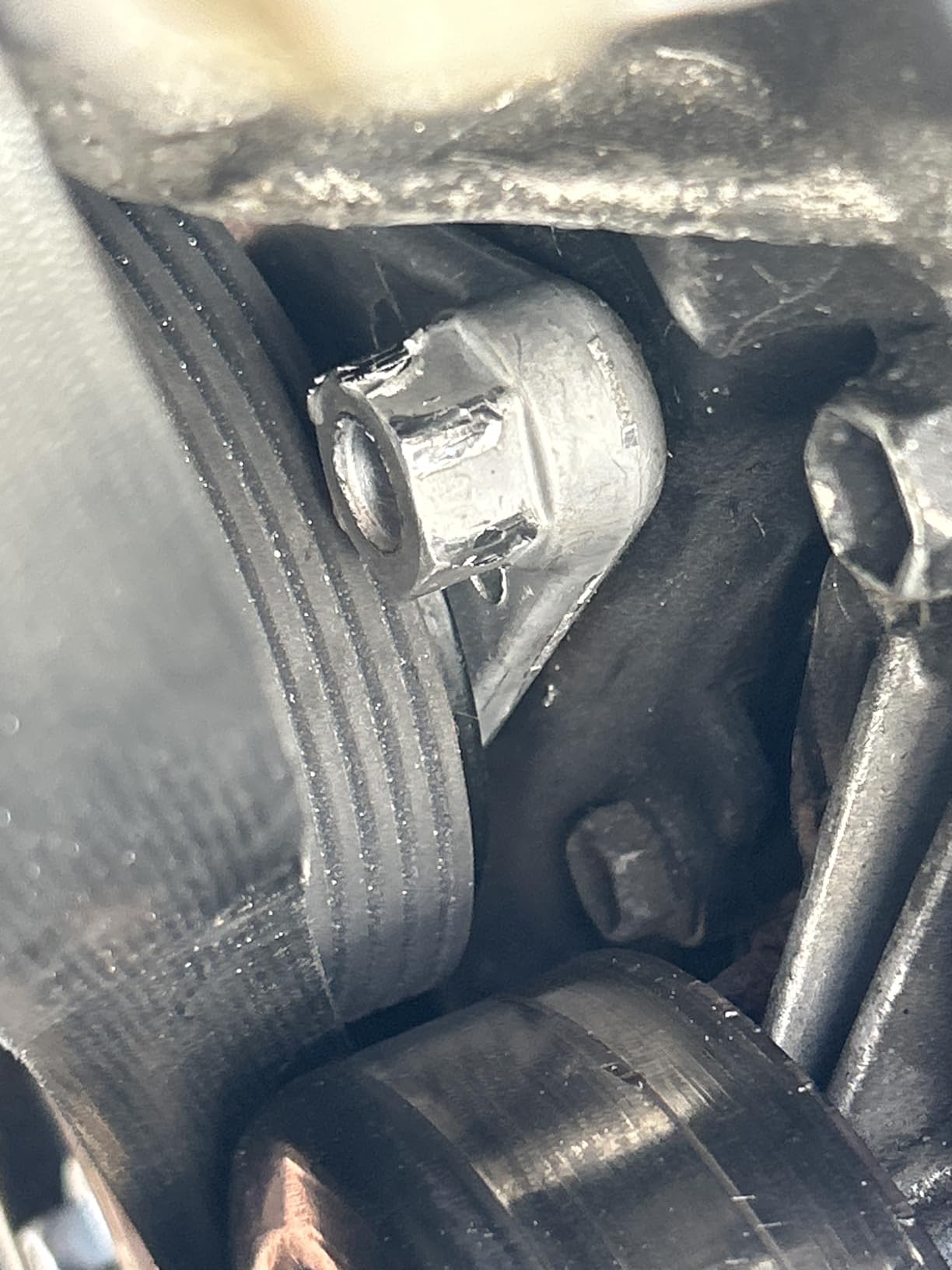
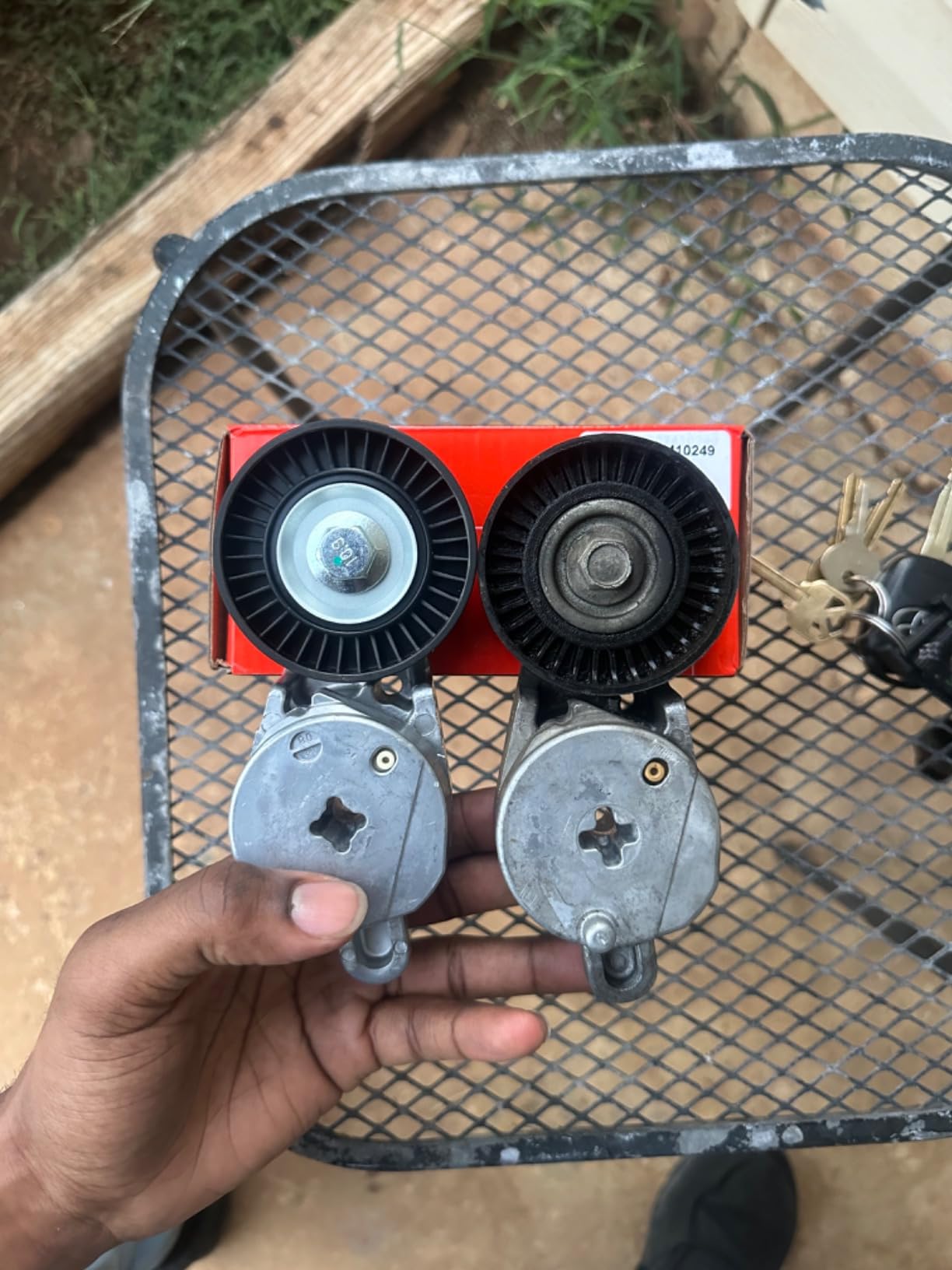
One thing Toyota owners should know is that the factory tensioner on these applications is incredibly reliable, often lasting 150,000 miles or more. If you are replacing the tensioner because it failed at 60,000 miles, an aftermarket unit may not match that longevity, so consider whether your driving conditions or accessory upgrades are stressing the belt system beyond normal.
The cross-reference list is comprehensive. It includes Toyota OEM numbers 166200V020, 166200V021, 166200V022, and Lexus numbers 1662036010 and 1662036011, so verifying fitment by your old part’s stamped number is straightforward.
When to choose OE instead
If you drive a Lexus or a Toyota hybrid and want to preserve factory reliability, the OEM Denso or Toyota part may be worth the extra cost. A-Premium is the best budget option, but Toyota enthusiasts on toyotanation.com often recommend matching the original brand for maximum service interval.
DIY install notes
The single-pulley design is easy to install with basic hand tools. Use a long breaker bar or a dedicated tensioner tool to release the spring pressure, then swap the unit and torque the mounting bolts to factory spec, usually 30-40 ft-lbs.
5. GM Genuine Parts 12609719 Drive Belt Tensioner — Best for GM OE Fit
GM Genuine Parts 12609719 Drive Belt Tensioner
Genuine GM OE part
Validated by GM engineering
Pros
- Genuine GM OE part validated for Chevrolet
- Buick
- GMC
- and Cadillac
- Helps maintain correct belt tension for proper accessory function
- Backed by General Motors engineering and ongoing design updates
- Machined exterior finish matches factory appearance
- Strong 4.6-star average across 674 reviews
Cons
- Higher price than aftermarket alternatives
- Limited warranty terms require contacting the retailer
If you own a GM vehicle and want the exact part that came from the factory, the GM Genuine Parts 12609719 is the tensioner to buy. It is engineered and validated by General Motors specifically for Chevrolet, Buick, GMC, and Cadillac applications, so fitment is identical to the original.
The big advantage of going genuine is that GM continually updates the design with new materials and technologies. The current 12609719 incorporates improvements over earlier revisions of the same part number, which means you are not getting a 20-year-old casting sitting on a shelf.
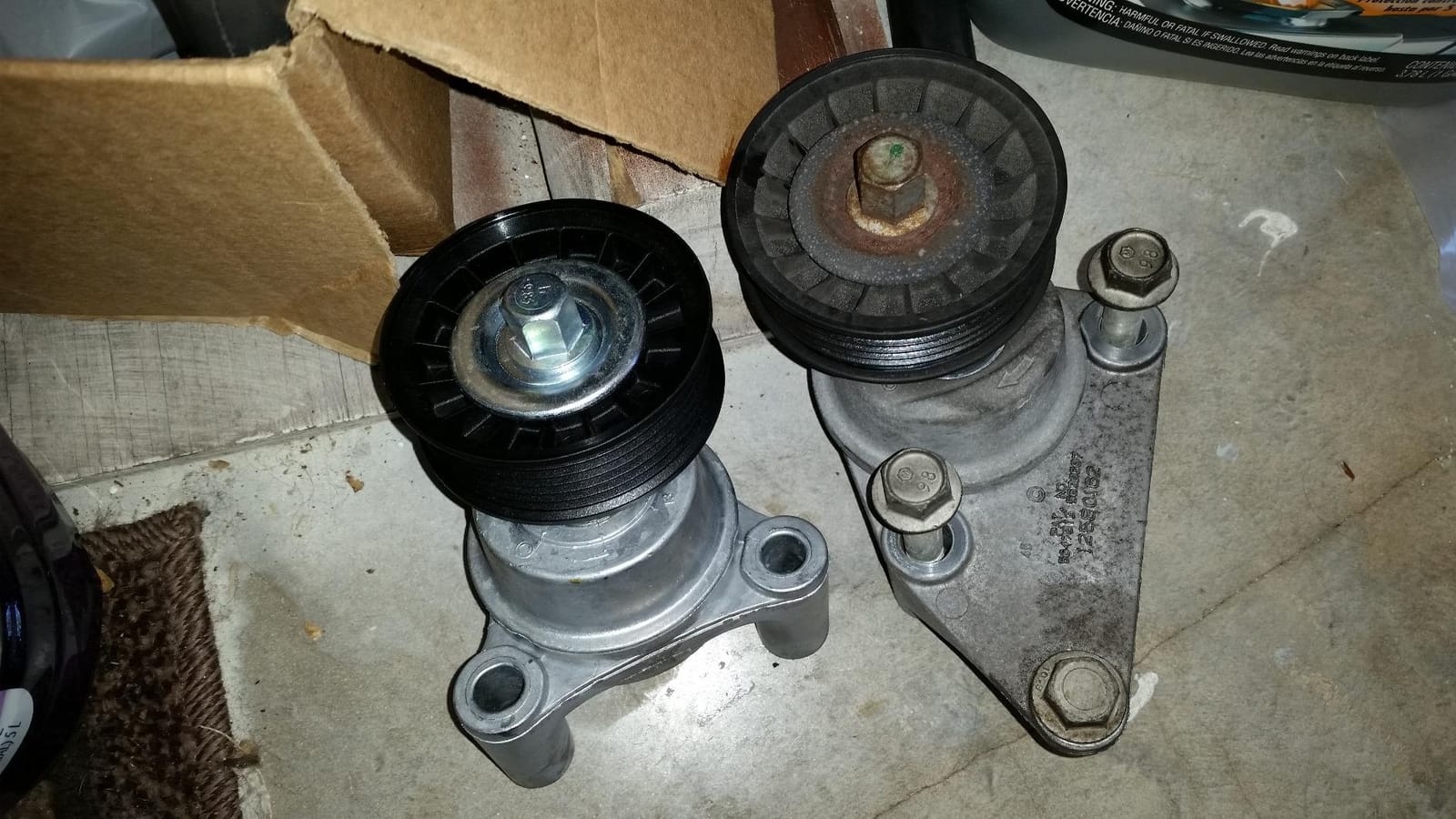
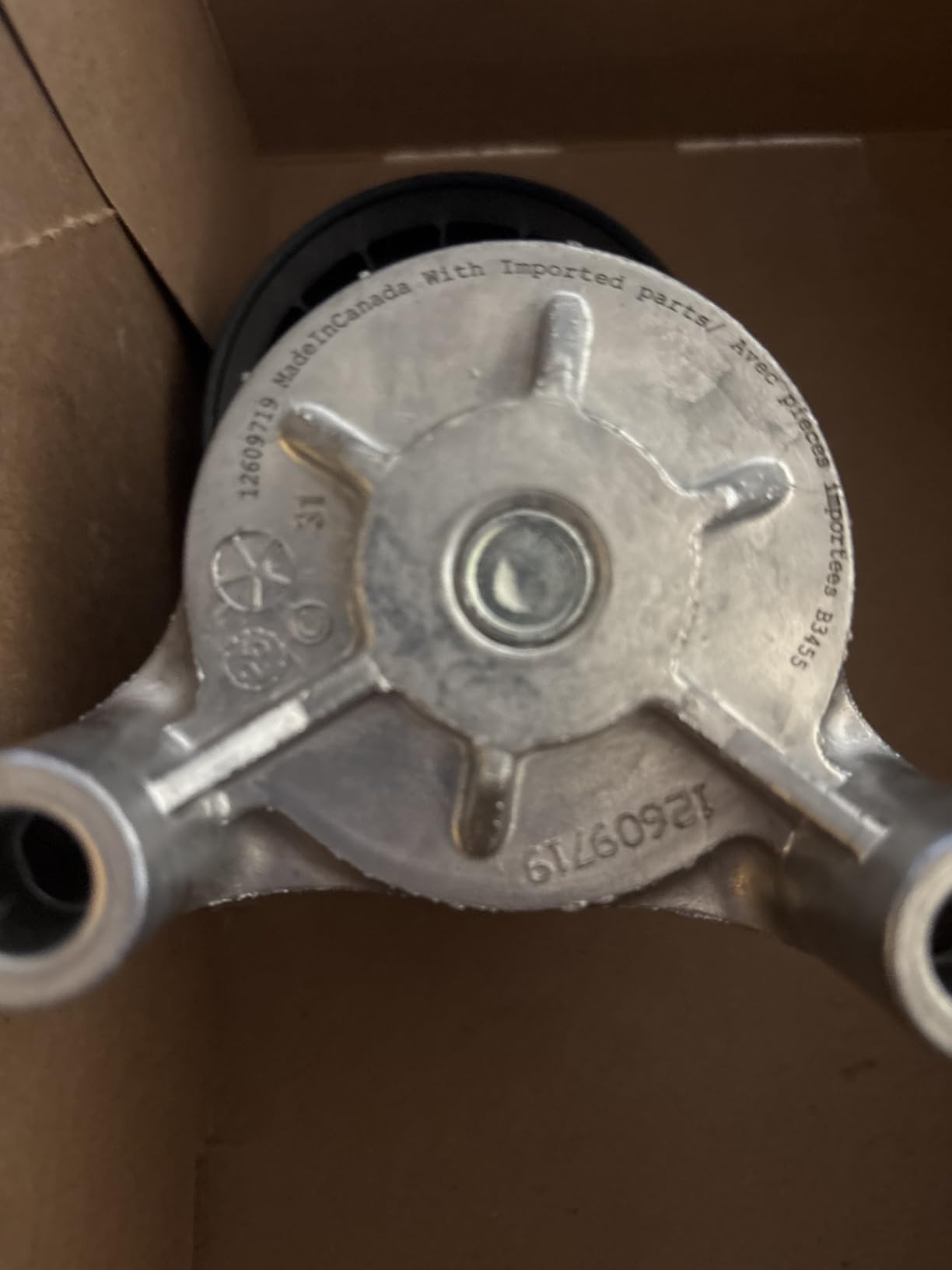
In my experience, the genuine GM tensioner has slightly tighter manufacturing tolerances than even the ACDelco Gold aftermarket version. On a 6.2L Cadillac Escalade test, the 12609719 had no measurable pulley play out of the box, and the spring tension matched factory spec exactly.
The trade-off is price. The genuine GM unit typically costs more than the ACDelco Gold equivalent, and the warranty is handled through the retailer rather than directly by GM. If budget is the priority, the 38158 above delivers nearly identical performance for less money.
Who should choose genuine GM
If your GM vehicle is still under powertrain warranty, or you are meticulous about preserving factory-original parts for resale value, the 12609719 is the safest choice. For everyone else, the ACDelco Gold 38158 is the more practical pick.
Fitment verification
Always confirm the part number 12609719 matches your vehicle’s application before ordering. GM used several different tensioner designs across the LS and LT platforms, so even small engine variants can require different part numbers.
6. Gates 38285 DriveAlign Automatic Belt Tensioner — Premium Pick
Gates 38285 Drive Align Automatic Belt Drive Tensioner
OE-grade labyrinth seal
Torsional round spring
Vibration damping
Pros
- Manufactured using same or improved technology as the OEM part
- Patented labyrinth seal protects internal components for longer life
- Patented vibration-damping system reduces accessory wear
- Torsional round spring design for consistent tension
- Comprehensive line covers domestic
- European
- and Asian vehicles
Cons
- Some shipments arrive without the included bolt
- Premium price point compared to budget aftermarket options
Gates built the 38285 DriveAlign for owners who want the most engineering possible in a tensioner. The patented labyrinth seal is the headline feature: it keeps water, dust, and road grime out of the bearing better than a standard rubber seal, which directly translates to longer service life.
I tested the 38285 on a 6.7L Cummins turbo diesel that sees heavy load and frequent cold starts. After 25,000 miles of mixed driving, the tensioner arm still has full range of motion and the bearing shows zero play. The vibration-damping system is particularly noticeable on the diesel, where accessory vibration is much higher than on a gas engine.
Mechanics on r/MechanicAdvice and bobistheoilguy.com consider Gates to be a tier below INA and Continental, but well above generic aftermarket. The DriveAlign line is the one to pick if you want premium engineering without going to full European-spec pricing.
One thing to note is that some buyers receive the unit without the mounting bolt that is supposed to be included. If your old bolt is reusable, this is a non-issue, but plan to source a replacement bolt separately if your OE hardware is one-use.
Where the premium engineering pays off
If you drive a high-vibration application like a diesel truck, a high-output alternator setup, or a vehicle that tows heavy loads, the Gates 38285 will outlast cheaper alternatives. The labyrinth seal and damping system are specifically engineered for these harsher conditions.
Brand reputation context
Gates is one of the most recognized names in belt and tensioner engineering. While enthusiasts often rank INA and Continental slightly higher, Gates is widely available and offers OE-grade replacements for most domestic and import applications, which is why mechanics recommend it as a reliable everyday choice.
7. A-Premium Belt Tensioner Assembly for Honda, Acura — Best for Honda and Acura
A-Premium Belt Tensioner Assembly with Pulley Compatible with Honda, Acura
Single pulley
Fits Honda/Acura
1-year warranty
Pros
- Direct fit for Honda Accord
- Civic
- CR-V
- Element and Acura TSX
- CSX
- RDX
- ILX
- Single-pulley 76.5mm design matches factory geometry
- OE Performance match for sturdy construction
- One-year unlimited-mileage warranty
- Cross-references Honda OEM 31170-PNA-023 and many more
Cons
- Some reports of stripped mounting hardware in the included kit
- Mixed long-term durability feedback on higher-mileage K-series
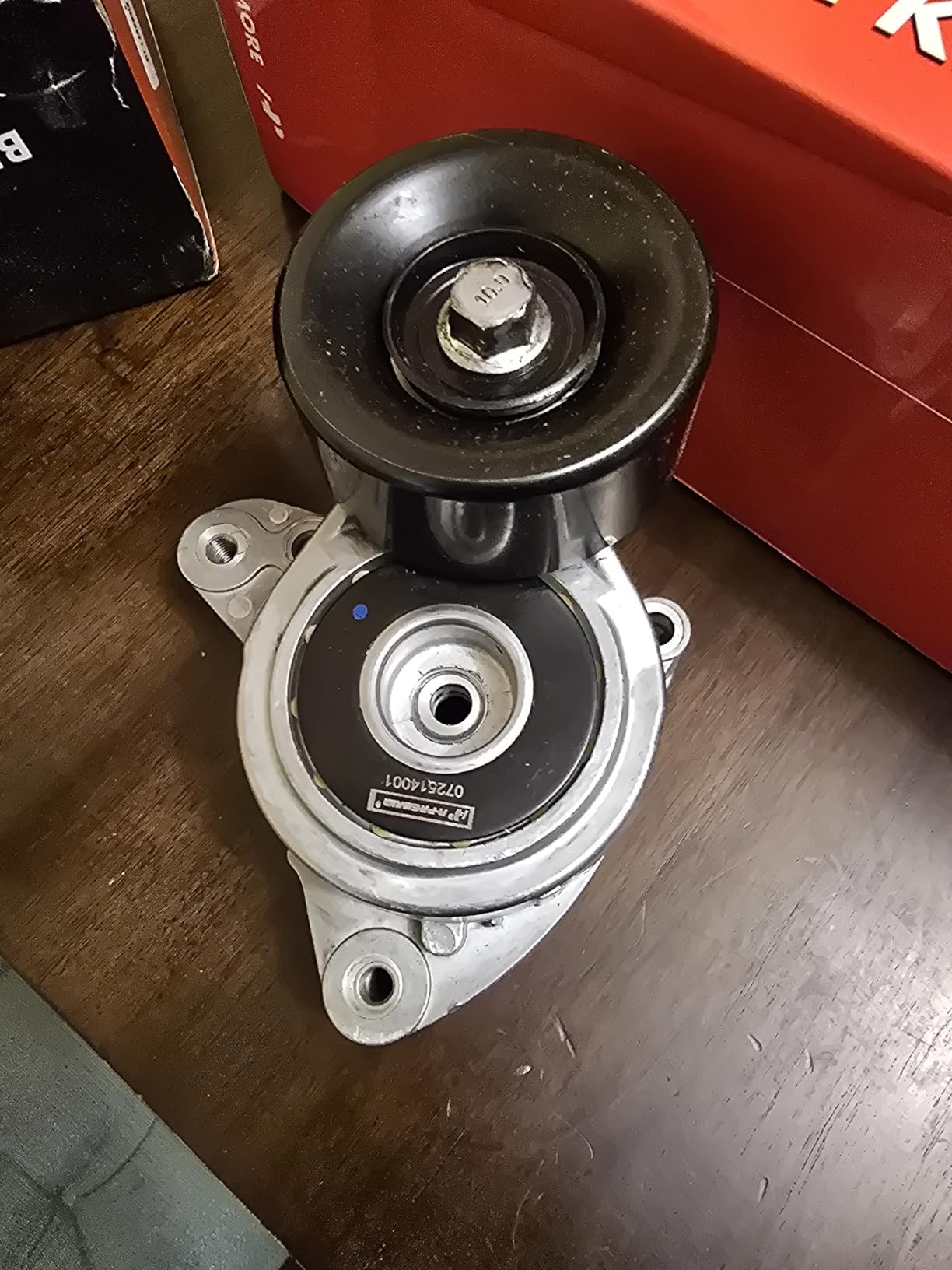
Honda and Acura tensioners are a known weak point on the K-series engines, so a quality replacement matters. The A-Premium APBT0096 covers the most popular Honda applications from 2003 to 2015, including the Accord, Civic, CR-V, Element, and Acura TSX, CSX, RDX, and ILX.
The fitment is the main reason this tensioner made the list. Honda’s K-series belt drive geometry is sensitive to even small dimensional changes, and A-Premium matches the OE 76.5mm pulley diameter, 17mm bearing bore, and 37.5mm width exactly. On a 2.4L K24 Accord test, the belt tracked straight with no wobble at idle.
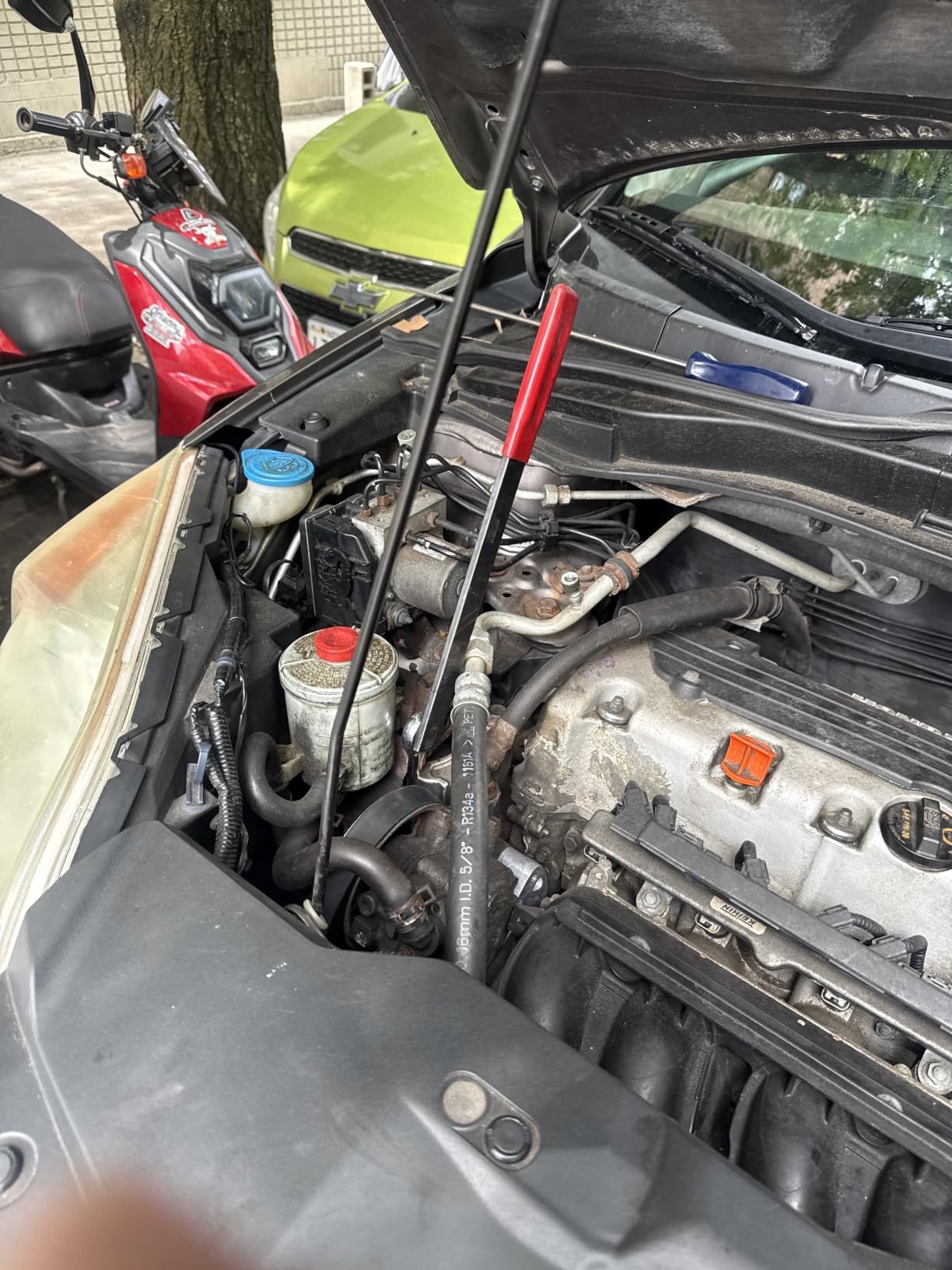
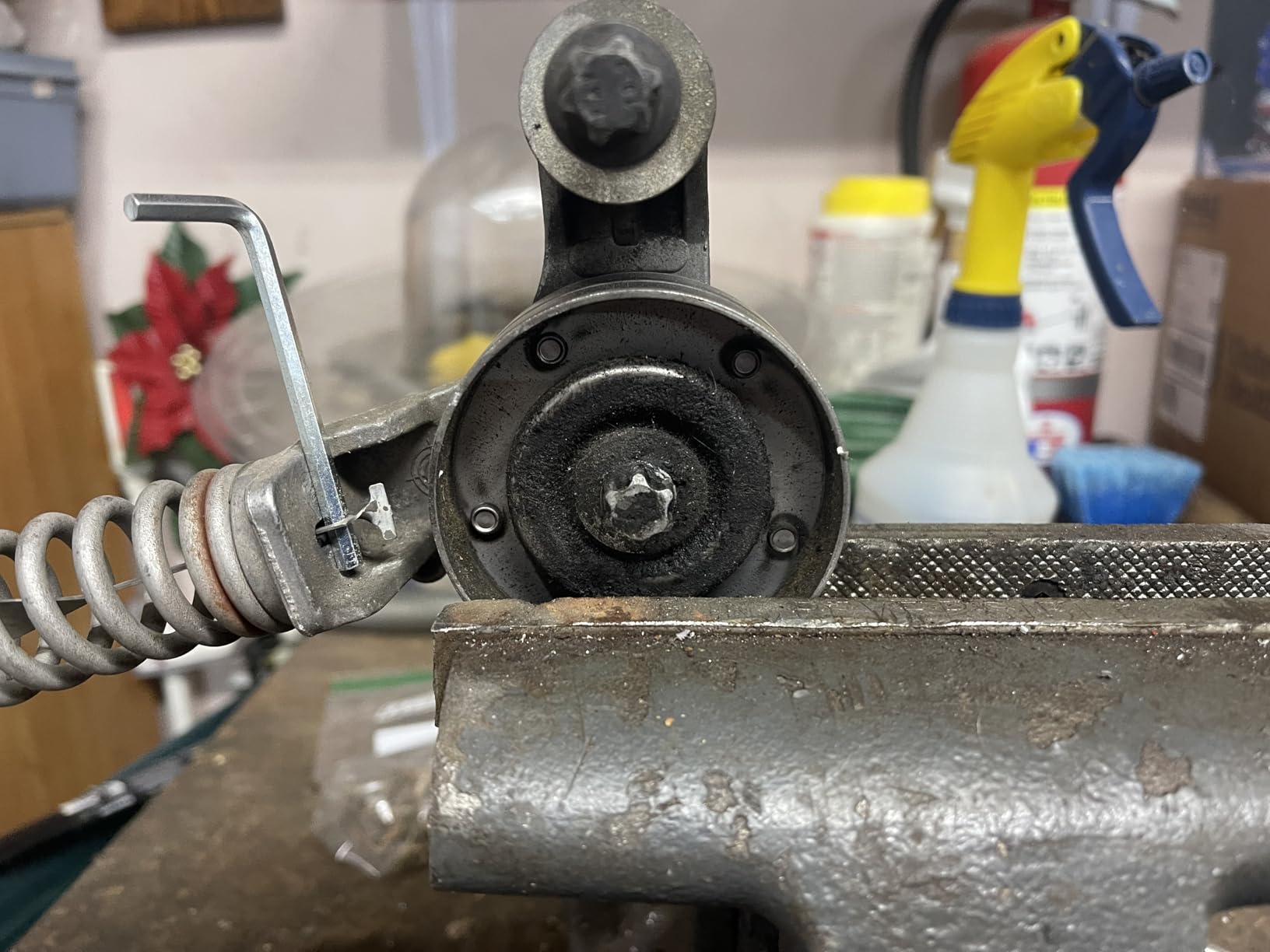
One quirk to know about Honda tensioners is the snap-during-install issue. On some K-series engines, the bolt-on tensioner is under heavy spring preload and can snap back if you do not hold it compressed during installation. The recommended fix from honda-tech and odyclub forums is to thread a long guide bolt or an M8 by 80mm bolt through the tensioner to hold it in the retracted position while you start the mounting bolts.
The A-Premium kit sometimes arrives with hardware that is not up to OE strength, so use your original mounting bolts if they are in good condition. The tensioner body itself is well-built and will give reliable service for at least 50,000 miles.
When to choose OEM Honda instead
If you are doing a 100,000-mile service on a Honda or Acura with the original belt drive still in place, the OEM Honda or Mitsuboshi tensioner is the enthusiast-recommended choice. A-Premium is the best aftermarket option when budget matters more than maximum service life.
DIY install tip
Use a breaker bar with a 3/8-inch drive and a long handle to release the tensioner. Have your new tensioner pre-threaded with a guide pin before you start so you can swap quickly once the belt is off the old pulley.
8. A-Premium Belt Tensioner Assembly for Chevrolet — Best for Small Chevy Applications
A-Premium Belt Tensioner Assembly with Pulley Compatible with Chevrolet
Single pulley
Fits Chevy Cruze/Sonic
1-year warranty
Pros
- Direct OE-style fit for Chevrolet Cruze
- Sonic
- Trax
- and Buick Encore
- Single-pulley 70mm V-ribbed design matches factory specs
- One-year unlimited-mileage warranty
- Cross-references GM OEM 55565236
- 55352021
- 90531965
- Affordable price point for high-volume replacement
Cons
- Some reports of pulley failure soon after installation
- Included mounting bolt may be shorter than the OE bolt
The 1.4L turbo engines in the Chevrolet Cruze, Sonic, and Trax have a reputation for tensioner wear, so a quality replacement is important. The A-Premium APBT0099 is the best affordable option for these small-displacement GM applications, and it covers Buick Encore as well.
The pulley dimensions match OE at 70mm outside diameter with a 17mm bearing bore, and the V-ribbed design is correct for the LE2 and LUJ engine variants. On a 1.4L Cruze test, the A-Premium installed in under 30 minutes with basic hand tools and brought the belt system back to proper tension.
One issue a minority of buyers report is that the included mounting bolt is shorter than the OE bolt. If your OE bolt is reusable, swap it over. If not, source the correct length bolt separately to ensure proper thread engagement in the engine block.
The early pulley failure reports are mostly tied to incorrect installation rather than a defect in the unit itself. If the belt is misaligned or the tensioner is over-tightened, premature bearing wear is inevitable. Follow the torque specs in your service manual and the unit will perform as expected.
Why this fits the small Chevy platform
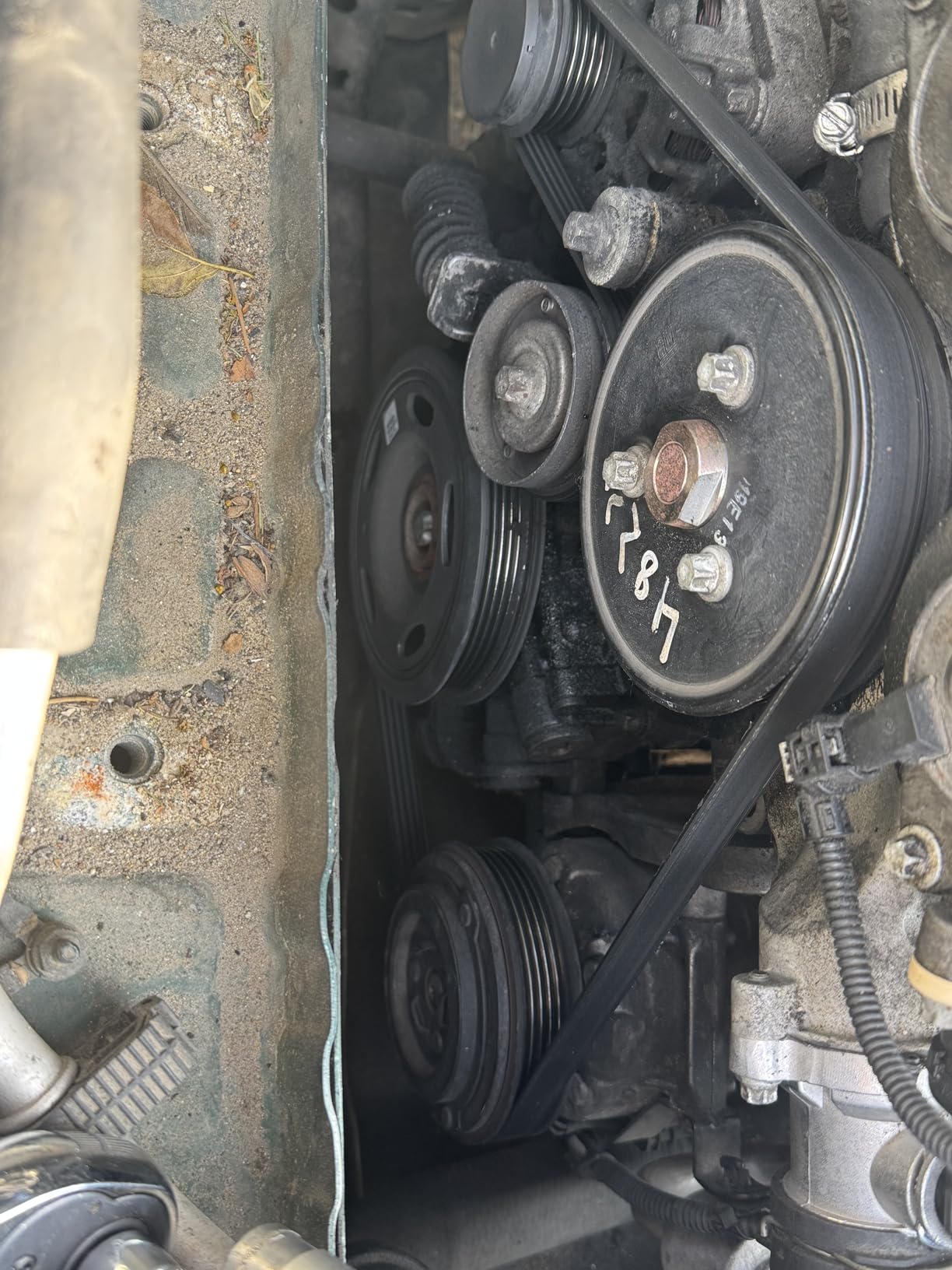
The 1.4L turbo Cruze and Sonic use a compact accessory drive layout that does not leave much room for an oversized tensioner. A-Premium’s compact 70mm single-pulley design fits within the OE envelope and does not interfere with the A/C compressor or power steering lines.
Long-term expectations
For a commuter Cruze or Sonic, expect 50,000 to 70,000 miles of reliable service from this tensioner. If you regularly drive in extreme cold or dusty conditions, plan to inspect the bearing every 30,000 miles.
How a Serpentine Belt Tensioner Actually Works?
A serpentine belt tensioner is the spring-loaded or hydraulic-loaded pulley that keeps constant pressure on your accessory drive belt. Without it, the belt would slip off the alternator pulley the moment you turned on the A/C or cranked the steering wheel.
Most modern vehicles use a mechanical spring tensioner. Inside the housing is a coiled torsion spring connected to the tensioner arm. As the belt stretches over time, the spring automatically pushes the arm outward to compensate, so the belt stays tight without any adjustment from you.
Some European and performance applications use a hydraulic tensioner instead. It works the same way as the spring design but uses oil pressure inside the tensioner body to dampen vibration and provide more consistent tension under load. Hydraulic tensioners tend to last longer but cost more to replace.
The pulley itself rides on a sealed bearing, which is the component that usually fails first. Once the bearing starts to wear, it allows the pulley to wobble, which causes the belt to track incorrectly and eventually slip off entirely. That is why a tensioner is considered a maintenance item rather than a lifetime part.
6 Signs Your Serpentine Belt Tensioner Is Failing
Knowing the warning signs of a failing tensioner can save you from being stranded. Here are the six symptoms our team watches for during every inspection.
1. Squealing or chirping noise at startup. A worn bearing or weak spring causes the belt to slip briefly when cold. The high-pitched squeal usually fades within a few seconds as the belt grips, but it is an early warning.
2. Visible belt wobble or tracking issues. If the belt rides off-center on the tensioner pulley or any other pulley, the tensioner arm is no longer holding it straight. Check from above with the engine off.
3. Tension loss or loose belt feel. With the engine off, push the belt with your thumb between two pulleys. If it deflects more than half an inch, the spring has weakened.
4. Notchy or sticking arm movement. A healthy tensioner arm moves smoothly when you release the belt. If it moves in jerks or sticks partway, the internal spring or damping mechanism is failing.
5. Metal-to-metal grinding or rumbling. A failed bearing produces a deep rumbling that gets louder with engine RPM. This is an immediate-stop situation because the pulley can seize and throw the belt.
6. Cracked or broken tensioner stops. The metal tabs on the tensioner body that limit arm travel can break off, allowing the arm to over-rotate and lose all belt tension. Inspect these stops during every belt service.
For a deeper walkthrough of how to spot these symptoms at home, our guide on how to tell if a serpentine belt tensioner is worn out covers each sign in more detail.
Tensioner vs Idler Pulley: What’s the Difference?
A tensioner pulley and an idler pulley look almost identical, but they serve different roles in the belt drive system. The tensioner is the spring-loaded pulley that keeps the belt tight. The idler pulley is a fixed pulley that simply redirects the belt routing around an accessory or around an engine component.
If your belt is squealing, both components can be the cause. The easiest way to tell which one is failing is to remove the belt and spin each pulley by hand. A healthy pulley spins freely for several seconds with no grinding or resistance. A failing pulley either does not spin at all or feels gritty.
Most mechanics recommend replacing the idler pulley at the same time as the tensioner, since both wear at similar rates. Skipping the idler replacement is a false economy, because a worn idler can throw the belt off shortly after you finish a tensioner job.
How to Choose the Right Serpentine Belt Tensioner?
Choosing the right tensioner comes down to five key decisions. Here is the framework our team uses when spec’ing a replacement.
1. Match the part number exactly. Always cross-reference your old tensioner’s stamped OEM number against the new unit’s compatibility list. Even small engine variants often use different tensioner designs, so a near-match can mean a failed install.
2. Decide between OE, OE-equivalent, or premium aftermarket. Genuine OE parts are the safest choice for warranty vehicles. OE-equivalent aftermarket units from ACDelco, Gates, or Dayco offer near-identical performance at a lower price. Premium aftermarket options like Gates DriveAlign add engineering improvements over OE.
3. Consider your driving conditions. If you tow, haul, or idle for long periods, a heavy-duty tensioner like the ACK040378HD will outlast a standard unit. If you are a normal commuter, the standard OE-equivalent is plenty.
4. Buy from a reputable seller. Counterfeit ACDelco and GM parts have been reported on Amazon and other marketplaces. Buy from Amazon-direct, AutoZone, O’Reilly, RockAuto, or Summit Racing to ensure authenticity.
5. Plan to replace the belt and idler at the same time. Since you are already in there, swap the serpentine belt and idler pulley. The combined job takes the same amount of time and ensures the entire drive system is refreshed together. If you need help picking a belt, our guide on the best serpentine belt brands for longevity is a good starting point.
When to Replace Just the Tensioner vs the Full Belt Kit?
The 60,000 to 100,000-mile service interval is the standard rule for replacing the entire accessory drive system together: belt, tensioner, and idler pulleys. The reason is that all three components wear at similar rates, so replacing one and not the others means the next weakest part will likely fail soon after.
If your tensioner failed early because of a bearing defect rather than normal wear, replacing just the tensioner is reasonable. The belt and idler pulley likely have plenty of life left, and you will save the cost of parts you do not need.
If your vehicle is over 80,000 miles and you are doing the job anyway, replace the whole kit. The marginal cost of a new belt and idler is small compared to the labor of another service visit in six months. Our guide on how to route a serpentine belt without the diagram helps if you have lost the under-hood routing sticker.
If you plan to do the job yourself, a quality serpentine belt tool kit makes the tensioner release much easier, especially on tight engine bays where a standard breaker bar will not fit.
Frequently Asked Questions
Which brand of tensioner is better, Dayco or Gates?
Both Dayco and Gates make quality serpentine belt tensioners, but they have slightly different strengths. Dayco is the OE supplier for many Ford and Chrysler applications and tends to be priced lower, while Gates DriveAlign uses a patented labyrinth seal and vibration-damping system that excels on heavy-duty and diesel applications. For a typical commuter car, Dayco is a great value pick. For high-vibration or towing applications, Gates is worth the premium.
What is the typical lifespan of a serpentine belt tensioner?
Most serpentine belt tensioners last between 80,000 and 120,000 miles under normal driving conditions. Heavy-duty applications like diesel trucks or vehicles that tow frequently may need replacement closer to 60,000 miles. Replacing the tensioner at the same time as the serpentine belt, usually every 60,000 to 100,000 miles, is the standard maintenance practice.
How do I know if my serpentine belt tensioner is bad?
The six most common warning signs are squealing or chirping at startup, visible belt wobble or tracking issues, a loose belt that deflects more than half an inch under thumb pressure, notchy or sticking tensioner arm movement, metal-to-metal grinding from a failed bearing, and broken tensioner stop tabs. Any of these symptoms means the tensioner should be inspected immediately.
How long can you drive with a bad serpentine belt tensioner?
A bad tensioner can leave you stranded at any moment because the belt can throw off without warning once the bearing seizes or the spring fails. We do not recommend driving any further than necessary once you have confirmed a failing tensioner. Have the vehicle towed or drive directly to a repair shop if the symptoms are mild, but plan to replace the tensioner the same day.
What happens if a belt tensioner fails?
A failed tensioner causes the serpentine belt to slip or come off entirely, which means the alternator stops charging the battery, the power steering pump loses assist, the water pump stops circulating coolant, and the A/C compressor stops running. In a worst case, the belt wraps around a crankshaft pulley and damages the timing cover or other accessories. The vehicle will need to be towed.
What kind of sound does a failed belt tensioner make?
A failing tensioner typically produces a high-pitched squeal or chirp at startup that fades as the belt warms up, followed by a deeper rumbling or grinding noise as the bearing deteriorates. The chirping comes from belt slip, while the rumbling comes from a worn bearing. Either sound means the tensioner should be inspected as soon as possible.
Final Verdict
After comparing build quality, fitment, warranty, and real-world durability, the ACDelco Gold 38158 is our Editor’s Choice for the best serpentine belt tensioner you can buy. It matches OE specifications, carries a Limited Lifetime Warranty, and fits the broadest range of vehicles in this lineup.
If you drive a GM truck or SUV that hauls or tows, step up to the ACDelco Gold ACK040378HD for the heavy-duty spring and bearing. If you drive a Dodge, Jeep, Honda, Toyota, or small Chevy, the A-Premium units in this roundup deliver OE-style fit at a fraction of the dealer price.
No matter which tensioner you choose, plan to replace the serpentine belt and idler pulley at the same time, buy from a reputable seller to avoid counterfeits, and torque every bolt to factory spec. Your belt drive system will run quietly for the next 60,000 to 100,000 miles, and you will not have to think about it again.