
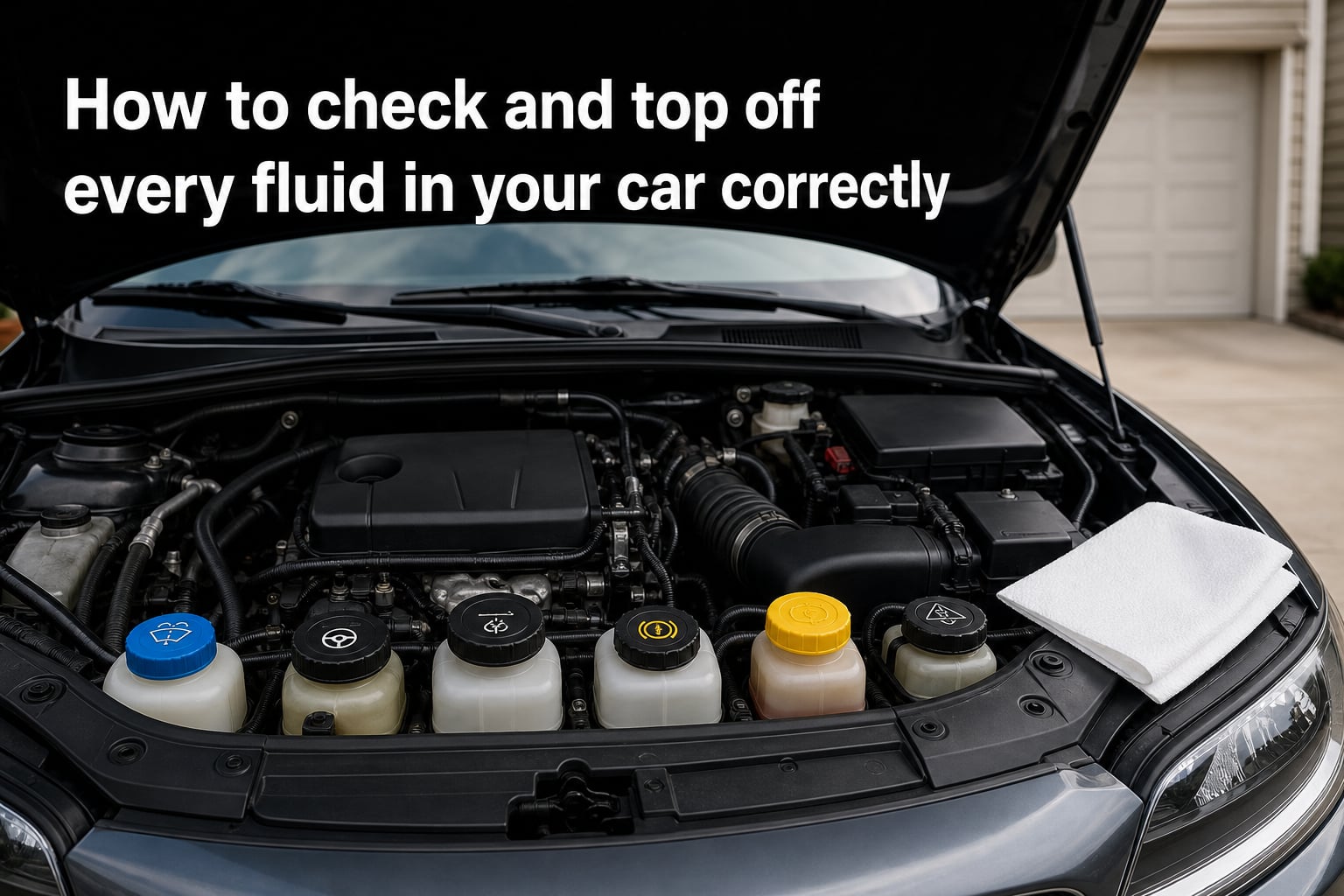
Knowing how to check and top off every fluid in your car correctly saves you hundreds of dollars in mechanic fees and prevents roadside breakdowns. I spent a weekend cross-checking my own vehicles against the owner’s manual, a Chilton guide, and three mechanic forums to put together this guide. By the end, you’ll know exactly what fluid goes where, when to check it, and what to do if the level is low.
Most drivers only think about fluids when a warning light appears. By then, the damage has often already started. A quick monthly check takes 10 minutes and protects your engine, brakes, transmission, and steering system from costly wear.
Table of Contents
Why Checking Car Fluids Regularly Matters?
Your car runs on fluid. Engine oil reduces friction between moving parts. Coolant keeps the engine from overheating. Brake fluid transmits force from your foot to the wheels. Transmission fluid keeps gears shifting smoothly. Power steering fluid makes the wheel turn easily. Washer fluid keeps your windshield clear.
Low fluid levels cause cascading damage. A 2018 AAA study found that 1 in 5 roadside breakdowns trace back to fluid-related issues. Engine damage from low oil alone can cost $4,000 to $8,000 to repair. A transmission rebuild runs even higher. The fix is simple: spend 10 minutes once a month with a paper towel and a dipstick.
Beyond cost, low fluids create safety hazards. Low brake fluid increases stopping distance. Low coolant can cause your engine to seize on a highway. Low power steering fluid makes the wheel jerk unpredictably. None of these are worth the minutes you’d save by skipping a check.
What You’ll Need Before Checking Your Car Fluids
You only need a few basic items. A clean lint-free cloth or paper towel works for wiping dipsticks. Latex gloves keep oil off your hands. A flashlight helps locate reservoirs under the hood. Your owner’s manual identifies which reservoir is which, since carmakers use slightly different layouts.
Park on a level surface. A sloped driveway throws off dipstick readings by half an inch or more, which is enough to mistake a full reading for low. Turn the engine off and let it cool for at least 10 minutes before checking coolant or oil on a warm engine.
Keep the right replacement fluid ready. Using the wrong type is a common mistake. Engine oil has viscosity ratings like 5W-30. Coolant comes in different colors and chemical formulas that should never be mixed. Brake fluid uses DOT 3, DOT 4, or DOT 5.1 ratings. Your owner’s manual lists exactly what your vehicle needs.
How to Check and Top Off Engine Oil Correctly?
Engine oil is the single most important fluid to monitor. It lubricates the crankshaft, camshaft, and pistons, all of which grind against each other thousands of times per minute. Running low for even a short time destroys bearings.
Step 1: Park on level ground and shut off the engine. Wait 5 minutes so oil drains back into the pan.
Step 2: Open the hood and locate the dipstick. It has a bright handle, usually yellow or orange, marked with an oilcan symbol.
Step 3: Pull the dipstick out and wipe it clean with your cloth. Push it fully back in, then pull it out again.
Step 4: Read the level. Oil should sit between the two marks, often labeled L (low) and F (full) or MIN and MAX. The crosshatched area is the safe zone.
Step 5: If low, remove the oil filler cap on top of the engine. Add oil in half-quart increments, then recheck. Don’t overfill, since excess oil causes foaming and can damage the catalytic converter.
Check engine oil color while the dipstick is out. New oil is amber or honey-colored. Used oil darkens to black over time. If oil looks milky brown or smells like gasoline, stop driving and see a mechanic. Milky oil usually means a head gasket leak. Gasoline-smelling oil indicates a fuel system issue.
Check engine oil once a month, or before any long trip. Most modern cars use 5W-30 or 0W-20 synthetic, but always confirm with your owner’s manual.
How to Check and Top Off Engine Coolant Safely?
Coolant, also called antifreeze, keeps your engine from freezing in winter and boiling over in summer. It circulates through the engine block and radiator, absorbing heat and releasing it through the radiator fan.
Safety warning: Never open the radiator cap on a hot engine. Coolant systems are pressurized and can spray scalding fluid. Let the engine cool completely, which takes at least 30 minutes, before opening anything.
Step 1: With the engine cold, locate the coolant reservoir. It’s a translucent plastic tank near the radiator, often marked with a temperature symbol or the word “COOLANT.”
Step 2: Look at the side of the tank. Coolant level should sit between the MIN and MAX lines marked on the plastic. Most reservoirs are translucent specifically so you can check without opening them.
Step 3: If low, open the reservoir cap and add a 50/50 mix of coolant and distilled water. Never use tap water. Minerals in tap water corrode the radiator and water pump.
Check coolant color as well. Fresh coolant is bright green, orange, pink, or yellow depending on the formula. If the color looks rusty brown, the system needs a full flush. If you see oil floating on top of the coolant, you have a head gasket leak and should stop driving.
Modern cars often use long-life coolant rated for 100,000 miles or more. Top off with the same color and formula as what’s already in the system. Mixing two types creates a gel that blocks the radiator.
How to Check and Top Off Brake Fluid?
Brake fluid is hydraulic fluid. When you press the brake pedal, fluid moves through brake lines and forces the calipers to clamp the rotors. Without enough fluid, your pedal goes soft and stopping distances grow longer.
The brake fluid reservoir sits on top of the master cylinder, which is mounted to the firewall near the back of the engine bay. It is a small plastic tank with a screw-on cap, usually marked with a brake symbol or the word “BRAKE.”
Step 1: Look at the side of the reservoir without removing the cap. Most are translucent. The level should sit between MIN and MAX lines.
Step 2: If low, clean the cap area with a cloth before opening. Brake fluid absorbs moisture, and dirt falling into the reservoir contaminates the entire system.
Step 3: Add the correct DOT-rated fluid. Most domestic and Japanese cars use DOT 3. European cars often use DOT 4. Some performance and European vehicles use DOT 5.1. The cap or owner’s manual specifies which.
Check brake fluid color while the cap is off. New fluid is clear to light amber. Old fluid darkens to brown or nearly black. Brake fluid is hygroscopic, meaning it absorbs water from the air over time. Most manufacturers recommend flushing and replacing brake fluid every 2 to 3 years, regardless of level.
If brake fluid drops between oil changes, you likely have a leak. Common spots are the master cylinder seals, brake caliper pistons, and flexible brake lines. A dropping brake fluid level is a serious safety issue, so get the system inspected soon.
How to Check and Top Off Transmission Fluid?
Transmission fluid lubricates the planetary gears, bands, and clutches inside your automatic transmission. Manual transmissions use a heavier fluid often called gear oil. Both types break down with heat and time, but topping off the level is something any car owner can do.
For a traditional dipstick transmission:
Step 1: Start the engine and let it idle for 5 minutes to warm the fluid. Some manufacturers specify parking on level ground, others require the transmission to be in neutral or park with the parking brake on.
Step 2: Locate the transmission dipstick, usually toward the back of the engine bay and marked “TRANS” or with a transmission symbol.
Step 3: Pull the dipstick, wipe it, reinsert it fully, then pull it again. With the engine still running, check where the fluid lands between the marks.
Step 4: If low, add fluid through the dipstick tube using a funnel. Automatic transmission fluid (ATF) comes in several types: Dexron III, Mercon V, ATF+4, and more. Use exactly what your owner’s manual lists.
Many modern vehicles, especially Hondas, Toyotas, and most sealed transmissions, do not have a dipstick. Checking fluid on a sealed transmission requires a mechanic with a lift and a special tool. If you own a sealed transmission, the fluid change interval matters more than topping off. Most sealed transmissions go 60,000 to 100,000 miles between changes.
Check transmission fluid color and smell while you have the dipstick out. Healthy ATF is bright red and smells slightly sweet. Dark brown or black fluid has oxidized and should be changed. Fluid that smells burnt indicates clutch wear. Milky pink fluid means coolant is leaking into the transmission through a failed cooler, which is a major repair.
For manual transmissions, the procedure differs. Check fluid through a fill plug on the side of the transmission housing. Fluid level should reach the bottom of the plug hole. Gear oil is much thicker than ATF and feels like honey.
How to Check and Top Off Power Steering Fluid?
Power steering fluid provides the hydraulic assist that lets you turn the wheel with one finger. Low fluid makes the wheel stiff and may cause a whining noise when you turn. Some newer cars use electric power steering and don’t have fluid at all, so check your owner’s manual.
The power steering reservoir is usually a small tank near the front of the engine bay with a cap labeled “POWER STEERING” or marked with a steering wheel symbol. Many reservoirs have level marks on the side, while some require you to use a dipstick attached to the cap.
Step 1: With the engine off and cool, look at the side of the reservoir. Level should sit between MIN and MAX.
Step 2: If the reservoir uses a dipstick, remove the cap, wipe the stick, reinstall it, and pull it out to read the level.
Step 3: Add fluid through the reservoir opening if low. Most cars use automatic transmission fluid in the power steering system. Some, particularly Hondas and certain European models, use a specific power steering fluid that should not be substituted.
Power steering fluid colors vary. Honda fluid is usually clear or light amber. Most other fluids are red or pink. If fluid looks dark brown or has a burnt smell, the system needs a flush. If you see metal particles on the dipstick, the pump is wearing out.
Check power steering fluid monthly, especially if you hear groaning when the wheel is at full lock. Driving with low power steering fluid damages the pump, which costs $300 to $600 to replace.
How to Check and Top Off Windshield Washer Fluid?
Windshield washer fluid is the easiest fluid to check and top off. The reservoir sits in one of the front corners of the engine bay, marked with a windshield and water droplet symbol on the cap. It holds plain water mixed with washer fluid concentrate, or in winter, pre-mixed winter fluid that won’t freeze.
Step 1: Locate the cap with the washer symbol. Many drivers mistake it for the coolant reservoir cap, but the symbol is distinct.
Step 2: Open the cap and look inside. Most reservoirs are translucent so you can see the level from outside. If you can’t, shine a flashlight into the opening.
Step 3: Top off with washer fluid. In summer, a 1:1 mix of concentrate and water works well. In winter below freezing, use undiluted winter formula rated for at least -20°F. Plain water freezes in the lines and can crack the reservoir.
Washer fluid doesn’t break down or wear out. You can keep refilling it as needed without any flush. If you use the windshield sprayers often, check the level monthly or before long highway drives where road grime kicks up.
The 30-60-90 Rule: When to Check Each Fluid
Mechanics often recommend the 30-60-90 rule for routine fluid checks. The rule ties inspection frequency to common maintenance intervals so you don’t have to think about it.
At 30 days or 1,000 miles: Check engine oil. This is the fluid that depletes fastest under normal driving. Power steering and brake fluid also benefit from a monthly glance.
At 60 days or 3,000 miles: Top off windshield washer fluid, check coolant level, and inspect transmission fluid if your vehicle has a dipstick. Tire pressure and air filter get eyeballed at the same interval.
At 90 days or 5,000-7,500 miles: Inspect brake fluid color and condition. Consider a brake fluid flush every 2 to 3 years or 30,000 miles. Replace engine oil and oil filter at this mileage on most conventional oil schedules, or follow your owner’s manual for synthetic oil intervals.
This rule isn’t rigid. Severe service conditions, like towing, off-road driving, extreme heat, or short-trip commuting where the engine never fully warms up, warrant more frequent checks. I check my own cars every two weeks because oil consumption increases with age.
Fluid Color and Condition Guide: What’s Normal vs Warning Signs
Fluid color tells you a lot about the health of each system. This quick-reference table summarizes what to look for.
Engine oil: Amber or honey when new, dark brown/black after 3,000-5,000 miles. Warning signs: milky brown (coolant leak), gritty texture (contaminants), gasoline smell (fuel dilution).
Coolant: Bright green, pink, orange, or yellow when fresh, depending on formula. Warning signs: rusty brown (corrosion), oil residue (head gasket leak), low level that keeps dropping (leak somewhere).
Brake fluid: Clear to light amber when new, dark brown after 2 years. Warning signs: black color (overdue flush), frequent need to top off (leak in system).
Transmission fluid (ATF): Bright red and slightly sweet smelling when new. Warning signs: dark brown (oxidation), burnt smell (overheating), milky pink (coolant leak).
Power steering fluid: Pink, red, or clear amber depending on type. Warning signs: dark brown (overdue change), whining noise on startup (low or aerated fluid).
Windshield washer fluid: Blue, green, or pink concentrate mixed with water. Warning signs: none – it’s a use-and-refill item.
Safety Tips and Common Mistakes to Avoid
Most fluid checks are safe, but a few precautions matter. Always let the engine cool before opening the coolant reservoir. Even with a cold engine, the system holds a small amount of pressure. Turn the cap slowly and use a rag to protect your hand.
Avoid mixing fluid types. Coolant formulas don’t blend. Different brake fluid ratings shouldn’t be mixed without flushing. ATF and gear oil look similar but have different additive packages.
Don’t overfill. Adding too much oil causes foaming. Overfilled coolant pushes fluid out through the overflow. Both create messes and can damage components. Add in small amounts and recheck.
Skip the cap if you can’t identify it. A wrong cap opened at the wrong time can be dangerous. Your owner’s manual shows the layout of every reservoir in your specific vehicle. Forcing a stubborn cap often means you have the wrong one.
Finally, trust your senses. Smell the fluid when in doubt. Burnt smells, sweet smells, and gasoline smells all mean different things. Listen for new noises after a top-off, especially in the steering or brakes. Anything that sounds wrong deserves a mechanic’s attention.
FAQs
How do I check all fluids in my car?
To check all fluids in your car, open the hood with the engine off and cool, then inspect each reservoir. Engine oil and transmission fluid use dipsticks: pull the dipstick, wipe it, reinsert fully, then pull again to read the level between MIN and MAX marks. Coolant, brake fluid, power steering fluid, and windshield washer fluid use translucent reservoirs with level marks visible on the side. Top off any fluid sitting below the minimum line with the type listed in your owner’s manual.
What is the 30 60 90 rule for cars?
The 30 60 90 rule is a maintenance schedule that ties fluid checks to common service intervals. At 30 days or 1,000 miles, check engine oil and glance at power steering and brake fluid. At 60 days or 3,000 miles, top off washer fluid, check coolant, and inspect transmission fluid if your vehicle has a dipstick. At 90 days or 5,000-7,500 miles, inspect brake fluid condition and consider replacing engine oil and filter.
How to check and top off transmission fluid?
For vehicles with a transmission dipstick, start the engine and let it idle for 5 minutes. Pull the dipstick, wipe it clean, reinsert fully, then pull again to read the level between MIN and MAX. If low, add automatic transmission fluid through the dipstick tube in small amounts, using the exact type listed in your owner’s manual. Many modern vehicles have sealed transmissions without a dipstick, which require a mechanic to check and service.
How often should I top off car fluids?
Top off car fluids as soon as levels drop below the MIN mark. Engine oil typically needs checking every month or 1,000 miles, since it depletes fastest. Coolant, brake fluid, and power steering fluid lose level slowly under normal conditions but should still be inspected monthly. Windshield washer fluid is use-based and gets refilled whenever it runs low. Under severe service like towing, off-road driving, or extreme temperatures, check fluids more often.
What color should car fluids be?
Healthy car fluids have specific colors that signal good condition. New engine oil is amber or honey-colored, fresh coolant is bright green, pink, orange, or yellow depending on formula, brake fluid is clear to light amber, automatic transmission fluid is bright red, and power steering fluid ranges from clear to pink or red. Darkening, milky appearance, or burnt smell all indicate the fluid needs replacement or that a mechanical issue exists.
Final Thoughts on How to Check and Top Off Every Fluid in Your Car Correctly
Learning how to check and top off every fluid in your car correctly puts you in control of your vehicle’s health. None of the procedures require specialty tools. None cost more than a few dollars in supplies. All together, a full check takes 10 to 15 minutes once a month.
Start with engine oil since it depletes fastest and causes the most expensive damage if neglected. Add coolant, brake fluid, and transmission fluid checks to your monthly routine. Treat washer fluid as use-based and refill as needed.
Keep your owner’s manual in the glove box. It identifies the exact fluid types your vehicle needs and shows where each reservoir sits. Over time, you’ll memorize the layout of your own engine bay, and the check becomes second nature. Your car will run cooler, brake better, and last longer – and you’ll catch small leaks before they turn into shop bills.