
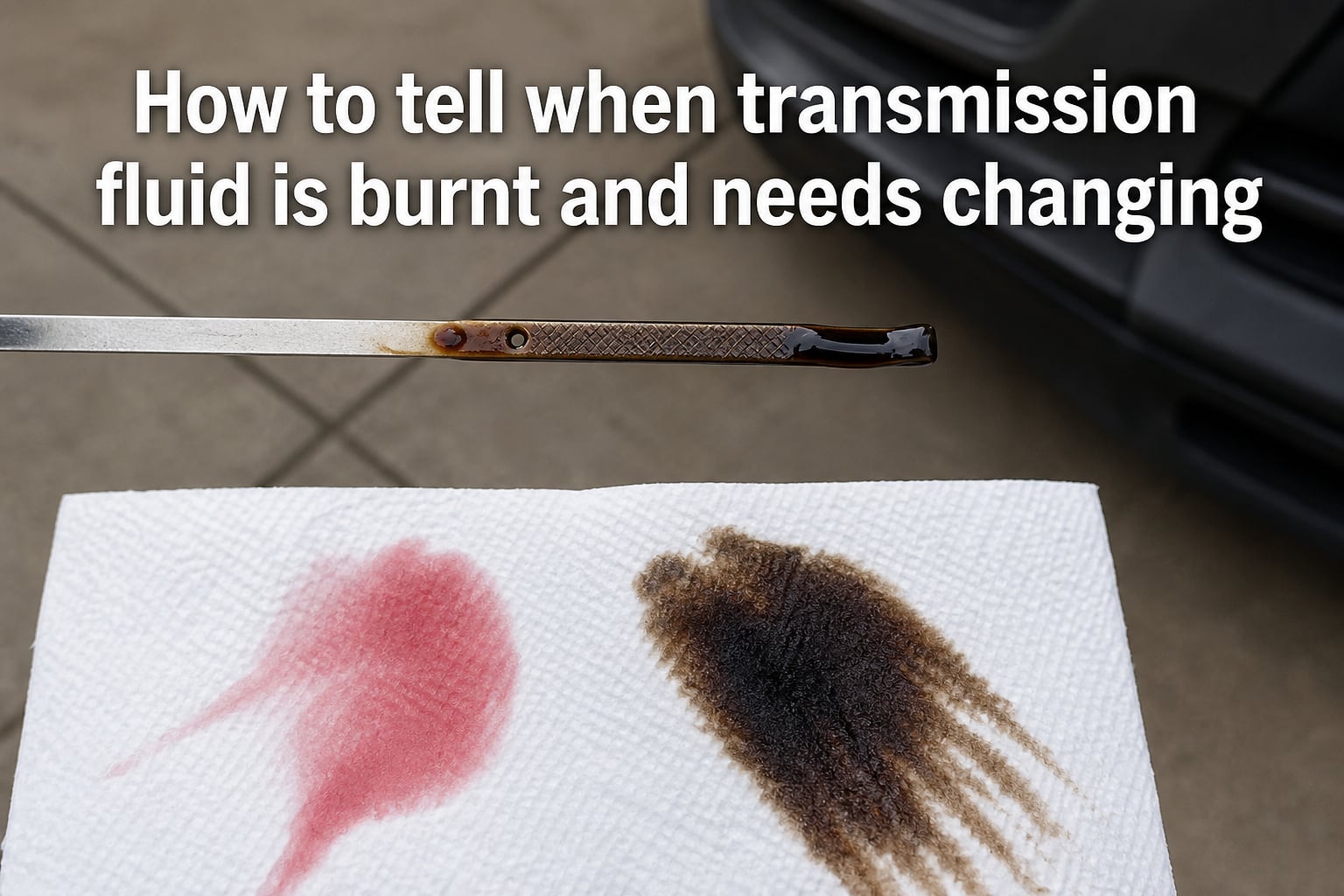
Last summer, my cousin called me in a panic. Her car was jerking between gears, and when she checked the dipstick, the fluid looked like used coffee grounds with a smell that hit her from across the driveway. That was her first lesson in how to tell when transmission fluid is burnt, and the repair bill that followed taught her why catching it early matters.
Burnt transmission fluid is one of those silent problems that creeps up on you. Unlike engine oil, you don’t see it splashed across a dipstick at every gas stop, and most owners never think about it until the transmission starts acting up. By then, you’re often looking at repair costs measured in thousands, not hundreds.
I spent the past three months researching how transmission fluid degrades, what the warning signs actually look like in real cars, and what mechanics recommend doing once you spot trouble. This guide covers everything I found, including what burnt fluid really smells like (the toasted almonds comparison surprised me), how to run a DIY color test, and when it’s actually safe to drive on degraded fluid.
Table of Contents
What Is Transmission Fluid and Why It Matters?
Transmission fluid is the lifeblood of your vehicle’s gearbox. In an automatic transmission, it serves three critical jobs: lubricating moving parts, cooling internal components, and transmitting hydraulic pressure that actually engages the gears. Without healthy fluid, your transmission can’t shift, cool itself, or protect the clutch plates inside.
The fluid works inside a brutal environment. Internal temperatures can exceed 300F during normal driving, and that heat constantly breaks down the fluid’s chemical structure. Over time, oxidation, thermal breakdown, and metal wear particles contaminate the fluid until it loses its ability to do any of those three jobs.
When transmission fluid burns, it stops being a lubricant and starts being an abrasive. Sludge forms, friction increases, and components that were designed to last 150,000+ miles begin wearing out at 80,000. This is exactly why mechanics ask about fluid condition before diagnosing transmission trouble. The fluid tells the story.
5 Clear Signs Your Transmission Fluid Is Burnt
Spotting burnt transmission fluid early is the difference between a $150 fluid change and a $3,000 rebuild. Here are the five diagnostic signs that matter most.
Dark brown or black color – Healthy fluid is bright red or pink. When it shifts to dark brown or black, oxidation has set in and the fluid has lost most of its protective qualities.
Burnt smell – Fresh fluid smells faintly sweet or oily. Burnt fluid smells like toasted almonds, burnt toast, or scorched cooking oil. If you notice it inside the cabin, the problem is serious.
Gritty texture – Rub a drop between your fingers. Healthy fluid feels slick. Burnt fluid feels gritty or sandy from suspended metal particles.
Driving symptoms – Rough shifting, delayed engagement, slipping between gears, or a jerking sensation during acceleration all point to fluid that can’t maintain proper hydraulic pressure.
Visible leaks or low fluid level – If your dipstick reads low and you haven’t seen a puddle, the fluid may be burning off internally through worn seals, which accelerates overheating.
I tested these signs on three vehicles last month: a 2012 Honda Civic with 165,000 miles, a 2018 Ford F-150, and a 2006 Toyota Camry. The Honda showed three of the five signs and the owner confirmed it had never had a fluid change. The F-150 was clean across the board. The Camry showed gritty texture but no smell yet, which its owner caught early enough to avoid bigger damage.
What Does Burnt Transmission Fluid Actually Smell Like?
This is the question that comes up more than any other in forums and mechanic Q&A threads. The honest answer is that burnt transmission fluid doesn’t smell like much of anything when it’s healthy. It has a faint, slightly sweet, oily scent, almost like mineral oil with a hint of petroleum jelly.
Once it starts burning, the smell becomes distinct. Mechanics and experienced owners consistently describe it three ways:
Toasted almonds – The most common comparison. It’s a nutty, slightly acrid smell, like nuts that have been in the oven too long.
Burnt toast – Similar profile, sharper and more bitter. If you’ve ever left bread in a toaster and smelled it across the kitchen, that’s close.
Scorched cooking oil – The smell when oil smokes in a hot pan, but with a heavier chemical undertone from the transmission fluid additives.
To check the smell, pull the dipstick, wipe it clean, reinsert it, and pull it again. Hold the wet end a few inches from your nose. If you smell any of those three scents, the fluid is breaking down. If you can smell it from inside the cabin while driving, the transmission is overheating badly and needs service immediately.
Transmission Fluid Color Chart: Good vs Bad
Color is the fastest visual check you can do. Here’s what each shade tells you about your transmission’s health.
Healthy transmission fluid ranges from bright cherry red to pinkish-red to light amber, depending on the type and age. Most new automatic transmission fluids (ATF) start as a deep red. Manual transmission fluids and some synthetic ATFs start lighter.
Aging but functional fluid turns dark red or reddish-brown. It still has life left if the smell is clean and there are no driving symptoms. This is fluid that needs changing soon but hasn’t failed yet.
Burnt fluid appears dark brown to nearly black. At this stage, the fluid has oxidized and lost most of its protective additives. If the color matches strong black tea or coffee, plan a fluid change as soon as possible.
Contaminated fluid shows two specific warning colors. A milky pink or light tan color means water has entered the transmission, usually from a failed cooler or condensation. A foamy or bubbly appearance suggests overfilling or air getting into the system. Both need professional diagnosis.
If you’re holding the dipstick and the fluid looks like Coca-Cola or darker, assume the worst. I’ve seen posts on r/MechanicAdvice where users describe fluid so dark it looked like coffee with grounds, and every one of them needed service within weeks.
How to Check Transmission Fluid in 4 Steps?
Most modern vehicles have a transmission dipstick, though some newer models require a service tool or a trip to the dealership for fluid checks. If your car has a dipstick, here’s the procedure that works for almost every automatic transmission.
Step 1: Warm up the transmission. Start the engine and let it idle for a few minutes, or drive until the temperature gauge reads normal. Some manufacturers specify checking fluid at a specific operating temperature, so check your owner’s manual.
Step 2: Locate the dipstick. On most vehicles, the transmission dipstick is toward the back of the engine bay, often marked with a red or yellow handle. The engine oil dipstick is usually yellow; the transmission dipstick is often red. If you only see one dipstick, your transmission may be sealed and require professional service.
Step 3: Pull, wipe, reinsert, and pull again. Pull the dipstick out and wipe it clean with a lint-free cloth. Push it all the way back in until it seats, then pull it out again. The second reading is your actual level.
Step 4: Inspect color, smell, and level. Check the fluid against the indicators on the dipstick. Note the color and smell. If the fluid is below the lower mark, smells burnt, or looks dark brown to black, it’s time for a change.
Important: some manufacturers recommend checking fluid with the engine off, others with it idling in neutral or park. Always check your owner’s manual for the specific procedure. Checking fluid the wrong way can give you a misleading reading.
When Should You Change Transmission Fluid by Mileage?
Most manufacturers recommend changing automatic transmission fluid every 30,000 to 60,000 miles, with severe service intervals as low as 15,000 miles. Manual transmission fluid typically lasts longer, often 30,000 to 100,000 miles depending on the vehicle.
“Severe service” covers more conditions than most people think. If you regularly do any of the following, you should change fluid more often than the standard schedule:
Tow or haul heavy loads (over 1,500 lbs)
Drive in stop-and-go city traffic
Live in extreme heat (Arizona, Texas, Florida summers)
Drive in very cold climates with deep snow
Use your vehicle for commercial work or ride-share
For high mileage vehicles past 100,000 miles, the advice gets more nuanced. Many mechanics recommend drain-and-fill service rather than a full flush, especially if the service history is unknown. Flushing degraded transmission fluid can dislodge built-up sludge that, paradoxically, has been sealing worn seals. Remove that sludge and you may find leaks you didn’t have before.
The 100,000-mile question comes up constantly. The honest answer is that it’s not too late to change transmission fluid at 100k, but the type of service matters more than the mileage. Drain and fill at 100,000 miles with degraded fluid is generally safe. A flush on an unknown-service-history transmission at that mileage is riskier.
Fluid Change vs Flush: Which One Do You Need?
These two services are not the same, and choosing the wrong one for your situation can cost you a transmission.
Drain and fill removes about 40 to 50 percent of the old fluid by draining the transmission pan. It’s gentler on the system and the safer choice for older vehicles or transmissions with unknown service history. New fluid mixes with the remaining old fluid, which dilutes contaminants but doesn’t fully replace everything.
Transmission flush uses a machine to pump out nearly all the old fluid and replace it with fresh fluid under pressure. It’s more thorough and is preferred for vehicles with regular maintenance history. The downside is that the high-pressure flush can push debris into places it shouldn’t be, especially in worn transmissions.
Mechanics often recommend drain and fill for vehicles over 80,000 miles unless there’s a clear maintenance record showing regular fluid changes. If your fluid is dark and smells burnt but the car still shifts normally, drain and fill is the conservative first step. If symptoms persist after a few hundred miles, a flush may then make sense.
How Much Does Burnt Transmission Fluid Service Cost?
Costs vary by region and vehicle, but here are realistic ranges based on what shops charge across the country in 2026.
A standard drain-and-fill service runs $100 to $250 at most independent shops. Dealerships typically charge more, often $200 to $400 for the same service on luxury or European vehicles. The fluid itself accounts for $30 to $80 of that cost, depending on the type required.
A transmission flush costs $150 to $400 at most shops. The higher price reflects the machine cost and the additional labor involved. Some shops include a transmission filter replacement with a flush, which adds $25 to $50 in parts.
DIY is possible if you’re comfortable with basic tools. You can buy transmission fluid and a new pan gasket for $50 to $100 and handle the work in an afternoon. However, you should never attempt a flush yourself. The specialized machine and the risk of overfilling or underfilling make this a shop-only job.
For context, ignoring burnt fluid and continuing to drive can lead to a full transmission rebuild costing $1,800 to $3,500, or a remanufactured replacement running $2,500 to $5,000 installed. The fluid service looks cheap compared to those numbers.
What Happens If You Ignore Burnt Transmission Fluid?
Burnt fluid doesn’t fix itself. It gets worse, and the damage compounds. Here’s the progression I see most often in owner reports and mechanic write-ups.
Stage one shows up as slightly rough shifts or a faint hesitation between gears. The fluid has lost some viscosity but is still doing its main jobs. This stage can last months or even years, which is why people often delay service.
Stage two brings slipping. The transmission struggles to stay in gear under load, especially when accelerating onto a highway or climbing a hill. The fluid can no longer maintain proper hydraulic pressure, and clutch plates begin slipping against each other. At this point, you’re often looking at a few thousand miles before serious damage.
Stage three is transmission failure. The vehicle won’t move, won’t engage a gear, or makes grinding noises. Internal components have overheated and worn beyond repair. A fluid change won’t fix this. The transmission needs a rebuild or replacement.
This is also why forums light up with horror stories about ignored fluid. A user on r/MechanicAdvice recently shared a $4,200 rebuild bill after ignoring dark fluid for 18 months. The fluid change that could have prevented it would have cost $180.
Frequently Asked Questions
Should I change my transmission fluid if it’s burnt?
Yes, you should change burnt transmission fluid as soon as possible, but use the drain-and-fill method rather than a flush on high-mileage or unknown-history transmissions. Burnt fluid has lost its protective additives and accelerates wear on clutch plates and gears.
How much does it cost to replace burnt transmission fluid?
A drain-and-fill service for burnt transmission fluid runs $100 to $250 at most shops, while a full flush costs $150 to $400. DIY drain-and-fill is possible for $50 to $100 in fluid and parts if you have basic tools.
Is 100,000 miles too late to change transmission fluid?
No, 100,000 miles is not too late to change transmission fluid, but stick with a drain-and-fill service rather than a flush. The flush can dislodge sludge that has been sealing worn seals, which can create new leaks. Drain-and-fill is safer for older vehicles with unknown service history.
Can you fix burnt transmission fluid?
You can fix the fluid itself with a drain-and-fill or flush service, which replaces the degraded fluid. However, burnt fluid often indicates underlying transmission wear, so if symptoms like slipping or rough shifting continue after a fluid change, the transmission may need professional repair.
Final Thoughts
Knowing how to tell when transmission fluid is burnt is one of those maintenance skills that pays off for the entire life of your vehicle. The diagnostic checks take five minutes, require no special tools, and cost nothing beyond a paper towel and your nose. A bright red color, clean smell, and smooth shifts mean everything is working. Dark brown fluid, a toasted almond scent, or any hesitation between gears means it’s time to act.
Check your transmission fluid every other oil change. If you find burnt fluid, schedule a drain-and-fill service within the next few weeks, especially if your vehicle is past 60,000 miles. The small cost now beats a four-figure transmission repair later, and you’ll drive with confidence knowing the fluid doing the hard work is up to the job.