
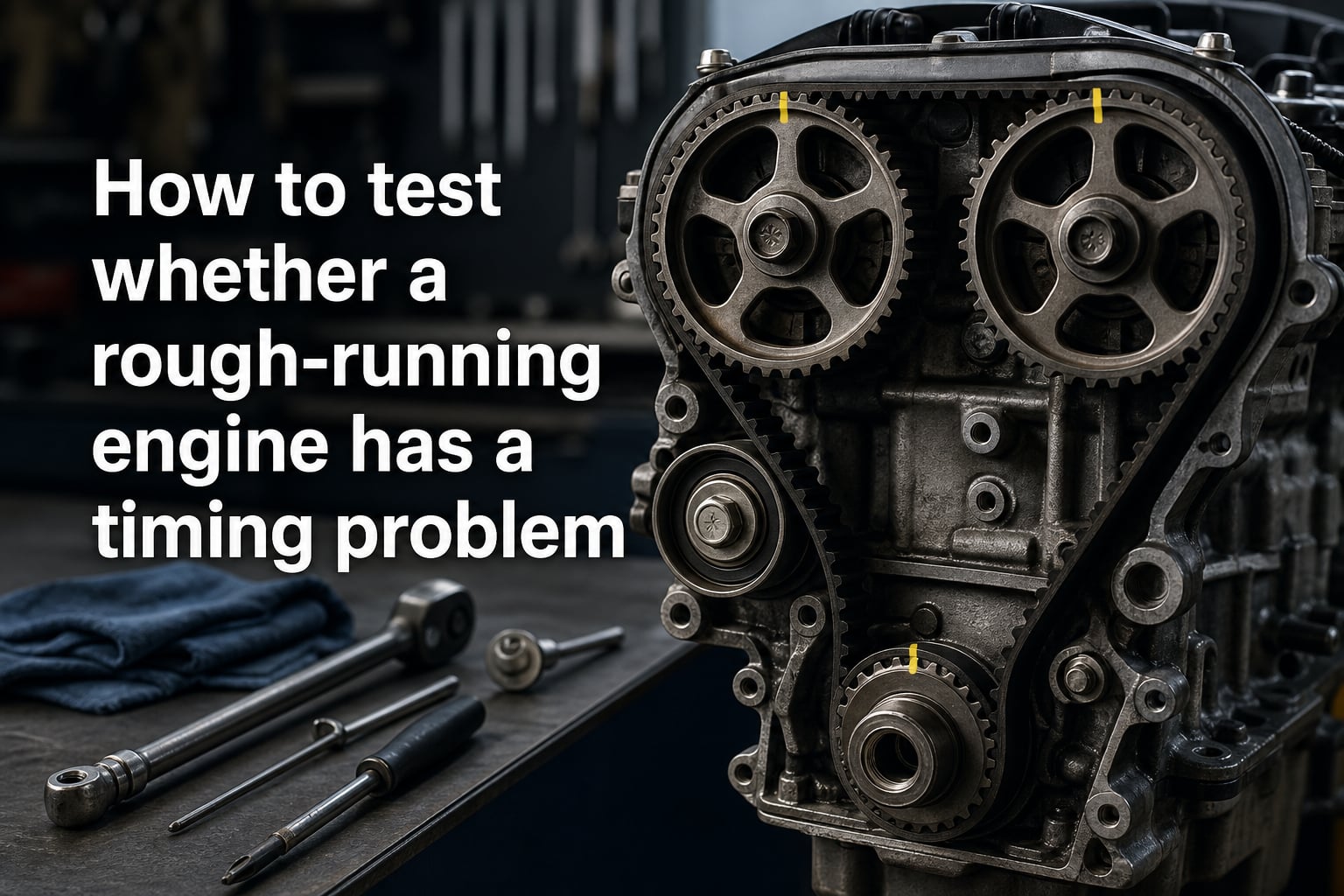
A rough-running engine can stem from many causes, but timing problems rank among the most serious and the most overlooked. Engine timing is the precise synchronization between the crankshaft, camshaft, and spark plugs, and when it drifts even one tooth out of position, your engine will let you know through misfires, vibration, and erratic idle.
I have spent years diagnosing rough-running engines, and I can tell you that timing issues show up in patterns. In this guide, I will walk you through the exact diagnostic steps I use, including visual inspection, OBD-II scanner codes, compression testing, and the warning signs that demand immediate attention.
Whether you are chasing a rough idle after a timing belt replacement, hearing unusual rattles from the timing cover, or just want to rule out timing before replacing spark plugs, this guide will show you exactly how to test for a rough-running engine timing problem at home.
Table of Contents
What Is Engine Timing and Why Does It Matter?
Engine timing is the precise synchronization between the crankshaft, camshaft, and spark plugs that ensures valves open and close at the correct moments during the combustion cycle. The timing belt or timing chain connects the crankshaft to the camshaft, maintaining exact synchronization so fuel ignites at the precise moment the valves are positioned optimally.
When timing is correct, you get smooth combustion, full power, and clean emissions. When timing is off by even a small amount, the result is a rough-running engine with symptoms ranging from mild vibration to complete failure to start.
Here is why timing matters so much:
Valves and pistons must never occupy the same space at the same time on an interference engine.
Spark timing depends on mechanical valve timing for the ignition computer to calculate correctly.
Fuel injection events are scheduled based on camshaft position sensor input.
Variable valve timing (VVT) systems rely on oil pressure and timing sensors for adjustment.
The two main hardware components that maintain timing are the timing belt (a rubber-reinforced belt with teeth) and the timing chain (a metal chain similar to a bicycle chain). Some engines use timing gears instead, though this is less common in modern vehicles.
Interference vs Non-Interference Engines
An interference engine is one where the pistons and valves occupy the same space at different points in the combustion cycle. If the timing belt or chain breaks on an interference engine, the pistons will collide with open valves, causing catastrophic engine damage.
A non-interference engine has clearance between pistons and valves at all times, so a timing failure simply stops the engine without bending valves. Most modern engines from the last 20 years are interference designs, which is why timing problems demand prompt attention.
Common Symptoms of Timing Problems in a Rough-Running Engine
Yes, incorrect timing absolutely causes rough idle, and it is one of the most common culprits behind engines that shake, stutter, or stall at stoplights. Timing problems create a cascade of symptoms because combustion timing is thrown off across all cylinders.
I have compiled the complete list of timing problem symptoms from diagnostic work and forum reports across Reddit communities like r/MechanicAdvice and r/StupidCarQuestions:
Engine misfires at idle or under load
Rough idle that persists even after warm-up
Engine vibration through the steering wheel or seat
Backfiring through the intake or exhaust
Poor acceleration and hesitation when pressing the gas pedal
Difficulty starting the engine, especially when cold
Power loss especially on hills or during highway merging
Check engine light illuminated with timing-related codes
Rattling or ticking sounds from the timing cover area
Metal shavings in the oil (chain wear indicator)
Rich exhaust smell indicating fuel is not burning completely
Engine dies after idling for 20-30 seconds (timing off one tooth pattern)
Forum users frequently report that cars which idle fine for 20-30 seconds and then want to die suggest timing issues. One mechanic on r/MechanicAdvice noted that a rough idle persisting after a timing belt replacement almost always points to incorrect belt alignment.
Timing problems affect each cylinder differently depending on which tooth is off. One tooth off on a timing belt typically causes rough idle but the engine will still run. Two or more teeth off will usually prevent the engine from starting at all.
Timing Belt vs Timing Chain: Key Differences That Affect Diagnosis
Knowing whether your engine uses a timing belt or timing chain changes both the symptoms you will see and the diagnostic approach you should take. Here is how they differ:
Timing belts are made of reinforced rubber with teeth that mesh with sprockets. They are quieter than chains but have a defined service life, typically 60,000 to 100,000 miles. Belts can stretch, crack, or lose teeth without warning. When a belt fails, the engine simply stops running. On interference engines, this causes catastrophic damage.
Timing chains are made of metal and are lubricated by engine oil. They typically last the life of the engine but can stretch over time. Chain failure is often preceded by rattling noises, especially at startup. Metal shavings in the oil indicate chain wear.
For diagnostic purposes, the differences matter:
Belt engines: check for cracking, glazing, or missing teeth during visual inspection
Chain engines: listen for rattling at startup, check oil for metal particles
Both: verify timing marks align at Top Dead Center (TDC) on cylinder 1
If your vehicle uses variable valve timing (VVT), you also have a camshaft actuator, phaser, or solenoid that can fail and cause timing-like symptoms. These components are usually diagnosed via OBD-II codes.
How to Test for Timing Problems: Step-by-Step Diagnostic Procedure?
Testing for timing problems follows a logical sequence that starts with the cheapest and easiest checks before moving to more involved procedures. This is the exact process I use when diagnosing a rough-running engine, refined over hundreds of diagnostic sessions.
Follow these diagnostic steps in order for the most efficient results:
Confirm the symptom pattern – Verify rough idle, misfires, and check engine light behavior
Scan for OBD-II codes – Look for camshaft/crankshaft correlation codes
Check timing marks visually – Remove timing cover and verify alignment
Inspect belt or chain condition – Look for wear, damage, or stretching
Test camshaft and crankshaft sensors – Verify signals with a multimeter
Perform a compression test – Check for valve damage from timing drift
Conduct a leak-down test – Identify specific cylinder leakage
Verify base timing with a timing light – Confirm ignition timing is correct
Most timing-related rough running is identified by step 2 or step 3. The remaining steps help confirm the diagnosis and identify the specific failed component.
Tools You Will Need
Before starting, gather these tools:
OBD-II scanner (basic code readers work, but bidirectional scanners are better)
Digital multimeter for sensor testing
Timing light (inductive or self-powered)
Compression tester with spark plug adapter
Leak-down tester (optional but recommended)
Basic hand tools (socket set, screwdrivers, pliers)
Service manual for your specific vehicle
Flashlight or inspection light
A timing light is helpful but not strictly necessary. You can verify timing marks visually at Top Dead Center (TDC) without specialized equipment, which is what most DIY mechanics rely on.
Visual Inspection Guide: What to Look For Under the Hood
Visual inspection catches about 40% of timing problems without any specialized tools. Start with the engine cold and the battery disconnected for safety.
Here is exactly what to check during visual inspection:
Locate the timing cover – Usually on the front of the engine, often behind accessory drive belts
Remove the timing cover – Typically held by 8-15 bolts, may require removing accessories first
Verify timing mark alignment – The crankshaft and camshaft marks should align at TDC
Check belt condition – Look for cracking, glazing, fraying, or missing teeth
Inspect tensioner – Verify proper tension and no oil leaks from the tensioner
Examine chain stretch – Compare chain to its guides and look for slack
Look for oil leaks – Oil leaks from the timing cover indicate seal failure
The most important check is timing mark alignment. Rotate the crankshaft by hand using a wrench on the crankshaft bolt until cylinder 1 reaches Top Dead Center (TDC) on the compression stroke. Both the crankshaft timing mark and the camshaft timing mark must align with their respective pointers.
If the marks do not align, your timing is off. The most common cause is a timing belt that has skipped one or more teeth, which can happen during installation or from a worn belt stretching under load.
For timing chains, also check the chain guides and tensioner for wear. Excessive chain slack combined with stretched guides is a clear sign the timing system needs replacement.
OBD-II Scanner Diagnosis: Reading the Codes
An OBD-II scanner is the fastest way to narrow down timing problems. Modern engines monitor the relationship between the crankshaft position sensor and camshaft position sensor constantly, and any drift outside expected parameters triggers a diagnostic trouble code (DTC).
Here are the most common timing-related OBD-II codes:
P0016 – Crankshaft/Camshaft Position Correlation (Bank 1 Sensor A)
P0017 – Crankshaft/Camshaft Position Correlation (Bank 1 Sensor B)
P0018 – Crankshaft/Camshaft Position Correlation (Bank 2 Sensor A)
P0019 – Crankshaft/Camshaft Position Correlation (Bank 2 Sensor B)
P0335 – Crankshaft Position Sensor Circuit Malfunction
P0340 – Camshaft Position Sensor Circuit Malfunction
P0011 – Camshaft Position A – Timing Over-Advanced
P0012 – Camshaft Position A – Timing Over-Retarded
P0016 through P0019 are the most diagnostic for timing problems. These codes mean the engine computer detected that the camshaft and crankshaft positions are out of expected alignment, which points directly to timing system issues.
When you see these codes, do not immediately replace the sensor. The correlation codes indicate a mechanical timing problem (belt or chain off), not a failed sensor. Replacing the sensor will not fix the issue if the timing is mechanically off.
Mechanics on automotive forums consistently note that camshaft/crankshaft correlation codes are the most helpful diagnostic indicator for timing-related rough running.
Compression Test and Leak-Down Test Methods
If timing marks align and OBD-II codes point to mechanical timing issues, the next step is compression and leak-down testing to assess engine damage.
A compression test measures the pressure each cylinder generates during the compression stroke. Timing problems affect compression in specific ways:
Timing off one tooth (retarded): lower compression across all cylinders
Timing advanced: compression may be normal but power is reduced
Valve damage from belt failure (interference engines): low or zero compression in affected cylinders
To perform a compression test:
Remove all spark plugs
Disable fuel injection (pull fuel pump relay or injector fuse)
Thread the compression tester into cylinder 1
Crank the engine 5-7 times with the throttle open
Record the reading
Repeat for all cylinders and compare
Healthy compression readings should be within 10% across all cylinders. Lower compression in specific cylinders indicates valve damage, while uniformly low compression across all cylinders suggests timing is off.
A leak-down test is more precise. It pressurizes each cylinder with compressed air and measures how much pressure escapes. The escaping air tells you where the leak is, such as through the intake valves, exhaust valves, or piston rings. This test is excellent for confirming whether timing-related valve contact has occurred.
What Happens When Engine Timing Fails?
Timing failure has two possible outcomes depending on whether you have an interference or non-interference engine.
On non-interference engines, a timing belt or chain failure simply stops the engine. The engine can be repaired by replacing the timing components without internal engine work.
On interference engines, timing failure is catastrophic. When the belt or chain breaks, the camshaft stops rotating while the crankshaft continues. This causes pistons to rise while valves are still open, resulting in piston-to-valve contact.
The damage typically includes bent valves, damaged pistons, and sometimes cylinder head or camshaft damage. Repair costs commonly range from $1,500 to $4,000 depending on the engine and extent of damage.
Symptoms that timing failure is imminent include:
Sudden check engine light for timing correlation codes
Loud rattling from timing cover at startup
Visible belt fraying or missing teeth
Excessive chain slack measurable by hand
Metal particles visible in engine oil
If you notice any of these signs, stop driving and address the issue immediately. Continuing to drive on a failing timing system risks stranding you or causing catastrophic engine damage.
DIY vs Professional Diagnosis: When to Call a Mechanic
I am a strong advocate for DIY diagnostics because they save money and teach you about your vehicle. However, timing work has a higher stakes threshold than most other repairs.
Here is my decision framework for DIY versus professional diagnosis:
DIY appropriate: Visual inspection, OBD-II code reading, basic sensor testing, compression tests
Consider professional help: Timing belt replacement, timing chain replacement, VVT system service
Always professional: Interference engine timing work if you lack specialized tools and experience
The risk with timing work is that errors compound. A timing belt installed one tooth off will cause ongoing rough idle that may damage catalytic converters over time due to incomplete combustion.
Professional mechanics have specialty tools like camshaft locking tools, crankshaft holding tools, and timing mark verification gauges that make correct installation much more reliable. The labor cost for timing service is often less than the cost of repairing damage from an incorrectly installed timing belt.
If you have already attempted timing work and the engine runs rough afterward, forum users strongly recommend having a professional verify timing alignment. Rough idle after timing belt replacement is one of the most common post-repair complaints in automotive forums.
Frequently Asked Questions
How to diagnose bad engine timing?
Diagnose bad engine timing with this 8-step process: (1) confirm rough idle and misfire symptoms, (2) scan for OBD-II codes like P0016-P0019, (3) remove the timing cover and verify timing mark alignment at TDC, (4) inspect belt or chain for wear and damage, (5) test camshaft and crankshaft sensors with a multimeter, (6) perform a compression test on all cylinders, (7) conduct a leak-down test if compression is low, (8) verify base ignition timing with a timing light. The most diagnostic checks are OBD-II codes and timing mark alignment.
Can incorrect timing cause rough idle?
Yes, incorrect timing absolutely causes rough idle. When timing is off, fuel ignites at the wrong moment in the combustion cycle, causing incomplete combustion across all cylinders. This produces engine vibration, misfires, and shaking at idle. Timing off by even one tooth typically creates noticeable rough running. The roughness persists whether the engine is cold or warm and does not improve with throttle input.
How to diagnose a rough running engine?
Diagnose a rough running engine by checking these components in order: (1) spark plugs and ignition coils, (2) OBD-II codes for misfire and timing correlation, (3) vacuum leaks with smoke machine or carb cleaner, (4) fuel injector performance, (5) compression test to check internal engine condition, (6) timing mark alignment to verify mechanical timing, (7) sensor signals (MAF, MAP, O2) with a multimeter. Timing problems will show up as P0016-P0019 codes and visible timing mark misalignment.
How to tell if you have bad timing?
You have bad timing if you notice these signs: rough idle that persists after warm-up, engine misfires under load, check engine light with P0016-P0019 codes, rattling sounds from the timing cover, difficulty starting the engine, poor acceleration, backfiring through intake or exhaust, metal shavings in engine oil, and timing marks that do not align at TDC. Cars that idle for 20-30 seconds then want to die is a classic timing-off-one-tooth symptom.
Final Thoughts on Diagnosing Timing Problems
Testing whether a rough-running engine has a timing problem comes down to a systematic process: scan for codes, verify timing marks, inspect the belt or chain, and confirm with compression testing. Most timing problems are identified by OBD-II codes like P0016-P0019 combined with visible timing mark misalignment.
If your engine runs rough, do not ignore it. Timing problems worsen over time and can lead to complete engine failure on interference engines. Start with the diagnostic steps in this guide, and do not hesitate to consult a professional mechanic if the work involves timing belt or chain replacement. Catching timing issues early saves both your engine and your wallet.