
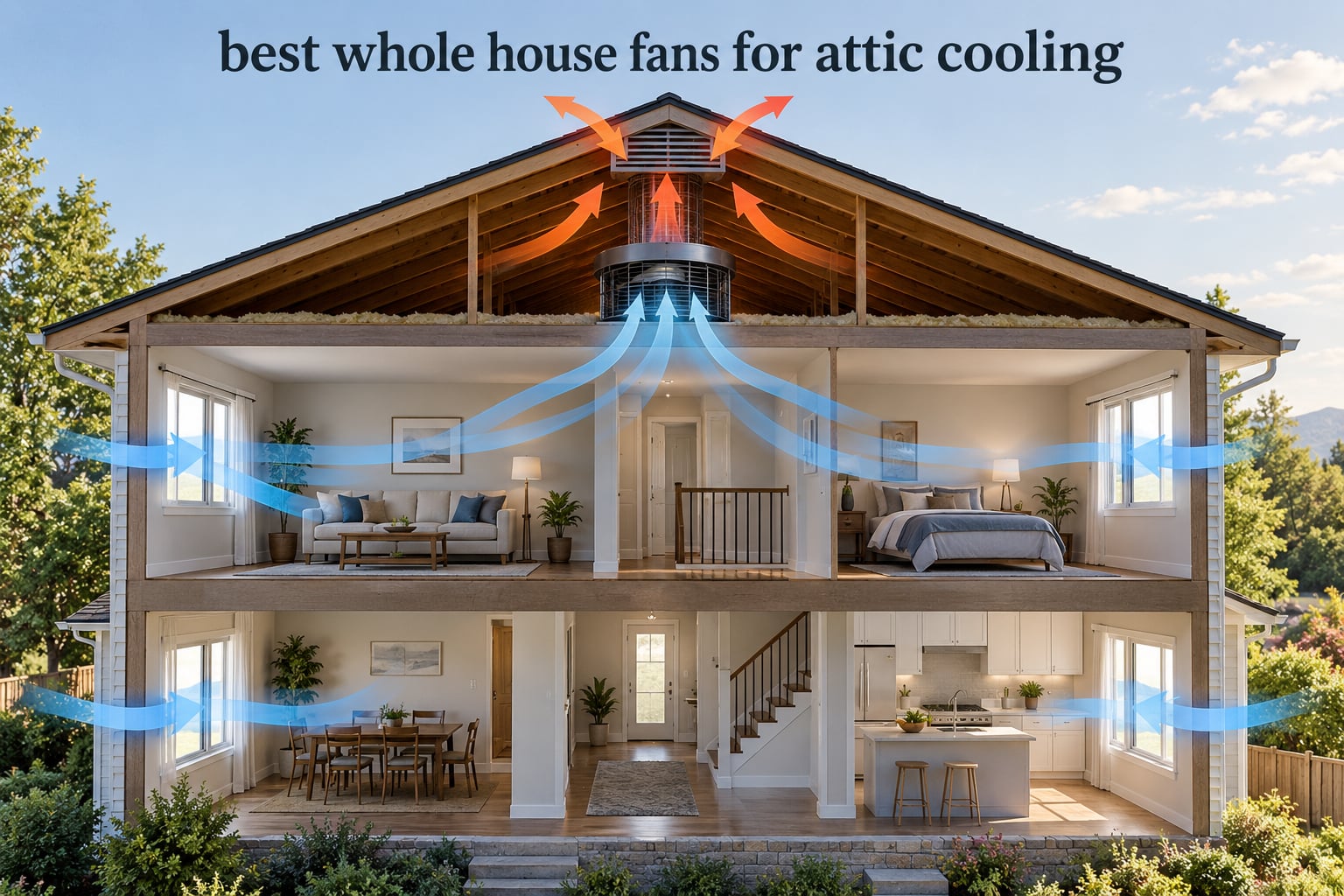
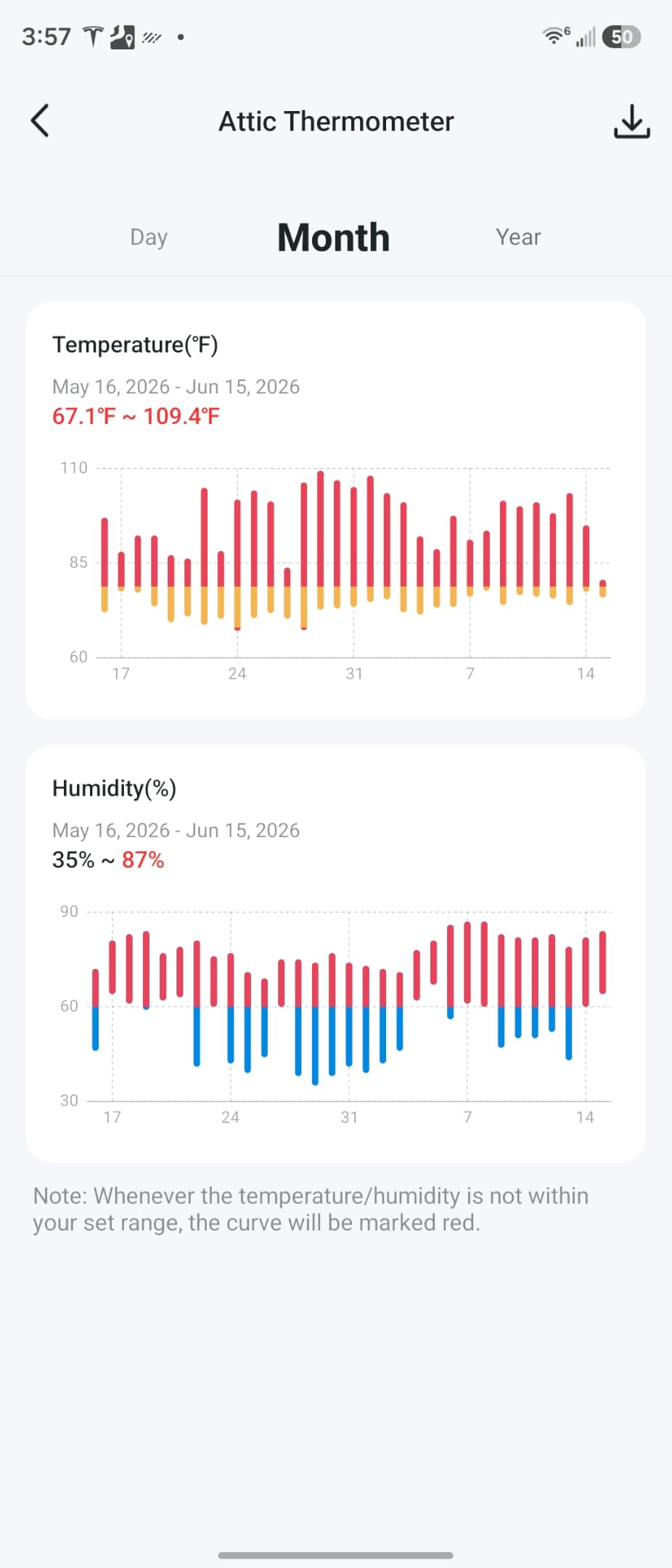
Searching for the best whole house fans for attic cooling means sorting out two different products that get sold under the same name. A ducted whole house fan pulls outdoor air in through open windows and exhausts it up through your attic vents, cooling the living space itself. An attic fan mounts in a gable or roof vent and cools only the space above your ceiling, which lowers the load on your air conditioner but never cools a single room. The most useful system, in our experience, runs both: an attic or gable fan through the hottest part of the afternoon, then a ducted whole house fan overnight when the outside air drops below indoor temperature.
The whole idea only works in a dry climate where overnight temperatures reliably fall to 65 to 70 F. Pull 80 F air into a house that is already 78 F and you have made things worse, which is why homeowners in humid regions are steered away from these fans entirely. We compared twelve gable, roof-mount, and ducted models on airflow, wattage, noise, and install complexity to find which ones are actually worth buying in 2026.
Table of Contents
Top 3 Picks for Best Whole House Fans for Attic Cooling in 2026
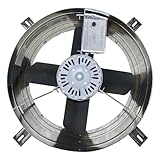
iLiving ILG8G14-12T Gable…
- 2339 CFM at 230W
- Adjustable built-in thermostat
- Galvanized housing

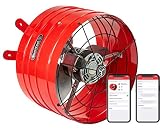
QuietCool AFG PRO-2.0 Gable…
- 1945 CFM speed one
- Two-speed PSC motor
- 20 foot plug-and-play cord
Best Whole House and Attic Fans for Attic Cooling in October
| Product | Specs | Action |
|---|---|---|
| iLiving ILG8G14-12T Attic Gable Ventilator |
|
Check Latest Price |
| QuietCool AFG PRO-2.0 |
|
Check Latest Price |
 Air Vent 53315 Gable Ventilator Air Vent 53315 Gable Ventilator |
|
Check Latest Price |
| QuietCool AFG SMT PRO-3.0 |
|
Check Latest Price |
 QuietCool AFG SMT ES-3.0 QuietCool AFG SMT ES-3.0 |
|
Check Latest Price |
 CentricAir QA-Deluxe 5500 CentricAir QA-Deluxe 5500 |
|
Check Latest Price |
 VEVOR 42W Solar Roof Fan VEVOR 42W Solar Roof Fan |
|
Check Latest Price |
 VEVOR 12 inch Shutter Exhaust Fan VEVOR 12 inch Shutter Exhaust Fan |
|
Check Latest Price |
 Master Flow GAF 1500 CFM Roof Vent Master Flow GAF 1500 CFM Roof Vent |
|
Check Latest Price |
 VEVOR 14 inch Gable Mount Fan VEVOR 14 inch Gable Mount Fan |
|
Check Latest Price |
 OmniPV Solar Hybrid Attic Fan OmniPV Solar Hybrid Attic Fan |
|
Check Latest Price |
 AC Infinity CLOUDWAY T12 AC Infinity CLOUDWAY T12 |
|
Check Latest Price |
Every fan below is either a gable mount, a roof mount, or a ducted whole house fan, and the difference matters more than any single spec. Gable and roof units ventilate the attic only. The two ducted models, the CentricAir and the AC Infinity, are the only two on this list that cool your living space directly.
1. iLiving ILG8G14-12T Automatic Gable Mount Attic Ventilator
iLiving ILG8G14-12T Automatic Gable Mount Attic Ventilator Fan with Adjustable Thermostat, 2.85 Amp, 2339 CFM, Single-Speed
2339 CFM
230W brushless motor
63 dB
Adjustable thermostat
1 year limited warranty
Pros
- Largest verified review count of any fan here
- Adjustable thermostat runs the fan only when the attic is hot
- 2339 CFM covers attics up to 3400 sq ft
- Galvanized housing with mounting brackets included
Cons
- Hardwired rather than plug and play
- Some units arrived with a loose blade collar and failed early
- Faint hum or rattle audible from directly outside
This is the fan we keep coming back to because the review volume tells a story no spec sheet can. At 1665 reviews it has more verified owner history than anything else on this list, and the 4.4 average is backed by a 71 percent five-star share. The line has been in production long enough that replacement housings and mounting hardware are widely available.
The ILG8G14-12T moves 2339 CFM on a single speed at 230 watts and 1010 rpm. That is enough throughput for attic spaces up to about 3400 square feet, which covers the majority of single-story homes with conventional roof framing.
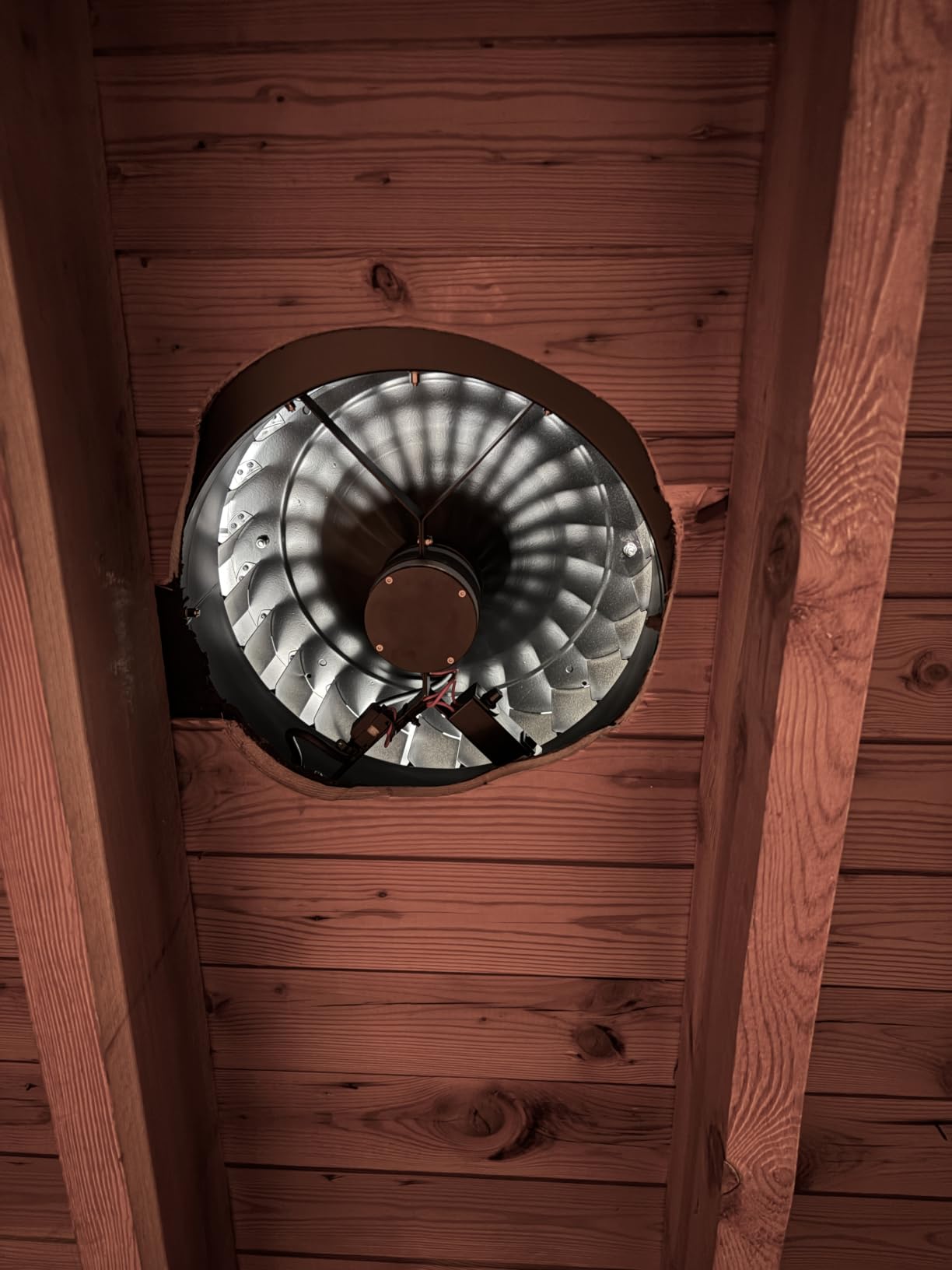
The adjustable thermostat is the part owners mention most. Set the dial and the fan cycles on its own once the attic hits the threshold, so you are not climbing into the attic to switch anything. Several reviewers report attic temperature drops of 15 to 20 degrees once the fan is cycling.
Two things temper the recommendation. It is hardwired, not plug and play, so the install needs a run of power to the gable and a switch or thermostat you can reach from the living space. Reviewers also note a light hum or rattle from directly outside the gable wall, though it is described as inaudible from inside the home.
Check the gable opening before you buy
The housing is built for standard 14 inch gable openings. If your existing vent is a non-standard size, expect to trim or adapt the mounting brackets rather than drop it straight in. This is the single most common reason a good fan gets returned.
The unit weighs 9.8 pounds and includes the fan, an owner’s manual, and mounting hardware. A basic installation is within reach of someone comfortable with basic electrical work, but the hardwiring is the part that decides whether you call an electrician.
Skip this if you need app control or a low-wattage motor
There is no remote, no app, and no WiFi. Control is a button and a thermostat dial mounted where you can reach it, which is fine for most attics but a real limitation if you want to schedule operation around your day.
The 230 watt draw is high for a fan of this class. If you plan to run it continuously through a hot stretch, a brushless ECM model like the QuietCool ES-3.0 uses a fraction of that power for comparable airflow.
2. QuietCool AFG PRO-2.0 Attic Fan for Gable Vents
Quietcool AFG PRO-2.0 Attic Fan for Gable Vents – 1945 CFM – Adjustable Thermostat – 20ft Power Cord – Plug-and-play – Two Speed Capable
1945 CFM at 108W speed one
1495 CFM at 77W speed two
Two-speed PSC
20 ft cord
Pros
- Highest star rating of any fan in this roundup
- Two speeds let you trade airflow for quietness
- Vent covers included to block backdraft
- 20 foot cord means no wiring
Cons
- Less airflow than larger same-brand gable fans
- Supplied vent plates may need trimming for odd openings
The best-rated unit in this group carries 4.7 stars across 1364 reviews with 81 percent five-star, which is the strongest rating-and-volume pairing on the list. If you want a single gable fan that most people are happy with, this is the one we would point at first.
Speed one delivers 1945 CFM at 108 watts and speed two drops to 1495 CFM at 77 watts. That low-speed draw is genuinely useful in spring and fall, when you want airflow without full output. The permanent split capacitor motor is the standard, inexpensive design, and the built-in mounting tabs have anti-vibration pads that keep the housing from drumming against the gable wall.
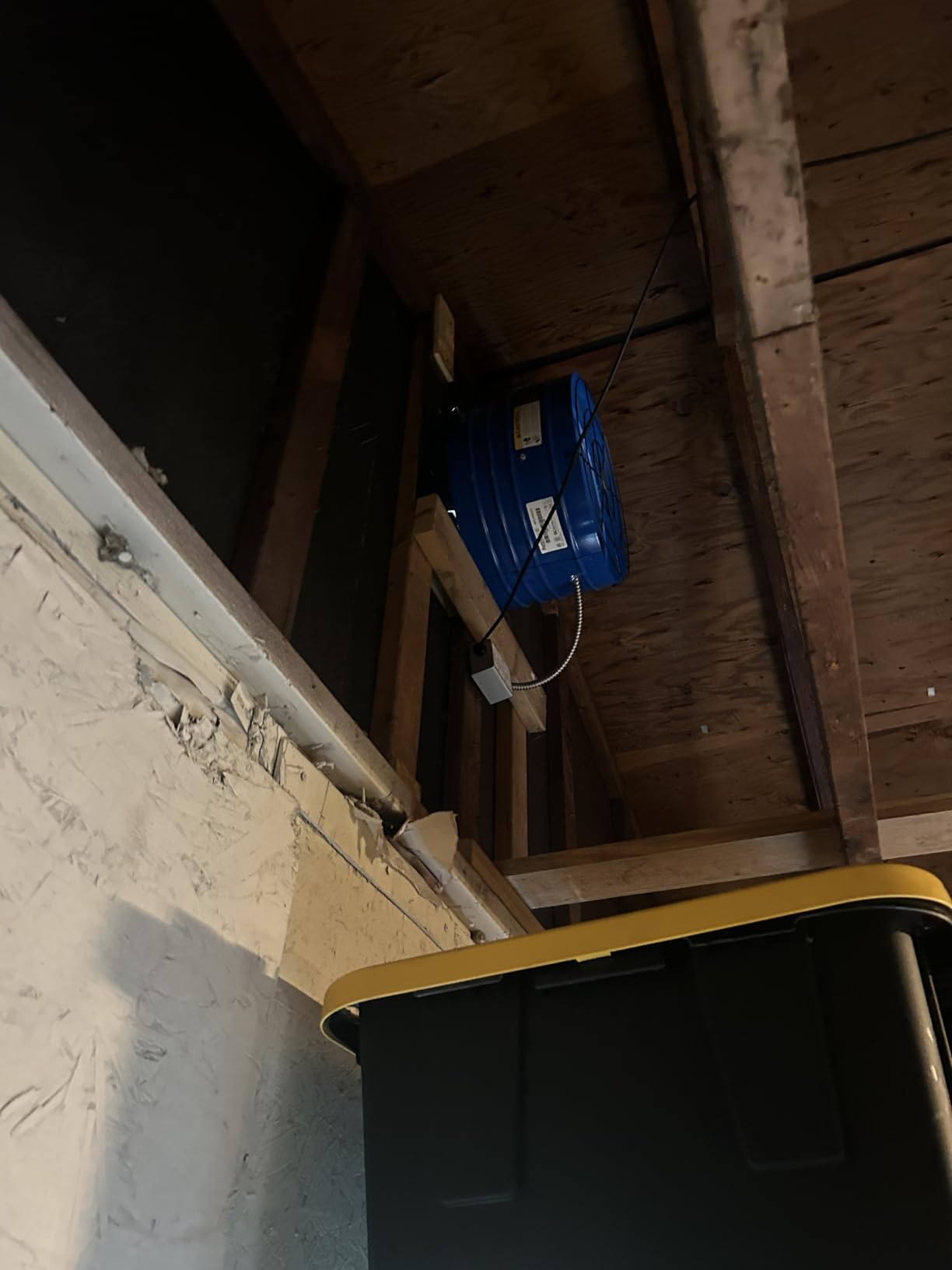
The 20 foot power cord is what separates this from the iLiving in daily use. No wiring means no electrician and no attic work beyond mounting the unit, which is a big deal for a homeowner who has never opened a junction box.
A built-in fire safety shutoff cuts power if the unit overheats, and the included vent covers block air from backdrafting into the attic when the fan is off. The adjustable thermostat spans 50 to 120 F on point, so you can set it for a hot summer or leave it permissive for shoulder seasons.
Understand the two speed wattage difference
The gap between 108 watts and 77 watts sounds small but it compounds over a season. If you run the low speed overnight during mild weather, roughly 30 percent less power goes into the same attic.
What you give up is airflow, and that matters in a hot attic. Low speed is a shoulder-season setting. In peak summer you want speed one, because a 1945 CFM fan is already working near the bottom of what a large attic needs.
Skip this if your attic is larger than 2000 square feet
At 1945 CFM this is a mid-size gable fan. Larger attics with a lot of south-facing glass usually need more throughput than a single unit of this class delivers, and stacking two gable fans into one opening is not really practical.
Owners also report needing to trim the supplied vent filler plates when the gable opening is not a clean standard shape. That is a five-minute job with tin snips, not a defect, but it is worth knowing before the box arrives.
3. Air Vent 53315 Gable Ventilator
Air Vent Gable Ventilator 53315 Attic and Whole House Fans, Multicolor,Medium
1050 CFM
180W 1/12 HP
14 inch blade
Covers 1500 sq ft max
UL listed
Pros
- Drops into a standard 14 inch gable opening as a direct replacement
- 30 minute install from inside the attic
- Accurate thermostat that triggers around 95 F
- Also works as a garage or workshop exhaust
Cons
- 1050 CFM is low next to newer powered gable fans
- Audible on the floor directly below
- One report of a defective thermostat with undersized wiring
The Air Vent 53315 is not a strong performer next to the newer models here, but for anyone replacing a dead unit in an existing 14 inch gable opening it is the least disruptive option by a wide margin. It has 889 reviews at 4.4 stars with 70 percent five-star.
The motor is a 1/12 HP unit drawing 180 watts and 3.2 amps, driving a 14 inch blade that moves 1050 CFM. The manufacturer rates it for attic spaces up to 1500 square feet, which is modest but honest.
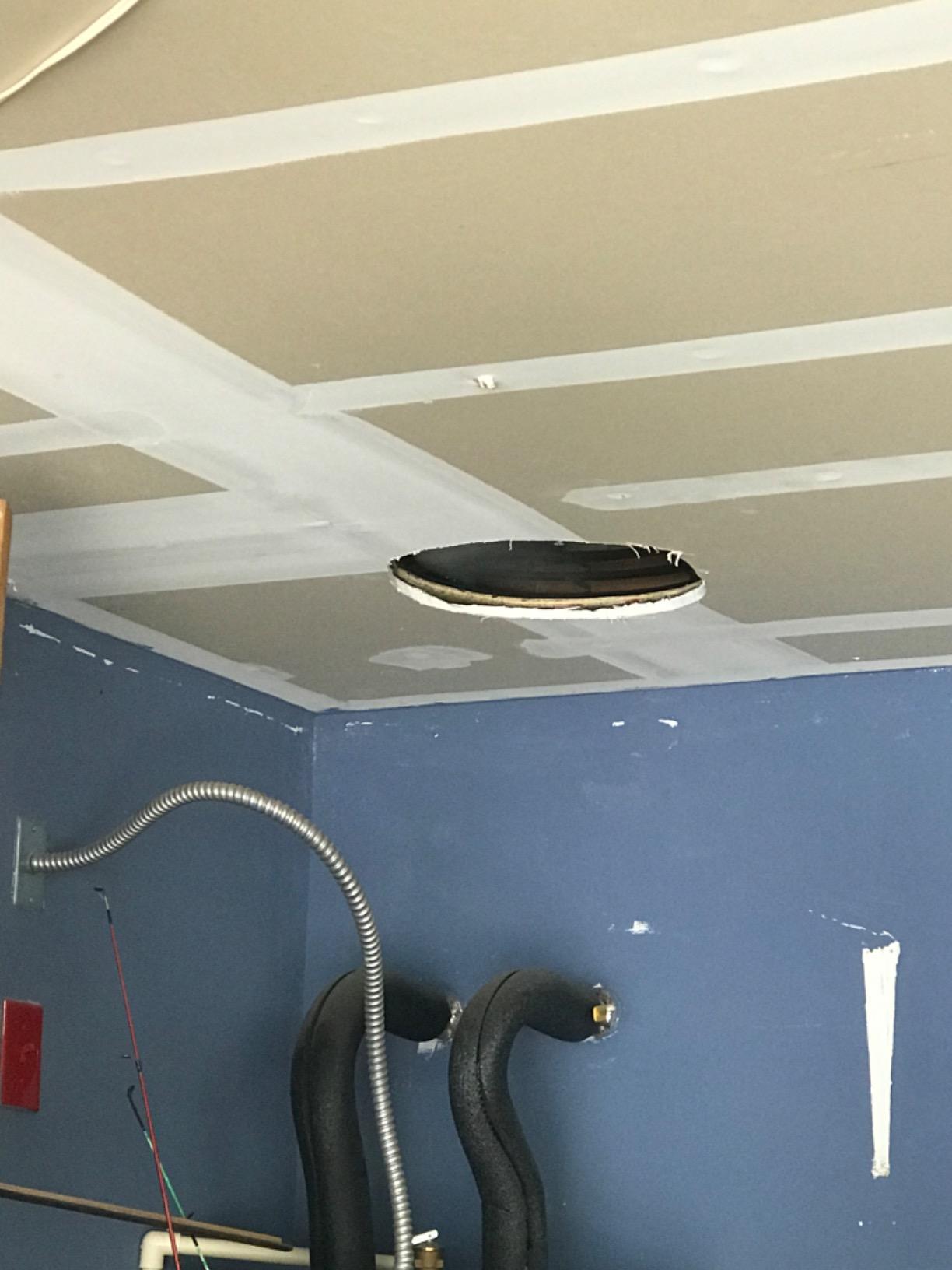
Installation is the selling point. Because it fits the standard opening, a homeowner can swap out a twenty-year-old ventilator on a weekend without reframing anything or running new duct. The thermostat triggers around 95 F, which is a sensible default for most attics.
Reviewers also use it as a garage and workshop exhaust, where the stainless steel housing and simple design make more sense than a premium unit. The unit itself weighs only 8 ounces, which makes handling it overhead genuinely easy.
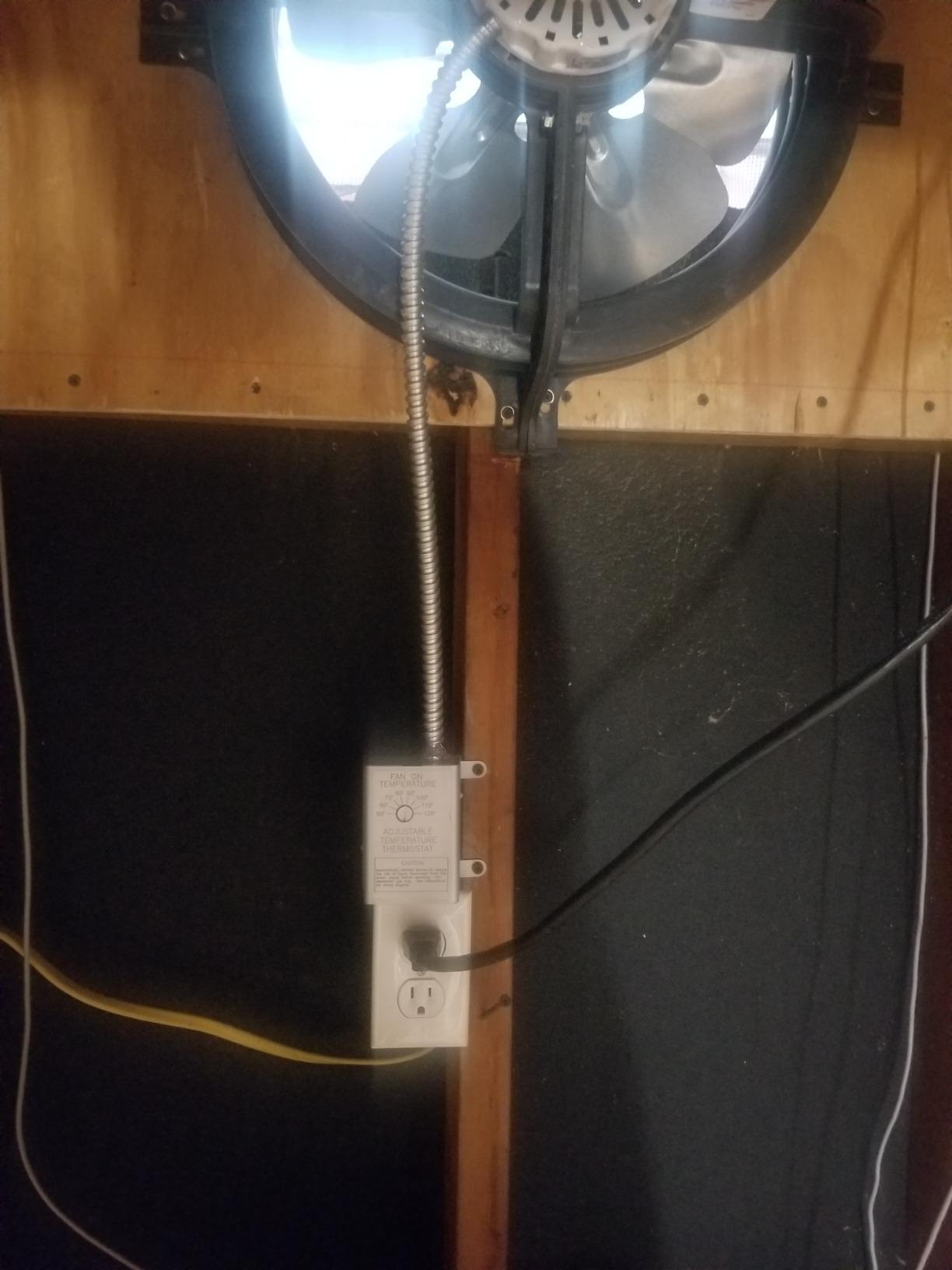
Know the realistic ceiling on its output
1050 CFM will keep a small attic from becoming an oven. It will not dramatically drop the temperature in a large one during a heat wave, and anyone expecting the cooling effect of a 2000-plus CFM unit will be disappointed.
The 180 watt draw for that airflow is not efficient by modern standards. It is simply an older, cheaper design, and it does the one job of moving air out of a small attic at a fraction of what better equipment costs.
Skip this if you are installing new rather than replacing
For a new installation there is no reason to choose a 1050 CFM fan when several units here deliver double the airflow. The case for the Air Vent is a matching opening and a need to avoid structural work.
There is also one report of a thermostat failure that required paid help to remove, tied to undersized thermostat wire. It is an isolated complaint in a large review set, but it is a reminder that hardwired controls can fail and cost more than the fan itself to fix.
4. QuietCool AFG SMT PRO-3.0 Smart Attic Fan
Quietcool AFG SMT PRO-3.0 Smart Attic Fan for Gable Vents – 2940 CFM – Smart App Control – Thermostat and Humidistat – 20ft Power Cord – Plug-and-play – Two Speed
2940 CFM high at 264W
1650 CFM low at 191W
45 dB listed
App with humidistat
Pros
- Highest airflow of any gable fan in this roundup
- App control schedules around temperature and humidity
- Plug and play 20 foot cord
- Includes vent covers and adjustable trim
Cons
- Very loud on high speed under living space
- Bluetooth app range is only 25 to 30 feet
- Cluster of shipping damage to tabs
- shroud and blades
The AFG SMT PRO-3.0 delivers up to 2940 CFM on high, the most of any gable-mount unit here, and holds a 4.4 rating across 688 reviews. For a large attic where you want maximum throughput without touching the roof, that throughput is the entire argument.
The two-speed permanent split capacitor motor runs at 264 watts on high and 191 watts on low, where it still moves 1650 CFM. Listed noise is 45 dB, though owners mounting it under living space report it becomes clearly audible on high.
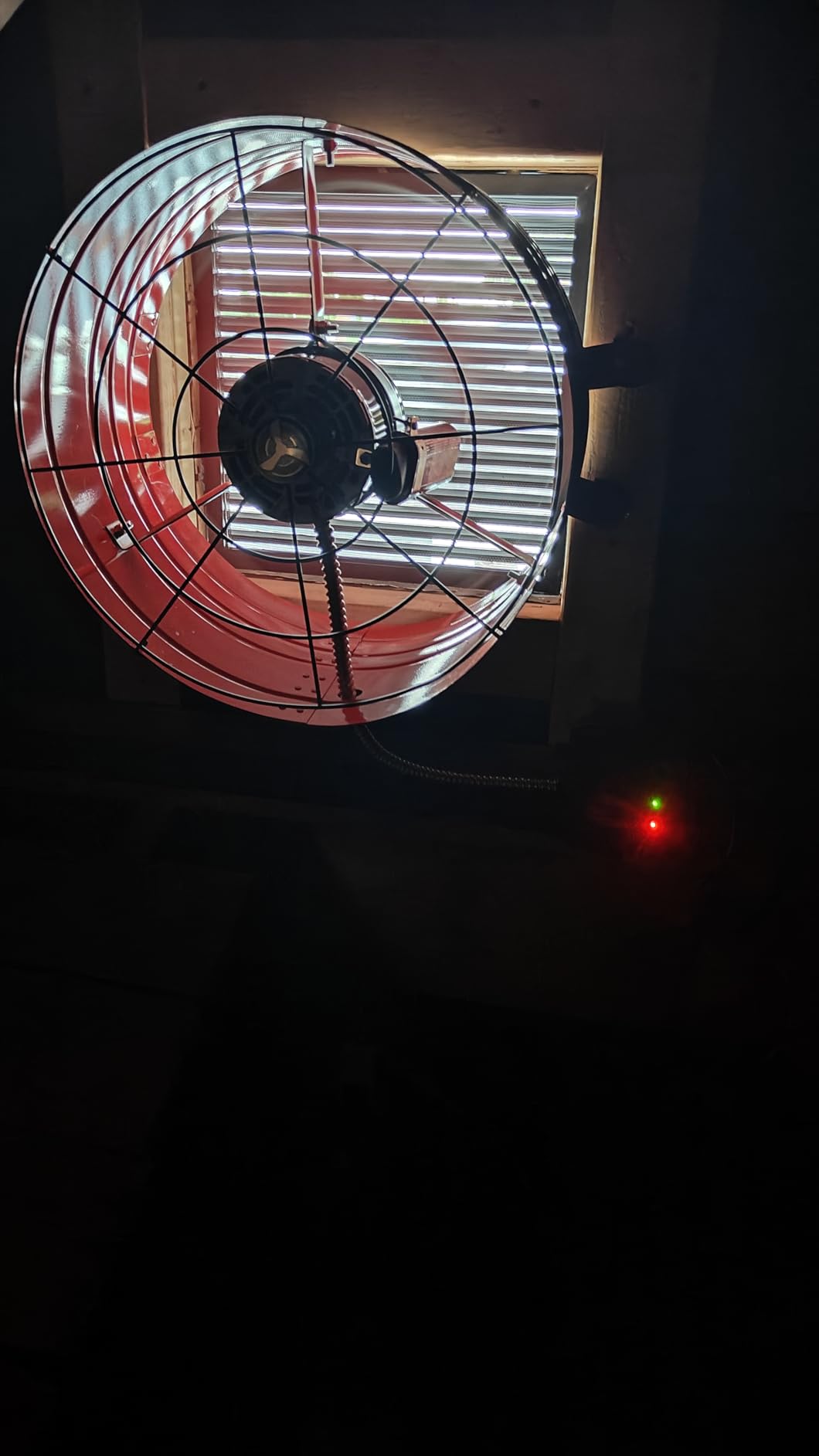
The smart control is the real differentiator. The app handles a thermostat and a humidistat together, so you can keep the fan running in dry heat and shut it off when humidity climbs, which is exactly the operating logic a hot-climate attic needs. Real-time temperature and humidity readings are shown in the app.
Installation is plug and play with a 20 foot cord, and the box includes vent covers to block backdraft plus adjustable trim to fit varying vent sizes. It is UL and Energy Star specified, and there is a built-in fire safety shutoff.
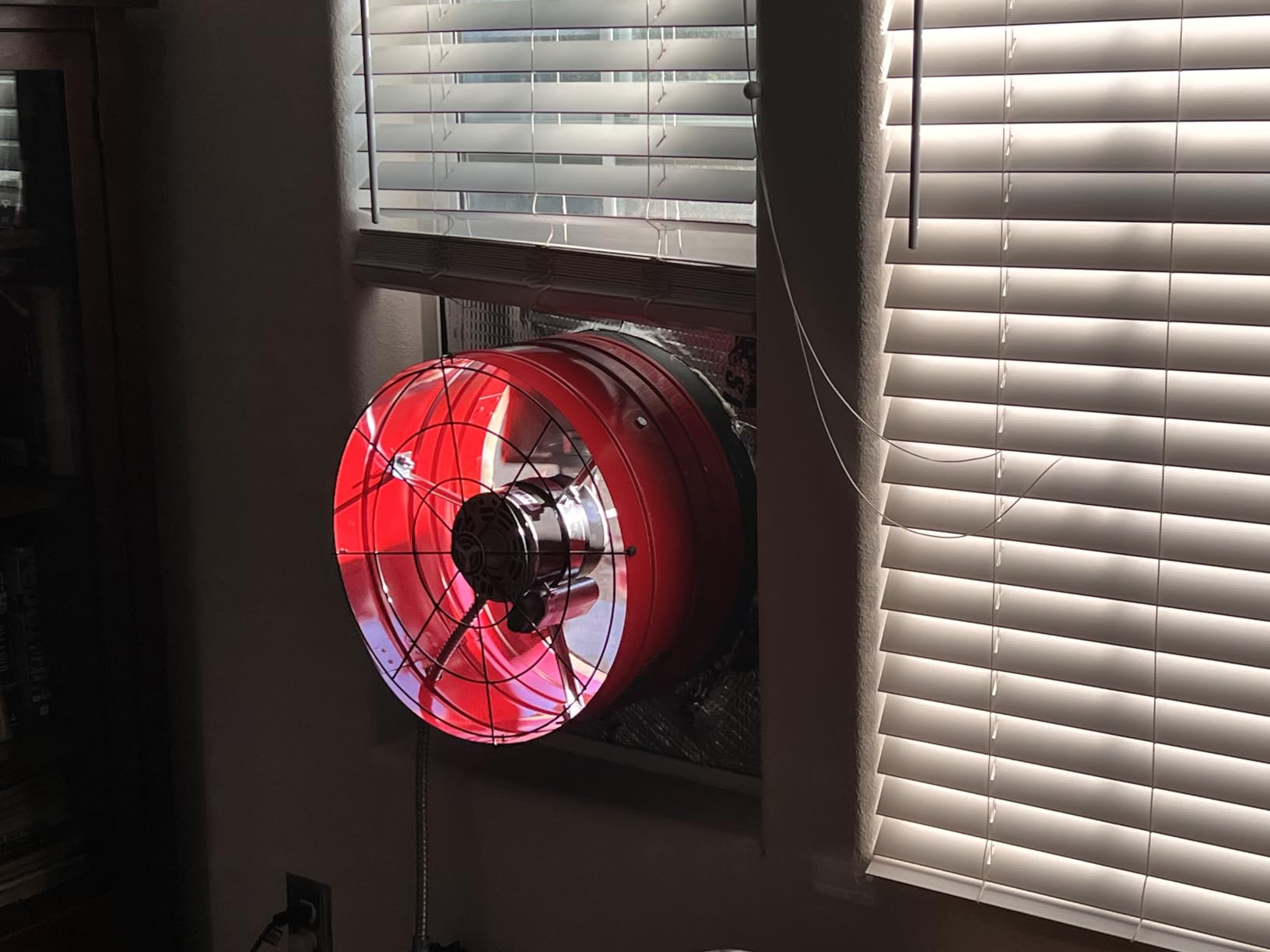
Understand the Bluetooth limitation before buying
This is app control over Bluetooth, not WiFi, so the connection works only within roughly 25 to 30 feet of the fan. If your phone is downstairs and the fan is in the attic, that range may not be enough. The AC Infinity CLOUDWAY T12 is the model here with true WiFi if remote access matters.
Reviewers also note the app keeps no data history and, in some firmware versions, lacked a true off function. Both are software limitations rather than hardware faults, but they matter if you want to review the attic’s overnight temperature curve.
Skip this if noise above the ceiling bothers you
Several owners mounting this unit directly beneath a bedroom or living area report the high speed carrying through the ceiling. The gable location keeps the motor outside the envelope, but the joist cavity still transmits sound.
There is also a recurring cluster of shipping damage. Bent mounting tabs, a bent shroud, and bent blades show up often enough that we would inspect the unit on arrival and before climbing into the attic.
5. QuietCool AFG SMT ES-3.0 Smart Attic Fan
Quietcool AFG SMT ES-3.0 Smart Attic Fan for Gable Vents – Up to 2801 CFM – As low as 22 Watts – Smart App Control – Thermostat and Humidistat – 20ft Power Cord – Plug-and-play – Three Speed
Up to 2801 CFM at 142W
As low as 22W
Three-speed brushless ECM
15 year warranty
Pros
- Brushless ECM motor runs as low as 22 watts
- Quiet on low and medium and inaudible from the floor below
- 15 year manufacturer warranty is the longest here
- App scheduling with live attic temperature readings
Cons
- Bluetooth only control with unreliable range
- Does not resume automatically after a power interruption
- Blades are not balanced and thump on high speed
This is the model that shows what an ECM motor actually buys you. The ES-3.0 moves up to 2801 CFM on high at 142 watts, and on its lowest setting it draws as little as 22 watts. The two-speed PSC units on this list need 191 to 264 watts just to reach the low end of the same range.
Three speeds give finer control than the typical two-speed gable fan, and the fire safety sense shutoff is specified at 182 F. The 15 year manufacturer warranty is the longest in this group by five years.
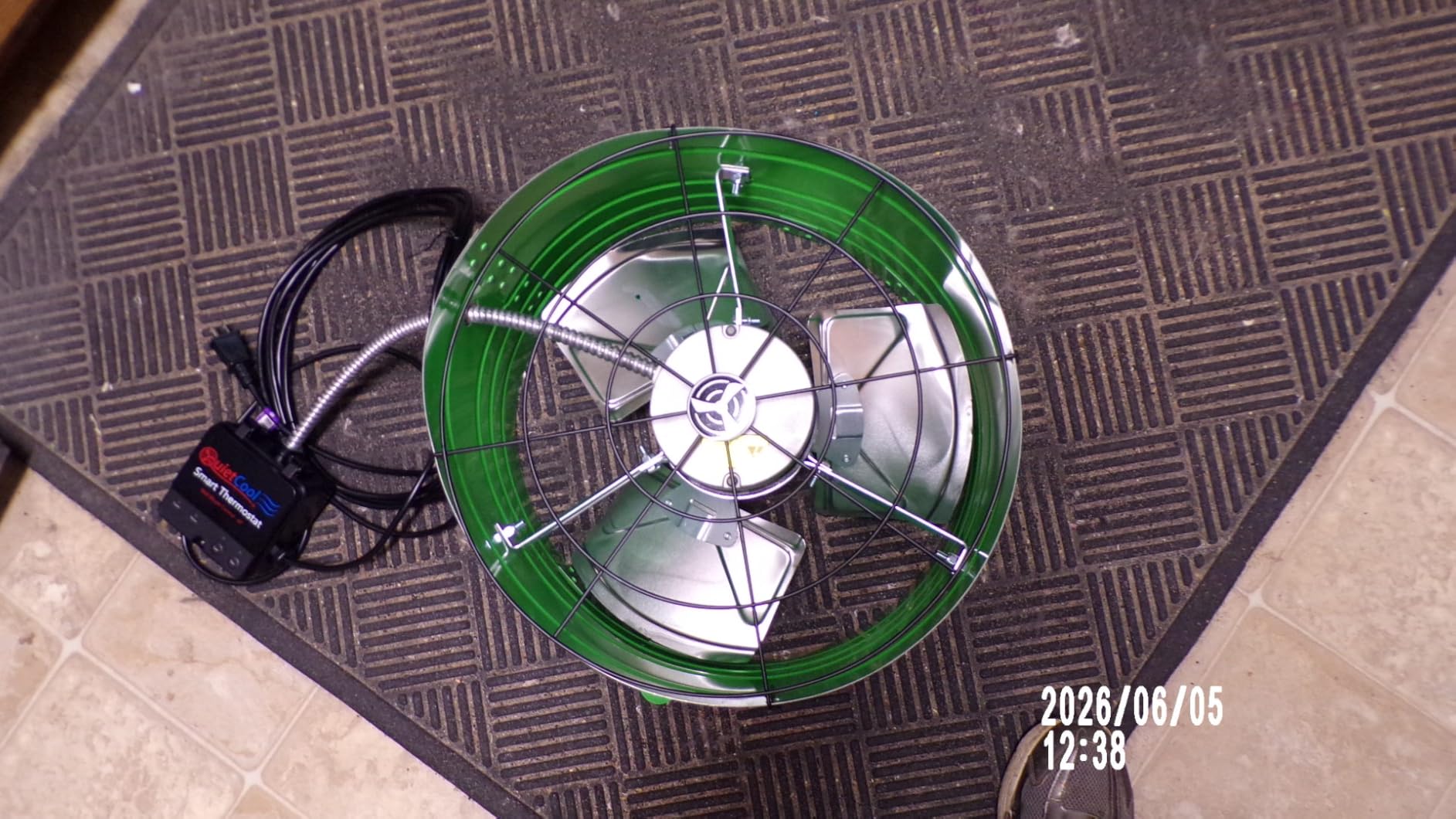
Owners report attic temperature drops of 10 to 15 degrees and measurable reductions in air conditioner run time. On low and medium the fan is described as inaudible from the floor below, which matters if the gable is directly above a bedroom.
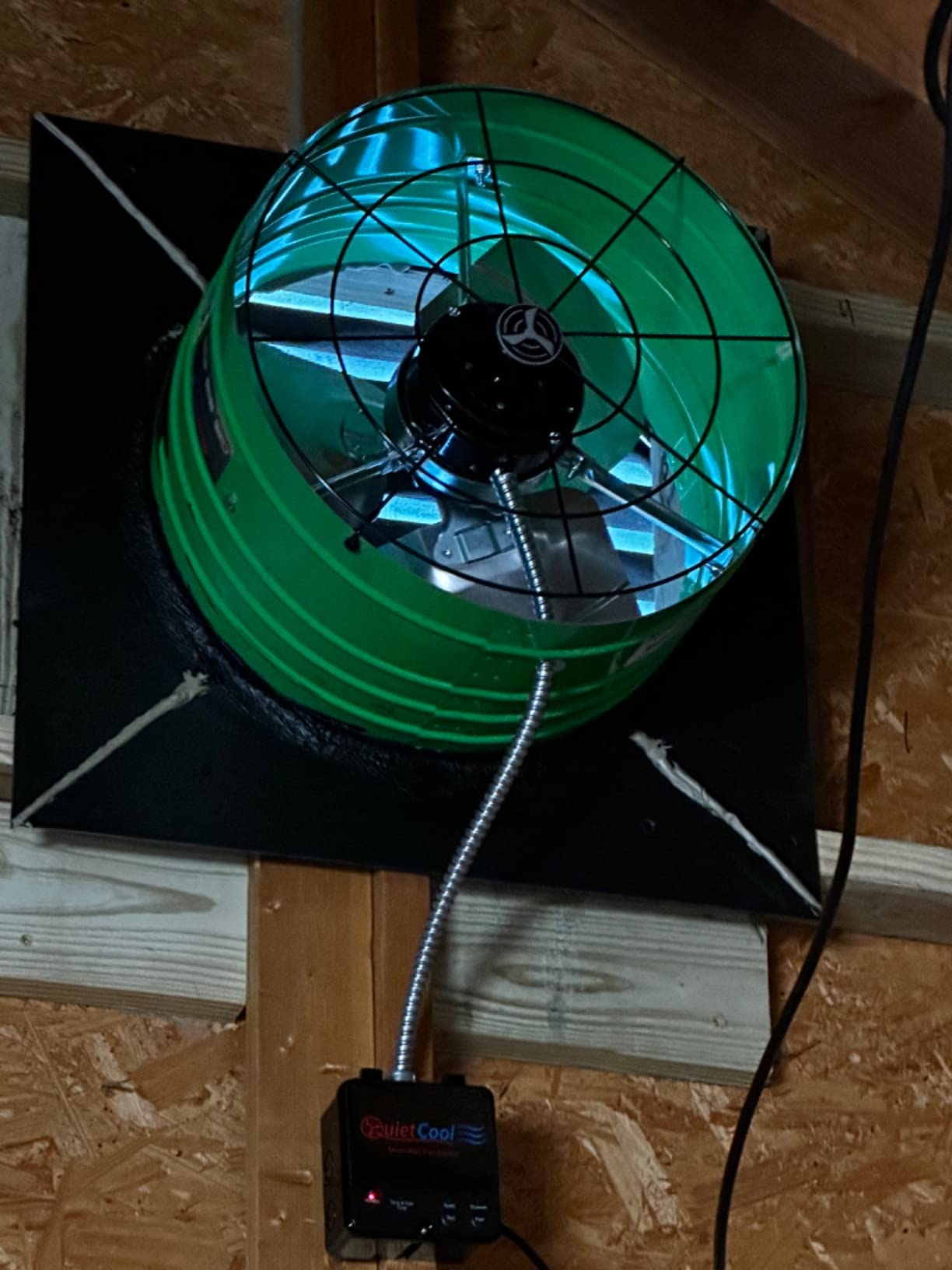
App control includes thermostat and humidistat programming with real-time temperature readings. The 20 foot cord means no wiring, and anti-vibration pads on the mounting tabs keep the housing quiet against the gable.
Weigh the app against its limits carefully
The Bluetooth connection is the weak point and it is reported repeatedly. Range is roughly 25 to 30 feet, quality has been reported to decay over time in the same location, and the app stores no history. Before a later firmware update there was no true off function either.
There is one more practical issue. The fan does not resume automatically after a power interruption and simply stays off, so a tripped breaker or a summer storm means climbing into the attic to restart it.
Skip this if you need it to restart on its own
For anyone in a house where power interruptions are common, an auto-resume function is not optional. Pairing a smart plug with an independent schedule is the workaround, though it adds another failure point.
Owners also report a repeating thump on high speed traced to blades that are not computer balanced. It does not appear on low or medium, so it is a nuisance rather than a defect, but it is worth hearing before you decide high speed is your normal setting.
6. CentricAir QA-Deluxe 5500 Whole House Fan
QA-Deluxe 5500 Energy Efficient Whole House Fan 2 Speed Temp/Timer Control
5072 CFM
630W brushless
51 dB
R-5 insulated damper
10 year motor warranty
Pros
- Only ducted whole house fan here that reaches 5072 CFM
- R-5 insulated damper seals the attic out when off
- Very quiet at 51 dB
- Fits 16 to 24 inch on-center joists without framing
Cons
- Documentation unclear on connecting ducting to the damper box
- Included foam dampers flutter audibly in updrafts
- Somewhat loud on high speed
This is the only unit on the list that cools your living space rather than just the attic, and at 5072 CFM it covers homes up to 3400 square feet on one or two stories. It holds 4.5 stars across 117 reviews with 71 percent five-star.
The airflow figure is 5072 CFM, or 3945 CFM under California Title 24 airflow rules, which is the number that matters if you are in a state with an efficiency code that constrains installed ventilation capacity. The unit is aluminum, weighs 60 pounds, and carries a 10 year motor warranty with a 3 year parts warranty.
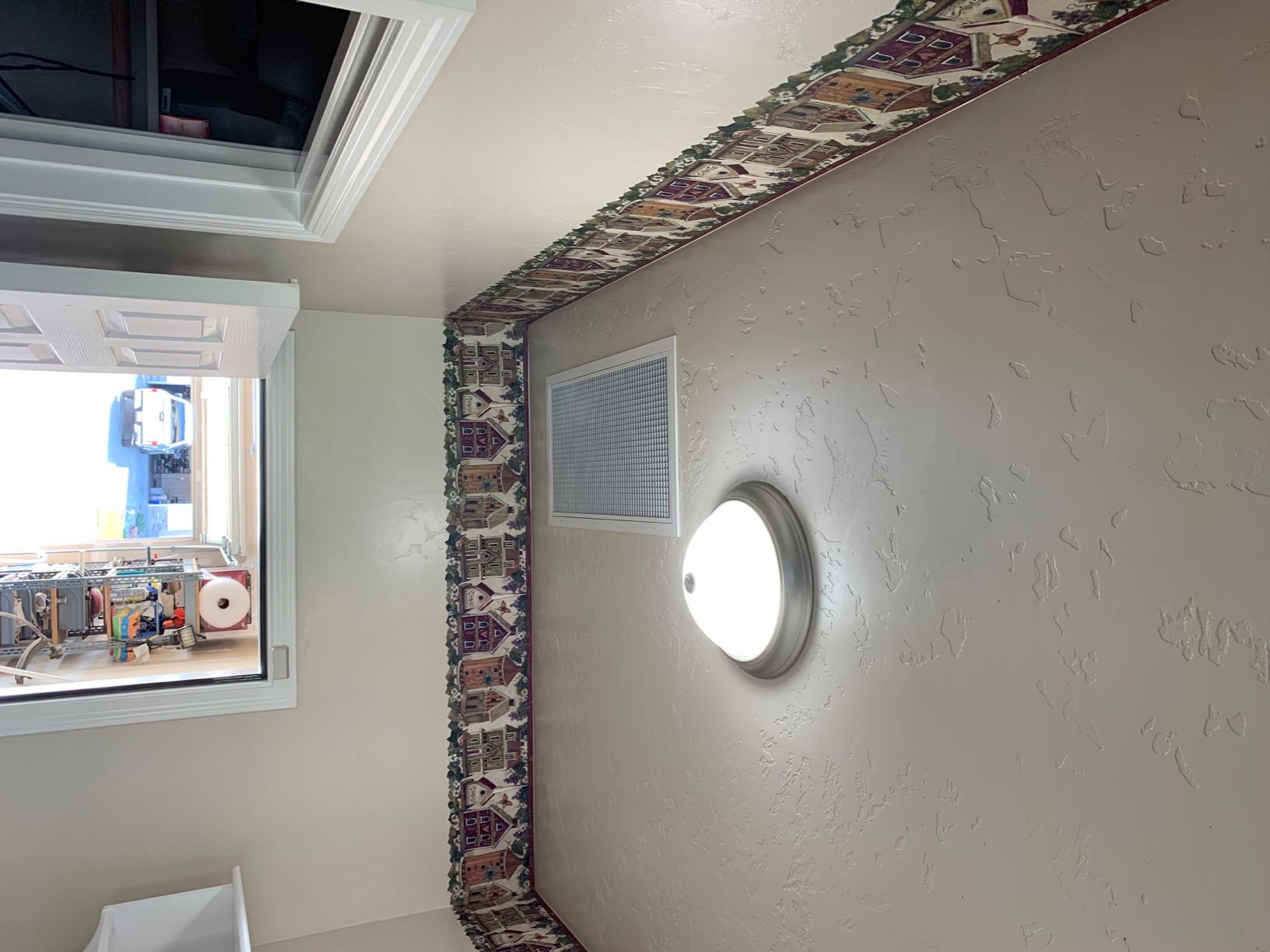
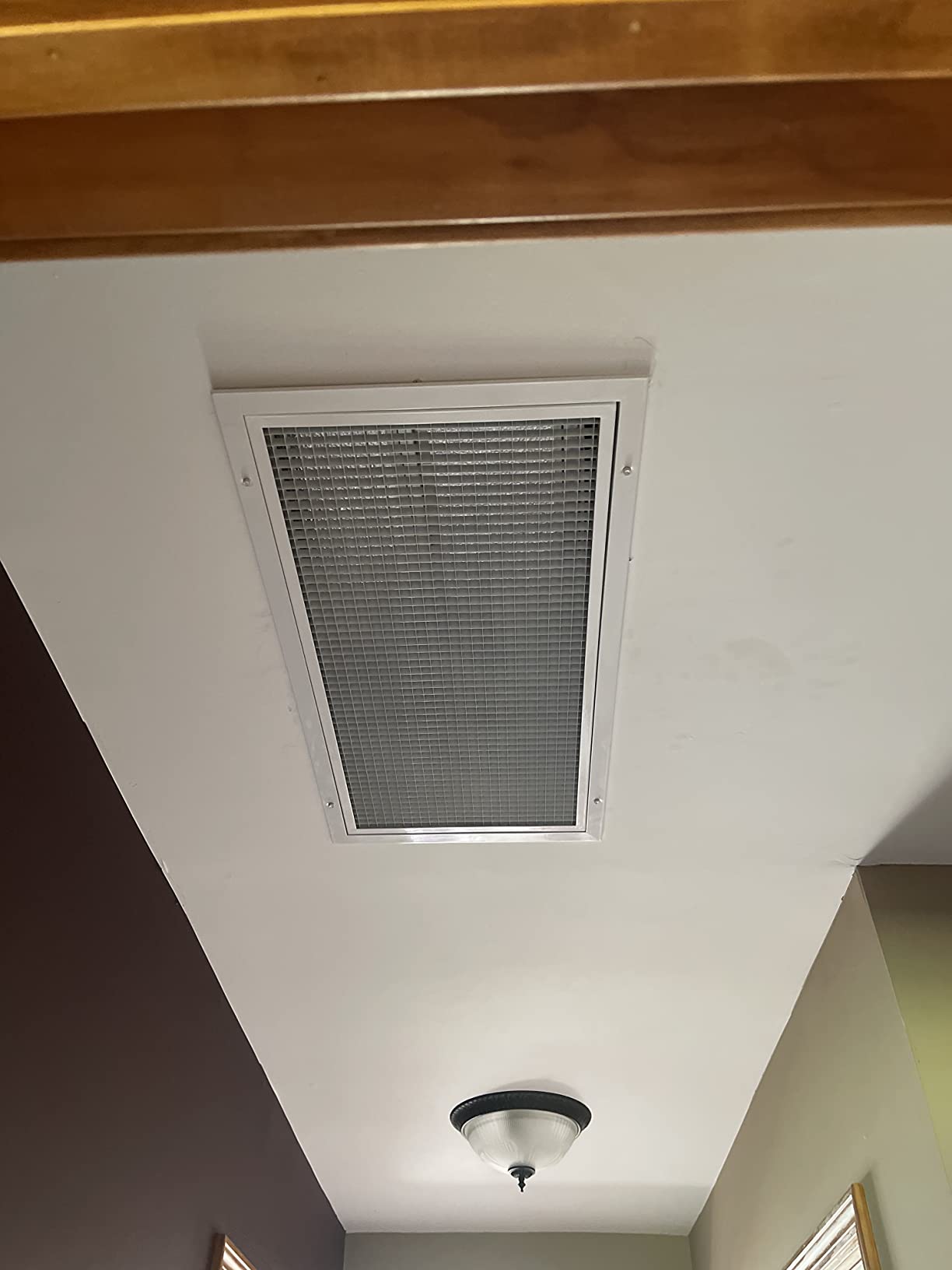
Two design choices set it apart from the rest of this list. The included R-5 insulated damper box seals the attic from the living space completely when the fan is off, so you are not paying to move 100-plus degree attic air through your ceiling every time the system cycles. And the housing fits between 16 to 24 inch on-center joists without framing, which is where many installations hit trouble.
At 51 dB, owners describe it as quieter than a box fan on medium, and the two-speed wireless remote with timer and temperature control means no wall switch to run. Owners replacing window units report major cooling and air conditioning savings.
Check your attic venting before committing to 5072 CFM
At this airflow the 1 square foot of net free vent area per 750 CFM rule means you need roughly 6.8 square feet of net free area in the attic. That is a real venting upgrade for many homes, and doing it after installing the fan means the fan runs at a fraction of its rated output.
Back-pressure from inadequate venting shows up as a quieter than expected fan, a hot attic, and a damper that does not seal. If your ridge and soffit vents are marginal, get them assessed first.
Skip this if your joists are irregular or your attic is finished
The fit spec covers 16 to 24 inch on-center joists. Older homes with irregular or 2×6 framing at odd spacing may need a framed opening, which turns a straightforward install into a carpentry job.
Owners also report that the instructions and install video are unclear on connecting the ducting to the damper box, and the included foam dampers can be heard slapping or fluttering in updrafts and on shutdown. The remote has needed rewiring on at least one unit, though the manufacturer resolved it supportively.
7. VEVOR 42W Solar Attic Fan
VEVOR 42W Solar Attic Fan, 2800 CFM Smart Roof Vent Built-in Temperature Sensors with Remote Control, Low-Noise & Weatherproof for Attic, Garage, RV Ventilation
2800 CFM
42W MPPT solar panel
Brushless DC motor
60 dB
Remote to 9.75 m
Pros
- 2800 CFM from a 42 watt solar panel
- Hybrid solar and AC adapter keeps running on cloudy days and after dark
- Remote control works from the ground
- Works on metal and masonry roofs
Cons
- One report of the solar panel failing under four months
- Roof caulking is not included in the kit
- Thermostat trigger is fixed at about 79 F
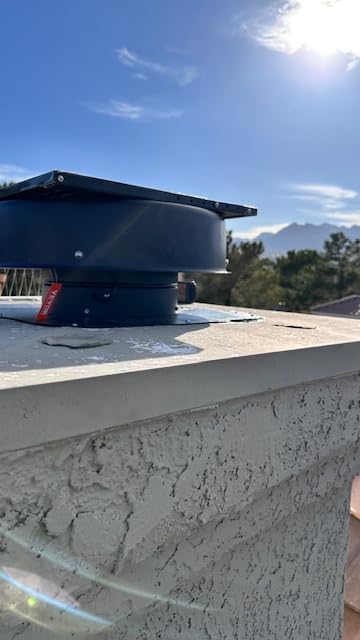
The 42 watt solar roof fan needs no wiring at all, and at 2800 CFM it holds its own against the AC-powered gable units. It carries a 4.5 rating across 124 reviews with 76 percent five-star.
A brushless DC motor driven by a 42 watt MPPT solar regulator moves 2800 CFM at up to 1500 rpm. The panel switches to the included AC adapter at sunset so the fan keeps running overnight and through cloudy stretches, rather than shutting down every night.
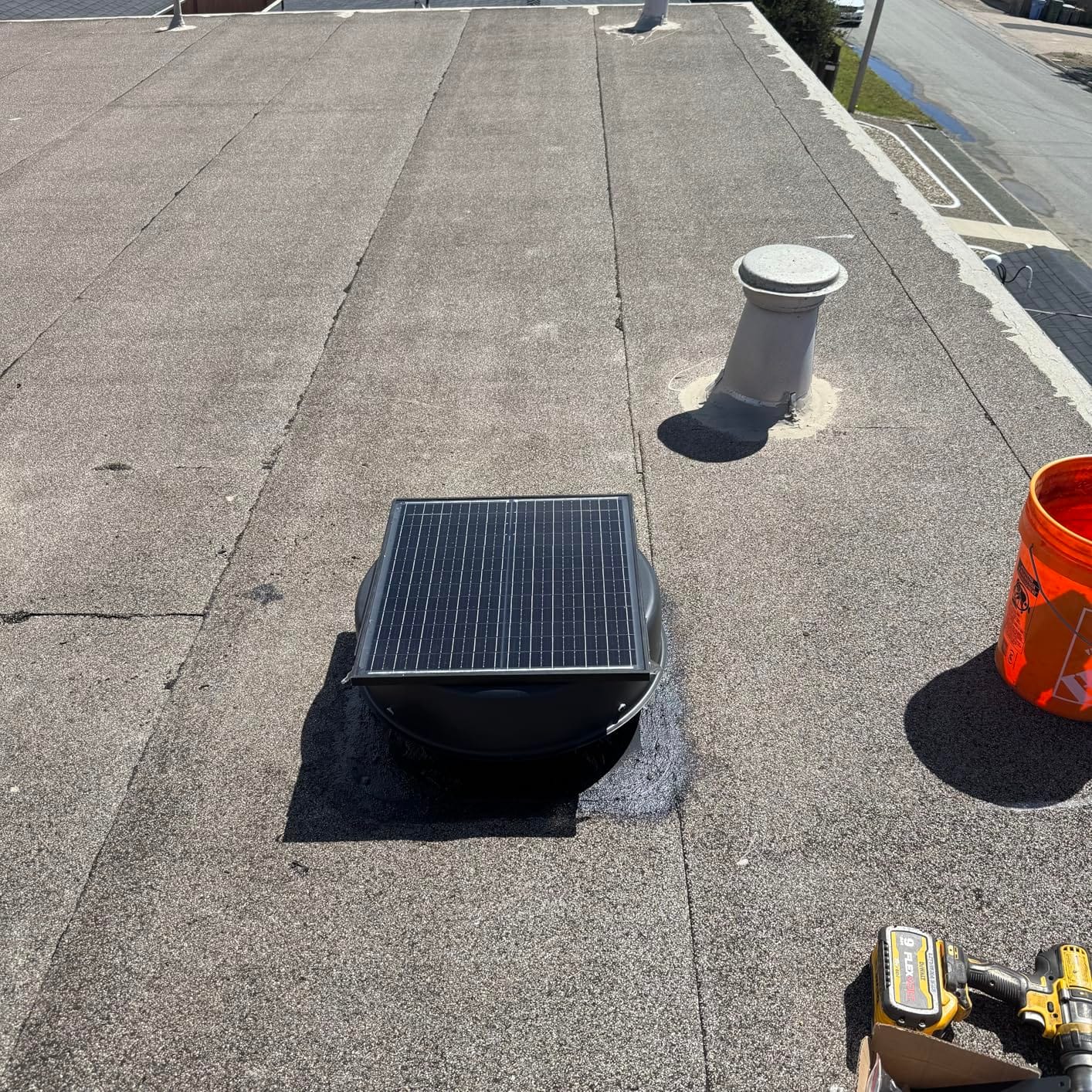
The integrated controller handles both temperature and humidity and includes a smoke-detection auto-off, which is a safety feature we did not expect on a fan at this level. The remote reaches about 9.75 metres, so you can adjust it from the ground without a ladder. The unit works on both metal and masonry roofs.
Reviewers consistently report large, fast attic temperature drops of 20 degrees or more and quiet motor operation. At 60 dB listed, it is audible from directly below but not intrusive in an attic.
Understand what the solar panel does and does not cover
The solar panel and the AC adapter are two different power sources with different behaviors. In full sun the fan runs on solar. After dark or under heavy cloud it falls back to the adapter, which means the fan keeps pulling power at night, just a small amount of it.
The fixed thermostat trigger is the limitation to know about. It is not user adjustable, so you cannot run the fan on a mild cloudy day when the attic is cool but the temperature has not crossed the threshold.
Skip this if you are not comfortable with roof work
This is a roof mount, which means a penetration through shingles or metal and a flashing detail that has to be right. Roof caulking is not included in the kit, so you need to supply your own sealant for a proper job.
There is one report of a solar panel that stopped working in under four months. It is an isolated complaint in a decent-sized review set, but solar electronics are the least proven part of any of these units, so it is the part most worth watching after the warranty period.
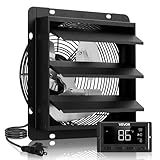
8. VEVOR 12 Inch Shutter Exhaust Fan
VEVOR 12 inch Exhaust Fan, Wall Mounted Attic Fan with Variable Speed, Temperature & Humidity Controller, 1500 CFM, Automatic Shutter
1500 CFM
50W EC motor at 1500 rpm
10 speed settings
67 dB
Motorised rain guard
Pros
- Ten speed settings with automatic temperature and humidity adjustment
- Quiet on the lower speed settings
- All-metal steel construction
- Long included sensor and fan cables
Cons
- Controller interface and instructions are not intuitive
- Temperature trigger can short-cycle near the setpoint
- Uses proprietary sized audio jacks for fan and sensor
This is a utility exhaust fan rather than a purpose-built attic ventilator, but at 1500 CFM from a 50 watt EC motor it does the job of venting a small attic, shed, or garage for a fraction of the cost of a gable unit. It holds 4.2 stars across 265 reviews with 68 percent five-star.
The controller offers up to 10 speed settings, multiple modes, a timer, an alarm, and temperature and humidity triggers. The motorised rain guard opens on power and closes when the fan is off, which stops rain and debris entering a closed space.
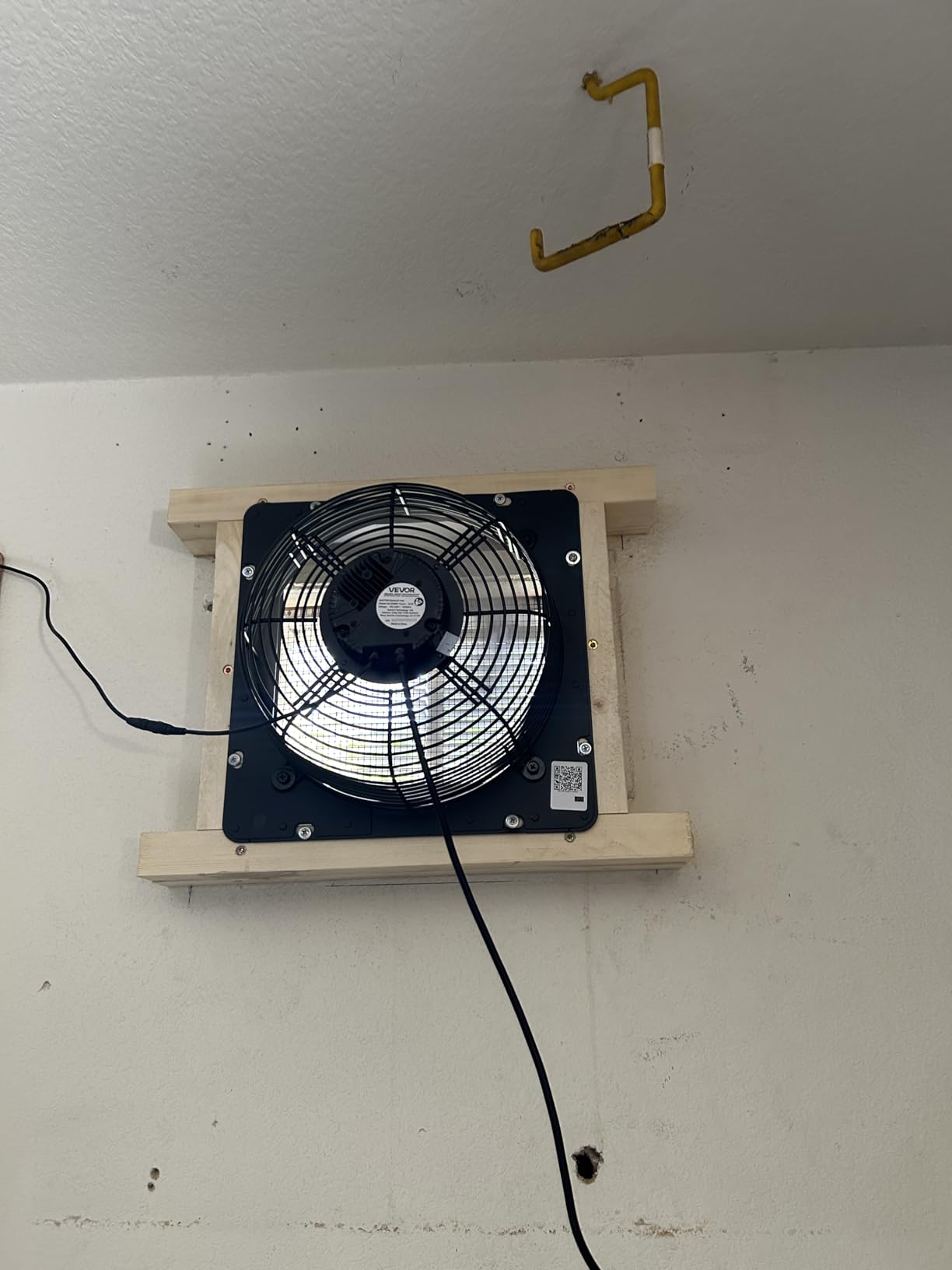
The efficiency is what stands out. The technical sheet rates it at about 30 CFM per watt, which is roughly three times what a conventional PSC gable fan delivers per watt of draw. All-metal steel construction adds durability in a damp attic or an exposed garage wall.
Owners like the fine speed control and the quiet low-speed running, and the included 3 meter audio cable and 2.5 meter sensor cable give some flexibility in where the controller goes. At 9.3 pounds, it is manageable overhead.
Set your expectation on the controls
The ten speeds and the automatic triggers are genuinely capable, but reviewers repeatedly describe the controller interface and the written instructions as not intuitive. Budget time to get the programming right rather than expecting it to work out of the box.
There is also a narrow hysteresis on the temperature trigger, which means the fan can short-cycle when the temperature flickers around the setpoint. On a low speed setting that is not a real problem, but on high it becomes noticeable.
Skip this if you need a one-unit install with standard parts
The fan and sensor connect through 3.5 mm and 2.5 mm TRRS-style jacks rather than standard connectors, which limits what extension cables you can find. If you need more reach than the included cables give, expect to hunt for compatible parts.
One unit also shipped without mounting hardware listed in the instructions, and support resolution was slow. Check the box contents against the manual before you plan an install day around it.
9. Master Flow GAF 1500 CFM Powered Roof Mount Attic Fan
Master Flow GAF 1500 CFM Powered Roof Mount Attic Fan with Thermostat Controller for Up to 2800 Sq Ft | Durable Galvanized Steel Construction | Built-In Screen – ERV6BL
1500 CFM
25 inch galvanized steel housing
Covers 2800 sq ft
Hardwired thermostat
UL roof vent
Pros
- Durable galvanized steel housing rated for direct roof exposure
- 1500 CFM covers attic spaces up to 2800 square feet
- Built-in screen and thermostat controller included
- No power cord to run through the attic
Cons
- Not compatible with tile roofing
- Hardwired controller requires running power to the roof
- Single speed only
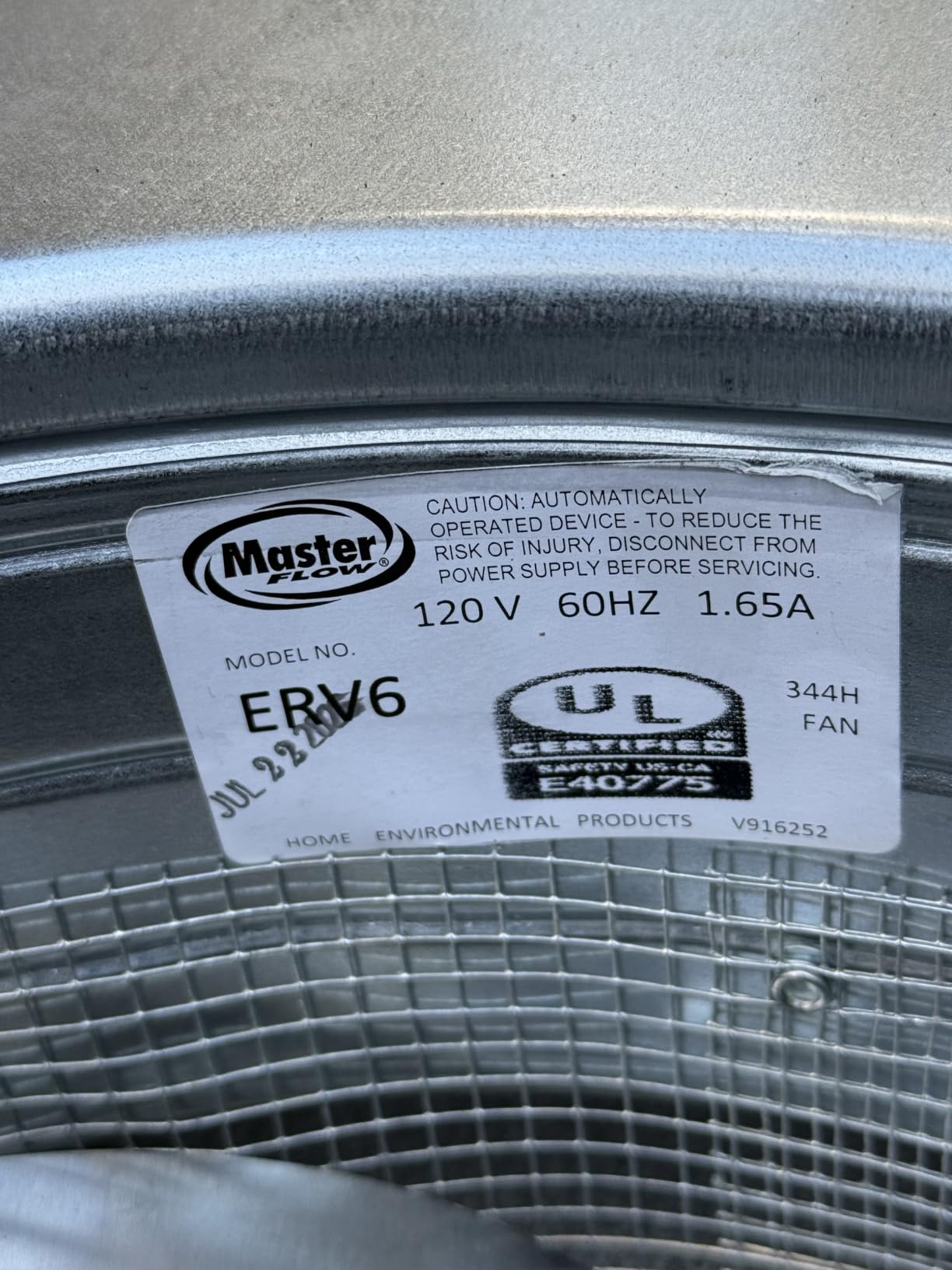
The Master Flow ERV6 is a roof-mounted powered vent, and at 4.6 stars from 84 reviews with 77 percent five-star it is tied for the highest rating of any unit here. It is a 1500 CFM galvanized steel unit sized for attic spaces up to 2800 square feet.
Unlike a gable unit, a roof mount vents through a powered louver in the roof deck itself, so the attic exhausts from high in the space where heat collects. The built-in screen handles insects and debris, and the hardwired thermostat controller handles on and off cycling.
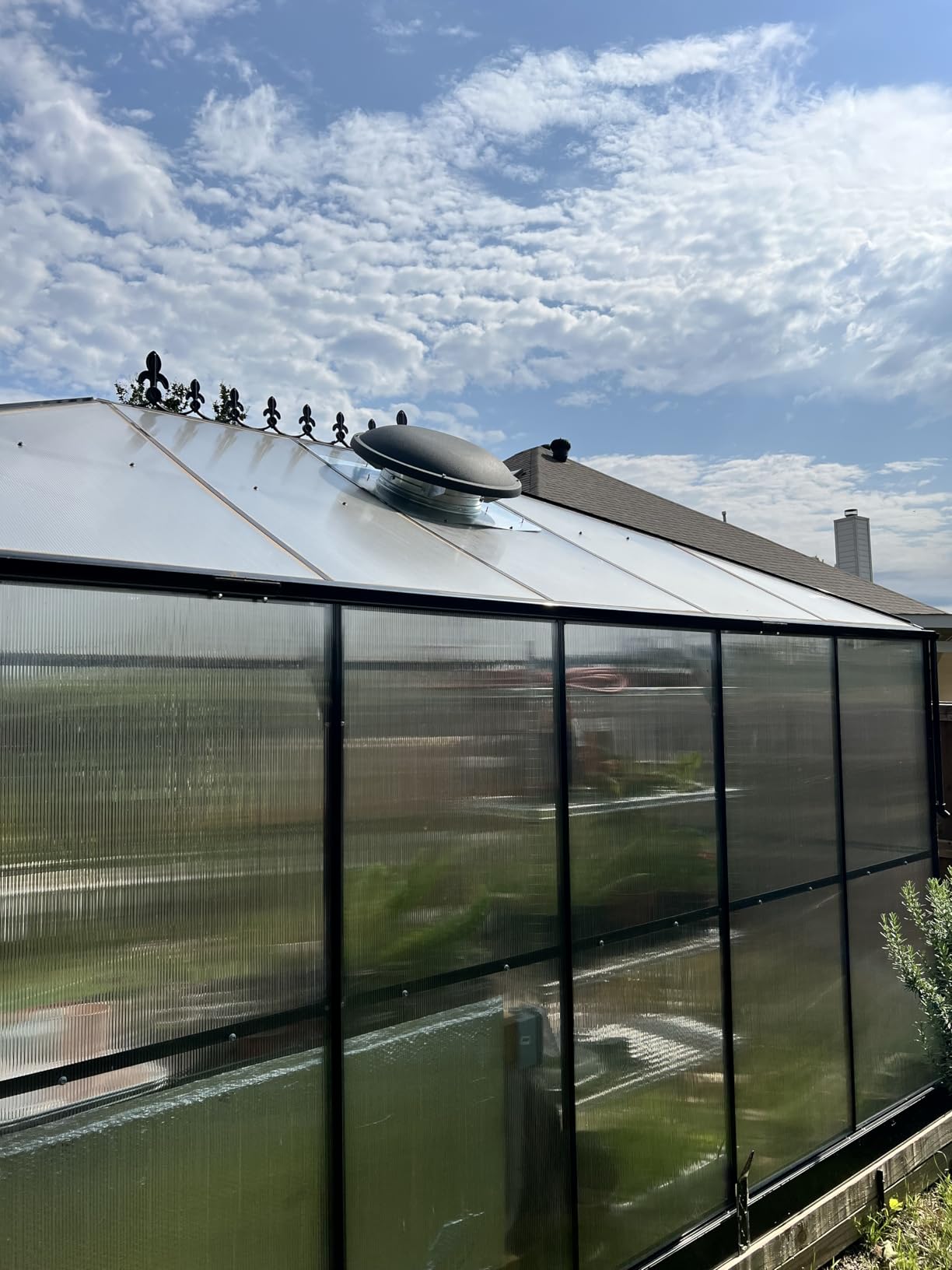
The galvanized steel construction is the reason to choose it. Roof vents live in the harshest environment a house has, with rain, heat, and UV exposure, and a painted steel housing holds up there better than a plastic or lightweight aluminum one.
Because it draws no power cord through the attic, the wiring run is straightforward to a roofer or electrician. Owners cite durability and the included thermostat as the main positives.
Verify your roof type first
This unit is not compatible with tile roofing. That rules it out for a meaningful share of homes, and it is a disqualifying limitation rather than a workaround situation, because retrofitting a different vent is a separate project.
Also note it is single speed. You get 1500 CFM or you get nothing, which is less flexible than the two- and three-speed units in this list when you want attic ventilation on a mild day.
Skip this if you would rather avoid a roof penetration
A roof mount means cutting the deck and flashing the penetration correctly. Done well it is a solid detail. Done badly it is a leak, and building-science sources we reviewed are candid that through-roof designs carry more leak risk than an attic-mounted ducted unit.
For most homeowners with usable gable vents, a gable-mount unit avoids the penetration entirely and is the safer default. Choose the roof mount when the gable openings are too small or the roof pitch makes gable mounting impractical.
10. VEVOR 14 Inch Gable Mount Fan
VEVOR Gable Mount Fan, 14 Inch Solar Power Attic Exhaust Fan with Adjustable Thermostat & Outer Mesh, 1300 CFM House Ventilator Cool Upto 1850 Sq.Ft, Quiet Ventilation for Roof, Garage, Shop, Black
1300 CFM
45W brushless at 1600 rpm
45 dB
Covers 1850 sq ft
Adjustable thermostat
Pros
- 85 percent five-star reviews
- 45 dB operating noise for 1300 CFM
- Adjustable thermostat automates the on and off cycle
- Steel housing with aluminum alloy blades and protective mesh
Cons
- 1300 CFM is low next to larger units
- Two power levels only with no app or remote
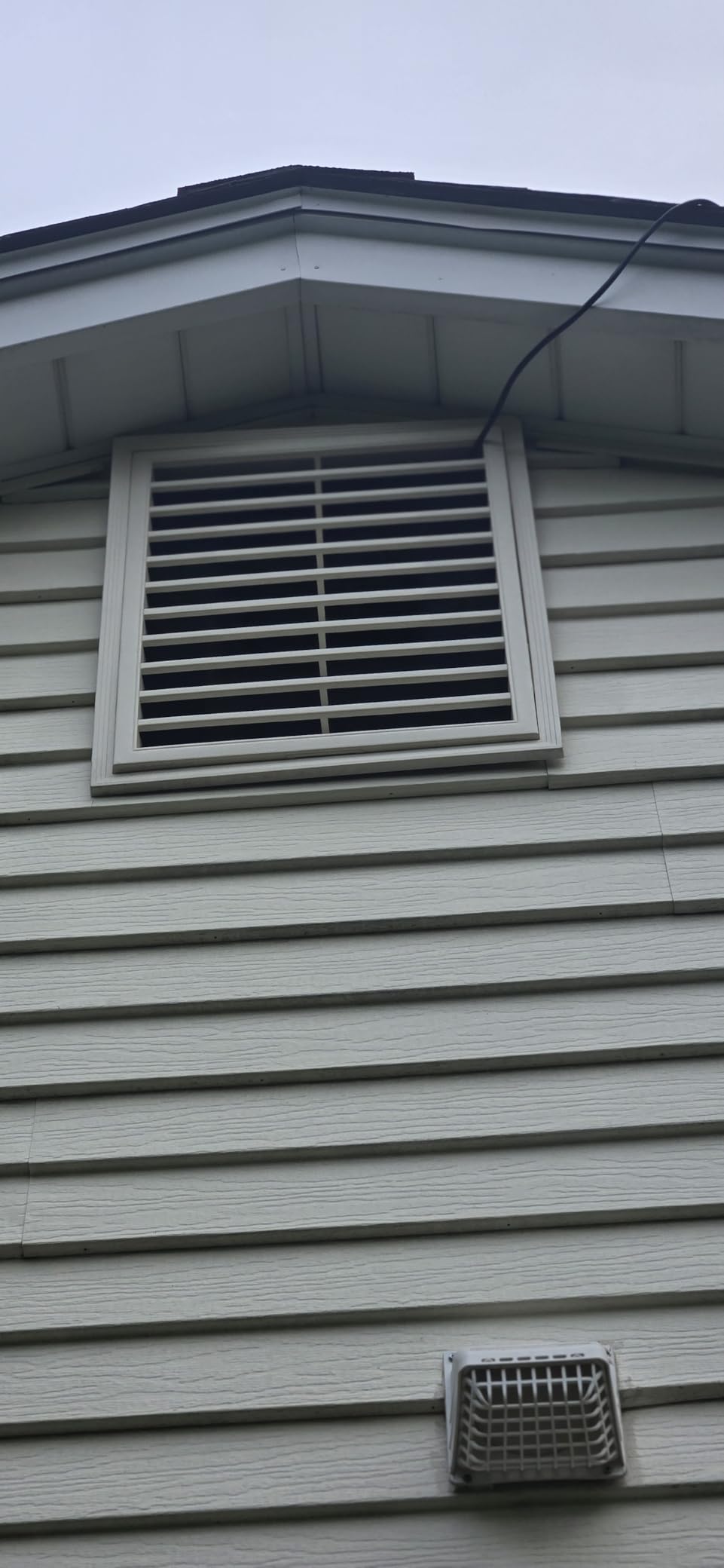
The quietest efficient option for a small attic. This 14 inch gable mount fan moves 1300 CFM on 45 watts at 1600 rpm, rated at 45 dB, and it covers spaces up to 1850 square feet. It holds 4.6 stars from 84 reviews with 85 percent five-star, the strongest five-star share of the units we reviewed.
The brushless motor at 45 watts is the quiet efficiency story. Compare that to the iLiving at 230 watts for 2339 CFM and the math of noise per unit of air becomes obvious. The high-strength steel housing and aluminum alloy blades resist corrosion and blade warping.
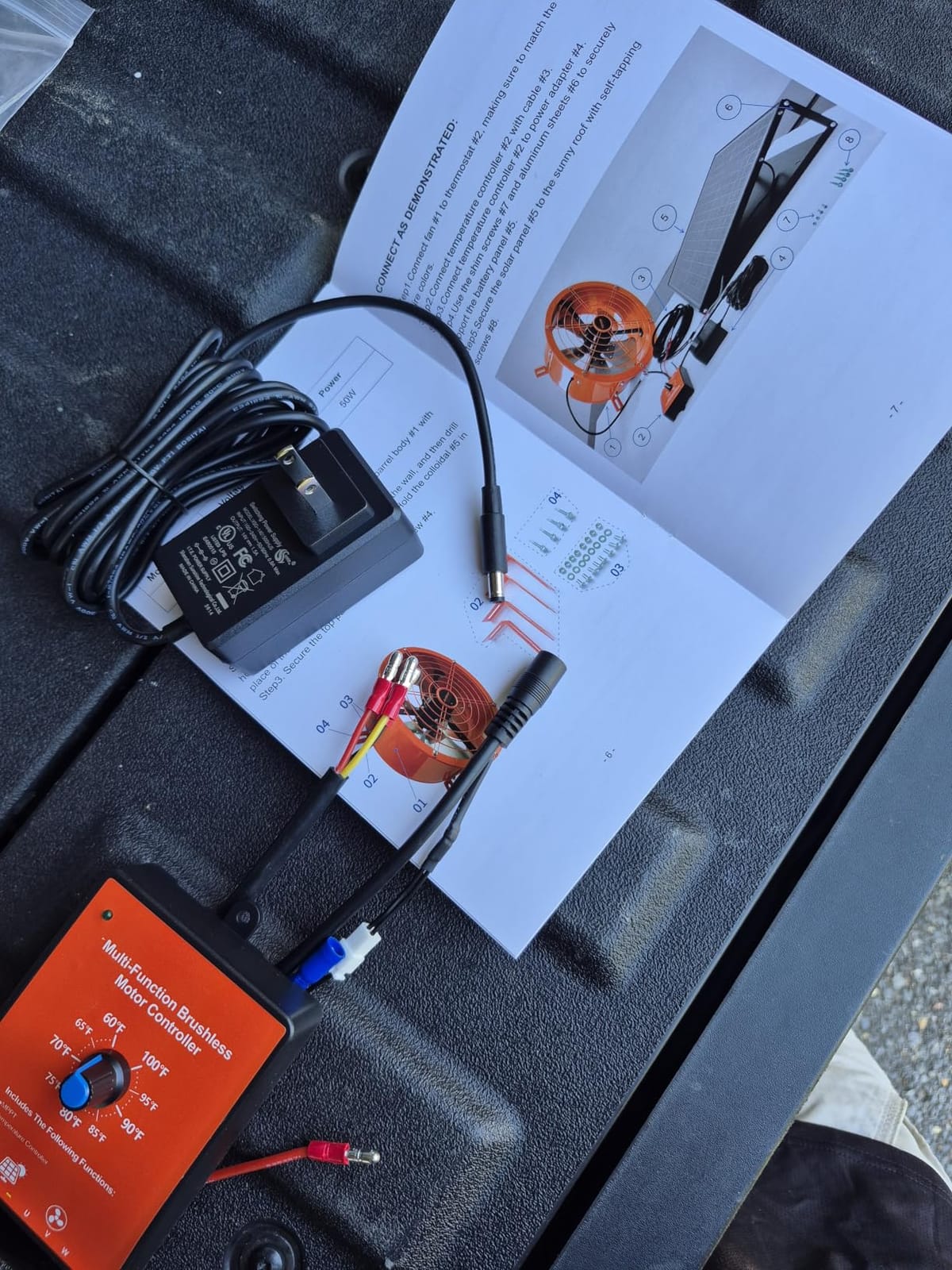
An adjustable thermostat automates the on and off cycle based on ambient temperature, and an outer protective mesh keeps out birds, leaves, and debris. Installation uses the included 14 inch mounting bracket with no professional tools required.
At 16.8 pounds it is a two-person job in a tight attic, but the bracket design keeps the actual mounting simple. For a small attic directly above a bedroom, the 45 dB figure is the whole reason to choose it.
Know when 1300 CFM is enough
This fan is sized for attics up to 1850 square feet with moderate heat load. In that range the airflow keeps the attic from becoming a heat reservoir without you having to run the fan at full tilt every afternoon.
If your attic is larger, or has a lot of south-facing glazing, 1300 CFM will underperform. In that case the iLiving or the QuietCool PRO-3.0 is the more sensible unit, and the extra noise is a fair trade for the throughput.
Skip this if you want remote or app control
There are two power levels and no remote, no app, and no WiFi. Control is the adjustable thermostat dial on the unit itself, which means a trip into the attic to change the setting.
That is a perfectly reasonable arrangement for a simple attic, and it is also the lowest-complexity option here, with the fewest things that can go wrong. But if you want to schedule operation from your phone, the QuietCool smart models are the ones to compare.
11. OmniPV Solar Hybrid Attic Fan
OmniPV Solar Hybrid Attic Fan, 40 W 2100 CFM Roof Mount Exhaust Fan With AC Adapter, 75°F Thermostat Auto On/Off, Low Noise and Weatherproof for Home, Shop, RV, Garage & Shed
2100 CFM
40W solar panel
Brushless DC motor
45 dB
Fixed 75F thermostat
Pros
- 2100 CFM of brushless DC airflow on 40 watts
- Quiet at 45 dB and inaudible from inside
- Included AC adapter allows night and cloudy-day running
- Flexible flashing moulds well to shingle ridges
Cons
- Very poor installation instructions
- Roof deck attachment lip measures under an inch
- Power cable arrives disconnected and must be joined
The OmniPV pairs a 40 watt solar panel with a brushless DC motor that moves 2100 CFM, and it does so at a listed 45 dB, which owners describe as inaudible from inside the home. It carries 4.2 stars across 72 reviews.
Seventy-four percent five-star against a 14 percent one-star tail is the widest spread of any unit here, which tells you the outcome depends heavily on the install and on how the unit was packed.
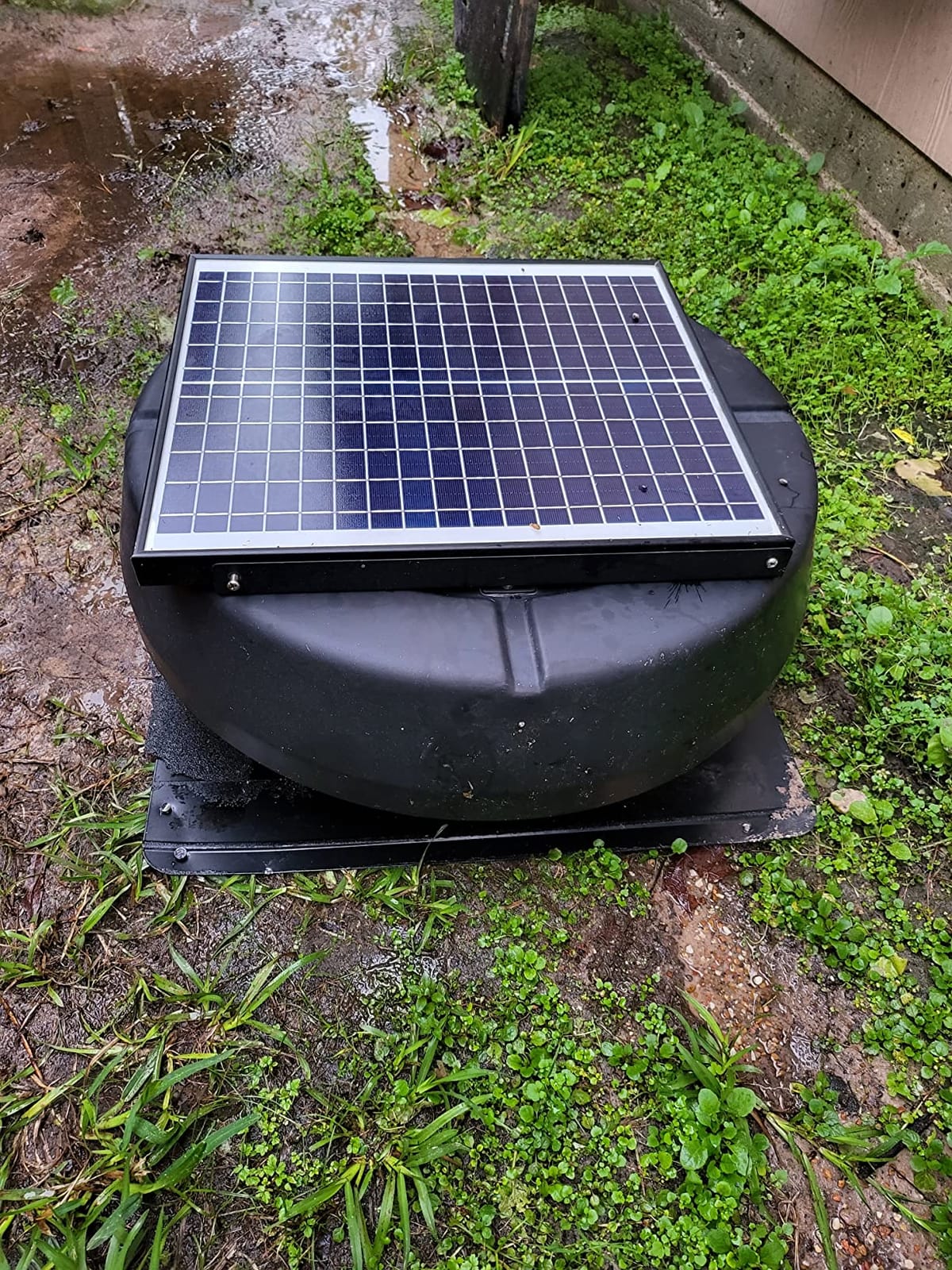
The built-in thermostat shuts the fan off below 75 F and restarts it above that threshold, and the included AC adapter covers cloudy days and night operation. The aluminum alloy housing resists ultraviolet, oxidation, and corrosion.
Owners who get a clean installation report noticeably reduced air conditioner run time. The flexible flashing is the part installers praise, because it moulds to shingle ridges without requiring a complex saddle.
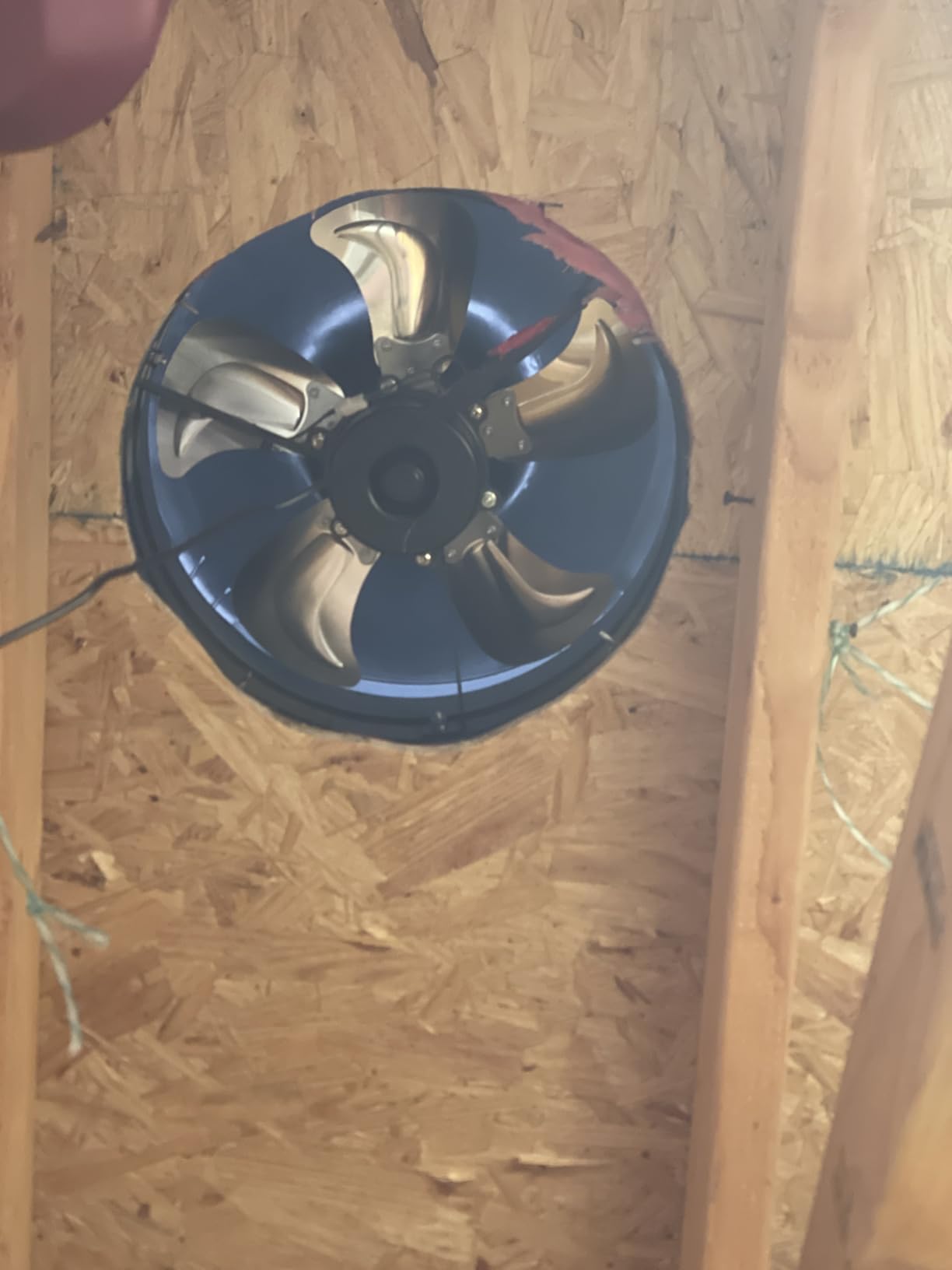
Read the installation complaints as a warning
The documentation is the weakest element. Owners report very poor or effectively absent instructions for shingle roofs and for the electrical connection, and the unit arrives with the power cable disconnected, so the first ten minutes of any install are spent working that out.
One unit also arrived with side damage from poor packaging. Inspect the housing and the flashing before you climb onto the roof, because a dented solar housing is a much worse find than a scuffed box.
Skip this if leak risk is unacceptable to you
The roof deck attachment lip measures under an inch, and some buyers read that as a leak concern in heavy storms. That is a fair reading of the geometry, and on a roof you are not prepared to revisit, the extra caution is warranted.
The fixed 75 F thermostat cutoff is the other limitation. You cannot run the fan on a cool damp morning without removing the sensor, which limits its usefulness outside peak summer heat.
12. AC Infinity CLOUDWAY T12 Whole House Fan
AC Infinity CLOUDWAY T12, Whole House Fan with WiFI Temperature Controller
1600 CFM
12 inch duct
250W PWM EC motor
62 dBA
WiFi app with VPD programming
Pros
- True WiFi app control with remote access
- scheduling and climate data
- Ten speed levels plus minimum speed and VPD programming
- Plug and play with cord
- remote and duct included
Cons
- Air box does not fit standard 16 inch on-center joists unaltered
- Included duct and control wire are short
- Noticeably loud above speed 5
- Lowest airflow of the ducted units here
The CLOUDWAY T12 is the only fan here with genuine WiFi control, and that is the deciding feature if you want to program your whole house fan from your phone. The app handles temperature, humidity, and VPD programming with timers, cycles, scheduling, and a minimum speed setting.
Airflow is 1600 CFM through a 12 inch duct, with 1250 CFM as the rated figure. The PWM-controlled brushless EC motor with dual ball bearings draws 250 watts, and noise is listed at 62 dBA.
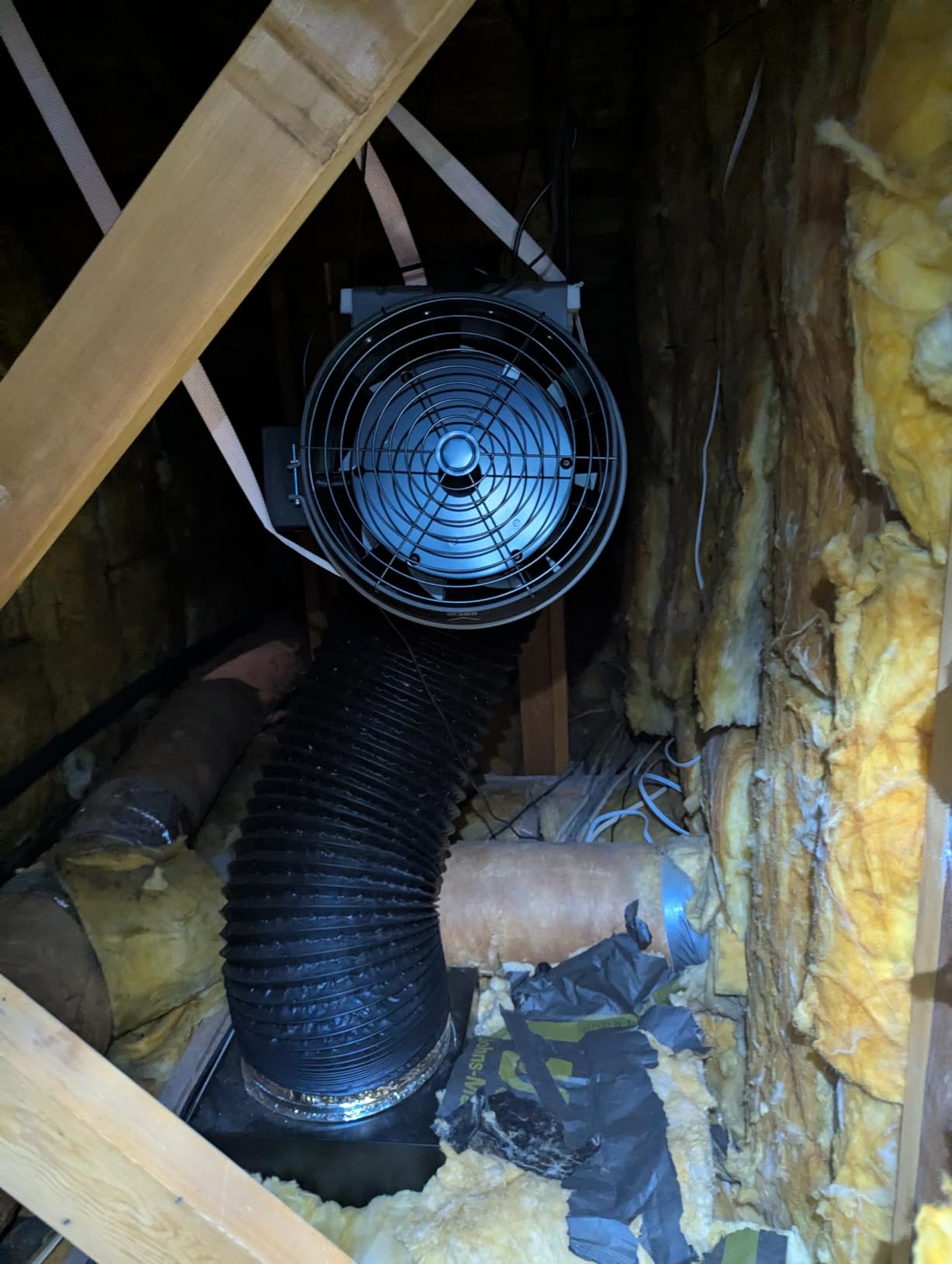
It is a plug-and-play install with the cord, a remote, and duct included, and multiple units can be paired to one controller. Owners replacing older ceiling-mounted louvered fans report large energy savings and find it quieter than the unit they swapped out.
The rating is 4.1 from 56 reviews, the lowest average of the ducted and smart units here, with 63 percent five-star and 7 percent one-star. Review volume is also the smallest in the roundup, which is worth weighing before treating the score as settled.
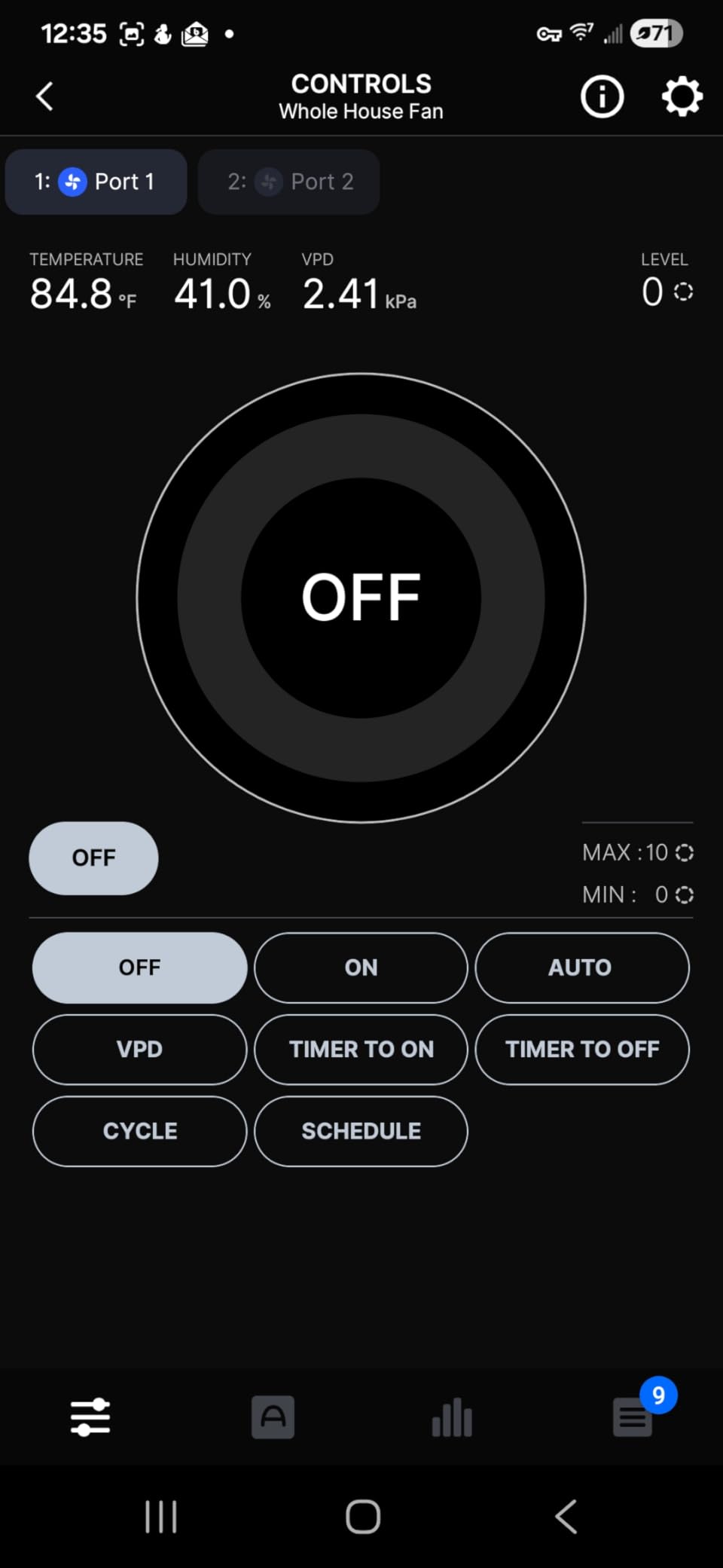
Measure the joist spacing before ordering
The air box measures 12.3 by 17.7 by 14.1 inches, and owners repeatedly report it does not fit standard 16 inch on-center joist spacing without modification. Measure the actual opening in your ceiling before this leaves the box.
The included duct and control wire are also short, which limits where you can place the controller. If your install needs a longer run, factor that into the plan rather than discovering it mid-project.
Skip this if you need a large volume of air
At 1600 CFM this is the smallest of the ducted options and well under half the CentricAir’s 5072 CFM. It suits a modest single-story home, not a large or two-story one.
Noise above speed 5 is dominated by wind through the vent, and the fan runs on when plugged in directly without the controller, which some reviewers find unsafe. If you plan to run it above a sleeping area, keep the speed low and use the controller.
Ducted vs Gable vs Roof Mount: What Each One Actually Cools
A gable or roof fan cools only the attic, and a ducted whole house fan cools your living space by moving air through it. That single distinction decides which of the twelve products above belongs in your house.
Ten of the twelve units in this roundup are gable or roof mounts. They move air from the attic to the outside, which strips accumulated heat from the space above your ceiling and cuts down on radiant heat gain. Building science sources put the reduction in attic-driven cooling load at roughly 10 to 25 percent, which is meaningful but not the same as cooling a room.
A ducted whole house fan pulls outdoor air in through open windows, pushes it through the living space, and exhausts it into the attic and out through the vents. It typically exchanges all the air in a home in 6 to 10 minutes and can drop indoor temperature 10 to 20 degrees overnight by cooling the building’s thermal mass. That is the version that can displace 4 to 8 hours of daily air conditioner runtime.
Roof mounts differ from gable mounts in that they exhaust from high in the attic through a powered louver in the roof deck, and they are the option when gable openings are too small or the roof pitch makes gable mounting impractical. A roof mount carries more leak risk than a gable mount because it penetrates the roof deck.
If your goal is reducing the load on your air conditioner, an attic fan is the right spend. If your goal is cooling the living space, you need a ducted whole house fan, and only two of the units here qualify.
How Much Attic Venting Do You Need?
You need roughly 1 square foot of net free vent area for every 750 CFM your fan moves. This is the single most important pre-purchase check, because an undersupplied attic will quietly strangle the fan you spent money on.
Net free area is not the same as the size of the vent opening. Insect screening and insect netting typically cut the usable area roughly in half, so a vent that measures 2 square feet may deliver only 1 square foot of free area. Check the product literature for the net free figure rather than measuring the hole.
Working the calculation for the CentricAir, which moves 5072 CFM, gives roughly 6.8 square feet of net free vent area required. For the QuietCool PRO-3.0 at 2940 CFM, it comes to about 3.9 square feet. For the iLiving at 2339 CFM, roughly 3.1 square feet.
Both intake and exhaust matter. A whole house fan also needs a comparable volume of open window area on the intake side, and a closed-window home will run the fan at a fraction of its rating with the damper fighting back-pressure.
Adding ridge and soffit venting to a short attic is straightforward work, and doing it before the fan goes in is far cheaper than trying to solve back-pressure afterward. This is the check that keeps an installation from disappointing you.
What Size Whole House Fan Do I Need?
Multiply your home’s square footage by 2 to 3 to get the CFM range you need, then check that against the fan’s rating and your venting. For a 2000 square foot single-story home, that works out to roughly 4000 to 6000 CFM of required capacity, and about 5.3 square feet of net free vent area at the midpoint of that range.
The step-by-step version is worth writing down before you shop. First, multiply the conditioned square footage by 2 to 3 to get required CFM. Second, divide that CFM by 750 to get the net free vent area in square feet. Third, confirm your existing ridge, soffit, and gable vents deliver that much net free area after screening losses. Fourth, match a fan at or slightly above the required CFM rather than at the ceiling of the range.
Adding a second story changes the calculation in a way that square footage alone does not capture. A two-story home needs air routed from the first floor up to the second and out through the attic, and the practical limit is usually the return air grille, not the fan. Improper ducting on a two-story install creates airflow dead zones in exactly the upstairs rooms you were trying to cool.
For a rough guide, a single-story home under 1500 square feet can be handled by a 1500 to 2500 CFM gable or ducted unit, a 1500 to 3000 square foot home needs roughly 3000 to 5500 CFM, and a two-story home above 3000 square feet is usually best served by a ducted unit in the 5000 CFM class with return air on both floors.
Where you land in that range also depends on the fan’s job. An attic fan sized to its coverage claim is fine. A ducted whole house fan sized to square footage can be undersized for a west-facing house with a lot of glass, and no amount of extra fan output fixes a house that holds heat in the structure.
ECM vs PSC Motors: Why Motor Type Matters More Than Raw CFM
An electronically commutated motor draws a fraction of the power of a permanent split capacitor motor for comparable airflow, and on the low-speed setting the difference is dramatic. In this roundup the QuietCool ES-3.0 runs as low as 22 watts while two-speed PSC gable units draw 191 to 264 watts at their own low settings.
The practical effect is operating cost and noise. A fan drawing under 50 watts can run continuously through a hot afternoon for a trivial amount of electricity, while a 230 watt fan at the same job costs several times more. ECM motors also run cooler and quieter at low speed, which is where most of your evening and nighttime cooling happens.
The counterargument is that PSC motors are cheaper to manufacture and cheaper to replace, and for a basic 1050 CFM attic fan the absolute savings are small. The case for ECM gets stronger as the fan gets bigger and as the runtime gets longer.
When reading a spec sheet, compare watts at the same speed setting rather than comparing headline wattage. Two fans rated at different speeds are not comparable until you match the airflow and look at the watts required to move it.
How to Run a Whole House Fan Safely
Turn the air conditioner off before you start the fan, open windows on the shaded side of the house, close the fireplace damper, and run the fan during the coolest hours. The order matters, because running both at once defeats the purpose and can create a pressure conflict.
Any duct or transfer grille that penetrates an attic floor, a firewall, or a separation assembly needs a fire-rated damper with a fusible link. This came up repeatedly in homeowner discussions about ducting from an upstairs bedroom into an attic, and it is a code question worth confirming with a local inspector before you cut anything.
Gas appliances are the other real hazard. A whole house fan running with a gas water heater, furnace, or range in a depressurized house can cause backdraft, and that is how carbon monoxide finds its way into living space. Working HVAC guidance in homeowner forums is consistent: close the fireplace damper, shut off combustion appliances or verify working carbon monoxide detectors before running the fan.
UL and cUL certification and a built-in fire safety shutoff are worth paying for. Several units in this roundup, including both QuietCool gable models, include a thermal shutoff, and the QuietCool ES-3.0 specifies 182 F.
One operating caution applies specifically to smart fans. A thermostat that shuts the fan off as soon as the attic hits its target defeats the purpose, because the point of overnight operation is to keep flushing heat long after the air has crossed the threshold. Set the schedule manually and let the run continue.
When Not to Buy a Whole House Fan
Skip the ducted whole house fan if your area’s summer humidity is high, because it imports moisture and raises the load on your air conditioner’s dehumidification rather than lowering it. Dry climates and high-desert regions with 60 to 70 degree diurnal swings are where these fans make sense.
Skip it in a tight, well-sealed envelope that already has a heat recovery ventilator. A whole house fan pressurizes the building and drives uncontrolled infiltration, and the design intent of an HRV is to manage exactly that exchange deliberately. A building-science thread on this question is worth reading in full, because the counterargument appears in almost no roundup.
Skip it if leaving windows open overnight is not acceptable, whether for security or because of insects, noise, or rain. A gable attic fan works regardless of window position, which is a large part of why we rank those units so heavily for most homeowners.
Skip it in a certified tight-build home, where forum consensus treats attic fans and whole house fans as largely at odds with the envelope’s design assumptions. If your home is designed to be sealed, adding a large uncontrolled air exchange works against the design.
Also skip the roof-mounted units if you have tile roofing and the model is not compatible with it, and skip any fan if your attic venting is marginal. An under-vented attic turns a rated 5000 CFM fan into a disappointing 2000 CFM fan, and you will have paid for the difference.
How We Picked These 12 Fans
We scored airflow against the attic area each unit claims to cover, then compared watts required to move that air, listed noise, and the complexity of getting it installed. We weighted review count heavily, because a 4.7 from 1364 reviews tells you far more than a 5.0 from a handful of listings.
That distinction matters in this category. A perfect score with two reviews is an untested product. A 4.4 across 1665 reviews is a product with a known failure rate and a known set of happy owners, and we would rather recommend the second every time.
We deliberately included both product classes. Most roundups on this query cover only ducted whole house fans or only gable units, which leaves most readers with a question the articles never answer, and that mismatch is the reason the category is confusing in the first place.
We also looked hard at the negative signals. The shipping-damage cluster on the QuietCool PRO-3.0, the 14 percent one-star tail on the OmniPV, the thin documentation on two of the solar units, and the short-cycling complaints on the VEVOR shutter fan all factored into where each unit landed. We did not test these units in a live attic ourselves, so treat the specifications as manufacturer-stated and the performance claims as drawn from owner reports.
Frequently Asked Questions
What is the best fan for cooling my attic?
For attic cooling alone, a gable or roof mount fan is the right tool. It moves hot air out of the space above your ceiling and cuts the load on your air conditioner by roughly 10 to 25 percent. The iLiving ILG8G14-12T and the QuietCool AFG SMT PRO-3.0 cover the most square footage. If you want to cool the rooms themselves, you need a ducted whole house fan instead.
Do whole house fans cool the attic?
Indirectly, yes. The fan exhausts indoor air into the attic, so the attic actually runs warmer while the fan is operating even though your living space cools. What it does is move that heat out through your ridge, soffit, and gable vents continuously rather than letting it sit and radiate down through the ceiling.
What size attic fan do I need for a 2000 square foot house?
A 2000 square foot home needs roughly 4000 to 6000 CFM of capacity, which for an attic-only fan means choosing a unit in the 2000 to 3000 CFM class sized to the attic itself rather than the living area. At that output you need about 5.3 square feet of net free attic vent area. Check your venting before choosing a model.
Should I get an attic fan or whole house fan?
Choose an attic fan if the goal is protecting the roof and reducing air conditioner load by 10 to 25 percent. Choose a ducted whole house fan if the goal is cooling the living space and displacing 4 to 8 hours of daily air conditioner runtime. If you can do both, run the attic fan through the hottest part of the day and the whole house fan overnight.
What are the downsides of using a whole house fan?
The main downsides are humidity in climates that need dehumidification, uncontrolled infiltration and pressurization in tight homes that already have a heat recovery ventilator, the need to leave windows open overnight, and a meaningful power draw on PSC motors. There is also a real installation dependency: insufficient attic venting reduces the fan’s rated output silently.
Are QuietCool whole house fans good?
QuietCool has the largest installed base and the widest model range in this category, and its gable units are among the most reviewed products in the roundup. The split inside the brand matters. The AFG PRO models use PSC motors that are louder and draw more power, while the ES-3.0 uses a brushless ECM motor that runs as low as 22 watts with a 15 year warranty.
How much does a whole house fan cost installed?
The unit price is only part of the figure. A complete ducted whole house fan system runs in the range of 2500 to 4000 installed, and a basic attic fan installation is closer to 800 to 1500. If your attic venting has to be added, budget another 300 to 500. Check whether your utility offers a rebate, since Energy Star certification is commonly required.
Do I need a fire-rated damper when ducting into the attic?
Yes, any duct or transfer grille penetrating an attic floor, a firewall, or a separation assembly needs a fire-rated damper with a fusible link. The fusible link closes the duct if the fire rating is exceeded. This is a code question worth confirming with a local inspector before you cut any framing.
The Best Whole House Fans for Attic Cooling in 2026
The iLiving ILG8G14-12T is our top pick among the best whole house fans for attic cooling, on the strength of 2339 CFM, an adjustable thermostat, and 1665 reviews backing a 4.4 rating. The QuietCool AFG PRO-2.0 is the better buy if plug-and-play matters more than throughput, and the QuietCool AFG SMT PRO-3.0 takes the smart-control slot with its app and humidistat. For cooling living space rather than the attic, the CentricAir QA-Deluxe 5500 is the only unit here with the airflow to do it properly.
Two numbers decide whether any of this works in your house. First, your overnight temperature has to fall to 65 to 70 F, because a whole house fan moving warmer air into a cooler house makes the problem worse. Second, your attic needs 1 square foot of net free vent area per 750 CFM, because an under-vented attic quietly strangles the fan you paid for.
Check both before you buy, and if the numbers work, start with a gable or roof fan for the attic and add a ducted whole house fan later. For related home comfort reading, our picks for the best whole house generators cover another piece of the same keep-the-house-running puzzle, and our guide to cooling system additives covers the other half of summer cooling maintenance.