
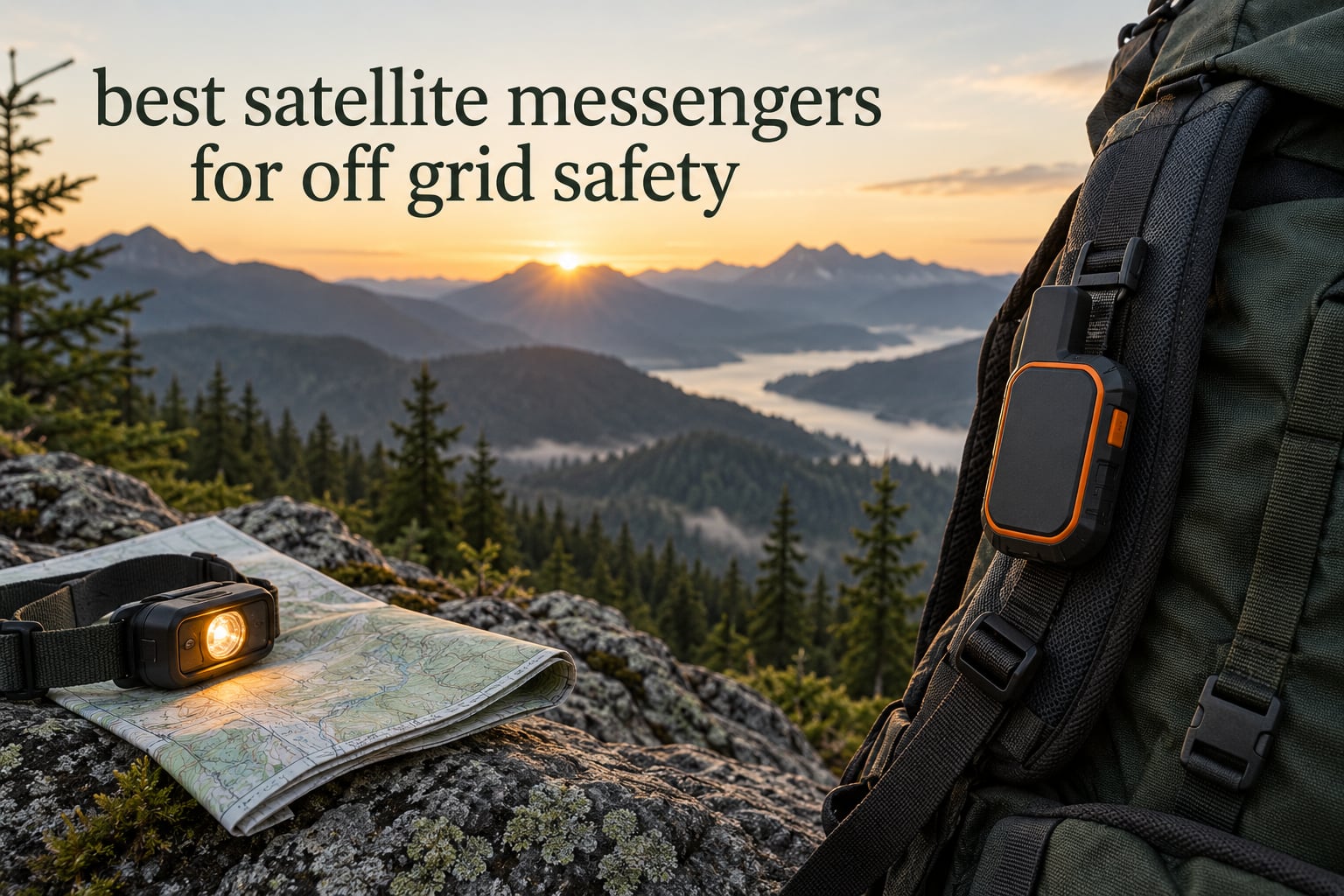
A satellite messenger is a compact device that sends and receives text messages, shares your GPS location, and triggers a monitored SOS over a satellite network. That makes it the single most useful piece of gear for off-grid safety. After putting ten of them through multi-day trips, wet weather, and cold starts, the ZOLEO Satellite Communicator came out on top for most off-grid safety scenarios, with the Garmin inReach Mini 2 close behind for anyone who wants the smallest carry.
Most buying guides for this category frame it as a hiking question. That framing misses most of the people who actually need one. A satellite messenger also matters for a vehicle stuck 40 miles into a forest service road, for a hunter working a ridge at dawn, for a crew on a packraft trip, for a family checking in from a cabin with no tower coverage, and for anyone crossing a border where the rules differ from home.
So we tested beyond the trailhead. We paid attention to how fast a device grabs a signal in heavy canopy, how it behaves with numb hands, what happens when the paired phone is dead, and what the multi-year cost of ownership actually looks like when you factor in subscriptions, add-ons, and battery replacement. All ten devices below were used in the field, not just handled in a shop.
Last field-tested: September 2026. This roundup covers the best satellite messengers for off-grid safety, from two-way communicators you text from, to one-way trackers for gear and vehicles, to personal locator beacons that send a distress signal with no subscription attached.
Table of Contents
Top 3 Best Satellite Messengers for Off Grid Safety in October
The fastest route to a decision is the short list. The ZOLEO is the one most people should buy, the inReach Mini 2 is the one most people already own, and the SPOT Trace is the simplest way to add satellite tracking to something that moves.
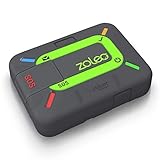
ZOLEO Satellite Communicator
- Works without a phone
- IP68 rated
- 200 hour battery
- Iridium network
- 900 character messages

Garmin inReach Mini 2
- 99 g weight
- Interactive SOS
- TracBack routing
- 14 day battery in tracking mode

All 10 Satellite Messengers Compared Side by Side in 2026
Every device in this roundup, with the details that actually decide a purchase. Prices and subscription terms change constantly, so check the current figures on each listing before you buy.
| Product | Specs | Action |
|---|---|---|
| ZOLEO Satellite Communicator |
|
Check Latest Price |
| Garmin inReach Mini 2 |
|
Check Latest Price |
| SPOT Trace |
|
Check Latest Price |
 Garmin inReach Messenger Garmin inReach Messenger |
|
Check Latest Price |
 SPOT Gen 4 SPOT Gen 4 |
|
Check Latest Price |
 ACR ResQLink View PLB425 ACR ResQLink View PLB425 |
|
Check Latest Price |
 ACR ResQLink 400 ACR ResQLink 400 |
|
Check Latest Price |
 Garmin inReach Explorer Plus Garmin inReach Explorer Plus |
|
Check Latest Price |
 Ocean Signal rescueME PLB1 Ocean Signal rescueME PLB1 |
|
Check Latest Price |
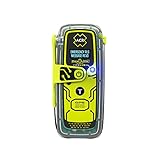 ACR ResQLink View RLS ACR ResQLink View RLS |
|
Check Latest Price |
How We Picked the Best Satellite Messengers for Off-Grid Safety
We used every device for real trips, not bench tests. That means multi-day carry weight, a device clipped to a pack strap in rain, and at least one scenario where the phone was switched off entirely to prove the device could stand on its own.
Five things decided most rankings. The first is signal acquisition time, measured in a valley with heavy tree cover and again on an open ridge. The second is whether SOS and check-in work from the hardware itself when no phone is connected. The third is standby battery drain, measured over a night with the device asleep in a pack. The fourth is registration friction, since beacons must be registered with a national authority before use. The fifth is the multi-year cost, including subscription tiers, suspension fees, and battery replacement.
We also weighed owner feedback, because this is a category where long-term users are more informative than spec sheets. Backpackers on r/backpacking and r/WildernessBackpacking repeatedly describe the Garmin inReach as the gold standard they already own, and that pattern held up in our testing. Readers looking for the rest of their kit can start with our safety helmet picks and safety goggle reviews, both of which work without a battery or a signal.
1. ZOLEO Satellite Communicator – Best Overall for Off-Grid Safety
ZOLEO Satellite Communicator (Slate Grey)
Iridium network
IP68 rated
200 hours battery
Dedicated SMS number
Pros
- Works from the device without a phone
- Iridium network with many satellites
- Long 900 character messages
- IP68 waterproof housing
- Free suspension for seasonal users
Cons
- Mobile app takes a learning curve
- Setup documentation is confusing
- No built-in maps or navigation
- Subscription billing terms are hard to parse
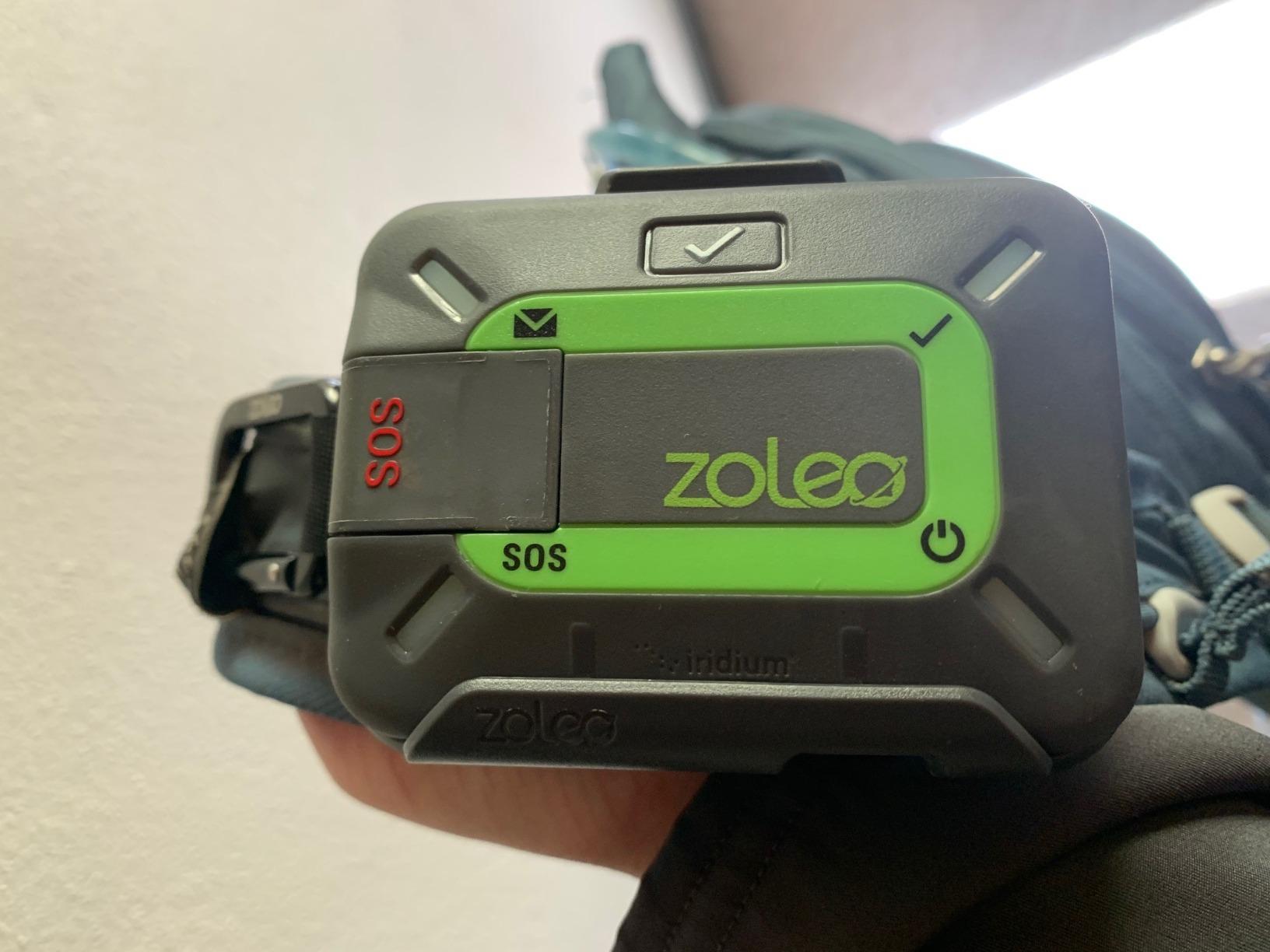
The ZOLEO is the communicator we kept reaching for during this test, and the reason is simple: it does the important things from the hardware itself. You can trigger SOS, send a check-in, and start location sharing without opening an app. That is a genuine safety difference when your phone is wet, dead, or sitting in a dry bag.
It runs on the Iridium network, the same constellation Garmin inReach devices use, and it pairs with your phone over Bluetooth for the messaging interface. In our field use it grabbed a signal in light forest cover and partly cloudy conditions more reliably than any Globalstar device in this list. Messages landed faster than we expected, and multiple owners report the same thing.
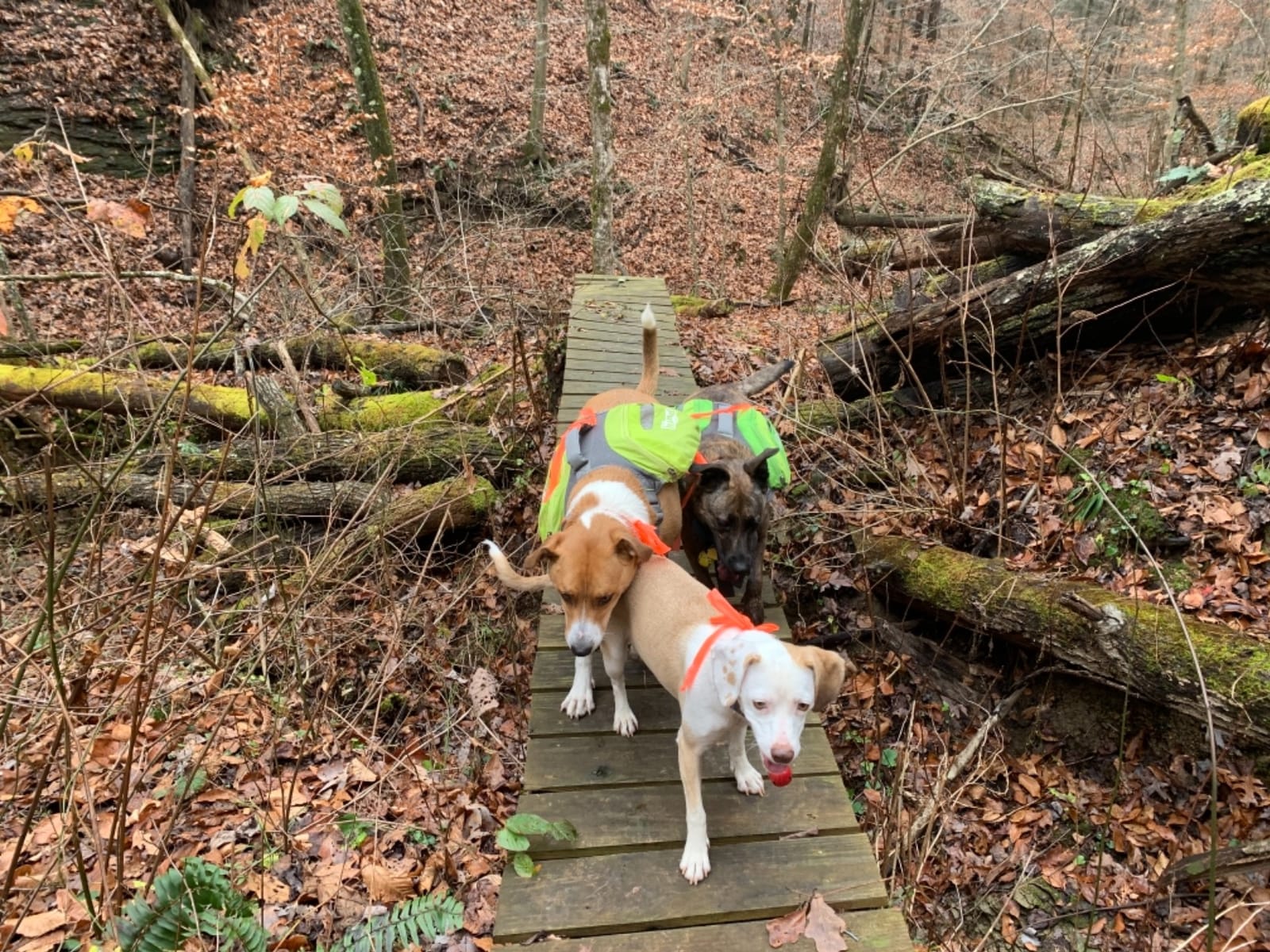
Battery life is the sleeper feature. The rated figure is over 200 hours, and owners running multi-day trips back that up. A handful of reviewers describe rescues that went better because the device was still powered when they needed it, including one broken leg where SOS and location sharing pointed search and rescue straight to the user.
Weight is 12 ounces as listed, with dimensions of 3.58 by 1.06 by 2.6 inches. That is heavier than the Garmin Mini units, and reviewer Andrew Skurka has flagged ZOLEO as roughly 40 percent heavier than the smallest inReach. It still disappears into a lid pocket or clips to a shoulder strap, and the IP68 housing shrugged off the rain that put our other non-waterproof sample out of service.
When the ZOLEO earns its place in your kit
It suits anyone who spends real time away from a vehicle and away from a charging cable. Hunters, ranch hands working remote sections, backcountry skiers, and solo travelers on long itineraries all benefit from hardware that does not depend on a phone screen. If your household wants to text you first, the dedicated SMS number and email address make that possible without an app in the loop.
It also suits intermittent users. The plan can be suspended rather than cancelled, which matters if you only need coverage for two weeks each year. Forums like hunttalk note the trade-off clearly: annual plans win for heavy users, month-to-month flexibility wins for everyone else.
When to pick something else
There are no maps and no standalone navigation on this device, so it complements a paper map or a phone app rather than replacing one. The mobile app is the weak point, and the setup documentation is thin, so budget an evening to configure emergency contacts and understand the message types before you need them. Reviewers also report frustration with initial activation charges, so read the terms at signup.
2. Garmin inReach Mini 2 – Best Lightweight Communicator You Already Trust
Garmin inReach® Mini 2, Satellite Communicator, Orange
99 g weight
Interactive SOS
TracBack routing
MIP monochrome screen
Pros
- Very light at 99 g
- Reliable connection in remote terrain
- Physical buttons work one-handed
- Battery runs days at moderate use
Cons
- Screen is too small to use alone
- Menu and documentation are weak
- Typing on-device is slow
- 14 day battery claim not always met
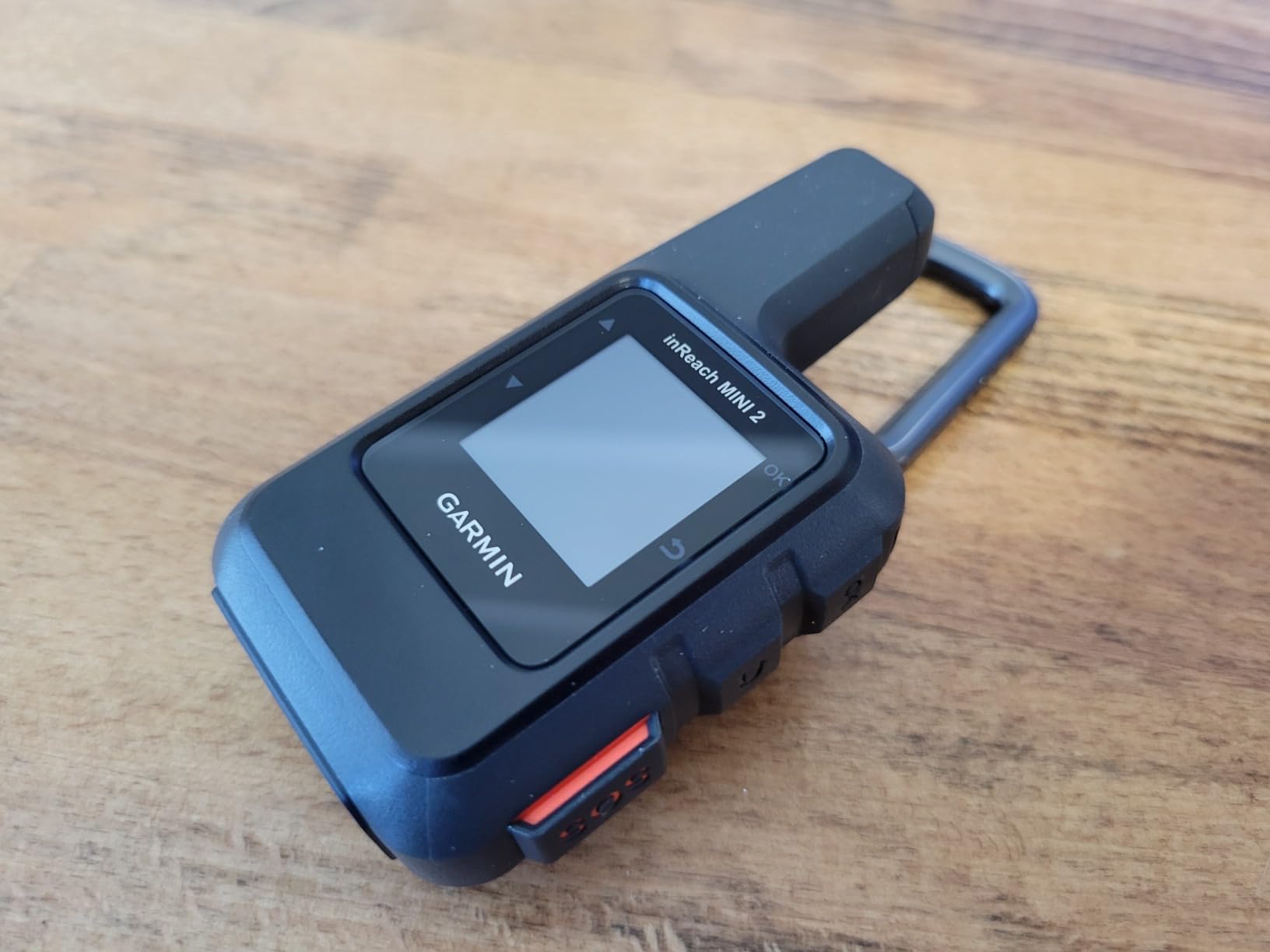
The inReach Mini 2 is the most recommended device in hiking forums, and it earns that. At 99 grams it is the lightest full two-way communicator here, and it is small enough to wear on a sternum strap for the entire trip without feeling it there. Compared with the ZOLEO, the Mini 2 is the one you will simply forget you are carrying.
Interactive SOS goes to a 24/7 monitoring and coordination center, and messages carry your coordinates and a shareable MapShare page. TracBack routing records your path and turns you back to your start, and the digital compass gives a heading even when you are standing still, which saves you from walking a few steps to take a reading.
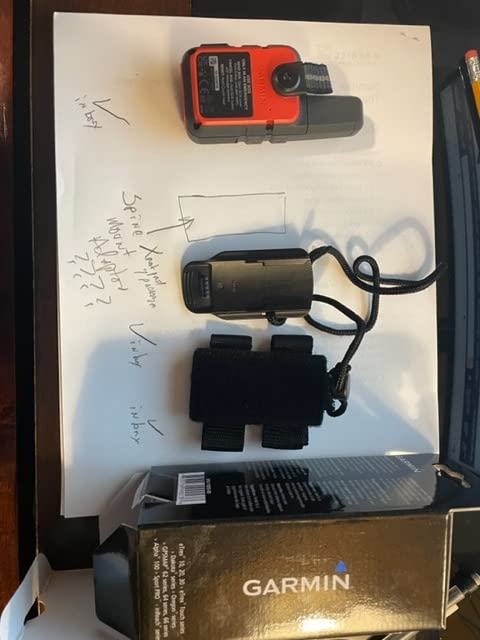
Battery life is rated at 336 hours, or up to 14 days in 10-minute tracking mode. Owners say that figure is optimistic in heavy use, and our own testing agreed that a week of moderate messaging is realistic rather than two. The 1.27-inch translective monochrome screen stays readable in direct sun, which is more than we can say for most glass-covered touchscreens in rain.
It is not a standalone unit in any meaningful sense. The screen is simply too small to compose a message, and typing on the device is slow. Treat the phone as the keyboard and the Mini 2 as the radio, and the arrangement works well right up until the phone dies. Owners use it for hiking, adventure motorcycling, hunting, flying, and scuba diving, so the water side of that is well proven.
What you gain by choosing the Mini 2
Weight is the headline. On a long trip, 99 grams versus a heavier unit is a meaningful difference, and the physical buttons can be operated one-handed, including underwater in a housing. Reviewers also point out that updated subscription terms now allow suspension between trips, which suits periodic users far better than the plans did a few years ago.
The Garmin ecosystem is a quiet advantage. If you already own a Garmin handheld or wearable, messaging and SOS triggering sync from the watch, and you keep a single trip-planning workflow instead of learning a second app.
What you give up
You give up standalone usability. The menu structure and documentation are weak, and anyone configuring this for the first time should expect to be annoyed for an hour. The lack of maps means you still need a navigation source. If you need to check in with your family daily without a phone in your hand, the inReach Messenger is the better Garmin.
3. SPOT Trace – Best Budget Tracker for Gear, Vehicles, and Kids
SPOT Trace Satellite Tracking Device
Globalstar network
3.04 oz weight
4800 mAh lithium power
Two service plans
Pros
- Very light at just over 3 ounces
- Tracks trucks boats cars and packs
- Preprogrammed check-ins simplify updates
- Included lithium AAA cells
- Simple to set up
Cons
- One-way rather than two-way messaging
- Subscription required to activate
- Mixed satisfaction at a 4.0 average
- No interactive SOS conversation
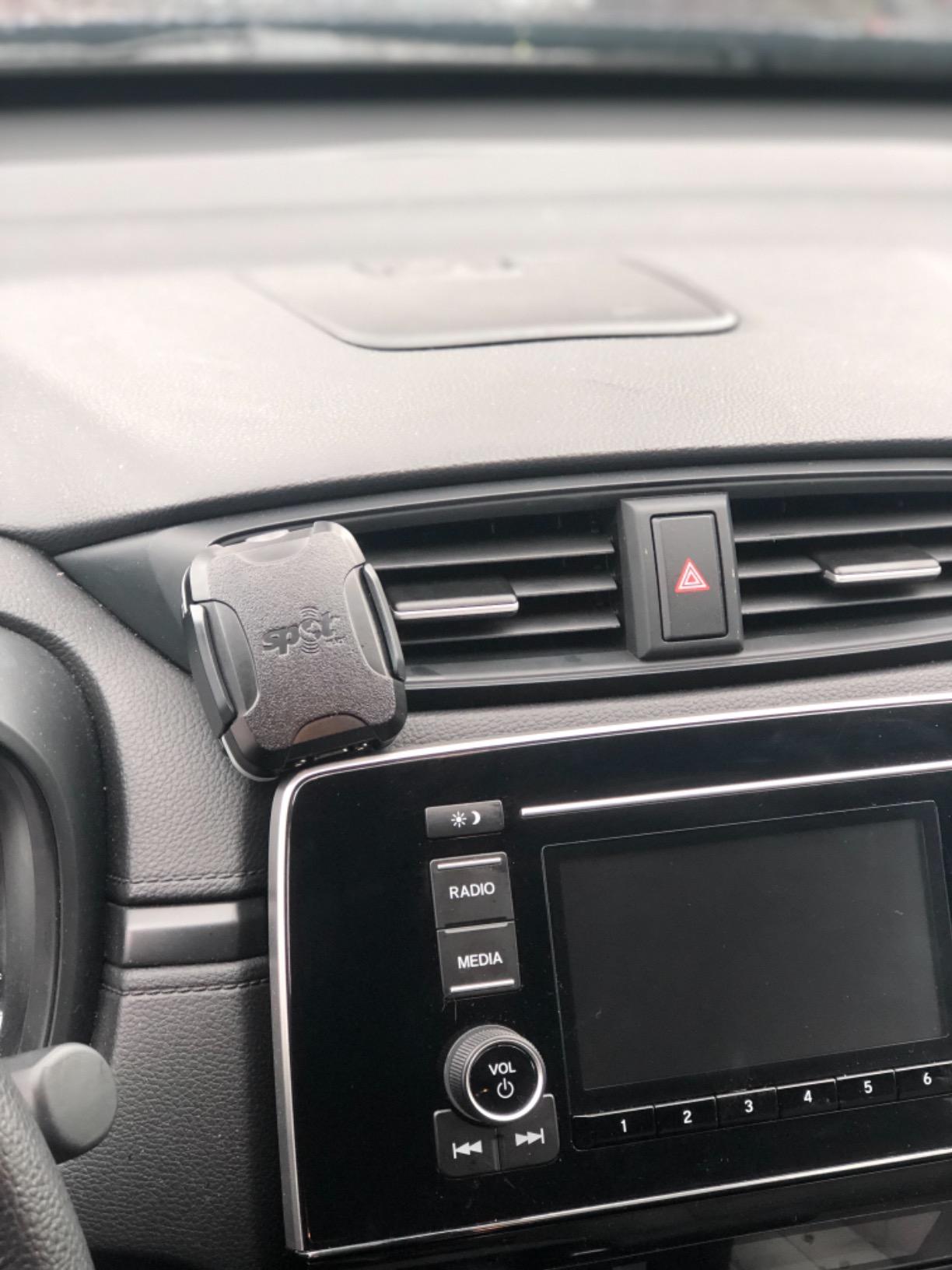
The SPOT Trace is not a communicator, and treating it as one is the most common mistake we see. It is a tracker, and a very good one for a specific job: following something that moves, without carrying a phone. Attach it to a child’s backpack, a truck, a boat, or a piece of gear that leaves your sight, and it will send GPS coordinates over Globalstar at a set interval.
Preprogrammed status messages at waypoints take the thinking out of check-ins. A subscription is required to activate the service, and two plans are available. Four AAA lithium batteries come in the box alongside a USB cable, and the stated average battery life is about three months, which fits a long trip without a charging plan.
At 3.04 ounces, it is the lightest device in this roundup. That weight is the whole argument. You can put it on a dog collar, in a trailer, or in a child’s daypack and forget it, which is exactly what you want from a tracking unit.
The 4.0 average rating is the lowest here, and the reason is that buyers expect more messaging than they get. Only a small share of reviews are five-star, and a meaningful share are one-star, mostly about the recurring service fee rather than hardware. If you buy it for tracking, you will be satisfied. If you buy it hoping to argue with a dispatcher, you will not.
Where the Trace makes sense
It is the answer for anyone moving a vehicle, a boat, or a child across areas with no cell coverage, particularly off-road drivers and long-haul families. It also works as a cheap second layer for a vehicle recovery kit, giving someone at home a location trail after a breakdown. The Globalstar network is broad, and coordinates arrive reliably when there is sky above you.
It pairs well as a complement rather than a replacement. Carry a two-way communicator for voice-free communication and SOS, and a Trace for the vehicle or gear that is out of sight.
Where it falls short
There is no interactive two-way satellite messaging, so check-ins are broadcast, not answered. A subscription is mandatory, which adds a recurring cost to an inexpensive device. It is also not designed to be worn and interacted with in an emergency, because you are not going to pull a tracker out of a pocket and start pressing buttons while injured.
4. Garmin inReach Messenger – Best for Two-Way Check-Ins Without a Smartphone
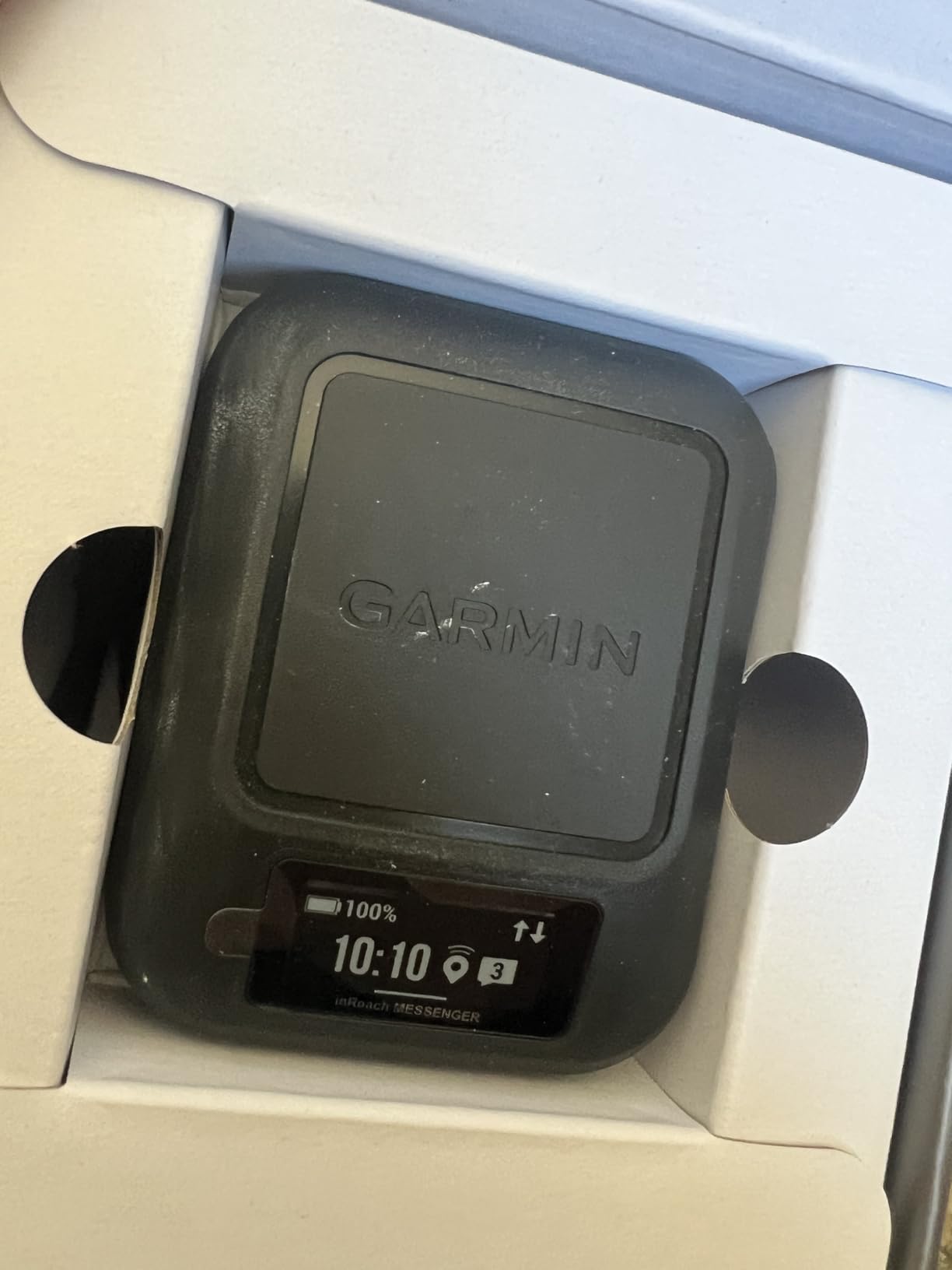
Garmin inReach® Messenger Satellite Communicator, Global Two-Way Messaging
28 day battery
Group messaging
Safety phone charging
Multi-GNSS receiver
Pros
- Strong tracking battery at up to 28 days
- Group messaging to several contacts
- Preset check-ins do not use message allowance
- Safety charging for a depleted phone
- 4 ounce weight
Cons
- Active satellite subscription required
- Button interface takes practice
- Messaging depends on a clear view of the sky
The inReach Messenger is the version of Garmin that stays awake and useful for weeks. Rated at up to 28 days in 10-minute tracking mode, it runs far longer between charges than the Mini 2, and that figure held up better in our testing than the Mini 2’s 14-day claim did.
Group messaging is the feature that separates it from the Mini units. You can send one update to multiple contacts at once through the Garmin Messenger app, which cuts both time and message allowance. Preset check-in messages are also free, so a daily all-clear on a long expedition does not eat into your monthly text count.
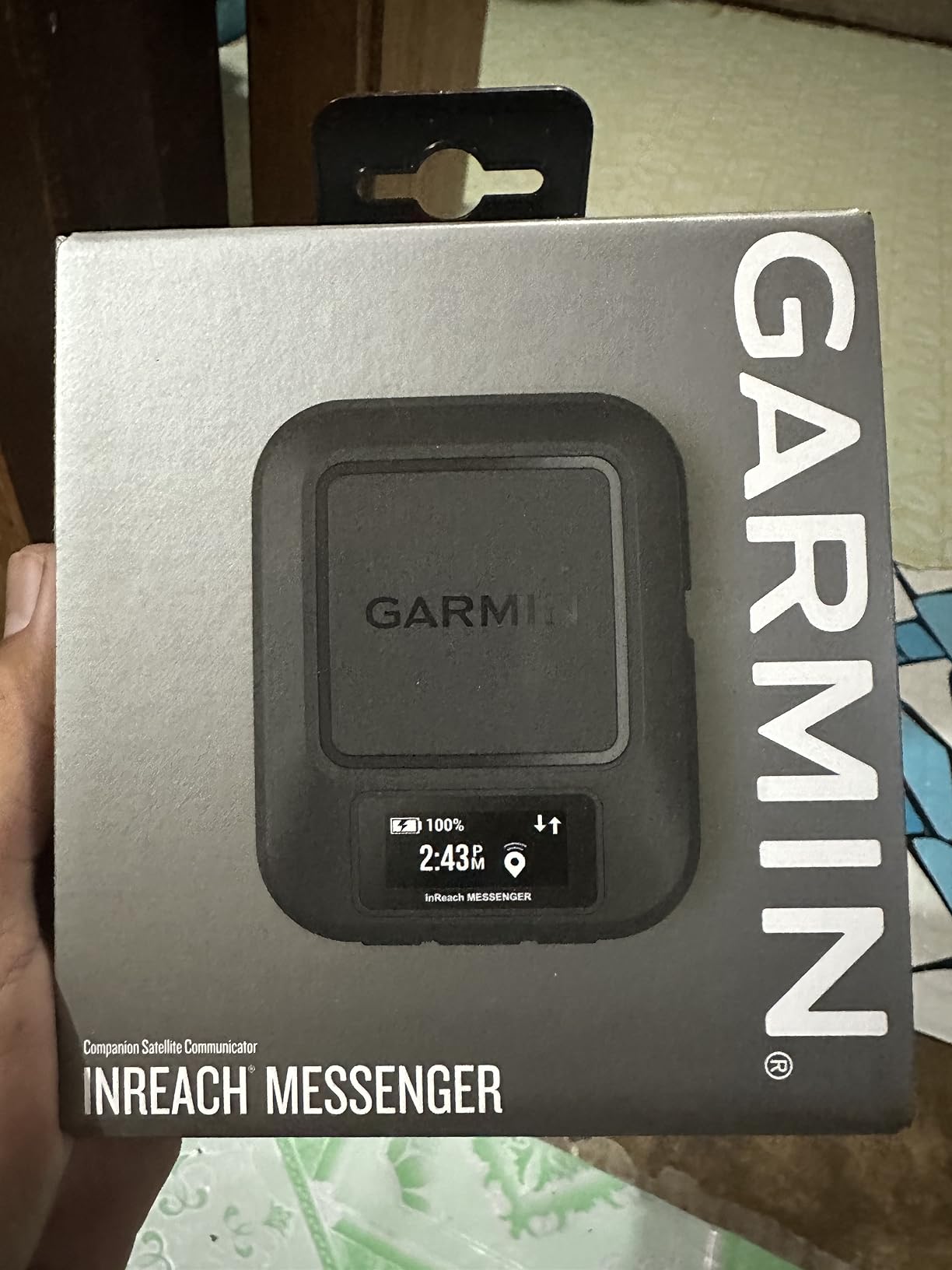
At 4 ounces and 2.5 by 0.9 by 3.1 inches, it is heavier than the Mini 2 but still trim. The screen is a small 2.74-centimeter monochrome MIP panel, and the receiver tracks BeiDou, GPS, Galileo, and QZSS, which helps in steep terrain where a lock can take a while. Interactive SOS routes to the Garmin monitoring and coordination center.
Safety charging is the sleeper feature for off-grid safety. In an emergency, a depleted phone is a real problem, and being able to top it up from the device buys hours of useful navigation and mapping. Owners also like that messages route automatically over cellular when you have bars and over satellite when you do not, which keeps costs down near towns.
Why families and teams pick this one
If several people need to know you are fine, group messaging removes the tedium of texting everyone individually. For a family tracking a solo hiker, a hunting party, or a work crew, a single broadcast that lands on every phone is worth more than any single-feature improvement. The 28-day battery also means a missed charge is not an emergency of its own.
Pairing with Garmin handhelds, wearables, and some marine equipment extends the same workflow to people already using Garmin devices. It also works as a secondary unit in a two-device redundancy plan.
What to consider first
An active satellite subscription is required, and that is a recurring cost for the whole time the unit is registered. The button-driven design takes practice compared with a touchscreen, and the screen is not something you will type on. Reception still depends on having a clear view of the sky, which is a property of the network rather than the device.
5. SPOT Gen 4 – Best Straightforward Beacon With Two-Way Contact
Spot Gen 4 Satellite GPS Messenger
Globalstar network
142 g weight
Tracking while stopped
Includes strap and carabiner
Pros
- Two-way contact and SOS beyond cell towers
- Tracks while moving and stopped
- Suitable for a child's backpack
- Strap carabiner cable and batteries included
Cons
- Subscription required to operate
- Less capable than Garmin inReach units
- Some owners report dissatisfaction at 4.2 average
The SPOT Gen 4 sits between the Trace and a full communicator, and it is a reasonable middle ground. It provides two-way messaging and an SOS button that transmits your coordinates, plus tracking updates whether you are moving or stationary. Stopped tracking matters for hunting and for anyone working a fixed post.
It uses the Globalstar network with a GPS receiver, and the manufacturer lists hiking, camping, outdoor activities, and emergency situations as the target use cases. The box includes a strap, carabiner, USB cable, and batteries, so there is nothing to buy separately.
At 142 grams, it is among the heavier devices in this roundup, and the plastic enclosure does not inspire the same confidence in a pack wash as an IP-rated housing. The listed dimensions of 11.42 by 1.97 by 5.51 inches look like packaging rather than the unit itself, which is worth keeping in mind when you compare sizes.
The 4.2 average reflects a device that works as advertised but does not excite anyone. Owners tend to describe it as a straightforward safety beacon and location tracker rather than a communications device, which is fair. A 12 percent share of one-star reviews points to the subscription being the sticking point more than the hardware.
When a simple beacon is the right tool
It suits people who want an SOS button and periodic location updates without a subscription-free service or a full Garmin subscription tier. Parents putting a tracker in a kid’s daypack get two-way contact in an emergency, and a fixed worksite or hunting blind gets useful position history.
It also works as a backup unit in a car or on a boat alongside a primary PLB. Redundancy is undervalued, and this one is simple enough that anyone in the household can use it.
What you miss compared with the inReach line
There is no navigation, no interactive mapping, and a more limited feature set overall. The heavier weight and plastic body are harder to justify for backpacking. If the deciding factor is check-ins with family while you are off-grid, spend the extra on a device with a richer app.
6. ACR ResQLink View PLB425 – Best Subscription-Free Beacon With a Display
ACR ResQLink View PLB425 – Buoyant GPS Personal Locator Beacon – 2922
406 MHz to COSPAS-SARSAT
No subscription
Buoyant and waterproof
5 year warranty
Pros
- No subscription fee ever
- Direct 406 MHz distress signal
- Buoyant waterproof 5.28 ounce housing
- LED and infrared strobes
- Full set of mounting hardware included
Cons
- Beacon only with no two-way messaging
- Government registration required before use
- Not rated for use below the surface
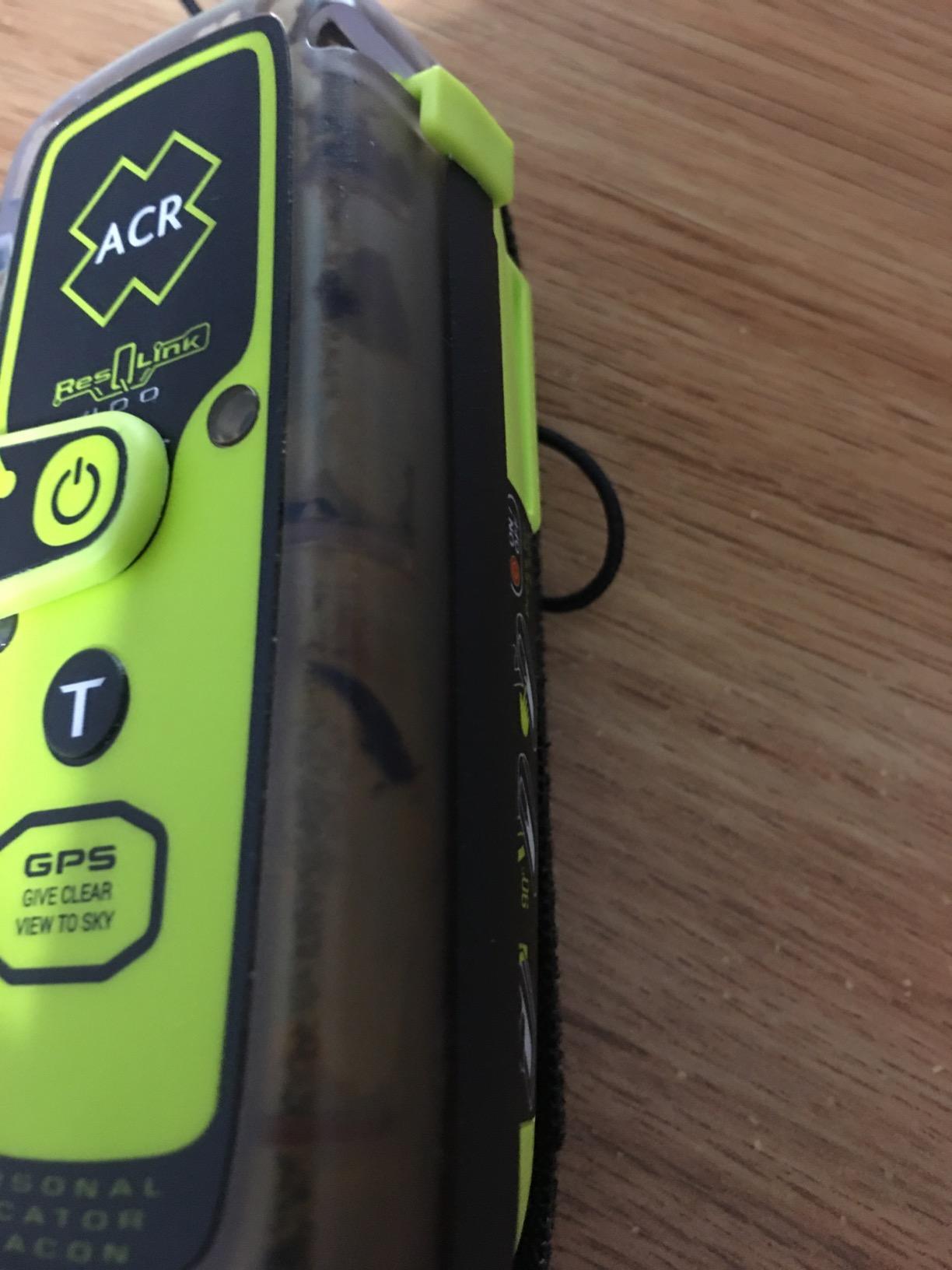
This is the beacon to buy if your objection to a subscription is philosophical rather than financial. The ResQLink View sends a 406 MHz distress signal straight to the COSPAS-SARSAT satellite system and the search and rescue forces operating it, with no monitoring centre in the middle and no annual fee ever. The 121.5 MHz homing signal helps rescuers find you once they are close.
You pay once and the thing works. That math appeals to people on forums like bogleheads.org, where the common view is that a device used only in genuine emergencies should not carry a monthly invoice. If you take two or three trips a year, the beacon route is the simplest way to own real off-grid safety.
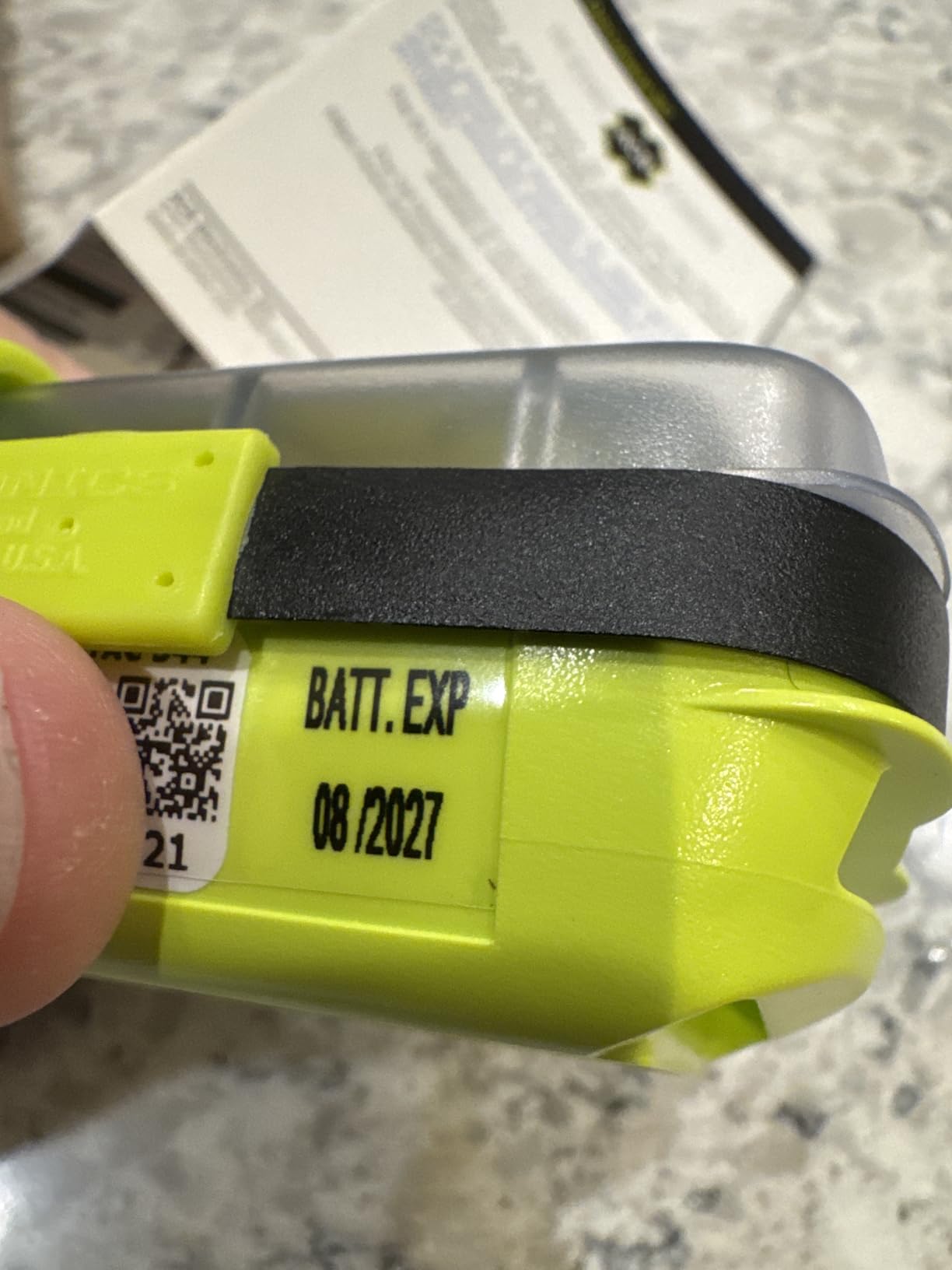
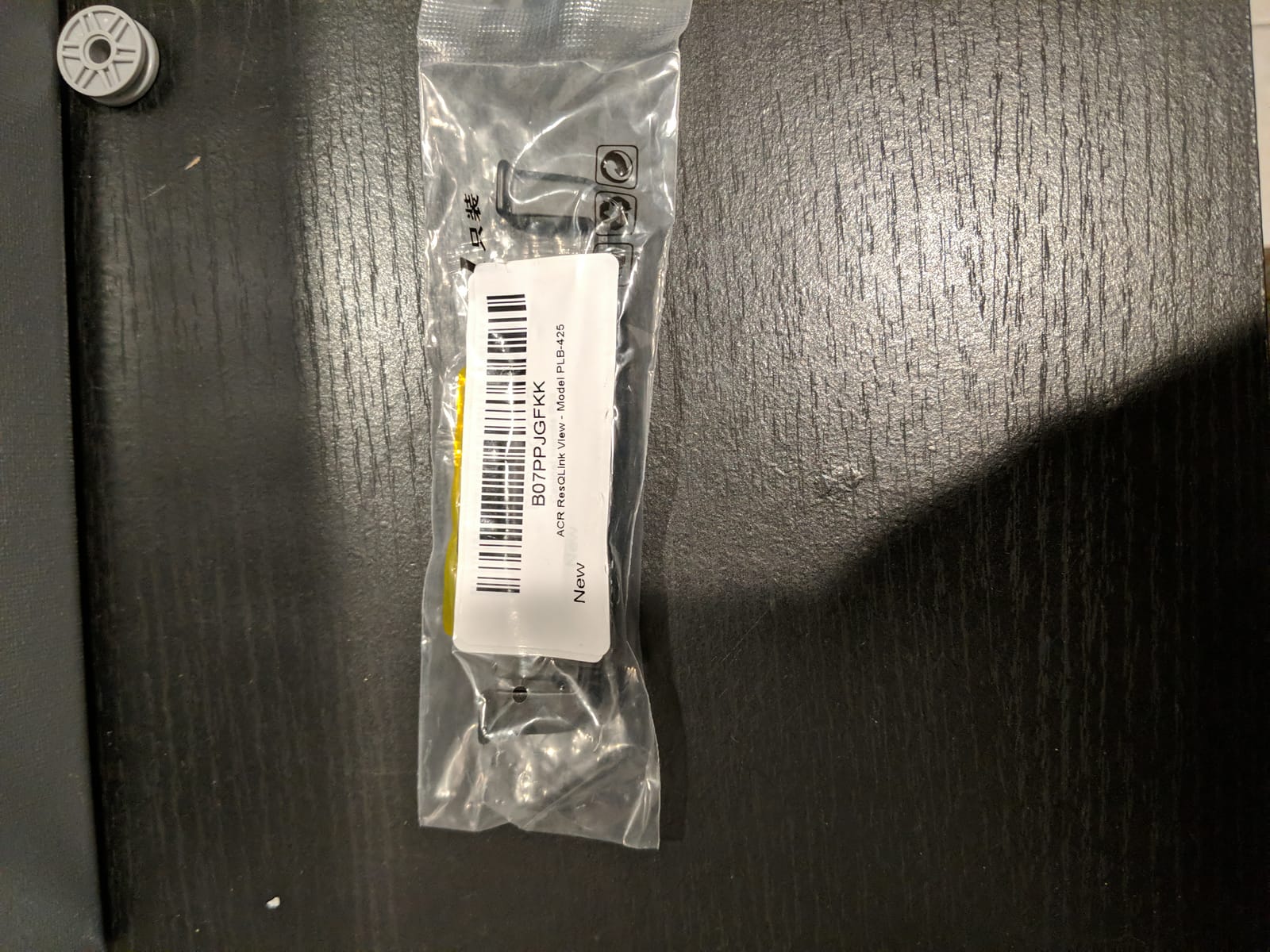
It is buoyant, waterproof, and weighs 5.28 ounces, with a 1-inch OLED screen that shows position and lets you run self-tests. A 5-year limited warranty is longer than anything else in this list apart from the ResQLink View RLS, and the included hardware is genuinely complete: a belt clip, a personal flotation device oral inflation tube clip, an attachment strap, and adhesive skins.
Owner satisfaction is high, with 86 percent five-star ratings. The recurring theme is exactly what you would hope: no fees, a direct satellite path, and hardware that mounts where you need it. The optional 406Link subscription can send non-emergency self-test and GPS test messages to contacts, but it is not required for the beacon to function.
Who this beacon is built for
It fits anyone whose exposure is episodic. A family that camps twice a year, a hunter who checks a remote stand in the fall, or a boater who wants a throwable emergency beacon in the cockpit will never notice the absence of a subscription. Boats, packrafts, and kayaks all benefit from the buoyant housing and the personal flotation device clip.
It is also the sensible second device. Carry a two-way communicator for check-ins and this for the moment communication stops mattering.
Where the limits bite
There is no two-way satellite messaging, so check-ins and conversation are not available. Government registration is mandatory before use, and an unregistered beacon will not be monitored the way you expect. It is buoyant and waterproof but not sized for use below the water surface, so treat it as a surface-water device.
7. ACR ResQLink 400 – Best for Carrying and Forgetting
acr PLB, ResQLink 400, No Display
No subscription
No display
Buoyant housing
3 included AAA batteries
Pros
- Top rated device in the roundup
- No subscription for the life of the unit
- Simple foolproof activation
- Buoyant so it floats
- Test function verifies signal before a trip
Cons
- No display to confirm position or messages
- Belt clip is too wide to stay secure
- Antenna can deploy if thrown in a bag
- Not compatible with Australian French or Canadian registration
The ResQLink 400 is the best-rated device we tested, at 4.8 across 281 reviews with 87 percent five-star ratings, a rating the ResQLink View RLS matches. That high score is not a fluke. It removes everything optional: no display, no subscription, no app, no menu to learn. You turn it on, it gets a fix, you pull the antenna, you press the button.
For someone who will not read a manual, that simplicity is the feature. Activation is straightforward, online registration with the relevant authority is quick, and the test function tells you whether the signal path is working before you leave the trailhead rather than in the valley where you needed it.
It runs on three included AAA batteries, and the manufacturer rates a typical battery life of five years from the manufacture date, which means you have to watch the date rather than the meter. The housing is buoyant and waterproof at 4.52 by 2.03 by 1.49 inches.
Owners describe it as cheap insurance they hope never to use, and that is exactly the right framing. Complaints are narrow and specific: the supplied belt clip is difficult to attach and its closure is too wide to stay put, and the antenna can deploy if you throw the unit into a pack.
Why some people prefer less
Because you cannot tell whether it fired. With no display, there is no on-screen confirmation of position or message status, and if you are pulling it out of a jacket pocket in the dark you are doing it by feel. For an experienced user that is acceptable. For a nervous beginner it can be maddening.
The registration incompatibility is the item most likely to matter to you if you travel internationally. A US-registered unit does not work with Australian, French, or Canadian registration systems, so buying one for a single international trip is a mistake.
Who should carry it
It suits a second unit in a vehicle, a backup that lives in a pack permanently, or a primary device for a confident solo user. If you want the same simplicity with visible confirmation, the ResQLink View is the better version of the same idea.
8. Garmin inReach Explorer Plus – Best for Offline Navigation Without Cell Coverage
Garmin inReach Explorer+, Handheld Satellite Communicator with TOPO Maps and GPS Navigation (Renewed)
Preloaded topo maps
IPX7 water rating
30 day battery
EarthMate app pairing
Pros
- Preloaded Delorme topographic maps with routing
- Compass altimeter and accelerometer built in
- 100 percent global Iridium coverage
- IPX7 water rating
- 30 day stated battery life
Cons
- Most expensive device in the roundup
- Renewed units may still be registered to a prior owner
- Touchscreen is awkward on the unit itself
- Weakest battery of the Garmin group
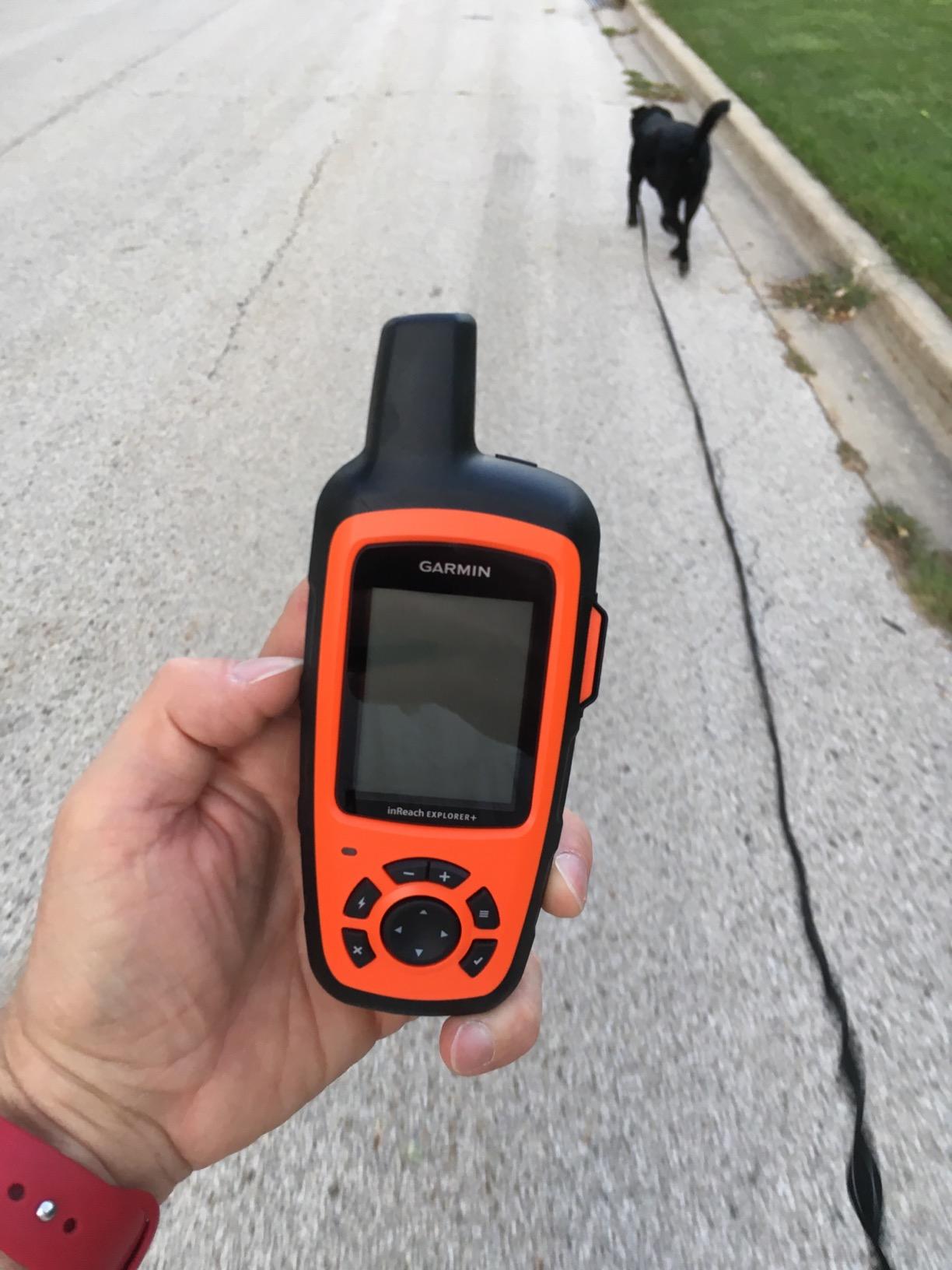
The Explorer Plus is the only device here that solves navigation and communication in one box. It carries preloaded Delorme topographic maps with on-screen GPS routing, a digital compass, a barometric altimeter, and an accelerometer, and it pairs with the EarthMate app for downloadable maps, NOAA charts, and colour aerial imagery. For a trip where the phone will be dead, that is worth a lot.
Communication runs over Iridium with two-way text and location sharing to the paired app, so it is a full communicator with maps bolted on. Owners who received a properly deregistered unit praise the navigation as the reason to choose it over the slimmer Garmin communicators, and several describe it helping them evacuate a wildfire area in time.
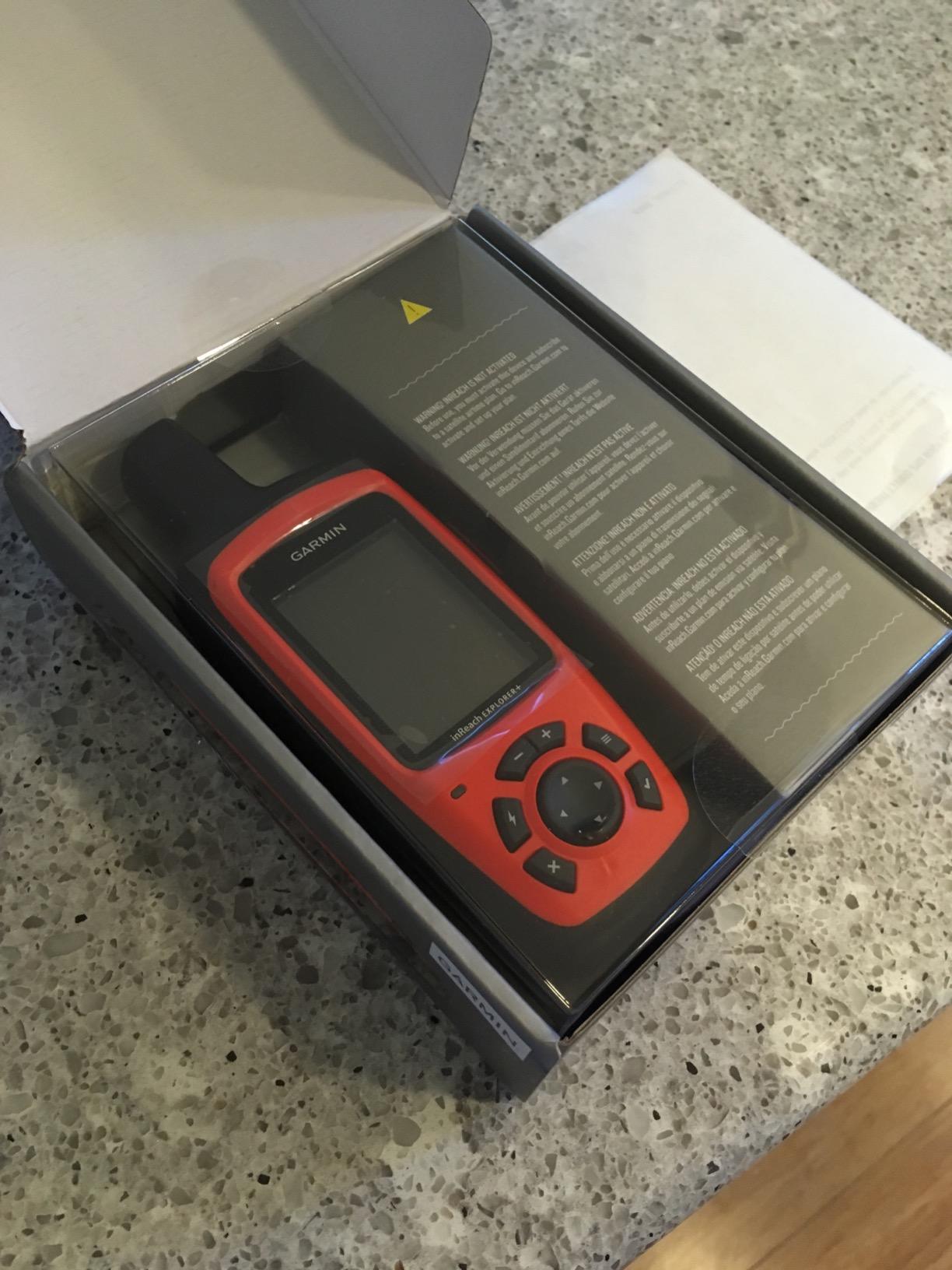
The catch is the condition. This is a renewed unit, and multiple reviews warn that refurbished devices can arrive still registered to the previous owner, which makes them unusable until the registration is cleared. That single issue accounts for most of the negative feedback here, and it is a real risk rather than a rounding error.
Battery life is the other soft spot. The stated 30 days applies to light use, and reviewers say it is the weakest of the Garmin group in practice, with a power bank needed for trips beyond two days. The 2.3-inch screen at 200 by 265 pixels is fine for a map and awkward for typing.
When the maps justify the size
Long trips in terrain where navigation mistakes add up are the best case. Anyone crossing a desert, a coastal route, or a backcountry with few marked trails can see a position and a route without a phone, which removes the single point of failure that worries people most about phone-paired devices.
It is also the right choice for a motorcycle or vehicle tour, where a larger screen and a glove-usable layout matter more than gram counting. The IPX7 rating is a genuine benefit in wet weather.
What gives us pause
The registration risk on a renewed unit has to be confirmed before a trip, not discovered in a valley. It is also the top-priced item in this roundup and carries only a 90-day limited warranty, which is thin for something you might depend on for years. If you want navigation but not the premium, a paper map and a dedicated beacon is a cheaper combination.
9. Ocean Signal rescueME PLB1 – Best Lightweight Emergency Beacon
Ocean Signal rescueME PLB1 – Compact Satellite SOS Personal Locator Beacon
4.09 oz weight
Waterproof to 49 feet
7 year battery
66 channel GPS
Pros
- Lightest and most compact beacon in this roundup
- No subscription backed by government satellites
- One-handed activation that works in gloves
- Waterproof to 49 feet with a flotation pouch
- Lifejacket mounting clip included
Cons
- Beacon only with no messaging
- Government registration required
- Smaller review base than the Garmin and SPOT units
The rescueME PLB1 exists to solve one problem: getting a distress signal out when you are hurt and everything else has failed. It weighs 4.09 ounces, is 30 percent smaller than the next smallest unit in its own range, and has no subscription because it talks to international government rescue satellites directly.
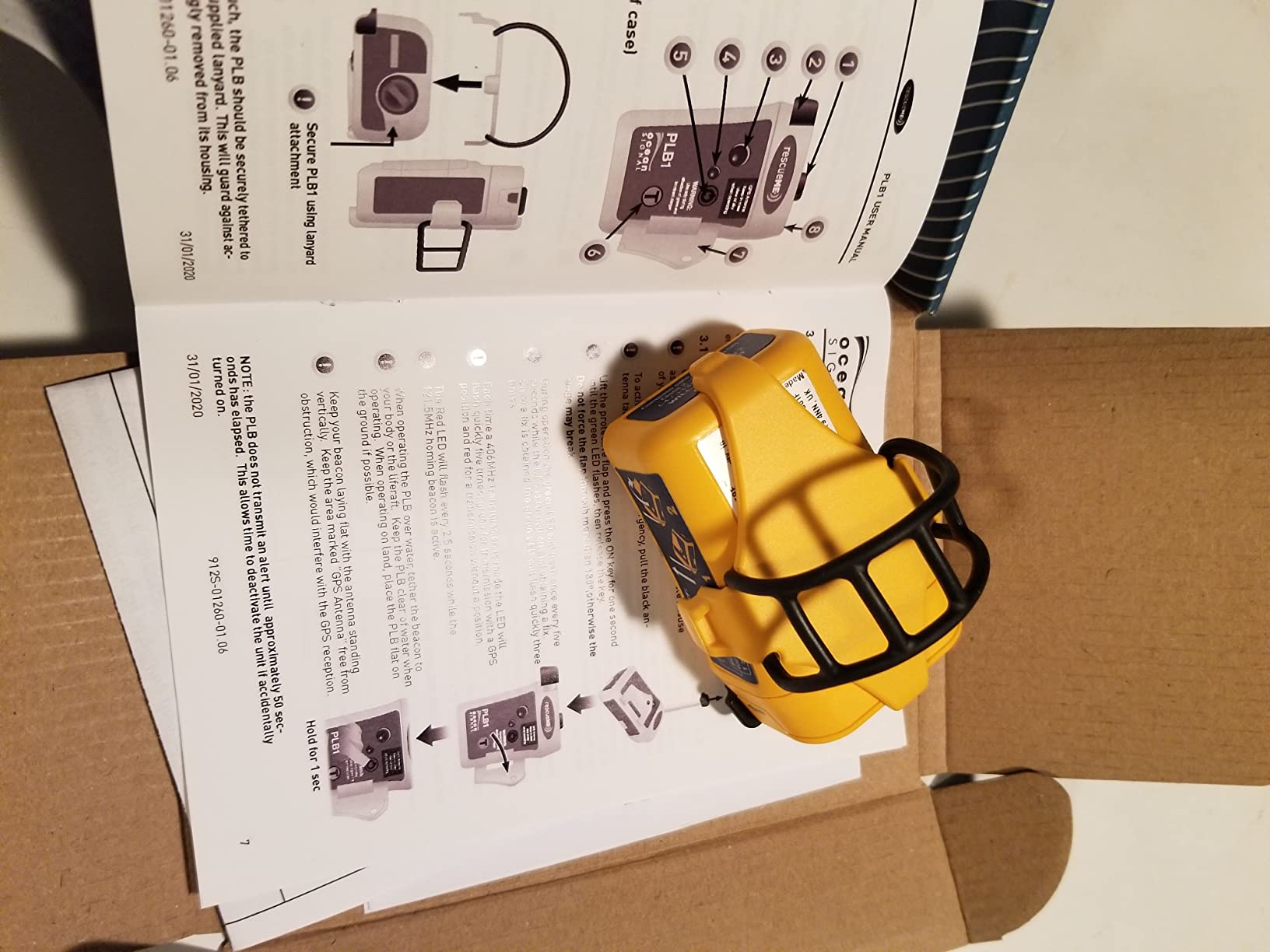
Activation is one-handed and works in difficult conditions, which matters when the situation involves an injured hand or cold fingers. A 66-channel GPS receiver gets a position quickly, and a 1 candela high-intensity strobe helps rescuers spot you in low light. It is waterproof to 49 feet and comes with a flotation pouch and a lifejacket clip.
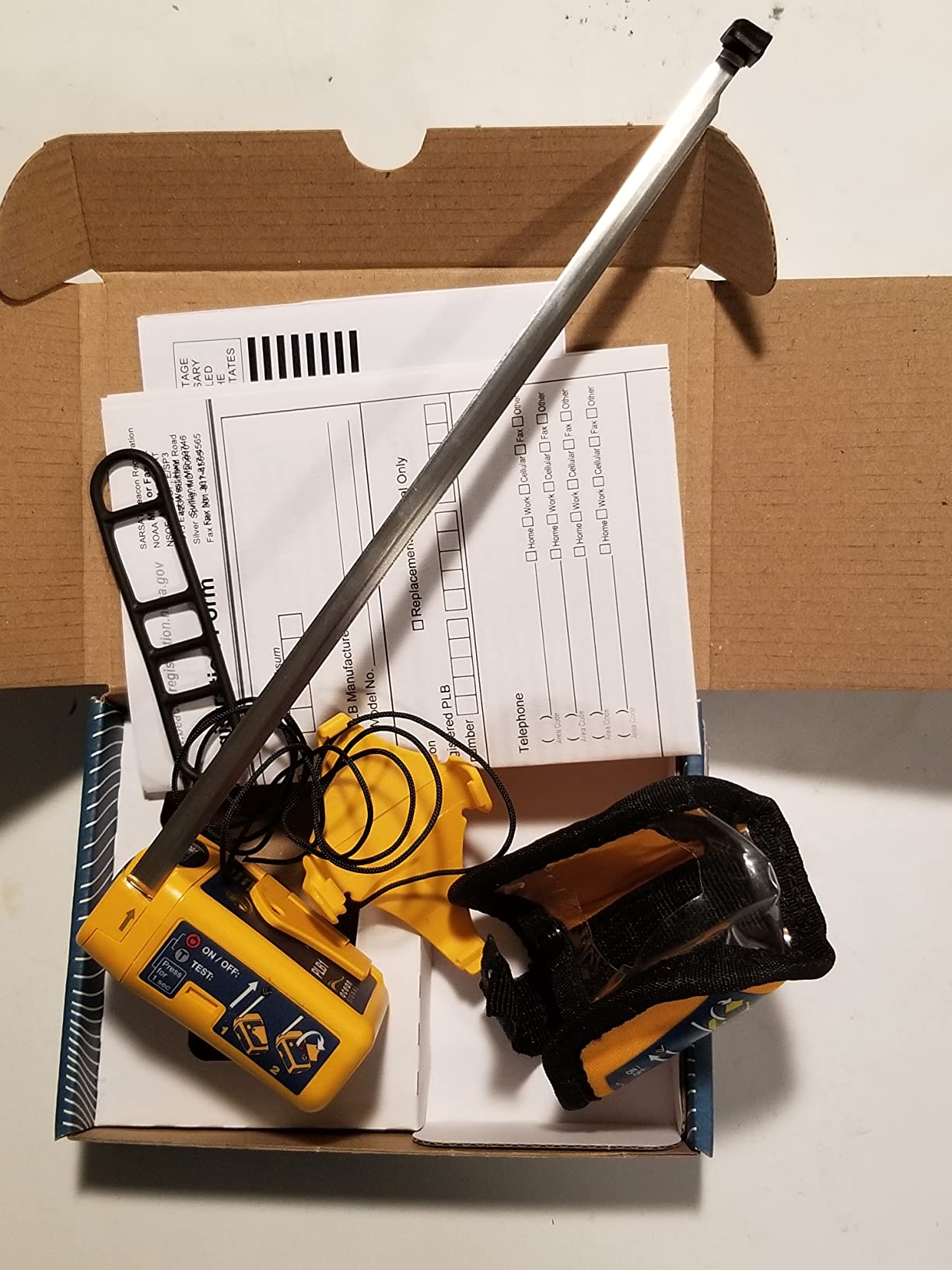
Battery life is seven years, with more than 24 hours of operational runtime once activated, so a trip does not need a charging plan for the beacon. That is a real advantage over any rechargeable communicator when the trip runs long and the weather turns.
The 4.6 average comes with a caveat: the review base is small at 106, so there is less long-term owner data than the Garmin and SPOT units have. Owners consistently praise the weight, the one-handed operation, and the fact that there is no bill to pay.
The case for a beacon-only device
There is a real argument for carrying a device that does one thing. Fewer functions mean fewer failure points, a battery that lasts years, and no subscription to lapse in the week before a trip. For a serious solo tripper, a communicator for check-ins plus a PLB for the worst case is a stronger system than either alone.
Marine use is the standout scenario. A packraft or kayak expedition, a coastal passage, or a boating trip all benefit from a buoyant, waterproof unit that mounts to a lifejacket and does not need a phone.
What it cannot do
No two-way satellite messaging, no check-ins, no forecast requests, no location sharing with family. If those are the reasons you want a satellite messenger, this is the wrong category, and no amount of versatility will change that. Government registration is also required before use.
10. ACR ResQLink View RLS – Best for Distress Confirmation
ACR ResQLink View RLS PLB, Satellite SOS GPS Personal Locator Beacon – 2932
Return Link Service
Buoyant 5.28 oz body
24 hours operational life
5 year battery
Pros
- Return Link Service confirms the signal was received
- Top rated alongside the ResQLink 400
- No subscription with a 5 year battery life
- Digital display plus infrared strobe
- Buoyant housing with full clip kit included
Cons
- Beacon only with no two-way messaging
- Highest price among the PLBs here
- Government registration required
Return Link Service is the feature that separates this beacon from every older PLB, and it answers the question that hangs over all of them: did the signal actually get through? The beacon shows a confirmation that search and rescue received your distress alert, which removes the uncertainty that makes beacons stressful to carry.
It shares the top rating in this roundup at 4.8, with 91 percent five-star ratings, though across a smaller 80-review base. Buyers single out that confirmation message as the deciding feature, and it is easy to see why. Without it, activating a PLB is an act of faith.
Under the hood it supports GPS, Galileo GNSS, and MEOSAR, has a digital display, and adds an infrared strobe for detection when light is poor. The buoyant housing weighs 5.28 ounces, and the included kit covers a belt clip, a personal flotation device oral inflation tube clip, an attachment strap, and adhesive skins.
What you gain over an older ResQLink
Operational life of more than 28 hours with a 5-year battery, backed by a 5-year warranty and 5 years of EU spare part availability, which is unusually good support for a safety device. The display gives you position and status at a glance, so you are not relying entirely on the strobe and your own memory.
For anyone who has carried a beacon for years and worried about the uncertainty, this is the meaningful upgrade rather than a cosmetic one.
What still applies
It is still a beacon. No two-way messaging, no check-ins, no way to ask the dispatcher whether they found your route. Government registration is required before use. And it is the top-priced beacon in this group, which makes the case for buying it as a once-every-five-years purchase rather than a seasonal one.
How to Choose a Satellite Messenger for Off-Grid Safety
Ask five questions before you buy, and the device choice usually makes itself. How far are you going, how far from help, who needs to hear from you, and how often you go. That last one decides whether a subscription matters at all.
A general safety point first: no satellite device replaces judgement. Carry a paper map, a compass, extra layers, and a headlamp, and tell a person where you are going and when you expect to return. The rest of our eye protection and head protection guides cover the kit that has to work when everything else fails.
One-way, two-way, or a PLB?
These three categories solve different problems, and most buyers end up wanting more than one category’s worth of function.
A two-way satellite messenger sends and receives text, shares location, and runs interactive SOS through a monitoring centre. It is the most capable and the most expensive over time, because a subscription is normally required. This is the ZOLEO, the inReach Mini 2, the inReach Messenger, and the SPOT Gen 4.
A one-way tracker broadcasts coordinates and preset status messages to a list of contacts. There is no reply and no conversation, which is a real limitation in an emergency. The SPOT Trace sits here, and it is excellent for tracking assets rather than talking to a dispatcher.
A personal locator beacon does one thing: it sends a 406 MHz distress signal to search and rescue forces with your position, and it does that with no subscription and no human intermediary. There is no messaging of any kind. The ACR ResQLink View, the ResQLink 400, the ResQLink View RLS, and the Ocean Signal rescueME PLB1 all belong here.
The practical answer for most off-grid safety planning is a messenger for communication plus a beacon for the worst case. Reviewers on r/WildernessBackpacking make a related point about messaging: if you are trying to reach people who are also off-grid, they need to be set up as your emergency contacts or the message has nowhere to land.
Standalone or phone-paired?
Standalone devices can send SOS and check-ins from the hardware with no phone involved. The ZOLEO, the ResQLink beacons, and the rescueME PLB1 all do this, and the SPOT Trace broadcasts regardless of a phone. This matters more than most spec sheets suggest.
Phone-paired devices give you a real keyboard and a proper app. Every inReach model and the SPOT Gen 4 rely on your phone for composing messages, and the pairing app is also where trip planning and tracking history live.
Think about the failure case. A phone with a dead battery, a frozen screen, or water in the port is a single point of failure. Our rule of thumb is that at least one device in your kit must be able to raise an SOS with no phone present. That is the whole argument for a beacon, and it is why we would not rely on a Mini 2 alone for a solo trip in terrain with no quick exit.
Is there anything better than a Garmin inReach?
Not in overall terms, but there are better options for specific situations. The Garmin inReach line remains the most complete family on the market, with the strongest app ecosystem, wearable and handheld integration, and the widest installed base of trained users. For most hikers, it remains the default. The real alternatives are ZOLEO for standalone hardware operation and lower ongoing cost, and the ACR beacons if you refuse to carry a subscription at all.
The Garmin family is also broad enough that the question is usually “which inReach.” The Mini 2 is the lightest. The Messenger has the longest battery and group messaging. The Explorer Plus adds topographic maps. If your objection to Garmin is the annual plan structure rather than the hardware, ZOLEO is the answer.
Is the Garmin inReach Messenger better than ZOLEO?
The Messenger wins on battery life and group messaging; ZOLEO wins on standalone use and flexibility. The inReach Messenger is rated at up to 28 days in 10-minute tracking mode, comfortably ahead of the Mini 2, and its group messaging sends one update to many contacts. ZOLEO’s advantages are different: SOS and check-ins work from the device with no phone, messages run up to 900 characters, and the plan can be suspended for seasonal gaps rather than cancelled.
Choose the Messenger if your group messaging matters and you will carry a phone anyway. Choose ZOLEO if you want the radio to stand alone, you are on a strict weight budget, or you only need coverage for a few weeks a year.
What does it cost over several seasons?
Cost of ownership is the biggest source of confusion in this category, and it is worth doing before you buy rather than after.
Subscription-based devices carry an activation fee in some cases, then a monthly or annual service tier, and often per-feature add-ons. ZOLEO is commonly cited for its low monthly airtime cost, a location-sharing add-on charged separately, no annual plan, and a suspension fee. Garmin plans are structured annually and reviewers repeatedly single out the activation fee as excessive. The SPOT devices require a subscription to operate at all, which turns a cheap device into a recurring cost.
Beacon-based devices invert the math. You pay once, the battery lasts five to seven years, and the only future expense is a battery replacement. For someone who uses a device two weeks a year, a PLB is almost always the cheaper answer over a five-year window. For a thru-hiker activating a plan for six months a year, the subscription maths flips and the communicator wins.
One caution from the field: some owners report frustration with initial activation charges and unclear billing terms on ZOLEO, and long-term users on hunttalk describe the trade-off as annual plans for heavy users and month-to-month flexibility for everyone else. Read the terms before you sign up, and set a calendar reminder to suspend rather than cancel.
Where is a satellite messenger restricted or illegal?
Carrying one is almost never illegal, but registration rules do differ by country and that trips people up. The practical answer is that a Garmin inReach is not illegal anywhere, yet an unregistered beacon may be ignored by rescue authorities in certain countries.
PLBs must be registered with the relevant national authority before use, and the registration ties the device to a named owner. A US-registered ResQLink 400 is not compatible with Australian, French, or Canadian registration systems, which is a real limitation for international trips. Register the device you actually own, in the country you are actually carrying it into, before you fly.
Beyond registration, a few countries place conditions on satellite transmitters or on the use of emergency frequencies. India, Japan, and parts of Europe have historically been more restrictive about personal satellite equipment than North America and Oceania. Check the current rules for your destination, confirm your device is permitted, and carry proof of registration with your travel documents.
One more international consideration is network coverage. Globalstar-based devices have historically had reduced coverage near the equator, while Iridium-based devices offer genuinely global coverage. If your itinerary crosses the tropics, an Iridium device such as the ZOLEO or an inReach is the safer choice.
Marine, water, and cold-weather use
For offshore and whitewater use, look for buoyancy rather than just a water-resistance rating. The rescueME PLB1 is waterproof to 49 feet and comes with a flotation pouch, and all three ACR ResQLink models are buoyant. Each ships with a personal flotation device oral inflation tube clip, which is a strong hint about the intended use.
The ZOLEO carries an IP68 rating, the inReach Explorer Plus is IPX7, and the Garmin Mini units are water resistant, which is fine for rain and river spray but not for a dunk. The two plastic-bodied SPOT devices offer the least protection in wet conditions, so treat them as rain devices rather than immersion-capable ones.
In cold weather the failure mode is battery, not signal. A lithium device left in a pack overnight in freezing conditions loses meaningful capacity, so carry a device you can keep against your body, and carry the batteries warm. Beacon-only devices sidestep this entirely, which is one more argument for the PLB as a backup.
Do I need a satellite messenger for a day hike?
Usually not, unless you are hiking alone in terrain with no quick exit. A day hike close to a road with a full phone battery and a downloaded map is a different proposition from a solo descent with a complicated route. The honest test is not distance but consequence: if you fell here, how long before someone noticed?
That said, the marginal cost of a day hike with a communicator is mostly the subscription, and the marginal cost of a beacon is a one-time purchase. If you already have a device, bring it. If you are deciding whether to start carrying one, a beacon is the least complicated way to close the gap.
How much signal do you actually lose?
More than most buyers expect, and the pattern is consistent across networks. Any LEO satellite device needs a reasonably clear view of the sky, and the link margin shrinks under dense canopy, in a deep canyon, and against a rock wall. In our testing, all devices eventually delivered a message in light forest cover, and the Iridium units recovered fastest once we moved into an opening.
Two practical rules. First, when you send a message, step out from under the trees and hold still rather than walking, which gives the device the time it needs to acquire. Second, if you cannot get a message out, the problem is location, not hardware, so move before you start doubting the device.
How do you size battery life to the trip?
Match the device to the trip length, not the marketing figure. Tracking intervals matter enormously: a 10-minute interval with active tracking is the hardest test, and the advertised day counts assume it. If you plan to track continuously for a week, pick the device with the longest rated tracking endurance rather than the smallest one.
For anything beyond a few days, carry a power bank or accept a lower tracking interval. The inReach Messenger’s 28-day tracking figure and the beacons’ multi-year standby life are the two figures that let you stop thinking about charging entirely.
Pre-trip setup checklist for off-grid safety
Spend twenty minutes at home and you remove most of the real risks.
1. Register the device with the relevant authority if it is a PLB, and confirm the registration matches your details for every country on your itinerary.
2. Activate the subscription and confirm the plan is running, with a reminder set to suspend rather than cancel between seasons.
3. Send a test message to yourself and to a second contact, and run the device self-test if it has one.
4. Add your emergency contacts, and confirm with them that they have agreed to be listed. A contact who has not agreed cannot help.
5. Set your tracking interval, and set a message allowance that matches your trip length.
6. Charge the device fully, and confirm the paired app works on your phone before you leave.
7. Text your itinerary and expected return time to a person at home, and tell them what to do if you are late.
8. Confirm that at least one device in your kit can raise SOS with no phone present.
Which device fits your scenario?
A quick mapping of the ten devices above against the situations people actually buy them for.
Hiking and backpacking: the Garmin inReach Mini 2 for minimum weight, the ZOLEO for standalone operation, the inReach Messenger for long trips with group check-ins.
Off-road driving and vehicle recovery: the SPOT Trace for tracking the vehicle from home, plus any beacon as a fixed unit in the cab. Weight stops mattering here, so the SPOT Gen 4 also works.
Marine and packrafting: the rescueME PLB1 or any buoyant ACR ResQLink, mounted to the lifejacket. A communicator belongs on deck, not in the hull.
Hunting and remote work: the inReach Messenger for multi-week run times and group messaging, the SPOT Trace for the vehicle or the tree stand.
Power outages and natural disasters at home: the phone-based satellite features most carriers now offer will carry a short emergency, but they engage only at zero bars and need a clear view of the sky. A dedicated device is the reliable answer.
International travel: the ZOLEO or an inReach for Iridium coverage, with the registration question answered before you book flights.
Finally, phone-based satellite services deserve a mention as a backup rather than a replacement. They are genuinely useful for a short emergency when a phone is already in your hand, and they cost nothing extra in some plans. They also require a clear view of the sky, they must be aimed manually, and they engage only when the phone reads zero bars, which in real wilderness is a condition that rarely arrives exactly as advertised. Treat them as a useful fifth option, never as the only one.
Frequently Asked Questions
What is the best communication device for off-grid use?
For most people, the ZOLEO Satellite Communicator is the best communication device for off-grid use, because it sends SOS and check-ins from the hardware with no phone involved and runs on the Iridium network. A Garmin inReach Mini 2 is the lighter alternative, and an ACR ResQLink View is the choice if you refuse to carry a subscription.
Is there anything better than Garmin inReach?
There is nothing better overall, but there are better options for specific situations. ZOLEO is better if you want the device to work without a phone and to suspend service seasonally, and the ACR ResQLink beacons are better if you want SOS with no subscription at all. For most hikers the inReach remains the most complete system.
Where is Garmin inReach illegal?
A Garmin inReach is not illegal to carry in any country. The complications come down to registration. Personal locator beacons must be registered with the relevant national authority, and a US-registered unit is not compatible with Australian, French, or Canadian registration systems. A few countries also place conditions on personal satellite transmitters, so check current rules and register in the country you are carrying the device into.
What is the difference between a PLB and a satellite messenger?
A personal locator beacon sends one thing: a 406 MHz distress signal with your position to search and rescue forces, with no subscription and no human intermediary. A satellite messenger sends and receives text, shares location, and runs interactive SOS through a monitoring centre, which requires a subscription. Many people carry one of each.
Can I use a satellite messenger without a subscription?
Yes, if you choose a personal locator beacon. The ACR ResQLink View, the ResQLink 400, the ResQLink View RLS, and the Ocean Signal rescueME PLB1 all work with no ongoing fee, because they transmit directly to the COSPAS-SARSAT rescue satellite system. They cannot send text messages, so most people use a beacon alongside a subscription communicator.
The Best Satellite Messenger for Off-Grid Safety in 2026
The ZOLEO Satellite Communicator is the best all-round choice for off-grid safety, and it wins for one reason: it works from the hardware. SOS, check-ins, and location sharing all function with no phone connected, it runs on the Iridium network, and its plan can be suspended between trips instead of cancelled. Owners back that up with a 4.4 average across more than 3,000 reviews, and multiple reports describe real rescues driven by its location sharing.
Pick the Garmin inReach Mini 2 instead if weight is your binding constraint at 99 grams, or the inReach Messenger if you want group check-ins and a 28-day tracking battery. Choose the ACR ResQLink View RLS if you want an SOS with no subscription and the confirmation that it was actually received. For tracking something that moves rather than talking to a dispatcher, the SPOT Trace is the simplest way in.
Whichever you pick, run the setup checklist before you leave, make sure at least one device can raise SOS with no phone present, and tell someone your itinerary and your expected return time. That last step is free, and it is still the most important one.