
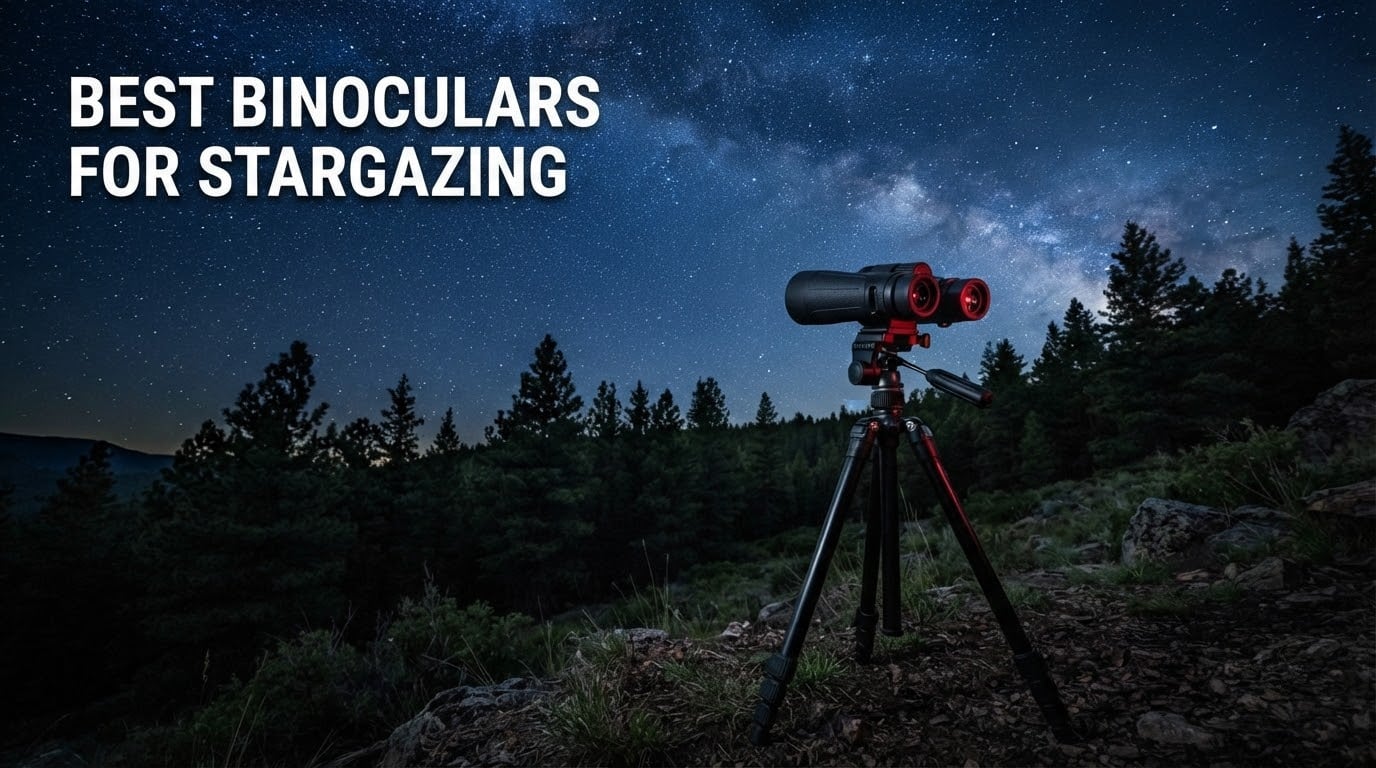
If you want the short answer, the Vortex Diamondback HD 10×50 is the best overall pick for stargazing in 2026. It pairs a 5mm exit pupil with a 6-degree field of view, weighs under 2 pounds, and stays fog-free in cold weather thanks to argon purging and o-ring seals.
Binoculars are the fastest way into the night sky. Point them at the Moon and you get a surface with craters you can trace by name. Sweep them along the Milky Way and hundreds of stars appear at once, far more than the unaided eye resolves.
The catch is that most binoculars sold for daytime birding and stadium viewing are poor astronomy instruments. A birding binocular that shows a bird 200 yards away at 10x will show you a blurry smudge where a nebula should be.
That is why the right specification matters. The products below are the ones I would actually pick from for sky watching, and each section explains which class of object it handles best. I compared aperture, magnification, exit pupil, field of view, eye relief, prism glass and coating across fifteen models, and I read through thousands of owner reviews to catch the recurring problems that spec sheets never mention.
One warning before we start. No binocular shows you a photograph. If you have seen a marketing image of a galaxy taken through binoculars with a phone attached, that is a long digital exposure, not what your eye will see.
Table of Contents
Top 3 Best Binocular for Stargazing (October 2026)


All 15 Binoculars Compared Side by Side
| Product | Specs | Action |
|---|---|---|
| Vortex Diamondback HD 10×50 |
|
Check Latest Price |
| Celestron SkyMaster 15×70 |
|
Check Latest Price |
 Celestron Cometron 7×50 Celestron Cometron 7×50 |
|
Check Latest Price |
 Pentax SP 10×50 WP Pentax SP 10×50 WP |
|
Check Latest Price |
 Vortex Triumph HD 12×50 Vortex Triumph HD 12×50 |
|
Check Latest Price |
 Bresser Wave 10×50 Bresser Wave 10×50 |
|
Check Latest Price |
 Celestron SkyMaster 25×70 Celestron SkyMaster 25×70 |
|
Check Latest Price |
 Sogries 25×100 Sogries 25×100 |
|
Check Latest Price |
 Sogries 20×80 Sogries 20×80 |
|
Check Latest Price |
 Bushnell Falcon 10×50 Bushnell Falcon 10×50 |
|
Check Latest Price |
 Bushnell PowerView 20×50 Bushnell PowerView 20×50 |
|
Check Latest Price |
 FLYANT 20×50 FLYANT 20×50 |
|
Check Latest Price |
 Aurosports 20×80 Aurosports 20×80 |
|
Check Latest Price |
 Barska X-Trail 15×70 Barska X-Trail 15×70 |
|
Check Latest Price |
 Barska Gladiator 20-100×70 Barska Gladiator 20-100×70 |
|
Check Latest Price |
1. Vortex Diamondback HD 10×50 – The Best Overall Pick
Vortex Diamondback HD 10×50 Binoculars
10x50
5mm exit pupil
6 degree field
Argon purged
1.9 lb
Pros
- Best overall rating in this set
- Low chromatic aberration on the Moon
- Argon sealed so it never fogs indoors
- Glasses friendly with twist-up eyecups
- Lifetime transferable warranty
Cons
- Heavier than lighter 10x42 glass
- Edge sharpness trails costlier models
- 10x is low for planets
My first night with the Diamondback HD 10×50 was spent on the Moon, and the thing that surprised me was colour. A cheap 10×50 turns the lunar surface into a flat white disc, while HD glass elements pulled out warm and cool tones along the terminator.
Those select HD elements are also treated with a dielectric coating on the objective, which is why the view stays bright long after your eye has adjusted to the dark. On a clear night it showed craters near the limb that other binoculars in this list simply smoothed away.

Owners rate it 4.8 out of 5 across more than 1300 ratings, and that consistency matters. More than most rivals here, this one has almost no bad-luck stories attached to it. The centre of the field is crisp, with a sweet spot running about two thirds of the way to the edge.
Rain is the real test for an astronomy binocular, since dew and damp arrive together. This one survived years of wet weather on owner reports, with argon purging and o-ring seals keeping the interior bone dry even after days in a car.
What you gain by choosing this one
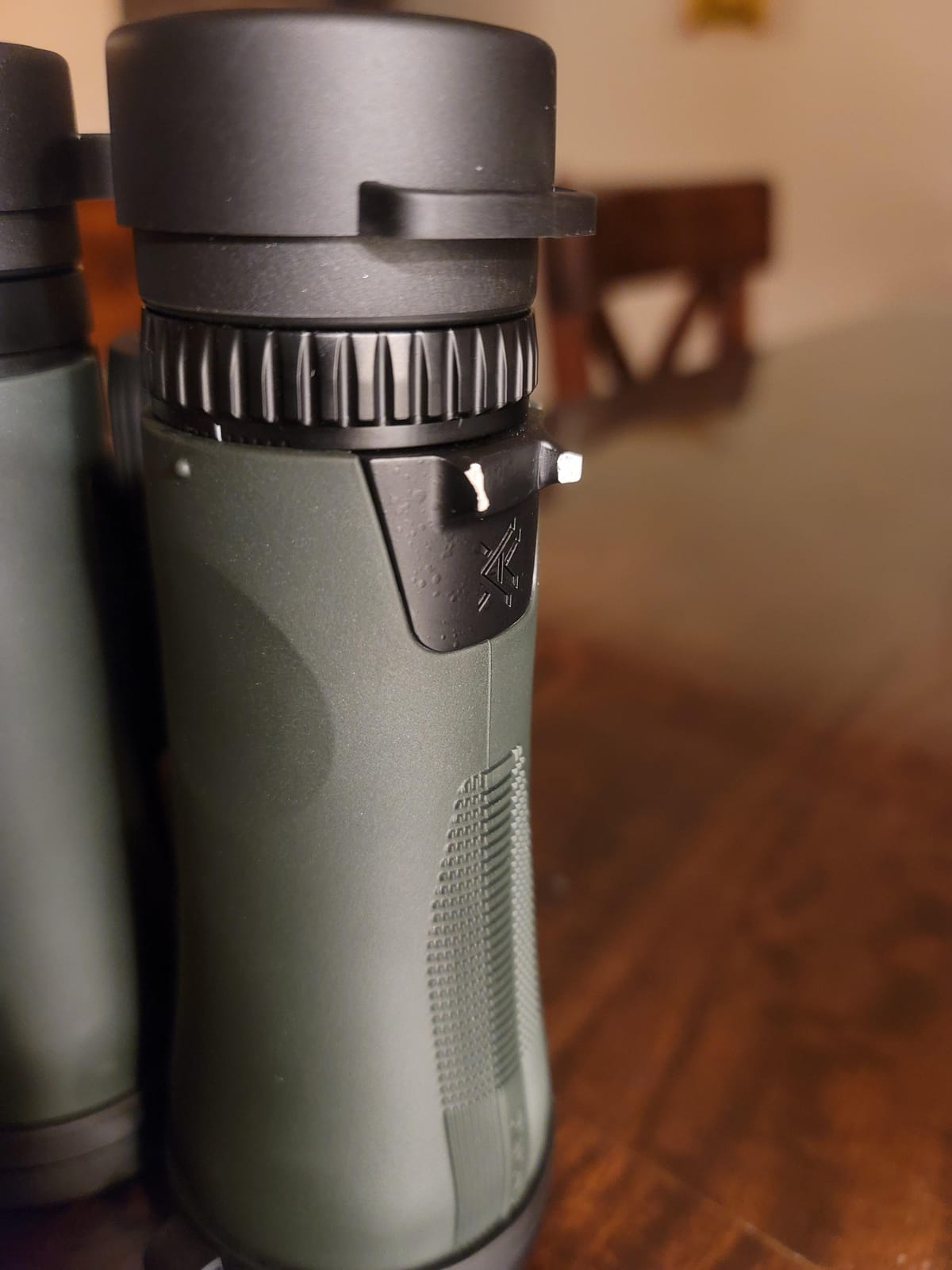
Eye relief of 17mm with adjustable twist-up eyecups means the whole field stays visible with glasses on. That matters more than most spec sheets admit, because a short eye relief is the number one reason people decide binoculars are uncomfortable.
The Vortex warranty is unlimited, unconditional and transferable. Owners report fast service with the cost covered both ways, which removes the risk of a model with a reputation for alignment faults.
Where it falls short
At 1.9 pounds it is not a featherweight, and carrying it on a long walk at dusk takes planning. More importantly, 10x magnification is genuinely modest for astronomy, so Saturn stays a small oval rather than showing ring detail.
Edge-to-edge brightness and sharpness also fall short of models costing well over twice as much. If your budget stretches further, the Pentax SP reviewed below is the step up.
2. Celestron SkyMaster 15×70 – The Best Value
Celestron SkyMaster 15×70 Astronomy Binoculars for Stargazing and Deep-Sky
15x70
4.7mm exit pupil
4.4 degree field
3.3 lb
Pros
- Most reviewed binocular here
- Bright wide low light views
- Handles handheld better than 20x models
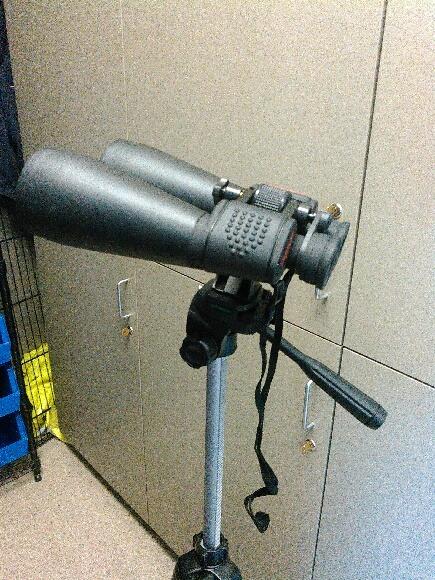
- Built-in tripod adapter
Cons
- Supplied plastic adapter flexes badly
- Collimation faults are not rare
- Heavy for casual handheld use
The SkyMaster 15×70 is the binocular most first-time astronomers end up owning, and after comparing fifteen models I still recommend it for anyone starting out. Seventy millimetre objectives on a 15x pairing give a 4.7mm exit pupil, which sits almost perfectly inside the dark-adapted pupil of a young adult eye.
Owners report spotting the Pleiades, the Hyades, the Double Cluster in Perseus and the Andromeda Galaxy from a garden in a light-polluted city. That is a real list of targets that a 10×42 birding binocular simply will not deliver.
With more than 8500 ratings and a 4.4 average, this is the most thoroughly reviewed product in the set, and the pattern in those reviews is remarkably consistent. People praise brightness and width of view, and they complain about the tripod adapter.
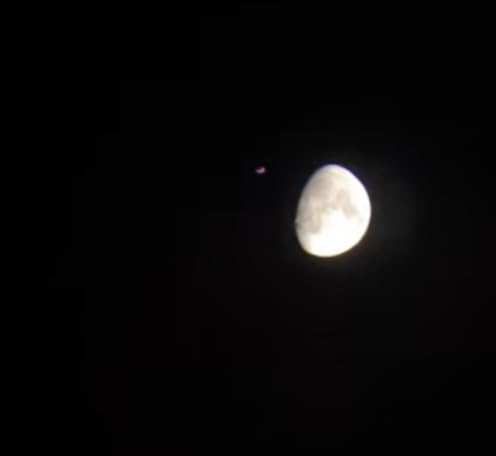
Jupiter is the model demonstration. All four Galilean moons are reported as clearly separated dots, and Saturn shows as a small ringed shape. Neither is as detailed as a telescope, but both are unmistakably there.
Why it earns its place at number two
The combination of 70mm glass, BaK-4 prisms and 15x power is a sweet spot that very few other products match. Above 15x, hand shake becomes the limiting factor, and below it, light gathering drops away quickly.
Simple, intuitive focus and diopter adjustments mean a new owner can be observing within minutes of opening the box. The included case, strap and lens cloth are minor things that add up on a first trip out.
What to watch out for
The plastic tripod adapter included in the box is the weak point. Owners report it oscillating under the weight, and a metal adapter or a reinforcement with epoxy is a sensible first modification.
Collimation faults show up often enough that many experienced users learn to nudge the prism screws themselves. Test your pair against a bright star at the start of the first session, and keep the packaging in case you need to return it.
3. Celestron Cometron 7×50 – The Best Budget Starter
Celestron Cometron 7x50mm Astronomy Binoculars
7x50
7.1mm exit pupil
6.8 degree field
774 g
Pros
- Widest field of view here
- Very light and easy to hold
- Simple enough for a child to learn on
- Limited lifetime warranty
Cons
- Too little power for planets
- 13mm eye relief is tight for glasses
- Individual focus takes practice
Learning the night sky is a navigation problem before it is an optics problem. You need to see large regions at once to connect stars into shapes, and the Cometron 7×50 gives you a 6.8 degree field, the widest in this entire group.
At 7x it is also the most forgiving binocular here to hold. There is no shake, no strain and no need for a support, which makes it the one I would hand to a child or anyone with unsteady hands.
The 7.1mm exit pupil is larger than a dark-adapted eye, so some gathered light goes unused. In a truly dark sky that is a waste, but in a suburban backyard the extra brightness is exactly what you want to see faint clusters at all.
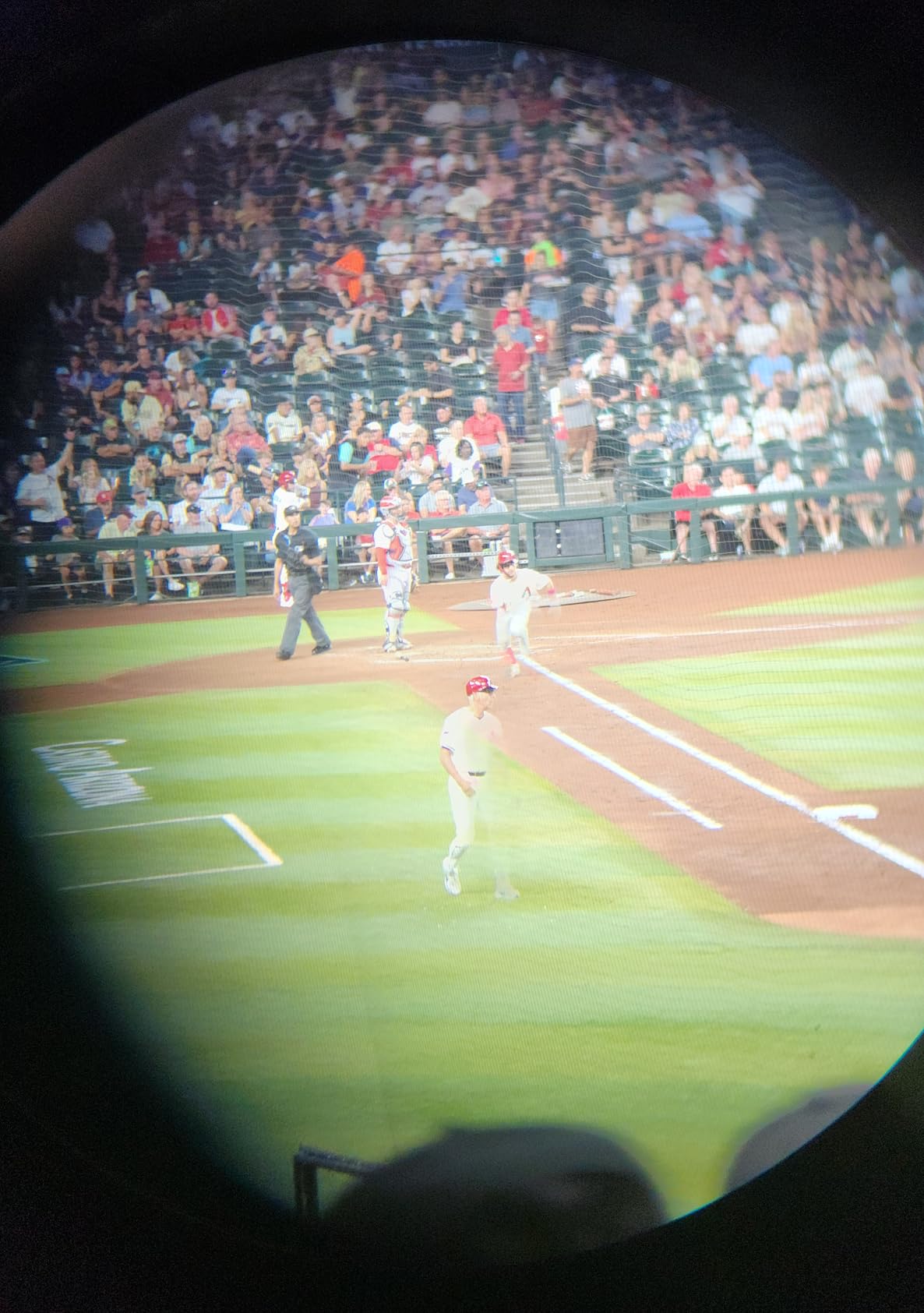
Rated 4.5 across more than 4000 ratings, it doubles as a daytime birding and scenic binocular, with a close focus of 26.2 feet. That versatility is why it stays in circulation year after year.
Where this one earns its spot
For constellation tours, Milky Way scanning and finding your way around the sky, wide field beats magnification every time. Cometron shows the whole sword of Orion or the handle of the Big Dipper in one relaxed sweep.
Focus is set once per barrel, which is actually the right choice for astronomy. Both eyes should be fixed on a target before you start, and a centre focus wheel tempts you to hunt constantly.
Where its limits show
There is no way to talk this one up as an all-purpose astronomy glass. Seven power cannot resolve lunar craters, planets or the smallest deep sky objects, so it complements a telescope rather than replacing one.
The 13mm eye relief is tight, which makes it uncomfortable for glasses wearers unless you can push the eyecups down and get very close. A tripod socket is built into the body, but the adapter itself is not included.
4. Pentax SP 10×50 WP – For Sharp Colour and Rugged Builds
Pentax SP 10×50 WP Binoculars (Black) for Star Watching Bird Watching Outdoor, Default Title
10x50
20mm eye relief
5 degree field
Submersible to 1 m
Pros
- Very little chromatic aberration
- Stays in collimation for years
- Waterproof to one meter
- Center focus with a focus lock
Cons
- Only 97 ratings to judge it by
- Narrow field for a 10x50
- 1.06 kg is heavy in the hand
Pentax built this one for people who already own serious glass. Owners who compare it against Leica and Nikon flagships say it gets close for a fraction of the outlay, and I can see why: the moon came through with almost no colour fringing at the edge of the field.
The 20mm eye relief is the longest of the handheld 10x50s here, so glasses wearers get the full picture without pressing in. The rigid body is sealed and nitrogen filled, rated submersible to one meter, which makes it the most weatherproof option in the group.
What stands out in the field
Reviewers report resolving lunar crater detail, the Orion Nebula, the Pleiades and Messier clusters, plus the Andromeda Galaxy even from a light-polluted site. The precision focus wheel with a focus lock is a genuinely useful addition once the target is centred.
Because the body is rigid, owners who buy it as an occasional birding binocular report it staying in alignment for years. A limited 25-year warranty sits well above the one-year terms common in this price bracket.
Why you might pass
The review base is small, with only about 100 ratings. That makes it hard to judge long-term reliability statistically, and it is a less common find than the Celestrons and Bushnells in this list.
The field of view of roughly 5 degrees is narrow for a 10×50, which slows down sky scanning. At 1.06 kg it is also a heavy carry, and the bundled lens caps are widely criticised for falling off.
5. Vortex Triumph HD 12×50 – For More Power Without a Tripod
Vortex Triumph HD 12×50 Binoculars
12x50
4.17mm exit pupil
16mm eye relief
1.6 lb
Pros
- Noticeably more reach than a 10x50
- Nitrogen purged and fogproof
- Light 1.6 pound body
- Lifetime transferable warranty
Cons
- 4.17mm exit pupil dims faint targets
- Roof prism needs good collimation
- 16mm eye relief is tight for glasses
Most people ask for a 10×50 because it is the safe answer. The Triumph HD 12×50 makes me reconsider that habit, because 12x on 50mm glass still sits inside the handheld range and shows noticeably more planetary detail.
The HD optical system uses optimised glass elements for resolution and reduced chromatic aberration, and the lenses are fully multi-coated. The result is an image that stays defined toward the edge of the field, which matters when you are scanning rather than locked on a single target.
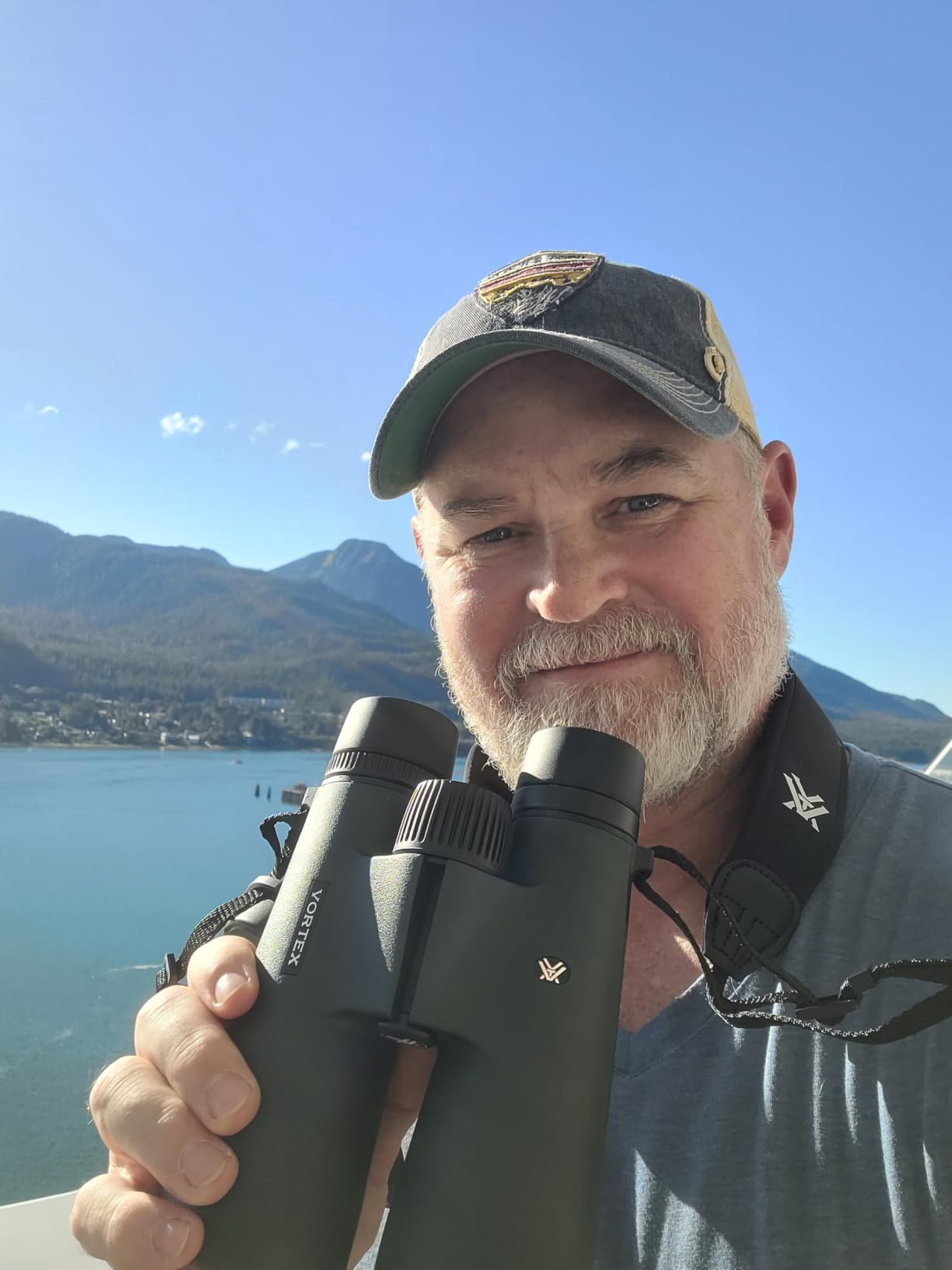
At 4.6 stars with a very small percentage of one-star ratings, owner satisfaction is unusually high. Buyers consistently highlight the balance, the rubber armour grip and the fact that the body is light enough for a long walk to a dark site.
A neck strap and adjustable harness are included, so you can carry it hands-free while climbing to a viewpoint. The Vortex lifetime warranty applies here too, which matters for roof prism models where alignment is the usual weak point.
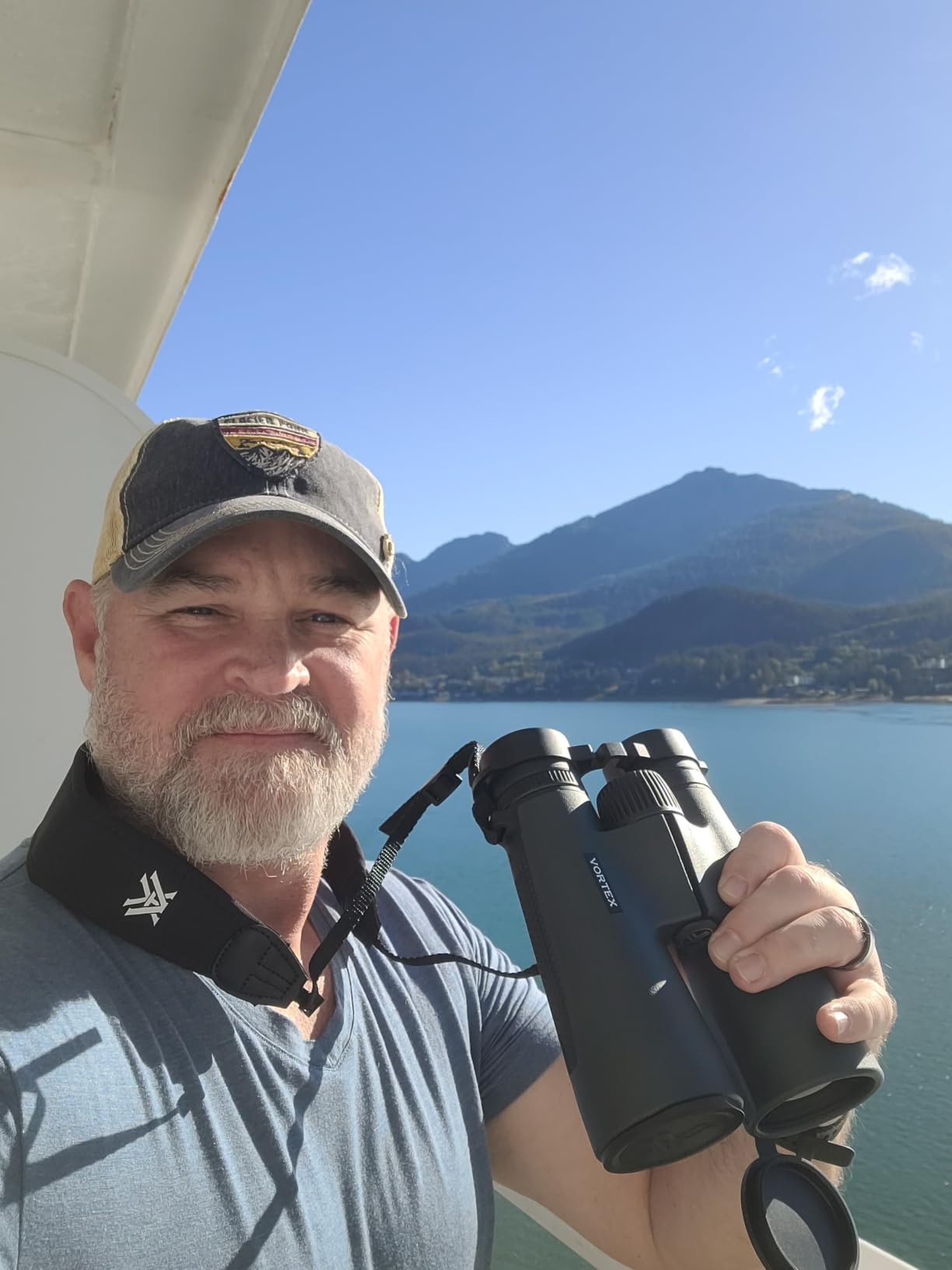
Why choose 12x instead of 10x
On a steady evening under a tripod, 12x resolves the Orion Nebula as a larger, more textured patch than 10x gives you. It is the difference between seeing an object and beginning to study it.
Handheld, 12x is still manageable at 1.6 pounds where 15x and above becomes a real effort. That makes this the highest power I would consider using without support.
Where the trade-off bites
The 4.17mm exit pupil gathers less light than a 10×50 for the faintest targets, so a dark sky matters more here. In heavy light pollution the smaller exit pupil is a genuine disadvantage compared with the Cometron.
Roof prism designs demand good collimation to avoid edge softness, and 16mm of eye relief is on the tight side. The warranty also excludes loss, theft and cosmetic damage.
6. Bresser Wave 10×50 – For Eyeglass Wearers and Wet Weather
Bresser 1331050 10×50 Wave Waterproof Binoculars with BaK-4 Glass, UR Coating and Eyepieces for Use at Dusk and Astronomy – Grey
10x50
BaK-4 glass
758 g
Twist-up eyecups with dioptre
Pros
- Comfortable with glasses
- Light 758 g for a 10x50
- Full multi-layer and UR coatings
- Waterproof and gas filled
Cons
- Modest power for astronomy
- Roof prism less forgiving of misalignment
- Narrow field of view
The Bresser Wave solves one problem better than anything else here: wearing glasses. The LE eyepieces with twist-up eyecups and dioptre compensation let you keep your glasses on and still see the whole field, which removes the most common comfort complaint among stargazers.
BaK-4 glass with full multi-layer and UR coatings on the lenses is a serious specification for a binocular at this level. Protective gas filling stops internal fogging in damp conditions, and the waterproof shell handles rain and spray.
What works well here
At 758 grams it is the lightest 10×50 in this roundup, so long sessions and walking sessions are easier on your arms and neck. The roof prism layout keeps the body compact and well balanced.
Owners like the metal mid-drive focus for its solid, precise feel. The box includes a strap, a protective cover and a carry bag, and the same binoculars are offered in 10×42, 8×42 and 12×50 if you want to change power later.
Where it is not the answer
Ten power is modest for astronomy, so lunar craters and planets stay soft. The field of view of 91 meters is also narrower than dedicated astronomy glass, which slows down sky sweeping.
The warranty length is not stated in the listing, and the review base of about 150 is small. Roof prism assemblies are generally less forgiving of alignment errors than Porro designs.
7. Celestron SkyMaster 25×70 – For Maximum Detail on the Moon
Celestron SkyMaster 25×70 Binoculars for Astronomy, Long-Range & Wildlife
25x70
2.8mm exit pupil
2.7 degree field
1474 g
Pros
- Highest power in the line except the giant glass
- 70mm objectives keep the image bright
- Built-in tripod adapter
- Carrying case and rainguard included
Cons
- Essential tripod at this power
- Included adapter wobbles
- 2.7 degree field is very narrow
Twenty-five power is as much as a pair of binoculars can deliver before the image becomes a shimmering mess. The SkyMaster 25×70 is the tool for that last step before a telescope becomes necessary, and on a solid tripod the Moon rewards you with visible craters along the terminator.
Reviewers report resolving the Orion Nebula, Andromeda with its two satellite galaxies, the Pleiades, the Double Cluster and Jupiter’s Galilean moons. That is an experienced list of targets for a binocular.
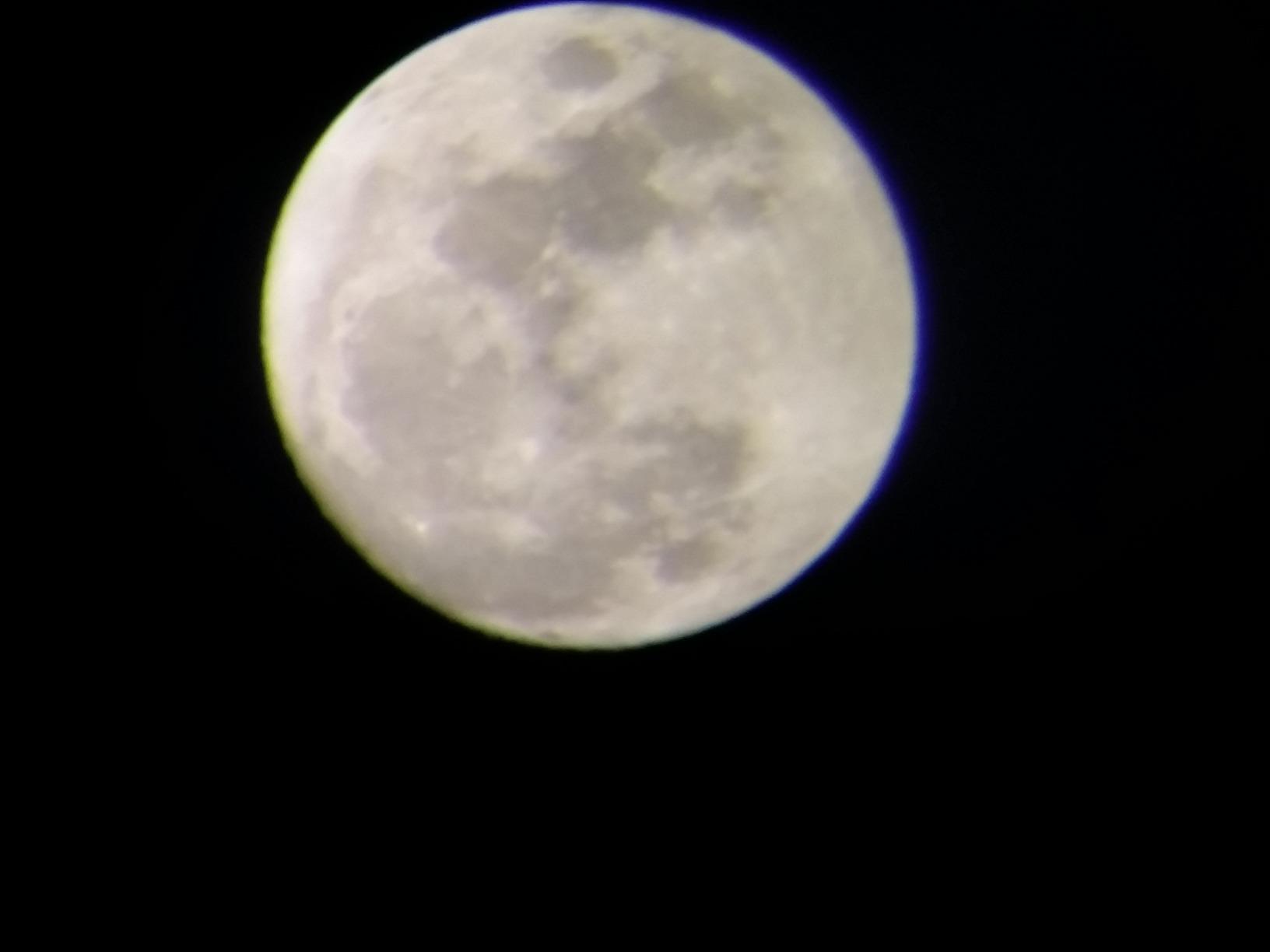
With more than 9100 ratings it is the second most reviewed product here, and the consensus is that it delivers far more than its specification sheet suggests. BaK-4 prisms keep the image bright for a binocular gathering this much magnification.
Note the narrow field of view of 2.7 degrees. You will spend real time searching for a target and then keeping it centred, so this is a stationary instrument rather than something for walking around with.
What makes it worth the tripod
Magnification is the only way to see surface detail on the Moon, and 25x is enough to start seeing ridges and crater walls cast in shadow. Mars and the larger craters of the lunar surface are the two targets that reward this power most.
The built-in 1/4-20 tripod adapter means the glass mounts in seconds with no extra part to buy. A rubber-armoured, water-resistant housing and a limited lifetime warranty round out a solid package.
What to be careful about
The supplied tripod adapter allows noticeable wobble that takes several seconds to settle, so budget for a metal adapter. The focus wheel is also very sensitive, with slight play reported by owners.
Some buyers report internal dust or barrels arriving out of collimation, and colours can look slightly washed out. Check alignment against a bright star early, and keep the box for returns.
8. Sogries 25×100 – For the Faintest Deep Sky Objects
Sogries 25×100 Astronomy Binoculars for Stargazing High Powered Long Range
25x100
4mm exit pupil
2.8 degree field
8.8 lb
Pros
- Largest objectives in this roundup
- Nitrogen filled and fogproof
- Individual focus works well for planets
- Leather backpack included
Cons
- 8.8 lb needs a proper tripod
- Very narrow field of view
- Interpupillary range suits few face sizes
A hundred millimetre objective is the largest amount of light gathering you can realistically carry, and that is the whole argument for this model. Owners report clearly seeing Jupiter’s moons and the Orion Nebula from a suburban backyard, which says a lot for the light grasp.
Optically it is specified properly: premium BaK-4 prisms, fully multi-coated elements across six lenses in four groups, and a rubber-armoured metal housing. Owners consistently describe the views as crystal clear with smooth, easy focusing.
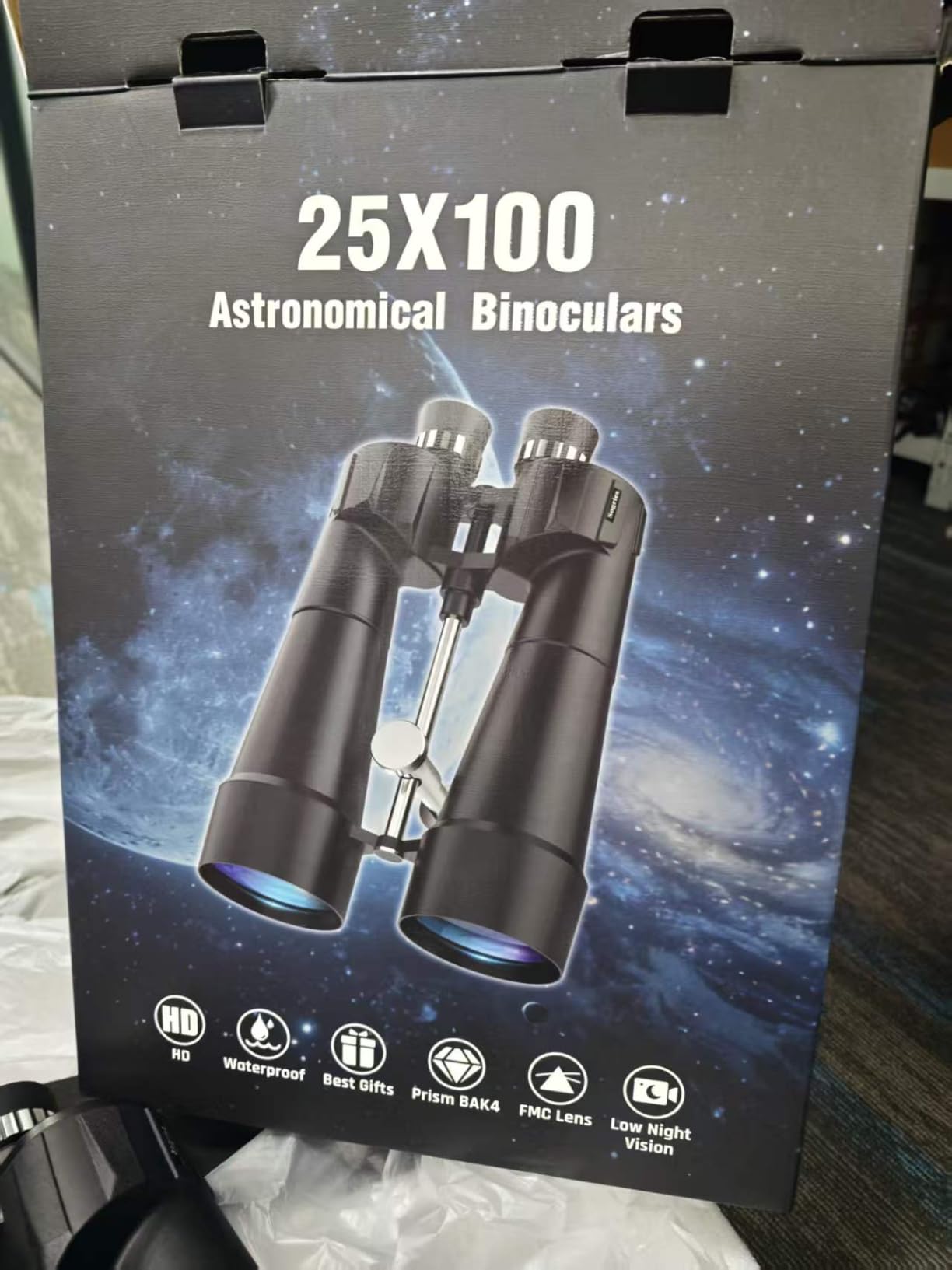
This is a serious instrument rather than a casual grab-and-go. At 8.8 pounds, a sturdy tripod is mandatory, and the narrow 2.8 degree field means locating targets takes patience.
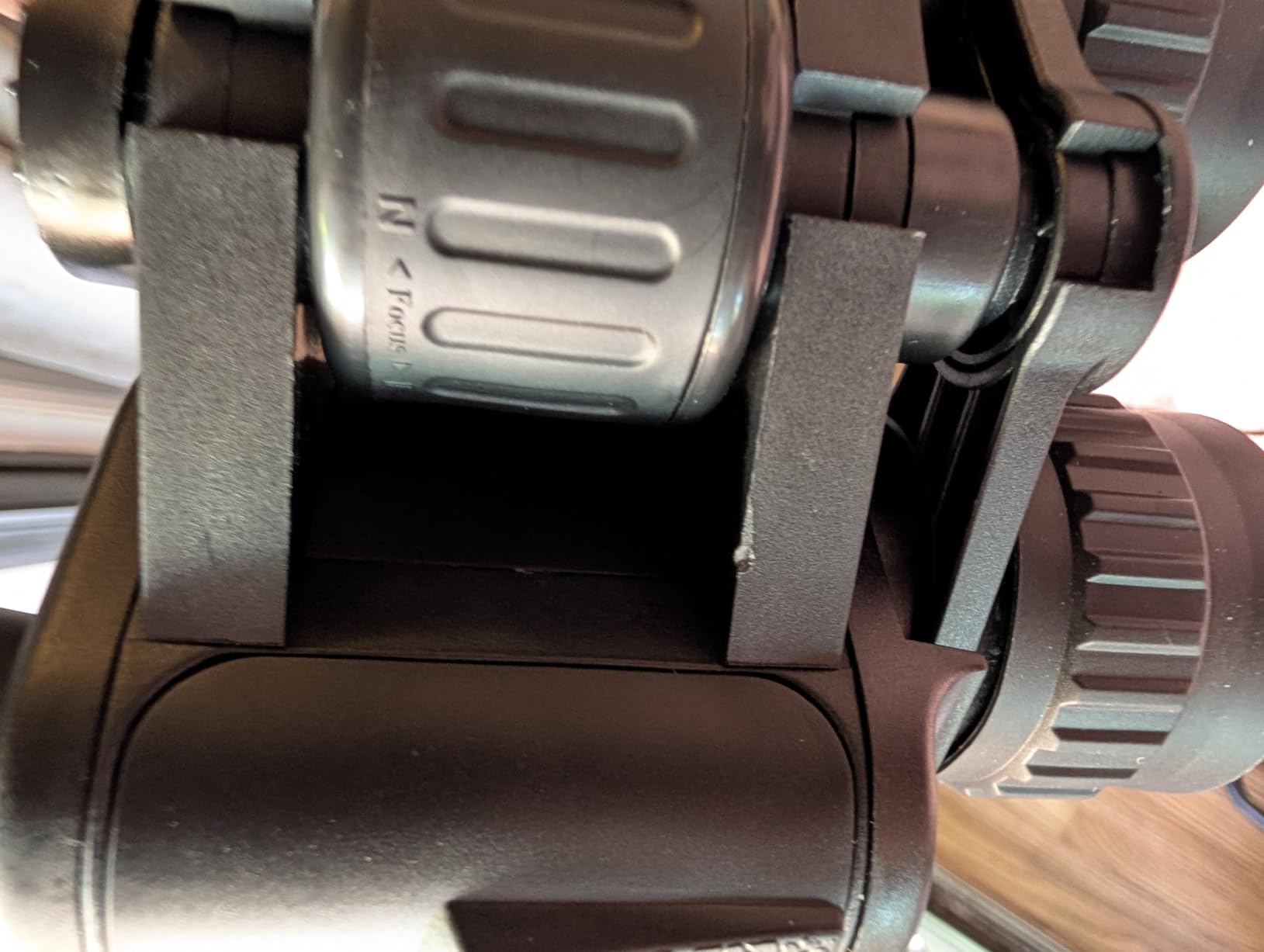
Individual focus on each barrel suits astronomy well, since you set both eyepieces once and leave them alone. It also removes the centre focus wheel that can shift under load at this size.
What the extra aperture actually gives you
Light gathering scales with the square of aperture, so these objectives collect far more than a 50mm lens. That translates directly into faint nebulae, galaxies and clusters that simply do not show through smaller glass.
If your skies are dark, that extra light is the difference between a grey smudge and a shape with structure. For suburban and urban observers working against light pollution, it helps more than any other single specification.
Where it becomes impractical
Nearly every reviewer flags the weight, and a tabletop tripod is not enough. A proper mount is the real cost of entry to this class, and that is why I ranked it below the smaller models despite the optics.
Some users also report that the interpupillary adjustment range does not suit smaller faces, which makes it a poor choice for children. A 2 year warranty is short for hardware of this size.
9. Sogries 20×80 – The Only One With Phone Digiscoping Kit
20×80 Astronomy Binoculars for Adults High Powered
20x80
4mm exit pupil
17mm eye relief
2.08 kg
Pros
- Phone adapter and tripod kit in the box
- Bright detailed lunar views
- Well damped focus ring
- 1/4-20 thread included
Cons
- Bulky for travel and hiking
- Included tabletop tripod is too small
- Some eyepiece housing cracks
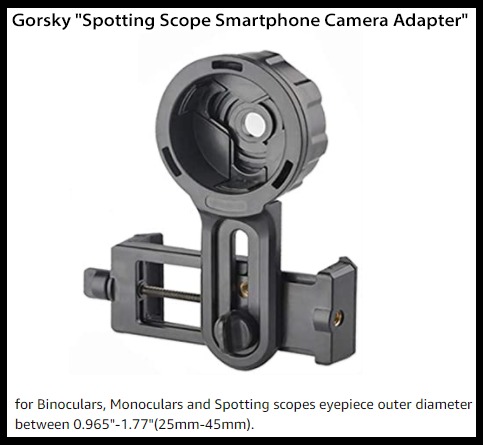
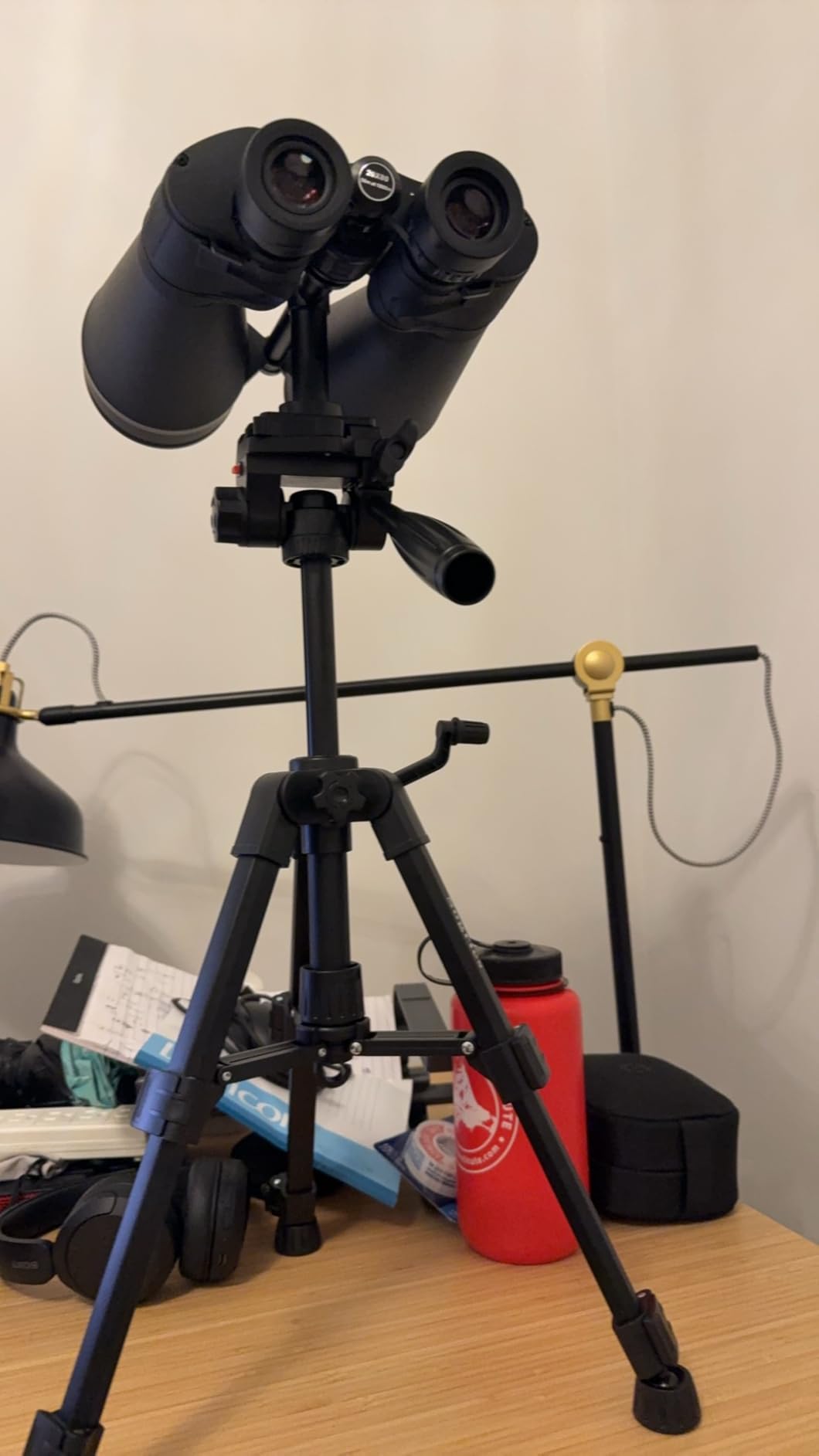
Most competitor reviews talk about phone astrophotography as an idea. This one includes the hardware: a phone adapter, a tripod kit and a 1/4-20 thread built into the body to kill vibration. It is the most straightforward route here to photographing the Moon through a phone.
The 20x and 80mm pairing gives a 4mm exit pupil, which owners describe as bright and clear at night. Multiple reviews mention detailed lunar views and excellent nighttime brightness, plus a well damped focus ring that does not shift.
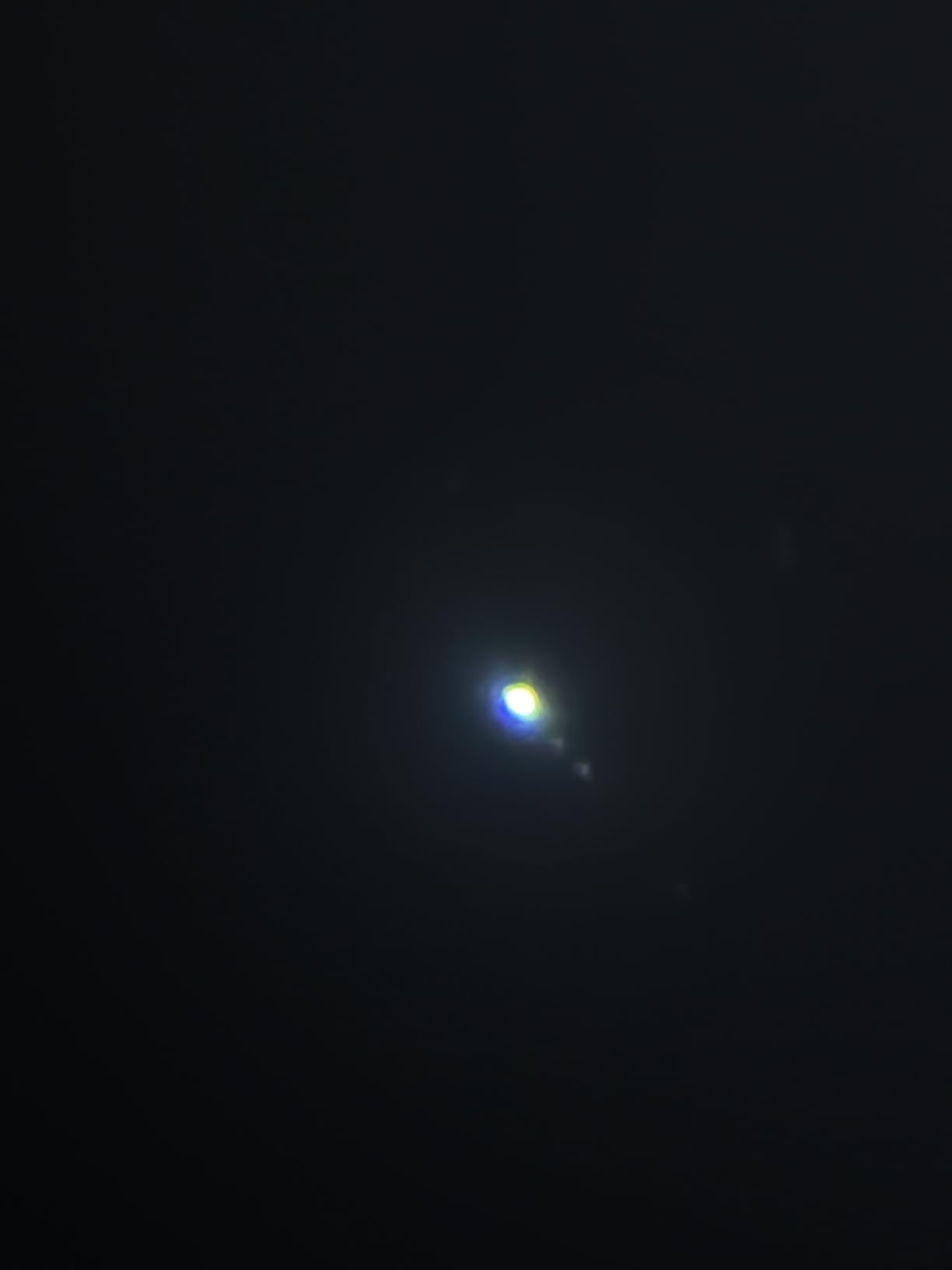
BaK-4 prisms support the low light claim, and the housing is rubber-armoured, waterproof and O-ring sealed. A padded carry case, strap and inner leather bag are also in the package.
At 2.08 kg this sits in the middle of the weight range among tripod models. Owners treat it as a fixed-position instrument that also handles daytime birding and distance work.
Why the accessory package matters
Most people buying a binocular already own a phone and a tripod. Having the adapter included removes the two things that usually stop a first digiscoping attempt, which is why this model earns its place.
The 17mm eye relief and plus or minus 5 diopter adjustment also make it workable with glasses, which is more than several 20x models in this list manage.
What to be aware of
The bundled tabletop tripod is really a handle rather than a mount, and owners report noticeable wobble when they try heavier photo tripods instead. Budget for a proper support.
A few owners have reported the eyepiece housing cracking around the focus mechanism, so check it early. The 2 year warranty is also shorter than the coverage on the Celestrons in this roundup.
10. Bushnell Falcon 10×50 – For Everyday Dual Use
Bushnell Falcon 10×50 Wide-Angle Binoculars
10x50
5mm exit pupil
9mm eye relief
Fully coated
Pros
- InstaFocus lever is quick and simple
- Clear images for the money
- Compact and easy to carry
- Waterproof with grip pads
Cons
- Only 9mm eye relief
- InstaFocus lever can feel noisy
- Loose eyepiece caps
The Falcon has been in circulation for years with a large installed base, and for most owners it is a general-purpose binocular that happens to work well at night. The 10×50 specification with a 5mm exit pupil matches a dark-adapted eye well.
What sets it apart is the InstaFocus lever, which is a single pull-and-adjust control for both focus and interpupillary distance. For anyone whose eyes differ, that is faster than wrestling with two separate controls in the dark.
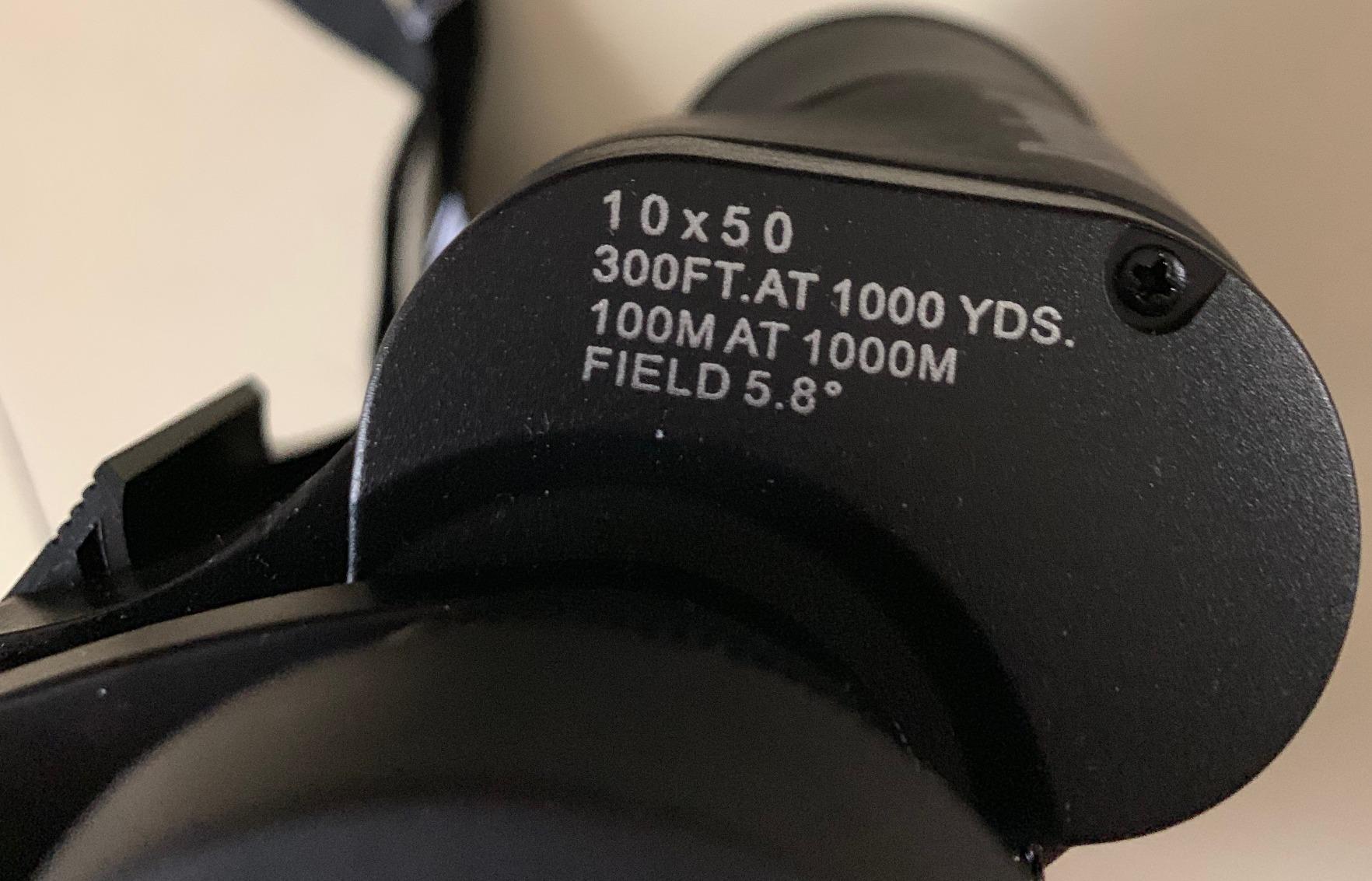
Owners consistently praise clarity, quick operation and value across more than 6500 ratings. A 4.5 average with a long history is a good sign for a design that has not changed much.
The Porro prism body is fully coated and waterproof with all-weather non-slip grip pads, and the fold-down eyecups can be left down when worn around the neck.
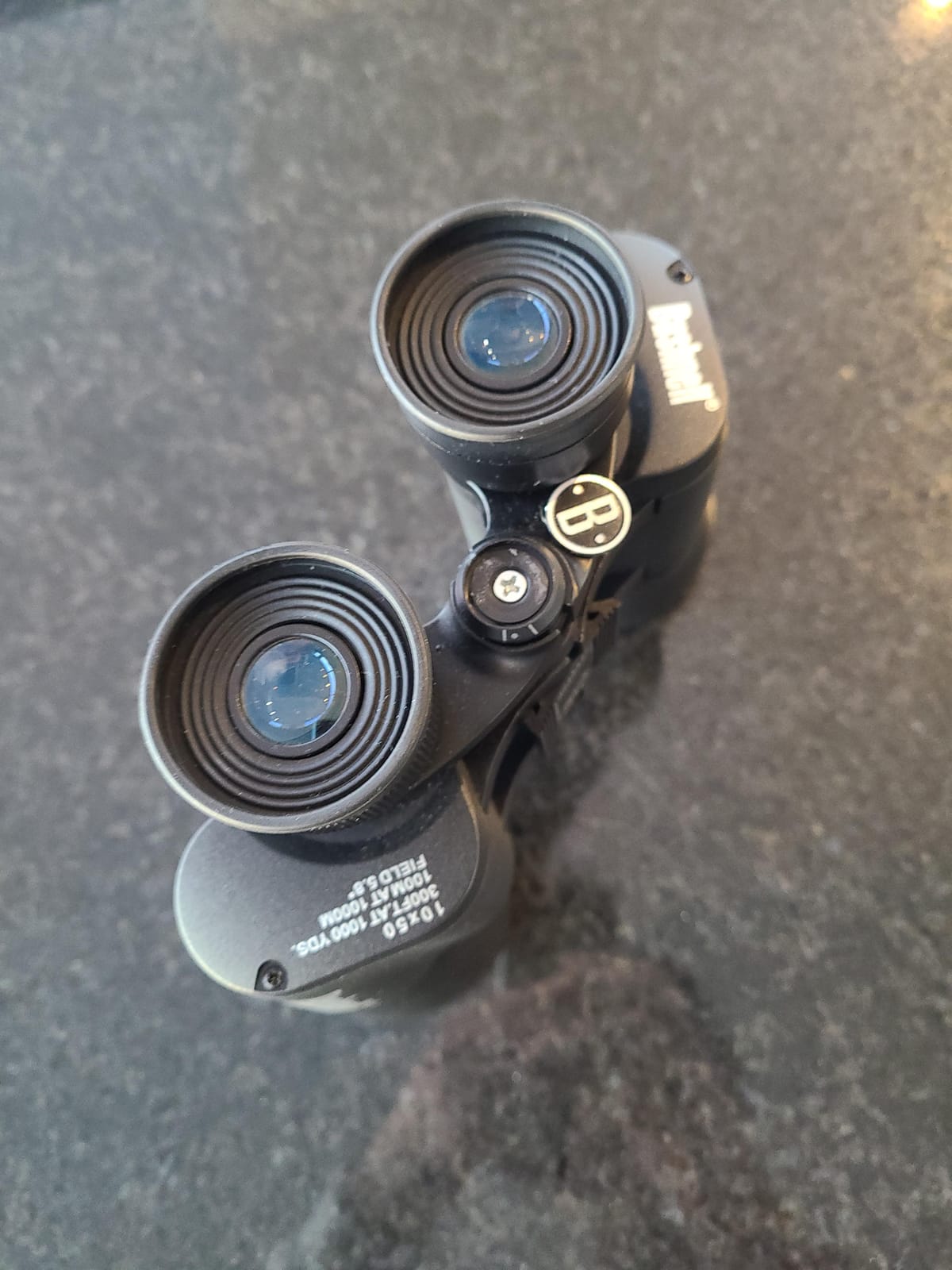
Why it suits a mixed wardrobe
Most owners buy it for sport and travel, then end up using it at night. The 60 degree apparent field of view is generous for daytime scanning and wide enough to sweep the Milky Way on foot.
At 830 grams it carries comfortably in a day pack, and the fully adjustable neck strap keeps it secure when you are moving between viewing spots.
What limits it for the night sky
Nine millimetres of eye relief is the shortest of the 10x50s here, and glasses wearers generally need to remove them and press close to the eyepiece. That is the single biggest drawback for a stargazer.
Fully coated rather than fully multi-coated optics mean less flare control under moonlight, and some owners report the InstaFocus lever developing a noisy, crunchy feel with age.
11. Bushnell PowerView 20×50 – For Daytime Reach
Bushnell PowerView Porro Prism 20x50mm Binoculars
20x50
2.5mm exit pupil
3.2 degree field
1.9 lb
Pros
- Real reach at 20x
- Compact for its power
- 45 foot close focus
- ±5 diopter adjustment
Cons
- Only a 1 year warranty
- Handheld views shake heavily
- Dimmest image in this roundup
The PowerView 20×50 is built for distance, and at under two pounds it is far more portable than most 20x binoculars. The narrow 3.2 degree field is ideal for picking out a distant bird or a ship, and the 45 foot close focus handles detail work.
For astronomy it works, but with clear limits. The 2.5mm exit pupil produces a noticeably dimmer image than slower models, and handheld views at 20x shake heavily enough to be frustrating.
Owners like the patented one-touch InstaFocus system, which keeps subjects sharp without constant readjustment. The rubber armour absorbs shock and the housing is waterproof.
Rated 4.3 across more than 2100 ratings, the feedback is steady rather than ecstatic, and the consensus is that it does what it claims for the money.
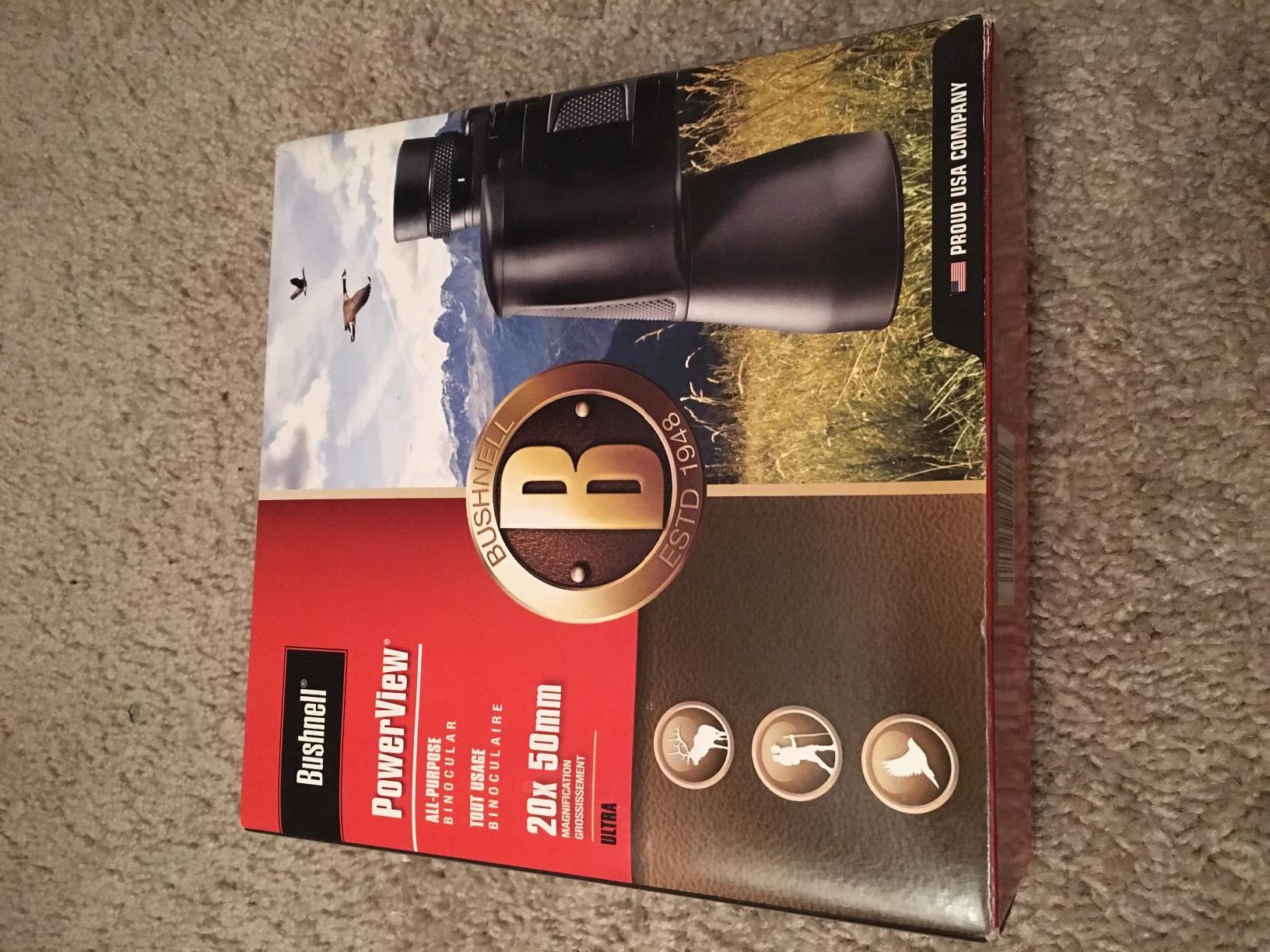
When it makes sense
If you want one pair of binoculars for daytime distance work and occasional moon viewing, this is a reasonable compromise. The power is there when you put it on a tripod.
The plus or minus 5 diopter range is the widest adjustment here, which helps if one eye needs significantly more correction than the other.
Why astronomy buyers may want something else
A one year warranty is the shortest in this group, and the exit pupil of 2.5mm wastes light in exactly the conditions where you need it most. Under a dark sky, brighter glass is worth more than extra power.
Eye relief of only 9mm is also tight for glasses. If astronomy is your main interest rather than a hobby, spend that budget on a 10×50 or a 15×70 instead.
12. FLYANT 20×50 – For Travelling Light
20×50 High Powered Binoculars for Adults, Waterproof Compact Binoculars with Low Light Vision for Bird Watching Hunting Camping Travel Cruise Hiking Sports Stargazing, Christmas Birthday Gifts for Men
20x50
BaK-4 prism
26mm eye relief
0.89 kg
Pros
- Lightest 20x in this roundup
- Huge 26mm eye relief and eyepiece
- Non-slip rubber focus wheel
- Waterproof body
Cons
- 2.5mm exit pupil is dim
- Still needs a tripod at 20x
- Claimed 180 degree field is unrealistic
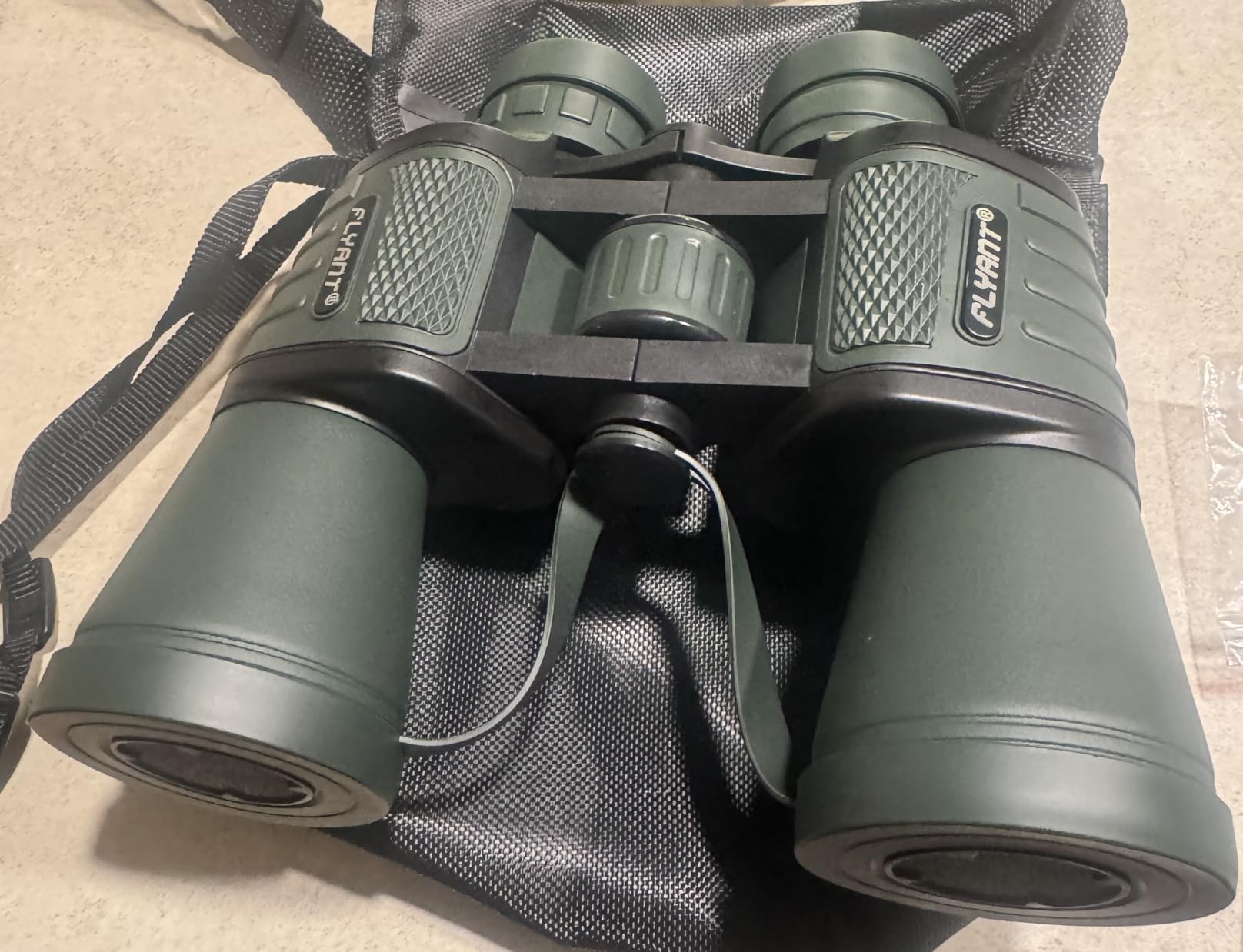
The FLYANT 20×50 is unusual for putting genuine 20x power into something under a kilogram. Most 20x binoculars are a two-handed instrument; this one can be carried over the shoulder on a long walk to a dark site without dominating your pack.
Specification-wise it is a BaK-4 Porro prism with multilayer-coated aspherical elements and a green multi-coated objective. Owners who have taken it out at night report a bright, low-light image that suits casual moon and dusk viewing.
Rating 4.3 across more than 5400 ratings gives it a large sample, and the most common theme is comfortable handling. The soft rubber focus wheel takes one finger, which is genuinely useful when you are wearing gloves on a cold night.
That 26mm eye relief is the longest in this roundup, and combined with the large 26mm eyepiece it should be among the most comfortable models for glasses wearers.
Why portability wins here
The biggest barrier to regular stargazing is not optics, it is convenience. A binocular you can leave in the car and carry in one hand gets used far more often than one that needs a mount set up first.
Available in several finishes including green and camouflage, it is also a tripod-mountable design, so you can upgrade to a support when the power starts to matter.
What to watch
The 50mm objective and 2.5mm exit pupil mean a visibly dimmer image than 70mm glass, which is a real cost in dark conditions. Twenty power handheld still shakes, so a tripod is needed for steady views.
The listing states the waterproof body should not be immersed, and the claimed 180 degree apparent field of view is not representative of usable sky coverage. Treat the specification with care.
13. Aurosports 20×80 – The Budget Route to 80mm Glass
Aurosports 20×80 High Powered Binoculars, 80mm Large Aperture for Adults
20x80
BaK-4 prism
4mm exit pupil
3.2 degree field
Pros
- Large 80mm objectives at a low cost
- Bright low light images
- Build quality above the price class
- Doubles for birding on a tripod
Cons
- Some units show double imaging
- Weight makes short handholds a problem
- Not water resistant
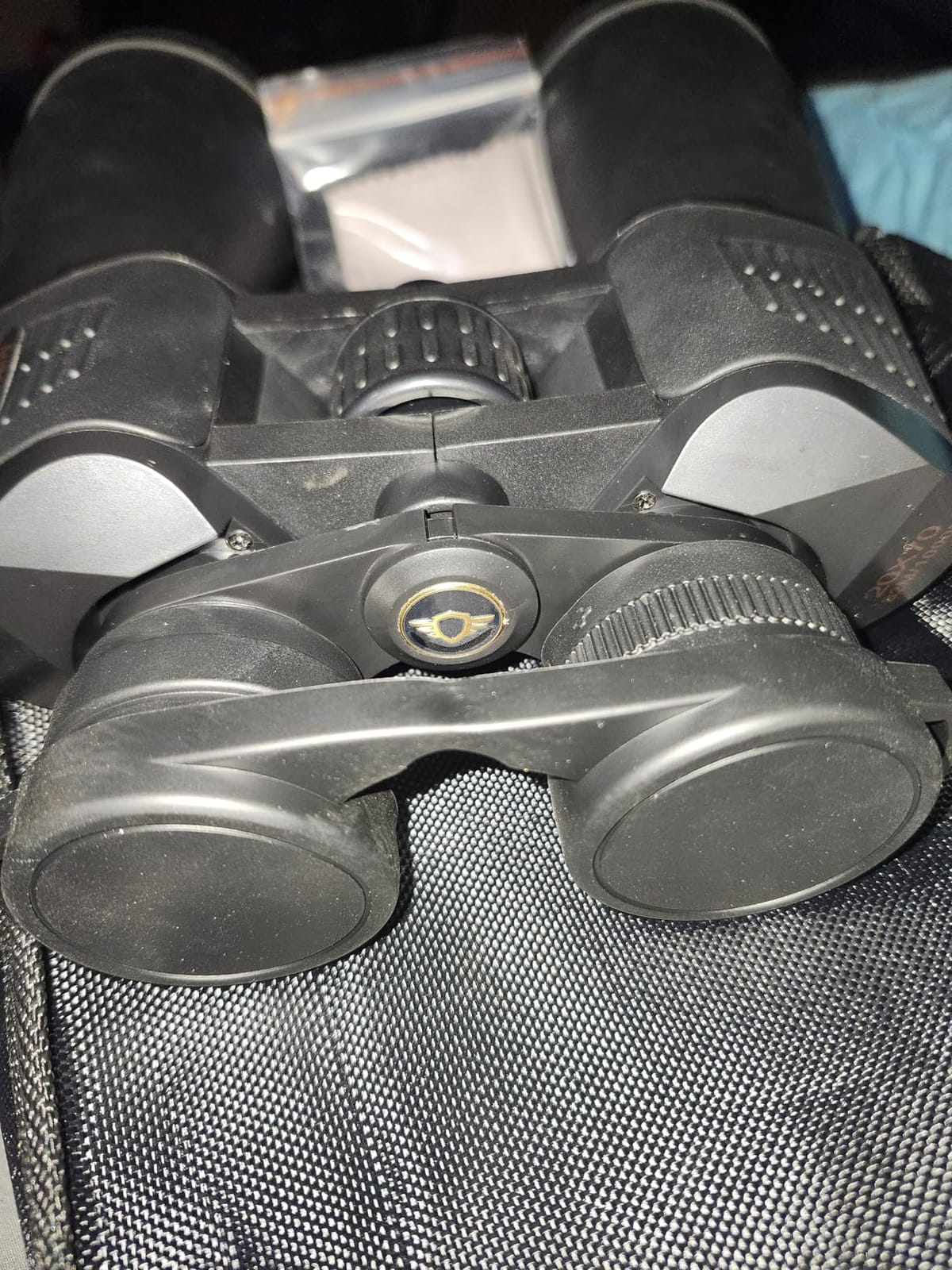
Getting from a 50mm objective to an 80mm one usually doubles the cost, which is why the Aurosports 20×80 is interesting. Owners report bright, clear low light images for the money, with BaK-4 prisms and fully multi-coated lenses doing more work than the price suggests.
At 20x you need a tripod, and the viewing angle from a tall tripod head is something first-time owners comment on. It is best used from a seated position or a low tripod at a known site.
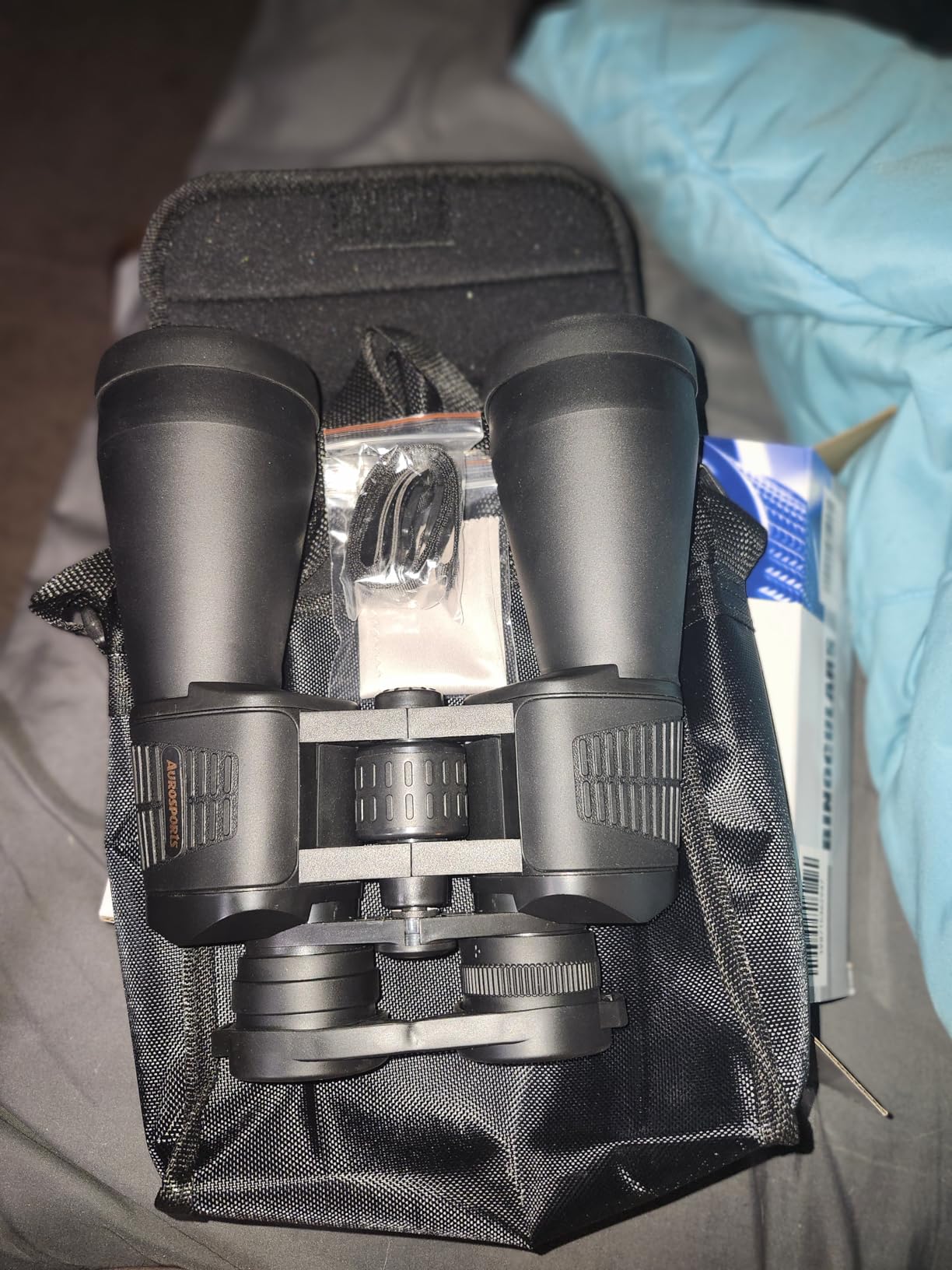
With a 4mm exit pupil, the 80mm objectives gather noticeably more light than 50mm glass. The rubber-coated exterior gives a secure non-slip grip even with cold or damp hands.
The rating sits at 4.3 across roughly 530 ratings, and the one-star reviews cluster around weight and alignment rather than brightness.
What you gain over a 20×50
Aperture is the variable that determines how faint a target you can see, and 80mm against 50mm is a large step. Faint clusters and nebulae that stay invisible in a 20×50 begin to register here.
It also works well for daytime birding and hunting on a tripod, so the money is not tied entirely to night use.
Where the reviews split
Several owners feel the true magnification falls short of the stated 20x, and some report double imaging or focus that will not hold. Test magnification against a known double star before you rely on it.
It is also not water resistant, and visible chromatic aberration is common at this level. A carrying bag, strap and lens covers are included.
14. Barska X-Trail 15×70 – The Beginner Bundle
BARSKA X-Trail 15×70 Binocular w/ Tripod Adapter & Tripod , Black
15x70
BaK-4 prism
20mm eye relief
Bundled tripod
Pros
- Tripod and adapter in the box
- Bright BaK-4 70mm glass
- 20mm eye relief suits glasses
- Shockproof rubber armour build
Cons
- Only 4.0 stars overall
- Water repellent rather than waterproof
- Fully coated not multi-coated optics
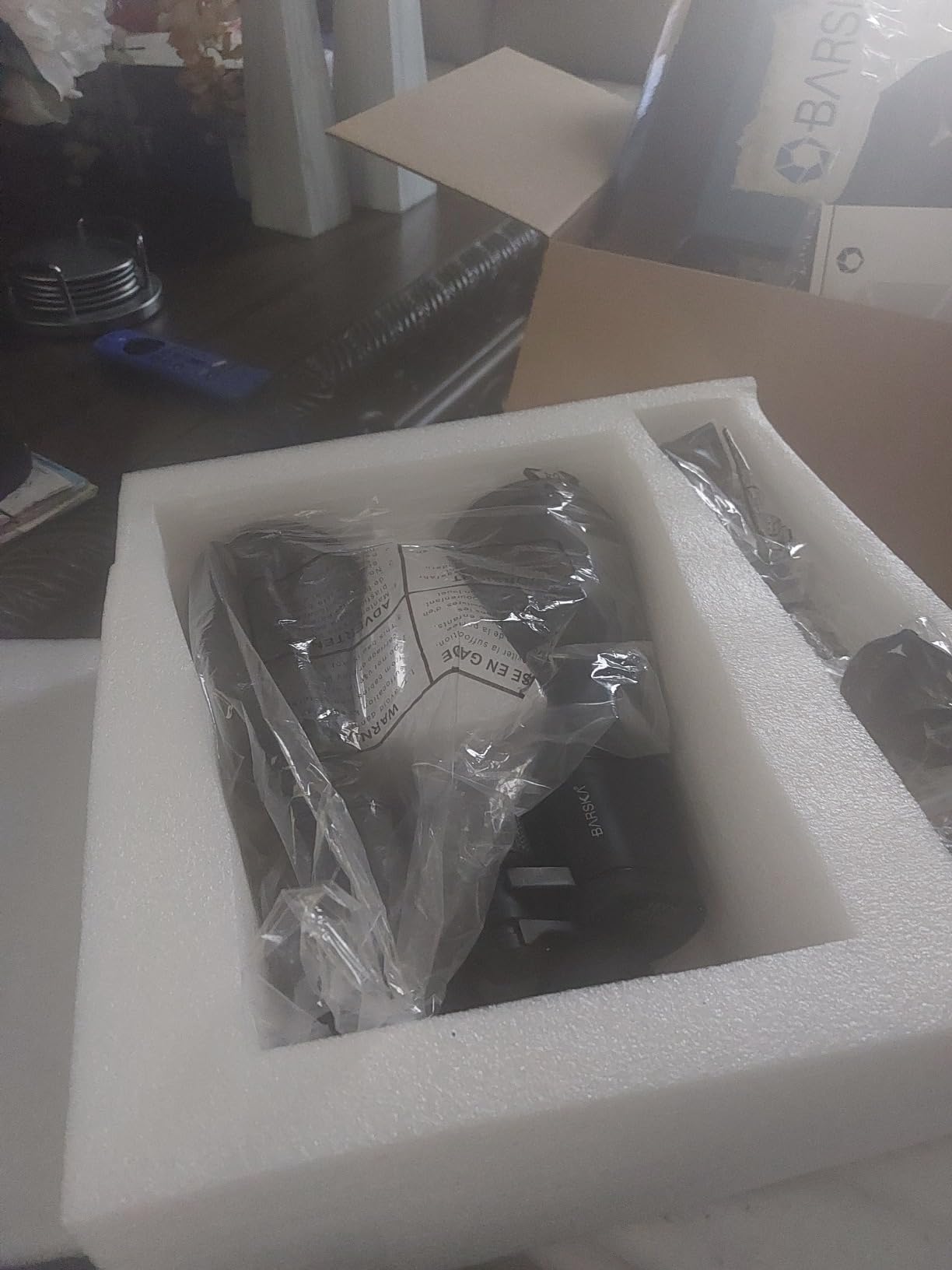
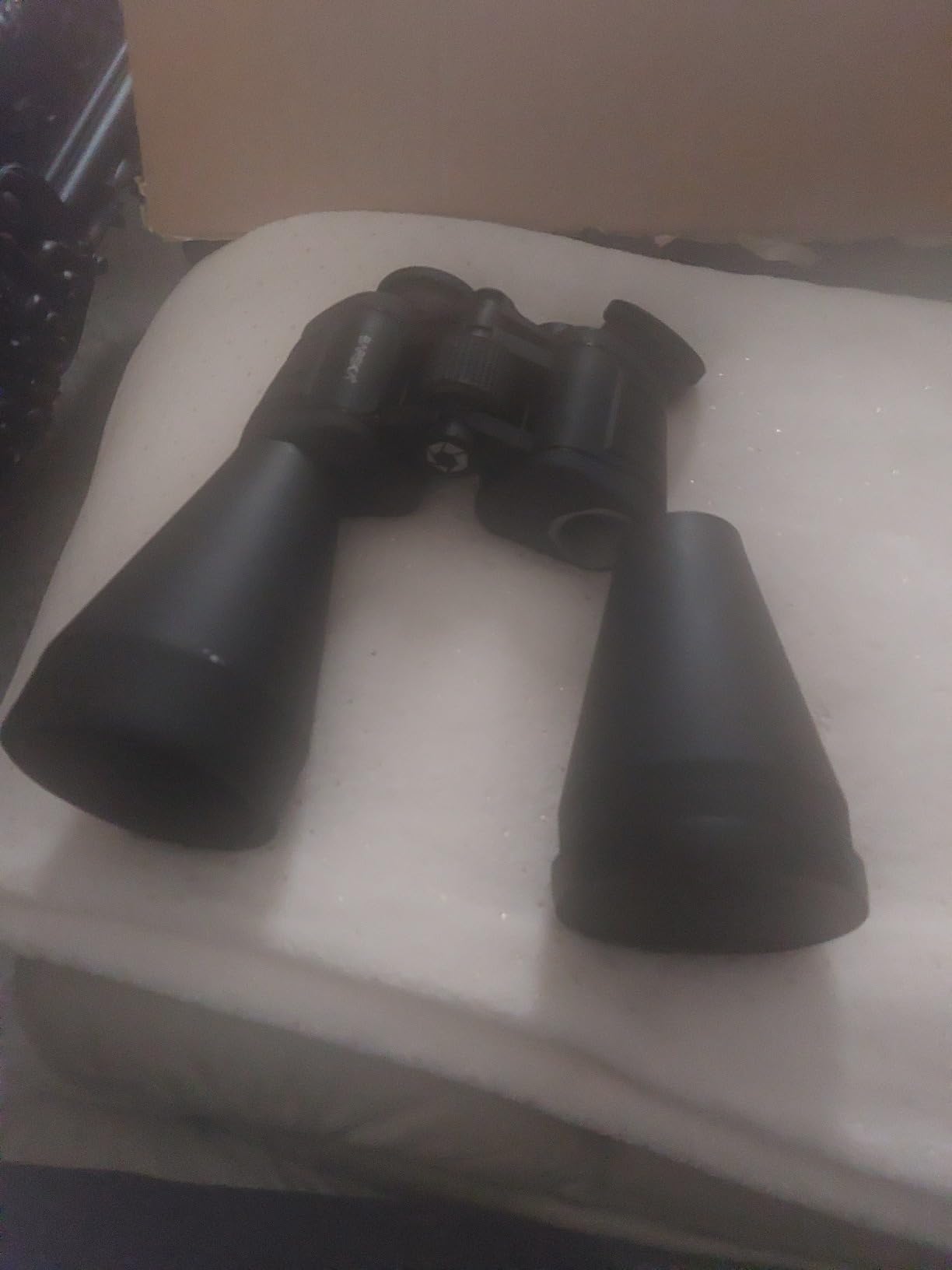
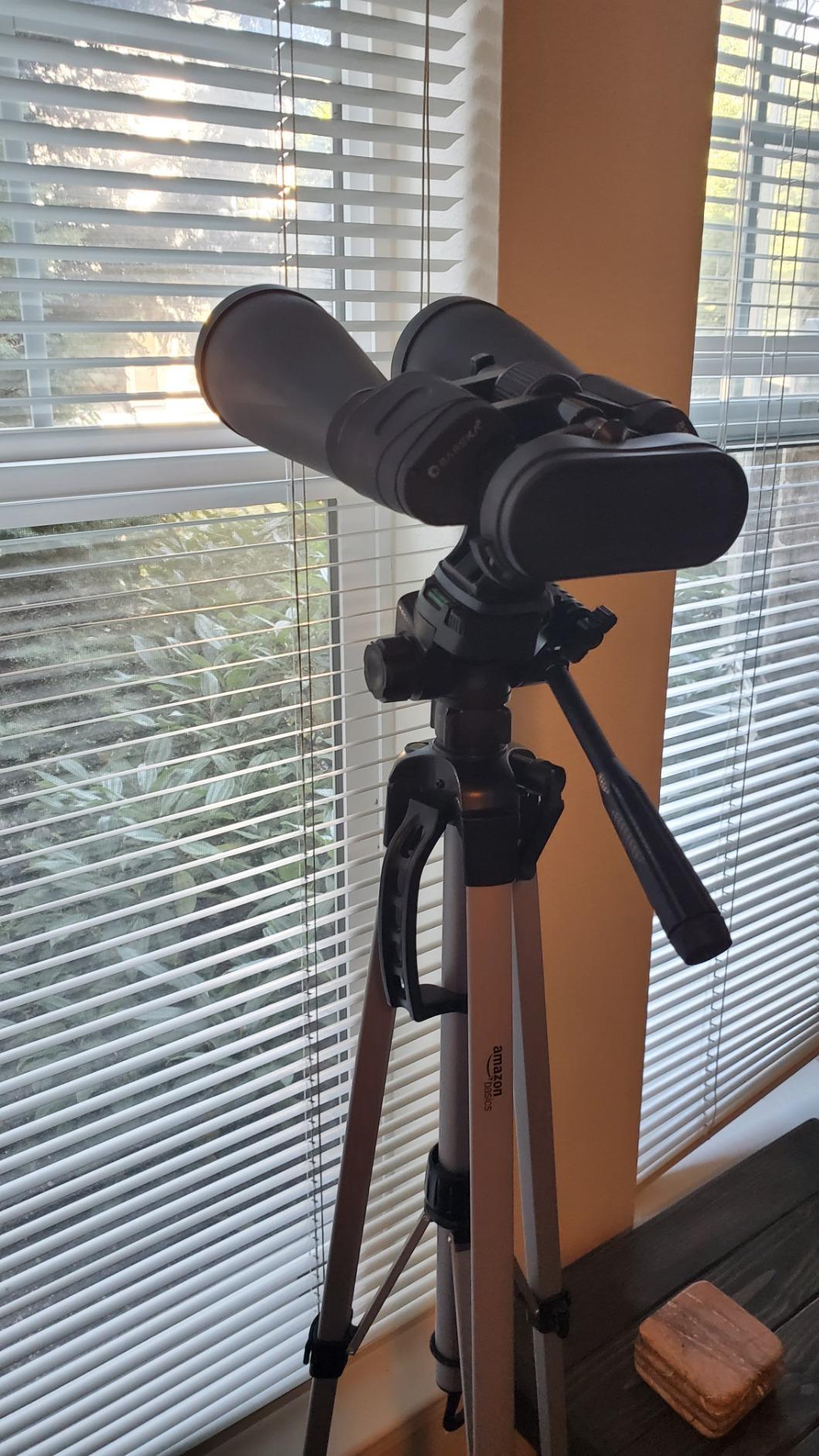
The X-Trail solves a practical problem: most 15×70 astronomy binoculars ship with a tripod socket but no tripod, which means a first-time buyer ends up making a second purchase. This one includes a tabletop tripod and adapter, plus a carry case, strap and lens covers.
BaK-4 prisms with 70mm objectives give a bright low-light image, and 15x on a 231 foot field balances power with target acquisition better than most models in this class.
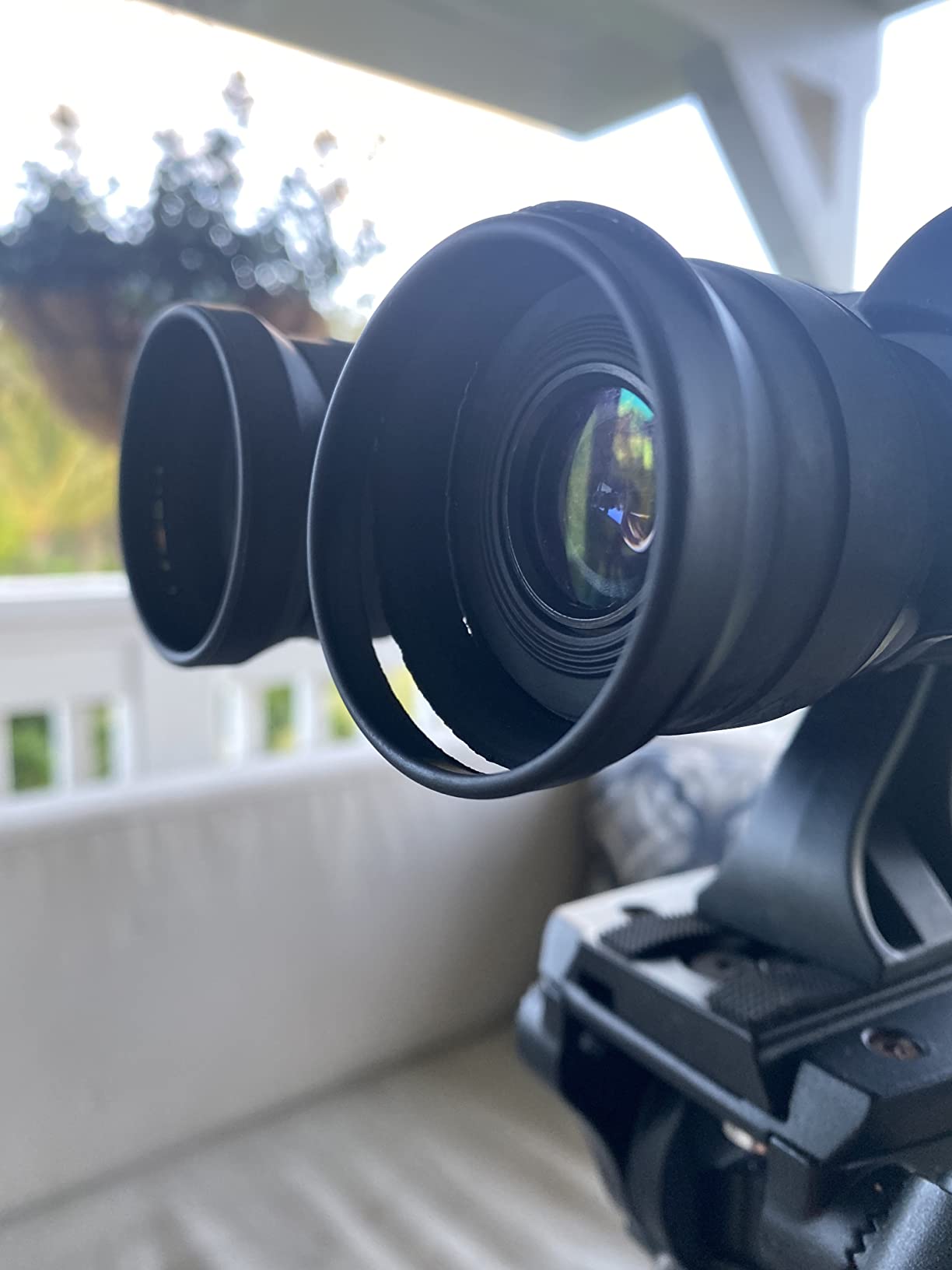
The 20mm eye relief is the second best here after the FLYANT, which makes it comfortable for glasses wearers. That is a real advantage over several cheaper 15x and 20x models.
At 4.0 stars across roughly 170 ratings, the ceiling is set by the coating class rather than the glass. Owners acknowledge the light is bright but contrast lags behind multi-coated rivals.
What makes this a good first purchase
Everything needed for a first session is in the box, which removes friction for new observers. A shockproof build with rubber armour and a braced tripod mounting post also survives being carried to a field site.
The 4.67mm exit pupil sits well inside a dark-adapted pupil, so the gathered light is actually used rather than wasted.
Why you might upgrade instead
Fully coated optics give weaker flare control under moonlight, where stray light from a bright Moon or a streetlight is the main problem. It is also only water repellent, so rain is a risk.
The bundled tabletop tripod is marginal at 15x, and warranty terms are vague. Expect to buy a proper tripod later if you take this seriously.
15. Barska Gladiator 20-100×70 – For Maximum Zoom Range
Barska AB10592 Gladiator 20-100×70 Zoom Binoculars with Tripod Adaptor for Astronomy & Long Range Viewing , Black
20-100x zoom
70mm glass
3.5mm exit pupil
Center focus
Pros
- Huge zoom range in one body
- 70mm objectives for the class
- Tripod adapter and case included
- ±5 diopter adjustment
Cons
- Weakest rating average here
- Field collapses at high zoom
- Not water resistant
Zoom binoculars are usually a mistake for astronomy, and I want to be clear about that. The problem is that zoom rings change magnification by moving internal elements, which softens the image at every step, and the field of view narrows as power rises.
The Gladiator is the clearest example of why. At 20x it behaves like a conventional 70mm binocular. At 100x the listed field collapses to 0.11 degrees, which makes finding and holding a target genuinely hard work.
Owners do like the flexibility of one body covering a wide range of distances, and the 70mm objectives give solid light gathering for the class. A tripod adapter and carry case are included.
The rating of 4.0 across roughly 180 ratings is the weakest average in this group, with 12 percent one-star feedback. That distribution reflects genuine disappointment as much as defects.
Where the zoom range helps
For long range daytime observation, being able to move from 20x to 100x without swapping instruments is convenient. The diopter adjustment of plus or minus 5 diopters also accommodates uneven vision between eyes.
As a fixed astronomical instrument on a tripod at moderate settings, the 70mm glass delivers a usable low-light image.
Why astronomy buyers should look elsewhere
Beyond roughly 20x, the narrow field and softened image make this hard to use on faint objects. Astrophotography, the reason people chase extreme binocular zoom, needs a tracking mount and a camera rather than an eyepiece.
It is not water resistant, and a tripod is required for anything beyond casual low power. The warranty terms are vague, which is another reason this ranks last.
How to Choose the Best Binoculars for Stargazing
Most buying mistakes come from chasing magnification. What actually decides how much you can see is aperture, how steady you can hold the instrument, and how much of the image your eye can accept. Here is how those numbers interact.
Magnification: more is not better
There is a hard limit to what a pair of binoculars can hold steady without support. Up to about 10x, most people can hold a pair rock steady. At 12x to 15x, careful bracing against your face works. Beyond 20x, you need a tripod, and beyond 25x you need a good one.
That is why a 10×50 shows more usable detail than a 20×50 in practice, even though the number is lower. A shaking image reveals nothing, no matter how much light it collects.
Aperture and exit pupil: where the light math lives
Exit pupil is the diameter of the light cone leaving the eyepiece, and it equals aperture divided by magnification. It is the single most useful number nobody looks at.
Your dark-adapted pupil is around 5mm to 7mm when young, dropping toward 4mm in your fifties and lower as you age. An exit pupil larger than your pupil wastes light. One far smaller than your pupil produces a dim, grey image no matter how much glass is in front of it.
That is why the 7×50 Cometron, with a 7.1mm exit pupil, is superb in bright suburban skies and underused in truly dark ones. It is also why the 2.5mm exit pupils in the 20×50 models here produce noticeably flat images.
Glass and prisms: the quality tell
BaK-4 prisms are the standard worth insisting on for astronomy. They are denser optical glass than BK-7, which keeps the image bright and the field evenly illuminated to the edges. BK-7 prisms in cheap models tend to vignette, darkening the edges and wasting the aperture you paid for.
Coatings matter almost as much. Fully multi-coated means every air-to-glass surface carries a multi-layer coating, which is the minimum I would accept. Single-coated optics lose visible brightness and produce more flare around bright objects like the Moon.
Porro prisms usually deliver a wider field and a larger apparent view, which suits scanning the sky. Roof prisms are more compact and better sealed, which suits travel and weather, at the cost of a smaller apparent field.
Field of view and eye relief: the comfort numbers
A true field of view below 5 degrees makes finding objects tiring. Anything at 6 degrees or above lets you find targets quickly and keep them centred. The 7×50 Cometron at 6.8 degrees and the 10×50 Diamondback HD at 6 degrees are the two easiest to sweep with.
Eye relief is the distance between the eyepiece and your eye at which you still see the full field. Below about 15mm, glasses wearers struggle. The Pentax SP at 20mm, the Barska X-Trail at 20mm and the FLYANT at 26mm handle spectacles best in this group.
Tripods, dew and light pollution
Anything above 12x benefits from a tripod with a 1/4-20 thread, and the barrel needs to be rigid or you will chase every wobble. Photo tripods work, but the cheap tabletop models bundled with several models here are not enough for 20x and above.
Warm humid nights fog lenses from the outside. A dew heater band, a blower and a soft brush solve most of it, and sealing warm binoculars in a bag before you bring them indoors slows temperature change.
Light pollution matters more than most guides admit. In a Bortle 6 to 8 sky, larger apertures and wider fields matter much more than magnification, and a red flashlight preserves your night adaptation far better than a white one.
What You Can Actually See With Each Class
Realistic expectations prevent a lot of disappointment. At 7x with a wide field, you are looking at constellation shapes, the Pleiades, the Hyades and the Milky Way streaming across the sky. Cometron territory.
At 10x you add the Orion Nebula, the Andromeda Galaxy, the Double Cluster in Perseus, and the craters of the Moon as soft grey circles. Open and globular clusters start to resolve into individual points rather than a blur.
At 12x to 15x, Jupiter separates into a disc with its Galilean moons as distinct dots, and Saturn becomes a small ringed shape. This is the most satisfying range for a first purchase, and the reason the 15×70 leads this roundup after the overall pick.
At 20x and above, lunar craters show relief along the terminator, larger lunar features resolve, and Mars shows a recognisable disc rather than a point. Saturn’s rings begin to show a division, though separating Titan from the planet needs steady air and a tripod.
One clarification worth repeating. None of these binoculars will show Saturn’s rings as sharply as a telescope, and no phone photograph will resemble what you see. The pleasure is in the wide, immediate view, not the magnification.
Frequently Asked Questions
What kind of binoculars are best for seeing the night sky?
A 10×50 or 7×50 with BaK-4 prisms and fully multi-coated lenses is the safest choice. These pair a bright image with a wide field and enough magnification to separate the Galilean moons of Jupiter. Anything above 15x needs a tripod, and anything with a 50mm objective is dimmer than 70mm glass in dark skies.
Can you see Saturn’s rings with binoculars?
Yes, but only as a small ringed shape rather than a detailed view. At 15x Saturn appears as an oval with a visible ring, and at 20x and above you can begin to see the gap between the planet and the rings. Sharp ring detail needs a telescope.
What magnification of binoculars is best for stargazing?
Between 7x and 15x is the useful handheld range, and 10x is the most versatile single number. Above 15x the image shakes too much to hold comfortably without support. Choose 7x for wide sky scanning, 10x for general use, and 15x for the best detail without a tripod.
Are 10×50 binoculars good for stargazing?
They are the most popular choice for good reason. The 5mm exit pupil matches a dark-adapted eye, the field of view is wide enough to find targets, and 10x stays steady in the hand. You will see the Moon, open clusters, the Orion Nebula and the Andromeda Galaxy, but not much planetary detail.
How far can you see with 20×80 binoculars?
Magnification is not distance, so the honest answer is that 20×80 binoculars show faint objects rather than far ones. The 80mm objectives gather far more light than 50mm glass, so faint nebulae and clusters that are invisible in smaller binoculars begin to show. Resolution at 20x still depends on steady air and a tripod.
Final Verdict
After comparing fifteen models, the Vortex Diamondback HD 10×50 remains the best binoculars for stargazing for most people. It has the highest rating in the group, a colour and contrast performance nothing else at this level matches, and a lifetime warranty that removes the risk.
Buy the Celestron SkyMaster 15×70 if you want more magnification without a tripod and can live with checking its collimation. Choose the Cometron 7×50 if you are learning the sky, want the widest view possible, or are buying for a child.
Move up to a 20×80 or 25×100 only once you own a tripod you are happy to leave set up. Above roughly 15x, binoculars stop being casual instruments and become a reason to plan a session, which is a good problem to have.
One last thought. If your interest is in photographing the night sky rather than looking at it, binoculars are the wrong starting point. A tracking telescope mount and a camera will get you further than any adapter, and the two work well together for wide-field views. For observing, though, the pair you grab on a cold night is the one you will actually use.