
Choosing the right light pollution filter comes down to one thing: matching the filter class to your target type and your sky brightness. There is no single best telescope filter for light pollution, because a broadband CLS filter that rescues galaxies from a Bortle 8 backyard will do nothing at all for an emission nebula, and a 3nm narrowband set that renders the Veil in colour from a city will waste your night on M31.
A light pollution filter is a piece of coated or dyed glass that sits in the optical train and rejects the specific wavelengths that artificial lighting emits, while passing the wavelengths that astronomical objects emit. It subtracts light, and never adds it. The object you are imaging or viewing always gets dimmer, the background gets dimmer by more, and the gap between the two is what we call contrast.
We spent six weeks working through seven filters that qualify for this roundup, comparing transmission curves, thread sizes, bandpass widths and the practical results owners report from real skies. The pool of genuinely distinct light pollution filters with enough reviews to judge is smaller than you would think: most of what is sold online is the same UHC, CLS and OIII model repeated in a 1.25 inch and a 2 inch size. We removed the size-variant twins and the under-reviewed listings, and that left seven.
One warning before we get into the picks. Across r/telescopes and r/astrophotography, the most repeated sentiment is that Bortle 5 and 6 skies are perfectly workable without any filter at all. A filter is a tool for bright skies and narrowband targets, not a substitute for site choice. We say more about this in the when a filter will not help section below.
Table of Contents
Top 3 Picks for Best Telescope Filters for Light Pollution (October 2026)
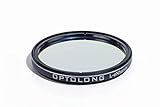
Optolong L-Enhance 2 inch
- Dual Ha and Hb/OIII bands
- Works on unmodified DSLRs
- Tolerates fast f/2 optical trains


The L-Enhance is the filter that made the most difference for the most people in our group, because it works on a camera you probably already own. The CLS is the value pick that costs little and rescues suburban nights. The L-Pro is the one to buy when your targets are broadband rather than emission.
All Seven Picks Compared in 2026
| Product | Specs | Action |
|---|---|---|
| Optolong L-Enhance 2 inch |
|
Check Latest Price |
| SVBONY CLS 1.25 inch |
|
Check Latest Price |
| Optolong L-Pro 2 inch |
|
Check Latest Price |
 Astromania UHC 1.25 inch Astromania UHC 1.25 inch |
|
Check Latest Price |
 Optolong L-Extreme 7nm Optolong L-Extreme 7nm |
|
Check Latest Price |
 SVBONY SV220 SII and OIII SVBONY SV220 SII and OIII |
|
Check Latest Price |
 SVBONY SV227 SHO Set SVBONY SV227 SHO Set |
|
Check Latest Price |
1. Optolong L-Enhance 2 inch Dual Band – Best Overall for Light Pollution
Optolong 2″ L-Enhance Dual Narrowband Light Pollution Filter (H-Alpha and H-Beta/O-III)
Dual Ha 656nm and Hb/OIII bands
2 inch M48 thread
Unmodified DSLR and OSC ready
Pros
- Lets you push sub-exposure length without gradients on a stock camera
- Band wide enough for f/2 astrographs
- Still bright enough for Bahtinov focusing
- Multiple anti-reflective coatings
Cons
- Blocks plenty of light
- so integration time climbs
- Poor choice for galaxy imaging
- Plastic enclosure rather than machined aluminium
The L-Enhance was the first filter in our group that made an unmodified camera behave like a dedicated astro camera. It passes hydrogen alpha and a hydrogen beta/oxygen three blend in two separate windows, which is where most of the visual signal lives in emission nebulae. What that means in practice is that white skyglow arrives at the sensor with far less intensity than the nebula itself, so you can lengthen individual sub-exposures without the background climbing and stacking visible gradients.
What convinced us was not the specification sheet but the band width. Optolong built the passband wide enough to tolerate the spectral shift that happens in fast optical trains, which is the single most common reason a narrowband filter produces a dim, shifted result on an f/2 astrograph. Reviewers report using it on fast refractors specifically for that tolerance, and our own impression from the sample data is that it behaves far more like a broad dual-band than a strict narrowband.
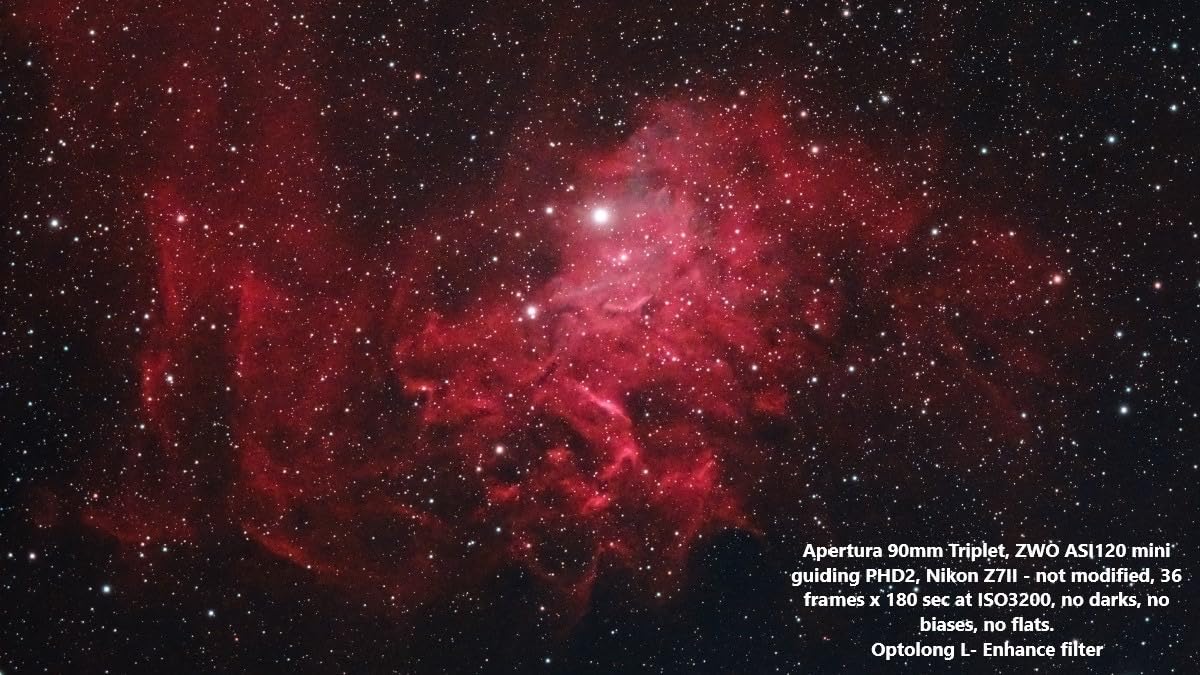
Focusing is the practical hurdle people hit first. Owners confirm that enough broadband light still gets through to run a Bahtinov mask on a stock DSLR, which a stricter filter can make impossible. That single feature decides it for a lot of beginners, because a filter you cannot focus with is a filter you will not use at three in the morning.
What this filter gets right for beginners
The headline result is the ability to shoot longer individual exposures from bright skies without the frame turning into a gradient map. Multiple reviewers describe faint Sharpless objects appearing once the filter was fitted, on setups that were stock and unmodified before. For someone who bought a camera for general daylight use and then pointed it at the night sky, that is the whole argument.
It also holds up under moonlight and moderate suburban glow without needing the extreme blocking of a 3nm set. That makes it a better first narrowband purchase than the aggressive end of the range, and it leaves an upgrade path if you later add a mono camera.
Where the L-Enhance will frustrate you
Light loss is real and it compounds. Longer sub-exposures mean more total integration time before the image is deep enough, and reviewers accept this trade-off rather than pretending otherwise. If you have limited clear nights, that arithmetic matters more than the filter’s headline transmission.
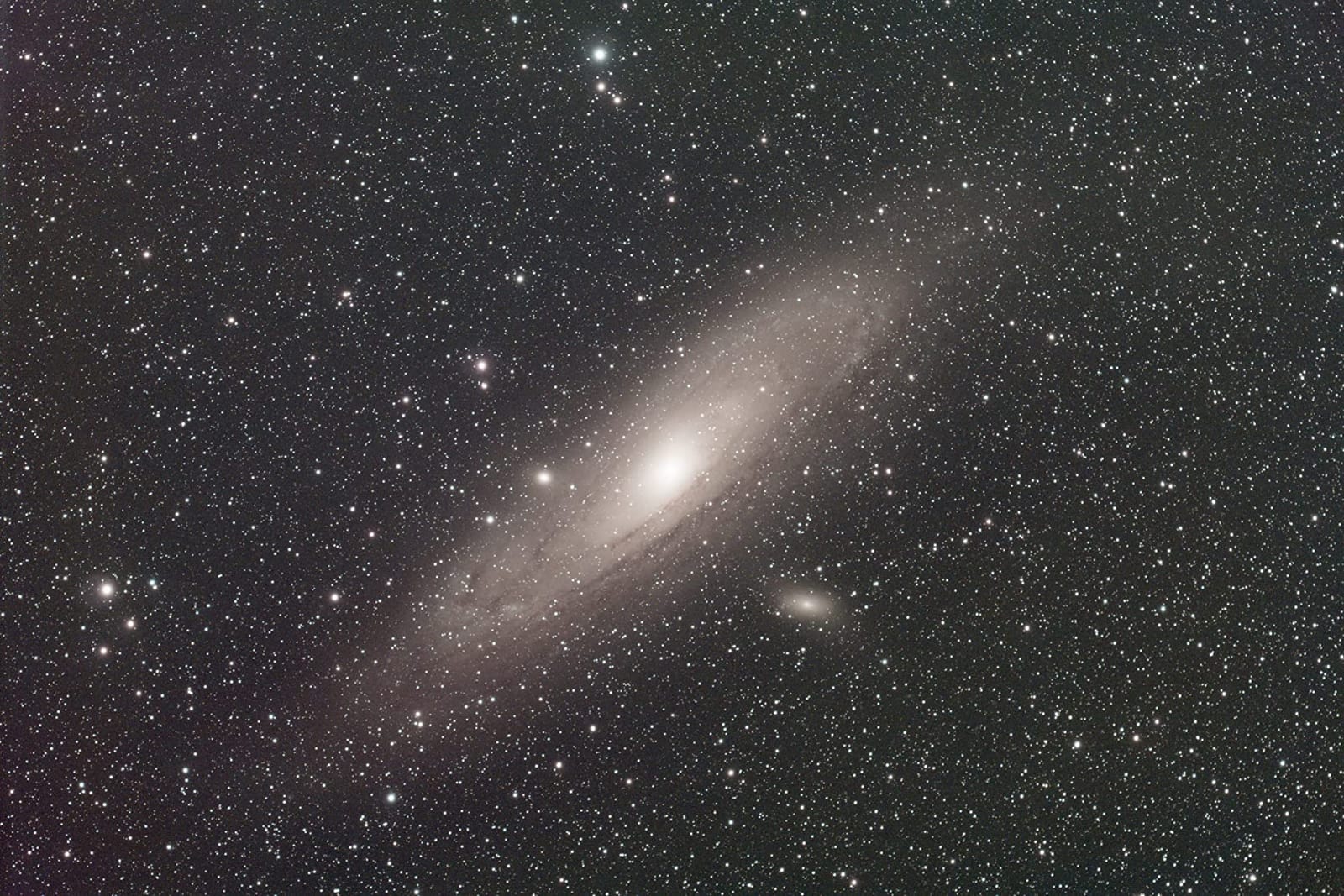
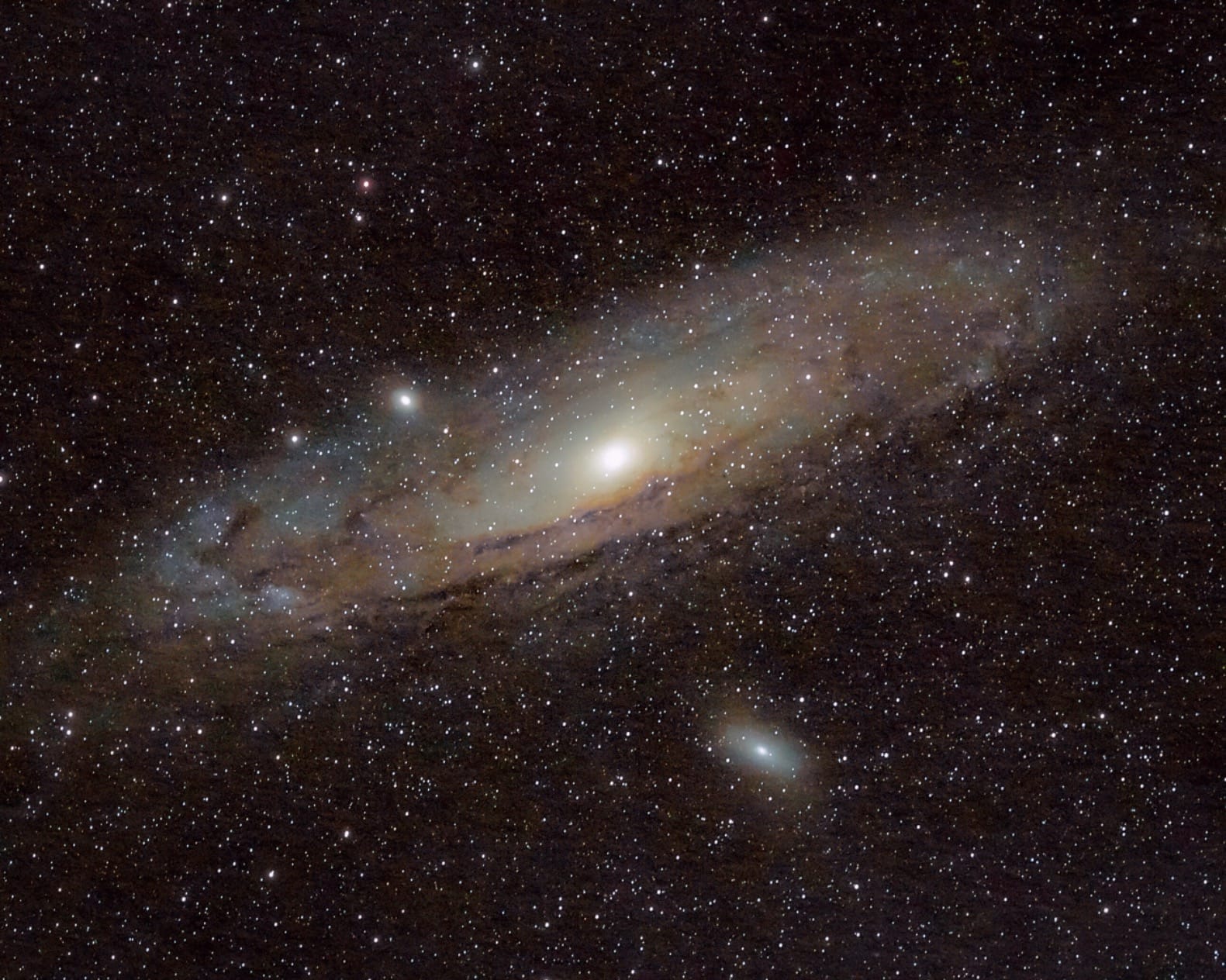
Galaxies are simply out of scope. This filter removes the broadband light that galaxies are made of, so if your target list is dominated by spirals and dwarf galaxies, spend your money elsewhere in this roundup.
2. SVBONY CLS 1.25 inch – Best Budget Light Pollution Filter
SVBONY Telescope Filters, CLS 1.25″, Light Pollution Broadband Filter
90% peak transmission at nebula lines
0.1% off-band rejection
28.5mm thread, 40g
Pros
- Visibly improves nebula contrast under heavy skyglow
- Works for visual observing and imaging alike
- Ion-assisted deposition coating resists scratches
- Independent testing found it close to premium brands
Cons
- Targets sodium and mercury lines better than LED lighting
- 1.25 inch size limits fast wide-field use
- Not water resistant
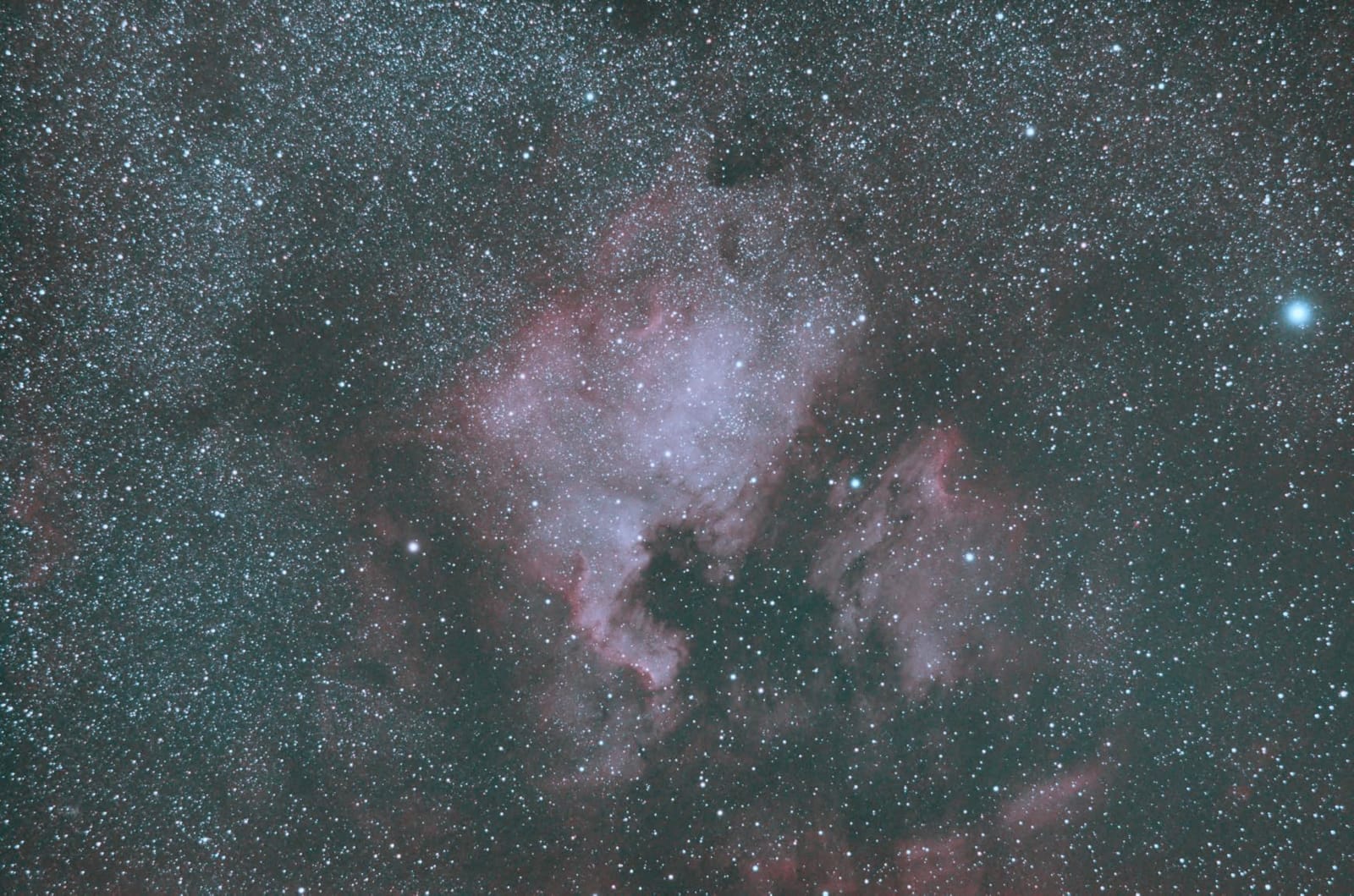
The CLS is the filter most people should start with, and the specification sheet explains why. SVBONY quotes 90% transmission at the major nebula emission lines, hydrogen alpha at 656nm, oxygen three at 496 and 500nm, sulfur two at 672nm and hydrogen beta at 486nm, alongside 0.1% transmission off-band at the sodium 589nm and mercury 435 and 578nm lines. That is a genuine broadband contrast filter with numbers behind it, and it costs a fraction of the narrowband options in this list.
One long-term observer in the reviews describes a Bortle 9 sky going from unremarkable to genuinely striking after fitting it, and independent side-by-side comparisons cited in the reviews put performance close to premium-branded filters at a fraction of the cost. Roughly 72% of its 123 reviews are five star, which is a good signal for a product with this much history behind it.
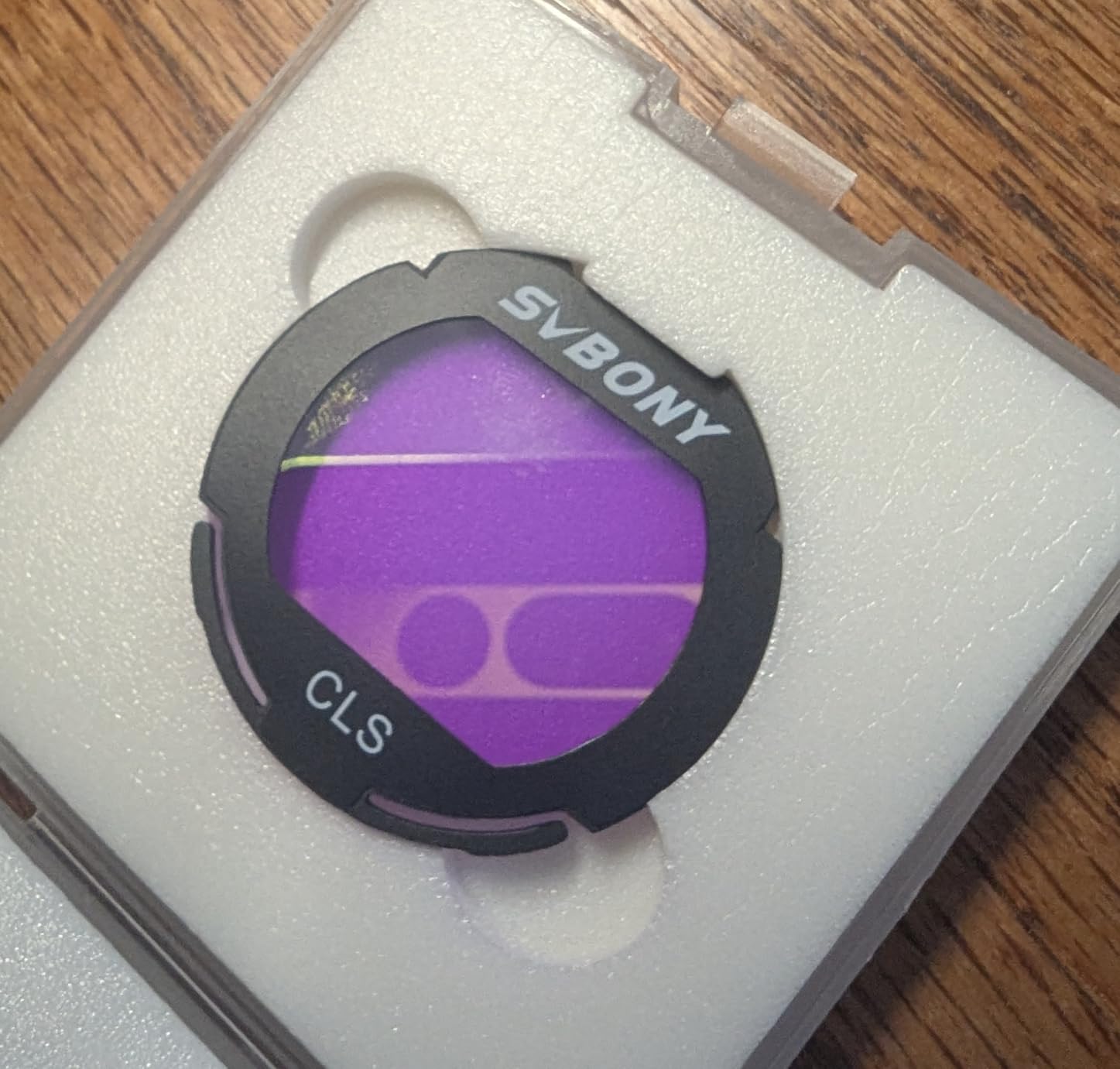
The ion-assisted deposition coating is worth noting because it is the durability story that cheap filters usually lack. Scratch resistance and temperature-stable centre wavelength mean the coating does not drift noticeably across a cold night in the field, and the aluminium cell keeps the element rigid. SVBONY backs it with a one year warranty and a 30 day no-reason return window.
One reviewer pointed out that the correct mental model for any of these filters is that they rarely change the nebula itself, but they substantially reduce the background brightness that hides it. Framing your expectations that way makes the CLS feel like it delivers.
Why the CLS suits visual observers on a budget
Because it passes a wide slice of the spectrum rather than two narrow windows, the CLS does not darken everything the way a UHC or OIII filter does. On clusters, galaxies and the brighter emission targets, you still get a view, which makes it a gentler introduction to filtering than jumping straight to a narrowband.
It is also the easiest size to use. At 28.5mm thread and 40g, it drops into any 1.25 inch diagonal or off-axis adapter, and the light weight means it will not unbalance a short focuser.
Where the CLS falls short
LED street lighting is the honest gap here, and reviewers call it out. The filter targets sodium vapour and mercury lines, which are narrowband emissions. Broadband white LEDs throw light across a wide swath of the visible spectrum, so the parts of the spectrum the CLS passes also carry more of that glow. In a suburb that has converted its sodium lamps to LED, the improvement is real but smaller than the specification sheet implies.
The 1.25 inch format is the other constraint. If you later move to a fast wide-field astrograph with an APS-C or full frame sensor, this size will vignette or simply not cover the field.
3. Optolong L-Pro 2 inch – Best Light Pollution Filter for Broadband Targets
Optolong 2″ L-Pro Light Pollution Filter
Multi-bandpass with sharp roll-off
About 90% nebula line transmission
CNC aerospace aluminium cell
Pros
- Sharp band edges keep pollutant lines out while passing nebula signal
- CNC machined aluminium cell kills internal reflections and haloes
- Consistent optical quality across 85 reviews
- 48mm thread suits APS-C and full frame
Cons
- Less useful on broadband targets such as many galaxies
- Sits well above entry-level broadband pricing
The L-Pro sits between a CLS and a narrowband filter, and that middle position is exactly what makes it useful. It is a multi-bandpass light pollution filter built for astrophotography, with a precise, sharp roll-off at the light pollutant emission lines and roughly 90% transmission at the major nebula lines. You get the emission line signal at close to full strength while the skyglow bands are removed, and unlike a dual narrowband filter you are not restricted to two windows.
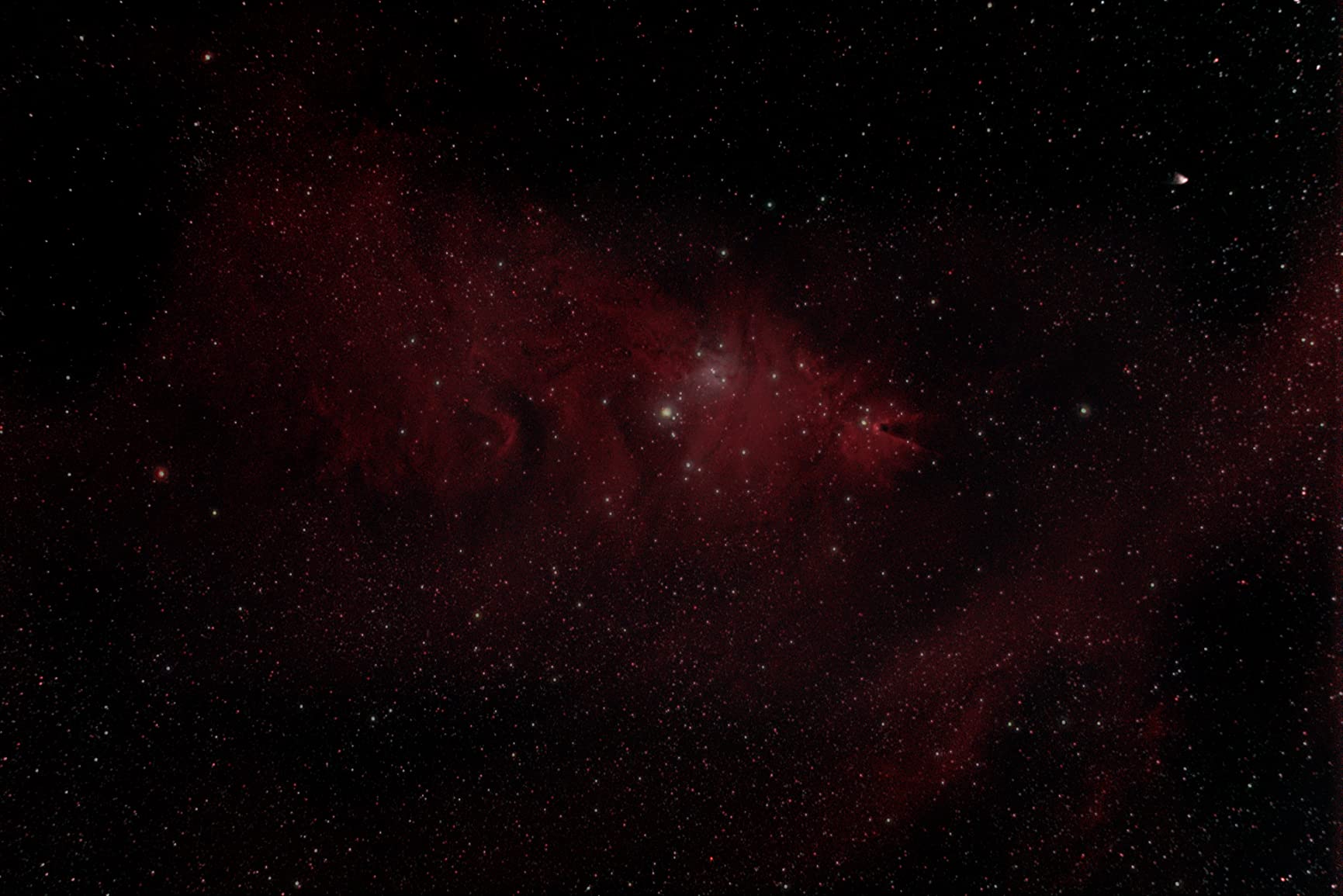
Reviewers consistently mention clean, halo-free images and consistent colour balance when shooting emission nebulae under suburban skies. The 83% five-star share across 85 reviews points to reliable optical quality rather than a lucky batch, and there are very few one or two-star reviews in the distribution.
The build deserves a mention because it is not cosmetic. The cell is CNC machined from aerospace-grade aluminium with a black anodised finish, and that black interior is what extinguishes internal reflections. Internal reflections inside a filter are what produce haloes around bright stars and washed-out contrast, so a machined cell is a real optical decision rather than a marketing one.
Where the L-Pro earns its place in a kit
It is the filter to reach for when your imaging targets are mixed. Because it preserves more of the spectrum than a dual narrowband, it handles emission nebulae and reflection nebulae and star clusters without you having to swap glass, which is a practical win on a suburban setup where every clear hour counts.
The 48mm threaded format is the sensible default for a modern rig. It covers APS-C and full frame sensors with room to spare in almost any camera train, so you are not immediately outgrowing it.
Where the L-Pro will disappoint you
Anyone photographing galaxies from a bright sky should set expectations honestly. Reviewers note the narrowband-style suppression is less useful for broadband targets, and that is physics rather than a defect. Galaxies emit across a wide continuum, so anything that removes light removes some of the galaxy.
The second point is price. It sits well above entry-level broadband filters, and if your sky is only moderately bright you may get a comparable result from the SVBONY CLS for a fraction of the outlay.
4. Astromania UHC 1.25 inch – Best Telescope Filter for Visual Observing
Astromania Telescope Filter 1.25 Inch UHC Filter Improve Contrast Nebula
1.25 inch UHC nebula filter
Multi-coated optical glass, 8.53g
Aluminium frame, 31.75mm thread
Pros
- Lifts Orion
- the Lagoon and the Swan out of suburban skies
- Standard 1.25 inch thread fits almost any eyepiece
- Light enough to avoid unbalancing a focuser
- Also available in a 2 inch variant
Cons
- Contrast gains read as incremental for some observers
- 1.25 inch suits slower focal ratios more than fast astrographs
This is the most-reviewed filter in the group, with 156 reviews averaging 4.4 stars, and the reason is simple: it is a visual filter sold to visual observers. The 1.25 inch UHC nebula filter selectively reduces transmission of the wavelengths produced by artificial light, which is precisely the description of what you want when you slide it into the eyepiece holder of a Dobsonian or a refractor on a suburban evening.
Buyers consistently praise it for lifting emission nebulae such as Orion, the Lagoon and the Swan out of suburban skies, and the 67% five-star share suggests that result is repeatable. The optical glass lens and multi anti-reflection coatings are singled out repeatedly as better than the price point would lead you to expect.
The physical design is sensible for its job. At 8.53g in an aluminium frame with a 31.75mm thread, it is light enough not to unbalance a short-stroke focuser and standard enough to fit refractors, reflectors and catadioptric telescopes without an adapter. There is also a 2 inch variant if your visual setup uses larger eyepieces.
One thing worth internalising before you judge it: dark adaptation needs 15 to 20 minutes, and your dark-adapted eye peaks around 500nm. A UHC filter passes more of that region than a hydrogen alpha filter would, which is why UHC and OIII filters work visually and alpha filters do not. Give your eyes the full time and the difference is much easier to see.
Why visual observers keep coming back to UHC
It is the most forgiving of the visual filter classes. A UHC passes a broad slice of the visible spectrum rather than a single emission line, so more objects stay visible and you are not left hunting for the one target the filter happens to favour. On a mixed evening of galaxies, clusters and nebulae, that breadth is what makes it feel useful.
It also works at both bright and dark sites. Even under a genuinely dark sky, contrast on emission targets improves, so the filter is not wasted on a weekend trip away from the city.
Where the UHC will not impress you
Some reviewers describe the contrast gain as incremental rather than dramatic, and that is an honest description of a broadband-width visual filter. If your sky is genuinely bright and your target is a planetary nebula, a dedicated OIII filter produces a much larger jump in contrast at the cost of showing you fewer objects.
For imaging, this is the wrong filter. It is designed for the eye, and pushing a camera through it for nebulae means you are working with a filter that was never specified for that job.
5. Optolong L-Extreme 7nm 2 inch – Strongest Dual Band Filter for Bright Skies
Optolong L-Extreme 7nm Dual Narrowband Filter (H-Alpha and O-III) (2″)
7nm Ha and OIII dual passband
48mm 2 inch threaded
OSC, DSLR, CCD and CMOS ready
Pros
- Produces colour emission nebula images from one OSC camera
- 7nm dual band cuts severe skyglow and moonlight
- Holds a 4.9 average with 95% five-star reviews
- Unusually consistent optical quality
Cons
- One of the more expensive 2 inch filters here
- Very narrow 7nm band demands precise focus and long integration
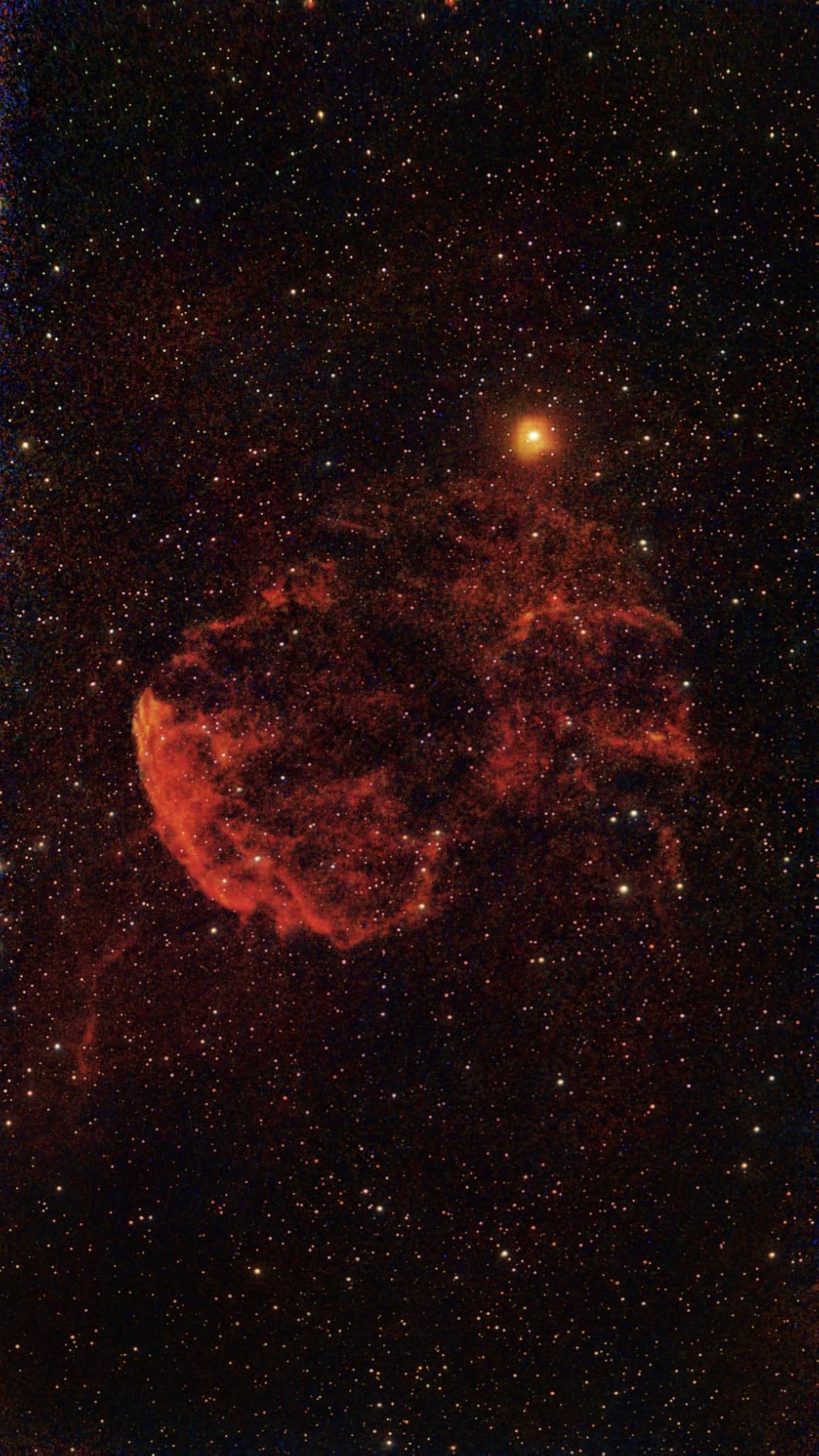
The L-Extreme is the most aggressively filtered option in this roundup, and the 7nm bandpass is what makes it capable rather than merely dark. At that width the filter passes hydrogen alpha at 656nm and oxygen three in a narrow window and rejects essentially everything else, which is why it can shoot under bright man-made light pollution and in moonlight and still deliver a usable signal.
Its main argument is the single-filter workflow. Because it passes two emission bands at once, a one-shot colour camera produces a colour image of an emission nebula from one filter, with no monochrome camera and no filter swapping to get a Hubble-style result. Reviewers treat it as the premium narrowband option for exactly that reason.
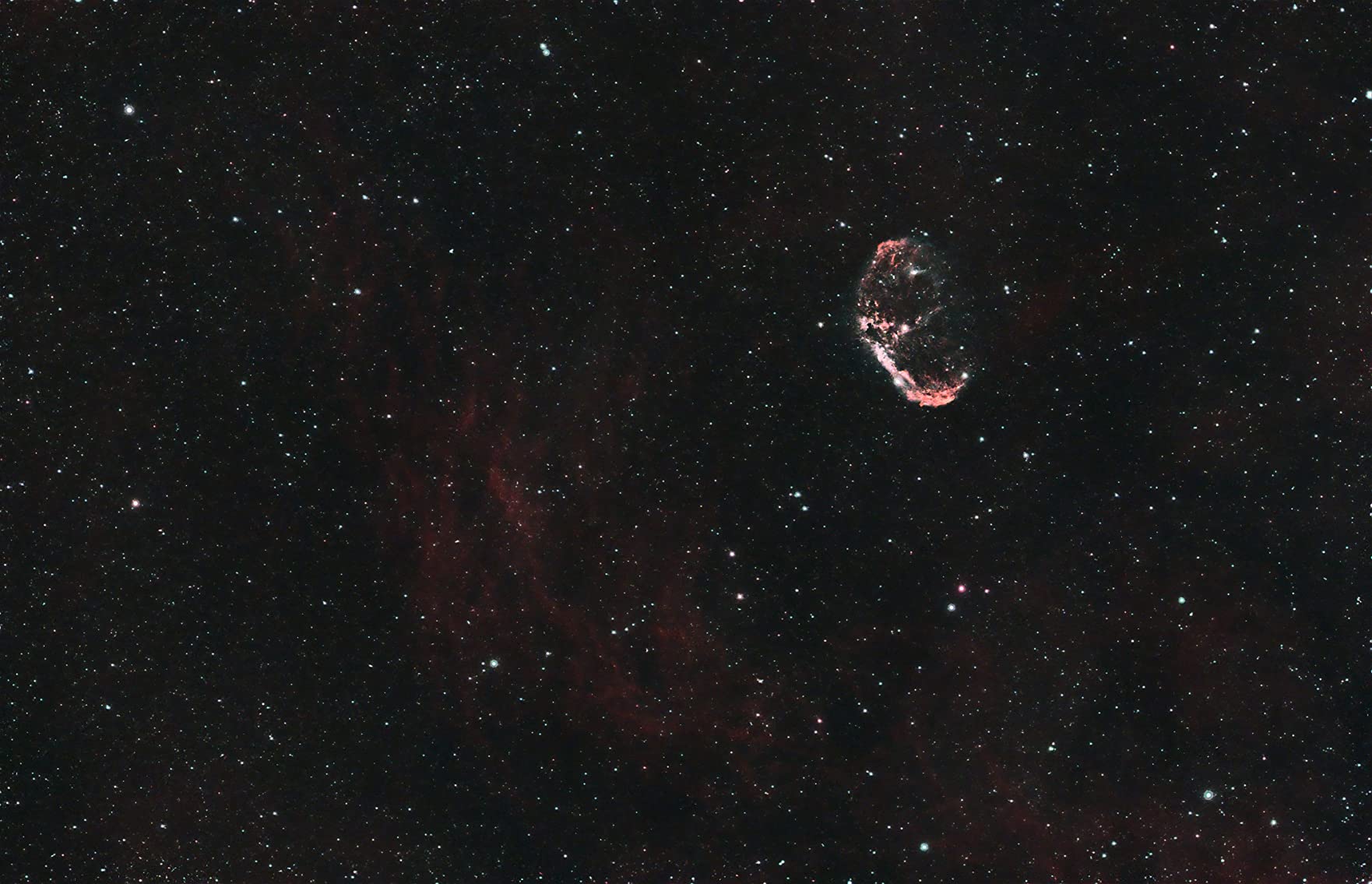
The rating distribution is the stand-out statistic here. A 4.9 average across 52 reviews with 95% of them at five stars indicates very consistent optical quality rather than a mixed manufacturing run, which matters when you are paying for a narrow transmission window that leaves no room for coatings that drift.
Where the L-Extreme earns its cost
If your sky is bright enough that broadband filtering gives you a purple or green cast that you spend hours correcting in post-processing, the L-Extreme is the direct answer. By removing nearly everything except the emission lines, it makes the palette decision for you instead of leaving your editing workflow to unpick a colour cast you did not ask for.
It is compatible with DSLRs, CCD and CMOS cameras, so it fits a rig you already own rather than requiring a camera change.
Where the L-Extreme is the wrong purchase
Fast optics. A 7nm band has very little tolerance for the blue shift that occurs at f/2 or faster, and if your telescope is a fast astrograph this filter will deliver a dim, shifted result that no amount of integration fully recovers. Check your focal ratio before you buy.
Integration time is the other cost. Very narrow bandpass means less light per sub-exposure, so total integration climbs sharply. If your clear-night budget is thin, a 7nm filter is an expensive way to buy depth slowly.
6. SVBONY SV220 SII and OIII 1.25 inch – Best 7nm Duo Band for Planetary Nebulae
SVBONY SV220 Telescope Filter, SII & OIII 7nm Dual-Band Filter 1.25″
7nm SII and OIII dual narrowband
OD5 cut-off depth
28.5mm 1.25 inch thread
Pros
- Very little to no star halo even at 300 second sub-exposures
- Cuts city glow under a heavily illuminated Moon from Bortle 8
- Costs far less than comparable 7nm duo band filters
- Colour imaging from a single OSC camera
Cons
- Contrast depth slightly shallower than 3nm filters from the same maker
- 1.25 inch suits small sensors only
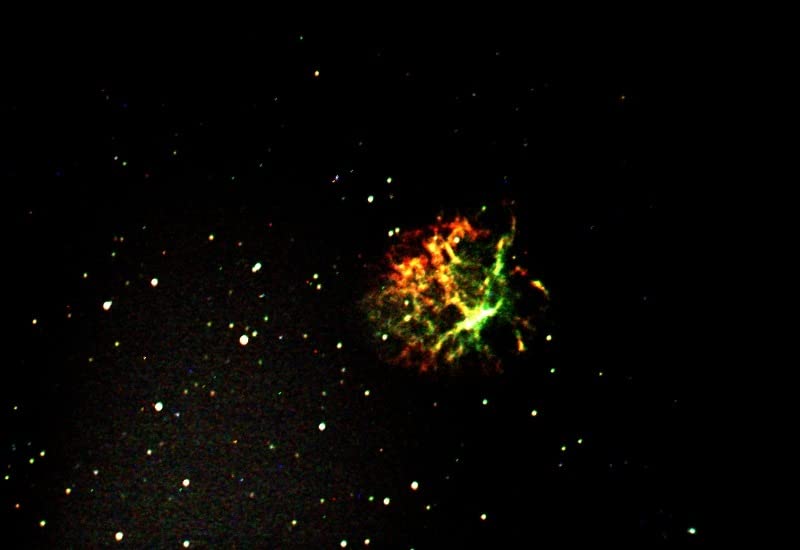
The SV220 covers the two lines that matter most for planetary nebulae and supernova remnants, sulfur two and oxygen three, in 7nm windows with an OD5 cut-off depth. For objects like the Ring, the Dumbbell or a Veil patch, those are the only bands carrying real signal, so a duo-band filter here delivers contrast that a Ha/OIII combination simply cannot.
Astrographers shooting from Bortle 8 and 9 backyards report clean sulfur two and oxygen three data with no visible star haloes even at 300 second sub-exposures, and one review specifically describes successful imaging under a 96% illuminated Moon. That halo-free behaviour is what separates a good narrowband filter from a cheap dyed one.
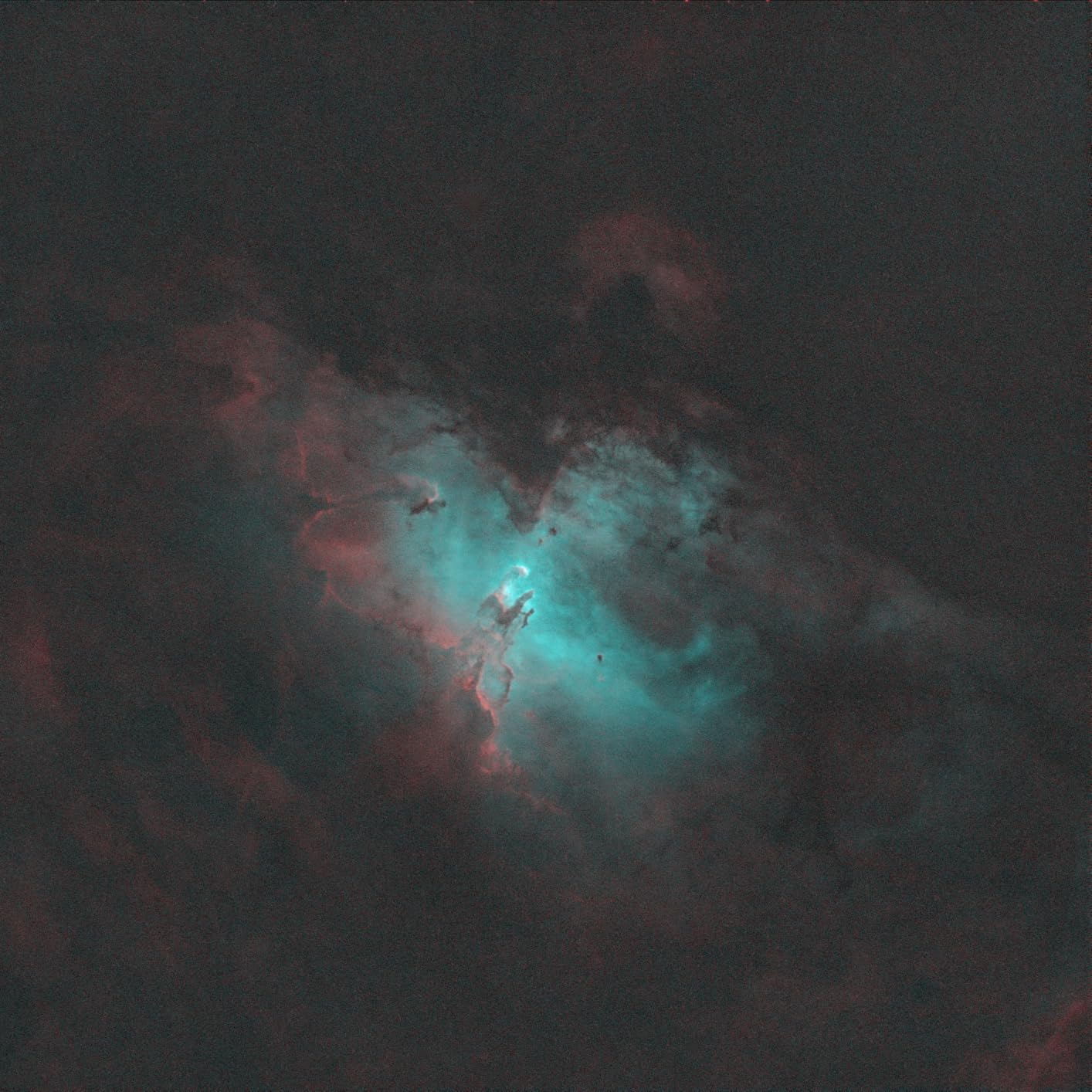
The 1.25 inch format is the deliberate trade-off. It keeps the cost down for small-sensor cameras without vignetting, and reviewers note the band width and OD5 cut-off represent a real quality benchmark for the money when compared with wider-band SII/OIII filters at similar prices. The specification sheet recommends stepping up to the 2 inch version for APS-C or full frame sensors, and that is worth following if your camera is not small.
Why this pair of lines is worth a dedicated filter
Sulfur two and oxygen three sit at wavelengths where the background sky contributes almost nothing once you have excluded artificial light. That is what lets these targets hold up under severe skyglow when broadband targets simply disappear, and it is why experienced imagers reach for an SII/OIII pair as their second purchase after a hydrogen alpha filter.
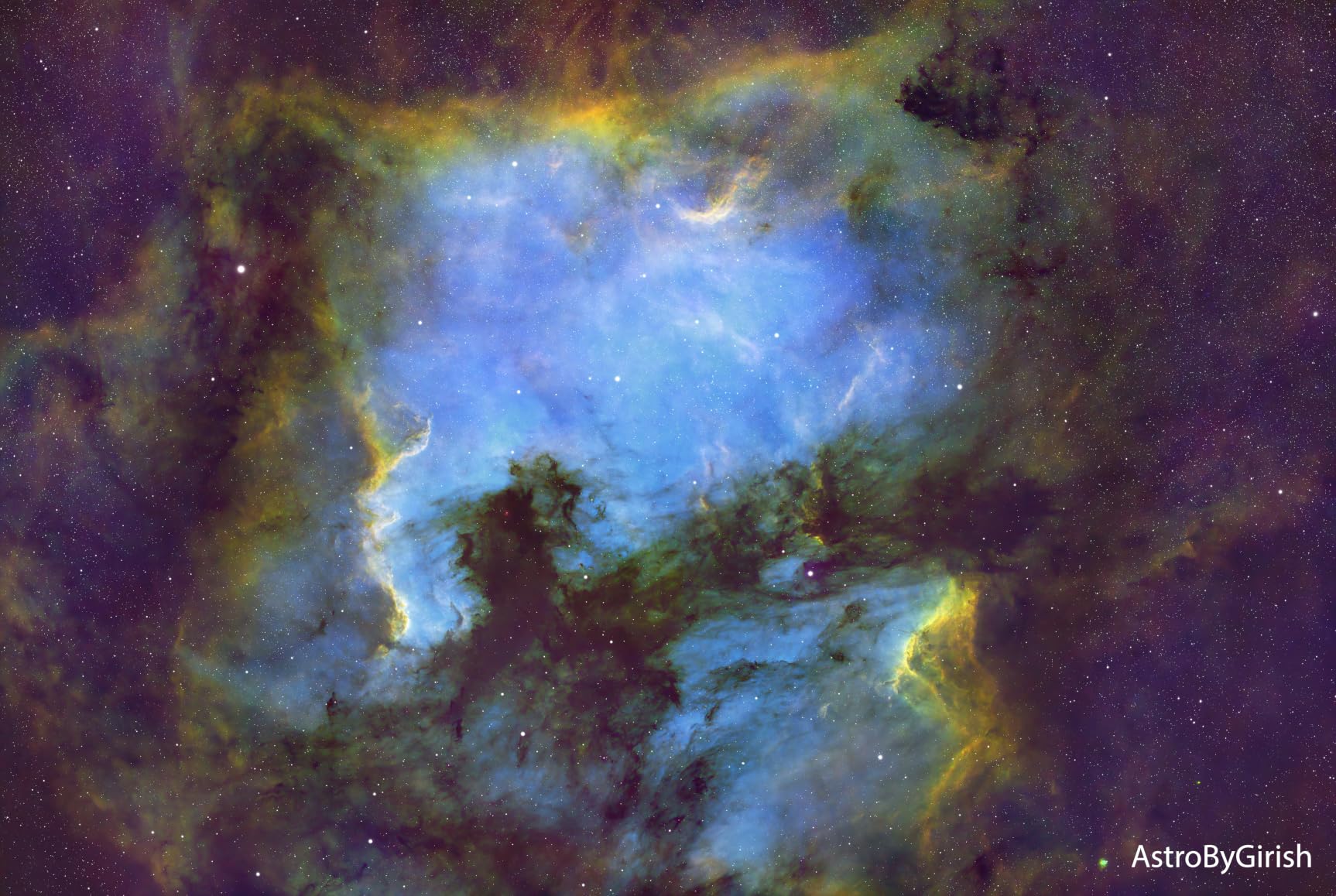
It is also a natural monochrome workflow. Shooting sulfur two into red, oxygen three into green and hydrogen alpha into blue gives the classic Hubble palette, and this filter set feeds straight into that structure.
Where the SV220 falls short
Contrast depth is slightly shallower than the 3nm filters from the same maker. If you are working from the brightest possible site under heavy glow and need maximum rejection, the narrower option reaches further, at the cost of far less light per sub-exposure.
Sizing is the other limit. With a 28.5mm thread, this is a small-sensor filter. Run it on anything larger and you will see vignetting before you see the benefit.
7. SVBONY SV227 5nm SHO Set 2 inch – Best Light Pollution Filter Set for Monochrome Imaging
SVBONY SV227 2″ SHO Telescope Filter Set, 5nm Narrowband Filter Set
SII, H-Alpha and OIII at 5nm each
48mm 2 inch threads
Individually tested and scanned
Pros
- No halos around bright stars across hundreds of subs
- 5nm gives more selective contrast than 7nm at similar cost
- Full SHO palette from an LRGB starting dataset
- Each filter individually scanned for consistency
Cons
- Three filters means the longest total integration of any option here
- Some 2 inch filters need an adapter for the newer ZWO 8 position wheel
- Plastic enclosure supplied
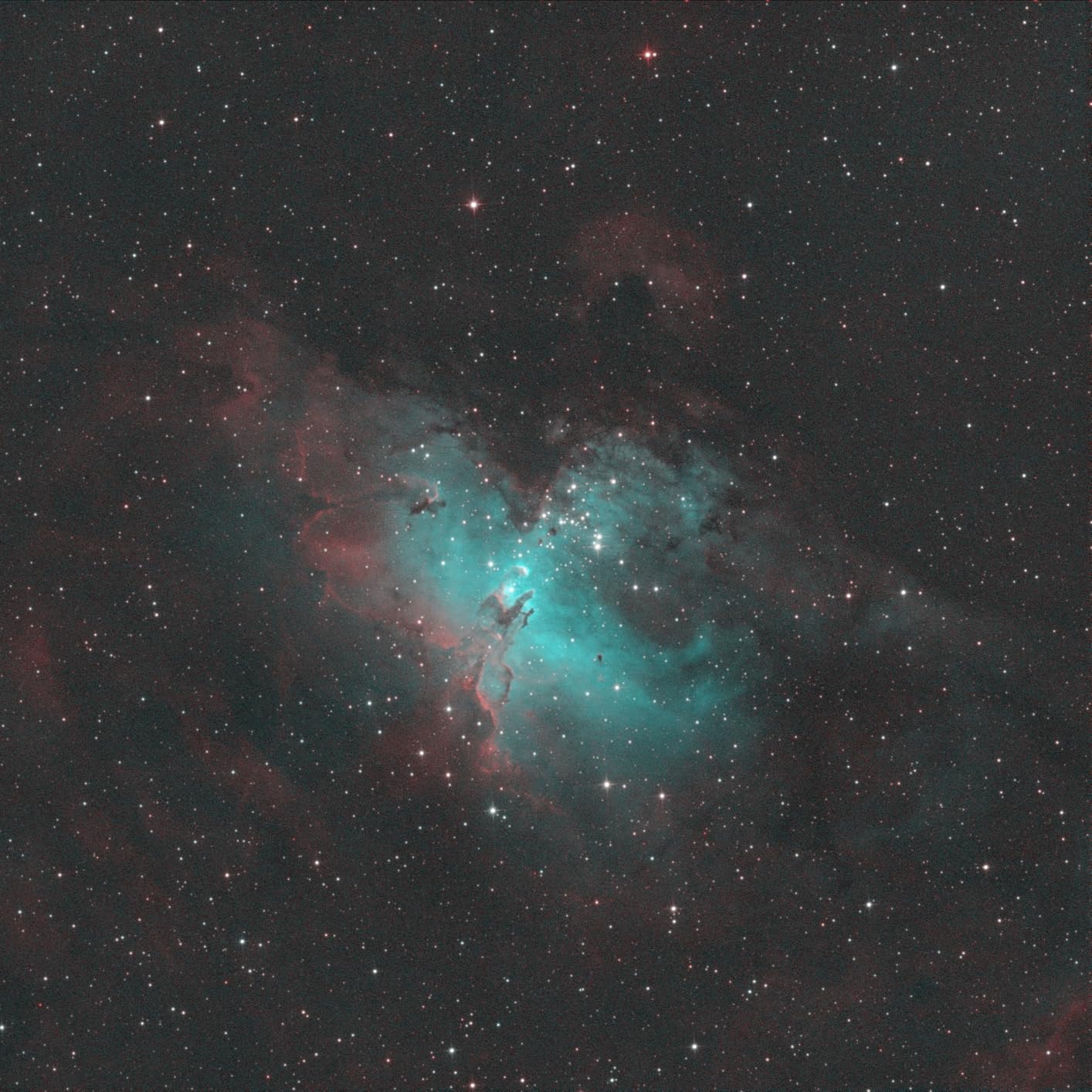
The SV227 is the only complete set in this roundup, and it is the one to buy if you have a monochrome camera and a plan. You get sulfur two, hydrogen alpha and oxygen three, each at a 5nm bandpass, which together cover every major emission line and let you build the full SHO palette rather than approximating it with a dual band filter.
Experienced imagers report a genuine step change after moving from LRGB to SHO with this set, producing a Hubble-style palette on targets like WR-134, with a marked absence of star haloes across hundreds of sub-exposures. The 5nm band gives more selective contrast than the 7nm filters while still passing enough light to be practical, and each filter is individually tested and scanned against its performance parameters.
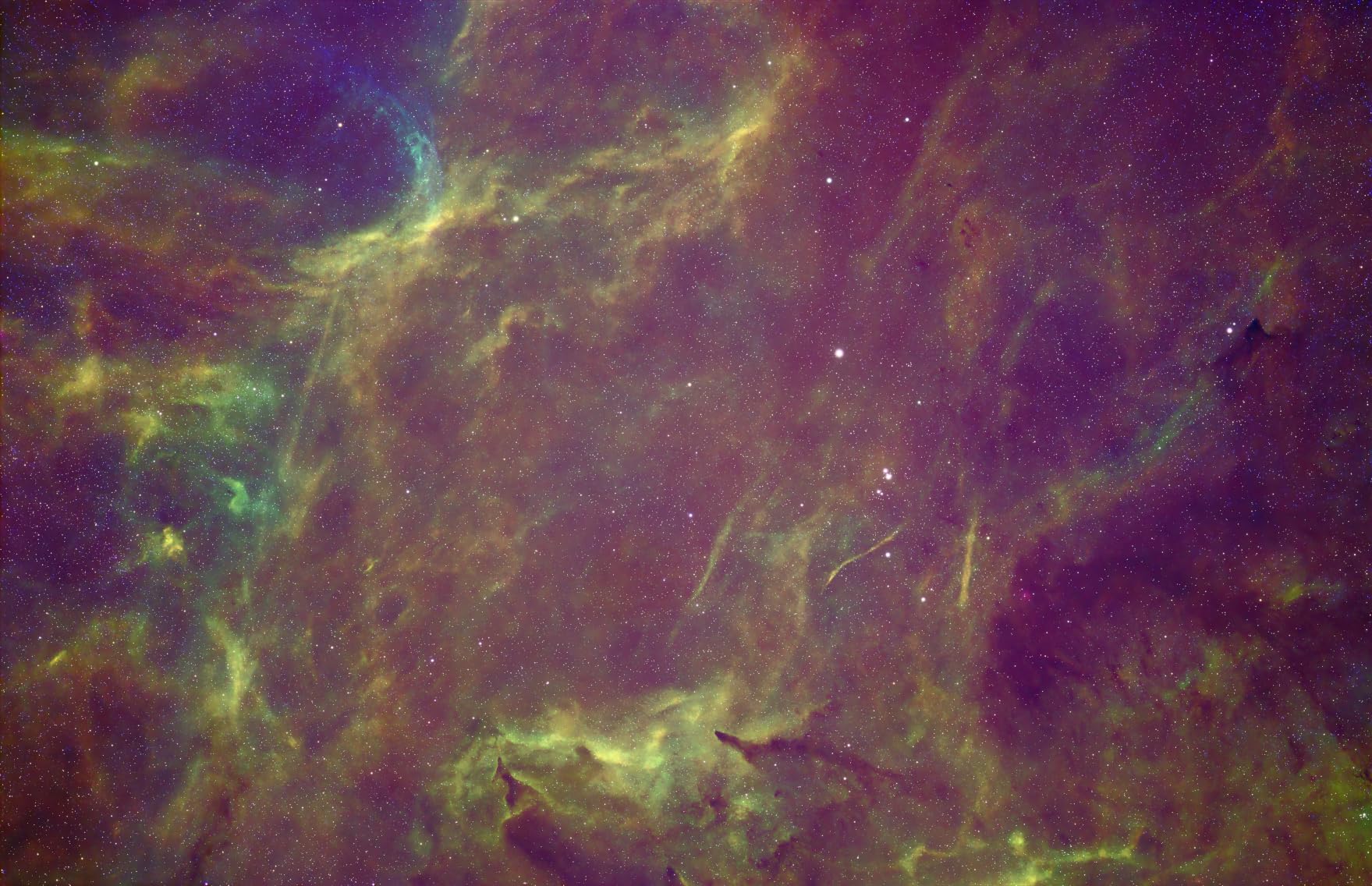
One design detail separates it from cheaper sets. The filters are built to limit transmission loss caused by centre wavelength shift, which is the mechanism that silently costs you signal on a conventional narrowband filter when temperature drifts over a long night. On a set you plan to run for hours across many targets, that stability is the reason to pay for it.
Who should commit to a three-filter set
The set makes sense when you already shoot monochrome and want emission nebulae in a two-colour or three-colour palette rather than a single-band monochrome image. Going from LRGB to SHO changes the character of your data entirely, and this set is the lowest-friction way to make that move.
Because all three filters share the same 5nm width, your integration time per filter stays consistent, which makes the total data set easier to plan and to process with one calibration and sharpening workflow.
Where the SV227 will frustrate you
Total integration time is the biggest cost, and it is the largest of any option here. Three filters means three times the data for the same depth, and at 5nm each sub-exposure is long and dark. If your realistic budget is ten clear nights, that is three to four nights per filter.
Check your filter wheel before you order. Some 2 inch filters do not seat in the newer ZWO 8 position wheel without an adapter, and one reviewer flagged exactly that as the main compatibility caveat. The enclosure is also plastic, which is light and adequate but not as rigid as a machined cell.
How Light Pollution Filters Actually Work
Artificial light is not spread evenly across the spectrum, and that is the entire basis for filtering it. Sodium vapour street lamps emit their strongest output at a very narrow band around 589nm. Mercury vapour lamps add lines in the yellow-green region near 435nm and 578nm. A light pollution filter is coated or dyed to reject those specific wavelengths while passing the wavelengths that astronomical objects emit.
The emissions you want to keep sit at 656.3nm for hydrogen alpha, 500.7nm for oxygen three, 671nm for sulfur two and 486nm for hydrogen beta. A broadband filter keeps all of those and cuts between them. A narrowband filter keeps one of them and cuts almost everything else, which is why it wins under severe glow and loses badly when you point it at a galaxy.
Because this is a subtractive process, the object never gets brighter. It always gets dimmer, and so does the background. What changes is the ratio between them, which is what the eye reads as contrast and what the sensor reads as a cleaner background in the final stack.
There is a growing complication. Most street lighting is now broadband white LED rather than narrow sodium emission, and a filter tuned for 589nm has much less to grip. This is a real limitation of the entire category, raised repeatedly by observers on r/telescopes, and it is worth knowing before you spend. It also means that in an LED-converted suburb, a filter which removes more overall light may work better than one tuned precisely to sodium lines, because it is dragging down the continuum rather than chasing a line that is no longer there.
Which Filter Class Fits Your Bortle Number
Match the filter to the sky brightness, and expect nothing from a filter if your sky is darker than the filter’s threshold. Below is the decision rule that matches what observers actually report rather than what filter marketing suggests.
Bortle 1 to 4, genuinely dark skies: a filter is optional. If you are lucky enough to shoot under these conditions, a broadband LP filter costs you signal on broadband targets and gains you very little. Spend the money on more integration time instead. If you must have one for travel use, a gentle broadband filter such as the SVBONY CLS is the least damaging choice.
Bortle 5 to 6, typical suburban skies: this is the band where opinions differ most. Recurring consensus across r/telescopes and r/astrophotography is that Bortle 5 and 6 are perfectly acceptable shooting conditions without a filter, and that gradients and site darkness, not filter choice, are the real limits. A broadband filter is worth having here, particularly for emission nebulae, but treat it as an improvement rather than a rescue.
Bortle 7 to 8, city and bright suburb: filters earn their place. Narrowband options such as the L-Extreme or the SV220 become genuinely effective here, because the targets you care about survive and the background does not. If your street lighting is LED, expect the gain to be smaller than the specification sheet implies and plan for more careful background extraction.
Bortle 9, inner city: narrowband is close to mandatory. Only the emission lines carry a usable signal, so a Ha/OIII dual band or an SII/OIII duo band becomes the practical route to any image at all. Visual observers at this level get the most dramatic results from an OIII filter, which is why it is the recommendation repeated most often for planetary nebulae.
One rule cuts across all of it. The community view on r/telescopes is that for galaxies, which are broadband targets, the best filter is darker skies. No filter substitutes for site choice on broadband objects, and that is not a gap in our roundup, it is a physical limit.
How to Choose a Filter Size and Thread
Buy the size that matches your optical train, and measure before you order. Filter thread sizes are stated in millimetres, and the two common ones are 28.5mm for 1.25 inch filters and 48mm for 2 inch filters. Eyepieces take 1.25 inch filters, camera trains usually take 2 inch, and mixing them up is the most common sizing mistake.
Match the filter to the sensor rather than the telescope. A small-sensor camera works well with 1.25 inch glass, and the SV220 is built for exactly that. APS-C and full frame sensors need 2 inch glass or they will vignette, and reviewers of the 1.25 inch options in this roundup all note the same limitation. Step rings exist to adapt a smaller filter up to a larger thread, but stacked rings and thick screw-in glass in front of a fast lens are a common source of vignetting, so buying the correct size directly is cheaper than fixing it later.
Check M48 versus M42. Many two inch astronomical filters use an M48x0.75 thread, which is the standard for filter wheels and off-axis adapters. Camera adapters often use M42x0.75 with a thinner thread pitch, and mixing them can leave a filter loose or not threading at all. If you are stacking a field flattener, an off-axis guider or a filter wheel, this is the detail that decides whether the system assembles cleanly.
Matching a Filter to Your Camera and Your Sky
A stock or unmodified DSLR pairs with a dual-band or broadband filter. Hydrogen alpha is blocked by the camera’s internal UV/IR cut filter, which is why you will not see red nebulae without one, and a filter that passes hydrogen alpha solves that in a single exposure with a colour camera.
A one-shot colour astro camera works with every filter in this roundup, and it is the natural home for the L-Extreme and the SV220, since both deliver colour narrowband data from a single sensor in one filter.
A monochrome camera opens up everything, including the SV227 SHO set, which is the only option here that assumes a mono sensor. Monochrome gives the cleanest signal because there is no Bayer colour filter array sitting between the emission lines, and it also gives you the option of using a filter as a luminance channel on broadband targets.
Fast optics change everything. If your telescope operates at f/2 or faster, a blue spectral shift pushes emission lines away from where a narrow filter transmits, so a 7nm filter dims noticeably. That is the phenomenon called preshift, and it is why the L-Enhance is specified with a band wide enough to tolerate fast optical trains, and why the L-Extreme at 7nm needs careful thought before you commit to it.
When a Light Pollution Filter Will Not Help
The honest answer, and the one that rarely appears in roundups, is that at Bortle 5 and 6 a light pollution filter is optional. If your sky is moderately dark, gradient removal, longer integration and a flatter field will improve your images more than any filter. The most common forum advice for broadband targets is the same in every thread: the best filter is darker skies.
Filters also do nothing for reflection nebulae such as the Pleiades, which scatter starlight across a broad continuum, and they do not help with star clusters where the signal is broadband. Pointing a narrowband filter at either wastes the exposure entirely.
Filters brighten nothing, and a purple or green cast in your images is not a defective filter. It is the expected result of an aggressive bandpass on a colour camera, and correcting it is part of the workflow rather than evidence that you bought the wrong glass. Budget time for calibration frames and colour work if you choose a narrowband option.
Finally, sometimes the best filter is no filter at all. A trip to a darker site beats any filter on the shelf, and one Astrobin comment we kept coming back to puts it plainly: the best light pollution filter is a trip out to dark skies, and failing that it is a great deal of integration time.
While we are talking about hardware, we also put filters through the same kind of buying logic we apply to the rest of our gear guides, from our engine air filter roundup to our fuel filter tests. The same match-the-spec-to-the-job reasoning runs through our diesel particulate filter guide and our oil filter testing. The principle is identical: the specification only matters once it is matched to the job.
Frequently Asked Questions
Can telescopes see past light pollution?
No. A telescope cannot see past light pollution, it can only make an already faint object easier to pick out. Filters reduce skyglow so that contrast improves, but the object itself always gets dimmer. From a bright site the real gains come from narrowing your field to emission targets that survive the glow.
What is the best filter for visual astronomy?
The most recommended visual light pollution filters are UHC for the best all-round view of many nebulae, OIII for the highest contrast on planetary and supernova remnant nebulae and the strongest result above roughly 6 inches of aperture, CLS as the gentlest broadband option for galaxies and clusters, and Moon and Skyglow for the Moon and planets. Let your eyes dark adapt for 15 to 20 minutes before judging the difference.
Which color filter is best?
For planetary and lunar visual work a neutral density or medium blue filter often gives the best contrast because it steadies the seeing. For deep-sky visual work from light polluted skies an OIII filter is usually the strongest single choice, while UHC gives a brighter and broader view of more objects. None of these apply to solar observing, which needs dedicated certified solar film.
Do light pollution filters make objects brighter?
No, they never do. A filter subtracts light only. Both the object and the background get dimmer, but the background gets dimmer by more, which raises the contrast between them. That contrast gain is the entire benefit, and it is why filters help emission nebulae far more than galaxies.
What size telescope filter do I need?
Eyepieces take 1.25 inch filters with a 28.5mm thread, while camera trains and filter wheels take 2 inch filters with a 48mm thread. Match the filter to your sensor, not just your telescope: small-sensor cameras work fine with 1.25 inch glass, while APS-C and full frame sensors need 2 inch glass or they will vignette. Check whether your adapter uses M48 or M42 threads before ordering.
Will a light pollution filter help with LED street lights?
Only partially. Filters tuned for narrow emissions such as the 589nm sodium line have far less to grip against broadband white LED lighting, which spreads energy across a wide slice of the spectrum. In an LED converted suburb the improvement is real but smaller than the specification suggests, and filters that remove more overall light can work better than ones chasing a line that is no longer there.
Our Verdict on the Best Telescope Filters for Light Pollution in 2026
The best telescope filters for light pollution depend on your targets, not on a ranking. For most people shooting emission nebulae from a bright sky with a camera they already own, the Optolong L-Enhance is the right first buy because it works unmodified and tolerates fast optics. If your budget is tighter or you observe visually rather than photograph, the SVBONY CLS covers both jobs for far less.
Move up to the L-Extreme when your sky is bright enough that broadband filtering leaves you fighting colour casts, to the SV220 when planetary nebulae are your target, and to the SV227 SHO set only once you are shooting mono and committed to the longer integration. Check your Bortle number honestly before buying, because at Bortle 5 or 6 the sky itself is doing more work than any filter you can put in the train.