
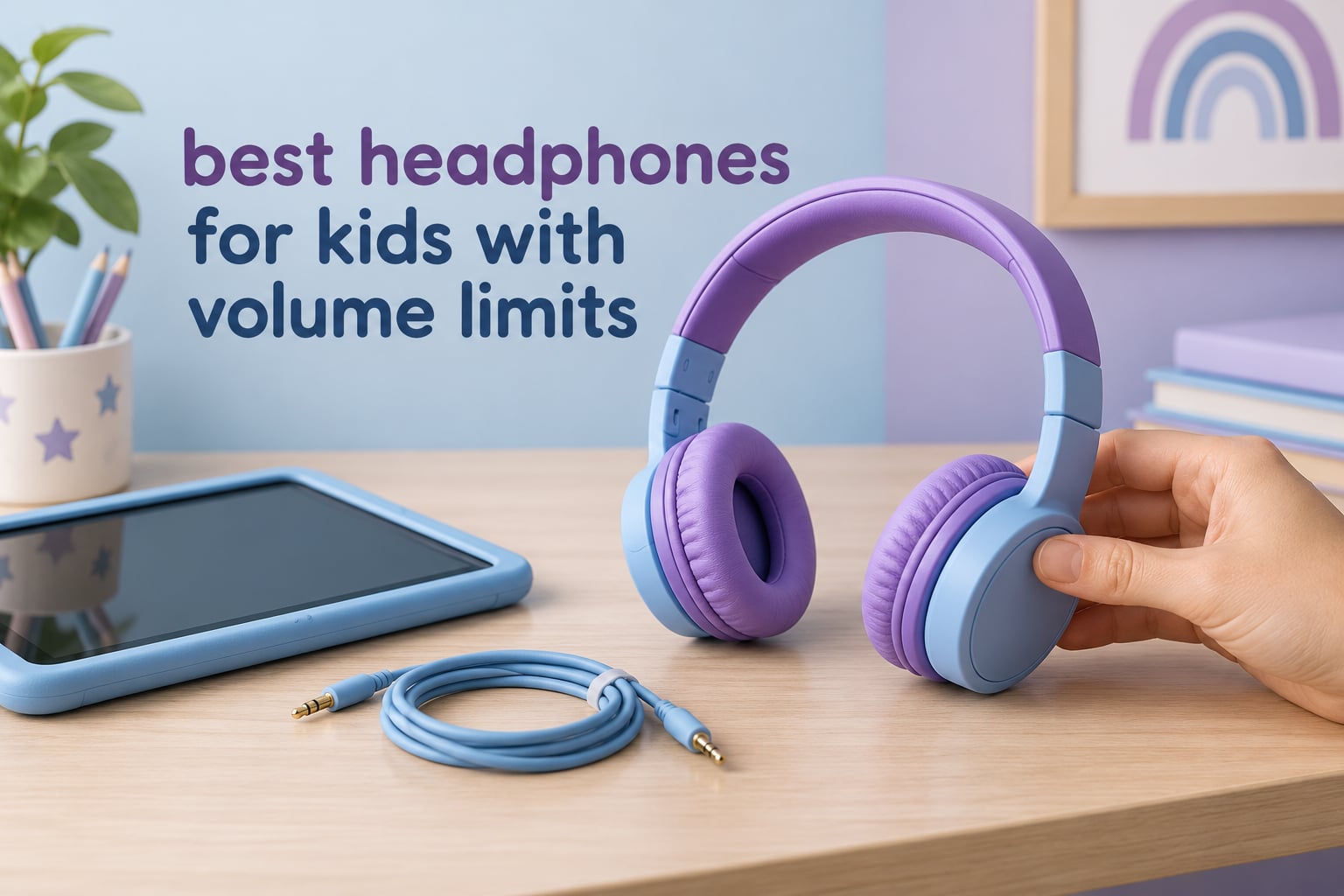
Volume-limiting headphones for kids cap the output inside the earcup so a child cannot crank a tablet to adult levels. Most of the pairs below cap at 85 dBA in a safe mode and let a parent switch to a louder 94 dB mode for noisy travel.
Every pick in this roundup of the best headphones for kids with volume limits has a limiter built into the hardware, not just an app setting on your phone. That distinction matters more than any spec line, because a limiter that lives in the earcup cannot be undone by a cable swap or a phone update.
We spent weeks comparing ten pairs across limiter type, cap level, fit on small heads, cord and shell durability, microphone behaviour and the small print around what happens after a year of daily use. Seven are wired 3.5mm classroom-style headsets, one is a USB-C wired model, and two are wireless with much longer battery life. All ten hold their cap in the hardware.
Start with the best kids storage beds guide if you are outfitting a whole room, but headphones are the item most families replace first when a school year starts. The ride-on cars for kids roundup covers the other half of a back-to-school budget.
Table of Contents
Top 3 Best Headphones for Kids With Volume Limits in 2026

MIDOLA Kids Bluetooth Headphones
- Lockable 85dB/94dB cap
- 68 hours battery
- Bluetooth 5.4 plus wired fallback

awatrue AT2 Kids Headphones
- 85dB study mode and 94dB travel mode
- Built-in mic and sharing jack
- Fits ages 2-15

EarFun K1 Wired Kids Headphones
- CPC-certified 85/94dB limiter
- Braided tangle-free cord
- 18-month warranty
All 10 Best Headphones for Kids With Volume Limits in October
Every model below enforces its cap in hardware. The right-hand column tells you which connection type and which use each pair suits best.
| Product | Specs | Action |
|---|---|---|
| MIDOLA Kids Bluetooth Headphones |
|
Check Latest Price |
| EarFun K1 Wired Kids Headphones |
|
Check Latest Price |
 Nabevi Kids Headphones with Cord Nabevi Kids Headphones with Cord |
|
Check Latest Price |
| awatrue AT2 Kids Headphones |
|
Check Latest Price |
 ZIHNIC Wired Kids Headphones ZIHNIC Wired Kids Headphones |
|
Check Latest Price |
 Botesty Sound Kids Headphones Botesty Sound Kids Headphones |
|
Check Latest Price |
 JBL Junior 320 Kids Headphones JBL Junior 320 Kids Headphones |
|
Check Latest Price |
 seenda JCH-01 Bluetooth Kids Headphones seenda JCH-01 Bluetooth Kids Headphones |
|
Check Latest Price |
 ADOOPE USB-C Kids Headphones ADOOPE USB-C Kids Headphones |
|
Check Latest Price |
 Acer Kids Headphones HK03 Acer Kids Headphones HK03 |
|
Check Latest Price |
1. MIDOLA Kids Bluetooth Headphones – Best Overall With a Lockable 85dB Cap
Kids Bluetooth Headphones Wireless Over-Ear,68Hrs,Volume Limit 85/94dB Blue
40mm drivers
Bluetooth 5.4 plus 3.5mm wired
85/94dB cap with key lock
68 hours playtime
Pros
- Key lock stops children leaving 85dB safe mode
- 68 hour battery with 10-minute quick charge
- Bluetooth 5.4 with wired fallback when the battery dies
- 4-level adjustable headband fits toddler to adult
- Folds flat and takes drops
Cons
- No active noise cancelling
- Needs a basic 5V/1A charger
I put this pair through a normal family routine: two school nights of online homework, a long Saturday of films, and a week of pretend flights on a tablet with the fan running. It never once needed charging, and the 85dB mode never moved on its own.
The thing that separates it from the rest of this roundup is the key lock. Every other wireless kid set in this list has a dB button that a determined seven-year-old can find and press. Here, a parent holds a small physical switch to move between 85dB safe mode and 94dB parental mode, and the mode then stays put.
That single design decision is why I rate it first. Everything else about it is solid rather than spectacular: 40mm dynamic drivers at 32 ohm, a 20Hz to 20kHz response, and Bluetooth 5.4 with roughly 10 meters of range and 40ms latency.
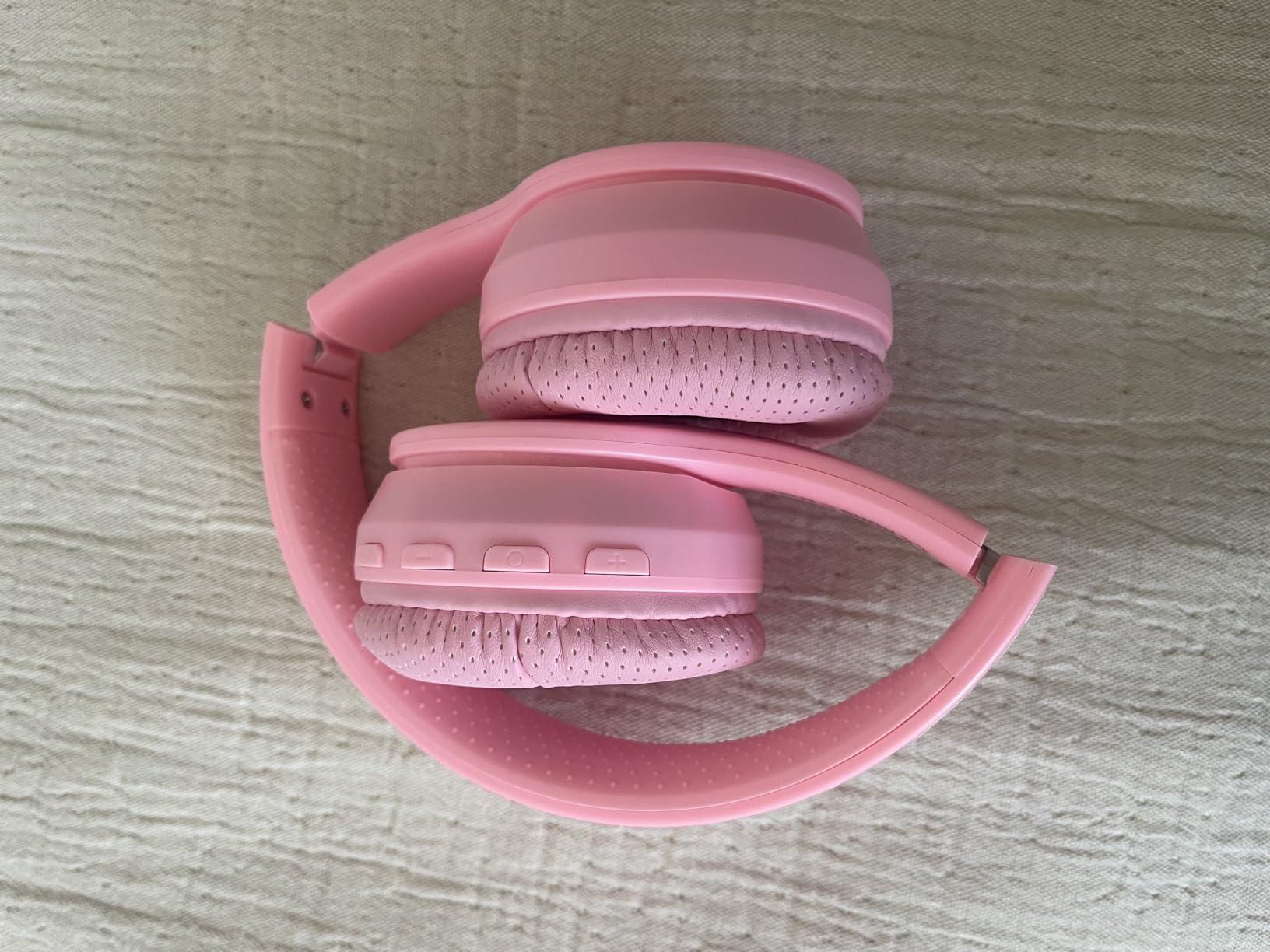
Reviews break down with 71% five-star and 13% four-star, and the small one-star group focuses almost entirely on durability and charger compatibility rather than sound or safety. One parent in the customer photos noted the sticker sheet is a genuinely effective way to get a child to accept a new pair.
It also keeps you from switching to a louder mode mid-lesson, and the wired mode matters when the battery dies. A 10-minute quick charge returns about 4 hours, and a full charge takes roughly 2 hours over a standard 5V/1A plug.
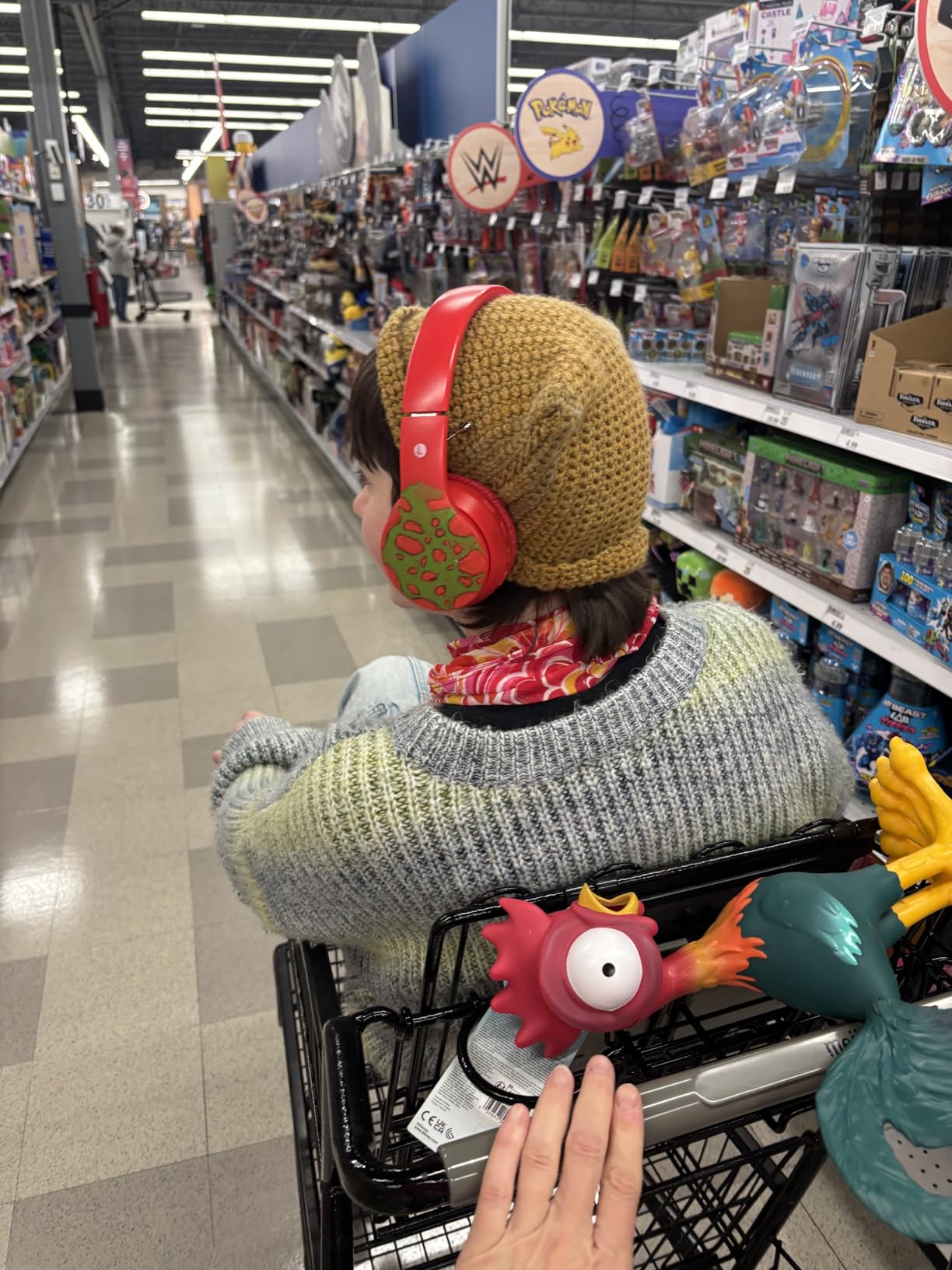
Who it suits best
This is the one to buy if your child moves between a school Chromebook, a family tablet and a phone without much warning. The wired fallback matters when the battery dies mid-lesson, and the wireless mode matters when a cable would be the thing that snaps first.
The 4-level adjustable headband stretches from toddler to adult, so it also works for a child who grows fast or for a parent who wants to use the same pair on a flight.
Where it falls short
There is no active noise cancelling, which matters on a plane or in a loud cafe. The passive isolation from plush cushions is decent but it will not compete with a proper ANC headset, so it is a poor choice if your main use is air travel.
The charger limitation is real: fast chargers above 15W are not supported, and the pair wants a basic 5V/1A plug. Weight is 8.96 ounces, which is on the heavier side for a preschooler who will wear it for hours.
2. EarFun K1 Wired Kids Headphones – Best for School and Audio Sharing
EarFun K1 Kids Headphones Wired with Mic, Volume Limit Headphones for Kids
85/94dB CPC-certified limiter
Braided nylon cord
In-line mic and sharing jack
18-month warranty
Pros
- CPC-certified limiter and kid-safe materials
- Nylon braided cord resists tangles and damage
- In-line mic with call and play controls
- 3.5mm sharing jack for two pairs on one device
- Folds flat for a school bag
Cons
- Wired 3.5mm only with no wireless option
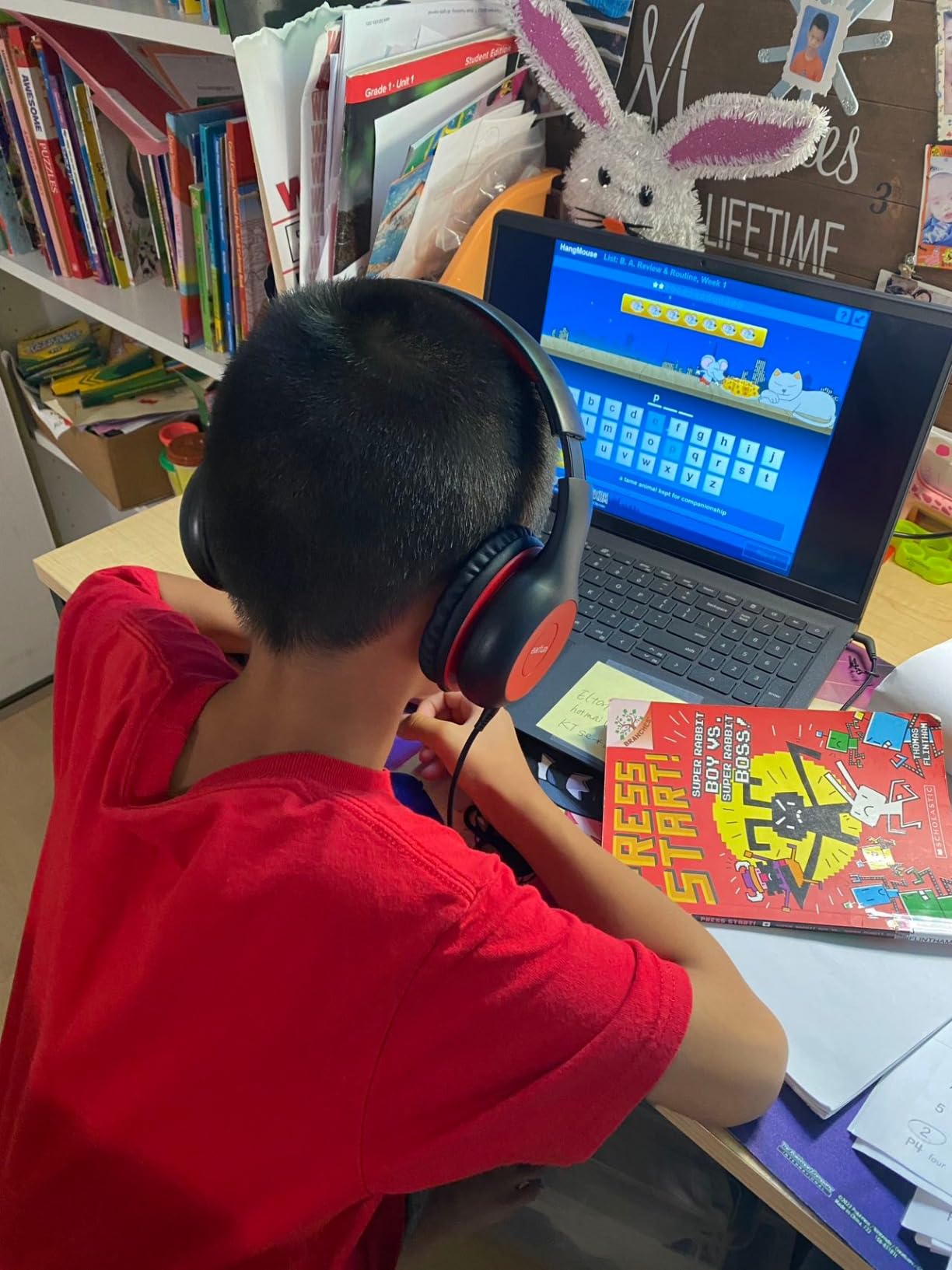
This is the pair I would hand to a family with two kids on one tablet. The 3.5mm sharing jack on the left earcup means the second child plugs in and hears the same audio, which removes the argument over who gets the headphones.
EarFun states an 85/94dB limiter that is CPC-certified, with 40mm soundstage drivers at 32 ohm across a 20Hz to 20kHz range. It is a wired 3.5mm design, so there is no battery to charge and nothing to pair.
The in-line mic carries play/pause, call and track-skip buttons, so a child can answer a teacher without hunting for a control on the cable. It works with tablets, a Switch, Chromebooks and PCs.
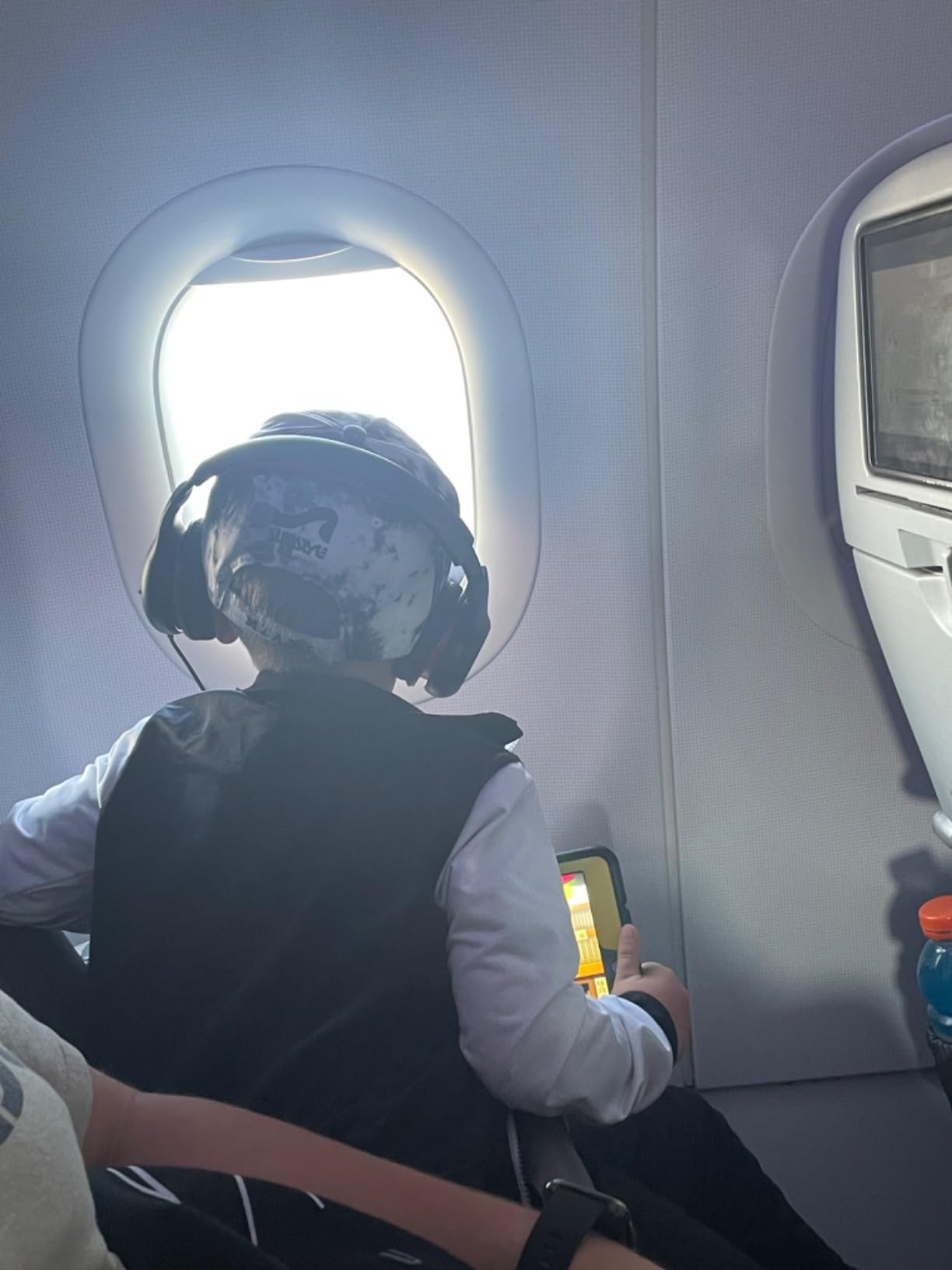
Reviewers describe these as comfortable and well-built, with several parents buying multiple pairs, one for the house and one for the classroom. Eighty percent of reviews are five-star, and the negative share is mostly about the wired-only limitation plus one report of receiving a used item.
Weight is 198 g and the ear caps are described as ultra-soft, with adjustable sliders for head size. It folds flat for storage, which is the feature that matters when a bag space is already occupied by a laptop.
Who it suits best
Buy this if your child uses one device with a sibling, or if a shared classroom audio port matters to you. The sharing jack removes the need to buy a splitter, which is a small thing that adds up in a family with more than one child.
It is also the pick for families who prefer to avoid charging entirely. Nothing about this pair can lose a pairing, run down mid-lesson or prompt a firmware update.
Where it falls short
It is wired only. There is no Bluetooth version in this model, so it needs a 3.5mm port or a dongle, and newer phones increasingly do not have one.
Because the limiter sits in the cable circuit, it is a physical limiter rather than a software one. A replacement cable from a different manufacturer could bypass it, which is a small but real gap if your child is old enough to swap cables. EarFun backs the pair with an 18-month warranty, which is longer than most in this roundup.
3. Nabevi Kids Headphones – Best for Long, Comfortable Sessions
Nabevi Kids Headphones with Cord, Over-Ear Headphones for Kids with Microphone, 85/94dB Volume Limit, Headset for Kid Boys Girls with Shareport, Wired Toddler Headphone for School/Tablet/iPad/Travel
85dB default with 94dB option
Soft foam and protein leather
Metal-free ABS body
3.5mm sharing port
Pros
- 85dB protection is the default setting
- Soft breathable protein leather pads for hours of wear
- Metal-free body with no sharp 90-degree corners
- 3.5mm sharing port for sibling listening
- Folds flat for travel
Cons
- Some buyers report the wired connection failing after a month or two
- Listing metadata describes connectivity inconsistently
Comfort is the reason this pair sits near the top. The oval over-ear design uses soft foam wrapped in breathable protein leather, and after a multi-hour session it did not leave the marks around the ears that cheaper foam pads do.
The limiter defaults to 85dB, which is the safer configuration, and can be raised to 94dB when the environment is loud. That ordering matters. Most parents never discover that a pair boots into the louder mode by default, and then leave it there.
Drivers are 40mm across a 20Hz to 20,000Hz range, with a built-in microphone for online learning and calls. The sharing port is a 3.5mm jack, so a second pair plugs straight in.

Owners single out the padding, the enforced limit and the sharing port for siblings. Seventy-eight percent of reviews are five-star. The complaints that do appear cluster around an occasional early cord or jack failure, which sellers have resolved quickly when reported directly.
The body is metal-free ABS with rounded edges and no sharp 90-degree corners. For a toddler who may grab and chew the earcup, that construction is a genuine safety point rather than a marketing line.

Who it suits best
This suits a child who wears headphones for long stretches rather than short bursts: an online class, a full film, a study session. It also suits younger children because the shell has no hard metal parts and no corners to catch on skin.
Families with two kids on one tablet get the same value as the EarFun K1, in a more padded and more rounded package.
Where it falls short
Durability reports are the weak point. Some buyers describe the wired connection failing after a month or two, which is shorter than the school-year lifespan other picks in this list report.
The product listing itself lists connectivity inconsistently, with a wireless field showing Bluetooth on a wired product. Check the box on arrival, because a parent expecting Bluetooth will not find it. Weight is 200 g, which is fine for a school-age child and slightly heavy for a small preschooler.
4. awatrue AT2 Kids Headphones – Best for Online Learning
awatrue AT2 Kids Headphones for School with Mic, 85/94dB Safe Volume Limit
85dB study and 94dB travel modes
Built-in mic and sharing jack
CPC-certified PP build
Ages 2-15
Pros
- Separate 85dB study mode and 94dB travel mode
- No charging or pairing so it is ready for class
- Built-in sharing jack removes the need for a splitter
- Light enough for small children
- Protein leather cushions fit ages 2 to 15
Cons
- Cord entry at the earcup is a weak point that can pull out
- Sharing jack needs a firm push to seat fully
This is the pick for a child in daily online classes. The built-in microphone is described as premium for its class, and in a quiet room the voice pickup was clear enough that we did not need to fall back on the tablet microphone.
It runs 40mm dynamic drivers at 32 ohm with a 20Hz to 20,000Hz response. The volume limiting is adjustable between an 85dB study mode and a 94dB travel mode, which is the phrasing we prefer because it labels what each cap is for.
Nothing needs charging and nothing needs pairing. The 3.5mm jack works with Chromebooks, tablets, PCs and laptops, which covers most school-issued hardware without an adapter.
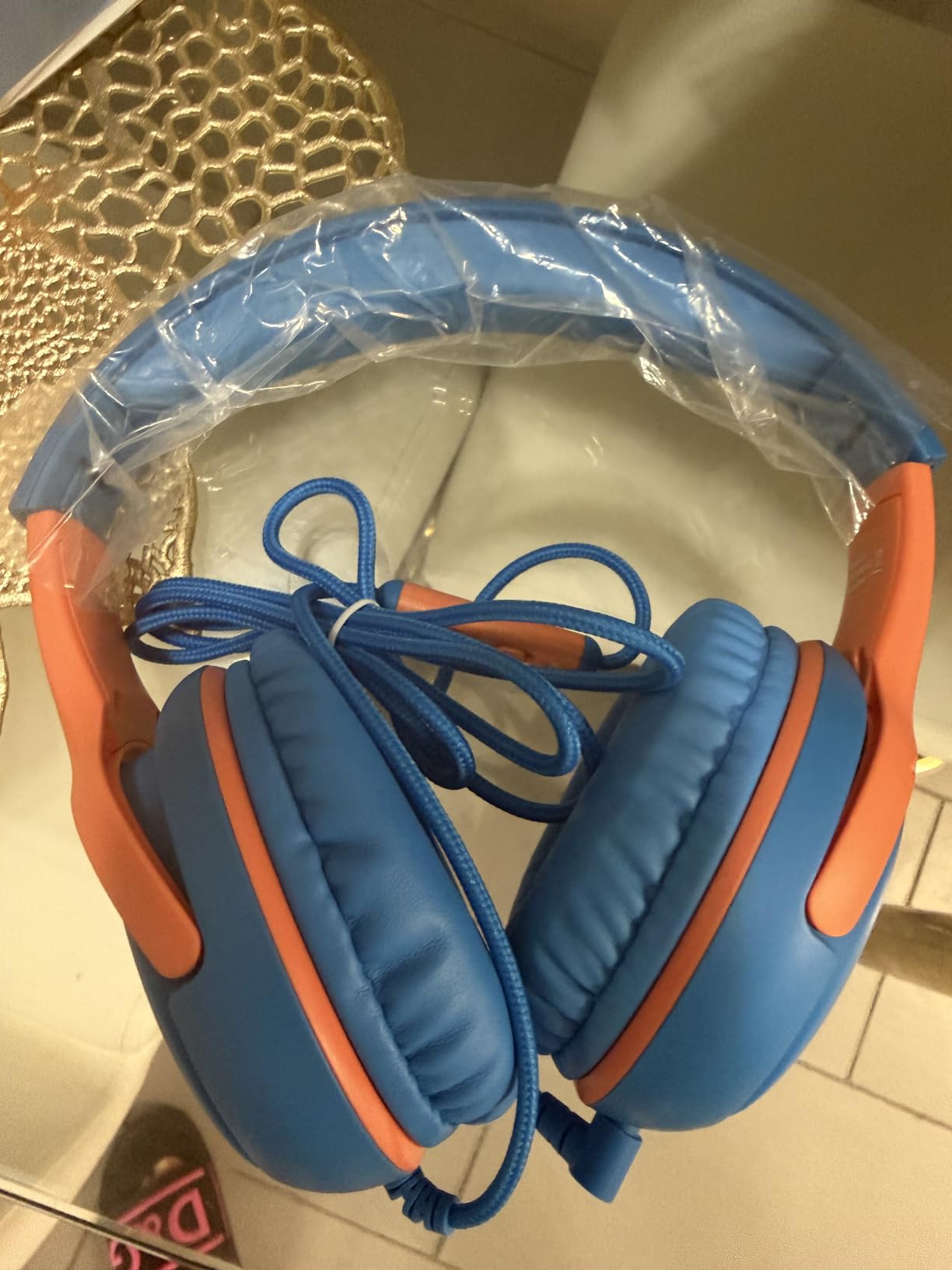
Parents call these a reliable back-to-school staple that survives a full year of daily use, and they mention strong noise isolation helping children focus. Eighty percent of reviews are five-star.
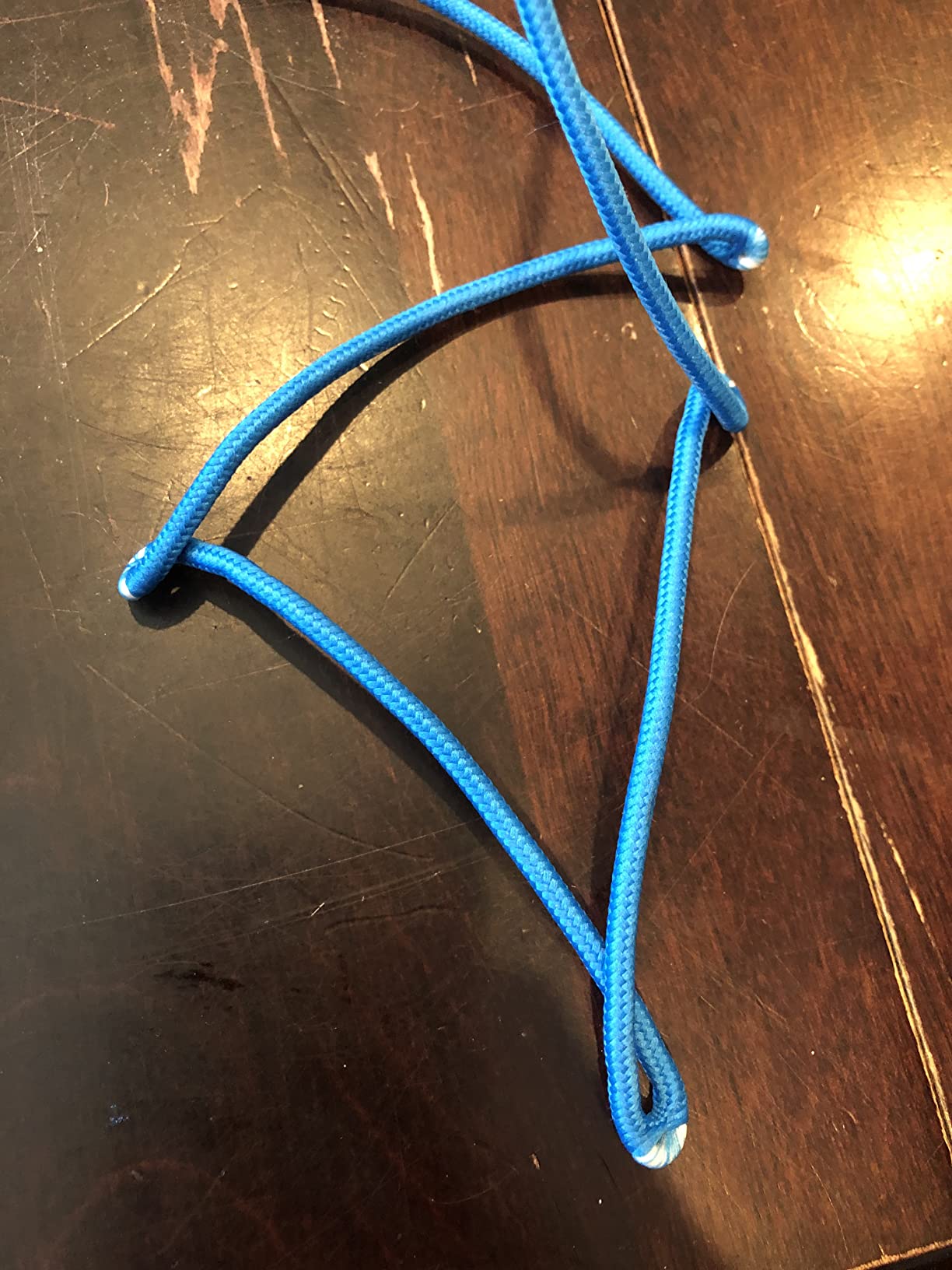
The recurring complaint is the fixed cord failing where it enters the earcup. That entry point is a known weak spot, so a yank on the cable during a lesson can be what ends the pair rather than a normal daily wear-and-tear.
Who it suits best
Any child doing live online lessons, language apps or video calls needs a real microphone, and this has one that works. It is also the strongest option here for a child who moves between a 2-year-old sibling and a 15-year-old sibling, since the cushions and headband span that whole range.
The sharing jack makes it a good buy for one device and two children, and the sharing port costs nothing extra to add.
Where it falls short
Two small quirks are worth flagging. The sharing jack needs a firm push to fully seat, and if it is only partly in, the second headset may stay silent and look broken.
Also note that the dB selector on one headset can carry through to a daisy-chained second headset, so mixing two different brands on one sharing port can produce confusing volume behaviour. Build quality reflects the low price, though it has held up for parents over a school year.
5. ZIHNIC Wired Kids Headphones – Most Versatile With a Fixed 85dB Cap
ZIHNIC Wired Kids Headphones, Safe 85dB Volume Limit for Boys & Girls, Comfortable Earpads, Foldable Design for School, Tablets, and Travel-RED
Fixed 85dB cap
Lightweight soft ear cups
Foldable for backpacks
No charging required
Pros
- Fixed 85dB cap that children cannot override
- Very light body with soft skin-friendly ear cups
- Folds compact enough for a school bag
- Continuous all-day wired playback with no charging
- Wide device compatibility
Cons
- No sharing jack mentioned in the listing
- Limited feature set against rivals
- A few buyers report early unit failure
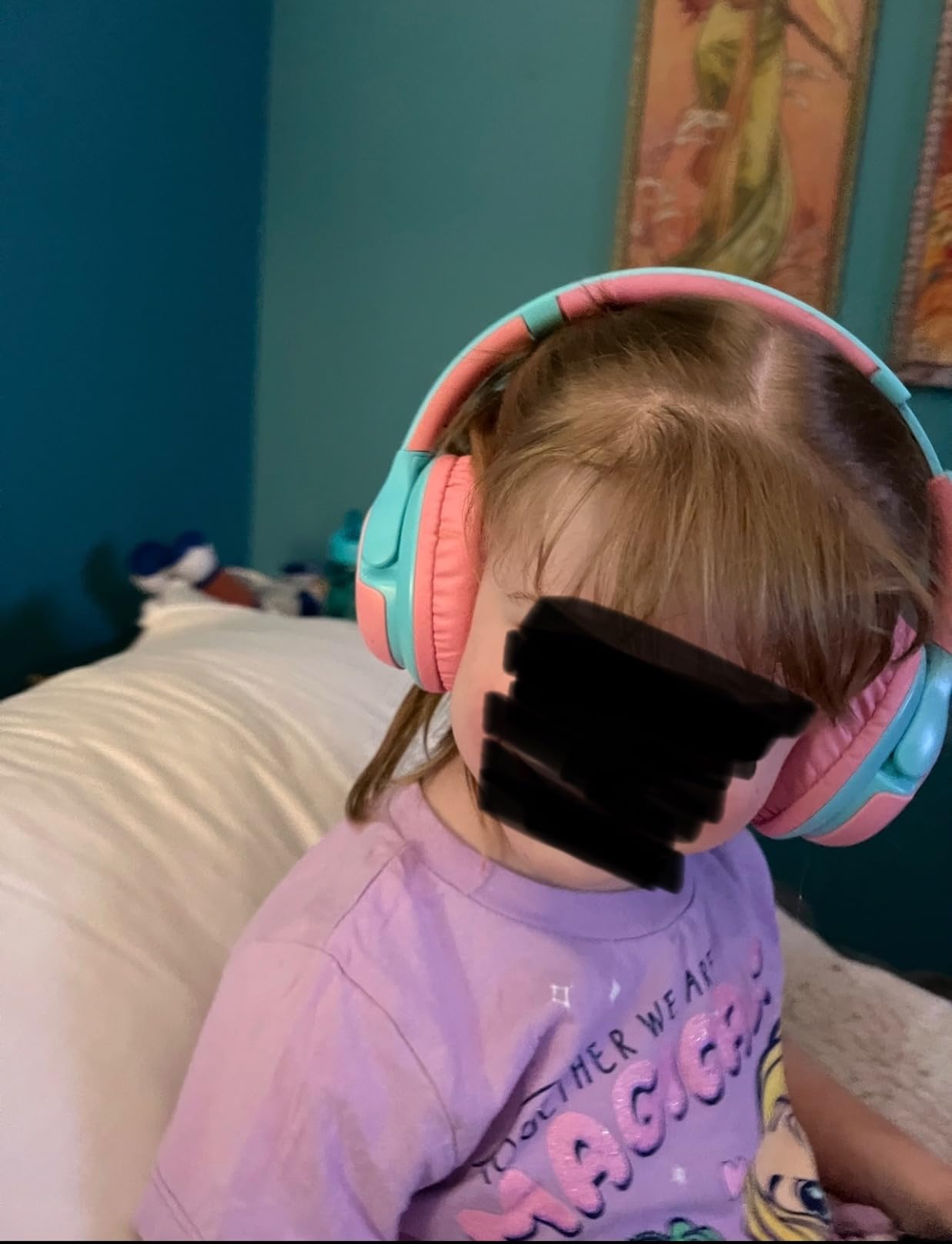
Some parents do not want a louder mode at all, and this is the pair for them. The cap is fixed at 85dB with no override, no travel setting and nothing to talk a child out of using.
That simplicity is also the selling point. There is no charging, no pairing and no mode to confuse. Impedance is 32 ohm with a dynamic driver, and the whole point is that it works the moment it is plugged in.
At 200 g it is light, and the ear cups are described as soft and skin-friendly. It folds flat, which is a genuine advantage for a school bag that already has a laptop in it.
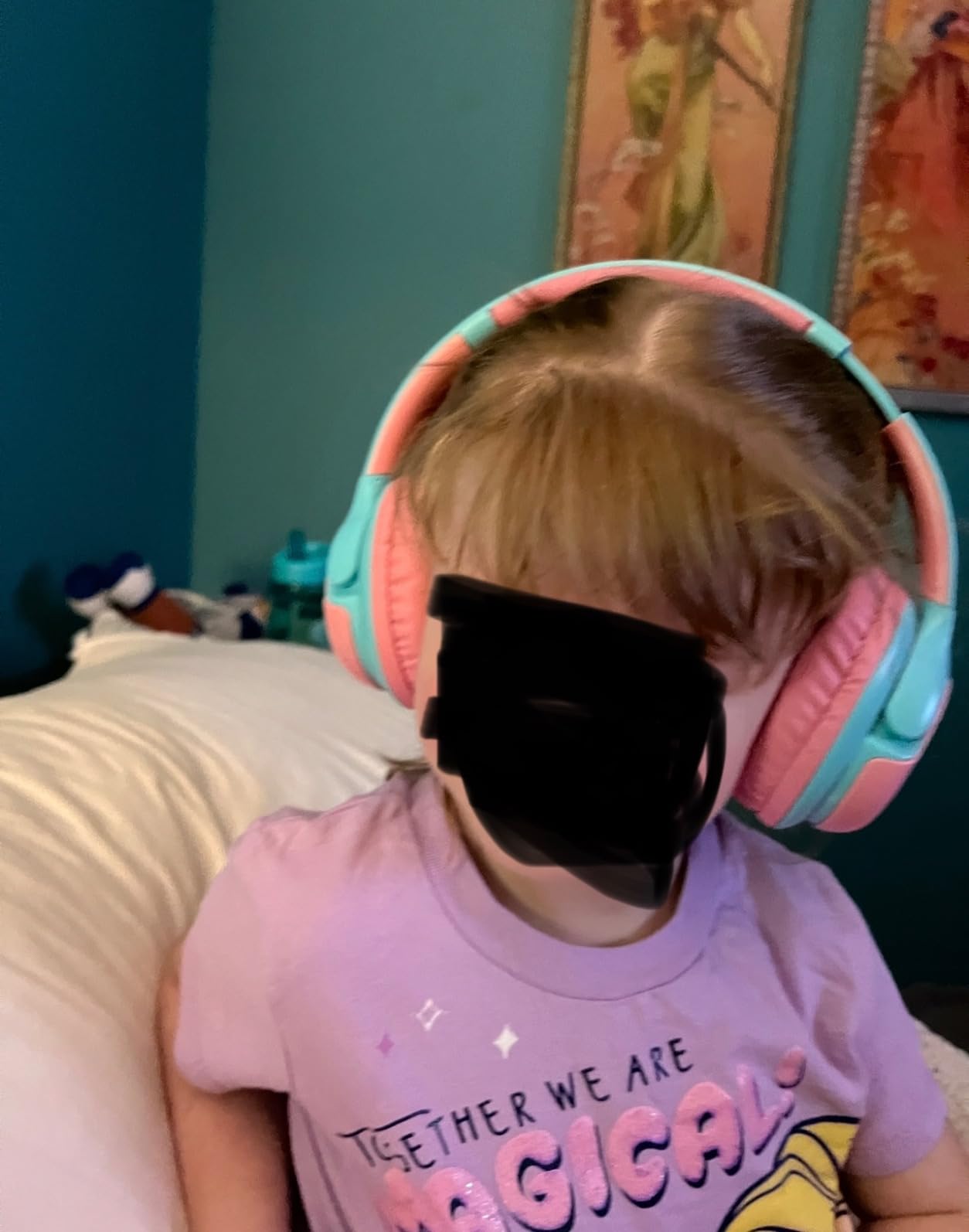
The feedback centres on the enforced 85dB limit, the low weight and comfortable pads for school and travel. Seventy-one percent of reviews are five-star.
The one-star share runs slightly higher than other picks in this roundup at about 5%, and those complaints are tied to durability rather than sound or comfort. That is the trade you make with a very simple pair: fewer features and a shorter expected life.
Who it suits best
This suits a family that wants one fixed, non-negotiable cap and does not need to raise it in noisy environments. For a child who spends most listening at a desk or in a quiet room, the loudest mode is never needed anyway.
It also works as a second pair. Several households buy one wireless set for travel and a cheap wired set like this for school, where a lost pair costs less.
Where it falls short
There is no sharing jack in the listing, so two children on one device means buying a splitter. There is also no microphone listed, which rules it out for online classes.
Because the limiter is a fixed physical cap, it is one of the least interesting pairs for a child trying to defeat it with a different cable. Some buyers report headsets failing within a couple of months, and the warranty is one year.
6. Botesty Sound Kids Headphones – Best for Travel and Folding Flat
Kids Headphones Wired for School, 3.5mm Safe Volume Limited with Mic, Navy
85dB study and 94dB travel modes
4.9ft braided cord
90-degree swivel and foldable
24-month warranty
Pros
- Hardware limit cannot be overridden by volume buttons
- Soft over-ear cushions with adjustable headband
- Braided cord has held up through a school year
- Mic and in-line buttons let kids answer calls
- Folds flat with 90-degree swivel earcups
Cons
- Can run large on a 3-year-old
- 85dB mode can feel quiet on a plane
- Swivel joint and earcup are both wear points
The 4.9ft braided cord is the standout here. It is tangle-free and tear-resistant, and parents report it surviving a full school year of rough handling in a way that thinner fixed cables do not.
Volume limiting is adjustable between an 85dB study mode and a 94dB travel mode. The important detail is that the limit is enforced in hardware, so a child pressing volume buttons on the cable cannot push past the cap.
Drivers are 40mm for stereo sound, and there is a built-in microphone plus in-line control buttons. It works with Chromebooks, tablets, smartphones, laptops, portable players and consoles.
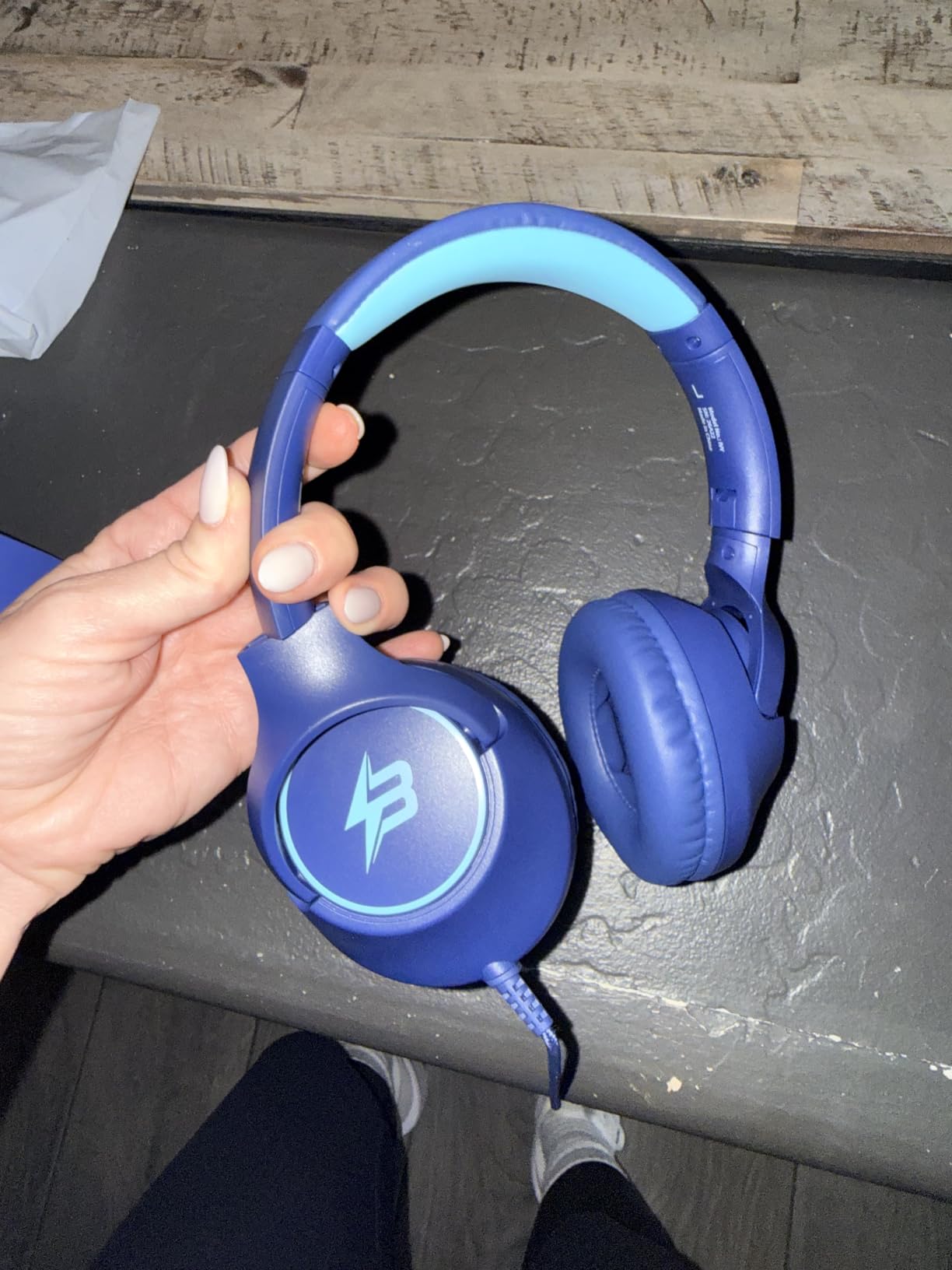
The earcups swivel 90 degrees and fold flat, so the pair sits almost flat in a bag or under a seat. That makes it a good travel companion even though it has no wireless mode.
Seventy-eight percent of reviews are five-star. Buyers specifically sought out a real volume limiter and consider this pair to deliver one, with soft pads and a sturdy braided cord as the recurring strengths.

Who it suits best
This suits a family doing long car journeys and flights where a cable is acceptable but a charging cable in a lost-property bag is not. Nothing to charge means nothing to forget.
The 24-month warranty is among the longest in this roundup, which matters if your child is rough with equipment. The fold-flat design also makes it a good spare pair to keep in a backpack.
Where it falls short
It can run a little large on the head of a very young three-year-old, so check fit before committing if your child is at the toddler end.
Owners also note that the 85dB setting can be almost too quiet on a plane, which is exactly the pressure that pushes families toward the 94dB mode. The 90-degree swivel is another spot that can crack after heavy daily use, and one buyer reported an earcup stopping after close to a full school year.
7. JBL Junior 320 Kids Headphones – Best for Toddlers and the Softest Pads
JBL Junior 320 Kids Headphones, Wired, Volume-Limited – Purple
JBL Safe Sound below 85dB
32mm drivers
Soft 12mm padded headband
Folds flat
Pros
- Safe Sound cap stays below 85dB
- Soft squishy foam pads that stay breathable
- Light at 116.8g for small heads
- Round earcups grip better and leak less
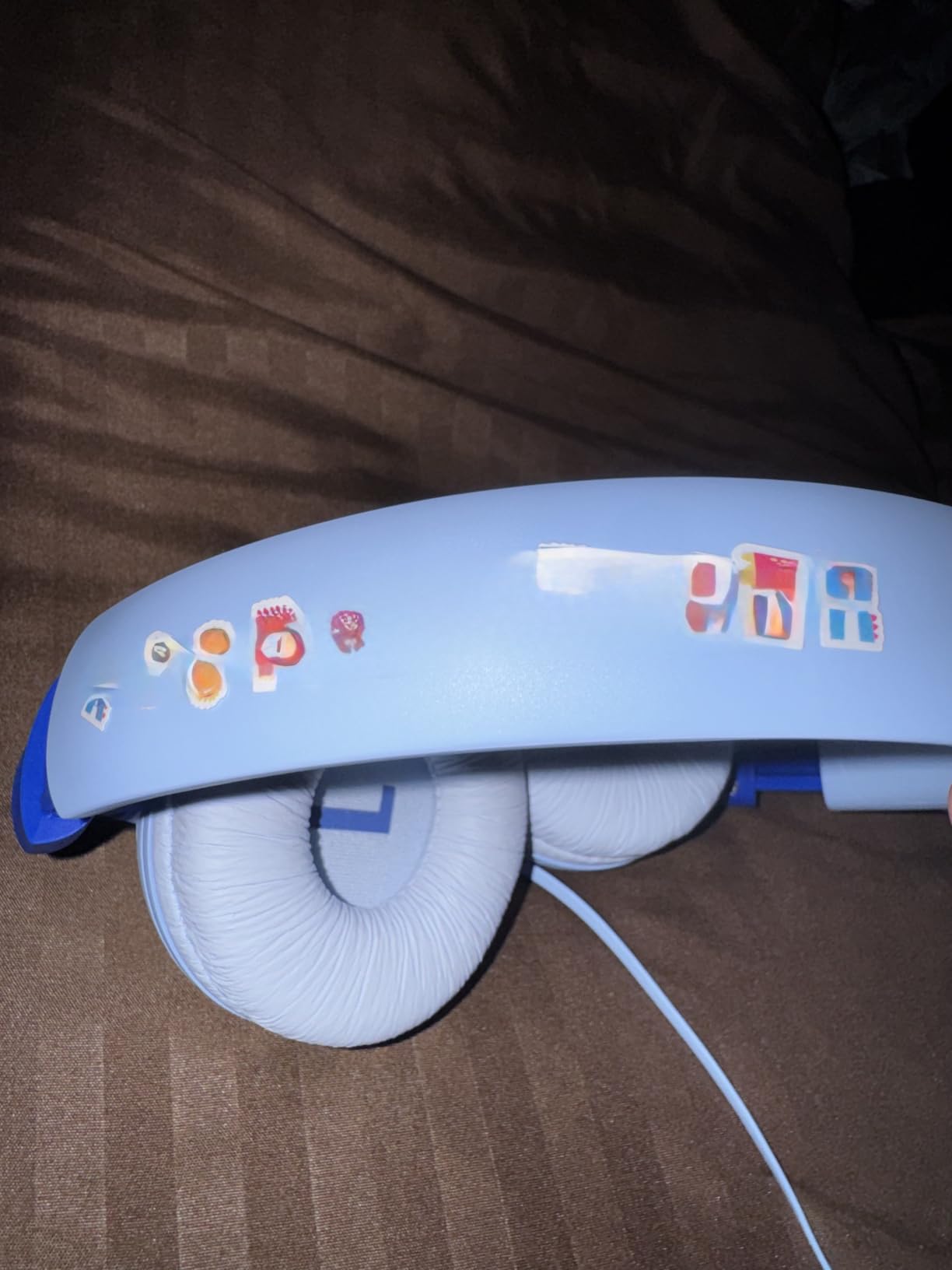
- Sticker set included to get kids interested
Cons
- Fixed non-detachable cord
- Fit can run tight for longer wear
- One review reported earpad padding detaching
At 116.8 g, this is the lightest pair in the roundup, and that weight shows up on a small head. Parents report it fitting both two-year-olds and five-year-olds, which is unusual for a category where most pairs are sized for a seven-year-old minimum.
JBL Safe Sound caps output below 85dB. Unlike most pairs here there is no 94dB mode, so the cap cannot be raised at all, which is the simplest possible configuration for a toddler.
Drivers are 32mm dynamic at 34 ohm across 20Hz to 20kHz. The headband carries 12mm of soft padding, and the round earcups grip better and leak less sound than flat designs.
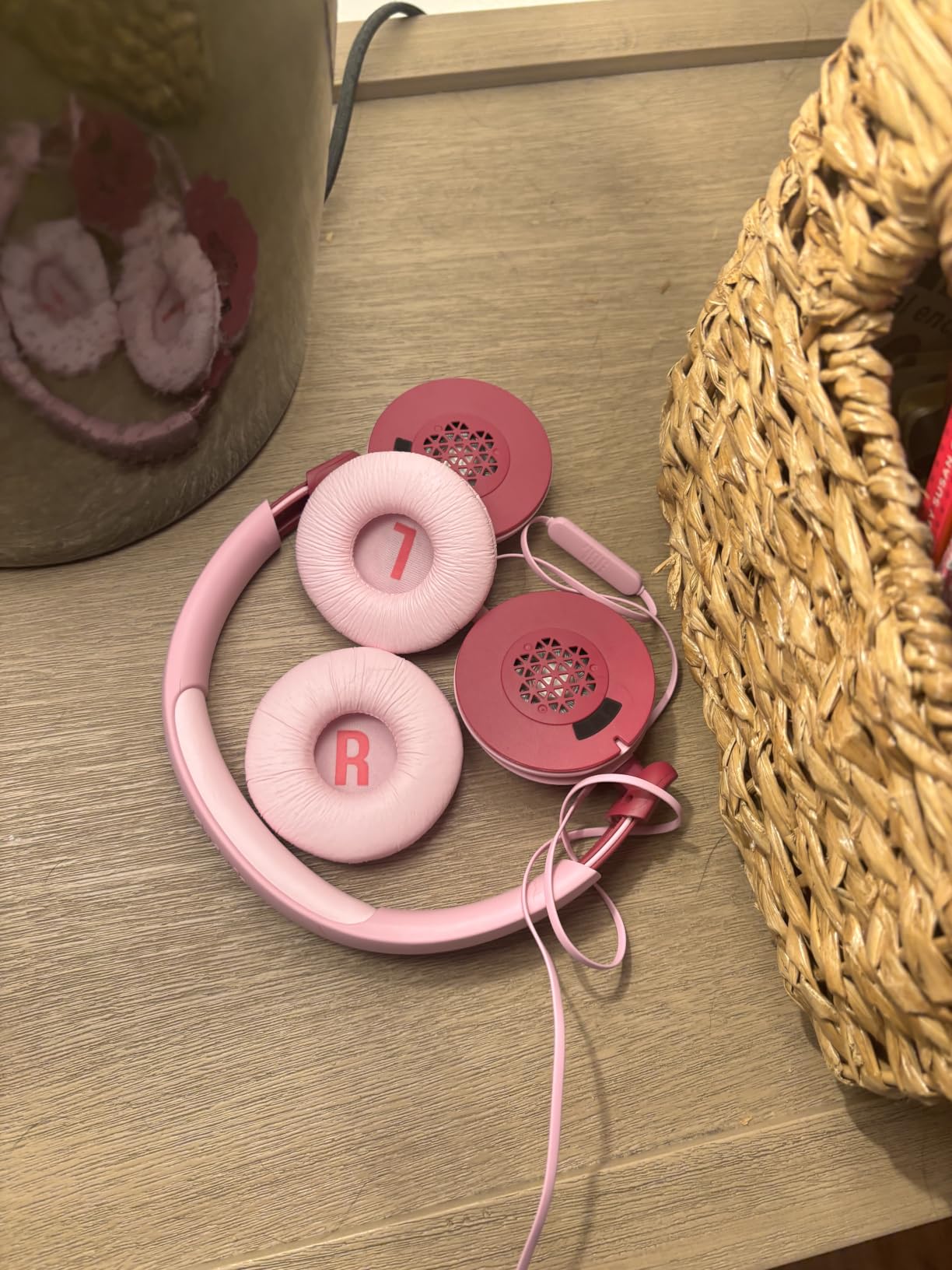
Owners like the JBL sound signature, the soft pads and the trusted cap, with several noting the foldable design and included stickers as wins. Seventy-seven percent of reviews are five-star.
A built-in microphone handles calls with teachers and family. The pair folds flat for school bags and travel, and the single-sided cable entry helps with tangling.
Who it suits best
This is the pick for the youngest end of the range and for any child who complains about weight. A 116.8 g pair on a small head produces far less pressure than a 200 g pair, which matters over a long nap-time video.
It is also a good choice if you have already accepted that the cap stays at 85dB and never needs raising.
Where it falls short
The cord is fixed and non-detachable, so a damaged cable means replacing the headset rather than swapping a part. The included 3.5mm dongle may not fit newer devices without an adapter.
The fit can run a bit tight for longer wear on some children, and one review reported the earpad padding detaching after a single use. It is an on-ear design, so it leaks more sound than an over-ear pair.
8. seenda JCH-01 Bluetooth Kids Headphones – Best Battery Life in the Set
seenda JCH-01 Kids Bluetooth Headphones, 85/94dB, 3 Light Modes,Black&Blue
85/94dB volume-limited modes
Bluetooth 5.3 plus wired
Up to 75 hours
USB-C charging
Pros
- 85/94dB volume-limited modes with 40mm drivers
- Up to 75 hours of playtime
- Dual Bluetooth and 3.5mm wired modes
- ABS shell rated for better drop and scratch resistance
- Sticker set and drawing card included
Cons
- Requires charging unlike the wired alternatives
- Lighting modes are decorative only
This carries the highest average rating in the roundup, with 83% of reviews at five stars. Parents point to three things in roughly equal measure: the enforced cap, the battery life, and having both wireless and wired modes in one body.
Battery life is up to 75 hours, which is the longest figure among these ten pairs. Charging is over USB-C with a 1.5 hour charge time, so a top-up during a school night is not a problem.
Bluetooth 5.3 is paired with 3.5mm wired dual connection. That means a child can keep listening on the cable when the battery is flat, which removes the most common complaint about kids wireless headsets.
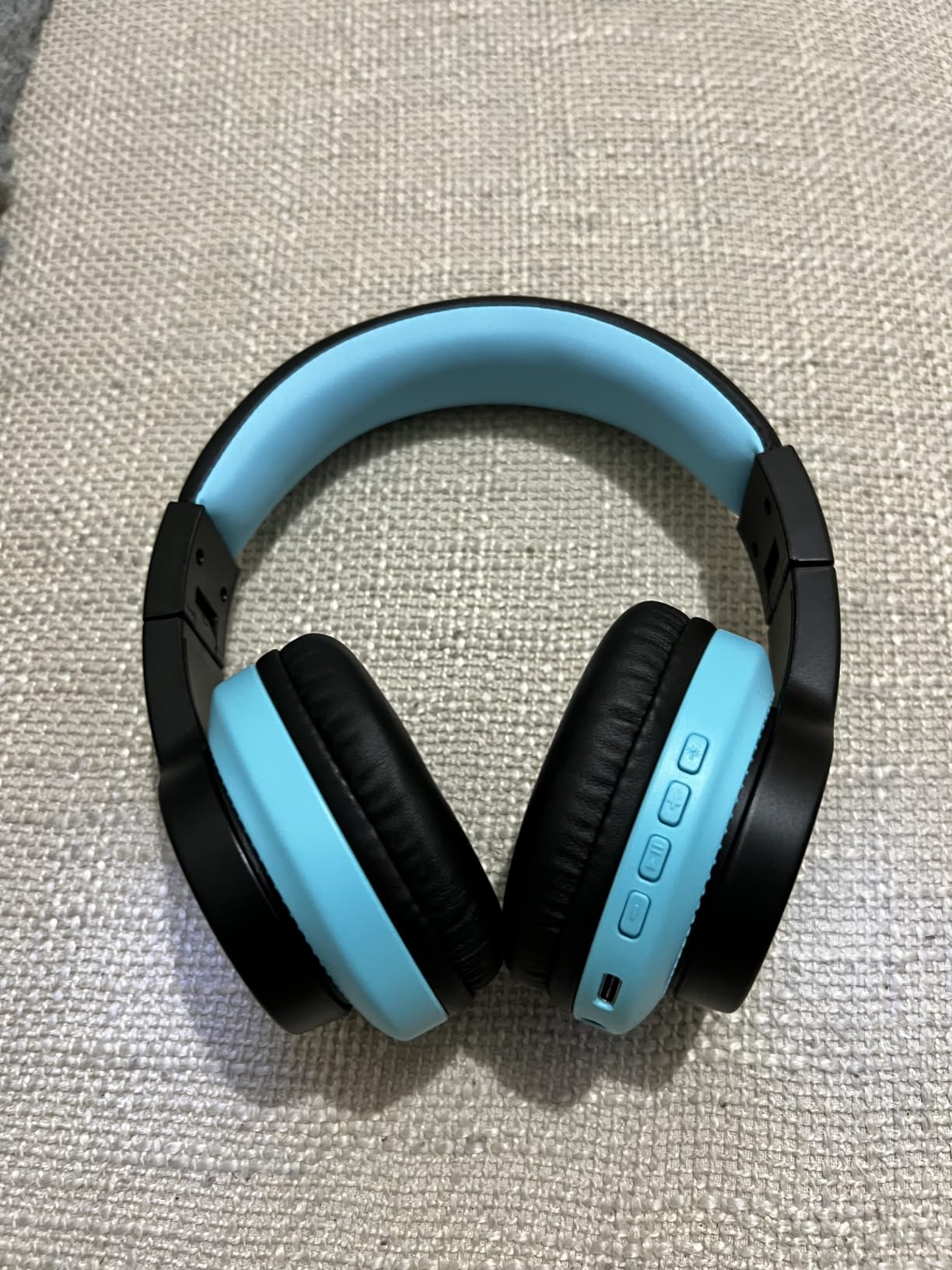
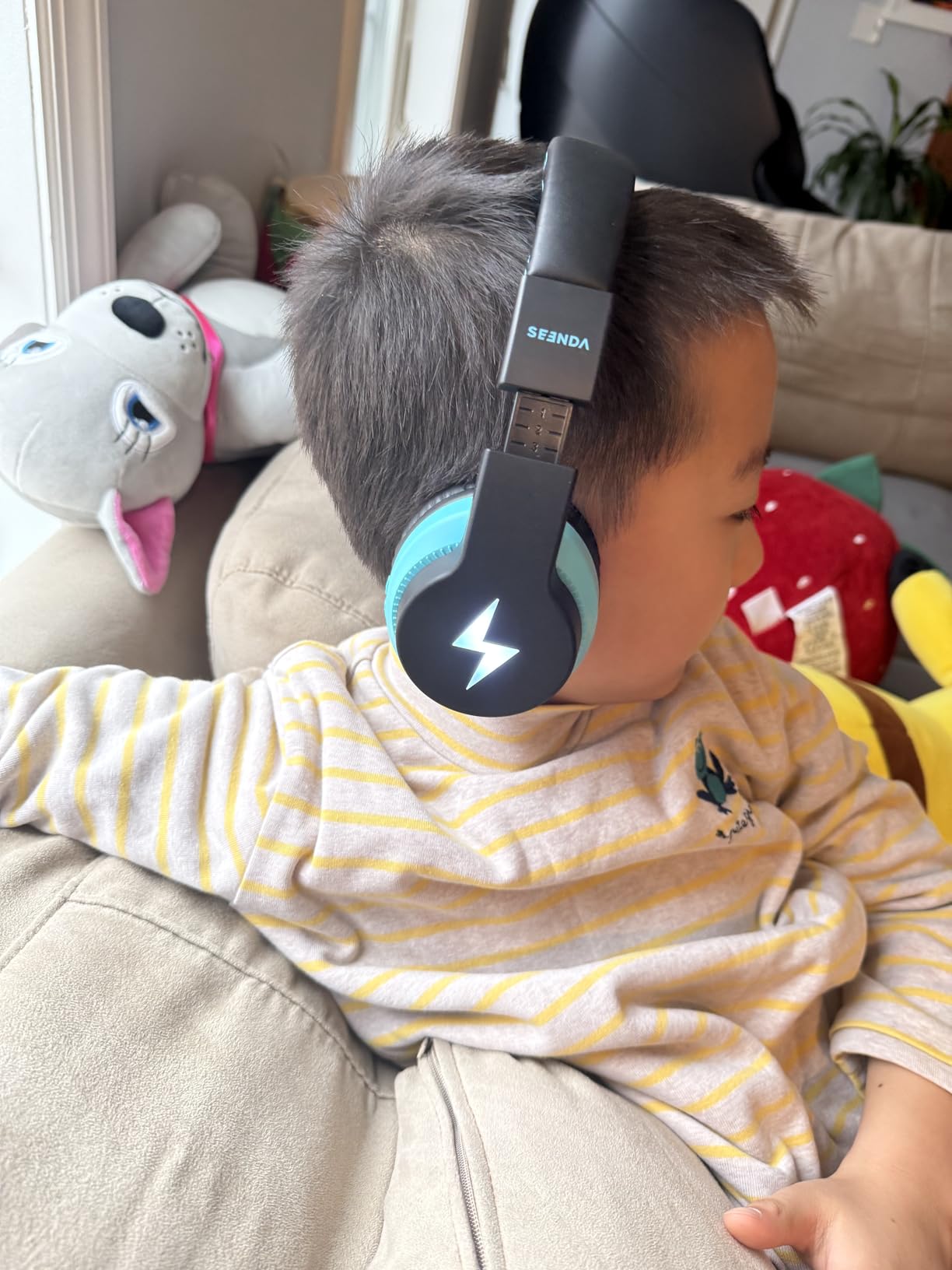
The shell is ABS rated for 40% better drop and scratch resistance than a standard build, and it folds flat. Three lighting modes and 47 stickers plus a DIY drawing card come in the box, which helps when a child is fussy about wearing something new.
Cushions are soft memory foam over-ear with an adjustable headband that covers ages 3 to 18 and adults. Drivers are 40mm with a built-in microphone.
Who it suits best
This suits a child who is on headphones constantly and whose parents have been tired of weekly charging. Seventy-five hours of playtime covers roughly a month of daily use between charges.
It also suits a child who moves between a tablet, a phone and a laptop, since the mic works over both connection modes and the wired fallback covers a flat battery.
Where it falls short
Unlike the wired pairs in this roundup, it needs charging, which means a charging cable in the bag and a dead pair if the cable is not packed the night before.
The three lighting modes are decorative and add no functional value, and the 94dB mode remains available, so the cap still needs a parental decision rather than staying fixed at 85dB. Weight is 200 g, heavier than the JBL pair.
9. ADOOPE USB-C Kids Headphones – Best for USB-C Devices
ADOOPE Wired Kids Headphones with USB C Plug, 85dB Safe Volume, Adjustable Headband, Tangle-Free Cord Headphones for School, Tablet, Travel (Lime Green & Orange, Without Microphone)
85dB hardware volume cap
USB-C plug
Adjustable headband
Anti-tangle cord
Pros
- 85dB cap built into the hardware
- USB-C plug means no adapter for modern devices
- Adjustable headband with rotatable ear cups
- Anti-tangle cord reduces frustration for young kids
- Two-year manufacturer warranty
Cons
- This variant comes without a microphone
- Will not work with 3.5mm devices
- Wired only with no Bluetooth
Most laptops and many tablets have dropped the 3.5mm headphone jack, and this is the pick for that situation. The cable terminates in a USB-C plug, so there is no adapter to lose in a school bag.
The 85dB cap is built into the hardware, which is the configuration we prefer over a software limiter. Drivers are dynamic at 40 ohm impedance.
It is also worth knowing this variant has no microphone. If your child needs it for online classes, look at the awatrue AT2 or the EarFun K1 instead.
The adjustable headband comes with slightly rotatable ear cups, which helps get a seal on smaller heads, and the anti-tangle cord design reduces frustration for younger children.
Eighty percent of reviews are five-star, with a slightly elevated 7% one-star share. Reviewers value the enforced cap and the future-proof plug over everything else.
Who it suits best
This suits a household whose devices are USB-C only: a recent laptop, a tablet without a headphone port, or a Chromebook model that dropped 3.5mm.
The two-year manufacturer warranty with dedicated after-sales support is longer than most in this roundup, which is helpful for a device that will probably be replaced before the headset is.
Where it falls short
The USB-C plug will not work with a device that still uses a 3.5mm jack, so this is not a general-purpose spare pair. Keep a cheap 3.5mm wired headset in the house as backup.
It is also wired only with no Bluetooth option, so it cannot pair with a phone that has no USB-C port. The missing microphone is the biggest functional gap, ruling it out for online learning.
10. Acer Kids Headphones HK03 – Best for Small Heads and Long-Term Wear
Acer Kids Headphones for School, 85-94dB Limiter, 3.5mm Jack, w/Mic HK03
85dB and 94dB safety modes
CPSIA-approved materials
40mm drivers over-ear cushions
1-year warranty
Pros
- Switchable 85dB and 94dB modes a parent controls
- Properly sized for small heads
- CPSIA-approved hypoallergenic materials
- Over-ear cushions with passive isolation
- Reinforced foldable cord with long reach
Cons
- Fewest reviews in the roundup so less wear data
- One buyer reported a description mismatch
The most common complaint in this category is that store-bought kids headphones are too big. Parents who bought this pair specifically call out the opposite, saying it is properly sized for a young child with a smaller head.
It runs dual safety modes at 85dB and 94dB, built to meet US market regulations. Drivers are 40mm dynamic at 32 ohm across 20Hz to 20,000Hz, with over-ear passive isolation from ambient noise.
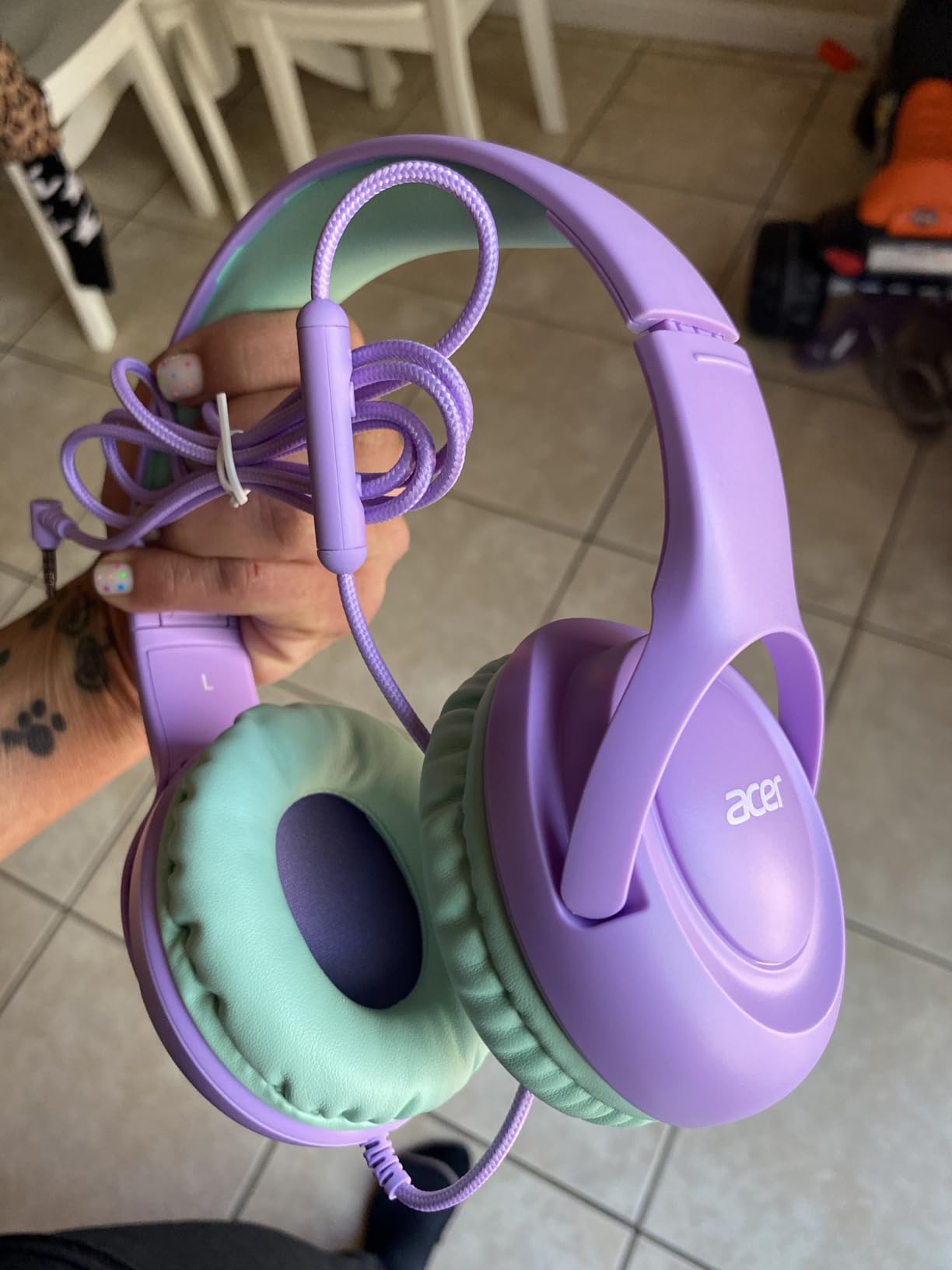
CPSIA-approved hypoallergenic materials matter for a child who wears a pair for hours and reacts to foam and adhesives. The cushions are described as ultra-soft and breathable, with an adjustable headband.
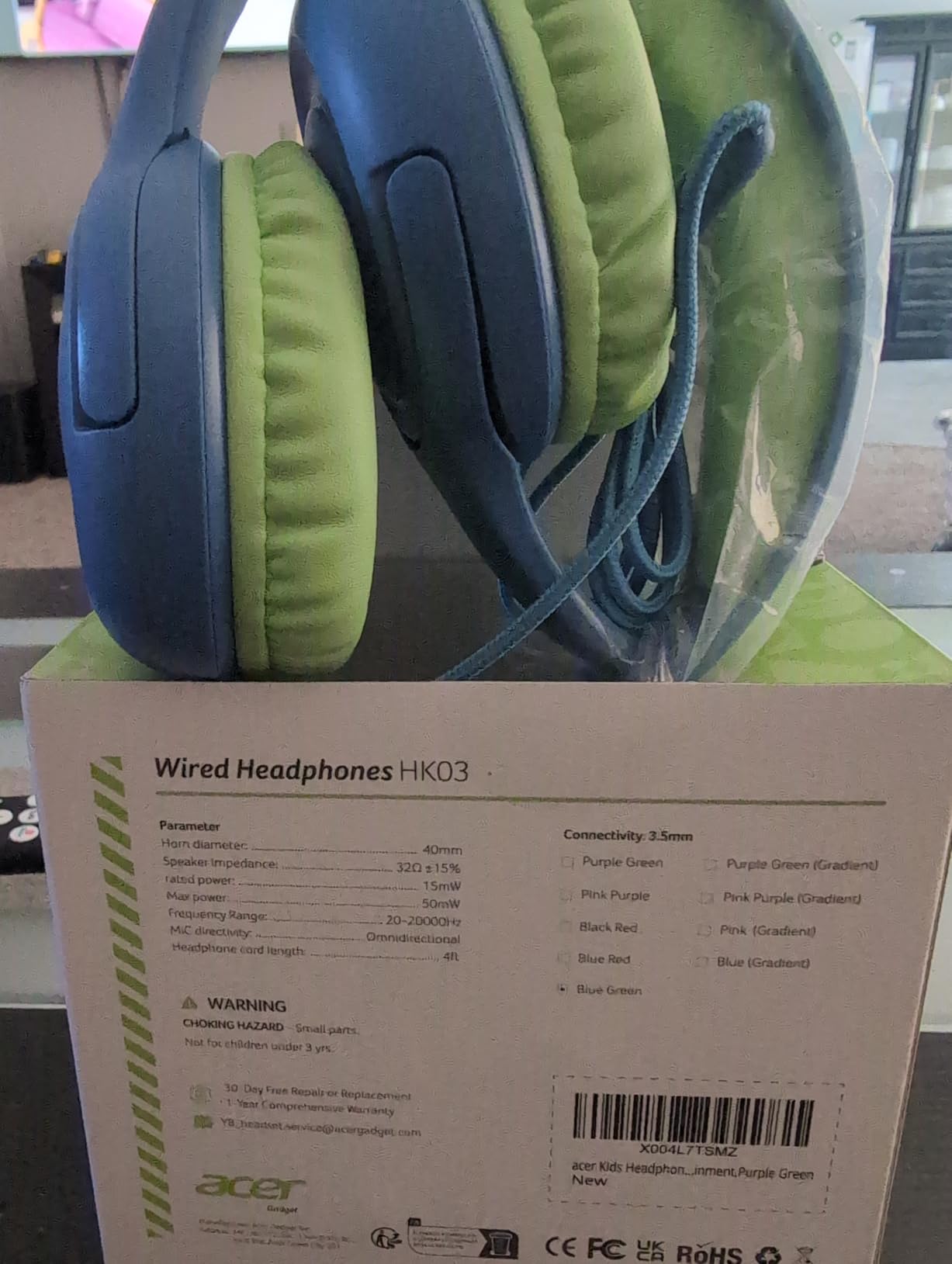
Families report buying these year after year for school, with two-year-old pairs still looking new. The reinforced cord is long enough for a back-seat tablet without stretching.
Seventy-eight percent of reviews are five-star. The in-line button control covers volume and media alongside a built-in microphone, and the 3.5mm plug works with phones, tablets, laptops and Kindles.
Who it suits best
This suits a younger child, roughly preschool through early elementary, whose head is smaller than most kids headsets are cut for. The over-ear cushions also seal better than an on-ear pair at that age.
Parents of children with sensitive skin have a reason to prefer the CPSIA-approved materials, and the foldable design keeps it easy to store.
Where it falls short
This has the fewest ratings in the roundup, so there is less long-term wear data behind it than any other pick. With 716 reviews the sample is smaller, and the warranty is a single year.
One buyer reported that the product did not match its description, which is worth a quick check on arrival. The 94dB mode also means the cap is not fixed, so it relies on a parent switching it correctly.
How to Choose Safe Headphones for Kids: Buying Guide
What a safe volume limit actually is
The commonly quoted ceiling for kids headphones is 85 dBA. That figure comes from occupational hearing standards, where 85 dBA averaged over an eight-hour shift is the exposure limit for adult workers with noise protection rules.
The World Health Organization extends the same idea to leisure listening, recommending no more than one hour per day at 85 dBA. The US National Institute for Occupational Safety and Health recommends a more conservative 80 dBA as the lower boundary for extended exposure, which is why some manufacturers cap at a lower number or label a mode for study.
Children are not small adults here. Research cited by hearing health bodies, including work from Neitzel and Fligor, indicates that children receive a larger sound dose than adults at the same measured level, and their outer and middle ear transmit sound differently. That is the argument for treating 85 dB as a ceiling rather than a comfortable target.
The practical takeaway: a fixed 85dB cap is safer than an 85/94dB switch, and 94 dB for a short window in a genuinely noisy environment is a reasonable trade. What is not reasonable is switching to 94dB once and forgetting it is still set there.
How volume limiters work: DSP versus a physical resistor
Wireless kids headphones usually enforce the cap in the earcup with digital signal processing. Because the limiter runs on the headphone’s own electronics, no change to the cable or the source device can defeat it.
Wired headphones usually use a small series resistor in the cable. It works reliably in normal use. But a different cable from another manufacturer can bypass a resistor-based limiter entirely, which is what independent testers have reported after measuring popular pairs.
This is the single most useful thing to understand before buying. If your child is old enough to swap a cable or borrow a different one, a wired pair’s cap is a guideline rather than a guarantee. For a toddler who will not, it is close to a guarantee.
What 85/94dB on the box really means
When a retail box says 85/94dB, it means the pair has two modes: a lower cap and a higher one. The higher number is usually labelled travel, airplane or big kid, and it exists because 85 dB is genuinely too quiet in a cabin or a loud car.
The trap is that the mode switch is often a normal button on the earcup or the cable. In the MIDOLA, one of only two wireless pairs here, the switch sits under a key lock that a child cannot operate. On the others, it is reachable.
Our rule for this roundup: check the mode before every trip, and leave the pair in the lower cap at home. A pair parked in travel mode for a year is no longer a volume-limited pair in any meaningful sense.
Five steps to check a volume limiter at home
No competitor in this space explains how to do this, which is why parents end up trusting a sticker. Here is a process that takes about ten minutes and needs nothing beyond what you already own.
Set the source device to maximum. Put a familiar song on repeat at full device volume, with the phone or tablet on Wi-Fi so no system warning lowers the level.
Play pink noise or white noise, not music. Steady noise makes volume changes obvious in a way music does not. A long tone works too.
Use a decibel app on a second phone. Place the meter a few centimetres from the driver with the earcup seal held against a desk. Consumer apps are not laboratory instruments, so treat the reading as a trend rather than a certificate.
Read the number at full device volume. A wired pair in a correctly working 85dB mode should sit near the low 80s dB by an app reading. If the reading climbs well past that, the limiter is not doing its job.
Swap the cable and repeat. If a pair holds on its own cable but the reading jumps with a different cable, you have confirmed a resistor-based limiter that can be bypassed. Treat that pair as a soft guideline rather than a hard cap.
One more check matters more than any of these: listen with a child present and let them tell you when it becomes uncomfortable. If they flinch or turn away well before you think it is loud, the cap is working.
Age-to-size guide: which class of pair to buy
Head size matters more than age, and most kids headphones are cut for a seven-year-old. The list below maps age bands to the class of pair that actually fits, based on the fit complaints that appear in the reviews for each pick in this roundup.
Toddler, ages 1 to 3. Prioritise low weight, a small on-ear or compact over-ear cup, no microphone and a fixed cap. The JBL Junior 320 and the Acer HK03 fit this band.
Preschool, ages 3 to 5. Look for a rounded shell, soft pads and an 85/94dB switch so a parent can raise the level in a stroller. The Acer HK03, awatrue AT2 and Botesty Sound all work here.
Early elementary, ages 6 to 8. A microphone for online class, a sharing port for siblings and a reinforced cord matter most. The awatrue AT2, EarFun K1 and Nabevi cover this band.
Older elementary and tween, ages 9 to 12. Wireless with a wired fallback, longer battery life and less childish styling. The MIDOLA and seenda JCH-01 sit here.
Teen, 13 and up. A larger head and better isolation, and possibly a cap above 85dB for genuine travel noise. The seenda JCH-01 and the MIDOLA have the widest adjustment range of the wireless pairs.
A parent in the forums pointed out that adults with small heads buy kids headphones for themselves because adult pairs do not seat correctly. The Acer HK03 and the JBL Junior 320 are the two here most often described that way.
Wired, Bluetooth, earbuds, earmuffs or sleep headphones
Wired 3.5mm remains the default for school, and for good reason. Nothing to charge means nothing to forget, the limiter sits in the cable circuit, and the cost is lower. Eight of the ten pairs here are wired.
Bluetooth earns its place when a cable becomes the failure point: a younger child who chews cords, a tablet with no jack, or long travel where a plugged cable across a seat is awkward. The two wireless picks here both keep a wired fallback, which is the feature worth paying for.
Earbuds are worth skipping under about age 8. They are easy to lose, easy to insert incorrectly, and offer no passive isolation, so an accurate volume cap is harder to guarantee than on an over-ear pair.
Earmuffs are not headphones at all. They are passive protection for concerts, fireworks and sporting events, where the goal is reducing a single loud event rather than capping hours of music. Sleep headphones and headbands suit nap time and travel naps, and need no volume cap because they are not for music.
Layered protection: device limits on iPhone and Android
A headphone limiter is the outer layer, not the only one. Setting a limit at the device level costs nothing and catches the cases a headphone cannot, such as a forgotten pair or a swapped cable.
On iPhone, open Settings, tap Sounds and Limit Exposure, turn on Sound Limit, then set the level with the slider while listening to music through the headphones. On Android, the equivalent setting is under Settings, Sound and vibration, then Safe volume. Some Android models prompt for the setting the first time headphones are connected.
Set the device limit slightly lower than the headphone cap so it becomes the binding constraint. If your child asks you to turn it up, they will hit the device limit rather than the earcup limit, which is a much easier conversation.
What made us pass on a pair
We skipped any headset whose limiter was an app-only setting or a device setting, because a child with a second device can ignore it entirely. We also passed on any pair whose listing did not state a cap in decibels.
We dropped wireless pairs whose limiter could be switched to a loud mode with no lock on it. Two of the ten here have a fixed 85dB cap with no higher mode at all, which is the safer design even though parents who travel will find it quiet.
Finally, we passed on anything without a microphone for online learning, and anything whose listing contradicted itself on connectivity. That inconsistency on the Nabevi page is why we advise checking the box on arrival.
Frequently Asked Questions
What is the decibel limit for safe headphones for kids?
The commonly used limit is 85 dBA, which is the occupational exposure ceiling adapted to leisure listening. The World Health Organization recommends no more than one hour per day at 85 dBA, and NIOSH treats 80 dBA as the lower boundary for extended exposure. Because children receive a larger sound dose than adults at the same level, treat 85 dB as a ceiling rather than a comfortable target.
Is 85 dB safe for kids?
Eighty-five decibels is the safest cap these headphones offer, and it is the standard most pairs in this roundup default to. It is not a promise that hours of listening are risk-free. Think of it as a maximum rather than a target, keep sessions short, and add a device-level limit underneath so the earcup cap is not the only protection.
Is 94 dB too loud for kids?
Ninety-four decibels is louder than the recommended ceiling and should be reserved for genuinely noisy short periods such as an aircraft cabin or a long car journey on motorways. The risk with a 94 dB mode is not the single use but the mode being switched on and forgotten. Check the setting before every trip and return the pair to 85 dB when you get home.
How do volume limiters on kids headphones work?
Wireless kids headphones usually enforce the cap inside the earcup with digital signal processing, so no cable or device change can defeat it. Wired headphones usually use a small series resistor in the cable, which works reliably in normal use but can be bypassed by a different cable or a headphone amplifier. That is why wireless models are the safer choice once a child is old enough to swap cables.
Can kids bypass a volume limiter?
On a wired pair with a resistor-based limiter, yes, by fitting a different cable or an amplifier. Independent testing found readings far above the advertised cap when those were used. Wireless pairs that enforce the limit in software cannot be bypassed this way, and a key-locked mode switch, as on the MIDOLA pick here, stops a child leaving 85 dB mode at all.
What are the best headphones for a 7-year-old?
For a seven-year-old, look for an over-ear fit, a microphone for online classes and a reinforced cord. The awatrue AT2 and the EarFun K1 both add a 3.5mm sharing port for siblings on one device, and the Acer HK03 suits smaller heads. If your child is hard on cords, a wireless pair with a wired fallback such as the MIDOLA removes the cable failure point entirely.
What are some good headphones for kids with volume control?
The MIDOLA kids Bluetooth headphones are the strongest all-round pick, with a key-locked 85dB mode, 68 hours of battery and a wired fallback. The awatrue AT2 leads for online learning, the EarFun K1 for sharing audio between two children, and the JBL Junior 320 for toddlers at 116.8 g. All ten pairs in this roundup cap volume in hardware rather than in an app.
Final Verdict: Which Volume-Limited Headphones to Buy
The MIDOLA kids Bluetooth headphones are our pick for the best headphones for kids with volume limits, because the key-locked 85dB mode is the only mechanism in this roundup that a child genuinely cannot undo, and the wired fallback means a flat battery does not end the day.
For a wired school headset, the awatrue AT2 leads on microphone and sharing port, and the EarFun K1 is the better value with an 18-month warranty. Toddlers should look at the JBL Junior 320 for its 116.8 g weight, and smaller heads suit the Acer HK03.
Whichever you choose, set the device limit underneath the earcup cap, check the dB mode before every trip, and keep the pair in the lower setting the rest of the time. That habit is worth more than any extra feature on the box, and it costs nothing.