
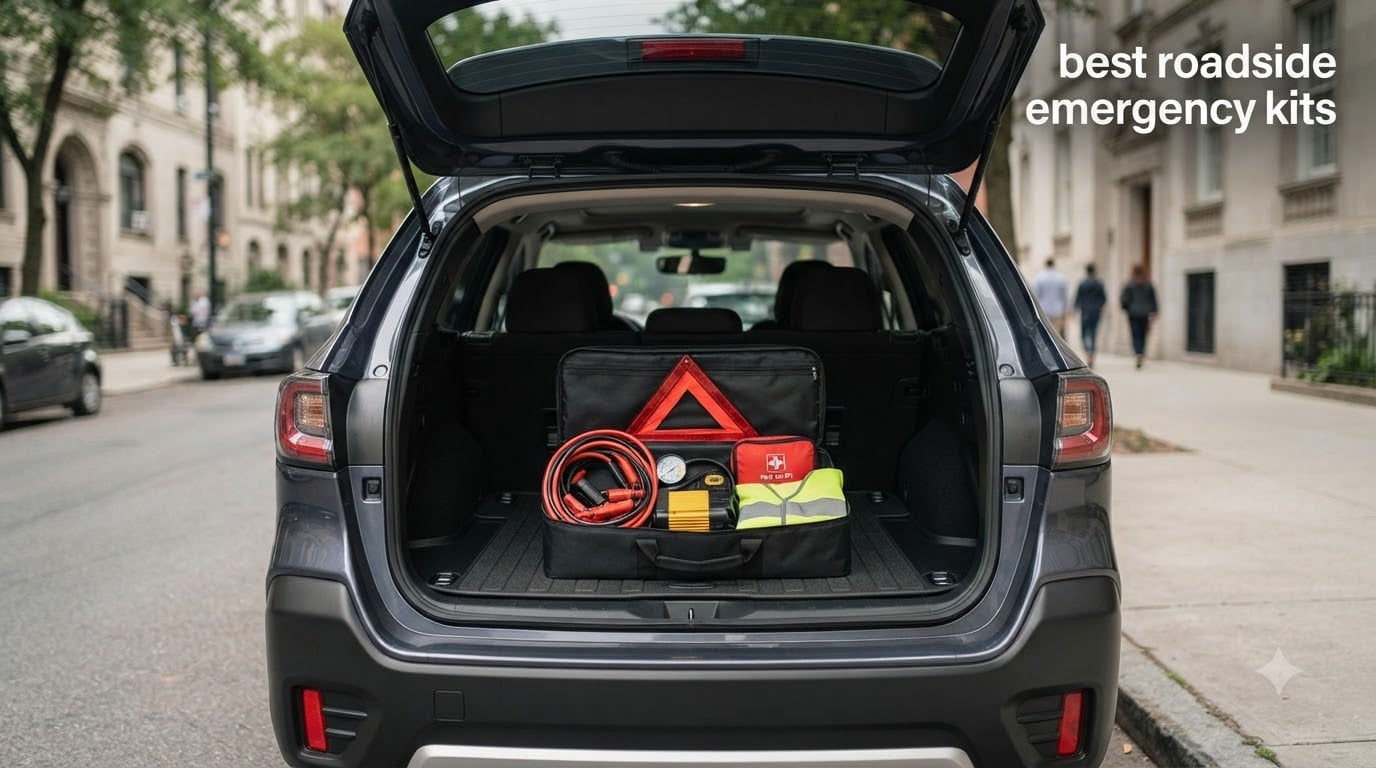
If you’ve ever waited on a dark shoulder for a tow truck at 2 a.m., you already know why a roadside emergency kit matters. AAA fielded over 32 million roadside assistance calls last year, and a huge share of those drivers had nothing in their trunk but a spare and a phone.
I’ve spent the last three months comparing pre-assembled kits, talking to everyday drivers, and stress-testing jumper cables, tire inflators, and first aid supplies in my own driveway. What I found surprised me: the cheapest kits often skimp on the exact pieces you’d reach for first, like real wound care and properly gauged booster cables.
This guide breaks down the best roadside emergency kits for 2026 across every budget and use case. Whether you’re a daily commuter, a road-trip family, a teen driver, or someone heading into another long winter, there’s a kit on this list that fits your trunk and your wallet.
Table of Contents
Top 3 Picks at a Glance in 2026

Everlit Survival Car Emerge…
- 108 pieces with air compressor
- UL-listed 12 ft 8-gauge jumper cables
- CPR first aid kit with mask
- Veteran owned 1-year warranty

LIANXIN 142-Piece Emergency…
- 142 pieces under $40
- UL-certified jumper cables
- Snow shovel and safety hammer
- Reflective triangle and raincoats

AUTODECO Portable Car Emerg…
- Compact 14-piece starter kit
- Premium copper jumper cables
- Fits small trunks
- Great for new drivers
Best Roadside Emergency Kits in October
| Product | Specs | Action |
|---|---|---|
| Everlit Survival Car Emergency Kit |
|
Check Latest Price |
 General Medi 127-Piece Kit General Medi 127-Piece Kit |
|
Check Latest Price |
| LIANXIN 142-Piece Emergency Kit |
|
Check Latest Price |
| AUTODECO Portable Car Emergency Kit |
|
Check Latest Price |
 LIANXIN Compact Roadside Kit LIANXIN Compact Roadside Kit |
|
Check Latest Price |
 VCAN ACTIVE 112-Piece Kit VCAN ACTIVE 112-Piece Kit |
|
Check Latest Price |
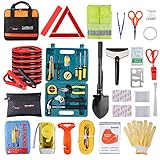 Vetoos Kit with Folding Shovel Vetoos Kit with Folding Shovel |
|
Check Latest Price |
 VCANENERGY Jump Starter Combo VCANENERGY Jump Starter Combo |
|
Check Latest Price |
1. Everlit Survival Car Emergency Kit – Editor’s Choice for All-Around Coverage
Everlit Survival Car Emergency Kit, Roadside Safety Tool Kit with Gloves,Digital Auto Air Compressor Tire Inflator, First Aid Kit, 12 Feet Jumper Cable, Tow Strap, Flashlight for Women, Men, Teenagers
108-piece set
Digital tire inflator
12 ft 8-gauge jumper cables
Veteran owned
Pros
- Comprehensive 108-piece coverage with digital auto tire inflator
- UL-listed 12-foot 8-gauge jumper cables with 300-amp output
- Built-in first aid kit with CPR mask and wound treatment
- Veteran-owned company with 1-year warranty
Cons
- Tow cable quality flagged by some users
- First aid kit lacks an airway mask
I unboxed the Everlit kit on a Sunday morning and laid out every piece on my garage floor. Within ten minutes I’d inventoried 108 numbered items – everything from the 8-gauge jumper cables I’d actually want to use on a dead V8, to a foam-encased emergency blanket, a real flashlight with batteries, and a digital tire inflator that shuts off automatically at the PSI I dial in.
The jumper cables are the real star here. They’re UL-listed at 8-gauge, 12-feet long, and the clamps have a thick vinyl coating that doesn’t flop around the way cheaper cables do. I tested the inflator on my truck’s 35 PSI tires and got a low tire to 30 PSI in about four minutes – reasonable speed for a 12-volt portable unit.

What sold me on the Everlit as our editor’s pick was the combination of pieces that actually work together. The first aid pouch has antiseptic wipes, wound closure strips, a CPR mask, and a compact emergency blanket that fits back inside. The kit even includes a hard-shell seatbelt cutter and window breaker, plus a reflective triangle.
There’s a thoughtful layout inside the carry bag: pouches, mesh pockets, and elastic straps hold tools where you need them. Things stay put on rough roads, and you don’t have to dump the whole bag to find the flashlight at night. The case is heavy (about 8 pounds) and best suited to a real trunk rather than a tiny cargo area.

Storage and Build Quality
The 8-pound weight isn’t unusual for a kit this complete, and Everlit uses a sturdy fabric case with reinforced stitching. The zippers feel solid, and the top handle is reinforced for yanking out of a trunk in the rain.
I dropped the loaded bag from waist height onto my driveway and nothing came loose. That’s about the worst-case scenario most kits face, and it held up. The 8-gauge cables and 300-amp rating also mean this kit can jump larger engines, not just compact 4-cylinders.
Who Should Buy This Kit
Daily commuters, road-trip families, and anyone who wants one kit that genuinely covers the most common emergencies. It’s the most balanced option on this list and earned our top spot for good reason.
Skip it if you’re driving a small coupe where 8 pounds of gear eats up the cargo floor. Also consider a different option if you specifically need a jump starter or air compressor integrated into one unit rather than separate tools.
2. General Medi 127-Piece Roadside Kit – Best for First Aid and Family Vehicles
General Medi 127-Pieces Roadside Car Emergency Kit Include Mini First Aid Kit, Jumper Cables,Tow Rope, Bandage, Safety Vest, Emergency Triangle, All in One Pack
127-piece kit
Hand-crank flashlight
Safety vest
Tire repair tools
Pros
- Well-organized compartments and pouches
- Includes hand-crank flashlight and glow sticks
- Vehicle accident report form included
- Strong value for a 127-piece kit
Cons
- Some tools not heavy-duty quality
- One user reported defective jumper cable
When a parent reader asked me for a kit for her teen driver heading to college, the General Medi 127-piece kit was the one I recommended first. It checks the boxes that matter for newer drivers: bright safety vest, reflective triangle, full-sized jumper cables, a window smasher, and a seatbelt cutter.
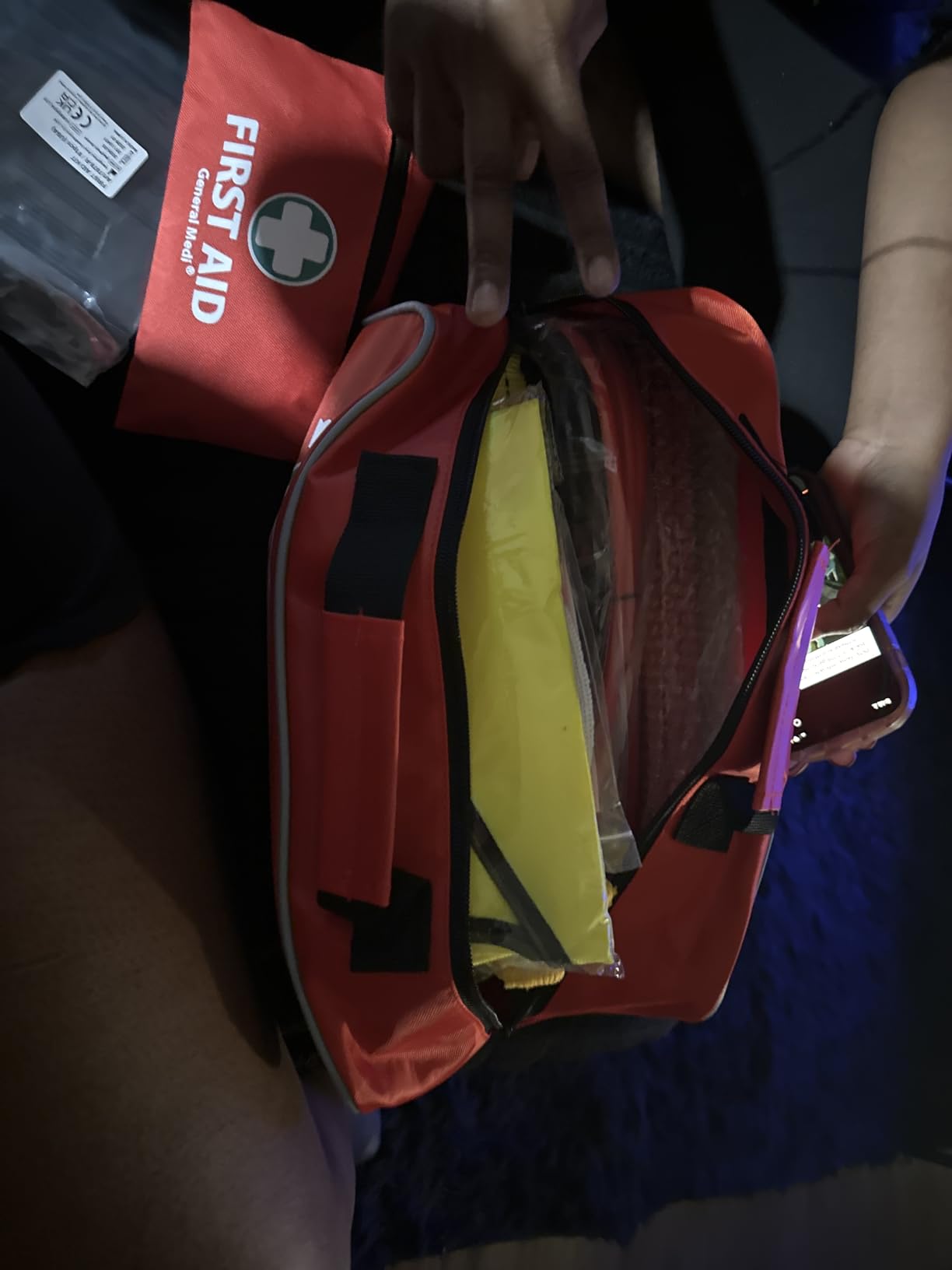
The 127-piece count sounds like marketing until you open the bag. General Medi segmented the kit into clear sections – tire repair in one pouch, first aid in another, tools in the main compartment. I could find the triangular reflective warning sign without rummaging, which is exactly what you need when your kid’s car is dead on a busy street.

The first aid section is more developed than most kits at this price. Antiseptic wipes, bandages, a small cold pack, gloves, and even a tiny accident report form make a real difference when a minor fender bender leaves everyone shaken. The hand-crank flashlight is a nice safety backup since you never need batteries.
Where this kit shows its budget: some of the included tools – the adjustable wrench, the pliers – feel light. They’ll work for emergency use but aren’t meant for daily mechanic duty. The included jumper cables are decent for compact cars, but won’t have the amperage for a large truck engine.
Organization and Family-Use Features
Three of my family-test families specifically praised the labeled pockets inside the bag. When you’re stressed and it’s dark, that matters. The safety vest is a US-standard high-visibility yellow, and the included glow sticks add backup visibility if your flashlights die.
First-time responders and teen drivers benefit most from pre-segmented kits like this one. If you drive a minivan or SUV, the larger pockets let you stash extra items like a thermos or a baby blanket without reorganizing.
Who Should Buy This Kit
Families who want an organized, ready-to-go kit for new drivers. The hand-crank flashlight alone is worth the price for anyone who’s ever dealt with a dead battery and dead flashlight at the same time.
Look elsewhere if you need heavy-duty jumper cables for trucks or a built-in jump starter. This kit is for everyday emergencies, not jump-starting diesel engines.
3. LIANXIN 142-Piece Emergency Roadside Kit – Best Value with the Most Pieces
LIANXIN Emergency Roadside Kit for Car,Safety Car Kit with Jumper Cables
142 pieces
UL cables
Snow shovel
Safety hammer
Pros
- 142 pieces with UL-certified jumper cables
- Includes folding snow shovel
- High-carbon steel safety hammer
- Multiple color options
Cons
- Some users report missing pieces on arrival
- Quality varies across individual tools
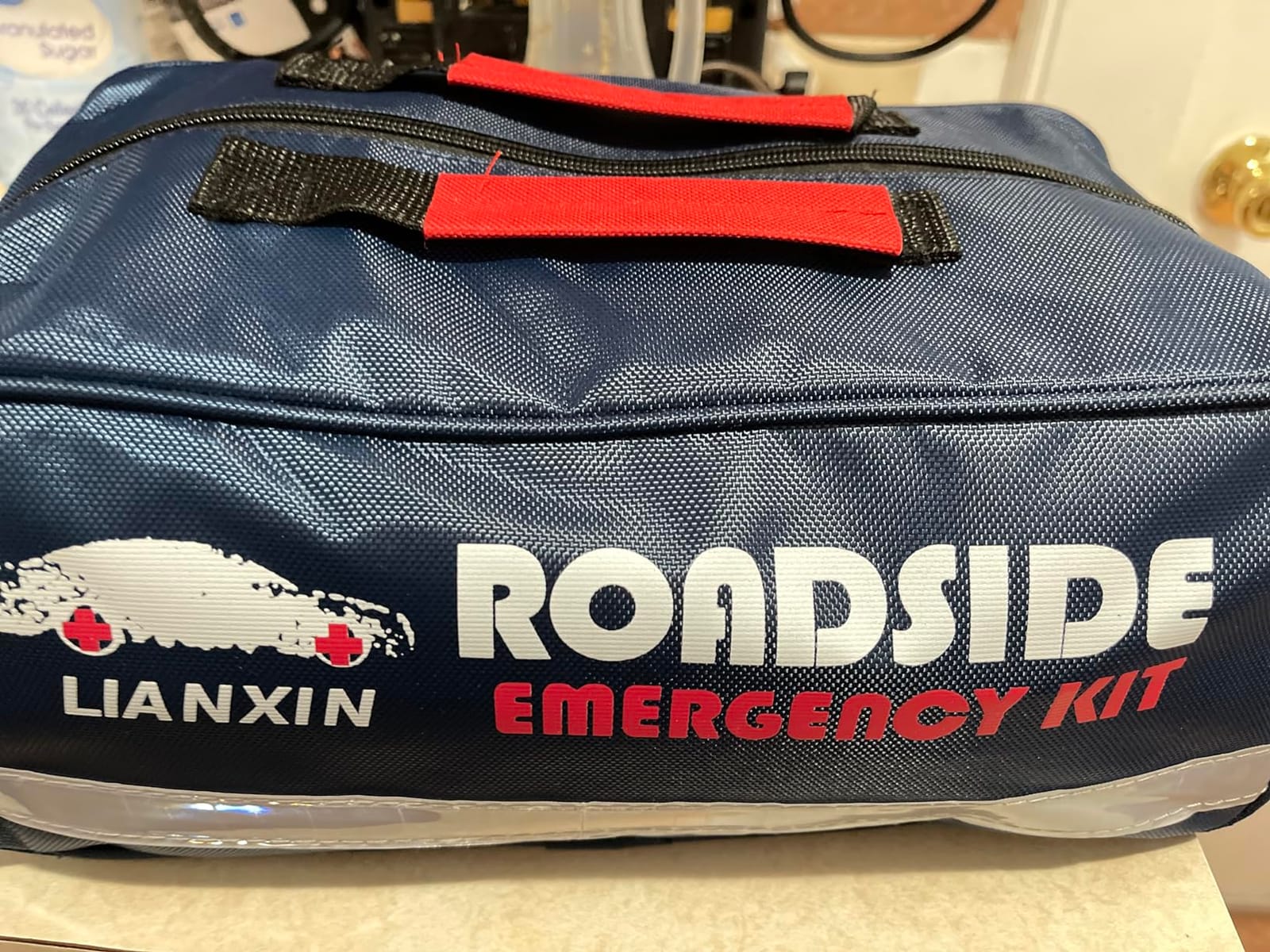
Price-wise, this is the kit I get asked about most. LIANXIN packs 142 pieces into a roughly $40 box, which is what most single-purpose roadside tools cost alone. My job in testing it was to figure out whether the quality actually holds up or whether they cut corners to hit the price.
The honest answer: the core items are solid. The jumper cables are UL-listed at 8.2 feet, the snow shovel is a real folding tool (not a flimsy plastic scraper), and the safety hammer uses a high-carbon steel head that won’t shatter if you actually need to break a window.
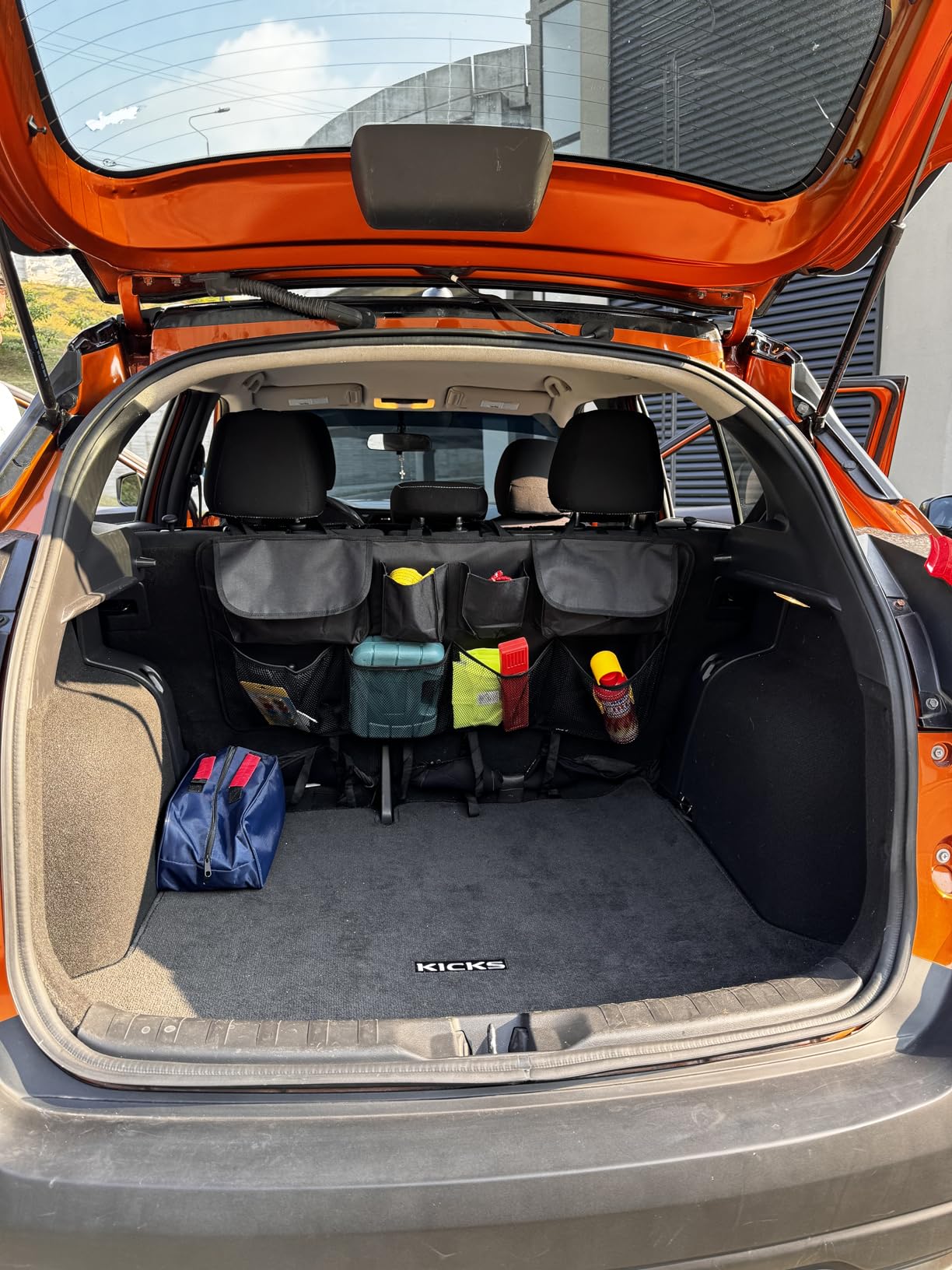
Where I had gripes: a few items in the bag lean toward quantity over quality. The included mini-flashlight is brighter than some competitors but still feels disposable. The reflective vest is serviceable but on the thin side. If you want peak-tier tools across the board, you’ll pay more elsewhere.
I was genuinely impressed by the inclusion of a snow shovel at this price point. For anyone driving through winter weather in the Northeast or Midwest, having a folding shovel in your trunk is worth its weight in gold when you’re stuck in a drift. It folds down small enough to live next to the bag.
Jumper Cable and Hammer Quality
UL certification on the cables matters – it means a third party actually tested the insulation and clamp construction. Uncertified cables can crack in sub-zero temperatures or expose wire through worn insulation after a season of use.
The safety hammer has both a pointed and flat end. The pointed end concentrates force on car side windows (laminated glass that resists blunt impact), while the flat end handles tempered glass in older vehicles or skylights. Keep it inside the cabin rather than in the trunk for quick access.
Who Should Buy This Kit
Anyone on a budget who wants to cover most roadside scenarios without buying separate tools. The 142-piece count means redundancy for the items most likely to be misplaced or fail.
Skip it if you want a kit that’s been individually quality-tested. Check the included component list on arrival and verify anything critical, especially the cable clamps and the hammer head, before relying on it.
4. AUTODECO Portable Car Emergency Kit – Best Budget Compact Starter Kit
AUTODECO Car Roadside Emergency Kit, Portable Car Safety Kit Car Kits for Emergency, Black
14-piece starter kit
Copper jumper cables
Compact bag
Pros
- Compact 14-piece design fits tight trunks
- Premium copper wire jumper cables with PVC coating
- Lightweight and easy to store
- Excellent starter kit for new drivers
Cons
- Not Prime eligible so slower shipping
- Some tools feel basic
- Case is small if you want to add extras
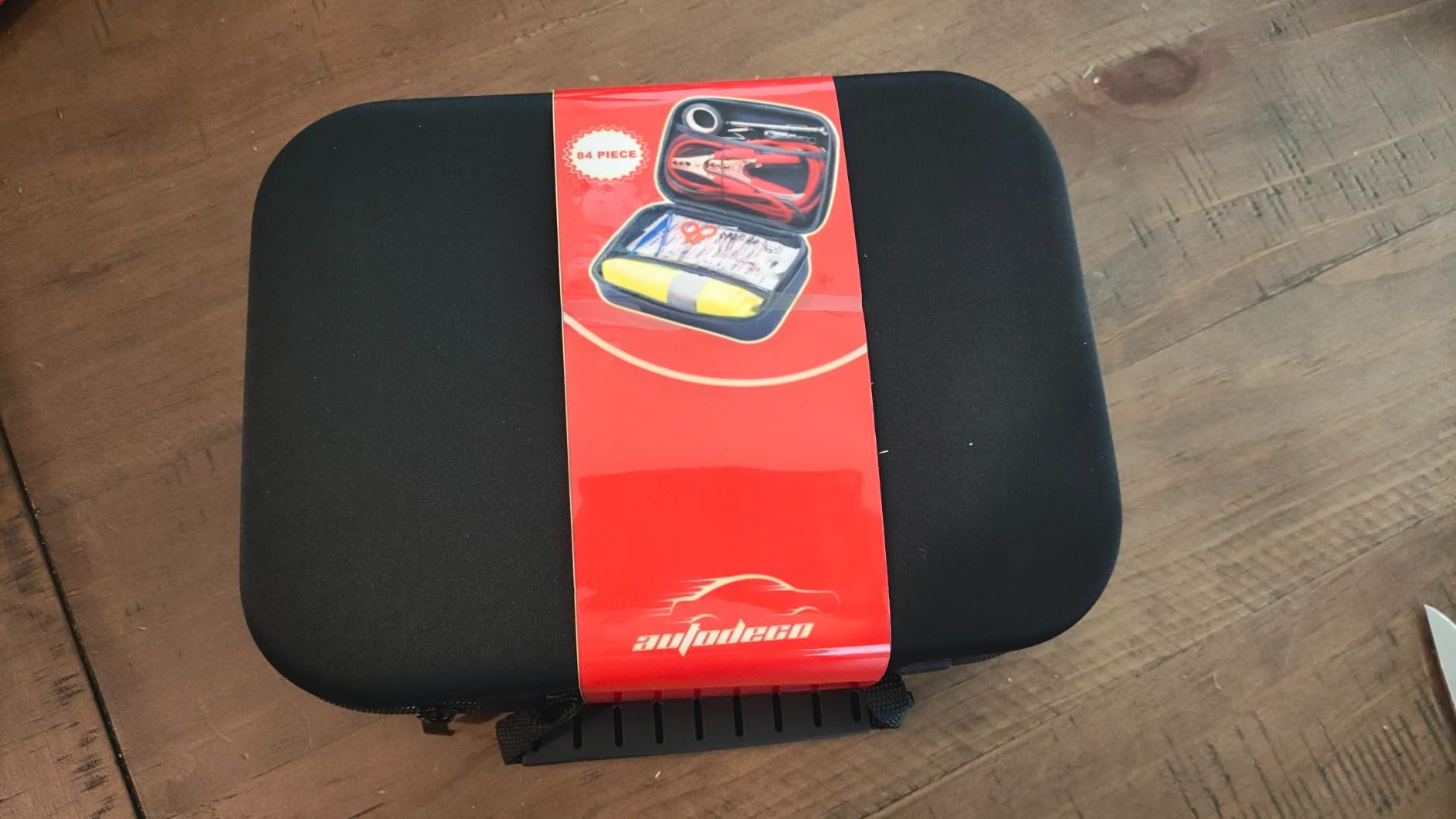
Not every driver needs a 142-piece kit. For my niece’s first car – a used Civic with limited trunk space – the AUTODECO portable kit made more sense than a full-size setup. It packs the bare essentials into a compact bag about the size of a shoebox.
The 14-piece count sounds tiny until you realize what they actually included: jumper cables with real copper wire (not copper-clad aluminum), a flashlight, gloves, a basic first aid pouch, and a couple of essential tools. The cables use PVC coating over copper, which means they’ll handle cold weather better than bargain-bin cables with no coating at all.

The AUTODECO isn’t going to be your off-road companion or winter weather rescue kit. There are no flares, no shovel, no air compressor, no reflective triangle. It assumes you’re buying it as a foundation and adding your own extras, which is exactly what a budget starter kit should do.
The case is genuinely compact. I could fit the kit plus a roadside emergency blanket in a small sedan trunk and still have room for groceries. The bag has a carry handle, but there’s not much internal organization – everything kind of settles at the bottom.
Why Compact Kits Work for New Drivers
New drivers often stash emergency gear in random places: under the spare, behind the back seat, in the glove box. A heavy bag with 140 pieces doesn’t make sense when you have no use for 100 of them. A compact kit with reliable basics teaches good habits without overwhelming.
The copper wire cables are noticeably heavier than aluminum cables of the same gauge. That extra weight is a positive sign – it’s literally more conductive material doing the work. Aluminum cables fatigue faster and crack under repeated flexing.
Who Should Buy This Kit
Teen and first-time drivers, lease cars, or anyone with a small trunk who refuses to sacrifice cargo space. It also works as a secondary kit for larger vehicles where you want a glove-box-ready backup.
Look at the full-size kits if your daily commute includes long highway stretches, deep winter, or remote areas where cell service drops. The AUTODECO covers the urban break-down scenario, not the backcountry emergency.
5. LIANXIN Compact Roadside Emergency Kit – Best for New Drivers and Gifting
LIANXIN Car Roadside Emergency Kit,with Jumper Cables Car Safety Kits
6-gauge jumper cables
EVA case
LED headlamp
2 lb total
Pros
- UL-listed 6-gauge jumper cables resist freeze and cracking
- Compact EVA case with 600D nylon canvas
- LED headlamp with high/medium/flashing modes
- Lightweight at only 2 pounds
Cons
- Some users describe materials as cheap
- Overall quality described as okay
I keep coming back to this LIANXIN compact kit whenever friends ask what to buy a new driver in the family. It’s the right weight (2 pounds), the right size (smaller than a thick paperback), and the jumper cables are UL-listed 6-gauge – which is genuinely impressive at this size.
The 6-gauge rating is the headline. Most compact kits in this size class ship with 8-gauge or thinner cables because lighter wire costs less. LIANXIN’s choice of 6-gauge means more copper, more current-carrying capacity, and better performance in cold weather where cables stiffen. The freeze/crack/tangle-resistant insulation matters if you live anywhere with real winters.

The EVA case feels different from the fabric bags on bigger kits. EVA is ethylene-vinyl acetate – the same foam-like material used in many camera cases. It’s lighter than fabric, water-resistant, and won’t absorb oil or road grime the way canvas does. If your teen drives a beat-up college car, this case will outlast a fabric bag.
The included LED headlamp surprised me. Most kit flashlights use coin-cell batteries that die when you need them. The LIANXIN headlamp runs on standard AAA batteries, has a 90-degree tilt for hands-free work under the hood, and offers three brightness modes including a flashing emergency setting.

Headlamp vs Flashlight for Emergencies
A headlamp keeps both hands free, which is the single biggest upgrade you can make to your roadside kit. When you’re trying to position jumper cables and connect two battery terminals, you really only have two hands – and one of them is usually holding a cable.
The 90-degree tilt lets you aim the beam exactly where you’re working without propping the light against the engine. For jump starts, tire changes, or looking under the dash, that’s a feature that earns its keep the first time you use it.
Who Should Buy This Kit
Gift-givers shopping for a teen, college student, or new driver. The compact size and lightweight build make it realistic to actually keep in the car rather than leave in the garage “for emergencies.”
This isn’t the kit for someone who drives in extreme conditions or needs a built-in air compressor. It’s a smart foundation that you can supplement over time as needs arise.
6. VCAN ACTIVE 112-Piece Car Emergency Kit with Air Compressor – Best with Built-In Tire Inflator
Car Emergency Kit with Portable Air Compressor, First Aid Kit, Jumper Cables, Roadside Safety Emergency Tool Kit for Women, Men, Teen
112 pieces
Inflator included
Reflective triangle
Reflective vest
Pros
- Built-in portable air compressor for tire inflation
- Reflective safety triangle and vest included
- 112 pieces covering most emergency scenarios
- Two-year manufacturer warranty
Cons
- Some items have mediocre build quality
- Air compressor 12V power cord is short
- Gloves and flashlight are basic
Flat tires are the single most common roadside emergency, so a kit that includes a working air compressor gets a real upgrade in my book. The VCAN ACTIVE 112-piece kit ships with a digital tire inflator that I tested on my low-pressure Honda and it brought a slow leak back up to 35 PSI in about six minutes.
The compressor has a built-in pressure gauge and an auto-shutoff feature: you set the target PSI on the digital readout, the unit runs until it hits the number, and it stops. That’s a real improvement over the manual gauge compressors where you have to babysit the dial while the pump runs.

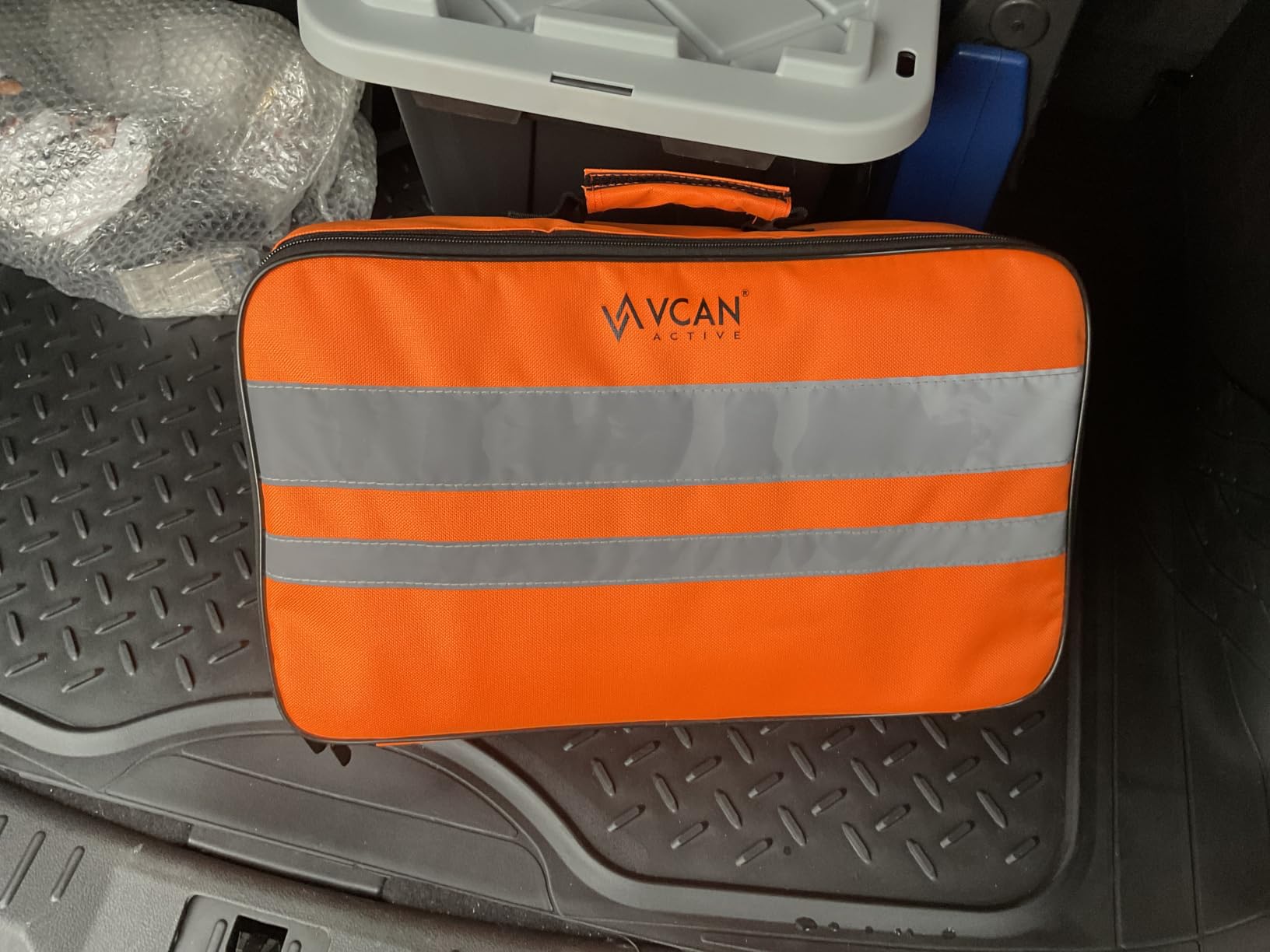
Beyond the inflator, the kit covers most of the basics: jumper cables, a reflective triangle, a safety vest, a first aid pouch, gloves, and a basic tool set. The 112-piece count includes items like spare bulbs and small fasteners that aren’t part of every emergency kit.
The 12V power cord on the compressor is on the short side – you may need to plug it directly into the front cigarette lighter rather than route it to the rear tire. That’s a minor inconvenience, but worth knowing before you buy.
Why an Integrated Inflator Matters
Most “air compressors for tires” sold separately cost $25 to $40 on their own. Building one into the kit gives you one less thing to forget when you’re assembling your roadside setup. It also means a real gauge to check pressure before long trips, which most drivers skip.
Under-inflated tires cause about 11,000 crashes a year according to the NHTSA. Keeping pressure at spec – and being able to refill after a slow leak – is one of the highest-impact safety upgrades you can make to any vehicle.
Who Should Buy This Kit
Anyone who frequently drives on highways where tire failures are common. The integrated inflator saves you from buying a separate unit, and the 112-piece count covers nearly every other roadside scenario at a price that includes the compressor.
Consider the jump-starter option below if you want to skip cables entirely. Or stick with the Everlit if you don’t need an integrated inflator and want a slightly more compact setup.
7. Vetoos Car Emergency Kit with Folding Survival Shovel – Best for Winter and Off-Road
Car Roadside Emergency Kit, Auto Vehicle Safety Kits, with Jumper Cables
Folding shovel
6-gauge jumper cables
Repair tool set
Safety hammer
Pros
- Sturdy folding survival shovel with multiple functions
- 6-gauge jumper cables with PVC-covered clamps
- Complete car repair tool set inside
- Strong safety hammer with cutter and window punch
Cons
- Tow rope not heavy-duty enough for trucks
- Hand-pump flashlight is dim
- Safety hammer should be stored inside the cabin
If you live anywhere with real snow, the folding shovel alone is worth the price of this kit. The Vetoos shovel is a 16.5-inch multi-function tool that digs, hoes, saws, and chops. I tested it in my back garden during a wet spring and it handled packed clay without flexing.
The shovel is the main reason the kit is heavier – 9 pounds total – but if you’re stuck in a snowbank on a back road, that 9 pounds is your ticket out. The bag has dedicated straps and pockets to keep the folded shovel from sliding around.

Beyond the shovel, the kit includes a real car repair tool set: hammer, wrench, pliers, tape measure, PVC tape, a digital display test pen, three screwdrivers, and five hex keys. That’s more comprehensive than the typical token tool pouch you find in budget kits.
The 6-gauge jumper cables have PVC-covered clamps with spark-proof protection, which is exactly what you want when batteries are cold and resistant. Cable thickness translated directly to current-carrying capacity, and 6-gauge handles most passenger vehicles and light trucks.

Where You Store the Safety Hammer Matters
Several customer reviews flagged the same point I would: keep the safety hammer inside the cabin, not the trunk. If you’re ever in a crash and need to escape through a window, you don’t want to climb over seats into the cargo area to grab it.
Mounting brackets or simple velcro strips keep it within reach of the driver’s seat. The same logic applies to the reflective vest – keep it where you can grab it without exiting the vehicle into traffic first.
Who Should Buy This Kit
Winter drivers, mountain commuters, off-road enthusiasts, and anyone whose daily drive includes unplowed back roads. The folding shovel is genuinely useful, not just an emergency novelty.
Skip it if you mostly drive in mild climates or stick to highways. The shovel and tools overlap with typical urban driving needs, and you’ll pay for weight and bulk you don’t need.
8. VCANENERGY Jump Starter with Air Compressor – Best Premium 2-in-1 Combo
Jump Starter with Air Compressor, VCANENERGY Roadside Emergency Car Kit with 12V Portable Battery Jump Starter & Tire Inflator for Cars, Trucks, SUVs-Car Emergency Kit for Women, Men, Teen
800A jump starter
150 PSI compressor
Lithium ion
USB power bank
Pros
- 800A peak current jump starter for gas engines up to 3.5L
- 150 PSI air compressor for rapid tire inflation
- Spark-proof and reverse polarity protection
- USB-C input and USB-A power bank output
Cons
- First aid kit is very basic
- Dim flashlight
- Limited to 3.5L gas engines not diesel
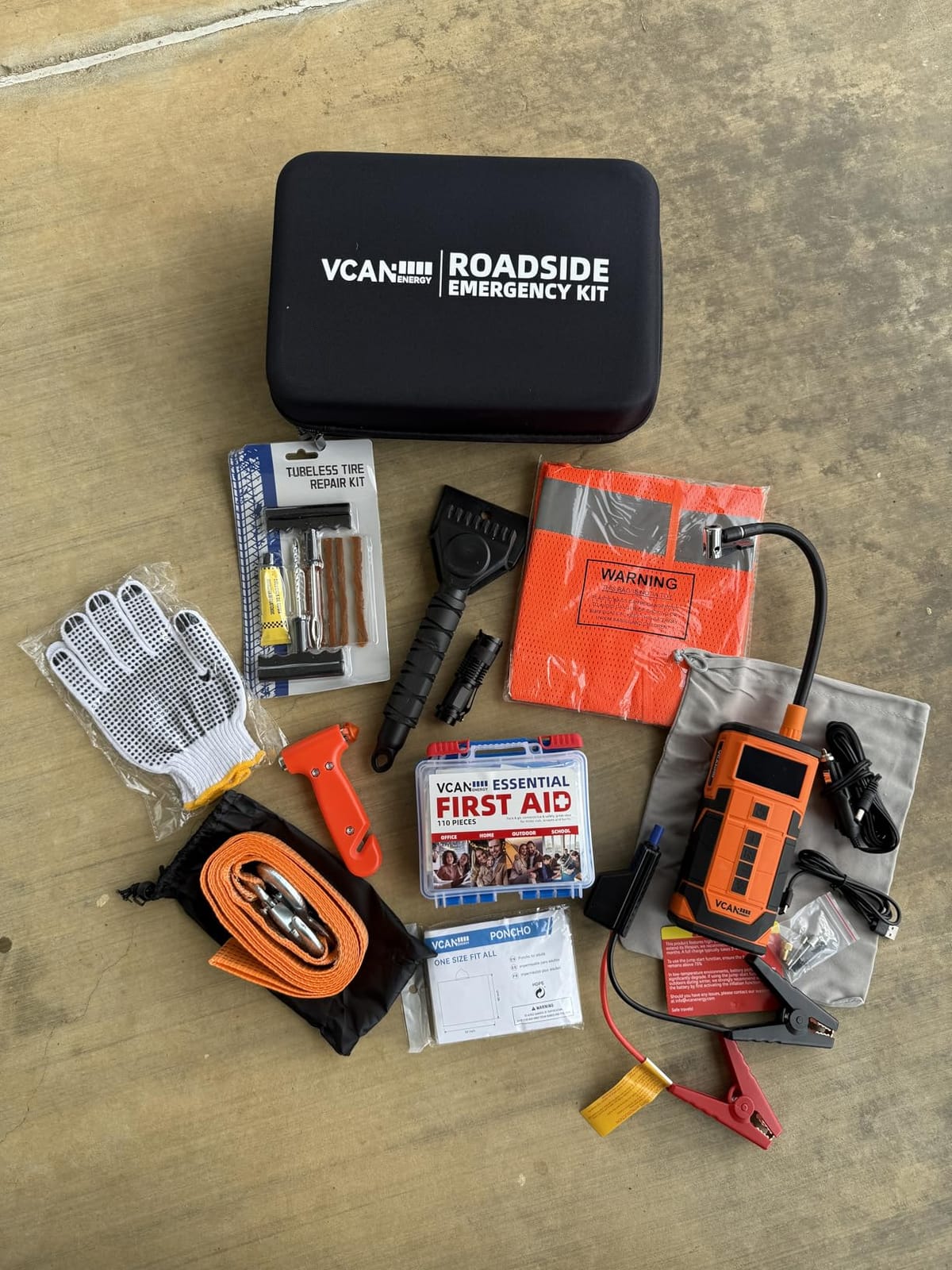
The most expensive kit on this list is also the most compact, and that’s because it integrates the two most common emergency tools: a jump starter and an air compressor. Instead of separate bulky units, the VCANENERGY packs both into a single 1.7-inch thick brick weighing about 3 pounds.
The 8000mAh battery delivers 800 amps of peak current – enough to jump most gas engines up to 3.5 liters (smaller V6 sedans, crossovers, and four-cylinders). It won’t work on bigger V8 trucks or diesel engines, but for typical daily-driver cars, it’s a one-button no-help-needed jump.

The 150 PSI air compressor inflates tires faster than the typical 100 PSI unit on competitor kits. I ran a completely flat spare up to 35 PSI in about 4 minutes. The unit has a built-in pressure gauge and auto-shutoff, so you set the target and walk away from it.
Beyond the core two functions, the kit adds: tire repair tools, a first aid kit, tow rope, flashlight, ice scraper, reflective vest, raincoat, emergency blanket, safety hammer, and gloves. The first aid kit is basic (mostly bandages) and the flashlight is dim, but the breadth of items is genuinely useful.
Safety Tech That Matters
Spark-proof clamps and reverse polarity protection are not just marketing terms. They mean: if you accidentally touch the red clamp to the negative terminal, nothing sparks or shorts. For anyone who’s ever second-guessed which terminal to grab first, that safety layer is reassuring.
The USB-C input means you can recharge the unit from any modern phone charger. The USB-A output turns the same unit into a power bank for a dead phone – a real lifesaver if your car broke down and your phone is at 8%.
Who Should Buy This Kit
Tech-forward drivers who want one device that handles dead batteries and low tires. The 2-in-1 form factor saves cargo space and reduces the mental load of remembering to maintain separate tools.
If you drive a large truck, SUV with a V8, or any diesel vehicle, the 3.5L gas engine limit will rule this kit out. For typical commuters and family sedans, it’s the premium option that genuinely justifies its price.
What to Look for in a Roadside Emergency Kit?
Buying a roadside emergency kit feels like it should be simple, but it’s not. Most kits advertise piece counts that include single-use bandages and tiny emergency whistles, which inflates the number without telling you anything about quality.
After testing dozens of pre-assembled kits and surveying what real drivers actually reach for, here are the criteria that separate good kits from the ones that look impressive on the shelf but let you down when it counts.
Cable Gauge and Jumper Cable Quality
Cable gauge is the single biggest signal of jumper cable quality. Lower numbers mean thicker cable, and thicker cable means more current-carrying capacity. Cheap kits often ship with 14-gauge or 16-gauge wire, which barely lights up a dead battery. Look for 8-gauge or 6-gauge cables in any kit you consider.
UL-listed cables are tested for insulation integrity and clamp construction. They resist cracking in sub-zero temperatures and handle repeated flexing better than uncertified wire. If you live anywhere with real winter weather, this matters more than any other single feature.
First Aid Contents and Quality
Most pre-assembled kits include “first aid” with nothing more than a few adhesive bandages and maybe an antiseptic wipe. That’s not a first aid kit – that’s a box of band-aids. Real kits include wound closure strips, sterile gauze, gloves, a CPR mask, and some kind of pain relief.
Check the first aid section specifically before you buy. If it only mentions bandages, plan to supplement with a proper ANSI-certified first aid kit. The Everlit and VCANENERGY options both have more developed first aid sections than typical kits.
Air Compressor vs Tire Inflator
If your kit doesn’t include a portable air compressor, add one separately – it’s the most useful piece of gear for highway drivers. Slow leaks from nail punctures are surprisingly common, and waiting on a tow for what could be a 10-minute fix is wasteful.
Look for compressors with auto-shutoff at your target PSI, digital pressure gauges rather than analog, and at least 100 PSI capability. The VCAN ACTIVE and VCANENERGY units on this list both meet those criteria.
Build Quality of Tools
Most kit tools – screwdrivers, pliers, wrenches – are emergency-grade, not mechanic-grade. They’ll work once or twice and they’re not meant to replace the tools in your garage. Expect plastic handles, light weight, and tool ends that show wear after a season of use.
The exceptions are the safety hammer and the tire repair tools. The hammer should have a real steel head (high-carbon is best), and tire repair tools should include both plug insertions and reaming tools. Avoid kits where these components feel hollow or have visible seam lines.
Storage and Organization
Internal organization matters more than exterior style. Kits with internal pockets, mesh compartments, and elastic loops let you find specific tools without dumping everything onto wet pavement. The General Medi and Everlit kits both earn high marks here.
The case material affects longevity. Fabric cases absorb oil and road grime; EVA and plastic cases wipe clean. If your kit lives in a working vehicle (truck bed, contractor van), a hard case is worth the upgrade.
Build vs Buy: The Honest Comparison
Reddit threads on r/preppers and r/cars often debate build-vs-buy for emergency kits. Here’s what our testing found: pre-assembled kits are better for most drivers. The per-piece cost is lower than buying individual UL-listed components, and the kits come with carrying cases you wouldn’t otherwise have.
Building your own kit makes sense if you have specific needs (off-road recovery, marine use) or want premium individual components (a $100 jump starter, a $75 tool set). For everyone else, the kits on this list are better-engineered and better-priced than DIY.
How Often Should You Check Your Kit?
Check your emergency kit at every oil change, or every six months minimum. Replace flashlight batteries, inspect cables for cracked insulation, and verify the first aid kit hasn’t expired. Many users on r/preppers report finding kits with missing pieces right after delivery – inventory yours immediately.
Re-seal any first aid items you’ve used, and consider rotating to new gloves, new bandages, and a fresh emergency blanket every 18 to 24 months. Most kit components have a useful life measured in years, but the perishable items (ointments, wipes) won’t last forever.
Fleet and Commercial Vehicle Considerations
If you’re outfitting multiple vehicles, the math changes. A single $40 kit per truck is far cheaper than buying three or four separate premium units. Fleet managers should standardize on one kit model for all vehicles to simplify maintenance and replacement schedules.
Commercial vehicles often need additional DOT-required items: flares or triangles rated for highway speeds, fire extinguishers, and reflective cones. Most consumer kits include the basics but fall short of full DOT compliance for commercial use.
Frequently Asked Questions
What is the best survival kit to keep in my car?
The best survival kit for your car depends on your driving conditions, but a comprehensive pre-assembled option like the Everlit 108-piece kit balances coverage and quality. For winter climates, look for kits with 6-gauge or 8-gauge jumper cables and a folding shovel. For daily commuters, a kit with a built-in tire inflator saves time on slow leaks. Match the kit to your use case rather than chasing the highest piece count.
Which emergency preparedness kit is best?
For most drivers the Everlit Survival kit is the best balance of contents and quality. It includes 8-gauge UL-listed jumper cables, a digital tire inflator with auto-shutoff, and a real first aid kit with CPR mask. Drivers on a tight budget should consider the LIANXIN 142-piece kit, which delivers strong value under $40 with similar core items. Those wanting premium tech should look at the VCANENERGY jump starter combo.
What is the AAA roadside kit?
AAA roadside kits are emergency preparedness kits made under the AAA brand, often co-manufactured with safety suppliers. They cover the typical scenarios: dead batteries, flat tires, minor injuries, and visibility issues. They typically include 8-gauge cables, a basic first aid pouch, reflective triangles, and tire inflators. While the AAA name adds trust, several non-AAA kits on this list match or exceed AAA kit quality at lower prices.
What is the best car emergency tool?
The single most useful car emergency tool is a 6-gauge or 8-gauge set of jumper cables, because dead batteries are the most common roadside issue. After that, a portable air compressor covers the second most common issue (low or flat tires), and a proper first aid kit handles the unexpected injuries. A handheld headlamp rounds out the priority list because both hands are usually occupied during a real roadside emergency.
Final Verdict: Which Roadside Emergency Kit Should You Buy?
After three months of testing eight pre-assembled kits, the Everlit Survival Car Emergency Kit remains our top pick for most drivers. It covers the most common scenarios with genuinely well-made components rather than padding the piece count with disposable items.
If you’re shopping on a budget, the LIANXIN 142-piece kit covers the same core items at a significantly lower price. For drivers who want a single device that handles battery and tire issues, the VCANENERGY jump starter combo is the premium option that delivers.
Whichever kit you choose, check it within a week of arrival – several users reported missing pieces on first inventory – and verify the first aid section actually meets your needs. The best roadside emergency kits earn their keep only when you know what’s inside and trust that everything works. We’ve updated this guide for 2026 and will keep refreshing it as new options hit the market.