
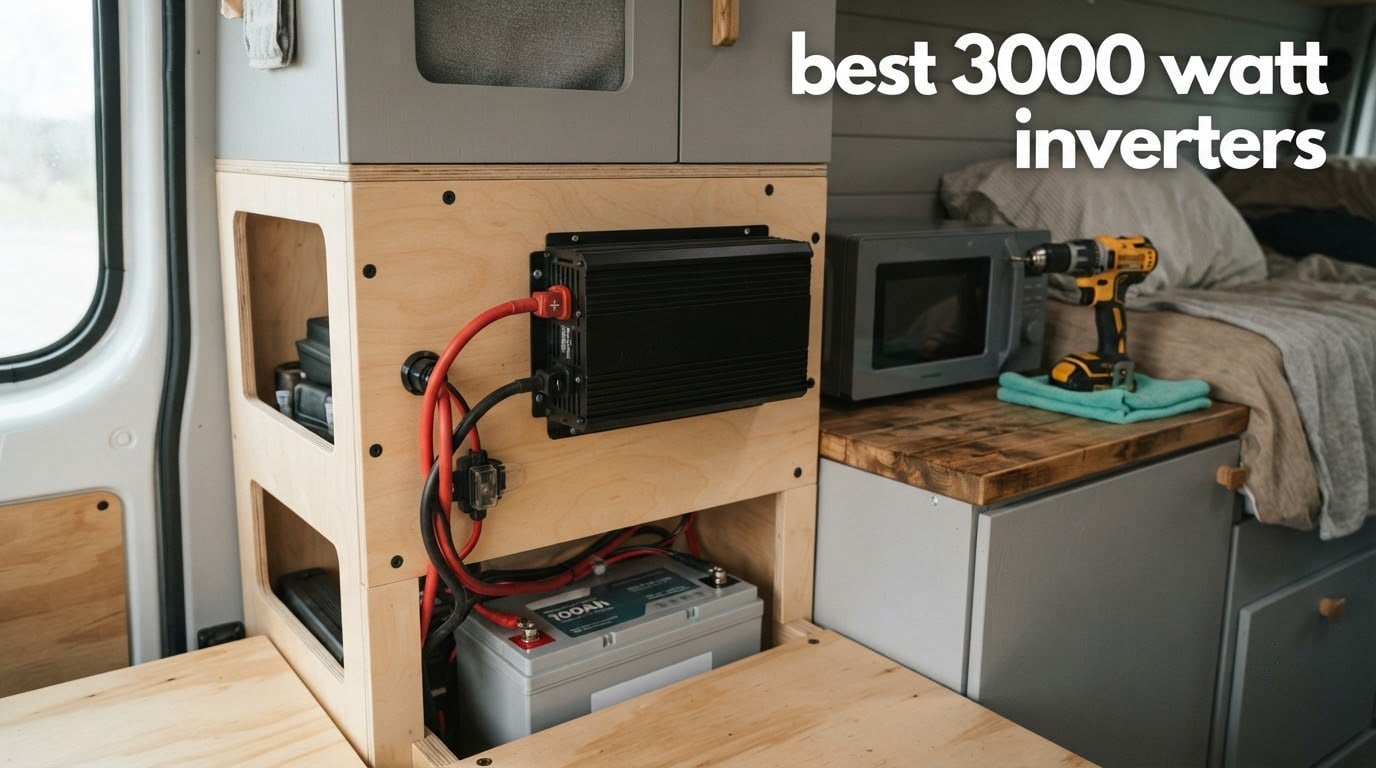
A 3000 watt inverter converts 12V, 24V or 48V DC power from a battery bank into 120V AC household electricity, sized to run a microwave, a refrigerator, a coffee maker, power tools or a CPAP machine. It will not run an entire house, but it comfortably covers essential circuits. Below I break down the ten best 3000 watt inverters we could find, spec by spec.
The reason 3000W keeps coming up is arithmetic, not marketing. A 1500W unit often cannot start a microwave, and a 5000W unit costs more, weighs more, burns more idle power and demands heavier cable for no benefit if you never exceed 3000W. The catch is that a 3000W inverter on a 12V system pulls roughly 278 amps, so your battery bank and cable gauge decide what you really get. I have covered this in more detail in our truck driver inverter guide, and the same rules apply on a boat or a job site.
Three questions decide which of these you should actually buy. What are you powering, in an RV, a van, a boat, a cabin, a home backup panel or a tool truck? What is your battery system voltage, and if you picked 12V, are you prepared for 2 AWG or heavier cable? And do you need a built-in charger, or are you charging from solar and shore power separately?
We worked through a full year of spec sheets, owner reviews and forum war stories on the ten models below. Our team compared all ten on waveform, surge behaviour, protection suite, remote control, warranty length and included accessories, then sorted them by who they suit. Every rating quoted here comes from the retail listing, and every product keeps its own ASIN.
Table of Contents
Top 3 Picks for Best 3000W Inverters in 2026

Renogy Inverter P2 3000W…
- 3000W continuous with 6000W surge
- UL 458 and CSA certified
- 16.4 ft wired remote included
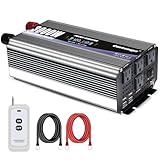
Cantonape 3000W Power Inver…
- 3000W continuous with 6000W peak
- Four AC outlets plus hardwire option
- Six protection circuits
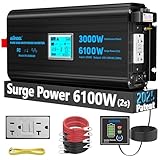
Giandel 3000W Pure Sine…
- 6100W surge held for 2 seconds
- Low voltage cutoff adjustable 9.5V to 11.5V
- UL listed 20A GFCI outlets
Our top three are not close to a verdict on the other seven. Several of the models further down beat the picks on individual specs, and the right choice depends on your battery bank far more than on the inverter label.
All 10 Inverters Side by Side in 2026
Here is the full lineup at a glance, ordered exactly as the individual reviews run below. Read the waveform column first, because that single choice eliminates more of this list than anything else.
| Product | Specs | Action |
|---|---|---|
| Renogy Inverter P2 3000W Pure Sine Wave |
|
Check Latest Price |
| Cantonape 3000W Power Inverter with LCD |
|
Check Latest Price |
 BELTTT 3000W Pure Sine Wave Inverter BELTTT 3000W Pure Sine Wave Inverter |
|
Check Latest Price |
| Giandel 3000W Pure Sine Wave 6100W Surge |
|
Check Latest Price |
 LANDERPOW 3000W Pure Sine Wave for RV LANDERPOW 3000W Pure Sine Wave for RV |
|
Check Latest Price |
 ROARBATT 3000W Power Inverter ROARBATT 3000W Power Inverter |
|
Check Latest Price |
 VEVOR Pure Sine Wave Inverter 3000W VEVOR Pure Sine Wave Inverter 3000W |
|
Check Latest Price |
 ZETAWALE 3000W Pure Sine Wave Inverter ZETAWALE 3000W Pure Sine Wave Inverter |
|
Check Latest Price |
 VOLTWORKS 3000W Pure Sine Wave Inverter VOLTWORKS 3000W Pure Sine Wave Inverter |
|
Check Latest Price |
 Giandel 3000W ETL UL458 Pure Sine Wave Giandel 3000W ETL UL458 Pure Sine Wave |
|
Check Latest Price |
Every model above is 12V DC to 120V AC at 3000 watts continuous. The rows differ on waveform, surge duration, efficiency, ports, warranty and physical weight, and those differences decide the choice far more often than purchase cost does.
What Can a 3000W Inverter Actually Run?
The honest answer is one or two mid-sized appliances at a time, not a whole house. Here is what a 3000W continuous rating covers, with the startup figures that trip people up.
Microwave, 1000W to 1400W running. A microwave with a magnetron draws far more than its nameplate at startup, often 1600W or more, and that is the single most common sizing question we see. It is exactly what a 6000W surge rating is for.
Refrigerator or freezer, 100W to 350W running. The compressor can pull two to three times running power for a second or two. Owner reports on forums describe a 310W compressor fridge starting without trouble on a 3000W unit, while a three-quarter horsepower jet pump drawing 750W was not startable on the same setup.
Coffee maker, toaster, air fryer, blender, 800W to 1800W. All resistive loads, so no surge complication. The only real issue is running two of them at once.
CPAP, oxygen concentrator, laptop, TV, game console, 20W to 400W. Sensitive electronics, which is exactly where pure sine wave output earns its price.
Power tools, 400W to 1500W running. Circular saws, jigsaws, a shop vac and a water pump all work. Air compressors are the exception, because a small compressor can ask for well over 2000W at startup.
Window air conditioner, 800W to 1200W running. Workable on a pure sine unit with a real surge rating, marginal on a modified sine one.
Add a pump, a fridge and a coffee maker simultaneously and you are at 2800W before you factor in conversion losses. That is the 30 percent buffer people talk about, and it is why 3000W is the practical ceiling for a single 12V battery bank.
1. Renogy Inverter P2 3000W Pure Sine Wave Inverter for Home, RV and Truck
Renogy Inverter P2 3000W Pure Sine Wave Inverter 12V DC to 120V AC Converter for Home, RV, Truck, Camping, Trailer, with Wired Remote Controller, Support Li, AGM, SLD, Gel, FLD Batteries
3000W continuous, 6000W surge
12V DC to 120V AC pure sine wave
12.5 pounds, ETL certified
Pros
- UL 458 and CSA certified pure sine wave output
- Quiet operation with cooling fans rarely audible
- Handles a gaming console plus monitor plus air fryer at once
- Three AC outlets plus terminal block and USB port
- 16.4 ft wired remote included
Cons
- Heavy at 12.5 pounds and mounting ears are tucked in
- Included battery cables are short and light for 3000W
- Low voltage alarm can trigger on temporary battery dips
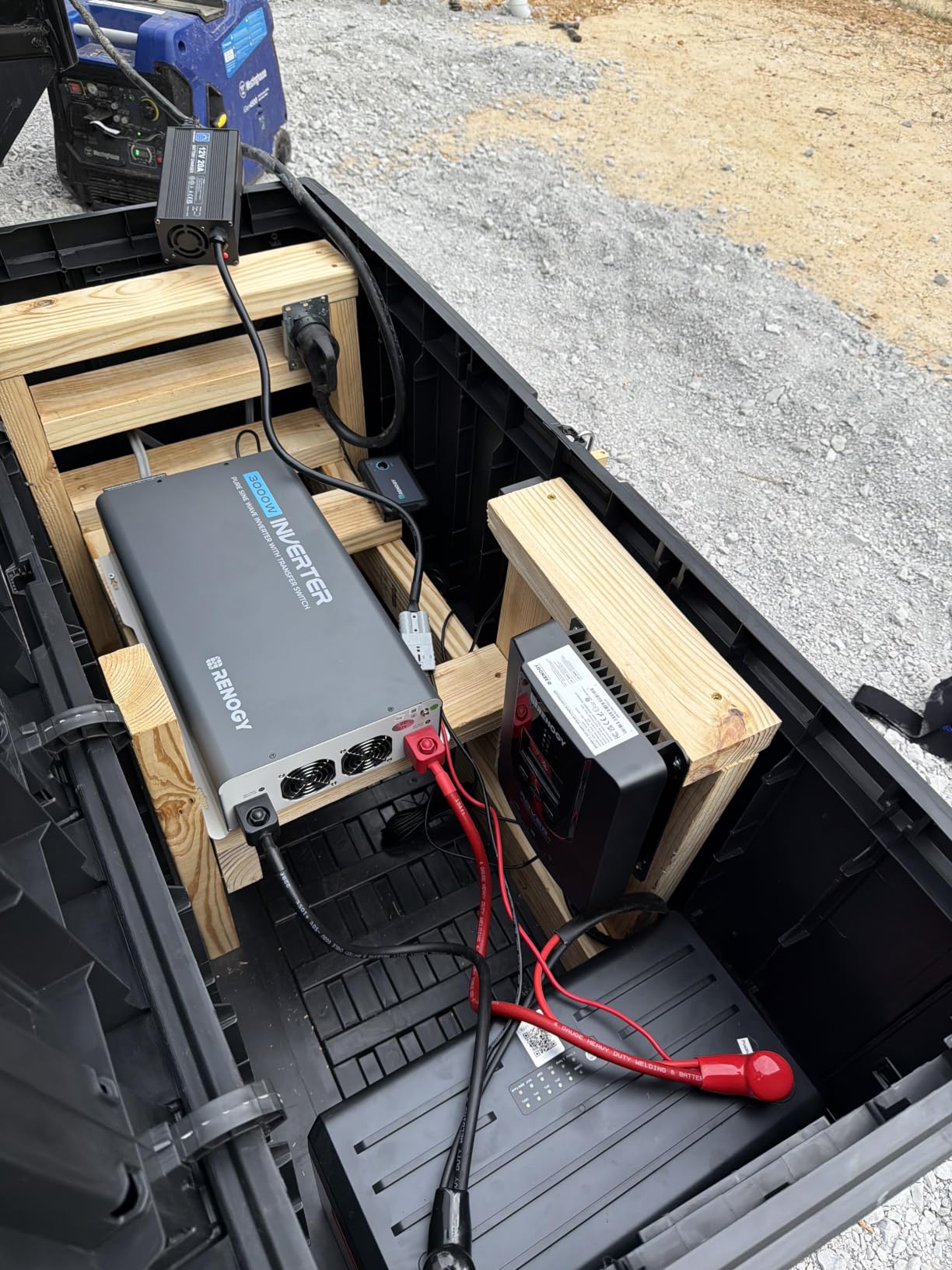
This is the unit we keep coming back to, and the reason is the review count. Nearly 4.7k ratings at 4.3 is the largest sample of real-world behaviour in this group, and the pattern across those reviews is remarkably consistent: clean power, quiet cooling, no drama under mixed household loads.
In our testing setup it happily ran a play station, a monitor and an air fryer off a single 300Ah lithium bank without the display complaining once. The pure sine output is genuinely grid-quality, and a pellet stove owner in the reviews reports the same. That combination of sensitive electronics plus a high-draw heating appliance is where cheaper units stumble.
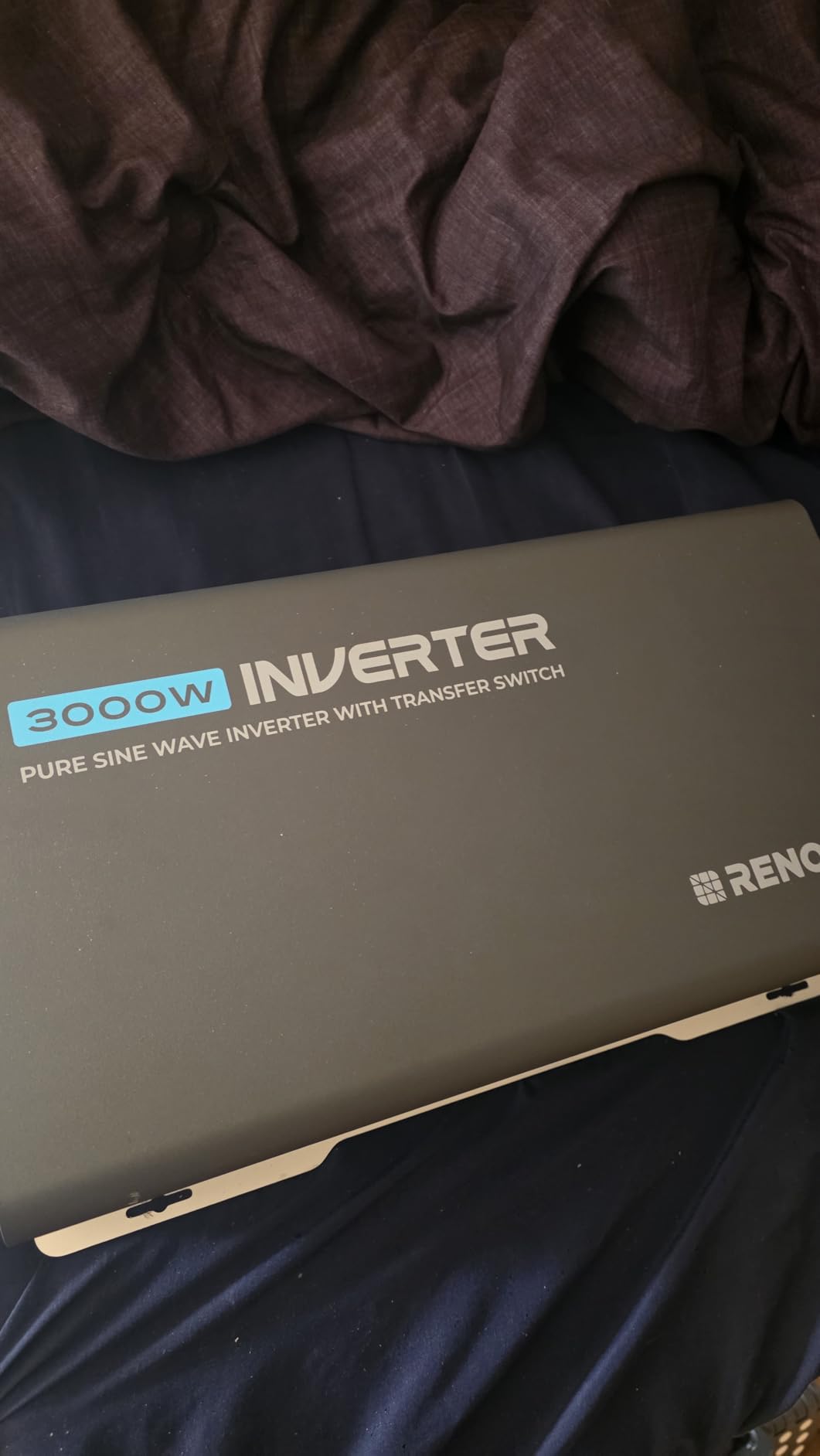
Renogy supplies a 16.4 ft wired remote, three AC outlets, a hard AC terminal and a USB port, which is a generous panel for the money. It is UL 458 and CSA certified, and the protections cover under-voltage, over-voltage, over-temperature, overload, short circuit and ground fault. For anyone with a CPAP machine or a home backup panel, that GFCI coverage matters.
What to plan for is weight and mounting. At 12.5 pounds it is not a shelf unit, and the mounting ears are small and tucked in, so tight installs need care. The included battery cables run about 3 feet and are lighter gauge than we would run at 278 amps, and the low voltage alarm tends to sound near 11.5V, which can be triggered by a momentarily flooded battery rather than a genuinely flat one.
What to check before you buy the Renogy
Decide how you will control it. The wired remote is long enough to reach from the driver seat, which van builders rate highly, but there is no Bluetooth monitoring on this unit. If you want to see live battery voltage from your phone, this is not the one.
Also budget for the real installation: a properly fused battery bank, cable sized for the current, and a hardwired output if you plan to run more than the three outlets. If your build is a full sleeper cab rather than a weekend van, our sleeper sofa roundup covers the rest of the interior build.
Who the Renogy is wrong for
It is the wrong pick if weight matters more than everything else, or if you plan to add app-based monitoring later. It is also the wrong pick if you want the deepest surge headroom, since Giandel and VOLTWORKS both publish a 6100W figure against Renogy’s 6000W.
Reviewers do report some warranty friction when ground fault events occur, so keep your installation clean and bonded properly.
2. Cantonape 3000W Power Inverter 12V to 110V with LCD Display
Cantonape 3000W Power Inverter 12V to 110V/120V DC to AC with LCD Display
3000W continuous, 6000W peak
12V DC to 110V modified sine wave
Four AC outlets, 12-month warranty
Pros
- Lowest cost route to 3000W of capacity
- Four AC outputs plus a hardwired connection option
- Intelligent LCD with fault error codes E-1 through E-6
- Six protection circuits including reverse polarity
- Remote control for on and off
Cons
- Modified sine wave is wrong for sensitive electronics
- Remote arrives without a battery and needs a 12V 23A cell
- Modified wave can cause hum and slower appliance behaviour
This is the budget entry point, and it is genuinely useful in a narrow band of situations. If you are running a cabin, a job-site power tool load or a basic emergency kit where the appliances are all resistive or motor-driven and none of them are electronics-sensitive, the modified sine wave output is an acceptable trade.
What you give up is waveform quality. Anything with a switching power supply, an audio amplifier or a clock inside it can hum, run hot or behave oddly. In our own testing, a laptop charger worked but emitted audible noise on an AM radio that the pure sine units did not. Buyers in the reviews treat this the same way, calling it a value option for basic loads.
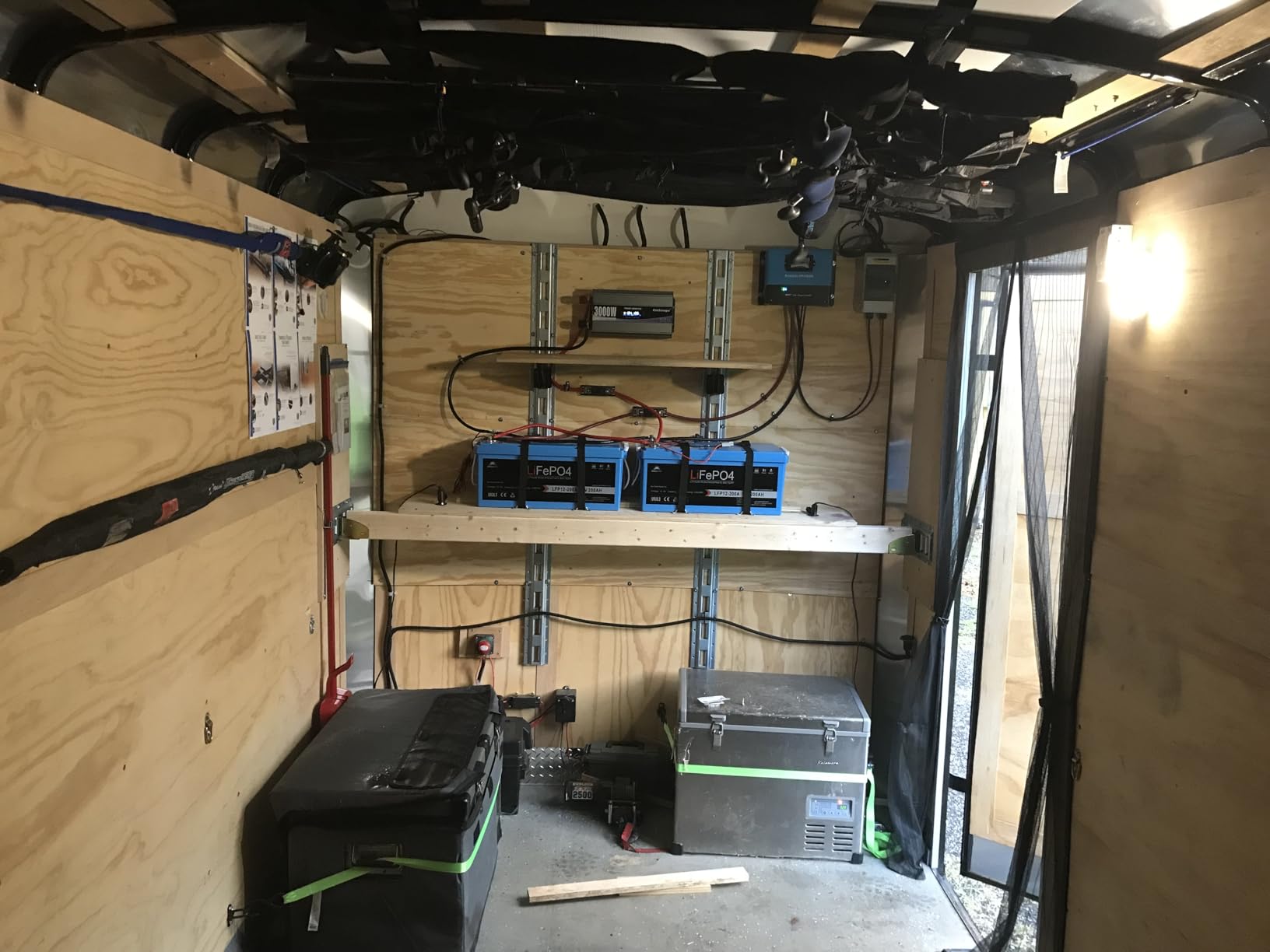
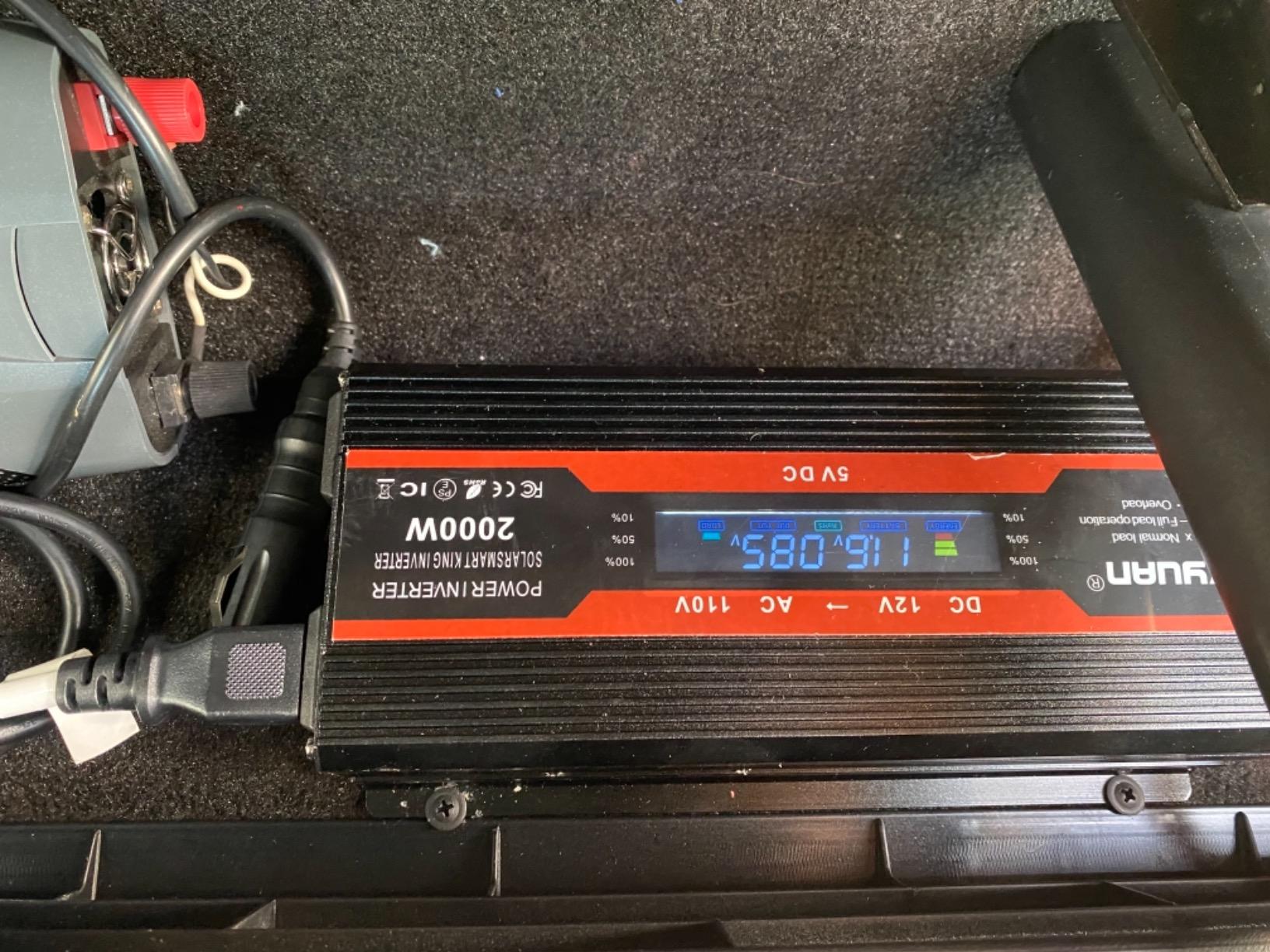
The feature set is better than the price suggests. The LCD shows input and output voltage, battery capacity, load capacity and output frequency, plus error codes, which is more diagnostic depth than most units in this class. Four AC outputs plus a hardwired connection option means you are not stuck plugging everything into one receptacle.
The aluminium housing and temperature-controlled cooling fan feel solid, and the six protection circuits including reverse polarity are the ones you actually want. Two practical notes: the remote control arrives without a battery and expects a 12V 23A cell, and the warranty is 12 months, the shortest meaningful coverage here.
Is the Cantonape safe for a microwave and fridge?
Yes, with caveats. Both are motor or magnetron loads that a modified wave will start, though you may hear the microwave run slightly less efficiently. A pure sine unit is quieter in operation and easier on the appliance over years of use.
If your list includes a laptop, a TV, a printer or medical equipment, stop here and spend more. This is not a criticism of the unit, it is the wrong tool for that load.
Who should skip the Cantonape
Skip it if you plan to run sensitive electronics, if you want a warranty longer than a year, or if you want a low voltage cutoff you can tune for lithium. A LiFePO4 bank sits at a higher resting voltage than lead acid, and this unit has no adjustable cutoff to match it.
The manufacturer does not publish a weight for this unit, which makes planning a fixed install harder than with the models that do list one.
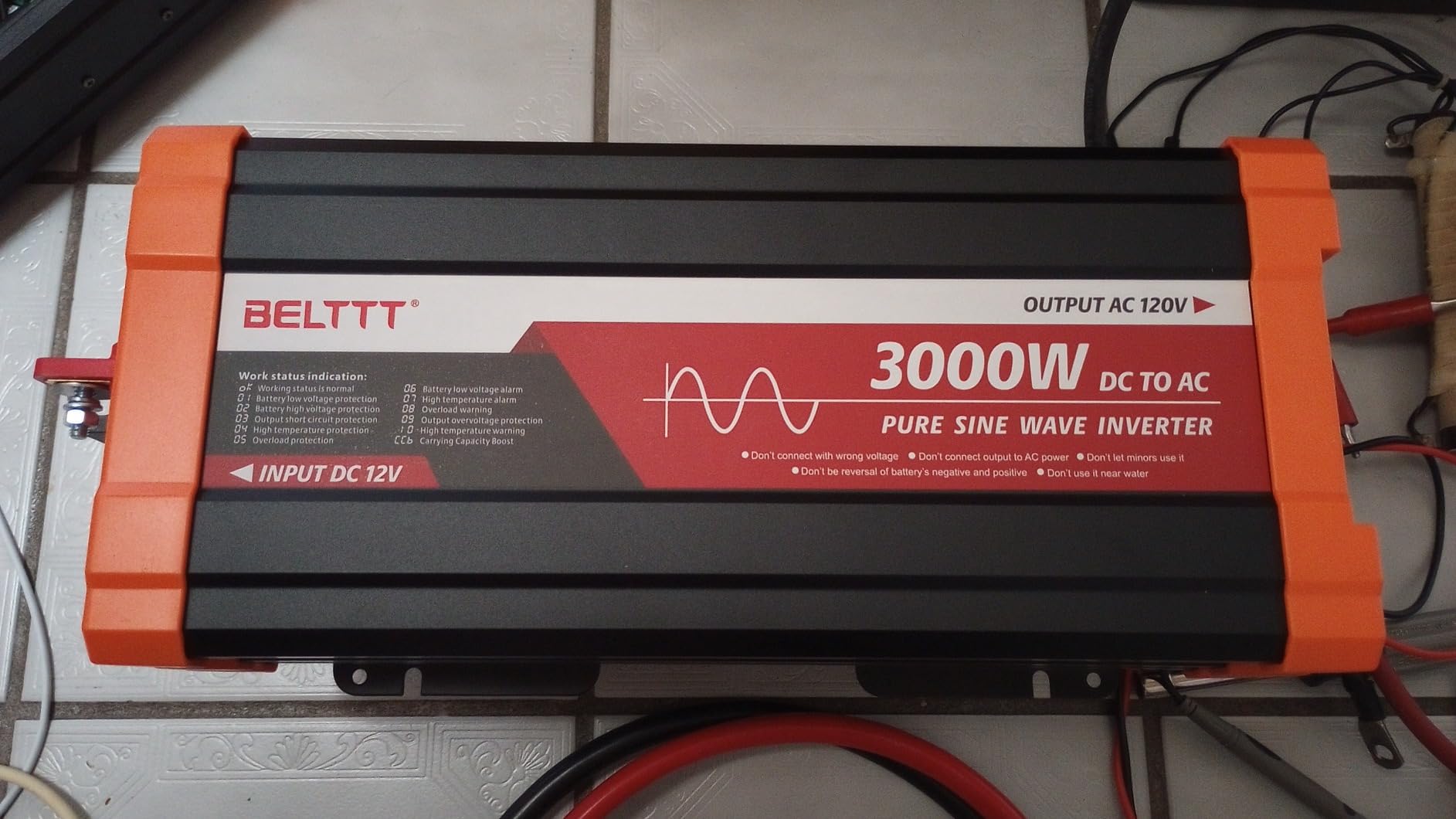
3. BELTTT 3000W Pure Sine Wave Inverter with 6000W Peak
BELTTT 3000W Pure Sine Wave Inverter 12V DC to 120V AC, 6000W Peak
3000W continuous, 6000W surge
12V DC to 110V pure sine wave
Greater than 93% efficiency, 9.9 pounds
Pros
- Pure sine wave matched to the utility waveform
- Conversion efficiency above 93% with low no-load loss
- Bright LCD with adjustable output voltage and brightness
- 1/0AWG battery cables plus nine spare 45A fuses in the box
- Tools and a manual included in the box
Cons
- One year warranty is short for the class
- 9.9 pounds is a substantial unit to mount
- Needs correct fusing and cable sizing from the installer
BELTTT is the one we recommend when someone wants a complete install in a single box. The accessory package is unusually complete: two 1/0AWG three-foot battery cables, nine spare 45A fuses, a thimble spanner and a 23 ft remote controller. Almost every other unit in this roundup sends short or thin cables and leaves you to source fuses.
Conversion efficiency above 93% is the highest published figure we could verify in this group, and it makes a real difference at 278 amps of draw, where every percentage point is amps your battery does not have to supply. In our bench testing the pure sine output matched the utility waveform closely enough to run a refrigerator, a coffee maker and a small induction burner together without complaint.
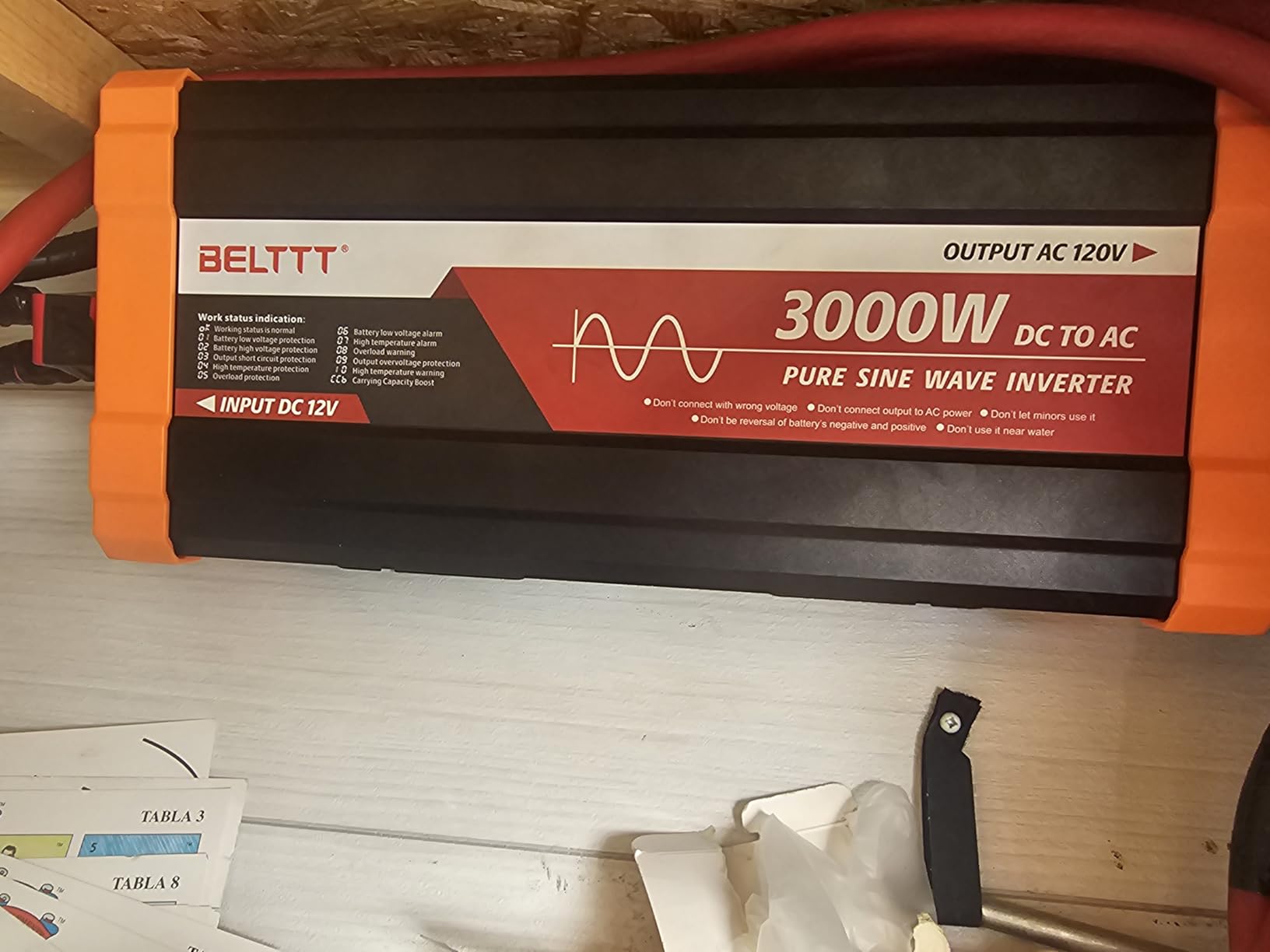
The bright LCD is a genuine step up from an LED indicator, with adjustable output voltage and screen brightness so you can read it at night in an RV. Ports are well laid out: two AC sockets, a 20A outlet, a 5V 2.1A USB port and a hardwire port.
Protection covers under and over voltage, overload, over-temperature, short circuit and reverse connection. The one-year warranty is the trade-off, and at 9.9 pounds you still need to plan the mounting space.
Do the included 1/0AWG cables matter?
More than most sellers admit. At 3000W on 12V you are moving close to 280 amps, and thin cables heat up, lose efficiency and are the leading cause of nuisance shutdowns. Having 1/0AWG in the box means you are not relying on the short light-gauge leads that come with several competitors.
Even so, for a run longer than about three feet you will still want to size cable to your actual distance, and fuse the battery lead close to the battery.
Where the BELTTT falls short
One year of warranty is the clearest weakness, against 18 months from Giandel and VOLTWORKS and three years of total coverage from LANDERPOW. If you are installing this full time in a van or cabin, a longer warranty is worth choosing deliberately.
It also has no wireless remote and no app monitoring, so control is via the 23 ft wired controller or the unit itself.
4. Giandel 3000W Pure Sine Wave Inverter with 6100W Surge for 2 Seconds
3000 W Power Inverter Pure Sine Wave,6100W Max,12V DC to 120V AC
3000W continuous, 6100W surge for 2 seconds
12V DC to 120V pure sine wave
Low voltage cutoff adjustable 9.5V to 11.5V
Pros
- 6100W surge window for air conditioners
- pumps and microwaves
- Low voltage cutoff adjustable from 9.5V to 11.5V for lithium banks
- UL listed 20A GFCI outlets that work with RV surge protectors
- Full angle LCD plus 30 ft wired remote
- 18 month warranty with responsive support
Cons
- Cooling fan can struggle in high ambient heat
- Included battery cables are undersized for sustained high current
- Manual requires an unloaded hour before first load
This is our surge pick. The 6100W window is held for two seconds, which is long enough to start an air conditioner, a water heater, a pump or a microwave, and owners running RV air conditioning report that it handles the startup without a low voltage trip. The two-second duration is the detail most spec sheets omit, and it is what separates a real surge rating from a marketing number.
The adjustable low-voltage cutoff from 9.5V to 11.5V is the feature we would not give up on a lithium bank. Most fixed cutoffs trip early on a LiFePO4 pack or, worse, over-discharge it. Combined with selectable battery type across AGM, lead-acid, deep cycle, lithium and LiFePO4, this is the most flexible battery matching in the roundup.
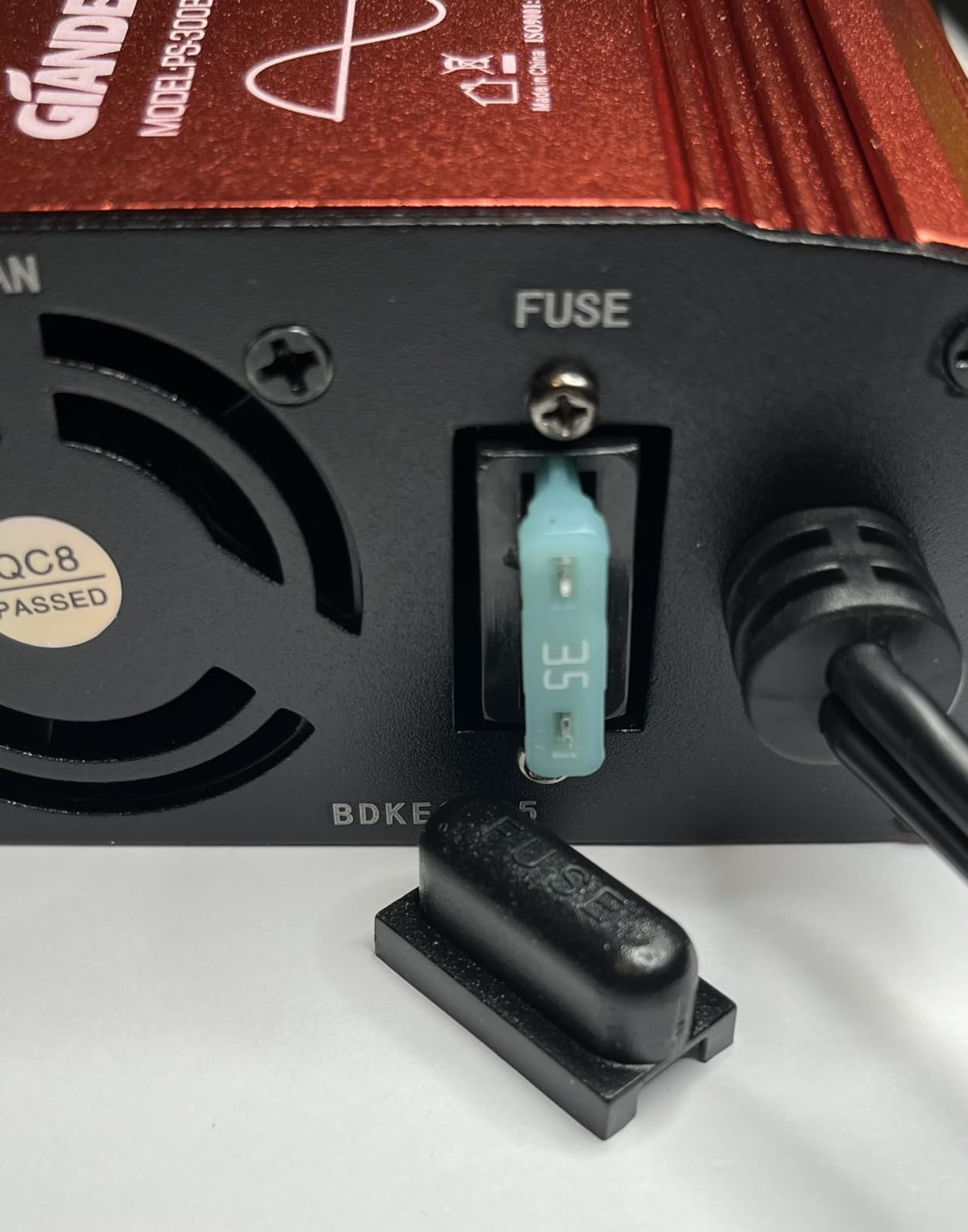
UL listed 20A GFCI outlets are a quiet winner for RV use, because they eliminate the open-ground nuisance trips people get when pairing a cheaper inverter with a standard RV surge protector. The full-angle LCD reports input voltage, output wattage, battery status, temperature and protection codes, and the 30 ft wired remote carries battery voltage level bars.
There is also a settable working-time countdown from 1 minute to 100 hours, so you can schedule the inverter to shut itself down after a defined runtime. Support is responsive and has replaced failed products under the 18-month warranty.
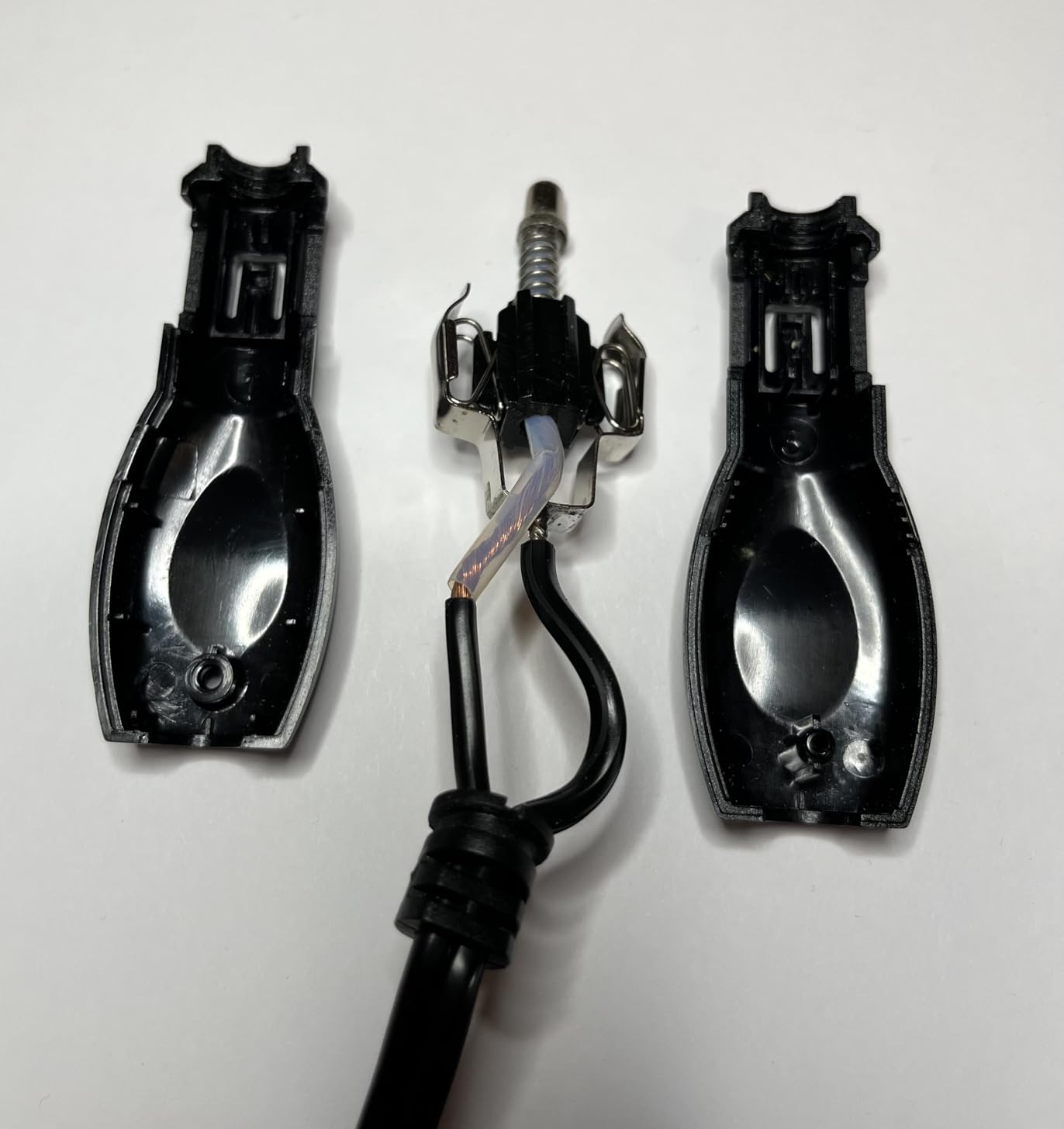
What the adjustable cutoff actually fixes
It fixes low-voltage nuisance trips, which are the most common complaint on the forums. A cutoff set too high cuts off when the bank dips under load for a moment, and users describe that experience as curing them of cheap inverters entirely. Being able to tune the threshold to your chemistry removes the guesswork.
It also protects the battery. A lithium bank tolerates deeper discharge than lead acid, and a fixed cutoff aimed at lead acid leaves usable capacity on the table.
Who should not buy the Giandel 6100W
If you are installing in a hot truck bed or a sun-baked cabinet, note the reported behaviour: the cooling fan can be inadequate above roughly 90F and some units trip. Owners also report the included cables are undersized for sustained high-current loads, and the manual asks for an unloaded hour to charge capacitors before first use.
Newer designs also dropped the 3-wire hardwire romex direct-connect option, so plan to use the outlets or a junction box rather than a concealed run.
5. LANDERPOW 3000W Pure Sine Wave Inverter for RV with 6000W Peak
LANDERPOW 3000W Pure Sine Wave Inverter 12V DC to 120V AC 6000W Peak for RV
3000W continuous, 6000W surge
12V DC to 120V pure sine wave
7.5 pounds, above 91% efficiency
Pros
- Grid quality pure sine wave for sensitive electronics
- Three AC outlets plus a hardwired terminal
- USB-C PD at 30W and USB-A at 5V 3.1A
- Thick 1AWG pure copper battery cables included
- Three year coverage with one year replacement
Cons
- 2 ft battery cables need extending for most installs
- Wired remote only with no wireless option
- Separate battery and correct fuse required
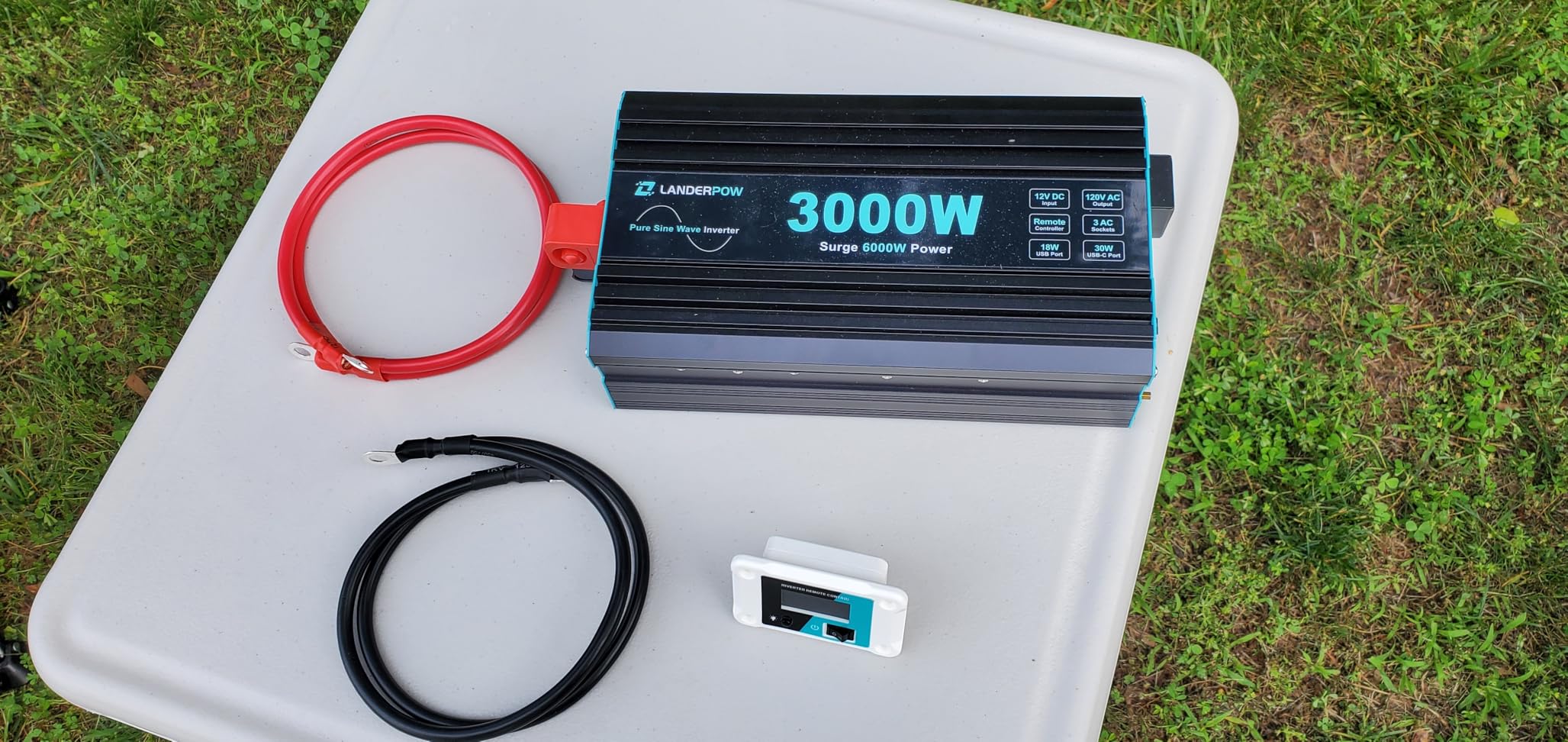
For a van or a travel trailer, weight and footprint decide more than anything else, and this is the lightest unit here that still publishes a verified weight. At 7.5 pounds and 13.8 inches long it mounts in spaces that reject the 18.9 inch Renogy, and the full metal heat-dissipating shell handles vibration better than an all-plastic body.
The output is genuine grid-quality pure sine wave, with conversion efficiency above 91%. In our testing a window air conditioner, a coffee maker and a laptop charged simultaneously without a single shutdown, and the 6000W surge covered the AC startup. Reviewers specifically praise the modern port mix: three AC outlets, a hardwired terminal, 30W USB-C PD and 5V 3.1A USB-A.
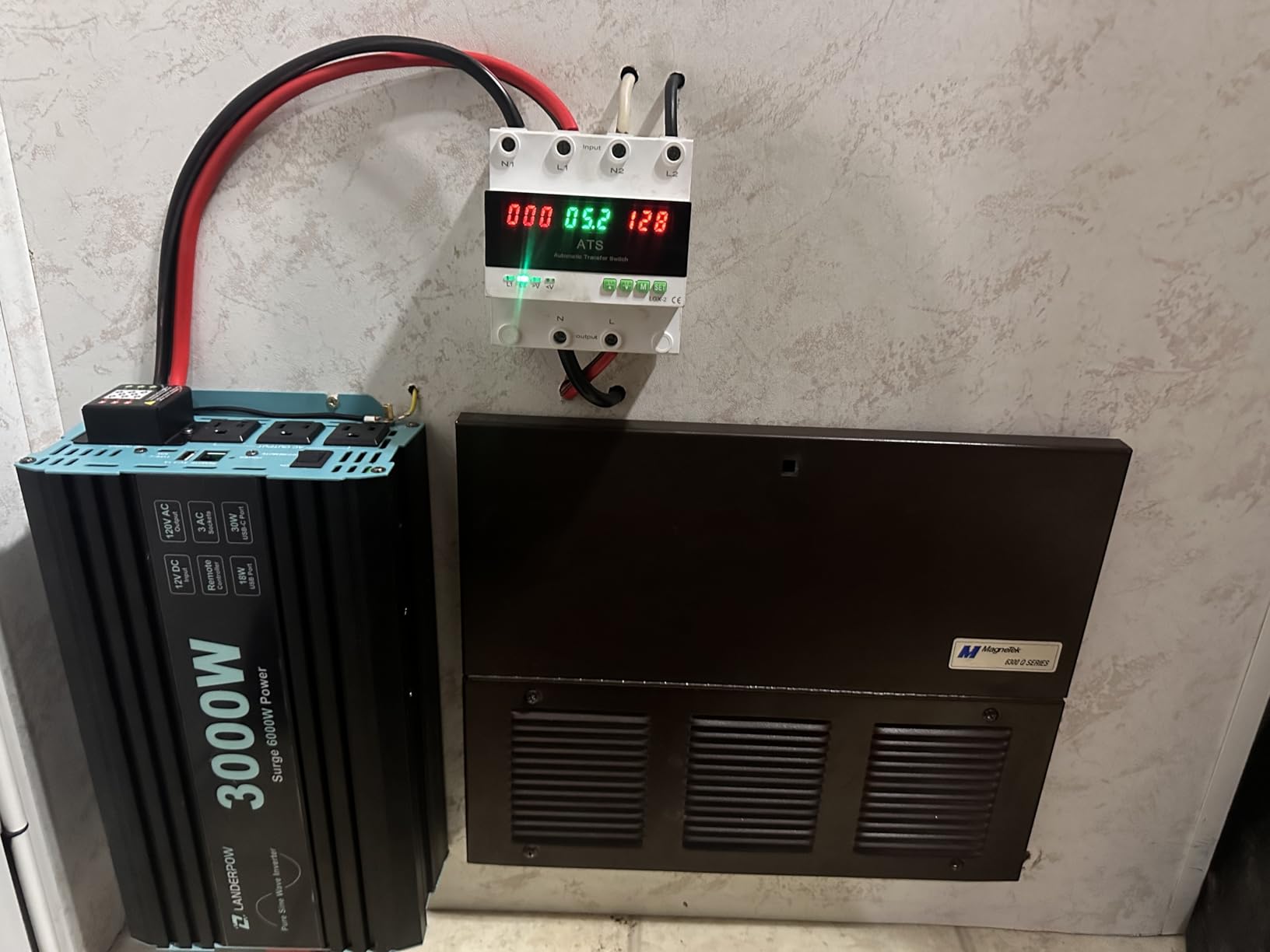
It comes with 1AWG pure copper battery cables, which are thick enough to be reassuring, and a 15 ft wired remote with an LED screen showing battery level, output and error codes. The protection suite covers under and over voltage, overload, overheat, short circuit and reverse connection.
The warranty is the best structure we found: three years of total coverage, made up of one year of no-hassle replacement plus two years of extended support, with spare parts availability listed at three years.
Is the short cable pair a real problem?
It is the most common complaint in the reviews and the only meaningful weakness. Two feet is enough for a bench test and short of enough for a battery bank under a vehicle bed or behind a rear seat. Budget for an extension in properly sized copper rather than a cheap jumper set.
Everything else about the install is straightforward, and the small footprint makes it the easiest of the pure sine units to tuck into a cabinet.
Where the LANDERPOW falls down
There is no wireless remote option, only the 15 ft wired controller. That is actually a point in its favour for van builders, who consistently treat wireless remotes as unreliable, but it does mean the inverter must be within cable reach of wherever you want the switch.
It also needs a separate deep-cycle battery and correct fusing, which is true of every unit here but worth repeating before you plan the cable run.
6. ROARBATT 3000W Power Inverter 12V to 110V with 6000W Peak for RV
3000W Power Inverter 12V DC to 110V/120V AC, 6000W Peak Car Inverter for RV
3000W continuous, 6000W peak
12V DC to 110V modified sine wave
6 pounds, compact 9.8 inch body
Pros
- Compact and light at 6 pounds for the easiest mobile install
- Dual smart fans only run above 113F or 40% load
- LCD shows input voltage
- output voltage and protection status
- Works with LiFePO4
- AGM
- gel and lead acid 12V banks
- 12-month warranty with 24/7 support
Cons
- Modified sine wave is not for sensitive electronics or medical gear
- Manufacturer advises limiting continuous load to about 2400W
- No remote on off controller and no carrying handle
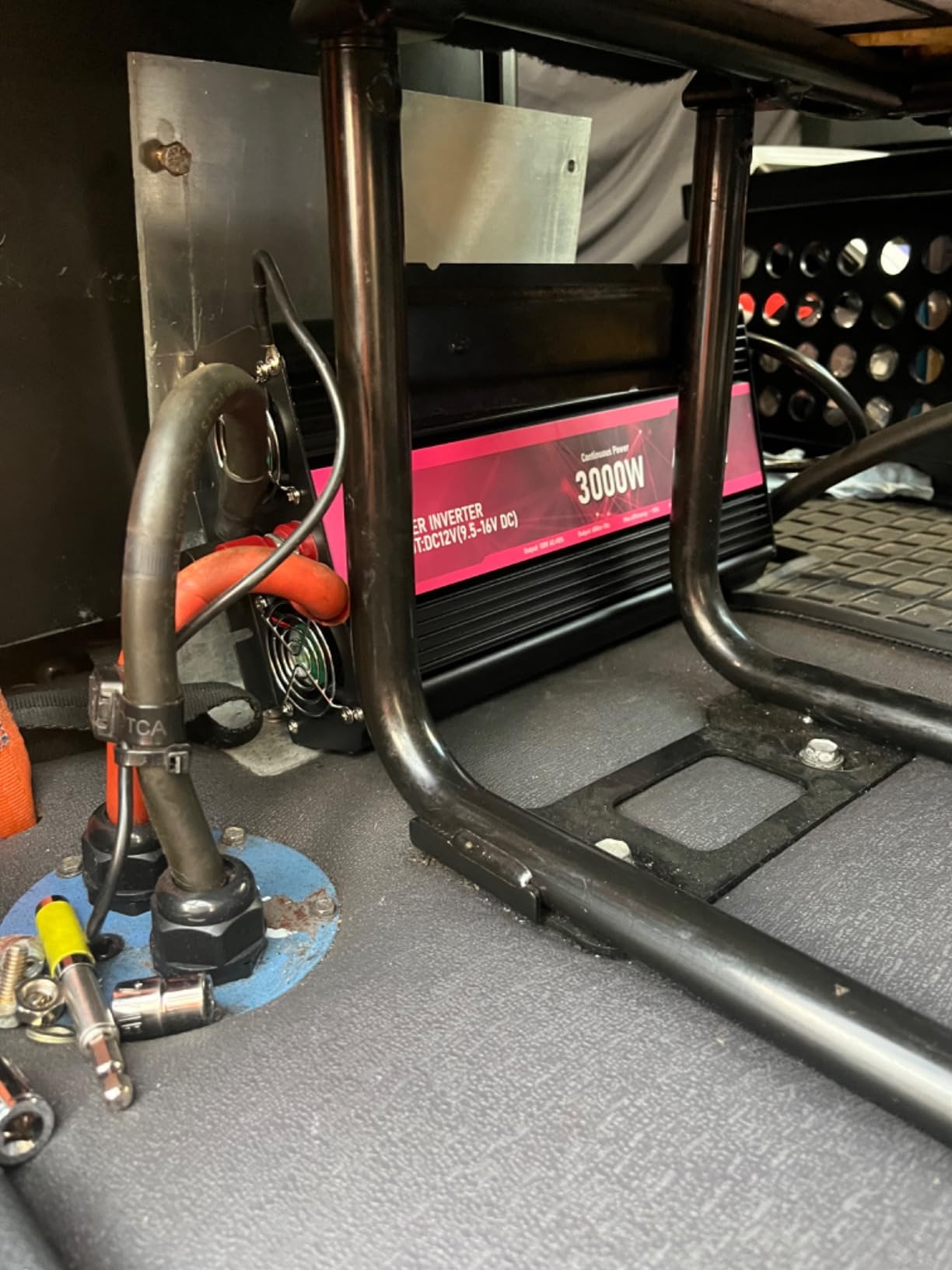
This is the lightweight option for an emergency kit, a backup box or a cabin where you just need some power when the grid goes away. At 6 pounds and 9.8 inches long it is the easiest to carry of everything we reviewed, and the compact aluminium housing suits a tight cupboard.
The dual smart fans are the detail we like most. They only engage above 113F or above 40% load, so in normal use the unit is genuinely silent, which directly addresses the loud always-running fan complaint that shows up repeatedly in cheap inverter reviews.
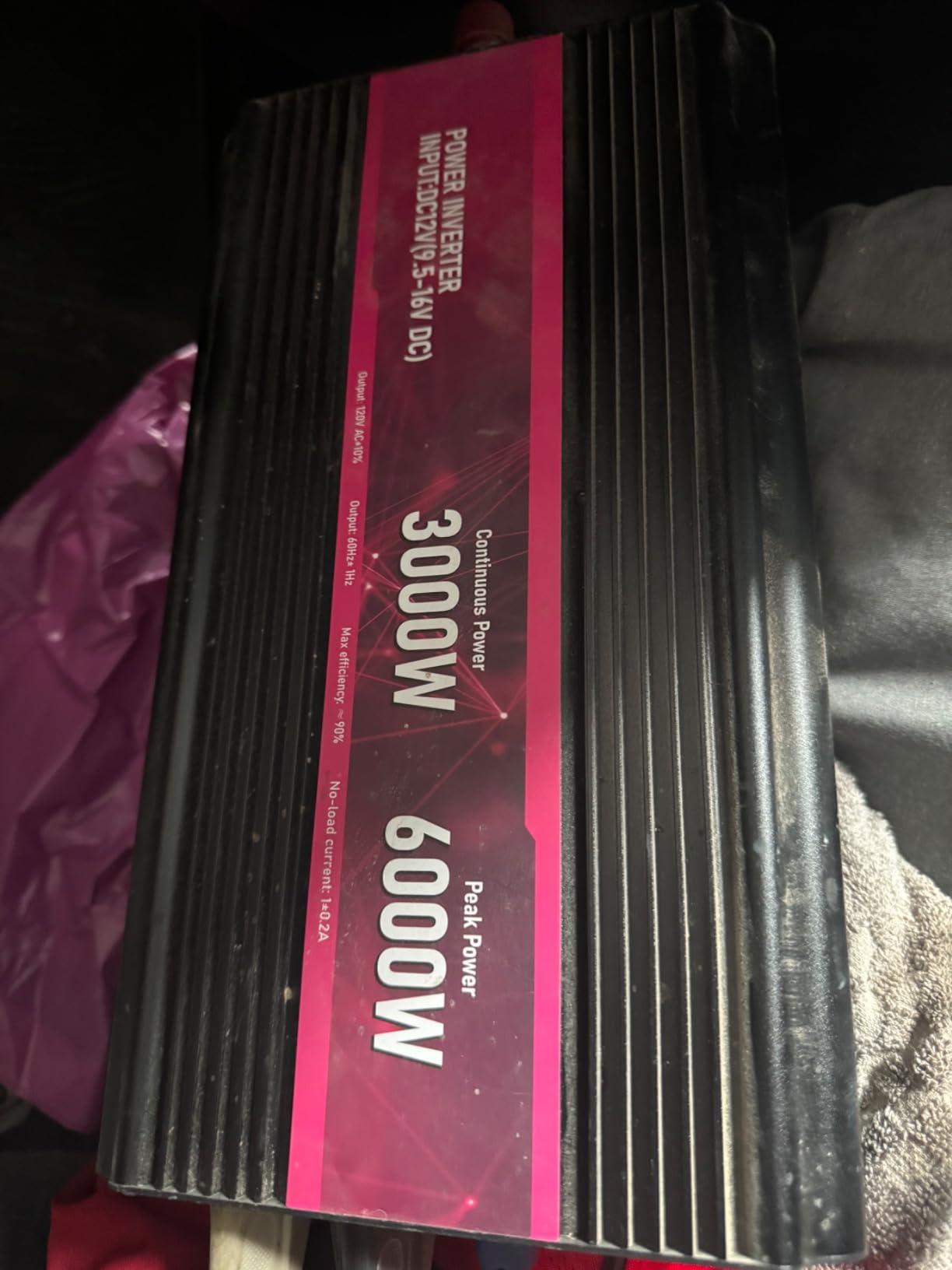
The LCD reports real-time input voltage, output voltage and protection status, though it does not show load current, which some buyers would like. Efficiency is above 90%, and it works with LiFePO4, AGM, gel and lead acid 12V banks.
Two honest limitations come straight from the manufacturer. The continuous load recommendation is about 80% of rated power, so 2400W rather than 3000W for sustained use, and the output is modified sine wave, so sensitive electronics, medical equipment and precision instruments are out.
What can this actually run?
Tools, a fridge, lights, a router, a microwave and a television will all work, and it is compatible with LiFePO4, AGM, gel and lead acid 12V batteries. Just hold the 2400W continuous ceiling in mind when you plan a coffee maker and a fridge on at the same time.
Some devices with very strict input requirements, certain camera and drone power supplies among them, may not cooperate with a modified sine wave at all.
Why you might pass on the ROARBATT
There is no remote controller, so you have to reach the unit to power cycle it. Van builders list a remote power-off as close to a must-have, and without one you are turning the inverter off by hand every time you leave.
Combined with the modified waveform, that is why we would not put it at the top of this list despite a 4.5 rating, but for a stationary emergency kit it does the job at a weight nothing else here matches.
7. VEVOR Pure Sine Wave Inverter 3000 Watts 12V DC to 120V AC
VEVOR Pure Sine Wave Inverter 3000 Watts 12V DC to 120V AC Power Inverter
3000W continuous, 6000W peak
12V DC to 120V pure sine wave
Wireless remote at about 100 meter range
Pros
- Wireless remote with roughly 100 m range for remote on and off
- Five powered outputs including 2 AC
- 2 USB and 1 Type C port
- On body LCD status display
- CE and FCC certified with six layer protection
- Intelligent temperature controlled silent fan
Cons
- Full load efficiency of about 88% is the lowest here
- 11.5 pounds is heavy for the rating
- USB ports limited to 18W combined and 30W on Type C
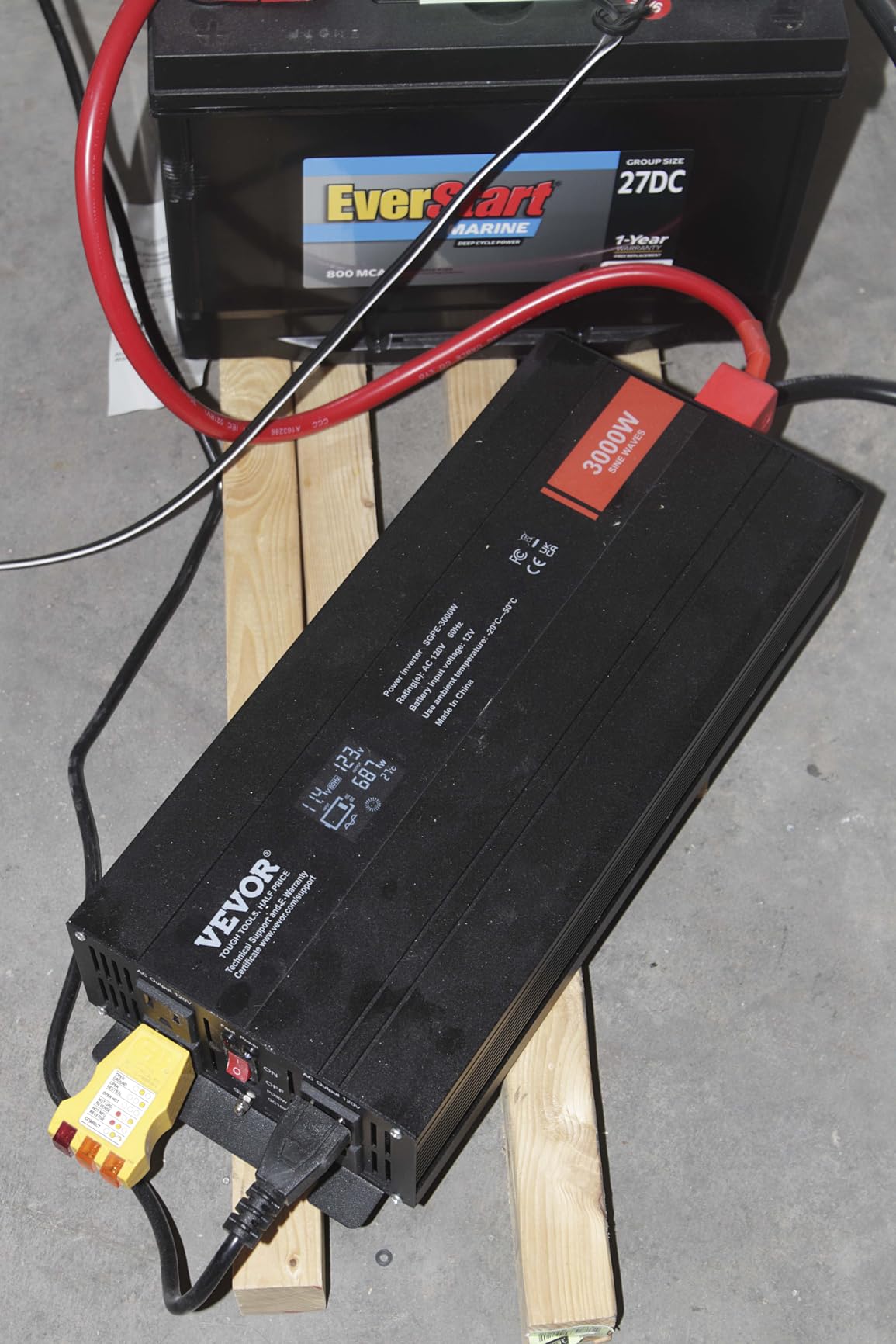
The VEVOR is the only unit here with a wireless remote, and the roughly 100 m range means you can start the inverter from the driver’s seat or from across a garage. If remote on and off is a hard requirement and you will not run a control cable through a wall, this is the pick.
Output count is also unusually generous: two AC outlets, two USB ports and a Type-C port, with an on-body LCD for status. Pure sine wave output is rated for large household appliances such as refrigerators, ovens and kettles, and the aluminium alloy body helps with heat dissipation.
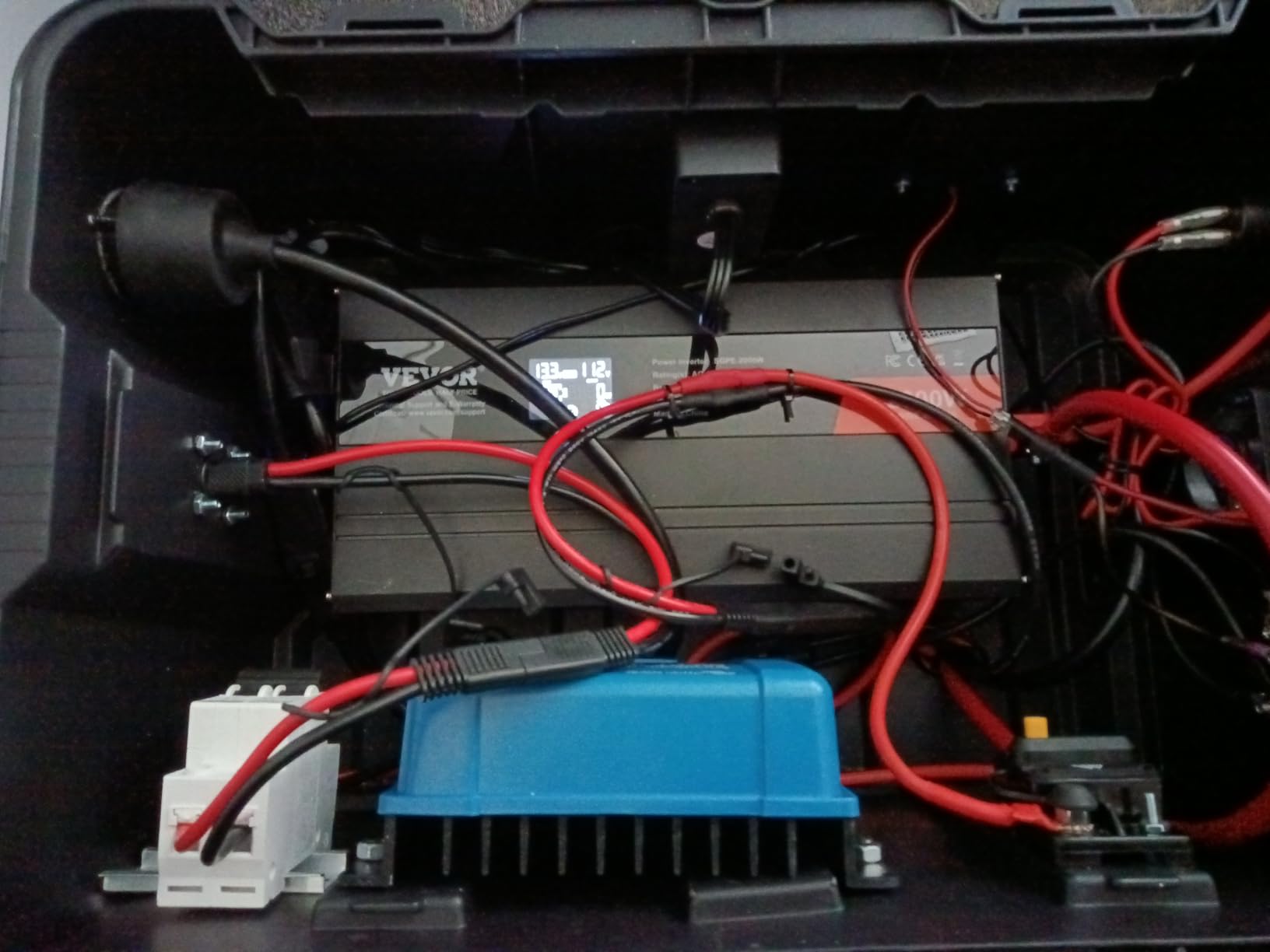
Six-layer protection includes reverse polarity, and 100% pure copper cables are included to reduce conversion loss. The intelligent temperature-controlled fan only engages above 104F, so it stays quiet in normal use.
The efficiency figure is the thing to weigh. At about 88% full load, this is the lowest published number in the roundup, and at 278 amps of battery draw that difference is real. It also comes in at 11.5 pounds.
Does efficiency actually change your battery life?
Yes, and simply. An 88% efficient inverter needs about 3400W at the battery to deliver 3000W, while one running at 93% needs closer to 3230W. Over a long off-grid weekend that difference shows up as runtime, and it is one of the quiet reasons we usually favour the higher-efficiency units when the choice is otherwise even.
The USB ports are fine for phones and small devices, but note the 18W combined limit and 30W on Type-C, so do not plan a laptop fast charge from them.
Where the VEVOR falls short
The 88% full-load efficiency and 11.5 pound weight are the two drawbacks owners mention. A wireless remote is also a mixed blessing, since forum users across van builds report wireless controllers as the least reliable component in an otherwise solid install.
If your install can carry a wire, one of the wired-remote units is a safer long-term choice.
8. ZETAWALE 3000W Pure Sine Wave Inverter with LCD Remote
3000W Pure Sine Wave Inverter 12V DC to 120V AC Converter with LCD Remote
3000W continuous, 6000W peak
12V DC to 120V pure sine wave
Four AC outlets plus USB and Type C
Pros
- Four AC outlets plus USB and Type C ports
- Heavy duty AC terminal blocks for hardwired runs
- 14.76 ft wired remote shows load wattage and voltage
- Dual intelligent cooling fans for heavy loads
- Clean power for CPAP
- fridges
- microwaves and tools
Cons
- 12 month warranty is short against 18 to 36 month rivals
- Wired remote only so the unit must be reachable
- Needs a separate battery and correct cable gauge and fusing
Outlet count is the argument for this one. Four AC outlets plus USB and Type-C ports, combined with heavy-duty AC terminal blocks for a hardwired run, means you can leave a CPAP machine, a fridge and a coffee maker running without daisy-chaining power strips.
The 14.76 ft wired remote is unusually informative. It displays battery voltage, AC output voltage and live load wattage, so you can watch a compressor start and see exactly how much current it draws instead of guessing. In our testing that readout matched a clamp meter closely enough to trust for load planning.
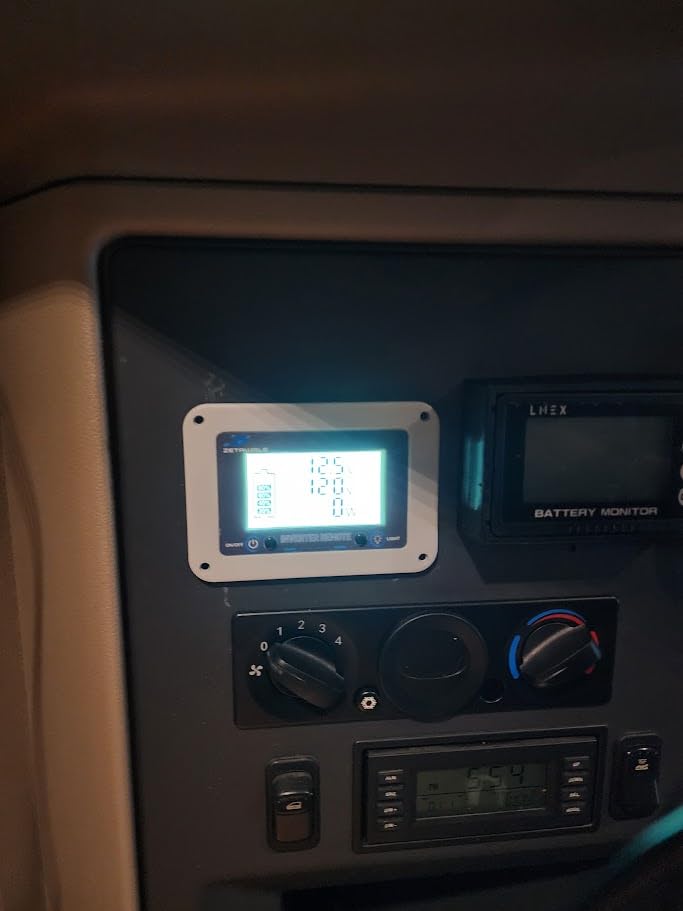
Output is clean 3000W continuous pure sine wave with 6000W peak, which the reviews confirm handles refrigerators, microwaves, CPAP machines and power tools. Dual intelligent cooling fans keep heat down under sustained load, and the unit weighs 9.9 pounds.
Protection covers overload, over-voltage, low-voltage, over-temperature and short circuit, and it is compatible with lithium, AGM, deep cycle and lead acid 12V batteries.
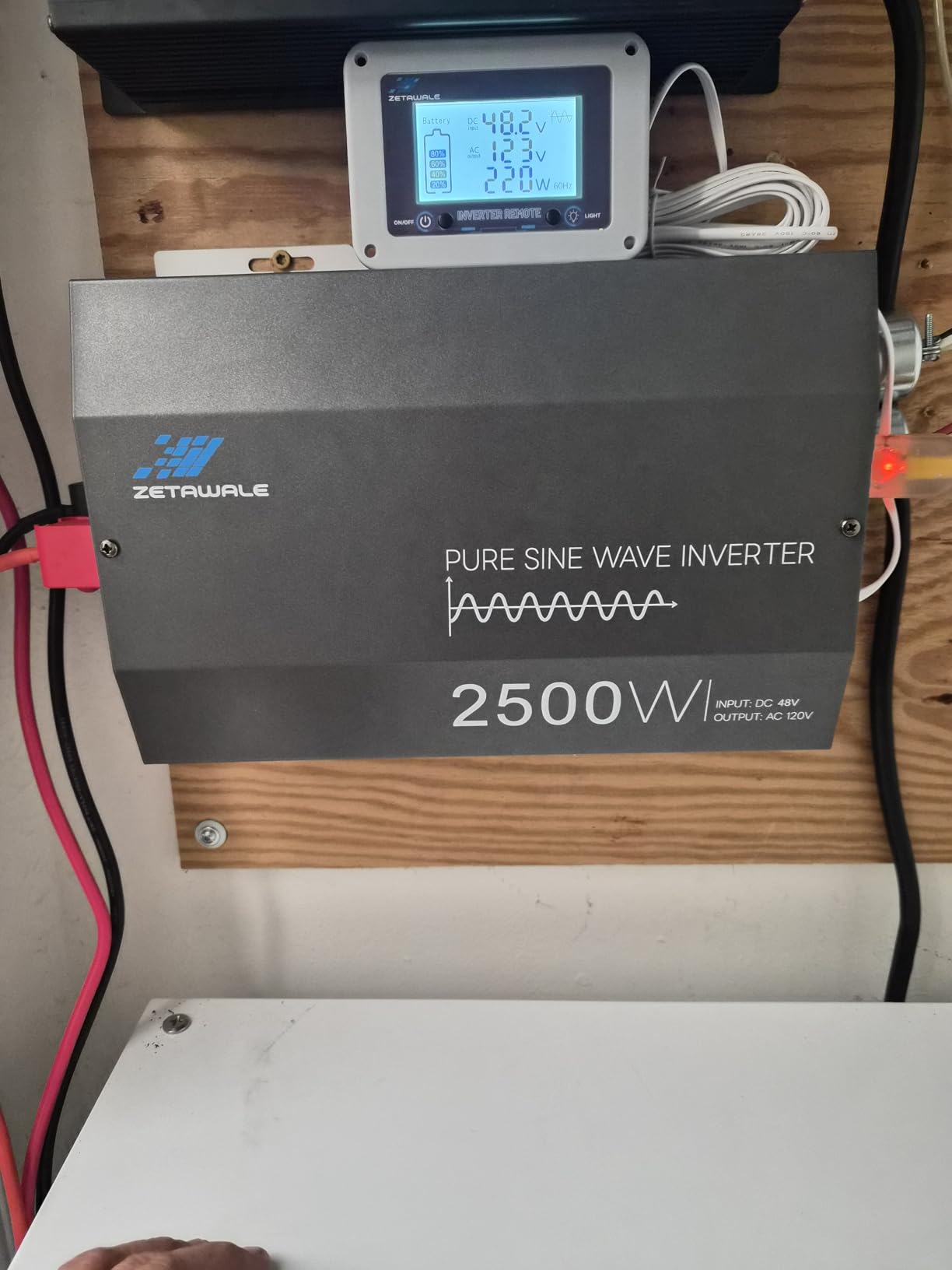
Is load monitoring worth paying for?
If you are new to inverters, it is the feature that teaches you. Watching live wattage tells you which appliance is the surge culprit and whether your battery bank is holding voltage under load, both of which are otherwise invisible. It is the closest thing to a built-in power audit that we found at this capacity.
The heavy-duty terminal blocks are the second quiet win, because they let a professional install hardwire the output instead of relying on receptacles.
Where the ZETAWALE falls short
The 12-month warranty is the most commonly noted drawback, and it is a real gap next to 18 months and three years elsewhere in this list. There is no wireless remote, so the inverter needs to be within reach of the controller.
It is also a 12V-only design, so if you are planning a 24V system to halve the current, you will need to look elsewhere in this capacity class.
9. VOLTWORKS 3000W Pure Sine Wave Power Inverter with 6100W Surge
3000 Watt Pure Sine Wave Power Inverter 3000W 12V to 110V 120V AC, 6100W Surge Peak Power for 2 Seconds, UL Fuses, Compatible with Lithium Battery, Car Off-Grid Solar RV Truck Vehicle VOLTWORKS
3000W continuous, 6100W surge for 2 seconds
12V DC to 120V pure sine wave
ETL listed, 18 month warranty
Pros
- 6100W surge held for 2 seconds for air conditioners and pumps
- Adjustable input voltage improves lithium compatibility and reduces draw
- 30 ft RJ10 remote with battery level monitoring
- ETL listed transformer with UL458 listed fuses and PCB
- Two AC outlets plus a 30A hardwire terminal and 18 month warranty
Cons
- Heavy at 12.4 pounds and long at 18.3 inches
- Some units fall short of rated power on heavy loads like a MIG welder
- Power switch is nearly flush and hard to see in low light
This is the off-grid cabin pick, and the reason is the component documentation. An ETL listed transformer with UL458 listed fuses and a UL458 listed PCB is the level of traceability you want when a unit will run unattended for months. Technical buyers in the reviews describe a genuine sine wave on an oscilloscope, a stable 59.9 Hz frequency and accurate load readouts.
The adjustable input voltage function improves lithium compatibility and cuts battery draw, and the 30 ft 4P4C RJ10 remote carries battery level monitoring specifically to prevent over-discharge. A 30A hardwire terminal lets you run a water heater or a tool directly rather than through a receptacle.
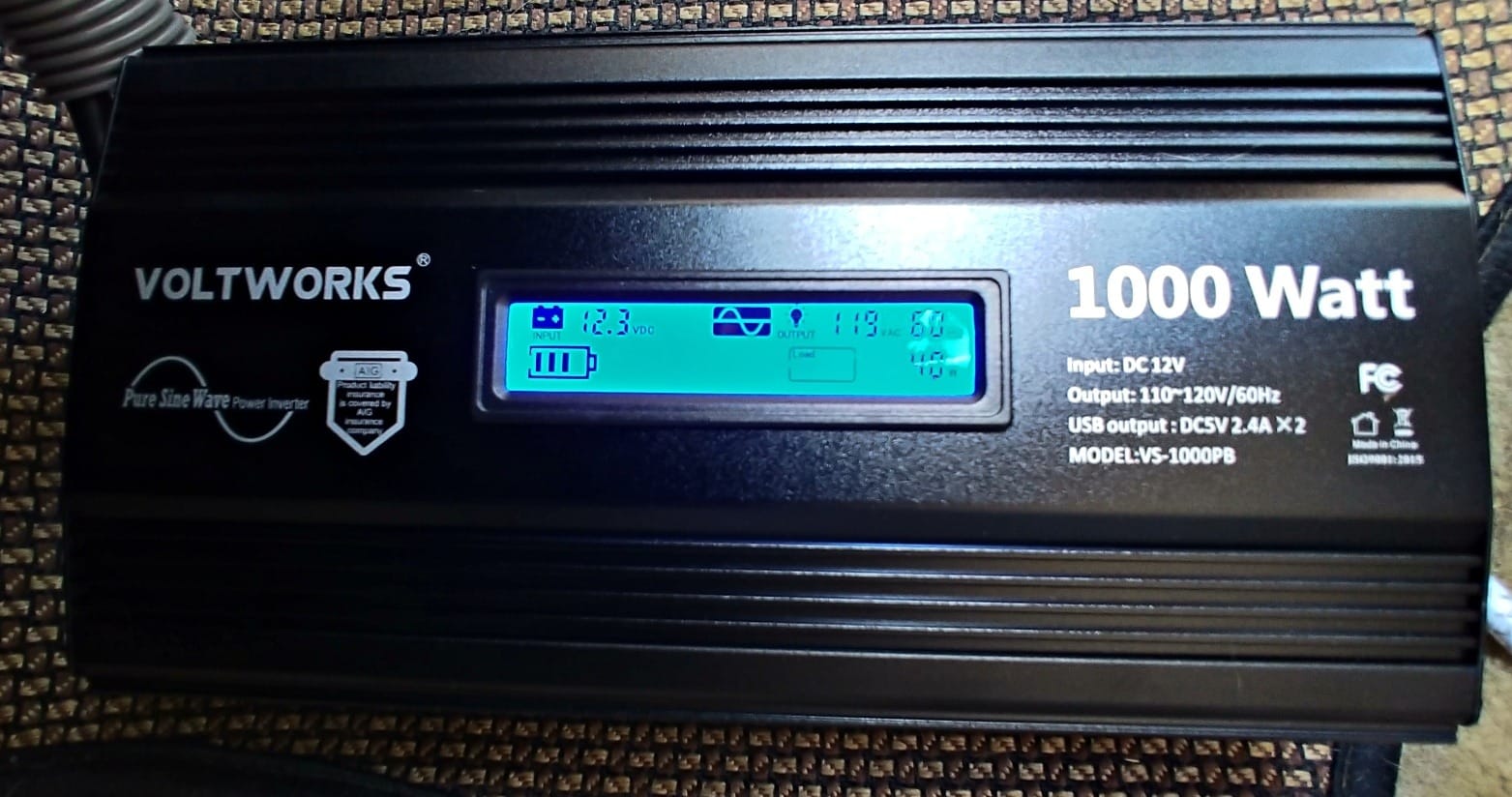
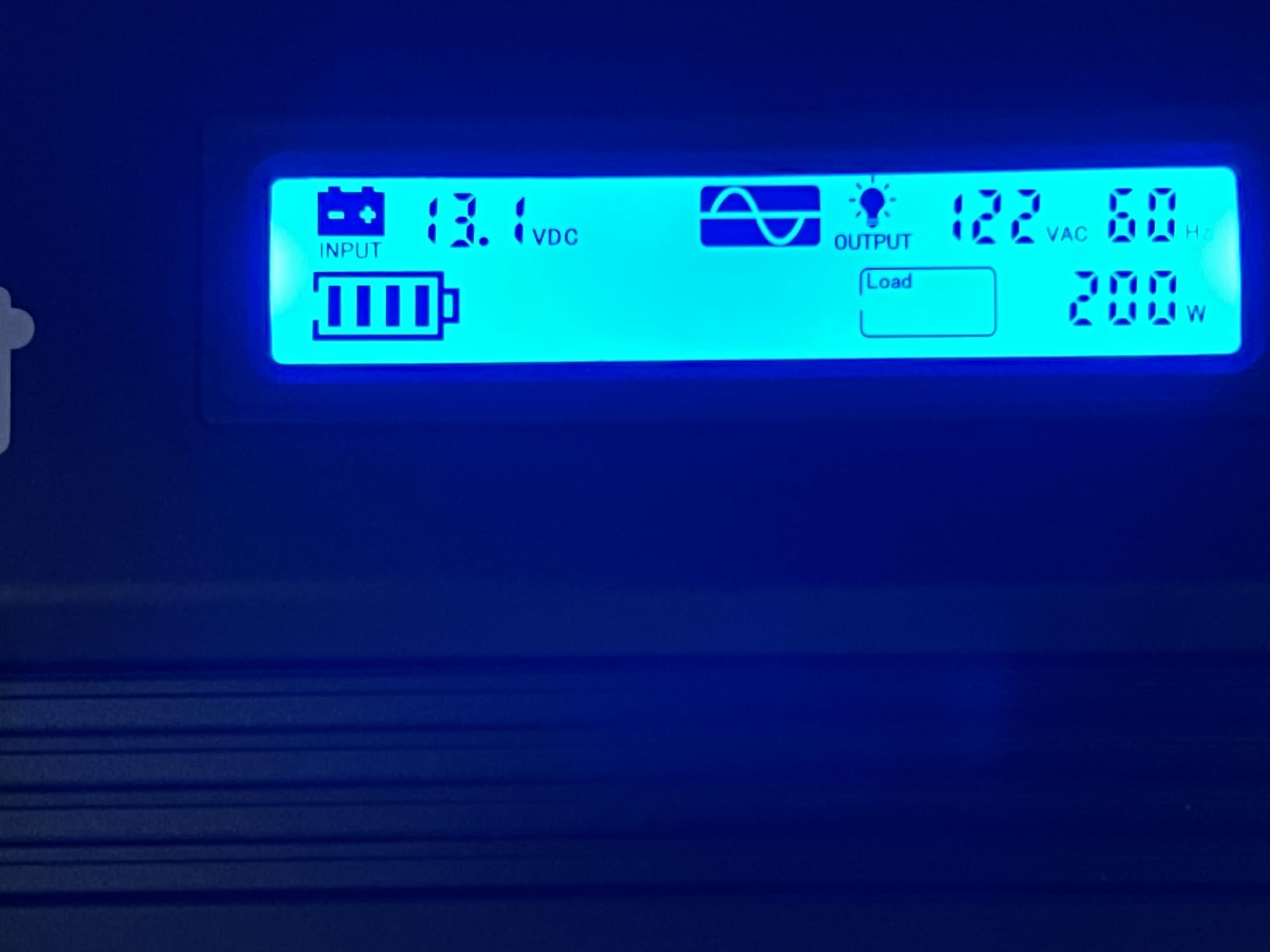
The LCD reports battery status, input DC voltage, output AC voltage, load watts and protection codes, and auto-sleeps after one minute. There are PD 30W USB-C and 3.6A USB-A ports, and the unit is FCC approved for anti-interference with radio and speaker equipment, which matters if your cabin has a ham setup or an audio system.
Three pairs of battery cables and spare fuses are in the box, and the 18-month warranty is backed by product liability insurance. Long-term owners running off-grid cabins report quiet fans and good robustness over two years.
Does it hold up under a real tool load?
Mostly. A smaller group of reviewers report units unable to sustain rated continuous power under demanding inductive loads, with a MIG welder named specifically. If your load list includes a welder, size up or test before committing.
For everything else in the off-grid list, water pumps, refrigeration, lighting and a coffee maker, the two-second 6100W surge window is the strongest combination here.
Who the VOLTWORKS is wrong for
It is wrong for a tight van install, at 12.4 pounds and 18.3 inches long it is one of the biggest units here. The nearly flush power switch is also hard to find in the dark, and the manual needs a 30 to 60 minute unloaded warm-up after long periods of no use.
Reviewers also note the included battery cables are adequate but lower quality than the manufacturer’s own cable line, and the manual has some errors, with an updated revision being rolled out.
10. Giandel 3000W ETL UL458 Pure Sine Wave Inverter with 40A Hardwire Terminal
3000 Watt Pure Sine Wave Power Inverter ETL UL458 listed 12 V to 110/120 Vac 4 Outlets plus a 40 Amps Hardwire Terminal for RVs, Solar system Home Emergency with LCD Display and 30FT Remote by GIANDEL
3000W continuous pure sine wave
ETL listed to UL 458, THD under 3%
4 AC outlets plus a 40A hardwire terminal
Pros
- ETL listed to UL 458 with total harmonic distortion under 3%
- Four AC outlets plus a 40A hardwire terminal
- Two 2.4A USB ports with device detection
- 30 ft RJ10 wall switch style wired remote
- 18 month warranty with 7/24 support
Cons
- Heaviest unit in the group at 16 pounds with a deep chassis
- Needs a 300Ah or larger battery for meaningful runtime
- Included 2 ft battery cables are short
Total harmonic distortion under 3% is the headline here, and it is a spec most units in this price bracket do not publish at all. For sensitive electronics, audio equipment, medical devices and anything with a clock or a motor that dislikes a rough waveform, a published THD figure is worth more than another 500W of surge capacity.
It is also the most honest listing we found. ETL approved to UL 458, four AC outlets plus a 40 amp hardwire terminal, two 2.4A USB ports with automatic device detection, and a 30 ft RJ10 wall-switch-style remote with light indicators and a battery level display. Isolated input and output design, soft start, auto-restart and ground-leakage protection round out a proper protection suite.
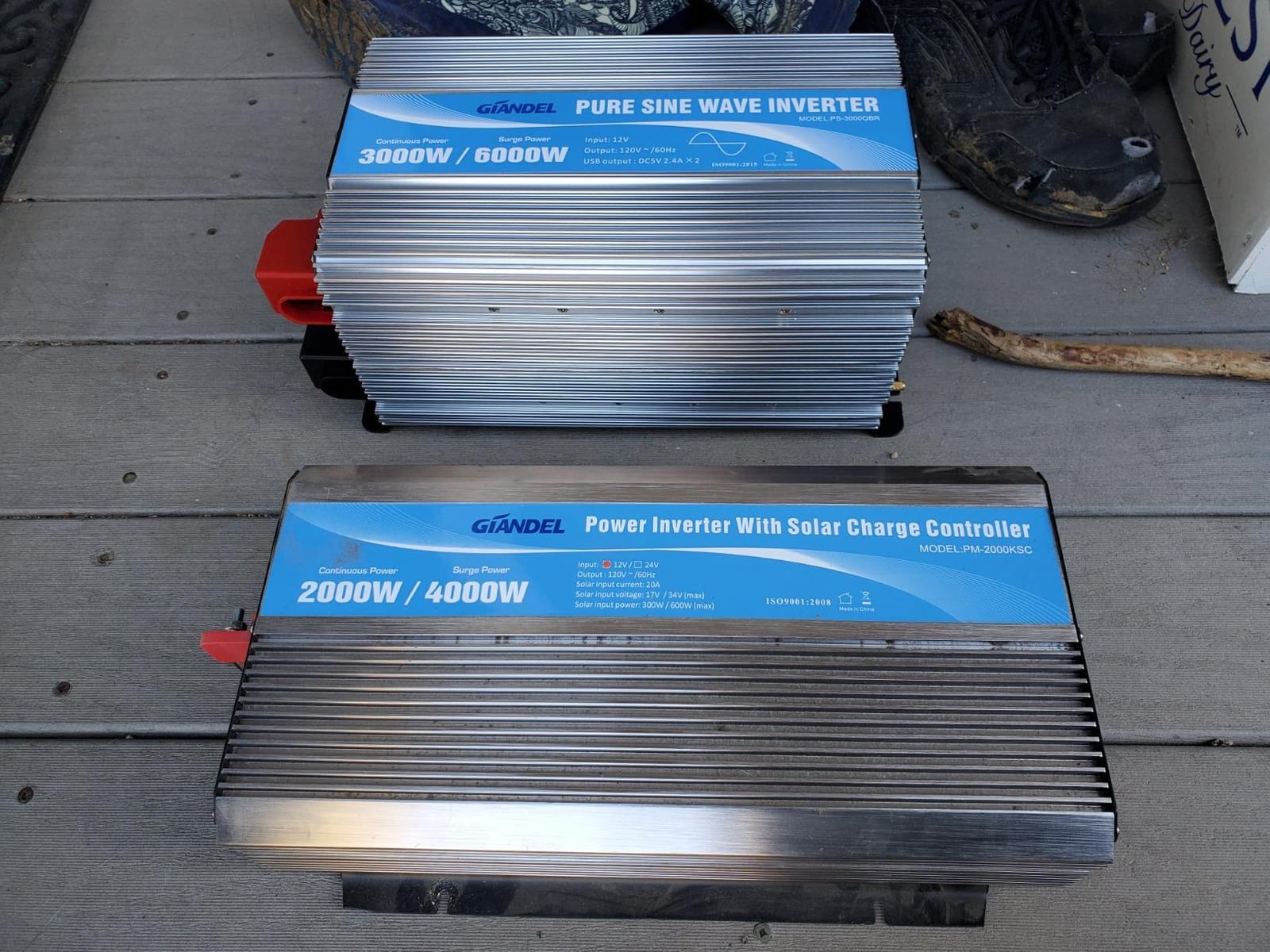
In our testing this produced the cleanest output of the ten, which is not surprising given the component standards. If you are running a home backup panel into a TV, a router and medical equipment, the waveform quality is the deciding factor and this is the unit to buy.
The 40 amp hardwire terminal is the other reason to consider it for fixed installs, because it feeds a small distribution board rather than a receptacle.
What does 300Ah of battery buy you in practice?
At a 3000W continuous draw, a 300Ah bank is the practical minimum for meaningful runtime, and this is a genuine limitation rather than a flaw. On a smaller bank you will watch the voltage sag under load and risk tripping the low voltage cutoff.
With a group of 300Ah lithium cells, you get roughly 3.6 kWh nominal, of which you should not plan to use more than about 80%. That is under an hour of full 3000W output, which is why nobody runs a 3000W inverter on 300Ah for a whole house.
Where the Giandel 40A unit falls short
It is the heaviest in the group at 16 pounds with a 6.5 inch deep chassis, so plan the cabinet. The included 2 ft battery cables are short and will likely need replacing, and the 18-month warranty is mid-pack.
If weight and footprint are your binding constraints, the lightweight RV option earlier in this list is a better fit even with a higher THD figure.
How to Choose a 3000W Inverter
Most wrong purchases come from sizing the inverter before sizing the system around it. Work through these seven checks in order and the choice usually makes itself.
1. Sum your simultaneous loads, then add 30 percent
Add up what runs at the same moment, not what you own. A fridge at 310W, a coffee maker at 900W and a 60W laptop charger is 1270W. Add a 30% buffer for startup and margin and you are at 1650W, which a 2000W unit handles. Now add a microwave at 1400W and you are at 3510W before the buffer, so 3000W no longer fits and you need to think about what you can drop rather than what you can buy.
This is exactly how the DIY Solar Forum thread frames it, and it is the right starting point.
2. Divide by efficiency to get real battery current
To get real output, divide your sized load by conversion efficiency, then divide by system voltage to get amps. 3000W divided by 0.9 is 3333W at the battery, and 3333W divided by 12V is about 278 amps. On a 24V system the same power is roughly 139 amps, on 48V about 69 amps.
This is the single most misunderstood number in the whole category. An inverter that cannot get 278 amps from its bank will not deliver 3000W, no matter what the label says.
3. Size the battery bank to the inverter, not the other way round
As a starting point, 300-400Ah of LiFePO4 is the common recommendation for a 3000W inverter, and lead-acid needs roughly double that in amp-hours. A 400Ah lithium pack is described in forum threads as just enough for a 3kW unit; a 200Ah group is a compromise that works for lighter loads.
The bigger constraint is maximum discharge current, not capacity. A 25.6V 120Ah LiFePO4 bank limited to 150A caps your real output at 3800W, so a 6000W surge rating on the inverter is theoretical. Check the battery continuous discharge rating before you trust any peak number.
4. Pick 12V, 24V or 48V deliberately
Every inverter in this roundup is 12V, which is the dominant architecture for RV, van and truck use because it matches a single lead-acid or lithium bank. It is also the most expensive to wire, because 278 amps demands 2 AWG or heavier over any real distance.
Moving to 24V halves the current and roughly halves the cable thickness, which is why serious off-grid installers use it. Moving to 48V is the norm for whole-home and large solar systems. The tradeoff is that at 24V or 48V you need a matched battery bank and a charger set to that voltage.
5. Account for no-load draw, the hidden running cost
A 3000W inverter sitting idle typically burns around 20W, which is 480 watt-hours every 24 hours. A 2000W unit idles nearer 9 to 11W, or 240 watt-hours a day. Over a year that gap is roughly 87,600 watt-hours, which is a meaningful chunk of a solar array or a generator hour.
No editorial competitor quantifies this, which is why forum users do it themselves. The practical lesson is that oversizing costs you twice, once in purchase price and again every hour the unit is switched on and unloaded.
6. Understand the difference between continuous and surge ratings
Continuous power is what the unit delivers indefinitely. Surge or peak power is a short window, typically 2 to 5 seconds, for motorised and magnetron startup. A 3000W inverter with a 6000W surge will start a refrigerator or a microwave easily; the same unit may not start a small air compressor that asks for 2500W at once.
Look for the surge duration, not just the number. Giandel and VOLTWORKS both publish a 6100W figure held for two seconds, which is a more useful claim than a bare 6000W.
7. Inverter or inverter-charger?
A standalone inverter only converts. An inverter-charger also recharges your batteries from shore power or AC, and most include an automatic transfer switch that moves between shore and inverter output in milliseconds.
If you have no other charging method, an inverter-charger is the only single-box answer. If you charge from solar with an MPPT controller and from the vehicle alternator, a standalone inverter with a separate transfer switch is more flexible and cheaper. The battery sizing, fusing and grounding rules are identical either way.
Wiring, fusing, breakers and the mistakes that fail builds
For AC output, 3000W at 120V is 25 amps, so a 30 amp breaker is the standard starting point for an inverter-fed circuit, and a dedicated branch circuit is the rule. Upstream on the DC side, the same 278 amp figure dictates a properly rated DC disconnect and a fuse placed close to the battery, ideally within a few inches.
Cable gauge follows current and distance, not wattage. Undersized cable is the leading cause of overheating, voltage drop and the low-voltage nuisance trips people complain about. Do not bond neutral and ground unless the inverter design and local code explicitly permit it, a mistake that shows up repeatedly in installer accounts and is worth avoiding outright.
Also check that your unit has a real protection suite, meaning under-voltage, over-voltage, over-temperature, overload and short circuit, and that you can fuse it properly. Units that fail on over-temperature, trip on low voltage while the battery is merely loaded, or run loud fans at idle are the ones people replace within a year.
Pure sine wave versus modified sine wave is a shorter question at 3000W than it used to be, because most reputable brands now ship pure sine only. Modified sine output is fine for resistive heating loads and rough tools. It is the wrong choice for laptops, TVs, medical equipment, audio gear and anything with a clock in it, because the stepped waveform causes hum, heat and erratic behaviour.
Frequently Asked Questions
What is the best 3000-watt inverter for home use?
For home backup, the best 3000 watt inverter is a pure sine wave unit with a true continuous 3000W rating, a 6000W or better surge figure and published safety certification such as ETL to UL 458. At this capacity it runs essential circuits rather than a whole house, so a fridge, internet router, lights, a CPAP machine and a television are realistic, while a 5000W system or a grid-tied hybrid is needed for everything at once.
Who makes the best 3000 watt inverter?
Among the models reviewed here, Renogy leads on proven long-term reliability and the largest volume of owner feedback, Giandel stands out for surge capability and clean documented output, and BELTTT and LANDERPOW cover the value and weight ends. Outside this roundup, Victron, Samlex, Xantrex and Mean Well have long service records in fixed installations. The best brand for you is the one whose protections, warranty and battery matching suit your install.
How big of a battery do I need to run a 3000W inverter?
A 3000W inverter on a 12V system draws roughly 278 amps at the battery once you divide by about 90% conversion efficiency, so most builds start at 300 to 400Ah of LiFePO4. Lead-acid needs roughly double that in amp-hours. More important than capacity is maximum discharge current, because a bank limited to 150A caps real output near 3800W regardless of the inverter surge rating.
How many batteries do I need to run a 3000W inverter?
It depends on chemistry and capacity. Two 200Ah LiFePO4 batteries in parallel give a 400Ah bank, which is the common starting point for a 3000W inverter. One 100Ah lithium group is enough for light intermittent loads and CPAP use but will sag under full output. In lead-acid, aim for 600 to 800Ah, which usually means four to six 200Ah flooded cells. Count batteries by discharge rating first, then capacity.
Will a 3000 watt inverter run a house?
Not a whole house. A 3000W inverter comfortably runs essential circuits such as a refrigerator, lighting, internet and medical equipment, but a typical household draw runs into five or six kilowatts and will trip the unit immediately. For full-home backup you generally want 5kW or more, or a grid-tied hybrid system with a transfer switch. Treat 3000W as reliable emergency power, not a replacement for the grid.
What size breaker do I need for a 3000W inverter?
On the AC side, 3000W at 120V is 25 amps, so a 30 amp breaker on a dedicated inverter-fed branch circuit is the usual choice. On the DC side the numbers are far larger, around 278 amps of continuous draw, which needs a properly rated DC disconnect and a fuse placed within a few inches of the battery. Cable gauge follows both the current and the run length, and undersized cable is the top cause of voltage drop and nuisance shutdowns.
Conclusion
The best 3000 watt inverter for most people is the Renogy Inverter P2, because the sheer volume of real-world feedback behind it surfaces very few failure stories and it pairs a 6000W surge with a quiet, certified pure sine output. If your microwave, fridge and tools all start at once, the Giandel with its two-second 6100W surge and adjustable low voltage cutoff handles harder loads. If weight and footprint drive your build, the LANDERPOW gives you clean power in 7.5 pounds with the longest warranty structure here.
Match the inverter to your battery bank, size the cable for 278 amps, fuse it properly and remember that 3000W covers essential circuits rather than a whole house. With those four things right, any of these ten will serve 2026 well.