
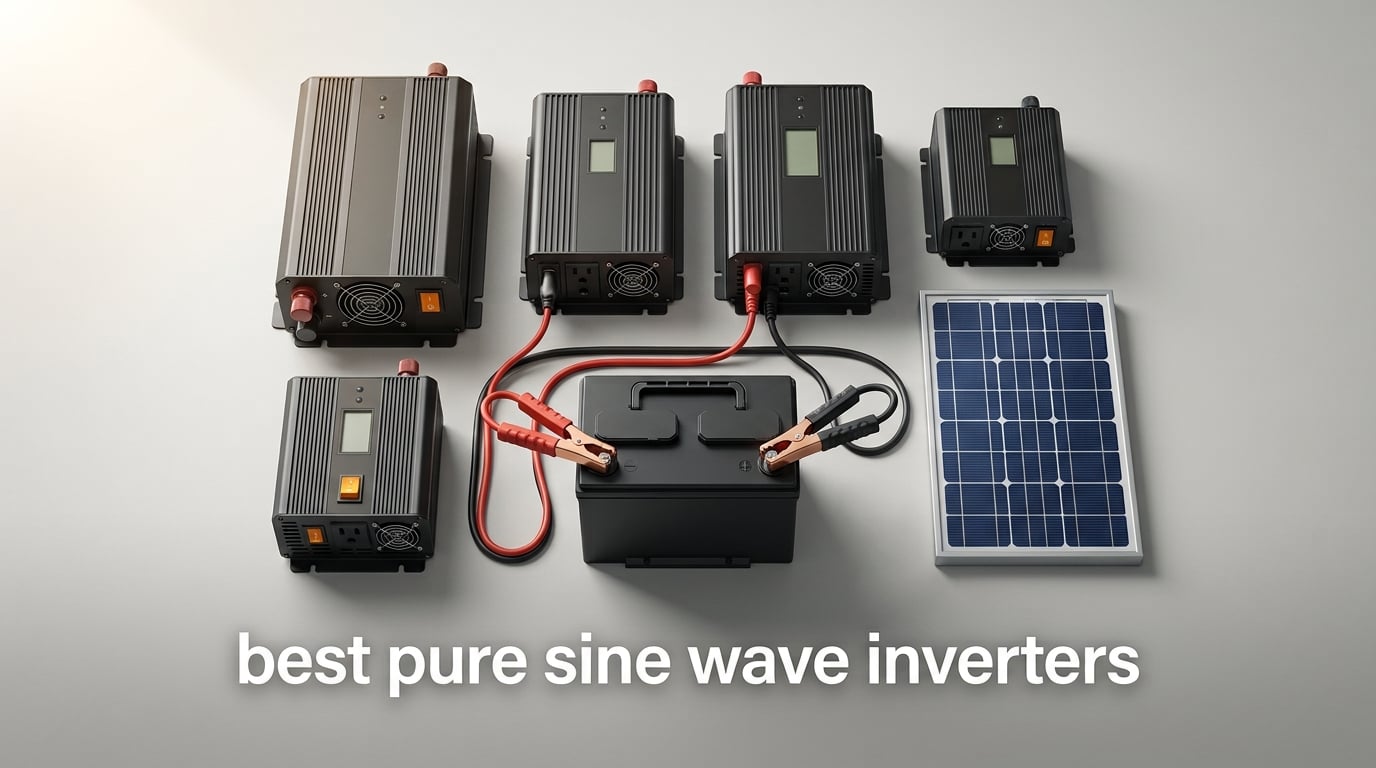
A pure sine wave inverter takes the DC power sitting in your RV battery, truck battery or off-grid battery bank and turns it into 120V AC power that matches what flows out of a household wall outlet. That is the whole idea, and it is the difference between an inverter that powers a laptop cleanly and one that makes it buzz.
When we looked for the best pure sine wave inverters, the shortlist was not hard to find. The hard part was filtering out the marketplace listings that look identical in a search result but differ wildly in the things that actually matter: whether the unit carries a UL or ETL listing, how many AC outlets it gives you, whether it has GFCI protection, and how long the manufacturer stands behind it. Review counts on most listings are thin, and identical wattage ratings span a huge price spread, which is exactly the confusion one buyer described on r/GoRVing when they wrote that some listings were “clearly low end China crap” and others were “very expensive (while still brands that I’m not familiar with).”
So this roundup is organized the way buyers actually shop: by wattage class and by application. Every pick below is a 12V DC to 120V AC pure sine wave unit with published continuous wattage, surge wattage, certification and warranty terms, and I wrote about the install reality, not just the spec sheet. You will find a 300W unit that fits in a glove box, three 2000W units that compete hard, two 3000W options, one 1500W middle step, a 4000W heavy hauler, and two models aimed squarely at permanent installs.
If you are powering gear from a truck sleeper cab, start with the 8 best truck driver inverters we reviewed first, then come back here for the fixed-install math. Before you buy anything, though, answer three questions: which appliances are you running, what is the application (RV, vehicle, boat, cabin), and what continuous wattage do those appliances actually need.
Table of Contents
Top 3 Pure Sine Wave Inverters in 2026
These three cover the widest range of real builds, and they are the ones I would point a friend toward first. The BESTEK is the proven small-unit choice with the largest review base in the group. The Renogy is the pick for anyone wiring up an RV or a solar build. The Giandel solves a problem the others do not, which is GFCI-protected outlets.

BESTEK 300W Pure Sine Wave
- 300W continuous
- 700W peak
- 4 AC outlets and 2 USB ports
- 1.4 pounds
- ETL
- RoHS and FCC certified

Renogy 2000W Pure Sine Wave
- 2000W continuous
- 4000W peak
- Over 90% conversion efficiency
- UL 458 and CSA certified

Giandel 2000W with GFCI
- 2000W continuous
- 4100W surge
- UL458 approved GFCI outlets
- 18-month warranty
Pure Sine Wave Inverters in 2026: Quick Comparison
All ten inverters below are pure sine wave, 12V DC input and 120V AC output. Continuous wattage is the honest number to size around; surge is the short burst that starts a compressor or a pump.
| Product | Specs | Action |
|---|---|---|
| BESTEK 300W Pure Sine Wave Inverter |
|
Check Latest Price |
| Renogy 2000W Pure Sine Wave Inverter |
|
Check Latest Price |
 BELTTT 2000W Pure Sine Wave Inverter BELTTT 2000W Pure Sine Wave Inverter |
|
Check Latest Price |
| Giandel 2000W Pure Sine Wave Inverter |
|
Check Latest Price |
 LANDERPOW 3000W Pure Sine Wave Inverter LANDERPOW 3000W Pure Sine Wave Inverter |
|
Check Latest Price |
 VEVOR 3000W Pure Sine Wave Inverter VEVOR 3000W Pure Sine Wave Inverter |
|
Check Latest Price |
 ZETAWALE 1500W Pure Sine Wave Inverter ZETAWALE 1500W Pure Sine Wave Inverter |
|
Check Latest Price |
 Xantrex Prowatt SW 2000 Inverter Xantrex Prowatt SW 2000 Inverter |
|
Check Latest Price |
 ROARBATT 4000W Pure Sine Wave Inverter ROARBATT 4000W Pure Sine Wave Inverter |
|
Check Latest Price |
 OLTEANP 2500W Inverter with Transfer Switch OLTEANP 2500W Inverter with Transfer Switch |
|
Check Latest Price |
1. BESTEK 300W Pure Sine Wave Inverter – The One With the Most Field Reports
BESTEK Pure Sine Wave Power Inverter, 300W DC 12-17V to 110V AC Car Adapter
300W continuous
700W peak
4 AC outlets plus 2 USB
1.4 pounds
ETL, RoHS, FCC
Pros
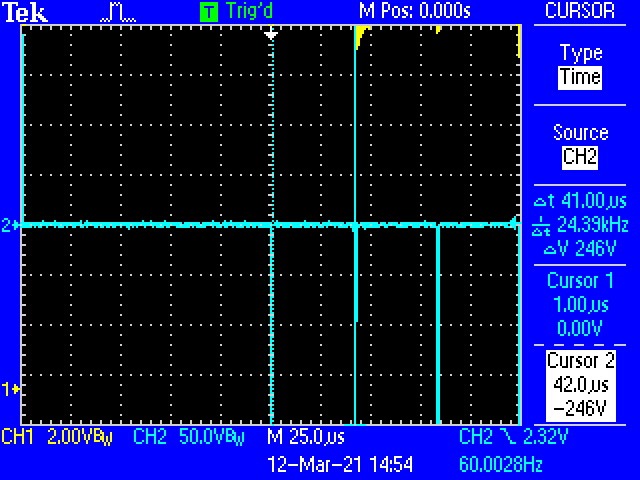
- Genuine pure sine output confirmed on oscilloscopes
- Output holds 114V to 110V across a 10V to 14.4V input range
- Frequency regulation measured at 59.99Hz to 60.02Hz
- Only 1.4 pounds and stores in a glove box
- Works with drone chargers that reject modified sine output
Cons
- Internal fuses are soldered to the board and need disassembly to replace
- 12V cord is permanently attached so battery clamp leads will not fit
- Vehicle sockets are usually fused at 10-15A which caps real output
This is the small inverter I keep reaching for. The 5684 reviews attached to it are the largest in this roundup, and the pattern across them is remarkably consistent: people with electronics backgrounds bought it, hooked up a scope, and found a real sine wave with the highest harmonic sitting 40 dB down. That is not marketing copy, that is measurement.
At 300W continuous and 700W peak, this is not going to run a microwave. What it will do is run a laptop, charge four phones and two USB devices at once, power a CPAP machine, run a small TV, and handle the drone battery chargers that outright refuse modified sine wave power. For a tailgate, a van, a night of camping, or a truck sleeper who wants clean laptop charging, it is genuinely enough.
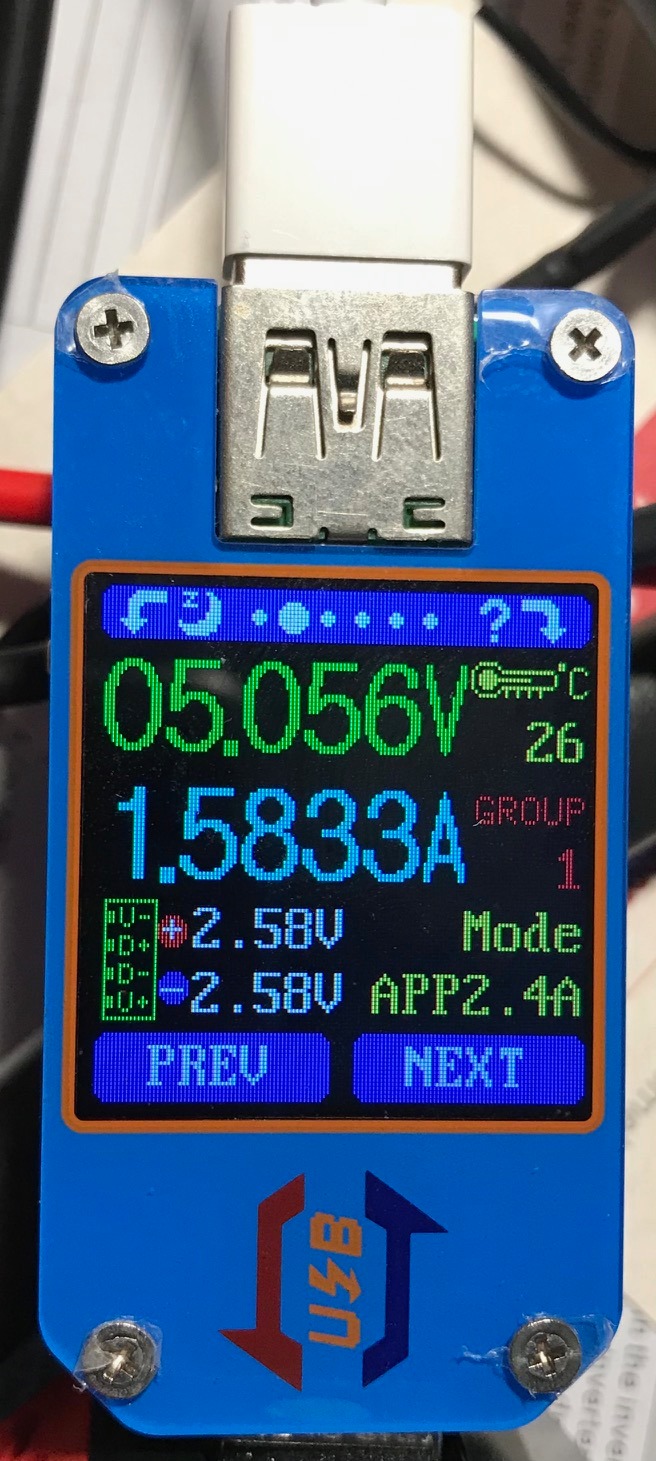
The voltage behavior is what convinced me. Across an input range of 10V to 14.4V DC, output only sagged from about 114V to 110V, and frequency held between 59.99Hz and 60.02Hz. The fan is quiet and the case runs cool even at a 250W load, which matters in a parked vehicle in July.
There is an updated 11V to 17V input range on the current version, which makes it usable with newer vehicles that run higher resting voltages. The 18-month warranty and the ETL, RoHS and FCC certifications are stronger paper trails than most competitors of this size offer.
What the 300W rating actually gets you
Think of 300W as roughly two laptop chargers, a phone charger block, a CPAP machine and a small fan all running at once. Add a hair dryer or a microwave and you are over the line, and the surge headroom of 700W does not stretch to cover a 1000W hair dryer.
The output voltage on some units reads a little low at around 107-111V, which can slow laptop charging slightly compared to a wall outlet. It is a small effect, but if you are timing a charge, it is worth knowing.
When to skip this inverter
Skip it if you plan to run anything with a compressor, or if you want to hardwire into a battery bank. The internal fuses are soldered directly to the circuit board and have to be replaced with the case opened, and the 12V cord is not detachable, so battery clamp leads cannot be swapped in.
Also remember that most vehicle cigarette-lighter circuits are fused between 10A and 15A. A 300W inverter at 12V wants about 25A, so the socket itself becomes the bottleneck long before the inverter does. Inrush current can trip some jump starter packs and power tool batteries during the first second of startup.
2. Renogy 2000W Pure Sine Wave Inverter – The Best Value for RV and Solar Builds
Renogy Inverter P2 2000W Pure Sine Wave Inverter 12V DC to 110V AC Converter, Off-Grid Solar Power Inverters for Vehicles, Truck, RV, Home, with Built-in 5V/2.1A USB/Hardwire Port, Remote Controller
2000W continuous
4000W peak
Over 90% efficiency
3 AC outlets, USB, terminal
Pros
- UL 458 and CSA C22.2 No. 107.1 certified
- Over 90% conversion efficiency with 4000W surge
- Three AC outlets plus an AC terminal block and USB port
- Two 1/0 AWG 3ft battery cables and a 16.4ft remote included
- Quiet with no buzzing on inductive loads
Cons
- Only a 1-year manufacturer warranty
- Bulky at 17.8 by 8.6 by 4 inches and 11.7 pounds
- No GFCI-protected outlets on this model
The 4715 reviews attached to it are the second largest in the roundup, and they explain exactly why. Owners cite the same three things: the UL and CSA certification, the thick battery cables that come in the box, and the wired remote.
Those two 1/0 AWG cables matter more than they sound. Most competitors ship thin 2 AWG wire that gets hot under real load. Renogy ships cable you would not be embarrassed to run, which removes a purchase people frequently end up making anyway.
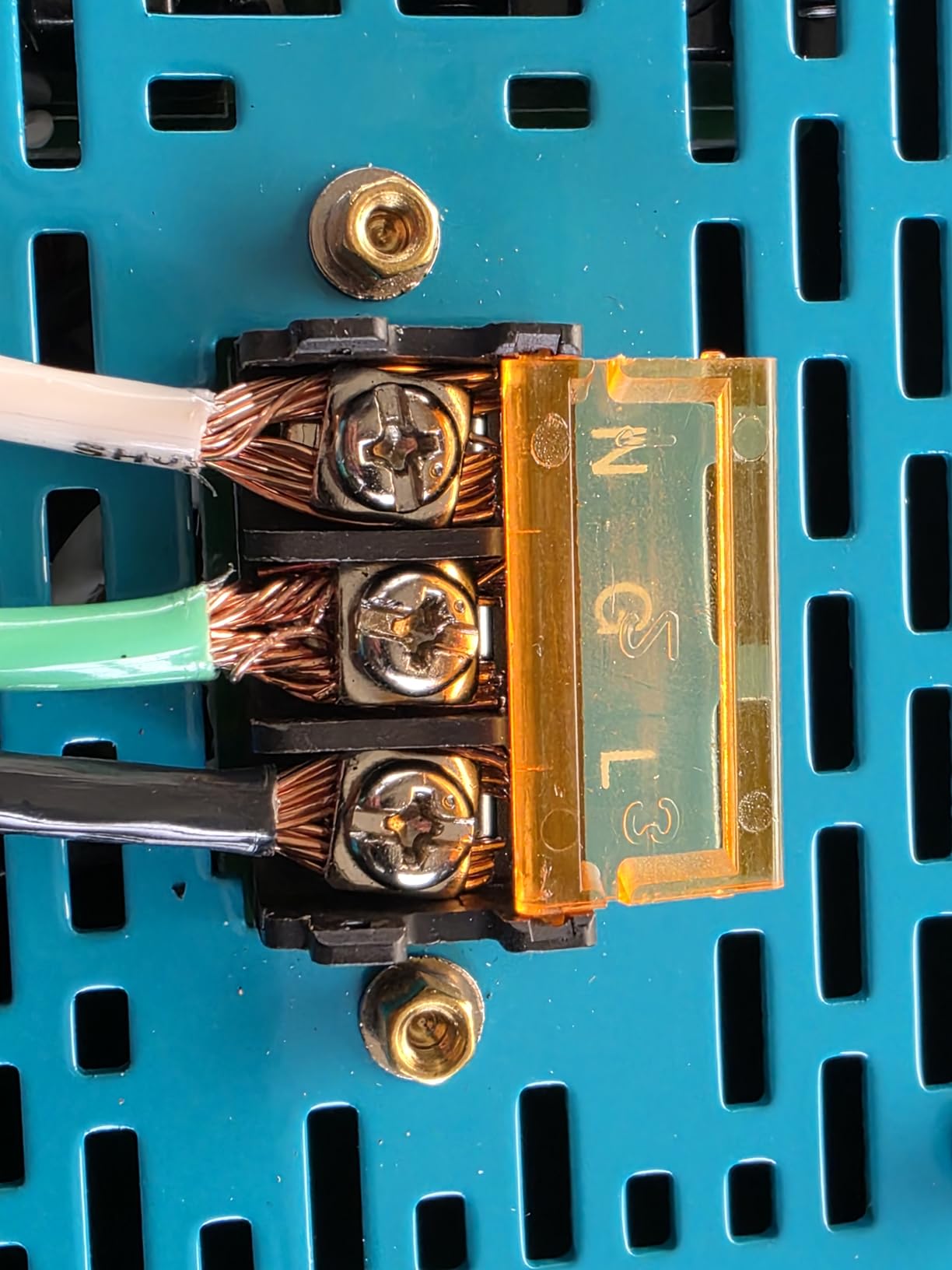
At 2000W continuous with 4000W of surge and efficiency above 90 percent, this covers the middle of everything. A small refrigerator, a microwave, a TV, a laptop, a few USB devices and a battery charger all run at once without drama. The metal housing and high-speed fans handle sustained loads and low-temperature operation, and reviewers specifically note that it stays quiet with no buzzing on inductive loads.
The 16.4ft wired remote lets you turn the inverter on and off from the cab of a truck or the bed of a camper without crawling into a storage bay. The LED indicators tell you at a glance whether the shutdown was under-voltage, over-voltage, over-temperature, overload or short circuit, which turns a mysterious blackout into a five-second diagnosis.
Pairing it with a deep-cycle bank
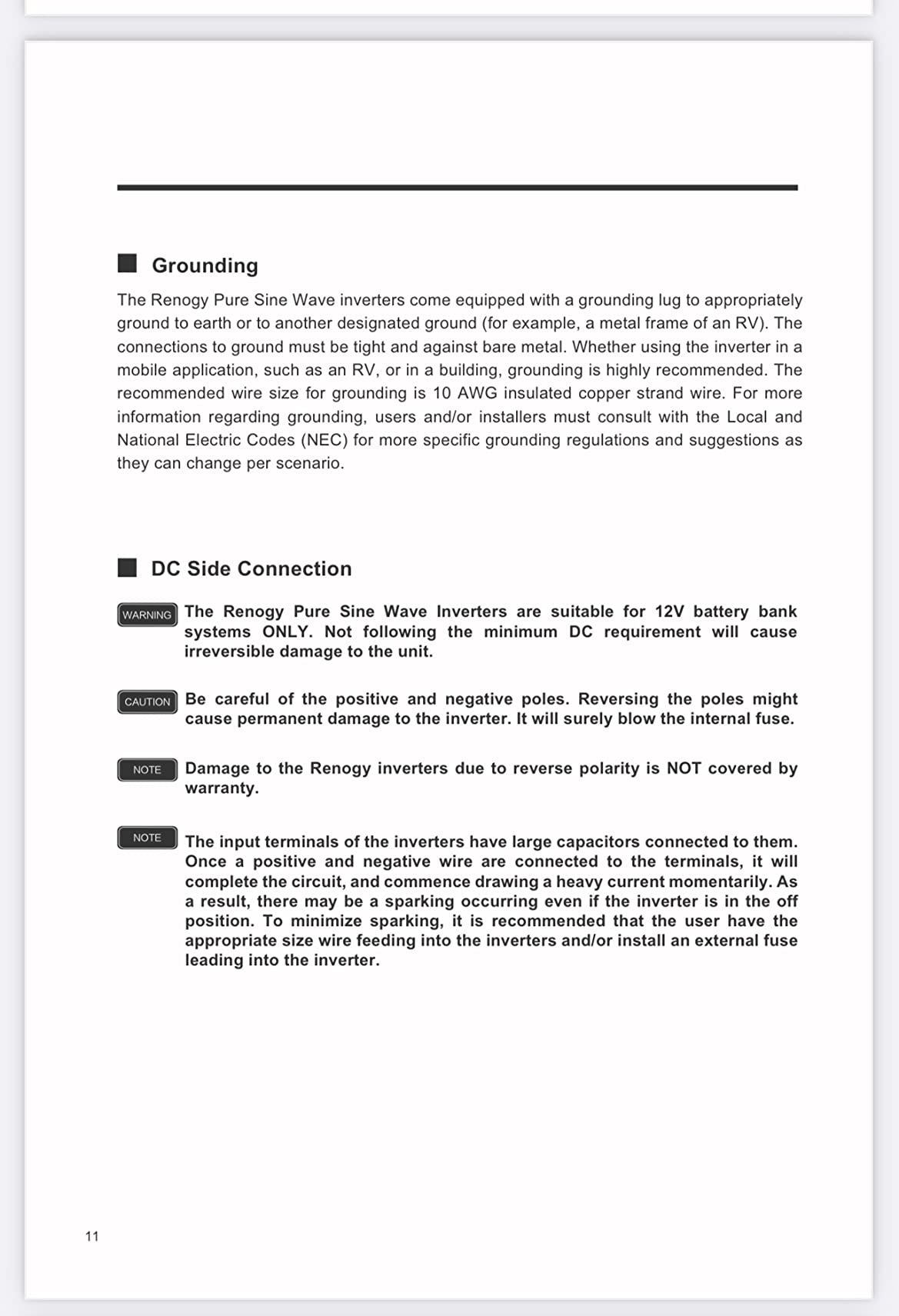
This inverter needs a battery that can actually deliver. Owners consistently report that reaching the rated output requires a deep-cycle battery bank held above roughly 80 percent depth of discharge. A single cheap marine battery will not do it, and the symptom is low-voltage shutdown under load with no obvious fault code.
Budget for the bank as part of the purchase rather than an afterthought. Plan on a group of deep-cycle batteries wired in parallel, and size the cable run to keep voltage drop low, which usually means heavier gauge than the included leads.
Where the compromises show up
The one-year manufacturer warranty is the shortest meaningful commitment in this group, and at this power class that is worth factoring into your decision if you plan a permanent install. Three years of coverage elsewhere on the list costs you little or nothing extra.
Two other practical notes. The 11.7 pound, 17.8 inch metal housing is genuinely bulky for a van or a small boat compartment, so measure before you commit. And this model has no GFCI-protected outlets, which matters in an RV or any wet location where a bonding plug or surge protector will be involved.
3. BELTTT 2000W Pure Sine Wave Inverter – Best Diagnostics for Trouble-Shooting
BELTTT 2000W Pure Sine Wave Inverter 12V DC to 120V AC, 4000W Surge
2000W continuous
4000W surge
Over 93% efficiency
Bright LCD with fault codes
Pros
- Bright LCD shows input voltage
- load status and fault codes
- Conversion efficiency above 93% with low no-load loss
- UL and ETL certified
- Includes battery cables
- six spare 45A fuses and a 23ft remote
- Only 7.7 pounds for a 2000W inverter
Cons
- Only a one-year warranty
- No GFCI-protected outlets on this model
- The included 2 AWG cables are thin for sustained full output
Most inverters in this class give you a row of LEDs and a prayer. The BELTTT gives you a real instrument panel. The high-brightness LCD displays input and output voltage, battery state, live load status and fault codes, and the output voltage is adjustable rather than fixed.
When something is misbehaving, that display is the difference between a productive afternoon and a trip through the forums. Under-voltage, over-voltage, overload, over-temperature, short circuit and reverse connection all get their own code, and the adjustable output voltage lets you tune the unit to a specific load.
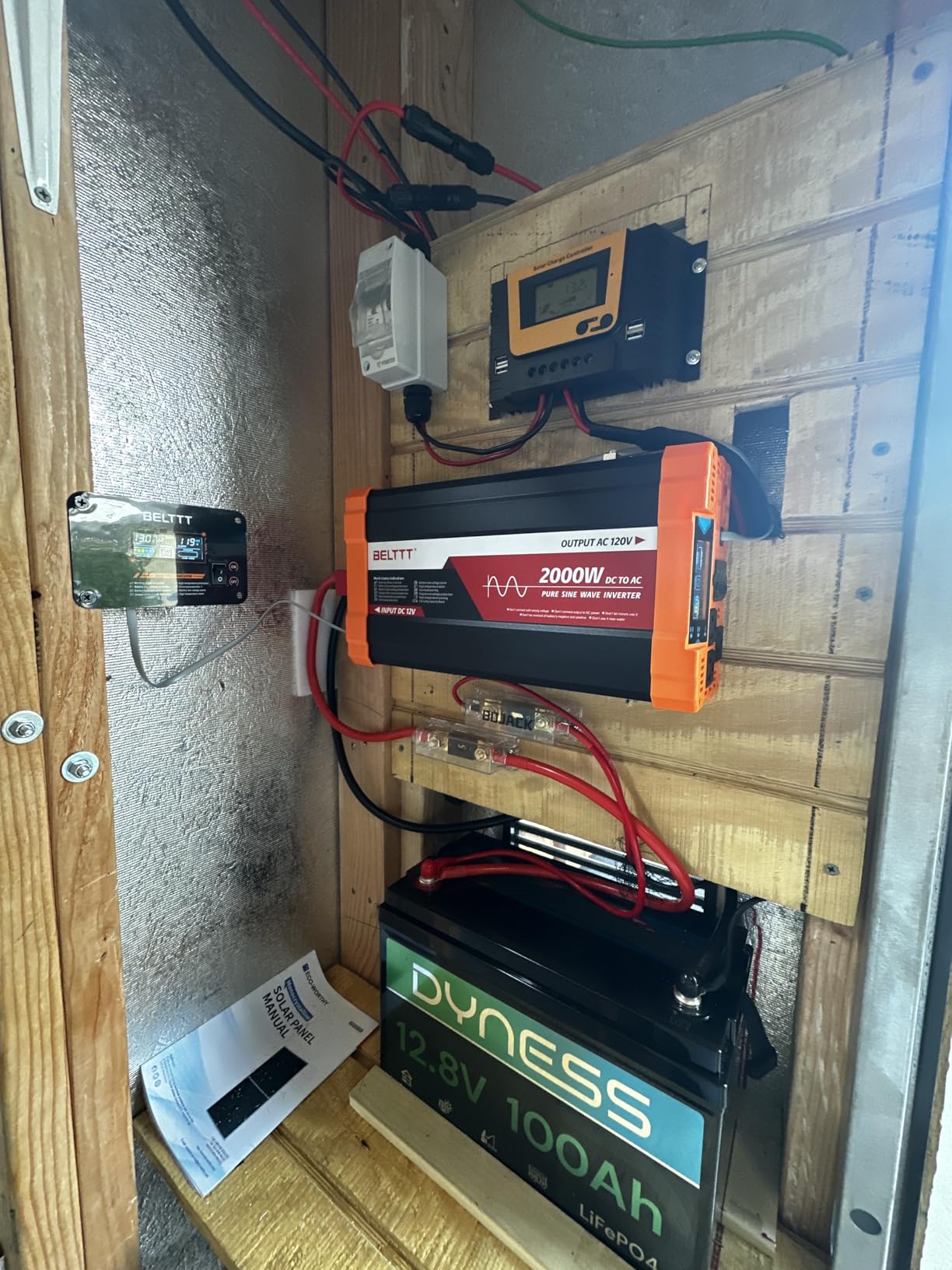
Efficiency above 93 percent is the higher published figure of the two 2000W units here that state one, and it comes with low no-load losses, which matters more than most people expect in a trailer that sits unplugged for a week. At 7.7 pounds it is roughly three pounds lighter than the other 2000W units here that publish a weight.
The accessory package is unusually complete for the money. You get two 2 AWG 3ft battery cables, six spare 45A fuses, a 23ft remote controller with a thimble spanner and the manual. Having spare fuses in the box is a small thing that most people notice when a capacitive load trips one on a cold morning.
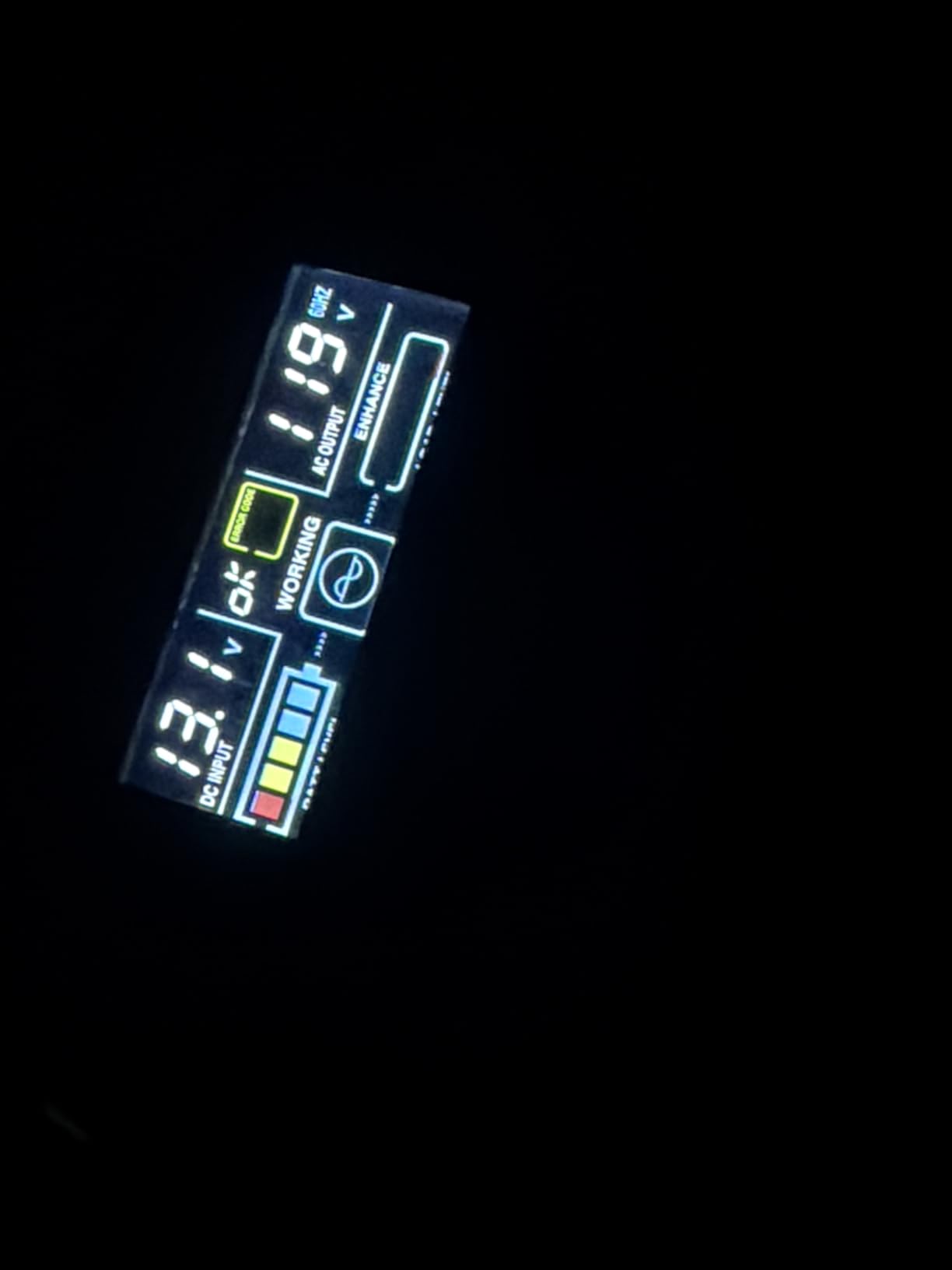
Why the LCD matters more than the wattage
Consider what happens when an inverter trips at 2am in a camper van. With LEDs you get one word, if that. With this display you see that input voltage sagged to 11.4V, or that the load is sitting right at the surge limit, or that reverse connection protection has engaged.
That diagnostic loop is why this unit appeals to people running solar builds, where battery state changes through the day and undervoltage shutdowns are the most common failure by a wide margin. The same family is available from 1000W through 3000W if you want the display at a different capacity.
When to look elsewhere
The one-year warranty is the main gap. If you are installing this permanently in an RV or a cabin, the longer commitments elsewhere on this list are worth the difference, especially since the 2000W tier is where most people land.
There are no GFCI outlets on this 2000W version, which is the same limitation as the Renogy. And the supplied 2 AWG cables are thinner than the 1/0 AWG cables that come with the Renogy, so plan on replacing them if you intend to run near the full 2000W for long stretches.
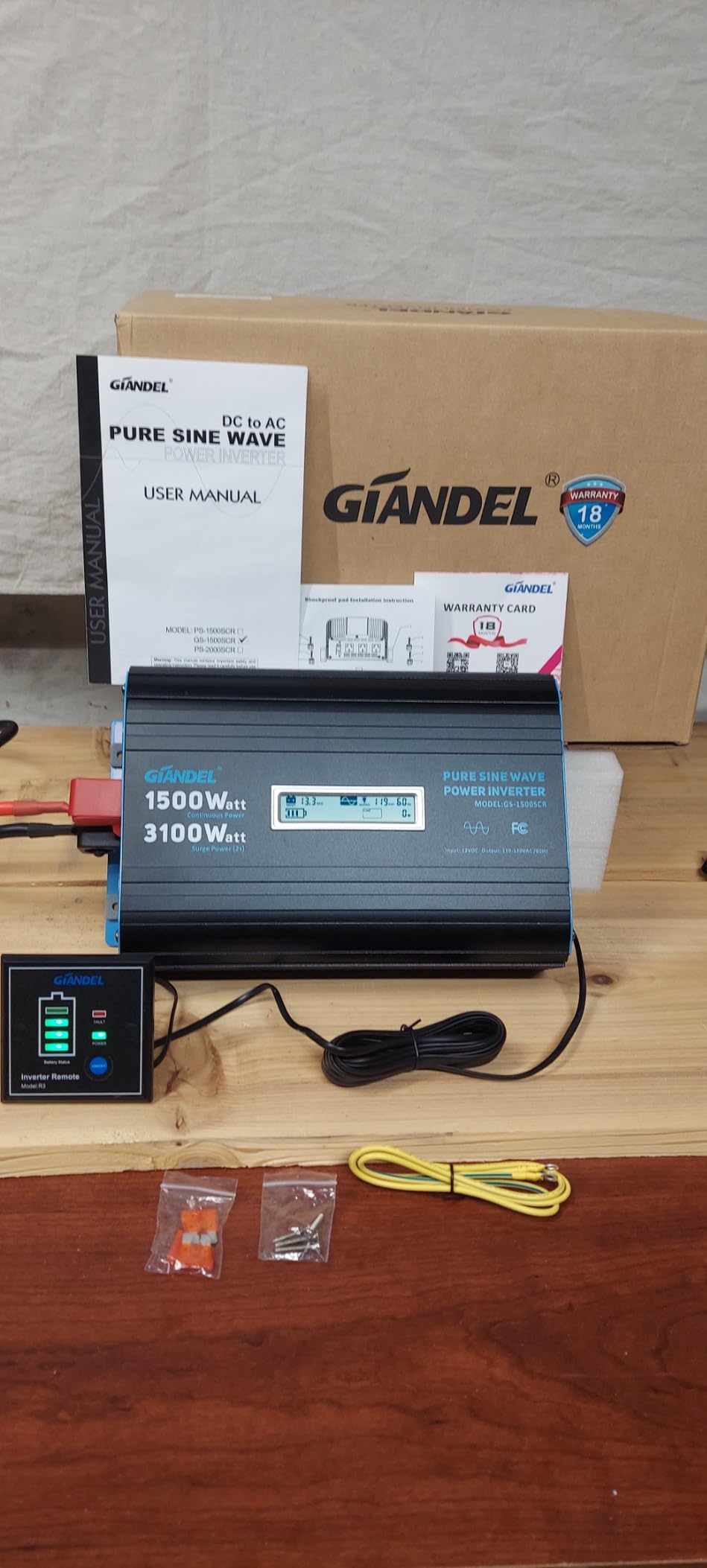
4. Giandel 2000W Pure Sine Wave Inverter – Best for RVs and Wet Locations
GIANDEL 2000 Watt Pure Sine Wave Power Inverter 12V DC to 120V AC,4100W Max,GFCI Outlets,USB-C36W,Dual Remote,for RVs,Campers,Off Grid Solar Setup
2000W continuous
4100W surge
UL458 GFCI outlets
18-month warranty
Pros
- UL458 approved 20A GFCI outlets that satisfy surge protectors
- Large LCD for input voltage
- load wattage and frequency
- Slow ramp-up on startup reduces installation sparking
- Aluminum alloy housing with fireproof materials
- Insulated ring terminal battery cables included
Cons
- Requires an hour of unloaded powered startup after installation
- No three-wire hardwire option on this revision
- Fan engagement around 120W differs from the 100W manual figure
The GFCI outlets are the reason this one is on the list. Multiple owners report that the 20A GFCI receptacles let them drop a bonding plug that had been repeatedly tripping their surge protectors. That single feature solves a problem that sends people hunting for different inverters entirely.
For RV, camper and boat installs, GFCI is not a nicety. It is code expectations, and having it built in means you are not carrying a separate adapter and hoping the fault paths behave.
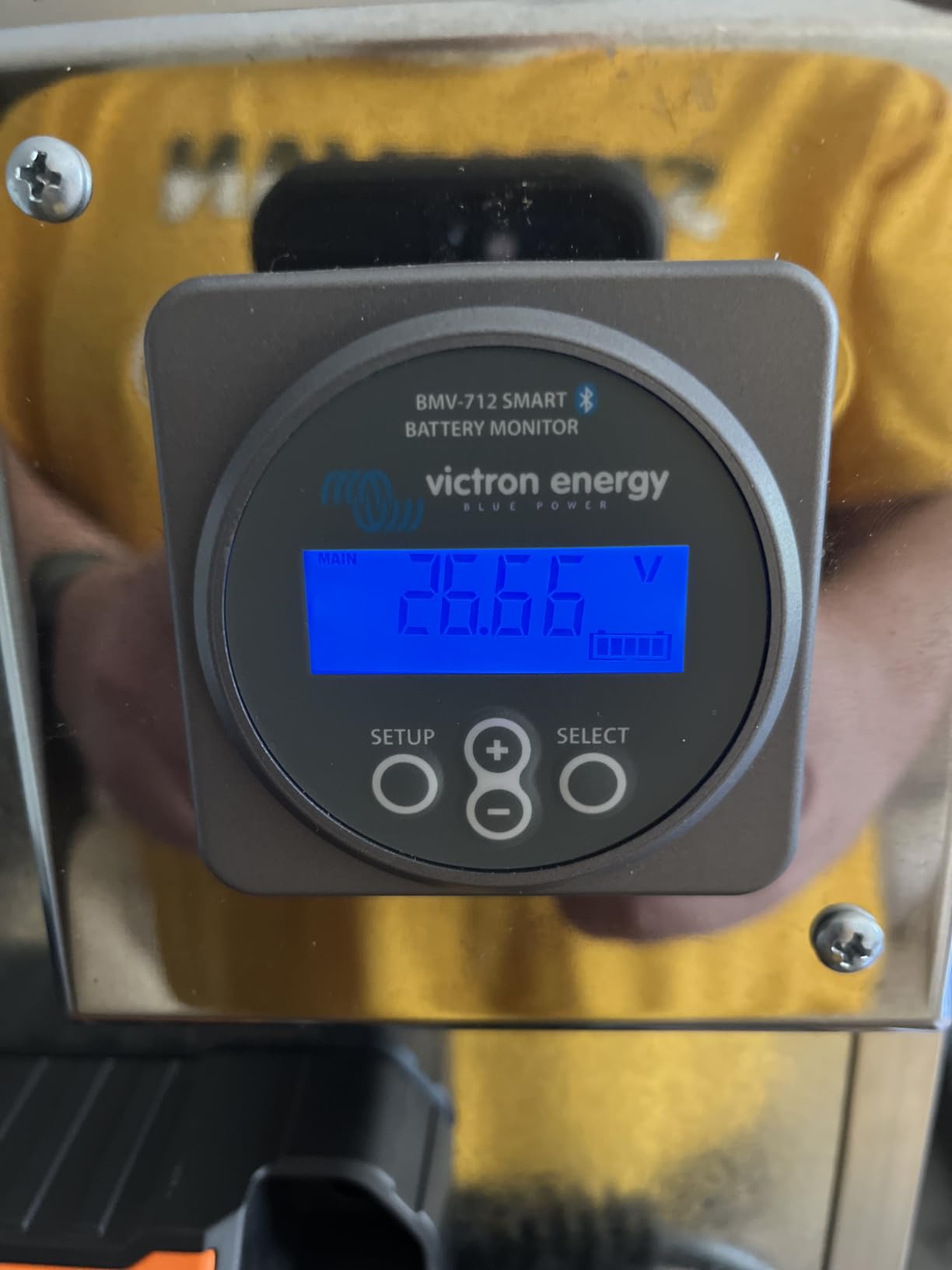
The scoped testing behind this unit confirms a true pure sine wave at about 120V and 59Hz, and the 4100W surge rating for two seconds is enough to start an RV air conditioner, which is where most 2000W inverters fall short. The large LCD covers input voltage, output voltage, load wattage, frequency and protection codes, and the 15ft wired remote handles on and off plus battery monitoring.
Two build details stand out. The housing is aluminum alloy with fireproof materials rather than a plastic shell, and the battery cables are all-insulated ring terminals instead of plastic-covered alligator clips, which is the connection most likely to melt on a long hot trip.
Read the startup procedure before you power it up
The manual requires you to leave the inverter powered with no load for a full hour after installation so the capacitors can fill. Skipping this step is a common source of early failures and strange behavior, and it takes an hour you can spend doing something else.
While you wait, wire it properly. The slow ramp-up on startup is designed to minimize sparking during installation, and the ring terminals are there because the terminals themselves are meant to be torqued down rather than snapped on.
Heat and wiring are the two real caveats
One reviewer reported the unit overheating and tripping its breaker above 90F ambient while charging an EV, and another had a failure while running a shop vac on wire that was not the supplied cable. Both point at the same lesson: this inverter needs airflow and correct wire, and neither is optional.
Also note that this revision does not offer a three-wire option for direct hardwire Romex connection, and the fan did not engage until roughly 120W in at least one report, slightly above the 100W figure in the manual. The 18-month warranty is one of the longer commitments in the 2000W class, which partly offsets both points.
5. LANDERPOW 3000W Pure Sine Wave Inverter – Best Warranty Coverage at 3000W
LANDERPOW 3000W Pure Sine Wave Inverter 12V DC to 120V AC 6000W Peak for RV
3000W continuous
6000W surge
Over 91% efficiency
3-year coverage
Pros
- 3000W continuous with 6000W surge and over 91% efficiency
- Three AC outlets
- a hardwired terminal
- USB and 30W USB-C
- Two 1AWG 2ft pure copper battery cables included
- 15ft wired remote with an LED status screen
- Full metal heat-dissipating shell and UL listing
Cons
- No GFCI-protected outlets
- Wired remote only with no wireless option
- Not a battery charger despite the solar positioning
Most 3000W inverters come with a one-year warranty. This one comes with three years of total coverage, split as a one-year no-hassle replacement plus two years of extended support. For a fixed install in an RV or a cabin, that is the single most valuable thing on the spec sheet.
The 3000W continuous and 6000W surge ratings with efficiency above 91 percent put it in line with the best in the class, and the 7.5 pound aluminum shell weighs less than half of what the wireless-remote alternative in this tier tips the scale at.
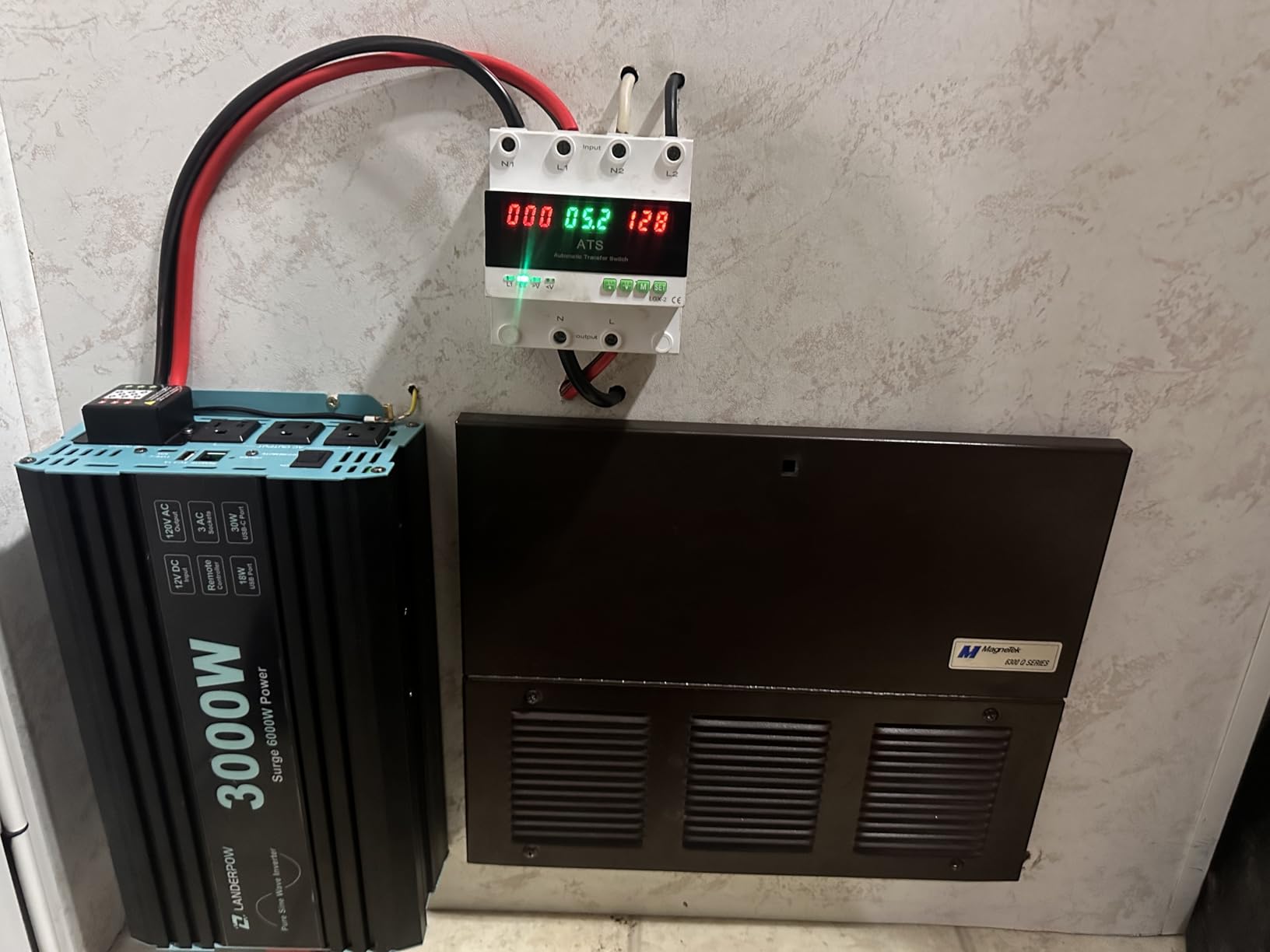
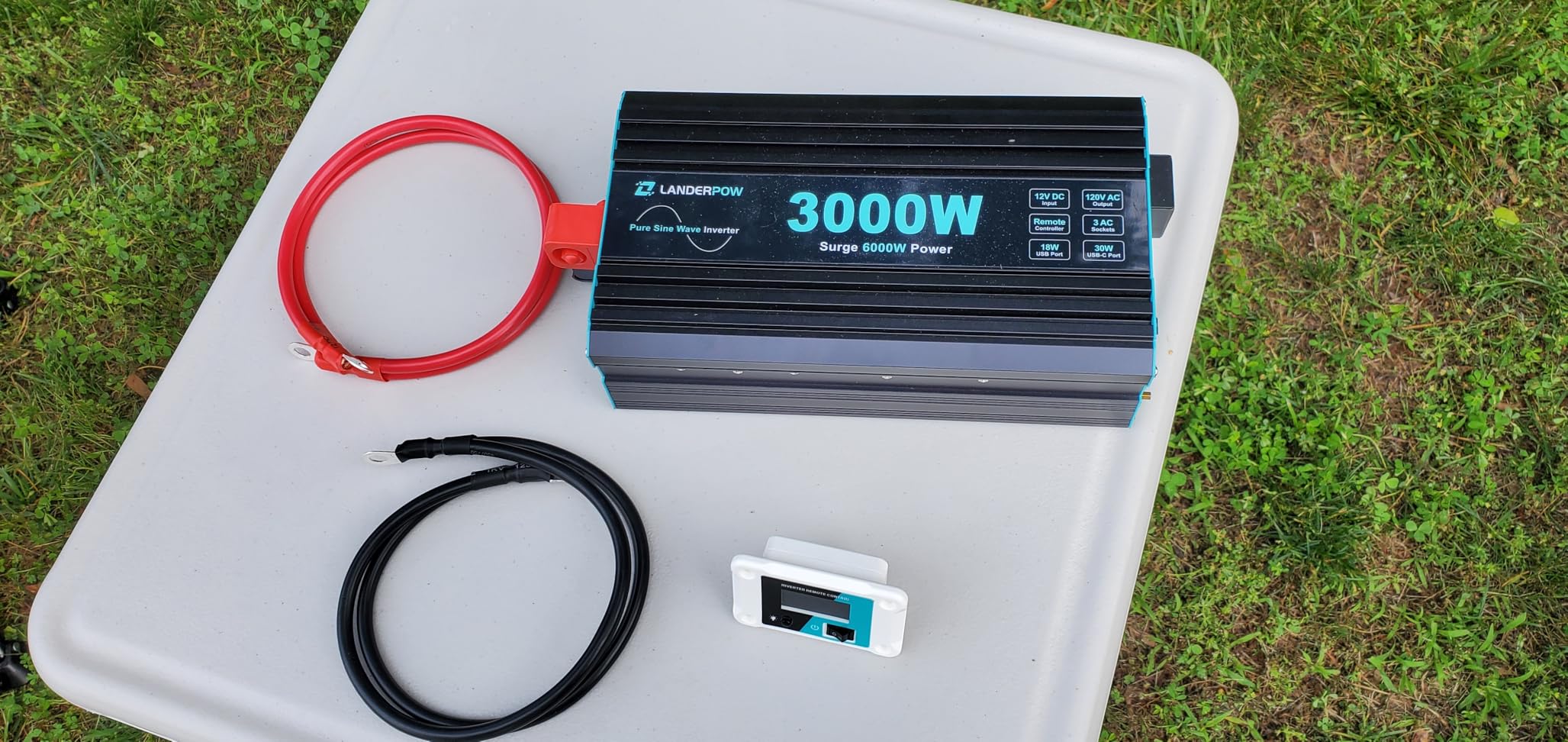
Output is generous for the class: three AC outlets, one hardwired AC terminal, a 5V/3.1A USB port and a 30W USB-C PD port. The two 1AWG 2ft pure copper battery cables included resist heating under load, which is not something you can say about the thin cables most brands ship.
The full metal heat-dissipating shell is built to survive site drops and RV road vibration, and the 15ft wired remote has an LED screen tracking battery level, output and error codes. Protection covers undervoltage, overvoltage, overload, overheating, short circuit and reverse connection.
What 3000W buys you over 2000W
3000W is the tier where you can run a microwave and a refrigerator compressor at the same time without planning around it. It is also the point where a 13,500 BTU rooftop air conditioner becomes realistic, since compressor startup is what usually trips a smaller inverter.
If your load list includes tools with variable-speed motors, or a washer, or more than one heavy appliance, 3000W removes the constant mental arithmetic. If it is a laptop, a phone and a fan, it is wasted capacity and wasted idle draw.
Before you buy it for solar
Despite the solar positioning, this is not a charger. It converts DC to AC and nothing more, so your battery charging still needs a separate charge controller or charger, and your sizing math has to account for that.
There are no GFCI-protected outlets here, so plan a bonding plug or an external GFCI for wet locations. And the remote is a 15ft wired controller with no wireless alternative, which is fine if the inverter is in a cabinet and awkward if it is mounted in the bed of a truck.
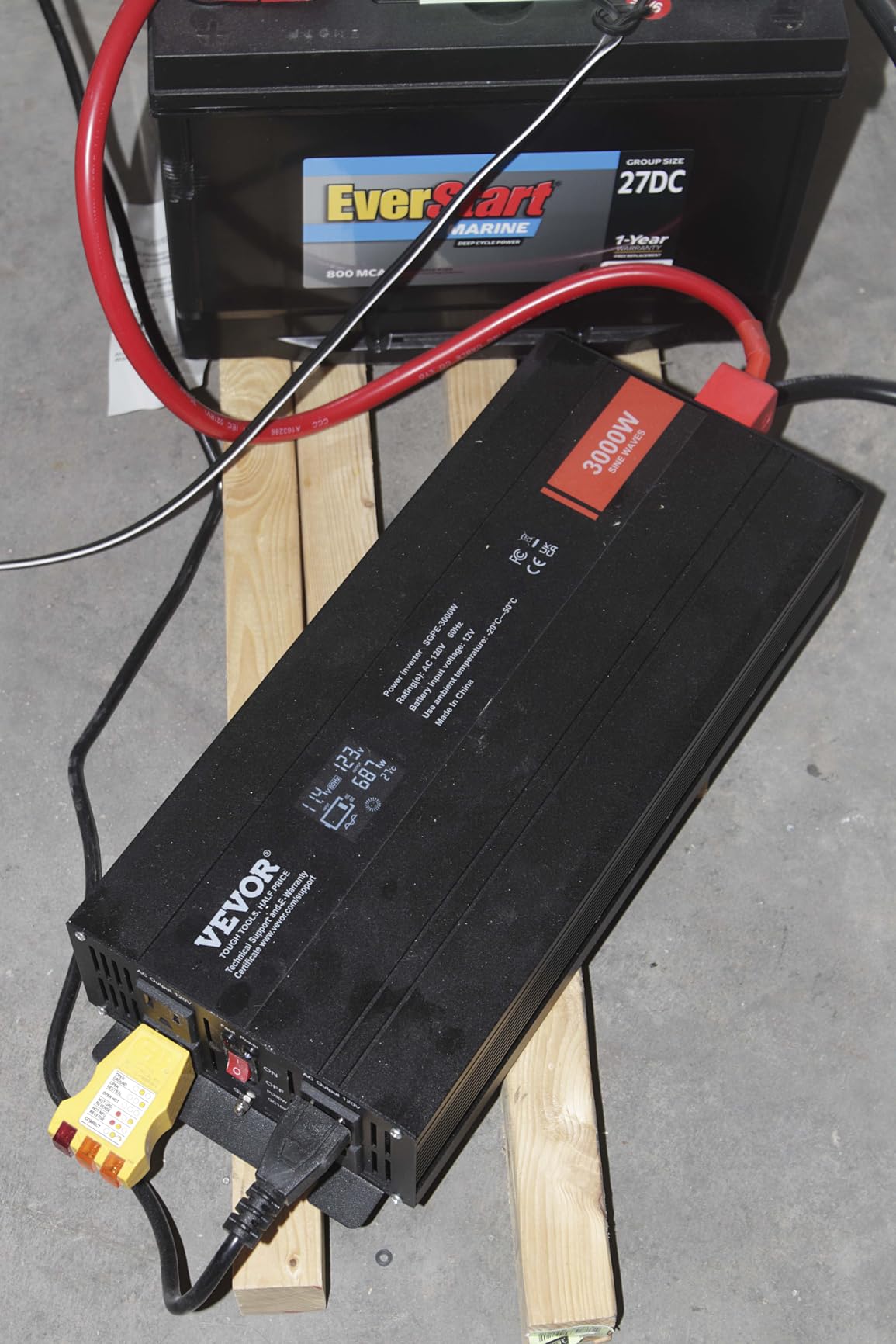
6. VEVOR 3000W Pure Sine Wave Inverter – Best Wireless Remote Control
VEVOR Pure Sine Wave Inverter 3000 Watts 12V DC to 120V AC Power Inverter
3000W continuous
6000W peak
88% full-load efficiency
100m wireless remote
Pros
- Wireless remote with a 100-meter on and off range
- Five outputs: 2 AC
- 2 USB and a 30W Type-C port
- Six-layer protection including reverse polarity
- Temperature-controlled silent fan starting above 40C
- Aluminum alloy body with pure copper cables
Cons
- CE and FCC certified only with no UL or ETL listing
- 88% full-load efficiency trails the other 3000W model in this roundup
- Heavy at 11.5 pounds and no GFCI outlets
A 100-meter wireless remote range is the thing that sets this one apart. Every other 3000W inverter here ships with a wired remote on a 15ft cable. This one lets you shut the inverter down from the driver’s seat of a truck or from across a campsite without a cable running through the wall.
For a food truck, a work van or a camper where the inverter lives in an awkward cabinet, that is a genuine quality of life difference rather than a gimmick.
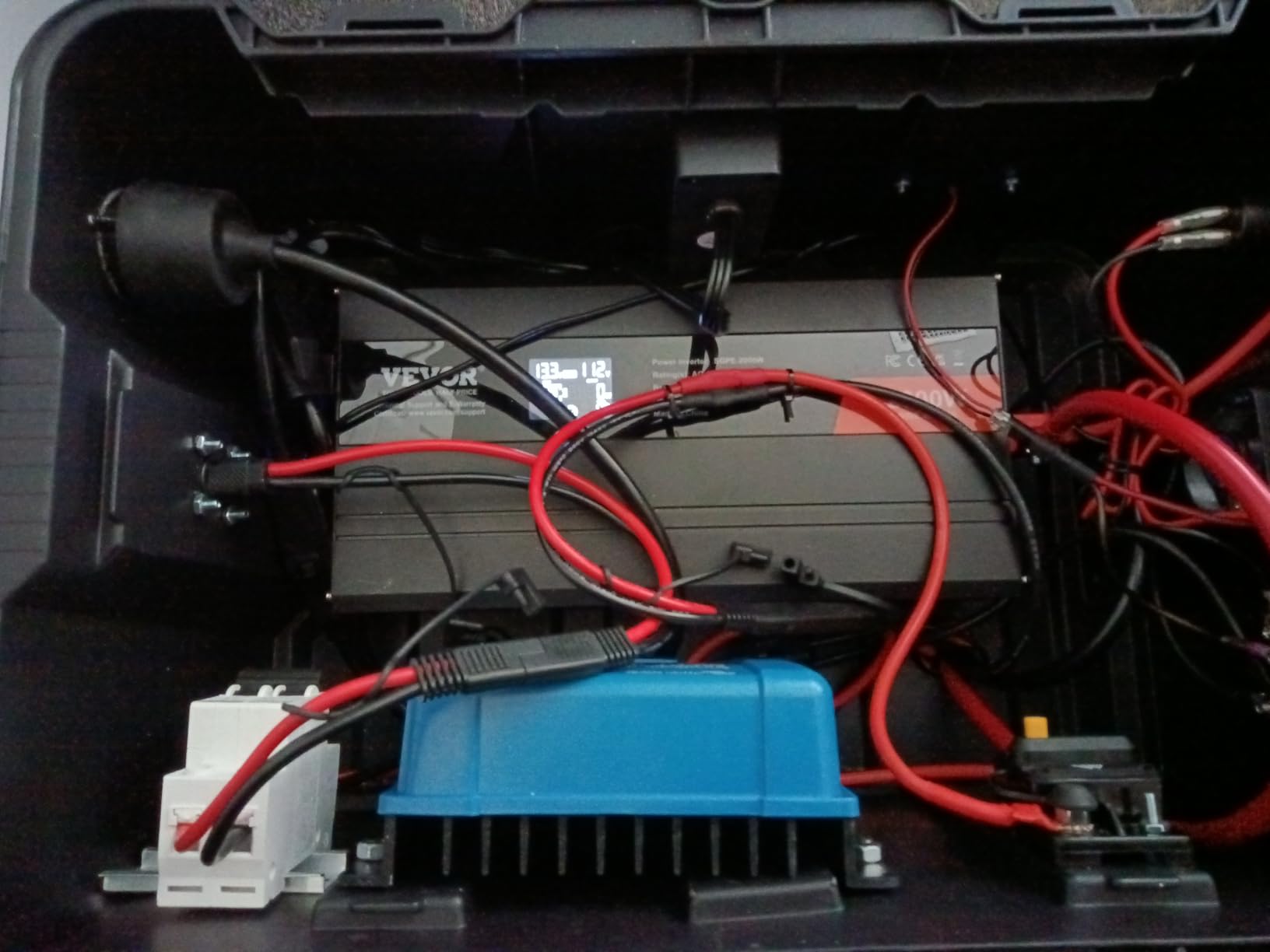
The output panel is also unusually busy: two AC outlets, two USB ports delivering 18W combined and one Type-C port at 30W. Six-layer protection includes reverse polarity, and 100% pure copper cables are supplied. The intelligent temperature-controlled fan stays silent and only starts above 40C, with an aluminum alloy body handling the rest of the heat.
3000W continuous with 6000W of peak and an LCD status screen on the body rounds out a package that covers the same loads as the LANDERPOW with different tradeoffs.
Certification is the deciding factor here
This unit is CE and FCC certified but carries no UL or ETL listing. That distinction is not academic if you are doing a fixed installation in an RV, a boat or a cabin, because UL-listed equipment is what inspectors and insurance carriers expect to see.
For a portable or semi-permanent setup where you are using the supplied battery clamps, the absence of a UL listing matters far less. Know which situation you are in before you weigh the other advantages.
Efficiency and weight are the other two gaps
The 88 percent full-load efficiency is the lower published figure of the two 3000W models in this roundup. At a 3000W draw that difference translates into a measurable extra battery drain per hour, which compounds fast on a solar-only build with a small bank.
At 11.5 pounds it is the heavier of the two 3000W units in this roundup. And as with most of the class, there are no GFCI-protected outlets on the receptacles.
7. ZETAWALE 1500W Pure Sine Wave Inverter – Best Middle Step at 1500W
1500W Pure Sine Wave Inverter 12V DC to 120V AC Converter with LCD Remote
1500W continuous
3000W peak
Four AC outlets
14.76ft LCD remote
Pros
- 1500W continuous and 3000W peak in a compact footprint
- Four AC outlets plus USB
- Type-C and terminal blocks
- Works with lithium
- AGM
- deep-cycle and lead-acid batteries
- Dual intelligent cooling fans under heavy load
- 14.76ft wired LCD remote for live monitoring
Cons
- Only a 12-month warranty
- No GFCI-protected outlets
- No published efficiency or surge time figure
The 1500W tier is where a lot of real builds land and where the least attention gets paid. It is big enough for a small refrigerator, a TV, a laptop and a coffee maker, and small enough that the idle draw does not eat a weekend of battery.
This unit covers that gap with four AC outlets, which is more receptacles than most 1500W inverters provide, plus USB and Type-C ports and heavy-duty AC terminal blocks for a hardwired run.
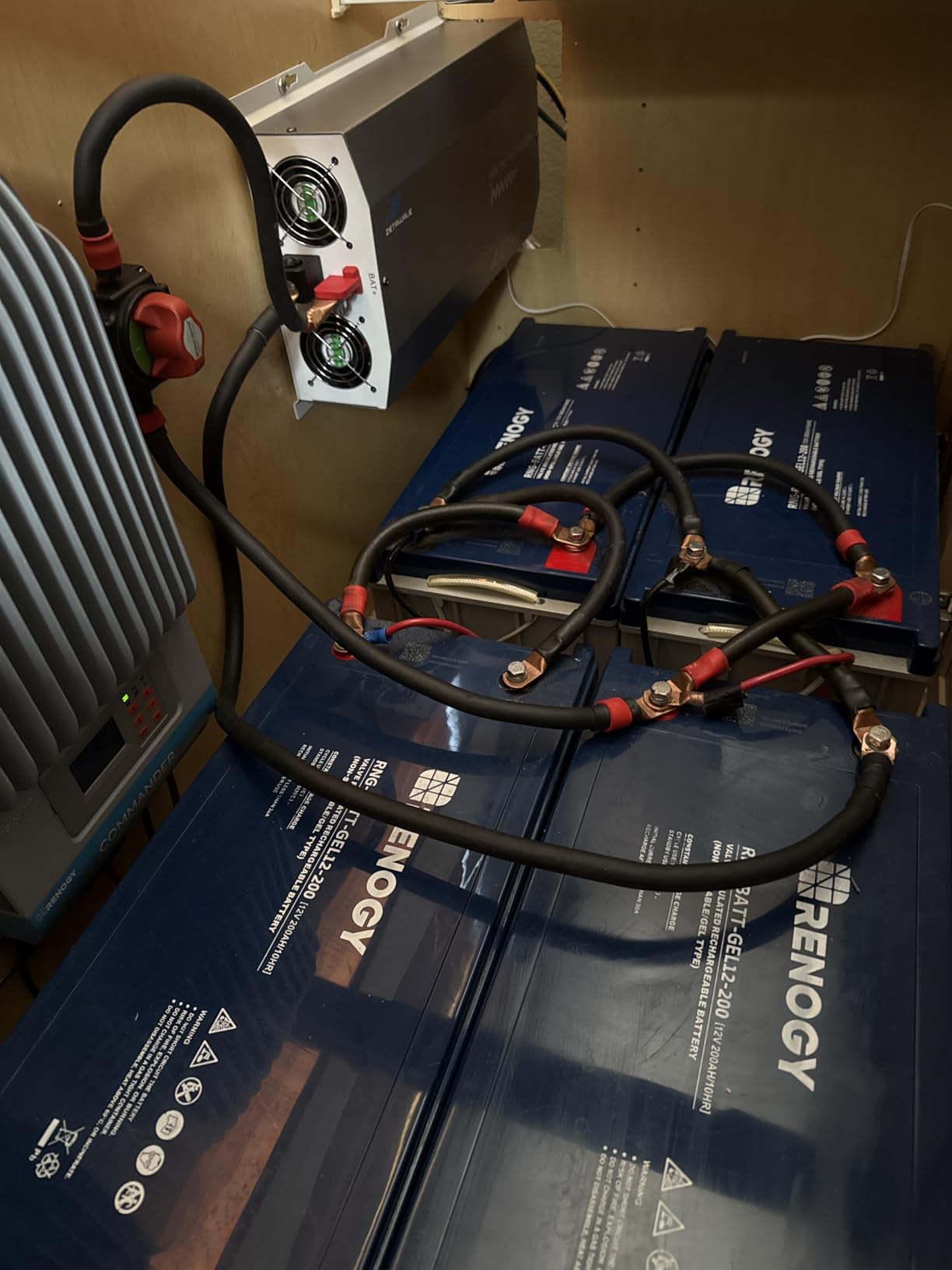
The battery chemistry compatibility is broader than most competitors claim. It works with lithium, AGM, deep-cycle and lead-acid, which matters more in 2026 as more people build with LiFePO4 rather than flooded lead acid.
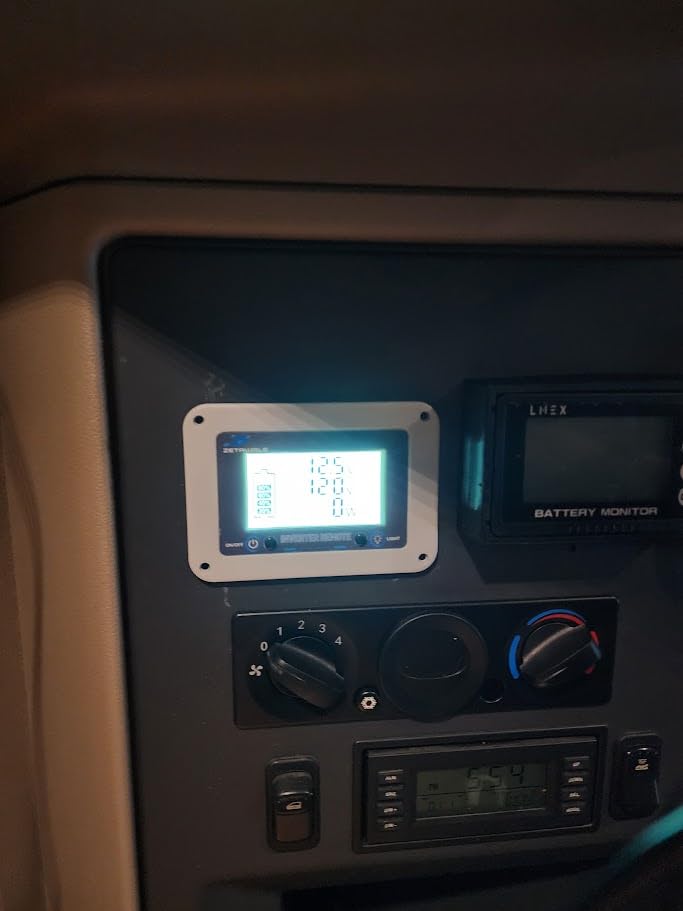
Two intelligent cooling fans handle sustained load, and the 14.76ft wired LCD remote displays battery voltage, AC output voltage and live load wattage. At 6.1 pounds in a 9.45 by 7.87 by 4.33 inch case, it mounts easily in a cabinet or under a bench. It is UL listed with 12 months of professional support.
When 1500W is the right amount
Sizing this correctly means looking at what runs at the same time, not at your largest single appliance. A 1500W inverter handles a refrigerator, a television, a laptop, a router and a few lights without strain, and that covers most work and camping setups comfortably.
It is also the class where a low-voltage disconnect setting matters. If your bank is small, an inverter that aggressively protects the battery can shut off before you expected, and knowing your thresholds prevents a lot of confusion.
What you give up to save money
The 12-month warranty is the shortest support commitment in this group. Giandel offers 18 months at 2000W, and the 3000W and 4000W models carry two and three year terms, so if this is a permanent install, the savings are smaller than they look.
There are also no GFCI-protected outlets, and no published efficiency figure or surge duration beyond the headline 3000W peak. If battery life per gallon or per amp hour is the priority, the absence of an efficiency number is a real gap in the paperwork.
8. Xantrex Prowatt SW 2000 – Best Established Brand for Permanent Installs
Xantrex Prowatt SW2000 2000W True Sinewave Inverter Model# 806-1220
2000W continuous
3000W peak
UL458 listed
Two-year warranty
Pros
- True sine output confirmed on an oscilloscope holding 120V
- Variable-speed fans run silent under light to medium load
- Digital display alternates output power and battery voltage
- Automatic AC transfer function with an optional transfer switch
- Heavy duty terminals and a two-year warranty
Cons
- Owners guide rates 1800W at 13V input
- above most 12V setups
- Weak on inductive loads such as shop vacs and microwaves
- Output voltage sags toward 110V at 1700W load
This is the oldest design in the roundup and the one with the longest field history, and for permanent off-grid installs that record is worth real money. Xantrex has been building these for more than a decade, and the Prowatt SW 2000 has a decade-plus of owner reports behind it.
Owners with properly sized battery banks and heavy cabling praise the build quality, the silent variable-speed fans under light to medium load and the clean output. The digital display alternates between output power and remaining battery voltage, and heavy duty terminals make the battery connection straightforward.
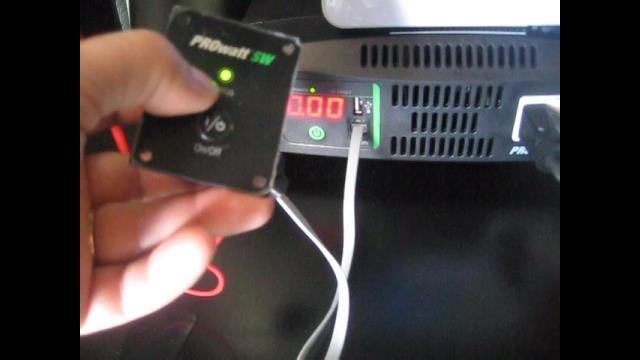
There is also an automatic AC transfer function that works with an optional external transfer switch, which is the feature you want if you plan to bring the rig in on shore power regularly. It is UL458 listed and carries a two-year warranty with solid support behind it.
Oscilloscope testing confirms true sine wave output holding 120V under varying loads, and the thermostatically controlled variable-speed fans stay silent below moderate load. At 10.7 pounds, it is also lighter than several of the newer metal-shelled competitors.
Understand the input voltage requirement
The single most important detail in the documentation is that the owner’s guide rates the output at 1800W when the input is 13V. Most 12V battery and cable setups sag below that under load, which means real-world output is often well under the 2000W on the label.
This is not a defect. It is a physics reminder that an inverter is only as good as the voltage it is being fed. Size the battery bank and the cable gauge for the load, keep the run short, and this unit delivers cleanly.
Where it struggles, and what the reviews say
Weak performance on inductive and motor loads shows up repeatedly. A 990W shop vac and a 700W microwave were barely started or run by some owners, and output voltage sags noticeably toward 110V at a 1700W draw. One reviewer also found the waveform distort under varying load current, causing LED flicker and clock drift.
Other reports include a supplied GFCI tripping repeatedly out of the box until a name-brand replacement was fitted, and one buyer receiving a repackaged unit that would not power on. A large share of the negative reviews conclude the inverter was fine and the installation was the problem, which is worth keeping in mind before you blame the hardware.
9. ROARBATT 4000W Pure Sine Wave Inverter – Best for Compressors and Heavy Loads
4000W Pure Sine Wave Power Inverter 12V DC to 120V AC, 8000W Peak for RV
4000W continuous
8000W peak
Over 90% efficiency
0.6A no-load draw
Pros
- Verified 4000W output that started a 2HP 120V air compressor
- Over 90% efficiency with a low 0.6A no-load draw
- Soft-start circuit removes switching surge on startup
- Rugged aluminum housing that survived a 7-foot drop
- Four AC outlets
- a terminal block
- LED display and USB ports
Cons
- Low-load efficiency measured poorly by one owner
- Several reviews report the one-year warranty going unhonored
- Supplied battery cables run warm around 1500W
This is the biggest inverter in the roundup and the one with real load testing behind it. Owners report running two non-inverter 14k and 10k BTU air conditioners simultaneously off a 300Ah battery, and another verified the 4000W continuous rating by starting a 2HP 120V air compressor.
That compressor test matters because it is exactly the scenario that shuts down most inverters. Getting a 2HP compressor from standstill to running speed needs far more than 4000W momentarily, and making it happen is the clearest possible proof the rating is real.
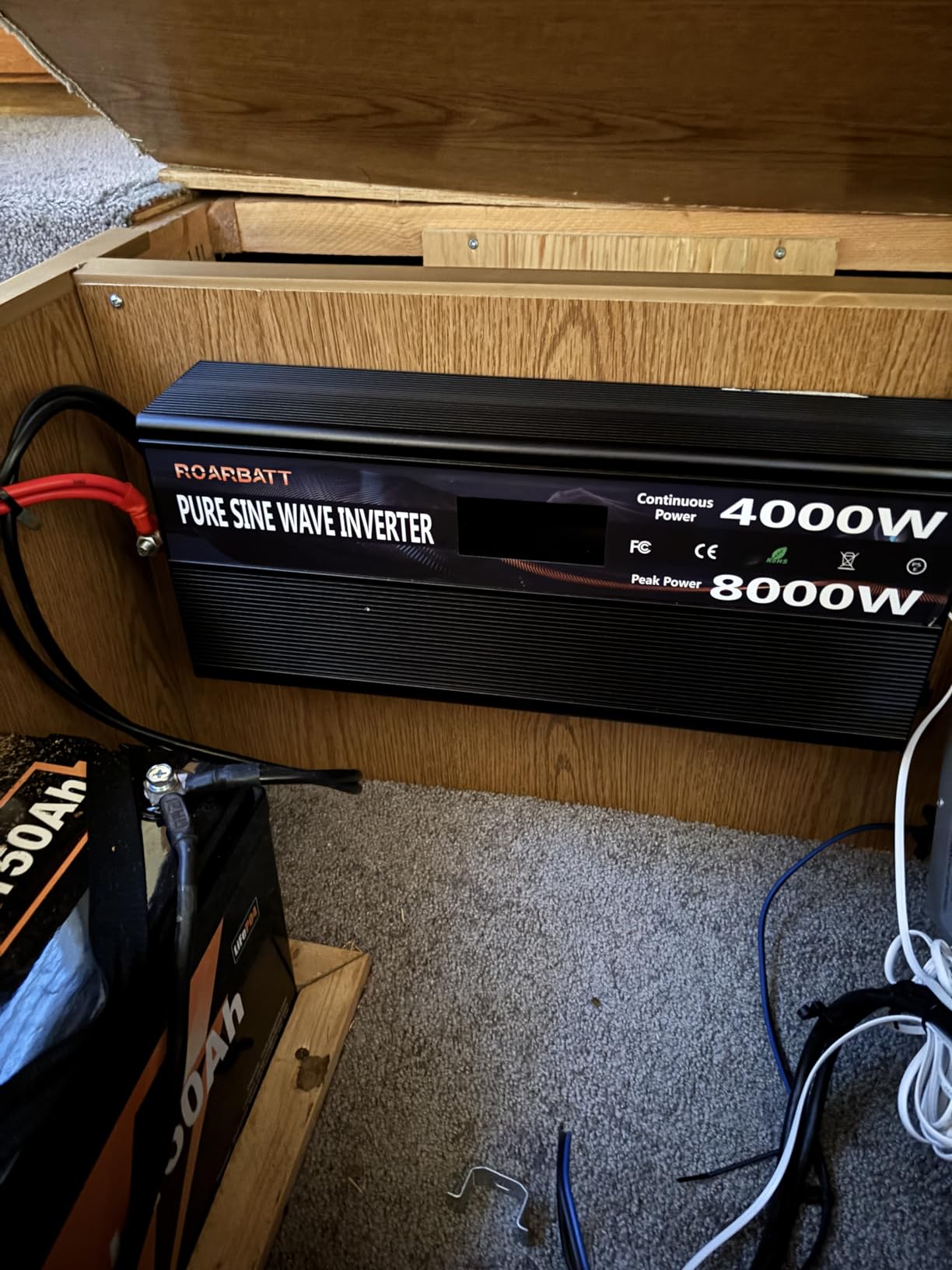
The soft-start circuitry eliminates switching surge on load startup, which is what protects the inverter and the appliance at the moment of inrush. Conversion efficiency runs above 90 percent with a no-load draw of 0.6 plus or minus 0.1A, and that low standby figure is what extends battery life on an inverter that is switched on all the time.
Build quality is a genuine strength. One owner dropped this from 7 feet, dented a mounting rail and kept running. The aluminum alloy housing measures 17.4 by 7.2 by 3.9 inches, so it fits where a much larger unit would not, and output includes four AC outlets, one AC terminal block, an LED display and two 5V/3.4A USB ports.
Check the low-load behavior with a meter
One reviewer measured substantial power waste on low loads, with an 80W freezer showing roughly 140W drawn from the inverter. That is worth knowing about, because an oversized inverter running a small load all night is exactly where the losses show up.
If your typical load sits well below 1000W, size the inverter closer to your real draw. The 0.6A no-load figure is good by the standards of this class, but it is still 7 watts or so of continuous draw, and low-load conversion efficiency varies more than the headline number suggests.
Warranty support is the real risk here
Several reviews raise concerns that the manufacturer does not honor the one-year warranty. That is a different problem from a short warranty term. A one-year warranty is a cost of ownership question; a warranty that is difficult to claim is a risk question, and the two are not interchangeable.
Also worth noting: the supplied battery cables run warm at around a 1500W draw, the cooling fans can be loud on larger variants with 24/7 use, the cable terminals are stacked so they are awkward to remove, and the 4.5m wired remote is short next to the 15ft remotes competitors offer.
10. OLTEANP 2500W Pure Sine Wave Inverter – Best With a Built-In Transfer Switch
2500W Pure Sine Wave Power Inverter with Transfer Switch for RV, 5000W Peak
2500W continuous
5000W peak
12ms transfer switch
About 7 pounds
Pros
- Built-in 12ms automatic transfer switch uncommon at this tier
- Shore power passes through with the inverter switched off
- Load testing confirmed sustained 2500W and about 3100W spikes
- Ran a 13500 BTU air conditioner and a 1050W microwave together
- About 7 pounds with a 15ft wired LCD remote
Cons
- Not a battery charger and will not recharge the bank
- Transfer switch needs the inverter manually switched off first
- Supplied 25mm2 cables suit short runs only
Almost nobody in this class includes a transfer switch. It is normally a separate accessory, and on real inverter/charger units it is a meaningful step up in cost. This one has a 12ms automatic transfer switch built in, which is the reason it is on the list.
Shore power passes through to the outlets even with the inverter switched off, so there is no battery drain while you are plugged in at the campground or the truck stop. For anyone who moves between shore and battery power regularly, that removes an entire category of wiring complexity.
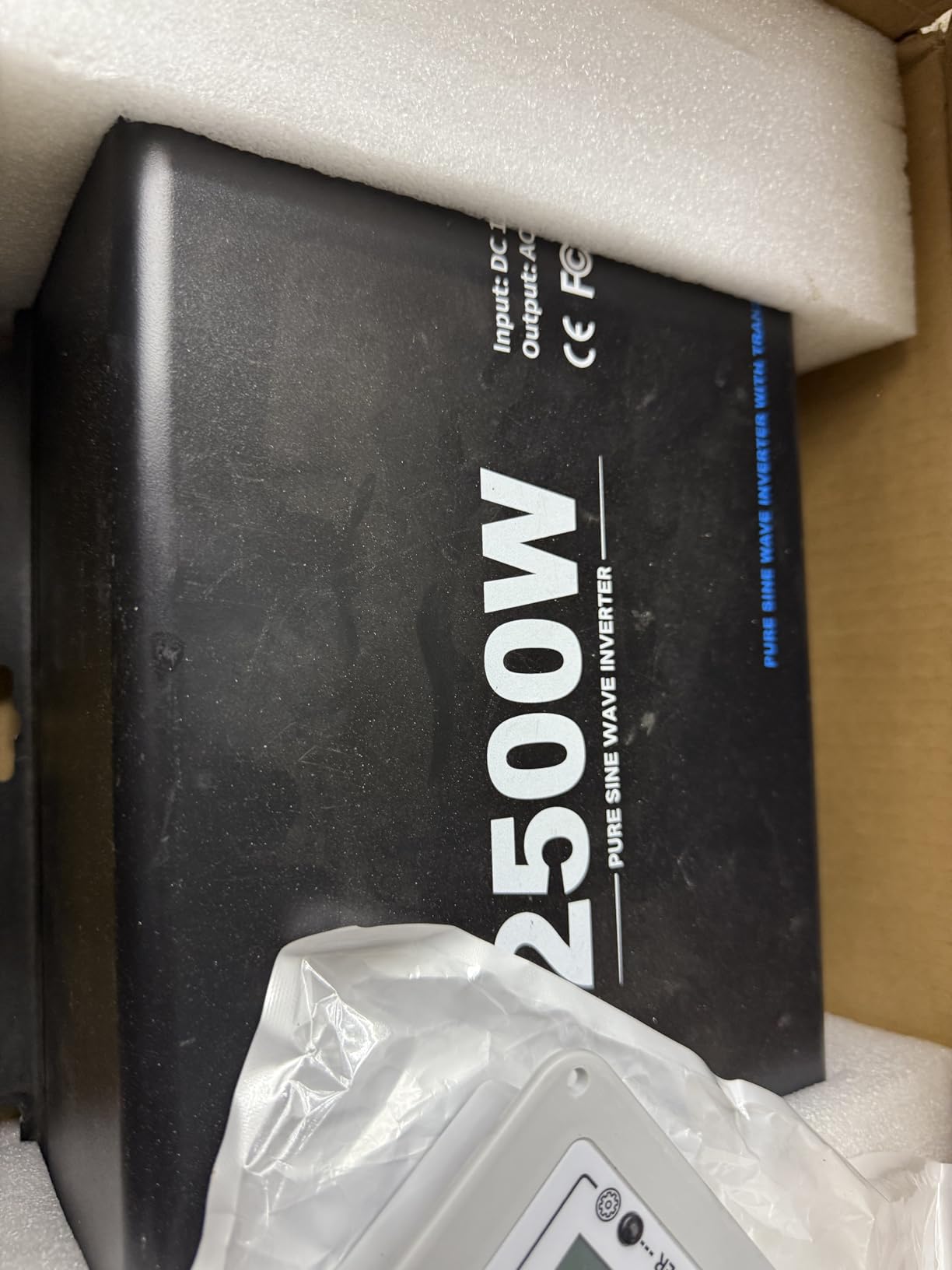
Load testing confirmed the advertised 2500W continuous rating with momentary spikes to about 3100W before overload cutoff. One owner ran a 13,500 BTU air conditioner at roughly 3000W startup and 1100W running alongside a 1050W microwave without issue, which is a demanding real-world combination.
At about 7 pounds it is the lighter of the two 2500W-and-up units in the roundup, with a 15ft wired LCD remote showing DC input voltage, AC output status, power usage and fault alerts. Protection covers low voltage, over-voltage, overload, short circuit and overheating.
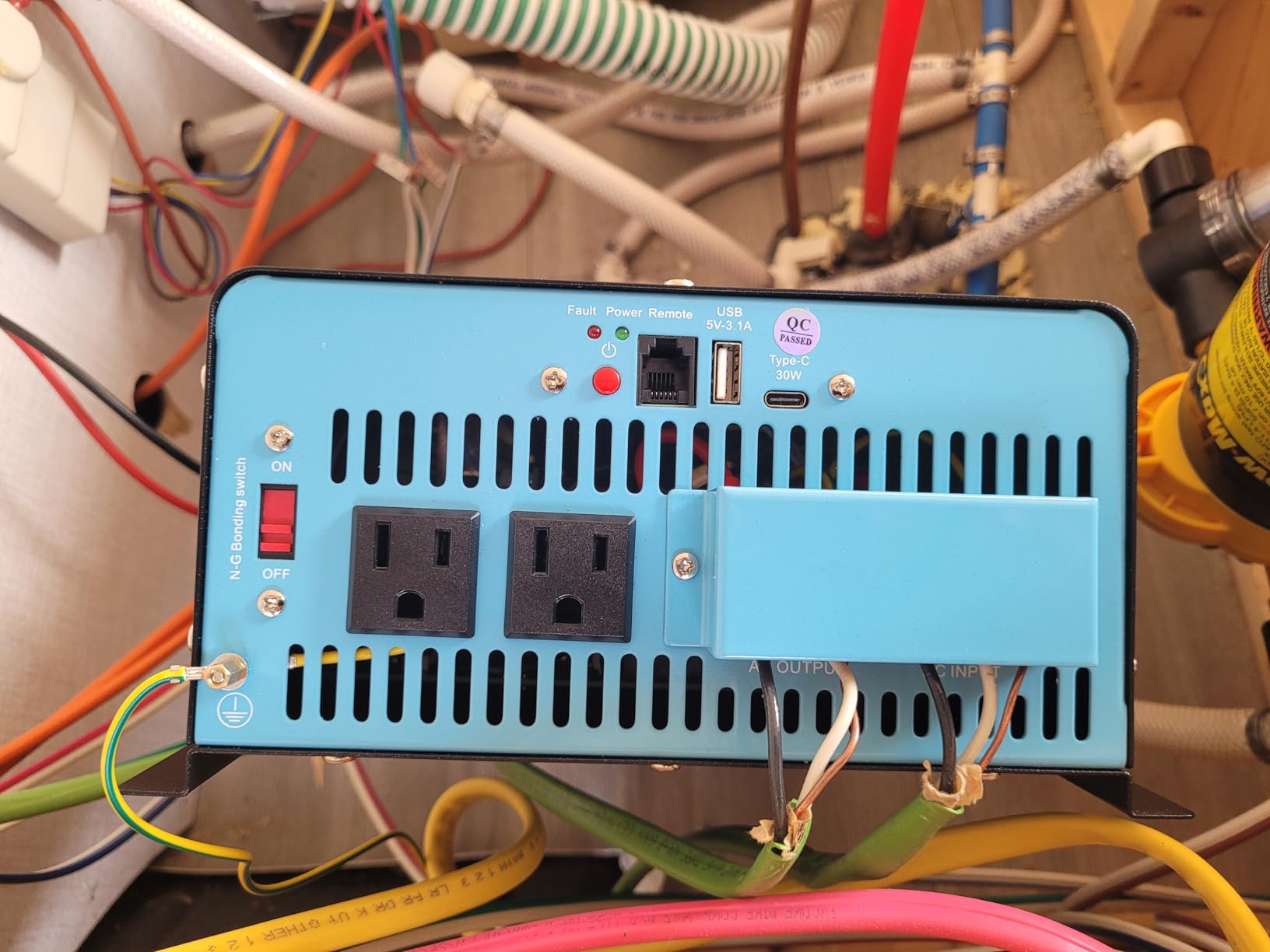
What the transfer switch does and does not do
Read the manual carefully on this one, because the behavior is not fully automatic. Plugging in shore power while the inverter is still on requires manually pushing the power switch off, and this is not explained in the manual or the listing. Anyone expecting true hands-off auto-switching will be caught out.
It is also not a charger. This unit will not recharge the connected battery, so a full system still needs a separate charger or charge controller, and the sizing math has to reflect that.
Shortfalls to plan around
The supplied 25mm-squared cables at 60cm are only suited to short runs and low-to-medium loads, so budget for proper battery cable on any real installation. The battery state-of-charge reading is inaccurate for LiFePO4 chemistry, which will mislead you if that is your battery type.
There are only 2 AC outlets, the warranty is 12 months, and the certification is FCC without a UL listing. One reviewer also had a unit fail after about a year with soldered-on 40A fuses that could not be replaced, which is the same repairability problem the BESTEK has at the other end of the size range.
How to Choose a Pure Sine Wave Inverter
Start with the appliances, not the marketing. Write down what you intend to run at the same time, find the running watts for each, add the largest startup surge among them, then add a 25 percent buffer. The formula is simple: (running watts plus largest surge) multiplied by 1.25 gives you the inverter size to buy.
For example, a small refrigerator that runs at 120W can pull several times that at startup. Add a laptop at 65W, a router at 15W and a lamp at 10W and you are at 210W running, with 300W or more of surge from the compressor alone. That comes to roughly 640W after the buffer, so a 1000W inverter gives you real headroom rather than a system that trips every time the fridge cycles.
After that, match the inverter to your battery voltage. A 12V inverter draws twice the current of a 24V system for the same power, and that doubled current means heat in the cables and a bigger conductor. Here is the short version:
- 12V systems suit everything up to about 2000W on a single bank. Current is high, so cable gauge matters most here.
- 24V systems halve the current for the same wattage and are the right choice for 3000W to 4000W installs, particularly in an RV where you are already running 12V house circuits.
- 48V systems belong to larger off-grid solar arrays where the current reduction across long cable runs saves real money in copper.
Then check the two thresholds that decide whether you get a clean shutdown or a surprise. A low battery alarm typically fires around 10.5V on a 12V system and a low voltage disconnect cuts out near 10V. Units that trip too early will abandon usable battery, and units that trip too late will cook a battery. Neither number is published consistently, so treat it as a question to ask before you buy.
Certification is the fastest way to sort reputable hardware from anonymous marketplace listings, and this is the exact concern raised on r/GoRVing. A UL, ETL or CSA listing means an independent lab tested the unit to a standard, and the marking is verifiable. FCC-only or CE-only certification covers electromagnetic emissions and says nothing about electrical safety. Eight of the ten inverters here carry a UL, ETL or CSA listing, and the two exceptions are CE and FCC only.
Warranty length is the second filter. In this list the commitments run from 12 months on the ZETAWALE and OLTEANP up to three years of total coverage on the LANDERPOW, with 18 months on the Giandel and two years on the Xantrex. Longer coverage is not proof of quality, but it does mean the manufacturer expects the hardware to last, and it changes who carries the risk if you install it badly.
Finally, think about idle draw and thermal placement. A no-load draw of 0.6A is roughly 7 watts of continuous consumption, and in a truck or an RV that sits parked for a week, that is the difference between starting on the first try and calling for a jump. On the heat side, give any inverter six inches of clearance on all sides and keep it out of a closed hot vehicle cabin, because one owner in this roundup tripped a breaker on a unit running above 90F ambient.
For installation safety, three habits cover most of it: connect the negative terminal first and remove it last, fit a fuse within 18 inches of the battery bank, and keep a Class C fire extinguisher within reach of the compartment. All of the units in this roundup include protection against undervoltage, overvoltage, overload, over-temperature and short circuit, and most add reverse connection protection, which matters because a reversed battery cable is the fastest way to destroy an inverter.
If you are wiring this into a truck, our truck driver inverter guide covers the lighter 12V socket setups and the alternator charging questions that come with them, which is a different sizing problem from a fixed cabin install.
Pure Sine Wave vs Modified Sine Wave: Are Pure Units Better?
Yes, for most loads, and the difference is measurable rather than marketing. Pure sine wave inverters convert power at 90 to 95 percent efficiency. Modified sine wave units manage 75 to 85 percent, which means a 1000W load pulls about 1111W from a 90 percent efficient inverter and 1250W from an 80 percent efficient one.
Waveform quality is where it shows. Modified sine wave power produces buzzing in audio equipment, flickering in some lights, stress on microprocessors, and heat in motors. Pure sine wave output matches grid power closely enough that sensitive electronics, variable speed motors and medical gear behave normally.
For a simple resistive load like a light bulb, the practical difference is small. For a laptop, a CPAP machine, a microwave, a refrigerator compressor or any variable speed tool, the difference decides whether the device runs correctly at all.
What Are the Downsides of Using a Pure Sine Wave Inverter?
Four real costs. Pure sine wave units cost more than modified sine wave units of the same wattage, and they are heavier because the transformer and filtering hardware are larger. They draw more at idle, which quietly drains a parked vehicle battery. They still have to be sized correctly, and an undersized pure sine wave inverter shuts down exactly like a cheap one.
Ventilation remains a requirement even on premium hardware, and a pure sine wave label tells you nothing about whether the manufacturer will honor the warranty. The gap between a well-supported brand and an anonymous listing is wider in this category than in almost any other piece of RV or solar gear, which is why the vetting criteria above matter more than the waveform label alone.
Frequently Asked Questions
What are the downsides of using a pure sine wave inverter?
Four main costs: higher purchase price than a modified sine wave unit of the same wattage, more weight, greater idle draw that can drain a parked vehicle battery, and the continued need for correct sizing and ventilation. An undersized pure sine wave inverter still shuts down under load just like a budget one.
Which is the best sine wave inverter?
It depends entirely on wattage and application. The BESTEK 300W is the strongest small-unit pick for vehicles and camping, the Renogy 2000W covers most RV and solar builds, and the Giandel 2000W solves wet-location installs with built-in GFCI outlets. Match the inverter to your largest startup surge rather than to a brand name.
Which brand of pure sine wave inverter is the best and most affordable?
For proven value at scale, the Renogy 2000W pairs UL 458 and CSA certification with more than 90 percent efficiency and included 1/0 AWG battery cables. The LANDERPOW 3000W adds three years of warranty coverage. The most budget-conscious route remains the 300W BESTEK, which holds a 4.5 rating across more than 5600 reviews.
Are pure sine wave inverters better?
Yes for sensitive electronics, motors and medical gear. Pure sine wave units convert at 90 to 95 percent efficiency versus 75 to 85 percent for modified sine wave, and they avoid the buzzing, flickering and motor heat that modified output causes. For a simple resistive load such as a light bulb, the practical difference is small.
How do I calculate what size inverter I need?
Add the running watts of everything you will run at once, add the largest startup surge among those appliances, then multiply the total by 1.25 for headroom. Match that result to your battery system voltage: 12V up to about 2000W, and 24V for 3000W to 4000W installs to cut cable current in half.
Why does my pure sine wave inverter keep cutting off?
The most common cause is battery voltage sagging under load, which is usually an undersized battery bank or cable that is too thin or too long. Other causes include an inductive startup surge larger than the inverter’s surge rating, high ambient temperature causing thermal shutdown, or an input voltage below the low voltage disconnect threshold near 10V on a 12V system.
The Best Pure Sine Wave Inverter for Your Build
After working through all ten, the BESTEK 300W is the best pure sine wave inverter for anyone whose loads are modest, because it is the only one in the group with a 4.5 rating across more than 5600 reviews and measured output quality that owners verified on oscilloscopes. The Renogy 2000W is the pick for RV and solar builds that need real capacity, and the Giandel 2000W is the answer when GFCI protection decides the install.
Before you buy, settle three things: which appliances run at the same time, what the application actually is, and what continuous wattage that means. Get those three answers and the shortlist above makes the choice for you.