
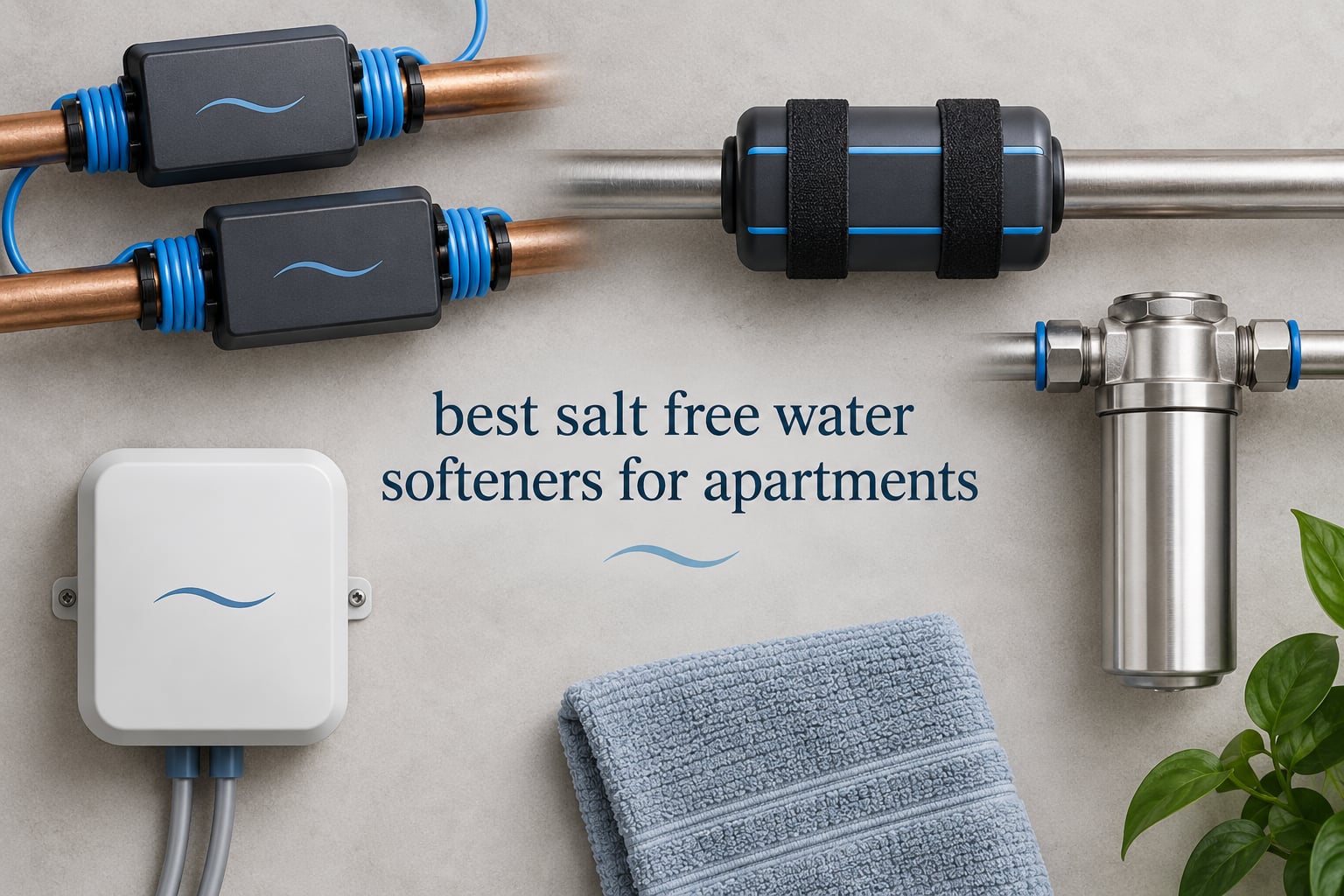
A salt free water softener for an apartment is a no-salt water conditioner. It stops limescale sticking to your pipes, faucets and water heater by crystallizing calcium and magnesium so they wash away, and it does that without salt refills, electricity, a drain line, or a floor tank bolted into a closet you do not have. What it will not do is lower the hardness number on a test strip, and that difference is the whole trick to picking the right unit.
We compared the ten salt-free and no-salt systems renters and condo owners actually buy, then sorted them by the three things that decide an apartment purchase: how hard the install is, how much space it eats, and whether your lease allows it. The list runs from a polyphosphate head that screws into the cold line feeding your water heater, to strap-on magnetic units that need no outlet at all.
One framing note. Two products here are not conditioners in the strict sense but scale inhibitors, dosing polyphosphate to form a protective film inside pipes, and the rest use coils or pulses to change how hardness crystals form. All of them reduce scale, and none of them make water that lathers like rain water. The same point comes up in r/HomeImprovement threads: salt-free units prevent limescale, and they do not deliver the bubble and rinse benefits of ion exchange. Storage is the other apartment issue nobody mentions, so measure the cabinet twice before you mount anything. Our guide to furnishing a studio apartment covers the same clearance-check habit from the other end of the room.
Table of Contents
Top 3 Best Salt Free Water Softeners for Apartments in 2026
Our three highest-conviction picks share one trait: they clamp on or thread into an existing fitting without opening a wall or running new drain plumbing. That is the difference between a ten-minute install and one that needs a landlord’s plumber.

3M Aqua-Pure AP430SS
- Inhibits scale with polyphosphate
- 10 gpm unrestricted flow
- No salt or electricity

YARNA CWD24
- Clamp-on impulse bands
- Needs 10 inches of pipe space
- Works on pipe up to 1 inch

iSpring ED2000
- No plumbing modification
- Built for 10-19 GPG water
- Keeps minerals in the water
The 3M AP430SS leads on evidence: 4.5 across more than 3,400 reviews, with roughly three quarters of those at five stars. Buyers credit it with protecting water heater efficiency and cutting scale on shower heads. The catch is that it is an inline head, so it means cutting into the cold line.
The YARNA CWD24 is the least invasive of the three, since the impulse bands wrap the outside of the pipe and it works on copper, PEX and PVC. The iSpring ED2000 is the one to shortlist first as a tenant, because it is built for 10 to 19 GPG water, the band most apartment buildings actually sit in, and it needs no plumbing modification at all.
Quick Overview of All 10 Salt Free Picks for Apartments (October 2026)
Every unit below conditions water without salt. The rows follow the same order as the reviews, with our top recommendation first.
| Product | Specs | Action |
|---|---|---|
| 3M Aqua-Pure AP430SS Scale Inhibitor |
|
Check Latest Price |
| YARNA CWD24 Electronic Descaler |
|
Check Latest Price |
| iSpring ED2000 Electronic Descaler |
|
Check Latest Price |
 EDDY Professional Magnetic Descaler EDDY Professional Magnetic Descaler |
|
Check Latest Price |
 HQUA 5000E Pro Dual Coil HQUA 5000E Pro Dual Coil |
|
Check Latest Price |
 Waterdrop AP431 Scale Inhibitor Waterdrop AP431 Scale Inhibitor |
|
Check Latest Price |
 Mineral Magnet II Twin Pack Mineral Magnet II Twin Pack |
|
Check Latest Price |
 SCALESWEEPER SW-17 Descaler SCALESWEEPER SW-17 Descaler |
|
Check Latest Price |
 Timilge Electronic Descaler Timilge Electronic Descaler |
|
Check Latest Price |
 Calmat Anti-Scale System Calmat Anti-Scale System |
|
Check Latest Price |
1. 3M Aqua-Pure AP430SS Scale Inhibitor – The One With 3,400 Reviews Behind It
3M Aqua-Pure Whole House Scale Inhibition Inline Water System AP430SS, Prevents Scale Build Up On Hot Water Heaters and Boilers
Polyphosphate scale inhibitor,10 gpm unrestricted flow,2.8 by 2.8 by 10.2 inches,1.9 pounds
Pros
- Highest review count in the roundup at more than 3400
- Protects water heater efficiency and appliance lifespan
- Unrestricted 10 gpm on 3/4 inch NPT connections
- Cartridge-only maintenance
Cons
- Requires cutting into the cold water line to install
- Cartridge replacement about every 6 months
- Inhibits scale rather than removing dissolved solids
This is the unit we kept coming back to, and the reason is boring but real: sample size. A 4.5 average across 3,405 reviews tells you far more than a 4.8 average across forty. The rating distribution backs it up, with 74 percent five-star and 16 percent four-star.
Mechanically it is simple. Polyphosphates at minute concentrations bind calcium and magnesium so they cannot form solid scale, and they leave a thin protective film on pipe interiors that also slows corrosion. Only part of the water passes the cartridge, which is why there is no meaningful pressure drop at the rated 10 gpm.
Owners in hard-water areas report less crusting on faucet aerators, fewer white rings, and shower heads that keep their spray pattern longer. Water heater elements stay cleaner, and that is the part that pays for the unit over time.
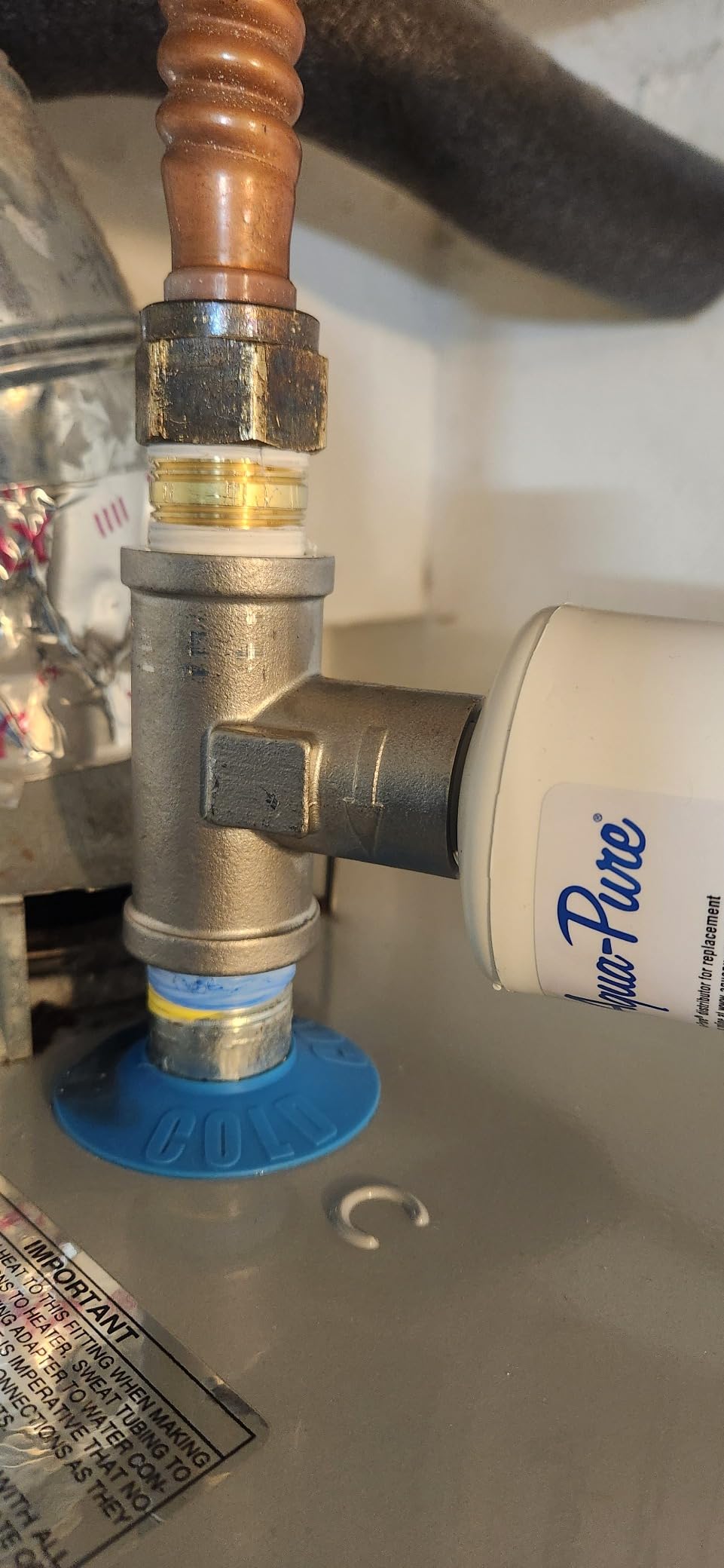
Two dimensions matter for an apartment fit check. The head is 2.8 inches wide by 2.8 deep by 10.2 inches tall, so you need about a foot of vertical clearance and a small shelf or bracket. It weighs 1.9 pounds, which is fine for anyone to handle.
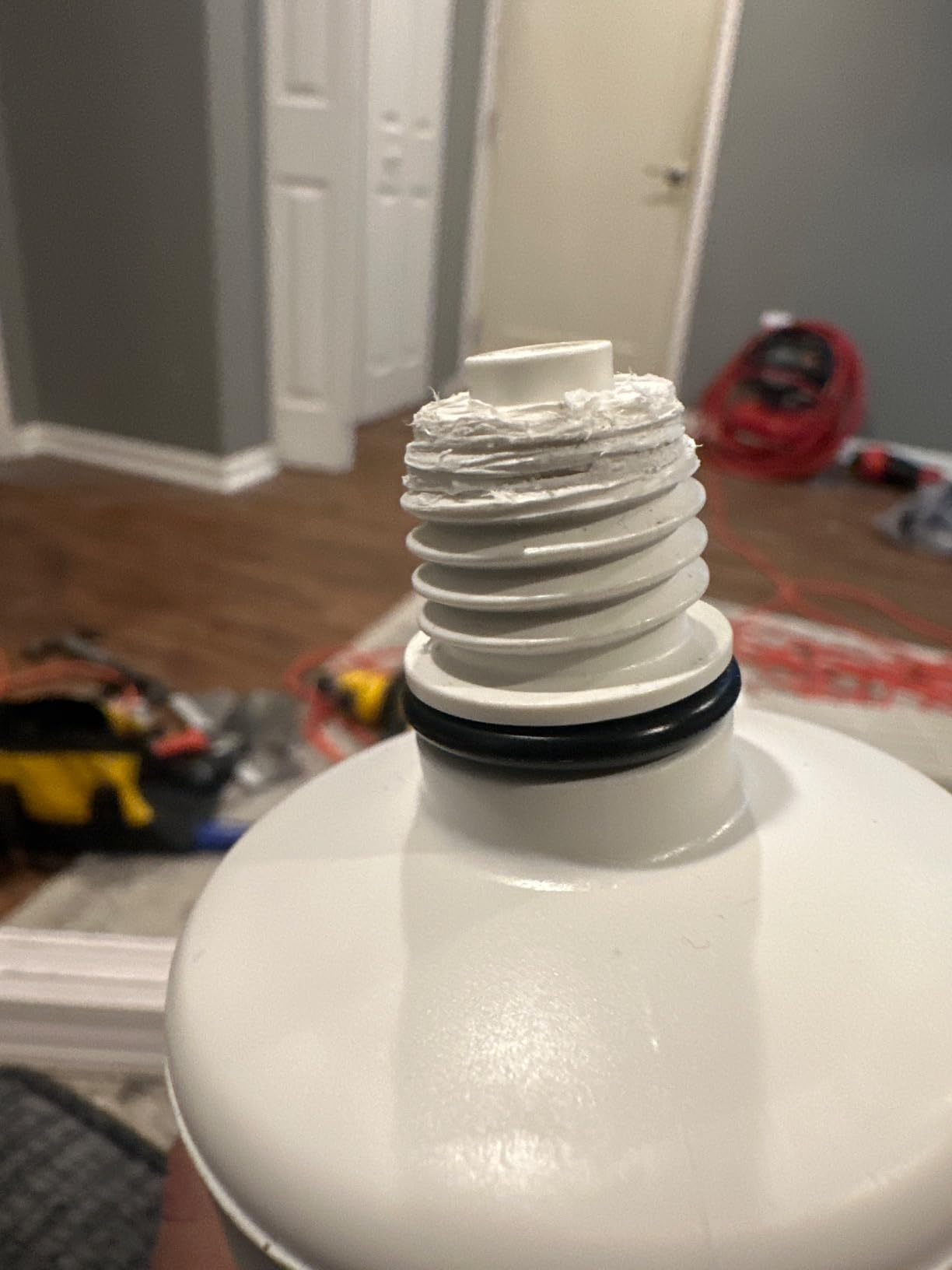
Only the head, one cartridge and a manual are included, and the manufacturer is explicit that additional parts and tools are required and not included. You are cutting into the cold water line feeding the water heater, which is the single thing that makes this the least renter-friendly of the top three.
Who the 3M AP430SS suits
Condo owners, or renters with landlord sign-off, who want scale control with no power, no salt and no drain access. At 10 gpm unrestricted it comfortably covers a one or two bathroom unit running a dishwasher and a washer.
Who should skip the 3M AP430SS
Skip it if your lease prohibits plumbing modification, or if you cannot reach the cold line feeding the water heater, which in newer buildings often sits behind a panel you do not have the key for. It also will not make soap lather the way an ion exchange tank does.
2. YARNA CWD24 Electronic Descaler – Clamp-On Bands and No Pipe Space Wasted
YARNA Electronic Water Descaler – No-Salt Softener, Pipes to 1″ CWD24
Copper clamp-on unit,10 inches of free pipe space required,Fits pipe up to 1 inch diameter,1 ton rated capacity
Pros
- Impulse bands wrap the existing pipe with no cutting or tools
- No salt
- brine tank or wastewater discharge
- Keeps beneficial minerals in the water
- Works on copper PEX PVC and other pipe
Cons
- Fits pipes only up to 1 inch diameter
- Results can take up to three months to notice
- Hardness tests still read hard
- About one in seven reviews is one star
If your apartment problem is that you have nowhere to put a tank, the YARNA CWD24 is the direct answer. It clamps onto the outside of an existing pipe and sends controlled electronic pulses through it, breaking down scale-forming crystals before they adhere to a surface. Nothing is cut, nothing is drained, and no brine tank appears in your hallway.
It has 2,633 reviews at a 4.0 average. Satisfied reports cluster around two things: cleaner faucet aerators and less time spent descaling the shower head, with owners noticing a kettle no longer needs descaling after a season.
The install is the easiest in the roundup. You need about 10 inches of free pipe with a maximum diameter of 1 inch, and the included kit straps on. Power is corded electric, which is the one thing to plan for, since a closet or cabinet may not have an outlet within reach.
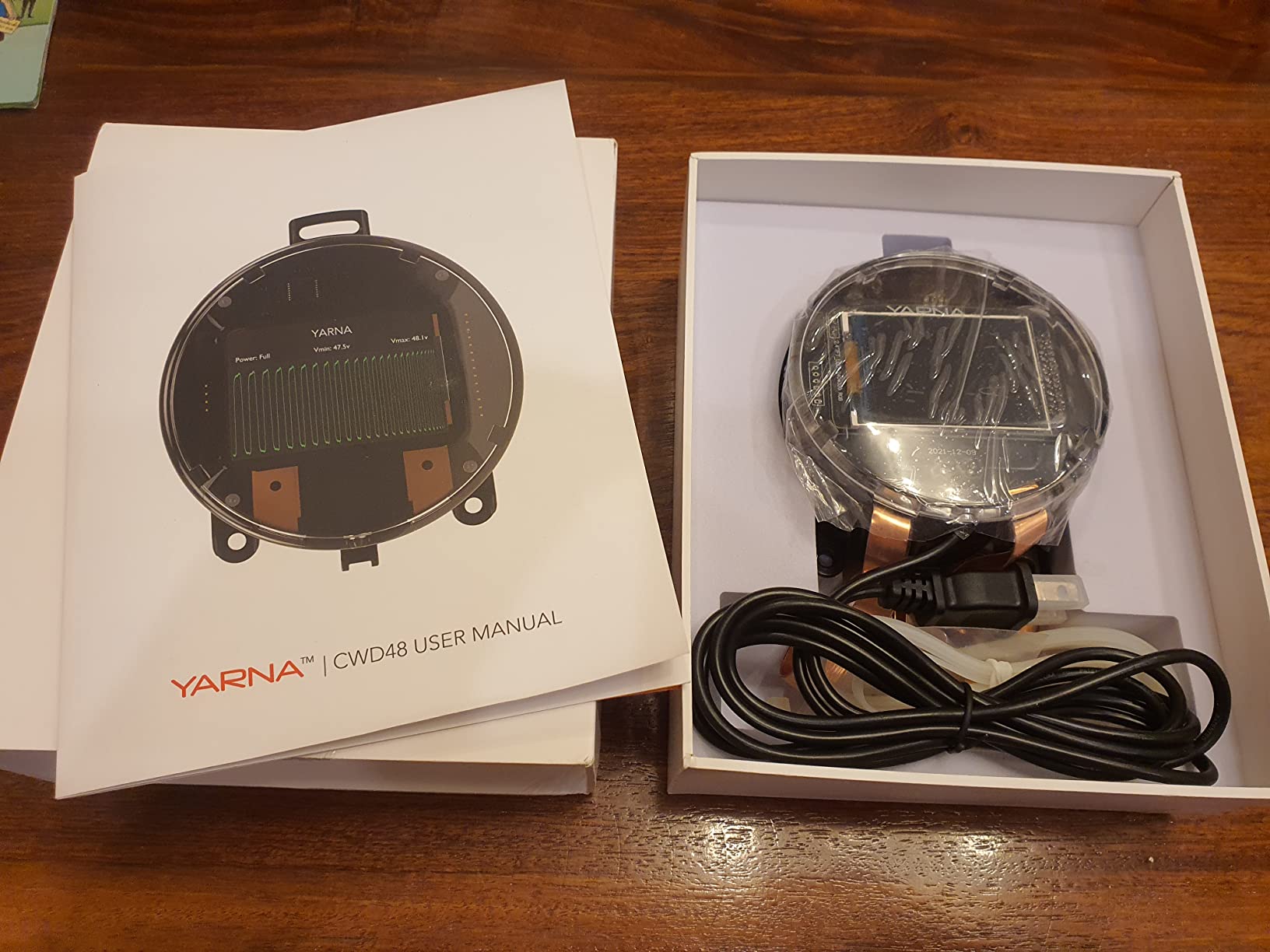
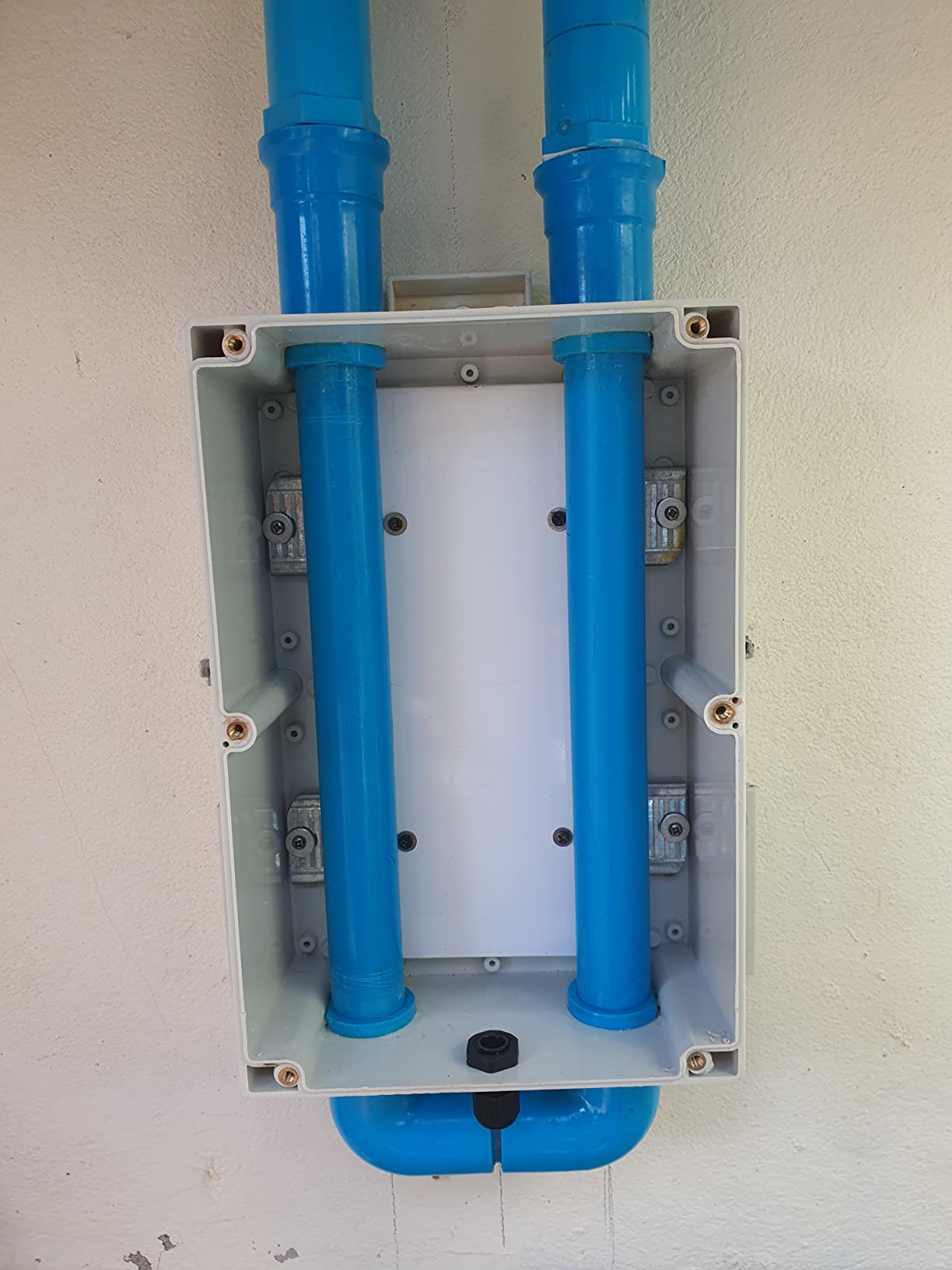
Sizing is the constraint to check. The stated pipe limit is 1 inch, and the manufacturer sells a separate CWD 48 variant for larger lines, so measure before ordering. Rated capacity is 1 ton and supported water tops out near 1000 ppm TDS, which is not a constraint in most municipal apartments.
The recurring complaint is impatience rather than failure. Buyers expecting the tap to feel different in a week are the ones leaving one-star reviews, and 14 percent of reviews are one-star, the highest negative share among the electronic units here. A hardness test will still read hard after months, because the minerals are still in the water. They are just less likely to stick.
Who the YARNA CWD24 suits
Renters with a tight cabinet, older units where the accessible pipe is 1 inch or under, and anyone who wants whole-house coverage from something the size of a fist. The clamp-on design also means it travels with you when you move, which matters in a one or two year tenancy.
Who should skip the YARNA CWD24
Skip it if there is no accessible outlet nearby, because the pulses are what make the device do anything. A building main larger than 1 inch needs the larger variant, and anyone who wants measurable proof inside a month will be disappointed.
3. iSpring ED2000 Electronic Descaler – Built for the 10-19 GPG Band Apartments Actually Sit In
iSpring ED2000 Whole House Water Descaler, Alternative Electronic Salt-Free Hard Water Conditioner, Reduces Limescale Prevent Deposits Build-up, Different from a Water Softener
Electronic unit,7 by 3.5 by 2 inches,2 pounds,designed for 10-19 GPG water
Pros
- No plumbing modification so it works in a rental
- No salt
- chemicals or maintenance of any kind
- Works on PEX
- PVC and other pipe materials
- Does not alter water chemistry
Cons
- Marketed ceiling of about 19 grains per gallon
- Listed TDS tops out around 326 ppm
- Does not soften water so lather changes little
- Results accumulate over weeks to months
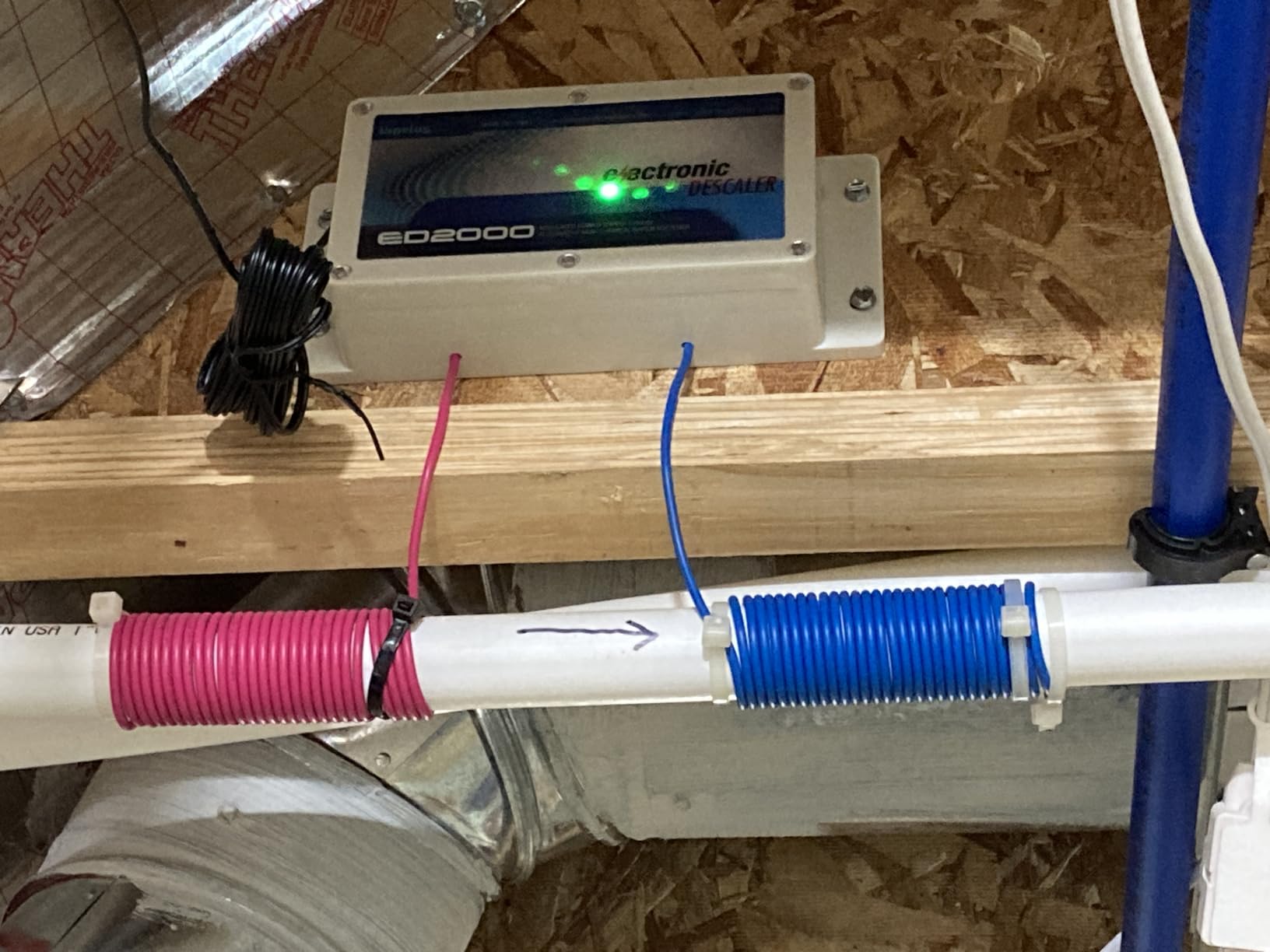
The number that decides this pick is the hardness range. iSpring designed the ED2000 for 10 to 19 grains per gallon, the band most municipal apartment buildings deliver, which makes matching a unit to a building far easier than guessing at vague claims.
With 2,181 reviews at a 4.1 average and 61 percent five-star, it is the best-selling electronic conditioner in the group by category rank. Buyers point to the same outcome repeatedly: limescale slowing on heater elements and inside pipe runs, with no plumbing changes needed to get it.
Installation is self-installation, and it requires no modification on PEX, PVC and other pipe materials. The housing is 7 by 3.5 by 2 inches and weighs 2 pounds, so it disappears into a cabinet or mechanical area without planning.
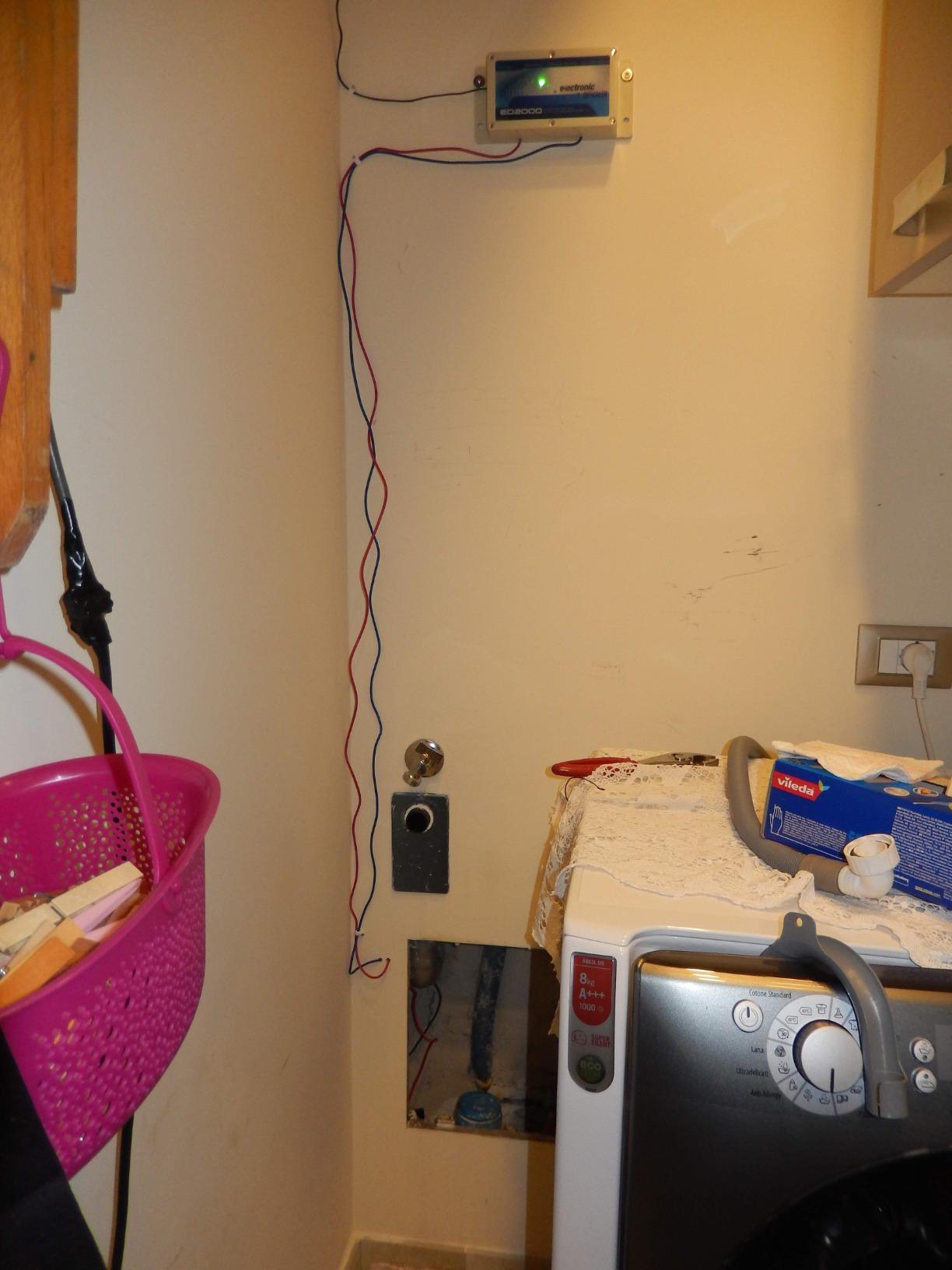
It is corded electric, and the company lists a one-year money-back guarantee plus lifetime technical support. Owners also cite an average one-year energy payback claim, though your own bill will depend on how often the unit runs and where it is mounted.
The hard limit is the one that trips up every salt-free buyer. At roughly 19 GPG you are at the top of the stated range, and very hard water can exceed it. If your test kit reads higher, a salt-based system or a professional assessment is a better use of money.
It leaves water chemistry alone, which is the point. Healthy minerals stay in the water and soap lather changes little, so if you have compared notes with a neighbor on ion exchange, expect a different outcome here.
Who the iSpring ED2000 suits
Tenants on municipal water who measured moderate hardness, anyone who cannot touch the plumbing, and households that want zero maintenance. With no cartridge, no media bed and nothing to refill, it also suits a unit you leave empty for part of the year.
Who should skip the iSpring ED2000
Skip it above roughly 19 GPG, and skip it on a well with iron, since listed TDS tops out near 326 ppm. It is not a filter either, so sediment, chlorine and metals need a separate stage.
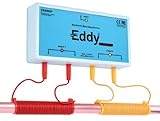
4. EDDY Professional Magnetic Descaler – AC Pulse and the Longest Warranty Here
EDDY Inductive No Salt Water Softener Alternative | Electronic Water Descaler for Whole House | Reduces Limescale | Electromagnetic Water Conditioner
AC magnetic pulse unit,10 gpm maximum flow,6.75 by 1.5 by 3.5 inches,14 ounces
Pros
- AC magnetic waveform avoids the low-flow weakness of permanent magnet units
- Works on copper
- plastic
- steel and most pipe types
- 60-day trial plus 365-day satisfaction and lifetime repair or replace
- Longest warranty coverage in the roundup
Cons
- Coil winding direction matters and errors weaken results
- Not intended for iron pipe
- Electronics unit works best mounted close to the coils
- Existing heavy scale takes months to loosen
The technical difference separating this from a cheap permanent magnet strap is AC power. A microchip generates a true magnetic pulse waveform on mains current, and several owners in the reviews did the harder thing and measured the output on test equipment. That is why this is a credible pick rather than a novelty.
At 1,177 reviews and a 4.1 average, the pattern in the feedback is consistency rather than drama. Multiple buyers report that new scale stopped forming and that boilers and shower heads stayed clear, and one owner with very hard water found a boiler interior cleaner than after a manual descale.
It handles 10 gpm maximum flow and supports water up to 1000 ppm TDS. The unit is 6.75 by 1.5 by 3.5 inches and weighs 14 ounces, so wall or shelf mounting is easy and there is no floor footprint to negotiate.
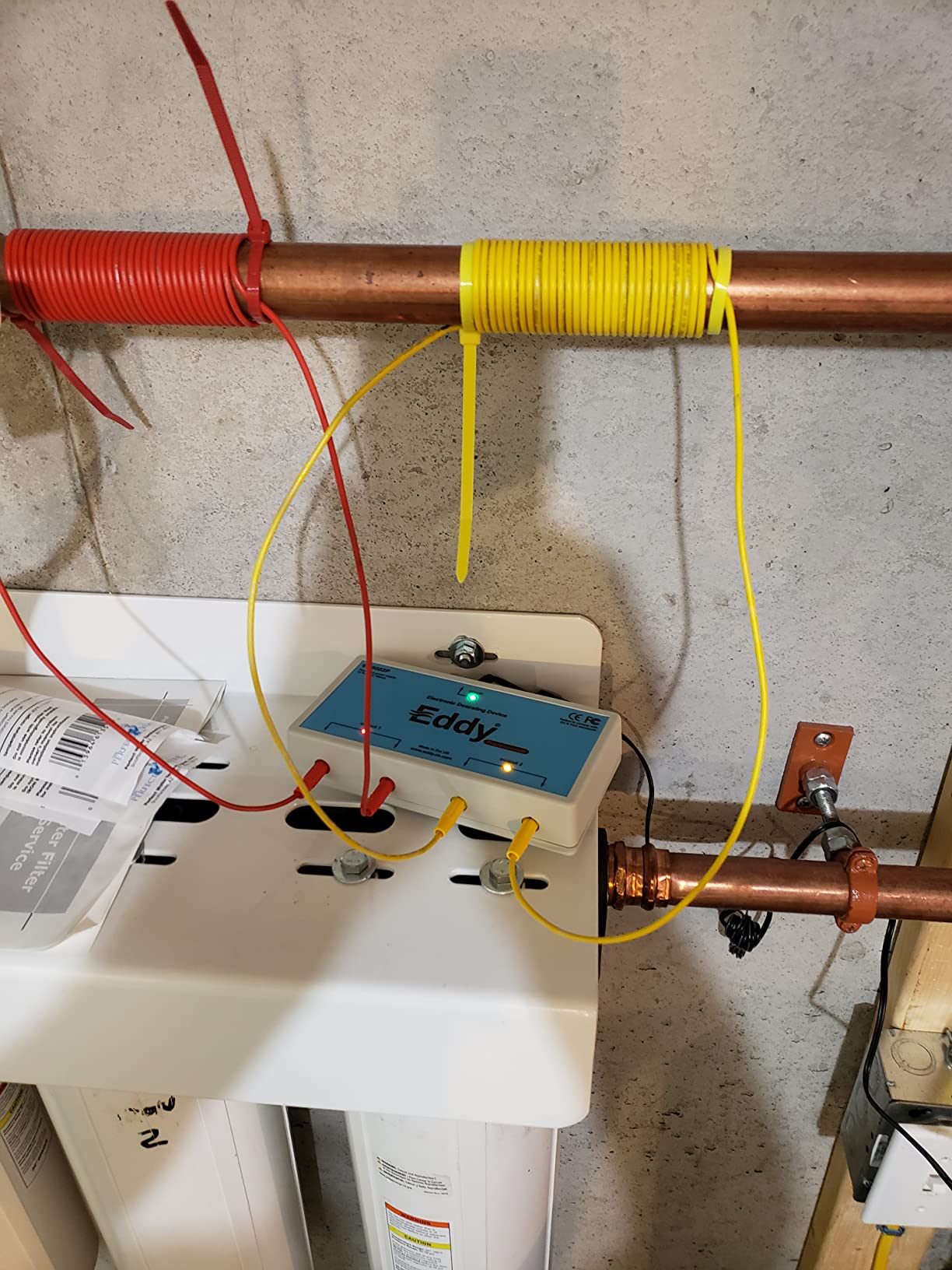
Warranty is the standout for anyone renting. You get a 60-day trial, a 365-day satisfaction or money-back warranty, and a lifetime repair or replace commitment. Extended cables are available for pipes over 1 inch, which matters in older buildings with larger supply lines.
The failure modes are procedural. If the coils are wound in opposing or reversed directions, performance drops sharply, and most negative reports trace back to a winding error rather than a defect. It also prevents rather than removes, so existing heavy scale loosens over months.
Who the EDDY Professional suits
Owners and tenants who want a warranty long enough to outlive a short tenancy, and anyone on very hard water who has been disappointed by polyphosphate cartridges. There is nothing to buy over its life, since it uses no salt, cartridges or media.
Who should skip the EDDY Professional
Skip it if your supply line is iron, which the reviews flag as a poor match despite the broad pipe claim, and skip it if you are unwilling to follow the winding instructions. No coil changes what a hardness test reads.
5. HQUA 5000E Pro Dual Coil – Flexible Placement for Bigger Units
HQUA 5000E Pro Whole House Electronic Water Descaler, Alternative Salt-Free Water Softener, Hard Water Conditioner for Limescale Buildup Prevention (2 Coils)
Aluminum wall mount unit,24 gpm maximum flow,5 by 1.5 by 3.5 inches,rated to 25 GPG
Pros
- Two coil outputs can be placed in different spots for wider coverage
- External clamp-on install with no cutting
- bypass valve or plumber
- No salt
- resin tank
- drain line or cartridge replacements
- Several 23-25 GPG well water owners report soap lathering again within a day
Cons
- Does not change hardness readings
- Listed wattage is far above actual draw
- One owner received a unit without the two-sided mounting tape
- One owner saw limescale return on new piping after a few months
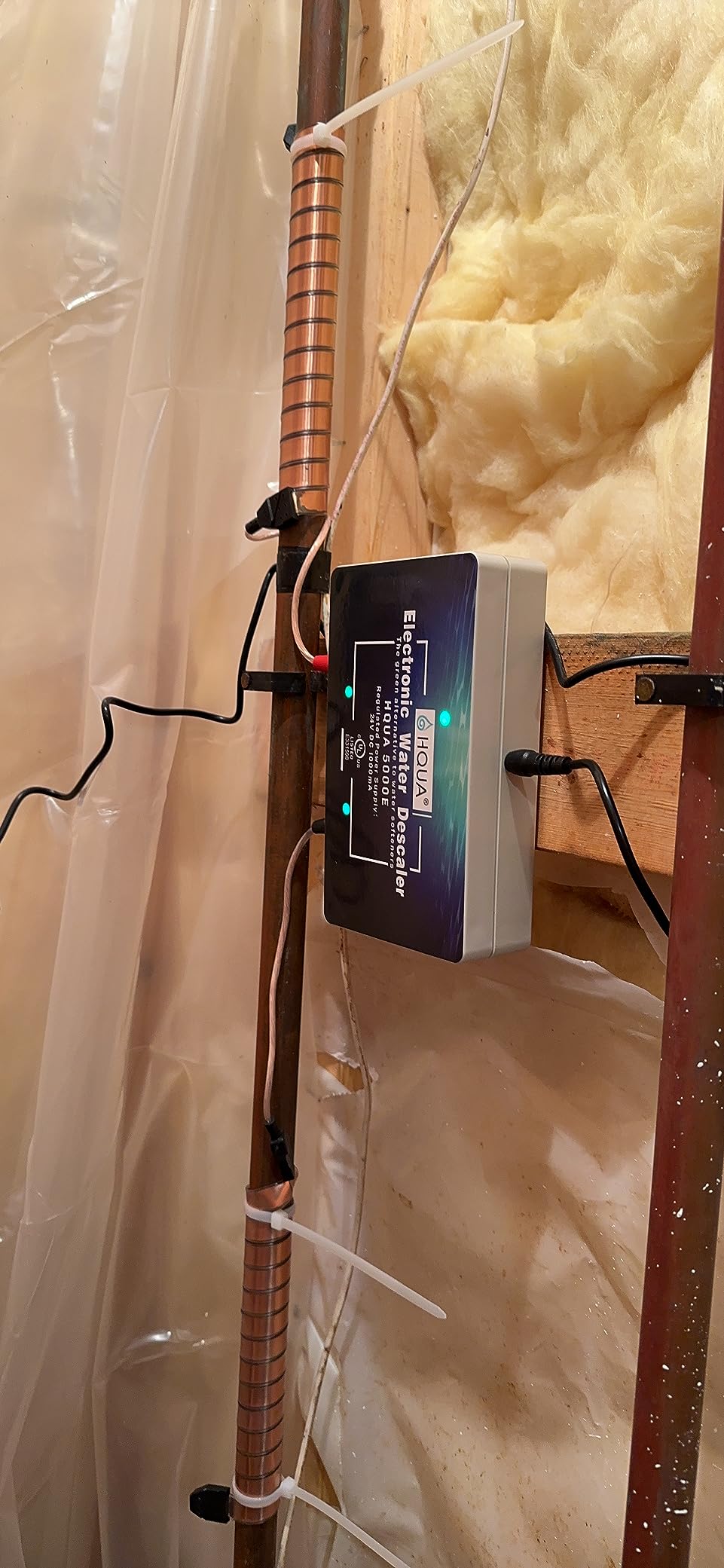
The 5000E Pro is the one to look at if your apartment has more than one plumbing run you want covered, or water harder than a city unit can handle. It comes with two coils, and they do not have to sit next to each other, which is how you cover a longer stretch of pipe inside a small footprint.
Maximum flow is rated at 24 gpm and stated maximum hardness is 25 gpg, the highest ceiling among the electronic units in this roundup. Operating pressure is listed from 5 to 125 psi, and it operates down to 32 degrees Fahrenheit, so an unheated closet in a cold climate is not automatically a problem.
With 787 reviews at a 4.0, owners praise the external mount with no pipe cutting, no bypass valve and no plumber, and several well water households in the low-to-mid 20s gpg range report that soap started lathering again within a day.
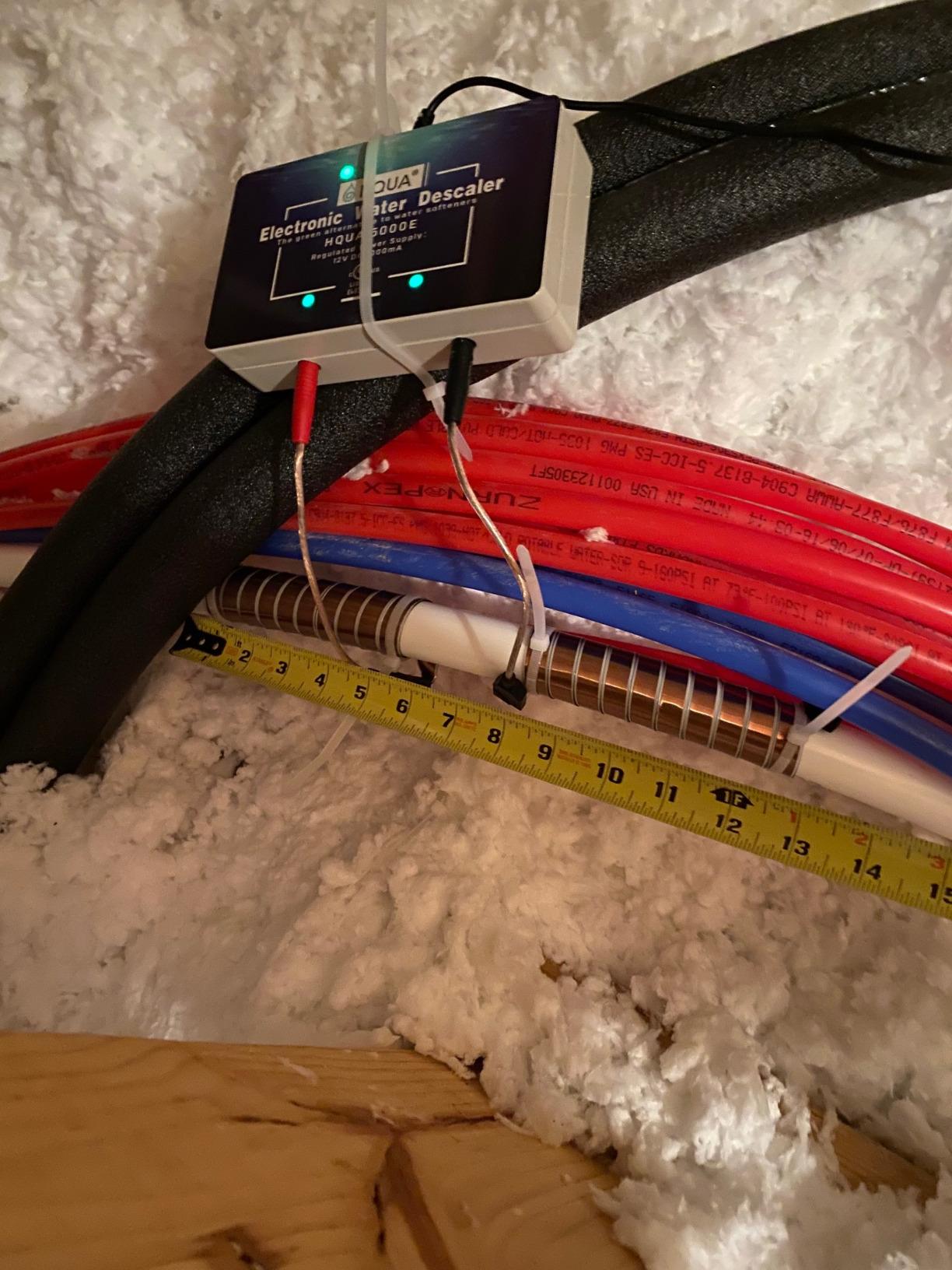
The skepticism in the reviews is worth hearing. Buyers who gave it a year report negligible effect, and several reviewers link poor results to placement, to treated and untreated water mixing, or to coils spaced too far apart. One reviewer measured actual draw under 1 watt against a much higher listed figure.
A separate owner reported the unit arriving without the two-sided tape needed for mounting, which is a small but real serviceability note. With no salt, resin tank, drain line or cartridge, there is simply nothing to purchase over its life.
Who the HQUA 5000E Pro suits
Larger apartments, shared multi-unit layouts where you control a riser or main, and households on harder municipal or well water that a 19 GPG unit cannot address. Wall mounting also beats a shelf above a drain in a tight closet.
Who should skip the HQUA 5000E Pro
Skip it above roughly 25 gpg, or if the coils cannot sit close together on the same run. You also get no feedback loop, since it does not change hardness readings.
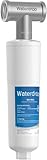
6. Waterdrop AP431 Scale Inhibitor – Stainless Housing and the Highest Five-Star Share
Waterdrop AP431 Whole House Scale Inhibitor with T-fitting
Stainless steel T-fitting,10 GPM flow,2.5 by 2.5 by 12.5 inches,food-grade polyphosphates
Pros
- Stainless steel fitting resists rust better than plastic housings
- 10 GPM flow keeps water pressure stable
- Minimal pressure drop since only part of the water passes the cartridge
- Comes with a replacement cartridge included
Cons
- Requires cutting into the cold water line
- Cartridge needs replacing roughly every 6 months
- Must be mounted upright to work as intended
- A scale inhibitor rather than a filter
The Waterdrop AP431 has the highest proportion of five-star reviews in the roundup at 69 percent, across 936 reviews and a 4.2 average. It is a drop-in style alternative to the 3M Aqua-Pure head it is compatible with, and a replacement cartridge is included, which matters if you would have to order the first spare anyway.
The build is the upgrade over plastic housings. The T-fitting is 304 stainless steel with food-grade, BPA-free polyphosphate materials, rated 10 GPM on 3/4 inch NPT connections. As with the other polyphosphate systems, only part of the water passes through the cartridge, so pressure stays steady in a unit where every drop of flow matters.
Owners like the stainless construction and the steady flow. Because it shares sizing and replacement logic with the 3M head, most of the discussion in the reviews is about cartridge sizing and a six-month reminder rather than about fighting the install.
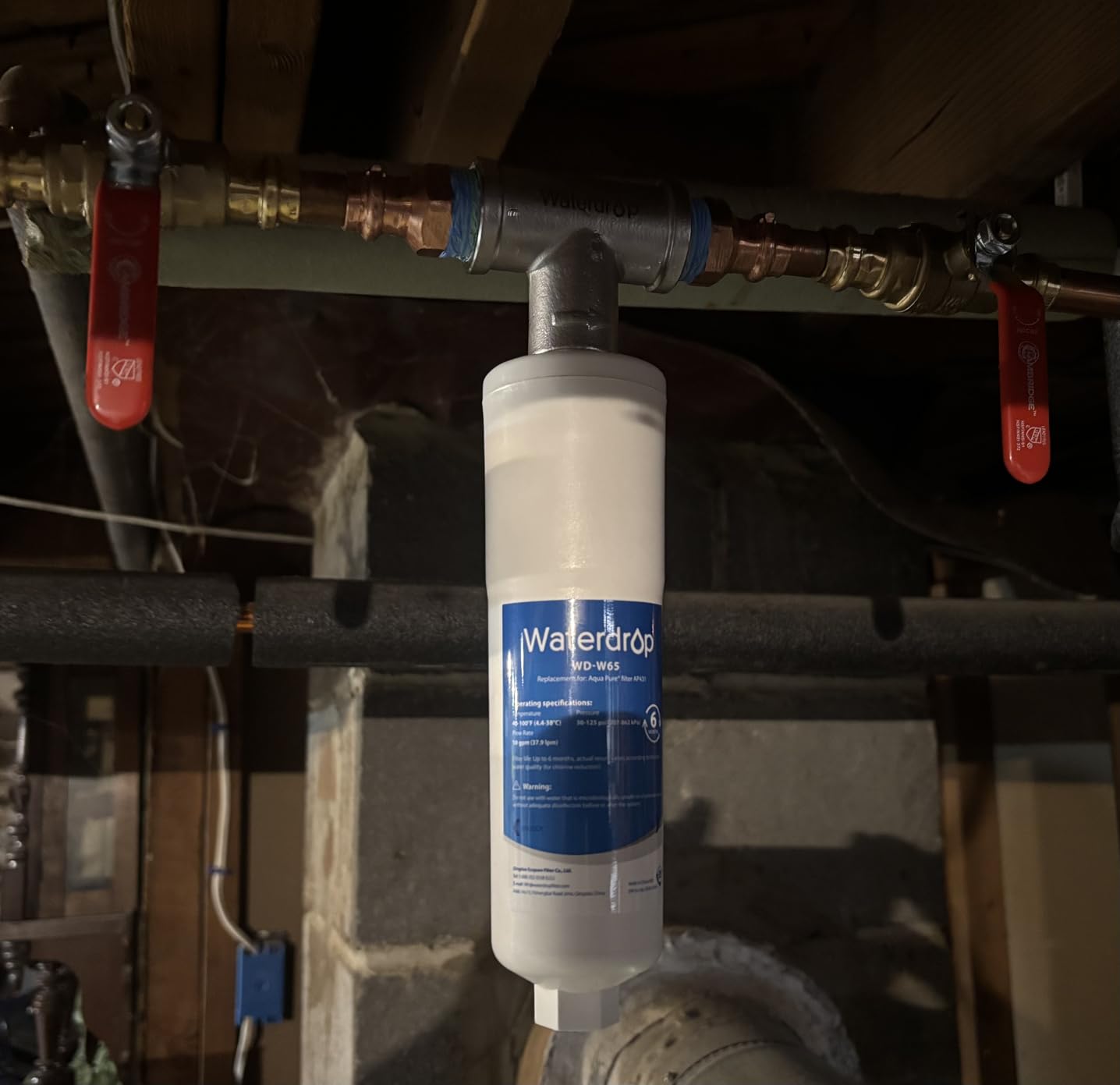
Dimensions are 2.5 inches in diameter by 12.5 inches tall, so plan for upright clearance of about a foot plus a shelf. It must be kept upright on the cold line feeding a water heater, and the cartridge lasts about 6 months for regular use, varying with local water quality.
Like the 3M, it means cutting into the cold water line to fit the T-fitting, and the extra parts and tools are not included. The same renter caveat applies with equal force here. It is also a scale inhibitor, not a filter, so it removes no particles or dissolved metals.
Who the Waterdrop AP431 suits
Condo owners, or renters whose landlord approves a cold-line install, who want the most reliable polyphosphate option and dislike plastic housings. The included spare cartridge and a predictable six-month cycle make it easy to plan around.
Who should skip the Waterdrop AP431
Skip it if any plumbing modification is off the table, or if you have no room to mount something upright 12.5 inches tall. Anyone wanting a one-time purchase with no consumables should choose an electronic or magnetic unit instead.
7. Mineral Magnet II – Battery-Free Strap-On for Damp Corners
Mineral Magnet II Magnetic Water Softener/Conditioner for Hard Water. Installs easily, no maintenance. USA owned.
Two polypropylene housings,4.3 by 3.3 by 1.5 inches,1 pound,5-year limited warranty
Pros
- Simplest install in the roundup at under a minute with no power
- Waterproof housing works on shower hoses and under-sink lines
- One renter used several on individual fixtures where the supply line was off-limits
- Fits plumbing up to 1.25 inches
Cons
- Most effective on mild-to-moderate hardness
- Results build over weeks with about 6 weeks cited
- May need multiple units across a property
- Needs clearance to get both hands on the housing
Everything else on this list needs a socket or a fitting. This one needs neither. Two polypropylene housings with four strontium ferrite magnets each strap around the outside of the pipe, and you are done. For a shower hose, an under-sink line or a washing machine hookup, it is the most honest answer in the roundup.
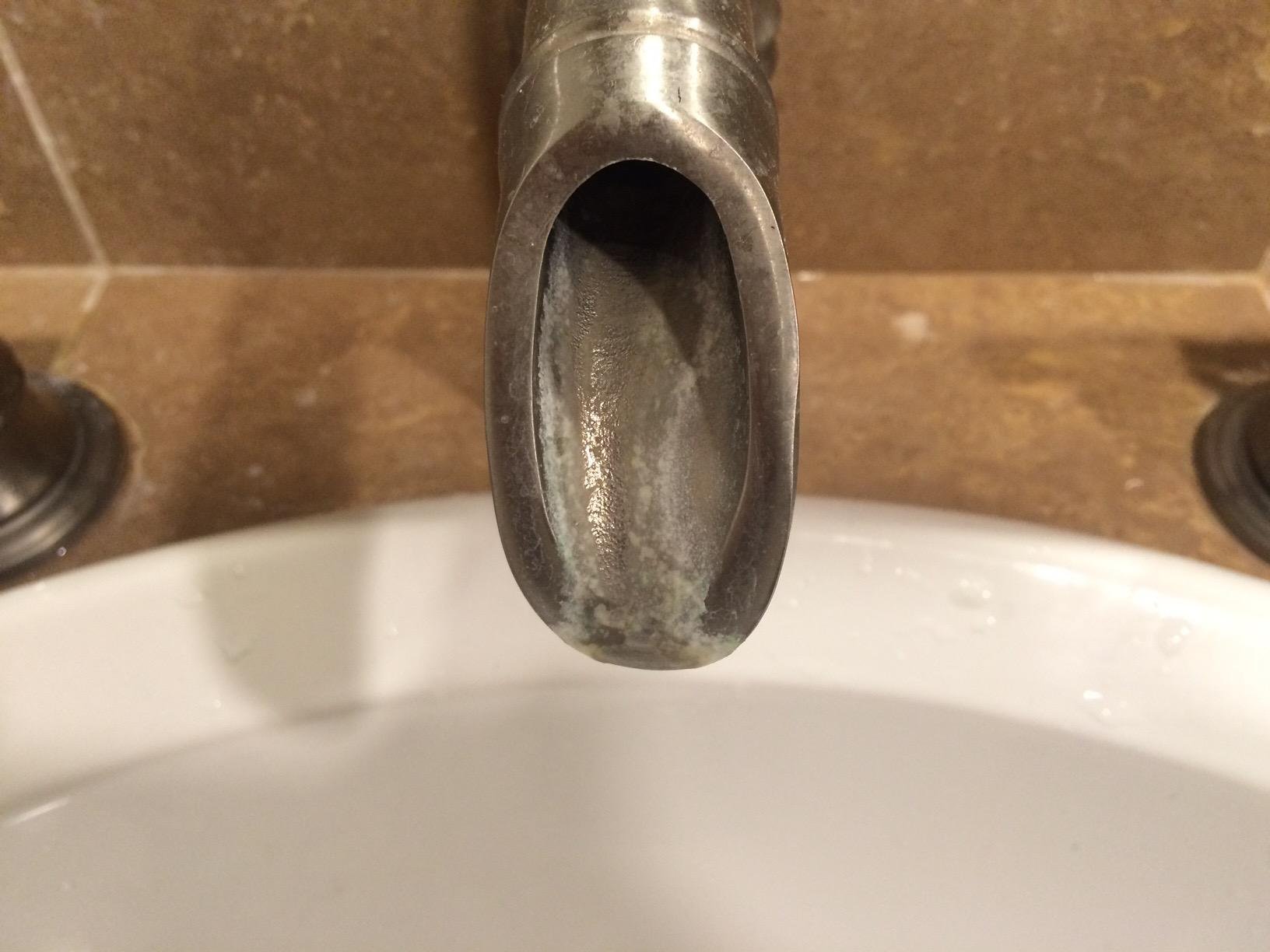
The reviews reflect that simplicity. Buyers on 9 to 12 gpg water report cleaner sinks, easier lather and stronger shower flow within a month, and several rental reviews describe using units on individual fixtures precisely because the building supply line was not accessible.
It carries 724 reviews at a 4.1 average with a 5-year limited warranty. Owners replacing a salt softener report better water taste and improved lather, and one describes roughly 60 percent scale reduction once three units were installed around the property.
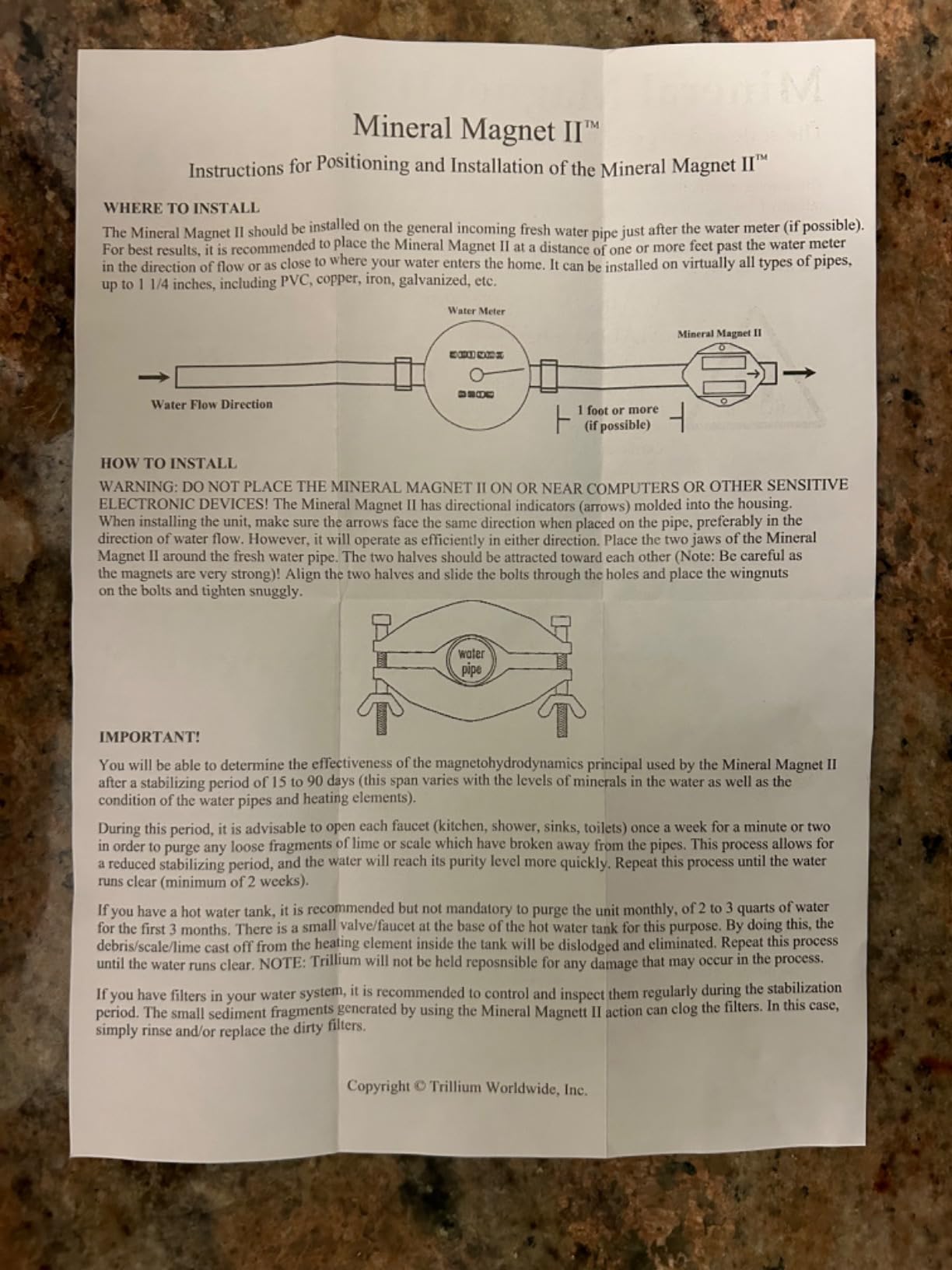
Fitting is broad, covering plumbing up to 1.25 inches across copper, galvanized, PVC, PEX and iron. There is no electricity, no chemicals, no salt and no maintenance, which means nothing to remember while you are between apartments.
Timing is the thing to plan around. Expected improvement is typically visible in 15 to 90 days, and roughly 6 weeks is the realistic wait most buyers describe. You also need clearance around the pipe to get both hands on the housing to tighten the nylon bolts, so a tight riser may not have room.
Who the Mineral Magnet II suits
Renters with no permission, no outlet and no drain access, and anyone on mild-to-moderate hardness who wants protection for a single fixture rather than a whole apartment. The waterproof housing also works in damp locations that shorten the life of an electronic unit, and it removes in seconds.
Who should skip the Mineral Magnet II
Skip it on very hard water, where buyers report only partial improvement, and skip it if you expect a single placement to cover a whole property. It conditions rather than softens, so a hardness test will not move.
8. SCALESWEEPER SW-17 – A Whole-House Install in Ten to Twenty Minutes
SCALESWEEPER Whole House Electronic Water Descaler & Hard Water Conditioner – Salt-Free Scale Prevention, Reduces Limescale & Protects Pipes, Appliances, Water Heater
Mount-and-wrap electronic unit,2 pounds,works on five pipe types,LED status indicator
Pros
- Installs in roughly 10 to 20 minutes with no cutting
- tools or plumber
- LED indicator shows power and flow status
- Works on copper
- PVC
- PEX
- galvanized and stainless steel
- Users report faster hot water and less soap scum
Cons
- One unit arrived defective and the listing was flagged non-returnable
- Does not soften water
- One owner on very hard well water saw no lasting improvement
- Supplies can arrive with stripped screws on the lead hardware
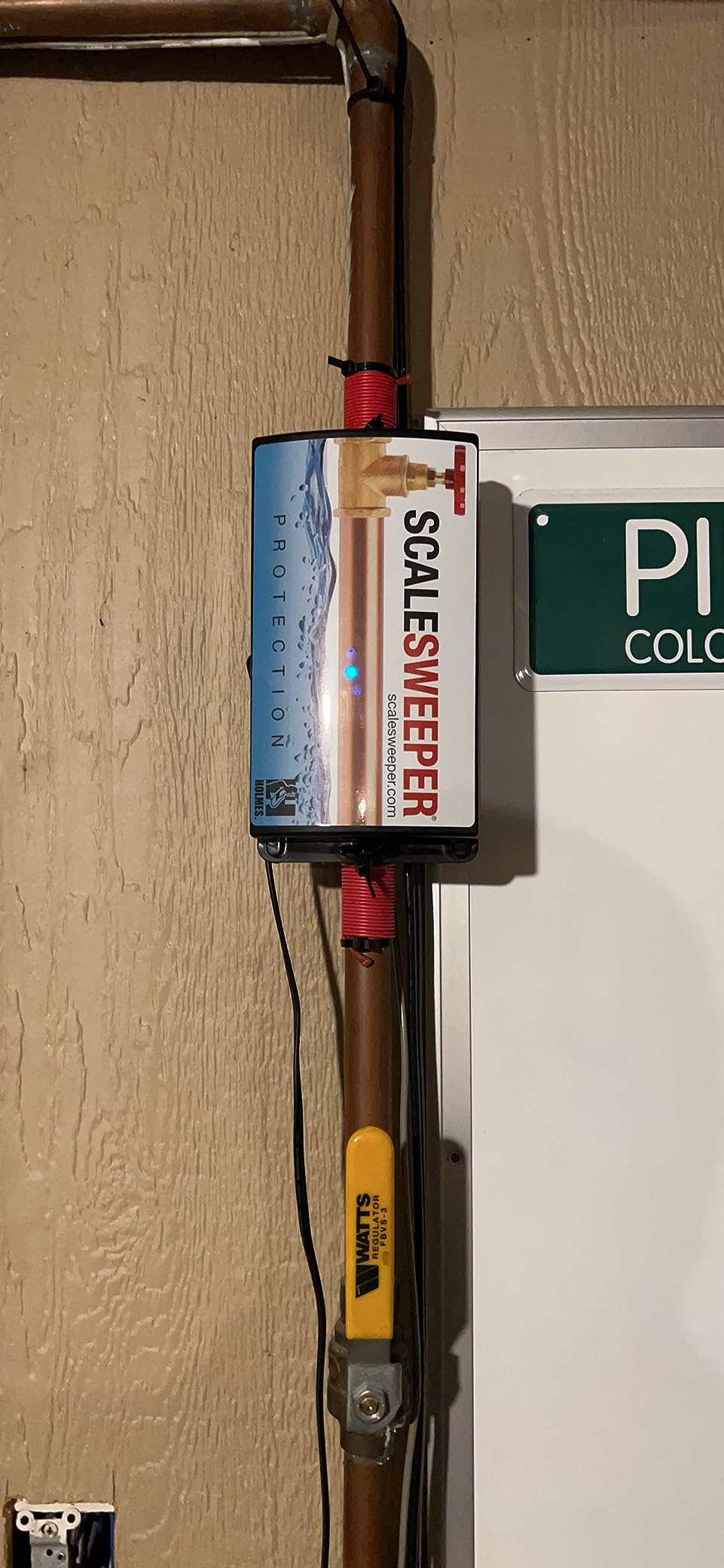
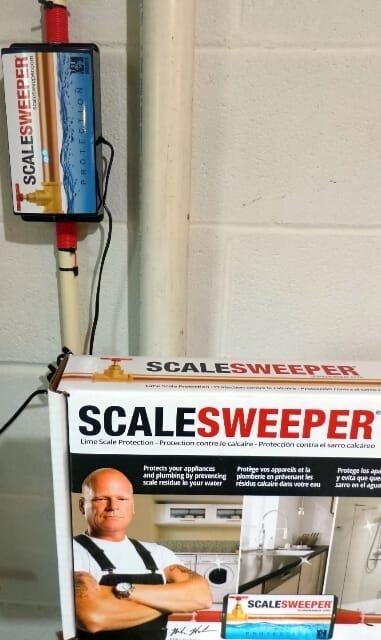
The install story is the selling point. You mount the unit where water enters, wrap the signal cables around the pipe, and plug it in. Owners put the time at roughly 10 to 20 minutes with no cutting, no tools and no plumber, which makes it one of the most landlord-friendly options here.
It has 499 reviews at a 4.0 average, and the feedback mixes real results with realistic expectations. Owners report faster hot water at the tap, less soap scum and easier fixture cleaning, and several mention a professional home-improvement television personality as the reason they tried it.
Because treated calcium and magnesium stay in suspension and flow down the drain, nothing settles out and nothing needs servicing. The unit is 2 pounds, and the manufacturer is Field Controls, a residential heating and controls maker rather than a filtration newcomer.
Build quality is the recurring soft spot. One buyer received a unit that was defective, and the marketplace listing was flagged non-returnable, which made the warranty claim awkward. Another reported stripped screws on the lead mounting hardware. Test the unit as soon as it arrives.
The LED indicator earns more praise than it looks like it should. After a defective first unit, owners specifically mention the power and flow lights as the only way to confirm a device that changes nothing you can measure.
Who the SCALESWEEPER suits
Renters and condo owners who want whole-unit protection with no plumbing work and no drain access. It is a good pick for a landlord approving a tenant install, because the whole procedure is reversible in under a minute and leaves no cut pipe behind.
Who should skip the SCALESWEEPER
Skip it on very hard well water, where one owner saw no lasting improvement after months. If the incoming line sits behind a locked mechanical room, no amount of install simplicity helps you.
9. Timilge Electronic Descaler – A Budget Coil With One Important Caveat
Timilge Electronic Water Descaler System, Reduces Limescale, Rust, and Minerals, No Chemicals, Easy Installation
Exterior attachment unit,7.83 by 3.62 by 1.81 inches,1.4 pounds,110-120V powered
Pros
- Coil wraps the outside of the pipe with no cutting
- Many buyers report a visible change within one to two weeks
- Well and river water owners report clear toilets
- kettles and pet bowls
- Fits all common pipe types on the main supply line
Cons
- Effectiveness drops above 0.3 ppm iron
- Treated effect decays with distance past about 30 feet of pipe
- Stagnant unused lines can re-scale
- Several units arrived not working on arrival
This is the unit we would buy first to find out whether electronic conditioning does anything in your building at all. It is one of the most approachable in the roundup, and the reviews include several owners who saw change within a week or two, which is faster than most of the category manages.
With 431 reviews at a 4.1 average and 58 percent five-star, the long-term reports are the interesting ones. Owners running it about a year describe toilets that no longer form a calcium ring and kettles that never need descaling, and well and river water households specifically call out pet bowls staying clear.
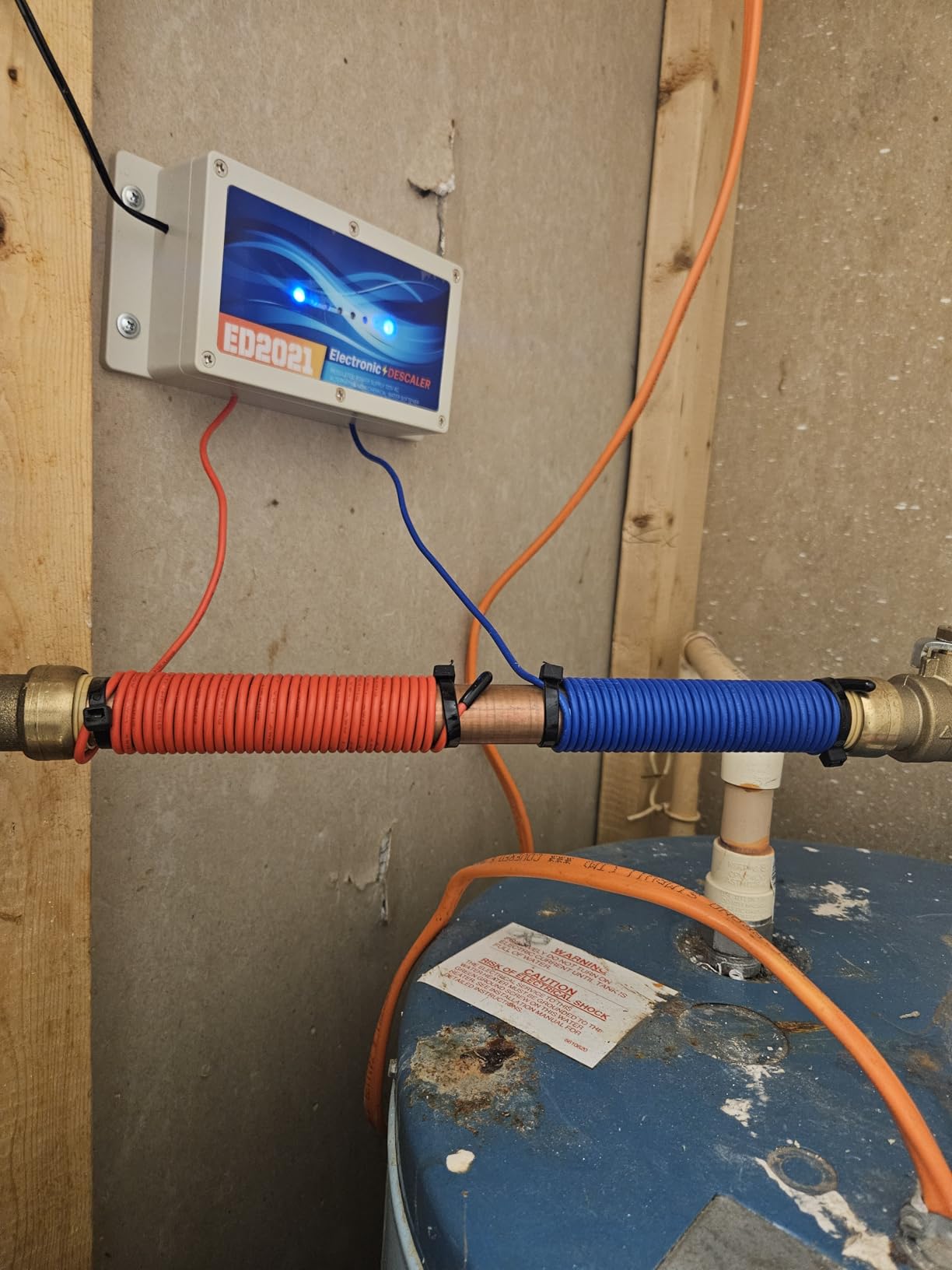
It uses frequency-modulated electromagnetic signals that pass through the coil area, operates on 110-120V, and is designed as an exterior attachment on the main supply pipe where water enters the building. At 7.83 by 3.62 by 1.81 inches, it needs only a wall or shelf near the entry point.
There is a specific caveat that matters more than the average rating, and the manufacturer states it plainly. Iron content above 0.3 ppm reduces effectiveness, and an iron removal filter is recommended above that. If you are on a well, test for iron first or you will spend money on a unit that was never going to work.
Two other physical limits are worth planning around. The treated effect decays with distance, roughly past 30 feet of pipe, so placement near the meter matters. And stagnant lines that sit unused for days can re-scale, which is a real issue in a seasonal apartment or a unit that is empty between tenants.
Quality control is the third limit. Several buyers received units that did not power on, in one case with the transformer leads unconnected at the factory. Test it on arrival and keep the packaging until you know it works.
Who the Timilge suits
Anyone who wants a low-commitment first trial of salt-free conditioning, and households on well or river water with iron under 0.3 ppm. It also suits buildings where the main supply line is reachable but downstream pipe runs are long, since the 30 foot decay limit is manageable from the entry point.
Who should skip the Timilge
Skip it if your water has more than 0.3 ppm iron, or if you cannot coil the pipe near the source. Do not skip it for the first-review reports alone, but do open the box and test it immediately.
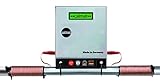
10. Calmat Anti-Scale System – German Build Rated Past 59 GPG
0-59 GPG Electronic Anti Scale and Rust Water Conditioner Treatment System Made in Germany for the Whole House
German-made conditioner,pipe up to 1.5 inches,4.3 W power draw,5-year warranty
Pros
- Highest stated hardness range in the roundup at over 59 GPG
- Manufacturer has produced water treatment equipment since 1948
- Two impulse cables allow coverage on either side of a meter or heater
- One owner on 72-year-old galvanized pipe stopped needing rinse aid in two months
- 5-year warranty against defects
Cons
- Not waterproof and must be sheltered
- Heat above 55 degrees C ambient causes scale to form anyway
- Treated water reverts within roughly 2 to 7 days
- Will not work above 1 ppm iron or 0.1 ppm manganese
Everything else in this roundup tops out somewhere between 19 and 59 GPG, and most stop lower. Calmat states it treats water over 59 GPG, which makes it the unit to consider when a building’s water is genuinely hard and nothing else in the salt-free category claims that range.
There are 145 reviews at a 4.0 average, so treat that figure as indicative rather than definitive. What earns the place is the manufacturing record: a German manufacturer producing water treatment equipment since 1948, with industrial versions sold under the Vulcan brand and units used across more than 50 countries.
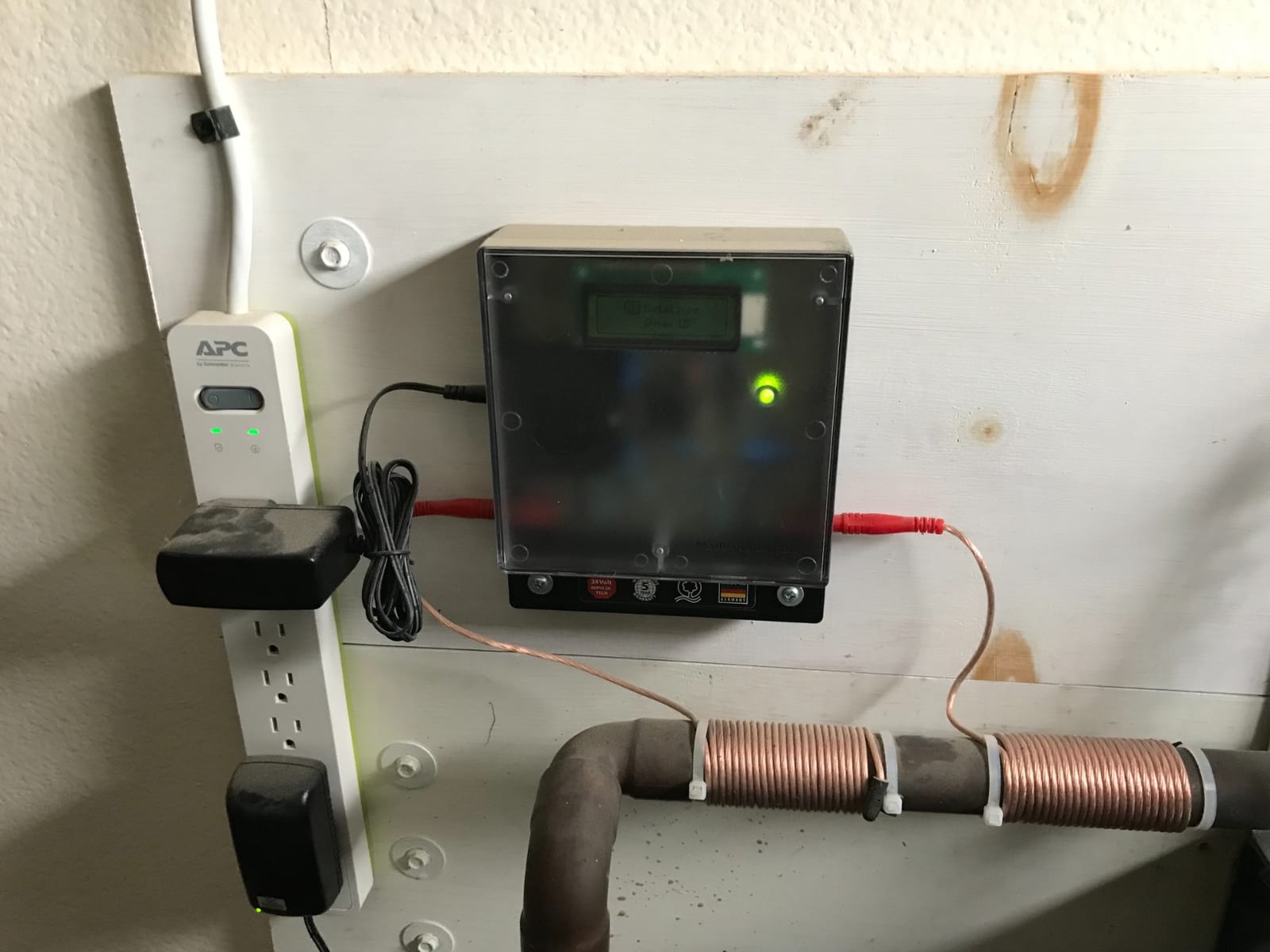
Two impulse cables wind into cylindrical sleeves kept at least half an inch apart, which lets you treat both sides of a meter or a water heater. Power draw is listed at 4.3 W, and pipe compatibility runs to 1.5 inches across metal or plastic, with a program selected for pipe type and size.
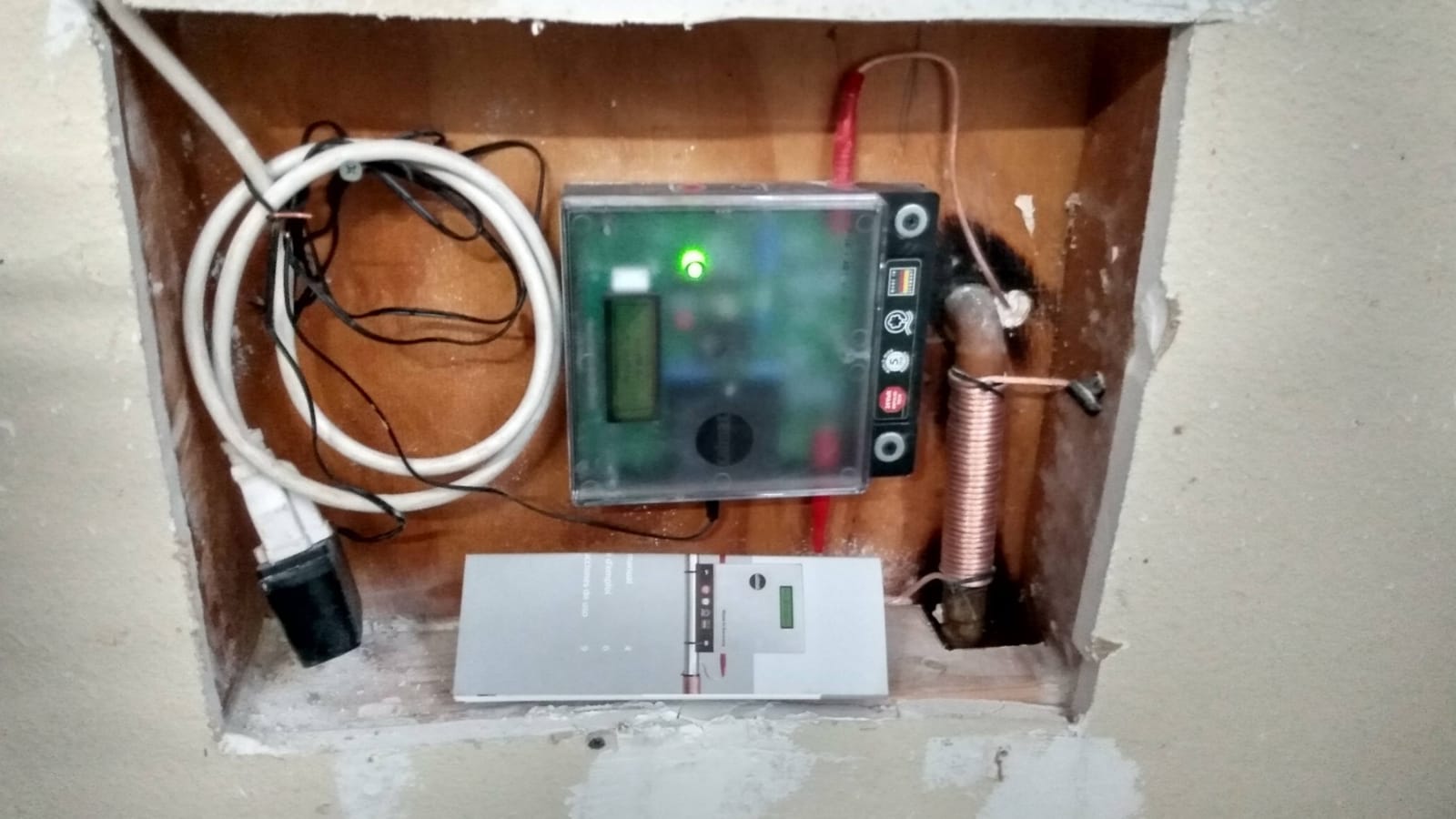
One owner with 72-year-old galvanized pipe reported stopping dishwasher rinse aid entirely within two months, and another review explains the mechanism in unusual detail: dissolved lime converts to crystals that wash away, with carbonic acid gently dissolving existing scale. That review also notes the seller checking installation photos by email.
The constraints are real. The unit is not waterproof and must be sheltered, ambient heat above 55 degrees Celsius still produces limescale, treated water reverts within roughly 2 to 7 days, and it will not work above 1 ppm iron or 0.1 ppm manganese.
Documentation is the weak point. The instructions do not clearly specify how much pipe length to wrap, and at least one reviewer questioned whether to wrap once or twice. Budget time for working that out.
Who the Calmat system suits
People on very hard water where the 19 and 25 GPG ceilings of the popular units are not enough, and anyone who trusts a long manufacturing history and a 5-year defect warranty more than a large review count. Two cables also suit old galvanized plumbing with a meter and heater close together.
Who should skip the Calmat system
Skip it above 1 ppm iron or 0.1 ppm manganese, in a hot unit space, or where a result must hold for weeks in a line that sits unused. 145 reviews is also a thin base compared with the rest of this list.
Apartment Buying Guide: How to Choose a Salt Free Water Softener
Choosing well comes down to four checks you can do in an afternoon: hardness, space, flow and permission. Do them in that order, because each one can eliminate most of the list before you compare features.
Test Your Hardness Before You Buy Anything
Hardness is measured in grains per gallon, and 7.5 GPG is the threshold most plumbers use for calling water hard. Below about 10 GPG almost anything here will work and your decision becomes installation. Between 10 and 19 GPG the iSpring ED2000 sits in its designed range. Above 25 GPG salt-free conditioning starts to underperform visibly, and above 59 GPG only the Calmat claims the range.
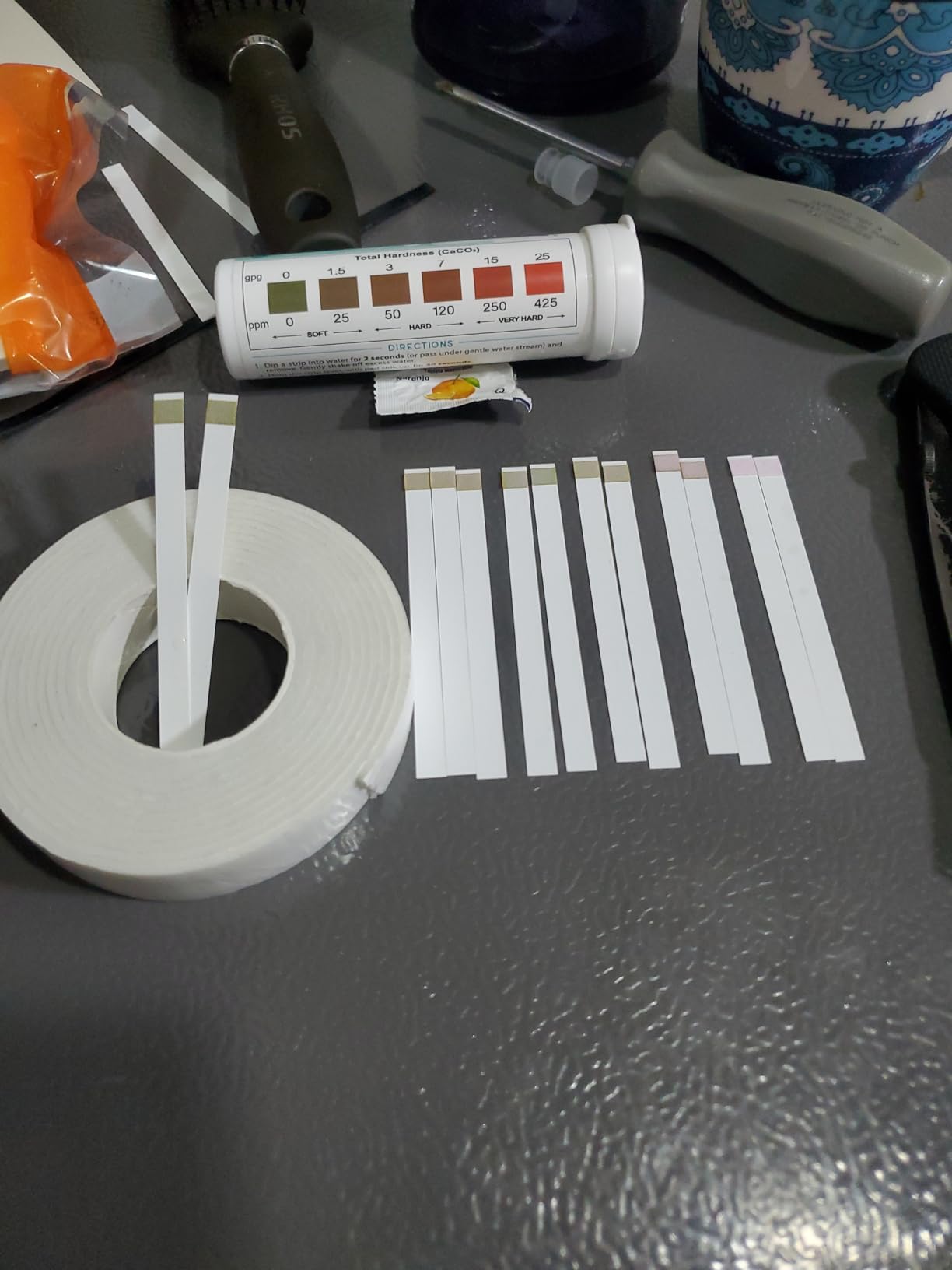
A test strip beats guessing. The r/HomeImprovement consensus is that people who tested first were far more satisfied, because they knew in advance whether scale was the actual problem. If your water is soft, no salt-free unit is going to do anything for you.
TAC, NAC, SP3, Coils and Polyphosphate Explained
The names on the box describe the mechanism, and the mechanisms are not interchangeable. TAC, or Template Assisted Crystallization, uses a polymeric template to convert dissolved hardness into crystals that stay suspended. NAC, or Nucleation Assisted Crystallization, does the same with a catalytic surface. Filtersorb SP3 is a crystalline media used in tank systems that must be replaced on a schedule, typically every 5 to 10 years.
None of the three removes minerals, so a hardness reading at your tap stays the same, and that is why experienced buyers tell you to judge by watching scale. Polyphosphate systems work differently again, dosing minute concentrations to form a protective film inside pipes and needing a cartridge replaced roughly twice a year. Electronic and magnetic units sit outside that taxonomy entirely, sending pulses through a coil to change how crystals form, with zero consumables and no way to verify them by measurement.
Match Flow Rate to Your Bathroom Count
A one-bath unit running a dishwasher and a washer needs roughly 5 to 7 gpm. Two baths with a shared laundry need 8 to 10 gpm, which is where the 3M head and the EDDY both sit comfortably. Three or more baths pushes past 10 gpm, and the HQUA’s 24 gpm rating is the only one here with real headroom.
Undersizing is the most common technical mistake in apartments, because two fixtures running at once in a small unit drops pressure. Pick a unit rated above your realistic peak rather than your average, and check that it is rated for the pipe diameter you actually have, since several devices cap out at 1 inch.
Measure the Footprint Before the Cart
Real dimensions run from 1.5 inches tall for the Mineral Magnet II to 12.5 inches for the Waterdrop head. Electronic clamp-on units cluster around 2 to 4 inches in height and mount externally, so they cost wall or shelf space but no floor area. The inline polyphosphate heads are the tall ones and need upright clearance plus somewhere to sit.
Under-sink cabinets are the usual apartment location, and depth is usually the binding constraint rather than width. Measure the vertical gap, then measure the pipe run you intend to use. Our guide to handling washing properly is a different kind of measurement habit, but the discipline is the same: check before you commit. Hard water also shows up outside the apartment, on a car parked in the same city, which is why our guide to clearing road grime and salt from an undercarriage starts with the same measure-first approach.
Renter Versus Homeowner Trade-Offs
Homeowners should weight performance and longevity. A media tank that runs 5 to 10 years without a cartridge is cheaper over time than a polyphosphate head replaced twice a year, and a 10 gpm rating leaves room for additions. Renters should weight reversibility above everything else.
For a one-year tenancy the honest math is that a clamped electronic unit that travels with you is the only purchase that fully pays for itself before you leave. For a three-year lease, a unit with a warranty and no consumables starts to look sensible again. Anything requiring a cut pipe should wait until you own the unit you install it in.
Renting an Apartment? Read This First
The renter question is the one no competitor on this query handles well, so we looked at lease language and install reversibility directly. Most of the top ten installs leave nothing behind, and the two best-reviewed units are exactly the two you may not be allowed to fit.
What Counts as a Permanent Modification
A cut into a supply line is a permanent modification under almost any standard lease. Both the 3M Aqua-Pure AP430SS and the Waterdrop AP431 require it, which is why they rank first on evidence but carry an install caveat for tenants.
There is a second category, which is shared infrastructure. If the main shut-off sits behind a locked panel or in a mechanical room the building controls, you cannot treat the whole unit regardless of device size. That is a conversation with the landlord, not a workaround.
The No-Permission Install Tier
These units need no permission in the ordinary case: the Mineral Magnet II, which straps onto a shower hose in under a minute, the Timilge, the SCALESWEEPER, the EDDY, the HQUA and the YARNA. All of them add a device without altering a pipe.
The advice that circulates on r/NoStupidQuestions is that many renters install first and disclose later, which is a gamble with your deposit. The better version of the same move is a two-line email naming the model, the location and the fact that removal takes under a minute.
Your Move-Out Checklist
Before you hand back the keys, work through this in order. Unplug the unit and let it run a few minutes on normal water to clear the line. Unwrap the cables or unstrap the housings, which is a screw or a strap and nothing more. Cap the outlet if you used one, and check the pipe for marks where a housing or tape sat.
Then photograph the install location before and after removal, and keep the photos with your move-out evidence. That single habit has saved more deposits than any product on this list. Take the unit with you, since a coil or cartridge is portable and a media tank bolted into a closet is not. If you also keep tools for flat-pack fixes and small repairs, our oil-free air compressor pick covers the one machine you will actually reach for in a small space.
Frequently Asked Questions
Do saltless water softeners actually work?
They work at scale prevention, not at softening. Salt-free units convert calcium and magnesium into crystals that stay suspended so they cannot adhere to pipes and heaters, while leaving the minerals in your water. A hardness test will still read hard afterward. You will see fewer spots on fixtures, less limescale in the shower head and cleaner heating elements, but not the soap lather of ion exchange water.
Can I install a water softener in a rental?
Usually yes, if the install is reversible. Clamp-on, strap-on and exterior-mount units add a device without cutting a pipe, and most landlords approve those in writing. Inline heads that require cutting into the cold water line feeding a water heater are permanent modifications that a standard lease often prohibits. Email your landlord with the model, the location and a note that removal takes under a minute.
Which water softener is best for an apartment building?
For most one to two bathroom apartments on municipal water under roughly 25 GPG, an electronic or magnetic clamp-on unit is the best fit because it needs no salt, no drain line and no floor space. Test hardness first, confirm you can reach the incoming line or a fixture, and pick a unit rated above your peak flow of 10 gpm or less.
What is the best water softener system without salt?
The best salt-free system for an apartment is one that clamps on externally and conditions the whole unit without consuming anything. A polyphosphate head such as the 3M Aqua-Pure AP430SS has the most owner evidence, but it requires cutting into a cold line. A magnetic or electronic unit is more renter-friendly and needs no cartridge, at the cost of results that build over weeks.
Do salt-free water softeners need a drain line?
No, and that is one of the main reasons they suit apartments. Ion exchange softeners backwash brine into a drain, and a salt-free conditioner has no backwash cycle at all. Media-based TAC and NAC systems do not drain either, though they do need periodic media replacement, and the only drain you would need nearby is a normal sink for a countertop filter.
How much space does a salt free water softener need in an apartment?
Very little, and compactness is the reason to prefer them. Strap-on magnetic units are about 4.3 by 3.3 by 1.5 inches and clamp to a pipe or hose. Electronic clamp-on units run roughly 5 by 1.5 by 3.5 inches and mount externally on the wall. Inline polyphosphate heads are the largest at about 2.5 to 2.8 inches wide and 10 to 12.5 inches tall.
Can you use a shower filter in an apartment?
Yes, and a shower filter is often the better first move for a tenant. It attaches at the wall or the hose, changes nothing about the plumbing and is removed in seconds, which makes it far easier to get landlord approval for. It also targets the one fixture where hard water is most annoying, and it costs a fraction of a whole-unit conditioner.
Do you need a shower filter if you have a water softener?
A salt-free conditioner reduces scale in the pipes but does not change the mineral content of the water, so it does not stop the film a shower filter is designed to catch on glass and fixtures. If your priority is clear glass, a shower filter still adds something a conditioner cannot. If your priority is protecting the water heater, the conditioner is doing the work.
The Best Salt Free Water Softener for Your Apartment
The 3M Aqua-Pure AP430SS is the best salt free water softener for apartments where you are allowed to touch the plumbing, because more than 3,400 reviews at 4.5 stars is the strongest evidence in this category. If your lease forbids that, the iSpring ED2000 is the first unit to shortlist, since it is designed for the 10 to 19 GPG band most apartment buildings sit in and needs no plumbing modification at all.
For the tightest spaces and the most mobile renters, the Mineral Magnet II and the YARNA CWD24 both clamp onto existing pipe and take under a minute to remove. Whatever you choose, test hardness first, measure the space, and expect results on a timeline of weeks rather than days. Nothing in this category changes what a hardness test says, so judge it by the scale disappearing from your shower head.