
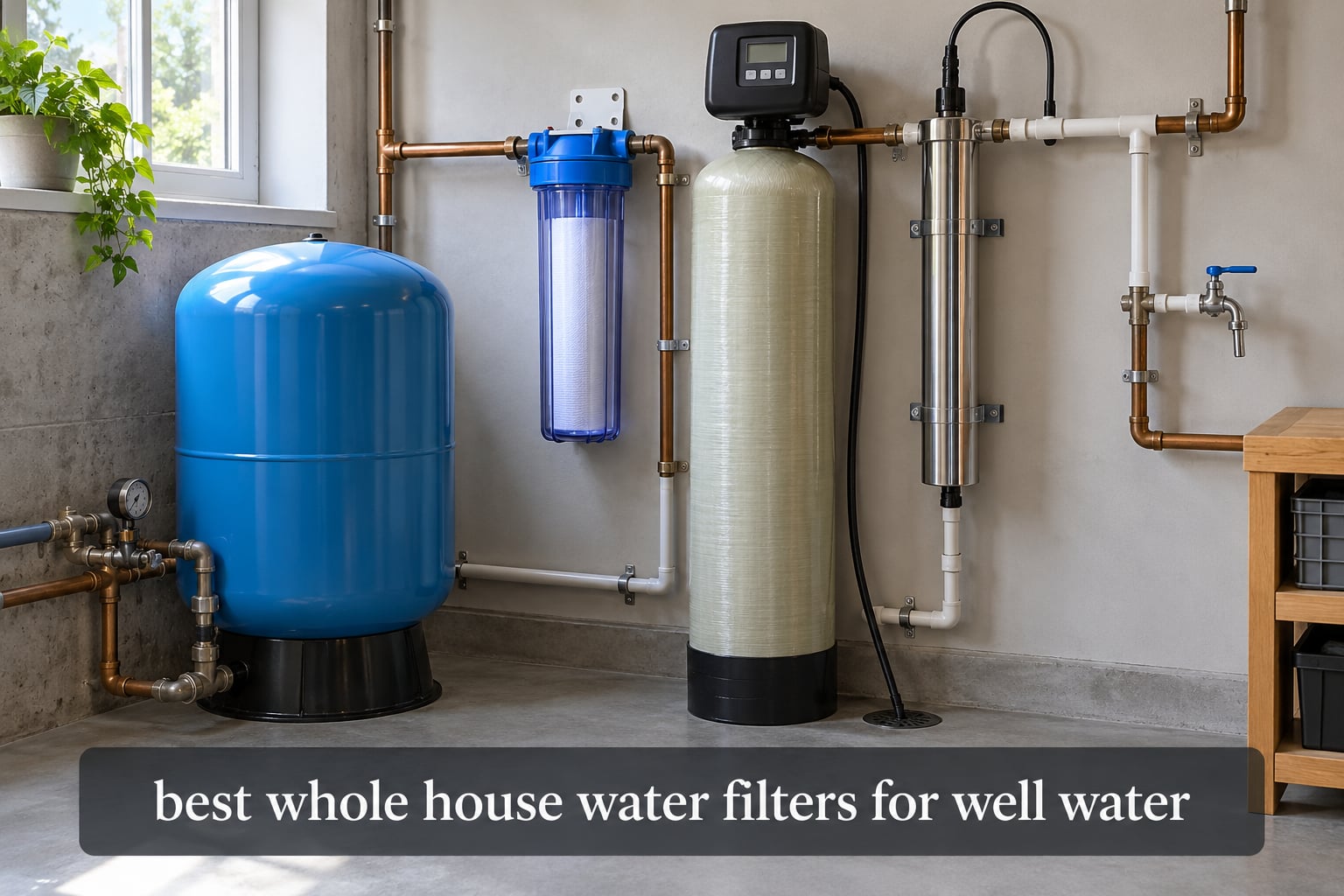
A private well does not come with a water department behind it. Nobody chlorinates the water, nobody publishes a test result, and no one shows up when the aquifer changes. That is why the best whole house water filters for well water are not the same products that dominate city-water shopping pages, and why picking one from a ranked list without a lab report is how people end up with orange sinks and a cartridge that died in eight weeks.
Our team spent weeks reading lab results, product specifications and owner reports for eleven point-of-entry systems built for well conditions, then matched each one to the contaminant it actually handles. The short version: a sediment stage, an iron or oxidation stage, and a disinfection stage solve completely different problems, and no single cartridge does all three.
We also confirmed what each system does not do. None of these units reduce total dissolved solids, and none of them make well water safe to drink at the kitchen tap on their own. A point-of-use reverse osmosis unit under the sink is still the standard pairing, and we explain why in the buying guide below.
Everything here is updated for 2026, and we note the certification standard, contaminant rating, flow rate and real media life for each pick so you can match it to your own lab report. If your well tests clean with iron under 0.3 ppm and no sulfur odor, you may not need a whole house system at all, and we will tell you when that is the case.
Table of Contents
Top 3 Best Whole House Water Filters for Well Water in October
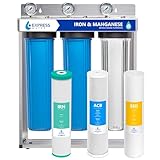
Express Water 3-Stage Iron
- Iron and manganese reduction
- Three filtration stages
- 17 GPM flow rating
- 100000 gallon capacity

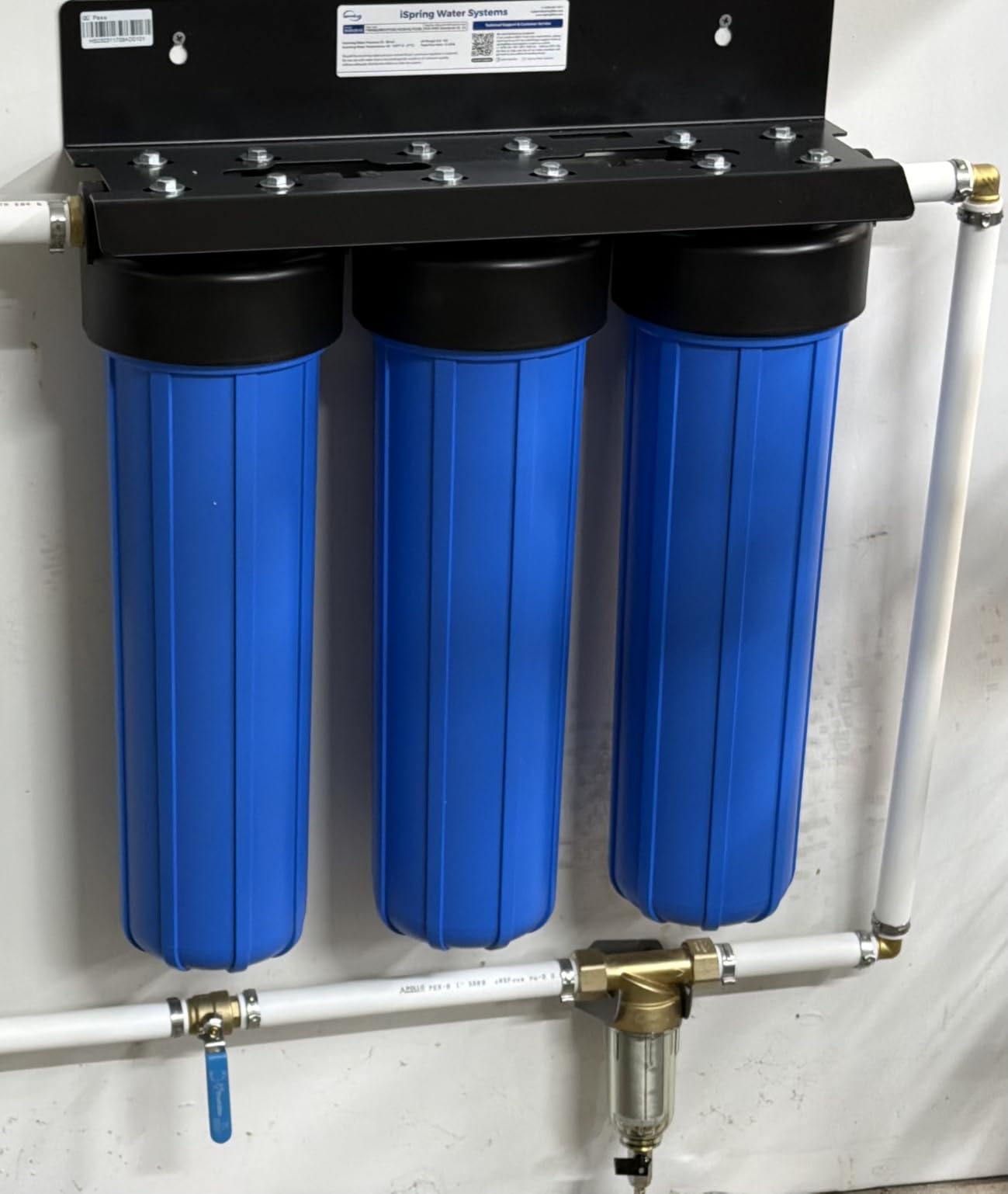
iSpring WGB32BM Iron Filter
- Iron up to 3.0 ppm
- Manganese up to 1.0 ppm
- 15 GPM
- 100000 gallon capacity

Waterdrop WHF21-FG 2-Stage
- Iron reduction up to 96.4%
- 5 micron sediment stage
- 15 GPM
- 50000 gallon capacity
Best Whole House Water Filters for Well Water at a Glance in 2026
The table below is the fast version of this guide. Every row lists what the system targets, how it is built, and the practical limits that decide whether it fits your well. The contaminant column matters most: a filter rated only for taste and odor will not touch iron, and a filter rated for iron will not touch bacteria.
| Product | Specs | Action |
|---|---|---|
| Express Water 3-Stage Iron and Manganese |
|
Check Latest Price |
| iSpring WGB32BM Iron and Manganese |
|
Check Latest Price |
 A. O. Smith Whole House Carbon Filter A. O. Smith Whole House Carbon Filter |
|
Check Latest Price |
| Waterdrop WHF21-FG 2-Stage Filter |
|
Check Latest Price |
 PRO+AQUA Heavy Duty Well System PRO+AQUA Heavy Duty Well System |
|
Check Latest Price |
 Aquasana Well Water Filter with UV Aquasana Well Water Filter with UV |
|
Check Latest Price |
 SimPure 3-Stage 20 inch Pre-Filtration SimPure 3-Stage 20 inch Pre-Filtration |
|
Check Latest Price |
 PUREPLUS 1-Stage Iron Housing PUREPLUS 1-Stage Iron Housing |
|
Check Latest Price |
 Home Master Three Stage Well Filter Home Master Three Stage Well Filter |
|
Check Latest Price |
 iSpring WCFM400K Air Injection System iSpring WCFM400K Air Injection System |
|
Check Latest Price |
 iSpring WGB32B-PFKDS PFAS System iSpring WGB32B-PFKDS PFAS System |
|
Check Latest Price |
1. Express Water Whole House Iron and Manganese System – Best Overall Pick
Express Water Whole House Water Filter System, Iron & Manganese, 3-Stage
3-stage filtration
Iron and manganese focus
17 GPM max flow
100000 gallon capacity
Pros
- Purpose-built for iron and manganese
- the two contaminants that stain fixtures and laundry
- NSF certified replacement cartridges that are easy to source
- 17 GPM flow handles a busy household
- Stainless steel frame with pressure gauges on each stage
Cons
- Does not reduce total dissolved solids
- All three filters need replacing every 6 to 12 months or at 100K gallons
- Stainless frame and manifold add installation complexity
This is the system we keep coming back to for well owners dealing with iron. The 3-stage chain targets iron and manganese directly rather than treating taste and odor as a side effect, which is exactly the distinction that matters when orange staining appears on laundry and in a toilet tank.
The 17 GPM maximum flow rating is the highest in this group, and on a well with a pump and pressure tank that headroom is worth real money. Sizing problems are the single most common complaint we saw across owner reports: undersized systems create a pressure drop that owners blame on the filter itself.
Rated capacity is 100000 gallons across the three stages, with the manufacturer listing a 6 to 12 month replacement window. Rated capacity is a laboratory figure measured on clean water, so on a real well with sediment you should expect changes on the earlier side of that window. Owners who skipped a sediment pre-filter report media clogging in a few months instead of a year.
Replacement cartridges are NSF certified and easy to source, which matters more than it sounds. Media you cannot find in two years turns a working system into a decorative one, and forum owners consistently flag hard-to-source replacement media as a top frustration in this category.
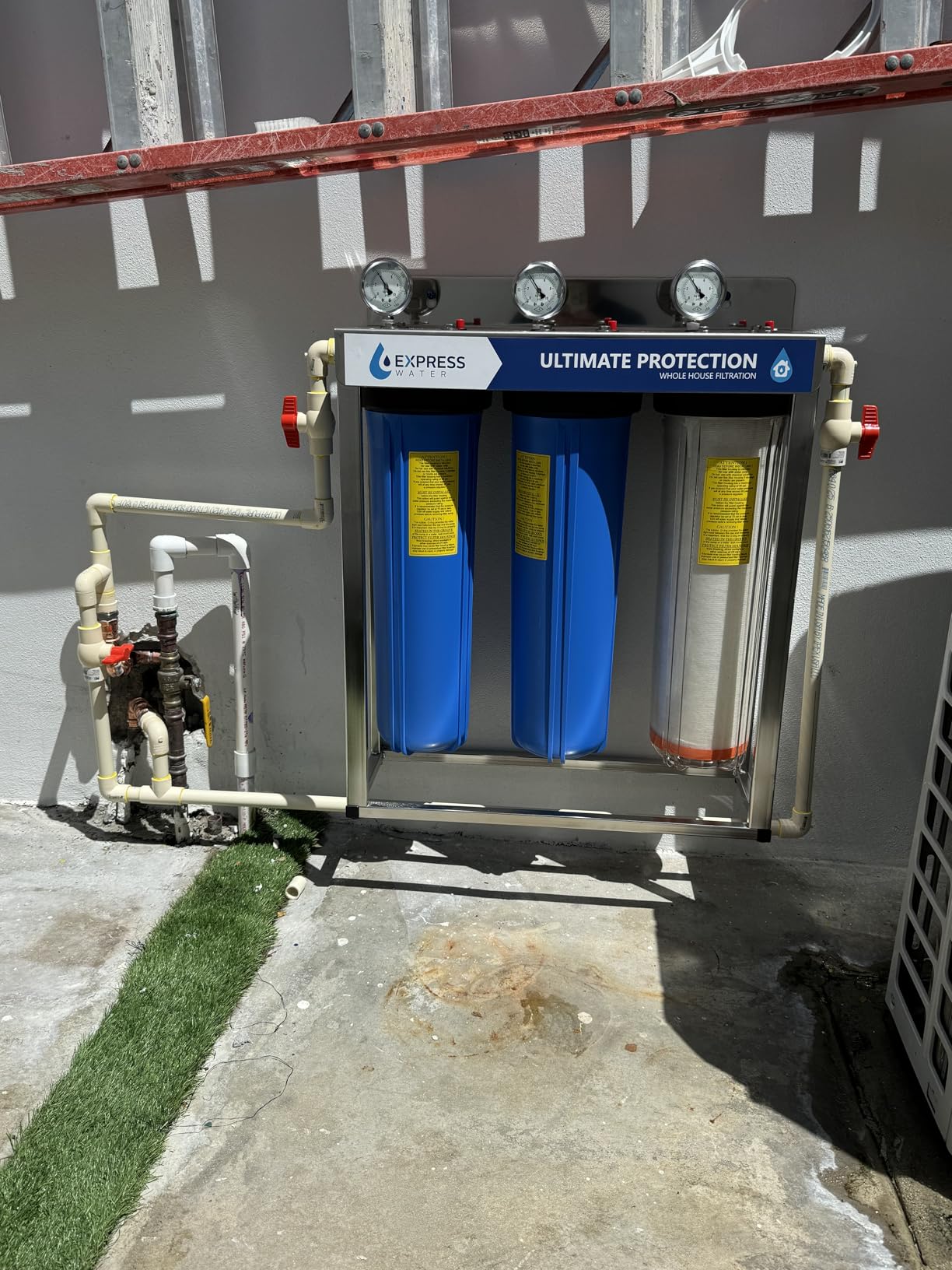
What makes this the easiest well system to install
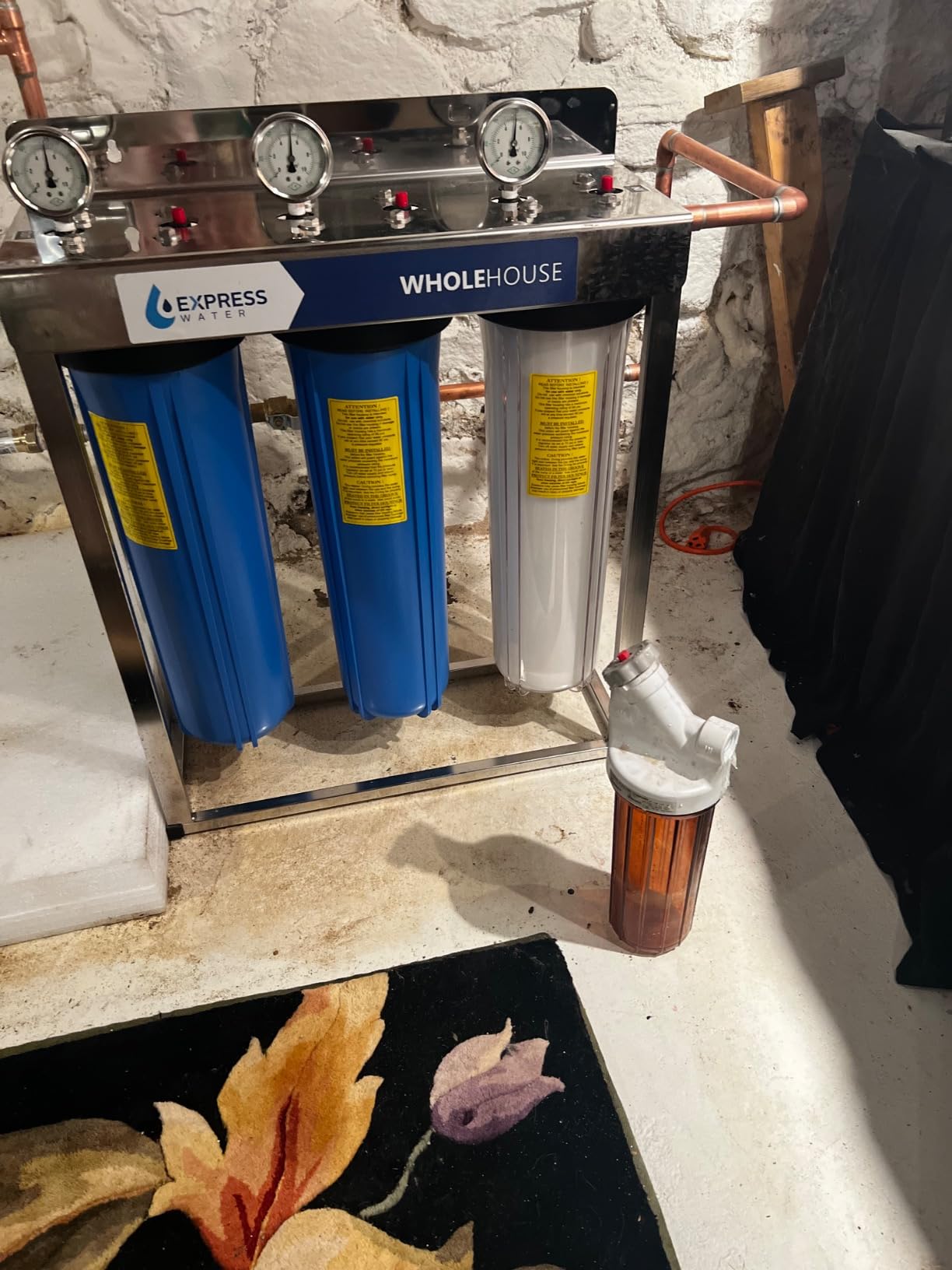
The stainless steel stand, pressure release buttons and a gauge on each stage mean you can see pressure drop stage by stage without guessing. When the whole house pressure dips, the gauge tells you whether the sediment stage is loaded or the iron stage is exhausted.
Reviewers consistently point to clear instructions and simple mechanical layout, and the free-standing frame means it mounts beside the pressure tank without wall mounting. Operating range is 20 to 80 psi, which covers a standard well pump and pressure tank setup.
When this is the wrong purchase
If your lab report shows hydrogen sulfide, this unit will not fix the odor. Iron-focused cartridge media addresses iron and manganese, not sulfur, and owners who installed an iron filter expecting both report the rotten egg smell persisting. Our dedicated sulfur picks appear further down the list.
It also does nothing for coliform or any other bacteria, which matters because private wells receive no chemical disinfection. If bacteria are in your report, plan on a UV stage. And the 57-pound stainless frame and multi-stage manifold add more install complexity than a single-housing unit, so budget for a plumber if your plumbing setup is unusual.
2. iSpring WGB32BM Iron and Manganese System – Best Support and Best for Moderate Iron
iSpring WGB32BM Iron, Manganese Whole House Water Filter System
Iron to 3.0 ppm
Manganese to 1.0 ppm
15 GPM
100000 gallon capacity
Pros
- Published contaminant ratings of 3.0 ppm iron and 1.0 ppm manganese
- Three stages covering sediment
- chlorine and rust
- 15 GPM flow with 1 inch NPT ports
- Strong US-based technical support
- Clear manual and video install tutorials
Cons
- Iron and manganese cartridges are heavy and hard to drain
- Housing tightening instructions are unclear and cause leaks
- Does not address hydrogen sulfide or total dissolved solids
- Some units needed a replacement head unit
This unit carries a 4.6 star average across more than 1400 reviews, and it is the one we recommend when a lab report gives you a specific iron number to hit. The published rating of iron reduction up to 3.0 ppm and manganese up to 1.0 ppm is the kind of specification that lets you check the product against your report instead of guessing.
Stage one is a 5 micron polypropylene sediment filter, stage two is a coconut shell carbon block, and stage three is the iron and manganese cartridge. That sediment stage is not an accessory here. It is doing real work on a well, and the forum consensus is that skipping sediment pre-filtration is the fastest way to shorten the life of everything downstream.
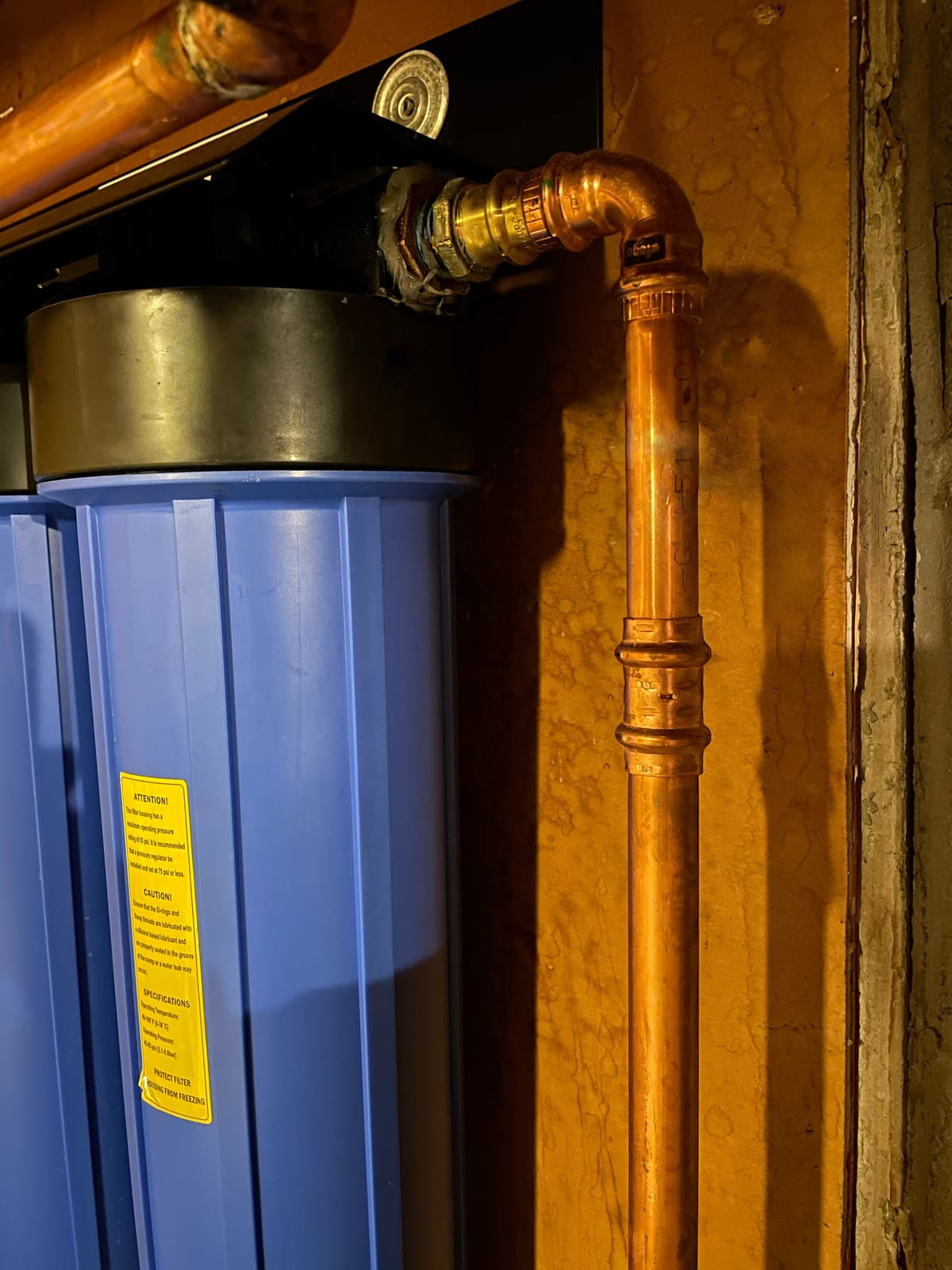
Where it beats most competitors is catalytic media. Because the iron and manganese stage uses catalytic media that is not consumed by the reaction, owners report service life up to three times longer than a greensand cartridge that has to be thrown away and replaced rather than regenerated.
The catalytic carbon approach is a good fit for wells with moderate iron. It will not handle 10 ppm iron, and it is not a sulfur solution, so if your report shows heavy metals or hydrogen sulfide, this is the wrong tool and you should look at an oxidation tank instead.
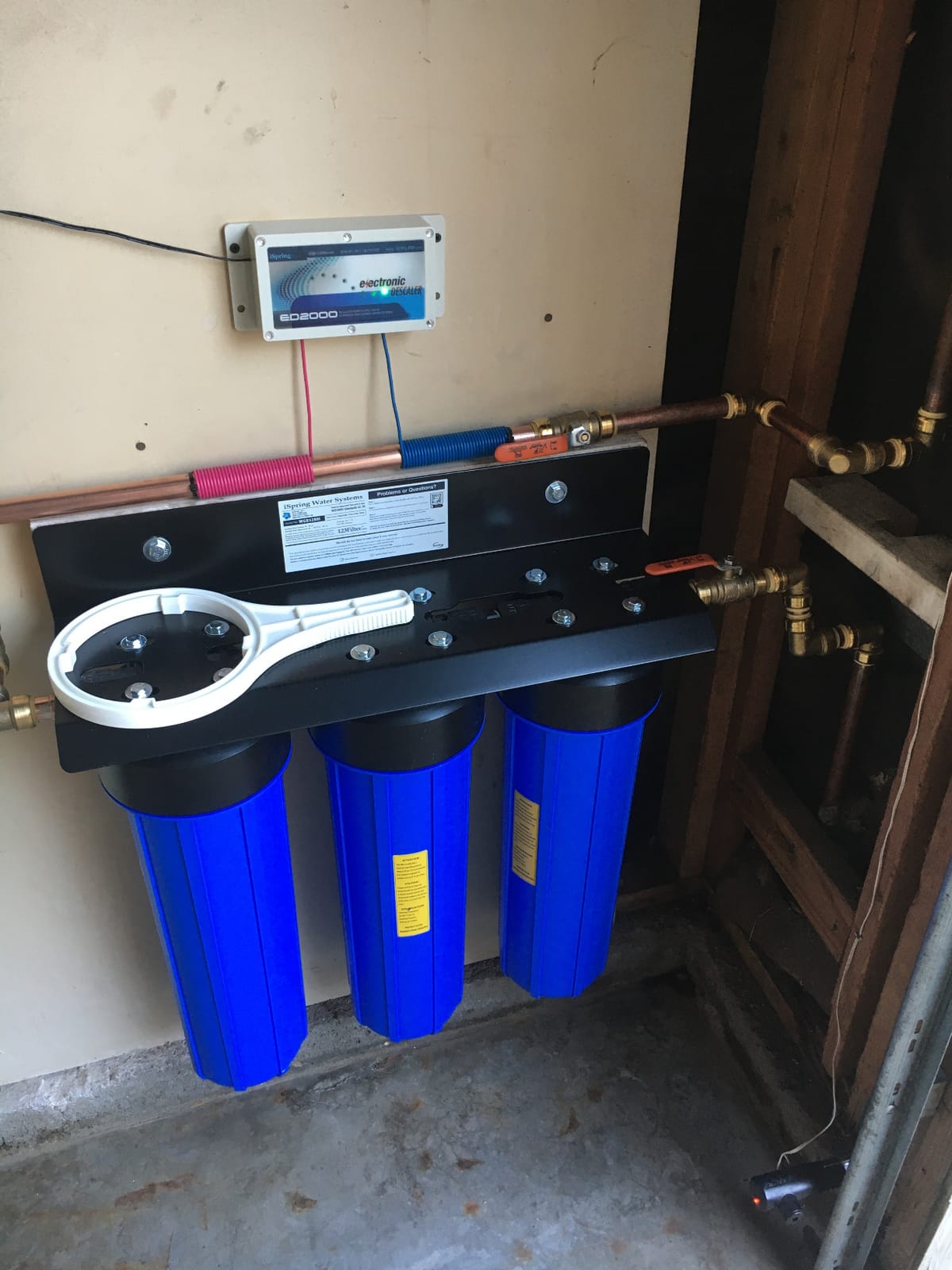
Check your iron number against the 3.0 ppm rating
Many rural wells run somewhere between 0.3 and 3 ppm iron, which sits neatly inside this cartridge’s rating. Above that, you are into oxidation filter territory, and a cartridge approach means replacing heavy media on a schedule rather than backwashing a tank.
One practical note from owner reports: these cartridges are heavy and cannot be fully drained, so changes are awkward. Set up a drain route or a bucket path before you need it, not after the housing is full of water and sitting in a crawlspace.
What buyers complain about most
By far the most common issue is mechanical rather than filtration related. Instructions do not explain how tightly to tighten the blue housings clearly enough, and under-tightening causes leaks that show up days later inside a wall.
US-based technical support is repeatedly praised for resolving leaks, media questions and parts, which is a genuine advantage over unbranded housings. It carries a 1 year limited manufacturer warranty, so register the unit if you want that coverage documented.
3. A. O. Smith Whole House Carbon Filter – Longest Lasting Cartridge
A. O. Smith Whole House Water Filter System | 600K Gal | AO-WH-Filter
96.9% chlorine and odor reduction
600000 gallon cartridge
6 year warranty
7 GPM max flow
Pros
- 600000 gallon cartridge with a 6 year limited warranty
- Reduces 96.9% of chlorine taste and odor
- No drain line and no water waste
- Compact inline format that saves floor space
Cons
- Does not reduce iron
- sulfur or total dissolved solids
- 7 GPM is the lowest flow rating in this group
- 3/4 inch ports are smaller than the 1 inch ports most systems use
- Pre-filter recommended to protect the cartridge
Let us be direct about what this is: a chlorine and taste filter. It is NSF/ANSI 42 certified for chlorine reduction, cuts 96.9% of chlorine taste and odor, and it is rated for city and well water as a general polish stage. It does not touch iron, sulfur or total dissolved solids, and the 8% one-star share in its reviews comes almost entirely from buyers who expected it to solve something it never claimed to solve.
What it does offer is durability. A 600000 gallon cartridge life and a 6 year limited warranty is the longest rated interval in this group, and the inline format needs no drain line, no backwashing and no electricity. You plumb it in and forget it for years.
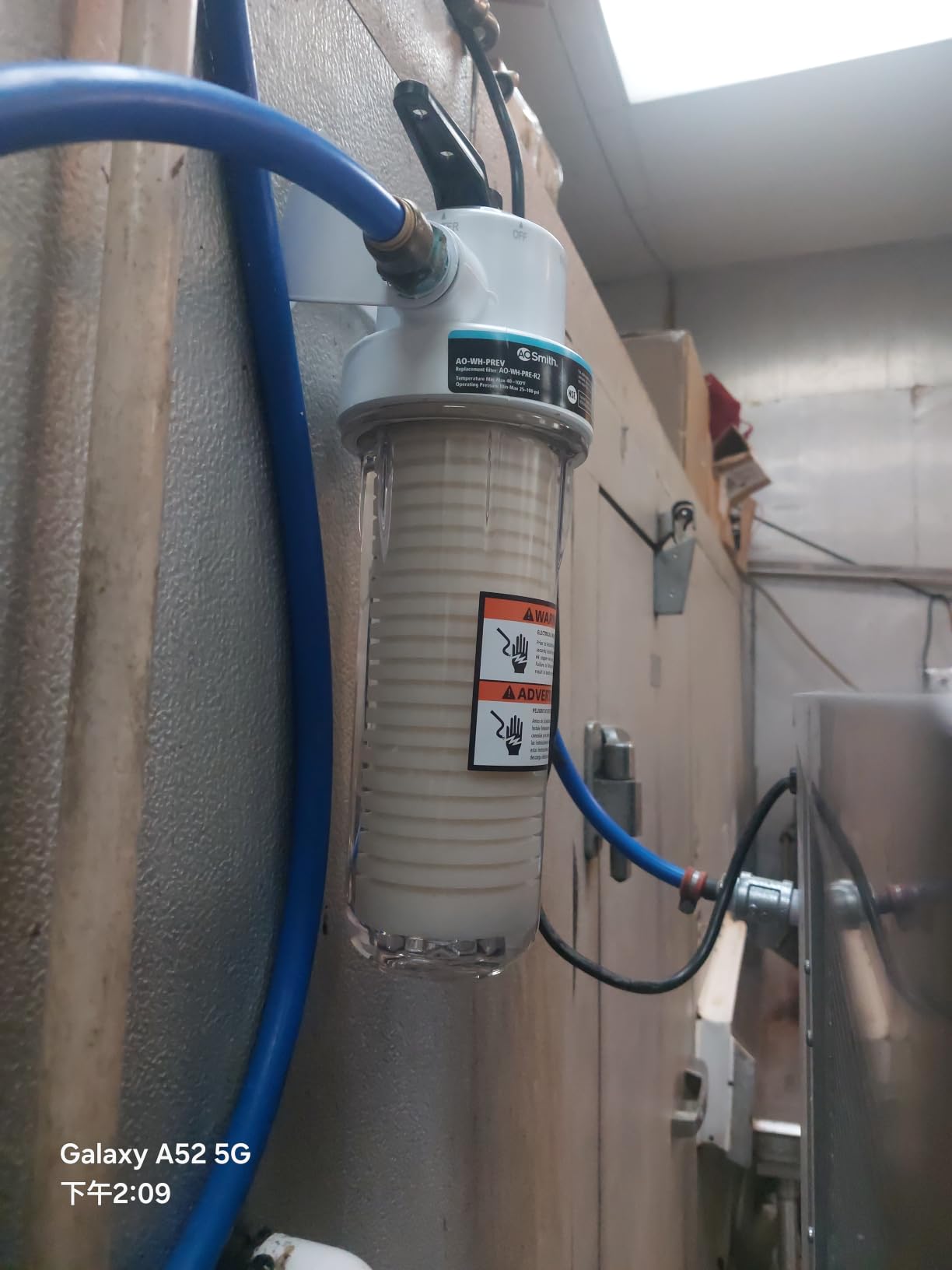
The trade-off is flow. A 7 GPM maximum is the lowest here, and with 3/4 inch inlet and outlet ports it will restrict a home with several fixtures running at once. For a small household on a well with clean water and mild chlorine demand, that is a fair deal. For four bathrooms, it is a bottleneck.
Placement matters more than usual with this unit. Carbon media placed ahead of iron-bearing water fouls almost immediately, so if you are pairing a whole house system, this belongs after your oxidation or iron stage, never before it. We cover the full plumbing order further down.
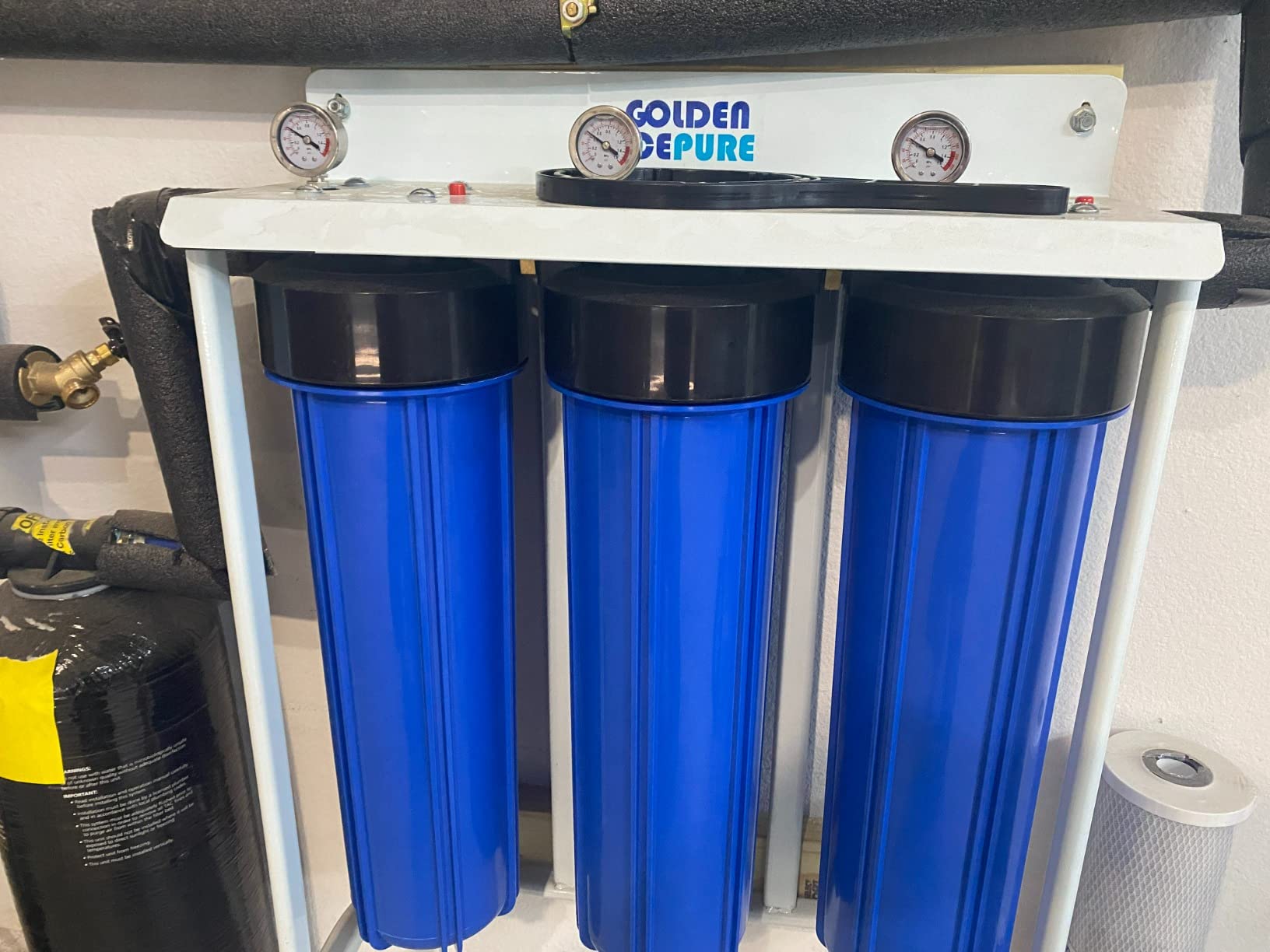
Where this filter actually earns its place
It works well as the final polish stage on a well that tests low for iron and manganese but has taste and odor complaints. It also suits owners who want one simple plumbed-in unit rather than a multi-tank system with a drain line and periodic service.
Operating pressure range is 20 to 100 psi, wider than most cartridge systems here, and the upper temperature rating is 90 F. The manufacturer recommends a pre-filter to protect the central cartridge, which on a well with any sediment is not optional in practice.
Why we would not call this a well water solution
Roughly one in eight reviews is a one-star, and the pattern is consistent: expectations set by the listing, not by the performance. Iron stains, orange water and sulfur odor all persist through this filter because the media has no mechanism for any of them.
If your report shows iron above 0.3 ppm or any sulfur, skip this as your primary stage and consider it only as a downstream polish. Our iron and oxidation picks handle those problems directly, and you can read about carbon options in more depth in our guide to whole house carbon filters for chlorine.
4. Waterdrop WHF21-FG 2-Stage Whole House Filter – Best Value
Waterdrop WHF21-FG 2-Stage Whole House Water Filter System, NSF/ANSI 372
Iron to 96.4%
Manganese to 98.2%
15 GPM
50000 gallon capacity
Pros
- Iron
- manganese and chlorine reduction in a compact two-stage housing
- Roughly 10 pounds total
- easy to lift during changes
- Reinforced brass threads and dual O-rings resist the leaks common in plastic housings
- Cartridges arrive pre-installed with wrench and bracket included
Cons
- 50000 gallon and 6 month cartridge life means more frequent replacements
- Only two stages
- so narrower contaminant coverage than three-stage units
- 5 micron nominal rating will not catch finer sediment
If you want iron and manganese removal on a well without spending heavily, this two-stage unit is the value pick. Third-party testing lists up to 96.4% iron reduction, 98.2% manganese reduction and 95.63% chlorine reduction, plus filtration of particles larger than 5 microns.
The engineering detail we like is at the fittings rather than the media. Reinforced brass threads and dual high-sealing O-rings have been through more than 100000 pressure and water hammer tests, and that is exactly where the cheap plastic manifolds in this category tend to fail first, usually inside a wall.
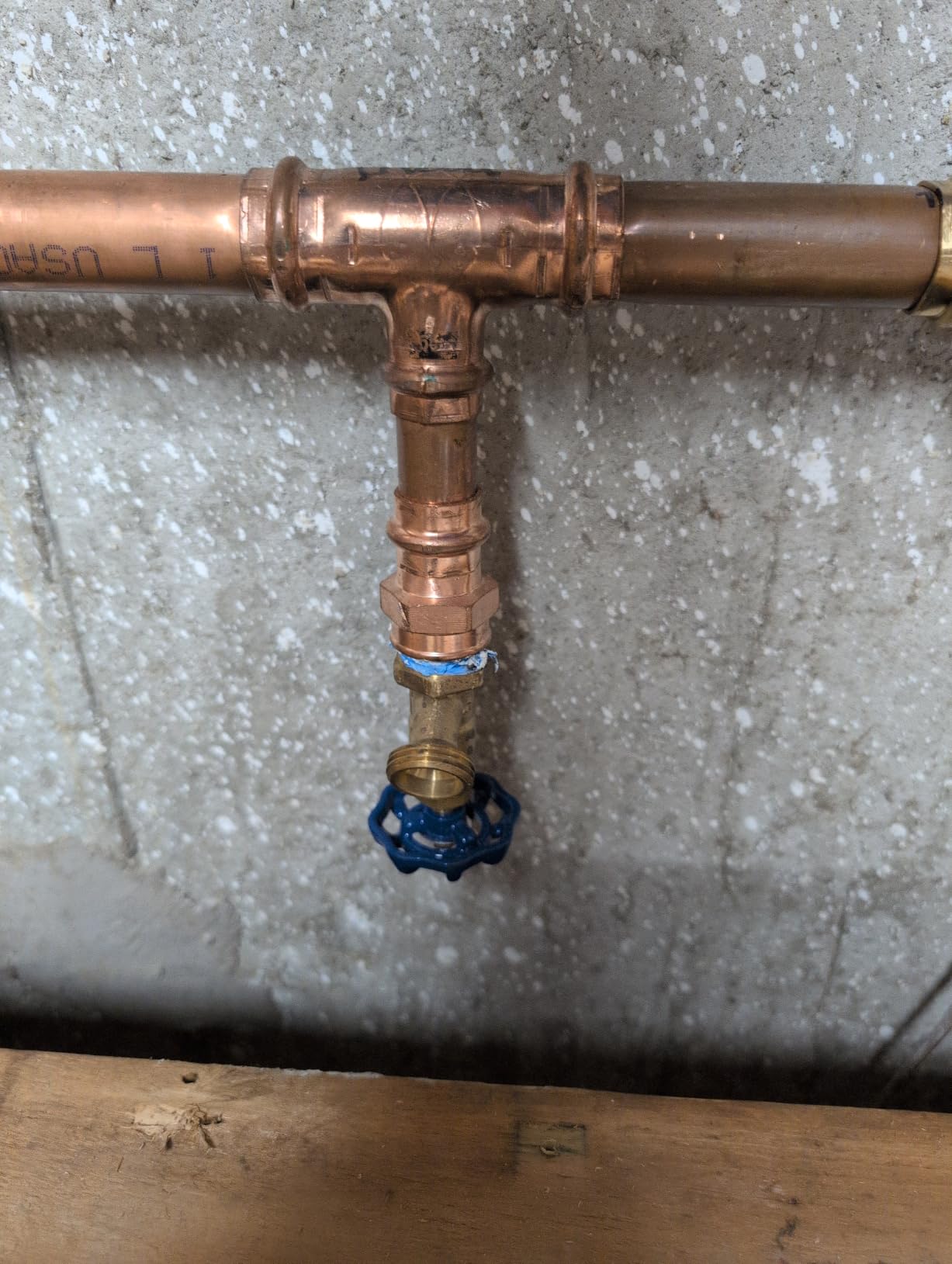
Stage one combines an iron and manganese filter with natural coconut shell granular activated carbon, which means one housing does both jobs. Stage two adds carbon for taste and chlorine. Both cartridges meet NSF/ANSI 372 lead-free standards.
Flow is rated at 15 GPM through 1 inch NPT inlet and outlet, so it will not bottleneck a busy home. At roughly 10 pounds, swapping a cartridge is a one-person job, which matters when you own several of these.
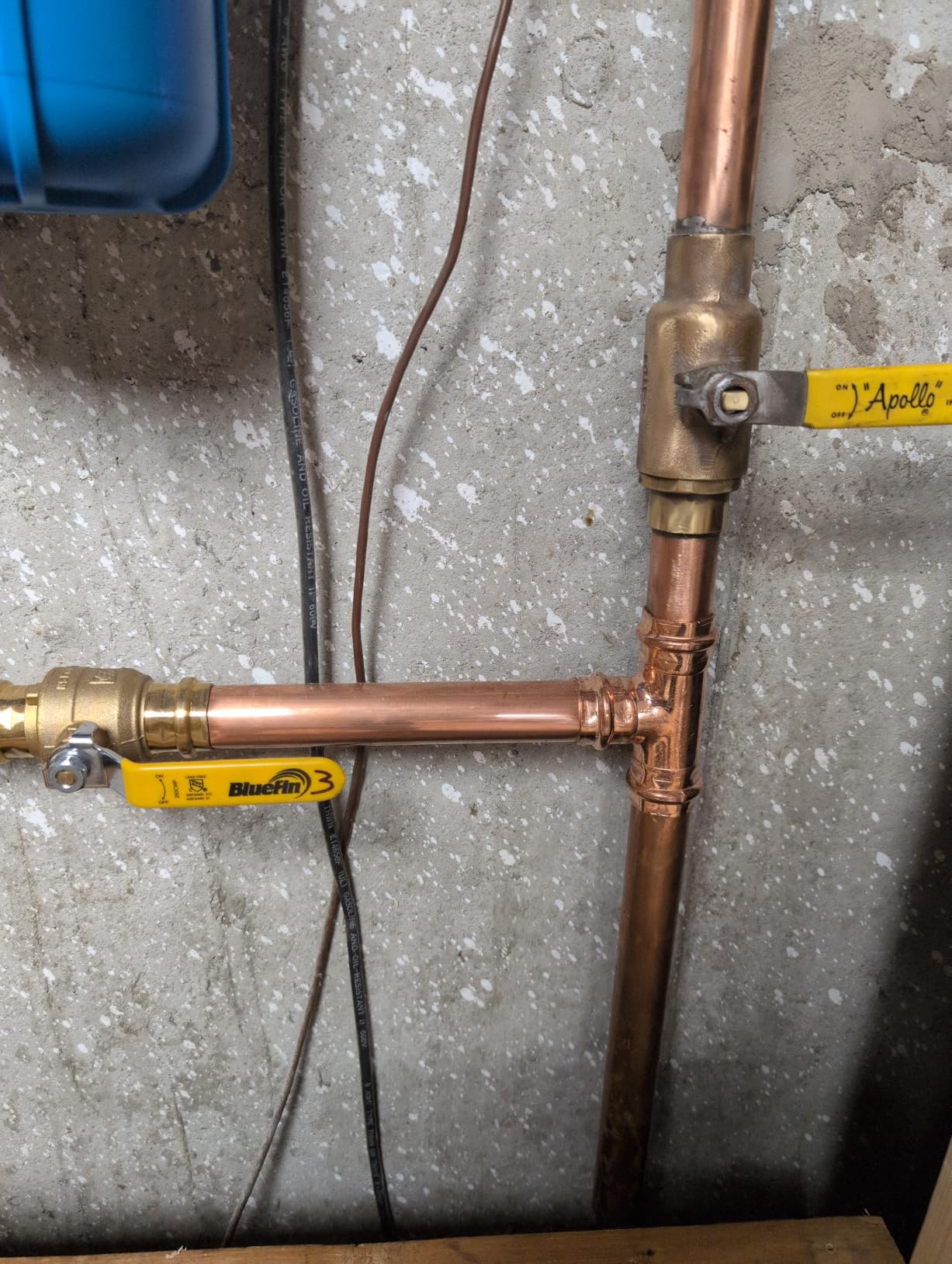
How to get the rated life out of a 6 month cartridge
The 50000 gallon and 6 month rating assumes reasonably clean water. On a well with seasonal sediment, owners report needing changes sooner, so plan on a pressure gauge on this housing and check it monthly during the first year.
A 5 micron nominal rating will not catch finer suspended material. If your water has grit that shows up in a glass after two minutes, add a finer sediment stage ahead of this unit rather than expecting it to handle the load.
Where the trade-offs show up
Two stages simply covers fewer problems than three, so anything outside iron, manganese, chlorine, rust and coarse sediment is outside its scope. It also does not address hardness, sulfur or bacteria, and it does not reduce total dissolved solids.
The advantage is that it is small, light, quiet and simple to plumb. For a household with moderate iron on a well, this is a low-risk first system, and it is a good fit if you want to solve the staining problem now and add a disinfection stage later.
5. PRO+AQUA Heavy Duty Well Water System – Best Automatic Backwash
PRO+AQUA Heavy Duty Whole House Well Water Filter System
Automatic programmable backflush
1 cubic foot media tank
Hydrogen sulfide listed
10 GPM
Pros
- Automatic backflush with programmable flush intervals
- Manufacturer lists removal of iron
- hydrogen sulfide
- manganese
- lead
- uranium and radium
- Built in the USA with a fiberglass-lined tank
- 5 year warranty when registered within 60 days
Cons
- Lowest average rating here at 4.1 with a 13% one-star share
- 57 inch tall tank with a 91 pound weight
- 10 GPM is modest for four or more bathrooms
- Does not reduce total dissolved solids
This is the only tank-based media system in the group that lists hydrogen sulfide alongside iron and manganese, which makes it the one to look at if your rotten egg smell is the main complaint. Unlike a cartridge, the media is cleaned by automatic backflush cycles rather than thrown away, so there is no scheduled replacement cost.
The digital control is fully programmable with customizable auto-flush intervals, so you can set the backwash frequency to match incoming water quality and household use. Owners like that after setup there is nothing to remember.
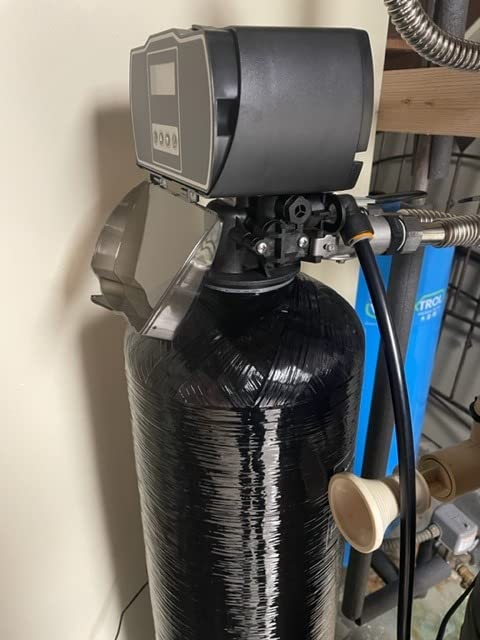
The manufacturer claims 99% reduction across a wide list that includes chemicals, heavy metals, odors, VOCs, pesticides, iron, hydrogen sulfide, manganese, zinc, copper, lead, uranium, radium and radionuclides. Treat that as a manufacturer claim rather than independent verification, and match it to your lab report before relying on it for a health contaminant.
Construction is solid: a fiberglass-lined polyethylene tank, a durable bypass valve, prefilled premium resin and three connection options for installation flexibility. It is built in the USA, and registration within 60 days extends coverage to 5 years with lifetime support.
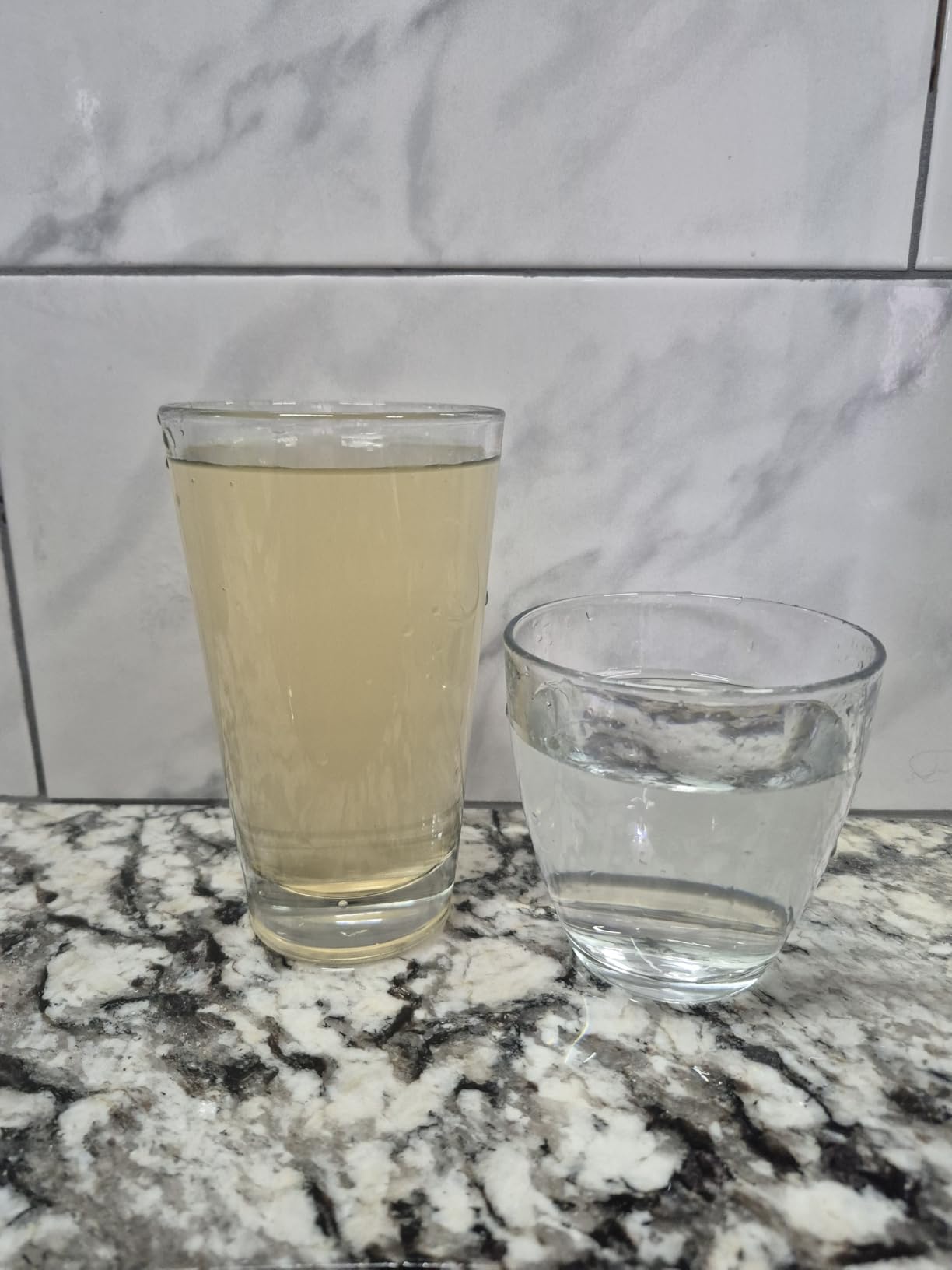
Deciding between air injection and chemical oxidation
Backwashing media systems in this category split into two camps. Air injection systems draw in air and oxidize iron with oxygen, using no chemical feed. Chemical injection systems use potassium permanganate, which works but adds a consumable and an ongoing chemical cost that well owners consistently describe as annoying to manage.
If you want a set-and-forget tank without a chemical bill, this is the option to compare. Note that it is a sediment-based media system rather than a named catalytic media system, so ask the manufacturer for the media type before ordering.
Why the rating is the lowest here
A 4.1 average with a 13% one-star share tells you results vary meaningfully by well chemistry and installation. That is a real signal, not noise, and it aligns with what we found in forum discussions: a wide contaminant claim list means the media is tuned for a range of conditions rather than optimized for your specific one.
Physical demands are also real. At 57 inches tall and 91 pounds, this needs a dedicated floor area and a drain line, and 10 GPM is modest for a home with four or more bathrooms. Ask for the lab report before you order anything in this category, and read our guide to whole house iron filters for well water for the chemistry behind the claims.
6. Aquasana Whole House Well Water Filter with UV – Best for Bacteria
Aquasana Whole House Well Water Filter | 500K Gal | UV | WH-Well-CT-UVS-B
UV certified to NSF/ANSI 55 Class B
500000 gallon media life
14.7 GPM
5 year warranty
Pros
- Only unit here with a UV stage certified to NSF/ANSI 55 Class B for bacteria
- viruses and cysts
- 500000 gallon and 5 year media life
- Salt-free scale control with no salt bags or backwashing
- Preserves healthy minerals rather than demineralizing
Cons
- Most expensive system here by a wide margin
- Needs a dedicated floor area at 67 x 11 x 57 inches
- Only rated for iron under 0.3 ppm
- hardness under 15 gpg and pH below 8.3
- Requires electrical power for the UV stage
Private wells get no chemical disinfection, which is why bacteria show up in well reports more often than people expect. This is the only system in our group with a UV stage, certified to NSF/ANSI Standard 55 Class B for bacteria, viruses and cysts, and on a coliform-positive well that changes the conversation entirely.
Beyond UV it runs a multi-stage train: a pre-filter, filter tank with carbon and KDF media, a salt-free conditioner, a post-filter and the UV chamber, plus a pro kit. Owners report coliform clearing on private wells after install.
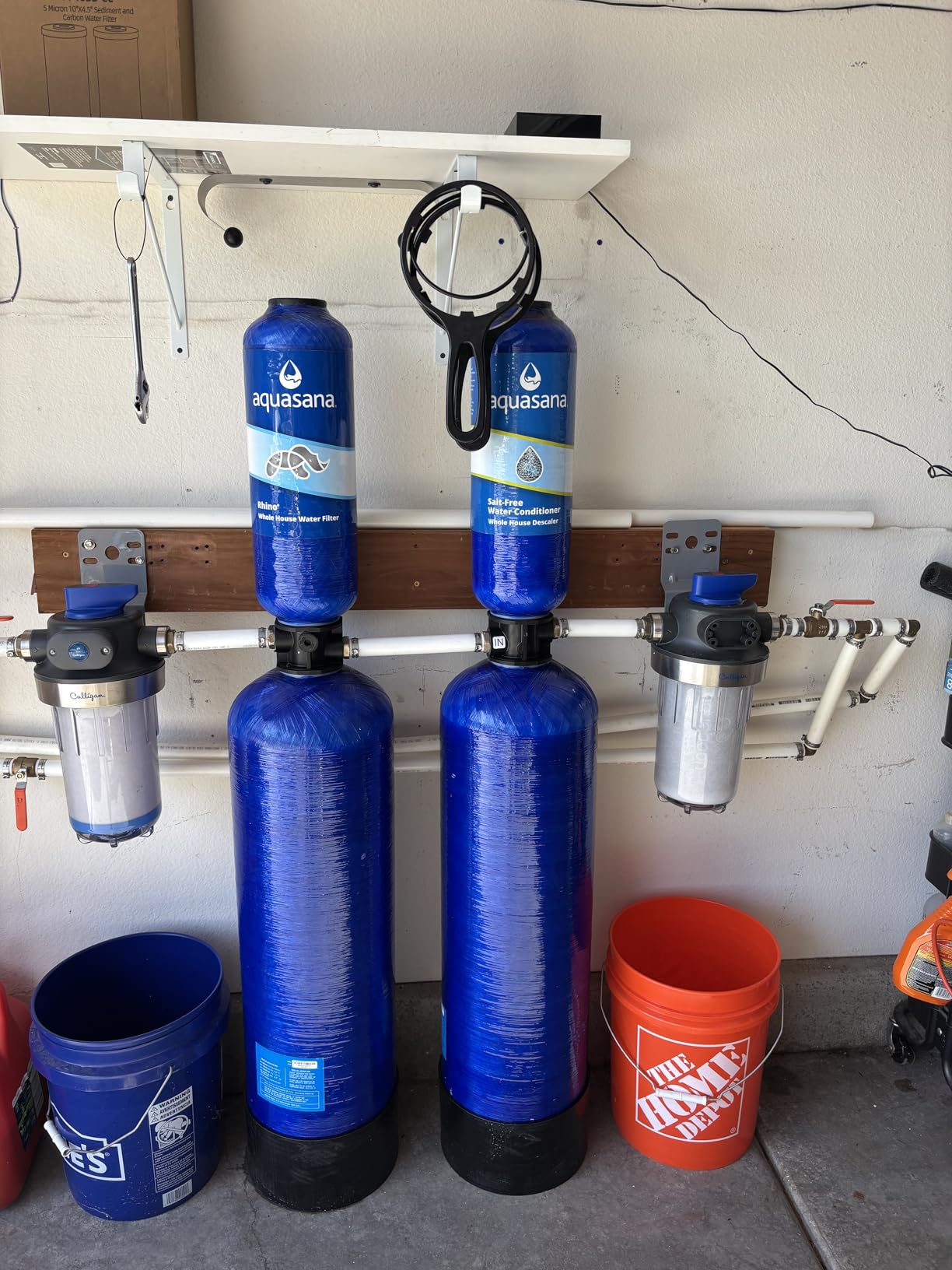
Two things make it stand out. First, flow: 14.7 GPM is enough headroom to serve a busy home despite the multi-stage design. Second, cost of ownership: 500000 gallons over a 5 year media life is a long rated interval, and the manufacturer puts filtration under one cent per gallon.
The salt-free scale control media is a middle path. It controls scale without salt bags, backwashing or chemicals, and unlike a softener it leaves the water’s minerals intact. That is a different compromise than softening, and it suits owners who do not want to remove calcium from their drinking water.
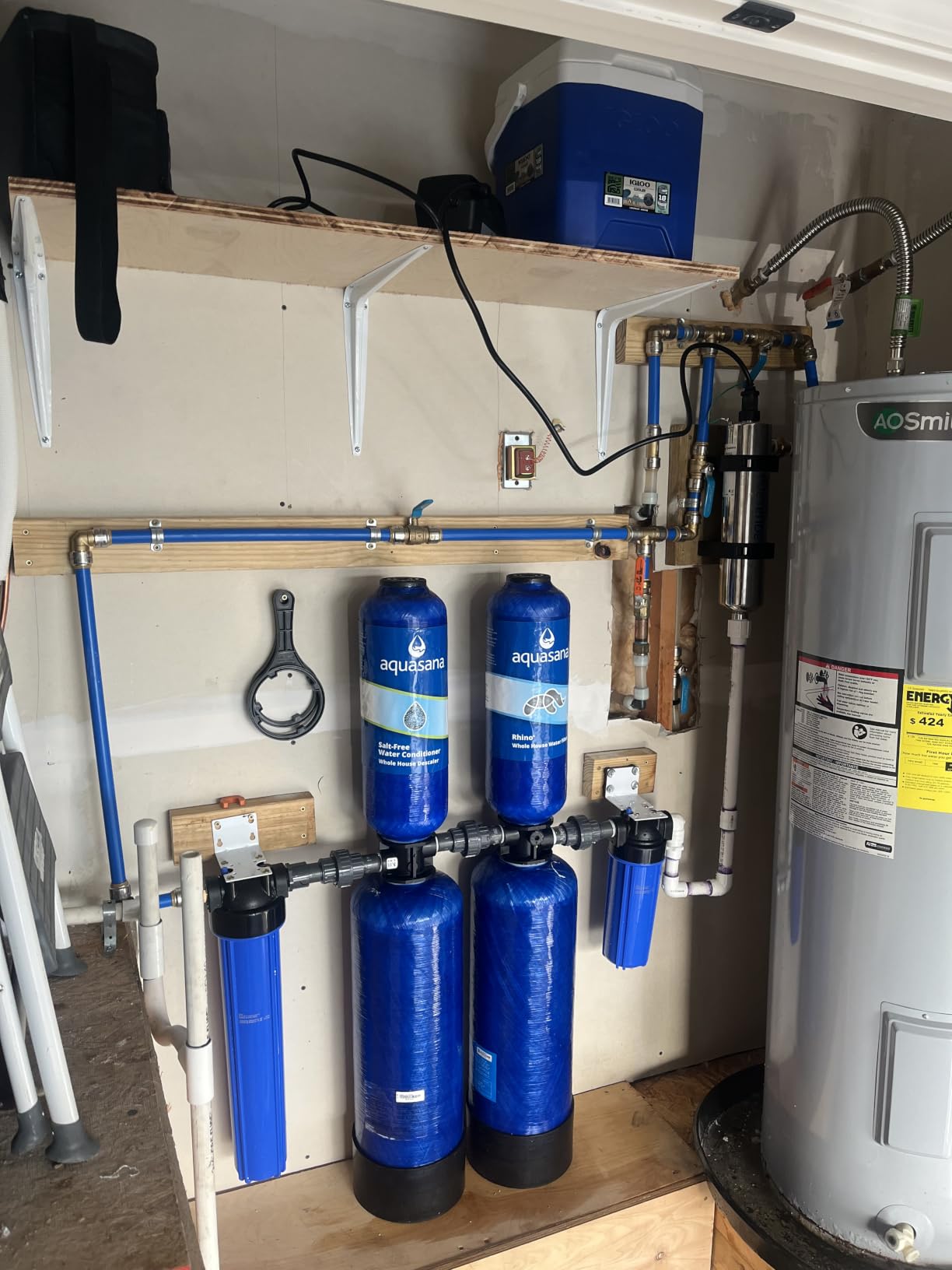
Check these inlet conditions before you buy
This system is optimized for moderate hardness: under 15 grains per gallon, alkalinity under 250 mg/L, pH below 8.3, and iron under 0.3 ppm. Those are UV inlet conditions, not marketing numbers. UV light only works when water is already clear and low in iron, because turbidity and iron absorb the light before it reaches the organisms.
If your report shows iron above 0.3 ppm, install an iron or oxidation stage ahead of this unit. A professional installer guidance point we came across repeatedly is that the sediment filter must precede the UV, with iron and hardness inside those limits, or the UV will not perform as rated.
Where the space and budget requirements bite
This is the largest unit we covered at 67 x 11 x 57 inches and 116 pounds, and it needs its own floor area plus a power outlet. In a small mechanical room where you also want a softener, planning is the whole game.
The UV lamp is a consumable you will replace on a schedule, and the 5 year limited warranty covers the system rather than the lamp. If your well is clean enough to meet the inlet limits and bacteria are your main concern, this is the correct pick.
7. SimPure 3-Stage 20 Inch Pre-Filtration System – Best for Seeing Filter Wear
SimPure Whole House Water Filter System 3-Stage 20″ *4.5″ Pre-Filtration
MPP, GAC and CTO three stages
Clear housings
15 GPM
150000 gallon capacity
Pros
- Three-stage MPP plus GAC plus CTO chain covers more than two-stage units
- Clear housings show cartridge wear without disassembly
- 150000 gallon rated capacity for a cartridge system
- 2x2 O-rings and brass fittings resist leaks
- 15 GPM and universal 20 x 4.5 inch cartridges
Cons
- Carbon filter life is only 3 to 6 months
- 48 pounds is heavier than two-stage alternatives
- Rated to a 90 psi maximum operating pressure
- Does not reduce total dissolved solids
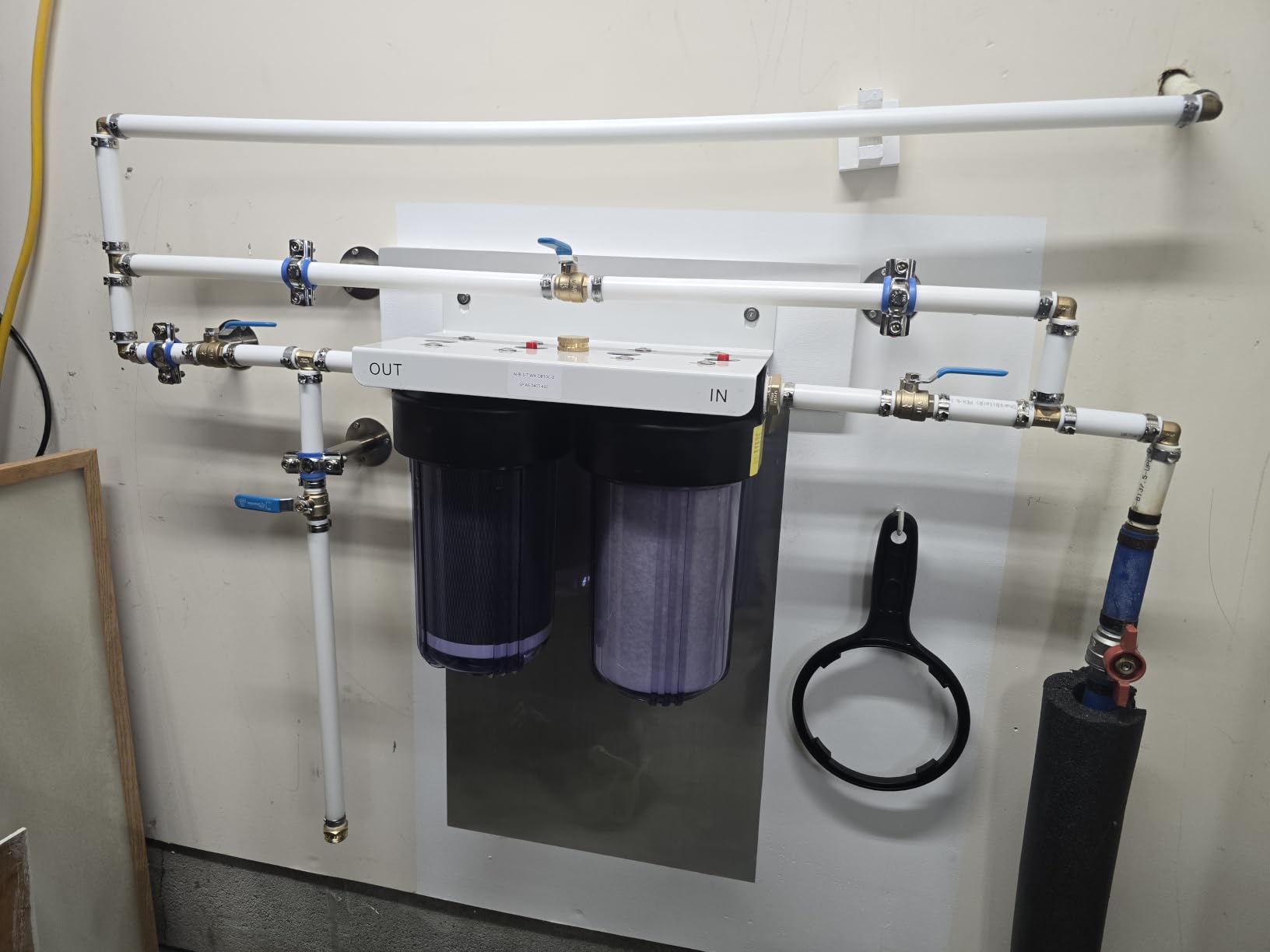
The detail that makes this unit pleasant to own is the clear housing. On a well, sediment loading is the main reason filters stop working, and being able to see a clouded cartridge without cracking the system open turns a guess into a decision. Two DB20P clear housings make the sediment stage and carbon stage visible.
The media chain is three stages: MPP sediment, granular activated carbon and a CTO carbon block. That is broader coverage than the two-stage budget units, and the housing accepts any standard 20 x 4.5 inch cartridge, so you can upgrade the media later without replacing the housing.
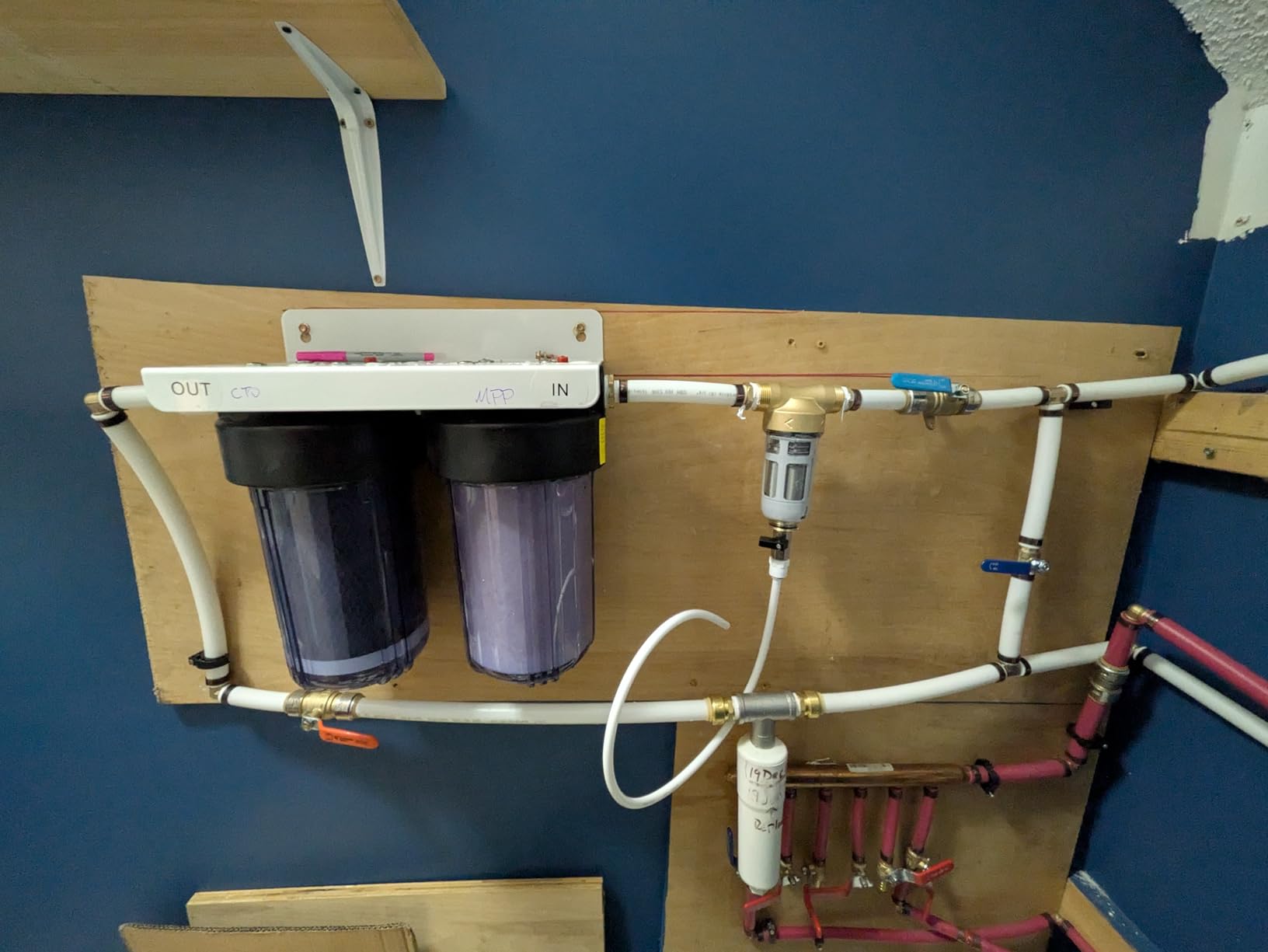
Rated capacity of 150000 gallons covers a family of four on clean water, and 15 GPM flow makes it a comfortable fit for a mid-size home. Operating range is 25 to 90 psi, and the upper temperature rating is 100 F, which covers a typical protected well pump and pressure tank.
Fittings are the other selling point: 2×2 O-rings and brass connections designed specifically to prevent the leaking that undermines cheaper plastic manifolds. Cartridges arrive individually wrapped for freshness, and each one is unwrapped just before install.
Planning around a 3 to 6 month carbon life
The carbon stage is the weak link, at 3 to 6 months, which is the shortest carbon interval in this group. Sediment and GAC stages run 6 to 12 months. On a high-carbon well that means roughly two service visits a year, and you should budget for replacements rather than treating the first change as an emergency.
One often overlooked detail: carbon media ahead of iron-bearing water fouls almost immediately. If your well has iron, put an iron or oxidation stage ahead of this system, or the carbon stage will be the first thing you replace repeatedly.
What it will not do
This is a taste, odor, sediment and light metals system. There is no hydrogen sulfide removal, no disinfection, no hardness treatment and no total dissolved solids reduction. The listed 1000 ppm TDS figure is a maximum supported input level, not a reduction claim.
It is best paired rather than deployed alone. In a train with a sediment stage ahead, an iron stage behind and a UV stage last, it becomes the polish and taste component, and the clear housings make the sediment stage easy to monitor. For a longer look at sediment handling, see our whole house sediment filters for wells guide.
8. PUREPLUS 1-Stage Iron and Manganese Housing – Budget Pick
PUREPLUS 1-Stage Whole House Water Filter System, Iron & Manganese Reduce
Iron and manganese resin cartridge
Universal 10 x 4.5 inch housing
Pressure gauge
1 inch NPT
Pros
- Universal 10 x 4.5 inch housing accepts any standard cartridge
- Brass NPT threads seal reliably compared to all-plastic housings
- Includes pressure gauge and pressure release valve
- Steel mounting bracket with wrench and screws included
Cons
- Single stage only with no carbon
- chlorine or disinfection
- 13% one-star share includes burst housings near 60 PSI
- Non-standard O-ring size and limited parts availability
- Some buyers report the cartridge is not always included
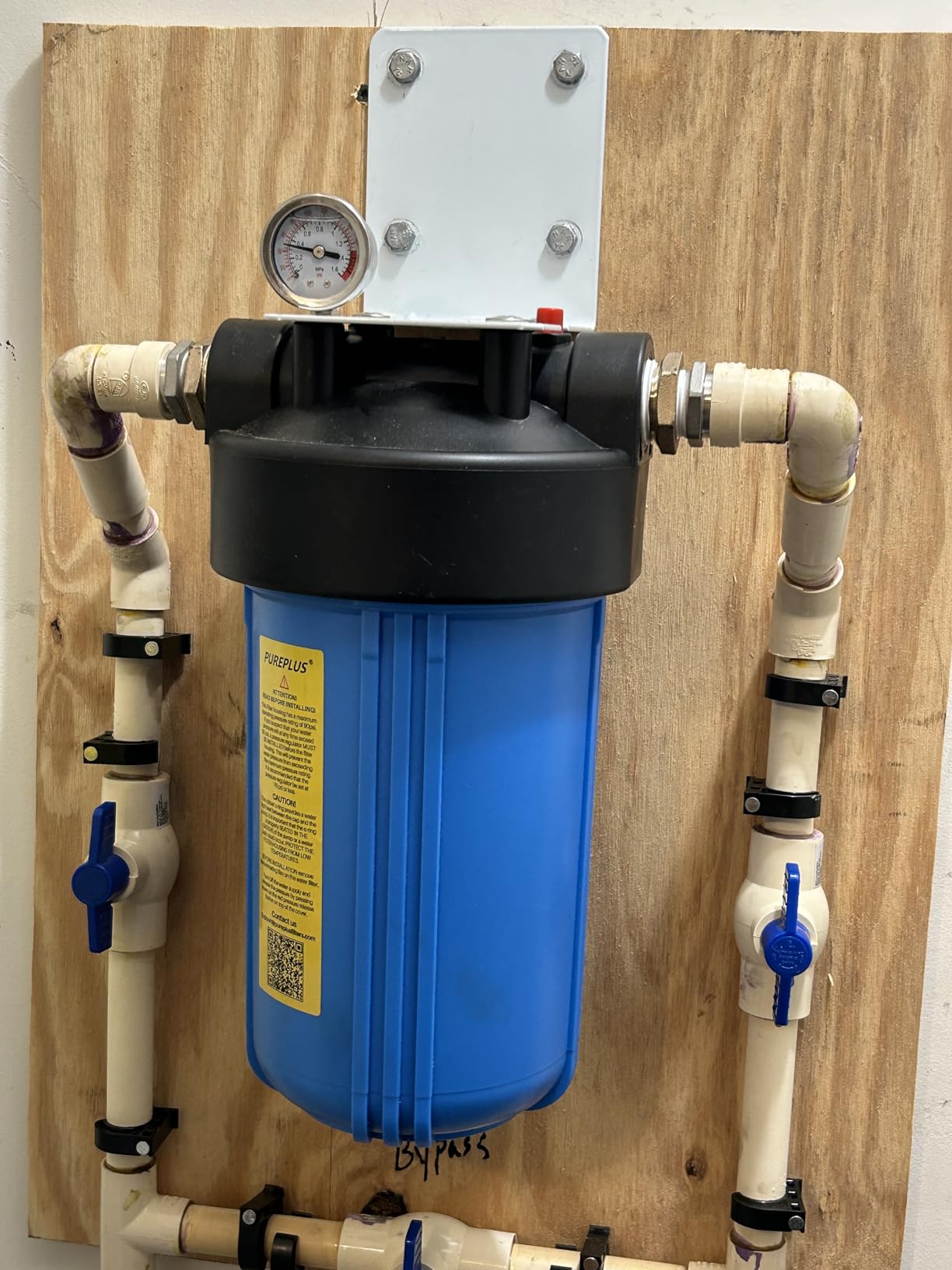
This is the entry-level way to put an iron and manganese stage on a well main line, and the housing design is the reason. A food-grade polypropylene body with a brass thread junction is a meaningfully better seal than all-plastic threads, and the included steel bracket holds it against a wall properly.
The PPW10BB-SZ cartridge reduces up to 99% of sand, silt, rust, dirt and scale particles. For a well with moderate iron and sediment, that single stage solves the two problems that cause visible staining.
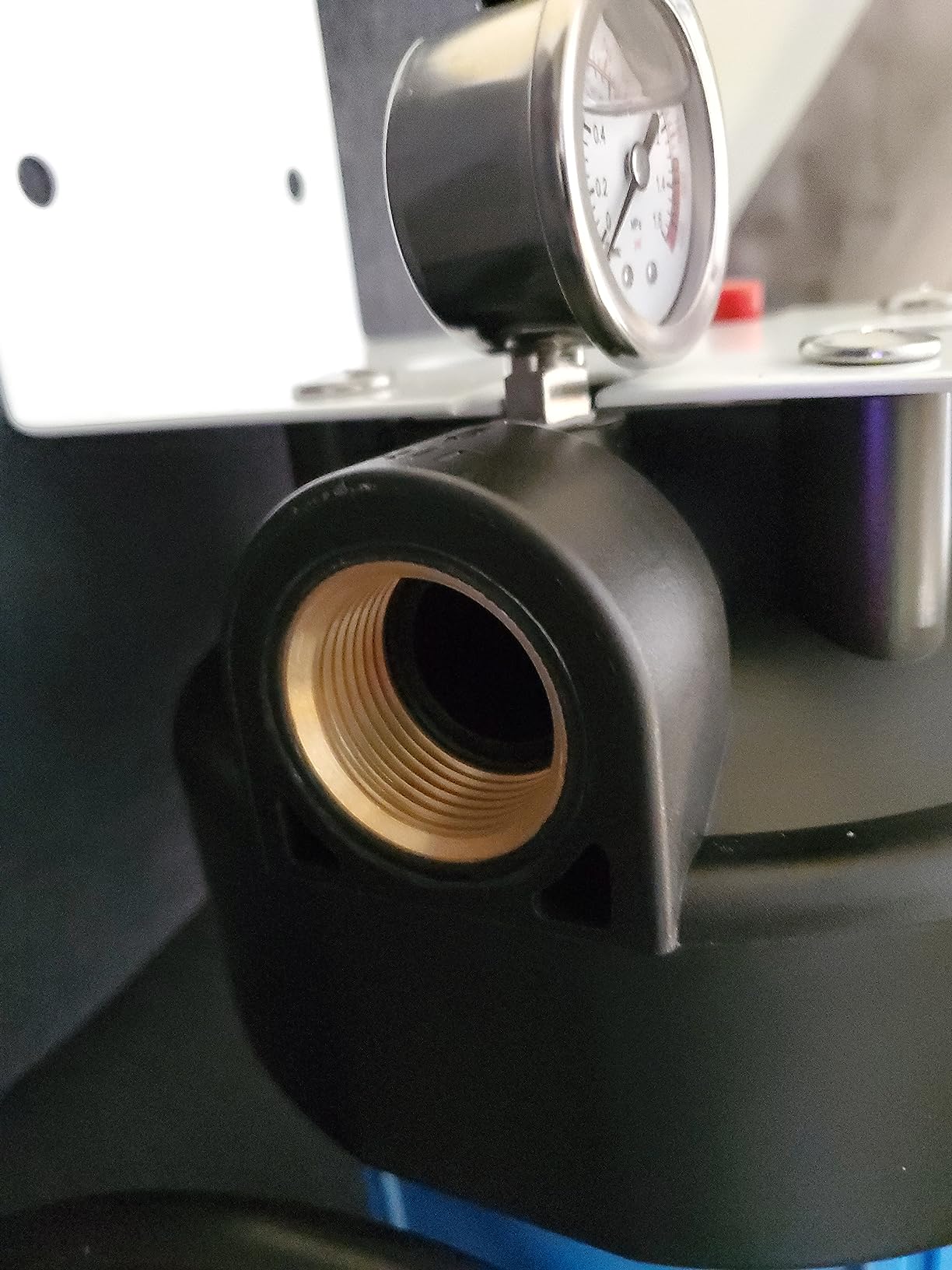
The universal housing accepts PP10BB, PP10BB-CC, PPL10BB and CTO10BB cartridges, so filtration can be upgraded later without buying a new housing. A pressure gauge and a red pressure-release valve are included, and the pressure-release button makes cartridge changes far less messy.
Ports are 1 inch NPT, so it will not bottleneck a busy house, and the unit is compact at about 14.2 inches tall.
Durability is inconsistent across units
With a 13% one-star share, the complaints cluster around durability rather than filtration: burst housings reported around 60 PSI, and units that arrived leaking. If your well pressure runs high, check the relief valve and consider a rated pressure reducing valve upstream of this housing.
Non-standard O-ring size and limited replacement part availability are the other recurring issues. Keep a spare O-ring on hand, because a housing you cannot reseal is a housing you have to replace.
Where a one-stage unit makes sense
It makes sense when your lab report shows iron and sediment, and nothing else. It does not remove chlorine, taste and odor, sulfur, bacteria, nitrates or dissolved minerals, and the listing does not pretend otherwise. A carbon block ahead of it would be a mistake on iron-bearing water, so if you want taste improvement, put carbon behind the iron stage instead.
It is also the easiest starter point for a rental or a short-term ownership situation, where installing a full backwashing train does not pay back before you move. Check that your order actually includes the cartridge, since some buyers report receiving the housing alone.
9. Home Master Three Stage Well Water Filter – Best for Combined Iron and Sulfur Load
Home Master Whole House Three Stage Water Filtration System with Fine Sediment, Iron and Carbon, Blue
Iron, manganese and sulfur to 3 ppm
25-10-5-1 micron stack
15 GPM
1 inch ports
Pros
- Engineered specifically for well water
- Handles iron
- manganese and sulfur up to 3 ppm combined
- Layered 25-10-5-1 micron sediment cartridge holds more dirt
- Oversized housings with 1 inch ports hold 15 GPM
- Radial flow filters have high dirt-holding capacity
Cons
- O-rings can pop out of the housing groove and cause leaks
- Pressure drop means a pre-filter and gauges are recommended
- Plastic-to-copper fittings can leak and melt near soldering
- Manufacturer requires a certified plumber for fitting claims
- 2 year parts warranty
Most cartridge systems list iron and manganese only. This one handles iron, manganese and sulfur up to 3 ppm combined, which is a meaningfully wider target for wells with both staining and a rotten egg odor. Up to 95% removal of iron, manganese, sediment and taste-and-odor chemicals is the manufacturer figure.
The filtration stack is the most layered of the three-stage systems we covered: a 4-layer replaceable sediment cartridge rated at 25, 10, 5 and 1 micron. That layered approach holds far more dirt than a single 5 micron element, which on a well means fewer changes and steadier pressure.
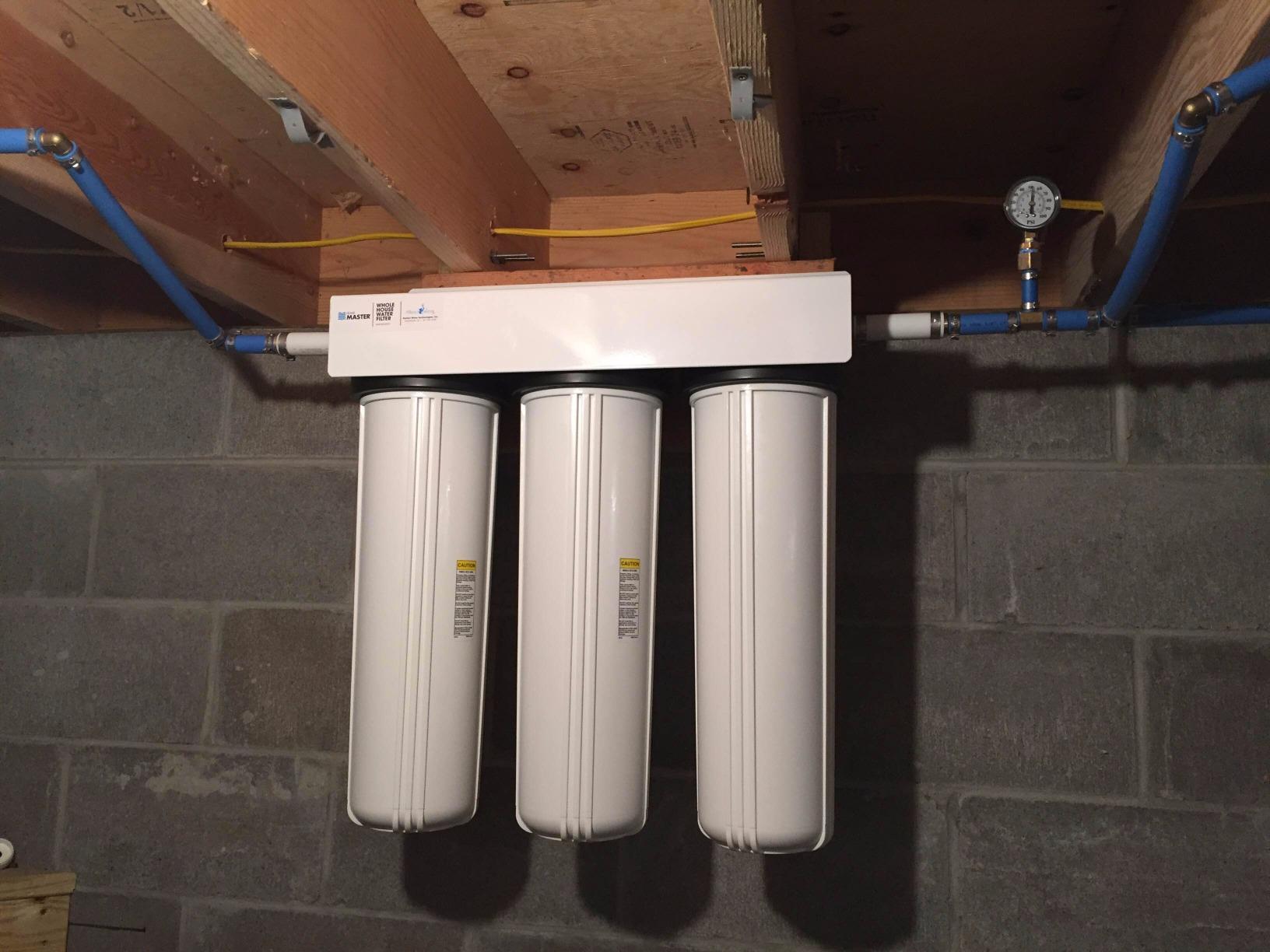
Radial flow filters increase dirt-holding capacity further, and oversized housings with 1 inch ports sustain 15 GPM. Some owners report water pressure actually improving after install, which happens when a system is oversized relative to the home’s demand.
It is worth noting the manufacturer steers city water users to a different model, which tells you this configuration is genuinely well-specific rather than a municipal cartridge with a new label.
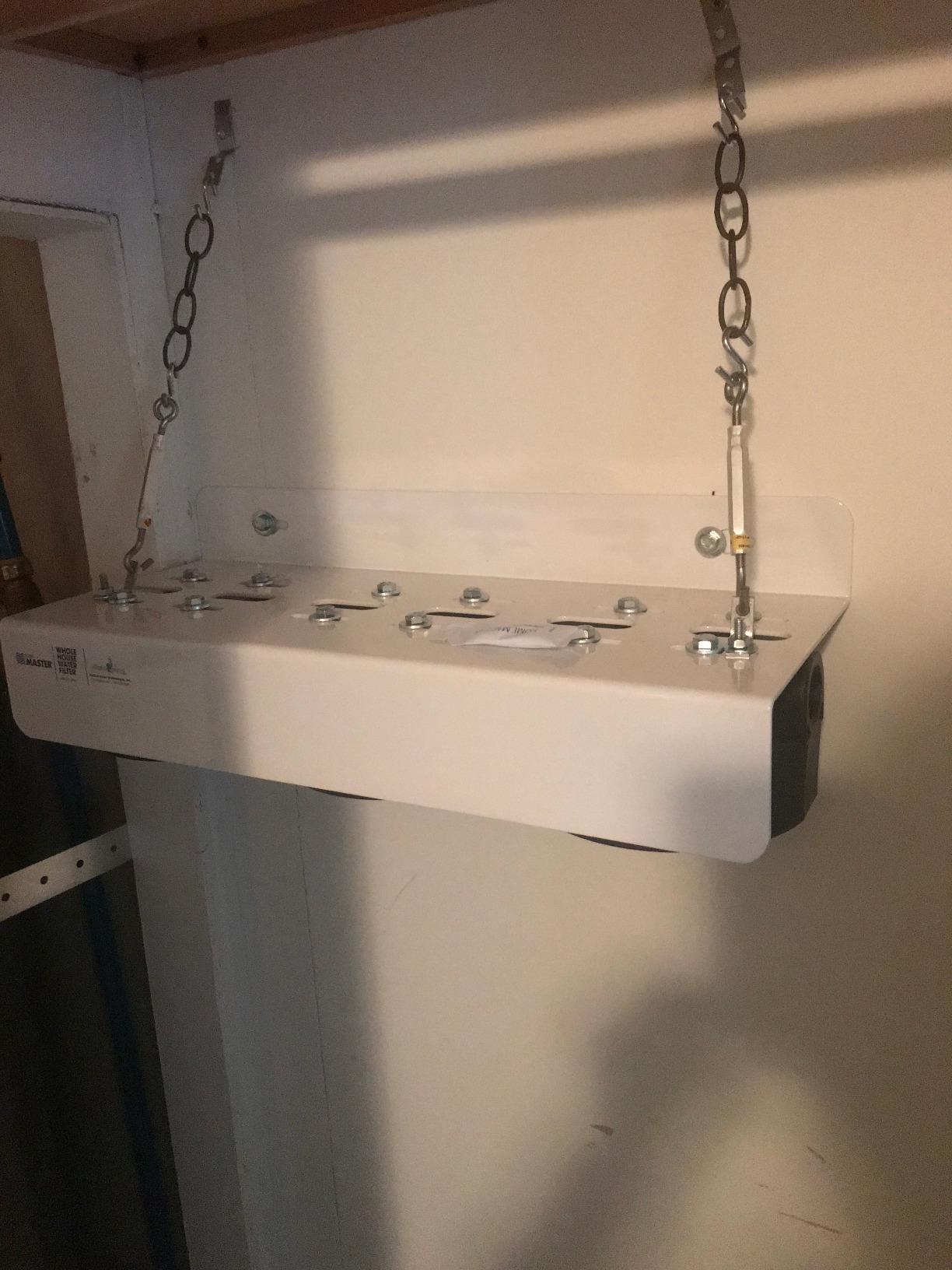
Why the 3 ppm combined rating matters
A combined rating is a realistic way to think about a well. Your report does not list iron, then sulfur, then manganese in isolation at the moment of failure; it lists whatever the well is producing at that depth, and a system that handles a combined 3 ppm load is more forgiving than one that stops at 3 ppm of iron alone.
It is still a cartridge system with a replacement schedule, and it still does not handle bacteria. If coliform is in your report, plan on a UV stage downstream and put a softener after this unit rather than before it.
Serviceability is the real weakness
O-rings lose diameter with use and can pop out of the housing groove, causing leaks on reassembly. Keep spares and grease them before seating, because that single detail drives most of the lower-star reviews. Fittings are the second issue, since plastic-to-copper joints can leak and can melt if soldered nearby.
The manufacturer requires a company-certified plumber to inspect the system before honoring a fitting warranty claim, and the parts warranty is 2 years. Plan for that service visit in your ownership timeline. The upside is customer support, with proactive yearly check-ins reported by owners.
10. iSpring WCFM400K Air Injection System – Best for Set and Forget Oxidation
iSpring WCFM400K Whole House Iron and Manganese Water Filter System, Digital Control with Automatic Regeneration & Air Injection, Set & Forget Design
Air injection oxidation
Automatic digital regeneration
400000 gallon capacity
12 GPM
Pros
- Automatic media regeneration with no scheduled brine or chemicals
- Air injection avoids chemical oxidizers
- 400000 gallon rated capacity keeps per-gallon cost low
- Compact 16.4 x 14 inch footprint
- Silent point-of-entry operation
Cons
- Requires a drain line and floor space for a 66.8 inch tank
- Does not remove hydrogen sulfide and can be damaged by it
- Does not reduce total dissolved solids
- A few owners reported head-unit faults and cracking
- Heavy fiberglass tank at 104 pounds
Owners on heavy-iron wells report the biggest change in water quality of any system in this group, and the reason is the regeneration method. Rather than replacing media, this tank regenerates itself with a digital control valve on customizable auto-flush intervals, using only air and water.
That is the whole case for air injection oxidation. No potassium permanganate, no chemical feed, no scheduled service. The system runs on water pressure, so there is no electrical bill for the control valve either.
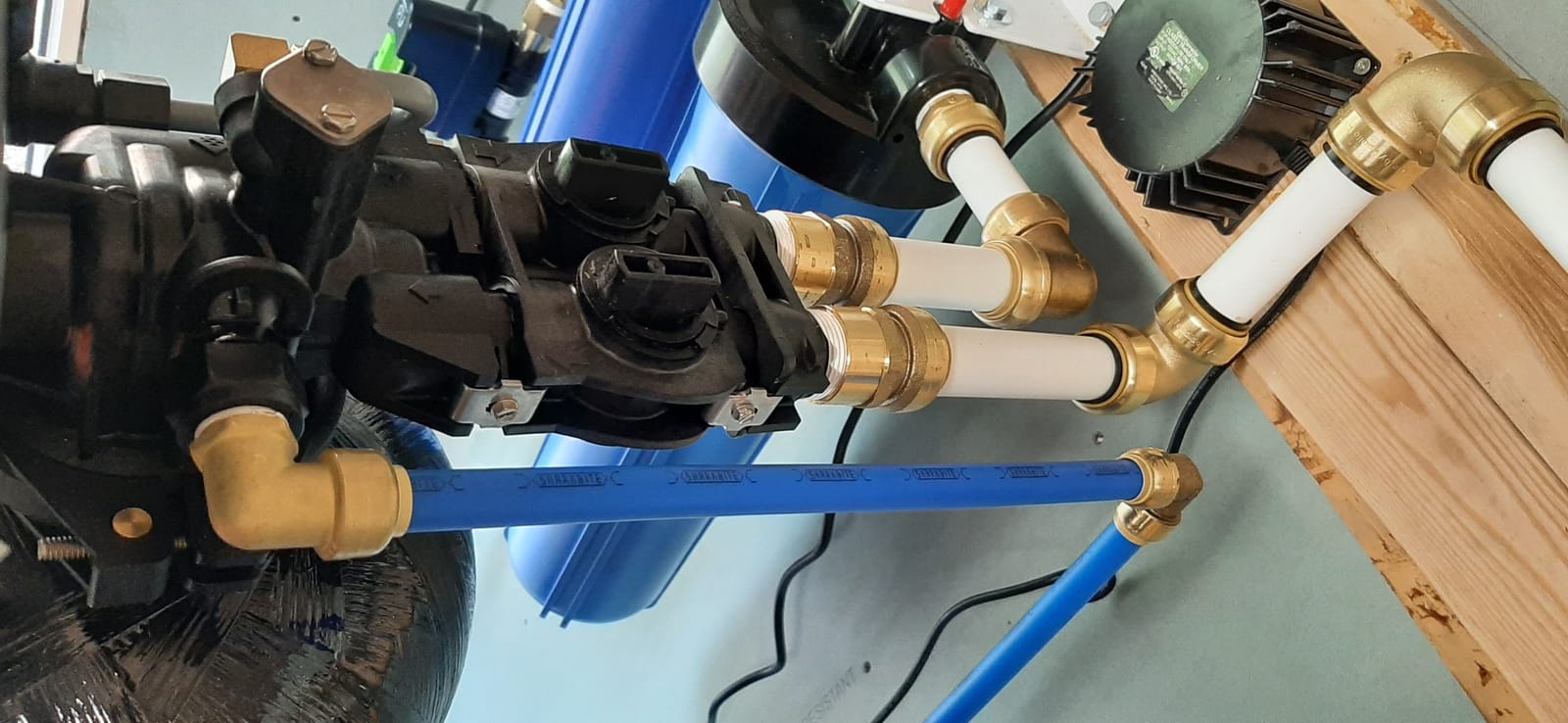
Filter media is certified to NSF/ANSI Standard 61, which covers materials in contact with drinking water rather than removal claims. Understand that distinction: Standard 61 is a safety standard for the media itself, not a performance certification for iron reduction.
At 12 GPM and 400000 gallons of rated capacity, this is the second-highest flow rating among the tank systems here and by far the lowest per-gallon operating cost, since there is nothing to buy after install except occasional service. The 16.4 x 14 inch footprint is small for its capacity.
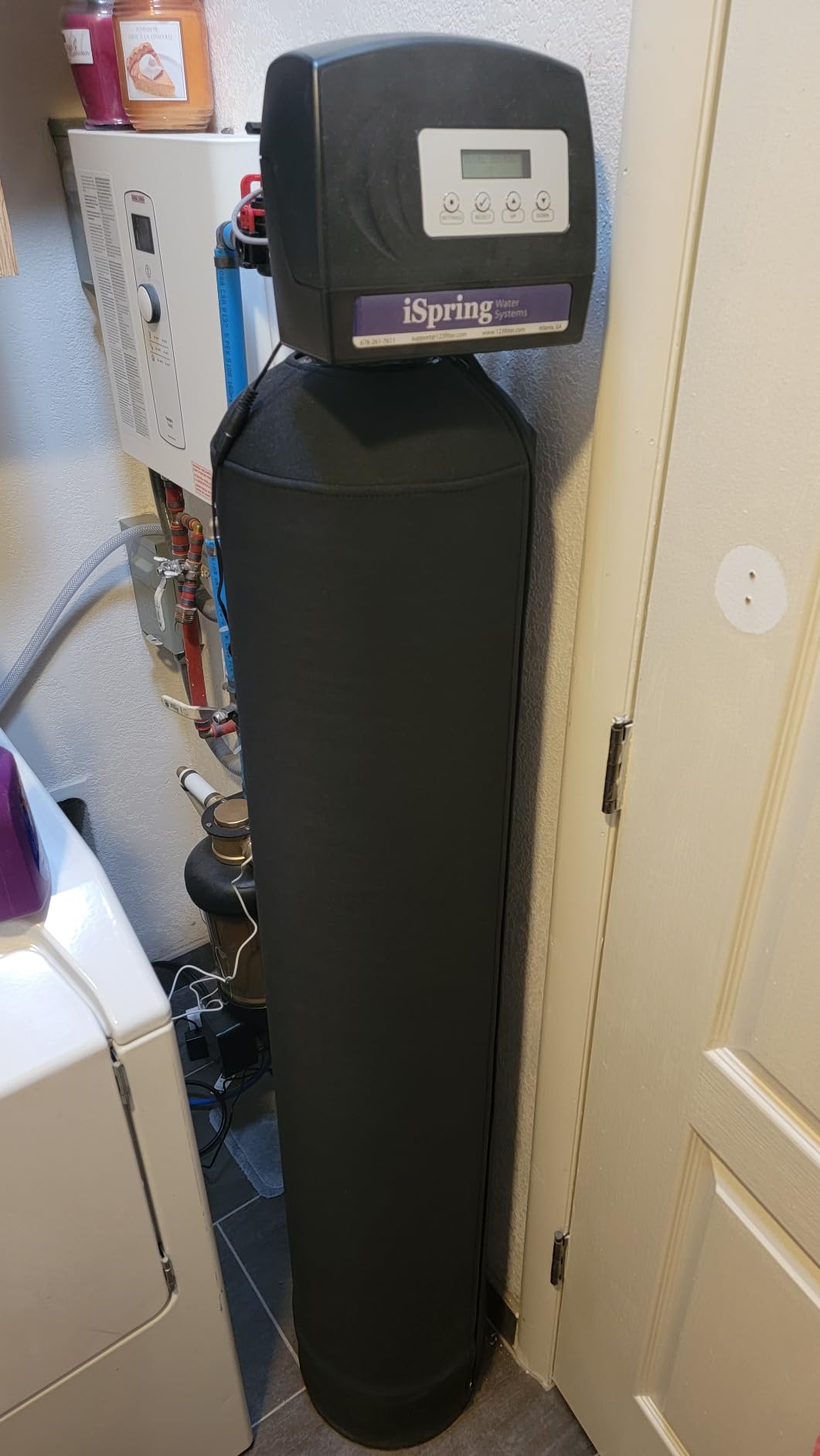
The hydrogen sulfide limitation is the dealbreaker for some wells
This system does not remove hydrogen sulfide, and the manufacturer states it can be damaged by it, directing owners with H2S to a different model in the range. If your lab report shows sulfur, this is the wrong unit no matter how well the iron side performs.
This is also the distinction forum owners make between iron bacteria and dissolved iron minerals. Dissolved iron is a chemical that oxidizes and filters out. Iron bacteria is a living organism producing slime, and a system that only oxidizes iron will not fully solve a bacterial problem.
What installation actually requires
You need a drain line, an adequate floor area for a 66.8 inch tall tank, and a plinth that can carry roughly 104 pounds. That 104 pound weight makes it a two-person job in a tight mechanical room.
Some owners reported head-unit faults, cracking or excessive noise, resolved through warranty replacements, so the 1 year warranty matters more here than with a cartridge system. In exchange you get a system that after setup has essentially no routine maintenance, which is why it is worth the footprint.
11. iSpring Ultimate PFAS Protection System – Best Rated and Best for PFAS
iSpring Ultimate PFAS Protection Whole House Water Filter System
PFAS reduction up to 99%
KDF plus carbon stages
Anti-scale media
100000 gallon capacity
Pros
- Highest-rated product here at 4.7 stars with only 2% one-star
- Only unit with dedicated PFAS media rated up to 99% including PFOA and PFOS
- Three complementary stages covering metals
- carbon and scale
- Protects water heaters and appliances from scale and corrosion
- Standard 20 x 4.5 inch housings with 1 inch ports
Cons
- Most expensive cartridge-based system here
- Capacity figures differ between the marketing highlight and the spec sheet
- Does not reduce total dissolved solids
- Cartridges arrive sealed and must be unwrapped before install
This is the highest-rated product we covered, 4.7 stars with an unusually low 2% one-star share, and that rating profile suggests consistent performance rather than results that split by well chemistry. It is also the only system here with dedicated PFAS media.
The FC25B-PF filter is SGS-tested media reported to reduce up to 99% of PFAS including PFOA and PFOS. Note the sourcing: SGS testing on media is not the same as NSF/ANSI 53 certification of a complete system, and it is worth knowing which one a manufacturer is pointing to.
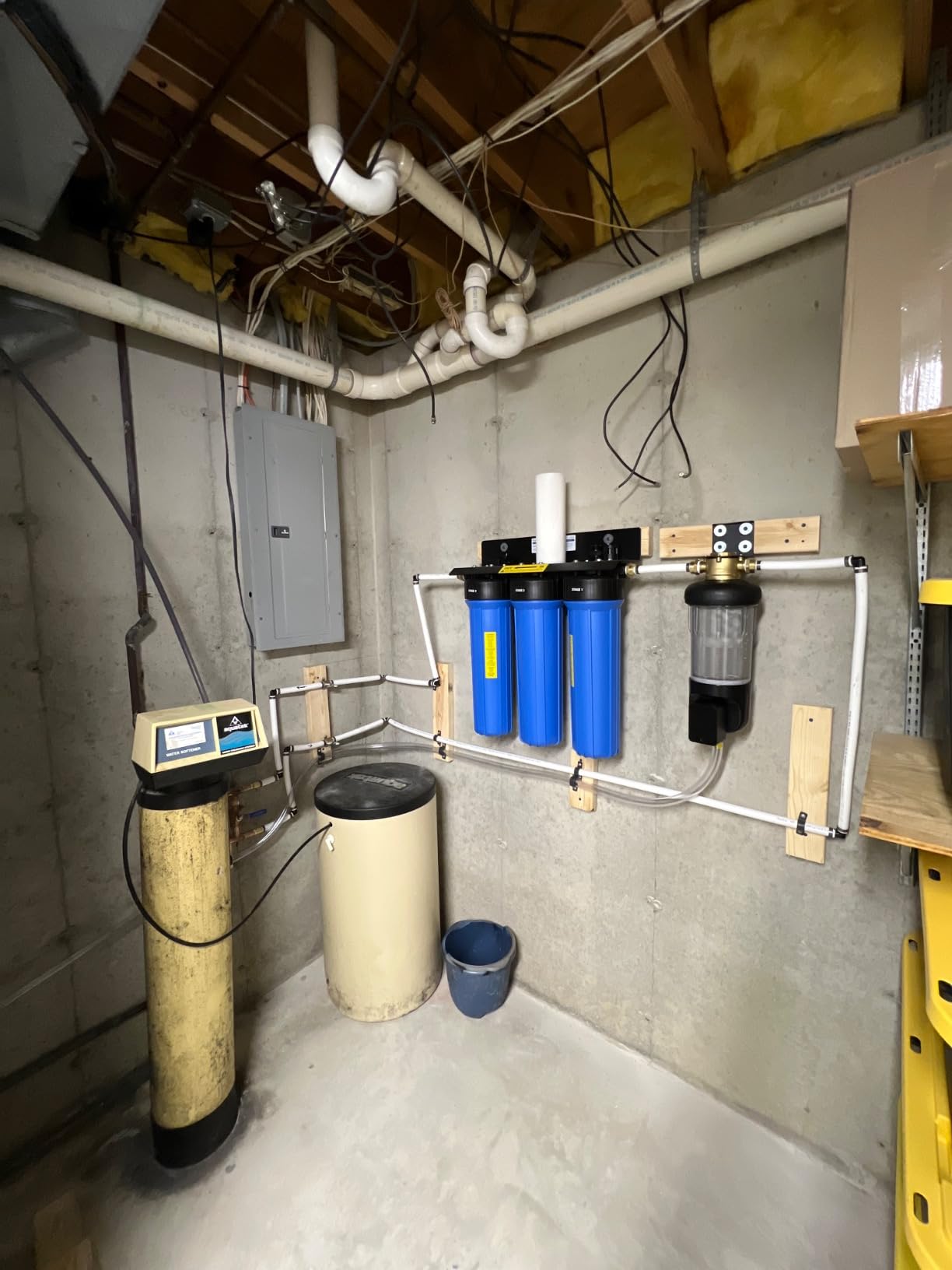
The other two stages do separate work. The FG25B-KS uses KDF and granular activated carbon to reduce chlorine, lead, mercury, chloramine, hydrogen sulfide and radon, and the FWDS150K is a scale inhibitor and descaler that targets calcium and magnesium buildup in pipes, appliances and water heaters.
Hydrogen sulfide appearing on the KDF stage is notable, since most iron cartridges in this list cannot touch sulfur. Treat it as part of a multi-stage system rather than a dedicated sulfur solution, and verify against your report.
Reading the capacity claim carefully
Two numbers circulate for this system: a marketing highlight of up to 250000 gallons and a spec sheet figure of 100000 gallons with a 12 month life. Plan on the lower number. Capacity claims on cartridge systems assume clean water, and a well with iron will use that media faster.
It also retains healthy minerals by design and does not reduce total dissolved solids. If you want a genuine TDS reduction, that is an under-sink reverse osmosis job, not a whole house one.
Where this fits against a softener
The anti-scale stage is an alternative to softening, not a replacement for it in every case. If your hardness is high enough to shorten the life of downstream components, a softener still earns its place, and it must come after any iron stage because iron fouls softener resin.
For plumbing where a softener is already planned, our guide to water softener and filter combinations for well water covers the pairing in detail. This system’s 1 year limited warranty with lifetime support keeps replacement parts available, which matters more for a three-stage cartridge train than for a single filter.
How to Choose a Whole House Water Filter for Well Water
Everything above is conditional on one thing: what your water is actually doing. The order of operations matters more than the brand, and the plumbing sequence is not negotiable. Work through these steps before you spend anything.
Match each stage to your lab report
Start with a certified lab panel, not a strip test. You are looking for iron, manganese, hydrogen sulfide, coliform and E. coli, hardness in grains per gallon, pH, total dissolved solids, arsenic, nitrates and turbidity. Each of those numbers points at a specific stage.
Iron above 0.3 ppm needs an oxidation or catalytic stage, and above about 3 ppm a backwashing tank rather than a cartridge. Manganese and hydrogen sulfide both point at oxidation filtration as well. Sediment and turbidity need a 5 micron pre-filter at minimum, and finer if your water is visibly gritty. Coliform or E. coli means disinfection, and UV is the standard choice on a well. Hardness above roughly 7 grains means a softener. Low pH means an acid neutralizer.
Arsenic and nitrates deserve their own note. Almost no roundup covers them, and they are EPA-regulated contaminants that do appear in rural well reports. Arsenic generally needs an iron-based or coagulation media designed for it, and nitrate treatment typically means a separate anion exchange unit. Both are beyond the systems here, so talk to a water treatment specialist if either shows up.
Size the system by household flow demand
Undersizing is the most common installation mistake and it gets blamed on the product. Work from peak demand rather than average use. A shower runs roughly 2 GPM, a faucet 1.5 GPM, a dishwasher 1 to 2 GPM and a washing machine 2 to 3 GPM. Two people showering while a dishwasher runs puts you well past 6 GPM of instantaneous demand.
As a baseline, a single occupant in a one-bath home needs roughly 4 to 5 GPM of capacity, a family of four in three baths needs 8 to 10 GPM, and a home with four or more bathrooms should look at 12 GPM or higher. On a well, the pump and pressure tank also have to support that flow, and an undersized pump will make any filter look like the problem.
Check the pressure drop across your system under real demand, not at idle. A filter that halves your shower pressure is either undersized or loaded, and those are different repairs.
Where each stage goes in the plumbing train
Well tank, then 5 micron sediment pre-filter, then the oxidation or iron stage, then a softener or neutralizer, then UV last. Here is the reasoning for each position.
The sediment pre-filter goes first because everything downstream is rated for clean water. Grit that reaches an oxidation tank makes the backwash valve work harder and the media life shorter. The iron or oxidation stage comes next because dissolved iron must be converted into filterable particles before carbon or softener resin sees it, and iron fouls softener resin aggressively, which is why the softener must follow the iron stage and never precede it.
A softener or acid neutralizer sits after iron removal for that resin-fouling reason, and before UV because hardness above about 7 grains and any residual iron will absorb UV light and stop disinfection. UV goes last because it is a finishing step, not a filter. If you skip any stage, keep the remaining stages in this relative order.
What the certifications actually cover
NSF/ANSI 42 covers aesthetic effects: chlorine taste, odor, sediment and scale. It says nothing about health contaminants, and a certified 42 product should not be marketed as one.
NSF/ANSI 53 covers health effects, which is the standard that matters for lead, cysts and VOC reduction. NSF/ANSI 55 Class A is the UV standard for bacteria, viruses and cysts, and Class B is the lower tier. Check which class a UV unit carries. NSF/ANSI 372 covers lead-free compliance, and NSF/ANSI 61 certifies the materials in contact with drinking water rather than removal performance.
WQA and IAPMO are alternative certifiers running comparable standards, and both maintain searchable certificate databases. The single most misunderstood distinction in this category is certified versus tested to. Tested to means the manufacturer says the product was tested in a lab against a standard, which is not the same as an independent certification of the complete unit. A published certificate number that you can actually look up in the certifier’s database is worth more to us than any claim on a listing page, and it is the first thing we check on a well system.
Cartridge systems versus backwashing media over 10 years
This is the decision that dominates long-term cost, and we have seen homeowners reach the same conclusion from very different directions.
Cartridge systems have a higher annual consumable cost because you buy filters on a schedule whether or not the media is spent. Backwashing media systems self-regenerate with well water and, in the air injection case, electricity, so the ongoing cost approaches nothing beyond occasional service. The break-even logic we found in owner discussions puts the crossover around the one-million-gallon mark, and the practical version is simpler: if you are on a well for a decade, a regenerating tank usually wins on consumables, and a cartridge system wins on upfront cost and simplicity.
For households on shorter residencies or rentals, the cartridge math changes completely. If you will be there five years, the payback period on a large backwashing system does not work, and a modular cartridge setup you can take with you is the sensible choice. If your well has high iron, a cartridge you replace every six months is a recurring cost with no end point, which is the argument for the tank systems in this list.
Who should not buy a whole house well filter
If your well tests clean with iron under 0.3 ppm and there is no sulfur odor, a simple carbon block is genuinely enough, and a large oxidation system is paying for capacity you will never use. That is not a failure of the product; it is a mismatch with your water.
Renters should not install a permanent point-of-entry train. Short-term owners, anyone moving within five years, and households whose only problem is a single stained faucet can usually solve it at the fixture instead. If your concern is drinking water quality alone rather than whole-house plumbing protection, an under-sink reverse osmosis system does more for you than any system on this page, because point-of-use treatment is where certified reduction of dissolved contaminants actually happens.
And a caution worth repeating from the owner communities we read: whole house filters protect plumbing and improve taste, but they do not make well water safe to drink at the kitchen tap. For drinking and cooking water, treat it at the point of use.
Frequently Asked Questions
What should a whole house water filtration system cost?
Cost tracks the number of stages, not the brand name. A single sediment or iron housing is the lowest-cost option, a three-stage carbon and sediment chain sits in the middle, and a backwashing oxidation tank or a UV-equipped system sits at the top because of the tank, control valve, drain line and electrical work. Installation adds a plumber or plumber-rate labor, and dealers who do not publish prices make real budgeting impossible, so ask for installed pricing in writing and get dealer quotes alongside retail pricing.
Does an iron filter remove sulfur?
Usually not on its own. Most cartridge iron filters are rated for dissolved iron and manganese only, which is why owners install one and still have rotten egg odor. Sulfur removal needs oxidation filtration, and some media and systems are explicitly not compatible with hydrogen sulfide. Check the spec sheet for a hydrogen sulfide rating before buying anything for a sulfur complaint, and confirm your lab report because homeowners sometimes trace persistent odor to galvanised pipe fittings rather than the water.
What is the best water filter for removing iron and sulfur?
For iron plus sulfur together, you want oxidation filtration rather than a cartridge, because the iron must be oxidized into particles that can be filtered and the sulfur removed in the same stage. Look for a system with a published hydrogen sulfide rating, or a catalytic media system rated for the combined load from your lab report. The Home Master three-stage system in our list is rated for iron, manganese and sulfur up to 3 ppm combined, and the PRO+AQUA tank lists hydrogen sulfide among its targets.
Should I add a UV light to my well water filter?
If your lab report shows coliform or E. coli, yes. Private wells get no chemical disinfection, so UV is the standard disinfection step, and it should be the last stage in the train. UV only works when water is already clear, so feed it through a sediment filter with iron under 0.3 ppm and hardness under about 7 grains. If your well tests clean on bacteria, UV is optional and you can put the money into iron removal or a softener instead.
How long does a whole house filter last on well water?
Rated media life is measured on clean water, so real well life is shorter. Cartridge systems in this group are rated from 3 to 12 months per stage, with the 50000 gallon cartridges at the short end and the 100000 gallon cartridges at the long end, while a 600000 gallon carbon cartridge can run years. Backwashing media regenerates itself, so it runs until a media change, which is measured in years. Adding a 5 micron sediment pre-filter and watching pressure gauges is the biggest lever you have on real service life.
Final Verdict for Well Water Owners in 2026
For most private wells, the Express Water 3-Stage Iron and Manganese system is our pick as the best whole house water filter for well water, because it targets the contaminant that actually causes damage and staining, carries the highest flow rating in the group, and has the largest body of owner results behind it. If your report shows iron below 3 ppm and no sulfur, that is a safe place to start.
Move up to a backwashing oxidation tank when iron runs higher or you want no consumable cost, add a UV stage the moment bacteria appear in a report, and pair everything with an under-sink reverse osmosis unit for drinking water. A whole house system protects your plumbing. It does not make the tap safe on its own.
If budget is the starting point rather than the destination, our whole house filters under 500 guide covers the entry-level end of the market, and the sediment and carbon picks above cover the stages most wells need first.