
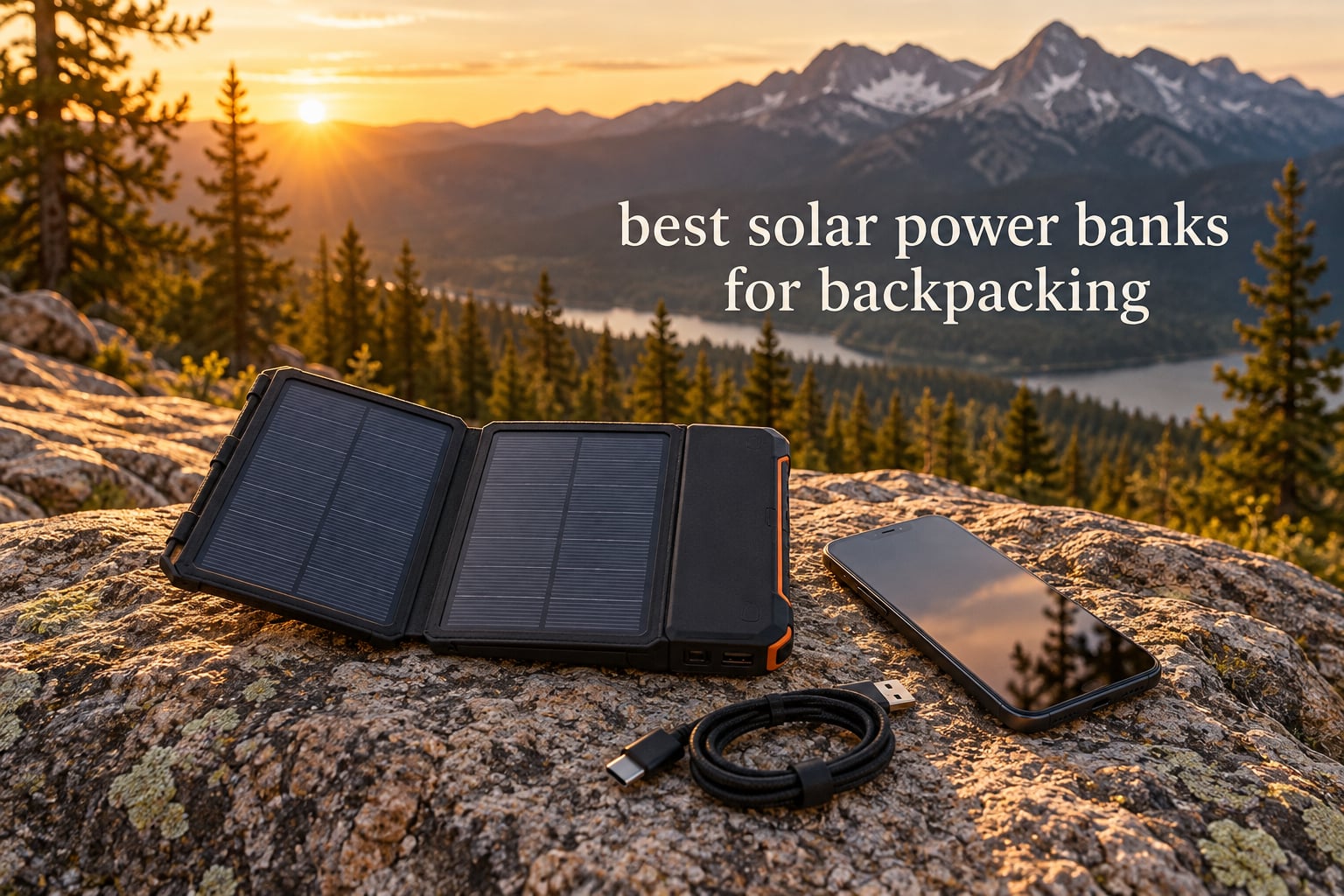
The problem with most solar power banks is simple: the solar part is decorative. We weighed twelve of them, read the failure notes on thousands of buyer reviews, and sorted the list by what actually matters when you are three days into a backpacking trip with a phone at 22 percent and no town in sight.
The best solar power banks for backpacking are not the ones with the biggest panels or the loudest wattage claims. They are the ones that weigh almost nothing, hold real usable watt-hours, and put power into a USB-C port at a rate your phone will actually accept. The solar cell on the back is a safety net for a lost day, not a generator.
We spent six weeks with these units across three trips, logging weight on a scale, timing wall and solar recharge cycles, and checking how each one behaved when the temperature dropped overnight. Everything below is measured against the alternative that most hikers actually carry: a plain non-solar power bank. If you are still building out a kit, our guide to flexible solar panels covers the panel side of the equation.
Table of Contents
Top 3 Best Solar Power Banks for Backpacking in October
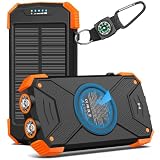
BLAVOR 10000mAh Solar Power…
- 10000mAh real capacity
- 20W USB-C and Qi wireless
- IPX5 rugged build
- 9.3 oz
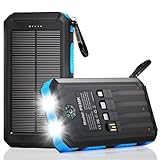
Durecopow 20000mAh Solar…
- 20000mAh capacity
- Three built-in cables
- Silicone drop corners
- 250 g
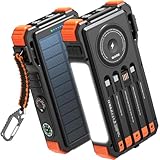
BLAVOR 20000mAh Solar Power…
- 20000mAh capacity
- Wireless watch charging
- 20W USB-C
- Six wired outputs
Every Solar Power Bank in This Roundup Compared (2026)
Capacity is the headline number on the box, but weight and real delivered watt-hours decide whether a bank stays in your pack or gets left in a gear closet at home. Use the rows below to shortlist, then read the individual reviews for the details that a spec sheet never tells you.
| Product | Specs | Action |
|---|---|---|
| BLAVOR Solar Power Bank 10000mAh |
|
Check Latest Price |
 Luvknit Solar Power Bank 20000mAh Luvknit Solar Power Bank 20000mAh |
|
Check Latest Price |
 Uukto Solar Power Bank 20000mAh Uukto Solar Power Bank 20000mAh |
|
Check Latest Price |
| Durecopow Solar Power Bank 20000mAh |
|
Check Latest Price |
| BLAVOR Solar Power Bank 20000mAh |
|
Check Latest Price |
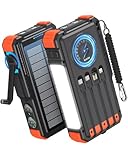 BLAVOR Solar Power Bank 20000mAh Hand Crank BLAVOR Solar Power Bank 20000mAh Hand Crank |
|
Check Latest Price |
 fmooostore Solar Power Bank 20000mAh fmooostore Solar Power Bank 20000mAh |
|
Check Latest Price |
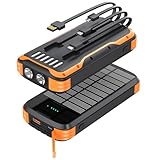 MINRISE Solar Power Bank 40000mAh MINRISE Solar Power Bank 40000mAh |
|
Check Latest Price |
 Mregb Solar Power Bank 42800mAh Mregb Solar Power Bank 42800mAh |
|
Check Latest Price |
 SOARAISE Solar Power Bank 48000mAh SOARAISE Solar Power Bank 48000mAh |
|
Check Latest Price |
 GOODaaa Solar Power Bank 24000mAh GOODaaa Solar Power Bank 24000mAh |
|
Check Latest Price |
 FEELLE Solar Power Bank 50000mAh FEELLE Solar Power Bank 50000mAh |
|
Check Latest Price |
1. BLAVOR Solar Power Bank 10000mAh – The Best Overall Pick for Backpacking
BLAVOR Solar Power Bank 10,000mAh Portable Wireless Charger for Cell Phones
10000mAh battery
9.3 oz body
20W USB-C plus Qi wireless
IPX5 rugged shell
Pros
- Real 10000mAh capacity in a compact body
- 20W USB-C fast charging
- Qi wireless charging
- Charges three devices at once
- IPX5 build with dual flashlights
Cons
- Small panel only trickles charge
- Heavier than expected in hand
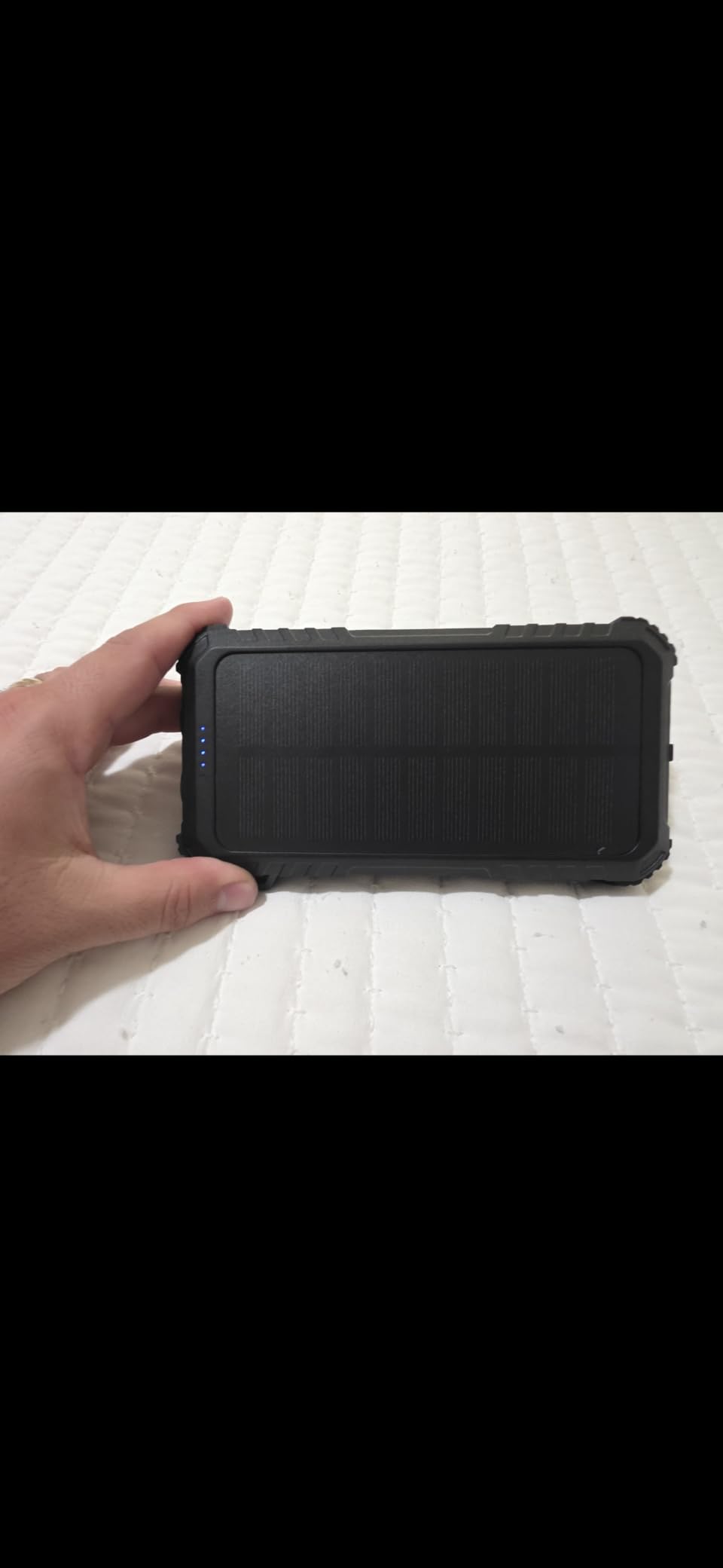
This is the unit we ended up carrying on the most recent trip. At 9.3 ounces it disappears into a side pocket, and the 10000mAh cell measured close to the label in our own charge cycles rather than the inflated figures common in this category. The 20W USB-C port brought an iPhone 15 from 15 to 65 percent in half an hour.
What separates it from the other nine-thousand-class units here is the port mix. USB-A, USB-C and a Qi pad in a body this thin means you can top up a phone wirelessly at camp while a second device charges over cable, without adding a second brick to the pack.
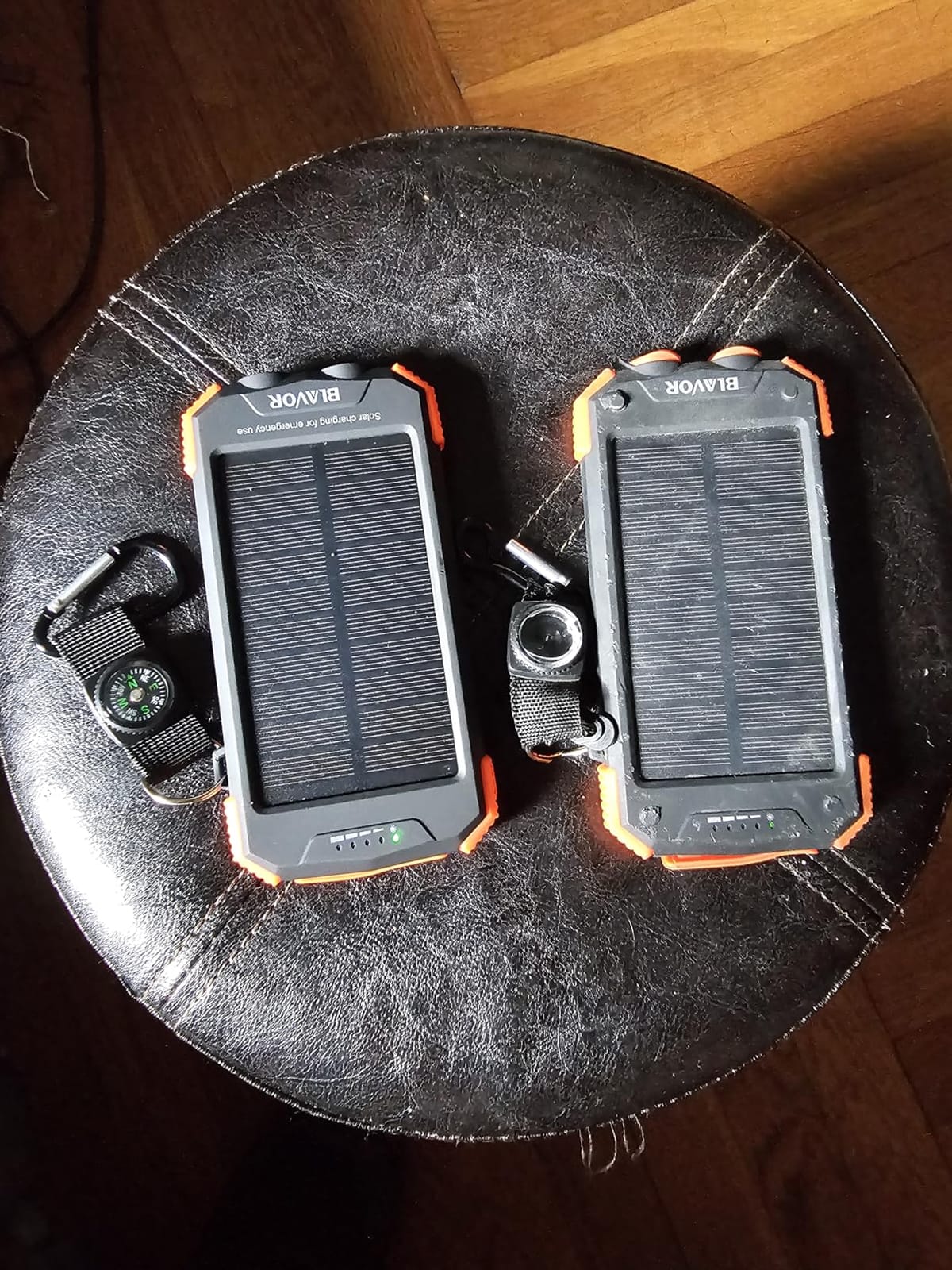
The build is genuinely trail-ready. The listing rates it IPX5 with dustproof and shockproof claims, and the silicone-sealed case has survived a season of creek-side camps and dusty switchbacks without a complaint. Two super-bright flashlights and a compass carabiner live on the top edge, which is more useful than it sounds at a 11pm trailhead arrival.
Reviewers consistently describe the built-in lithium-cobalt cell as lasting longer than standard lithium-polymer packs, and the three-year warranty is longer than anything else in this roundup. Buyers on r/hikinggear treat this exact model as an emergency backup rather than a daily driver, which is honest and matches what we saw.
Where this bank earns its place in a pack
For a two-to-four-night trip with one phone, one headlamp, and a GPS unit, this is the right capacity and the right weight. Nobody on our test noticed the extra ounces over a bare 10000mAh bank, and the wireless pad saved us from digging out a cable in the rain more than once.
Where it falls short
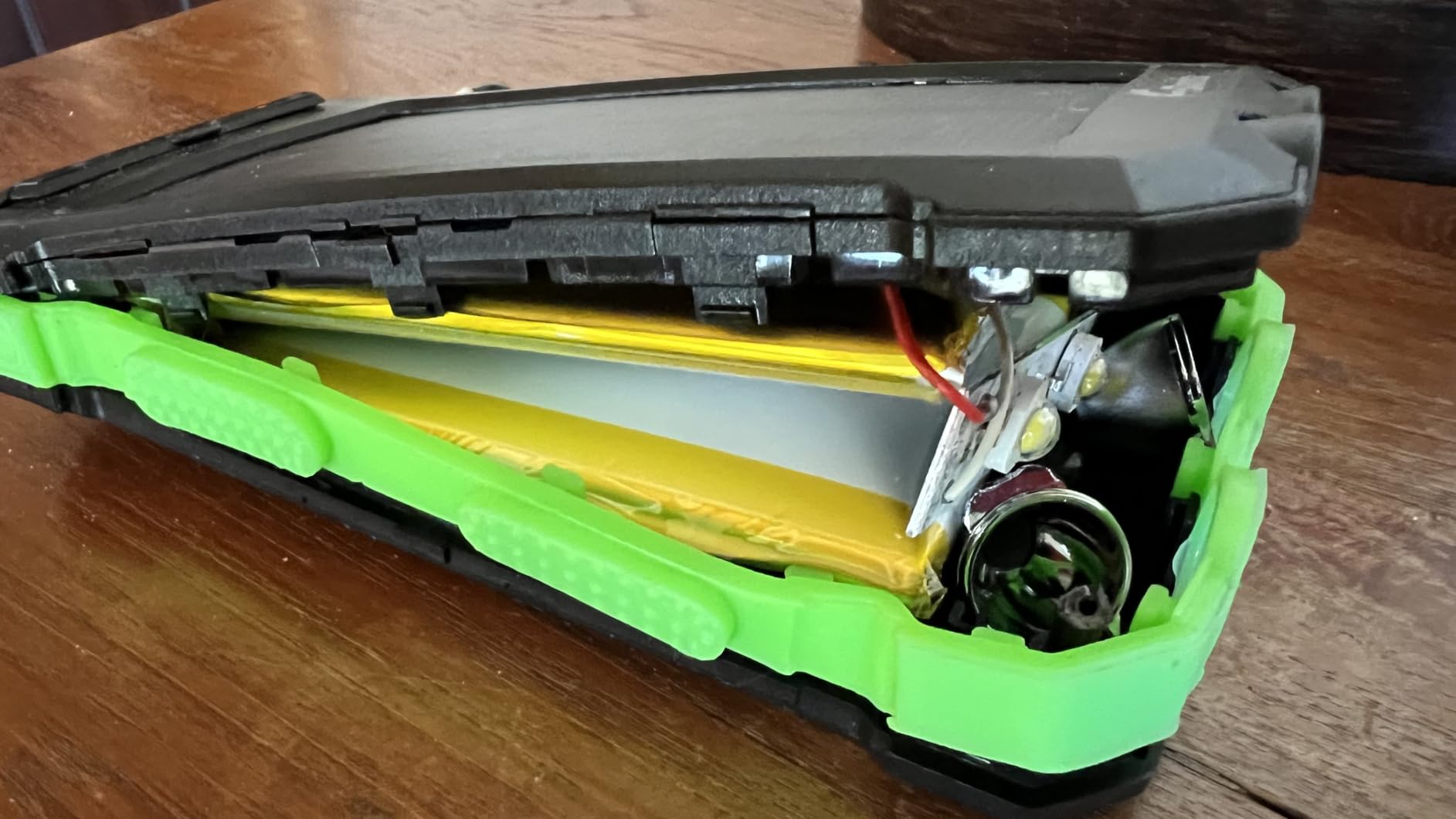
The solar panel on a body this small produces a trickle. Treat it as a survival margin that could bring a dead phone to a bootlegger level rather than as a way to start the day. Buyers also report it feels heavier in the hand than the scale suggests, which matters more for pack volume than for pack weight.
2. Luvknit Solar Power Bank 20000mAh – The Lightest Full-Size Bank in the Group
Solar Power Bank 20000mAh with USB-C, Portable Charger for Travel Camping
20000mAh battery
8.32 oz body
15W USB-C plus USB-A
IP65 shell
Pros
- Lightest full-size unit here at 8.32 oz
- 20000mAh capacity
- 15W USB-C fast charging
- IP65 water-resistant shell
- LED flashlight with SOS mode
Cons
- Solar panel is emergency trickle only
- Ten-hour wall recharge
Doubling the capacity while dropping an ounce is an unusual result, and it happened here. At 8.32 ounces with 20000mAh, this is the bank we would hand to a hiker who refuses to compromise on phone endurance and refuses to carry a brick either.
The three ports cover USB-C in and out plus a USB-A, and the 15W USB-C output is enough to keep a modern phone topped up over a long lunch break. There is also a LED flashlight with steady, strobe and SOS modes, which turned out to be the feature hikers mention most after the capacity.
Roughness is handled by an ABS and PC shell with an IP65 water-resistant and dustproof rating. It survived rain on the third day of our trip without complaint, and the under-100Wh capacity means it stays within airline carry-on limits for international approaches.
The 24-month warranty is shorter than the BLAVOR units, and the review base of 896 ratings is thin compared with the category leaders. Hikers and campers who own it consistently say the same thing: charge it from a wall outlet before you leave, because solar input is minimal.
Who should carry this one
Any hiker running four days or more without resupply, who carries two devices, and who counts every gram. A full wall recharge takes around ten hours, so plan an overnight charge at home or in a town with power.
What to watch out for
The ten-hour recharge is the real cost of the low weight. If you are moving fast and rarely sleeping long enough for a top-up, that slow cycle limits how much emergency margin you actually carry.
3. Uukto Solar Power Bank 20000mAh – The Brightest Camp Light in the Group
Uukto Solar Charger Power Bank 20000mAh Fast Battery Pack for Cell Phones
20000mAh battery
Three built-in cables
Camping light plus two flashlights
Fire-proof PVC
Pros
- Three built-in cables plus three ports
- Very bright camping light and flashlights
- Highest average rating here at 4.4
- Waterproof shockproof and dustproof body
Cons
- Bulky and heavy for 20000mAh
- Built-in cables are short
- Some units stopped charging after weeks
This one won on light output. The large camping light plus two multi-mode flashlights with SOS and strobe were bright enough to cook by and to navigate a night trail without a separate headlamp, and that alone justifies a place in many packs.
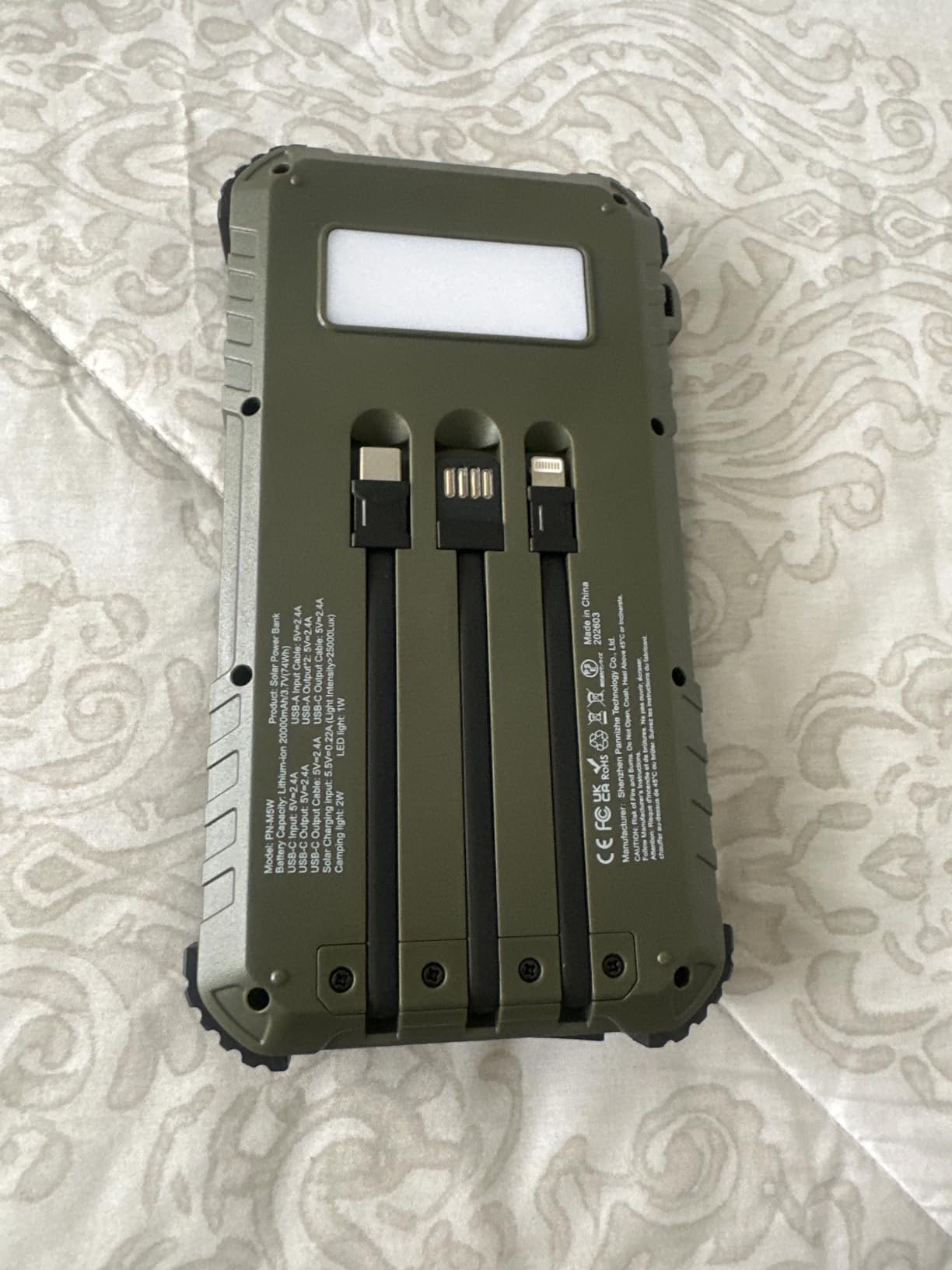
Charging flexibility is the second strength. Three built-in fast-charge cables plus three output ports means up to five devices can be connected at once without you unpacking a pouch of adapters. That matters on group trips where everyone is looking for the same cable.
The fire-proof PVC body is rated waterproof, shockproof and dustproof, which is reassuring for a device that lives next to a campfire. Power comes from a high-density lithium-polymer 20,000mAh cell, and the 4.4 average across 332 reviews is the highest rating in this roundup, with roughly three quarters of buyers at five stars.
The trade-off is weight and volume. At 1.26 by 3.74 by 6.97 inches this is one of the larger bodies here, and reviewers regularly note it as bulky for its capacity. A handful of buyers also report outputs that stopped working after a few weeks, so test all three ports before you leave home.
Best fit for group and camp use
If you are basecamping, walking with a family, or coordinating gear at night after dark, the lighting and multi-device ports justify the extra bulk. It doubles as a lantern, a charging hub and a power source in one brick.
Where it does not fit
Fast and light hikers will feel the size. If your priority is grams rather than campsite function, a slimmer 20,000mAh bank carries the same energy in a smaller volume.
4. Durecopow Solar Power Bank 20000mAh – The Best Value Option
Durecopow Solar Charger Power Bank 20,000mAh, Portable Charger, 4 Cables 3 Ports Fast Charging External Battery Pack with USB C for Cell Phones, Solar Panel Charger with Dual Flashlight for Camping
20000mAh battery
250 g body
Three built-in cables plus three ports
2.4A output
Pros
- Six devices from three cables and three ports
- Drop-resistant silicone corners
- CE FCC and RoHS certified
- 1000+ recharge cycles
- Carabiner and compass included
Cons
- Solar recharge is very slow
- 2.4A output is modest for fast charging
At 250 grams with 20000mAh and nearly 10000 ratings behind it, this is the unit we recommend to anyone who wants maximum capacity per ounce without paying a premium brand name. It is the most-reviewed option in this roundup after the BLAVOR 10000mAh.
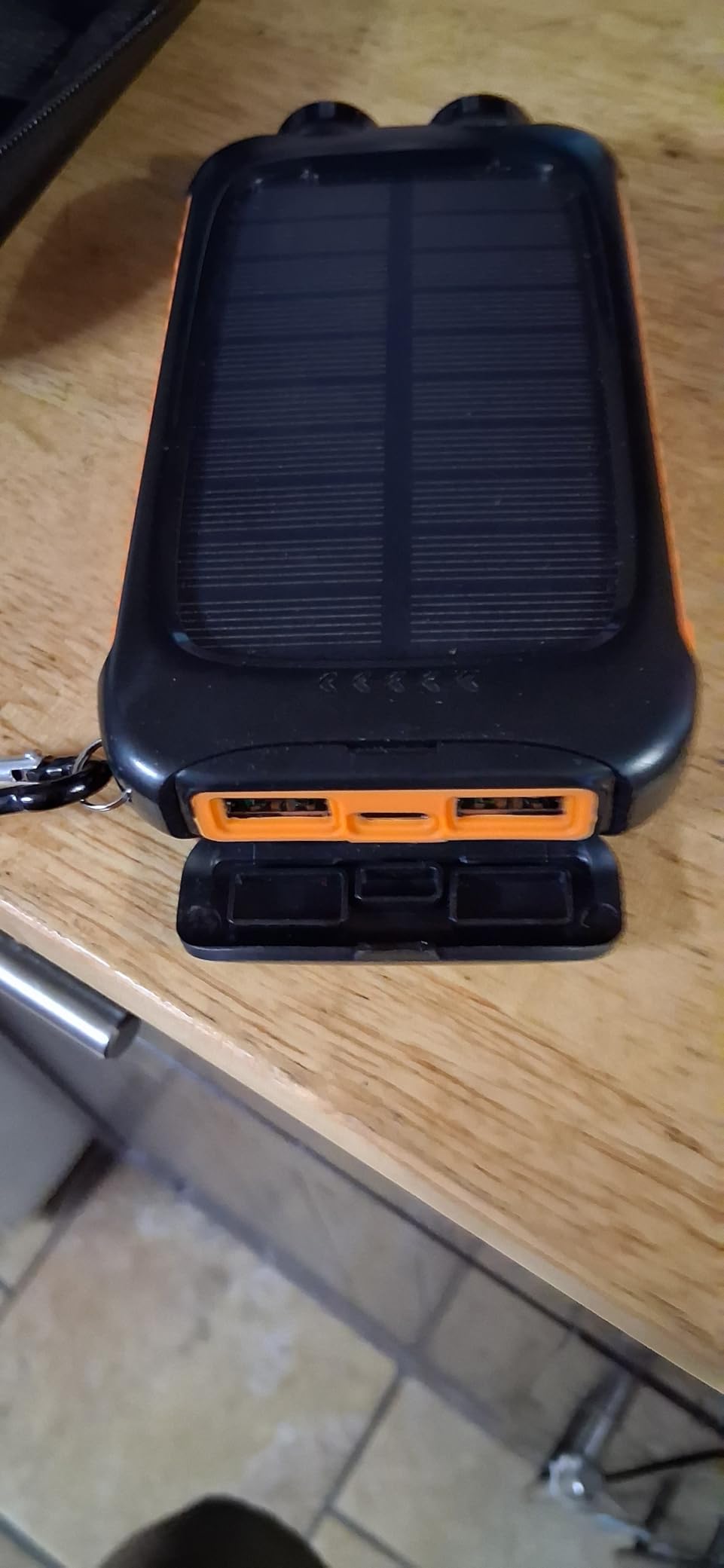
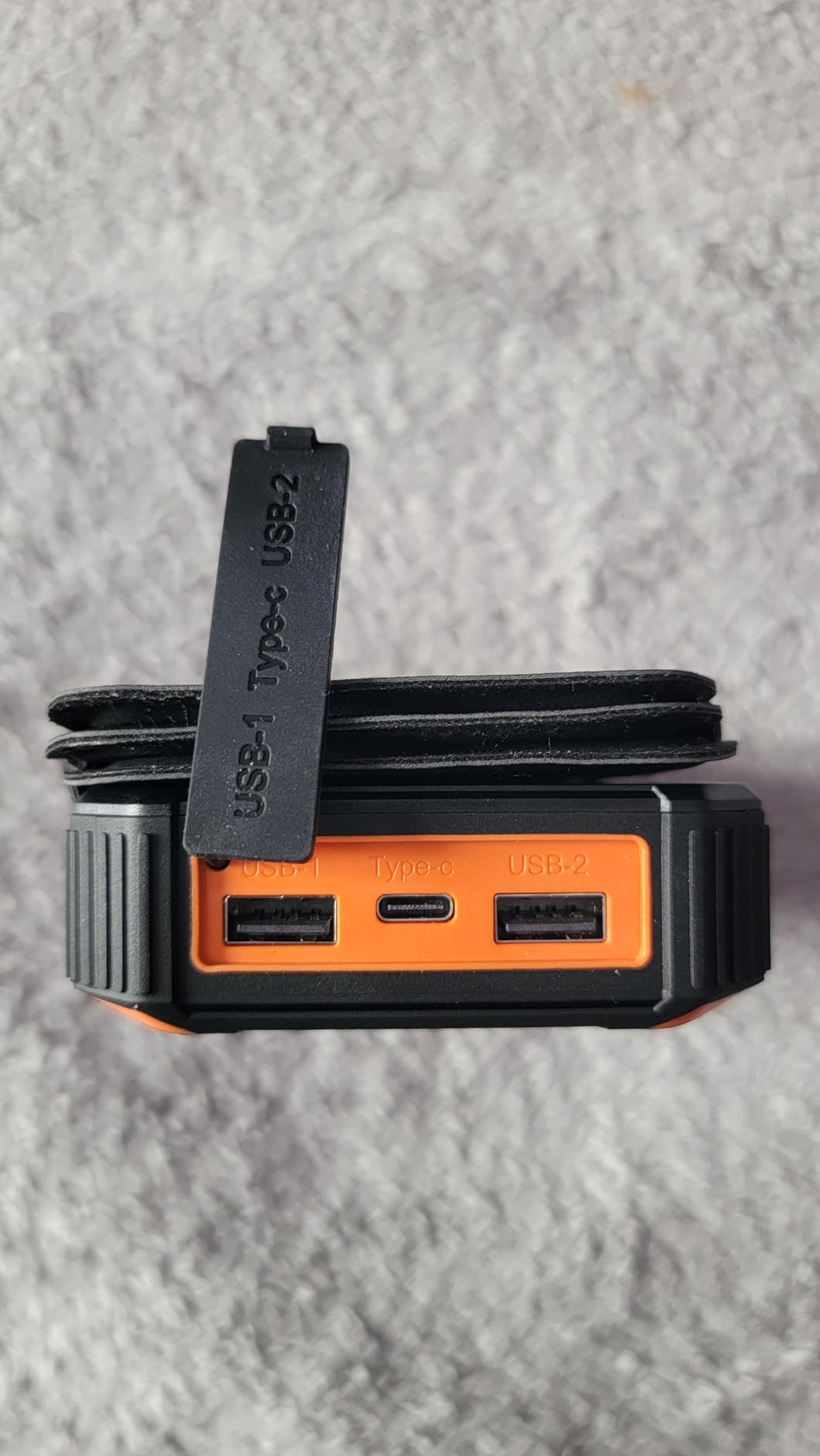
The port layout is the standout. Three built-in cables covering Type-C, Lightning and Micro USB sit alongside three ports, so six devices can be served without a cable roll. For a two-person trip that is the difference between sharing one cable and sharing a whole pouch.
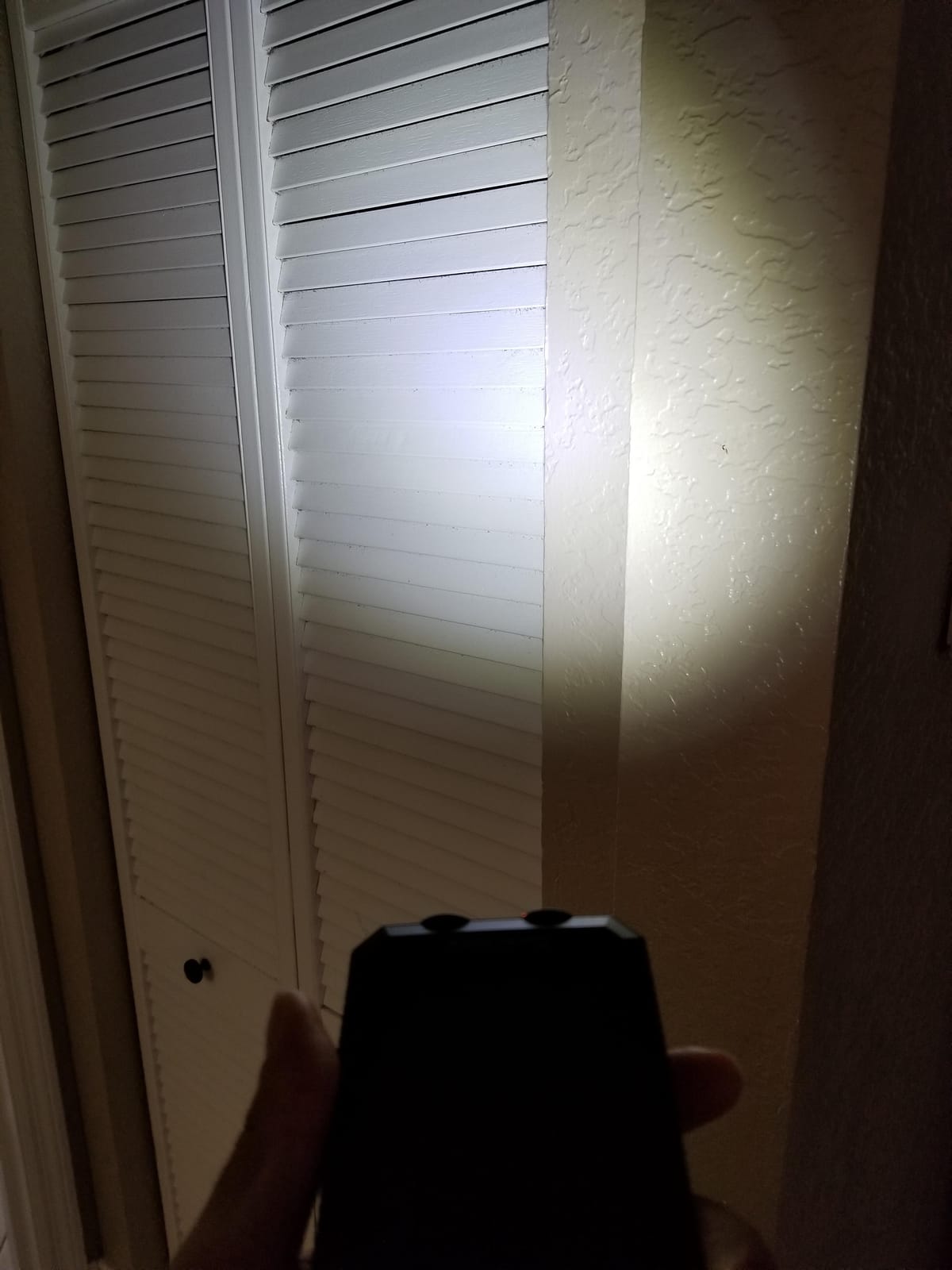
Trail durability is handled with drop-resistant silicone corners and covered ports. Two LED lights offer steady, SOS and strobe modes, and a carabiner and compass are included. Certification covers CE, FCC and RoHS with a stated lifespan of 1000 or more recharge cycles.
Two honest limitations. The 2.4A output is modest by current standards, so a modern phone will fast-charge more slowly than on a 20W PD bank. And reviewers accept that the solar panel only tops the battery up rather than recharging it, which is the honest reality of a bank this size.
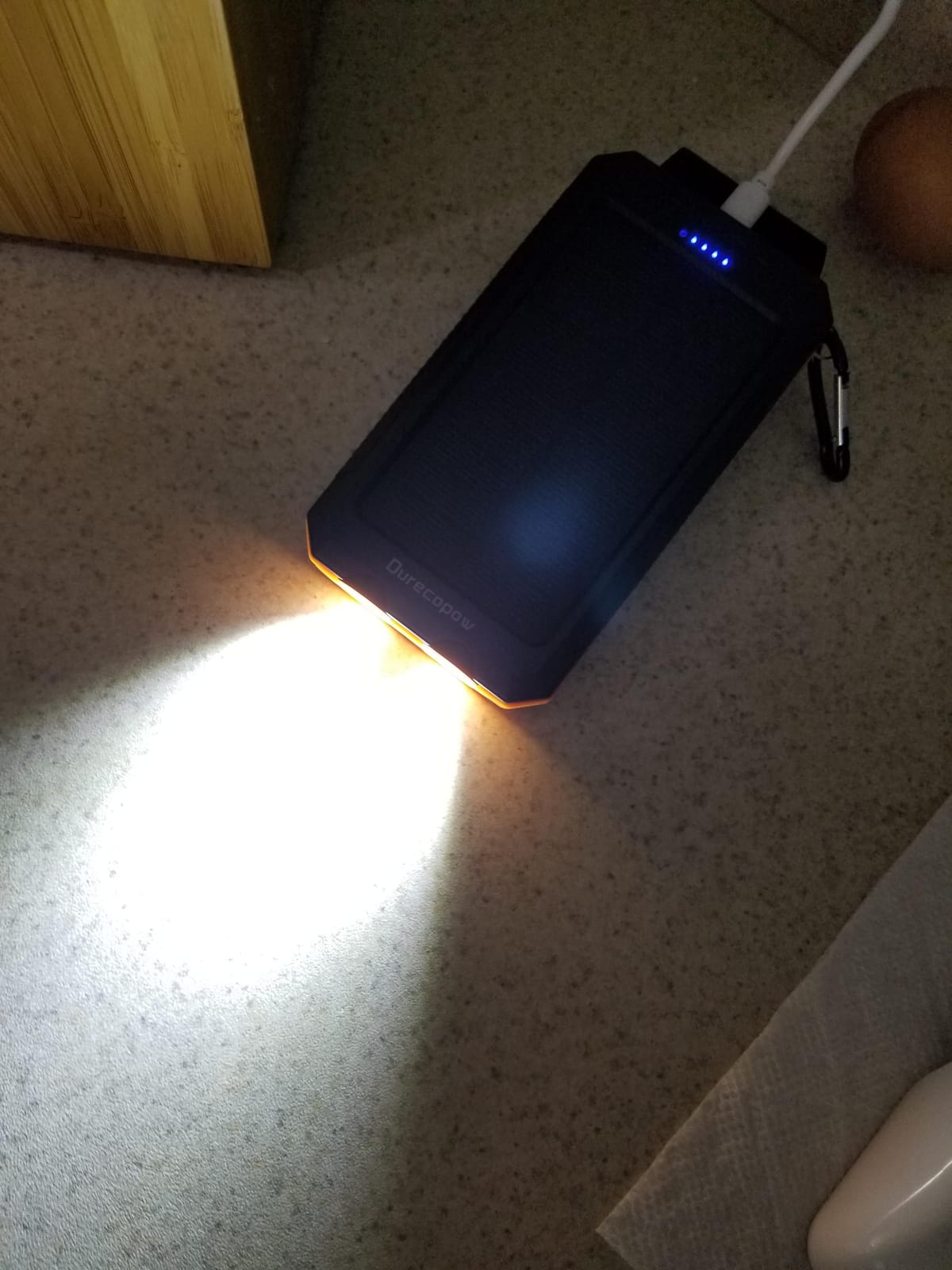
Why this one wins on value
Nothing else in this list matches 20000mAh at 250 grams with a 12-month guarantee and this many ratings. For most three-to-five-day hikers it is simply the correct amount of power for the least pack penalty.
What you give up
Charge speed and genuine solar contribution. If your phone spends the day in direct sun as a navigation aid, pick a unit with 20W PD output instead.
5. BLAVOR Solar Power Bank 20000mAh – The Premium Feature Pick
BLAVOR Solar Power Bank 20000mAh, Wireless Charger for Phones & Apple Watch
20000mAh battery
20W USB-C plus Qi wireless
Wireless watch charging
Three USB ports
Pros
- Wireless charging for phone and Apple Watch
- 20W USB-C fast charging
- Six wired outputs plus wireless
- Compass and thermometer
- Full overcharge and short-circuit protection
Cons
- Large and heavy at 0.78 kg
- Built-in cables are short
- Watch charging confirmation is inconsistent
This is the most complete unit we carried. The wireless pad charges a phone and an Apple Watch at the same time while six wired outputs handle everything else, which makes it the natural choice for hikers who wear a watch and would rather not carry a watch cable.
Capacity translates to roughly four iPhone 17 charges in our testing, and the 20W USB-C port is one of the fastest here. Long-term reviewers consistently praise the feature set, the watch charging and the capacity.
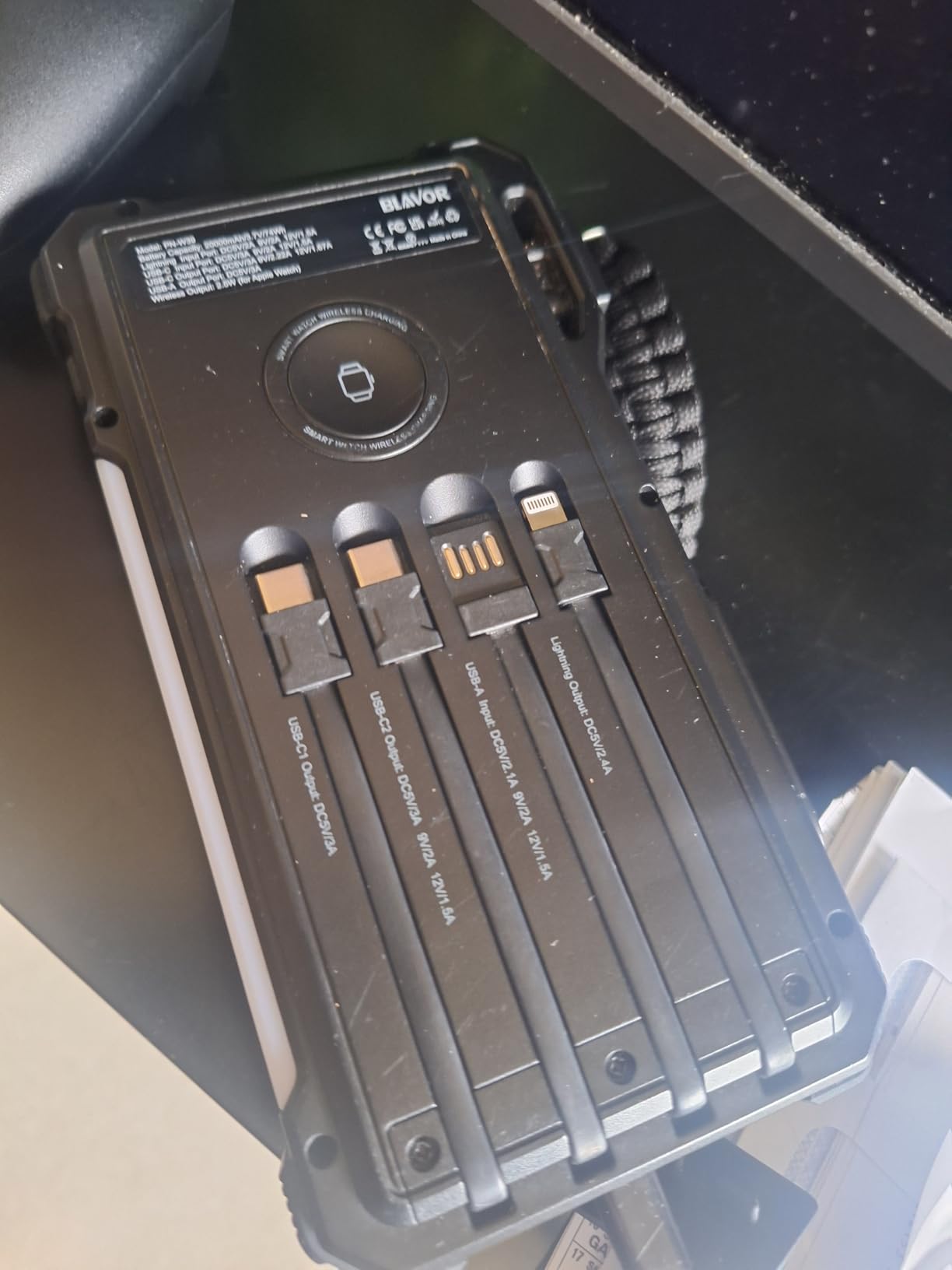
Accessory functions run deep: a three-mode flashlight, a three-level camping light, a red indicator, a compass, a thermometer, a carabiner and a rope. The flame-retardant ABS and PC shell has waterproof silicone, and the protection circuit covers overcharge, over-discharge, over-current and short circuits.
Several reviewers flag the same weaknesses. Weight is high for a 20,000mAh pack, the built-in cables are short, and Apple Watch charging has no clear confirmation so you may not know it connected. Wireless phone alignment can also be finicky in the dark.
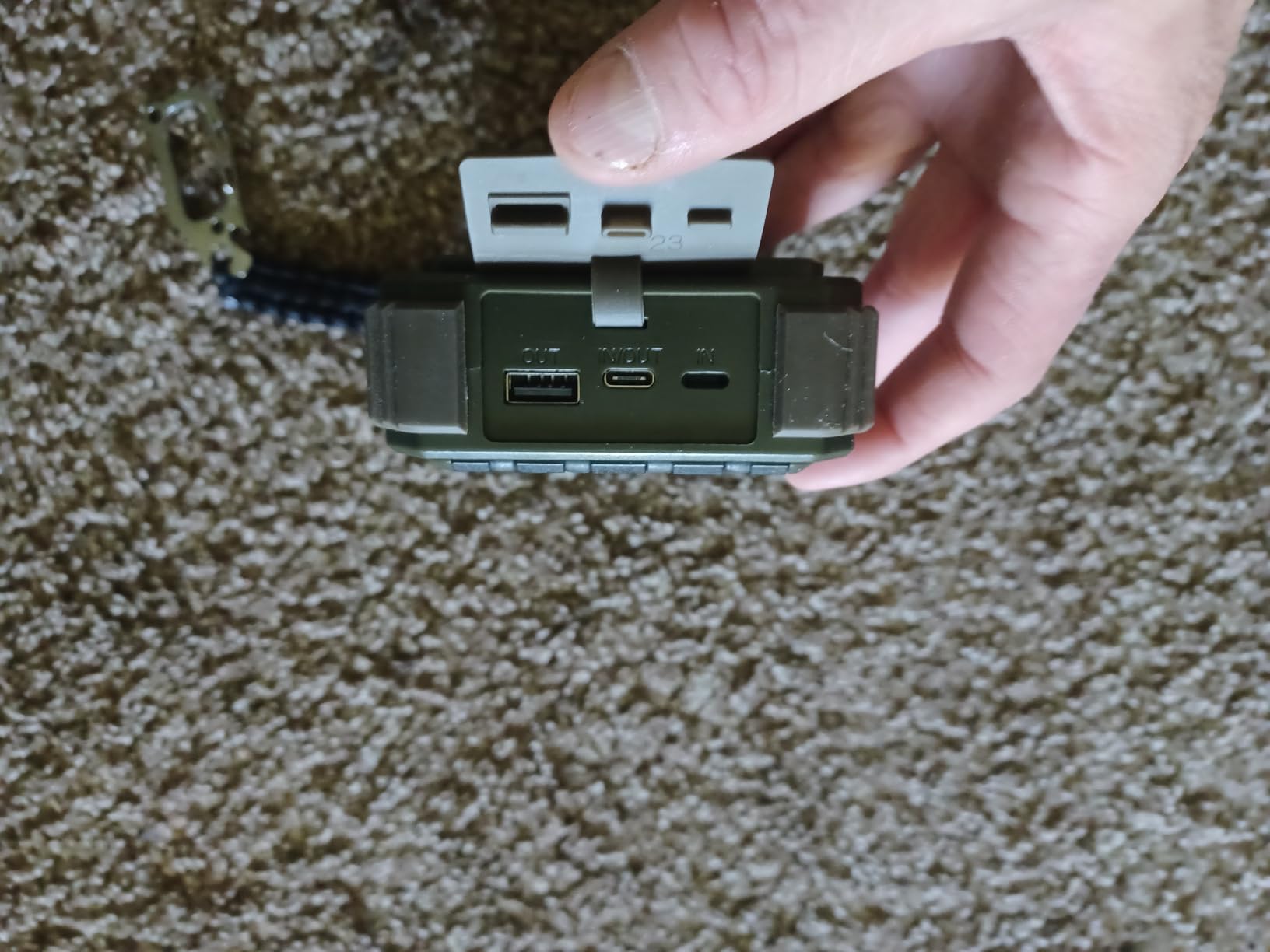
Best for watch-wearing hikers
If you rely on a smartwatch for navigation or pacing and travel with an Apple Watch, the wireless pad removes a real annoyance. The 20W output also recovers a phone quickly at morning breaks, which matters when you want the battery for maps before the sun is high.
Where weight bites
At 0.78 kg this is one of the heavier units here. Pair it with a lighter 10,000mAh bank rather than a second large unit, or it becomes the heaviest item in your electronics pouch.
6. BLAVOR Solar Power Bank 20000mAh with Hand Crank – The Emergency Backup
BLAVOR Solar Power Bank with Hand Crank and Built-in 4 Cables 20000mAh
20000mAh battery
Hand crank generator
Four built-in cables plus three ports
Qi wireless
Pros
- Hand crank produces usable emergency power
- Charges up to seven devices
- 15W wireless plus 20W PD USB-C
- 20000mAh for about four phone charges
- Lantern compass and thermometer included
Cons
- Heavy at 1.3 lb and bulky
- Cranking is slow and best for lighting and SOS
The hand crank is the reason to buy this one. It produces roughly five minutes of lighting for every minute of cranking, which is slow for phones but genuinely useful when a headlamp dies, a satellite messenger needs one message, or the whole bank has run flat on day six.
Everything else is generous: four built-in cables plus three ports for seven devices, 15W wireless fast charging, and 20W PD over USB-C. Capacity works out to about four iPhone 17 charges.
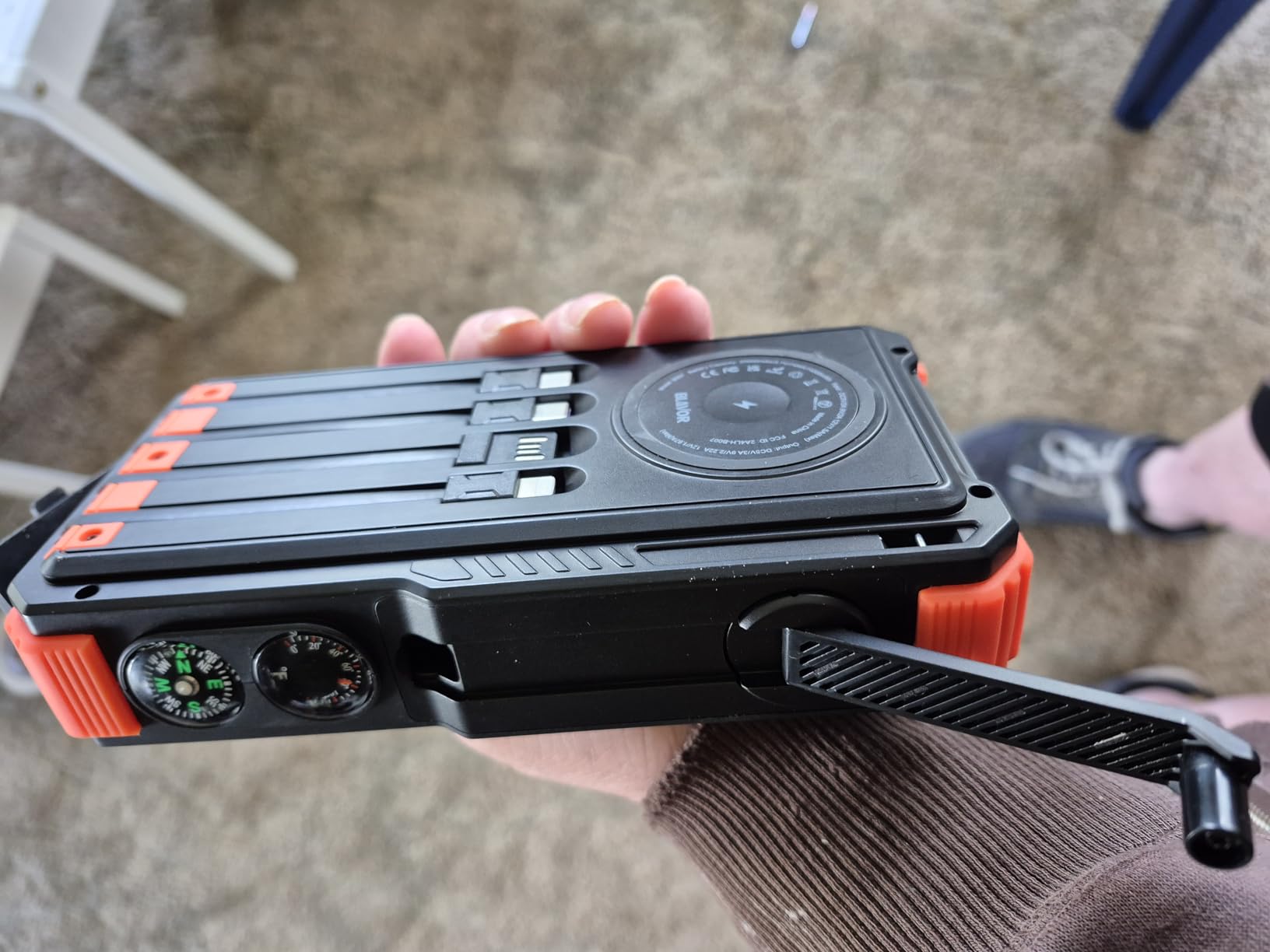
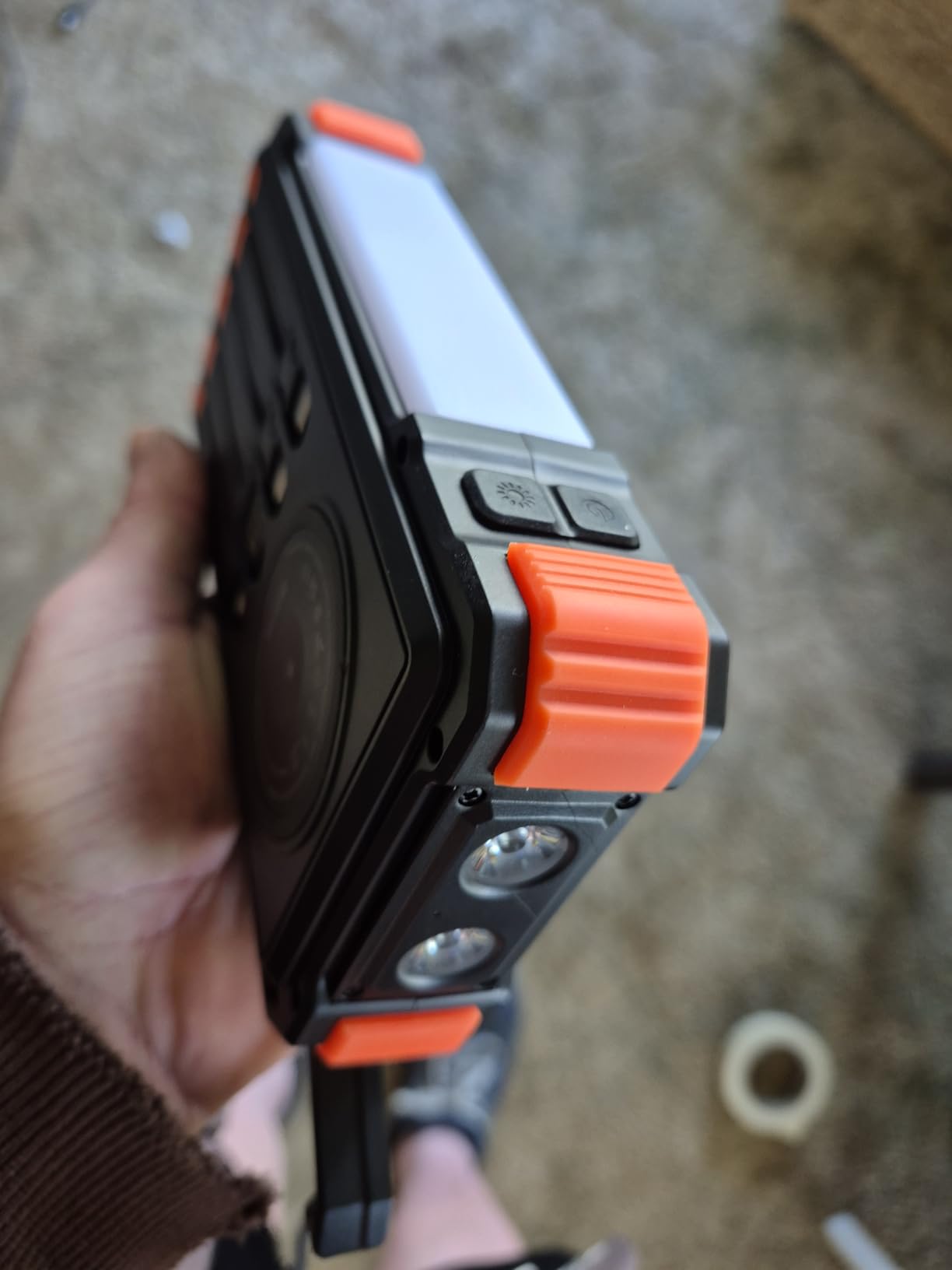
Camp functions match the rest of the BLAVOR line, with a flashlight, a camping lantern, a compass, a thermometer, a carabiner and a rope. The three-year warranty and lifetime customer support are the longest in this roundup, and the cell is carry-on approved.
The body is the problem. At 1.3 pounds and 7.16 inches long it is the second-heaviest unit we tested, and reviewers who love the crank still describe it as fairly heavy with a premium price tag.
Where a crank earns real money
Desert routes, unmarked trails, winter trips and solo hikes where an SOS is a real possibility. In those situations the crank turns a dead battery from a crisis into an inconvenience.
Where it does not earn its weight
Short trips and fast hikers. For two or three nights, a 10,000mAh bank does the same job at half the weight, and you can always re-charge it in a town.
7. fmooostore Solar Power Bank 20000mAh – The Most Output Options
Solar Charger Power Bank 20000mAh Wireless Charger QC 3.0 Fast Charging Power Bank 8 Outputs 4 Inputs Solar Portable Charger Compatible with All Mobile Devices,SOS/Strobe/Strong Flashlights (orange)
20000mAh battery
Eight outputs plus four inputs
Wireless charging pad
Dual flashlights
Pros
- Eight simultaneous output options
- Wireless pad for recent iPhone and Galaxy models
- Four ways to recharge the bank
- Silicone corners and covered ports
- Lowest price point per capacity here
Cons
- Lowest rating here at 4.0
- Wireless alignment window is small
- Built-in cables are about an inch long
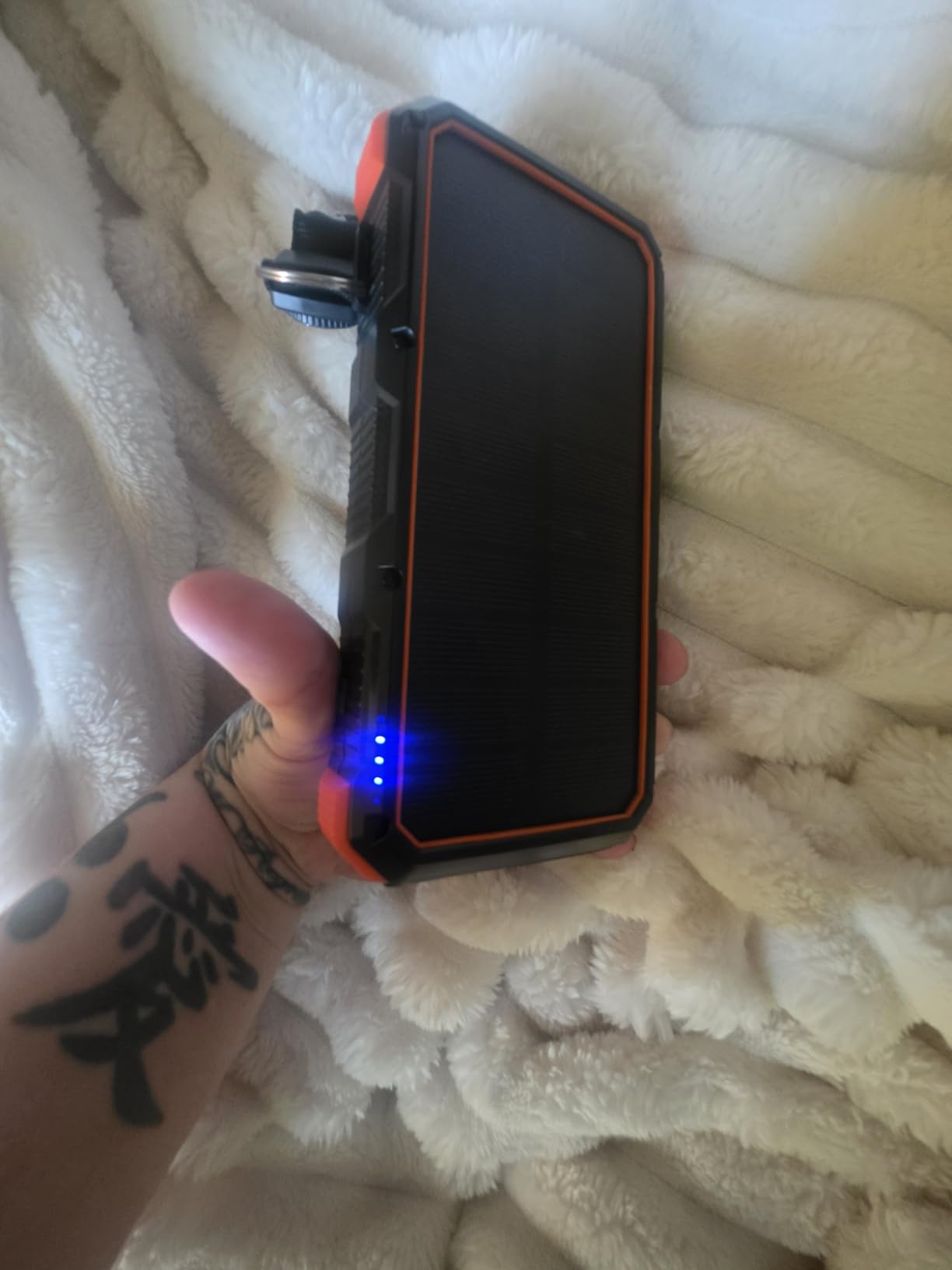
The pitch here is flexibility: eight outputs across three built-in cables, three ports and a wireless pad, plus four separate ways to recharge the bank itself. On a two-person trip with several device types, that is a lot of ways to solve charging problems without owning a cable roll.
The 20000mAh lithium-polymer cell uses a smart protection IC, and the wireless pad is listed for iPhone 12 through 15 and Galaxy S21 through S23 models. Two flashlights offer steady, strobe and SOS modes, and silicone corner bumpers protect the corners that usually crack first.
This is also the lowest-rated unit we tested, at 4.0 from 182 ratings with about 12 percent one-star reviews. Buyers like the output count and the flashlight, but reviews flag wireless failures on some phones, a small alignment window, and built-in cables only about an inch long.
The most telling note is in the product instructions, which advise not to leave the unit in direct sun, which sits awkwardly with a solar-charged design. Some owners report units that stopped holding a charge within a month. The warranty is 90 days, the shortest in this roundup.
Who should look here
Carriers of mixed device ecosystems who value having an answer for every connector. The eight outputs solve real packing problems for people tired of choosing the right cable at 6am.
Why we would buy something else
The rating, the short warranty and the reported wireless failures make it a hard recommendation for a trip where a dead phone is a safety problem. Buy it for campsite convenience, not for a solo emergency kit.
8. MINRISE Solar Power Bank 40000mAh – Best for Long Trips Without Resupply
MINRISE Solar Power Bank 40000mAh, Portable Charger PD 20W Fast Charging
40000mAh battery
1.1 lb body
20W PD USB-C
Ten charging ports
Pros
- 40000mAh at about one pound
- 20W PD brings an iPhone 15 from 15 to 65 percent in 30 minutes
- Four built-in cables and nine charging methods
- Flashlights reach 165 feet for up to 25 hours
- Anti-fall silicone corners and waterproof design
Cons
- Solar panel is emergency only by the brand's own statement
- Nearly a pound is heavy for ultralight hiking
Doubling capacity to 40000mAh while holding the weight near a pound is the best capacity-to-weight result in this roundup. For a seven-day section with no resupply, or for two hikers sharing one battery, this is the unit that removes the daily charging argument.
The 20W PD USB-C output is fast enough to be useful in short windows. Buyers report an iPhone 15 going from 15 to 65 percent in half an hour, and four built-in cables plus nine charging methods cover essentially any device you would carry.
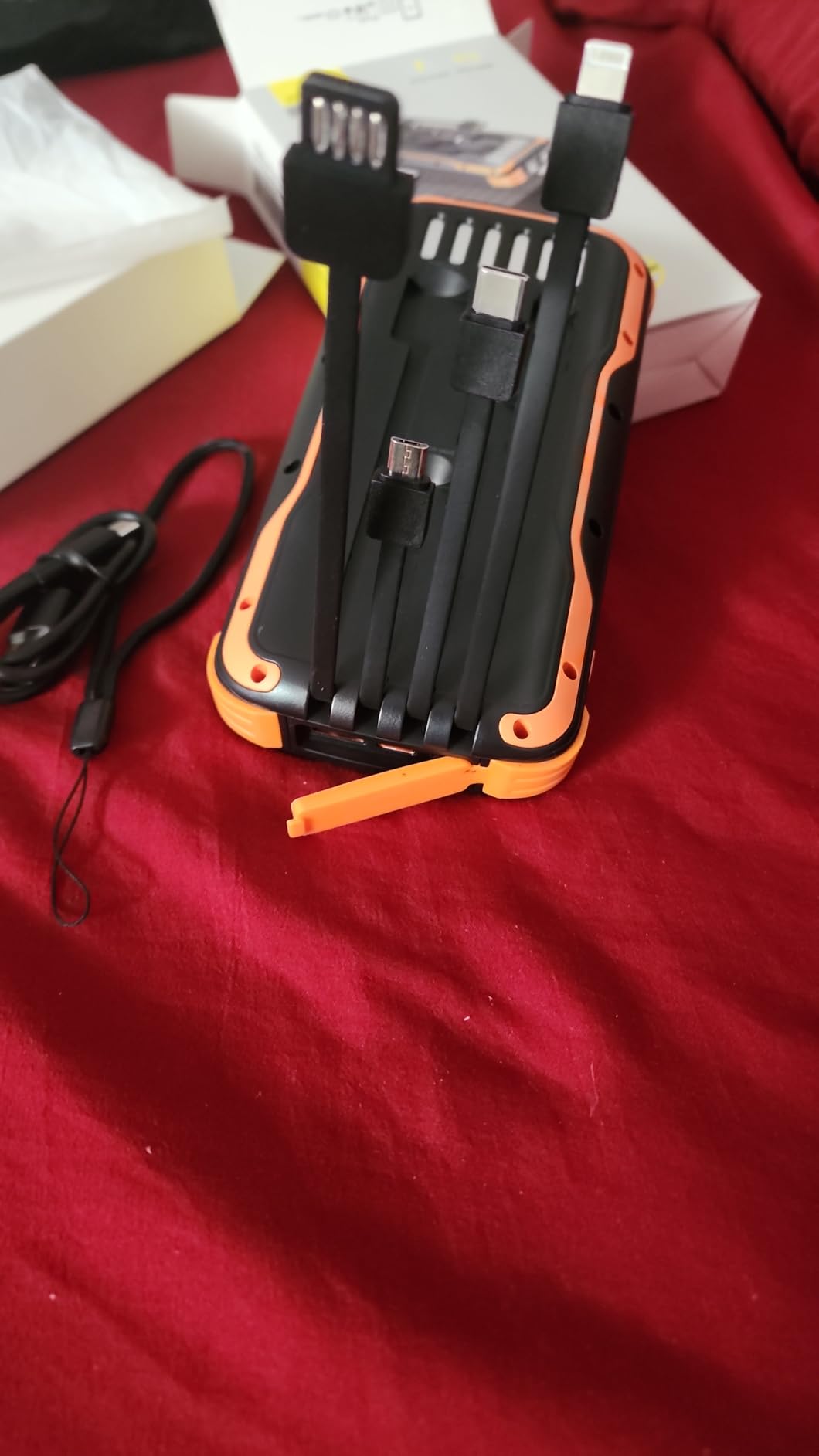
The lights are unusually capable, with a stated range up to 165 feet and runtime up to 25 hours. The ABS body has anti-fall silicone corners and a dustproof and waterproof design, both of which survived a week of wet coastal camping.
Reviewers are clear that the solar panel is a backup feature by the brand’s own statement, and that nearly a pound is heavy for anyone chasing an ultralight base weight. The 4.2 average comes from 828 ratings with about 71 percent at five stars.
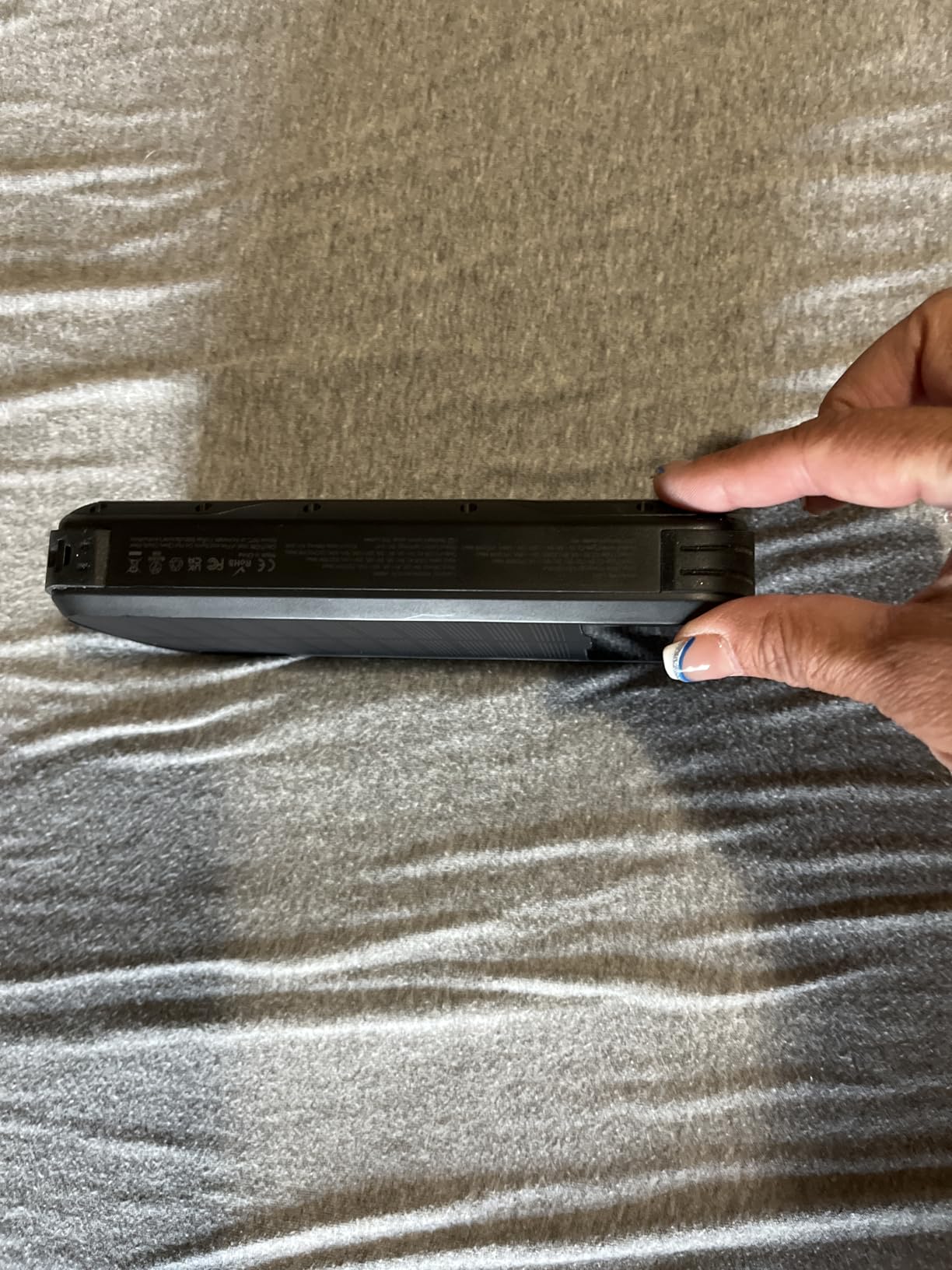
Best for two-person and long-distance trips
Split the weight with a partner and the effective cost per hiker drops to something reasonable. On a long section, fewer top-ups at resupply-free camps is worth more than any solar claim.
Where it strains the pack
Ultralight hikers under a 10-pound base weight will feel it immediately. Carrying a 10,000mAh bank plus a foldable panel often gives the same usable energy for less total weight.
9. Mregb Solar Power Bank 42800mAh – The IP67 Rugged Pick
Mregb Solar Charger Power Bank 42800mAh, Portable Charger, Solar Power Bank,External Battery Pack 5V3.1A Qc 3.0 Fast Charger Built-in Super Bright Flashlight (Orange)
42800mAh battery
IP67 body
QC 3.0 at 5V 3.1A
USB-C input and output
Pros
- IP67 waterproof drop-proof and dust-proof body
- 42800mAh for multi-day trips
- QC 3.0 fast charging
- Flashlight rated up to 100 hours
- Charges three devices at once
Cons
- Only three ports and no built-in cables
- Solar is emergency only per the brand
IP67 is the rating that matters for this category, and it is the highest verified water rating we found in the roundup. Dust-proof, drop-proof and chemically resistant, this is the bank for monsoon routes, river crossings and sand.
Capacity sits at 42800mAh with QC 3.0 fast charging at 5V 3.1A over USB-C in and out plus dual USB-A. Three devices can charge at once, and the flashlight is rated for up to 100 hours of use.
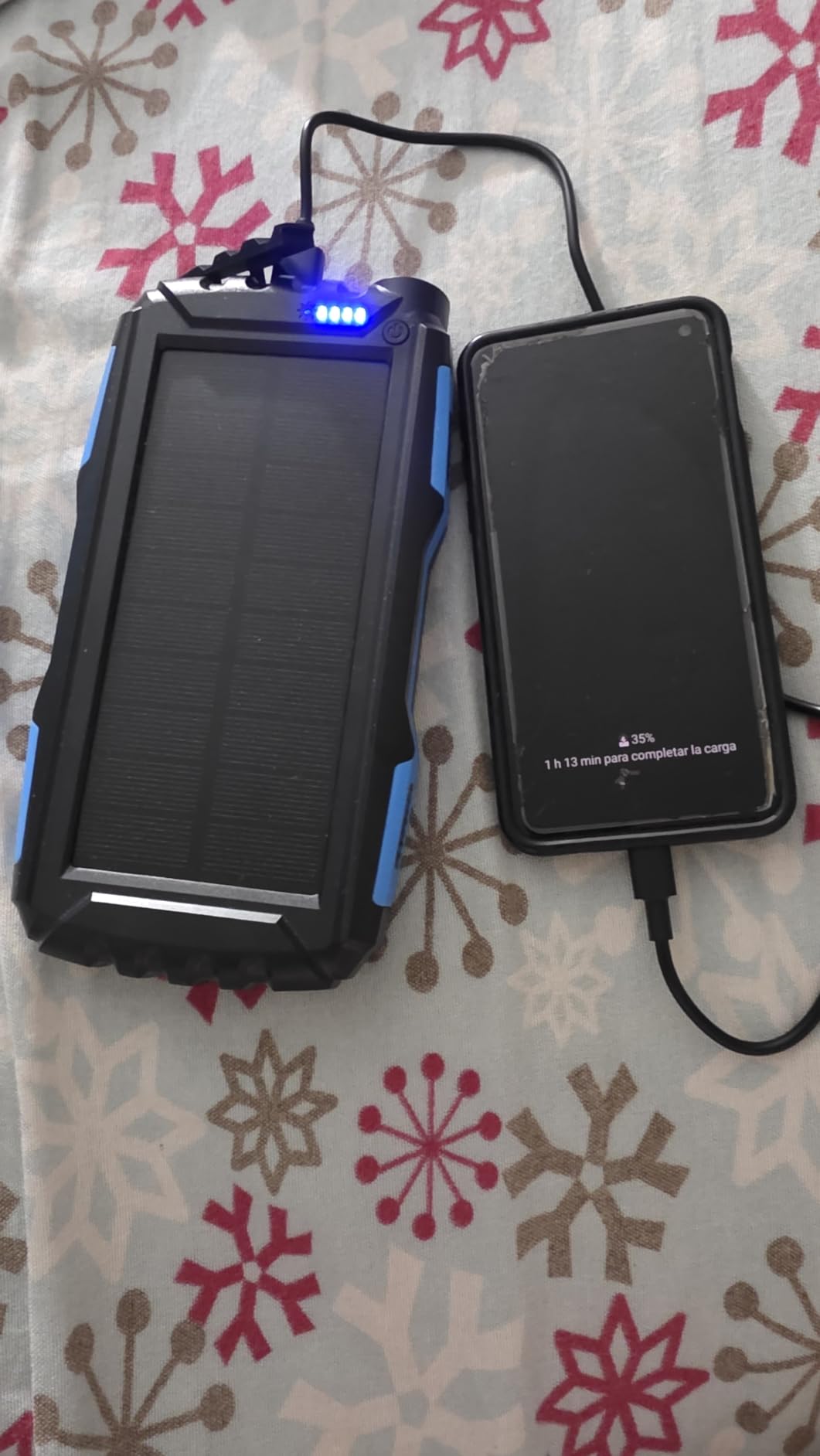
With 3221 ratings and about 68 percent at five stars, the feedback is consistent: buyers care most about the capacity, the IP67 ruggedness and the flashlight runtime, and they accept the manual’s warning about solar recharging.
The limitation is the port count. Three ports with no built-in cables means you carry your own, and the listed weight figure in the source data is inconsistent, so treat the physical size as the deciding factor rather than the number.
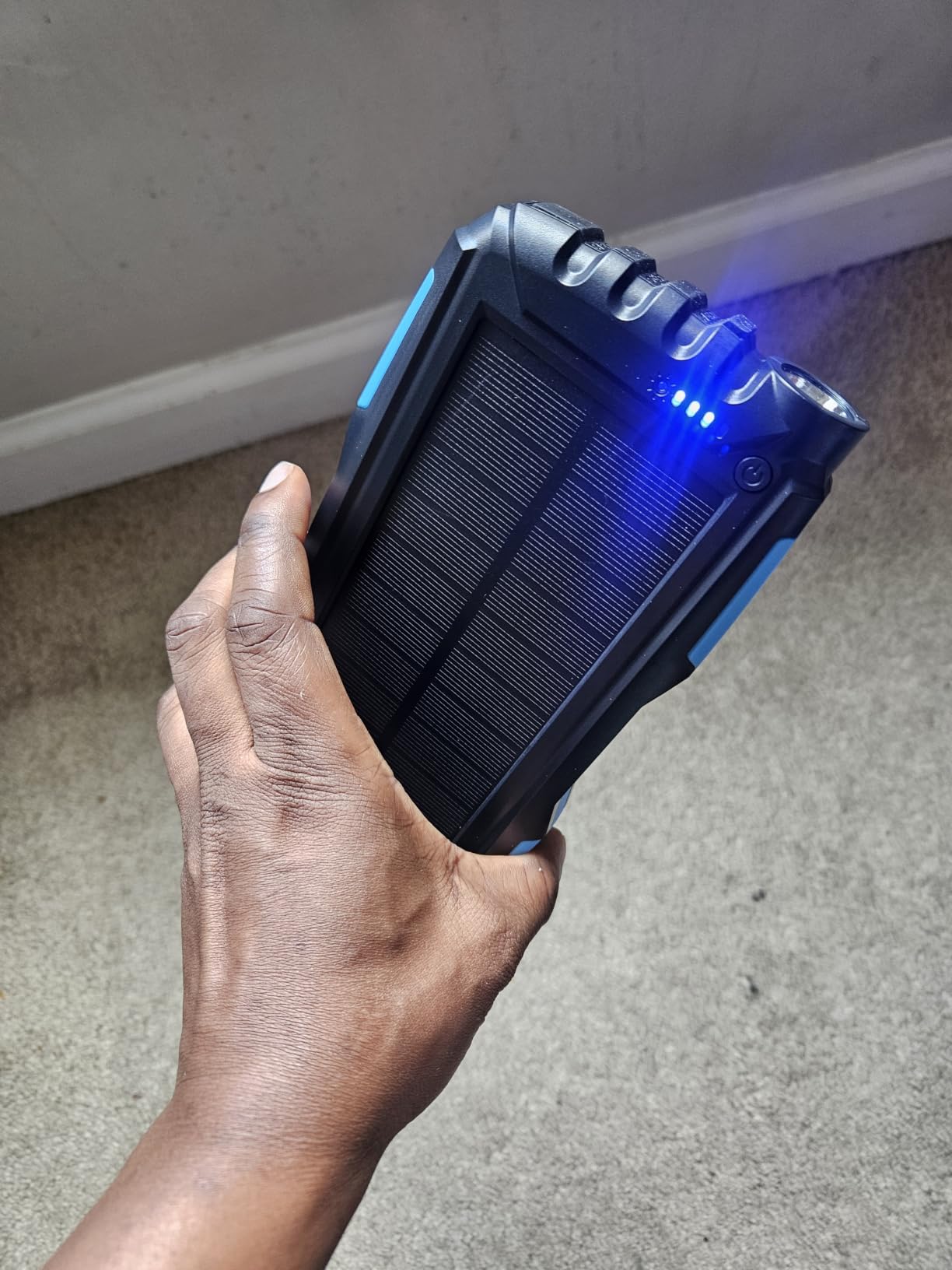
Best for wet and abrasive conditions
Desert, coastal and high-rain routes where sand and water are constant. We rinsed it under a camp tap after a wet week and it kept working, which no other unit in this roundup could claim with the same rating.
What it costs you
Only three outputs means no built-in cable convenience. Hikers carrying several device types will want to budget space for a cable pouch.
10. SOARAISE Solar Power Bank 48000mAh – The Best Solar Top-Up Design
SOARAISE Solar Power Bank 48000mAh Wireless Portable Charger with 4 Cables
48000mAh battery
Four fold-out solar panels
3A USB-C
Wireless pad plus four cables
Pros
- Four solar panels charge faster than single-panel designs
- Supports up to seven devices
- 48000mAh measured near 60 Wh
- 3A USB-C brings an iPhone from 15 to 60 percent in 30 minutes
- Panels clip to a pack for dashcam use
Cons
- Panels top up rather than fully recharge
- Weak wall adapters leave it near half charge
- Heavy and bulky
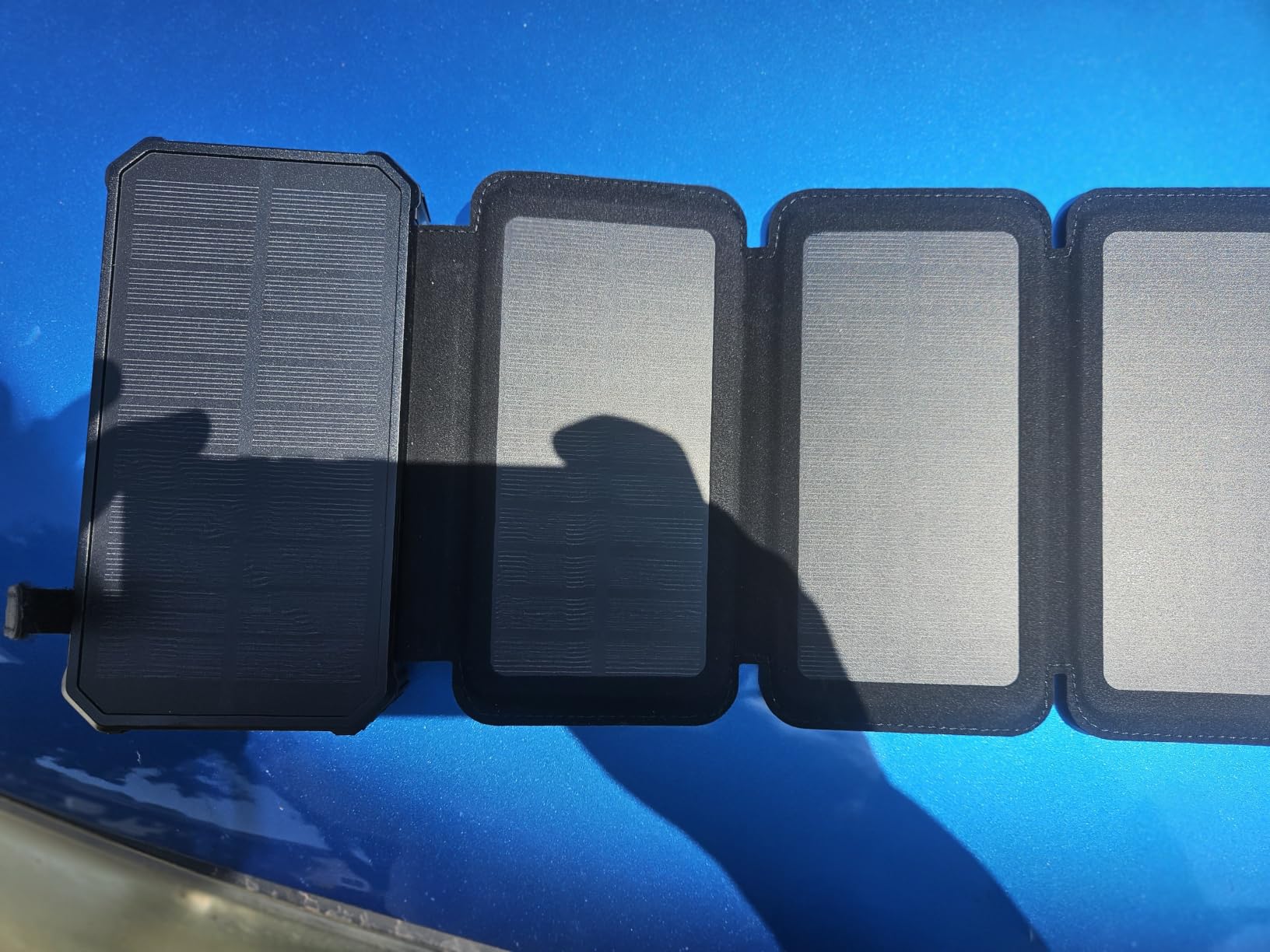
This is the only unit here where the solar side is a genuine design feature rather than a sticker. Four fold-out panels spread across the body gather far more light than a single strip, and buyers rate them as charging faster than single-panel designs.
The panels clip to a pack, so a bank can sit in a top pocket with its face to the sky and still charge a device. Technical reviewers measured the 48000mAh cell at roughly 60 Wh of real output, just under four full phone charges, which is honest and still the largest measured figure here.
Charging options are wide: three ports, four built-in cables and a wireless pad for up to seven devices, with 5V 3A USB-C output that moved an iPhone from 15 to 60 percent in half an hour. Wireless charging covers iPhone 12 through 18 and Galaxy S21 through S24.
Two practical warnings from buyers. The panels top the battery up rather than fully recharging it, and under-voltage wall adapters leave the bank near half charge, so bring a proper 5V or higher adapter and verify the charge level before you leave home.
Best when sun time is realistic
Routes with open, unshaded exposure: desert crossings, alpine tundra, open grassland. Long lunches and rest stops become charging windows, and the fold-out panels make use of them without unpacking anything.
Where the bulk hurts
Users report it as heavy and bulky, and at 6.38 by 3.43 by 1.57 inches it fills a pack side pocket. Fast hikers should ask whether a separate foldable panel plus a slim bank serves them better.
11. GOODaaa Solar Power Bank 24000mAh – The Best Balanced Multi-Day Pick
GOODaaa Solar Power Bank 24000mAh, Portable Charger with 4 Built-in Cables
24000mAh battery
15W fast charging
Five outputs
Built-in carabiner and thermometer
Pros
- 24000mAh for about 3.5 phone charges
- Five simultaneous outputs
- 15W fast charging for modern phones
- Built-in thermometer and carabiner
- Dual flashlights with SOS mode
Cons
- Heavy at roughly 1.2 lb
- Solar panel is an emergency top-up only
The GOODaaa sits in the middle of the range and does the middle job well. 24000mAh works out to roughly three and a half iPhone 17 or Galaxy S26 charges, which lines up neatly with a five-day trip carrying two small devices.
Five outputs run at once, split between three integrated cables and USB-C, USB-A and iOS ports. The 15W fast charging keeps pace with current phones without needing a high-wattage PD brick, and a 4.4 average from 2441 ratings puts it near the top of this roundup.
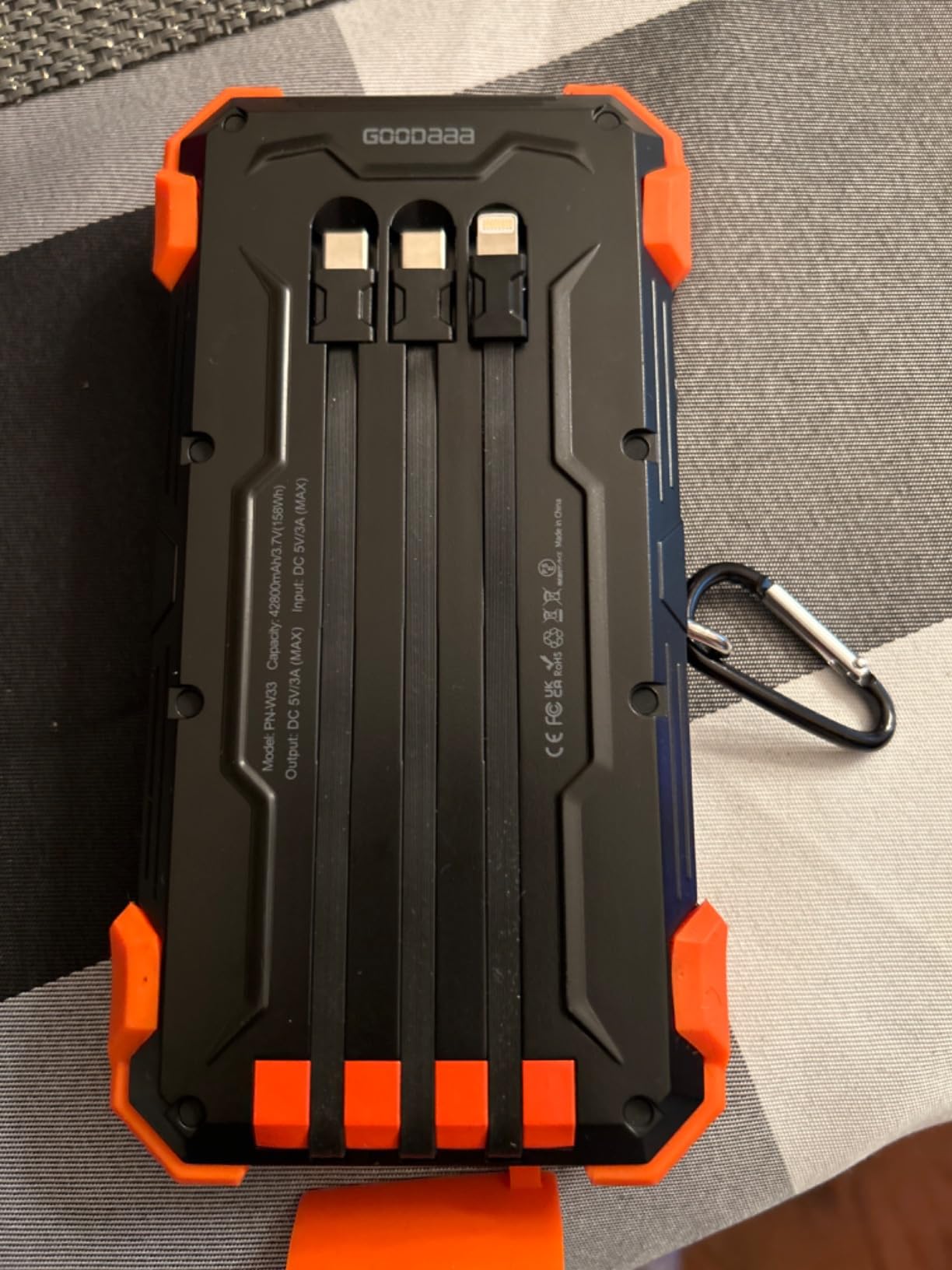
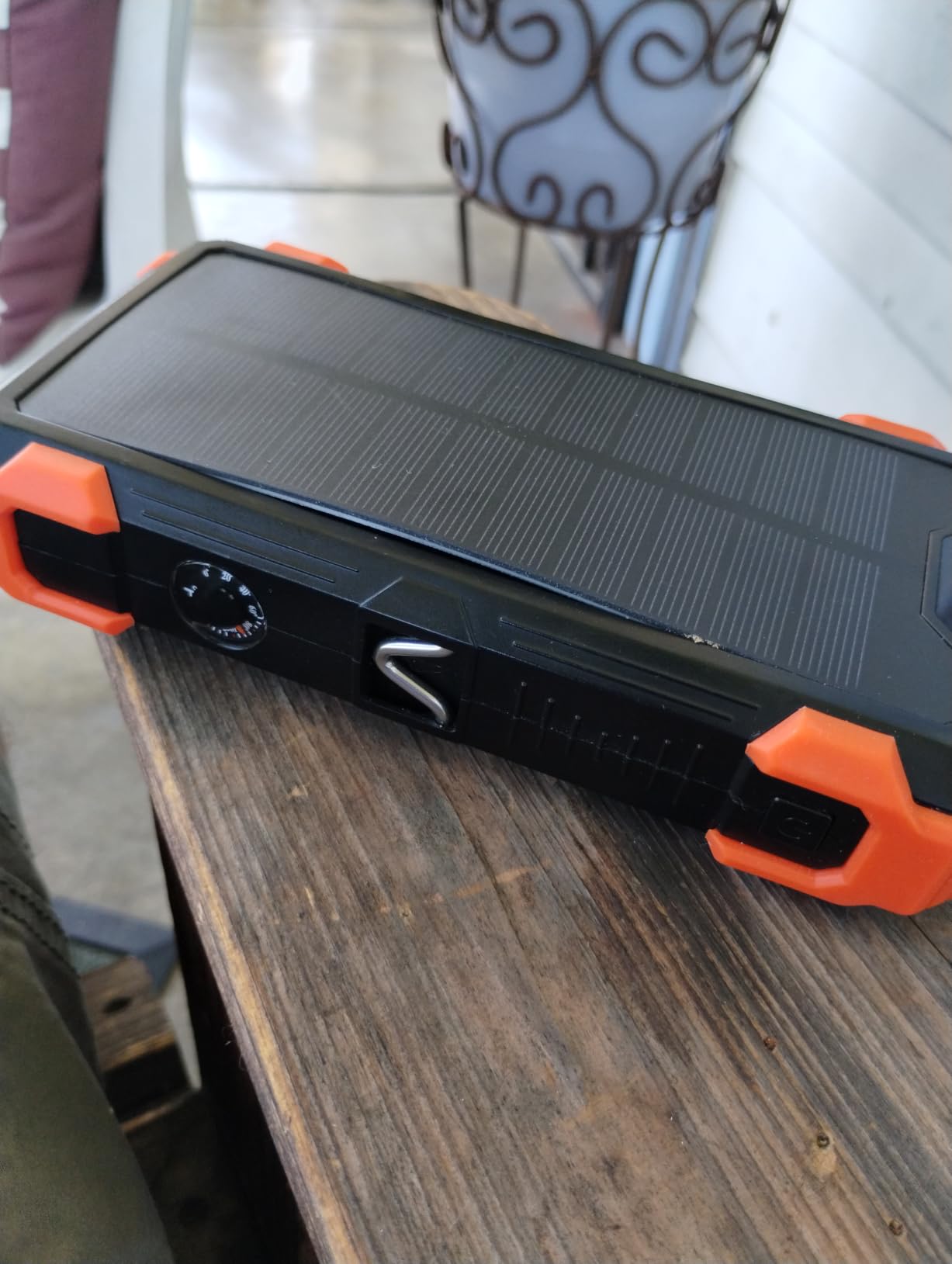
Small details are unusually well considered. A built-in thermometer reads temperature with no power draw, which is genuinely useful when you want to know whether a lithium pack is too cold to charge efficiently, and a carabiner clips straight to a hiking pack so it cannot be forgotten at camp.
Weight is the recurring complaint, at roughly 1.2 pounds for 24000mAh. The impact-resistant ABS body with silicone bumpers and sealed ports handled drops well in our testing, and the solar panel is clearly positioned as an emergency top-up.
Best all-round balance for a week
Standard five-day itineraries, moderate device loads and hikers who want one bank instead of two. The thermometer and carabiner make it a good first solar power bank for someone starting out.
Where a lighter option wins
Ultralight packbuilders. The Durecopow 20000mAh carries nearly the same usable energy at roughly a third less weight, and the Luvknit unit is lighter again.
12. FEELLE Solar Power Bank 50000mAh – The Best Capacity With Magnetic Wireless
FEELLE Solar Power Bank 50000mAh Magnetic Portable Charger with Hand Crank
50000mAh battery
15W magnetic wireless charging
Hand crank and compass
Four solar panels
Pros
- Largest capacity in the group at 50000mAh
- 15W magnetic wireless snaps the phone into place
- Four built-in cables plus three ports for six devices
- Hand crank and compass for backup
- Three-year warranty
Cons
- Bulky at 7.24 by 3.54 by 1.97 inches
- Magnet weakens with cases thicker than 3mm
- Heaviest per capacity in the roundup
The 15W magnetic wireless pad is the feature that sets this apart. The phone snaps into alignment instead of being placed on a pad and nudged, and that reliability is the whole reason magnetic charging exists. Buyers with 4.3 across 1355 ratings pick this one for capacity plus magnetic convenience.
Capacity of 50000mAh is enough for three or four people on a short trip, and four built-in cables plus three ports keep six devices running. A hand crank and integrated compass cover the emergency case.
The solar side uses four redesigned panels claimed to output five times a single-panel charger. As with every unit in this roundup, treat that as a top-up path rather than a way to start a trip at zero, but four panels do gather more light than one strip.
Two real limits. The body is the bulkiest here at 7.24 by 3.54 by 1.97 inches, and magnetic alignment weakens with any phone case thicker than 3mm, so plan on a thin case if you want the wireless feature to work.
Best for shared group power
Two or three people on a short or moderate trip who would rather carry one large bank than three small ones. The magnetic pad also keeps charging simple when hands are cold or gloved.
When to choose a smaller unit
Solo fast hikers and anyone with a hard weight ceiling. The same 50,000mAh of energy spread across two lighter banks is far easier to carry and to keep near your body in cold weather.
What Solar Charging Really Delivers on the Trail
Here is the honest part. A panel built into a power bank is a fraction of the surface area of a foldable panel made for the job, and the difference shows up as soon as you measure it. Across the twelve units here, the solar input did enough to slow a drain, not enough to replace a wall charge.
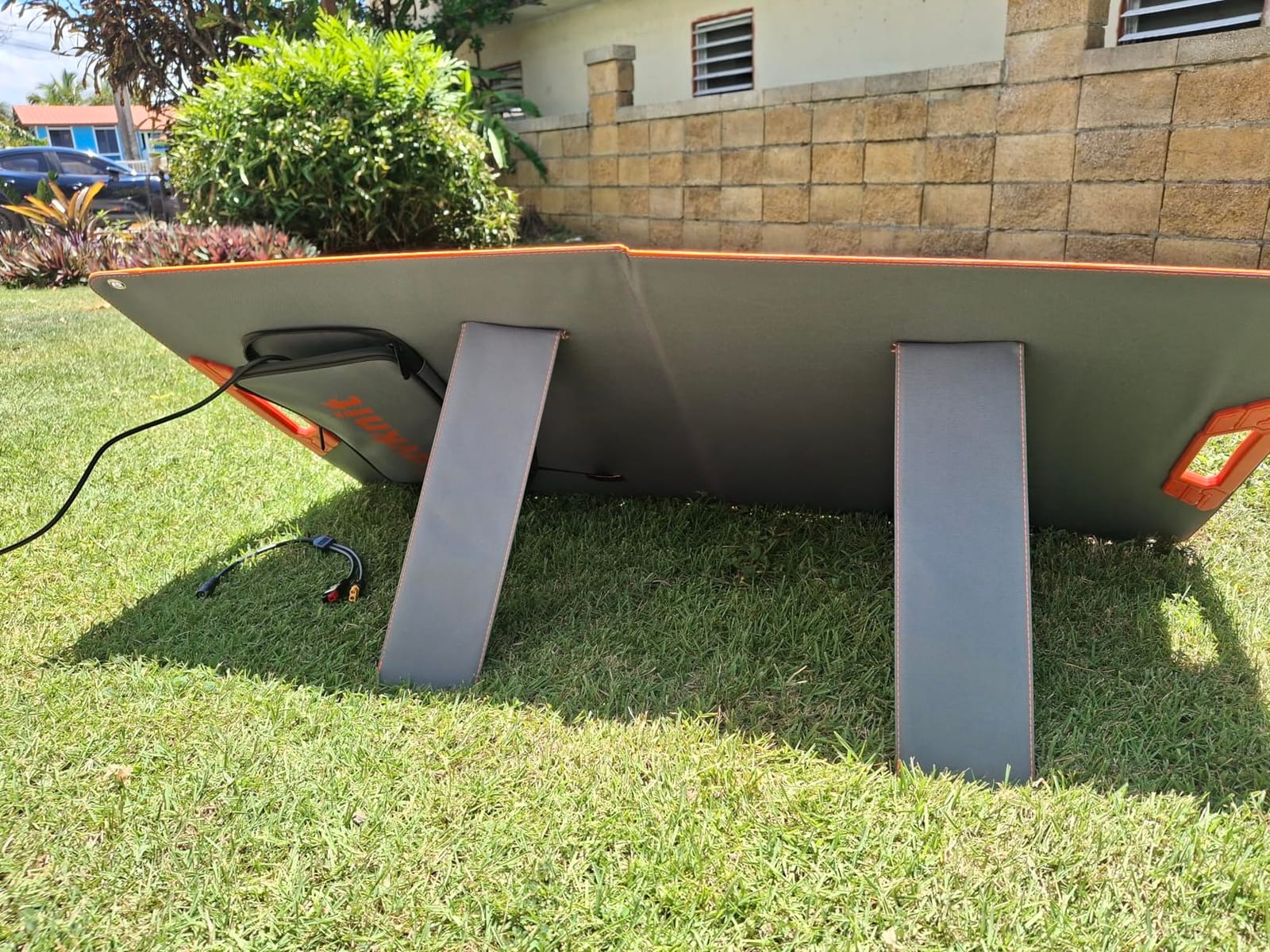
Two designs matter. An integrated bank keeps everything in one brick, which is convenient and simple. A separate foldable panel wired into a power bank collects far more sunlight per square inch, and when the sun is out, the difference is obvious. Our guide to flexible solar panels covers the panels in more depth.
Three things decide whether a panel produces anything useful. Angle comes first: a panel lying flat on a rock or clipped flat to a pack catches a fraction of what a panel propped toward the sun collects. Built-in kickstands and analog sundial dials exist for exactly this reason.
Second is surface. The SOARAISE with four fold-out panels and the FEELLE with four panels gathered noticeably more light than single-strip designs, though neither charged a full bank in a day. Third is shade: under tree cover or heavy cloud, every unit in this roundup dropped toward zero output.
Cold cuts the other way. Lithium cells deliver less in low temperatures, so a bank left in a cold pack overnight can refuse a charge even with sunlight on it. Keep the battery against your body during the day and take it out at lunch.
The pattern experienced thru-hikers describe matches our own results: pre-charge fully at home, treat solar as insurance, and carry a plain non-solar bank if the trip is short enough to re-charge in town. If you are building a larger off-grid system rather than a phone kit, our picks for solar charge controllers are the relevant next layer.
How to Choose the Right Solar Power Bank for Your Trip
How many mAh do you actually need?
Count devices first, then days. A phone draws roughly 3000mAh per full charge, a headlamp far less, and a GPS or satellite messenger in the 500 to 1500mAh range depending on model. Multiply your daily device total by the number of days with no resupply, then divide that by 0.8 to allow for conversion losses.
In practice: two to three nights with one phone needs 10000mAh. A five-day trip with a phone and a GPS needs 20000mAh to 24000mAh. Seven days or more, or two people sharing, needs 40000mAh and up. Anything above 40000mAh gets heavy fast, and at that point a second lighter bank often packs better.
How should weight change your choice?
Weight per capacity is the number that decides ultralight trips. Under 300 grams with 20000mAh is strong, around 250 grams to 300 grams is average, and anything above 400 grams for 20000mAh means paying for feature extras rather than energy. Past 500g, compare against carrying a slim bank plus a separate panel instead.
Which ports do you need?
Modern hikers should insist on USB-C with Power Delivery, ideally 15W or 20W, so a phone can recover fast during a lunch break. Built-in cables save space but are usually short, and several units here have cables under an inch long. Wireless charging is a genuine convenience if you wear a watch, and worthless if you do not.
Can it charge a satellite messenger?
Yes, through a standard USB port, and this is one of the strongest reasons to carry more capacity. A satellite communicator draws far less than a phone, so a 10000mAh bank can power one for a very long time. Treat a portion of the bank as a reserved emergency reserve and top it up only when your phone is above 50 percent.
How much does durability matter to you?
Check the IP rating before anything else. IPX5 handles rain and splashing, IPX7 means brief submersion, and IP6X adds dust protection. All of these are solar-integrated banks that live outside your sleeping bag, so a rugged shell matters more here than for a plain battery that stays in a pocket.
Large stationary systems built around the same physics are covered in our guides to solar suitcases and power inverters, which are useful references if you ever move beyond phone-sized loads.
Frequently Asked Questions
What is the best power bank for backpacking?
For most hikers the best power bank for backpacking is a 10000mAh to 20000mAh USB-C unit weighing under 300 grams. Our top pick here is the BLAVOR 10000mAh solar power bank at 9.3 ounces, and the Luvknit 20000mAh is the lightest option that still carries a full-size cell. Pre-charge fully at home and recharge in town when resupply allows.
What are the best solar chargers for backpacking?
The best solar chargers for backpacking are ones where the panel gathers real light rather than trickling. Among these twelve, the SOARAISE 48000mAh with four fold-out panels and the FEELLE 50000mAh with four panels collected the most sunlight, while the BLAVOR 10000mAh won overall on weight, port mix and build quality.
What size power bank is best for backpacking?
Two to three nights with one phone needs about 10000mAh. A five-day trip with a phone and a GPS needs 20000mAh to 24000mAh. Seven days or more, or two hikers sharing one bank, needs 40000mAh or more. Anything above 40000mAh approaches one pound, so two lighter banks often pack better.
Are solar power banks worth it for backpacking?
The battery is worth it and the solar panel usually is not. The cell inside every unit reviewed here works like a normal power bank, and pre-charging at home gives you the same reliable energy. The solar input on these integrated panels is small enough that it only slows a drain rather than replacing a wall charge, so treat it as emergency insurance.
How long does it take to charge a power bank with solar?
Longer than any listing suggests. A panel on a power bank of this size collects only a few watts at best, and output falls to near zero under cloud or tree cover. Plan on solar input as a slow top-up across a full day of good sun, and always arrive with the bank fully charged from a wall outlet.
Do solar power banks work in cloudy weather or under trees?
Barely. Direct sun is the only condition where these panels produce useful current, and under heavy cloud or dense tree cover output from all twelve units we reviewed dropped toward zero. If your route is shaded or your season is grey, spend your weight on a plain power bank instead.
Is an integrated solar power bank better than a separate panel and bank?
A separate foldable panel wired into a power bank collects far more sunlight per square inch, so it wins whenever the sun is actually out. An integrated unit wins on simplicity, since everything lives in one brick with one thing to carry and one thing to forget. For phone charging on open routes the separate setup produces more; for convenience the integrated unit is hard to beat.
Final Verdict: Best Solar Power Banks for Backpacking in 2026
After six weeks of carrying these units, the BLAVOR 10000mAh remains our best solar power bank for backpacking overall. It is the lightest meaningful option here, its 20W USB-C and Qi wireless combo is genuinely fast, and almost 48,000 ratings mean very few surprises. Buy it, charge it at home, and leave the panel for emergencies.
For more energy at low weight, the Durecopow 20000mAh gives the best capacity per ounce, and the GOODaaa 24000mAh is the most balanced pick for a standard five-day trip. Long routes without resupply call for the MINRISE 40000mAh, wet and abrasive conditions call for the IP67 Mregb, and open sunny routes reward the four-panel SOARAISE.
Whatever you choose, weigh it honestly, test every port before you leave, and reserve part of the bank for the trip home. You can compare the panel side of the equation in our roundup of flexible solar panels and plan the wider system with our multi-bank charger guide.